

The DOI matches its Crossref record; 206 of the 207 references it cites were found in a registry or an index.
Ruminococcus gnavus : friend or foe for human health
Open accessAbstract
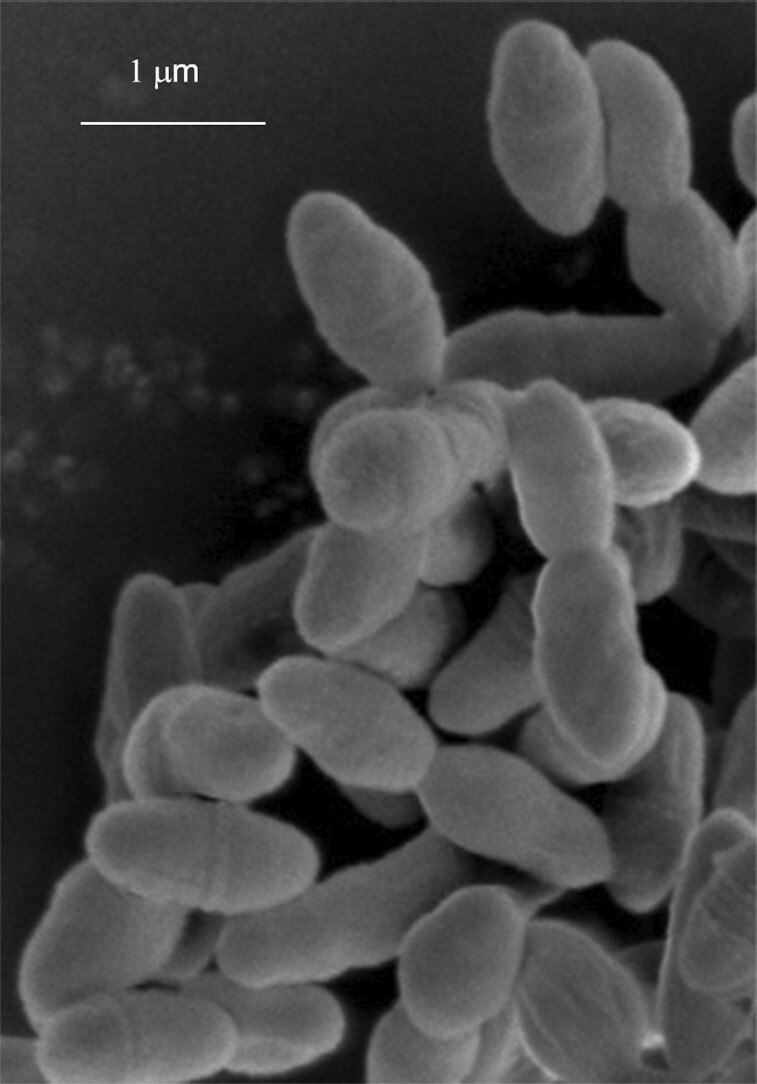
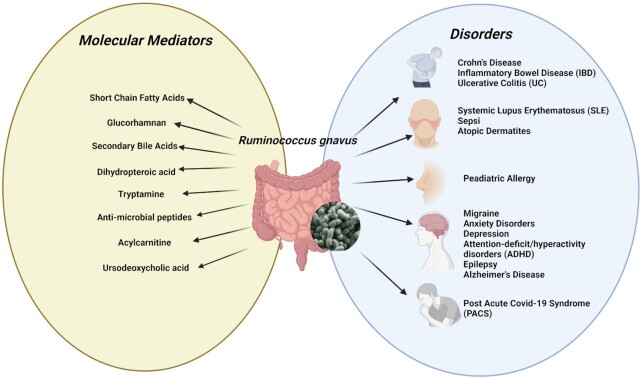
Ruminococcus gnavus was first identified in 1974 as a strict anaerobe in the gut of healthy individuals, and for several decades, its study has been limited to specific enzymes or bacteriocins. With the advent of metagenomics, R. gnavus has been associated both positively and negatively with an increasing number of intestinal and extraintestinal diseases from inflammatory bowel diseases to neurological disorders. This prompted renewed interest in understanding the adaptation mechanisms of R. gnavus to the gut, and the molecular mediators affecting its association with health and disease. From ca. 250 publications citing R. gnavus since 1990, 94% were published in the last 10 years. In this review, we describe the biological characterization of R. gnavus, its occurrence in the infant and adult gut microbiota and the factors influencing its colonization of the gastrointestinal tract; we also discuss the current state of our knowledge on its role in host health and disease. We highlight gaps in knowledge and discuss the hypothesis that differential health outcomes associated with R. gnavus in the gut are strain and niche specific.
Overview
The claims and statistics of this paper haven’t been checked yet.
Run the check — free, no account needed. It reads the open-access text and checks the sources it cites.
Integrity signals
Registry
Cites
Statistics
Figures
Verification
Claims the paper makes
The claims and statistics of this paper haven’t been checked yet.
Run the check — free, no account needed. It reads the open-access text and checks the sources it cites.
Claims other papers make about this one
Each is checked against this paper’s own text: does it say what the citing paper says it does?
In the citing paper
“R. gnavus has previously been related to inflammation, 42 but it was also associated with longevity in a Chinese study. 43”
From Global genetic diversity of human gut microbiome species is related to geographic location and host health (2025) · cites this paper as [42]
Self-check
Percentages, sums and reported differences re-computed from the paper’s own numbers.
The self-check needs the paper’s full text.
Citations
Cites
1 retracted
Huang, R., He, K., Duan, X., Xiao, J., Wang, H., & Xiang, G. (2022) · Computational and Mathematical Methods in Medicine · doi:10.1155/2022/1940846 · Cited by 16
RetractedA human gut microbial gene catalogue established by metagenomic sequencing
MetaHIT Consortium, Qin, J., Li, R., Raes, J., Arumugam, M., Burgdorf, K. S., Manichanh, C., Nielsen, T., Pons, N., Levenez, F., et al. (2010) · Nature · doi:10.1038/nature08821 · Cited by 11,624
Human gut microbiome viewed across age and geography
Yatsunenko, T., Rey, F. E., Manary, M. J., Trehan, I., Dominguez-Bello, M. G., Contreras, M., Magris, M., Hidalgo, G., Baldassano, R. N., Anokhin, A. P., et al. (2012) · Nature · doi:10.1038/nature11053 · Cited by 7,815
Gut microbiota in human metabolic health and disease
Fan, Y., & Pedersen, O. (2021) · Nature Reviews Microbiology · doi:10.1038/s41579-020-0433-9 · Cited by 4,724
Gut microbiota, metabolites and host immunity
Rooks, M. G., & Garrett, W. S. (2016) · Nature reviews. Immunology · doi:10.1038/nri.2016.42 · Cited by 3,409
Microbial tryptophan catabolites in health and disease
Roager, H. M., & Licht, T. R. (2018) · Nature Communications · doi:10.1038/s41467-018-05470-4 · Cited by 2,236
Gut microbiota-derived metabolites as key actors in inflammatory bowel disease
Lavelle, A., & Sokol, H. (2020) · Nature Reviews Gastroenterology & Hepatology · doi:10.1038/s41575-019-0258-z · Cited by 2,015
Gut microbiome structure and metabolic activity in inflammatory bowel disease
Franzosa, E. A., Sirota-Madi, A., Avila-Pacheco, J., Fornelos, N., Haiser, H. J., Reinker, S., Vatanen, T., Hall, A. B., Mallick, H., McIver, L. J., et al. (2018) · Nature Microbiology · doi:10.1038/s41564-018-0306-4 · Cited by 1,995
The abundance and variety of carbohydrate-active enzymes in the human gut microbiota
Kaoutari, A. E., Armougom, F., Gordon, J. I., Raoult, D., & Henrissat, B. (2013) · Nature Reviews Microbiology · doi:10.1038/nrmicro3050 · Cited by 1,683
The composition of the gut microbiota throughout life, with an emphasis on early life
Rodríguez, J. M., Murphy, K., Stanton, C., Ross, R. P., Kober, O. I., Juge, N., Avershina, E., Rudi, K., Narbad, A., Jenmalm, M. C., et al. (2015) · Microbial Ecology in Health and Disease · doi:10.3402/mehd.v26.26050 · Cited by 1,414
Self-citation
Cited by
Sorted by citations
Gilliland, A., Chan, J. J., Wolfe, T. J. D., Yang, H., & Vallance, B. A. (2023) · Gastroenterology · doi:10.1053/j.gastro.2023.09.019 · Cited by 237
Varghese, S., Rao, S., Khattak, A., Zamir, F., & Chaari, A. (2024) · Nutrients · doi:10.3390/nu16213663 · Cited by 152
Nishijima, S., Stankevič, E., Aasmets, O., Schmidt, T., Nagata, N., Keller, M. I., Ferretti, P., Juel, H. B., Fullam, A., Robbani, S. M., et al. (2024) · Cell · doi:10.1016/j.cell.2024.10.022 · Cited by 140
Andreu-Sánchez, S., Blanco-Míguez, A., Wang, D., Golzato, D., Manghi, P., Heidrich, V., Fackelmann, G., Zhernakova, D. V., Kurilshikov, A., Valles-Colomer, M., et al. (2025) · Cell · doi:10.1016/j.cell.2025.04.014 · Cited by 81
Effects of four food hydrocolloids on colitis and their regulatory effect on gut microbiota
Zhang, S., Sun, Y., Nie, Q., Hu, J., Li, Y., Shi, Z., Ji, H., Zhang, H., Zhao, M., Chen, C., et al. (2023) · Carbohydrate Polymers · doi:10.1016/j.carbpol.2023.121368 · Cited by 81
Shenhav, L., Fehr, K. B., Reyna, M. E., Petersen, C., Dai, D. L., Dai, R., Breton, V. L., Rossi, L., Smieja, M., Simons, E., et al. (2024) · Cell · doi:10.1016/j.cell.2024.07.022 · Cited by 92
Short-chain fatty acids: Important components of the gut-brain axis against AD
Huang, Y., Wang, Y. F., Miao, J., Zheng, R. F., & Li, J. Y. (2024) · Biomedicine & Pharmacotherapy · doi:10.1016/j.biopha.2024.116601 · Cited by 70
Yang, S., Guo, J., Kong, Z., Deng, M., Da, J., Lin, X., Peng, S., Fu, J., Luo, T., Ma, J., et al. (2024) · Journal of Translational Medicine · doi:10.1186/s12967-023-04835-8 · Cited by 69
Xie, H., Yu, S. B., Tang, M., Xun, Y., Shen, Q., & Wu, G. (2025) · Frontiers in Cellular and Infection Microbiology · doi:10.3389/fcimb.2025.1608025 · Cited by 78
Song, Q., Gao, Y., Liu, K., Tang, Y., Man, Y., & Wu, H. (2024) · Journal of Translational Medicine · doi:10.1186/s12967-024-05786-4 · Cited by 53
Integrative metagenomic analysis reveals distinct gut microbial signatures related to obesity
Hu, X., Yu, C. H. A., He, Y., Zhu, S., Wang, S., Xu, Z., You, S., Jiao, Y., Liu, S., & Bao, H. (2024) · BMC Microbiology · doi:10.1186/s12866-024-03278-5 · Cited by 64
Petracco, G., Faimann, I., & Reichmann, F. (2025) · Pharmacology & Therapeutics · doi:10.1016/j.pharmthera.2025.108831 · Cited by 55
Wu, K., Luo, Q., Liu, Y., Li, A., Xia, D., & Sun, X. (2024) · Journal of Translational Medicine · doi:10.1186/s12967-024-04894-5 · Cited by 46
Wang, X., Sun, Z., Wang, X., Li, M., Zhou, B., & Zhang, X. (2024) · Food Research International · doi:10.1016/j.foodres.2024.114489 · Cited by 42
The gut microbiome associates with phenotypic manifestations of post-acute COVID-19 syndrome
Su, Q., Lau, R. I., Liu, Q., Li, M. K. T., Mak, J. W. Y., Lu, W., Lau, I. S. F., Lau, L. H. S., Yeung, G. T. Y., Cheung, C. P., et al. (2024) · Cell Host & Microbe · doi:10.1016/j.chom.2024.04.005 · Cited by 41
Menopausal shift on women’s health and microbial niches
Nieto, M. R., Rus, M. J., Areal‐Quecuty, V., Lubián, D., & Simón‐Soro, Á. (2025) · npj Women s Health · doi:10.1038/s44294-024-00050-y · Cited by 51
Lou, Y. C., Rubin, B. E., Schoelmerich, M. C., DiMarco, K. S., Borges, A. L., Rovinsky, R., Song, L., Doudna, J. A., & Banfield, J. F. (2023) · Nature Communications · doi:10.1038/s41467-023-43279-y · Cited by 35
The gut microbiome in systemic lupus erythematosus: lessons from rheumatic fever
Silverman, G. J., Azzouz, D. F., Gisch, N., & Amarnani, A. (2024) · Nature Reviews Rheumatology · doi:10.1038/s41584-023-01071-8 · Cited by 39
Nooij, S., Plomp, N., Sanders, I. M. J. G., Schout, L., van der Meulen, A. E., Terveer, E. M., Norman, J. M., Karcher, N., Larralde, M., Vossen, R. H. A. M., et al. (2025) · Nature Communications · doi:10.1038/s41467-025-56449-x · Cited by 35
Hong, J., Fu, T., Liu, W., Du, Y., Bu, J., Wei, G., Yu, M., Lin, Y., Min, C., & Lin, D. (2024) · Diabetes Metabolic Syndrome and Obesity · doi:10.2147/dmso.s456173 · Cited by 33
Laplanche, V., Armiento, S., Speciale, I., Šuligoj, T., Crost, E. H., Lamprinaki, D., Vaux, L., Gotts, K., Castro, C. D., & Juge, N. (2024) · Carbohydrate Polymers · doi:10.1016/j.carbpol.2024.122754 · Cited by 31
Self-citationNavigating the duality of Akkermansia muciniphila
Grant, E. T., Monzel, E., & Desai, M. S. (2026) · Nature Microbiology · doi:10.1038/s41564-025-02222-1 · Cited by 37
Aslam, H., Trakman, G., Dissanayake, T., Todd, E., Harrison, P., Alby, C., Jabeen, T., Gamage, E., Travica, N., Marshall, S., et al. (2026) · Journal of Translational Medicine · doi:10.1186/s12967-025-07428-9 · Cited by 30
Liang, L., Su, X., Guan, Y., Wu, B., Zhang, X., & Nian, X. (2024) · iScience · doi:10.1016/j.isci.2024.109784 · Cited by 33
Yang, N., Ma, T., Xie, Y., Li, Q., Li, Y., Zheng, L., Li, Y., Xiao, Q., Sun, Z., Zuo, K., et al. (2024) · Nature Communications · doi:10.1038/s41467-024-51094-2 · Cited by 29
Valentino, V., Filippis, F. D., Marotta, R., Pasolli, E., & Ercolini, D. (2024) · Cell Reports · doi:10.1016/j.celrep.2024.115018 · Cited by 33
Long COVID and gut microbiome: insights into pathogenesis and therapeutics
Lau, R. I., Su, Q., & Ng, S. C. (2025) · Gut Microbes · doi:10.1080/19490976.2025.2457495 · Cited by 28
The Role of Gut Microbiota and Its Metabolites in Patients with Heart Failure
Cienkowski, K., Cienkowska, A., Kupczyńska, K., & Bielecka-Dabrowa, A. M. (2024) · Biomedicines · doi:10.3390/biomedicines12040894 · Cited by 27
Gao, P., Rinott, E., Dong, D., Mei, Z., Wang, F., Liu, Y., Kamer, O., Meir, A. Y., Tuohy, K. M., Blüher, M., et al. (2024) · Gut Microbes · doi:10.1080/19490976.2024.2426610 · Cited by 34
Cushing Syndrome Is Associated With Gut Microbial Dysbiosis and Cortisol-Degrading Bacteria
Zhang, M., Shi, Z., Wu, C., Yang, F., Su, T., Jing, X., Shi, J., Ren, H., Jiang, L., Jiang, Y., et al. (2023) · The Journal of Clinical Endocrinology & Metabolism · doi:10.1210/clinem/dgad766 · Cited by 27
Ding, N., Wu, H., Hua, Y., Hua, R., Li, B., Xie, Y., Xiong, Y., Bai, T., Shi, X., Shen, T., et al. (2026) · Cell Metabolism · doi:10.1016/j.cmet.2025.12.017 · Cited by 29
Li, N., Wang, H., Pei, H., Wu, Y., Li, L., Ren, Y., Wang, S., Ma, Y., Luo, M., Yuan, J., et al. (2024) · Frontiers in Microbiology · doi:10.3389/fmicb.2024.1373013 · Cited by 27
Meadows, V., Antonio, J. M., Ferraris, R. P., & Gao, N. (2024) · FEBS Journal · doi:10.1111/febs.17327 · Cited by 27
Pasta, A., Formisano, E., Calabrese, F., Marabotto, E., Furnari, M., Bodini, G., Torres, M. C. P., Pisciotta, L., Giannini, E. G., & Zentilin, P. (2025) · Microorganisms · doi:10.3390/microorganisms13020241 · Cited by 24
Molecular mimicry in the pathogenesis of autoimmune rheumatic diseases
Fehringer, M., & Vogl, T. J. (2025) · Journal of Translational Autoimmunity · doi:10.1016/j.jtauto.2025.100269 · Cited by 26
Microbe Profile: Ruminococcus gnavus: the yin and yang of human gut symbionts
Juge, N. (2023) · Microbiology · doi:10.1099/mic.0.001383 · Cited by 23
Self-citationHong, J., Fu, T., Liu, W., Du, Y., Bu, J., Wei, G., Yu, M., Lin, Y., Min, C., & Lin, D. (2023) · Journal of Microbiology and Biotechnology · doi:10.4014/jmb.2310.10028 · Cited by 24
Bai, X., Deng, J., Duan, Z., Fu, R., Zhu, C., & Fan, D. (2024) · Phytomedicine · doi:10.1016/j.phymed.2024.155577 · Cited by 20
Ruan, D., Jiang, J., Huang, W., Fouad, A. M., El‐Senousey, H. K., Lin, X., Zhang, S., Sun, L., Yan, S., Jiang, Z., et al. (2024) · Animal nutrition · doi:10.1016/j.aninu.2024.04.024 · Cited by 21
Jia, J., Fu, M., Ji, W., Xiong, N., Chen, P., Lin, J., & Yang, Q. (2024) · Microbiology Spectrum · doi:10.1128/spectrum.00918-24 · Cited by 21
Ma, X., Duan, C., Wang, X., Tao, Y., Yang, L., Teng, Y., Pan, Y., Zhang, M., Xu, J., Sheng, J., et al. (2025) · Microbiology Spectrum · doi:10.1128/spectrum.02916-24 · Cited by 24
Dissayabutra, T., Chuaypen, N., Somnark, P., Boonkaew, B., Udomkarnjananun, S., Kittiskulnam, P., Charoenchittang, P., Prombutara, P., & Tangkijvanich, P. (2025) · Scientific Reports · doi:10.1038/s41598-025-00237-6 · Cited by 23
Zhang, B., Wang, J., Chen, X., Xue, T., Xin, J., Liu, Y., Wang, X., & Li, X. (2024) · Marine Biotechnology · doi:10.1007/s10126-024-10365-1 · Cited by 21
Mucin-driven ecological interactions in an in vitro synthetic community of human gut microbes
Berkhout, M. D., Ioannou, A., de Ram, C., Boeren, S. A., Plugge, C. M., & Belzer, C. (2024) · Glycobiology · doi:10.1093/glycob/cwae085 · Cited by 23
Yang, B., Guo, X., Shi, C.-Y., Liu, G., Qin, X., Chen, S., Gan, L., Liang, D., Shao, K., Xu, R.-L., et al. (2024) · mSystems · doi:10.1128/msystems.00812-24 · Cited by 20
Human microbiota peptides: important roles in human health
Shah, A. B., & Shim, S. H. (2024) · Natural Product Reports · doi:10.1039/d4np00042k · Cited by 22
Guzowska, M., Dziendzikowska, K., Kopiasz, Ł., Gajewska, M., Wilczak, J., Harasym, J., Czerwińska, M., & Gromadzka-Ostrowska, J. (2024) · International Journal of Molecular Sciences · doi:10.3390/ijms252413586 · Cited by 19
Mucosa-associated bacteria and metabolites in inflammatory bowel disease: from inside to insight
Wang, X., He, L., Dong, Y., Qin, X., Zhang, H., Wang, B., Wang, S., & Cao, H. (2026) · npj Biofilms and Microbiomes · doi:10.1038/s41522-025-00887-4 · Cited by 21
Dahuang zhechong pill ameliorates hepatic fibrosis by regulating gut microbiota and metabolites
He, X.-Y., Liang, J., Li, X., Wang, Y., Zhang, X., Chen, D., Wu, L., & Wang, S. (2023) · Journal of Ethnopharmacology · doi:10.1016/j.jep.2023.117402 · Cited by 18
Mechanisms by which sheep milk consumption ameliorates insulin resistance in high-fat diet-fed mice
Zhang, L., Liu, J., Wang, Y., Wei, M., Liu, X., Jiang, Y., Wang, X., Zhu, Z., Niu, C., Liu, S., et al. (2024) · Food Research International · doi:10.1016/j.foodres.2024.114021 · Cited by 18
Healing from Within: How Gut Microbiota Predicts IBD Treatment Success—A Systematic Review
Alexandrescu, L., Nicoara, A. D., Tofolean, D. E., Herlo, A., Twakor, A. N., Tocia, C., Trandafir, A., Dumitru, A., Dumitru, E., Aftenie, C. F., et al. (2024) · International Journal of Molecular Sciences · doi:10.3390/ijms25158451 · Cited by 19
de Ram, C., van der Lugt, B., Elzinga, J., Geerlings, S. Y., Steegenga, W. T., Belzer, C., & Schols, H. A. (2024) · Journal of Agricultural and Food Chemistry · doi:10.1021/acs.jafc.4c01401 · Cited by 18
Wang, H., Song, W., Yuan, W., Zhou, Q., Sadiq, F. A., Zhao, J., Wu, W., & Lu, W. (2023) · Nutrients · doi:10.3390/nu15143101 · Cited by 17
Duong, J., Hayden, H. S., Verster, A. J., Pope, C. E., Miller, C. J., Penewit, K. M., Salipante, S. J., Rowe, S. M., Solomon, G. M., Nichols, D. P., et al. (2025) · Journal of Cystic Fibrosis · doi:10.1016/j.jcf.2025.05.006 · Cited by 16
Peng, Y., Du, Y., Zhang, Y., Wang, Z., Hu, T., Mai, Y., Song, H., Pan, W., Cai, Q., Ge, F., et al. (2024) · BMC Complementary Medicine and Therapies · doi:10.1186/s12906-024-04638-4 · Cited by 17
Daisley, B. A., & Allen‐Vercoe, E. (2024) · Annals of the New York Academy of Sciences · doi:10.1111/nyas.15237 · Cited by 17
Lee, E. Y., Kim, J., Lee, S., Lee, S. H., Park, Y. M., Oh, H. Y., Yeom, J., Ahn, H.-S., Yoo, H. J., Kim, B. S., et al. (2024) · Journal of Allergy and Clinical Immunology · doi:10.1016/j.jaci.2024.10.036 · Cited by 16
Qu, Q., Dou, Q., Xiang, Z., Yu, B., Chen, L., Fan, Z., Zhao, X., Yang, S., & Zeng, P. (2025) · npj Biofilms and Microbiomes · doi:10.1038/s41522-025-00661-6 · Cited by 17
Microbiome and Long COVID-19: Current Evidence and Insights
Căliman-Sturdza, O. A., Hamamah, S., Iatcu, O. C., Lobiuc, A., Bosancu, A., & Covașă, M. (2025) · International Journal of Molecular Sciences · doi:10.3390/ijms262010120 · Cited by 20
Multi-omic definition of metabolic obesity through adipose tissue–microbiome interactions
Chakaroun, R., Pradhan, M., Björnson, E., Arvidsson, D., Fridolfsson, J., Gummesson, A., Schoeler, M., Mitteregger, M., Smith, G. J., Larsson, I., et al. (2026) · Nature Medicine · doi:10.1038/s41591-025-04009-7 · Cited by 22
Comparative Analysis of Gut Microbiota from Rats Induced by Se Deficiency and T-2 Toxin
Wu, Y., Gong, Y., Zhang, Y., Li, S., Wang, C., Yuan, Y., Lv, X., Liu, Y., Chen, F., Chen, S., et al. (2023) · Nutrients · doi:10.3390/nu15245027 · Cited by 15
Effects of Tail Vegetable Fermented Feed on the Growth and Rumen Microbiota of Lambs
Zhou, R., Wang, L., Li, Y., Wu, H., Lü, L., Zang, R., & Xu, H. (2024) · Animals · doi:10.3390/ani14020303 · Cited by 15
Yang, Q., Deng, L., Feng, C., & Wen, J. (2024) · PeerJ · doi:10.7717/peerj.17055 · Cited by 16
Fecal Microbiota Transplantation Attenuates Frailty via Gut-Muscle Axis in Old Mice
Zhu, M., Huang, Y., Wang, Z., Jin, Z., Cao, J., Zhong, Q., & Xiong, Z. (2024) · Aging and Disease · doi:10.14336/ad.2024.0321 · Cited by 15
Singh, S., Abu, Y. F., Antoine, D., Gomez, D., Tao, J., Truitt, B., & Roy, S. (2025) · Gut Microbes · doi:10.1080/19490976.2025.2464942 · Cited by 15
Upadhyay, P., Kumar, S., Tyagi, A., Tyagi, A. R., Barbhuyan, T., & Gupta, S. (2025) · BMC Neuroscience · doi:10.1186/s12868-025-00953-9 · Cited by 18
Culture-based characterization of gut microbiota in inflammatory bowel disease
Park, H., Yeo, S., Lee, T., Han, Y., Ryu, C. B., & Huh, C. S. (2025) · Frontiers in Microbiology · doi:10.3389/fmicb.2025.1538620 · Cited by 14
Lei, H., Yu, D., Xue, Y., Li, Y., Gong, S.-M., Peng, Y.-Y., Liu, K.-F., Buratto, D., Yang, Y.-S., Zhang, S., et al. (2023) · Frontiers in Immunology · doi:10.3389/fimmu.2023.1259521 · Cited by 13
Hung, C.-C., Chao, Y., Lee, Y., Huang, C., Huang, S., Chang, C., & Cheng, C. (2023) · BMC Geriatrics · doi:10.1186/s12877-023-04417-9 · Cited by 13
Huang, Y.-L., Zheng, J.-M., Shi, Z.-Y., Chen, H.-H., Wang, X.-T., & Kong, F. (2024) · Medicine · doi:10.1097/md.0000000000038551 · Cited by 13
Zeng, L., Yu, B., Zeng, P., Duoji, Z., Zuo, H., Lian, J., Yang, T., Dai, Y., Feng, Y., Peng, Y., et al. (2025) · npj Biofilms and Microbiomes · doi:10.1038/s41522-025-00721-x · Cited by 15
Cell surface polysaccharides in the gut microbiota: occurrence, structure and role
Laplanche, V., Speciale, I., Castro, C. D., & Juge, N. (2025) · Gut Microbes · doi:10.1080/19490976.2025.2536082 · Cited by 12
Self-citationJiang, H., Song, T., Li, Z., An, L., He, C., & Zheng, K. (2023) · Frontiers in Microbiology · doi:10.3389/fmicb.2023.1255650 · Cited by 12
Lai, Y., Tang, W., Luo, X., Zheng, H., Zhang, Y., Wang, M., Yu, G., & Yang, M. (2024) · Frontiers in Immunology · doi:10.3389/fimmu.2024.1369116 · Cited by 15
Feng, Y., Xiao, Y., Li, X., Guo, M., Huang, L., Lu, W., Zhao, J., & Chen, W. (2025) · Food Research International · doi:10.1016/j.foodres.2025.116673 · Cited by 13
Giridhar, P., Pradhan, S., Dokania, S., Venkatesulu, B., Sarode, R., & Welsh, J. S. (2024) · American Journal of Clinical Oncology · doi:10.1097/coc.0000000000001082 · Cited by 11
The role of the “gut microbiota-mitochondria” crosstalk in the pathogenesis of multiple sclerosis
Tian, H., Huang, D., Wang, J., Li, H., Gao, J., Zhong, Y., Xia, L., Zhang, A., Lin, Z., & Ke, X. (2024) · Frontiers in Microbiology · doi:10.3389/fmicb.2024.1404995 · Cited by 12
Perruzza, L., Jost, T. R., Raneri, M., Gargari, G., Palatella, M., Conti, B. D. P., Seehusen, F., Heckmann, J., Viemann, D., Guglielmetti, S., et al. (2024) · Cell Reports Medicine · doi:10.1016/j.xcrm.2024.101639 · Cited by 13
Ye, H.-M., Li, Z., Zhang, P., Kang, Z., & Zhou, D.-S. (2024) · Chinese Journal of Integrative Medicine · doi:10.1007/s11655-024-3766-9 · Cited by 12
Martínez, Y. G., Alexandrova, E., Iebba, V., Ferravante, C., Spinelli, M., Franci, G., Amoresano, A., Weisz, A., Trepiccione, F., Borriello, M., et al. (2024) · BMC Microbiology · doi:10.1186/s12866-024-03590-0 · Cited by 11
Effect of diet on the microbiota and immune system in patients with systemic lupus erythematosus
Ruiz‐Pozo, V. A., Paz‐Cruz, E., Cadena-Ullauri, S., Tamayo‐Trujillo, R., Guevara‐Ramírez, P., Simancas‐Racines, D., Frías-Toral, E., & Zambrano, A. K. (2024) · Food and Agricultural Immunology · doi:10.1080/09540105.2024.2434475 · Cited by 11
Wang, J., Zhang, Z., Wang, J., Shi, L., Wang, S., Niu, B., Tian, X., Lv, Q., Wei, L., Li, M., et al. (2024) · Veterinary Microbiology · doi:10.1016/j.vetmic.2024.110364 · Cited by 11
Sun, M., Ma, H., Miao, Y., & Zhang, M. (2025) · Food & Function · doi:10.1039/d4fo02647k · Cited by 11
Liu, Y., Li, H. X., Sun, T., Sun, G., Jiang, B., Liu, M., Wang, Q., Li, T., Cao, J., Zhao, L., et al. (2025) · iMeta · doi:10.1002/imt2.70000 · Cited by 11
Lin, H., Chen, Y., Zhou, M., Wang, H., Chen, L.-C., Li, Z., Wang, Z., Zheng, X., & Lu, S. (2025) · Virulence · doi:10.1080/21505594.2025.2489154 · Cited by 11
Hu, L., Liu, Q., Ke, X., Zhao, P., Fang, W., & Ren, Y. X. (2025) · Frontiers in Microbiology · doi:10.3389/fmicb.2025.1591697 · Cited by 15
Andersen, S., Kennedy, G., Banks, M., Flanagan, B. M., & Henden, A. S. (2025) · Blood Advances · doi:10.1182/bloodadvances.2024015703 · Cited by 14
de Oliveira, D. G., Machado, A., Lacerda, P., Karakikla-Mitsakou, Z., & Vasconcelos, C. (2025) · Autoimmunity Reviews · doi:10.1016/j.autrev.2025.103921 · Cited by 12
Firrman, J., Friedman, E. S., Hecht, A. L., Strange, W. C., Narrowe, A. B., Mahalak, K. K., Wu, G. D., & Liu, L. (2024) · mBio · doi:10.1128/mbio.00943-24 · Cited by 10
O’Connor, M., O’Connor, P. M., Hourigan, D., Murray, E., de Farias, F. M., Field, D., Hill, C., & Ross, R. P. (2024) · Frontiers in Microbiology · doi:10.3389/fmicb.2024.1470988 · Cited by 12
A conserved pilin from uncultured gut bacterial clade TANB77 enhances cancer immunotherapy
Kim, C. Y., Park, D. J., Ahn, B., Baek, S., Hong, M. H., Nguyen, L. T., Hwang, S. H., Kim, N., Podlesny, D., Orakov, A. N., et al. (2024) · Nature Communications · doi:10.1038/s41467-024-55388-3 · Cited by 11
Luo, Z., Ou, H., Tan, Z., & Jiao, J. (2025) · Journal of Animal Science and Biotechnology/Journal of animal science and biotechnology · doi:10.1186/s40104-025-01183-z · Cited by 14
Mojadadi, A., Au, A., Ortíz, T., Shao, Y. J., O’Neil, T., Bell-Anderson, K. S., Andersen, J. W., Webb, J. L., Salah, W., Ahmad, G., et al. (2025) · Redox Report · doi:10.1080/13510002.2025.2495367 · Cited by 10
Philip, D., Hodgkiss, R., Radhakrishnan, S. K., Sinha, A., & Acharjee, A. (2025) · Journal of Translational Medicine · doi:10.1186/s12967-025-06552-w · Cited by 13
Nishio, J., Satō, H., Watanabe, E., Masuoka, H., Aoki, K., Kawazoe, M., Wakiya, R., Yamada, S., Muraoka, S., Masuoka, S., et al. (2024) · Scientific Reports · doi:10.1038/s41598-024-83835-0 · Cited by 10
Florêncio, G. P., Xavier, A. R., NATAL, A. C. D. C., Sadoyama, L. P., Pena, G. D. G., Menezes, R. D. P., Sadoyama, G., Patrizzi, L. J., & Röder, D. (2025) · Metabolites · doi:10.3390/metabo15020070 · Cited by 12
Microbiota contribute to regulation of the gut-testis axis in seasonal spermatogenesis
Wu, Z., Li, L., Chen, S., Gong, Y., Liu, Y., Jin, T., Wang, Y., Tang, J., Dong, Q., Yang, B., et al. (2025) · The ISME Journal · doi:10.1093/ismejo/wraf036 · Cited by 9
Dingding, H., Muhammad, S., Manzoor, I., Ghaffar, S. A., Alodaini, H. A., Moubayed, N., Hatamleh, A. A., & Songxiao, X. (2025) · Frontiers in Immunology · doi:10.3389/fimmu.2025.1555741 · Cited by 9
Exploring the etiology of colitis: insights from gut microbiota research
Qian, G., Chen, X., Liu, G., Yu, J., Zhong, S.-J., Yang, J., Sun, Y., & Zhou, J. (2025) · Gut Microbes · doi:10.1080/19490976.2025.2512010 · Cited by 11
Effects of diet type on the core fecal bacterial taxa and the dysbiosis index of healthy adult dogs
Oba, P. M., Roberts, L. J., Geary, E. L., Suchodolski, J. S., & Swanson, K. S. (2025) · Frontiers in Veterinary Science · doi:10.3389/fvets.2025.1572875 · Cited by 10
Metadata
- Authors
- Crost, E. H., Coletto, E., Bell, A., & Juge, N.
- Affiliations
- Quadram Institute (GB)
- Corresponding author
- Juge, Nathalie
- Venue
- FEMS Microbiology Reviews
- Publisher
- Oxford University Press (OUP)
- Published
- 2023-03
- Volume
- 47
- Issue
- 2
- ISSN
- 0168-6445 (ISSN-L)
- 1574-6976
- PMC
- PMC10112845
- OpenAlex
- W4362525665
- Cited by
- 335
- References
- 207
- Citations by year
- 2026: 90 · 2025: 128 · 2024: 98 · 2023: 19
- FWCI
- 8.99
- Type
- journal article
- Language
- en
- Open access
- hybrid
- doi.org
- Licence
- Locations
- FEMS Microbiology Reviews (publishedVersion, cc-by)
- PubMed Central (publishedVersion, cc-by)
- PubMed (publishedVersion)
- Funders
- Biotechnology and Biological Sciences Research Council (BB/R012490/1)
- Topics
- Life Sciences › Biochemistry, Genetics and Molecular Biology › Molecular Biology › Gut microbiota and health
- Health Sciences › Medicine › Infectious Diseases › Clostridium difficile and Clostridium perfringens research
- Life Sciences › Agricultural and Biological Sciences › Food Science › Probiotics and Fermented Foods
- Keywords
- Ruminococcus gnavus, gut microbiota, intestinal colonization, inflammatory bowel disease, neurological disorders, strain-specific effects, niche specificity, host-microbe interactions, anaerobic bacteria, metagenomics
- MeSH terms
- Eubacteriales, Gastrointestinal Microbiome, Adult, Humans, Gastrointestinal Tract, Ruminococcus
About these checks
Registry, retraction, Cites and statistics results are computed, not judged, with one exception: a printed reference that no index lists is read once by a model before it counts as a citation error. Claims are extracted by a model and kept only when their quote appears verbatim in the text; each cited source is then checked, with a model’s help, for whether it says what the claim relies on. Those verdicts can be wrong — read the claim’s quote and the cited source before relying on one.
Statistics and arithmetic are recomputed, not judged.
Confidence bands are shown only for fields calibrated on our annotated test set. None is calibrated yet, so no band is shown.
What counts as a claim ›How we measure confidence ›How we check this ›
Are you an author, or do you see a problem with this page? Request a review
