

Visual processing in the fly, from photoreceptors to behavior
Open accessThe DOI matches its Crossref record; 365 of the 365 references it cites were found in a registry or an index.
Abstract
Originally a genetic model organism, the experimental use of Drosophila melanogaster has grown to include quantitative behavioral analyses, sophisticated perturbations of neuronal function, and detailed sensory physiology. A highlight of these developments can be seen in the context of vision, where pioneering studies have uncovered fundamental and generalizable principles of sensory processing. Here we begin with an overview of vision-guided behaviors and common methods for probing visual circuits. We then outline the anatomy and physiology of brain regions involved in visual processing, beginning at the sensory periphery and ending with descending motor control. Areas of focus include contrast and motion detection in the optic lobe, circuits for visual feature selectivity, computations in support of spatial navigation, and contextual associative learning. Finally, we look to the future of fly visual neuroscience and discuss promising topics for further study.
Overview
The claims and statistics of this paper haven’t been checked yet.
Free: it reads the open-access text and checks the first 5 claims that cite a source we can check. Create a free account to check every claim.
Integrity signals
Registry
Cites
Statistics
Figures
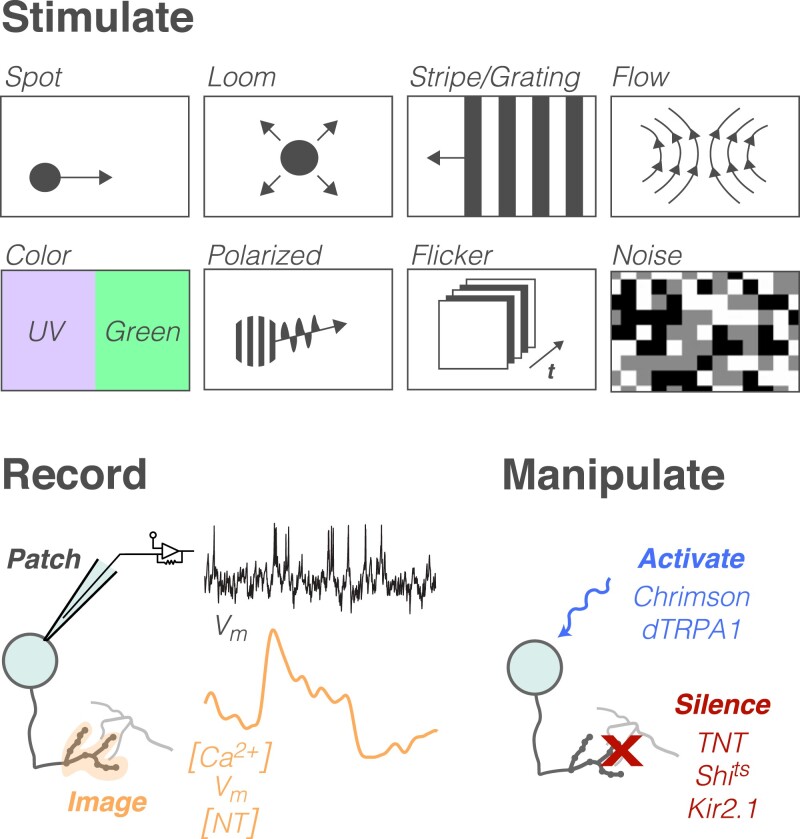
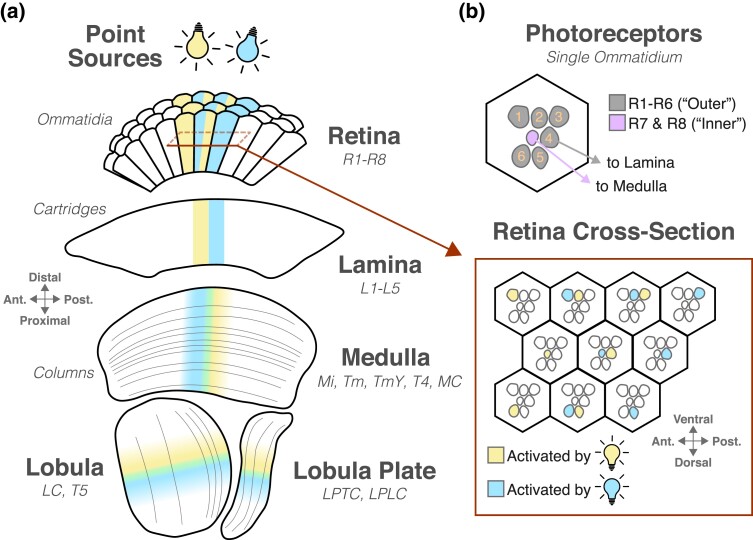
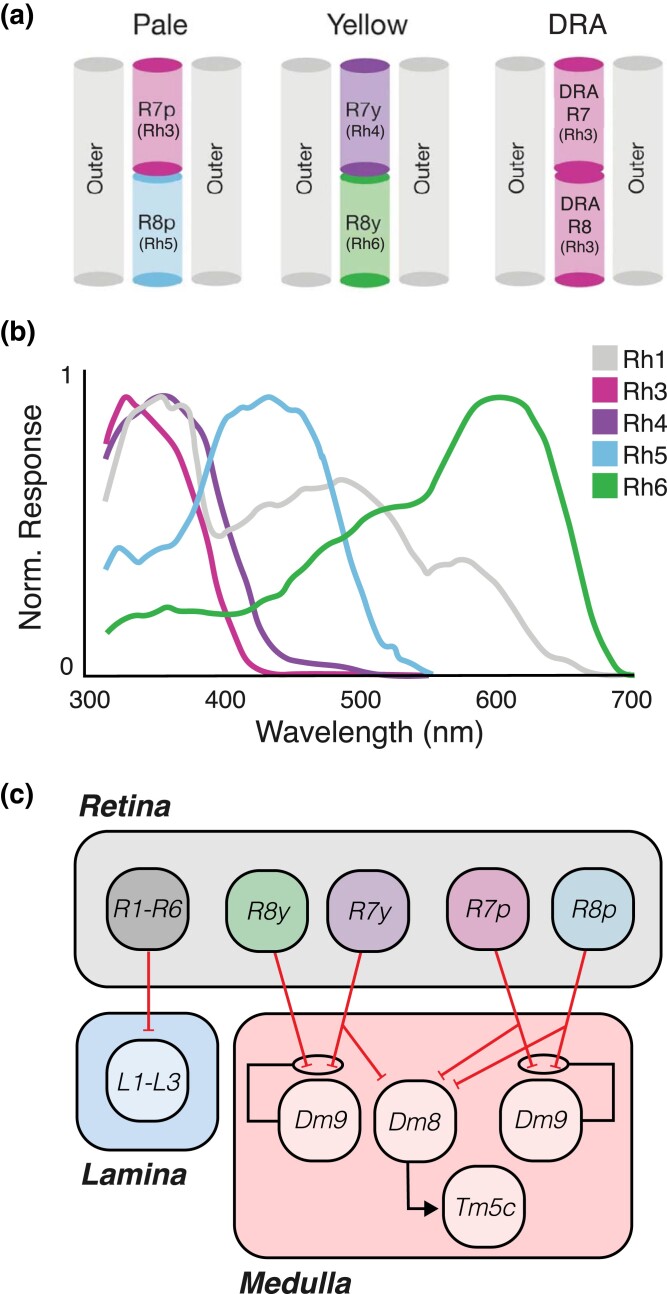
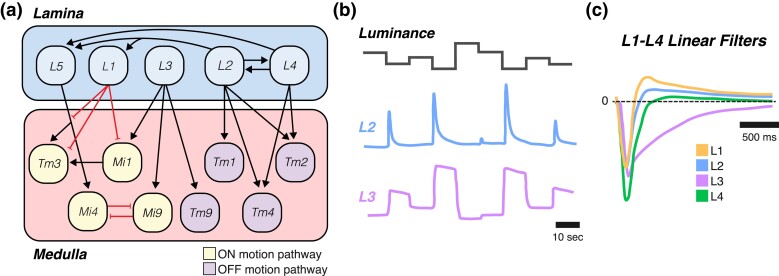
Verification
Claims the paper makes
The claims and statistics of this paper haven’t been checked yet.
Free: it reads the open-access text and checks the first 5 claims that cite a source we can check. Create a free account to check every claim.
Claims other papers make about this one
Each is checked against this paper’s own text: does it say what the citing paper says it does?
The source backs part of the claim, not all of it — or backs it for a different population, condition or comparison.
In the citing paper
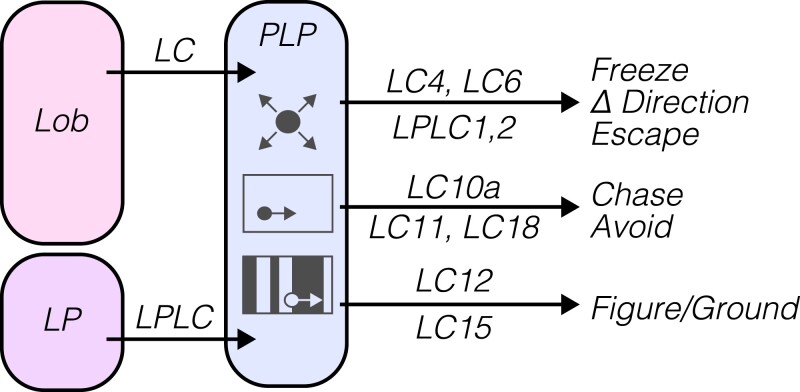
“Even LC types involved in non-social behaviours (for example, escape), such as LC4, LC6, LPLC1 and LPLC221,24,26,38–40, participate in encoding the movements of the female and driving the courtship actions of the male.”
From Mapping model units to visual neurons reveals population code for social behaviour (2024) · cites this paper as [40]
Experimental — accuracy not yet measuredThe cited source says what the claim attributes to it.
In the citing paper
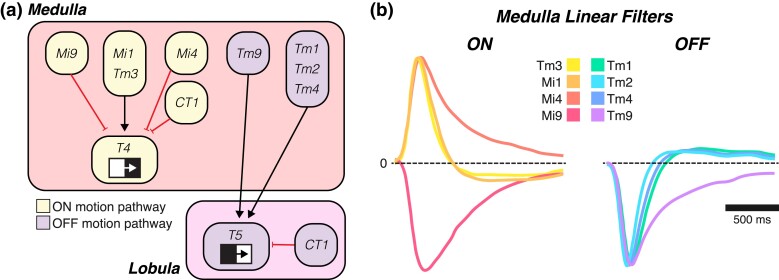
“We found that our connectome-constrained and task-optimized DMN accurately predicts the separation of the visual system into light-increment (ON) and light-decrement (OFF) channels, as well as the generation of direction selectivity in the well-known T4 and T5 motion detector neurons24.”
From Connectome-constrained networks predict neural activity across the fly visual system (2024) · cites this paper as [24]
The cited source says what the claim attributes to it.
In the citing paper
“We considered only the role of this circuit in detecting motion, which is but one of many computations performed by the visual system24.”
From Connectome-constrained networks predict neural activity across the fly visual system (2024) · cites this paper as [24]
Self-check
Percentages, sums and reported differences re-computed from the paper’s own numbers.
The self-check needs the paper’s full text.
Citations
Cites
1 retracted
Items 201–365 of 365
An Array of Descending Visual Interneurons Encoding Self-Motion in Drosophila
Suver, M. P., Huda, A., Iwasaki, N., Safarik, S., & Dickinson, M. H. (2016) · The Journal of Neuroscience · doi:10.1523/jneurosci.2277-16.2016 · Cited by 110
Columnar cells necessary for motion responses of wide-field visual interneurons in Drosophila
Schnell, B., Raghu, S. V., Nern, A., & Borst, A. (2012) · Journal of Comparative Physiology A · doi:10.1007/s00359-012-0716-3 · Cited by 109
The spectral sensitivity of Drosophila photoreceptors
Sharkey, C. R., Blanco, J., Leibowitz, M. M., Pinto-Benito, D., & Wardill, T. J. (2020) · Scientific Reports · doi:10.1038/s41598-020-74742-1 · Cited by 109 · cited 5×
“Adapted from Sharkey et al .”
InfluentialAn opsin gene that is expressed only in the R7 photoreceptor cell of Drosophila.
Fryxell, K. J., & Meyerowitz, E. M. (1987) · The EMBO Journal · doi:10.1002/j.1460-2075.1987.tb04774.x · Cited by 108
Flying Drosophila Orient to Sky Polarization
Weir, P. T., & Dickinson, M. H. (2012) · Current Biology · doi:10.1016/j.cub.2011.11.026 · Cited by 108
Feedback Network Controls Photoreceptor Output at the Layer of First Visual Synapses in Drosophila
Zheng, L., de Polavieja, G. G., Wolfram, V., Asyali, M. H., Hardie, R. C., & Juusola, M. (2006) · The Journal of General Physiology · doi:10.1085/jgp.200509470 · Cited by 107
Speed dependent descending control of freezing behavior in Drosophila melanogaster
Zacarias, R., Namiki, S., Card, G. M., Vasconcelos, M. L., & Moita, M. A. (2018) · Nature Communications · doi:10.1038/s41467-018-05875-1 · Cited by 106
Complementary mechanisms create direction selectivity in the fly
Haag, J., Arenz, A., Serbe, E., Gabbiani, F., & Borst, A. (2016) · eLife · doi:10.7554/elife.17421 · Cited by 104
The dipteran ?Giant fibre? pathway: neurons and signals
Bacon, J. P., & Strausfeld, N. J. (1986) · Journal of Comparative Physiology A · doi:10.1007/bf00603798 · Cited by 103
Motion Processing Streams in Drosophila Are Behaviorally Specialized
Katsov, A. Y., & Clandinin, T. R. (2008) · Neuron · doi:10.1016/j.neuron.2008.05.022 · Cited by 103
Self-citationHistamine: A Neurotransmitter Candidate for Drosophila Photoreceptors
Sarthy, P. V. (1991) · Journal of Neurochemistry · doi:10.1111/j.1471-4159.1991.tb06378.x · Cited by 102 · cited 1×
“In all photoreceptor types, light-evoked potentials trigger the release of the neurotransmitter histamine (Pollack and Hofbauer 1991; Sarthy 1991).”
BackgroundCRISPR/Cas9 Mediates Efficient Conditional Mutagenesis inDrosophila
Xue, Z., Wu, M., Wen, K., Ren, M., Li, L., Zhang, X., & Gao, G. (2014) · G3 Genes Genomes Genetics · doi:10.1534/g3.114.014159 · Cited by 99
A functionally ordered visual feature map in the Drosophila brain
Klapoetke, N. C., Nern, A., Rogers, E. M., Rubin, G. M., Reiser, M. B., & Card, G. M. (2022) · Neuron · doi:10.1016/j.neuron.2022.02.013 · Cited by 98
Stochastic, Adaptive Sampling of Information by Microvilli in Fly Photoreceptors
Song, Z., Postma, M., Billings, S. A., Coca, D., Hardie, R. C., & Juusola, M. (2012) · Current Biology · doi:10.1016/j.cub.2012.05.047 · Cited by 98
Targeted misexpression of a Drosophila opsin gene leads to altered visual function
Feiler, R., Harris, W. A., Kirschfeld, K., Wehrhahn, C., & Zuker, C. S. (1988) · Nature · doi:10.1038/333737a0 · Cited by 97
Structure of the vertical and horizontal system neurons of the lobula plate in Drosophila
Scott, E. K., Raabe, T., & Luo, L. (2002) · Journal of Comparative Neurology · doi:10.1002/cne.10467 · Cited by 96
Flies and humans share a motion estimation strategy that exploits natural scene statistics
Clark, D. A., Fitzgerald, J. E., Ales, J. M., Gohl, D. M., Silies, M. A., Norcia, A. M., & Clandinin, T. R. (2014) · Nature Neuroscience · doi:10.1038/nn.3600 · Cited by 96 · cited 1×
“2013; Clark et al .”
Self-citationCarpenter, F. W. (1905) · The American Naturalist · doi:10.1086/278502 · Cited by 95 · cited 1×
“Perhaps the simplest visual behavior is phototaxis —an innate drive to fly or walk toward (or away from) light (Carpenter 1905; Heisenberg and Buchner 1977; Miller et al .”
BackgroundColor vision in insects: insights from Drosophila
Schnaitmann, C., Pagni, M., & Reiff, D. F. (2020) · Journal of Comparative Physiology A · doi:10.1007/s00359-019-01397-3 · Cited by 94
A biophysical account of multiplication by a single neuron
Groschner, L. N., Malis, J. G., Zuidinga, B., & Borst, A. (2022) · Nature · doi:10.1038/s41586-022-04428-3 · Cited by 94
The relative roles of vision and chemosensation in mate recognition of Drosophila.
Agrawal, S., Safarik, S., & Dickinson, M. H. (2014) · Journal of Experimental Biology · doi:10.1242/jeb.105817 · Cited by 93
Optogenetic Control of Fly Optomotor Responses
Haikala, V., Joesch, M., Borst, A., & Mauss, A. S. (2013) · The Journal of Neuroscience · doi:10.1523/jneurosci.0340-13.2013 · Cited by 93
Huber, A., Schulz, S., Bentrop, J., Groell, C., Wolfrum, U., & Paulsen, R. (1997) · FEBS Letters · doi:10.1016/s0014-5793(97)00210-x · Cited by 92
The free-flight response of Drosophila to motion of the visual environment
Mronz, M., & Lehmann, F.-O. (2008) · Journal of Experimental Biology · doi:10.1242/jeb.008268 · Cited by 92
Gruntman, E., Romani, S., & Reiser, M. B. (2018) · Nature Neuroscience · doi:10.1038/s41593-017-0046-4 · Cited by 92
Sensorimotor Transformations Underlying Variability in Song Intensity during Drosophila Courtship
Coen, P., Xie, M., Clemens, J., & Murthy, M. (2016) · Neuron · doi:10.1016/j.neuron.2015.12.035 · Cited by 91
Leong, J. C. S., Esch, J. J., Poole, B., Ganguli, S., & Clandinin, T. R. (2016) · Journal of Neuroscience · doi:10.1523/jneurosci.1272-16.2016 · Cited by 90
Self-citationRing Attractor Dynamics Emerge from a Spiking Model of the Entire Protocerebral Bridge
Kakaria, K. S., & de Bivort, B. L. (2017) · Frontiers in Behavioral Neuroscience · doi:10.3389/fnbeh.2017.00008 · Cited by 89
Distinct Roles for Two Histamine Receptors ( hclA and hclB ) at the Drosophila Photoreceptor Synapse
Pantazis, A., Segaran, A., Liu, C.-H., Nikolaev, A., Rister, J., Thum, A. S., Roeder, T., Semenov, E., Juusola, M., & Hardie, R. C. (2008) · The Journal of Neuroscience · doi:10.1523/jneurosci.1654-08.2008 · Cited by 89
Mu, L., Ito, K., Bacon, J. P., & Strausfeld, N. J. (2012) · The Journal of Neuroscience · doi:10.1523/jneurosci.0221-12.2012 · Cited by 87
GABAergic Lateral Interactions Tune the Early Stages of Visual Processing in Drosophila
Freifeld, L., Clark, D. A., Schnitzer, M. J., Horowitz, M. A., & Clandinin, T. R. (2013) · Neuron · doi:10.1016/j.neuron.2013.04.024 · Cited by 87
Self-citationThe extent of the spectrum for Drosophila and the distribution of stimulative efficiency in it
Bertholf, L. M. (1932) · Zeitschrift für Vergleichende Physiologie · doi:10.1007/bf00338152 · Cited by 86 · cited 1×
“Given the choice between colored and white light of the same intensity or between 2 lights of different colors, flies show preferences for green ( ∼ 485 nm) and near-UV ( ∼ 365 nm) wavelengths (Bertholf 1932; Schümperli 1973; Hu and Stark 1977; Fischbach 1979; Gao et al .”
BackgroundVisual control of straight flight in Drosophila melanogaster
Wolf, R., & Heisenberg, M. (1990) · Journal of Comparative Physiology A · doi:10.1007/bf00188119 · Cited by 86
Moonwalker descending neurons mediate visually evoked retreat in Drosophila
Sen, R., Wu, M., Branson, K., Robie, A., Rubin, G. M., & Dickson, B. J. (2017) · Current Biology · doi:10.1016/j.cub.2017.02.008 · Cited by 85
Asymmetry of Drosophila ON and OFF motion detectors enhances real-world velocity estimation
Leonhardt, A., Ammer, G., Meier, M., Serbe-Kamp, E., Bahl, A., & Borst, A. (2016) · Nature Neuroscience · doi:10.1038/nn.4262 · Cited by 85
Parallel Computations in Insect and Mammalian Visual Motion Processing
Clark, D. A., & Demb, J. B. (2016) · Current Biology · doi:10.1016/j.cub.2016.08.003 · Cited by 85
A descending neuron correlated with the rapid steering maneuvers of flying Drosophila
Schnell, B., Ros, I. G., & Dickinson, M. H. (2017) · Current Biology · doi:10.1016/j.cub.2017.03.004 · Cited by 84
The optomotor responses of some eye mutants ofDrosophila
KALMUS, H. (1943) · Journal of Genetics · doi:10.1007/bf02982936 · Cited by 83 · cited 1×
“…response” describes the tendency for a fly to turn in the direction of visual motion, a behavior that has been a focus of intense study for decades (Kalmus 1943; Götz 1964; Reichardt and Wenking 1969; Götz and Wenking 1973; Heisenberg and Götz 1975; Reichardt and Poggio 1976; Heisenberg and Wolf…”
BackgroundHERITABILITY AND PHOTOTAXIS IN DROSOPHILA MELANOGASTER
Hadler, N. M. (1964) · Genetics · doi:10.1093/genetics/50.6.1269 · Cited by 82
Comparative behavioral studies on two visual mutants ofDrosophila
Heisenberg, M. (1972) · Journal of Comparative Physiology A · doi:10.1007/bf00696485 · Cited by 81 · cited 1×
“…to the targeted approach represented by the majority of physiological recording experiments, unbiased screens can also reveal how particular genes or neuronal populations influence phototactic or optomotor behaviors (e.g. Benzer 1967; Heisenberg 1972; Katsov and Clandinin 2008; Silies et al .”
BackgroundDynamics of optomotor responses in Drosophila to perturbations in optic flow
Theobald, J. C., Ringach, D. L., & Frye, M. A. (2010) · Journal of Experimental Biology · doi:10.1242/jeb.037945 · Cited by 80
Panser, K., Tirian, L., Schulze, F., Villalba, S., Jefferis, G. S. X. E., Bühler, K., & Straw, A. D. (2016) · Current Biology · doi:10.1016/j.cub.2016.05.052 · Cited by 80
Convergence of multimodal sensory pathways to the mushroom body calyx in Drosophila melanogaster
Yagi, R., Mabuchi, Y., Mizunami, M., & Tanaka, N. K. (2016) · Scientific Reports · doi:10.1038/srep29481 · Cited by 80
Muscles that move the retina augment compound eye vision in Drosophila
Fenk, L. M., Avritzer, S. C., Weisman, J. L., Nair, A., Randt, L. D., Mohren, T. L., Siwanowicz, I., & Maimon, G. (2022) · Nature · doi:10.1038/s41586-022-05317-5 · Cited by 80
Schümperli, R. A. (1973) · Journal of Comparative Physiology A · doi:10.1007/bf00694480 · Cited by 79 · cited 1×
“Given the choice between colored and white light of the same intensity or between 2 lights of different colors, flies show preferences for green ( ∼ 485 nm) and near-UV ( ∼ 365 nm) wavelengths (Bertholf 1932; Schümperli 1973; Hu and Stark 1977; Fischbach 1979; Gao et al .”
BackgroundProgress in Sensory Physiology
Autrum, H., Ottoson, D., Perl, E. R., Schmidt, R. F., Shimazu, H., & Willis, W. D. (1985) · Progress in sensory physiology · doi:10.1007/978-3-642-70408-6 · Cited by 79
A Class of Visual Neurons with Wide-Field Properties Is Required for Local Motion Detection
Fisher, Y. E., Leong, J. C. S., Šporar, K., Ketkar, M. D., Gohl, D. M., Clandinin, T. R., & Silies, M. (2015) · Current Biology · doi:10.1016/j.cub.2015.11.018 · Cited by 76
Self-citationBuilding a heading signal from anatomically defined neuron types in the Drosophila central complex
Green, J., & Maimon, G. (2018) · Current Opinion in Neurobiology · doi:10.1016/j.conb.2018.06.010 · Cited by 76
Huang, F.-D., Matthies, H. J. G., Speese, S. D., Smith, M. A., & Broadie, K. S. (2004) · Nature Neuroscience · doi:10.1038/nn1313 · Cited by 74
A population of descending neurons that regulates the flight motor of Drosophila
Namiki, S., Ros, I. G., Morrow, C., Rowell, W. J., Card, G. M., Korff, W., & Dickinson, M. H. (2022) · Current Biology · doi:10.1016/j.cub.2022.01.008 · Cited by 73
Dynamic Signal Compression for Robust Motion Vision in Flies
Drews, M. S., Leonhardt, A., Pirogova, N., Richter, F. G., Schuetzenberger, A., Braun, L., Serbe, E., & Borst, A. (2020) · Current Biology · doi:10.1016/j.cub.2019.10.035 · Cited by 73
Optogenetic Neuronal Silencing in Drosophila during Visual Processing
Mauss, A. S., Busch, C., & Borst, A. (2017) · Scientific Reports · doi:10.1038/s41598-017-14076-7 · Cited by 72
Flying Drosophila maintain arbitrary but stable headings relative to the angle of polarized light
Warren, T. L., Weir, P. T., & Dickinson, M. H. (2018) · Journal of Experimental Biology · doi:10.1242/jeb.177550 · Cited by 72
Neuronal constituents and putative interactions within the Drosophila Ellipsoid Body Neuropil
Omoto, J. J., Nguyen, B.-C. M., Kandimalla, P., Lovick, J. K., Donlea, J. M., & Hartenstein, V. (2018) · Frontiers in Neural Circuits · doi:10.3389/fncir.2018.00103 · Cited by 72
Polarization sensitivity of course control inDrosophila melanogaster
Wolf, R., Gebhardt, B., Gademann, R., & Heisenberg, M. (1980) · Journal of Comparative Physiology A · doi:10.1007/bf00657080 · Cited by 71
Cellular mechanisms for integral feedback in visually guided behavior
Schnell, B., Weir, P. T., Roth, E., Fairhall, A. L., & Dickinson, M. H. (2014) · Proceedings of the National Academy of Sciences · doi:10.1073/pnas.1400698111 · Cited by 71
Haberkern, H., Basnak, M. A., Ahanonu, B., Schauder, D., Cohen, J. D., Bolstad, M., Bruns, C., & Jayaraman, V. (2019) · Current Biology · doi:10.1016/j.cub.2019.04.033 · Cited by 71
Making Drosophila lineage–restricted drivers via patterned recombination in neuroblasts
Awasaki, T., Kao, C.-F., Lee, Y.-J., Yang, C.-P., Huang, Y., Pfeiffer, B. D., Luan, H., Jing, X., Huang, Y.-F., He, Y., et al. (2014) · Nature Neuroscience · doi:10.1038/nn.3654 · Cited by 70
Robie, A. A., Straw, A. D., & Dickinson, M. H. (2010) · Journal of Experimental Biology · doi:10.1242/jeb.041749 · Cited by 70
Wide-Field Feedback Neurons Dynamically Tune Early Visual Processing
Tuthill, J. C., Nern, A., Rubin, G. M., & Reiser, M. B. (2014) · Neuron · doi:10.1016/j.neuron.2014.04.023 · Cited by 70 · cited 3×
“Finally, silencing Lawf2 cells also increases behavioral responses to relatively slow motion signals, consistent with this cell type subtracting low-frequency signals from inputs to motion processing (Tuthill et al .”
BackgroundInfluentialParallel encoding of recent visual experience and self-motion during navigation in Drosophila
Shiozaki, H. M., & Kazama, H. (2017) · Nature Neuroscience · doi:10.1038/nn.4628 · Cited by 70
Elementary Motion Detection in Drosophila: Algorithms and Mechanisms
Yang, H. H., & Clandinin, T. R. (2018) · Annual Review of Vision Science · doi:10.1146/annurev-vision-091517-034153 · Cited by 70
Self-citationCircuit Mechanisms Underlying Chromatic Encoding in Drosophila Photoreceptors
Heath, S. L., Christenson, M. P., Oriol, E., Weisenhaus, M., Kohn, J. R., & Behnia, R. (2020) · Current Biology · doi:10.1016/j.cub.2019.11.075 · Cited by 70
Extreme Compartmentalization in a Drosophila Amacrine Cell
Meier, M., & Borst, A. (2019) · Current Biology · doi:10.1016/j.cub.2019.03.070 · Cited by 69
Daytime colour preference in Drosophila depends on the circadian clock and TRP channels
Lazopulo, S., Lazopulo, A., Baker, J. D., & Syed, S. (2019) · Nature · doi:10.1038/s41586-019-1571-y · Cited by 69
Modular transcriptional programs separately define axon and dendrite connectivity
Kurmangaliyev, Y. Z., Yoo, J., LoCascio, S. A., & Zipursky, S. L. (2019) · eLife · doi:10.7554/elife.50822 · Cited by 69
Putative histamine‐gated chloride channel subunits of the insect visual system and thoracic ganglion
Witte, I., Kreienkamp, H., Gewecke, M., & Roeder, T. (2002) · Journal of Neurochemistry · doi:10.1046/j.1471-4159.2002.01076.x · Cited by 68
FlpStop, a tool for conditional gene control in Drosophila
Fisher, Y. E., Yang, H. H., Isaacman-Beck, J., Xie, M., Gohl, D. M., & Clandinin, T. R. (2017) · eLife · doi:10.7554/elife.22279 · Cited by 67
Self-citationQuantal basis of photoreceptor spectral sensitivity of Drosophila melanogaster.
Wu, C., & Pak, W. L. (1975) · The Journal of General Physiology · doi:10.1085/jgp.66.2.149 · Cited by 66
Visual Control of Walking Speed in Drosophila
Creamer, M. S., Mano, O., & Clark, D. A. (2018) · Neuron · doi:10.1016/j.neuron.2018.10.028 · Cited by 66
Neurons Forming Optic Glomeruli Compute Figure–Ground Discriminations in Drosophila
Aptekar, J. W., Keleş, M. F., Lu, P. M., Zolotova, N. M., & Frye, M. A. (2015) · The Journal of Neuroscience · doi:10.1523/jneurosci.0652-15.2015 · Cited by 65
Yang, J. S., Awasaki, T., Yu, H., He, Y., Ding, P., Kao, J., & Lee, T. (2013) · Journal of Comparative Neurology · doi:10.1002/cne.23339 · Cited by 65
The extent of visual control in the courtship tracking of D. melanogaster
Cook, R. (1980) · Biological Cybernetics · doi:10.1007/bf00347641 · Cited by 65 · cited 1×
“Flies are even capable of estimating the size and distance of terrain features or moving objects based solely on visual cues (Cook 1980; Pick and Strauss 2005; Agrawal et al .”
BackgroundWeir, P. T., Henze, M. J., Bleul, C., Baumann-Klausener, F., Labhart, T., & Dickinson, M. H. (2016) · The Journal of Neuroscience · doi:10.1523/jneurosci.0310-16.2016 · Cited by 65
Neuronal circuits integrating visual motion information in Drosophila melanogaster
Shinomiya, K., Nern, A., Meinertzhagen, I. A., Plaza, S. M., & Reiser, M. B. (2022) · Current Biology · doi:10.1016/j.cub.2022.06.061 · Cited by 64
Kind, E., Longden, K. D., Nern, A., Zhao, A., Sancer, G., Flynn, M. A., Laughland, C. W., Gezahegn, B., Ludwig, H. D., Thomson, A. G., et al. (2021) · eLife · doi:10.7554/elife.71858 · Cited by 64
Neural circuit mechanisms for steering control in walking Drosophila
Rayshubskiy, A., Holtz, S. L., Bates, A. S., Vanderbeck, Q. X., Capdevila, L. S., Rockwell, V., & Wilson, R. I. (2020) · doi:10.1101/2020.04.04.024703 · Cited by 64 · cited 2×
“2019a; Rayshubskiy et al .”
BackgroundSalazar-Gatzimas, E., Chen, J., Creamer, M. S., Mano, O., Mandel, H. B., Matulis, C. A., Pottackal, J., & Clark, D. A. (2016) · Neuron · doi:10.1016/j.neuron.2016.09.017 · Cited by 63
Drosophila locus with gene-dosage effects on rhodopsin
Scavarda, N. J., O'Tousa, J., & Pak, W. L. (1983) · Proceedings of the National Academy of Sciences · doi:10.1073/pnas.80.14.4441 · Cited by 62
Nikolaev, A., Zheng, L., Wardill, T. J., O'Kane, C. J., de Polavieja, G. G., & Juusola, M. (2009) · PLoS ONE · doi:10.1371/journal.pone.0004306 · Cited by 62 · cited 7×
“As a result, photoreceptor responses become proportionally smaller, faster, and less noisy at higher luminance levels, and the dynamic range of photoreceptors also shifts to match stimulus statistics (Juusola and Hardie 2001; Nikolaev et al .”
BackgroundInfluentialKuntz, S., Poeck, B., & Strauß, R. (2017) · Current Biology · doi:10.1016/j.cub.2016.12.056 · Cited by 62
Microsaccadic sampling of moving image information provides Drosophila hyperacute vision
Juusola, M., Dau, A., Song, Z., Solanki, N., Rien, D., Jaciuch, D., Dongre, S. A., Blanchard, F., de Polavieja, G. G., Hardie, R. C., et al. (2017) · eLife · doi:10.7554/elife.26117 · Cited by 62
Functional Specialization of Neural Input Elements to the Drosophila ON Motion Detector
Ammer, G., Leonhardt, A., Bahl, A., Dickson, B. J., & Borst, A. (2015) · Current Biology · doi:10.1016/j.cub.2015.07.014 · Cited by 61
Neural Circuit Components of the Drosophila OFF Motion Vision Pathway
Meier, M., Serbe-Kamp, E., Maisak, M. S., Haag, J., Dickson, B. J., & Borst, A. (2014) · Current Biology · doi:10.1016/j.cub.2014.01.006 · Cited by 60
Neural correlates of illusory motion perception in Drosophila
Tuthill, J. C., Chiappe, M. E., & Reiser, M. B. (2011) · Proceedings of the National Academy of Sciences · doi:10.1073/pnas.1100062108 · Cited by 60
Gap junction networks in mushroom bodies participate in visual learning and memory in Drosophila
Liu, Q., Yang, X., Tian, J., Gao, Z., Wang, M., Li, Y., & Guo, A. (2016) · eLife · doi:10.7554/elife.13238 · Cited by 60
Encoding and control of orientation to airflow by a set of Drosophila fan-shaped body neurons
Currier, T. A., Matheson, A. M., & Nagel, K. I. (2020) · eLife · doi:10.7554/elife.61510 · Cited by 60
Self-citationFujiwara, T., Brotas, M., & Chiappe, M. E. (2022) · Neuron · doi:10.1016/j.neuron.2022.04.008 · Cited by 59
Specific receptor input into spectral preference inDrosophila
Hu, K. G., & Stark, W. S. (1977) · Journal of Comparative Physiology A · doi:10.1007/bf00609614 · Cited by 58
Fischbach, K. F. (1979) · Journal of Comparative Physiology A · doi:10.1007/bf00611050 · Cited by 58 · cited 1×
“Given the choice between colored and white light of the same intensity or between 2 lights of different colors, flies show preferences for green ( ∼ 485 nm) and near-UV ( ∼ 365 nm) wavelengths (Bertholf 1932; Schümperli 1973; Hu and Stark 1977; Fischbach 1979; Gao et al .”
BackgroundIh Channels Control Feedback Regulation from Amacrine Cells to Photoreceptors
Hu, W. H., Wang, T., Wang, X., & Han, J. (2015) · PLoS Biology · doi:10.1371/journal.pbio.1002115 · Cited by 58
Central complex neurons exhibit behaviorally gated responses to visual motion in Drosophila
Weir, P. T., Schnell, B., & Dickinson, M. H. (2014) · Journal of Neurophysiology · doi:10.1152/jn.00593.2013 · Cited by 58
Transsynaptic mapping of Drosophila mushroom body output neurons
Scaplen, K. M., Talay, M., Fisher, J. D., Cohn, R., Sorkaç, A., Aso, Y., Barnea, G., & Kaun, K. R. (2021) · eLife · doi:10.7554/elife.63379 · Cited by 57
Haag, J., Mishra, A., & Borst, A. (2017) · eLife · doi:10.7554/elife.29044 · Cited by 56
Spatial readout of visual looming in the central brain of Drosophila
Morimoto, M. M., Nern, A., Zhao, A., Rogers, E. M., Wong, A. M., Isaacson, M. D., Bock, D. D., Rubin, G. M., & Reiser, M. B. (2020) · eLife · doi:10.7554/elife.57685 · Cited by 56 · cited 1×
“…T5 neurons relay information from medulla neurons to the lobula plate, where they provide direction selective motion signals to many neuron types, including LPTCs and other visual projec - tion neurons that connect the optic lobe to the central brain (Morimoto 2020; Klapoetke 2017; Boergens 2018).”
BackgroundKetkar, M. D., Šporar, K., Gür, B., Ramos-Traslosheros, G., Seifert, M., & Silies, M. (2020) · Current Biology · doi:10.1016/j.cub.2019.12.038 · Cited by 54
Otsuna, H., Shinomiya, K., & Ito, K. (2014) · Frontiers in Neural Circuits · doi:10.3389/fncir.2014.00008 · Cited by 53
Zheng, L., Nikolaev, A., Wardill, T. J., O'Kane, C. J., de Polavieja, G. G., & Juusola, M. (2009) · PLoS ONE · doi:10.1371/journal.pone.0004307 · Cited by 53
Non-canonical Receptive Field Properties and Neuromodulation of Feature-Detecting Neurons in Flies
Städele, C., Keleş, M. F., Mongeau, J.-M., & Frye, M. A. (2020) · Current Biology · doi:10.1016/j.cub.2020.04.069 · Cited by 52
Nonlinear circuits for naturalistic visual motion estimation
Fitzgerald, J. E., & Clark, D. A. (2015) · eLife · doi:10.7554/elife.09123 · Cited by 52
Local motion detectors are required for the computation of expansion flow-fields
Schilling, T., & Borst, A. (2015) · Biology Open · doi:10.1242/bio.012690 · Cited by 52
Inhibitory Interactions and Columnar Inputs to an Object Motion Detector in Drosophila
Keleş, M. F., Hardcastle, B. J., Städele, C., Xiao, Q., & Frye, M. A. (2020) · Cell Reports · doi:10.1016/j.celrep.2020.01.061 · Cited by 50
Molina-Obando, S., Vargas-Fique, J. F., Henning, M., Gür, B., Schladt, T. M., Akhtar, J., Berger, T. K., & Silies, M. (2019) · eLife · doi:10.7554/elife.49373 · Cited by 49
Katz, B., & Minke, B. (2018) · Progress in Retinal and Eye Research · doi:10.1016/j.preteyeres.2018.05.001 · Cited by 49
A Multi-regional Network Encoding Heading and Steering Maneuvers in Drosophila
Shiozaki, H. M., Ohta, K., & Kazama, H. (2020) · Neuron · doi:10.1016/j.neuron.2020.01.009 · Cited by 49 · cited 5×
“Different columnar cell types in the fan-shaped body (P-FNs) jointly encode egocentric heading direction and angular velocity as a pair of orthogonal vectors (Shiozaki et al .”
BackgroundInfluentialSuppression of motion vision during course-changing, but not course-stabilizing, navigational turns
Fenk, L. M., Kim, A. J., & Maimon, G. (2021) · Current Biology · doi:10.1016/j.cub.2021.09.068 · Cited by 48
Xie, X., Tabuchi, M., Brown, M. P., Mitchell, S. P., Wu, M. N., & Kolodkin, A. L. (2017) · eLife · doi:10.7554/elife.25328 · Cited by 46
Kirschfeld, K. (1973) · PubMed · Cited by 45
Object-Displacement-Sensitive Visual Neurons Drive Freezing in Drosophila
Tanaka, R., & Clark, D. A. (2020) · Current Biology · doi:10.1016/j.cub.2020.04.068 · Cited by 44
Linear Summation Underlies Direction Selectivity in Drosophila
Wienecke, C. F. R., Leong, J. C. S., & Clandinin, T. R. (2018) · Neuron · doi:10.1016/j.neuron.2018.07.005 · Cited by 43
Self-citationHeterogeneous Temporal Contrast Adaptation in Drosophila Direction-Selective Circuits
Matulis, C. A., Chen, J., Gonzalez-Suarez, A. D., Behnia, R., & Clark, D. A. (2020) · Current Biology · doi:10.1016/j.cub.2019.11.077 · Cited by 43
Visual Input into the Drosophila melanogaster Mushroom Body
Li, J., Mahoney, B. D., Jacob, M. S., & Caron, S. J. C. (2020) · Cell Reports · doi:10.1016/j.celrep.2020.108138 · Cited by 43
Symmetries in stimulus statistics shape the form of visual motion estimators
Fitzgerald, J. E., Katsov, A. Y., Clandinin, T. R., & Schnitzer, M. J. (2011) · Proceedings of the National Academy of Sciences · doi:10.1073/pnas.1015680108 · Cited by 42
Self-citationSalazar-Gatzimas, E., Agrochao, M., Fitzgerald, J. E., & Clark, D. A. (2018) · Current Biology · doi:10.1016/j.cub.2018.10.007 · Cited by 42
The computation of directional selectivity in the drosophila off motion pathway
Gruntman, E., Romani, S., & Reiser, M. B. (2019) · eLife · doi:10.7554/elife.50706 · Cited by 42
Turner, M. H., Krieger, A., Pang, M. M., & Clandinin, T. R. (2022) · eLife · doi:10.7554/elife.82587 · Cited by 42
Self-citationCoupled symmetric and asymmetric circuits underlying spatial orientation in fruit flies
Su, T.-S., Lee, W.-J., Huang, Y.-C., Wang, C.-T., & Lo, C.-C. (2017) · Nature Communications · doi:10.1038/s41467-017-00191-6 · Cited by 41
Bi-directional Control of Walking Behavior by Horizontal Optic Flow Sensors
Busch, C., Borst, A., & Mauss, A. S. (2018) · Current Biology · doi:10.1016/j.cub.2018.11.010 · Cited by 41
Henning, M., Ramos-Traslosheros, G., Gür, B., & Silies, M. (2022) · Science Advances · doi:10.1126/sciadv.abi7112 · Cited by 41 · cited 1×
“The axon terminals of T4 and T5 are organized into 4 layers within the lobula plate, each with different direction selectivity ( Buchner 1984; Maisak 2013; Henning 2022; Yue 2016).”
BackgroundBehavioral analysis of Drosophila landmark learning in the flight simulator.
Dill, M., Wolf, R., & Heisenberg, M. (1995) · Learning & Memory · doi:10.1101/lm.2.3-4.152 · Cited by 39
The diversity of lobula plate tangential cells (LPTCs) in the Drosophila motion vision system
Wei, H., Kyung, H. Y., Kim, P. J., & Desplan, C. (2020) · Journal of Comparative Physiology A · doi:10.1007/s00359-019-01380-y · Cited by 39 · cited 1×
“2020; Wei et al .”
Neural mechanisms to exploit positional geometry for collision avoidance
Tanaka, R., & Clark, D. A. (2022) · Current Biology · doi:10.1016/j.cub.2022.04.023 · Cited by 39
Behavioural system identification of visual flight speed control in Drosophila melanogaster
Rohrseitz, N., & Fry, S. N. (2010) · Journal of The Royal Society Interface · doi:10.1098/rsif.2010.0225 · Cited by 38
Fast tuning of posture control by visual feedback underlies gaze stabilization in walking Drosophila
Cruz, T. L., Pérez, S. M., & Chiappe, M. E. (2021) · Current Biology · doi:10.1016/j.cub.2021.08.041 · Cited by 37
Multiphoton imaging of neural structure and activity in Drosophila through the intact cuticle
Aragon, M. J., Mok, A. T. Y., Shea, J., Wang, M., Kim, H., Barkdull, N., Xu, C., & Yapici, N. (2022) · eLife · doi:10.7554/elife.69094 · Cited by 37
Modality-Specific Circuits for Skylight Orientation in the Fly Visual System
Sancer, G., Kind, E., Plazaola-Sasieta, H., Balke, J., Pham, T., Hasan, A., Münch, L. O., Courgeon, M., Mathejczyk, T. F., & Wernet, M. F. (2019) · Current Biology · doi:10.1016/j.cub.2019.07.020 · Cited by 36
Phototaxis in Drosophila: R1–6 input and interaction among ocellar and compound eye receptors
Miller, G. V., Hansen, K. N., & Stark, W. S. (1981) · Journal of Insect Physiology · doi:10.1016/0022-1910(81)90073-1 · Cited by 34
Interaction of “chromatic” and “achromatic” circuits in Drosophila color opponent processing
Pagni, M., Haikala, V., Oberhauser, V., Meyer, P. B., Reiff, D. F., & Schnaitmann, C. (2021) · Current Biology · doi:10.1016/j.cub.2021.01.105 · Cited by 33
Ketkar, M. D., Gür, B., Molina-Obando, S., Ioannidou, M., Martelli, C., & Silies, M. (2022) · eLife · doi:10.7554/elife.74937 · Cited by 32
Zhou, B., Li, Z., Kim, S., Lafferty, J., & Clark, D. A. (2022) · eLife · doi:10.7554/elife.72067 · Cited by 31
Full reconstruction of large lobula plate tangential cells in Drosophila from a 3D EM dataset
Boergens, K. M., Kapfer, C., Helmstaedter, M. N., Denk, W. T., & Borst, A. (2018) · PLoS ONE · doi:10.1371/journal.pone.0207828 · Cited by 31 · cited 1×
“…T5 neurons relay information from medulla neurons to the lobula plate, where they provide direction selective motion signals to many neuron types, including LPTCs and other visual projec - tion neurons that connect the optic lobe to the central brain (Morimoto 2020; Klapoetke 2017; Boergens 2018).”
BackgroundLearning accurate path integration in ring attractor models of the head direction system
Vafidis, P., Owald, D., D’Albis, T., & Kempter, R. (2022) · eLife · doi:10.7554/elife.69841 · Cited by 31
Mechanism for analogous illusory motion perception in flies and humans
Agrochao, M., Tanaka, R., Salazar-Gatzimas, E., & Clark, D. A. (2020) · Proceedings of the National Academy of Sciences · doi:10.1073/pnas.2002937117 · Cited by 30
Responses of Drosophila giant descending neurons to visual and mechanical stimuli
Mu, L., Bacon, J. P., Ito, K., & Strausfeld, N. J. (2014) · Journal of Experimental Biology · doi:10.1242/jeb.099135 · Cited by 29
Eye structure shapes neuron function in Drosophila motion vision
Zhao, A., Gruntman, E., Nern, A., Iyer, N. A., Rogers, E. M., Koskela, S., Siwanowicz, I., Dreher, M., Flynn, M. A., Laughland, C. W., et al. (2022) · doi:10.1101/2022.12.14.520178 · Cited by 28
Flexible filtering by neural inputs supports motion computation across states and stimuli
Kohn, J. R., Portes, J. P., Christenson, M. P., Abbott, L. F., & Behnia, R. (2021) · Current Biology · doi:10.1016/j.cub.2021.09.061 · Cited by 28
Eye structure shapes neuron function in Drosophila motion vision
Zhao, A., Gruntman, E., Nern, A., Iyer, N., Rogers, E. M., Koskela, S., Siwanowicz, I., Dreher, M., Flynn, M. A., Laughland, C., et al. (2025) · Nature · doi:10.1038/s41586-025-09276-5 · Cited by 28 · cited 1×
“2022; Zhao et al. 2022).”
Reiser, M. B., & Dickinson, M. H. (2012) · Journal of Experimental Biology · doi:10.1242/jeb.074732 · Cited by 27
How a fly photoreceptor samples light information in time
Juusola, M., & Song, Z. (2017) · The Journal of Physiology · doi:10.1113/jp273645 · Cited by 27
Neural circuit mechanisms for steering control in walking Drosophila
Rayshubskiy, A., Holtz, S. L., Bates, A. S., Vanderbeck, Q. X., Serratosa Capdevila, L., Rockwell, V., & Wilson, R. (2025) · eLife · doi:10.7554/elife.102230 · Cited by 27
Triphan, T., Nern, A., Roberts, S. F., Korff, W., Naiman, D. Q., & Strauss, R. (2016) · Scientific Reports · doi:10.1038/srep27000 · Cited by 26
Neural mechanism of spatio-chromatic opponency in the Drosophila amacrine neurons
Li, Y., Chen, P., Lin, T., Ting, C., Muthuirulan, P., Pursley, R. H., Ilić, M., Pirih, P., Drews, M. S., Menon, K. P., et al. (2021) · Current Biology · doi:10.1016/j.cub.2021.04.068 · Cited by 25
The physiological basis for contrast opponency in motion computation in Drosophila
Ramos-Traslosheros, G., & Silies, M. (2021) · Nature Communications · doi:10.1038/s41467-021-24986-w · Cited by 25
Binocular mirror–symmetric microsaccadic sampling enables Drosophila hyperacute 3D vision
Kemppainen, J., Scales, B., Haghighi, K. R., Takalo, J., Mansour, N., McManus, J., Lékó, G., Saari, P., Hurcomb, J. D., Antohi, A.-G., et al. (2022) · Proceedings of the National Academy of Sciences · doi:10.1073/pnas.2109717119 · Cited by 25 · cited 1×
“These microsaccades, in turn, increase acuity for fast-moving objects, thereby improving sampling of motion sig - nals (Kemppainen et al .”
BackgroundTimaeus, L., Geid, L., Sancer, G., Wernet, M. F., & Hummel, T. (2020) · iScience · doi:10.1016/j.isci.2020.101590 · Cited by 24
Sequential Nonlinear Filtering of Local Motion Cues by Global Motion Circuits
Barnhart, E. L., Wang, I. E., Wei, H., Desplan, C., & Clandinin, T. R. (2018) · Neuron · doi:10.1016/j.neuron.2018.08.022 · Cited by 23
Self-citationAbolishment of Spontaneous Flight Turns in Visually Responsive Drosophila
Ferris, B. D., Green, J., & Maimon, G. (2018) · Current Biology · doi:10.1016/j.cub.2017.12.008 · Cited by 22
Central complex and mushroom bodies mediate novelty choice behavior inDrosophila
Solanki, N., Wolf, R., & Heisenberg, M. (2015) · Journal of Neurogenetics · doi:10.3109/01677063.2014.1002661 · Cited by 20
Mathejczyk, T. F., & Wernet, M. F. (2019) · Journal of Neuroscience Methods · doi:10.1016/j.jneumeth.2020.108747 · Cited by 19
Vélez, M. M., Wernet, M. F., Clark, D. A., & Clandinin, T. R. (2014) · Journal of Comparative Physiology A · doi:10.1007/s00359-014-0910-6 · Cited by 18
Self-citationVisual Attention in Flies—Dopamine in the Mushroom Bodies Mediates the After-Effect of Cueing
Koenig, S., Wolf, R., & Heisenberg, M. (2016) · PLoS ONE · doi:10.1371/journal.pone.0161412 · Cited by 18
Thiagarajan, D., Eberl, F., Veit, D., Hansson, B. S., Knaden, M., & Sachse, S. (2022) · iScience · doi:10.1016/j.isci.2022.105485 · Cited by 18
Aerial course stabilization is impaired in motion-blind flies
Leonte, M.-B., Leonhardt, A., Borst, A., & Mauss, A. S. (2021) · Journal of Experimental Biology · doi:10.1242/jeb.242219 · Cited by 17
Neural mechanisms underlying sensitivity to reverse-phi motion in the fly
Leonhardt, A., Meier, M., Serbe, E., Eichner, H., & Borst, A. (2017) · PLOS ONE · doi:10.1371/journal.pone.0189019 · Cited by 16
Motion detection: cells, circuits and algorithms
Ramos-Traslosheros, G., Henning, M., & Silies, M. (2018) · e-Neuroforum · doi:10.1515/nf-2017-a028 · Cited by 16
Dopamine modulates the optomotor response to unreliable visual stimuli in Drosophila melanogaster
Akiba, M., Sugimoto, K., Aoki, R., Murakami, R., Miyashita, T., Hashimoto, R., Hiranuma, A., Yamauchi, J., Ueno, T., & Morimoto, T. (2019) · European Journal of Neuroscience · doi:10.1111/ejn.14648 · Cited by 14
Excitatory and inhibitory neural dynamics jointly tune motion detection
Gonzalez-Suarez, A. D., Zavatone-Veth, J. A., Chen, J., Matulis, C. A., Badwan, B. A., & Clark, D. A. (2022) · Current Biology · doi:10.1016/j.cub.2022.06.075 · Cited by 14
Cellular and synaptic adaptations of neural circuits processing skylight polarization in the fly
Sancer, G., Kind, E., Uhlhorn, J., Volkmann, J., Hammacher, J., Pham, T., Plazaola‐Sasieta, H., & Wernet, M. F. (2019) · Journal of Comparative Physiology A · doi:10.1007/s00359-019-01389-3 · Cited by 13
Gruntman, E., Reimers, P., Romani, S., & Reiser, M. B. (2021) · Current Biology · doi:10.1016/j.cub.2021.09.072 · Cited by 12
Identifying Inputs to Visual Projection Neurons in Drosophila Lobula by Analyzing Connectomic Data
Tanaka (田中涼介), R., & Clark, D. A. (2022) · eneuro · doi:10.1523/eneuro.0053-22.2022 · Cited by 10
Yuan, D., Ji, X., Hao, S., Gestrich, J. Y., Duan, W., Wang, X., Xiang, Y., Yang, J., Hu, P., Xu, M., et al. (2020) · Journal of Neurochemistry · doi:10.1111/jnc.15036 · Cited by 7
Author Correction: Stability, affinity, and chromatic variants of the glutamate sensor iGluSnFR
Marvin, J. S., Scholl, B., Wilson, D. E., Podgorski, K., Kazemipour, A., Müller, J. A., Schoch, S., Quiroz, F. J. U., Rebola, N., Bao, H., et al. (2019) · Nature Methods · doi:10.1038/s41592-019-0363-5 · Cited by 6
WITHDRAWN: Multisensory learning binds modality-specific neurons into a cross-modal memory engramPreprint
Okray, Z., Jacob, P. F., Stern, C., Desmond, K., Otto, N., Vargas-Gutierrez, P., & Waddell, S. (2022) · bioRxiv (Cold Spring Harbor Laboratory) · doi:10.1101/2022.07.08.499174 · Cited by 6
In Vivo Imaging Reveals Composite Coding for Diagonal Motion in the Drosophila Visual System
Yue, Y., Ke, S., Zhou, W., & Chang, J. W. (2016) · PLoS ONE · doi:10.1371/journal.pone.0164020 · Cited by 5 · cited 1×
“The axon terminals of T4 and T5 are organized into 4 layers within the lobula plate, each with different direction selectivity ( Buchner 1984; Maisak 2013; Henning 2022; Yue 2016).”
BackgroundWu, J., Ji, X., Gu, Q., Liao, B., Dong, W., & Han, J. (2021) · Journal of Neuroscience · doi:10.1523/jneurosci.2388-20.2021 · Cited by 5
Research works printed but not linked: 2
- Vigier P. Méchanisme de la synthèse des impressions lumineuses recueillies par les yeux composés des diptères. CR Acad Sci Paris. 1909; 148: 1221– 1223.
- Zheng L, de Polavieja GG, Wolfram V, Asyali MH, Hardie RC, Juusola M. Feedback network controls photoreceptor output at the layer of first visual synapses in drosophila. J Gen Physiol. 2006; 127(5): 495– 510. doi: 10.1085/jgp.200509470. 16636201 PMC2151524 · DOI · Paper page
Cited by
Connectome-constrained networks predict neural activity across the fly visual system
Lappalainen, J. K., Tschopp, F. D., Prakhya, S., McGill, M., Nern, A., Shinomiya, K., Takemura, S.-Y., Gruntman, E., Macke, J. H., & Turaga, S. C. (2024) · Nature · doi:10.1038/s41586-024-07939-3 · Cited by 128
“We found that our connectome-constrained and task-optimized DMN accurately predicts the separation of the visual system into light-increment (ON) and light-decrement (OFF) channels, as well as the generation of direction selectivity in the well-known T4 and T5 motion detector neurons 24 .”
BackgroundMethodConnectome-driven neural inventory of a complete visual system
Nern, A., Loesche, F., Takemura, S.-Y., Burnett, L. E., Dreher, M., Gruntman, E., Hoeller, J., Huang, G. B., Januszewski, M., Klapoetke, N. C., et al. (2025) · Nature · doi:10.1038/s41586-025-08746-0 · Cited by 93
Neuronal parts list and wiring diagram for a visual system
Matsliah, A., Yu, S.-C., Kruk, K., Bland, D., Burke, A. T., Gager, J., Hebditch, J., Silverman, B., Willie, K. P., Willie, R., et al. (2024) · Nature · doi:10.1038/s41586-024-07981-1 · Cited by 85
“Cluster 16 contains CT1 and Tm9, which are well known to be important for motion computation 4,5 .”
BackgroundMethodInfluentialMapping model units to visual neurons reveals population code for social behaviour
Cowley, B. R., Calhoun, A. J., Rangarajan, N., Ireland, E., Turner, M. H., Pillow, J. W., & Murthy, M. (2024) · Nature · doi:10.1038/s41586-024-07451-8 · Cited by 55
“Even LC types involved in non-social behaviours (for example, escape), such as LC4, LC6, LPLC1 and LPLC2 21,24,26,38–40 , participate in encoding the movements of the female and driving the courtship actions of the male.”
BackgroundPredicting visual function by interpreting a neuronal wiring diagram
Seung, H. S. (2024) · Nature · doi:10.1038/s41586-024-07953-5 · Cited by 49
“The Drosophila compound eye obeys the principle of neural super-position, in which each hexel is sampled by six photoreceptors that are located in neighbouring ommatidia but point at the same optical axis 2,71 .”
Metadata
- Authors
- Currier, T. A., Pang, M. M., & Clandinin, T. R.
- Affiliations
- Stanford Medicine (US)
- Corresponding author
- Clandinin, Thomas R
- Venue
- GENETICS
- Publisher
- Oxford University Press (OUP)
- Published
- 2023-05-02
- Volume
- 224
- Issue
- 2
- ISSN
- 0016-6731 (ISSN-L)
- 1943-2631
- PMC
- PMC10213501
- OpenAlex
- W4367669130
- Semantic Scholar
- 86b6b236145a2a8cc5d8bb40546a4e6d2b3bb73d
- Cited by
- 63
- References
- 362
- Citations by year
- 2026: 12 · 2025: 22 · 2024: 22 · 2023: 7
- FWCI
- 7.64
- Type
- journal article
- Language
- en
- Open access
- hybrid
- doi.org
- Licence
- Locations
- Genetics (publishedVersion, cc-by)
- PubMed Central (publishedVersion, cc-by)
- PubMed (publishedVersion)
- Funders
- National Defense Science & Engineering Graduate
- Topics
- Life Sciences › Neuroscience › Cellular and Molecular Neuroscience › Neurobiology and Insect Physiology Research
- Life Sciences › Neuroscience › Cognitive Neuroscience › Visual perception and processing mechanisms
- Life Sciences › Neuroscience › Cellular and Molecular Neuroscience › Neuroscience and Neuropharmacology Research
- Keywords
- Drosophila melanogaster, fly vision, visual processing, photoreceptors, optic lobe, contrast detection, motion detection, spatial navigation, visual behavior, descending motor control
- MeSH terms
- Animals, Behavior, Animal, Brain, Drosophila melanogaster, Eye, Visual Perception
About these checks
Registry, retraction, Cites and statistics results are computed, not judged, with one exception: a printed reference that no index lists is read once by a model before it counts as a citation error. Claims are extracted by a model and kept only when their quote appears verbatim in the text; each cited source is then checked, with a model’s help, for whether it says what the claim relies on. Those verdicts can be wrong — read the claim’s quote and the cited source before relying on one.
Statistics and arithmetic are recomputed, not judged.
Confidence bands are shown only for fields calibrated on our annotated test set. None is calibrated yet, so no band is shown.
What counts as a claim ›How we measure confidence ›How we check this ›
Are you an author, or do you see a problem with this page? Request a review
Data sources
Bibliographic data: Semantic Scholar, OpenAlex, Crossref.
Contains information from the Semantic Scholar Academic Graph Datasets, made available under the ODC Attribution License (ODC-BY 1.0).
Semantic Scholar’s data is described in: Kinney, R., et al. (2023). The Semantic Scholar Open Data Platform. arXiv:2301.10140.
