

Circulating Tumor Cells Predict Survival in Early Average-to-High Risk Breast Cancer Patients
Open accessThe DOI matches its Crossref record; 54 of the 55 references it cites were found in a registry or an index.
Abstract
BACKGROUND: Circulating tumor cells (CTCs) have been shown to predict reduced survival outcomes in metastatic breast cancer. METHODS: CTCs were analyzed in 2026 patients with early breast cancer before adjuvant chemotherapy and in 1492 patients after chemotherapy using the CellSearch System. After immuno-magnetic enrichment for cells expressing the epithelial-cell adhesion molecule, CTCs were defined as nucleated cells expressing cytokeratin and lacking CD45. The patients were followed for a median of 35 months (range = 0-54). Kaplan-Meier analyses and the log-rank test were used for survival analyses. All statistical tests were two-sided. RESULTS: Before chemotherapy, CTCs were detected in 21.5% of patients (n = 435 of 2026), with 19.6% (n = 136 of 692) of node-negative and 22.4% (n = 299 of 1334) of node-positive patients showing CTCs (P < .001). No association was found with tumor size, grading, or hormone receptor status. After chemotherapy, 22.1% of patients (n = 330 of 1493) were CTC positive. The presence of CTCs was associated with poor disease-free survival (DFS; P < .0001), distant DFS (P < .001), breast cancer-specific survival (P = .008), and overall survival (OS; P = .0002). CTCs were confirmed as independent prognostic markers in multivariable analysis for DFS (hazard ratio [HR] = 2.11; 95% confidence interval [CI] = 1.49 to 2.99; P < .0001) and OS (HR = 2.18; 95% CI = 1.32 to 3.59; P = .002). The prognosis was worst in patients with at least five CTCs per 30 mL blood (DFS: HR = 4.51, 95% CI = 2.59 to 7.86; OS: HR = 3.60, 95% CI = 1.56 to 8.45). The presence of persisting CTCs after chemotherapy showed a negative influence on DFS (HR = 1.12; 95% CI = 1.02 to 1.25; P = .02) and on OS (HR = 1.16; 95% CI = 0.99 to 1.37; P = .06) CONCLUSIONS: These results suggest the independent prognostic relevance of CTCs both before and after adjuvant chemotherapy in a large prospective trial of patients with primary breast cancer.
Overview
The claims and statistics of this paper haven’t been checked yet.
Free: it reads the open-access text and checks the first 5 claims that cite a source we can check. Create a free account to check every claim.
Integrity signals
Registry
Cites
Statistics
Figures
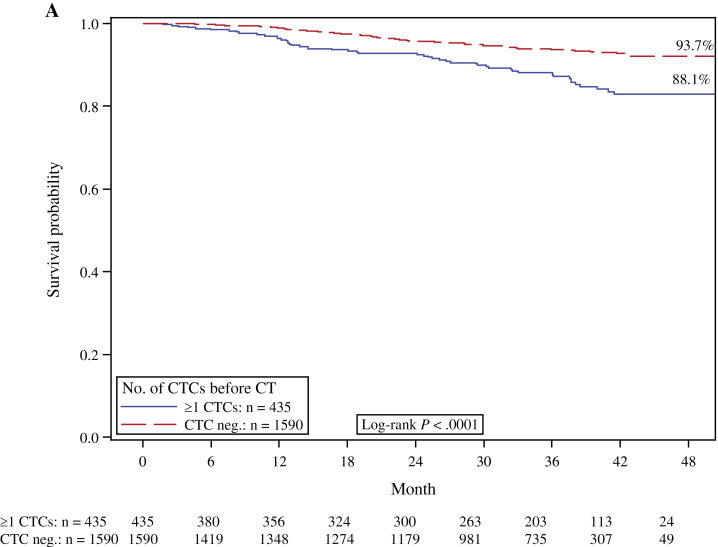
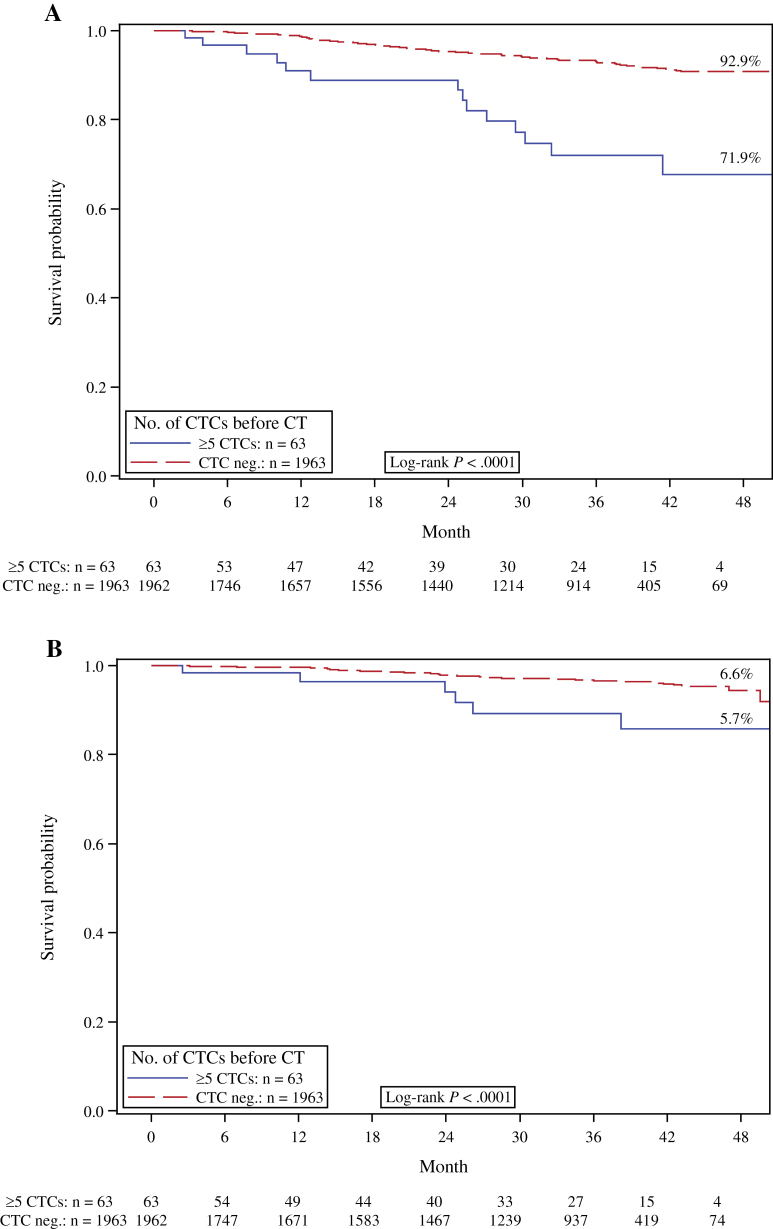
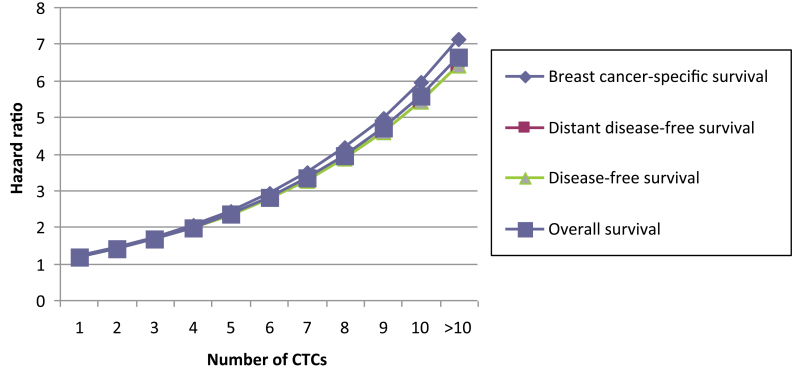
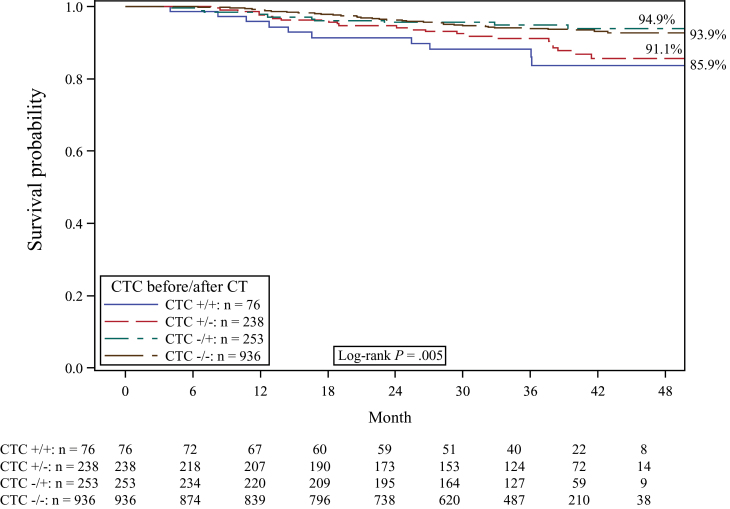
Verification
Claims the paper makes
The claims and statistics of this paper haven’t been checked yet.
Free: it reads the open-access text and checks the first 5 claims that cite a source we can check. Create a free account to check every claim.
Claims other papers make about this one
Each is checked against this paper’s own text: does it say what the citing paper says it does?
The source backs part of the claim, not all of it — or backs it for a different population, condition or comparison.
In the citing paper
“Rack B. et al. piloted a larger prospective study with 2026 breast cancer patients and discovered that the detection rate of CTCs after chemotherapy (22.1%) increased slightly in comparison to the baseline condition (21.5%) [150].”
From Tumor microenvironment complexity and therapeutic implications at a glance (2020) · cites this paper as [150]
Experimental — accuracy not yet measured
Self-check
Percentages, sums and reported differences re-computed from the paper’s own numbers.
The self-check needs the paper’s full text.
Citations
Cites
Nonparametric Estimation from Incomplete Observations
Kaplan, E. L., & Meier, P. (1992) · Springer Series in Statistics · doi:10.1007/978-1-4612-4380-9_25 · Cited by 45,181 · cited 1×
“The product-limit method according to Kaplan–Meier was used to estimate survival (21).”
MethodRegression Models and Life-Tables
Cox, D. R. (1972) · Journal of the Royal Statistical Society Series B: Statistical Methodology · doi:10.1111/j.2517-6161.1972.tb00899.x · Cited by 39,793
Nonparametric Estimation from Incomplete Observations
Kaplan, E. L., & Meier, P. (1958) · Journal of the American Statistical Association · doi:10.1080/01621459.1958.10501452 · Cited by 39,158
Regression Models and Life-Tables
Cox, D. R. (1992) · Springer Series in Statistics · doi:10.1007/978-1-4612-4380-9_37 · Cited by 26,297
ELSTON, C. W., & ELLIS, I. O. (1991) · Histopathology · doi:10.1111/j.1365-2559.1991.tb00229.x · Cited by 6,175
Circulating Tumor Cells, Disease Progression, and Survival in Metastatic Breast Cancer
Cristofanilli, M., Budd, G. T., Ellis, M. J., Stopeck, A., Matera, J., Miller, M. C., Reuben, J. M., Doyle, G. V., Allard, W. J., Terstappen, L. W. M. M., et al. (2004) · New England Journal of Medicine · doi:10.1056/nejmoa040766 · Cited by 4,593
Giuliano, A. E. (2011) · JAMA · doi:10.1001/jama.2011.90 · Cited by 2,942 · cited 1×
“Furthermore, because axillary operation will increasingly be confined to sentinel node biopsy, CTCs could be a helpful tool for selection of highrisk patients who might benefit from a more aggressive dose-dense chemotherapy regimen (27,28).”
BackgroundAllard, W. J., Matera, J., Miller, M. C., Repollet, M., Connelly, M. C., Rao, C., Tibbe, A. G. J., Uhr, J. W., & Terstappen, L. W. M. M. (2004) · Clinical Cancer Research · doi:10.1158/1078-0432.ccr-04-0378 · Cited by 2,542 · cited 1×
“Nevertheless, the CellSearch system has shown highly reproducible and automated detection of CTCs in interlab validation trials (34,35).”
MethodGeneration of a functional mammary gland from a single stem cell
Shackleton, M., Vaillant, F., Simpson, K. J., Stingl, J., Smyth, G. K., Asselin-Labat, M.-L., Wu, L., Lindeman, G. J., & Visvader, J. E. (2006) · Nature · doi:10.1038/nature04372 · Cited by 2,005
Pathological prognostic factors in breast cancer
Elston, C. (1999) · Critical Reviews in Oncology/Hematology · doi:10.1016/s1040-8428(99)00034-7 · Cited by 1,735
Cited by
Items 201–300 of 615
Current progress in the clinical use of circulating tumor cells as prognostic biomarkers
Jin, K., Chen, X., Lan, H., Wang, S., Ying, X., Abdi, S. M., Wang, W., Hu, Z., & Mou, X. (2019) · Cancer Cytopathology · doi:10.1002/cncy.22189 · Cited by 36
“CTC counts at earlier stages of breast cancer also have been correlated with prognosis and could be used to help tailor the treatment course for patients with early-stage breast cancer.(36) Recently, the idea of a CTC “RNA signature” system has been advanced,(37) in which the RNA expression of a patient’s CTCs can be…”
BackgroundBatth, I. S., Dao, L. H., Satelli, A., Mitra, A., Yi, S., Noh, H., Li, H., Brownlee, Z., Zhou, S., Bond, J. P., et al. (2020) · International Journal of Cancer · doi:10.1002/ijc.33140 · Cited by 34
“term follow-up of patients, to the best of our knowledge there have not been any to study patients who are under remission in the longterm longitudinal method like ours.(48) The goal of our study is to extend this analysis to NB and determine the feasibility of CSV CTC analysis in monitoring and guiding therapy.”
MethodLiang, N., Liu, L., Li, P., Xu, Y., Hou, Y., Peng, J., Song, Y., Bing, Z., Wang, Y., Wang, Y., et al. (2020) · Journal of Thoracic Disease · doi:10.21037/jtd-20-1026a · Cited by 33
Pang, S., Li, H., Xu, S. Q., Feng, L.-Y., Ma, X., Chu, Y., Zou, B., Wang, S., & Zhou, G. (2021) · Scientific Reports · doi:10.1038/s41598-021-92876-8 · Cited by 36
Analytical performance of the FDA-cleared Parsortix® PC1 system
Templeman, A., Miller, M. C., Cooke, M. J., O'Shannessy, D. J., Gurung, Y., Pereira, T., Peters, S. G., Piano, M. D., Teo, M., Khazan, N., et al. (2023) · Journal of Circulating Biomarkers · doi:10.33393/jcb.2023.2629 · Cited by 40
“Data were collected from a total of 150 spiked samples (76 HVs and 74 MBC patients) processed on four different Parsortix® PC1 systems.”
BackgroundInfluentialBreast Cancer Circulating Tumor Cells: Current Clinical Applications and Future Prospects
Cani, A. K., & Hayes, D. F. (2024) · Clinical Chemistry · doi:10.1093/clinchem/hvad191 · Cited by 36
Hall, C. S., Karhade, M., Laubacher, B. A., Kuerer, H. M., Krishnamurthy, S., DeSnyder, S. M., Anderson, A. E., Valero, V., Ueno, N. T., Li, Y., et al. (2015) · JNCI Journal of the National Cancer Institute · doi:10.1093/jnci/djv250 · Cited by 35
“5% to 31%) reported for non-IBC patients (14-16,19).”
BackgroundTewari, K. S., Sill, M. W., Monk, B. J., Penson, R. T., Moore, D. H., Lankes, H. A., Ramondetta, L. M., Landrum, L. M., Randall, L. M., Oaknin, A., et al. (2020) · Molecular Cancer Therapeutics · doi:10.1158/1535-7163.mct-20-0276 · Cited by 33
“Several years earlier, Rack and colleagues had shown CTCs to have independent prognostic relevance before and after adjuvant chemotherapy for women with early breast cancer (32).”
BackgroundChowdhury, T., Cressiot, B., Parisi, C., Smolyakov, G., Thiébot, B., Trichet, L., Fernandes, F. M., Pelta, J., & Manivet, P. (2023) · ACS Sensors · doi:10.1021/acssensors.2c02308 · Cited by 35
CTCs in early breast cancer: A path worth taking
Maltoni, R., Gallerani, G., Fici, P., Rocca, A., & Fabbri, F. (2016) · Cancer Letters · doi:10.1016/j.canlet.2016.03.051 · Cited by 34
Vetter, M. H. F., Landin, J., Szczerba, B. M., Castro-Giner, F., Gkountela, S., Donato, C., Krol, I., Scherrer, R., Balmelli, C., Malinovska, A., et al. (2018) · Breast Cancer Research · doi:10.1186/s13058-018-1067-y · Cited by 32
Morigi, C. (2019) · ecancermedicalscience · doi:10.3332/ecancer.2019.924 · Cited by 33
“In the future, we could benefit from the clinical use of circulating tumour cells (CTC) to assess prognosis [85, 86].”
BackgroundBudna, J., Świerczewska, M., Mazel, M., Cieślikowski, W. A., Ida, A., Jankowiak, A., Antczak, A., Nowicki, M. O., Pantel, K., Azria, D., et al. (2019) · Cancers · doi:10.3390/cancers11060802 · Cited by 33
“However, the concentration of CTCs in non-metastatic cancer patients is very low, and increasing the blood volume has helped to increase the rate of CTC detection in early stage breast cancer [11].”
BackgroundSelf-citationMagbanua, M. J. M., Yau, C. S. F., Wolf, D. M., Lee, J. S., Chattopadhyay, A., Scott, J. H., Bowlby-Yoder, E., Hwang, E. S., Alvarado, M. D., Ewing, C. A., et al. (2019) · Clinical Cancer Research · doi:10.1158/1078-0432.ccr-18-3888 · Cited by 36
“While numerous clinical studies have demonstrated that EPCAM-positive CTCs are unequivocally associated with poor response and survival (5, 14, 15), the clinical relevance of EPCAM-negative tumor cells in circulation remains unclear (48).”
BackgroundResultCirculating Tumor Cells as a Predictor of Treatment Response in Clinically Localized Prostate Cancer
Salami, S. S., Singhal, U., Spratt, D. E., Palapattu, G. S., Hollenbeck, B. K., Schonhoft, J. D., Graf, R. P., Louw, J. E., Jendrisak, A., Dugan, L., et al. (2019) · JCO Precision Oncology · doi:10.1200/po.18.00352 · Cited by 32
“This stands in contrast to other tumor types, where the detection of CTCs in localized disease is considered prognostic.(39,40)”
ResultBreast cancer circulating tumor cells with mesenchymal features—an unreachable target?
Topa, J., Grešner, P., Zaczek, A. J., & Markiewicz, A. (2022) · Cellular and Molecular Life Sciences · doi:10.1007/s00018-021-04064-6 · Cited by 35
“The majority of reports on the possibility of monitoring therapeutic efficacy concern enumeration of CTCs, based on EpCAM with the use of CellSearch® system [1, 2, 67, 68].”
MethodSingle-cell analyses of circulating tumor cells.
Chen, X.-X., & Bai, F. (2015) · PubMed Central · doi:10.7497/j.issn.2095-3941.2015.0056 · Cited by 34
Lu, Y., Wang, P., Wang, X., Peng, J., Zhu, Y., & Shen, N. (2016) · Oncotarget · doi:10.18632/oncotarget.8156 · Cited by 30
Li, Y., Qian, D., Lin, H.-P., Xie, J., Yang, P., Maddy, D., Xiao, Y., Huang, X., Wang, Z., & Yang, C. (2020) · Journal of Controlled Release · doi:10.1016/j.jconrel.2020.10.015 · Cited by 30
Joosse, S. A., Beyer, B., Gasch, C., Nastały, P., Kuske, A., Isbarn, H., Horst, L. J., Hille, C., Gorges, T. M., Cayrefourcq, L., et al. (2019) · Clinical Chemistry · doi:10.1373/clinchem.2019.310912 · Cited by 31
Self-citationBidadi, B., Liu, D., Kalari, K. R., Rübner, M., Hein, A., Beckmann, M. W., Rack, B. K., Janni, W., Fasching, P. A., Weinshilboum, R. M., et al. (2018) · Frontiers in Pharmacology · doi:10.3389/fphar.2018.00158 · Cited by 32
“gov Identifier: NCT02181101), a randomized Phase III study of response to the treatment of early primary breast cancer with adjuvant therapy after surgical resection (Rack et al., 2014; Widschwendter et al., 2015).”
BackgroundMethodSelf-citationFridrichová, I., Kalinkova, L., & Čierniková, S. (2022) · International Journal of Molecular Sciences · doi:10.3390/ijms232012141 · Cited by 32
Tseng, J.-Y., Yang, C., Liang, S.-C., Liu, R.-S., Jiang, J., & Lin, C.-H. (2014) · Cancers · doi:10.3390/cancers6042369 · Cited by 32
“The number of CTCs provides meaningful, real-time information on the clinical behavior of many tumors [2,5,6,11–13] and could additionally predict clinical outcome in patients with metastatic cancers [2,5,6].”
BackgroundMolecular analysis of circulating tumors cells: Biomarkers beyond enumeration
Hwang, W. L., Pleskow, H. M., & Miyamoto, D. T. (2018) · Advanced Drug Delivery Reviews · doi:10.1016/j.addr.2018.01.003 · Cited by 33
Fukuyama, S., Kumamoto, S., Nagano, S., Hitotsuya, S., Yasuda, K., Kitamura, Y., Iwatsuki, M., Baba, H., Ihara, T., NAKANISHI, Y., et al. (2021) · Talanta · doi:10.1016/j.talanta.2021.122239 · Cited by 30
Applications of liquid biopsy in the Pharmacological Audit Trail for anticancer drug development
Pal, A., Shinde, R., Miralles, M. S., Workman, P., & Bono, J. S. D. (2021) · Nature Reviews Clinical Oncology · doi:10.1038/s41571-021-00489-x · Cited by 30
Significance of circulating tumor cells in lung cancer: a narrative review
Hamilton, G., Rath, B., & Stickler, S. (2023) · Translational Lung Cancer Research · doi:10.21037/tlcr-22-712 · Cited by 34
“The major difficulties for an early tumor detection is the rarity of CTCs at the nonmetastatic stage and the low blood volume ( 10 mL) available for routine tests (24,25,48).”
Bardia, A., & Haber, D. A. (2014) · Journal of Clinical Oncology · doi:10.1200/jco.2014.57.1505 · Cited by 28
Таширева, Л. А., Savelieva, O. E., Grigoryeva, E. S., Nikitin, Y. V., Denisov, E. V., Vtorushin, S. V., Zavyalova, M. V., Чердынцева, Н. В., & Михайлович, П. В. (2021) · International Journal of Molecular Sciences · doi:10.3390/ijms22052504 · Cited by 34
“Moreover, it was found that the presence of CTCs reduced disease-free survival of patients with lymphogenous metastases but was not associated with negative lymph node status [22].”
BackgroundSchindlbeck, C., Andergassen, U., Jueckstock, J. K., Rack, B. K., Janni, W., & Jeschke, U. (2016) · Journal of Cancer Research and Clinical Oncology · doi:10.1007/s00432-016-2118-3 · Cited by 27
“…within the German SUCCESS chemotherapy trial, which is the largest examined collective in this situation, demonstrated prognostic relevance for reduced disease-free, distant disease-free and overall survival if more than one CTC could be found before or after chemotherapy (Rack et al. 2014).”
BackgroundSelf-citationHart, C. D., Sanna, G., Siclari, O., Biganzoli, L., & Leo, A. D. (2015) · The Breast · doi:10.1016/j.breast.2015.07.033 · Cited by 26
Kasimir‐Bauer, S., Reiter, K., Aktas, B., Bittner, A., Weber, S., Keller, T., Kimmig, R., & Hoffmann, O. (2016) · Scientific Reports · doi:10.1038/srep26355 · Cited by 26
de Gregorio, A., Häberle, L., Fasching, P. A., Müller, V., Schrader, I., Lorenz, R., Forstbauer, H., Friedl, T. W. P., Bauer, E. C. A., de Gregorio, N., et al. (2020) · Breast Cancer Research · doi:10.1186/s13058-020-01348-w · Cited by 26
Self-citationThe integrated on-chip isolation and detection of circulating tumour cells
Abusamra, S. M., Barber, R., Sharafeldin, M., Edwards, C. M., & Davis, J. J. (2024) · Sensors & Diagnostics · doi:10.1039/d3sd00302g · Cited by 27
Reduzzi, C., Nicolò, E., Singhal, S., Venetis, K., Franco, A. O., de Miguel‐Pérez, D., Dipasquale, A., Gouda, M. A., Saldanha, E. F., Kasi, P. M., et al. (2024) · Critical Reviews in Oncology/Hematology · doi:10.1016/j.critrevonc.2024.104483 · Cited by 26
Vilsmaier, T., Rack, B. K., KÖNIG, A., Friese, K., Janni, W., Jeschke, U., & ACHER, T. W. (2016) · Anticancer Research · doi:10.21873/anticanres.11093 · Cited by 25
Self-citationCTCs Expression Profiling for Advanced Breast Cancer Monitoring
Pereira‐Veiga, T., Martínez‐Fernández, M., Abuín, C., Piñeiro, R., Cebey-López, V., Cueva, J. F., Palacios, P., Blanco, C., Muinelo‐Romay, L., Abalo, A., et al. (2019) · Cancers · doi:10.3390/cancers11121941 · Cited by 27
“Although, several studies have evaluated the prognostic value of CTCs enumeration in BC patients [8,17,18], only a number of them have explored the prognostic relevance of CTCs numbers before and after chemotherapy, supporting that the presence of persisting CTCs after treatment is associated with worse outcome, and t…”
BackgroundNatural Fish Trap‐Like Nanocage for Label‐Free Capture of Circulating Tumor Cells
Jiang, W., Han, L., Yang, L., Xu, T., He, J., Peng, R., Liu, Z., Zhang, C., Yu, X., & Jia, L. (2020) · Advanced Science · doi:10.1002/advs.202002259 · Cited by 27
Okabe, T., Togo, S., Fujimoto, Y., Watanabe, J. A., Sumiyoshi, I., Orimo, A., & Takahashi, K. (2020) · Cancers · doi:10.3390/cancers12123588 · Cited by 27
Pauken, C. M., Kenney, S. R., Brayer, K. J., Guo, Y. P., Brown-Glaberman, U. A., & Marchetti, D. (2021) · Cancers · doi:10.3390/cancers13194885 · Cited by 29
“Quantification of CTCs has proven to be an independent prognostic indicator of progression-free/overall survival of metastatic cancer patients, including mBC [6,10,12].”
BackgroundRecent Advances in Optimizing Radiation Therapy Decisions in Early Invasive Breast Cancer
Riaz, N., Jeen, T., Whelan, T. J., & Nielsen, T. O. (2023) · Cancers · doi:10.3390/cancers15041260 · Cited by 32
Nicolò, E., Serafini, M. S., Munoz-Arcos, L. S., Pontolillo, L., Molteni, E., Bayou, N., Andreopoulou, E., Curigliano, G., Reduzzi, C., & Cristofanilli, M. (2023) · The Journal of Liquid Biopsy · doi:10.1016/j.jlb.2023.100117 · Cited by 28
“In several blood samples from EBC patients, only one CTC is detected which makes the evaluation of HER2 status even more challenging [23,64,65].”
The Diversity of Liquid Biopsies and Their Potential in Breast Cancer Management
Keup, C., Kimmig, R., & Kasimir‐Bauer, S. (2023) · Cancers · doi:10.3390/cancers15225463 · Cited by 27
Role of Next-Generation Sequencing Technologies in Personalized Medicine
Morganti, S., Tarantino, P., Ferraro, E., D’Amico, P., Viale, G., Trapani, D., Duso, B. A., & Curigliano, G. (2019) · Springer eBooks · doi:10.1007/978-3-030-27994-3_8 · Cited by 35
Heterogeneous Circulating Tumor Cells in Sarcoma: Implication for Clinical Practice
Agnoletto, C., Caruso, C., & Garofalo, C. (2021) · Cancers · doi:10.3390/cancers13092189 · Cited by 29
“Accordingly, EpCAM+ CTCs counts predict the clinical outcome of patients with metastatic and non-metastatic breast cancer [42,135].”
BackgroundHighly Specific Electrochemical Analysis of Cancer Cells using Multi‐Nanoparticle Labeling
Wan, Y., Zhou, Y., Poudineh, M., Safaei, T. S., Mohamadi, R. M., Sargent, E. H., & Kelley, S. O. (2014) · Angewandte Chemie · doi:10.1002/ange.201407982 · Cited by 24
Multianalyte liquid biopsy to aid the diagnostic workup of breast cancer
Setayesh, S. M., Hart, O., Naghdloo, A., Higa, N., Nieva, J. J., Lu, J. M., Hwang, S. E., Wilkinson, K., Kidd, M., Anderson, A. K. L., et al. (2022) · npj Breast Cancer · doi:10.1038/s41523-022-00480-4 · Cited by 25
Liquid biopsy in colorectal cancer
Najafi, S., Majidpoor, J., & Mortezaee, K. (2023) · Clinica Chimica Acta · doi:10.1016/j.cca.2023.117674 · Cited by 30
Clinical applications of circulating tumor cells in patients with solid tumors
Smit, D. J., Schneegans, S., & Pantel, K. (2024) · Clinical & Experimental Metastasis · doi:10.1007/s10585-024-10267-5 · Cited by 26
“In particular in breast cancer, there are numerous large-scale studies demonstrating a prognostic role of CTCs [38–41].”
BackgroundSelf-citationDetection of circulating melanoma cells in the blood of melanoma patients
Roland, C. L., Ross, M. I., Hall, C. S., Laubacher, B. A., Upshaw, J. R., Anderson, A. E., & Lucci, A. (2015) · Melanoma Research · doi:10.1097/cmr.0000000000000168 · Cited by 24
Chen, S., Tauber, G., Langsenlehner, T., Schmölzer, L. M., Pötscher, M., Riethdorf, S., Kuske, A., Leitinger, G., Kashofer, K., Czyż, Z. T., et al. (2019) · Cancers · doi:10.3390/cancers11070933 · Cited by 27
Self-citationJanni, W., Schneeweiß, A., Müller, V., Wöckel, A., Lux, M. P., Hartkopf, A. D., Nabieva, N., Taran, F., Tesch, H., Overkamp, F., et al. (2019) · Geburtshilfe und Frauenheilkunde · doi:10.1055/a-0842-6661 · Cited by 23
Self-citationGupta, P., Gulzar, Z. G., Hsieh, B. R., Lim, A., Watson, D., & Mei, R. (2019) · Journal of Circulating Biomarkers · doi:10.1177/1849454419899214 · Cited by 23
Chemotherapy Treatment Considerations in Metastatic Breast Cancer
Hanna, K. S., & Mayden, K. D. (2021) · Journal of the Advanced Practitioner in Oncology · doi:10.6004/jadpro.2021.12.2.11 · Cited by 23
“…2 Mar 2021 shown to be an independent detrimental prognostic factor for survival among patients with breast cancer, and ongoing studies will validate the clinical translation of this approach in guiding treatment selection and monitoring the effect (Rack et al., 2014; Siravegna et al., 2017).”
BackgroundJakabová, A., Bielčiková, Z., Pospíšilová, E., Petruzelka, L. B., Błasiak, P., Bobek, V., & Kološtová, K. (2021) · Therapeutic Advances in Medical Oncology · doi:10.1177/17588359211028492 · Cited by 25
Detection of Circulating Tumor Cells in Breast Cancer Patients Using Cytokeratin-19 Real-Time RT-PCR
Park, H. S., Han, H. J., Lee, S. H., Kim, G. M., Park, S., Choi, Y. A., Lee, J. D., Kim, G. M., Sohn, J., & Kim, S. I. (2016) · Yonsei Medical Journal · doi:10.3349/ymj.2017.58.1.19 · Cited by 23
Morphologic and Genomic Heterogeneity in the Evolution and Progression of Breast Cancer
Kutasovic, J. R., Reed, A. E. M., Sokolova, A., Lakhani, S. R., & Simpson, P. T. (2020) · Cancers · doi:10.3390/cancers12040848 · Cited by 27
“Increased concentration of CTCs in early [105,106] and metastatic [107–110] breast cancer is associated with poor prognosis.”
BackgroundSimultaneous Detection of Disseminated and Circulating Tumor Cells in Primary Breast Cancer Patients
Hartkopf, A. D., Wallwiener, M., Hahn, M., Fehm, T. N., Brucker, S. Y., & Taran, F. (2015) · Cancer Research and Treatment · doi:10.4143/crt.2014.287 · Cited by 23
Self-citationClinical relevance ofliquid biopsyin breast cancer: update in 2020
Cayrefourcq, L., & Alix‐Panabières, C. (2020) · Expert Review of Molecular Diagnostics · doi:10.1080/14737159.2020.1816828 · Cited by 22
Shah, A. N., Carroll, K., Gerratana, L., Lin, C., Davis, A. A., Zhang, Q., Jacob, S. L., Finkelman, B. S., Zhang, Y., Qiang, W., et al. (2021) · Breast Cancer Research and Treatment · doi:10.1007/s10549-021-06236-1 · Cited by 24
Neinavaie, F., Ibrahim‐Hashim, A., Kramer, A. M., Brown, J. S., & Richards, C. L. (2021) · Frontiers in Ecology and Evolution · doi:10.3389/fevo.2021.681100 · Cited by 27
Cani, A. K., Dolce, E. M., Darga, E. P., Hu, K. S., Liu, C., Pierce, J., Bradbury, K., Kilgour, E., Aung, K., Schiavon, G., et al. (2021) · Molecular Oncology · doi:10.1002/1878-0261.13150 · Cited by 23
Cell-free DNA as a biomarker in cancer
Eibl, R. H., & Schneemann, M. (2022) · Extracellular Vesicles and Circulating Nucleic Acids · doi:10.20517/evcna.2022.20 · Cited by 23
Yin, D., Shi, A., Zhou, B., Wang, M., Xu, G., Shen, M., Zhu, X., & Shi, X. (2022) · Langmuir · doi:10.1021/acs.langmuir.2c01740 · Cited by 21
Clinical significance of circulating tumor cell (CTC)-specific microRNA (miRNA) in breast cancer
Wei, Y., Yang, W., Huang, Q., Chen, Y., Zeng, K., Chen, J., & Chen, J. (2022) · Progress in Biophysics and Molecular Biology · doi:10.1016/j.pbiomolbio.2022.12.005 · Cited by 23
Circulating Tumor Cells as Cancer Biomarkers in the Clinic
Chinen, L. T. D., Abdallah, E. A., Braun, A. C., Flores, B. C. T., Corassa, M. P., Sanches, S. M., & Fanelli, M. F. (2017) · Advances in experimental medicine and biology · doi:10.1007/978-3-319-55947-6_1 · Cited by 23
LKB 1 pro‐oncogenic activity triggers cell survival in circulating tumor cells
Trapp, E. K., Majunke, L., Zill, B., Sommer, H. L., Andergassen, U., Koch, J., Harbeck, N., Mahner, S., Friedl, T. W. P., Janni, W., et al. (2017) · Molecular Oncology · doi:10.1002/1878-0261.12111 · Cited by 27
“…the last decade, the role of epithelial circulating tumor cells (CTCs) in metastatic induction and their prognostic power has been thoroughly demonstrated (Cristofanilli et al., 2004, 2005; Hayes et al., 2006; Janni et al., 2016; Rack et al., 2014; Riethdorf et al., 2007; Wallwiener et al., 2013).”
BackgroundSelf-citationPolasik, A., Tzschaschel, M. L. J., Schochter, F., de Gregorio, A., Friedl, T. W. P., Rack, B. K., Hartkopf, A. D., Fasching, P. A., Schneeweiß, A., Müller, V., et al. (2017) · Geburtshilfe und Frauenheilkunde · doi:10.1055/s-0043-122884 · Cited by 21
“Moreover, the SUC-CESS study group demonstrated that the detection of CTCs both before and after adjuvant chemotherapy was associated with reduced disease-free survival and overall survival [10].”
Self-citationUpdate Breast Cancer 2018 (Part 1) – Primary Breast Cancer and Biomarkers
Taran, F., Schneeweiß, A., Lux, M. P., Janni, W., Hartkopf, A. D., Nabieva, N., Overkamp, F., Kolberg, H., Hadji, P., Tesch, H., et al. (2018) · Geburtshilfe und Frauenheilkunde · doi:10.1055/s-0044-101613 · Cited by 22
“One prognostic factor that has already been described in the literature is based on the detection of circulating tumor cells (CTCs) in blood prior to adjuvant or neoadjuvant therapy using the Cell-Search ® CTC test [56 – 58].”
Self-citationLin, S. Y., Orozco, J. I. J., & Hoon, D. S. �. (2018) · Advances in experimental medicine and biology · doi:10.1007/978-3-319-97746-1_5 · Cited by 23
Tachtsidis, A., Le, A. V.-P., Blick, T., Gunasinghe, D., de Sousa, E., Waltham, M. C., Dobrovic, A., & Thompson, E. W. (2019) · Clinical & Experimental Metastasis · doi:10.1007/s10585-019-09977-y · Cited by 23
Circulating and Disseminated Tumor Cells in Breast Carcinoma
Banys-Paluchowski, M. J., Fehm, T. N., Janni, W., Solomayer, E., & Hartkopf, A. D. (2019) · Geburtshilfe und Frauenheilkunde · doi:10.1055/a-1031-1120 · Cited by 20
“Similarly, patients with persistent CTCs/ DTCs after completion of (neo)adjuvant chemotherapy are more at risk for developing a relapse [7,8].”
Self-citationGwark, S., Ahn, H., Yeom, J., Yu, J., Oh, Y., Jeong, J. H., Ahn, J., Jung, K. H., Kim, S., Lee, H. J., et al. (2021) · Cancers · doi:10.3390/cancers13246267 · Cited by 21
Heitmeir, B., Deniz, M., Janni, W., Rack, B. K., Schochter, F., & Wiesmüller, L. (2022) · Cancers · doi:10.3390/cancers14040997 · Cited by 23
“Circulating tumor cells have gained major interest as potential non-invasive diagnostic tools once their prognostic value for MBC patients was unequivocally demonstrated in large prospective studies [137,138].”
BackgroundSelf-citationZhou, M., Li, K., & Luo, K. Q. (2023) · Advanced Science · doi:10.1002/advs.202301059 · Cited by 21
Circulating Tumor Cells: The Importance of Single Cell Analysis
Heymann, D., & Tellez-Gabriel, M. (2018) · Advances in experimental medicine and biology · doi:10.1007/978-981-13-0502-3_5 · Cited by 24
Methodology for the Isolation and Analysis of CTCs
Costa, C., & Dávila-Ibáñez, A. B. (2020) · Advances in experimental medicine and biology · doi:10.1007/978-3-030-35805-1_4 · Cited by 20
Gwark, S., Kim, J., Kwon, N., Kim, K.-Y., Kim, Y.-N., Lee, C. H., Kim, Y. H., Kim, M. S., Hong, S. W., Choi, M. Y., et al. (2020) · Scientific Reports · doi:10.1038/s41598-020-74577-w · Cited by 24
Nanou, A., Miao, J., Coumans, F. A. W., Dolce, E. M., Darga, E. P., Barlow, W. E., Smerage, J. B., Paoletti, C., Godwin, A. K., Pusztai, L., et al. (2023) · JCO Precision Oncology · doi:10.1200/po.22.00372 · Cited by 22
“Circulating tumor cells (CTCs) detected with the CellSearch system are elevated in 25%-50% and 10%-15% of patients with metastatic and early-stage breast cancer, respectively.(4,5) In each of these settings, elevated CTCs are associated with higher risk of progression and poorer overall survival (OS).”
BackgroundYeo, D., Kao, S., Gupta, R., Wahlroos, S., Bastian, A., Strauss, H., Klemm, V., Shrestha, P., Ramirez, A. B., Costandy, L., et al. (2023) · Frontiers in Oncology · doi:10.3389/fonc.2023.1141228 · Cited by 21
Prognostic Relevance of Circulating Tumor Cells in Molecular Subtypes of Breast Cancer
Banys-Paluchowski, M. J., Schneck, H., Blassl, C., Schultz, S., Meier-Stiegen, F., Niederacher, D., Krawczyk, N., Ruckhaeberle, E., Fehm, T. N., & Neubauer, H. J. (2015) · Geburtshilfe und Frauenheilkunde · doi:10.1055/s-0035-1545788 · Cited by 22
Self-citationLiquid Biopsy in Solid Malignancy
Scarlotta, M., Şimşek, C., & Kim, A. K. (2019) · Genetic Testing and Molecular Biomarkers · doi:10.1089/gtmb.2018.0237 · Cited by 26
“In breast and lung cancer, patients with greater than 2–4 CTCs per 7.5 mL of blood had worse PFS and OS (Krebs et al. , 2011; Rack et al. , 2014).”
InfluentialLiquid Biopsy in Breast Cancer
Banys‐Paluchowski, M., Krawczyk, N., & Fehm, T. N. (2020) · Geburtshilfe und Frauenheilkunde · doi:10.1055/a-1124-7225 · Cited by 25
“This suggests the development of effective resistance mechanisms by the tumour cells, allowing them to evade the effects of cytotoxic treatment [21,31].”
BackgroundMethodSelf-citationIdentification of Patients with Early HR+ HER2− Breast Cancer at High Risk of Recurrence
Fasching, P. A., Kreipe, H. H., Mastro, L. D., Ciruelos, E., Freyer, G., Korfel, A., Chouaki, N., Stoffregen, C., Sapunar, F. J., & Cameron, D. (2024) · Geburtshilfe und Frauenheilkunde · doi:10.1055/a-2238-3199 · Cited by 24
“…survival, and OS before the start of systemic treatment and for DFS after completion of adjuvant chemotherapy in the SUCCESS (Simultaneous Study of Gemcitabine-Docetaxel Combination adjuvant treat-168 ment, as well as Extended Bisphosphonate and Surveillance-Trial) prospective trial [89].”
Self-citationJanni, W., Friedl, T. W. P., Yab, T. C., Bidard, F., Cristofanilli, M., Hayes, D. F., Ignatiadis, M., Regan, M. M., Alix‐Panabières, C., Barlow, W. E., et al. (2025) · Clinical Cancer Research · doi:10.1158/1078-0432.ccr-24-3108 · Cited by 22
“The cutoff of ≥ 1 CTC was first used and validated in the adjuvant setting (21, 22) but subsequently also used as cutoff for CTC positivity in the metastatic setting (23).”
Self-citationPapadaki, M. A., Messaritakis, I., Fiste, O., Souglakos, J., Politaki, E., Kotsakis, A. P., Georgoulias, V., Mavroudis, D., & Agelaki, S. (2021) · International Journal of Molecular Sciences · doi:10.3390/ijms22020925 · Cited by 22
“CTC positivity was defined by using two different thresholds: ≥1 CTCs and ≥5 CTCs, as described in previous studies [7,15,16,35].”
MethodMolecular Interplay between Dormant Bone Marrow-Resident Cells (BMRCs) and CTCs in Breast Cancer
Boral, D., Liu, H. N., Kenney, S. R., & Marchetti, D. (2020) · Cancers · doi:10.3390/cancers12061626 · Cited by 20
Trapp, E. K., Fasching, P. A., Fehm, T. N., Schneeweiß, A., Müller, V., Harbeck, N., Lorenz, R., Schumacher, C., Heinrich, G., Schochter, F., et al. (2022) · Cancers · doi:10.3390/cancers14163949 · Cited by 22
“CTC evaluation was performed using the semiautomated FDA-approved CellSearch® system (Menarini Silicon Biosystems, Bologna, Italy; formerly Janssen Diagnostics) as described in detail elsewhere [9,10,37].”
BackgroundMethodSelf-citationYang, C.-G., Zhuang, W., Hu, Y., & Zhu, L. (2018) · World Journal of Surgical Oncology · doi:10.1186/s12957-017-1305-2 · Cited by 19
Circulating Tumor Cells: A Window into Tumor Development and Therapeutic Effectiveness
Cáceres, G., Puskas, J., & Magliocco, A. M. (2015) · Cancer Control · doi:10.1177/107327481502200207 · Cited by 20
Somatic copy number aberrations in metastatic patients: The promise of liquid biopsies
Baldacchino, S., & Grech, G. (2019) · Seminars in Cancer Biology · doi:10.1016/j.semcancer.2019.12.014 · Cited by 17
Circulating Tumor Cells as a Tool to Untangle the Breast Cancer Heterogeneity Issue
Rossi, T., Gallerani, G., Martinelli, G., Maltoni, R., & Fabbri, F. (2021) · Biomedicines · doi:10.3390/biomedicines9091242 · Cited by 21
“The prognostic relevance of CTCs before and after NAC was also demonstrated in 2026 early-stage BC patients by the SUCCESS trial [52].”
BackgroundMuchlińska, A., Wenta, R., Ścińska, W., Markiewicz, A., Suchodolska, G., Senkus, E., Zaczek, A. J., & Bednarz‐Knoll, N. (2023) · Cancers · doi:10.3390/cancers15164169 · Cited by 20
Microfluidic-SERS Technologies for CTC: A Perspective on Clinical Translation
Hassanzadeh‐Barforoushi, A., Tukova, A., Nadalini, A., Inglis, D. W., Tsao, S. C., & Wang, Y. (2024) · ACS Applied Materials & Interfaces · doi:10.1021/acsami.4c01158 · Cited by 29
Li, W., Zhang, X., Yang, Y., Lin, J., Zhou, K., Sun, R., Dang, C., & Diao, D. (2024) · Scientific Reports · doi:10.1038/s41598-024-63305-3 · Cited by 19
Circulating Tumor Cells in the Adenocarcinoma of the Esophagus
Gallerani, G., & Fabbri, F. (2016) · International Journal of Molecular Sciences · doi:10.3390/ijms17081266 · Cited by 19
“Their presence is correlated with poor prognosis and progression-free survival, and they are considered indicators of treatment efficacy in different tumors [18–21].”
BackgroundThe Role of Genetic Testing in the Selection of Therapy for Breast Cancer: A Review
Niravath, P. A., Çakar, B., & Ellis, M. J. (2016) · JAMA Oncology · doi:10.1001/jamaoncol.2016.2719 · Cited by 20
the SUCCESS Study Group, Bauer, E. C. A., Schochter, F., Widschwendter, P., deGregorio, A., Andergassen, U., Friedl, T. W. P., Fasching, P. A., Fehm, T. N., Schneeweiß, A., et al. (2018) · Breast Cancer Research and Treatment · doi:10.1007/s10549-018-4856-1 · Cited by 18
Self-citationPotential of Liquid Biopsies for Breast Cancer Screening, Diagnosis, and Response to Treatment
Eigėlienė, N., Saarenheimo, J., & Jekunen, A. P. (2019) · Oncology · doi:10.1159/000495615 · Cited by 21
The use of liquid biopsy in early breast cancer: clinical evidence and future perspectives
D’Amico, P., Corvaja, C., Gerratana, L., Reduzzi, C., Curigliano, G., & Cristofanilli, M. (2021) · Journal of Cancer Metastasis and Treatment · doi:10.20517/2394-4722.2020.93 · Cited by 18
“However, since the number of CTCs appeared to be directly correlated with the prognosis([36]) and considering the lower number of CTCs presents in the earlier stages, the lowest cut-off (1 CTCs) has been empirically adopted by most of the investigators.”
Method
Metadata
- Authors
- Rack, B., Schindlbeck, C., Jückstock, J., Andergassen, U., Hepp, P., Zwingers, T., Friedl, T. W. P., Lorenz, R., Tesch, H., Fasching, P. A., Fehm, T., Schneeweiss, A., Lichtenegger, W., Beckmann, M. W., Friese, K., Pantel, K., & Janni, W.
- Affiliations
- University Hospital Heidelberg (DE)
- Corresponding author
- Rack, Brigitte
- ORCID
- Venue
- JNCI: Journal of the National Cancer Institute
- Publisher
- Oxford University Press (OUP)
- Published
- 2014-05
- Volume
- 106
- Issue
- 5
- ISSN
- 0027-8874 (ISSN-L)
- 1460-2105
- PMC
- PMC4112925
- OpenAlex
- W2169632044
- Cited by
- 615
- References
- 55
- Citations by year
- 2026: 11 · 2025: 23 · 2024: 38 · 2023: 50 · 2022: 45 · 2021: 48 · 2020: 54 · 2019: 63 · 2018: 67 · 2017: 68 · 2016: 68 · 2015: 58 · 2014: 18
- FWCI
- 22.66
- Type
- journal article
- Language
- en
- Open access
- hybrid
- doi.org
- Licence
- cc-by-nc
- Locations
- JNCI Journal of the National Cancer Institute (publishedVersion, cc-by-nc)
- PubMed Central (publishedVersion, cc-by-nc)
- PubMed (publishedVersion)
- OPUS FAU (Kooperativer Bibliotheksverbund Berlin-Brandenburg (KOBV), on behalf of the Universitätsbibliothek Erlangen-Nürnberg) (submittedVersion)
- HighWire Press Open Archive (submittedVersion)
- Funders
- Eli Lilly and Company
- AstraZeneca
- Sanofi
- Chugai Pharmaceutical
- Topics
- Life Sciences › Biochemistry, Genetics and Molecular Biology › Cancer Research › Breast Cancer Treatment Studies
- Health Sciences › Medicine › Oncology › Cancer Cells and Metastasis
- Life Sciences › Biochemistry, Genetics and Molecular Biology › Cancer Research › Cancer Genomics and Diagnostics
- Keywords
- circulating tumor cells, early breast cancer, prognostic factors, disease-free survival, overall survival, adjuvant chemotherapy, CellSearch, EpCAM, cytokeratin, CD45, lymph node status, CTC count, treatment response monitoring, metastatic breast cancer, hormone receptor status, tumor size and grade, risk stratification, risk-adapted treatment
- MeSH terms
- Docetaxel, Gemcitabine, Antineoplastic Combined Chemotherapy Protocols, Breast Neoplasms, Cyclophosphamide, Deoxycytidine, Female, Fluorouracil, Humans, Lymphatic Metastasis, Middle Aged, Neoplastic Cells, Circulating, Neoplasm Staging, Prospective Studies, Epirubicin, Chemotherapy, Adjuvant, Immunomagnetic Separation, Taxoids, Kaplan-Meier Estimate
About these checks
Registry, retraction, Cites and statistics results are computed, not judged, with one exception: a printed reference that no index lists is read once by a model before it counts as a citation error. Claims are extracted by a model and kept only when their quote appears verbatim in the text; each cited source is then checked, with a model’s help, for whether it says what the claim relies on. Those verdicts can be wrong — read the claim’s quote and the cited source before relying on one.
Statistics and arithmetic are recomputed, not judged.
Confidence bands are shown only for fields calibrated on our annotated test set. None is calibrated yet, so no band is shown.
What counts as a claim ›How we measure confidence ›How we check this ›
Are you an author, or do you see a problem with this page? Request a review
Data sources
Bibliographic data: Semantic Scholar, OpenAlex, Crossref.
Contains information from the Semantic Scholar Academic Graph Datasets, made available under the ODC Attribution License (ODC-BY 1.0).
Semantic Scholar’s data is described in: Kinney, R., et al. (2023). The Semantic Scholar Open Data Platform. arXiv:2301.10140.
