

Circulating Tumor Cells Predict Survival in Early Average-to-High Risk Breast Cancer Patients
Open accessThe DOI matches its Crossref record; 54 of the 55 references it cites were found in a registry or an index.
Abstract
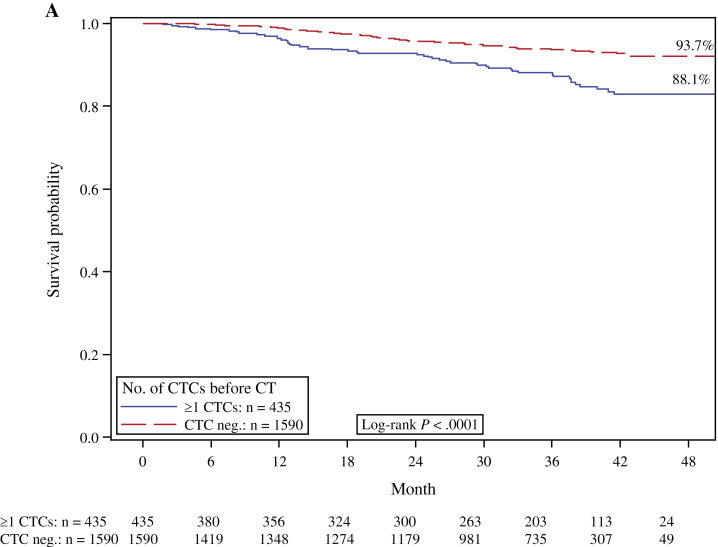
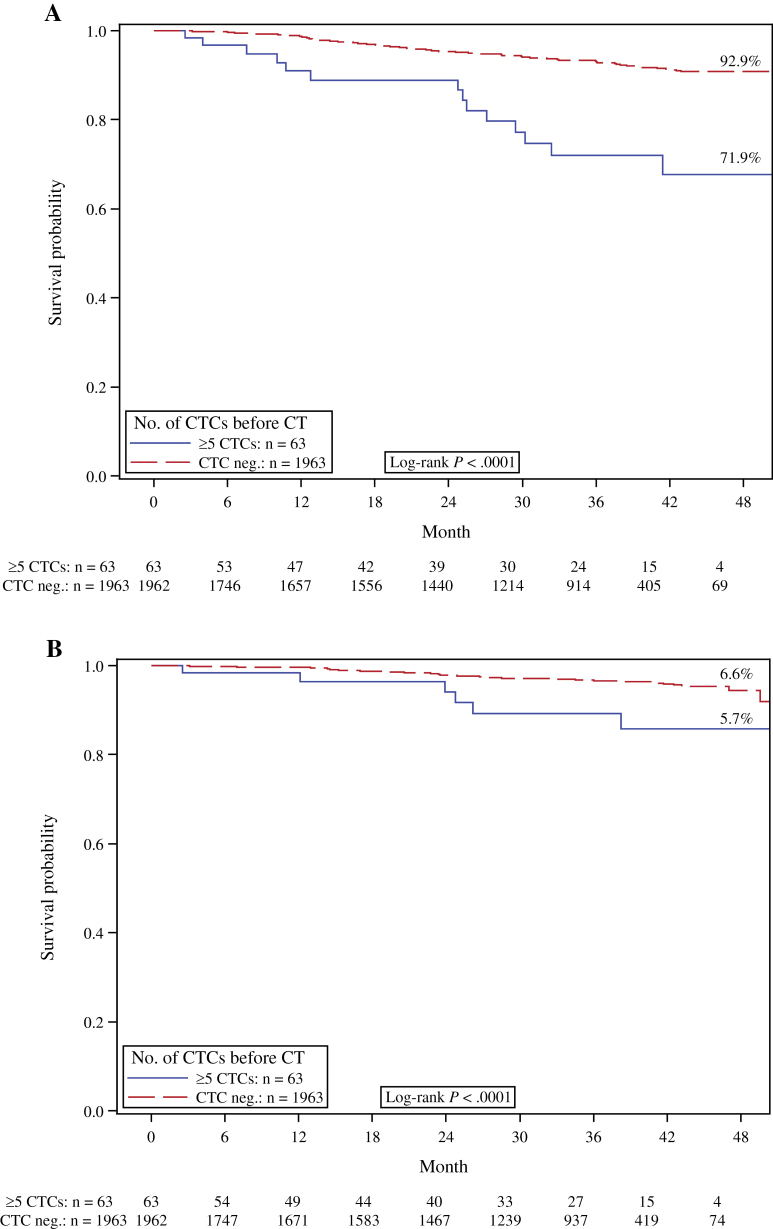
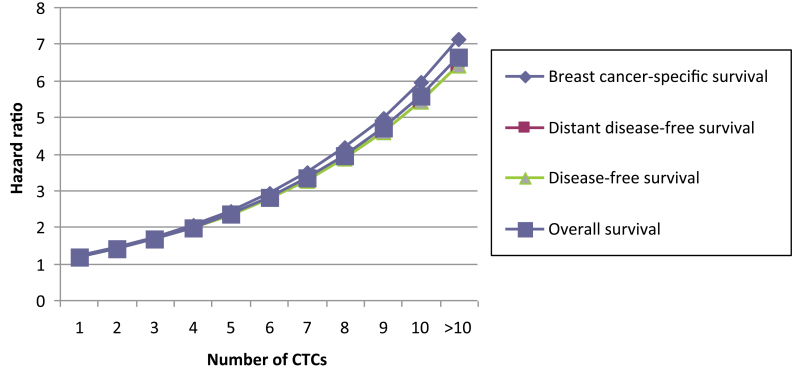
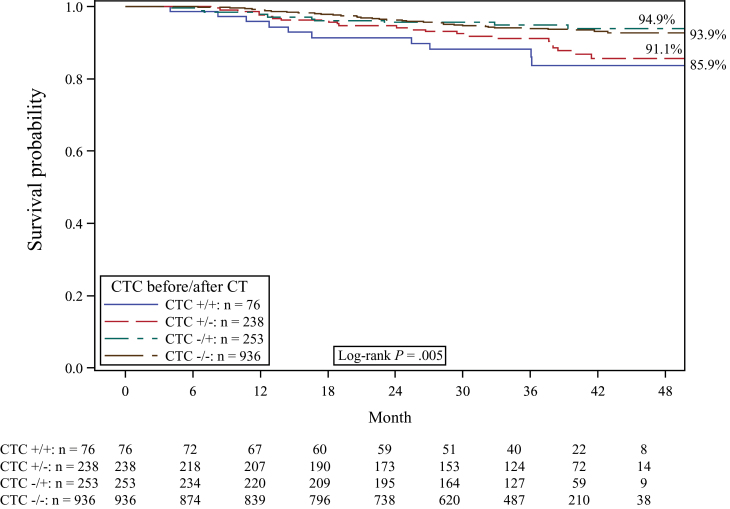
BACKGROUND: Circulating tumor cells (CTCs) have been shown to predict reduced survival outcomes in metastatic breast cancer. METHODS: CTCs were analyzed in 2026 patients with early breast cancer before adjuvant chemotherapy and in 1492 patients after chemotherapy using the CellSearch System. After immuno-magnetic enrichment for cells expressing the epithelial-cell adhesion molecule, CTCs were defined as nucleated cells expressing cytokeratin and lacking CD45. The patients were followed for a median of 35 months (range = 0-54). Kaplan-Meier analyses and the log-rank test were used for survival analyses. All statistical tests were two-sided. RESULTS: Before chemotherapy, CTCs were detected in 21.5% of patients (n = 435 of 2026), with 19.6% (n = 136 of 692) of node-negative and 22.4% (n = 299 of 1334) of node-positive patients showing CTCs (P < .001). No association was found with tumor size, grading, or hormone receptor status. After chemotherapy, 22.1% of patients (n = 330 of 1493) were CTC positive. The presence of CTCs was associated with poor disease-free survival (DFS; P < .0001), distant DFS (P < .001), breast cancer-specific survival (P = .008), and overall survival (OS; P = .0002). CTCs were confirmed as independent prognostic markers in multivariable analysis for DFS (hazard ratio [HR] = 2.11; 95% confidence interval [CI] = 1.49 to 2.99; P < .0001) and OS (HR = 2.18; 95% CI = 1.32 to 3.59; P = .002). The prognosis was worst in patients with at least five CTCs per 30 mL blood (DFS: HR = 4.51, 95% CI = 2.59 to 7.86; OS: HR = 3.60, 95% CI = 1.56 to 8.45). The presence of persisting CTCs after chemotherapy showed a negative influence on DFS (HR = 1.12; 95% CI = 1.02 to 1.25; P = .02) and on OS (HR = 1.16; 95% CI = 0.99 to 1.37; P = .06) CONCLUSIONS: These results suggest the independent prognostic relevance of CTCs both before and after adjuvant chemotherapy in a large prospective trial of patients with primary breast cancer.
Overview
The claims and statistics of this paper haven’t been checked yet.
Free: it reads the open-access text and checks the first 5 claims that cite a source we can check. Create a free account to check every claim.
Integrity signals
Registry
Cites
Statistics
Figures
Verification
Claims the paper makes
The claims and statistics of this paper haven’t been checked yet.
Free: it reads the open-access text and checks the first 5 claims that cite a source we can check. Create a free account to check every claim.
Claims other papers make about this one
Each is checked against this paper’s own text: does it say what the citing paper says it does?
The source backs part of the claim, not all of it — or backs it for a different population, condition or comparison.
In the citing paper
“Rack B. et al. piloted a larger prospective study with 2026 breast cancer patients and discovered that the detection rate of CTCs after chemotherapy (22.1%) increased slightly in comparison to the baseline condition (21.5%) [150].”
From Tumor microenvironment complexity and therapeutic implications at a glance (2020) · cites this paper as [150]
Experimental — accuracy not yet measured
Self-check
Percentages, sums and reported differences re-computed from the paper’s own numbers.
The self-check needs the paper’s full text.
Citations
Cites
Nonparametric Estimation from Incomplete Observations
Kaplan, E. L., & Meier, P. (1992) · Springer Series in Statistics · doi:10.1007/978-1-4612-4380-9_25 · Cited by 45,181 · cited 1×
“The product-limit method according to Kaplan–Meier was used to estimate survival (21).”
MethodRegression Models and Life-Tables
Cox, D. R. (1972) · Journal of the Royal Statistical Society Series B: Statistical Methodology · doi:10.1111/j.2517-6161.1972.tb00899.x · Cited by 39,793
Nonparametric Estimation from Incomplete Observations
Kaplan, E. L., & Meier, P. (1958) · Journal of the American Statistical Association · doi:10.1080/01621459.1958.10501452 · Cited by 39,158
Regression Models and Life-Tables
Cox, D. R. (1992) · Springer Series in Statistics · doi:10.1007/978-1-4612-4380-9_37 · Cited by 26,297
ELSTON, C. W., & ELLIS, I. O. (1991) · Histopathology · doi:10.1111/j.1365-2559.1991.tb00229.x · Cited by 6,175
Circulating Tumor Cells, Disease Progression, and Survival in Metastatic Breast Cancer
Cristofanilli, M., Budd, G. T., Ellis, M. J., Stopeck, A., Matera, J., Miller, M. C., Reuben, J. M., Doyle, G. V., Allard, W. J., Terstappen, L. W. M. M., et al. (2004) · New England Journal of Medicine · doi:10.1056/nejmoa040766 · Cited by 4,593
Giuliano, A. E. (2011) · JAMA · doi:10.1001/jama.2011.90 · Cited by 2,942 · cited 1×
“Furthermore, because axillary operation will increasingly be confined to sentinel node biopsy, CTCs could be a helpful tool for selection of highrisk patients who might benefit from a more aggressive dose-dense chemotherapy regimen (27,28).”
BackgroundAllard, W. J., Matera, J., Miller, M. C., Repollet, M., Connelly, M. C., Rao, C., Tibbe, A. G. J., Uhr, J. W., & Terstappen, L. W. M. M. (2004) · Clinical Cancer Research · doi:10.1158/1078-0432.ccr-04-0378 · Cited by 2,542 · cited 1×
“Nevertheless, the CellSearch system has shown highly reproducible and automated detection of CTCs in interlab validation trials (34,35).”
MethodGeneration of a functional mammary gland from a single stem cell
Shackleton, M., Vaillant, F., Simpson, K. J., Stingl, J., Smyth, G. K., Asselin-Labat, M.-L., Wu, L., Lindeman, G. J., & Visvader, J. E. (2006) · Nature · doi:10.1038/nature04372 · Cited by 2,005
Pathological prognostic factors in breast cancer
Elston, C. (1999) · Critical Reviews in Oncology/Hematology · doi:10.1016/s1040-8428(99)00034-7 · Cited by 1,735
Cited by
Items 301–400 of 615
Castle, J., Morris, K. L., Pritchard, S. A., & Kirwan, C. (2017) · PLoS ONE · doi:10.1371/journal.pone.0175647 · Cited by 18
The Promise of Circulating Tumor Cells for Precision Cancer Therapy
Hwang, W. L., Hwang, K. L., & Miyamoto, D. T. (2016) · Biomarkers in Medicine · doi:10.2217/bmm-2016-0192 · Cited by 17
Harigopal, M., Kowalski, D. P., & Vosoughi, A. (2020) · Expert Review of Molecular Diagnostics · doi:10.1080/14737159.2020.1784009 · Cited by 17
Immunotherapy in Breast Cancer and the Potential Role of Liquid Biopsy
Magbanua, M. J. M., Gümüşay, Ö., Kurzrock, R., Veer, L. V. ‘., & Rugo, H. S. (2022) · Frontiers in Oncology · doi:10.3389/fonc.2022.802579 · Cited by 21
“Numerous studies have unequivocally demonstrated the prognostic value of these cells both in early-stage (3, 4) and metastatic breast cancer (5, 36).”
BackgroundHayes, D. F. (2015) · The Breast · doi:10.1016/j.breast.2015.07.002 · Cited by 21
Bone marrow micrometastases in early breast cancer–30-year outcome
Mansi, J., Morden, J. P., Bliss, J. M., Neville, M. A., & Coombes, R. C. (2016) · British Journal of Cancer · doi:10.1038/bjc.2015.447 · Cited by 17
“With the focus now being on circulating tumour cells, recent studies in early breast cancer have shown that their presence does predict for a poorer outcome (Pierga et al, 2008; Lucci et al, 2012; Rack et al, 2014).”
Backgroundfor the SUCCESS Study Group, Jueckstock, J. K., Rack, B. K., Friedl, T. W. P., Scholz, C., Steidl, J., Trapp, E. K., Tesch, H., Forstbauer, H., Lorenz, R., et al. (2016) · BMC Cancer · doi:10.1186/s12885-016-2454-3 · Cited by 17
Self-citationClinical Applications of Circulating Tumor Cells in Pharmacotherapy: Challenges and Perspectives
Wu, T., Cheng, B., & Fu, L. (2017) · Molecular Pharmacology · doi:10.1124/mol.116.108142 · Cited by 17
Spiliotaki, M., Mavroudis, D., Kokotsaki, M., Vetsika, E., Stoupis, I., Matikas, A., Kallergi, G., Georgoulias, V., & Agelaki, S. (2017) · Molecular Oncology · doi:10.1002/1878-0261.12114 · Cited by 17
“The detection of CTCs has been established as an independent poor prognostic marker in both early and metastatic breast cancer (Cristofanilli et al., 2004; Rack et al., 2014).”
BackgroundHuber, A., Seidler, S. J., & Huber, D. E. (2020) · European Journal of Breast Health · doi:10.5152/ejbh.2020.5297 · Cited by 17
“6 Single 4 (7) 3 (4) 7 (6) Married 21 (38) 38 (57) 59 (48) Divorced 5 (9) 5 (7) 10 (8) Widowed 3 (5) 6 (9) 9 (7)”
BackgroundPang, S., Xu, S. Q., Wang, L., Wu, H., Chu, Y., Ma, X., Li, Y., Zou, B., Wang, S., & Zhou, G. (2022) · Thoracic Cancer · doi:10.1111/1759-7714.14728 · Cited by 16
“5%).(8) The appearance of CTCs in blood refers to a worse prognosis in early breast cancer.”
BackgroundHartkopf, A. D., Stefanescu, D., Wallwiener, M., Hahn, M., Becker, S., Solomayer, E., Fehm, T. N., Brucker, S. Y., & Taran, F. (2014) · Breast Cancer Research and Treatment · doi:10.1007/s10549-014-3113-5 · Cited by 17
Self-citationLymph node infiltration, parallel metastasis and treatment success in breast cancer
Engel, J., Weichert, W., Jung, A., Emeny, R. T., & Hölzel, D. (2019) · The Breast · doi:10.1016/j.breast.2019.07.008 · Cited by 15
Fernández-García, D., Nteliopoulos, G., Hastings, R. K., Rushton, A. J., Page, K., Allsopp, R. C., Ambasager, B., Gleason, K. L. T., Guttery, D. S., Ali, S., et al. (2022) · British Journal of Cancer · doi:10.1038/s41416-022-01962-9 · Cited by 19
Detection of Circulating Tumor Cells Using the Attune NxT
Gruijs, M., Zeelen, C., Hellingman, T., Smit, J. N., Borm, F. J., Kazemier, G., Dickhoff, C., Bahce, I., de Langen, J., Smit, E. F., et al. (2022) · International Journal of Molecular Sciences · doi:10.3390/ijms24010021 · Cited by 17
Pancreatic Cancer and Detection Methods
Ungkulpasvich, U., Hatakeyama, H., Hirotsu, T., & di Luccio, E. (2023) · Biomedicines · doi:10.3390/biomedicines11092557 · Cited by 19
“Detecting CTCs is crucial in understanding metastasis and tumor heterogeneity and is important for monitoring chemotherapy to avoid overtreatment and side effects [150,151].”
BackgroundTargeting circulating tumor cells to prevent metastases
Gostomczyk, K., Marsool, M. D. M., Tayyab, H., Pandey, A., Borowczak, J., Macome, F., Chacón, J. A., Dave, T., Maniewski, M., & Szylberg, Ł. (2023) · Human Cell · doi:10.1007/s13577-023-00992-6 · Cited by 20
“B r ea s t ca n ce r p a ti e n t s [ 111 ] C h e m o t h e r a py ( S U CC E SS t r i a l p r o t o c o l ) [ 111 ] 435 / 2026 p a ti e n t s w e r e C T C s - p o s iti v e b e f o r e c h e m o t h e r a py ( 21 .”
InfluentialYang, M., Zhang, X., Guo, L., Liu, X., Wu, J., & Zhu, H. (2021) · BioMed Research International · doi:10.1155/2021/6230826 · Cited by 17
“investigated the independent prognostic relevance of CTCs both before and after chemotherapy in a trial of breast cancer patients [33].”
BackgroundKAUFFMAN, E. C., Lee, M.-J., Alarcon, S. V., Lee, S., Hoang, A., Diaz, A. W., Chelluri, R. R., Vourganti, S., Trepel, J. B., & Pinto, P. A. (2015) · The Journal of Urology · doi:10.1016/j.juro.2015.11.013 · Cited by 16
scdNet: a computational tool for single-cell differential network analysis
Chiu, Y., Hsiao, T.-H., Wang, L., Chen, Y., & Shao, Y. J. (2018) · BMC Systems Biology · doi:10.1186/s12918-018-0652-0 · Cited by 18
“CTC is a minimally invasive liquid biopsy strongly indicated for investigation of metastasis [26], prediction of treatment response [12, 13], and risk assessment of cancers [27, 28].”
BackgroundCharacterization of EpCAM-Positive and EpCAM-Negative Tumor Cells in Early-Stage Breast Cancer
Михайлович, П. В., Grigoryeva, E. S., Валерьевич, А. В., Kalinchuk, A. V., Сергеевна, А. Е., Savelieva, O. E., Patskan, I. A., Bragina, O., Garbukov, Е. Y., Александровна, В. М., et al. (2024) · International Journal of Molecular Sciences · doi:10.3390/ijms252011109 · Cited by 19
“Patients with at least 5 CTC per 30 mL showed the worst prognosis [8].”
BackgroundStrauss, W. M., Carter, C., Simmons, J., Klem, E., Goodman, N., Vahidi, B., Romero, J., Masterman-Smith, M. D., O'Regan, R. M., Gogineni, K., et al. (2016) · Oncotarget · doi:10.18632/oncotarget.8494 · Cited by 16
“This cocktail was designed based on the established role of EpCAM in defining a population of cells in blood that is prognostically related to disease progression as well as metastatic events [31, 32].”
Ju, J. A., Lee, C. J., Thompson, K. N., Ory, E. C., Lee, R., Mathias, T. J., Pratt, S. J. P., Vitolo, M. I., Jewell, C. M., & Martin, S. S. (2020) · Lab on a Chip · doi:10.1039/d0lc00207k · Cited by 19
Han, J., Lu, C., Shen, M.-Z., Sun, X., Mo, X.-D., & Yang, G. (2022) · ACS Omega · doi:10.1021/acsomega.2c01153 · Cited by 17
Lu, T., Oomens, L., Terstappen, L. W. M. M., & Prakash, J. (2023) · Cancers · doi:10.3390/cancers15041127 · Cited by 16
Circulating Tumor Cells: How Far Have We Come with Mining These Seeds of Metastasis?
Radhakrishnan, V., Kaifi, J. T., & Suvilesh, K. N. (2024) · Cancers · doi:10.3390/cancers16040816 · Cited by 17
“On the other hand, RAD23 homolog B is a protein that plays a role in the nucleotide excision repair process and is inducible by genetic damage triggered by radiation therapy [75].”
BackgroundDegeling, K., Schivo, S., Mehra, N., Koffijberg, H., Langerak, R., Bono, J. S. D., & IJzerman, M. J. (2017) · Value in Health · doi:10.1016/j.jval.2017.05.024 · Cited by 18
“[33] Rack B, Schindlbeck C, Juckstock J, et al.”
BackgroundO’Toole, S. A., Spillane, C. D., Huang, Y., Fitzgerald, M. C., Ffrench, B., Mohamed, B. M., Ward, M. P., Gallagher, M. F., Kelly, T. E., O’Brien, C. P., et al. (2020) · Breast Cancer Research and Treatment · doi:10.1007/s10549-020-05658-7 · Cited by 15
Guan, X., Li, C., Li, Y., Wang, J., Yi, Z., Liu, B., Chen, H., Xu, J., Qian, H., Xu, B., et al. (2021) · Frontiers in Oncology · doi:10.3389/fonc.2021.602222 · Cited by 15
“Key eligibility included (1) confirmed histologic/cytologic diagnosis of HR-positive/HER2-negative metastatic breast cancer, (2) previously untreated with first-line chemotherapy, (3) age≥18, (4) Eastern Cooperative Oncology Group performance status < 2, (5) with measurable lesions defined by revised Response Evaluati…”
BackgroundMethodCirculating Tumor Cells: A Window to Understand Cancer Metastasis, Monitor and Fight Against Cancers
Xu, L., Shamash, J., & Lu, Y. (2015) · Journal of cancer research updates · doi:10.6000/1929-2279.2015.04.01.2 · Cited by 16
“[33] Rack B, Schindlbeck C, Juckstock J, Andergassen U, Hepp P, Zwingers T, et al.”
BackgroundMittendorf, E. A., Bartlett, J. M. S., Lichtensztajn, D. Y., & Chandarlapaty, S. (2018) · American Society of Clinical Oncology Educational Book · doi:10.1200/edbk_200981 · Cited by 15
Role of circulating tumor DNA and circulating tumor cells in breast cancer: History and updates
Chedid, J., Allam, S., Chamseddine, N., Zerdan, M. B., Nakib, C. E., & Assi, H. I. (2022) · SAGE Open Medicine · doi:10.1177/20503121221077838 · Cited by 17
Functional Genomic Analysis of Breast Cancer Metastasis: Implications for Diagnosis and Therapy
Yu, Z., Song, M. L., Chouchane, L., & Ma, X. (2021) · Cancers · doi:10.3390/cancers13133276 · Cited by 18
“Moreover, recent data confirmed the prognostic value of CTCs in early-stage BC [99,100].”
ResultSerafini, M. S., Molteni, E., Nicolò, E., Gerratana, L., Reduzzi, C., & Cristofanilli, M. (2023) · The Journal of Liquid Biopsy · doi:10.1016/j.jlb.2023.100132 · Cited by 16
Li, F., Liu, J., Song, D., Zhang, Q., Ding, N., & He, X. (2016) · Acta Oto-Laryngologica · doi:10.1080/00016489.2016.1201861 · Cited by 14
“Much research focused on other kinds of cancers and found that persisting CTC number in the post-therapy patients is a negative predictor for prognosis [15,20,21].”
BackgroundBielčiková, Z., Jakabová, A., Pinkas, M., Zemanová, M., Kološtová, K., & Bobek, V. (2017) · PubMed · Cited by 15
Circulating tumor DNA for triple-negative breast cancer diagnosis and treatment decisions
Saliou, A., Bidard, F., Lantz, O. J., Stern, M., Vincent‐Salomon, A., Proudhon, C., & Pierga, J. (2015) · Expert Review of Molecular Diagnostics · doi:10.1586/14737159.2016.1121100 · Cited by 16
Circulating tumor cells in breast cancer patients
Bystrický, B., & Mego, M. (2015) · Neoplasma · doi:10.4149/neo_2016_003 · Cited by 14
“[53] Presence of CTCs was associated with reduced breast-cancer specific and overall survival.”
BackgroundHepp, P. G., Andergassen, U., Jäger, B., Trapp, E. K., Alunni‐Fabbroni, M., Friedl, T. W. P., HECKER, N., Lorenz, R., Fasching, P. A., Schneeweiß, A., et al. (2016) · Anticancer Research · doi:10.21873/anticanres.11034 · Cited by 14
Self-citationXu, W., Wu, B., Fu, L., Chen, J., Wang, Z., Huang, F., Chen, J., Zhang, M., Zhang, Z., Lin, J., et al. (2017) · Oncology Reports · doi:10.3892/or.2017.5613 · Cited by 14
Mesquita, B., Rothwell, D. G., Burt, D. J., Chemi, F., Fernández‐Gutiérrez, F., Slane-Tan, D., Antonello, J., Carter, M., Carter, L., Parry, M., et al. (2017) · Molecular Oncology · doi:10.1002/1878-0261.12113 · Cited by 14
Lee, S.-W., Chen, Y., Kuan, E. C., & Lan, M. (2019) · Biosensors and Bioelectronics · doi:10.1016/j.bios.2019.111509 · Cited by 16
Research progress of cell membrane biomimetic nanoparticles for circulating tumor cells
Zhang, Y., & Wang, J. (2024) · Frontiers in Oncology · doi:10.3389/fonc.2024.1389775 · Cited by 18
Zhang, X., Weeramange, C. E., Hughes, B. G. M., Vasani, S. S., Liu, Z. Y., Warkiani, M. E., Härtel, G., Ladwa, R., Thiery, J. P., Kenny, L., et al. (2024) · Cellular and Molecular Life Sciences · doi:10.1007/s00018-024-05269-1 · Cited by 13
“The prognostic utility of CTCs has been established across many types of cancers such as lung [13], prostate [14], breast [15], glioblastoma [ 16 ], and gastrointestinal cancer [17] where studies indicate that high CTC counts are frequently indicative of poor prognosis.”
BackgroundLiu, X., Jia, Y., & Zheng, C. (2024) · Frontiers in Oncology · doi:10.3389/fonc.2024.1400498 · Cited by 19
Tian, Y., Ma, Y., Kang, Y., Tian, S., Li, Q., Zhang, L., & Yang, J. (2024) · Acta Biomaterialia · doi:10.1016/j.actbio.2024.07.043 · Cited by 15
Lowe, A. C.-Y. (2018) · Surgical pathology clinics · doi:10.1016/j.path.2018.04.008 · Cited by 14
Gao, T., Mao, J., Huang, J., Luo, F., Lin, L., Lian, Y., Bin, S.-M., Zhao, L.-H., & Li, S. (2023) · Clinics · doi:10.1016/j.clinsp.2023.100179 · Cited by 14
Gao, L., Medford, A. J., Spring, L. M., Bar, Y., Hu, B. Y., Jimenez, R., Isakoff, S. J., Bardia, A., & Peppercorn, J. M. (2024) · Breast Cancer Research and Treatment · doi:10.1007/s10549-024-07253-6 · Cited by 15
“The presence of CTCs after surgery may also indicate MRD [82]; patients with five or more CTCs (in 30 mL of blood) have been shown to be at the highest risk for relapse [79].”
Circulating tumor cells in breast cancer beyond the genotype of primary tumor for tailored therapy
Ren, C., Han, C., Fu, D., Wang, D., Chen, H., Chen, Y., & Shen, M. (2015) · International Journal of Cancer · doi:10.1002/ijc.29679 · Cited by 13
“CTCs can be detected not only in early and advanced stages of patients with BC, but even in early stages of patients with BC that cannot be diagnosed by pathological or conventional imaging methods.(6) Beyond its possibility for Key words: circulating tumor cells (CTCs), breast cancer, TNM staging Abbreviations: BC: b…”
BackgroundMethodEcology of the Metastatic Process
Lloyd, M. C., Gatenby, R. A., & Brown, J. S. (2017) · Elsevier eBooks · doi:10.1016/b978-0-12-804310-3.00011-9 · Cited by 14
Genetic Analysis of Circulating Tumour Cells
Kolinsky, M. P., Stoecklein, N. H., Lambros, M. B. K., Gil, V., Rodrigues, D. N., Carreira, S., Zafeiriou, Z., & Bono, J. S. D. (2019) · Recent results in cancer research/Recent Results in Cancer Research · doi:10.1007/978-3-030-26439-0_3 · Cited by 14
Netterberg, I., Karlsson, M. O., Terstappen, L. W. M. M., Koopman, M., Punt, C. J. A., & Friberg, L. E. (2020) · Clinical Cancer Research · doi:10.1158/1078-0432.ccr-19-2570 · Cited by 13
Morganti, S., Marra, A., Crimini, E., D’Amico, P., Zagami, P., & Curigliano, G. (2022) · Breast Cancer Research and Treatment · doi:10.1007/s10549-022-06535-1 · Cited by 13
Optimal duration of adjuvant endocrine therapy: how to apply the newest data
Wimmer, K., Kacerovsky-Strobl, S., Bolliger, M. J., Devyatko, Y., Korkmaz, B., Exner, R., Fitzal, F., & Gnant, M. (2017) · Therapeutic Advances in Medical Oncology · doi:10.1177/1758834017732966 · Cited by 12
Surveillance After Treatment of Localized Breast Cancer: Time for Reappraisal?
Sparano, J. A., & Henry, N. L. (2018) · JNCI Journal of the National Cancer Institute · doi:10.1093/jnci/djy153 · Cited by 13
Pizon, M., Lux, D., Pachmann, U. A., Pachmann, K., & Schott, D. S. (2018) · Journal of Translational Medicine · doi:10.1186/s12967-018-1724-z · Cited by 12
Liu, J., Xu, Y., Yu, M., Liu, Z., Xu, Y., Ma, G., Zhou, W., Kong, P., Ling, L., Wang, S., et al. (2019) · Cancer Management and Research · doi:10.2147/cmar.s220327 · Cited by 12
“Multiple studies suggest that intravasation of circulating tumor cells (CTCs) can occur in the early stages of cancer, promoting the generation of micrometastatic reservoirs, some of which can progress to macrometastatic disease.(8,9) CTCs can provide real-time liquid biopsy specimens for investigating the biologic be…”
BackgroundResultCell free DNA biology and its involvement in breast carcinogenesis
Delmonico, L., Alves, G., & Bines, J. (2020) · Advances in clinical chemistry · doi:10.1016/bs.acc.2019.12.006 · Cited by 13
Kang, Y., Mutukuri, A., Hadlock, T., Fairbairn, H., Carle, T. R., Fouladdel, S., Murlidhar, V., Kramer, A., Reguera, M. D., Azizi, E., et al. (2022) · Advanced NanoBiomed Research · doi:10.1002/anbr.202100083 · Cited by 13
Latest advances in clinical studies of circulating tumor cells in early and metastatic breast cancer
Munoz-Arcos, L. S., Nicolò, E., Serafini, M. S., Gerratana, L., Reduzzi, C., & Cristofanilli, M. (2023) · International review of cytology · doi:10.1016/bs.ircmb.2023.07.005 · Cited by 13
The Epigenetic Landscape of Pancreatic Cancer Stem Cells
Zagorac, S., García‐Bermejo, L., & Sáinz, B. (2018) · Epigenomes · doi:10.3390/epigenomes2020010 · Cited by 13
“Multiple studies have shown that circulating tumors cells (CTCs) can intravasate into the bloodstream promoting the generation of micro-metastatic reservoirs, some of which can progress to macro-metastatic disease [87,88].”
BackgroundPrognostic impact of circulating tumor cells in patients with ampullary cancer
Sun, B., Liu, H., Wang, S., Xiang, J., & Liu, X. (2017) · Journal of Cellular Physiology · doi:10.1002/jcp.26353 · Cited by 12
“…have suggested that CTCs are correlated with poor progression-free survival (PFS) and overall survival (OS) in patients with breast cancer, colon cancer, and cholangiocarcinoma, as well as other malignancies (Cohen et al., 2008; Rack et al., 2014; Sonpavde & Antonarakis, 2017; Yang et al., 2016).”
BackgroundResultAraújo-Silva, H., Teixeira, P. V., Gomes, A. C., Lúcio, M., & Lopes, C. M. (2023) · Biochimica et Biophysica Acta (BBA) - Reviews on Cancer · doi:10.1016/j.bbcan.2023.189011 · Cited by 14
Fabisiewicz, A., Szostakowska-Rodzoś, M., & Grzybowska, E. A. (2024) · International Journal of Molecular Sciences · doi:10.3390/ijms251910612 · Cited by 14
“However, in the phase III SUCCESS study, approximately 88% of patients with a high number of CTCs did not show recurrence and metastatic progression after 36 months of follow-up [76].”
BackgroundGee, M. S., Ghazani, A. A., Haq, R., Wargo, J. A., Sebas, M., Sullivan, R. J., Lee, H., & Weissleder, R. (2016) · Nanomedicine Nanotechnology Biology and Medicine · doi:10.1016/j.nano.2016.12.006 · Cited by 11
Liquid biopsy for the detection and management of surgically resectable tumors
Blanco, B. A., & Wolfgang, C. L. (2019) · Langenbeck s Archives of Surgery · doi:10.1007/s00423-019-01788-9 · Cited by 11
Advances in EGFR/HER2-directed clinical research on breast cancer
Chow, L. W., Lie, E. F., & Toi, M. (2020) · Advances in cancer research · doi:10.1016/bs.acr.2020.04.009 · Cited by 11
Utilization of Circulating Tumor Cells in the Management of Solid Tumors
Kurniali, P. C., Storandt, M. H., & Jin, Z. (2023) · Journal of Personalized Medicine · doi:10.3390/jpm13040694 · Cited by 10
“However, the discrepancy between the HER2 status of the primary tumor and CTCs has been observed [44,50].”
BackgroundCIRCULATING TUMOR CELLS: CLINICAL SIGNIFICANCE IN BREAST CANCER (REVIEW)
Кайгородова, Е. В. (2017) · Annals of the Russian academy of medical sciences · doi:10.15690/vramn833 · Cited by 13
“По завершении адъювантной химиотерапии в 22,1% случаев (у 330 из 1493) были выявлены уровни ЦОК, аналогичные их исходному уровню до лечения [61].”
Prognostic & predictive factors for planning adjuvant chemotherapy of early-stage breast cancer
Eşbah, O., & Öksüzoğlu, B. Ç. (2017) · The Indian Journal of Medical Research · doi:10.4103/ijmr.ijmr_1354_17 · Cited by 11
The role of circulating tumor cells in metastatic breast cancer: prognostic and predictive value
Bahnassy, A. A., Saber, M. M., Mahmoud, M., Abdellateif, M. S., Samra, M., Abdelfattah, R., Zekri, A. N., & Salem, S. (2018) · Molecular Biology Reports · doi:10.1007/s11033-018-4359-5 · Cited by 11
Marker-free characterization of full-length transcriptomes of single live circulating tumor cells
Poonia, S., Goel, A., Chawla, S., Bhattacharya, N., Rai, P., Lee, Y. F., Yap, Y. S., West, J. A. A., Bhagat, A. A. S., Tayal, J., et al. (2022) · Genome Research · doi:10.1101/gr.276600.122 · Cited by 16
“Various studies to date have unequivocally highlighted the association between the abundance of CTCs in peripheral blood and poor disease prognosis (Cristofanilli et al. 2004; Danila et al. 2007; Giuliano et al. 2011; Rack et al. 2014; Bork et al. 2015; Tsai et al. 2016).”
Miao, K., Zhang, A., Yang, X., Zhang, Y., Lin, A., Wang, L., Zhang, X., Sun, H., Xu, J., Zhang, J., et al. (2025) · Molecular Cancer · doi:10.1186/s12943-025-02279-w · Cited by 10
Breast Cancer Update 2014 – Focus on the Patient and the Tumour
Maass, N., Schütz, F., Fasching, P. A., Fehm, T. N., Janni, W., Kümmel, S., Kolberg, H., Lüftner, D., Wallwiener, M., & Lux, M. P. (2015) · Geburtshilfe und Frauenheilkunde · doi:10.1055/s-0035-1545704 · Cited by 9
Self-citationSUCCESS Study Group, Vilsmaier, T., Rack, B. K., Janni, W., Jeschke, U., & Weissenbacher, T. M. (2016) · BMC Cancer · doi:10.1186/s12885-016-2612-7 · Cited by 11
“The SUCCESS study was one of the first trials to indicate the strong prognostic importance, associated with a less favourable outcome, of CTCs in early breast cancer before commencing systemic adjuvant treatment and after adjuvant chemotherapy in a large patient cohort [8].”
MethodSelf-citationSchramm, A., Schochter, F., Friedl, T. W. P., de Gregorio, N., Andergassen, U., Alunni‐Fabbroni, M., Trapp, E. K., Jaeger, B. A., Heinrich, G., Camara, O., et al. (2017) · Clinical Breast Cancer · doi:10.1016/j.clbc.2016.11.008 · Cited by 10
“5% found in this study is somewhat lower compared with other large clinical trials in EBC, which reported CTC detection rates as assessed with the CellSearch system after (neo)adjuvant chemotherapy between 15% and 22%.(10,13,15,17)”
InfluentialSelf-citationAkkіprіk, M., Koca, S., Uğurlu, M. Ü., Ekren, R., Eyüboğlu, İ. P., Alan, Ö., Erzık, C., Amuran, G. G., Telli, T. A., Güllüoğlu, M. B., et al. (2020) · Clinical Breast Cancer · doi:10.1016/j.clbc.2020.02.006 · Cited by 10
Theil, G., Fornara, P., & Białek, J. (2020) · Cancers · doi:10.3390/cancers12123782 · Cited by 11
“Many investigators suggest that enumeration could be an independent prognostic factor of DFS or OS, or at least in combination with other agents [21,26,28,62,69,72,77].”
Hsieh, C., & Wu, M. (2016) · InTech eBooks · doi:10.5772/64812 · Cited by 9
“[91] addressed the role of CTCs isolated by Cell‐ SearchTM in a prospective trial enrolling 2026 early average‐to‐high risk breast cancer patients and found an independent prognostic relevance of CTCs both before and after adjuvant chemotherapy.”
Classifying circulating tumor cells to monitor cancer progression
Economopoulou, P., Georgoulias, V., & Kotsakis, A. P. (2016) · Expert Review of Molecular Diagnostics · doi:10.1080/14737159.2017.1275572 · Cited by 11
“before chemotherapy is mainly correlated with nodal status [58].”
BackgroundClinical Applications of Circulating Tumor Cells in Breast Cancer
Cobain, E. F., Paoletti, C., Smerage, J. B., & Hayes, D. F. (2019) · Recent results in cancer research/Recent Results in Cancer Research · doi:10.1007/978-3-030-26439-0_8 · Cited by 10
Zhao, H., Wang, L., Fang, C., Li, C., & Zhang, L. (2023) · Frontiers in Oncology · doi:10.3389/fonc.2023.1272788 · Cited by 9
Yeo, D., Seyfi, D., Bastian, A., Strauss, H., Leach, A., Klemm, V., Pirrello, A., Spring, K. J., Saxena, P., Wahlroos, S., et al. (2025) · Cellular and Molecular Life Sciences · doi:10.1007/s00018-025-05669-x · Cited by 10
“The prognostic value of CTCs has been demonstrated in various cancer types including PDAC [16–19].”
Red blood cell-tumor cell interactions promote tumor cell progression
Pereira‐Veiga, T., Yáñez-Gómez, C., Pekkarinen, A., Abuín, C., Blechner, C., González-Conde, M., Meß, C., Vidal‐y‐Sy, S., Moustafa, A., Siebels, B., et al. (2025) · Journal of Experimental & Clinical Cancer Research · doi:10.1186/s13046-025-03376-w · Cited by 10
“Notably, RDW and CTCs serve as independent variables, each offering distinct insights into the patient’s condition: RDW reflects systemic health, while CTCs provide information about tumor burden [36, 37, 38].”
Self-citationGrazia, G. D., Sánchez-Bayona, R., Casals‐Pascual, C., Pascual, T., Generali, D., Gennari, A., Vigneri, P. G., Harbeck, N., Cortés, J., Prat, A., et al. (2026) · npj Breast Cancer · doi:10.1038/s41523-026-00904-5 · Cited by 10
Welsch, E., Schuster, E., Krainer, M., Marhold, M., Bartsch, R., Fischer, M. B., Hermann, M., Hastermann, G., Uher, H., Sliutz, G., et al. (2023) · Cancers · doi:10.3390/cancers15041271 · Cited by 9
Zhang, X., Hofmann, S., Rack, B. K., Harbeck, N., Jeschke, U., & Doisneau-Sixou, S. F. (2017) · International Journal of Molecular Sciences · doi:10.3390/ijms18061318 · Cited by 9
Self-citationCirculating Tumor Cells in the Parallel Invasion Model Supporting Early Metastasis
Hamilton, G., & Rath, B. (2017) · Oncomedicine · doi:10.7150/oncm.22576 · Cited by 10
“[20, 21, 29] Analysis of CTCs is not part of clinical care of tumor patients but a lot of evaluation studies are running in the clinics.”
BackgroundBraun, M., Markiewicz, A., Kordek, R., Sądej, R., & Romańska, H. (2019) · Cancers · doi:10.3390/cancers11020143 · Cited by 11
Mansouri, S., Mokhtari-Hesari, P., Naghavi-Al-Hosseini, F., Majidzadeh‐A, K., & Farahmand, L. (2019) · Current Stem Cell Research & Therapy · doi:10.2174/1574888x14666190306103759 · Cited by 9
Liquid Biopsy in Breast Cancer: Circulating Tumor Cells and Circulating Tumor DNA
Yoo, T.-K. (2021) · Advances in experimental medicine and biology · doi:10.1007/978-981-32-9620-6_17 · Cited by 13
Chen, K., Chen, Z., Ou, M., Wang, J., Huang, X., Wu, Y., Zhong, W., Yang, J., Huang, J., Huang, M., et al. (2022) · Clinics · doi:10.1016/j.clinsp.2022.100070 · Cited by 10
Yan, C., Xiao, Y., Zhang, W., Sun, Y., Lin, Y., & Cai, W. (2023) · Annals of Surgical Oncology · doi:10.1245/s10434-023-14231-7 · Cited by 9
“Previous studies have demonstrated that larger volumes of peripheral blood could improve the sensitivity of CTCs. 32,33 However, this is seldom done in clinical practice, mostly because of the expense and heavier workload.”
BackgroundCirculating Tumor Cells and Cancer Stem Cells: Clinical Implications in Nonmetastatic Breast Cancer
Sayed, M., Zahran, A. M., Hassan, M. S., & Mohamed, D. O. (2016) · Breast Cancer Basic and Clinical Research · doi:10.4137/bcbcr.s40856 · Cited by 9
Walter, V. P., Taran, F., Wallwiener, M., Hahn, M., Brucker, S. Y., & Hartkopf, A. D. (2018) · Archives of Gynecology and Obstetrics · doi:10.1007/s00404-018-4669-9 · Cited by 9
“5 ml blood was analyzed, while other studies used larger volumes of blood samples for CTC detection [8].”
MethodCirculating biomarkers for diagnosis and response to therapies in cancer patients
Stefanes, N. M., Cunha-Silva, M. E., Silva, L. D. O., Walter, L. O., Santos‐Silva, M. C., & Gartia, M. R. (2024) · International review of cytology · doi:10.1016/bs.ircmb.2024.08.007 · Cited by 15
de Córdoba, B. R., Valencia, K., Welch, C., Moreno, H., Martínez-Canarias, S., Zandueta, C., Gómez, E., Calvo, A., Otegui, N., Echepare, M., et al. (2025) · Signal Transduction and Targeted Therapy · doi:10.1038/s41392-025-02271-2 · Cited by 9
“5,6 During tumor progression, tumor-released factors are established at distant sites, with a complex milieu involving extracellular remodeling, the mobilization of bone-marrow derived cells, and other cellular components preparing the so-called pre-metastatic niche.”
Deciphering Breast Tumor Heterogeneity Through Patient-Derived Organoids and Circulating Tumor Cells
Policastro, B., Nissen, N., & Alves, C. L. (2025) · Journal of Personalized Medicine · doi:10.3390/jpm15070271 · Cited by 8
“Note-worthily, since not all CTCs possess metastatic potential, and given the fact that those that do may not survive in the bloodstream, CTC detection does not necessarily indicate poor clinical outcomes [116].”
Wang, Y., Cao, N., Cui, X., Liu, Z., Yuan, X., Chen, S., Xu, H., Yi, M., Ti, Y., Zheng, F., et al. (2024) · European Journal of Pediatrics · doi:10.1007/s00431-024-05896-7 · Cited by 8
“…and detect the emergence of treatment resistance, minimal residual disease, and recurrence in adult epithelial-origin carcinomas including breast [22–27], lung [28–31], and colorectal cancer [15, 32–36] However, due to the lack of epithelial features and specific phenotypes of neuroblastic CTCs,…”
Metadata
- Authors
- Rack, B., Schindlbeck, C., Jückstock, J., Andergassen, U., Hepp, P., Zwingers, T., Friedl, T. W. P., Lorenz, R., Tesch, H., Fasching, P. A., Fehm, T., Schneeweiss, A., Lichtenegger, W., Beckmann, M. W., Friese, K., Pantel, K., & Janni, W.
- Affiliations
- University Hospital Heidelberg (DE)
- Corresponding author
- Rack, Brigitte
- ORCID
- Venue
- JNCI: Journal of the National Cancer Institute
- Publisher
- Oxford University Press (OUP)
- Published
- 2014-05
- Volume
- 106
- Issue
- 5
- ISSN
- 0027-8874 (ISSN-L)
- 1460-2105
- PMC
- PMC4112925
- OpenAlex
- W2169632044
- Cited by
- 615
- References
- 55
- Citations by year
- 2026: 11 · 2025: 23 · 2024: 38 · 2023: 50 · 2022: 45 · 2021: 48 · 2020: 54 · 2019: 63 · 2018: 67 · 2017: 68 · 2016: 68 · 2015: 58 · 2014: 18
- FWCI
- 22.66
- Type
- journal article
- Language
- en
- Open access
- hybrid
- doi.org
- Licence
- cc-by-nc
- Locations
- JNCI Journal of the National Cancer Institute (publishedVersion, cc-by-nc)
- PubMed Central (publishedVersion, cc-by-nc)
- PubMed (publishedVersion)
- OPUS FAU (Kooperativer Bibliotheksverbund Berlin-Brandenburg (KOBV), on behalf of the Universitätsbibliothek Erlangen-Nürnberg) (submittedVersion)
- HighWire Press Open Archive (submittedVersion)
- Funders
- Eli Lilly and Company
- AstraZeneca
- Sanofi
- Chugai Pharmaceutical
- Topics
- Life Sciences › Biochemistry, Genetics and Molecular Biology › Cancer Research › Breast Cancer Treatment Studies
- Health Sciences › Medicine › Oncology › Cancer Cells and Metastasis
- Life Sciences › Biochemistry, Genetics and Molecular Biology › Cancer Research › Cancer Genomics and Diagnostics
- Keywords
- circulating tumor cells, early breast cancer, prognostic factors, disease-free survival, overall survival, adjuvant chemotherapy, CellSearch, EpCAM, cytokeratin, CD45, lymph node status, CTC count, treatment response monitoring, metastatic breast cancer, hormone receptor status, tumor size and grade, risk stratification, risk-adapted treatment
- MeSH terms
- Docetaxel, Gemcitabine, Antineoplastic Combined Chemotherapy Protocols, Breast Neoplasms, Cyclophosphamide, Deoxycytidine, Female, Fluorouracil, Humans, Lymphatic Metastasis, Middle Aged, Neoplastic Cells, Circulating, Neoplasm Staging, Prospective Studies, Epirubicin, Chemotherapy, Adjuvant, Immunomagnetic Separation, Taxoids, Kaplan-Meier Estimate
About these checks
Registry, retraction, Cites and statistics results are computed, not judged, with one exception: a printed reference that no index lists is read once by a model before it counts as a citation error. Claims are extracted by a model and kept only when their quote appears verbatim in the text; each cited source is then checked, with a model’s help, for whether it says what the claim relies on. Those verdicts can be wrong — read the claim’s quote and the cited source before relying on one.
Statistics and arithmetic are recomputed, not judged.
Confidence bands are shown only for fields calibrated on our annotated test set. None is calibrated yet, so no band is shown.
What counts as a claim ›How we measure confidence ›How we check this ›
Are you an author, or do you see a problem with this page? Request a review
Data sources
Bibliographic data: Semantic Scholar, OpenAlex, Crossref.
Contains information from the Semantic Scholar Academic Graph Datasets, made available under the ODC Attribution License (ODC-BY 1.0).
Semantic Scholar’s data is described in: Kinney, R., et al. (2023). The Semantic Scholar Open Data Platform. arXiv:2301.10140.
