

Circulating Tumor Cells Predict Survival in Early Average-to-High Risk Breast Cancer Patients
Open accessThe DOI matches its Crossref record; 54 of the 55 references it cites were found in a registry or an index.
Abstract
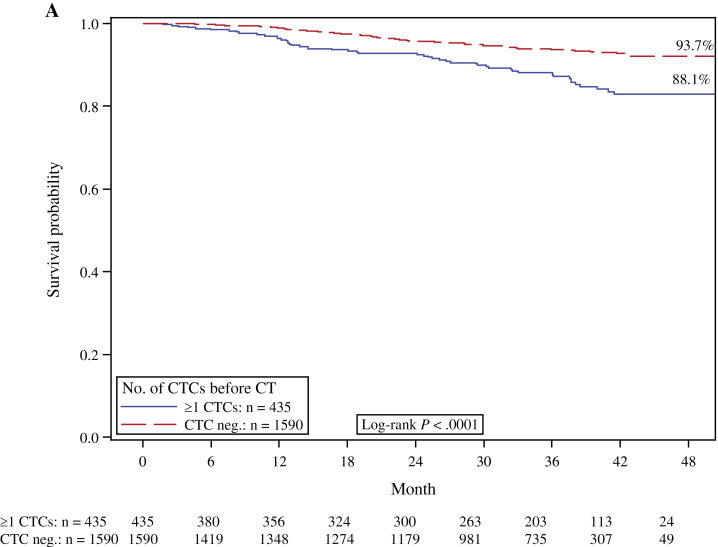
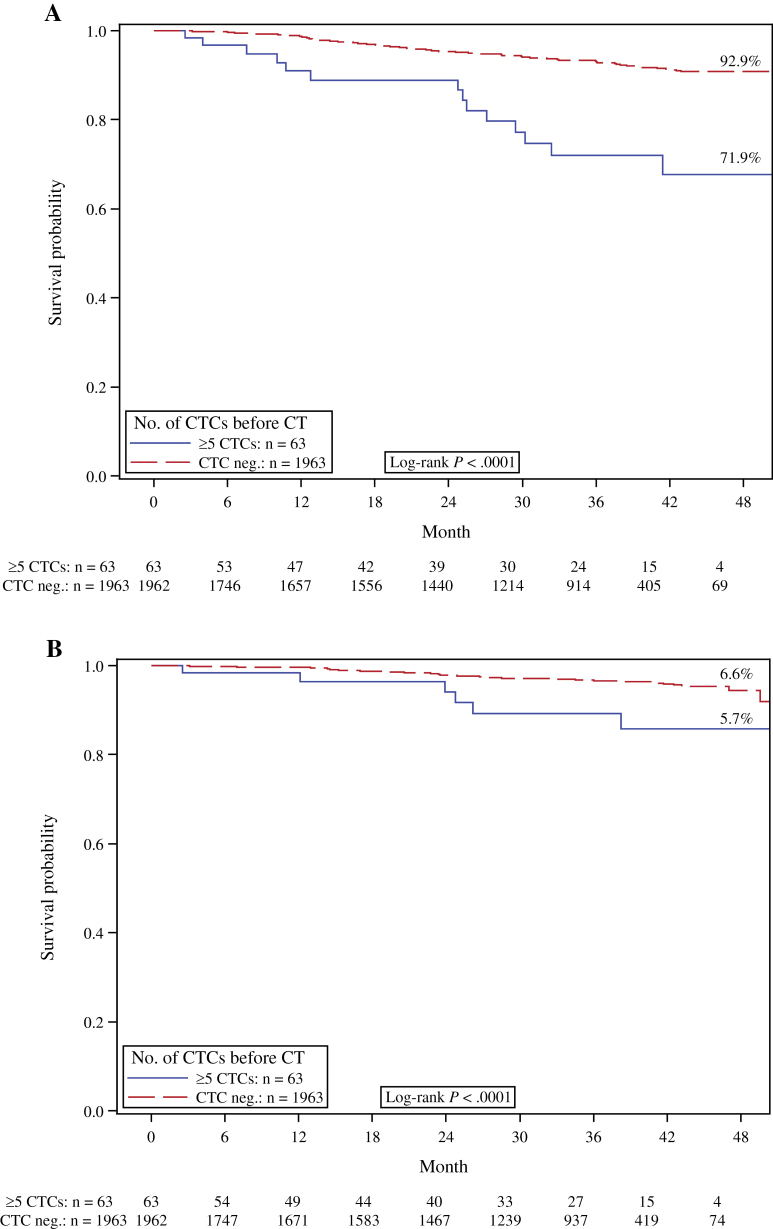
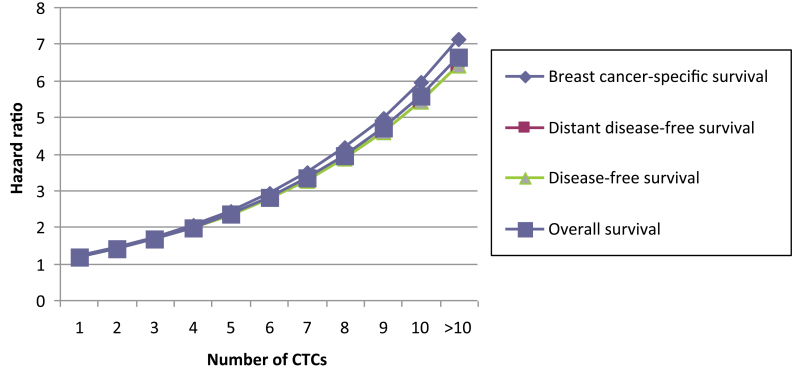
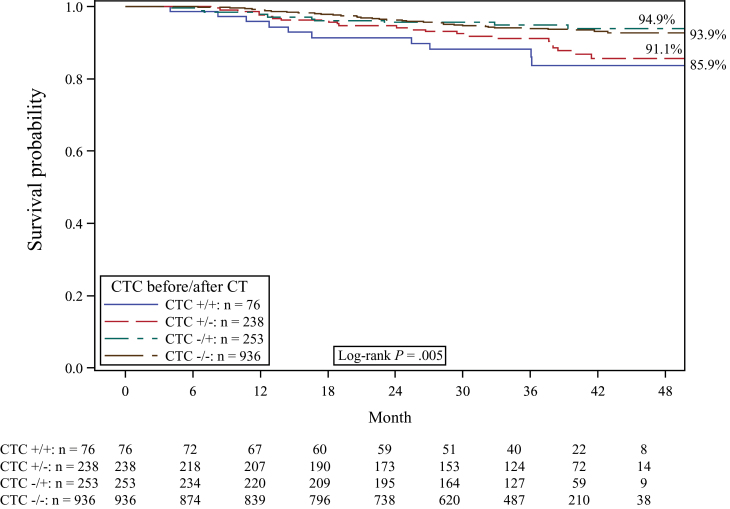
BACKGROUND: Circulating tumor cells (CTCs) have been shown to predict reduced survival outcomes in metastatic breast cancer. METHODS: CTCs were analyzed in 2026 patients with early breast cancer before adjuvant chemotherapy and in 1492 patients after chemotherapy using the CellSearch System. After immuno-magnetic enrichment for cells expressing the epithelial-cell adhesion molecule, CTCs were defined as nucleated cells expressing cytokeratin and lacking CD45. The patients were followed for a median of 35 months (range = 0-54). Kaplan-Meier analyses and the log-rank test were used for survival analyses. All statistical tests were two-sided. RESULTS: Before chemotherapy, CTCs were detected in 21.5% of patients (n = 435 of 2026), with 19.6% (n = 136 of 692) of node-negative and 22.4% (n = 299 of 1334) of node-positive patients showing CTCs (P < .001). No association was found with tumor size, grading, or hormone receptor status. After chemotherapy, 22.1% of patients (n = 330 of 1493) were CTC positive. The presence of CTCs was associated with poor disease-free survival (DFS; P < .0001), distant DFS (P < .001), breast cancer-specific survival (P = .008), and overall survival (OS; P = .0002). CTCs were confirmed as independent prognostic markers in multivariable analysis for DFS (hazard ratio [HR] = 2.11; 95% confidence interval [CI] = 1.49 to 2.99; P < .0001) and OS (HR = 2.18; 95% CI = 1.32 to 3.59; P = .002). The prognosis was worst in patients with at least five CTCs per 30 mL blood (DFS: HR = 4.51, 95% CI = 2.59 to 7.86; OS: HR = 3.60, 95% CI = 1.56 to 8.45). The presence of persisting CTCs after chemotherapy showed a negative influence on DFS (HR = 1.12; 95% CI = 1.02 to 1.25; P = .02) and on OS (HR = 1.16; 95% CI = 0.99 to 1.37; P = .06) CONCLUSIONS: These results suggest the independent prognostic relevance of CTCs both before and after adjuvant chemotherapy in a large prospective trial of patients with primary breast cancer.
Overview
The claims and statistics of this paper haven’t been checked yet.
Free: it reads the open-access text and checks the first 5 claims that cite a source we can check. Create a free account to check every claim.
Integrity signals
Registry
Cites
Statistics
Figures
Verification
Claims the paper makes
The claims and statistics of this paper haven’t been checked yet.
Free: it reads the open-access text and checks the first 5 claims that cite a source we can check. Create a free account to check every claim.
Claims other papers make about this one
Each is checked against this paper’s own text: does it say what the citing paper says it does?
The source backs part of the claim, not all of it — or backs it for a different population, condition or comparison.
In the citing paper
“Rack B. et al. piloted a larger prospective study with 2026 breast cancer patients and discovered that the detection rate of CTCs after chemotherapy (22.1%) increased slightly in comparison to the baseline condition (21.5%) [150].”
From Tumor microenvironment complexity and therapeutic implications at a glance (2020) · cites this paper as [150]
Experimental — accuracy not yet measured
Self-check
Percentages, sums and reported differences re-computed from the paper’s own numbers.
The self-check needs the paper’s full text.
Citations
Cites
Nonparametric Estimation from Incomplete Observations
Kaplan, E. L., & Meier, P. (1992) · Springer Series in Statistics · doi:10.1007/978-1-4612-4380-9_25 · Cited by 45,181 · cited 1×
“The product-limit method according to Kaplan–Meier was used to estimate survival (21).”
MethodRegression Models and Life-Tables
Cox, D. R. (1972) · Journal of the Royal Statistical Society Series B: Statistical Methodology · doi:10.1111/j.2517-6161.1972.tb00899.x · Cited by 39,793
Nonparametric Estimation from Incomplete Observations
Kaplan, E. L., & Meier, P. (1958) · Journal of the American Statistical Association · doi:10.1080/01621459.1958.10501452 · Cited by 39,158
Regression Models and Life-Tables
Cox, D. R. (1992) · Springer Series in Statistics · doi:10.1007/978-1-4612-4380-9_37 · Cited by 26,297
ELSTON, C. W., & ELLIS, I. O. (1991) · Histopathology · doi:10.1111/j.1365-2559.1991.tb00229.x · Cited by 6,175
Circulating Tumor Cells, Disease Progression, and Survival in Metastatic Breast Cancer
Cristofanilli, M., Budd, G. T., Ellis, M. J., Stopeck, A., Matera, J., Miller, M. C., Reuben, J. M., Doyle, G. V., Allard, W. J., Terstappen, L. W. M. M., et al. (2004) · New England Journal of Medicine · doi:10.1056/nejmoa040766 · Cited by 4,593
Giuliano, A. E. (2011) · JAMA · doi:10.1001/jama.2011.90 · Cited by 2,942 · cited 1×
“Furthermore, because axillary operation will increasingly be confined to sentinel node biopsy, CTCs could be a helpful tool for selection of highrisk patients who might benefit from a more aggressive dose-dense chemotherapy regimen (27,28).”
BackgroundAllard, W. J., Matera, J., Miller, M. C., Repollet, M., Connelly, M. C., Rao, C., Tibbe, A. G. J., Uhr, J. W., & Terstappen, L. W. M. M. (2004) · Clinical Cancer Research · doi:10.1158/1078-0432.ccr-04-0378 · Cited by 2,542 · cited 1×
“Nevertheless, the CellSearch system has shown highly reproducible and automated detection of CTCs in interlab validation trials (34,35).”
MethodGeneration of a functional mammary gland from a single stem cell
Shackleton, M., Vaillant, F., Simpson, K. J., Stingl, J., Smyth, G. K., Asselin-Labat, M.-L., Wu, L., Lindeman, G. J., & Visvader, J. E. (2006) · Nature · doi:10.1038/nature04372 · Cited by 2,005
Pathological prognostic factors in breast cancer
Elston, C. (1999) · Critical Reviews in Oncology/Hematology · doi:10.1016/s1040-8428(99)00034-7 · Cited by 1,735
Cited by
Items 101–200 of 615
Clinical indications for, and the future of, circulating tumor cells
Moon, D. H., Lindsay, D. P., Hong, S., & Wang, A. Z. (2018) · Advanced Drug Delivery Reviews · doi:10.1016/j.addr.2018.04.002 · Cited by 75
Liquid biopsy into the clinics: Current evidence and future perspectives
Boukovala, M. A., Westphalen, C. B., & Probst, V. (2024) · The Journal of Liquid Biopsy · doi:10.1016/j.jlb.2024.100146 · Cited by 82
Radiomics and liquid biopsy in oncology: the holons of systems medicine
Neri, E., Re, M. D., Paiar, F., Erba, P. A., Cocuzza, P., Regge, D., & Danesi, R. (2018) · Insights into Imaging · doi:10.1007/s13244-018-0657-7 · Cited by 76
Molecular Mechanisms Underlying Lymphovascular Invasion in Invasive Breast Cancer
Aleskandarany, M. A., Sonbul, S. N., Mukherjee, A., & Rakha, E. A. (2015) · Pathobiology · doi:10.1159/000433583 · Cited by 82
Ignatiadis, M., Litière, S., Rothé, F., Riethdorf, S., Proudhon, C., Fehm, T. N., Aalders, K. C., Forstbauer, H., Fasching, P. A., Brain, E. G. C., et al. (2018) · Annals of Oncology · doi:10.1093/annonc/mdy211 · Cited by 71
Self-citationMolecular Residual Disease and Adjuvant Trial Design in Solid Tumors
Coakley, M., Garcia-Murillas, I., & Turner, N. C. (2019) · Clinical Cancer Research · doi:10.1158/1078-0432.ccr-19-0152 · Cited by 69
“5), this was only found in approximately 3%patients (47).”
BackgroundCirculating tumour cells in the -omics era: how far are we from achieving the ‘singularity’?
Visal, T. H., den Hollander, P., Cristofanilli, M., & Mani, S. A. (2022) · British Journal of Cancer · doi:10.1038/s41416-022-01768-9 · Cited by 79
“The recurrence risk correlates with the number of CTCs detected: The more CTCs, the higher the risk of recurrence [194, 195].”
BackgroundInfluentialRole of circulating tumor cells in future diagnosis and therapy of cancer
Potdar, P. D., & Lotey, N. (2015) · Journal of Cancer Metastasis and Treatment · doi:10.4103/2394-4722.158803 · Cited by 82
“CTCs which have undergone EMT will show downregulation of epithelial markers including EpCAM.[52] In some cases, it has been observed that HER2-positive metastatic breast cancer shows the presence of EpCAM negative CTCs.”
BackgroundMethodInfluentialMcInnes, L. M., Jacobson, N., Redfern, A. D., DOWLING, A. J., Thompson, E. W., & Saunders, C. M. (2015) · Frontiers in Oncology · doi:10.3389/fonc.2015.00042 · Cited by 75
“Interestingly, the initially CTC-negative patients who subsequently developed CTCs fared better than initially CTC positive patients whose CTCs disappeared post-treatment, suggesting CTC clearance does not predict chemotherapy benefit (60).”
BackgroundBeije, N., Jager, A., & Sleijfer, S. (2014) · Cancer Treatment Reviews · doi:10.1016/j.ctrv.2014.12.008 · Cited by 71
“By far the largest study is the SUCCESS study that accrued 2026 patients and which assessed the prognostic value of CTC before and after adjuvant treatment [29].”
BackgroundHong, W., Lee, S., Chang, H. J., Lee, E. S., & Cho, Y. (2016) · Biomaterials · doi:10.1016/j.biomaterials.2016.08.020 · Cited by 68
“As the only FDA-approved device, the CellSearch system is the most widely used approach for CTC detection [29,30].”
MethodWang, R., Li, X., Zhang, H., Wang, K., & He, J. (2017) · Oncotarget · doi:10.18632/oncotarget.20608 · Cited by 68
“For instance, in the ctDNA breast cancer study by Dawson and colleagues [42], only 30 patients were enrolled into the study, whereas the recent CTC study by Rack and colleagues included thousands of patients with breast cancer [102].”
BackgroundCirculating Tumor Cells in Early and Advanced Breast Cancer; Biology and Prognostic Value
Fabisiewicz, A., Szostakowska-Rodzoś, M., Zaczek, A. J., & Grzybowska, E. A. (2020) · International Journal of Molecular Sciences · doi:10.3390/ijms21051671 · Cited by 81
“Patients with at least 5 CTC per 30 mL showed the worst prognosis [81].”
BackgroundCirculating and disseminated tumor cells: diagnostic tools and therapeutic targets in motion
Wang, H., Stoecklein, N. H., Lin, P. P., & Gires, O. (2016) · Oncotarget · doi:10.18632/oncotarget.12242 · Cited by 71
How to study and overcome tumor heterogeneity with circulating biomarkers: The breast cancer case
Appierto, V., Cosimo, S. D., Reduzzi, C., Pala, V., Cappelletti, V., & Daidone, M. G. (2017) · Seminars in Cancer Biology · doi:10.1016/j.semcancer.2017.04.007 · Cited by 76
Rethinking breast cancer follow-up based on individual risk and recurrence management
Rose, F. D., Meduri, B., Santis, M. C. D., Ferro, A., Marino, L., Colciago, R. R., Gregucci, F., Vanoni, V., Apolone, G., Cosimo, S. D., et al. (2022) · Cancer Treatment Reviews · doi:10.1016/j.ctrv.2022.102434 · Cited by 82
Methylation patterns in serum DNA for early identification of disseminated breast cancer
Widschwendter, M., Evans, I., Jones, A., Ghazali, S., Reisel, D., Ryan, A., Gentry‐Maharaj, A., Zikán, M., Cibula, D., Eichner, J., et al. (2017) · Genome Medicine · doi:10.1186/s13073-017-0499-9 · Cited by 75
“Finally, Phase 3 was initiated to validate the top marker performance by using serum samples from two large clinical studies: (1) from 419 patients recruited within the SUCCESS trial [10] (ClinicalTrial.”
MethodSelf-citationPesapane, F., Suter, M. B., Rotili, A., Penco, S., Nigro, O., Cremonesi, M., Bellomi, M., Jereczek‐Fossa, B. A., Pinotti, G., & Cassano, E. (2020) · Medical Oncology · doi:10.1007/s12032-020-01353-1 · Cited by 72
In Situ Electrochemical ELISA for Specific Identification of Captured Cancer Cells
Safaei, T. S., Mohamadi, R. M., Sargent, E. H., & Kelley, S. O. (2015) · ACS Applied Materials & Interfaces · doi:10.1021/acsami.5b02404 · Cited by 65
Mego, M., Gao, H., Cohen, E. N., Anfossi, S., Giordano, A., Tin, S., Fouad, T. M., Giorgi, U. D., Giuliano, M., Woodward, W. A., et al. (2016) · Oncotarget · doi:10.18632/oncotarget.10290 · Cited by 69
“The cut-off of 1 CTC was chosen because it has been investigated in different settings, such as in primary breast cancer, including locally advanced and inflammatory breast cancer [10, 11, 38-41].”
MethodZhang, R., Le, B., Xu, W. L., Guo, K. X., Sun, X., Su, H., Huang, L., Huang, J., Shen, T., Liao, T., et al. (2018) · Small Methods · doi:10.1002/smtd.201800474 · Cited by 64
Li, X., Zhang, P., Dou, L., Wang, Y., Sun, K., Zhang, X., Song, G., Zhao, C., Li, K., Bai, Y., et al. (2020) · ACS Sensors · doi:10.1021/acssensors.9b02537 · Cited by 64
Heidrich, I., Deitert, B., Werner, S., & Pantel, K. (2023) · Cancer and Metastasis Reviews · doi:10.1007/s10555-022-10075-x · Cited by 75
Self-citationGenomic approaches to accelerate cancer interception
Beane, J., Campbell, J. D., Lel, J., Vick, J. L., & Spira, A. E. (2017) · The Lancet Oncology · doi:10.1016/s1470-2045(17)30373-x · Cited by 62
P5 eHealth: An Agenda for the Health Technologies of the Future
Pravettoni, G., & Triberti, S. (2019) · Springer eBooks · doi:10.1007/978-3-030-27994-3 · Cited by 68
Spiliotaki, M., Mavroudis, D., Kapranou, K., Markomanolaki, H., Kallergi, G., Koinis, F., Kalbakis, K., Georgoulias, V., & Agelaki, S. (2014) · Breast Cancer Research · doi:10.1186/s13058-014-0485-8 · Cited by 65
“The detection of circulating tumor cells (CTCs) in the blood or disseminated tumor cells (DTCs) in the bone marrow in clinically disease-free patients with early breast cancer as well as their association with worse patient prognosis has been well established [11-16].”
Circulating Tumor Cells After Neoadjuvant Chemotherapy in Stage I–III Triple-Negative Breast Cancer
Hall, C. S., Karhade, M., Laubacher, B. A., Anderson, A. E., Kuerer, H. M., DeSynder, S., & Lucci, A. (2015) · Annals of Surgical Oncology · doi:10.1245/s10434-015-4600-6 · Cited by 62
Wang, C., CHEN, Y.-G., Gao, J., Lyu, G.-Y., Su, J., Zhang, Q., Ji, X., Yan, J., QIU, Q.-L., ZHANG, Y.-L., et al. (2015) · Oncology Letters · doi:10.3892/ol.2015.3304 · Cited by 62
“The underlying perfusion intensity values are expressed according to the diVerent color scale (23), extending from blue (low perfusion values) over green and yellow to red (highest perfusion values).”
Current and Developing Liquid Biopsy Techniques for Breast Cancer
Wu, H., & Chu, P. (2022) · Cancers · doi:10.3390/cancers14092052 · Cited by 69
Ep CAM expression in breast cancer cells is associated with enhanced bone metastasis formation
Hiraga, T., Ito, S., & Nakamura, H. (2015) · International Journal of Cancer · doi:10.1002/ijc.29921 · Cited by 65
Stergiopoulou, D., Markou, A. N., Strati, A. D., Zavridou, M., Tzanikou, E., Mastoraki, S., Kallergi, G., Georgoulias, V., & Lianidou, E. S. (2023) · Scientific Reports · doi:10.1038/s41598-022-25400-1 · Cited by 65
Ades, F., Tryfonidis, K., & Zardavas, D. (2017) · ecancermedicalscience · doi:10.3332/ecancer.2017.746 · Cited by 57
“In a prospectively conducted study, CTCs were assessed using the CellSearch® System evaluated patients with operable breast cancer before the onset of adjuvant chemotherapy administration and after chemotherapy [57].”
MethodBlood-Based Analysis of Circulating Cell-Free DNA and Tumor Cells for Early Cancer Detection
Pantel, K. (2016) · PLoS Medicine · doi:10.1371/journal.pmed.1002205 · Cited by 60
Self-citationHugenschmidt, H., Labori, K. J., Brunborg, C., Verbeke, C. S., Seeberg, L. T., Schirmer, C. B., Renolen, A., Borgen, E., Naume, B., & Wiedswang, G. (2018) · Annals of Surgery · doi:10.1097/sla.0000000000003035 · Cited by 59
The promise of circulating tumor cell analysis in cancer management
Mateo, J., Gerlinger, M., Rodrigues, D. N., & Bono, J. S. D. (2014) · Genome biology · doi:10.1186/s13059-014-0448-5 · Cited by 59
“The presence of CTCs in this population was an independent prognostic factor for disease-free and overall survival [32].”
BackgroundCancer stem cells: at the forefront of personalized medicine and immunotherapy
Fiori, M. E., Villanova, L., & Maria, R. D. (2017) · Current Opinion in Pharmacology · doi:10.1016/j.coph.2017.04.006 · Cited by 62
“Significant correlations between CTCs count and metastatic relapse have been observed in several tumor types, proving the prognostic relevance of CTCs number [43,44].”
BackgroundLiquid Biopsy in the Management of Breast Cancer Patients: Where Are We Now and Where Are We Going
Mazzitelli, C., Santini, D., Corradini, A. G., Zamagni, C., Treré, D., Montanaro, L., & Taffurelli, M. (2023) · Diagnostics · doi:10.3390/diagnostics13071241 · Cited by 59
“Following the BEVERLY trial, the implication of CTCs in cancer dissemination and their possible use for BC patients’ subpopulations was clearly constituted [50].”
MethodCirculating tumor cells in breast cancer: applications in personalized medicine
Lee, J. S., Magbanua, M. J. M., & Park, J. W. (2016) · Breast Cancer Research and Treatment · doi:10.1007/s10549-016-4014-6 · Cited by 58
Schochter, F., Friedl, T. W. P., deGregorio, A., Krause, S., Huober, J., Rack, B. K., & Janni, W. J. (2019) · Cells · doi:10.3390/cells8111412 · Cited by 56
“If CTC-positivity predicts a worse clinical outcome [9] and CTC dynamics is a predictor of therapy response [10], the question remains whether this information can be used for forming treatment decisions.”
BackgroundSelf-citationThe Emerging Role of Liquid Biopsies in Revolutionising Cancer Diagnosis and Therapy
Shegekar, T., Vodithala, S., & Juganavar, A. (2023) · Cureus · doi:10.7759/cureus.43650 · Cited by 52
Characterization of DNA Methylation in Circulating Tumor Cells
Pixberg, C., Schulz, W. A., Stoecklein, N. H., & Neves, R. P. (2015) · Genes · doi:10.3390/genes6041053 · Cited by 59
“In the adjuvant setting, the large SUCCESS trial demonstrated that the detection of CTCs in 30 mL blood before therapy was significantly associated with poor disease-free survival, distant disease-free survival, breast cancer-specific survival, and overall survival [18].”
BackgroundLiquid biopsy-based clinical research in early breast cancer: The EORTC 90091-10093 Treat CTC trial
Ignatiadis, M., Rack, B. K., Rothé, F., Riethdorf, S., Decraene, C., Bonnefoi, H. R., Dittrich, C., Messina, C. G. M., Beauvois, M., Trapp, E. K., et al. (2016) · European Journal of Cancer · doi:10.1016/j.ejca.2016.04.024 · Cited by 58
“Recently, a prospective study of 2026 patients confirmed the independent prognostic relevance of CTC detection using the CELLSEARCH technology both before and after the administration of adjuvant chemotherapy [15].”
BackgroundSelf-citationGulbahce, N., Magbanua, M. J. M., Chin, R. G., Agarwal, M. R., Luo, X., Liu, J., Hayden, D. M., Mao, Q., Ciotlos, S., Li, Z., et al. (2017) · Cancer Research · doi:10.1158/0008-5472.can-17-0688 · Cited by 57
Circulating Tumor Cells and Implications of the Epithelial-to-Mesenchymal Transition
Lowes, L. E., & Allan, A. L. (2017) · Advances in clinical chemistry · doi:10.1016/bs.acc.2017.10.004 · Cited by 63
RNA-Seq of Circulating Tumor Cells in Stage II–III Breast Cancer
Lang, J. E., Ring, A., Porras, T. B., Kaur, P., Forte, V. A., Mineyev, N. M., Tripathy, D., Press, M. F., & Campo, D. (2018) · Annals of Surgical Oncology · doi:10.1245/s10434-018-6540-4 · Cited by 71
Shen, H., Deng, W., He, Y., Li, X., Song, J., Liu, R., Liu, H., Yang, G., & Li, L. (2020) · Biosensors and Bioelectronics · doi:10.1016/j.bios.2020.112516 · Cited by 54
Hartkopf, A. D., Wallwiener, M., Fehm, T. N., Hahn, M., Walter, C. B., Gruber, I. V., Brucker, S. Y., & Taran, F. (2015) · Annals of Oncology · doi:10.1093/annonc/mdv148 · Cited by 52
“Although CTC detection in patients with PBC was shown to correlate with early recurrence and decreased OS, low detection rates in nonmetastatic breast cancer make the use of this technology challenging [31, 32].”
BackgroundSelf-citationCirculating Tumor Cell Clusters Are Frequently Detected in Women with Early-Stage Breast Cancer
Reduzzi, C., Cosimo, S. D., Gerratana, L., Motta, R., Martinetti, A., Vingiani, A., D’Amico, P., Zhang, Y., Vismara, M., Depretto, C., et al. (2021) · Cancers · doi:10.3390/cancers13102356 · Cited by 59
“This observation is supported by data demonstrating that enumeration of single CTCs predicts progressionfree survival and overall survival also in early breast cancer (EBC) patients (women with no evidence for distant metastases), both prior [11,12] or after [13] breast surgery.”
ResultOmics Technologies Improving Breast Cancer Research and Diagnostics
Orsini, A., Diquigiovanni, C., & Bonora, E. (2023) · International Journal of Molecular Sciences · doi:10.3390/ijms241612690 · Cited by 52
“In cases of early-stage BC (EBC), where CTC-positive patients are rare, a thorough analysis of tumor-related analytes in the LB may also be beneficial to determine the disease status [15,16].”
BackgroundCirculating tumor cells in breast cancer: clinical validity and utility
Thomas-Bonafos, T., Pierga, J., Bidard, F., Cabel, L., & Kiavué, N. (2024) · npj Breast Cancer · doi:10.1038/s41523-024-00706-7 · Cited by 59
Lin, R., Li, Y., MacDonald, T. J., Wu, H. C., Provenzale, J., Peng, X., Huang, J., Wang, L., Wang, A. Y., Yang, J., et al. (2016) · Colloids and Surfaces B Biointerfaces · doi:10.1016/j.colsurfb.2016.10.026 · Cited by 57
Jaeger, B. A., Neugebauer, J., Andergassen, U., Melcher, C., Schochter, F., Mouarrawy, D., Ziemendorff, G., Clemens, M., von Abel, E., Heinrich, G., et al. (2017) · PLoS ONE · doi:10.1371/journal.pone.0173593 · Cited by 52
Self-citationSchramm, A., Friedl, T. W. P., Schochter, F., Scholz, C., de Gregorio, N., Huober, J., Rack, B. K., Trapp, E. K., Alunni‐Fabbroni, M., Müller, V., et al. (2015) · Archives of Gynecology and Obstetrics · doi:10.1007/s00404-015-3879-7 · Cited by 53
Self-citationZinc finger protein 367 promotes metastasis by inhibiting the Hippo pathway in breast cancer
Wu, X., Zhang, X., Yu, L., Zhang, C., Ye, L., Ren, D., Li, Y., Sun, X., Yu, L., Ouyang, Y., et al. (2020) · Oncogene · doi:10.1038/s41388-020-1166-y · Cited by 55
Politaki, E., Agelaki, S., Apostolaki, S., Hatzidaki, D., Strati, A. D., Koinis, F., Perraki, M., Saloustrou, G., Stoupis, G., Kallergi, G., et al. (2017) · Cellular Physiology and Biochemistry · doi:10.1159/000485115 · Cited by 52
Molecular characterization of circulating tumor cells—from bench to bedside
Li, Y., Wu, S., & Bai, F. (2017) · Seminars in Cell and Developmental Biology · doi:10.1016/j.semcdb.2017.09.013 · Cited by 57
“The relevance of CTC count to survival outcomes both before and after adjuvant chemotherapy was explored in a multicenter study of patients with breast cancer [91].”
BackgroundLiquid Biopsy in Thyroid Cancer: New Insight.
Khatami, F., & Tavangar, S. M. (2018) · PubMed Central · Cited by 51
Circulating tumor cells in newly diagnosed inflammatory breast cancer
Mego, M., Giordano, A., Giorgi, U. D., Masuda, H., Hsu, L., Giuliano, M., Fouad, T. M., Dawood, S. S., Ueno, N. T., Valero, V., et al. (2015) · Breast Cancer Research · doi:10.1186/s13058-014-0507-6 · Cited by 47
“The previously reported prevalence of CTCs among patients with early primary non-IBC is lower (range, 21% to 38%) [29,30,32-36] than that of CTCs among patients with stage III IBC in this study (55.”
BackgroundTogo, S., Katagiri, N., Namba, Y., Tulafu, M., Nagahama, K. Y., Kadoya, K., Takamochi, K., Oh, S., Suzuki, K., Sakurai, F., et al. (2017) · Oncotarget · doi:10.18632/oncotarget.16818 · Cited by 52
“NSCLC or breast cancer patients testing CTC-positive at the time of definitive surgery showed short recurrence periods [10, 26, 27].”
BackgroundMatikas, A., Kotsakis, A. P., Apostolaki, S., Politaki, H., Perraki, M., Kalbakis, K., Nikolaou, M., Economopoulou, P., Hatzidaki, D., & Georgoulias, V. (2022) · British Journal of Cancer · doi:10.1038/s41416-022-01699-5 · Cited by 45
“In addition, conversion to CTC-negative from CTC-positive status following chemotherapy distinguishes a population with intermediate prognosis, compared to patients with persistent CTCnegative (best prognosis) or CTC-positive (worst prognosis) status [14].”
ResultAddanki, S., Meas, S., Sarli, V. N., Singh, B., & Lucci, A. (2022) · International Journal of Molecular Sciences · doi:10.3390/ijms23147843 · Cited by 53
“A large prospective trial of primary breast cancer patients revealed the independent prognostic value of CTCs before and after NACT [40].”
BackgroundMinimal residual disease in breast cancer: an overview of circulating and disseminated tumour cells
Tachtsidis, A., McInnes, L. M., Jacobsen, N., Thompson, E. W., & Saunders, C. M. (2016) · Clinical & Experimental Metastasis · doi:10.1007/s10585-016-9796-8 · Cited by 53
“[281], and it has been generally noted that patients with persistent MRD following therapy are more likely to have worse outcome [202, 282, 283].”
BackgroundRecent advances in the biology of human circulating tumour cells and metastasis
Gkountela, S., Szczerba, B. M., Donato, C., & Aceto, N. (2016) · ESMO Open · doi:10.1136/esmoopen-2016-000078 · Cited by 51
“For example, breast CTCs have been shown to be predictors of decreased survival in patients with early breast cancer, before or after chemotherapy, with prognosis being worst in those patients with at least five CTCs per 30 mL of blood.(25) Along these lines, systemic spread of breast cancer has been shown to start ea…”
BackgroundCirculating tumor cells and circulating tumor DNA: What surgical oncologists need to know?
Cabel, L., Proudhon, C., Mariani, P., Tzanis, D., Beinse, G., Bièche, I., Pierga, J., & Bidard, F. (2017) · European Journal of Surgical Oncology · doi:10.1016/j.ejso.2017.01.010 · Cited by 46
Magbanua, M. J. M., Rugo, H. S., Wolf, D. M., Hauranieh, L., Roy, R., Pendyala, P., Sosa, E. V., Scott, J. H., Lee, J. S., Pitcher, B. N., et al. (2018) · Clinical Cancer Research · doi:10.1158/1078-0432.ccr-17-2312 · Cited by 47
“Subtyping of receptor status in CTCs revealed frequencies (ESR1-positive: 70% positive and ERBB2-positive: 27% positive) similar to those observed in primary breast cancers (48).”
ResultHugenschmidt, H., Labori, K. J., Borgen, E., Brunborg, C., Schirmer, C. B., Seeberg, L. T., Naume, B., & Wiedswang, G. (2021) · Cancers · doi:10.3390/cancers13030485 · Cited by 48
Li, W., Zhou, L., Zheng, M., & Jin, F. (2018) · Molecular Therapy — Nucleic Acids · doi:10.1016/j.omtn.2018.07.008 · Cited by 44
Chen, J., Ye, C., Dong, J., Cao, S., Hu, Y., Situ, B., Xi, X., Qin, S., Xu, J., Cai, Z., et al. (2020) · Journal of Translational Medicine · doi:10.1186/s12967-020-02237-8 · Cited by 44
Potentiated DNA Damage Response in Circulating Breast Tumor Cells Confers Resistance to Chemotherapy
Gong, C., Liu, B., Yao, Y., Qu, S., Luo, W., Tan, W., Liu, Q., Yao, H., Zou, L., Su, F., et al. (2015) · Journal of Biological Chemistry · doi:10.1074/jbc.m115.652628 · Cited by 45
Bredemeier, M., Edimiris, P., Tewes, M., Mach, P., Aktas, B., Schellbach, D., Wagner, J., Kimmig, R., & Kasimir‐Bauer, S. (2016) · Oncotarget · doi:10.18632/oncotarget.9528 · Cited by 48
Precision Medicine in Hormone Receptor-Positive Breast Cancer
Nasrazadani, A., Thomas, R. A., Oesterreich, S., & Lee, A. V. (2018) · Frontiers in Oncology · doi:10.3389/fonc.2018.00144 · Cited by 51
Disseminated tumour cells in bone marrow are the source of cancer relapse after therapy
Sai, B., & Xiang, J. (2018) · Journal of Cellular and Molecular Medicine · doi:10.1111/jcmm.13867 · Cited by 57
“types of cancers are often found in specific organs, including bone marrow and lymph nodes.(1,2,7) Research on the roles of CTCs and DTCs in bone marrow in the evaluation of cancer prognosis has”
BackgroundCirculating tumor cells in breast cancer—current status and perspectives
Banys-Paluchowski, M. J., Krawczyk, N., Meier-Stiegen, F., & Fehm, T. N. (2015) · Critical Reviews in Oncology/Hematology · doi:10.1016/j.critrevonc.2015.10.010 · Cited by 45
“eside the enumeration of CTCs, whose clear prognostic relevance ould be shown in multiple clinical studies (Cristofanilli et al., 2005; ack et al., 2014), characterization of CTCs and therefore the identication of surrogate markers for therapy prediction and monitoring as reached the focus of attention in current rese…”
BackgroundSelf-citationHall, C. S., Karhade, M., Bauldry, J. B. B., Valad, L. M., Kuerer, H. M., DeSnyder, S. M., & Lucci, A. (2016) · Journal of the American College of Surgeons · doi:10.1016/j.jamcollsurg.2016.02.021 · Cited by 44
Wen, Y., Cheng, T., Chen, X.-L., Huang, W., Peng, H.-H., Zhou, T., Lin, X., & Zeng, L.-S. (2018) · PLoS ONE · doi:10.1371/journal.pone.0204334 · Cited by 42
Lowes, L. E., Goodale, D. B., Xia, Y., Postenka, C. O., Piaseczny, M. M., Paczkowski, F., & Allan, A. L. (2016) · Oncotarget · doi:10.18632/oncotarget.12682 · Cited by 46
“…tremendous value for predicting metastasis (i.e. adjuvant setting), detection of an increased number of CTCs may not require technology designed to capture mesenchymal CTCs, but instead processing of additional blood (>7.5mL) on epithelial-based CTC technologies (e.g., CSS) may suffice [43, 44].”
Surgical margins in the veterinary cancer patient
Milovancev, M., & Russell, D. S. (2017) · Veterinary and Comparative Oncology · doi:10.1111/vco.12284 · Cited by 50
CTC analysis: an update on technological progress
Batth, I. S., Mitra, A., Rood, S., Kopetz, S., Menter, D. G., & Li, S. (2019) · Translational research · doi:10.1016/j.trsl.2019.07.003 · Cited by 42
Banys-Paluchowski, M. J., Krawczyk, N., & Fehm, T. N. (2016) · Frontiers in Oncology · doi:10.3389/fonc.2016.00255 · Cited by 40
“Briefly, blood samples from over 2000 average-to-high-risk nonmetastatic BC patients before chemotherapy and nearly 1500 patients after chemotherapy were examined (13).”
BackgroundSelf-citationLiquid biopsy: A new avenue in pathology
Ghosh, R. K., Pandey, T., & Dey, P. (2018) · Cytopathology · doi:10.1111/cyt.12661 · Cited by 40
“In fact, increased CTC counts are well correlated with relapse in colorectal cancer, liver cancer, urothelial cell cancer and oesophageal cancer.(28,30,31) Certain mutations in the tumour, such as KRAS hotspot mutations and cyclin‐dependent kinase inhibitor 2A (CDKN2A) hyper methylation, are considered as prognostical…”
BackgroundRossi, T., Gallerani, G., Angeli, D., Cocchi, C., Bandini, E., Fici, P., Gaudio, M., Martinelli, G., Rocca, A., Maltoni, R., et al. (2020) · Cancers · doi:10.3390/cancers12092490 · Cited by 40
“Diagnostic and Prognostic Biomarkers of Luminal Breast Cancer: Where are We Now?”
Holler, A., Nguyen-Sträuli, B. D., Frauchiger-Heuer, H., & Ring, A. (2023) · Breast Cancer Targets and Therapy · doi:10.2147/bctt.s340741 · Cited by 71
Ložar, T., Jesenko, T., Prevodnik, V. K., Čemažar, M., Hosta, V., Jeričević, A., Nolde, N., & Kuhar, C. G. (2020) · Frontiers in Oncology · doi:10.3389/fonc.2020.554554 · Cited by 41
“The presence of CTCs in peripheral blood has been linked to lymph node metastasis and demonstrated significant prognostic impact on disease-free and overall survival (27).”
BackgroundIs There One Key Step in the Metastatic Cascade?
Dujon, A. M., Capp, J., Brown, J. S., Pujol, P., Gatenby, R. A., Újvári, B., Alix‐Panabières, C., & Thomas, F. (2021) · Cancers · doi:10.3390/cancers13153693 · Cited by 50
“5 mL of blood is associated with lower progression-free survival [33,34].”
BackgroundMay CTC technologies promote better cancer management?
Pešta, M., Kulda, V., Ňaršanská, A., Fichtl, J., & Topolčan, O. (2015) · The EPMA Journal · doi:10.1186/s13167-014-0023-x · Cited by 40
“This trial provides strong evidence for the prognostic relevance of CTCs both before and after adjuvant chemotherapy and supports the clinical potential of CTCs to assess the individual risk of patients at the time of primary diagnosis [38].”
BackgroundCirculating tumor cells in early breast cancer: A connection with vascular invasion
Maltoni, R., Fici, P., Amadori, D., Gallerani, G., Cocchi, C., Zoli, M., Rocca, A., Cecconetto, L., Folli, S., Scarpi, E., et al. (2015) · Cancer Letters · doi:10.1016/j.canlet.2015.06.020 · Cited by 39
Werner, S., Stenzl, A., Pantel, K., & Todenhöfer, T. (2017) · Advances in experimental medicine and biology · doi:10.1007/978-3-319-55947-6_11 · Cited by 39
Self-citationNetwork approach in liquidomics landscape
Santini, D., Botticelli, A., Galvano, A., Iuliani, M., Incorvaia, L., Gristina, V., Taffon, C., Foderaro, S., Paccagnella, E., Simonetti, S., et al. (2023) · Journal of Experimental & Clinical Cancer Research · doi:10.1186/s13046-023-02743-9 · Cited by 37
Mohan, S., Chemi, F., & Brady, G. (2017) · Translational Lung Cancer Research · doi:10.21037/tlcr.2017.06.04 · Cited by 36
Health economic impact of liquid biopsies in cancer management
IJzerman, M. J., Berghuis, A. M. S., Bono, J. S. D., & Terstappen, L. W. M. M. (2018) · Expert Review of Pharmacoeconomics & Outcomes Research · doi:10.1080/14737167.2018.1505505 · Cited by 39
“showed the independent prognostic relevance of CTCs before and after adjuvant chemotherapy [35].”
BackgroundClinical management and biology of tumor dormancy in breast cancer
Werner, S., Heidrich, I., & Pantel, K. (2021) · Seminars in Cancer Biology · doi:10.1016/j.semcancer.2021.02.001 · Cited by 41
Self-citationLiquid Biopsy: the Value of Different Bodily Fluids
Santos, V., Freitas, C., Fernandes, M. G., Sousa, C., Reboredo, C., Martins, N. A., Mosquera, J., Hespanhol, V. P., & Campelo, R. G. (2022) · Biomarkers in Medicine · doi:10.2217/bmm-2021-0370 · Cited by 41
Biological markers of invasive breast cancer
Matsumoto, A., Jinno, H., Ando, T., Fujii, T., Nakamura, T., Saito, J., Takahashi, M., Hayashida, T., & Kitagawa, Y. (2015) · Japanese Journal of Clinical Oncology · doi:10.1093/jjco/hyv153 · Cited by 41
Alberter, B., Klein, C. A., & Polzer, B. (2015) · Expert Review of Molecular Diagnostics · doi:10.1586/14737159.2016.1121099 · Cited by 41
“Enumeration of CTCs with the CellSearch® system has been shown to have prognostic value in both early stage [51] as well as metastatic breast cancer [52–54] and many other indications.”
MethodHartmann, C., Patil, R. A., Lin, C. P., & Niedre, M. J. (2017) · Physics in Medicine and Biology · doi:10.1088/1361-6560/aa98f9 · Cited by 36
Whole blood microRNAs as potential biomarkers in post-operative early breast cancer patients
on behalf of the SUCCESS Study Group, Alunni‐Fabbroni, M., Majunke, L., Trapp, E. K., Tzschaschel, M. L. J., Mahner, S., Fasching, P. A., Fehm, T. N., Schneeweiß, A., Beck, T., et al. (2018) · BMC Cancer · doi:10.1186/s12885-018-4020-7 · Cited by 37
“The patients’ cohort represented a subsample of the German multicenter open label phase III SUCCESS-A trial (NCT02181101) [9].”
Self-citationCirculating Tumor Cells and Circulating Tumor DNA
Lianidou, E. S., & Hoon, D. S. �. (2018) · Elsevier eBooks · doi:10.1016/b978-0-12-816061-9.00009-6 · Cited by 36
Tumor Hypoxia and Circulating Tumor Cells
Tinganelli, W., & Durante, M. (2020) · International Journal of Molecular Sciences · doi:10.3390/ijms21249592 · Cited by 41
“In BALB/c mice, the in-breast injection of a mammary carcinoma tumor cell line (4T1) after 9 Gy of half chest photon irradiation led to a higher incidence of lung metastasis and shorter survival [73,74].”
BackgroundXu, H., Dong, B., Xu, S., Xu, S., Sun, X., Sun, J., Yang, Y., Xu, L. H., Bai, X., Zhang, S., et al. (2017) · Biomaterials · doi:10.1016/j.biomaterials.2017.05.035 · Cited by 35
Fina, E., Reduzzi, C., Motta, R., Cosimo, S. D., Bianchi, G., Martinetti, A., Wechsler, J., Cappelletti, V., & Daidone, M. G. (2015) · The International Journal of Biological Markers · doi:10.5301/jbm.5000166 · Cited by 34
“(Janssen Diagnostics, LCC, Raritan, NY, USA) approach was granted FDA approval for CTC detection and monitoring in metastatic solid tumors, but although it produced ample evidence on the prognostic role of CTCs in metastatic (2) and early breast tumors (3-5), CTC enrichment with this approach is limited to epithelial…”
Background
Metadata
- Authors
- Rack, B., Schindlbeck, C., Jückstock, J., Andergassen, U., Hepp, P., Zwingers, T., Friedl, T. W. P., Lorenz, R., Tesch, H., Fasching, P. A., Fehm, T., Schneeweiss, A., Lichtenegger, W., Beckmann, M. W., Friese, K., Pantel, K., & Janni, W.
- Affiliations
- University Hospital Heidelberg (DE)
- Corresponding author
- Rack, Brigitte
- ORCID
- Venue
- JNCI: Journal of the National Cancer Institute
- Publisher
- Oxford University Press (OUP)
- Published
- 2014-05
- Volume
- 106
- Issue
- 5
- ISSN
- 0027-8874 (ISSN-L)
- 1460-2105
- PMC
- PMC4112925
- OpenAlex
- W2169632044
- Cited by
- 615
- References
- 55
- Citations by year
- 2026: 11 · 2025: 23 · 2024: 38 · 2023: 50 · 2022: 45 · 2021: 48 · 2020: 54 · 2019: 63 · 2018: 67 · 2017: 68 · 2016: 68 · 2015: 58 · 2014: 18
- FWCI
- 22.66
- Type
- journal article
- Language
- en
- Open access
- hybrid
- doi.org
- Licence
- cc-by-nc
- Locations
- JNCI Journal of the National Cancer Institute (publishedVersion, cc-by-nc)
- PubMed Central (publishedVersion, cc-by-nc)
- PubMed (publishedVersion)
- OPUS FAU (Kooperativer Bibliotheksverbund Berlin-Brandenburg (KOBV), on behalf of the Universitätsbibliothek Erlangen-Nürnberg) (submittedVersion)
- HighWire Press Open Archive (submittedVersion)
- Funders
- Eli Lilly and Company
- AstraZeneca
- Sanofi
- Chugai Pharmaceutical
- Topics
- Life Sciences › Biochemistry, Genetics and Molecular Biology › Cancer Research › Breast Cancer Treatment Studies
- Health Sciences › Medicine › Oncology › Cancer Cells and Metastasis
- Life Sciences › Biochemistry, Genetics and Molecular Biology › Cancer Research › Cancer Genomics and Diagnostics
- Keywords
- circulating tumor cells, early breast cancer, prognostic factors, disease-free survival, overall survival, adjuvant chemotherapy, CellSearch, EpCAM, cytokeratin, CD45, lymph node status, CTC count, treatment response monitoring, metastatic breast cancer, hormone receptor status, tumor size and grade, risk stratification, risk-adapted treatment
- MeSH terms
- Docetaxel, Gemcitabine, Antineoplastic Combined Chemotherapy Protocols, Breast Neoplasms, Cyclophosphamide, Deoxycytidine, Female, Fluorouracil, Humans, Lymphatic Metastasis, Middle Aged, Neoplastic Cells, Circulating, Neoplasm Staging, Prospective Studies, Epirubicin, Chemotherapy, Adjuvant, Immunomagnetic Separation, Taxoids, Kaplan-Meier Estimate
About these checks
Registry, retraction, Cites and statistics results are computed, not judged, with one exception: a printed reference that no index lists is read once by a model before it counts as a citation error. Claims are extracted by a model and kept only when their quote appears verbatim in the text; each cited source is then checked, with a model’s help, for whether it says what the claim relies on. Those verdicts can be wrong — read the claim’s quote and the cited source before relying on one.
Statistics and arithmetic are recomputed, not judged.
Confidence bands are shown only for fields calibrated on our annotated test set. None is calibrated yet, so no band is shown.
What counts as a claim ›How we measure confidence ›How we check this ›
Are you an author, or do you see a problem with this page? Request a review
Data sources
Bibliographic data: Semantic Scholar, OpenAlex, Crossref.
Contains information from the Semantic Scholar Academic Graph Datasets, made available under the ODC Attribution License (ODC-BY 1.0).
Semantic Scholar’s data is described in: Kinney, R., et al. (2023). The Semantic Scholar Open Data Platform. arXiv:2301.10140.
