

Circulating Tumor Cells Predict Survival in Early Average-to-High Risk Breast Cancer Patients
Open accessThe DOI matches its Crossref record; 54 of the 55 references it cites were found in a registry or an index.
Abstract
BACKGROUND: Circulating tumor cells (CTCs) have been shown to predict reduced survival outcomes in metastatic breast cancer. METHODS: CTCs were analyzed in 2026 patients with early breast cancer before adjuvant chemotherapy and in 1492 patients after chemotherapy using the CellSearch System. After immuno-magnetic enrichment for cells expressing the epithelial-cell adhesion molecule, CTCs were defined as nucleated cells expressing cytokeratin and lacking CD45. The patients were followed for a median of 35 months (range = 0-54). Kaplan-Meier analyses and the log-rank test were used for survival analyses. All statistical tests were two-sided. RESULTS: Before chemotherapy, CTCs were detected in 21.5% of patients (n = 435 of 2026), with 19.6% (n = 136 of 692) of node-negative and 22.4% (n = 299 of 1334) of node-positive patients showing CTCs (P < .001). No association was found with tumor size, grading, or hormone receptor status. After chemotherapy, 22.1% of patients (n = 330 of 1493) were CTC positive. The presence of CTCs was associated with poor disease-free survival (DFS; P < .0001), distant DFS (P < .001), breast cancer-specific survival (P = .008), and overall survival (OS; P = .0002). CTCs were confirmed as independent prognostic markers in multivariable analysis for DFS (hazard ratio [HR] = 2.11; 95% confidence interval [CI] = 1.49 to 2.99; P < .0001) and OS (HR = 2.18; 95% CI = 1.32 to 3.59; P = .002). The prognosis was worst in patients with at least five CTCs per 30 mL blood (DFS: HR = 4.51, 95% CI = 2.59 to 7.86; OS: HR = 3.60, 95% CI = 1.56 to 8.45). The presence of persisting CTCs after chemotherapy showed a negative influence on DFS (HR = 1.12; 95% CI = 1.02 to 1.25; P = .02) and on OS (HR = 1.16; 95% CI = 0.99 to 1.37; P = .06) CONCLUSIONS: These results suggest the independent prognostic relevance of CTCs both before and after adjuvant chemotherapy in a large prospective trial of patients with primary breast cancer.
Overview
The claims and statistics of this paper haven’t been checked yet.
Free: it reads the open-access text and checks the first 5 claims that cite a source we can check. Create a free account to check every claim.
Integrity signals
Registry
Cites
Statistics
Figures
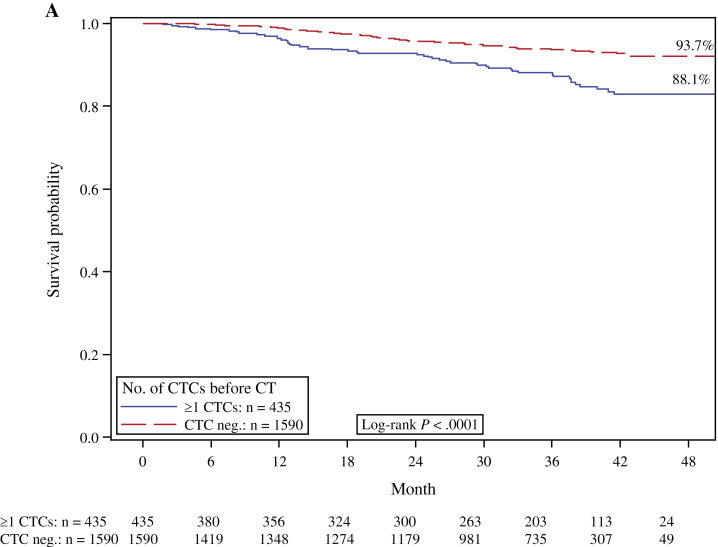
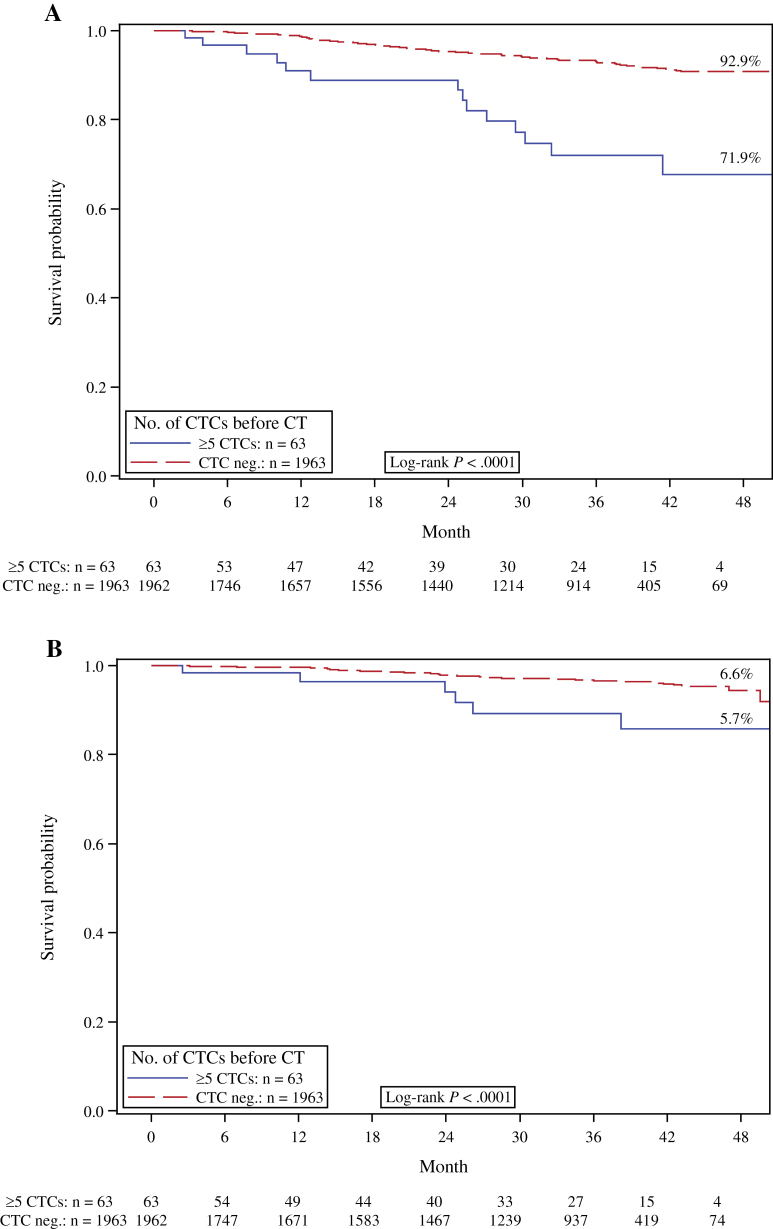
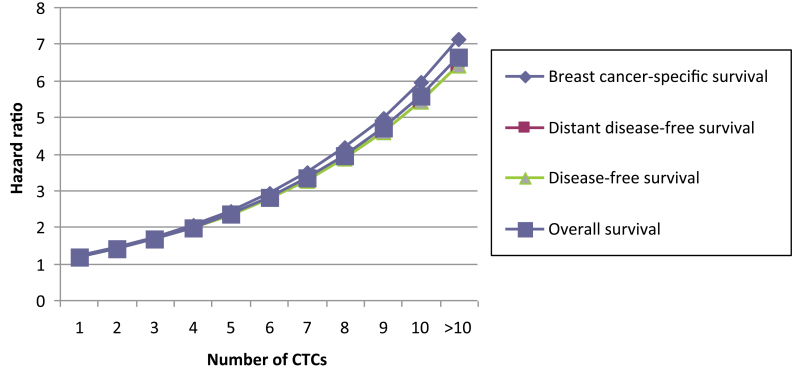
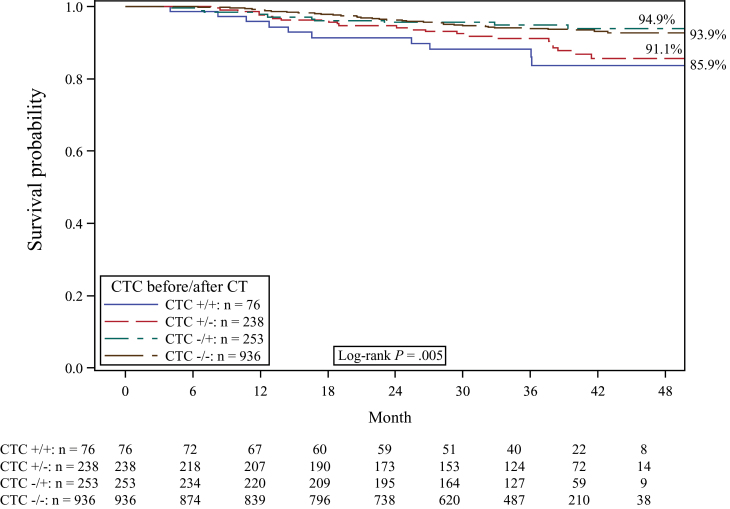
Verification
Claims the paper makes
The claims and statistics of this paper haven’t been checked yet.
Free: it reads the open-access text and checks the first 5 claims that cite a source we can check. Create a free account to check every claim.
Claims other papers make about this one
Each is checked against this paper’s own text: does it say what the citing paper says it does?
The source backs part of the claim, not all of it — or backs it for a different population, condition or comparison.
In the citing paper
“Rack B. et al. piloted a larger prospective study with 2026 breast cancer patients and discovered that the detection rate of CTCs after chemotherapy (22.1%) increased slightly in comparison to the baseline condition (21.5%) [150].”
From Tumor microenvironment complexity and therapeutic implications at a glance (2020) · cites this paper as [150]
Experimental — accuracy not yet measured
Self-check
Percentages, sums and reported differences re-computed from the paper’s own numbers.
The self-check needs the paper’s full text.
Citations
Cites
Nonparametric Estimation from Incomplete Observations
Kaplan, E. L., & Meier, P. (1992) · Springer Series in Statistics · doi:10.1007/978-1-4612-4380-9_25 · Cited by 45,181 · cited 1×
“The product-limit method according to Kaplan–Meier was used to estimate survival (21).”
MethodRegression Models and Life-Tables
Cox, D. R. (1972) · Journal of the Royal Statistical Society Series B: Statistical Methodology · doi:10.1111/j.2517-6161.1972.tb00899.x · Cited by 39,793
Nonparametric Estimation from Incomplete Observations
Kaplan, E. L., & Meier, P. (1958) · Journal of the American Statistical Association · doi:10.1080/01621459.1958.10501452 · Cited by 39,158
Regression Models and Life-Tables
Cox, D. R. (1992) · Springer Series in Statistics · doi:10.1007/978-1-4612-4380-9_37 · Cited by 26,297
ELSTON, C. W., & ELLIS, I. O. (1991) · Histopathology · doi:10.1111/j.1365-2559.1991.tb00229.x · Cited by 6,175
Circulating Tumor Cells, Disease Progression, and Survival in Metastatic Breast Cancer
Cristofanilli, M., Budd, G. T., Ellis, M. J., Stopeck, A., Matera, J., Miller, M. C., Reuben, J. M., Doyle, G. V., Allard, W. J., Terstappen, L. W. M. M., et al. (2004) · New England Journal of Medicine · doi:10.1056/nejmoa040766 · Cited by 4,593
Giuliano, A. E. (2011) · JAMA · doi:10.1001/jama.2011.90 · Cited by 2,942 · cited 1×
“Furthermore, because axillary operation will increasingly be confined to sentinel node biopsy, CTCs could be a helpful tool for selection of highrisk patients who might benefit from a more aggressive dose-dense chemotherapy regimen (27,28).”
BackgroundAllard, W. J., Matera, J., Miller, M. C., Repollet, M., Connelly, M. C., Rao, C., Tibbe, A. G. J., Uhr, J. W., & Terstappen, L. W. M. M. (2004) · Clinical Cancer Research · doi:10.1158/1078-0432.ccr-04-0378 · Cited by 2,542 · cited 1×
“Nevertheless, the CellSearch system has shown highly reproducible and automated detection of CTCs in interlab validation trials (34,35).”
MethodGeneration of a functional mammary gland from a single stem cell
Shackleton, M., Vaillant, F., Simpson, K. J., Stingl, J., Smyth, G. K., Asselin-Labat, M.-L., Wu, L., Lindeman, G. J., & Visvader, J. E. (2006) · Nature · doi:10.1038/nature04372 · Cited by 2,005
Pathological prognostic factors in breast cancer
Elston, C. (1999) · Critical Reviews in Oncology/Hematology · doi:10.1016/s1040-8428(99)00034-7 · Cited by 1,735
Cited by
Items 401–500 of 615
Chen, Z., Xu, L., Xu, X., & Yuan, C. (2018) · Oncology Letters · doi:10.3892/ol.2018.8155 · Cited by 8
“Recent studies have shown that CTCs, which could be dispersed into circulation system by primary and metastatic cancers, are closely correlated with recurrence and metastasis of several tumour types, including breast cancer (2), lung cancer (3), gastric cancer (4), head and neck cancers (5-7), as well as resistance to…”
BackgroundCardinali, B., Luca, G. D., Tasso, R., Coco, S., Garuti, A., Buzzatti, G., Sciutto, A., Arecco, L., Villa, F., Carli, F. S., et al. (2022) · International Journal of Molecular Sciences · doi:10.3390/ijms23116320 · Cited by 9
Zhou, J., Wu, J., Hao, X., Li, P., Zhang, H., Wu, X., Chen, J., Liu, J., Xiao, J., Zhang, S., et al. (2022) · Frontiers in Oncology · doi:10.3389/fonc.2022.966624 · Cited by 8
“Circulating tumor cells (CTCs) are "tumor cells shedding from the primary tumor or metastases into the bloodstream, either spontaneously or due to diagnostic and therapeutic procedures", which were firstly described by Ashworth in 1869 (2).”
BackgroundInfluentialPrognostic factors of early breast cancer
Almagro, E., González, C. S., & Espinosa, E. (2016) · Medicina Clínica (English Edition) · doi:10.1016/j.medcle.2016.04.059 · Cited by 8
Yoon, Y., Lee, J., Yoo, K.-C., Sul, O., Lee, S.-J., & Lee, S.-B. (2018) · Micromachines · doi:10.3390/mi9030106 · Cited by 8
“Researchers have reported that CTCs could be found in early stages of carcinogenesis even before the emergence of clinical symptoms [1,2], and the number of CTCs correlates closely with patient survival rates [3,4].”
BackgroundSeyfoori, A., Ebrahimi, S. A. S., Yousefi, A., & Akbari, M. (2019) · Biomaterials Science · doi:10.1039/c9bm00552h · Cited by 10
Clinical Relevance and Therapeutic Application of CTCs in Advanced Breast Cancer
Bañuelos, J., López, C. R., Cortegoso, A., Ozores, P. P., & Garcia, T. (2020) · Advances in experimental medicine and biology · doi:10.1007/978-3-030-35805-1_10 · Cited by 9
Vilsmaier, T., Heidegger, H. H., Schröder, L., Trapp, E. K., zehni, A. Z., Rack, B. K., Janni, W., Mahner, S., Weissenbacher, T. M., Jeschke, U., et al. (2020) · Archives of Gynecology and Obstetrics · doi:10.1007/s00404-020-05793-y · Cited by 11
“The SUCCESS study was one of the first trials to determine the prognostic association of CTCs with poorer survival in early breast cancer, before the start of systemic adjuvant treatment, and after adjuvant chemotherapy, in a large patient collective [15].”
MethodInfluentialSelf-citationDu, K.-Y., Wu, S., Ma, X., & Liu, Y. (2024) · Breast Cancer Research and Treatment · doi:10.1007/s10549-024-07430-7 · Cited by 7
“The results suggest the independent prognostic significance of CTCs both before and after adjuvant chemotherapy in a large prospective trial involving patients with primary breast cancer [12].”
InfluentialRusnáková, D., Aziri, R., Dubovan, P., Jurik, M., Mego, M., & Pinďák, D. (2024) · Oncology Letters · doi:10.3892/ol.2024.14756 · Cited by 8
“In 2008, during the annual American Society of Clinical Oncology (ASCO) meeting, Rack et al (85) showcased the results of the randomized trial, SUCCESS‑A.”
BackgroundAssociation Between Obesity and Circulating Tumor Cells in Early Breast Cancer Patients
Tzschaschel, M. L. J., Friedl, T. W. P., Schochter, F., Schütze, S., Polasik, A., Fehm, T. N., Pantel, K., Schindlbeck, C., Schneeweiß, A., Schreier, J., et al. (2023) · Clinical Breast Cancer · doi:10.1016/j.clbc.2023.05.011 · Cited by 9
Self-citationLi, D., Heffernan, K., Koch, F. C., Peake, D. A., Pascovici, D., David, M., Kehelpannala, C., Mann, G. B., Speakman, D., Hurrell, J. G. R., et al. (2024) · International Journal of Molecular Sciences · doi:10.3390/ijms252111559 · Cited by 12
Chantzara, E., Xenidis, N., Kallergi, G., Georgoulias, V., & Kotsakis, A. P. (2021) · Expert Review of Molecular Diagnostics · doi:10.1080/14737159.2021.1962710 · Cited by 7
Clinical application of circulating tumor cells
Stoecklein, N. H., Oles, J., Franken, A., Neubauer, H. J., Terstappen, L. W. M. M., & Neves, R. P. (2023) · Medizinische Genetik · doi:10.1515/medgen-2023-2056 · Cited by 7
“Strikingly, CTCs can also be detected in peripheral blood samples in the minimal residual disease (MRD) situation after complete removal of the primary tumor [53–54], after all cycles of neo-/adjuvant therapy were completed [55–56] and even two years after completion of the adjuvant therapy [57].”
BackgroundReview: circulating tumor cells in the practice of breast cancer oncology
Ramos‐Medina, R., Moreno, F., López‐Tarruella, S., del Monte-Millán, M., Márquez‐Rodas, I., Durán, E., Jerez, Y., García-Sáenz, J. Á., Ocaña, I., Andrés, S., et al. (2015) · Clinical & Translational Oncology · doi:10.1007/s12094-015-1460-2 · Cited by 7
Hwang, E., Uh, J., Lee, H. S., Lee, C. H., Lee, S., Ahn, S. H., Son, B. H., Lee, J. W., Yu, J. H., Kwon, N., et al. (2017) · Oncology Letters · doi:10.3892/ol.2017.6077 · Cited by 7
“CTCs from patients with breast cancer may be able to indicate tumor recurrence and metastasis (13), predict survival rate (14) and predict which therapy may be optimal (15,16).”
Fasching, P. A., Liu, D., Scully, S. J., Ingle, J. N., Junior, P. C. M. L., Rack, B. K., Hein, A., Ekici, A. B., Reis, A., Schneeweiß, A., et al. (2022) · Clinical Cancer Research · doi:10.1158/1078-0432.ccr-20-4774 · Cited by 7
Self-citationRossi, A., Pan, A., Menzer, C., Lavin, L., Aleissa, S., Aleisa, A., Alshaikh, H., Dranitsaris, G., Dusza, S. W., Bravo, C., et al. (2025) · Dermatologic Surgery · doi:10.1097/dss.0000000000004755 · Cited by 6
Fasching, P. A., Häberle, L., Rack, B. K., Li, L., Hein, A., Ekici, A. B., Reis, A., Lux, M. P., Cunningham, J. M., Ruebner, M., et al. (2017) · Oncotarget · doi:10.18632/oncotarget.17726 · Cited by 6
Self-citationCroft, P. K., Joshi, V., Saunus, J. M., & Lakhani, S. R. (2022) · Diseases · doi:10.3390/diseases10010011 · Cited by 6
Köstler, C., Polzer, B. M., & Alberter, B. (2024) · Methods in molecular biology · doi:10.1007/978-1-0716-3621-3_2 · Cited by 6
Zhang, Q., Cai, Z., Gerratana, L., Davis, A. A., D’Amico, P., Chawla, A., Jacob, S. L., Zhang, Y., Jiao, J., Qin, W., et al. (2024) · Clinical Cancer Research · doi:10.1158/1078-0432.ccr-24-0535 · Cited by 9
McCartney, A., Vignoli, A., Hart, C. D., Tenori, L., Luchinat, C., Biganzoli, L., & Leo, A. D. (2017) · The Breast · doi:10.1016/j.breast.2017.06.021 · Cited by 6
Update on the role of circulating tumour cells in cancer-associated thrombosis
Castle, J., Blower, E., & Kirwan, C. (2021) · Thrombosis Update · doi:10.1016/j.tru.2021.100066 · Cited by 5
An Image-Based Identification of Aggressive Breast Cancer Circulating Tumor Cell Subtypes
Kamal, M., Wang, Y. J., Plummer, S., Dickerson, A., & Yu, M. (2023) · Cancers · doi:10.3390/cancers15102669 · Cited by 5
Zenteno, A. K. J., & Cerf, A. (2019) · Advanced Biosystems · doi:10.1002/adbi.201900164 · Cited by 7
Circulating Tumor Cells: Applications for Early Breast Cancer
Martos, T., Casadevall, D., & Albanell, J. (2020) · Advances in experimental medicine and biology · doi:10.1007/978-3-030-35805-1_9 · Cited by 6
Jeong, Y. J., Park, S.-M., & Jeon, C. (2020) · Oncology Letters · doi:10.3892/ol.2020.11939 · Cited by 10
Sanches, S. M., Braun, A. C., Calsavara, V. F., Barbosa, P. N. V. P., & Chinen, L. T. D. (2021) · Clinics · doi:10.6061/clinics/2021/e2971 · Cited by 6
Circulating and Disseminated Tumour Cells in Breast Carcinoma
Banys-Paluchowski, M. J., Hartkopf, A. D., Meier-Stiegen, F., Janni, W., Solomayer, E., & Fehm, T. N. (2019) · Geburtshilfe und Frauenheilkunde · doi:10.1055/a-0753-7331 · Cited by 6
“2 ) [11].”
Self-citationBansal, C., Pujani, M., Misra, S., Srivastava, A., & Singh, U. N. (2016) · Turkish Journal of Pathology · doi:10.5146/tjpath.2016.01364 · Cited by 6
Bystrický, B., Jurišová, S., Karaba, M., Minárik, G., Benca, J., Sedláčková, T., Tóthová, Ľ., Vlková, B., Čierna, Z., Janega, P., et al. (2017) · Anticancer Research · doi:10.21873/anticanres.11512 · Cited by 6
Shi, Y.-M., Zhang, G., Wang, Y., Ren, C., Wen, L., Zhu, W., Chen, X., & Liao, N. (2018) · Chinese Journal of Cancer Research · doi:10.21147/j.issn.1000-9604.2018.03.06 · Cited by 6
Modular Chamber Assembled with Cell-Replicated Surface for Capture of Cancer Cells
Sun, H., Han, L., Yang, L., Yang, Y., Jiang, W., Xu, T., & Jia, L. (2019) · ACS Biomaterials Science & Engineering · doi:10.1021/acsbiomaterials.8b01605 · Cited by 6
Maskey, N., Mao, S., Yang, G., Guo, Y., Kadier, A., Yuan, J., Xie, J., Guo, C., Yang, B., & Yao, X. (2023) · International Urology and Nephrology · doi:10.1007/s11255-023-03622-0 · Cited by 5
Khan, M. U., Khawar, A., Ullah, M. I., Shan, M. A., Falzone, L., Libra, M., Spoto, G., Sharifi‐Rad, J., & Călina, D. C. (2025) · Molecular and Cellular Biochemistry · doi:10.1007/s11010-025-05343-7 · Cited by 13
“…provide prognostic information about the patients at an early stage of cancer, and their measurement before and after chemotherapy has been associated with overall survival (OS) and poor relapse-free survival (RFS) [48]. ctDNA revealed some potential in monitoring minimal residual disease (MRD).”
Nagpal, N., Rupp, B., Hong, Y., Wagner, J., Larson, K. E., Balanoff, C., Aripoli, A. M., Huppe, A. I., Winblad, O. D., Peterson, J., et al. (2025) · Science Advances · doi:10.1126/sciadv.adz0187 · Cited by 6
Goodman, C. R., & Speers, C. W. (2020) · International Journal of Radiation Oncology*Biology*Physics · doi:10.1016/j.ijrobp.2020.08.039 · Cited by 7
Role of circulating tumor cells in breast cancer
Hattori, M. (2024) · Breast Cancer · doi:10.1007/s12282-024-01651-w · Cited by 5
“In the SUCCESS-A trial [27], in which CTCs were measured in 30 mL of blood before and after adjuvant treatment, CTCs were detected in approximately 20% of the patients, representing a poor prognostic factor for DFS and OS, with a higher CTC count being associated with a poorer prognosis.”
Profiling of circulating tumor cells in liquid biopsies from metastatic cancer patients
Potdar, P. D., & Sen, K. (2017) · Journal of Cancer Metastasis and Treatment · doi:10.20517/2394-4722.2016.53 · Cited by 5
“[13,14] Rack et al.[18] concluded that there is an independent prognostic relevance of CTC determination both before and after adjuvant chemotherapy in a study of > 2,000 patients with primary breast cancer.”
BackgroundRinnerthaler, G., Gampenrieder, S. P., & Greil, R. (2018) · memo - Magazine of European Medical Oncology · doi:10.1007/s12254-018-0433-x · Cited by 5
Toward A Holistic View of Multiscale Breast Cancer Molecular Biomarkers
Dai, X., Zhang, X., & Lu, P. (2019) · Biomarkers in Medicine · doi:10.2217/bmm-2019-0143 · Cited by 5
Factores pronósticos en el cáncer de mama en estadio inicial
Almagro, E., González, C. S., & Espinosa, E. (2015) · Medicina Clínica · doi:10.1016/j.medcli.2014.12.019 · Cited by 5
Mehtar, A., Wechsler, J., Desterke, C., Giron‐Michel, J., Bouzidi, A., Burlion, A., Louache, F., Kahia-Tani, S., Uzan, G., & Naserian, S. (2025) · International Journal of Molecular Sciences · doi:10.3390/ijms26104714 · Cited by 6
“CTC analysis was also shown to be an indicator of treatment effectiveness, as the lower number of CTCs after treatment was associated with better relapse-free and OS [18–20].”
Tong, L., & Wan, Y. (2023) · IEEE Access · doi:10.1109/access.2023.3343701 · Cited by 4
“Liquid biopsy, a method for collection of target cells, allows the analysis of these CTCs, tumor DNA (ctDNA) and exosomes.”
MethodInnovationsmanagement diagnostischer Geräte am Beispiel der Detektion zirkulierender Tumorzellen
Fleßa, S., Aichinger, H., & Bratan, T. (2020) · Gesundheitsökonomie & Qualitätsmanagement · doi:10.1055/a-1139-6968 · Cited by 5
Amuran, G. G. (2020) · Asian Pacific Journal of Cancer Prevention · doi:10.31557/apjcp.2020.21.8.2179 · Cited by 4
“Current data supports that CTCs takes place in the diagnosis, treatment and monitorizing of the cancers (Akkiprik et al., 2020; Kaigorodova et al., 2018; Lianidou,et al., 2014; Rack et al., 2014; Zhang et al., 2012).”
BackgroundChanging paradigms in breast cancer treatment
Jassem, J., Ali, S., & Buczek, D. (2020) · European Journal of Translational and Clinical Medicine · doi:10.31373/ejtcm/130486 · Cited by 5
“It can address monitoring of minimal residual disease after treatment, or even inform the selection of the most effective therapies [74-76].”
BackgroundHan, T., Zhang, J., Xiao, D., Yang, B., Chen, L., Zhai, C., Ding, F., Xu, Y., Zhao, X., & Zhao, J. (2022) · Journal of Oncology · doi:10.1155/2022/5247423 · Cited by 4
Wang, Z., Xu, W., Yang, Y., Gao, G., Teng, C., Ge, Z., Zhang, H., Zhu, Y., Ding, G., Wang, Y., et al. (2022) · Frontiers in Oncology · doi:10.3389/fonc.2022.1006909 · Cited by 5
“examined CTC in 1767 breast cancer patients and showed that there was a correlation between CTC positivity and lymph node metastasis (14), while Lang et al.”
BackgroundHigh‐purity isolation platelets by gradient centrifugation plus filtration
Jin, J., Shao, Y., Zhang, J., Cao, J., Tao, Z., & Hu, X. (2022) · International Journal of Laboratory Hematology · doi:10.1111/ijlh.13998 · Cited by 4
Wang, D.-Q., Wang, Y.-Y., Shi, Y., Zeng, B., Lin, Z., Deng, Q., & Jia, M. (2023) · Heliyon · doi:10.1016/j.heliyon.2023.e18697 · Cited by 5
Significance of Studying Circulating Tumor Cells
Datar, R. H., Ao, Z., & Côté, R. J. (2016) · Current cancer research · doi:10.1007/978-1-4939-3363-1_1 · Cited by 4
Molecular-Based Diagnostic, Prognostic and Predictive Tests in Breast Cancer
Muftah, A. A., Aleskandarany, M. A., Ellis, I. O., & Rakha, E. A. (2015) · Molecular pathology library · doi:10.1007/978-1-4939-2886-6_12 · Cited by 4
CTCs as Liquid Biopsy: Where Are We Now?
Cayrefourcq, L., & Alix‐Panabières, C. (2019) · IntechOpen eBooks · doi:10.5772/intechopen.84366 · Cited by 4
Tsai, W., Hung, T., Chen, J.-Y., Huang, S.-H., & Chang, Y. (2021) · Cancers · doi:10.3390/cancers13133294 · Cited by 5
“counts and metastasis relapses in patients with several kinds of tumor, such as breast [6,7], colorectal [17], bladder [38], liver [39], and esophageal cancer [40].”
BackgroundCirculating Tumor Cells in Breast Cancer: A Potential Liquid Biopsy
Kamal, M., Razaq, W., Leslie, M., Adhikari, S., & Tanak, T. (2017) · InTech eBooks · doi:10.5772/66439 · Cited by 4
“002) in early breast cancer patients [56].”
Pathophysiology of Tumor Cell Release into the Circulation and Characterization of CTC
Todenhöfer, T., Pantel, K., Stenzl, A., & Werner, S. (2019) · Recent results in cancer research/Recent Results in Cancer Research · doi:10.1007/978-3-030-26439-0_1 · Cited by 4
Self-citationda Silva, M. C. E., de Campos, V. S., da Silva, M. P. A. D. V., & Ferrer, V. P. (2025) · ONCOLOGIE · doi:10.1515/oncologie-2025-0281 · Cited by 3
“Several studies have further demonstrated that the presence of CTCs in early-stage or primary BC serves as a prognostic indicator of patient survival outcomes [207].”
Neoadjuvant therapy and translational biomarkers for metastatic risk in early breast cancer
McCracken, A., Grafinger, O. R., Leong, H. S., Lohmann, A. E., Jerzak, K. J., & Das, S. (2026) · Cancer Treatment Reviews · doi:10.1016/j.ctrv.2026.103111 · Cited by 5
Will Minimal Residual Disease Monitoring Be Part of Routine Surveillance?
Pfister, K., Schäffler, H., Huesmann, S. T., Heublein, S., Braun, T., Lukac, S., Veselinovic, K., Mergel, F., Friedl, T. W. P., Rack, B. K., et al. (2025) · Oncology Research and Treatment · doi:10.1159/000544838 · Cited by 4
“Further discoveries on disseminated tumor cells were followed by detection of circulating tumor cells in the bloodstream [12 – 14].”
Self-citationLiquid Biopsy for Uveal Melanoma
Tura, A., Lüke, J., & Grisanti, S. (2018) · Codon Publications eBooks · doi:10.15586/codon.noncutaneousmelanoma.2018.ch3 · Cited by 3
Asperger, H., Cieslik, J., Alberter, B., Köstler, C., Polzer, B., Müller, V., Pantel, K., Riethdorf, S., Koch, A., Hartkopf, A. D., et al. (2021) · Translational Oncology · doi:10.1016/j.tranon.2021.101132 · Cited by 3
Self-citationCirculating tumor cells in metastatic breast cancer: ready for clinical practice?
(2022) · European Journal of Gynaecological Oncology · doi:10.22514/ejgo.2022.007 · Cited by 3
Ding, R., Ye, M., Zhu, Y., Zhao, Y., Liu, Q., Cao, Y., & Xu, J. (2023) · Chemosensors · doi:10.3390/chemosensors11020099 · Cited by 6
Nicolò, E., Gianni, C., Curigliano, G., Reduzzi, C., & Cristofanilli, M. (2024) · Current Opinion in Oncology · doi:10.1097/cco.0000000000001082 · Cited by 3
Cirmena, G., Garuti, A., Mariano, M. D., Coco, S., Ferrando, L., Isnaldi, E., Barbero, V., Fregatti, P., Mastro, L. D., Ferrando, F., et al. (2020) · Journal of Oncology · doi:10.1155/2020/8132507 · Cited by 3
“Circulating tumors cells (CTCs) were approved by the Federal Drug Agency (FDA) for the prognostic stratification of early breast cancer patients, but the sensitivity of this method is relatively low and the retrieval of CTC is not a trivial task [2, 3].”
Gupta, P., Gulzar, Z. G., Hsieh, B. R., Lim, A., Watson, D., & Mei, R. (2019) · Journal of Circulating Biomarkers · doi:10.33393/jcb.2019.2100 · Cited by 3
Using Circulating Tumor Cells to Guide Therapy in Breast Cancer: Could this Replace Biopsies?
Dawood, S. S., & Cristofanilli, M. (2015) · Pharmacogenomics · doi:10.2217/pgs.15.36 · Cited by 3
Circulating Tumor Cells, a Tremendous Prognostic Factor in Inflammatory Breast Cancer
Bidard, F. (2015) · JNCI Journal of the National Cancer Institute · doi:10.1093/jnci/djv281 · Cited by 3
Duma, M. N. (2018) · Strahlentherapie und Onkologie · doi:10.1007/s00066-018-1370-7 · Cited by 3
Point of care diagnostics for cancer: Recent trends and challenges
Dara, H., Mali, M., Aher, H., Patil, P., Sahu, B., & Arya, N. (2022) · Elsevier eBooks · doi:10.1016/b978-0-323-85147-3.00006-2 · Cited by 2
Circulating Tumor Cells in Early Breast Cancer: A 10-Year Follow-Up Update
Rossi, T., Scarpi, E., & Maltoni, R. (2025) · Biomedicines · doi:10.3390/biomedicines13061278 · Cited by 2
“This finding is inconsistent with data provided by other studies [6,7], and discrepancies may be attributed to differences in the study setting and methodological approach.”
Heterogeneity Landscape of Circulating Tumor Cells in Clinical Utility
Alam, M. K., Yanjun, L., Khoo, B. L., Si, T., Zou, H., & Yang, M. (2025) · Advanced Therapeutics · doi:10.1002/adtp.202400438 · Cited by 4
Liu, Y., Liang, J., Zhang, M., Cao, N., Xue, J., Zhang, X., Jia, Y., Chang, Z., Zhang, G., Li, Y., et al. (2025) · Frontiers in Cell and Developmental Biology · doi:10.3389/fcell.2025.1716168 · Cited by 2
Integrating immunopeptidomics with liquid biopsy for precision oncology
Masmoudi, D., Alix‐Panabières, C., & Eslami‐S, Z. (2026) · Molecular Aspects of Medicine · doi:10.1016/j.mam.2026.101478 · Cited by 4
Cellules tumorales circulantes : pierre angulaire de la médecine personnalisée
Rafii, A., Vidal, F., Rathat, G., & Alix‐Panabières, C. (2014) · Journal de gynécologie, obstétrique et biologie de la reproduction. Supplément/Journal de gynécologie obstétrique et biologie de la reproduction · doi:10.1016/j.jgyn.2014.06.009 · Cited by 2
Role of Liquid Biopsy in Clinical Decision-Making for Breast Cancer
Hall, C. S., Sarli, V. N., Meas, S., & Lucci, A. (2019) · Current Breast Cancer Reports · doi:10.1007/s12609-019-0308-0 · Cited by 2
Krawczyk, N., JANOWSKI, K., Banys‐Paluchowski, M., Staebler, A., Neubauer, H. J., Meisner, C., Hartkopf, A. D., Brucker, S. Y., Wallwiener, D. R., & Fehm, T. N. (2021) · Anticancer Research · doi:10.21873/anticanres.15066 · Cited by 2
Self-citationShafaee, M. N., Makawita, S., Lim, B., Ellis, M. J., & Ludwig, M. S. (2021) · Clinical Breast Cancer · doi:10.1016/j.clbc.2021.12.001 · Cited by 2
Clinical Applications for Liquid Biopsy Assessment of Minimal Residual Disease in Breast Cancer
Sears, J. J., & Davis, A. A. (2023) · Current Breast Cancer Reports · doi:10.1007/s12609-023-00489-z · Cited by 3
Nachsorge beim Mammakarzinom – endlich Bewegung? Die gängige Nachsorgepraxis auf dem Prüfstand
Huesmann, S. T., Heublein, S., Janni, W., & Pfister, K. (2024) · Die Gynäkologie · doi:10.1007/s00129-024-05239-5 · Cited by 2
Self-citationIdentifizierung von Patientinnen mit HR+, HER2– Brustkrebs im Frühstadium mit hohem Rezidivrisiko
Fasching, P. A., Kreipe, H. H., Mastro, L. D., Ciruelos, E., Freyer, G., Korfel, A., Chouaki, N., Stoffregen, C., Sapunar, F. J., & Cameron, D. (2024) · Senologie - Zeitschrift für Mammadiagnostik und -therapie · doi:10.1055/a-2305-1411 · Cited by 2
Self-citationSuperparamagnetic particles and their application in oncology
Barmashov, A. E., Гришечкина, Е. В., Досовицкий, А. Е., & Baryshnikova, M. A. (2016) · Nanotechnologies in Russia · doi:10.1134/s1995078016060045 · Cited by 2
“, breast cancer [72], melanoma [73], non-small cell lung cancer [74], and colorectal cancer [75]).”
BackgroundPrognostic and Predictive Role of Circulating Tumor Cells in Breast Cancer
Mego, M., & Reuben, J. M. (2014) · Current Breast Cancer Reports · doi:10.1007/s12609-014-0164-x · Cited by 2
Epigenetics, Enhancers, and Cancer
Morrow, J. J., & Scacheri, P. C. (2016) · Energy balance and cancer · doi:10.1007/978-3-319-41610-6_2 · Cited by 2
Warawdekar, U. M., Parmar, V. V., Prabhu, A. L., Kulkarni, A., Chaudhari, M., & Badwe, R. A. (2017) · Journal of Cancer Metastasis and Treatment · doi:10.20517/2394-4722.2016.66 · Cited by 2
“In the literature presence of CTCs has been correlated with poor prognosis as well as progression-free survival, and CTCs have been identified as indicators of treatment efficacy in different tumours.[6,28-30] Their role in the metastatic process is endorsed by several studies, yet their clinical use for tumour stagin…”
BackgroundPlace des CTC et de l’ADN circulant dans la prise en charge du cancer du sein
Allouchery, V., Augusto, L., & Clatot, F. (2019) · ONCOLOGIE · doi:10.3166/onco-2019-0035 · Cited by 2
“L ’ analyse multivariée a permis de confirmer la valeur pronostique indépendante de la présence de CTC [7].”
Werno, C., Honarnejad, K., & Polzer, B. (2020) · Expert Review of Precision Medicine and Drug Development · doi:10.1080/23808993.2020.1831910 · Cited by 2
Hartkopf, A. D., Taran, F., Walter, C. B., Hahn, M., Fehm, T. N., Wallwiener, M., & Brucker, S. Y. (2015) · Breast Cancer Research and Treatment · doi:10.1007/s10549-015-3440-1 · Cited by 2
Self-citationRelationship between Food Type and Increased Risk of Cancer
Aljamali, N. M. (2022) · Biomedical Research and Clinical Reviews · doi:10.31579/2692-9406/107 · Cited by 2
Detection and Clinical Implications of Occult Systemic Micrometastatic Breast Cancer
Kwa, M. J., & Esteva, F. J. (2017) · Elsevier eBooks · doi:10.1016/b978-0-323-35955-9.00066-0 · Cited by 2
Profiling Circulating Tumour Cells for Clinical Applications
Goh, K. Y., & Lim, W. (2019) · IntechOpen eBooks · doi:10.5772/intechopen.79228 · Cited by 3
“Moreover, prognosis was worst in patients with >5 CTCs per 30 ml of blood [70].”
BackgroundMiller, P. C., El‐Ashry, D., & Lippman, M. E. (2019) · Cancer Drug Resistance · doi:10.20517/cdr.2019.99 · Cited by 2
“In the context of early breast cancer, the SUCCESS trial demonstrated that the presence of CTCs at baseline prior to adjuvant chemotherapy, as well as the persistence of CTCs following adjuvant chemotherapy, was significantly associated with poorer disease free survival and worse overall survival in patients with earl…”
BackgroundEl‐Morshidy, S., Fattah, O. A., Eissa, H., Sayed, D., & Mohamed, S. (2020) · Journal of Current Medical Research and Practice · doi:10.4103/jcmrp.jcmrp_144_18 · Cited by 2
Zirkulierende Tumorzellen: Ist die Metastasierung bald vorhersagbar?
Gorges, T. M., & Pantel, K. (2016) · Deutsches Ärzteblatt · doi:10.3238/personko/2016.09.30.02 · Cited by 2
Self-citationWang, Z., Zhang, P., Chong, Y., Xue, Y., Yang, X., Li, H., Zhang, Y., Li, Z., Li, X., Li, H., et al. (2020) · doi:10.21203/rs.3.rs-23141/v1 · Cited by 2
“At the same time, clinical significance of CTCs in early stages cancers has also attracted much attention [18-21].”
BackgroundLiquid biopsy current techniques
Uner, B., & Çevik, Ö. D. (2025) · Elsevier eBooks · doi:10.1016/b978-0-443-27496-1.00007-5 · Cited by 1
Clinical relevance of circulating tumor cells in cancer patients
Hamilton, G. (2015) · memo - Magazine of European Medical Oncology · doi:10.1007/s12254-015-0237-1 · Cited by 1
Prognostic Implications of CTC in Breast Cancer
Smerage, J. B. (2016) · Current cancer research · doi:10.1007/978-1-4939-3363-1_12 · Cited by 1
Metadata
- Authors
- Rack, B., Schindlbeck, C., Jückstock, J., Andergassen, U., Hepp, P., Zwingers, T., Friedl, T. W. P., Lorenz, R., Tesch, H., Fasching, P. A., Fehm, T., Schneeweiss, A., Lichtenegger, W., Beckmann, M. W., Friese, K., Pantel, K., & Janni, W.
- Affiliations
- University Hospital Heidelberg (DE)
- Corresponding author
- Rack, Brigitte
- ORCID
- Venue
- JNCI: Journal of the National Cancer Institute
- Publisher
- Oxford University Press (OUP)
- Published
- 2014-05
- Volume
- 106
- Issue
- 5
- ISSN
- 0027-8874 (ISSN-L)
- 1460-2105
- PMC
- PMC4112925
- OpenAlex
- W2169632044
- Cited by
- 615
- References
- 55
- Citations by year
- 2026: 11 · 2025: 23 · 2024: 38 · 2023: 50 · 2022: 45 · 2021: 48 · 2020: 54 · 2019: 63 · 2018: 67 · 2017: 68 · 2016: 68 · 2015: 58 · 2014: 18
- FWCI
- 22.66
- Type
- journal article
- Language
- en
- Open access
- hybrid
- doi.org
- Licence
- cc-by-nc
- Locations
- JNCI Journal of the National Cancer Institute (publishedVersion, cc-by-nc)
- PubMed Central (publishedVersion, cc-by-nc)
- PubMed (publishedVersion)
- OPUS FAU (Kooperativer Bibliotheksverbund Berlin-Brandenburg (KOBV), on behalf of the Universitätsbibliothek Erlangen-Nürnberg) (submittedVersion)
- HighWire Press Open Archive (submittedVersion)
- Funders
- Eli Lilly and Company
- AstraZeneca
- Sanofi
- Chugai Pharmaceutical
- Topics
- Life Sciences › Biochemistry, Genetics and Molecular Biology › Cancer Research › Breast Cancer Treatment Studies
- Health Sciences › Medicine › Oncology › Cancer Cells and Metastasis
- Life Sciences › Biochemistry, Genetics and Molecular Biology › Cancer Research › Cancer Genomics and Diagnostics
- Keywords
- circulating tumor cells, early breast cancer, prognostic factors, disease-free survival, overall survival, adjuvant chemotherapy, CellSearch, EpCAM, cytokeratin, CD45, lymph node status, CTC count, treatment response monitoring, metastatic breast cancer, hormone receptor status, tumor size and grade, risk stratification, risk-adapted treatment
- MeSH terms
- Docetaxel, Gemcitabine, Antineoplastic Combined Chemotherapy Protocols, Breast Neoplasms, Cyclophosphamide, Deoxycytidine, Female, Fluorouracil, Humans, Lymphatic Metastasis, Middle Aged, Neoplastic Cells, Circulating, Neoplasm Staging, Prospective Studies, Epirubicin, Chemotherapy, Adjuvant, Immunomagnetic Separation, Taxoids, Kaplan-Meier Estimate
About these checks
Registry, retraction, Cites and statistics results are computed, not judged, with one exception: a printed reference that no index lists is read once by a model before it counts as a citation error. Claims are extracted by a model and kept only when their quote appears verbatim in the text; each cited source is then checked, with a model’s help, for whether it says what the claim relies on. Those verdicts can be wrong — read the claim’s quote and the cited source before relying on one.
Statistics and arithmetic are recomputed, not judged.
Confidence bands are shown only for fields calibrated on our annotated test set. None is calibrated yet, so no band is shown.
What counts as a claim ›How we measure confidence ›How we check this ›
Are you an author, or do you see a problem with this page? Request a review
Data sources
Bibliographic data: Semantic Scholar, OpenAlex, Crossref.
Contains information from the Semantic Scholar Academic Graph Datasets, made available under the ODC Attribution License (ODC-BY 1.0).
Semantic Scholar’s data is described in: Kinney, R., et al. (2023). The Semantic Scholar Open Data Platform. arXiv:2301.10140.
