

The identity and methylation status of the first transcribed nucleotide in eukaryotic mRNA 5’ cap modulates protein expression in living cells
Open accessPublished version of a preprint
The DOI matches its Crossref record; 68 of the 71 references it cites were found in a registry or an index.
Abstract
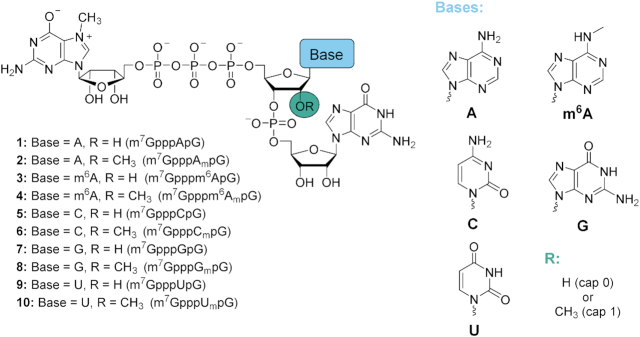
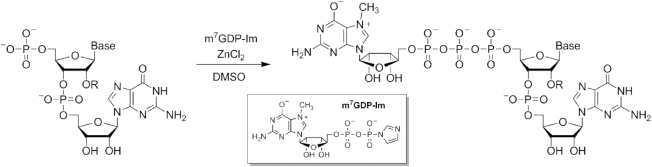
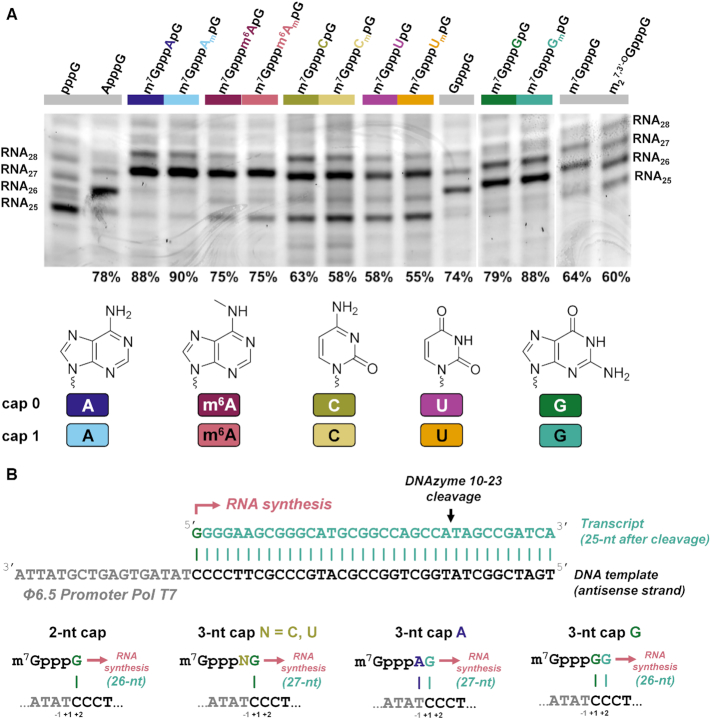
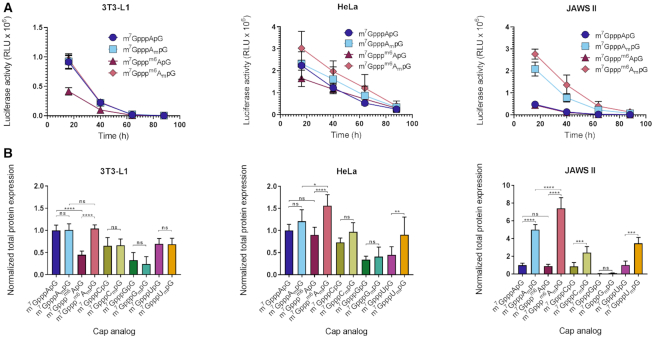
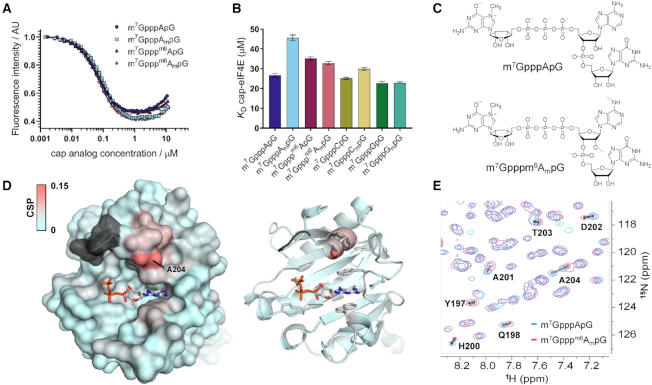
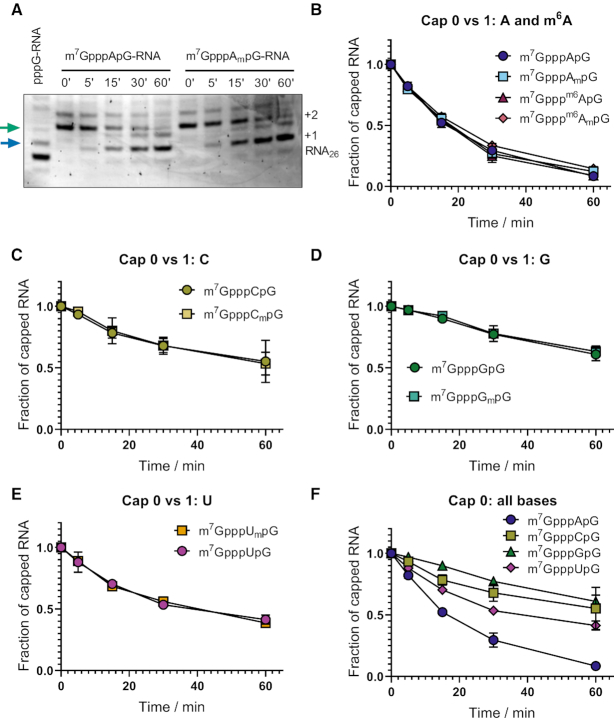
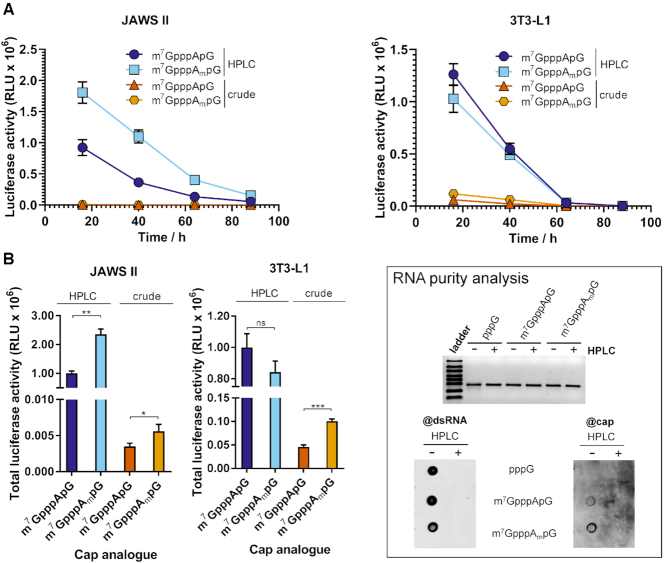
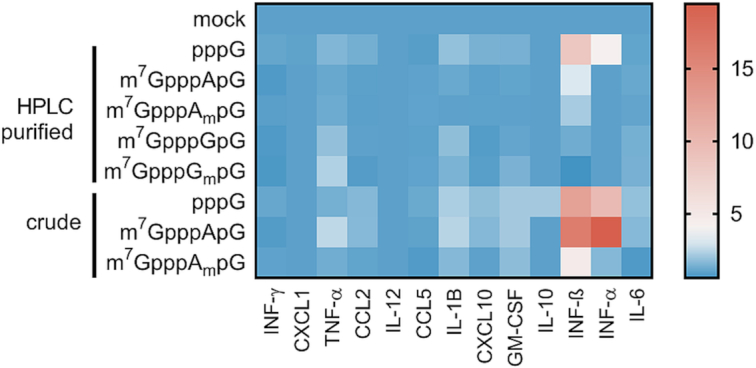
7-Methylguanosine 5' cap on mRNA is necessary for efficient protein expression in vitro and in vivo. Recent studies revealed structural diversity of endogenous mRNA caps, which carry different 5'-terminal nucleotides and additional methylations (2'-O-methylation and m6A). Currently available 5'-capping methods do not address this diversity. We report trinucleotide 5' cap analogs (m7GpppN(m)pG), which are utilized by RNA polymerase T7 to initiate transcription from templates carrying Φ6.5 promoter and enable production of mRNAs differing in the identity of the first transcribed nucleotide (N = A, m6A, G, C, U) and its methylation status (±2'-O-methylation). HPLC-purified mRNAs carrying these 5' caps were used to study protein expression in three mammalian cell lines (3T3-L1, HeLa and JAWS II). The highest expression was observed for mRNAs carrying 5'-terminal A/Am and m6Am, whereas the lowest was observed for G and Gm. The mRNAs carrying 2'-O-methyl at the first transcribed nucleotide (cap 1) had significantly higher expression than unmethylated counterparts (cap 0) only in JAWS II dendritic cells. Further experiments indicated that the mRNA expression characteristic does not correlate with affinity for translation initiation factor 4E or in vitro susceptibility to decapping, but instead depends on mRNA purity and the immune state of the cells.
Overview
The claims and statistics of this paper haven’t been checked yet.
Free: it reads the open-access text and checks the first 5 claims that cite a source we can check. Create a free account to check every claim.
Integrity signals
Registry
Cites
Statistics
Figures
Verification
Claims the paper makes
The claims and statistics of this paper haven’t been checked yet.
Free: it reads the open-access text and checks the first 5 claims that cite a source we can check. Create a free account to check every claim.
Claims other papers make about this one
Each is checked against this paper’s own text: does it say what the citing paper says it does?
The source backs part of the claim, not all of it — or backs it for a different population, condition or comparison.
In the citing paper
“However, for highly sensitive cells, such as primary immune cells, chemically modified mRNA with CleanCap AG is best for maximum expression and minimal intracellular nucleic acid recognition.52”
From Adenine base editor for knockout of proteins: A practical guide from design to analysis with updated MultiEditRbatch (2026) · cites this paper as [52]
Experimental — accuracy not yet measured
Self-check
Percentages, sums and reported differences re-computed from the paper’s own numbers.
The self-check needs the paper’s full text.
Citations
Cites
mRNA vaccines — a new era in vaccinology
Pardi, N., Hogan, M. J., Porter, F. W., & Weissman, D. (2018) · Nature Reviews Drug Discovery · doi:10.1038/nrd.2017.243 · Cited by 4,667 · cited 1×
“29 stability and translational potential of mRNA (55-58).”
BackgroundKarikó, K., Buckstein, M., Ni, H., & Weissman, D. (2005) · Immunity · doi:10.1016/j.immuni.2005.06.008 · Cited by 2,728
mRNA-based therapeutics--developing a new class of drugs
Sahin, U., Karikó, K., & Türeci, Ö. (2014) · Nature Reviews Drug Discovery · doi:10.1038/nrd4278 · Cited by 2,474 · cited 1×
“For clinical gene therapy applications it is beneficial to apply mRNAs with superior translational properties and improved stability (22).”
BackgroundA promoter-level mammalian expression atlas
The FANTOM Consortium and the RIKEN PMI and CLST (DGT) (2014) · Nature · doi:10.1038/nature13182 · Cited by 1,982
Karikó, K., Muramatsu, H., Welsh, F. A., Ludwig, J., Kato, H., Akira, S., & Weissman, D. (2008) · Molecular Therapy · doi:10.1038/mt.2008.200 · Cited by 1,930 · cited 1×
“29 stability and translational potential of mRNA (55-58).”
BackgroundImmune Signaling by RIG-I-like Receptors
Loo, Y.-M., & Gale, M. (2011) · Immunity · doi:10.1016/j.immuni.2011.05.003 · Cited by 1,875 · cited 1×
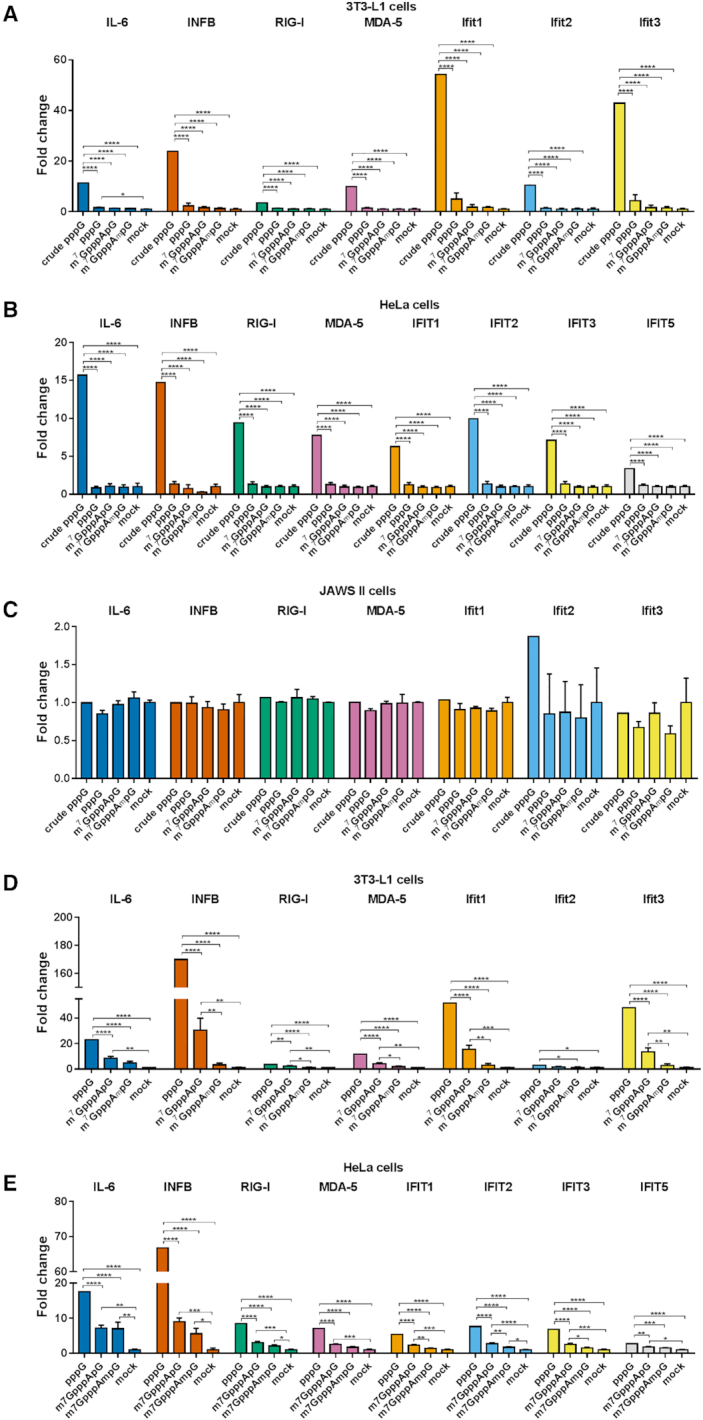
“Knowing that the presence of dsRNA impurities, which are commonly formed as a byproducts of IVT (52), stimulates intracellular nucleic acid receptors (44,53), we hypothesized that the methylation status of the first transcribed nucleotide may have differential effect in the case of purified and non-purified IVT mRNAs.”
BackgroundInnate Immune Pattern Recognition: A Cell Biological Perspective
Brubaker, S. W., Bonham, K. S., Zanoni, I., & Kagan, J. C. (2015) · Annual Review of Immunology · doi:10.1146/annurev-immunol-032414-112240 · Cited by 1,475
Genome-wide analysis of mammalian promoter architecture and evolution
Carninci, P., Sandelin, A., Lenhard, B., Katayama, S., Shimokawa, K., Ponjavic, J., Semple, C. A. M., Taylor, M. S., Engström, P. G., Frith, M. C., et al. (2006) · Nature Genetics · doi:10.1038/ng1789 · Cited by 1,350 · cited 1×
“For instance, in budding yeast a strong preference to start transcription of proteincoding genes with purines (A and G) was observed (16,17), whereas in human cells m(7)G-capped mRNAs frequently start with A,G, C, and m(6)A, but not U, which is used more than 100-times less frequently (18-20).”
BackgroundSchwartz, S., Mumbach, M. R., Jovanovic, M., Wang, T., Maciag, K., Bushkin, G. G., Mertins, P., Ter-Ovanesyan, D., Habib, N., Cacchiarelli, D., et al. (2014) · Cell Reports · doi:10.1016/j.celrep.2014.05.048 · Cited by 1,216
Reversible methylation of m6Am in the 5′ cap controls mRNA stability
Mauer, J., Luo, X., Blanjoie, A., Jiao, X., Grozhik, A. V., Patil, D. P., Linder, B., Pickering, B. F., Vasseur, J.-J., Chen, Q., et al. (2017) · Nature · doi:10.1038/nature21022 · Cited by 1,062
Karikó, K., Muramatsu, H., Ludwig, J., & Weissman, D. (2011) · Nucleic Acids Research · doi:10.1093/nar/gkr695 · Cited by 898 · cited 4×
“To avoid interference from uncapped RNAs or double stranded impurities present in high amount in IVT RNA preparations (35,44), the crude transcripts were subjected to enzymatic processing consisting of the removal of 5’triphosphate ssRNA by 5’-polyphosphatase and Xrn1, followed by reversed-phase HPLC purification (Fig…”
BackgroundMethodResultInfluentialmRNA capping: biological functions and applications
Ramanathan, A., Robb, G. B., & Chan, S.-H. (2016) · Nucleic Acids Research · doi:10.1093/nar/gkw551 · Cited by 898
Methylated nucleotides block 5′ terminus of HeLa cell messenger RNA
Wei, C.-M., Gershowitz, A., & Moss, B. (1975) · Cell · doi:10.1016/0092-8674(75)90158-0 · Cited by 750
IFIT1 is an antiviral protein that recognizes 5′-triphosphate RNA
Pichlmair, A., Lassnig, C., Eberle, C.-A., Górna, M. W., Baumann, C. L., Burkard, T. R., Bürckstümmer, T., Stefanovic, A., Krieger, S., Bennett, K. L., et al. (2011) · Nature Immunology · doi:10.1038/ni.2048 · Cited by 484
Niedzwiecka, A., Marcotrigiano, J., Stepinski, J., Jankowska-Anyszka, M., Wyslouch-Cieszynska, A., Dadlez, M., Gingras, A.-C., Mak, P., Darzynkiewicz, E., Sonenberg, N., et al. (2002) · Journal of Molecular Biology · doi:10.1016/s0022-2836(02)00328-5 · Cited by 380
Cap-specific terminal N 6 -methylation of RNA by an RNA polymerase II–associated methyltransferase
Akichika, S., Hirano, S., Shichino, Y., Suzuki, T., Nishimasu, H., Ishitani, R., Sugita, A., Hirose, Y., Iwasaki, S., Nureki, O., et al. (2019) · Science · doi:10.1126/science.aav0080 · Cited by 361
Devarkar, S. C., Wang, C., Miller, M. T., Ramanathan, A., Jiang, F., Khan, A. G., Patel, S. S., & Marcotrigiano, J. (2016) · Proceedings of the National Academy of Sciences · doi:10.1073/pnas.1515152113 · Cited by 357
Reovirus messenger RNA contains a methylated, blocked 5'-terminal structure: m-7G(5')ppp(5')G-MpCp-.
Furuichi, Y., Morgan, M., Muthukrishnan, S., & Shatkin, A. J. (1975) · Proceedings of the National Academy of Sciences · doi:10.1073/pnas.72.1.362 · Cited by 354
(2001) · PubMed Central · Cited by 342
Interferon-Induced Ifit Proteins: Their Role in Viral Pathogenesis
Fensterl, V., & Sen, G. C. (2015) · Journal of Virology · doi:10.1128/jvi.02744-14 · Cited by 339
The hDcp2 protein is a mammalian mRNA decapping enzyme
Wang, Z., Jiao, X., Carr-Schmid, A., & Kiledjian, M. (2002) · Proceedings of the National Academy of Sciences · doi:10.1073/pnas.192445599 · Cited by 334
Schuberth-Wagner, C., Ludwig, J., Bruder, A. K., Herzner, A.-M., Zillinger, T., Goldeck, M., Schmidt, T., Schmid-Burgk, J. L., Kerber, R., Wolter, S., et al. (2015) · Immunity · doi:10.1016/j.immuni.2015.06.015 · Cited by 311
A secreted luciferase for ex vivo monitoring of in vivo processes
Wurdinger, T., Badr, C., Pike, L., de Kleine, R., Weissleder, R., Breakefield, X. O., & Tannous, B. A. (2008) · Nature Methods · doi:10.1038/nmeth.1177 · Cited by 284
PCIF1 Catalyzes m6Am mRNA Methylation to Regulate Gene Expression
Sendinc, E., Valle-Garcia, D., Dhall, A., Chen, H., Henriques, T., Navarrete-Perea, J., Sheng, W., Gygi, S. P., Adelman, K., & Shi, Y. (2019) · Molecular Cell · doi:10.1016/j.molcel.2019.05.030 · Cited by 279
Boulias, K., Toczydłowska-Socha, D., Hawley, B. R., Liberman, N., Takashima, K., Zaccara, S., Guez, T., Vasseur, J.-J., Debart, F., Aravind, L., et al. (2019) · Molecular Cell · doi:10.1016/j.molcel.2019.06.006 · Cited by 273
Novel “anti-reverse” cap analogs with superior translational properties
JEMIELITY, J., FOWLER, T., ZUBEREK, J., STEPINSKI, J., LEWDOROWICZ, M., NIEDZWIECKA, A., STOLARSKI, R., DARZYNKIEWICZ, E., & RHOADS, R. E. (2003) · RNA · doi:10.1261/rna.5430403 · Cited by 263
Self-citationDiscovery of m7G-cap in eukaryotic mRNAs
FURUICHI, Y. (2015) · Proceedings of the Japan Academy, Series B · doi:10.2183/pjab.91.394 · Cited by 256
WEI, C.-M., GERSHOWITZ, A., & Moss, B. (1975) · Nature · doi:10.1038/257251a0 · Cited by 238
Structural basis for viral 5′-PPP-RNA recognition by human IFIT proteins
Abbas, Y. M., Pichlmair, A., Górna, M. W., Superti-Furga, G., & Nagar, B. (2013) · Nature · doi:10.1038/nature11783 · Cited by 221
An origin of the immunogenicity of in vitro transcribed RNA
Mu, X., Greenwald, E., Ahmad, S., & Hur, S. (2018) · Nucleic Acids Research · doi:10.1093/nar/gky177 · Cited by 218 · cited 1×
“Knowing that the presence of dsRNA impurities, which are commonly formed as a byproducts of IVT (52), stimulates intracellular nucleic acid receptors (44,53), we hypothesized that the methylation status of the first transcribed nucleotide may have differential effect in the case of purified and non-purified IVT mRNAs.”
BackgroundSequestration by IFIT1 Impairs Translation of 2′O-unmethylated Capped RNA
Habjan, M., Hubel, P., Lacerda, L., Benda, C., Holze, C., Eberl, C. H., Mann, A., Kindler, E., Gil-Cruz, C., Ziebuhr, J., et al. (2013) · PLoS Pathogens · doi:10.1371/journal.ppat.1003663 · Cited by 213
Quantifying the RNA cap epitranscriptome reveals novel caps in cellular and viral RNA
Wang, J., Alvin Chew, B. L., Lai, Y., Dong, H., Xu, L., Balamkundu, S., Cai, W. M., Cui, L., Liu, C. F., Fu, X.-Y., et al. (2019) · Nucleic Acids Research · doi:10.1093/nar/gkz751 · Cited by 197
Mapping of transcription start sites in Saccharomyces cerevisiae using 5′ SAGE
Zhang, Z., & Dietrich, F. S. (2005) · Nucleic Acids Research · doi:10.1093/nar/gki583 · Cited by 191
HPLC purification of in vitro transcribed long RNA
Weissman, D., Pardi, N., Muramatsu, H., & Karikó, K. (2013) · Methods in molecular biology · doi:10.1007/978-1-62703-260-5_3 · Cited by 180 · cited 4×
“To avoid interference from uncapped RNAs or double stranded impurities present in high amount in IVT RNA preparations (35,44), the crude transcripts were subjected to enzymatic processing consisting of the removal of 5’triphosphate ssRNA by 5’-polyphosphatase and Xrn1, followed by reversed-phase HPLC purification (Fig…”
MethodResultInfluential5'-Terminal m-7G(5')ppp(5')G-m-p in vivo: identification in reovirus genome RNA.
Furuichi, Y., Muthukrishnan, S., & Shatkin, A. J. (1975) · Proceedings of the National Academy of Sciences · doi:10.1073/pnas.72.2.742 · Cited by 177
T7 RNA polymerase produces 5′ end heterogeneity during in vitro transcription from certain templates
Pleiss, J. A., DERRICK, M. L., & Uhlenbeck, O. C. (1998) · RNA · doi:10.1017/s135583829800106x · Cited by 161
Phosphorothioate cap analogs stabilize mRNA and increase translational efficiency in mammalian cells
Grudzien-Nogalska, E., Jemielity, J., Kowalska, J., Darzynkiewicz, E., & Rhoads, R. E. (2007) · RNA · doi:10.1261/rna.701307 · Cited by 152
Self-citationNew insights into decapping enzymes and selective mRNA decay
Grudzien‐Nogalska, E., & Kiledjian, M. (2017) · WIREs RNA · doi:10.1002/wrna.1379 · Cited by 142
Kowalska, J., Lewdorowicz, M., Zuberek, J., Grudzien-Nogalska, E., Bojarska, E., Stepinski, J., Rhoads, R. E., Darzynkiewicz, E., Davis, R. E., & Jemielity, J. (2008) · RNA · doi:10.1261/rna.990208 · Cited by 130
Self-citationZUBEREK, J., WYSLOUCH-CIESZYNSKA, A., NIEDZWIECKA, A., DADLEZ, M., STEPINSKI, J., AUGUSTYNIAK, W., GINGRAS, A.-C., ZHANG, Z., BURLEY, S. K., SONENBERG, N., et al. (2003) · RNA · doi:10.1261/rna.2133403 · Cited by 129
Shuman, S., Surks, M. I., Furneaux, H., & Hurwitz, J. (1980) · Journal of Biological Chemistry · doi:10.1016/s0021-9258(19)70330-5 · Cited by 126
Superior 5' homogeneity of RNA from ATP-initiated transcription under the T7 2.5 promoter
Coleman, T. M. (2004) · Nucleic Acids Research · doi:10.1093/nar/gnh007 · Cited by 121
Ashley, C. L., Abendroth, A., McSharry, B. P., & Slobedman, B. (2019) · Viruses · doi:10.3390/v11030246 · Cited by 121
Better together: the role of IFIT protein–protein interactions in the antiviral response
Mears, H. V., & Sweeney, T. R. (2018) · Journal of General Virology · doi:10.1099/jgv.0.001149 · Cited by 120
Differential Inhibition of mRNA Degradation Pathways by Novel Cap Analogs
Grudzien, E., Kalek, M., Jemielity, J., Darzynkiewicz, E., & Rhoads, R. E. (2006) · Journal of Biological Chemistry · doi:10.1074/jbc.m509121200 · Cited by 90 · cited 1×
“Differences in protein expression in cultured cells may partially result from different susceptibilities to decapping, as it has been shown that in vitro resistance to hDcp2 leads to mRNA stabilization in living cells (45-47).”
BackgroundSelf-citationWang, X., Hou, J., Quedenau, C., & Chen, W. (2016) · Molecular Systems Biology · doi:10.15252/msb.20166941 · Cited by 90
Leung, D. W., & Amarasinghe, G. K. (2016) · Current Opinion in Structural Biology · doi:10.1016/j.sbi.2016.02.001 · Cited by 84
Tamarkin-Ben-Harush, A., Vasseur, J.-J., Debart, F., Ulitsky, I., & Dikstein, R. (2017) · eLife · doi:10.7554/elife.21907 · Cited by 82
Vallazza, B., Petri, S., Poleganov, M. A., Eberle, F., Kuhn, A. N., & Sahin, U. (2015) · WIREs RNA · doi:10.1002/wrna.1288 · Cited by 72
Williams, G. D., Gokhale, N. S., Snider, D. L., & Horner, S. M. (2020) · mSphere · doi:10.1128/msphere.00202-20 · Cited by 68
A novel synthesis and detection method for cap-associated adenosine modifications in mouse mRNA
Kruse, S., Zhong, S., Bódi, Z., Button, J. D., Alcocer, M. J. C., Hayes, C. J., & Fray, R. G. (2011) · Scientific Reports · doi:10.1038/srep00126 · Cited by 67
Pervasive and dynamic transcription initiation in Saccharomyces cerevisiae
Lu, Z., & Lin, Z. (2019) · Genome Research · doi:10.1101/gr.245456.118 · Cited by 67
Zuberek, J., Jemielity, J., Jablonowska, A., Stepinski, J., Dadlez, M., Stolarski, R., & Darzynkiewicz, E. (2004) · Biochemistry · doi:10.1021/bi030266t · Cited by 65
Self-citationStrenkowska, M., Grzela, R., Majewski, M., Wnek, K., Kowalska, J., Lukaszewicz, M., Zuberek, J., Darzynkiewicz, E., Kuhn, A. N., Sahin, U., et al. (2016) · Nucleic Acids Research · doi:10.1093/nar/gkw896 · Cited by 62
Self-citationNewcastle disease virus mRNA lacks 2′-O-methylated nucleotides
Colonno, R. J., & Stone, H. O. (1976) · Nature · doi:10.1038/261611a0 · Cited by 58
Applications of Phosphate Modification and Labeling to Study (m)RNA Caps
Warminski, M., Sikorski, P. J., Kowalska, J., & Jemielity, J. (2017) · Topics in Current Chemistry · doi:10.1007/s41061-017-0106-y · Cited by 55
Self-citationm7G5′ppp5′GmpCpUp at the 5′ terminus of reovirus messenger RNA
Faust, M., Hastings, K. E. M., & Millward, S. (1975) · Nucleic Acids Research · doi:10.1093/nar/2.8.1329 · Cited by 42
Cytoplasmic sensing of viral nucleic acids
Habjan, M., & Pichlmair, A. (2015) · Current Opinion in Virology · doi:10.1016/j.coviro.2015.01.012 · Cited by 39
Biophysical Approach to Studies of Cap–eIF4E Interaction by Synthetic Cap Analogs
Niedźwiecka-Kornaś, A., Stȩpiński, J., Antosiewicz, J. M., Darżynkiewicz, E., & Stolarski, R. (2007) · Methods in enzymology on CD-ROM/Methods in enzymology · doi:10.1016/s0076-6879(07)30009-8 · Cited by 37
Ishikawa, M., Murai, R., Hagiwara, H., Hoshino, T., & Suyama, K. (2009) · Nucleic Acids Symposium Series · doi:10.1093/nass/nrp065 · Cited by 35
Loomis, K. H., Kirschman, J. L., Bhosle, S., Bellamkonda, R. V., & Santangelo, P. J. (2016) · Journal of Materials Chemistry B · doi:10.1039/c5tb01753j · Cited by 24
Amino-Functionalized 5′ Cap Analogs as Tools for Site-Specific Sequence-Independent Labeling of mRNA
Warmiński, M., Sikorski, P. J., Warminska, Z., Łukaszewicz, M., Kropiwnicka, A., Zuberek, J., Darżynkiewicz, E., Kowalska, J., & Jemielity, J. (2017) · Bioconjugate Chemistry · doi:10.1021/acs.bioconjchem.7b00291 · Cited by 23
Self-citationAlkylation of 6-N-acylated adenosine derivatives by the use of phase transfer catalysis
Aritomo, K., Wada, T., & Sekine, M. (1995) · Journal of the Chemical Society Perkin Transactions 1 · doi:10.1039/p19950001837 · Cited by 20
Exploring the potential of phosphotriazole 5′ mRNA cap analogues as efficient translation initiators
Walczak, S., Sikorski, P. J., Kasprzyk, R., Kowalska, J., & Jemielity, J. (2018) · Organic & Biomolecular Chemistry · doi:10.1039/c8ob01720d · Cited by 16
Self-citationZhang, J. S., Sze, D., Yung, B. Y., Tang, P., Chen, W., Chan, K., & Leung, P. H. M. (2016) · Immunology · doi:10.1111/imm.12615 · Cited by 13
RNA Epitranscriptome: Role of the 5' Cap
McCaffrey, A. P. (2019) · Genetic Engineering & Biotechnology News · doi:10.1089/gen.39.05.17 · Cited by 13
Leap-In Transposases and Transposons Accelerate Cell Line Development
Lee, M., Sepulveda, C., Tang, C., Truong, V., Vavilala, D. T., Webster, L., Zhang, B., & Boldog, F. L. (2019) · Genetic Engineering & Biotechnology News · doi:10.1089/gen.39.09.18 · Cited by 10
Miura, T., Shiratori, Y., & Shimma, N. (2003) · Journal of Biomolecular NMR · doi:10.1023/a:1025442322316 · Cited by 4
Cited by
Kim, J., Eygeris, Y., Gupta, M., & Sahay, G. (2021) · Advanced Drug Delivery Reviews · doi:10.1016/j.addr.2020.12.014 · Cited by 514
A Comprehensive Review of mRNA Vaccines
Gote, V., Bolla, P. K., Kommineni, N., Butreddy, A., Nukala, P. K., Palakurthi, S. S., & Khan, W. (2023) · International Journal of Molecular Sciences · doi:10.3390/ijms24032700 · Cited by 457
“These findings prove the importance of the 5′ capping structure for efficiently targeting DCs and generating a desired immune response [14].”
BackgroundCap 1 Messenger RNA Synthesis with Co‐transcriptional CleanCap ® Analog by In Vitro Transcription
Henderson, J. M., Ujita, A., Hill, E., Yousif‐Rosales, S., Smith, C., Ko, N., McReynolds, T., Cabral, C. R., Escamilla‐Powers, J. R., & Houston, M. E. (2021) · Current Protocols · doi:10.1002/cpz1.39 · Cited by 231
“Recent work from Sikorski et al. (2020) supports the concept of co-transcriptional trimeric cap analogs, with results showing increased gene expression by cap 1 versus cap 0 in certain cell types.”
BackgroundMethodWang, Y.-S., Kumari, M., Chen, G.-H., Hong, M.-H., Yuan, J. P.-Y., Tsai, J.-L., & Wu, H.-C. (2023) · Journal of Biomedical Science · doi:10.1186/s12929-023-00977-5 · Cited by 173
Roles of RNA Methylation on Tumor Immunity and Clinical Implications
Zhang, M., Song, J., Yuan, W., Zhang, W., & Sun, Z. (2021) · Frontiers in Immunology · doi:10.3389/fimmu.2021.641507 · Cited by 161
Metadata
- Authors
- Sikorski, P. J., Warminski, M., Kubacka, D., Ratajczak, T., Nowis, D., Kowalska, J., & Jemielity, J.
- Affiliations
- University of Warsaw (PL)
- Division of Biophysics, Institute of Experimental Physics, Faculty of Physics, University of Warsaw, Pasteura 5, 02-093 Warsaw, Poland
- Medical University of Warsaw (PL)
- Corresponding author
- Sikorski, Pawel J
- Kowalska, Joanna
- Jemielity, Jacek
- ORCID
- Venue
- Nucleic Acids Research
- Publisher
- Oxford University Press (OUP)
- Published
- 2020-01-27
- Volume
- 48
- Issue
- 4
- Pages
- 1607-1626
- ISSN
- 0305-1048 (ISSN-L)
- 1362-4962
- PMC
- PMC7038993
- OpenAlex
- W3004398293
- Cited by
- 142
- References
- 71
- Citations by year
- 2026: 18 · 2025: 20 · 2024: 29 · 2023: 27 · 2022: 23 · 2021: 17 · 2020: 8
- FWCI
- 6.08
- Type
- journal article
- Language
- en
- Open access
- gold
- doi.org
- Licence
- Locations
- Nucleic Acids Research (publishedVersion, cc-by-nc)
- bioRxiv (Cold Spring Harbor Laboratory) (acceptedVersion, cc-by-nc-nd)
- PubMed Central (publishedVersion, cc-by-nc)
- PubMed (publishedVersion)
- Funders
- National Science Centre, Poland (UMO-2016/21/B/ST5/02556, UMO-2018/31/D/NZ1/03526, UMO-2017/24/T/NZ1/00345, UMO-2016/20/S/ST5/00362)
- Topics
- Life Sciences › Biochemistry, Genetics and Molecular Biology › Molecular Biology › RNA modifications and cancer
- Life Sciences › Biochemistry, Genetics and Molecular Biology › Molecular Biology › RNA and protein synthesis mechanisms
- Life Sciences › Biochemistry, Genetics and Molecular Biology › Molecular Biology › RNA Research and Splicing
- Keywords
- mRNA 5' cap, 7-methylguanosine, 2'-O-methylation, N6-methyladenosine, T7 RNA polymerase, protein expression, dendritic cells, immune status, decapping
- MeSH terms
- Animals, Gene Expression Regulation, HeLa Cells, Humans, Methylation, Nucleotides, Protein Processing, Post-Translational, RNA Caps, RNA, Messenger, Transcription, Genetic, Protein Biosynthesis, Eukaryotic Initiation Factor-4E, Eukaryota
About these checks
Registry, retraction, Cites and statistics results are computed, not judged, with one exception: a printed reference that no index lists is read once by a model before it counts as a citation error. Claims are extracted by a model and kept only when their quote appears verbatim in the text; each cited source is then checked, with a model’s help, for whether it says what the claim relies on. Those verdicts can be wrong — read the claim’s quote and the cited source before relying on one.
Statistics and arithmetic are recomputed, not judged.
Confidence bands are shown only for fields calibrated on our annotated test set. None is calibrated yet, so no band is shown.
What counts as a claim ›How we measure confidence ›How we check this ›
Are you an author, or do you see a problem with this page? Request a review
Data sources
Bibliographic data: Semantic Scholar, OpenAlex, Crossref.
Contains information from the Semantic Scholar Academic Graph Datasets, made available under the ODC Attribution License (ODC-BY 1.0).
Semantic Scholar’s data is described in: Kinney, R., et al. (2023). The Semantic Scholar Open Data Platform. arXiv:2301.10140.
