

The DOI matches its Crossref record; 28 of the 29 references it cites were found in a registry or an index.
Vectors expressing efficient RNA decoys achieve the long-term suppression of specific microRNA activity in mammalian cells
Open accessAbstract
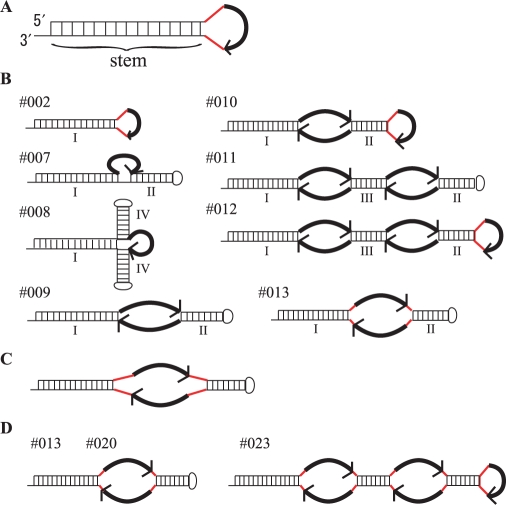
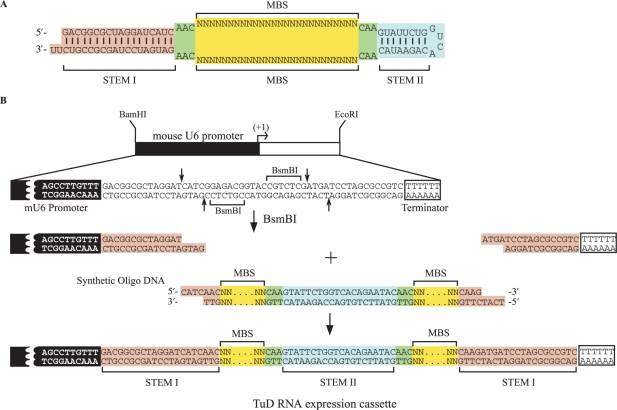
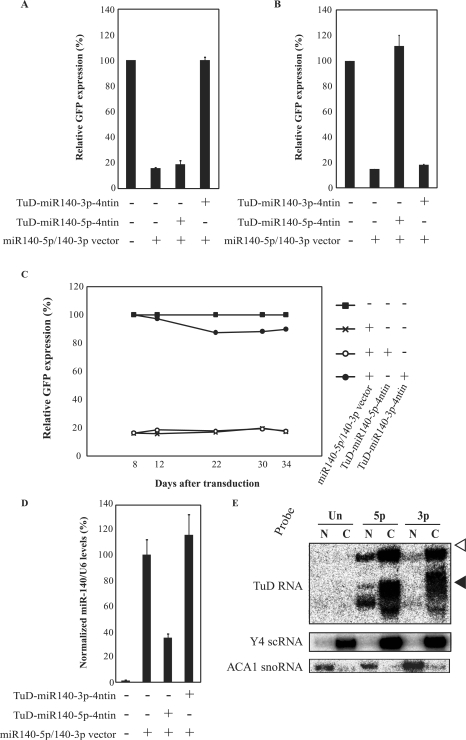
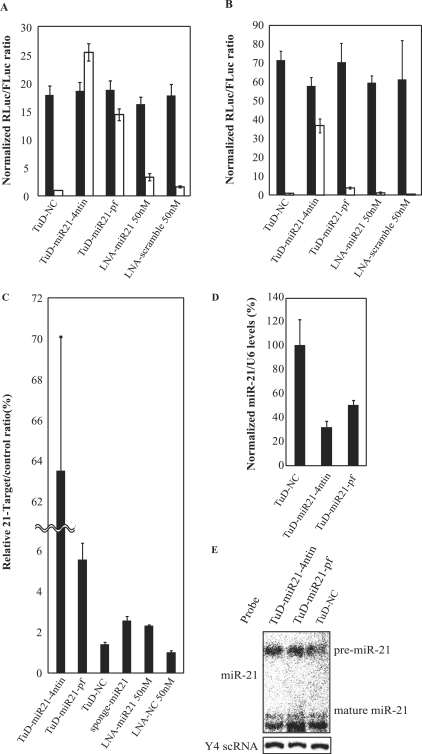
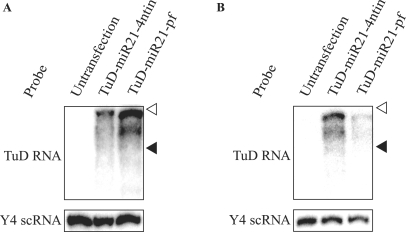
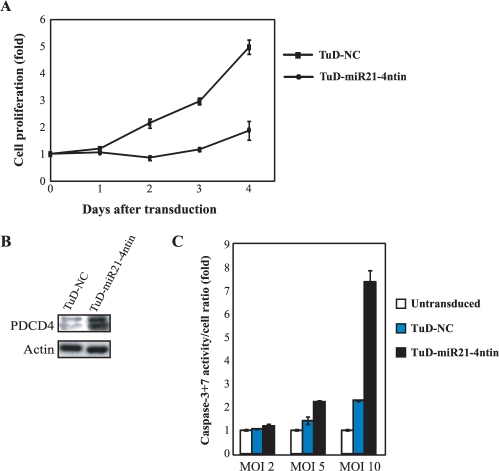
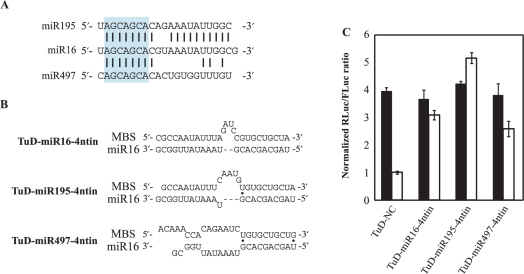
Whereas the strong and stable suppression of specific microRNA activity would be essential for the functional analysis of these molecules, and also for the development of therapeutic applications, effective inhibitory methods to achieve this have not yet been fully established. In our current study, we tested various RNA decoys which were designed to efficiently expose indigestible complementary RNAs to a specific miRNA molecule. These inhibitory RNAs were at the same time designed to be expressed in lentiviral vectors and to be transported into the cytoplasm after transcription by RNA polymerase III. We report the optimal conditions that we have established for the design of such RNA decoys (we term these molecules TuD RNAs; tough decoy RNAs). We finally demonstrate that TuD RNAs induce specific and strong biological effects and also show that TuD RNAs achieve the efficient and long-term-suppression of specific miRNAs for over 1 month in mammalian cells.
Overview
The claims and statistics of this paper haven’t been checked yet.
Run the check — free, no account needed. It reads the open-access text and checks the sources it cites.
Integrity signals
Registry
Cites
Statistics
Figures
Verification
Claims the paper makes
The claims and statistics of this paper haven’t been checked yet.
Run the check — free, no account needed. It reads the open-access text and checks the sources it cites.
Claims other papers make about this one
Each is checked against this paper’s own text: does it say what the citing paper says it does?
The cited source says what the claim attributes to it.
In the citing paper
“The sponge construct are designed to bind its complementary miRNA(s) or their seed sequences, and hence block the binding of the miRNA to its biological targets (29–31).”
From Potential Therapeutic Effects of Exosomes Packed With a miR-21-Sponge Construct in a Rat Model of Glioblastoma (2019) · cites this paper as [31]
The cited source says what the claim attributes to it.
In the citing paper
“It has already been shown that miRNA inhibition using decoy or sponge-like constructs have a potential therapeutic benefit.”
From Potential Therapeutic Effects of Exosomes Packed With a miR-21-Sponge Construct in a Rat Model of Glioblastoma (2019) · cites this paper as [31]
The cited source says what the claim attributes to it.
In the citing paper
“Using decoy or sponge-like constructs for miRNA inhibition have been already shown before with good effect in binding to its complementary miRNA(s) or their seed sequences and blocking their effects (29–31, 56, 57).”
From Potential Therapeutic Effects of Exosomes Packed With a miR-21-Sponge Construct in a Rat Model of Glioblastoma (2019) · cites this paper as [31]
Self-check
Percentages, sums and reported differences re-computed from the paper’s own numbers.
The self-check needs the paper’s full text.
Citations
Cites
MicroRNA expression profiles classify human cancers
Lü, J., Getz, G. A., Miska, E. A., Alvarez-Saavedra, E., Lamb, J., Peck, D., Sweet-Cordero, A., Ebert, B. L., Mak, R. H., Ferrando, A. A., et al. (2005) · Nature · doi:10.1038/nature03702 · Cited by 9,637
MicroRNA genes are transcribed by RNA polymerase II
Lee, Y., Kim, M., Han, J., Yeom, K.-H., Lee, S., Baek, S. H., & Kim, V. N. (2004) · The EMBO Journal · doi:10.1038/sj.emboj.7600385 · Cited by 4,556
Silencing of microRNAs in vivo with ‘antagomirs’
Krützfeldt, J., Rajewsky, N., Braich, R., Rajeev, K. G., Tuschl, T., Manoharan, M., & Stoffel, M. (2005) · Nature · doi:10.1038/nature04303 · Cited by 3,949
A Mammalian microRNA Expression Atlas Based on Small RNA Library Sequencing
Landgraf, P., Rusu, M., Sheridan, R., Sewer, A., Iovino, N., Aravin, A., Pfeffer, S., Rice, A., Kamphorst, A. O., Landthaler, M., et al. (2007) · Cell · doi:10.1016/j.cell.2007.04.040 · Cited by 3,626
Nagai, T., Ibata, K., Park, E. S., Kubota, M., Mikoshiba, K., & Miyawaki, A. (2002) · Nature Biotechnology · doi:10.1038/nbt0102-87 · Cited by 2,769
MicroRNA-21 Is an Antiapoptotic Factor in Human Glioblastoma Cells
Chan, J. A., Krichevsky, A. M., & Kosik, K. S. (2005) · Cancer Research · doi:10.1158/0008-5472.can-05-0137 · Cited by 2,557
MicroRNA sponges: competitive inhibitors of small RNAs in mammalian cells
Ebert, M. S., Neilson, J. R., & Sharp, P. A. (2007) · Nature Methods · doi:10.1038/nmeth1079 · Cited by 2,108
Asangani, I. A., Rasheed, S. A. K., Nikolova, D. A., Leupold, J. H., Colburn, N. H., Post, S., & Allgayer, H. (2008) · Oncogene · doi:10.1038/sj.onc.1210856 · Cited by 1,882
miR-181a Is an Intrinsic Modulator of T Cell Sensitivity and Selection
Li, Q.-J., Chau, J., Ebert, P. J. R., Sylvester, G., Min, H., Liu, G., Braich, R. S., Manoharan, M., Soutschek, J., Skare, P., et al. (2007) · Cell · doi:10.1016/j.cell.2007.03.008 · Cited by 1,165
Frankel, L. B., Christoffersen, N. R., Jacobsen, A., Lindow, M., Krogh, A., & Lund, A. H. (2008) · Journal of Biological Chemistry · doi:10.1074/jbc.m707224200 · Cited by 1,141
Cited by
Sorted by citations
The multilayered complexity of ceRNA crosstalk and competition
Tay, Y., Rinn, J., & Pandolfi, P. P. (2014) · Nature · doi:10.1038/nature12986 · Cited by 3,910
Endogenous microRNA sponges: evidence and controversy
Thomson, D. W., & Dinger, M. E. (2016) · Nature Reviews Genetics · doi:10.1038/nrg.2016.20 · Cited by 2,185
Diversifying microRNA sequence and function
Ameres, S. L., & Zamore, P. D. (2013) · Nature Reviews Molecular Cell Biology · doi:10.1038/nrm3611 · Cited by 1,175
MicroRNA sponges: Progress and possibilities
Ebert, M. S., & Sharp, P. A. (2010) · RNA · doi:10.1261/rna.2414110 · Cited by 762
Experimental strategies for microRNA target identification
Thomson, D. W., Bracken, C. P., & Goodall, G. J. (2011) · Nucleic Acids Research · doi:10.1093/nar/gkr330 · Cited by 544
Emerging Roles for Natural MicroRNA Sponges
Ebert, M. S., & Sharp, P. A. (2010) · Current Biology · doi:10.1016/j.cub.2010.08.052 · Cited by 490
Circular RNAs in cancer: novel insights into origins, properties, functions and implications.
Li, J., Yang, J., Zhou, P., Le, Y., Zhou, C., Wang, S., Xu, D., Lin, H., & Gong, Z. (2015) · Europe PMC (PubMed Central) · Cited by 430
Non-coding RNAs in cardiovascular diseases: diagnostic and therapeutic perspectives
Poller, W. C., Dimmeler, S., Heymans, S. R. B., Zeller, T., Haas, J., Karakas, M., Leistner, D. M., Jakob, P., Nakagawa, S., Blankenberg, S., et al. (2017) · European Heart Journal · doi:10.1093/eurheartj/ehx165 · Cited by 417
Mullokandov, G., Baccarini, A., Ruzo, A., Jayaprakash, A. D., Tung, N., Israelow, B., Evans, M. J., Sachidanandam, R., & Brown, B. D. (2012) · Nature Methods · doi:10.1038/nmeth.2078 · Cited by 394
Broderick, J. A., & Zamore, P. D. (2011) · Gene Therapy · doi:10.1038/gt.2011.50 · Cited by 393
Exploiting and antagonizing microRNA regulation for therapeutic and experimental applications
Brown, B. D., & Naldini, L. (2009) · Nature Reviews Genetics · doi:10.1038/nrg2628 · Cited by 336
MicroRNA-125b induces tau hyperphosphorylation and cognitive deficits in Alzheimer’s disease
Banzhaf‐Strathmann, J., Benito, E., May, S., Arzberger, T., Tahirovic, S., Kretzschmar, H., Fischer, A., & Edbauer, D. (2014) · The EMBO Journal · doi:10.15252/embj.201387576 · Cited by 347
Adult-specific functions of animal microRNAs
Sun, K., & Lai, E. C. (2013) · Nature Reviews Genetics · doi:10.1038/nrg3471 · Cited by 335
Epigenetic Regulation of the DLK1-MEG3 MicroRNA Cluster in Human Type 2 Diabetic Islets
Kameswaran, V., Bramswig, N. C., McKenna, L. B., Penn, M. M. C., Schug, J., Hand, N. J., Chen, Y., Choi, I., Vourekas, A., Won, K., et al. (2014) · Cell Metabolism · doi:10.1016/j.cmet.2013.11.016 · Cited by 324
Extracellular ATP mediates mast cell-dependent intestinal inflammation through P2X7 purinoceptors
Kurashima, Y., Amiya, T., Nochi, T., Fujisawa, K., Haraguchi, T., Iba, H., Tsutsui, H., Sato, S., Nakajima, S., Iijima, H., et al. (2012) · Nature Communications · doi:10.1038/ncomms2023 · Cited by 286
Self-citationMicroRNAs shape the neuronal landscape
McNeill, E., & Van Vactor, D. (2012) · Neuron · doi:10.1016/j.neuron.2012.07.005 · Cited by 274
Gambari, R., Brognara, E., Spandidos, D. A., & Fabbri, E. (2016) · International Journal of Oncology · doi:10.3892/ijo.2016.3503 · Cited by 267
Fujita, Y., Yagishita, S., Hagiwara, K., Yoshioka, Y., Kosaka, N., Takeshita, F., Fujiwara, T., Tsuta, K., Nokihara, H., Tamura, T., et al. (2015) · Molecular Therapy · doi:10.1038/mt.2015.10 · Cited by 265
Parikh, A., Lee, C., Joseph, P., Marchini, S., Baccarini, A., Kolev, V., Romualdi, C., Fruscio, R., Shah, H., Wang, F., et al. (2014) · Nature Communications · doi:10.1038/ncomms3977 · Cited by 258
miRNA sponges: soaking up miRNAs for regulation of gene expression
Bak, R. O., & Mikkelsen, J. G. (2013) · Wiley Interdisciplinary Reviews - RNA · doi:10.1002/wrna.1213 · Cited by 241
Qi, L., Bart, J., Tan, L. P., Platteel, I., van der Sluis, T., Huitema, S., Harms, G., Fu, L., Hollema, H., & van den Berg, A. (2009) · BMC Cancer · doi:10.1186/1471-2407-9-163 · Cited by 227
miR‐301a as an NF‐κB activator in pancreatic cancer cells
Lu, Z., Li, Y., Takwi, A. A., Li, B., Zhang, J., Conklin, D. J., Young, K. H., Martin, R. C. G., & Li, Y. (2010) · The EMBO Journal · doi:10.1038/emboj.2010.296 · Cited by 232
miRNA Therapeutics: A New Class of Drugs with Potential Therapeutic Applications in the Heart
Bernardo, B. C., Ooi, J. Y. Y., Lin, R. C. Y., & McMullen, J. R. (2015) · Future Medicinal Chemistry · doi:10.4155/fmc.15.107 · Cited by 232
MicroRNAs in neurodegenerative diseases and their therapeutic potential
Junn, E., & Mouradian, M. M. (2012) · Pharmacology & Therapeutics · doi:10.1016/j.pharmthera.2011.10.002 · Cited by 186
miR-26a is required for skeletal muscle differentiation and regeneration in micePreprint
Dey, B. K., Gagan, J., Yan, Z., & Dutta, A. (2012) · Genes & Development · doi:10.1101/gad.198085.112 · Cited by 218
Long-term, efficient inhibition of microRNA function in mice using rAAV vectors
Xie, J., Ameres, S. L., Friedline, R. H., Hung, J., Zhang, Y., Xie, Q., Li, Z., Su, Q., He, R., Li, M., et al. (2012) · Nature Methods · doi:10.1038/nmeth.1903 · Cited by 220
MicroRNAs in glioblastoma multiforme pathogenesis and therapeutics
Shea, A. A., Harish, V., Afzal, Z., Chijioke, J., Kedir, H., Dusmatova, S., Roy, A., Ramalinga, M., Harris, B. T., Blancato, J. K., et al. (2016) · Cancer Medicine · doi:10.1002/cam4.775 · Cited by 211
Insect MicroRNAs: Biogenesis, expression profiling and biological functions
Lucas, K. J., & Raikhel, A. S. (2012) · Insect Biochemistry and Molecular Biology · doi:10.1016/j.ibmb.2012.10.009 · Cited by 210
Li, H., Fan, J., Zhao, Y., Zhang, X., Dai, B., Zhan, J., Yin, Z., Nie, X., Fu, X., Chen, C., et al. (2019) · Circulation Research · doi:10.1161/circresaha.119.314898 · Cited by 208
Sequence-non-specific effects of RNA interference triggers and microRNA regulators
Olejniczak, M., Galka-Marciniak, P., & Krzyżosiak, W. J. (2009) · Nucleic Acids Research · doi:10.1093/nar/gkp829 · Cited by 204
Potent degradation of neuronal miRNAs induced by highly complementary targets
de la Mata, M., Gaidatzis, D., Vitanescu, M., Stadler, M. B., Wentzel, C., Scheiffele, P., Filipowicz, W., & Großhans, H. (2015) · The EMBO Reports · doi:10.15252/embr.201540078 · Cited by 193
Small silencing RNAs: State-of-the-art
Grimm, D. (2009) · Advanced Drug Delivery Reviews · doi:10.1016/j.addr.2009.05.002 · Cited by 191
Matsuyama, H., Suzuki, H. I., Nishimori, H., Noguchi, M., Yao, T., Komatsu, N., Mano, H., Sugimoto, K., & Miyazono, K. (2011) · Blood · doi:10.1182/blood-2011-05-354654 · Cited by 182
Synthetic RNA-Based Immunomodulatory Gene Circuits for Cancer Immunotherapy
Nissim, L., Wu, M.-R., Pery, E., Binder-Nissim, A., Suzuki, H. I., Stupp, D., Wehrspaun, C. C., Tabach, Y., Sharp, P. A., & Lu, T. K. (2017) · Cell · doi:10.1016/j.cell.2017.09.049 · Cited by 179
A selective microRNA-based strategy inhibits restenosis while preserving endothelial function
Santulli, G., Wronska, A., Uryu, K., Diacovo, T. G., Gao, M., Marx, S. O., Kitajewski, J., Chilton, J. M., Akat, K. M., Tuschl, T., et al. (2014) · Journal of Clinical Investigation · doi:10.1172/jci76069 · Cited by 179
Yamamichi, N., Shimomura, R., Inada, K.-I., Sakurai, K., Haraguchi, T., Ozaki, Y., Fujita, S., Mizutani, T., Furukawa, C., Fujishiro, M., et al. (2009) · Clinical Cancer Research · doi:10.1158/1078-0432.ccr-08-3257 · Cited by 175
Self-citationGood guy or bad guy: the opposing roles of microRNA 125b in cancer
Banzhaf‐Strathmann, J., & Edbauer, D. (2014) · Cell Communication and Signaling · doi:10.1186/1478-811x-12-30 · Cited by 172
MicroRNA-378 Targets the Myogenic Repressor MyoR during Myoblast Differentiation
Gagan, J., Dey, B. K., Layer, R. M., Yan, Z., & Dutta, A. (2011) · Journal of Biological Chemistry · doi:10.1074/jbc.m111.219006 · Cited by 168
RNA Interference and Cancer Therapy
Wang, Z., Rao, D. D., Senzer, N. N., & Nemunaitis, J. J. (2011) · Pharmaceutical Research · doi:10.1007/s11095-011-0604-5 · Cited by 171
Epstein–Barr virus microRNAs reduce immune surveillance by virus-specific CD8 + T cells
Albanese, M., Tagawa, T., Bouvet, M., Maliqi, L., Lutter, D., Hoser, J., Hastreiter, M., Hayes, M., Sugden, B., Martin, L. K., et al. (2016) · Proceedings of the National Academy of Sciences · doi:10.1073/pnas.1605884113 · Cited by 165
MicroRNA in Cervical Cancer: OncomiRs and Tumor Suppressor miRs in Diagnosis and Treatment
Banno, K., Iida, M., Yanokura, M., Kisu, I., Iwata, T., Tominaga, E., Tanaka, K., & Aoki, D. (2014) · The Scientific World JOURNAL · doi:10.1155/2014/178075 · Cited by 143
Adeno-Associated Virus Vectors as Therapeutic and Investigational Tools in the Cardiovascular System
Zacchigna, S., Zentilin, L., & Giacca, M. (2014) · Circulation Research · doi:10.1161/circresaha.114.302331 · Cited by 144
Expression of Versican 3′-Untranslated Region Modulates Endogenous MicroRNA Functions
Lee, D. Y., Jeyapalan, Z., Fang, L., Yang, J., Zhang, Y., Yee, A. Y., Li, M., Du, W. W., Shatseva, T., & Yang, B. B. (2010) · PLoS ONE · doi:10.1371/journal.pone.0013599 · Cited by 140
Busch, B., Bley, N., Müller, S., Glaß, M., Misiak, D., Lederer, M., Vetter, M., Strauß, H., Thomssen, C., & Hüttelmaier, S. (2016) · Nucleic Acids Research · doi:10.1093/nar/gkw099 · Cited by 139
Rapid Generation of MicroRNA Sponges for MicroRNA Inhibition
Kluiver, J. L., Gibcus, J. H., Hettinga, C., Adema, A., van Duijl-Richter, M. K. S., Halsema, N., Ślęzak-Prochazka, I., Ding, Y., Kroesen, B., & van den Berg, A. (2012) · PLoS ONE · doi:10.1371/journal.pone.0029275 · Cited by 146
MicroRNAs in cancer biology and therapy: Current status and perspectives
Price, C. O., & Chen, J. (2014) · Genes & Diseases · doi:10.1016/j.gendis.2014.06.004 · Cited by 140
Using artificial microRNA sponges to achieve microRNA loss-of-function in cancer cells
Tay, F. C., Lim, J. K., Zhu, H., Hin, L. C., & Wang, S. (2014) · Advanced Drug Delivery Reviews · doi:10.1016/j.addr.2014.05.010 · Cited by 139
miRNAs: Key Players in Neurodegenerative Disorders and Epilepsy
Karnati, H. K., Panigrahi, M. K., Gutti, R. K., Greig, N. H., & Tamargo, I. A. (2015) · Journal of Alzheimer s Disease · doi:10.3233/jad-150395 · Cited by 126
Monfared, H., Jahangard, Y., Nikkhah, M., Mirnajafi-Zadeh, J., & Mowla, S. J. (2019) · Frontiers in Oncology · doi:10.3389/fonc.2019.00782 · Cited by 123
Blaya, D., Coll, M., Rodrigo‐Torres, D., Vila-Casadesús, M., Altamirano, J., Llopis, M., Graupera, I., Perea, L., Aguilar‐Bravo, B., Díaz, A., et al. (2016) · Gut · doi:10.1136/gutjnl-2015-311314 · Cited by 122
Xie, Q., Chen, X., Lu, F., Zhang, T., Hao, M., Wang, Y., Zhao, J., McCrae, M. A., & Zhuang, H. (2011) · Cancer · doi:10.1002/cncr.26566 · Cited by 118
Advances in MicroRNA Therapeutics: From Preclinical to Clinical Studies
Brillante, S., Volpe, M., & Indrieri, A. (2024) · Human Gene Therapy · doi:10.1089/hum.2024.113 · Cited by 128
Recent trends of nanomedicinal approaches in clinics
Dilnawaz, F., Acharya, S., & Sahoo, S. K. (2018) · International Journal of Pharmaceutics · doi:10.1016/j.ijpharm.2018.01.016 · Cited by 116
Generation of miRNA sponge constructs
Kluiver, J. L., Ślęzak-Prochazka, I., Smigielska‐Czepiel, K., Halsema, N., Kroesen, B., & van den Berg, A. (2012) · Methods · doi:10.1016/j.ymeth.2012.07.019 · Cited by 113
Sakurai, K., Furukawa, C., Haraguchi, T., Inada, K.-I., Shiogama, K., Tagawa, T., Fujita, S., Ueno, Y., Ogata, A., Ito, M., et al. (2010) · Cancer Research · doi:10.1158/0008-5472.can-10-2345 · Cited by 111
Self-citationRbfox1 Regulates Synaptic Transmission through the Inhibitory Neuron-Specific vSNARE Vamp1
Vuong, C. K., Wei, W., Lee, J.-A., Lin, C.-H., Damianov, A., de la Torre-Ubieta, L., Halabi, R., Otis, K. O., Martin, K. C., O’Dell, T. J., et al. (2018) · Neuron · doi:10.1016/j.neuron.2018.03.008 · Cited by 102
microRNA Therapeutics in Cardiovascular Disease Models
Dangwal, S., & Thum, T. (2013) · The Annual Review of Pharmacology and Toxicology · doi:10.1146/annurev-pharmtox-011613-135957 · Cited by 112
Role of exosomes in malignant glioma: microRNAs and proteins in pathogenesis and diagnosis
Ghaemmaghami, A. B., Mahjoubin‐Tehran, M., Movahedpour, A., Morshedi, K., Sheida, A., Taghavi, S. P., Mirzaei, H., & Hamblin, M. R. (2020) · Cell Communication and Signaling · doi:10.1186/s12964-020-00623-9 · Cited by 108
Murai, K., Sun, G., Ye, P., Tian, E., Su, Y., Cui, Q., Sun, G., Trinh, D. V., Sun, O., Hong, T., et al. (2016) · Nature Communications · doi:10.1038/ncomms10965 · Cited by 108
Ruggeri, C., Gioffré, S., Achilli, F., Colombo, G. I., & D’Alessandra, Y. (2017) · Heart Failure Reviews · doi:10.1007/s10741-017-9653-0 · Cited by 107
The Non-coding 3′UTR of CD44 Induces Metastasis by Regulating Extracellular Matrix Functions
Jeyapalan, Z., & Yang, B. B. (2012) · Journal of Cell Science · doi:10.1242/jcs.100818 · Cited by 103
EBV MicroRNA BART16 Suppresses Type I IFN Signaling
Hooykaas, M. J. G., van Gent, M., Soppe, J. A., Kruse, E. M., Boer, I. G. J., van Leenen, D., Koerkamp, M. J. A. G., Holstege, F. C. P., Ressing, M. E., Wiertz, E. J. H. J., et al. (2017) · The Journal of Immunology · doi:10.4049/jimmunol.1501605 · Cited by 103
From traditional pharmacological towards nucleic acid-based therapies for cardiovascular diseases
Landmesser, U., Poller, W. C., Tsimikas, S., Most, P., Paneni, F., & Lüscher, T. F. (2020) · European Heart Journal · doi:10.1093/eurheartj/ehaa229 · Cited by 102
MiRNA inhibition in tissue engineering and regenerative medicine
Beavers, K. R., Nelson, C. E., & Duvall, C. L. (2014) · Advanced Drug Delivery Reviews · doi:10.1016/j.addr.2014.12.006 · Cited by 101
Singh, Y., Garden, O. A., Lang, F. J. W., & Cobb, B. S. (2015) · The Journal of Immunology · doi:10.4049/jimmunol.1401875 · Cited by 98
Liu, X., Mei, W., Padmanaban, V., Alwaseem, H., Molina, H., Passarelli, M. C., Tavora, B., & Tavazoie, S. F. (2022) · Molecular Cell · doi:10.1016/j.molcel.2022.05.008 · Cited by 99
Gagan, J., Dey, B. K., Layer, R. M., Yan, Z., & Dutta, A. (2012) · Journal of Biological Chemistry · doi:10.1074/jbc.m112.378414 · Cited by 96
Target RNAs Strike Back on MicroRNAs
Fuchs Wightman, F., Giono, L. E., Fededa, J. P., & de la Mata, M. (2018) · Frontiers in Genetics · doi:10.3389/fgene.2018.00435 · Cited by 92
miRNAsong: a web-based tool for generation and testing of miRNA sponge constructs in silico
Bárta, T., Pešková, L., & Hampl, A. (2016) · Scientific Reports · doi:10.1038/srep36625 · Cited by 89
PBX3 is targeted by multiple miRNAs and is essential for liver tumour-initiating cells
Han, H., Du, Y., Zhao, W., Li, S., Chen, D., Zhang, J., Liu, J., Suo, Z., Bian, X., Xing, B., et al. (2015) · Nature Communications · doi:10.1038/ncomms9271 · Cited by 87
microRNAs in nociceptive circuits as predictors of future clinical applications
Kress, M., Hüttenhofer, A., Landry, M., Kuner, R., Favereaux, A., Greenberg, D., Bednařík, J., Heppenstall, P. A., Kronenberg, F., Malcangio, M., et al. (2013) · Frontiers in Molecular Neuroscience · doi:10.3389/fnmol.2013.00033 · Cited by 87
Expression profile of circular RNAs in human gastric cancer tissues
Huang, Y., Jie, N., Zou, K., & Weng, Y. (2017) · Molecular Medicine Reports · doi:10.3892/mmr.2017.6916 · Cited by 84
Enhanced Inhibition of Tumorigenesis Using Combinations of miRNA-Targeted Therapeutics
Miroshnichenko, S. K., & Patutina, O. (2019) · Frontiers in Pharmacology · doi:10.3389/fphar.2019.00488 · Cited by 81
Potent microRNA suppression by RNA Pol II-transcribed ‘Tough Decoy’ inhibitors
Bak, R. O., Hollensen, A. K., Primo, M. N., Sørensen, C. D., & Mikkelsen, J. G. (2012) · RNA · doi:10.1261/rna.034850.112 · Cited by 81
Niederberger, E., Resch, E., Parnham, M. J., & Geißlinger, G. (2017) · Nature Reviews Neurology · doi:10.1038/nrneurol.2017.68 · Cited by 77
Lepko, T., Pusch, M., Müller, T., Schulte, D., Ehses, J., Kiebler, M. A., Hasler, J., Huttner, H. B., Vandenbroucke, R. E., Vandendriessche, C., et al. (2019) · The EMBO Journal · doi:10.15252/embj.2018100481 · Cited by 75
Wagenaar, T. R., Zabludoff, S., Ahn, S., Allerson, C. R., Arlt, H., Baffa, R., Cao, H., Davis, S. P., García-Echeverría, C., Gaur, R., et al. (2015) · Molecular Cancer Research · doi:10.1158/1541-7786.mcr-14-0703 · Cited by 74
Guo, Y. X., Cui, J. G., Ji, Z., Cheng, C., Zhang, K., Zhang, C., Chu, M., Zhao, Q., Yu, Z., Zhang, Y., et al. (2017) · Oncogene · doi:10.1038/onc.2017.240 · Cited by 73
microRNA inhibitors: Natural and artificial sequestration of microRNA
Tang, L., Chen, H., Hao, N.-B., Tang, B., Guo, H., Yong, X., Dong, H. F., & Yang, S. (2017) · Cancer Letters · doi:10.1016/j.canlet.2017.05.025 · Cited by 74
Wang, L., Yu, P., Li, B., Guo, Y., Liang, Z., Zheng, L., Yang, J., Xu, H. M., Liu, S., Zheng, L., et al. (2018) · Molecular Oncology · doi:10.1002/1878-0261.12376 · Cited by 69
MicroRNA turnover: a tale of tailing, trimming, and targets
Han, J., & Mendell, J. T. (2022) · Trends in Biochemical Sciences · doi:10.1016/j.tibs.2022.06.005 · Cited by 72
Opportunities and challenges for microRNA-targeting therapeutics for epilepsy
Morris, G., O’Brien, D., & Henshall, D. C. (2021) · Trends in Pharmacological Sciences · doi:10.1016/j.tips.2021.04.007 · Cited by 67
Regulation of host and virus genes by neuronal miR-138 favours herpes simplex virus 1 latency
Sun, B., Yang, X., Hou, F., Yu, X., Wang, Q., Oh, H. S., Raja, P., Pesola, J. M., Vanni, E. A. H., McCarron, S., et al. (2021) · Nature Microbiology · doi:10.1038/s41564-020-00860-1 · Cited by 65
Radiotherapy-induced miR-223 prevents relapse of breast cancer by targeting the EGF pathway
Fabris, L., Berton, S., Citron, F., D’Andrea, S., Segatto, I., Nicoloso, M. S., Massarut, S., Armenia, J., Zafarana, G., Rossi, S., et al. (2016) · Oncogene · doi:10.1038/onc.2016.23 · Cited by 64
Braun, J., Misiak, D., Busch, B., Krohn, K., & Hüttelmaier, S. (2014) · Nucleic Acids Research · doi:10.1093/nar/gku127 · Cited by 63
Shao, N., Ma, G., Zhang, J., & Zhu, W. (2018) · BMC Urology · doi:10.1186/s12894-018-0325-8 · Cited by 62
MicroRNA-mediated repression of nonsense mRNAs
Zhao, Y., Lin, J., Xu, B., Hu, S., Zhang, X., & Wu, L. (2014) · eLife · doi:10.7554/elife.03032 · Cited by 65
Naka-Kaneda, H., Nakamura, S., Igarashi, M., Aoi, H., Kanki, H., Tsuyama, J., Tsutsumi, S., Aburatani, H., Shimazaki, T., & Okano, H. (2014) · Proceedings of the National Academy of Sciences · doi:10.1073/pnas.1315567111 · Cited by 62
Tiny giants of gene regulation: experimental strategies for microRNA functional studies
Steinkraus, B. R., Tögel, M., & Fulga, T. A. (2016) · Wiley Interdisciplinary Reviews Developmental Biology · doi:10.1002/wdev.223 · Cited by 64
Upregulation of miR-24 promotes cell proliferation by targeting NAIF1 in non-small cell lung cancer
Zhao, G., Liu, L., Zhao, T., Jin, S., Jiang, S., Cao, S., Han, J., Xin, Y., Dong, Q., Liu, X., et al. (2015) · Tumor Biology · doi:10.1007/s13277-014-3008-4 · Cited by 61
Rectal microRNAs are perturbed in pediatric inflammatory bowel disease of the colon
Zahm, A. M., Hand, N. J., Tsoucas, D. M., Guen, C. L. L., Baldassano, R. N., & Friedman, J. R. (2014) · Journal of Crohn s and Colitis · doi:10.1016/j.crohns.2014.02.012 · Cited by 61
Qian, D., Wei, G., Xu, C., He, Z., Hua, J., Li, J. J., Hu, Q., Lin, S., Gong, J., Meng, H., et al. (2017) · Scientific Reports · doi:10.1038/s41598-017-00629-3 · Cited by 60
Hung, T., Ho, C., Liu, Y., Lee, J.-L., Liao, Y.-R., Wu, Y., Ho, M., Chen, C., Lai, H., & Lee, P. (2014) · PLoS ONE · doi:10.1371/journal.pone.0089446 · Cited by 60
Zeng, Y., Liu, H., Kang, K., Wang, Z., Hui, G., Zhang, X., Zhong, J., Peng, W., Ramchandran, R., Raj, J. U., et al. (2015) · Scientific Reports · doi:10.1038/srep12098 · Cited by 58
Advances in the discovery of microRNA-based anticancer therapeutics: latest tools and developments
To, K. K. W., Fong, W., Tong, C. W. S., Wu, M., Yan, W., & Cho, W. C. S. (2019) · Expert Opinion on Drug Discovery · doi:10.1080/17460441.2020.1690449 · Cited by 59
The Duality of OncomiR Addiction in the Maintenance and Treatment of Cancer
Cheng, C. J., & Slack, F. J. (2012) · The Cancer Journal · doi:10.1097/ppo.0b013e318258b75b · Cited by 57
Li, D., Mastaglia, F. L., Fletcher, S., & Wilton, S. D. (2020) · Medicinal Research Reviews · doi:10.1002/med.21718 · Cited by 59
RNAi Therapeutics and Applications of MicroRNAs in Cancer Treatment
Uchino, K., Ochiya, T., & Takeshita, F. (2013) · Japanese Journal of Clinical Oncology · doi:10.1093/jjco/hyt052 · Cited by 57
Hikichi, M., Kidokoro, M., Haraguchi, T., Iba, H., Shida, H., Tahara, H., & Nakamura, T. (2011) · Molecular Therapy · doi:10.1038/mt.2011.36 · Cited by 54
Self-citationQiu, H., Liu, N., Luo, L., Zhong, J., Tang, Z., Kang, K., Qu, J., Peng, W., Liu, L., Li, L., et al. (2016) · Cell Death and Differentiation · doi:10.1038/cdd.2016.56 · Cited by 54
Metadata
- Authors
- Haraguchi, T., Ozaki, Y., & Iba, H.
- Affiliations
- Institute of Medical Science, The University of Tokyo (JP)
- Corresponding author
- Iba, Hideo
- ORCID
- Haraguchi, Takeshi
- Venue
- Nucleic Acids Research
- Publisher
- Oxford University Press (OUP)
- Published
- 2009-02-17
- Volume
- 37
- Issue
- 6
- Pages
- e43-e43
- ISSN
- 0305-1048 (ISSN-L)
- 1362-4962
- PMC
- PMC2665227
- OpenAlex
- W2128520557
- Cited by
- 305
- References
- 29
- Citations by year
- 2026: 6 · 2025: 8 · 2024: 15 · 2023: 6 · 2022: 14 · 2021: 10 · 2020: 20 · 2019: 18 · 2018: 21 · 2017: 27 · 2016: 29 · 2015: 24 · 2014: 33 · 2013: 23 · 2012: 23
- FWCI
- 5.59
- Type
- journal article
- Language
- en
- Open access
- gold
- doi.org
- Licence
- Locations
- Nucleic Acids Research (publishedVersion, cc-by-nc)
- PubMed Central (publishedVersion, cc-by-nc)
- PubMed (publishedVersion)
- Topics
- Life Sciences › Biochemistry, Genetics and Molecular Biology › Cancer Research › MicroRNA in disease regulation
- Life Sciences › Biochemistry, Genetics and Molecular Biology › Molecular Biology › RNA Interference and Gene Delivery
- Life Sciences › Biochemistry, Genetics and Molecular Biology › Cancer Research › Cancer-related molecular mechanisms research
- Keywords
- microRNA inhibition, RNA decoys, lentiviral vectors, RNA polymerase III transcription, mammalian cells
- MeSH terms
- Binding Sites, Cell Line, Genetic Vectors, Humans, Nucleic Acid Conformation, Transduction, Genetic, Lentivirus, Genes, Reporter, RNA, Untranslated, MicroRNAs
About these checks
Registry, retraction, Cites and statistics results are computed, not judged, with one exception: a printed reference that no index lists is read once by a model before it counts as a citation error. Claims are extracted by a model and kept only when their quote appears verbatim in the text; each cited source is then checked, with a model’s help, for whether it says what the claim relies on. Those verdicts can be wrong — read the claim’s quote and the cited source before relying on one.
Statistics and arithmetic are recomputed, not judged.
Confidence bands are shown only for fields calibrated on our annotated test set. None is calibrated yet, so no band is shown.
What counts as a claim ›How we measure confidence ›How we check this ›
Are you an author, or do you see a problem with this page? Request a review
