

The DOI matches its Crossref record; 58 of the 60 references it cites were found in a registry or an index.
Incorporation of pseudouridine into mRNA enhances translation by diminishing PKR activation
Open accessAbstract
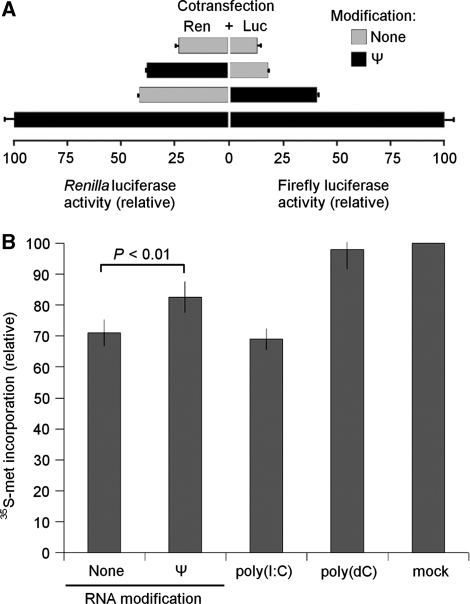
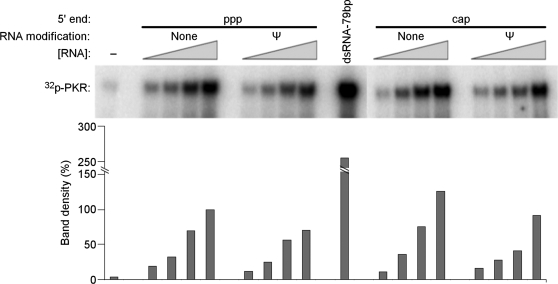
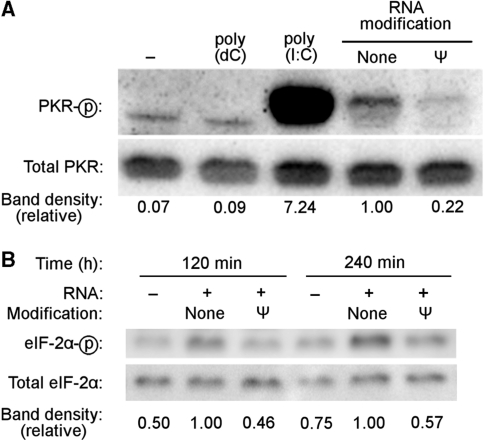
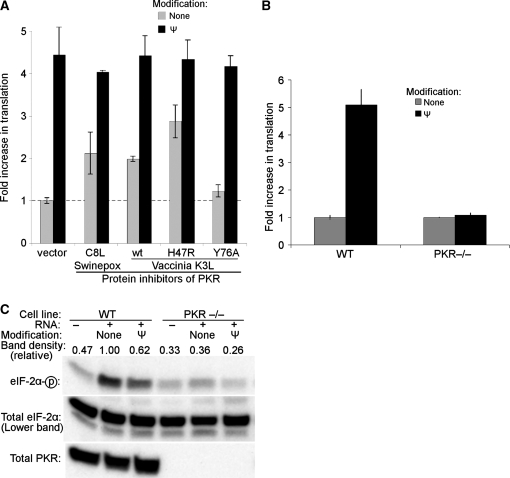
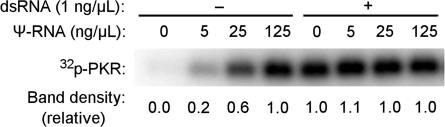
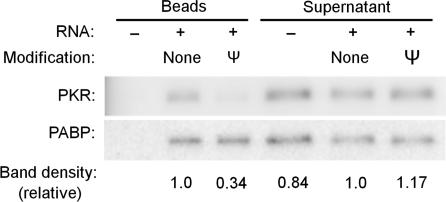
Previous studies have shown that the translation level of in vitro transcribed messenger RNA (mRNA) is enhanced when its uridines are replaced with pseudouridines; however, the reason for this enhancement has not been identified. Here, we demonstrate that in vitro transcripts containing uridine activate RNA-dependent protein kinase (PKR), which then phosphorylates translation initiation factor 2-alpha (eIF-2α), and inhibits translation. In contrast, in vitro transcribed mRNAs containing pseudouridine activate PKR to a lesser degree, and translation of pseudouridine-containing mRNAs is not repressed. RNA pull-down assays demonstrate that mRNA containing uridine is bound by PKR more efficiently than mRNA with pseudouridine. Finally, the role of PKR is validated by showing that pseudouridine- and uridine-containing RNAs were translated equally in PKR knockout cells. These results indicate that the enhanced translation of mRNAs containing pseudouridine, compared to those containing uridine, is mediated by decreased activation of PKR.
Overview
The claims and statistics of this paper haven’t been checked yet.
Run the check — free, no account needed. It reads the open-access text and checks the sources it cites.
Integrity signals
Registry
Cites
Statistics
Figures
Verification
Claims the paper makes
The claims and statistics of this paper haven’t been checked yet.
Run the check — free, no account needed. It reads the open-access text and checks the sources it cites.
Claims other papers make about this one
Each is checked against this paper’s own text: does it say what the citing paper says it does?
The source backs part of the claim, not all of it — or backs it for a different population, condition or comparison.
In the citing paper
“Nucleoside-modified mRNA can reduce the activation of TLRs, retinoic acid-inducible gene I (RIG-I), protein kinase R (PKR), and 2′-5′-oligoadenylate synthetase (OAS). Additionally, nucleoside modification increases translation activity and resistance against RNase L-mediated degradation.54,81,173–176”
From Advances in COVID-19 mRNA vaccine development (2022) · cites this paper as [174]
Experimental — accuracy not yet measuredThe source backs part of the claim, not all of it — or backs it for a different population, condition or comparison.
In the citing paper
“Substitution of chemically modified nucleotides in messenger ribonucleic acid (mRNA) enhances stability and transfection capability, and decreases immunogenicity1–3”
From Complete substitution with modified nucleotides in self-amplifying RNA suppresses the interferon response and increases potency (2025) · cites this paper as [3]
Experimental — accuracy not yet measuredThe source backs part of the claim, not all of it — or backs it for a different population, condition or comparison.
In the citing paper
“Native RNA activates pattern recognition receptors such as toll-like receptors and triggers type I interferon (IFN) production, resulting in translational shutoff and systemic inflammation3.”
From Complete substitution with modified nucleotides in self-amplifying RNA suppresses the interferon response and increases potency (2025) · cites this paper as [3]
Experimental — accuracy not yet measuredThe source backs part of the claim, not all of it — or backs it for a different population, condition or comparison.
In the citing paper
“This can be circumvented by the incorporation of naturally occurring nucleosides and by applying stringent purification to remove double-stranded RNA contaminants (19–21).”
From mRNA vaccine with unmodified uridine induces robust type I interferon-dependent anti-tumor immunity in a melanoma model (2022) · cites this paper as [21]
Experimental — accuracy not yet measuredThe source backs part of the claim, not all of it — or backs it for a different population, condition or comparison.
In the citing paper
“Transferring this concept to in vitro transcribed mRNA, for instance, pseudouridine-containing mRNAs reduced activation of known RNA sensors substantially.”
From Sequence-engineered mRNA without chemical nucleoside modifications enables an effective protein therapy in large animals (2015) · cites this paper as [22]
Experimental — accuracy not yet measured
The source backs part of the claim, not all of it — or backs it for a different population, condition or comparison.
In the citing paper
“The two uridine analogs pseudouridine (Ψ) or 1-methyl-pseudouridine (m1Ψ) are widely used for mRNA therapeutics because they can increase mRNA stability and help modulate the host immune response31,32.”
From Human 5′ UTR design and variant effect prediction from a massively parallel translation assay (2019) · cites this paper as [32]
Experimental — accuracy not yet measuredThe cited source says what the claim attributes to it.
In the citing paper
“Although pseudouridine is primarily found in tRNA, rRNA, and small nuclear RNAs, pseudouridine-containing mRNAs were still translated and produced even more protein compared to unmodified mRNA.”
From Sequence-engineered mRNA without chemical nucleoside modifications enables an effective protein therapy in large animals (2015) · cites this paper as [22]
The cited source says what the claim attributes to it.
In the citing paper
“In addition, nucleoside modifications are well known to limit or even inhibit RNA sensor engagement.20,21,22”
From Sequence-engineered mRNA without chemical nucleoside modifications enables an effective protein therapy in large animals (2015) · cites this paper as [22]
Self-check
Percentages, sums and reported differences re-computed from the paper’s own numbers.
The self-check needs the paper’s full text.
Citations
Cites
Karikó, K., Buckstein, M., Ni, H., & Weissman, D. (2005) · Immunity · doi:10.1016/j.immuni.2005.06.008 · Cited by 2,728
Self-citation5'-Triphosphate RNA Is the Ligand for RIG-I
Hornung, V., Ellegast, J., Kim, S., Brzózka, K., Jung, A., Kato, H., Poeck, H., Akira, S., Conzelmann, K.-K., Schlee, M., et al. (2006) · Science · doi:10.1126/science.1132505 · Cited by 2,474
Karikó, K., Muramatsu, H., Welsh, F. A., Ludwig, J., Kato, H., Akira, S., & Weissman, D. (2008) · Molecular Therapy · doi:10.1038/mt.2008.200 · Cited by 1,930
Self-citationActivation of the interferon system by short-interfering RNAs
Sledz, C. A., Holko, M., de Veer, M. J., Silverman, R. H., & Williams, B. R. G. (2003) · Nature Cell Biology · doi:10.1038/ncb1038 · Cited by 1,401
AAV vector integration sites in mouse hepatocellular carcinoma
Donsante, A., Miller, D. G., Li, Y., Vogler, C., Brunt, E. M., Russell, D. W., & Sands, M. S. (2007) · Science · doi:10.1126/science.1142658 · Cited by 662
Pseudouridine in RNA: What, Where, How, and Why
Charette, M., & Gray, M. W. (2000) · IUBMB Life · doi:10.1080/152165400410182 · Cited by 600
Ryter, J. M., & Schultz, S. C. (1998) · The EMBO Journal · doi:10.1093/emboj/17.24.7505 · Cited by 479
The RNA Modification Database: 1999 update
Rozenski, J., Crain, P. F., & McCloskey, J. A. (1999) · Nucleic Acids Research · doi:10.1093/nar/27.1.196 · Cited by 390
2′-O-methyl-modified RNAs Act as TLR7 Antagonists
Robbins, M., Judge, A. D., Liang, L. Y., McClintock, K., Yaworski, E., & MacLachlan, I. (2007) · Molecular Therapy · doi:10.1038/sj.mt.6300240 · Cited by 339
Genotoxicity of Retroviral Integration In Hematopoietic Cells
Nienhuis, A. W., Dunbar, C. E., & Sorrentino, B. P. (2006) · Molecular Therapy · doi:10.1016/j.ymthe.2006.03.001 · Cited by 301
Cited by
Sorted by citations
Items 101–200 of 684
Myocardial Delivery of Lipidoid Nanoparticle Carrying modRNA Induces Rapid and Transient Expression
Turnbull, I. C., Eltoukhy, A. A., Fish, K. M., Nonnenmacher, M. E., Ishikawa, K., Chen, J., Hajjar, R. J., Anderson, D. G., & Costa, K. D. (2015) · Molecular Therapy · doi:10.1038/mt.2015.193 · Cited by 112
An overview of rational design of mRNA-based therapeutics and vaccines
To, K. K. W., & Cho, W. C. S. (2021) · Expert Opinion on Drug Discovery · doi:10.1080/17460441.2021.1935859 · Cited by 110
Interferon inducible pseudouridine modification in human mRNA by quantitative nanopore profiling
Huang, S., Zhang, W., Katanski, C. D., Dersh, D., Dai, Q., Lolans, K., Yewdell, J. W., Eren, A. M., & Pan, T. (2021) · Genome biology · doi:10.1186/s13059-021-02557-y · Cited by 108
RNA modification in cardiovascular disease: implications for therapeutic interventions
Wang, C., Hou, X., Guan, Q., Zhou, H., Li, Z., Liu, L., Liu, J., Li, F., Li, W., & Liu, H. (2023) · Signal Transduction and Targeted Therapy · doi:10.1038/s41392-023-01638-7 · Cited by 116
Recent Developments in mRNA-Based Protein Supplementation Therapy to Target Lung Diseases
Sahu, I., Haque, A. K. M. A., Weidensee, B., Weinmann, P., & Kormann, M. S. D. (2019) · Molecular Therapy · doi:10.1016/j.ymthe.2019.02.019 · Cited by 104
Post-transcriptional modifications in development and stem cells
Frye, M., & Blanco, S. (2016) · Development · doi:10.1242/dev.136556 · Cited by 106
The advent of clinical self-amplifying RNA vaccines
Casmil, I. C., Jin, J., Won, E.-J., Huang, C., Liao, S., Cha‐Molstad, H., & Blakney, A. K. (2025) · Molecular Therapy · doi:10.1016/j.ymthe.2025.03.060 · Cited by 111
Lipid nanoparticle chemistry determines how nucleoside base modifications alter mRNA delivery
Melamed, J. R., Hajj, K. A., Chaudhary, N., Strelkova, D., Arral, M. L., Pardi, N., Alameh, M., Miller, J. B., Farbiak, L., Siegwart, D. J., et al. (2021) · Journal of Controlled Release · doi:10.1016/j.jconrel.2021.11.022 · Cited by 101
Self-citationAdvancements of in vitro transcribed mRNA (IVT mRNA) to enable translation into the clinics
Kang, D. D., Li, H., & Dong, Y. (2023) · Advanced Drug Delivery Reviews · doi:10.1016/j.addr.2023.114961 · Cited by 100
The Pivotal Role of Chemical Modifications in mRNA Therapeutics
Liu, A., & Wang, X. (2022) · Frontiers in Cell and Developmental Biology · doi:10.3389/fcell.2022.901510 · Cited by 102
RNA chemistry and therapeutics
Wang, S., Weissman, D., & Dong, Y. (2025) · Nature Reviews Drug Discovery · doi:10.1038/s41573-025-01237-x · Cited by 110
Self-citationmRNA: A Novel Avenue to Antibody Therapy?
Schlake, T., Thran, M., Fiedler, K., Heidenreich, R., Petsch, B., & Fotin‐Mleczek, M. (2019) · Molecular Therapy · doi:10.1016/j.ymthe.2019.03.002 · Cited by 93
Synthetic modified messenger RNA for therapeutic applications
Gao, M., Zhang, Q., Feng, X.-H., & Liu, J. (2021) · Acta Biomaterialia · doi:10.1016/j.actbio.2021.06.020 · Cited by 89
Golombek, S., Pilz, M., Steinle, H., Kochba, E., Levin, Y., Lunter, D., Schlensak, C., Wendel, H. P., & Avci-Adali, M. (2018) · Molecular Therapy Nucleic Acids · doi:10.1016/j.omtn.2018.03.005 · Cited by 88
McGee, J. E., Kirsch, J. R., Kenney, D., Cerbo, F., Chavez, E. C., Shih, T.-Y., Douam, F., Wong, W. W., & Grinstaff, M. W. (2025) · Nature Biotechnology · doi:10.1038/s41587-024-02306-z · Cited by 87
“Native RNA activates pattern recognition receptors such as toll-like receptors and triggers type I interferon (IFN) production, resulting in translational shutoff and systemic inflammation 3 .”
BackgroundDeliver the promise: RNAs as a new class of molecular entities for therapy and vaccination
Yu, A., & Tu, M. (2021) · Pharmacology & Therapeutics · doi:10.1016/j.pharmthera.2021.107967 · Cited by 94
Fiedler, K., Lazzaro, S., Lutz, J., Rauch, S., & Heidenreich, R. (2016) · Recent results in cancer research/Recent Results in Cancer Research · doi:10.1007/978-3-319-42934-2_5 · Cited by 88
Davies, N. M., Hovdal, D., Edmunds, N. J., Nordberg, P., Dahlén, A., Dabkowska, A. P., Arteta, M. Y., Rădulescu, A., Kjellman, T., Höijer, A., et al. (2021) · Molecular Therapy — Nucleic Acids · doi:10.1016/j.omtn.2021.03.008 · Cited by 93
A new developing class of gene delivery: messenger RNA-based therapeutics
Zhao, M., Ahern, J. O., Lyu, J., Pierucci, L., Zhou, D., & Wang, W. (2017) · Biomaterials Science · doi:10.1039/c7bm00712d · Cited by 95
Eliciting antitumor immunity via therapeutic cancer vaccines
Peng, K., Zhao, X., Fu, Y., & Liang, Y. (2025) · Cellular and Molecular Immunology · doi:10.1038/s41423-025-01316-4 · Cited by 106
Verbeke, R., Lentacker, I., Breckpot, K., Janssens, J., Calenbergh, S. V., Smedt, S. C. D., & Dewitte, H. (2019) · ACS Nano · doi:10.1021/acsnano.8b07660 · Cited by 85
Chemically modified hCFTR mRNAs recuperate lung function in a mouse model of cystic fibrosis
Haque, A. K. M. A., Dewerth, A., Antony, J. S., Riethmüller, J., Schweizer, G. R., Weinmann, P., Latifi, N., Yasar, H., Pedemonte, N., Sondo, E., et al. (2018) · Scientific Reports · doi:10.1038/s41598-018-34960-0 · Cited by 80
mRNA in cancer immunotherapy: beyond a source of antigen
Hoecke, L. V., Verbeke, R., Dewitte, H., Lentacker, I., Vermaelen, K. Y., Breckpot, K., & Lint, S. V. (2021) · Molecular Cancer · doi:10.1186/s12943-021-01329-3 · Cited by 85
Lipid Nanoparticle Delivery Systems to Enable mRNA-Based Therapeutics
Semple, S. C., Leone, R. D., Barbosa, C., Tam, Y. K., & Lin, P. J. C. (2022) · Pharmaceutics · doi:10.3390/pharmaceutics14020398 · Cited by 80
mRNA vaccine sequence and structure design and optimization: Advances and challenges
Jin, L., Zhou, Y., Zhang, S., & Chen, S. (2024) · Journal of Biological Chemistry · doi:10.1016/j.jbc.2024.108015 · Cited by 99
Sittplangkoon, C., Alameh, M.-G., Weissman, D., Lin, P. J. C., Tam, Y. K., Prompetchara, E., & Palaga, T. (2022) · Frontiers in Immunology · doi:10.3389/fimmu.2022.983000 · Cited by 79
Self-citationKirschman, J. L., Bhosle, S. M., Vanover, D. A., Blanchard, E. L., Loomis, K. H., Zurla, C., Murray, K. A., Lam, B. C., & Santangelo, P. J. (2017) · Nucleic Acids Research · doi:10.1093/nar/gkx290 · Cited by 77
HIV mRNA Vaccines—Progress and Future Paths
Mu, Z., Haynes, B. F., & Cain, D. W. (2021) · Vaccines · doi:10.3390/vaccines9020134 · Cited by 84
Moradian, H., Roch, T., Anthofer, L., Lendlein, A., & Gossen, M. (2022) · Molecular Therapy — Nucleic Acids · doi:10.1016/j.omtn.2022.01.004 · Cited by 77
Lu, X., Xu, G., Lin, Z., Zou, F., Liu, S., Zhang, Y., Fu, W. E., Jiang, J., Ma, X., & Song, J. G. (2023) · Biomaterials Research · doi:10.1186/s40824-023-00339-0 · Cited by 80
Double-stranded RNA reduction by chaotropic agents during in vitro transcription of messenger RNA
Piao, X., Yadav, V., Wang, E., Chang, W., Tau, L., Lindenmuth, B. E., & Wang, S. X. (2022) · Molecular Therapy — Nucleic Acids · doi:10.1016/j.omtn.2022.08.001 · Cited by 73
The mRNA Vaccine Revolution: COVID-19 Has Launched the Future of Vaccinology
Ye, Z., Harmon, J., Ni, W., Li, Y., Wich, D., & Xu, Q. (2023) · ACS Nano · doi:10.1021/acsnano.2c12584 · Cited by 72
Improved translation efficiency of therapeutic mRNA
Zarghampoor, F., Azarpira, N., Khatami, S. R., Behzad-Behbahani, A., & Foroughmand, A. M. (2019) · Gene · doi:10.1016/j.gene.2019.05.008 · Cited by 72
mRNA – A game changer in regenerative medicine, cell-based therapy and reprogramming strategies
Chabanovska, O., Galow, A.-M., David, R., & Lemcke, H. (2021) · Advanced Drug Delivery Reviews · doi:10.1016/j.addr.2021.114002 · Cited by 81
Translation—A tug of war during viral infection
Rozman, B., Fisher, T., & Stern‐Ginossar, N. (2022) · Molecular Cell · doi:10.1016/j.molcel.2022.10.012 · Cited by 75
mRNA vaccines: The future of prevention of viral infections?
Rzymski, P., Szuster‐Ciesielska, A., Dzieciątkowski, T., Gwenzi, W., & Fal, A. (2023) · Journal of Medical Virology · doi:10.1002/jmv.28572 · Cited by 75
Hull, C. M., & Bevilacqua, P. C. (2016) · Accounts of Chemical Research · doi:10.1021/acs.accounts.6b00151 · Cited by 69
Self-citationTreating Cystic Fibrosis with mRNA and CRISPR
Sanchez, A. D. S., Paunovska, K., Cristian, A., & Dahlman, J. E. (2020) · Human Gene Therapy · doi:10.1089/hum.2020.137 · Cited by 75
The Delivery of mRNA Vaccines for Therapeutics
Nitika, Wei, J., & Hui, A. (2022) · Life · doi:10.3390/life12081254 · Cited by 72
Chen, S., Zaifman, J., Kulkarni, J. A., Zhigaltsev, I. V., Tam, Y. K., Ciufolini, M. A., Tam, Y. Y. C., & Cullis, P. R. (2018) · Journal of Controlled Release · doi:10.1016/j.jconrel.2018.07.026 · Cited by 68
Epitranscriptomic marks: Emerging modulators of RNA virus gene expression
Netzband, R., & Pager, C. T. (2019) · Wiley Interdisciplinary Reviews - RNA · doi:10.1002/wrna.1576 · Cited by 64
Strzelecka, D., Śmietański, M., Sikorski, P. J., Warmiński, M., Kowalska, J., & Jemielity, J. (2020) · RNA · doi:10.1261/rna.077099.120 · Cited by 68
Codon-optimization in gene therapy: promises, prospects and challenges
Paremskaia, A. I., Kogan, A. A., Murashkina, A., Naumova, D. A., Satish, A., Abramov, I. S., Feoktistova, S. G., Mityaeva, O. N., Deviatkin, A. A., & Volchkov, P. (2024) · Frontiers in Bioengineering and Biotechnology · doi:10.3389/fbioe.2024.1371596 · Cited by 66
Review of machine learning for lipid nanoparticle formulation and process development
Dorsey, P. J., Lau, C. L., Chang, T., Doerschuk, P. C., & D’Addio, S. M. (2024) · Journal of Pharmaceutical Sciences · doi:10.1016/j.xphs.2024.09.015 · Cited by 74
Devoldere, J., Peynshaert, K., Dewitte, H., Vanhove, C., Groef, L. D., Moons, L., Özcan, S. Y., Dalkara, D., Smedt, S. C. D., & Remaut, K. (2019) · Journal of Controlled Release · doi:10.1016/j.jconrel.2019.06.042 · Cited by 70
The life and death of RNA across temperatures
Becskei, A., & Rahaman, S. (2022) · Computational and Structural Biotechnology Journal · doi:10.1016/j.csbj.2022.08.008 · Cited by 72
Hameed, S. A., Paul, S., Dellosa, G. K. Y., Jaraquemada, D., & Bello, M. B. (2022) · npj Vaccines · doi:10.1038/s41541-022-00485-x · Cited by 65
Why U matters: detection and functions of pseudouridine modifications in mRNAs
Rodell, R., Robalin, N., & Martínez, N. M. (2023) · Trends in Biochemical Sciences · doi:10.1016/j.tibs.2023.10.008 · Cited by 65
Simultaneous nanopore profiling of mRNA m6A and pseudouridine reveals translation coordination
Huang, S., Wylder, A. C., & Pan, T. (2024) · Nature Biotechnology · doi:10.1038/s41587-024-02135-0 · Cited by 65
RNA-Based Tools for Nuclear Reprogramming and Lineage-Conversion: Towards Clinical Applications
Bernal, J. A. (2013) · Journal of Cardiovascular Translational Research · doi:10.1007/s12265-013-9494-8 · Cited by 65
The Epitranscriptome and Innate Immunity
O’Connell, M. A., Mannion, N., & Keegan, L. P. (2015) · PLoS Genetics · doi:10.1371/journal.pgen.1005687 · Cited by 65
Makkar, S. K. (2025) · Frontiers in Genetics · doi:10.3389/fgene.2025.1675209 · Cited by 72
N1-methylpseudouridine found within COVID-19 mRNA vaccines produces faithful protein products
Kim, K. Q., Burgute, B. D., Tzeng, S., Jing, C., Jungers, C. F., Zhang, J., Yan, L. L., Vierstra, R. D., Djuranović, S., Evans, B. S., et al. (2022) · Cell Reports · doi:10.1016/j.celrep.2022.111300 · Cited by 69
Transfer RNA modifications and cellular thermotolerance
Ohira, T., & Suzuki, T. (2024) · Molecular Cell · doi:10.1016/j.molcel.2023.11.041 · Cited by 62
Advances and prospects of RNA delivery nanoplatforms for cancer therapy
Attia, M. S., Kijanka, G. S., Nguyen, N., Zhang, J., & An, H. (2024) · Acta Pharmaceutica Sinica B · doi:10.1016/j.apsb.2024.09.009 · Cited by 64
mRNA vaccines: a new opportunity for malaria, tuberculosis and HIV
Matarazzo, L., & Bettencourt, P. J. G. (2023) · Frontiers in Immunology · doi:10.3389/fimmu.2023.1172691 · Cited by 70
Bernard, M., Bazin, E., Petiot, N., Lemdani, K., Commandeur, S., Verdelet, C., Margot, S., Perkov, V., Ripoll, M., Garinot, M., et al. (2023) · Molecular Therapy — Nucleic Acids · doi:10.1016/j.omtn.2023.05.004 · Cited by 63
Breaking the mold with RNA—a “RNAissance” of life science
Jones, C. H., Androsavich, J. R., So, N., Jenkins, M. P., MacCormack, D., Prigodich, A. E., Welch, V., True, J. M., & Dolsten, M. (2024) · npj Genomic Medicine · doi:10.1038/s41525-023-00387-4 · Cited by 70
Understanding the impact of in vitro transcription byproducts and contaminants
Lenk, R., Kleindienst, W., Szabó, G. T., Baiersdörfer, M., Boros, G., Keller, J. M., Mahiny, A. J., & Vlatkovic, I. (2024) · Frontiers in Molecular Biosciences · doi:10.3389/fmolb.2024.1426129 · Cited by 63
RNA vaccines for cancer: Principles to practice
Guasp, P., Reiche, C., Sethna, Z. M., & Balachandran, V. P. (2024) · Cancer Cell · doi:10.1016/j.ccell.2024.05.005 · Cited by 64
Bérouti, M., Wagner, M., Greulich, W., Piseddu, I., Gärtig, J., Hansbauer, L., Müller-Hermes, C., Heiß, M., Pichler, A., Tölke, A. J., et al. (2025) · Cell · doi:10.1016/j.cell.2025.05.032 · Cited by 66
Hoernes, T. P., Heimdörfer, D., Kostner, D., Faserl, K., Nußbaumer, F., Plangger, R., Kreutz, C., Lindner, H. H., & Erlacher, M. D. (2019) · Genes · doi:10.3390/genes10020084 · Cited by 58
Nonviral Delivery Systems of mRNA Vaccines for Cancer Gene Therapy
Wang, Y., Zhang, R., Tang, L., & Li, Y. (2022) · Pharmaceutics · doi:10.3390/pharmaceutics14030512 · Cited by 59
Development and applications of mRNA treatment based on lipid nanoparticles
Wang, Z., Ma, W., Fu, X., Qi, Y., Zhao, Y., & Zhang, S. (2023) · Biotechnology Advances · doi:10.1016/j.biotechadv.2023.108130 · Cited by 57
mRNA vaccine designs for optimal adjuvanticity and delivery
Mochida, Y., & Uchida, S. (2024) · RNA Biology · doi:10.1080/15476286.2024.2333123 · Cited by 60
Biscaia-Caleiras, M., Fonseca, N. A., Lourenço, A. S., Moreira, J. N., & Simões, S. (2024) · Journal of Controlled Release · doi:10.1016/j.jconrel.2024.07.021 · Cited by 57
Tanaka, H., Sakurai, Y., Anindita, J., & Akita, H. (2020) · Advanced Drug Delivery Reviews · doi:10.1016/j.addr.2020.07.001 · Cited by 56
Ribozyme Assays to Quantify the Capping Efficiency of In Vitro-Transcribed mRNA
Vlatkovic, I., Ludwig, J., Boros, G., Szabó, G. T., Reichert, J., Buff, M. C. R., Baiersdörfer, M., Reinholz, J., Mahiny, A. J., Şahin, U., et al. (2022) · Pharmaceutics · doi:10.3390/pharmaceutics14020328 · Cited by 53
Self-citationRecent progress in application of nanovaccines for enhancing mucosal immune responses
Du, G., Qin, M., & Sun, X. (2022) · Acta Pharmaceutica Sinica B · doi:10.1016/j.apsb.2022.08.010 · Cited by 58
mRNA vaccines: a new era in vaccine development
Chandra, S., Wilson, J. C., Good, D. M., & Wei, M. Q. (2024) · Oncology Research Featuring Preclinical and Clinical Cancer Therapeutics · doi:10.32604/or.2024.043987 · Cited by 58
Human RNase 4 improves mRNA sequence characterization by LC–MS/MS
Wolf, E. J., Grünberg, S., Dai, N., Chen, T.-H., Roy, B., Yigit, E., & Junior, I. R. C. (2022) · Nucleic Acids Research · doi:10.1093/nar/gkac632 · Cited by 56
Advances in mRNA therapeutics for cancer immunotherapy: From modification to delivery
Han, G., Noh, D., Lee, H., Lee, S., Kim, S., Yoon, H. Y., & Hyeon, L. S. (2023) · Advanced Drug Delivery Reviews · doi:10.1016/j.addr.2023.114973 · Cited by 53
Design and assessment of engineered CRISPR–Cpf1 and its use for genome editing
Li, B., Zeng, C., & Dong, Y. (2018) · Nature Protocols · doi:10.1038/nprot.2018.004 · Cited by 50
Modulating intracellular pathways to improve non-viral delivery of RNA therapeutics
de Vyver, T. V., Smedt, S. C. D., & Raemdonck, K. (2021) · Advanced Drug Delivery Reviews · doi:10.1016/j.addr.2021.114041 · Cited by 51
Avci‐Adali, M., Behring, A., Keller, T., Krajewski, S., Schlensak, C., & Wendel, H. P. (2014) · Journal of Biological Engineering · doi:10.1186/1754-1611-8-8 · Cited by 55
An Update on mRNA-Based Viral Vaccines
Jeeva, S., Kim, K., Shin, C. H., Wang, B., & Kang, S. (2021) · Vaccines · doi:10.3390/vaccines9090965 · Cited by 49
Modern therapeutic approaches to liver-related disorders
Gardin, A., Remih, K., Gonzales, E. M., Andersson, E. R., & Strnad, P. (2022) · Journal of Hepatology · doi:10.1016/j.jhep.2021.12.015 · Cited by 51
Current Vaccine Platforms in Enhancing T-Cell Response
Ura, T., Takeuchi, M., Kawagoe, T., Mizuki, N., Okuda, K., & Shimada, M. (2022) · Vaccines · doi:10.3390/vaccines10081367 · Cited by 56
Translating the epitranscriptome
Hoernes, T. P., & Erlacher, M. D. (2016) · Wiley Interdisciplinary Reviews - RNA · doi:10.1002/wrna.1375 · Cited by 49
mRNA vaccines in the prevention and treatment of diseases
Gu, Y., Duan, J., Yang, N., Yang, Y., & Zhao, X. (2022) · MedComm · doi:10.1002/mco2.167 · Cited by 54
The Dual Role of the Innate Immune System in the Effectiveness of mRNA Therapeutics
Muslimov, A. R., Tereshchenko, V., Shevyrev, D., Rogova, A. S., Lepik, K. V., Reshetnikov, V. V., & Ivanov, R. A. (2023) · International Journal of Molecular Sciences · doi:10.3390/ijms241914820 · Cited by 51
Synthetic biology devices and circuits for RNA-based ‘smart vaccines’: a propositional review
Andries, O., Kitada, T., Bodner, K., Sanders, N. N., & Weiss, R. (2015) · Expert Review of Vaccines · doi:10.1586/14760584.2015.997714 · Cited by 50
Human type I IFN deficiency does not impair B cell response to SARS-CoV-2 mRNA vaccination
Sokal, A., Bastard, P., Chappert, P., Spaeth, G. B., Fourati, S., Vandenberghe, A., Lagouge-Roussey, P., Meyts, I., Gervais, A., Bouvier‐Alias, M., et al. (2022) · The Journal of Experimental Medicine · doi:10.1084/jem.20220258 · Cited by 49
Computational design of mRNA vaccines
Kim, Y.-A., Mousavi, K., Yazdi, A. K., Zwierzyna, M., Cardinali, M., Fox, D. M., Peel, T., Coller, J., Aggarwal, K., & Maruggi, G. (2023) · Vaccine · doi:10.1016/j.vaccine.2023.07.024 · Cited by 47
Exogenous RNA surveillance by proton-sensing TRIM25
Kim, M., Pyo, Y., Hyun, S., Jeong, M., Choi, Y., & Kim, V. N. (2025) · Science · doi:10.1126/science.ads4539 · Cited by 49
Microfluidic Platform Enables Shearless Aerosolization of Lipid Nanoparticles for mRNA Inhalation
Kim, J., Jozić, A., Bloom, E., Jones, B., Marra, M., Murthy, N. T. V., Eygeris, Y., & Sahay, G. (2024) · ACS Nano · doi:10.1021/acsnano.4c00768 · Cited by 52
Nebulisation of IVT mRNA Complexes for Intrapulmonary Administration
Johler, S. M., Rejman, J., Guan, S., & Rosenecker, J. (2015) · PLoS ONE · doi:10.1371/journal.pone.0137504 · Cited by 46
mRNA Cancer Vaccines—Messages that Prevail
Grunwitz, C. R., & Kranz, L. M. (2017) · Current topics in microbiology and immunology · doi:10.1007/82_2017_509 · Cited by 47
mRNA Vaccines against Flaviviruses
Wollner, C. J., & Richner, J. M. (2021) · Vaccines · doi:10.3390/vaccines9020148 · Cited by 44
Steinle, H., Weber, M., Behring, A., Mau-Holzmann, U. A., OHLE, C. V., Popov, A., Schlensak, C., Wendel, H. P., & Avci‐Adali, M. (2019) · Molecular Therapy — Nucleic Acids · doi:10.1016/j.omtn.2019.07.016 · Cited by 43
Chemical modifications to mRNA nucleobases impact translation elongation and termination
Franco, M. K., & Koutmou, K. S. (2022) · Biophysical Chemistry · doi:10.1016/j.bpc.2022.106780 · Cited by 47
Engineered mRNA Delivery Systems for Biomedical Applications
Wang, J., Zhu, H., Gan, J., Liang, G., Li, L., & Zhao, Y. (2023) · Advanced Materials · doi:10.1002/adma.202308029 · Cited by 46
Ma, T., Xu, G., Gao, T., Zhao, G., Huang, G., Shi, J., Chen, J., Song, J., Xia, J., & Ma, X. (2024) · ACS Applied Materials & Interfaces · doi:10.1021/acsami.3c17209 · Cited by 43
Electrochemical Glycosylation via Halogen-Atom-Transfer for C -Glycoside Assembly
Wu, J., Rajeshwaran, P., Kallert, F., Homölle, S. L., & Ackermann, L. (2024) · ACS Catalysis · doi:10.1021/acscatal.4c02322 · Cited by 43
Advances and applications of RNA vaccines in tumor treatment
Yang, R., & Cui, J. (2024) · Molecular Cancer · doi:10.1186/s12943-024-02141-5 · Cited by 48
Scope and challenges of nanoparticle-based mRNA delivery in cancer treatment
Karim, M. E., Haque, S. T., Al-Busaidi, H., Bakhtiar, A., Tha, K. K., Holl, M. M. B., & Chowdhury, E. H. (2022) · Archives of Pharmacal Research · doi:10.1007/s12272-022-01418-x · Cited by 45
Feeder‐Free Reprogramming of Human Fibroblasts with Messenger RNA
Warren, L. A., & Wang, J. (2013) · Current Protocols in Stem Cell Biology · doi:10.1002/9780470151808.sc04a06s27 · Cited by 42
Stronger together for in-cell translation: natural and unnatural base modified mRNA
Bornewasser, L., Domnick, C., & Kath‐Schorr, S. (2022) · Chemical Science · doi:10.1039/d2sc00670g · Cited by 43
N1-methyl-pseudouridine is incorporated with higher fidelity than pseudouridine in synthetic RNAs
Chen, T.-H., Potapov, V., Dai, N., Ong, J. L., & Roy, B. (2022) · Scientific Reports · doi:10.1038/s41598-022-17249-1 · Cited by 44
Therapeutic synthetic and natural materials for immunoengineering
Slezak, A., Chang, K., Hossainy, S., Mansurov, A., Rowan, S. J., Hubbell, J. A., & Guler, M. O. (2024) · Chemical Society Reviews · doi:10.1039/d3cs00805c · Cited by 44
Metadata
- Authors
- Anderson, B. R., Muramatsu, H., Nallagatla, S. R., Bevilacqua, P. C., Sansing, L. H., Weissman, D., & Karikó, K.
- Affiliations
- Pennsylvania State University (US)
- Corresponding author
- Karikó, Katalin
- ORCID
- Venue
- Nucleic Acids Research
- Publisher
- Oxford University Press (OUP)
- Published
- 2010-05-10
- Volume
- 38
- Issue
- 17
- Pages
- 5884-5892
- ISSN
- 0305-1048 (ISSN-L)
- 1362-4962
- PMC
- PMC2943593
- OpenAlex
- W2156788486
- Cited by
- 682
- References
- 60
- Citations by year
- 2026: 67 · 2025: 99 · 2024: 143 · 2023: 90 · 2022: 77 · 2021: 52 · 2020: 22 · 2019: 22 · 2018: 26 · 2017: 17 · 2016: 21 · 2015: 13 · 2014: 6 · 2013: 12 · 2012: 8
- FWCI
- 3.49
- Type
- journal article
- Language
- en
- Open access
- gold
- doi.org
- Licence
- Locations
- Nucleic Acids Research (publishedVersion, cc-by-nc)
- PubMed Central (publishedVersion, cc-by-nc)
- PubMed (publishedVersion)
- HighWire Press Open Archive (submittedVersion)
- Funders
- Cleveland Clinic
- Cleveland Clinic Foundation
- National Institutes of Health
- National Heart, Lung, and Blood Institute (R42HL087688)
- National Institute of General Medical Sciences (T32GM007229, R01GM058709)
- National Institute of Allergy and Infectious Diseases (R01AI050484)
- National Institute of Diabetes and Digestive and Kidney Diseases (T32DK007748)
- National Institute of Dental and Craniofacial Research (R21DE019059)
- National Center for Research Resources (T32RR007063)
- Topics
- Life Sciences › Biochemistry, Genetics and Molecular Biology › Molecular Biology › RNA and protein synthesis mechanisms
- Life Sciences › Biochemistry, Genetics and Molecular Biology › Molecular Biology › RNA modifications and cancer
- Life Sciences › Biochemistry, Genetics and Molecular Biology › Molecular Biology › RNA regulation and disease
- Keywords
- pseudouridine, mRNA translation, PKR, RNA-dependent protein kinase, eIF2α phosphorylation, translation initiation, uridine, in vitro transcribed mRNA, RNA-protein interactions
- MeSH terms
- Animals, Cell Line, Cells, Cultured, Humans, Pseudouridine, RNA, Messenger, Protein Biosynthesis, eIF-2 Kinase, Mice
About these checks
Registry, retraction, Cites and statistics results are computed, not judged, with one exception: a printed reference that no index lists is read once by a model before it counts as a citation error. Claims are extracted by a model and kept only when their quote appears verbatim in the text; each cited source is then checked, with a model’s help, for whether it says what the claim relies on. Those verdicts can be wrong — read the claim’s quote and the cited source before relying on one.
Statistics and arithmetic are recomputed, not judged.
Confidence bands are shown only for fields calibrated on our annotated test set. None is calibrated yet, so no band is shown.
What counts as a claim ›How we measure confidence ›How we check this ›
Are you an author, or do you see a problem with this page? Request a review
