

The DOI matches its Crossref record; 58 of the 60 references it cites were found in a registry or an index.
Incorporation of pseudouridine into mRNA enhances translation by diminishing PKR activation
Open accessAbstract
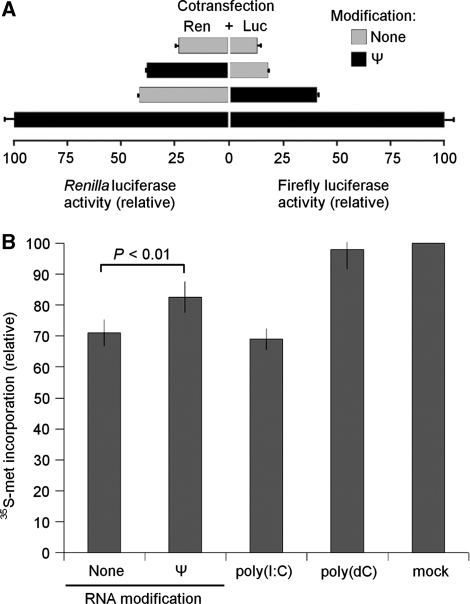
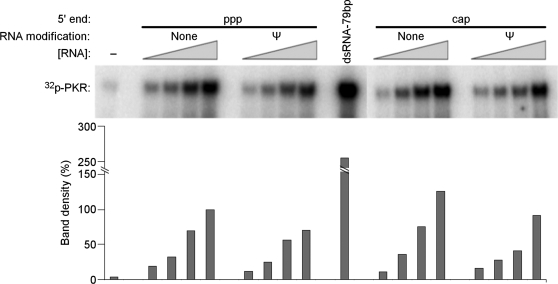
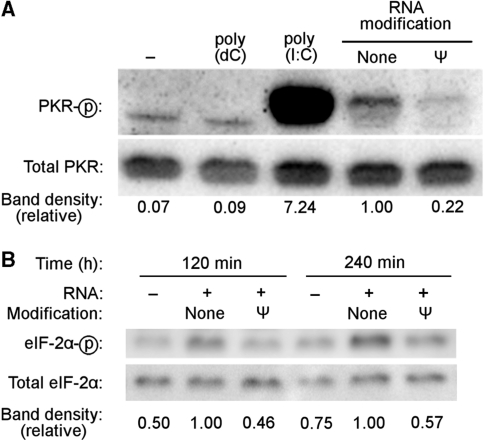
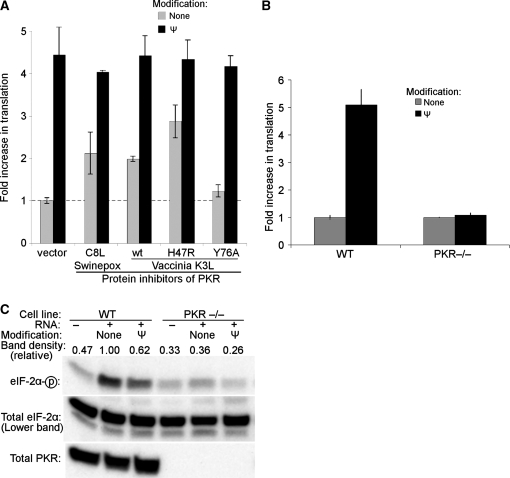
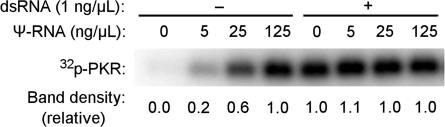
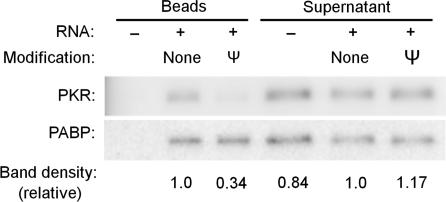
Previous studies have shown that the translation level of in vitro transcribed messenger RNA (mRNA) is enhanced when its uridines are replaced with pseudouridines; however, the reason for this enhancement has not been identified. Here, we demonstrate that in vitro transcripts containing uridine activate RNA-dependent protein kinase (PKR), which then phosphorylates translation initiation factor 2-alpha (eIF-2α), and inhibits translation. In contrast, in vitro transcribed mRNAs containing pseudouridine activate PKR to a lesser degree, and translation of pseudouridine-containing mRNAs is not repressed. RNA pull-down assays demonstrate that mRNA containing uridine is bound by PKR more efficiently than mRNA with pseudouridine. Finally, the role of PKR is validated by showing that pseudouridine- and uridine-containing RNAs were translated equally in PKR knockout cells. These results indicate that the enhanced translation of mRNAs containing pseudouridine, compared to those containing uridine, is mediated by decreased activation of PKR.
Overview
The claims and statistics of this paper haven’t been checked yet.
Run the check — free, no account needed. It reads the open-access text and checks the sources it cites.
Integrity signals
Registry
Cites
Statistics
Figures
Verification
Claims the paper makes
The claims and statistics of this paper haven’t been checked yet.
Run the check — free, no account needed. It reads the open-access text and checks the sources it cites.
Claims other papers make about this one
Each is checked against this paper’s own text: does it say what the citing paper says it does?
The source backs part of the claim, not all of it — or backs it for a different population, condition or comparison.
In the citing paper
“Substitution of chemically modified nucleotides in messenger ribonucleic acid (mRNA) enhances stability and transfection capability, and decreases immunogenicity1–3”
From Complete substitution with modified nucleotides in self-amplifying RNA suppresses the interferon response and increases potency (2025) · cites this paper as [3]
Experimental — accuracy not yet measuredThe source backs part of the claim, not all of it — or backs it for a different population, condition or comparison.
In the citing paper
“Native RNA activates pattern recognition receptors such as toll-like receptors and triggers type I interferon (IFN) production, resulting in translational shutoff and systemic inflammation3.”
From Complete substitution with modified nucleotides in self-amplifying RNA suppresses the interferon response and increases potency (2025) · cites this paper as [3]
Experimental — accuracy not yet measuredThe source backs part of the claim, not all of it — or backs it for a different population, condition or comparison.
In the citing paper
“This can be circumvented by the incorporation of naturally occurring nucleosides and by applying stringent purification to remove double-stranded RNA contaminants (19–21).”
From mRNA vaccine with unmodified uridine induces robust type I interferon-dependent anti-tumor immunity in a melanoma model (2022) · cites this paper as [21]
Experimental — accuracy not yet measuredThe source backs part of the claim, not all of it — or backs it for a different population, condition or comparison.
In the citing paper
“Transferring this concept to in vitro transcribed mRNA, for instance, pseudouridine-containing mRNAs reduced activation of known RNA sensors substantially.”
From Sequence-engineered mRNA without chemical nucleoside modifications enables an effective protein therapy in large animals (2015) · cites this paper as [22]
Experimental — accuracy not yet measuredThe source backs part of the claim, not all of it — or backs it for a different population, condition or comparison.
In the citing paper
“The two uridine analogs pseudouridine (Ψ) or 1-methyl-pseudouridine (m1Ψ) are widely used for mRNA therapeutics because they can increase mRNA stability and help modulate the host immune response31,32.”
From Human 5′ UTR design and variant effect prediction from a massively parallel translation assay (2019) · cites this paper as [32]
Experimental — accuracy not yet measured
The cited source says what the claim attributes to it.
In the citing paper
“Although pseudouridine is primarily found in tRNA, rRNA, and small nuclear RNAs, pseudouridine-containing mRNAs were still translated and produced even more protein compared to unmodified mRNA.”
From Sequence-engineered mRNA without chemical nucleoside modifications enables an effective protein therapy in large animals (2015) · cites this paper as [22]
The cited source says what the claim attributes to it.
In the citing paper
“In addition, nucleoside modifications are well known to limit or even inhibit RNA sensor engagement.20,21,22”
From Sequence-engineered mRNA without chemical nucleoside modifications enables an effective protein therapy in large animals (2015) · cites this paper as [22]
In the citing paper
“Nucleoside-modified mRNA can reduce the activation of TLRs, retinoic acid-inducible gene I (RIG-I), protein kinase R (PKR), and 2′-5′-oligoadenylate synthetase (OAS). Additionally, nucleoside modification increases translation activity and resistance against RNase L-mediated degradation.54,81,173–176”
From Advances in COVID-19 mRNA vaccine development (2022) · cites this paper as [174]
Self-check
Percentages, sums and reported differences re-computed from the paper’s own numbers.
The self-check needs the paper’s full text.
Citations
Cites
Karikó, K., Buckstein, M., Ni, H., & Weissman, D. (2005) · Immunity · doi:10.1016/j.immuni.2005.06.008 · Cited by 2,728
Self-citation5'-Triphosphate RNA Is the Ligand for RIG-I
Hornung, V., Ellegast, J., Kim, S., Brzózka, K., Jung, A., Kato, H., Poeck, H., Akira, S., Conzelmann, K.-K., Schlee, M., et al. (2006) · Science · doi:10.1126/science.1132505 · Cited by 2,474
Karikó, K., Muramatsu, H., Welsh, F. A., Ludwig, J., Kato, H., Akira, S., & Weissman, D. (2008) · Molecular Therapy · doi:10.1038/mt.2008.200 · Cited by 1,930
Self-citationActivation of the interferon system by short-interfering RNAs
Sledz, C. A., Holko, M., de Veer, M. J., Silverman, R. H., & Williams, B. R. G. (2003) · Nature Cell Biology · doi:10.1038/ncb1038 · Cited by 1,401
AAV vector integration sites in mouse hepatocellular carcinoma
Donsante, A., Miller, D. G., Li, Y., Vogler, C., Brunt, E. M., Russell, D. W., & Sands, M. S. (2007) · Science · doi:10.1126/science.1142658 · Cited by 662
Pseudouridine in RNA: What, Where, How, and Why
Charette, M., & Gray, M. W. (2000) · IUBMB Life · doi:10.1080/152165400410182 · Cited by 600
Ryter, J. M., & Schultz, S. C. (1998) · The EMBO Journal · doi:10.1093/emboj/17.24.7505 · Cited by 479
The RNA Modification Database: 1999 update
Rozenski, J., Crain, P. F., & McCloskey, J. A. (1999) · Nucleic Acids Research · doi:10.1093/nar/27.1.196 · Cited by 390
2′-O-methyl-modified RNAs Act as TLR7 Antagonists
Robbins, M., Judge, A. D., Liang, L. Y., McClintock, K., Yaworski, E., & MacLachlan, I. (2007) · Molecular Therapy · doi:10.1038/sj.mt.6300240 · Cited by 339
Genotoxicity of Retroviral Integration In Hematopoietic Cells
Nienhuis, A. W., Dunbar, C. E., & Sorrentino, B. P. (2006) · Molecular Therapy · doi:10.1016/j.ymthe.2006.03.001 · Cited by 301
Cited by
Sorted by citations
Items 201–300 of 684
Miller, M. G., Alvizo, O., Baskerville, S., Chintala, A., Chng, C., Dassie, J. P., Dorigatti, J. D., Huisman, G. W., Jenne, S., Kadam, S., et al. (2024) · Faraday Discussions · doi:10.1039/d4fd00023d · Cited by 42
Extracellular Vesicle‐Based mRNA Therapeutics and Vaccines
Li, Q., Xing, H., Naeem, A., Zhang, K., Zheng, A., Huang, Y., & Lu, M. (2025) · Exploration · doi:10.1002/exp.20240109 · Cited by 44
Optimizing Modified mRNA In Vitro Synthesis Protocol for Heart Gene Therapy
Hadas, Y., Sultana, N., Youssef, E., Sharkar, M. T. K., Kaur, K., Chepurko, E., & Zangi, L. (2019) · Molecular Therapy — Methods & Clinical Development · doi:10.1016/j.omtm.2019.07.006 · Cited by 41
Miller, J. B., & Siegwart, D. J. (2018) · Nano Research · doi:10.1007/s12274-018-2099-4 · Cited by 41
The Epitranscriptome in Translation RegulationPreprint
Peer, E., Moshitch-Moshkovitz, S., Rechavi, G., & Dominissini, D. (2018) · Cold Spring Harbor Perspectives in Biology · doi:10.1101/cshperspect.a032623 · Cited by 41
RNA-based therapeutics to treat human fungal infections
Bruch, A., Kelani, A. A., & Blango, M. G. (2022) · Trends in Microbiology · doi:10.1016/j.tim.2021.09.007 · Cited by 39
The potential of mRNA vaccines in cancer nanomedicine and immunotherapy
Pan, S., Fan, R., Han, B. R., Tong, A., & Guo, G. F. (2023) · Trends in Immunology · doi:10.1016/j.it.2023.11.003 · Cited by 39
Re-adenylation by TENT5A enhances efficacy of SARS-CoV-2 mRNA vaccines
Krawczyk, P. S., Mazur, M., Orzeł, W., Gewartowska, O., Jeleń, S., Antczak, W., Kasztelan, K., Brouze, A., Matylla-Kulińska, K., Gumińska, N., et al. (2025) · Nature · doi:10.1038/s41586-025-08842-1 · Cited by 40
Determinants of intracellular RNA pharmacokinetics: Implications for RNA-based immunotherapeutics
Kuhn, A. N., Diken, M., Kreiter, S., Vallazza, B., Türeci, Ö., & Sahin, U. (2011) · RNA Biology · doi:10.4161/rna.8.1.13767 · Cited by 39
Modified mRNA as a therapeutic tool to induce cardiac regeneration in ischemic heart disease
Hadas, Y., Katz, M. G., Bridges, C. R., & Zangi, L. (2016) · WIREs Systems Biology and Medicine · doi:10.1002/wsbm.1367 · Cited by 37
A mark of disease: how mRNA modifications shape genetic and acquired pathologies
Destefanis, E., Avşar, G., Groza, P., Romitelli, A., Torrini, S., Pir, P., Conticello, S. G., Aguiló, F., & Dassi, E. (2020) · RNA · doi:10.1261/rna.077271.120 · Cited by 38
McErlean, E. M., & McCarthy, H. O. (2024) · Journal of Nanobiotechnology · doi:10.1186/s12951-024-02746-4 · Cited by 42
In Vitro Synthesis of Modified mRNA for Induction of Protein Expression in Human Cells
Avci‐Adali, M., Behring, A., Steinle, H., Keller, T., Krajeweski, S., Schlensak, C., & Wendel, H. P. (2014) · Journal of Visualized Experiments · doi:10.3791/51943 · Cited by 41
RNA-based therapy for osteogenesis
Wang, P., Perche, F., Logeart‐Avramoglou, D., & Pichon, C. (2019) · International Journal of Pharmaceutics · doi:10.1016/j.ijpharm.2019.118594 · Cited by 38
Svitkin, Y. V., Gingras, A., & Sonenberg, N. (2021) · Nucleic Acids Research · doi:10.1093/nar/gkab1241 · Cited by 38
Korzun, T., Moses, A. S., Diba, P., Sattler, A. L., Taratula, O. R., Sahay, G., Taratula, O., & Marks, D. L. (2023) · Pharmaceuticals · doi:10.3390/ph16081088 · Cited by 40
Adenovirus vector and mRNA vaccines: Mechanisms regulating their immunogenicity
Provine, N. M., & Klenerman, P. (2022) · European Journal of Immunology · doi:10.1002/eji.202250022 · Cited by 37
Seasonal quadrivalent mRNA vaccine prevents and mitigates influenza infection
Kackos, C. M., DeBeauchamp, J., Davitt, C. J. H., Lonzarić, J., Sealy, R. E., Hurwitz, J. L., Samsa, M. M., & Webby, R. J. (2023) · npj Vaccines · doi:10.1038/s41541-023-00752-5 · Cited by 38
RNA modifications in gene regulation: Functions and pathways
Wei, J., & He, C. (2026) · Cell · doi:10.1016/j.cell.2026.01.006 · Cited by 36
Conversion of adult human fibroblasts into neural precursor cells using chemically modified mRNA
Connor, B. J., Firmin, E., McCaughey‐Chapman, A., Monk, R., Lee, K. C., Liot, S., Geiger, J. P., Rudolph, C., & Jones, K. (2018) · Heliyon · doi:10.1016/j.heliyon.2018.e00918 · Cited by 35
The intersection of COVID-19 and autoimmunity: What is our current understanding?
Winchester, N., Calabrese, C. M., & Calabrese, L. H. (2021) · Pathogens and Immunity · doi:10.20411/pai.v6i1.417 · Cited by 40
Effects of mRNA Modifications on Translation: An Overview
Roy, B. (2021) · Methods in molecular biology · doi:10.1007/978-1-0716-1374-0_20 · Cited by 36
mRNA delivery via non-viral carriers for biomedical applications
Shuai, Q., Zhu, F., Zhao, M., & Yan, Y. (2021) · International Journal of Pharmaceutics · doi:10.1016/j.ijpharm.2021.121020 · Cited by 35
Selective Xi reactivation and alternative methods to restore MECP2 function in Rett syndrome
Grimm, N.-B., & Lee, J. T. (2022) · Trends in Genetics · doi:10.1016/j.tig.2022.01.007 · Cited by 34
Ronk, A. J., Lloyd, N. M., Zhang, M., Atyeo, C. G., Perrett, H. R., Mire, C. E., Hastie, K. M., Sanders, R. W., Brouwer, P. J. M., Saphire, E. O., et al. (2023) · Nature Communications · doi:10.1038/s41467-023-41376-6 · Cited by 36
Personalized mRNA vaccines in glioblastoma therapy: from rational design to clinical trials
Karimi-Sani, I., Molavi, Z., Naderi, S., Mirmajidi, S. H., Zare, I., Naeimzadeh, Y., Mansouri, A., Tajbakhsh, A., Savardashtaki, A., & Sahebkar, A. (2024) · Journal of Nanobiotechnology · doi:10.1186/s12951-024-02882-x · Cited by 39
In Gratitude for mRNA Vaccines
Stuart, L. M. (2021) · New England Journal of Medicine · doi:10.1056/nejmcibr2111445 · Cited by 34
The Current Landscape of mRNA Vaccines Against Viruses and Cancer–A Mini Review
Ladak, R. J., He, A. J., Huang, Y.-H., & Ding, Y. (2022) · Frontiers in Immunology · doi:10.3389/fimmu.2022.885371 · Cited by 35
Popova, P. G., Lagace, M. A., Tang, G., & Blakney, A. K. (2024) · European Journal of Pharmaceutics and Biopharmaceutics · doi:10.1016/j.ejpb.2024.114247 · Cited by 33
Zhang, W., Liu, Y., Chin, J. M., & Phua, K. K. L. (2021) · European Journal of Pharmaceutics and Biopharmaceutics · doi:10.1016/j.ejpb.2021.03.011 · Cited by 33
Nanoparticle Targeting Strategies for Lipid and Polymer‐Based Gene Delivery to Immune Cells In Vivo
Jain, M., Yu, X., Schneck, J. P., & Green, J. J. (2024) · Small Science · doi:10.1002/smsc.202400248 · Cited by 35
Makhamreh, A. K., Tavakoli, S., Fallahi, A., Kang, X., Gamper, H., Nabizadehmashhadtoroghi, M., Jain, M., Hou, Y., Rouhanifard, S. H., & Wanunu, M. (2024) · Scientific Reports · doi:10.1038/s41598-024-72994-9 · Cited by 32
Laila, U. E., An, W., & Xu, Z.-X. (2024) · Frontiers in Immunology · doi:10.3389/fimmu.2024.1448489 · Cited by 34
Wang, A. Y. L. (2021) · International Journal of Molecular Sciences · doi:10.3390/ijms22158148 · Cited by 34
Chung, C. W., Kudchodkar, S. B., Chung, C. N., Park, Y. K., Xu, Z., Pardi, N., Abdel‐Mohsen, M., & Muthumani, K. (2023) · Antibodies · doi:10.3390/antib12030046 · Cited by 36
In Vitro Transcribed mRNA Vaccines with Programmable Stimulation of Innate Immunity
Loomis, K. H., Lindsay, K. E., Zurla, C., Bhosle, S. M., Vanover, D. A., Blanchard, E. L., Kirschman, J. L., Bellamkonda, R. V., & Santangelo, P. J. (2018) · Bioconjugate Chemistry · doi:10.1021/acs.bioconjchem.8b00443 · Cited by 32
mRNA-Based Vaccines and Mode of Action
Gergen, J., & Petsch, B. (2020) · Current topics in microbiology and immunology · doi:10.1007/82_2020_230 · Cited by 36
Campos, C. M., Tsai, K., Courtney, D., Bogerd, H. P., Holley, C. L., & Cullen, B. R. (2021) · RNA · doi:10.1261/rna.078940.121 · Cited by 30
Control of protein synthesis through mRNA pseudouridylation by dyskerin
Pederiva, C., Trevisan, D. M., Peirasmaki, D., Chen, S., Savage, S. A., Larsson, O. S., Ule, J., Baranello, L., Agostini, F., & Farnebo, M. (2023) · Science Advances · doi:10.1126/sciadv.adg1805 · Cited by 32
PUS7‐dependent pseudouridylation of ALKBH3 mRNA inhibits gastric cancer progression
Chang, Y., Jin, H., Cui, Y., Yang, F., Chen, K., Kuang, W., Huo, C., Xu, Z., Li, Y., Lin, A., et al. (2024) · Clinical and Translational Medicine · doi:10.1002/ctm2.1811 · Cited by 30
Nucleotide Modification Alters MicroRNA-Dependent Silencing of MicroRNA Switches
Lockhart, J. H., Canfield, J., Mong, E. F., VanWye, J., & Totary-Jain, H. (2018) · Molecular Therapy — Nucleic Acids · doi:10.1016/j.omtn.2018.12.007 · Cited by 30
Nallagatla, S. R., Jones, C. N., Ghosh, S., Sharma, S. D., Cameron, C. E., Spremulli, L. L., & Bevilacqua, P. C. (2013) · PLoS ONE · doi:10.1371/journal.pone.0057905 · Cited by 30
Self-citationThe notorious R.N.A. in the spotlight - drug or target for the treatment of disease
Reautschnig, P., Vogel, P., & Stafforst, T. (2016) · RNA Biology · doi:10.1080/15476286.2016.1208323 · Cited by 30
Pros and Cons of In Vitro Methods for Circular RNA Preparation
Lee, K. H., Kim, S., & Lee, S. (2022) · International Journal of Molecular Sciences · doi:10.3390/ijms232113247 · Cited by 30
Leyman, B., Huysmans, H., Cafferty, S. M., Combes, F., Cox, E., Devriendt, B., & Sanders, N. N. (2018) · Molecular Pharmaceutics · doi:10.1021/acs.molpharmaceut.7b00722 · Cited by 30
Advances in saRNA Vaccine Research against Emerging/Re-Emerging Viruses
Liu, Y., Li, Y., & Hu, Q. (2023) · Vaccines · doi:10.3390/vaccines11071142 · Cited by 27
RNA modifications and their role in gene expression
Artika, I. M., Arianti, R., Demény, M. Á., & Kristóf, E. (2025) · Frontiers in Molecular Biosciences · doi:10.3389/fmolb.2025.1537861 · Cited by 31
Zhang, Y., Wu, Y., Ma, J., Wu, Y., Li, L., Wang, H., Jia, G., Rigden, D. J., Meng, J., Huang, D., et al. (2025) · Nature Communications · doi:10.1038/s41467-025-64495-8 · Cited by 28
Prall, W., Ganguly, D. R., & Gregory, B. D. (2023) · The Plant Cell · doi:10.1093/plcell/koad044 · Cited by 28
Boros, G., Mikó, E., Muramatsu, H., Weissman, D., Emri, E., Rózsa, D., Nagy, G., Juhász, A., Juhász, I., van der Horst, G. T. J., et al. (2013) · Journal of Photochemistry and Photobiology B Biology · doi:10.1016/j.jphotobiol.2013.09.010 · Cited by 28
Self-citationA highly efficient human cell-free translation system
Aleksashin, N. A., Chang, S. T.-L., & Cate, J. H. D. (2023) · RNA · doi:10.1261/rna.079825.123 · Cited by 32
mRNA Vaccine Nanoplatforms and Innate Immunity
Wei, L., Dong, C., Zhu, W., & Wang, B. (2024) · Viruses · doi:10.3390/v16010120 · Cited by 28
Feng, S., Rcheulishvili, N., Jiang, X., Zhu, P., Pan, X., Wei, M., Wang, P. G., Ji, Y., & Papukashvili, D. (2024) · International Journal of Biological Sciences · doi:10.7150/ijbs.87741 · Cited by 27
Ige, M. A., Ren, X., Yang, Y., Zhang, H., Shen, C., Jiang, Y., Li, J., & Wan, X. (2025) · Molecular Therapy — Nucleic Acids · doi:10.1016/j.omtn.2025.102721 · Cited by 30
Functions and therapeutic applications of pseudouridylation
Luo, N., Huang, Q., Zhang, M., & Yi, C. (2025) · Nature Reviews Molecular Cell Biology · doi:10.1038/s41580-025-00852-1 · Cited by 27
Lipid Nanoparticles Delivering Constitutively Active STING mRNA to Stimulate Antitumor Immunity
Liu, W., Alameh, M., Yang, J. F., Xu, J. R., Lin, P. J. C., Tam, Y. K., Weissman, D., & You, J. (2022) · International Journal of Molecular Sciences · doi:10.3390/ijms232314504 · Cited by 33
Self-citationSynthesis of Modified mRNA for Myocardial Delivery
Kondrat, J., Sultana, N., & Zangi, L. (2016) · Methods in molecular biology · doi:10.1007/978-1-4939-6588-5_8 · Cited by 25
Lü, Y., Tang, L., Zhang, M., & Liu, C. (2022) · Frontiers in Immunology · doi:10.3389/fimmu.2022.896958 · Cited by 28
Kyriakopoulos, A. M., Nigh, G., McCullough, P. A., & Seneff, S. (2022) · Cureus · doi:10.7759/cureus.32361 · Cited by 26
The Novelty of mRNA Viral Vaccines and Potential Harms: A Scoping Review
Halma, M. T. J., Rose, J., Jenks, A., & Lawrie, T. A. (2023) · J — Multidisciplinary Scientific Journal · doi:10.3390/j6020017 · Cited by 25
Current Status of Messenger RNA Delivery Systems
Stanton, M. G. (2018) · Nucleic Acid Therapeutics · doi:10.1089/nat.2018.0726 · Cited by 26
Azizi, H., Renner, T. M., Agbayani, G., Simard, B., Dudani, R., Harrison, B. A., Iqbal, U., Jia, Y., McCluskie, M. J., & Akache, B. (2024) · NAR Molecular Medicine · doi:10.1093/narmme/ugae004 · Cited by 28
Kuzmin, I. V., Soto-Acosta, R., Pruitt, L., Wasdin, P. T., Kedarinath, K., Hernandez, K. R., Gonzales, K. A., Hill, K., Weidner, N. G., Mire, C. E., et al. (2024) · Nature Communications · doi:10.1038/s41467-024-50774-3 · Cited by 28
Vaccine Strategies Against RNA Viruses: Current Advances and Future Directions
Hsiung, K. C., Chiang, H.-J., Reinig, S., & Shih, S. (2024) · Vaccines · doi:10.3390/vaccines12121345 · Cited by 25
Lu, Y., Qian, C., Huang, Y., Ren, T., Xie, W., Xia, N., & Li, S. (2025) · International Journal of Biological Macromolecules · doi:10.1016/j.ijbiomac.2025.145501 · Cited by 28
Harnessing mRNA-lipid nanoparticles as innovative therapies for autoimmune diseases
Razavi, R., Kegel, M., Muscat-Rivera, J., Weissman, D., & Melamed, J. R. (2025) · Molecular Therapy — Methods & Clinical Development · doi:10.1016/j.omtm.2025.101566 · Cited by 28
Self-citationLoomis, K. H., Kirschman, J. L., Bhosle, S. M., Bellamkonda, R. V., & Santangelo, P. J. (2015) · Journal of Materials Chemistry B · doi:10.1039/c5tb01753j · Cited by 24
Bansal, A. (2023) · Frontiers in Immunology · doi:10.3389/fimmu.2023.1306025 · Cited by 24
Cellular stress and coagulation factor production: when more is not necessarily better
Chen, Z., Herzog, R. W., & Kaufman, R. J. (2023) · Journal of Thrombosis and Haemostasis · doi:10.1016/j.jtha.2023.10.005 · Cited by 24
Toki, N., Takahashi, H., Zucchelli, S., Gustincich, S., & Carninci, P. (2020) · FEBS Letters · doi:10.1002/1873-3468.13928 · Cited by 23
Akita, H. (2020) · Biological and Pharmaceutical Bulletin · doi:10.1248/bpb.b20-00534 · Cited by 23
CRISPR-derived genome editing therapies: Progress from bench to bedside
Rees, H. A., Minella, A. C., Burnett, C. A., Komor, A. C., & Gaudelli, N. M. (2021) · Molecular Therapy · doi:10.1016/j.ymthe.2021.09.027 · Cited by 25
Modified mRNA Therapeutics for Heart Diseases
Magadum, A. (2022) · International Journal of Molecular Sciences · doi:10.3390/ijms232415514 · Cited by 23
Lipidoid mRNA Nanoparticles for Myocardial Delivery in Rodents
Turnbull, I. C., Eltoukhy, A. A., Anderson, D. G., & Costa, K. D. (2016) · Methods in molecular biology · doi:10.1007/978-1-4939-6588-5_10 · Cited by 23
Advancements in pseudouridine modifying enzyme and cancer
Liu, K., Zhang, S., Liu, Y., Hu, X., & Gu, X. (2024) · Frontiers in Cell and Developmental Biology · doi:10.3389/fcell.2024.1465546 · Cited by 22
Noncoding snoRNA host genes are a distinct subclass of long noncoding RNAs
Monziani, A., & Ulitsky, I. (2023) · Trends in Genetics · doi:10.1016/j.tig.2023.09.001 · Cited by 24
Cafri, G., Sharbi‐Yunger, A., Tzehoval, E., Alteber, Z., Gross, T., Vadai, E., Margalit, A., Gross, G., & Eisenbach, L. (2015) · Molecular Therapy · doi:10.1038/mt.2015.90 · Cited by 20
mRNA medicine: Recent progresses in chemical modification, design, and engineering
Hou, X., Shi, J., & Xiao, Y. (2024) · Nano Research · doi:10.1007/s12274-024-6978-6 · Cited by 24
Implications of RNA pseudouridylation for cancer biology and therapeutics: a narrative review
Ding, H., Liu, N., Wang, Y., Adam, S. A., Jin, J., Feng, W., & Sun, J. (2024) · Journal of Translational Medicine · doi:10.1186/s12967-024-05687-6 · Cited by 23
Bar‐On, L., Cohen, H., Elia, U., Cherry, L., Cohen, O., & Noam Erez, A. (2025) · Frontiers in Immunology · doi:10.3389/fimmu.2025.1670350 · Cited by 25
Luo, T., Xu, M., Wang, M., Chen, F., & Shi, J. (2025) · Nature Methods · doi:10.1038/s41592-025-02974-y · Cited by 21
Material Design for Next-Generation mRNA Vaccines Using Lipid Nanoparticles
Higuchi, A., Sung, T., Wang, T., Ling, Q., Kumar, S. S., Hsu, S.-T., & Umezawa, A. (2022) · Journal of macromolecular science. Part C, Reviews in macromolecular chemistry and physics/Journal of macromolecular science. Reviews in macromolecular chemistry and physics · doi:10.1080/15583724.2022.2106490 · Cited by 21
Oh, J., Kimoto, M., Xu, H., Chong, J. P. C., Hirao, I., & Wang, D. (2023) · Nature Communications · doi:10.1038/s41467-022-35755-8 · Cited by 21
mRNA Vaccine - A New Cancer Treatment Strategy
Tan, T., Deng, S., Wu, B.-H., Yang, Q., Wu, M., Wu, H., Cao, C., & Xu, C. S. (2023) · Current Cancer Drug Targets · doi:10.2174/1568009623666230222124424 · Cited by 22
Phua, K. K. L., Liu, Y., & Sim, S. H. (2017) · Biomaterials · doi:10.1016/j.biomaterials.2017.04.009 · Cited by 21
Lambert, M., Leijonhufvud, C., Segerberg, F., Melenhorst, J. J., & Carlsten, M. (2020) · Methods in molecular biology · doi:10.1007/978-1-0716-0338-3_18 · Cited by 19
Legere, R. M., Cohen, N. D., Poveda, C., Bray, J. M., Barhoumi, R., Szule, J. A., de la Concha-Bermejillo, A., Bordin, A. I., & Pollet, J. (2021) · Scientific Reports · doi:10.1038/s41598-020-79855-1 · Cited by 20
Tam, Y. K., Madden, T. D., & Hope, M. J. (2016) · Journal of Drug Targeting · doi:10.1080/1061186x.2016.1221955 · Cited by 20
Unlocking the Potential of Chemically Modified Nucleic Acid Therapeutics
Gao, J., Nutan, B., Gargouri, D., Pisal, N. D., Do, V., Zubair, M., Alanzi, H., Wang, H., Lee, D., Joshi, N., et al. (2024) · Advanced Therapeutics · doi:10.1002/adtp.202400231 · Cited by 20
Michel, T., Golombek, S., Steinle, H., Hann, L., Velić, A., Maček, B., Krajewski, S., Schlensak, C., Wendel, H. P., & Avci‐Adali, M. (2019) · Journal of Biological Engineering · doi:10.1186/s13036-019-0172-5 · Cited by 21
Synthetic RNA-based post-transcriptional expression control methods and genetic circuits
Pardi, M. L., Wu, J., Kawasaki, S., & Saito, H. (2022) · Advanced Drug Delivery Reviews · doi:10.1016/j.addr.2022.114196 · Cited by 20
An Efficient Protection-Free One-Pot Chemical Synthesis of Modified Nucleoside-5′-Triphosphates
Shanmugasundaram, M., Senthilvelan, A., Xiao, Z., & Kore, A. R. (2016) · Nucleosides Nucleotides & Nucleic Acids · doi:10.1080/15257770.2016.1163382 · Cited by 20
Current Challenges in Nucleic Acid Synthesis
Hogrefe, R. I., Midthune, B., & Lebedev, A. V. (2013) · Israel Journal of Chemistry · doi:10.1002/ijch.201300032 · Cited by 21
Nucleofection induces transient eIF2α phosphorylation by GCN2 and PERK
Anderson, B. R., Karikó, K., & Weissman, D. (2012) · Gene Therapy · doi:10.1038/gt.2012.5 · Cited by 20
Self-citationmRNA produced by VSW-3 RNAP has high-level translation efficiency with low inflammatory stimulation
Wang, G., Cheng, R., Chen, Q., Xu, Y., Yu, B., Zhu, B., Yin, H., & Xia, H. (2022) · Cell Insight · doi:10.1016/j.cellin.2022.100056 · Cited by 20
Jalan, A., Jayaprakash, J. P., Karemore, P., Narayan, K. P., & Khandelia, P. (2023) · Molecular Biotechnology · doi:10.1007/s12033-023-00792-1 · Cited by 19
Wang, W. J., Chen, L., Zhang, Y., Wang, H., Dong, D., Zhu, J., Fu, W. E., & Liu, T. (2023) · Bioengineering & Translational Medicine · doi:10.1002/btm2.10620 · Cited by 19
Mahony, T. J., Briody, T. E., & Ommeh, S. C. (2024) · Vaccines · doi:10.3390/vaccines12020152 · Cited by 22
Drzeniek, N. M., Kahwaji, N., Picht, S., Dimitriou, I. M., Schlickeiser, S., Moradian, H., Geissler, S., Schmueck‐Henneresse, M., Gossen, M., & Volk, H. (2024) · Advanced Science · doi:10.1002/advs.202308447 · Cited by 18
Woodward, E., Wang, E., Wallis, C. J. D., Sharma, R. K., Tie, A. W. J., Murthy, N., & Blancafort, P. (2024) · Methods in molecular biology · doi:10.1007/978-1-0716-4051-7_14 · Cited by 18
Metadata
- Authors
- Anderson, B. R., Muramatsu, H., Nallagatla, S. R., Bevilacqua, P. C., Sansing, L. H., Weissman, D., & Karikó, K.
- Affiliations
- Pennsylvania State University (US)
- Corresponding author
- Karikó, Katalin
- ORCID
- Venue
- Nucleic Acids Research
- Publisher
- Oxford University Press (OUP)
- Published
- 2010-05-10
- Volume
- 38
- Issue
- 17
- Pages
- 5884-5892
- ISSN
- 0305-1048 (ISSN-L)
- 1362-4962
- PMC
- PMC2943593
- OpenAlex
- W2156788486
- Cited by
- 682
- References
- 60
- Citations by year
- 2026: 67 · 2025: 99 · 2024: 143 · 2023: 90 · 2022: 77 · 2021: 52 · 2020: 22 · 2019: 22 · 2018: 26 · 2017: 17 · 2016: 21 · 2015: 13 · 2014: 6 · 2013: 12 · 2012: 8
- FWCI
- 3.49
- Type
- journal article
- Language
- en
- Open access
- gold
- doi.org
- Licence
- Locations
- Nucleic Acids Research (publishedVersion, cc-by-nc)
- PubMed Central (publishedVersion, cc-by-nc)
- PubMed (publishedVersion)
- HighWire Press Open Archive (submittedVersion)
- Funders
- Cleveland Clinic
- Cleveland Clinic Foundation
- National Institutes of Health
- National Heart, Lung, and Blood Institute (R42HL087688)
- National Institute of General Medical Sciences (T32GM007229, R01GM058709)
- National Institute of Allergy and Infectious Diseases (R01AI050484)
- National Institute of Diabetes and Digestive and Kidney Diseases (T32DK007748)
- National Institute of Dental and Craniofacial Research (R21DE019059)
- National Center for Research Resources (T32RR007063)
- Topics
- Life Sciences › Biochemistry, Genetics and Molecular Biology › Molecular Biology › RNA and protein synthesis mechanisms
- Life Sciences › Biochemistry, Genetics and Molecular Biology › Molecular Biology › RNA modifications and cancer
- Life Sciences › Biochemistry, Genetics and Molecular Biology › Molecular Biology › RNA regulation and disease
- Keywords
- pseudouridine, mRNA translation, PKR, RNA-dependent protein kinase, eIF2α phosphorylation, translation initiation, uridine, in vitro transcribed mRNA, RNA-protein interactions
- MeSH terms
- Animals, Cell Line, Cells, Cultured, Humans, Pseudouridine, RNA, Messenger, Protein Biosynthesis, eIF-2 Kinase, Mice
About these checks
Registry, retraction, Cites and statistics results are computed, not judged, with one exception: a printed reference that no index lists is read once by a model before it counts as a citation error. Claims are extracted by a model and kept only when their quote appears verbatim in the text; each cited source is then checked, with a model’s help, for whether it says what the claim relies on. Those verdicts can be wrong — read the claim’s quote and the cited source before relying on one.
Statistics and arithmetic are recomputed, not judged.
Confidence bands are shown only for fields calibrated on our annotated test set. None is calibrated yet, so no band is shown.
What counts as a claim ›How we measure confidence ›How we check this ›
Are you an author, or do you see a problem with this page? Request a review
