

KEGG for integration and interpretation of large-scale molecular data sets
Open accessThe DOI matches its Crossref record; 7 of the 7 references it cites were found in a registry or an index.
Abstract
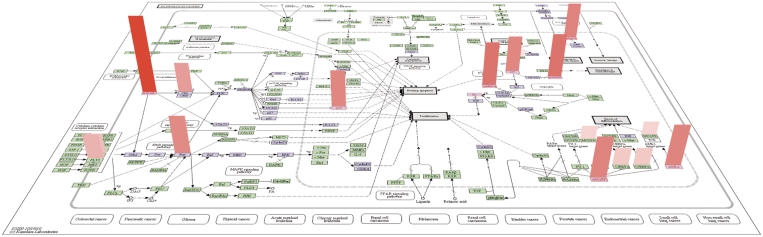
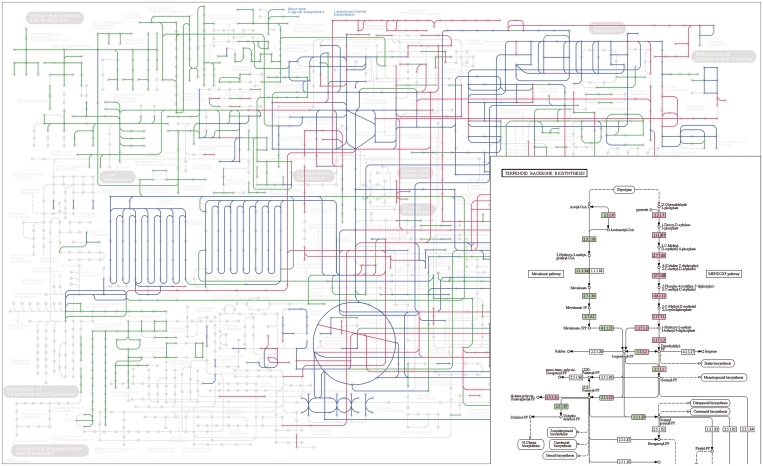
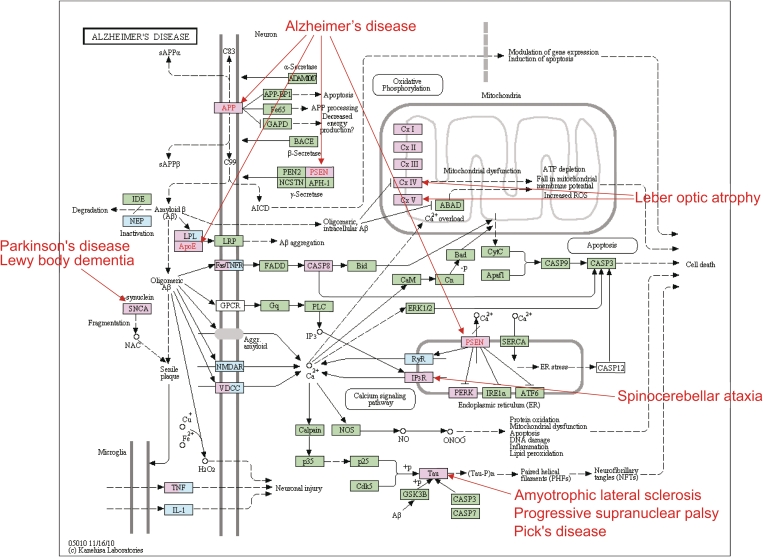
Kyoto Encyclopedia of Genes and Genomes (KEGG, http://www.genome.jp/kegg/ or http://www.kegg.jp/) is a database resource that integrates genomic, chemical and systemic functional information. In particular, gene catalogs from completely sequenced genomes are linked to higher-level systemic functions of the cell, the organism and the ecosystem. Major efforts have been undertaken to manually create a knowledge base for such systemic functions by capturing and organizing experimental knowledge in computable forms; namely, in the forms of KEGG pathway maps, BRITE functional hierarchies and KEGG modules. Continuous efforts have also been made to develop and improve the cross-species annotation procedure for linking genomes to the molecular networks through the KEGG Orthology system. Here we report KEGG Mapper, a collection of tools for KEGG PATHWAY, BRITE and MODULE mapping, enabling integration and interpretation of large-scale data sets. We also report a variant of the KEGG mapping procedure to extend the knowledge base, where different types of data and knowledge, such as disease genes and drug targets, are integrated as part of the KEGG molecular networks. Finally, we describe recent enhancements to the KEGG content, especially the incorporation of disease and drug information used in practice and in society, to support translational bioinformatics.
Overview
The claims and statistics of this paper haven’t been checked yet.
Free: it reads the open-access text and checks the first 5 claims that cite a source we can check. Create a free account to check every claim.
Integrity signals
Registry
Cites
Statistics
Figures
Verification
Claims the paper makes
The claims and statistics of this paper haven’t been checked yet.
Free: it reads the open-access text and checks the first 5 claims that cite a source we can check. Create a free account to check every claim.
Claims other papers make about this one
Each is checked against this paper’s own text: does it say what the citing paper says it does?
The cited source says what the claim attributes to it.
In the citing paper
“Pfam composition 54 , Gene Ontology 51 and KEGG 52,53 were used to further validate P. bachei orthologues.”
From The ctenophore genome and the evolutionary origins of neural systems (2014) · cites this paper as [53]
Self-check
Percentages, sums and reported differences re-computed from the paper’s own numbers.
The self-check needs the paper’s full text.
Citations
Cites
KEGG for linking genomes to life and the environment
Kanehisa, M., Araki, M., Goto, S., Hattori, M., Hirakawa, M., Itoh, M., Katayama, T., Kawashima, S., Okuda, S., Tokimatsu, T., et al. (2007) · Nucleic Acids Research · doi:10.1093/nar/gkm882 · Cited by 6,782
Self-citationFrom genomics to chemical genomics: new developments in KEGG
Kanehisa, M. (2006) · Nucleic Acids Research · doi:10.1093/nar/gkj102 · Cited by 3,120
Self-citationKEGG for representation and analysis of molecular networks involving diseases and drugs
Kanehisa, M., Goto, S., Furumichi, M., Tanabe, M., & Hirakawa, M. (2010) · Nucleic Acids Research · doi:10.1093/nar/gkp896 · Cited by 2,322 · cited 1×
“In recent years, our efforts have been focused on capturing and representing knowledge on diseases as perturbed states of the molecular network and drugs as perturbants to the molecular network (1).”
BackgroundSelf-citationThe KEGG databases at GenomeNet
Kanehisa, M. (2002) · Nucleic Acids Research · doi:10.1093/nar/30.1.42 · Cited by 1,504
Self-citationNCBI Reference Sequences: current status, policy and new initiatives
Pruitt, K. D., Tatusova, T., Klimke, W., & Maglott, D. R. (2009) · Nucleic Acids Research · doi:10.1093/nar/gkn721 · Cited by 736 · cited 3×
“KEGG GENES is a collection of gene catalogs for all organisms whose genomes are completely sequenced and made available by RefSeq.”
MethodExplorEnz: the primary source of the IUBMB enzyme list
McDonald, A. G., Boyce, S., & Tipton, K. F. (2009) · Nucleic Acids Research · doi:10.1093/nar/gkn582 · Cited by 248
Network-Based Analysis and Characterization of Adverse Drug–Drug Interactions
Takarabe, M., Shigemizu, D., Kotera, M., Goto, S., & Kanehisa, M. (2011) · Journal of Chemical Information and Modeling · doi:10.1021/ci200367w · Cited by 59
Self-citation
Cited by
Items 101–200 of 1,015
Social network architecture of human immune cells unveiled by quantitative proteomics
Rieckmann, J. C., Geiger, R., Hornburg, D., Wolf, T., Kveler, K., Jarrossay, D., Sallusto, F., Shen-Orr, S. S., Lanzavecchia, A., Mann, M., et al. (2017) · Nature Immunology · doi:10.1038/ni.3693 · Cited by 385
Gönen, M. (2012) · Bioinformatics · doi:10.1093/bioinformatics/bts360 · Cited by 383
Using the KEGG Database Resource
Tanabe, M., & Kanehisa, M. (2012) · Current Protocols in Bioinformatics · doi:10.1002/0471250953.bi0112s38 · Cited by 382
Self-citationSampling interstitial fluid from human skin using a microneedle patch
Samant, P. P., Niedzwiecki, M. M., Raviele, N., Tran, V., Mena-Lapaix, J., Walker, D. I., Felner, E. I., Jones, D. P., Miller, G. W., & Prausnitz, M. R. (2020) · Science Translational Medicine · doi:10.1126/scitranslmed.aaw0285 · Cited by 379
Genome-wide signatures of convergent evolution in echolocating mammals
Parker, J., Tsagkogeorga, G., Cotton, J. A., Liu, Y., Provero, P., Stupka, E., & Rossiter, S. J. (2013) · Nature · doi:10.1038/nature12511 · Cited by 378
Proteomics: Concepts and applications in human medicine
Al-Amrani, S., Al-Jabri, Z., Al-Zaabi, A., Alshekaili, J., & Al-Khabori, M. (2021) · World Journal of Biological Chemistry · doi:10.4331/wjbc.v12.i5.57 · Cited by 374
Bechara, E. G., Sebestyén, E., Bernardis, I., Eyras, E., & Valcárcel, J. (2013) · Molecular Cell · doi:10.1016/j.molcel.2013.11.010 · Cited by 372
Why are some microbes more ubiquitous than others? Predicting the habitat breadth of soil bacteria
Barberán, A., Ramirez, K. S., Leff, J. W., Bradford, M. A., Wall, D. H., & Fierer, N. (2014) · Ecology Letters · doi:10.1111/ele.12282 · Cited by 368
Transcriptional regulation of strigolactone signalling in Arabidopsis
Wang, L., Wang, B., Yu, H., Guo, H., Lin, T., Kou, L., Wang, A., Shao, N., Ma, H., Xiong, G., et al. (2020) · Nature · doi:10.1038/s41586-020-2382-x · Cited by 368
Systems Toxicology: From Basic Research to Risk Assessment
Sturla, S. J., Boobis, A. R., FitzGerald, R. E., Hoeng, J., Kavlock, R. J., Schirmer, K., Whelan, M., Wilks, M. F., & Peitsch, M. C. (2014) · Chemical Research in Toxicology · doi:10.1021/tx400410s · Cited by 366
Gorrochategui, E., Jaumot, J., Lacorte, S., & Tauler, R. (2016) · TrAC Trends in Analytical Chemistry · doi:10.1016/j.trac.2016.07.004 · Cited by 352
CottonGen: a genomics, genetics and breeding database for cotton research
Yu, J., Jung, S., Cheng, C.-H., Ficklin, S. P., Lee, T., Zheng, P., Jones, D., Percy, R. G., & Main, D. (2014) · Nucleic Acids Research · doi:10.1093/nar/gkt1064 · Cited by 349
Weeks, E. M., Ulirsch, J. C., Cheng, N. Y., Trippe, B. L., Fine, R. S., Miao, J., Patwardhan, T. A., Kanai, M., Nasser, J., Fulco, C. P., et al. (2023) · Nature Genetics · doi:10.1038/s41588-023-01443-6 · Cited by 349
Bhattacharya, A., Ziebarth, J. D., & Cui, Y. (2014) · Nucleic Acids Research · doi:10.1093/nar/gkt1028 · Cited by 347
Li, F., & Guan, L. L. (2017) · Applied and Environmental Microbiology · doi:10.1128/aem.00061-17 · Cited by 346
Morrow, A. L., Lagomarcino, A. J., Schibler, K. R., Taft, D. H., Yu, Z., Wang, B., Altaye, M., Wagner, M., Gevers, D., Ward, D. V., et al. (2013) · Microbiome · doi:10.1186/2049-2618-1-13 · Cited by 343
Lachance, J., Vernot, B., Elbers, C. C., Ferwerda, B., Froment, A., Bodo, J.-M., Lema, G., Fu, W., Nyambo, T. B., Rebbeck, T. R., et al. (2012) · Cell · doi:10.1016/j.cell.2012.07.009 · Cited by 341
Montague, M. J., Li, G., Gandolfi, B., Khan, R., Aken, B. L., Searle, S. M. J., Minx, P., Hillier, L. W., Koboldt, D. C., Davis, B. W., et al. (2014) · Proceedings of the National Academy of Sciences · doi:10.1073/pnas.1410083111 · Cited by 340
“Significant Gene Ontology categories (73), Pathway Commons categories (74), WikiPathways (75), and KEGG Pathways (76) were reported using a hypergeometric test, and the significance level was set at 0.05.”
MethodInfluentialPathway-based personalized analysis of cancer
Drier, Y., Sheffer, M., & Domany, E. (2013) · Proceedings of the National Academy of Sciences · doi:10.1073/pnas.1219651110 · Cited by 337
Gajardo, K., Rodiles, A., Kortner, T. M., Krogdahl, Å., Bakke, A. M., Merrifield, D. L., & Sørum, H. (2016) · Scientific Reports · doi:10.1038/srep30893 · Cited by 337
Zong, W., Tang, N., Yang, J., Peng, L., Ma, S., Xu, Y., Li, G., & Xiong, L. (2016) · Plant Physiology · doi:10.1104/pp.16.00469 · Cited by 336
T3DB: the toxic exposome database
Wishart, D., Arndt, D., Pon, A., Sajed, T., Guo, A. C., Djoumbou, Y., Knox, C., Wilson, M., Liang, Y., Grant, J., et al. (2015) · Nucleic Acids Research · doi:10.1093/nar/gku1004 · Cited by 332
An evaluation of the accuracy and speed of metagenome analysis tools
Lindgreen, S., Adair, K. L., & Gardner, P. P. (2016) · Scientific Reports · doi:10.1038/srep19233 · Cited by 331
TSGene: a web resource for tumor suppressor genes
Zhao, M., Sun, J., & Zhao, Z. (2013) · Nucleic Acids Research · doi:10.1093/nar/gks937 · Cited by 330
Ancient and modern environmental DNA
Pedersen, M. W., Overballe-Petersen, S., Ermini, L., Sarkissian, C. D., Haile, J., Hellstrom, M., Spens, J., Thomsen, P. F., Bohmann, K., Cappellini, E., et al. (2015) · Philosophical Transactions of the Royal Society B: Biological Sciences · doi:10.1098/rstb.2013.0383 · Cited by 329
Pathway and network analysis of cancer genomes
the Mutation Consequences and Pathway Analysis working group of the International Cancer Genome Consortium (2015) · Nature Methods · doi:10.1038/nmeth.3440 · Cited by 325
DrugCentral: online drug compendium
Ursu, O., Holmes, J., Knockel, J., Bologa, C. G., Yang, J. J., Mathias, S. L., Nelson, S. J., & Oprea, T. I. (2017) · Nucleic Acids Research · doi:10.1093/nar/gkw993 · Cited by 323
“The following resources matched our above inclusion criteria: the ChEMBL database (1), the Guide to Pharmacology (2) and KEGG Drug (3).”
BackgroundMethodLi, F., Hitch, T. C. A., Chen, Y., Creevey, C. J., & Guan, L. L. (2019) · Microbiome · doi:10.1186/s40168-019-0618-5 · Cited by 323
Cell-type-specific profiling of brain mitochondria reveals functional and molecular diversity
Fecher, C., Trovò, L., Müller, S. A., Snaidero, N., Wettmarshausen, J., Heink, S., Ortiz, O., Wagner, I., Kühn, R., Hartmann, J., et al. (2019) · Nature Neuroscience · doi:10.1038/s41593-019-0479-z · Cited by 323
Lower Airway Dysbiosis Affects Lung Cancer Progression
Tsay, J.-C. J., Wu, B. G., Sulaiman, I., Gershner, K., Schluger, R., Li, Y., Yie, T.-A., Meyn, P., Olsen, E., Perez, L., et al. (2021) · Cancer Discovery · doi:10.1158/2159-8290.cd-20-0263 · Cited by 322
“Kanehisa M, Goto S, Sato Y, Furumichi M, Tanabe M. KEGG for integration and interpretation of 986 large-scale molecular data sets.”
BackgroundDrug-Target Interaction Prediction with Graph Regularized Matrix Factorization
Ezzat, A., Zhao, P., Wu, M., Li, X.-L., & Kwoh, C.-K. (2017) · IEEE/ACM Transactions on Computational Biology and Bioinformatics · doi:10.1109/tcbb.2016.2530062 · Cited by 322
Heinken, A., Ravcheev, D. A., Baldini, F., Heirendt, L., Fleming, R. M. T., & Thiele, I. (2019) · Microbiome · doi:10.1186/s40168-019-0689-3 · Cited by 318
MetaboAnalystR 2.0: From Raw Spectra to Biological Insights
Chong, J., Yamamoto, M., & Xia, J. (2019) · Metabolites · doi:10.3390/metabo9030057 · Cited by 317
Impact of Dietary Resistant Starch on the Human Gut Microbiome, Metaproteome, and Metabolome
Maier, T. V., Lucio, M., Lee, L. H., VerBerkmoes, N. C., Brislawn, C. J., Bernhardt, J., Lamendella, R., McDermott, J. E., Bergeron, N., Heinzmann, S. S., et al. (2017) · mBio · doi:10.1128/mbio.01343-17 · Cited by 316
“This resulted in a total of 57,397 proteins that were quantitatively identified (human, 1,103; microbes, 56,294).”
Altered microRNA profiles in bronchoalveolar lavage fluid exosomes in asthmatic patients
Levänen, B., Bhakta, N. R., Torregrosa Paredes, P., Barbeau, R., Hiltbrunner, S., Pollack, J. L., Sköld, C. M., Svartengren, M., Grunewald, J., Gabrielsson, S., et al. (2013) · Journal of Allergy and Clinical Immunology · doi:10.1016/j.jaci.2012.11.039 · Cited by 316
Novel Entries in a Fungal Biofilm Matrix Encyclopedia
Zarnowski, R., Westler, W. M., Lacmbouh, G. A., Marita, J. M., Bothe, J. R., Bernhardt, J., Lounes-Hadj Sahraoui, A., Fontaine, J., Sanchez, H., Hatfield, R. D., et al. (2014) · mBio · doi:10.1128/mbio.01333-14 · Cited by 315
“Functional mapping of the matrix proteome was performed using the KEGG database (80, 81).”
MethodA taxonomic signature of obesity in a large study of American adults
Peters, B. A., Shapiro, J. A., Church, T. R., Miller, G., Trinh-Shevrin, C., Yuen, E., Friedlander, C., Hayes, R. B., & Ahn, J. (2018) · Scientific Reports · doi:10.1038/s41598-018-28126-1 · Cited by 315
Ezzat, A., Wu, M., Li, X.-L., & Kwoh, C.-K. (2019) · Briefings in Bioinformatics · doi:10.1093/bib/bby002 · Cited by 314
The reductive glycine pathway allows autotrophic growth of Desulfovibrio desulfuricans
Sánchez-Andrea, I., Guedes, I. A., Hornung, B., Boeren, S., Lawson, C. E., Sousa, D. Z., Bar-Even, A., Claassens, N. J., & Stams, A. J. M. (2020) · Nature Communications · doi:10.1038/s41467-020-18906-7 · Cited by 306
Bezzi, M., Teo, S. X., Muller, J., Mok, W. C., Sahu, S. K., Vardy, L. A., Bonday, Z. Q., & Guccione, E. (2013) · Genes & Development · doi:10.1101/gad.219899.113 · Cited by 300
Models of human core transcriptional regulatory circuitries
Saint-André, V., Federation, A. J., Lin, C. Y., Abraham, B. J., Reddy, J., Lee, T. I., Bradner, J. E., & Young, R. A. (2016) · Genome Research · doi:10.1101/gr.197590.115 · Cited by 298
Widespread sex differences in gene expression and splicing in the adult human brain
Trabzuni, D., Ramasamy, A., Imran, S., Walker, R., Smith, C., Weale, M. E., Hardy, J., Ryten, M., & North American Brain Expression Consortium (2013) · Nature Communications · doi:10.1038/ncomms3771 · Cited by 296
Whole genome analysis of a schistosomiasis-transmitting freshwater snail
Adema, C. M., Hillier, L. W., Jones, C. S., Loker, E. S., Knight, M., Minx, P., Oliveira, G., Raghavan, N., Shedlock, A., do Amaral, L. R., et al. (2017) · Nature Communications · doi:10.1038/ncomms15451 · Cited by 292
Integrated omics analysis of specialized metabolism in medicinal plants
Rai, A., Saito, K., & Yamazaki, M. (2017) · The Plant Journal · doi:10.1111/tpj.13485 · Cited by 290
Fu, W., Guðmundsson, Ó., Paglia, G., Herjólfsson, G., Andrésson, Ó. S., Palsson, B. Ø., & Brynjólfsson, S. (2013) · Applied Microbiology and Biotechnology · doi:10.1007/s00253-012-4502-5 · Cited by 289
Computational Prediction of Metabolism: Sites, Products, SAR, P450 Enzyme Dynamics, and Mechanisms
Kirchmair, J., Williamson, M. J., Tyzack, J. D., Tan, L., Bond, P. J., Bender, A., & Glen, R. C. (2012) · Journal of Chemical Information and Modeling · doi:10.1021/ci200542m · Cited by 289
TGF-β upregulates miR-181a expression to promote breast cancer metastasis
Taylor, M. A., Sossey-Alaoui, K., Thompson, C. L., Danielpour, D., & Schiemann, W. P. (2013) · Journal of Clinical Investigation · doi:10.1172/jci64946 · Cited by 288
Transcriptome analysis of Vibrio parahaemolyticus in type III secretion system 1 inducing conditions
Nydam, S. D., Shah, D. H., & Call, D. R. (2014) · Frontiers in Cellular and Infection Microbiology · doi:10.3389/fcimb.2014.00001 · Cited by 283
Navarro-Reig, M., Jaumot, J., García-Reiriz, A., & Tauler, R. (2015) · Analytical and Bioanalytical Chemistry · doi:10.1007/s00216-015-9042-2 · Cited by 280
Riboswitches in eubacteria sense the second messenger c-di-AMP
Nelson, J. W., Sudarsan, N., Furukawa, K., Weinberg, Z., Wang, J. X., & Breaker, R. R. (2013) · Nature Chemical Biology · doi:10.1038/nchembio.1363 · Cited by 279
Kemmeren, P., Sameith, K., van de Pasch, L. A. L., Benschop, J. J., Lenstra, T. L., Margaritis, T., O’Duibhir, E., Apweiler, E., van Wageningen, S., Ko, C. W., et al. (2014) · Cell · doi:10.1016/j.cell.2014.02.054 · Cited by 277
The human gene damage index as a gene-level approach to prioritizing exome variants
Itan, Y., Shang, L., Boisson, B., Patin, E., Bolze, A., Moncada-Vélez, M., Scott, E., Ciancanelli, M. J., Lafaille, F. G., Markle, J. G., et al. (2015) · Proceedings of the National Academy of Sciences · doi:10.1073/pnas.1518646112 · Cited by 275
Methods for biological data integration: perspectives and challenges
Gligorijević, V., & Pržulj, N. (2015) · Journal of The Royal Society Interface · doi:10.1098/rsif.2015.0571 · Cited by 275
Melkonian, C., Gottstein, W., Blasche, S., Kim, Y., Abel-Kistrup, M., Swiegers, H., Saerens, S., Edwards, N., Patil, K. R., Teusink, B., et al. (2019) · Frontiers in Microbiology · doi:10.3389/fmicb.2019.01347 · Cited by 275
Yuan, D., Tang, Z., Wang, M., Gao, W., Tu, L., Jin, X., Chen, L., He, Y., Zhang, L., Zhu, L., et al. (2015) · Scientific Reports · doi:10.1038/srep17662 · Cited by 274
Integrating Pathways of Parkinson's Disease in a Molecular Interaction Map
Fujita, K. A., Ostaszewski, M., Matsuoka, Y., Ghosh, S., Glaab, E., Trefois, C., Crespo, I., Perumal, T. M., Jurkowski, W., Antony, P. M. A., et al. (2014) · Molecular Neurobiology · doi:10.1007/s12035-013-8489-4 · Cited by 273
DawnRank: discovering personalized driver genes in cancer
Hou, J. P., & Ma, J. (2014) · Genome Medicine · doi:10.1186/preaccept-1835019729127471 · Cited by 273
Aissa, A. F., Islam, A. B. M. M. K., Ariss, M. M., Go, C. C., Rader, A. E., Conrardy, R. D., Gajda, A. M., Rubio-Perez, C., Valyi-Nagy, K., Pasquinelli, M., et al. (2021) · Nature Communications · doi:10.1038/s41467-021-21884-z · Cited by 273
The combined human sperm proteome: cellular pathways and implications for basic and clinical science
Amaral, A., Castillo, J., Ramalho-Santos, J., & Oliva, R. (2014) · Human Reproduction Update · doi:10.1093/humupd/dmt046 · Cited by 272
Microbiome and Exudates of the Root and Rhizosphere of Brachypodium distachyon, a Model for Wheat
Kawasaki, A., Donn, S., Ryan, P. R., Mathesius, U., Devilla, R., Jones, A., & Watt, M. (2016) · PLOS ONE · doi:10.1371/journal.pone.0164533 · Cited by 271
The transcriptional landscape of αβ T cell differentiation
the Immunological Genome Consortium, Mingueneau, M., Kreslavsky, T., Gray, D., Heng, T., Cruse, R., Ericson, J., Bendall, S., Spitzer, M. H., Nolan, G. P., et al. (2013) · Nature Immunology · doi:10.1038/ni.2590 · Cited by 268
Watson, E., MacNeil, L. T., Ritter, A. D., Yilmaz, L. S., Rosebrock, A. P., Caudy, A. A., & Walhout, A. J. M. (2014) · Cell · doi:10.1016/j.cell.2014.01.047 · Cited by 268
Bosi, E., Monk, J. M., Aziz, R. K., Fondi, M., Nizet, V., & Palsson, B. Ø. (2016) · Proceedings of the National Academy of Sciences · doi:10.1073/pnas.1523199113 · Cited by 266
Data processing, multi-omic pathway mapping, and metabolite activity analysis using XCMS Online
Forsberg, E. M., Huan, T., Rinehart, D., Benton, H. P., Warth, B., Hilmers, B., & Siuzdak, G. (2018) · Nature Protocols · doi:10.1038/nprot.2017.151 · Cited by 266
IMG/M 4 version of the integrated metagenome comparative analysis system
Markowitz, V. M., Chen, I.-M. A., Chu, K., Szeto, E., Palaniappan, K., Pillay, M., Ratner, A., Huang, J., Pagani, I., Tringe, S., et al. (2014) · Nucleic Acids Research · doi:10.1093/nar/gkt919 · Cited by 264
Yuan, X., Chen, B., Duan, Z., Xia, Z., Ding, Y., Chen, T., Liu, H., Wang, B., Yang, B., Wang, X., et al. (2021) · Gut Microbes · doi:10.1080/19490976.2021.1987779 · Cited by 262
Understanding the interactions between bacteria in the human gut through metabolic modeling
Shoaie, S., Karlsson, F., Mardinoglu, A., Nookaew, I., Bordel, S., & Nielsen, J. (2013) · Scientific Reports · doi:10.1038/srep02532 · Cited by 261
Modulation of gut microbiota dysbioses in type 2 diabetic patients by macrobiotic Ma-Pi 2 diet
Candela, M., Biagi, E., Soverini, M., Consolandi, C., Quercia, S., Severgnini, M., Peano, C., Turroni, S., Rampelli, S., Pozzilli, P., et al. (2016) · British Journal Of Nutrition · doi:10.1017/s0007114516001045 · Cited by 260
Schlicker, A., Beran, G., Chresta, C. M., McWalter, G., Pritchard, A., Weston, S., Runswick, S., Davenport, S., Heathcote, K., Castro, D. A., et al. (2012) · BMC Medical Genomics · doi:10.1186/1755-8794-5-66 · Cited by 256
Dagan, T., Roettger, M., Stucken, K., Landan, G., Koch, R., Major, P., Gould, S. B., Goremykin, V. V., Rippka, R., Tandeau de Marsac, N., et al. (2013) · Genome Biology and Evolution · doi:10.1093/gbe/evs117 · Cited by 255
microRNA-1/133a and microRNA-206/133b clusters: Dysregulation and functional roles in human cancers
Nohata, N., Hanazawa, T., Enokida, H., & Seki, N. (2012) · Oncotarget · doi:10.18632/oncotarget.424 · Cited by 253
Li, K., Jia, W., Xu, L., Zhang, M., & Huang, Y. (2023) · Journal of Hazardous Materials · doi:10.1016/j.jhazmat.2022.130011 · Cited by 250
Wang, Z., Han, M., Li, E., Liu, X., Wei, H., Yang, C., Lu, S., & Ning, K. (2020) · Journal of Hazardous Materials · doi:10.1016/j.jhazmat.2020.122426 · Cited by 249
Aberg, K. A., McClay, J. L., Nerella, S., Clark, S., Kumar, G., Chen, W., Khachane, A. N., Xie, L., Hudson, A., Gao, G., et al. (2014) · JAMA Psychiatry · doi:10.1001/jamapsychiatry.2013.3730 · Cited by 248
Copy number variation in schizophrenia in Sweden
Szatkiewicz, J. P., O'Dushlaine, C., Chen, G., Chambert, K., Moran, J. L., Neale, B. M., Fromer, M., Ruderfer, D., Akterin, S., Bergen, S. E., et al. (2014) · Molecular Psychiatry · doi:10.1038/mp.2014.40 · Cited by 248
Identification of functional cooperative mutations of SETD2 in human acute leukemia
Zhu, X., He, F., Zeng, H., Ling, S., Chen, A., Wang, Y., Yan, X., Wei, W., Pang, Y., Cheng, H., et al. (2014) · Nature Genetics · doi:10.1038/ng.2894 · Cited by 247
The switches.ELM Resource: A Compendium of Conditional Regulatory Interaction Interfaces
Van Roey, K., Dinkel, H., Weatheritt, R. J., Gibson, T. J., & Davey, N. E. (2013) · Science Signaling · doi:10.1126/scisignal.2003345 · Cited by 247
Predicting the Functional Potential of the Microbiome from Marker Genes Using PICRUSt
Douglas, G. M., Beiko, R. G., & Langille, M. G. I. (2018) · Methods in Molecular Biology · doi:10.1007/978-1-4939-8728-3_11 · Cited by 246
Remodeling of intermediate metabolism in the diatom Phaeodactylum tricornutum under nitrogen stress
Levitan, O., Dinamarca, J., Zelzion, E., Lun, D. S., Guerra, L. T., Kim, M. K., Kim, J., Van Mooy, B. A. S., Bhattacharya, D., & Falkowski, P. G. (2015) · Proceedings of the National Academy of Sciences · doi:10.1073/pnas.1419818112 · Cited by 245
The genome and developmental transcriptome of the strongylid nematode Haemonchus contortus
Schwarz, E. M., Korhonen, P. K., Campbell, B. E., Young, N. D., Jex, A. R., Jabbar, A., Hall, R. S., Mondal, A., Howe, A. C., Pell, J., et al. (2013) · Genome Biology · doi:10.1186/gb-2013-14-8-r89 · Cited by 244
Deep Learning Accurately Predicts Estrogen Receptor Status in Breast Cancer Metabolomics Data
Alakwaa, F. M., Chaudhary, K., & Garmire, L. X. (2018) · Journal of Proteome Research · doi:10.1021/acs.jproteome.7b00595 · Cited by 244
Deciphering and Prediction of Transcriptome Dynamics under Fluctuating Field Conditions
Nagano, A. J., Sato, Y., Mihara, M., Antonio, B. A., Motoyama, R., Itoh, H., Nagamura, Y., & Izawa, T. (2012) · Cell · doi:10.1016/j.cell.2012.10.048 · Cited by 244
Self-citationYang, B., Li, M., Tang, W., Liu, W., Zhang, S., Chen, L., & Xia, J. (2018) · Nature Communications · doi:10.1038/s41467-018-03024-2 · Cited by 243
Drug Target Prediction and Repositioning Using an Integrated Network-Based Approach
Emig, D., Ivliev, A., Pustovalova, O., Lancashire, L., Bureeva, S., Nikolsky, Y., & Bessarabova, M. (2013) · PLoS ONE · doi:10.1371/journal.pone.0060618 · Cited by 241
“Furthermore, the drug targets are found to be highly enriched in cancer-specific and cancer-related signaling pathways obtained from the KEGG database [45].”
BackgroundHigh-resolution 13C metabolic flux analysis
Long, C. P., & Antoniewicz, M. R. (2019) · Nature Protocols · doi:10.1038/s41596-019-0204-0 · Cited by 240
Fan, L., Qi, Y., Qu, S., Chen, X., Li, A., Hendi, M., Xu, C., Wang, L., Hou, T., Si, J., et al. (2021) · Gut Microbes · doi:10.1080/19490976.2020.1826746 · Cited by 239
The Structure–Function Linkage Database
Akiva, E., Brown, S., Almonacid, D. E., Barber, A. E., Custer, A. F., Hicks, M. A., Huang, C. C., Lauck, F., Mashiyama, S. T., Meng, E. C., et al. (2014) · Nucleic Acids Research · doi:10.1093/nar/gkt1130 · Cited by 238
“Examples include the Enzyme Nomenclature Classification (EC) system (13,14), MACiE (15), Catalytic Site Atlas (16), EzCatDB (17), KEGG (18) and BRENDA (19), in which the main grouping criteria are derived from their chemical reactions and/or associated ligands.”
Vogel-Ciernia, A., Matheos, D. P., Barrett, R. M., Kramár, E. A., Azzawi, S., Chen, Y., Magnan, C. N., Zeller, M., Sylvain, A., Haettig, J., et al. (2013) · Nature Neuroscience · doi:10.1038/nn.3359 · Cited by 236
Simultaneous Identification of Multiple Driver Pathways in Cancer
Leiserson, M. D. M., Blokh, D., Sharan, R., & Raphael, B. J. (2013) · PLoS Computational Biology · doi:10.1371/journal.pcbi.1003054 · Cited by 236
Jin, D., Wu, S., Zhang, Y.-G., Lu, R., Xia, Y., Dong, H., & Sun, J. (2015) · Clinical Therapeutics · doi:10.1016/j.clinthera.2015.04.004 · Cited by 235
Tsoi, L. C., Iyer, M. K., Stuart, P. E., Swindell, W. R., Gudjonsson, J. E., Tejasvi, T., Sarkar, M. K., Li, B., Ding, J., Voorhees, J. J., et al. (2015) · Genome Biology · doi:10.1186/s13059-014-0570-4 · Cited by 233
Maternal-fetal immune responses in pregnant women infected with SARS-CoV-2
Garcia-Flores, V., Romero, R., Xu, Y., Theis, K. R., Arenas-Hernandez, M., Miller, D., Peyvandipour, A., Bhatti, G., Galaz, J., Gershater, M., et al. (2022) · Nature Communications · doi:10.1038/s41467-021-27745-z · Cited by 229
Swart, E. C., Bracht, J. R., Magrini, V., Minx, P., Chen, X., Zhou, Y., Khurana, J. S., Goldman, A. D., Nowacki, M., Schotanus, K., et al. (2013) · PLoS Biology · doi:10.1371/journal.pbio.1001473 · Cited by 227
Gene family innovation, conservation and loss on the animal stem lineage
(2018) · doi:10.7554/elife.34226 · Cited by 226
Mühlroth, A., Li, K., Røkke, G., Winge, P., Olsen, Y., Hohmann-Marriott, M., Vadstein, O., & Bones, A. (2013) · Marine Drugs · doi:10.3390/md11114662 · Cited by 225
“DiatomCyc [91] and Kyoto Encyclopedia of Genes and Genomes [92] were used for identification of the co-expression”
MethodHuang, Z., Zeng, S., Xiong, J., Hou, D., Zhou, R., Xing, C., Wei, D., Deng, X., Yu, L., Wang, H., et al. (2020) · Microbiome · doi:10.1186/s40168-020-00802-3 · Cited by 225
Vlasova, A., Capella-Gutiérrez, S., Rendón-Anaya, M., Hernández-Oñate, M., Minoche, A. E., Erb, I., Câmara, F., Prieto-Barja, P., Corvelo, A., Sanseverino, W., et al. (2016) · Genome Biology · doi:10.1186/s13059-016-0883-6 · Cited by 223
“Kanehisa M, Goto S, Sato Y, Furumichi M, Tanabe M. KEGG for integration and interpretation of large-scale molecular data sets.”
MethodVitamin supplementation by gut symbionts ensures metabolic homeostasis in an insect host
Salem, H., Bauer, E., Strauß, A., Vogel, H., Marz, M., & Kaltenpoth, M. (2014) · Proceedings of the Royal Society B Biological Sciences · doi:10.1098/rspb.2014.1838 · Cited by 222
Man-made microbial resistances in built environments
Mahnert, A., Moissl-Eichinger, C., Zojer, M., Bogumil, D., Mizrahi, I., Rattei, T., Martinez, J. L., & Berg, G. (2019) · Nature Communications · doi:10.1038/s41467-019-08864-0 · Cited by 221
Sequencing of the smallest Apicomplexan genome from the human pathogen Babesia microti†
Cornillot, E., Hadj-Kaddour, K., Dassouli, A., Noel, B., Ranwez, V., Vacherie, B., Augagneur, Y., Brès, V., Duclos, A., Randazzo, S., et al. (2012) · Nucleic Acids Research · doi:10.1093/nar/gks700 · Cited by 219
Metadata
- Authors
- Kanehisa, M., Goto, S., Sato, Y., Furumichi, M., & Tanabe, M.
- Affiliations
- Kyoto University (JP)
- Corresponding author
- Kanehisa, M.
- Venue
- Nucleic Acids Research
- Publisher
- Oxford University Press (OUP)
- Published
- 2011-11-10
- Volume
- 40
- Issue
- D1
- Pages
- D109-D114
- ISSN
- 0305-1048 (ISSN-L)
- 1362-4962
- PMC
- PMC3245020
- OpenAlex
- W1998767819
- Cited by
- 4,848
- References
- 7
- Citations by year
- 2026: 136 · 2025: 211 · 2024: 299 · 2023: 262 · 2022: 297 · 2021: 321 · 2020: 304 · 2019: 322 · 2018: 338 · 2017: 331 · 2016: 337 · 2015: 384 · 2014: 513 · 2013: 555 · 2012: 230
- FWCI
- 168.64
- Type
- journal article
- Language
- en
- Open access
- gold
- doi.org
- Licence
- Locations
- Nucleic Acids Research (publishedVersion, cc-by-nc)
- PubMed Central (publishedVersion, cc-by-nc)
- PubMed (publishedVersion)
- HighWire Press Open Archive (submittedVersion)
- Funders
- Japan Science and Technology Agency
- Institute for Chemical Research, Kyoto University
- Topics
- Life Sciences › Biochemistry, Genetics and Molecular Biology › Molecular Biology › Bioinformatics and Genomic Networks
- Life Sciences › Biochemistry, Genetics and Molecular Biology › Molecular Biology › Genomics and Phylogenetic Studies
- Health Sciences › Medicine › Health Informatics › Biomedical Text Mining and Ontologies
- Keywords
- KEGG, KEGG pathways, KEGG modules, KEGG Orthology, genome annotation, disease-associated genes, therapeutic target, molecular networks, knowledge base integration, translational bioinformatics
- MeSH terms
- Pharmacological Phenomena, Disease, Humans, Software, Databases, Factual, Systems Integration, Computational Biology, Genomics, Knowledge Bases, Molecular Sequence Annotation
About these checks
Registry, retraction, Cites and statistics results are computed, not judged, with one exception: a printed reference that no index lists is read once by a model before it counts as a citation error. Claims are extracted by a model and kept only when their quote appears verbatim in the text; each cited source is then checked, with a model’s help, for whether it says what the claim relies on. Those verdicts can be wrong — read the claim’s quote and the cited source before relying on one.
Statistics and arithmetic are recomputed, not judged.
Confidence bands are shown only for fields calibrated on our annotated test set. None is calibrated yet, so no band is shown.
What counts as a claim ›How we measure confidence ›How we check this ›
Are you an author, or do you see a problem with this page? Request a review
Data sources
Bibliographic data: Semantic Scholar, OpenAlex, Crossref.
Contains information from the Semantic Scholar Academic Graph Datasets, made available under the ODC Attribution License (ODC-BY 1.0).
Semantic Scholar’s data is described in: Kinney, R., et al. (2023). The Semantic Scholar Open Data Platform. arXiv:2301.10140.
