

Integrating information in the brain's EM field: the cemi field theory of consciousness
Open accessThe DOI matches its Crossref record; 81 of the 82 references it cites were found in a registry or an index.
Abstract
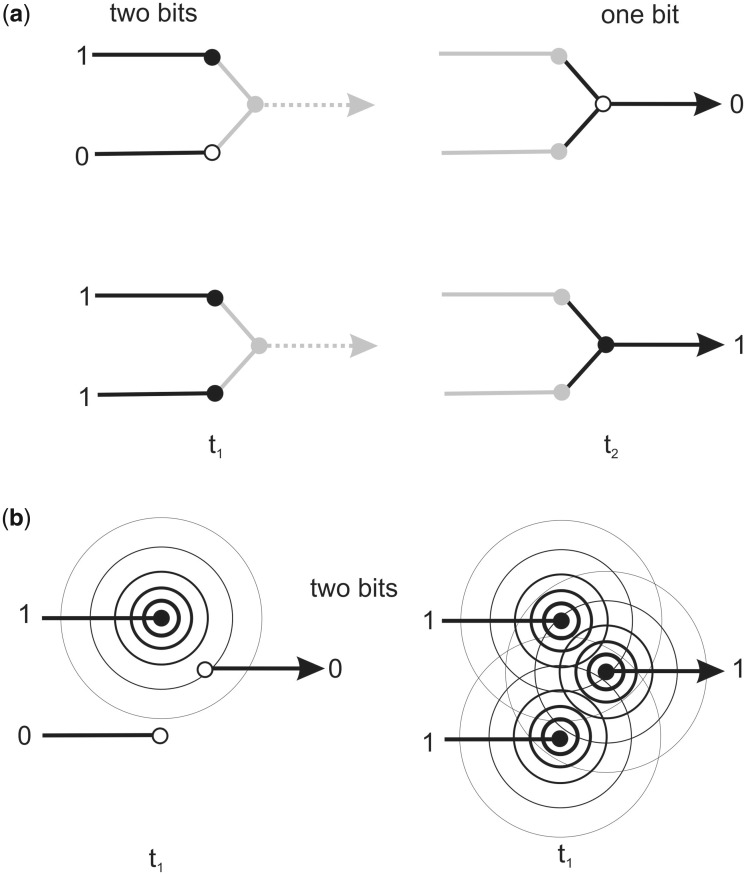
A key aspect of consciousness is that it represents bound or integrated information, prompting an increasing conviction that the physical substrate of consciousness must be capable of encoding integrated information in the brain. However, as Ralph Landauer insisted, ‘information is physical’ so integrated information must be physically integrated. I argue here that nearly all examples of so-called ‘integrated information’, including neuronal information processing and conventional computing, are only temporally integrated in the sense that outputs are correlated with multiple inputs: the information integration is implemented in time, rather than space, and thereby cannot correspond to physically integrated information. I point out that only energy fields are capable of integrating information in space. I describe the conscious electromagnetic information (cemi) field theory which has proposed that consciousness is physically integrated, and causally active, information encoded in the brain’s global electromagnetic (EM) field. I here extend the theory to argue that consciousness implements algorithms in space, rather than time, within the brain’s EM field. I describe how the cemi field theory accounts for most observed features of consciousness and describe recent experimental support for the theory. I also describe several untested predictions of the theory and discuss its implications for the design of artificial consciousness. The cemi field theory proposes a scientific dualism that is rooted in the difference between matter and energy, rather than matter and spirit.
Overview
The claims and statistics of this paper haven’t been checked yet.
Free: it reads the open-access text and checks the first 5 claims that cite a source we can check. Create a free account to check every claim.
Integrity signals
Registry
Cites
Statistics
Figures
Verification
Claims the paper makes
The claims and statistics of this paper haven’t been checked yet.
Free: it reads the open-access text and checks the first 5 claims that cite a source we can check. Create a free account to check every claim.
Claims other papers make about this one
Each is checked against this paper’s own text: does it say what the citing paper says it does?
The cited source says what the claim attributes to it.
In the citing paper
“McFadden recently argued that binding is a property not only of visual information but all sensory information (McFadden, 2020) and is fundamental to the gestalt information processing (McFadden, 2013b) of ideas and concepts that is characteristic of the conscious mind and contrasts with the digital processing capabilities of non-conscious minds.”
From Consciousness: Matter or EMF? (2023) · cites this paper as McFadden, 2020
The cited source says what the claim attributes to it.
In the citing paper
“Classically-encoded information is only physically integrated in the energy fields generated by matter (McFadden, 2020).”
From Consciousness: Matter or EMF? (2023) · cites this paper as McFadden, 2020
The cited source says what the claim attributes to it.
In the citing paper
“There are sound theoretical grounds (McFadden J., 2002) and abundant experimental evidence that neural firing rates are indeed influenced by the brain's endogenous EM field [summarized in my recent paper (McFadden, 2020)].”
From Consciousness: Matter or EMF? (2023) · cites this paper as McFadden, 2020
In the citing paper
“I have proposed that this form of field computing-algorithms in space rather than in time [29]can only be implemented by neurons interacting through EM fields and is fundamental to consciousness.”
From The electromagnetic will (2021) · cites this paper as [29]
In the citing paper
“I have proposed that this form of field computing-algorithms in space rather than in time [29]can only be implemented by neurons interacting through EM fields and is fundamental to consciousness.”
From The electromagnetic will (2021) · cites this paper as [29]
Self-check
Percentages, sums and reported differences re-computed from the paper’s own numbers.
The self-check needs the paper’s full text.
Citations
Cites
A Mathematical Theory of Communication
Shannon, C. E. (1948) · Bell System Technical Journal · doi:10.1002/j.1538-7305.1948.tb01338.x · Cited by 88,486
Ryle, G. (2006) · Theories of Mind · doi:10.5040/9798216413257.ch-2 · Cited by 6,809
(1988) · Cited by 3,656
Towards a cognitive neuroscience of consciousness: basic evidence and a workspace framework
Dehaene, S. (2001) · Cognition · doi:10.1016/s0010-0277(00)00123-2 · Cited by 2,498 · cited 2×
“I will follow the approach pioneered by Dehaene and colleagues who insisted that ‘subjective reports are the key phenomena that a cognitive neuroscience of consciousness purport to study’ (Dehaene and Naccache 2001).”
BackgroundMethod(2009) · Philosophical Investigations · doi:10.1111/(issn)1467-9205 · Cited by 2,366
Data Mining and Knowledge Discovery Handbook
(2010) · doi:10.1007/978-0-387-09823-4 · Cited by 2,190
Conscious, preconscious, and subliminal processing: a testable taxonomy
Dehaene, S., Changeux, J.-P., Naccache, L., Sackur, J., & Sergent, C. (2006) · Trends in Cognitive Sciences · doi:10.1016/j.tics.2006.03.007 · Cited by 2,067
Invariant visual representation by single neurons in the human brain
Quiroga, R. Q., Reddy, L., Kreiman, G., Koch, C., & Fried, I. (2005) · Nature · doi:10.1038/nature03687 · Cited by 1,988 · cited 1×
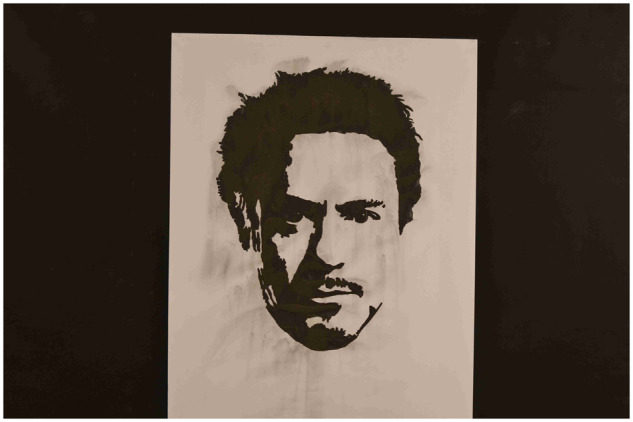
“processed and integrated information, such as the famous Jennifer Aniston neuron (Quiroga et al. 2005), only encode a single firing rate that cannot represent anything more than a tiny fraction of the information present in conscious percept.”
BackgroundFacing up to the problem of consciousness
Chalmers, D. J. (1996) · Toward a Science of Consciousness · doi:10.7551/mitpress/6860.003.0003 · Cited by 1,966
Transcranial magnetic stimulation and the human brain
Hallett, M. (2000) · Nature · doi:10.1038/35018000 · Cited by 1,603 · cited 2×
“…and 2002 (McFadden 2002a,b), but included evidence that transcranial magnetic stimulation (TMS), which generate EM fields in the brain of similar magnitude to the brain’s endogenous EM fields can influence behaviour (Beckers and Hömberg 1992; Amassian et al. 1998; Hallett 2000; McFadden 2002a).”
Background
Research works printed but not linked: 8
- Davidson C. Creatures from primordial silicon - let Darwinism loose in an electronics lab and just watch what it creates. A lean, mean machine that nobody understands. New Sci 1997; 156: 30– 4.
- Dunbar R, Gamble C, Gowlett J. The Social Brain and its Distributed Mind. In: Social Brain, Distributed Mind. Oxford: Oxford University Press, p. 3–57, 2010.
- Genesereth MR, Keller AM, Duschka OM. Infomaster: An Information Integration System. ACM SIGMOD Record. ACM, 1997, 539– 42.
- James W. Manuscript Lectures. Boston: Harvard University Press, 1988.
- Lieberman MD. What zombies can’t do: a social cognitive neuroscience approach to the irreducibility of reflective consciousness. 2012. Two Minds: Dual Processes and beyond. Oxford Scholarship Online, doi: 10.1093/acprof:oso/978199230167.003.0013. · doi:10.1093/acprof:oso/978199230167.003.0013
- Marcus G. Deep learning: a critical appraisal. arXiv preprint arXiv: 180100631, 2018.
- McFadden J. Quantum Evolution. London: HarperCollins, 2000.
- Thompson A. Silicon evolution. In: Koza JR, et al (eds) Proceedings of Genetic Programming. Cambridge: MIT Press, 1996, 444– 52.
Cited by
Seth, A. K., & Bayne, T. (2022) · Nature Reviews Neuroscience · doi:10.1038/s41583-022-00587-4 · Cited by 880
Predictive processing as a systematic basis for identifying the neural correlates of consciousness
Hohwy, J., & Seth, A. (2020) · Philosophy and the Mind Sciences · doi:10.33735/phimisci.2020.ii.64 · Cited by 170
A landscape of consciousness: Toward a taxonomy of explanations and implications
Kuhn, R. L. (2024) · Progress in Biophysics and Molecular Biology · doi:10.1016/j.pbiomolbio.2023.12.003 · Cited by 135
Biomolecular Basis of Cellular Consciousness via Subcellular Nanobrains
Baluška, F., Miller, W. B., & Reber, A. S. (2021) · International Journal of Molecular Sciences · doi:10.3390/ijms22052545 · Cited by 99
Minimal physicalism as a scale-free substrate for cognition and consciousness
Fields, C., Glazebrook, J. F., & Levin, M. (2021) · Neuroscience of Consciousness · doi:10.1093/nc/niab013 · Cited by 90
Conscious artificial intelligence and biological naturalism
Seth, A. K. (2026) · Behavioral and Brain Sciences · doi:10.1017/s0140525x25000032 · Cited by 87
In vivo ephaptic coupling allows memory network formation
Pinotsis, D. A., & Miller, E. K. (2023) · Cerebral Cortex · doi:10.1093/cercor/bhad251 · Cited by 62
“…and other authors have taken the importance of ephaptic coupling one step further: they have linked it to conscious awareness and hypothesized that it can be used for computation that occurs momentarily and is distributed over space (Pockett 2000; John 2005; Fingelkurts et al. 2012; McFadden 2020).”
Cytoelectric coupling: Electric fields sculpt neural activity and “tune” the brain’s infrastructure
Pinotsis, D. A., Fridman, G., & Miller, E. K. (2023) · Progress in Neurobiology · doi:10.1016/j.pneurobio.2023.102465 · Cited by 58
What Neuroscientists Think, and Don’t Think, About Consciousness
Kitchener, P. D., & Hales, C. G. (2022) · Frontiers in Human Neuroscience · doi:10.3389/fnhum.2022.767612 · Cited by 59
Hales, C. G., & Ericson, M. (2022) · Frontiers in Human Neuroscience · doi:10.3389/fnhum.2022.836046 · Cited by 53
Baluška, F., & Reber, A. S. (2021) · BioEssays · doi:10.1002/bies.202100121 · Cited by 50
Electromagnetic-field theories of qualia: can they improve upon standard neuroscience?
Jones, M. W., & Hunt, T. (2023) · Frontiers in Psychology · doi:10.3389/fpsyg.2023.1015967 · Cited by 48
Can a Holistic View Facilitate the Development of Intelligent Traditional Chinese Medicine? A Survey
Tian, G., Qian, K., Li, X., Sun, M., Jiang, H., Qiu, W., Xie, X., Zhao, Z., Huang, L., Luo, S., et al. (2023) · IEEE Transactions on Computational Social Systems · doi:10.1109/tcss.2023.3252879 · Cited by 44
Paul Mocombe, C. (2021) · Archives in Neurology & Neuroscience · doi:10.33552/ann.2020.09.000718 · Cited by 37
Baluška, F., Miller, W. B., & Reber, A. S. (2023) · The MIT Press eBooks · doi:10.7551/mitpress/14642.003.0006 · Cited by 36
Does brain activity cause consciousness? A thought experiment
Gidon, A., Aru, J., & Larkum, M. E. (2022) · PLoS Biology · doi:10.1371/journal.pbio.3001651 · Cited by 32
Keppler, J. (2021) · Frontiers in Human Neuroscience · doi:10.3389/fnhum.2021.723415 · Cited by 32
Fallon, F. T., & Blackmon, J. C. (2021) · Entropy · doi:10.3390/e23080942 · Cited by 30
McFadden, J. (2023) · Frontiers in Human Neuroscience · doi:10.3389/fnhum.2022.1024934 · Cited by 27
“There are sound theoretical grounds (McFadden J., 2002) and abundant experimental evidence that neural firing rates are indeed influenced by the brain’s endogenous EM field [summarized in my recent paper (McFadden, 2020)].”
BackgroundInfluentialSelf-citationConsciousness and inward electromagnetic field interactions
MacIver, M. B. (2022) · Frontiers in Human Neuroscience · doi:10.3389/fnhum.2022.1032339 · Cited by 28
Ward, L. M., & Erra, R. G. (2022) · Frontiers in Human Neuroscience · doi:10.3389/fnhum.2022.874241 · Cited by 26
Toward a holographic brain paradigm: a lipid-centric model of brain functioning
Cavaglià, M., Deriu, M. A., & Tuszyński, J. A. (2023) · Frontiers in Neuroscience · doi:10.3389/fnins.2023.1302519 · Cited by 25
Neural Circuits, Microtubule Processing, Brain’s Electromagnetic Field—Components of Self-Awareness
Różyk-Myrta, A., Brodziak, A., & Muc‐Wierzgoń, M. (2021) · Brain Sciences · doi:10.3390/brainsci11080984 · Cited by 24
Bioelectric Fields at the Beginnings of Life
Nunn, A. V. W., Guy, G. W., & Bell, J. D. (2022) · Bioelectricity · doi:10.1089/bioe.2022.0012 · Cited by 22
Bartlett, G. C. (2022) · Neuroscience of Consciousness · doi:10.1093/nc/niac015 · Cited by 22
A Traditional Scientific Perspective on the Integrated Information Theory of Consciousness
Mallatt, J. M. (2021) · Entropy · doi:10.3390/e23060650 · Cited by 20
Bond, E. (2023) · Frontiers in Human Neuroscience · doi:10.3389/fnhum.2022.1020105 · Cited by 19
Skokowski, P. G. (2022) · Frontiers in Systems Neuroscience · doi:10.3389/fnsys.2022.795405 · Cited by 18
Toward the unknown: consciousness and pain
Ambron, R. T. (2023) · Neuroscience of Consciousness · doi:10.1093/nc/niad002 · Cited by 17
A quantum–classical model of brain dynamics
Sergi, A., Messina, A., Vicario, C. M., & Martino, G. (2023) · Entropy · doi:10.3390/e25040592 · Cited by 16
“Hence, we think that quantum processes in the brain can be studied from the perspective of quantum biology [3, 120] with a somewhat less controversial approach.”
BackgroundIntegrative Neuroscience Group AUS, & Poznanski, R. R. (2022) · Journal of Multiscale Neuroscience · doi:10.56280/1531676942 · Cited by 16
Winters, J. J. (2021) · Frontiers in Human Neuroscience · doi:10.3389/fnhum.2021.768459 · Cited by 15
Quantum Models of Consciousness from a Quantum Information Science Perspective
Gassab, L., Pusuluk, O., Cattaneo, M., & Müstecaplıoğlu, Ö. E. (2025) · Entropy · doi:10.3390/e27030243 · Cited by 14
“In another update [78–80], it has been proposed that spatially distributed information can only be integrated through energetic fields, such as the EM field.”
Thermosensitive double-membrane neurons and their network dynamics
Jia, J., Xie, Y., Wang, C.-Y., & Ma, J. (2024) · Physica Scripta · doi:10.1088/1402-4896/ad86f6 · Cited by 14
Keppler, J. (2024) · Frontiers in Human Neuroscience · doi:10.3389/fnhum.2024.1379191 · Cited by 17
Initial results of the Digital Consciousness ModelPreprint
Shiller, D., Duffy, L., Morán, A. M., Moret, A., Percy, C., & Clatterbuck, H. (2026) · arXiv (Cornell University) · doi:10.48550/arxiv.2601.17060 · Cited by 14
McFadden, J. (2021) · NeuroSci · doi:10.3390/neurosci2030021 · Cited by 13
“Updates on the cemi field theory were published in 2006 [26], 2013 [27,28] and 2020 [29].”
BackgroundSelf-citationPanpsychism and dualism in the science of consciousness
Yurchenko, S. B. (2024) · Neuroscience & Biobehavioral Reviews · doi:10.1016/j.neubiorev.2024.105845 · Cited by 13
Gómez-Emilsson, A., & Percy, C. (2023) · Frontiers in Human Neuroscience · doi:10.3389/fnhum.2023.1233119 · Cited by 14
Simultaneity of consciousness with physical reality: the key that unlocks the mind-matter problem
Sanfey, J. (2023) · Frontiers in Psychology · doi:10.3389/fpsyg.2023.1173653 · Cited by 13
Mocombe, P. C. (2020) · Progress in Medical Sciences · doi:10.47363/pms/2020(4)123 · Cited by 13
Integrative, segregative, and degenerate harmonics of the structural connectome
Sipes, B. S., Nagarajan, S. S., & Raj, A. (2024) · Communications Biology · doi:10.1038/s42003-024-06669-6 · Cited by 12
Erboz, A., Kesekler, E., Gentili, P. L., Uversky, V. N., & Coskuner‐Weber, O. (2024) · Progress in Biophysics and Molecular Biology · doi:10.1016/j.pbiomolbio.2024.12.004 · Cited by 12
When philosophical nuance matters: safeguarding consciousness research from restrictive assumptions
Usher, M., Negro, N., Jacobson, H., & Tsuchiya, N. (2023) · Frontiers in Psychology · doi:10.3389/fpsyg.2023.1306023 · Cited by 11
McFadden, J. (2023) · Entropy · doi:10.3390/e25121635 · Cited by 12
Self-citationTo Make a Mind—A Primer on Conscious Robots
Navon, M. (2024) · Theology and Science · doi:10.1080/14746700.2023.2294530 · Cited by 11
On the origins and evolution of qualia: An experience-space perspective
Lacalli, T. (2022) · Frontiers in Systems Neuroscience · doi:10.3389/fnsys.2022.945722 · Cited by 9
Unifying matter, energy and consciousness
Samarawickrama, M. (2023) · AIP conference proceedings · doi:10.1063/5.0162815 · Cited by 9
The hidden structure of consciousness
Forti, B. (2024) · Frontiers in Psychology · doi:10.3389/fpsyg.2024.1344033 · Cited by 9
The Energy of Energy Psychology
Feinstein, D. L. (2022) · OBM Integrative and Complementary Medicine · doi:10.21926/obm.icm.2202015 · Cited by 9
Hu, B., Qian, K., Dong, Q., Luo, Y., Yamamoto, Y., & Schuller, B. W. (2022) · IEEE Transactions on Computational Social Systems · doi:10.1109/tcss.2022.3204144 · Cited by 9
Geesink, H. J. H., & Schmieke, M. (2022) · Journal of Modern Physics · doi:10.4236/jmp.2022.1312095 · Cited by 9
Mathematical Modeling of Consciousness for Unifying Causation, Relativity and Quantum Mechanics
Samarawickrama, M. (2024) · Journal of Physics Conference Series · doi:10.1088/1742-6596/2701/1/012051 · Cited by 8
Ambron, R. T. (2024) · Frontiers in Human Neuroscience · doi:10.3389/fnhum.2024.1462211 · Cited by 9
Brains and where else? Mapping theories of consciousness to unconventional embodiments
Rouleau, N., & Levin, M. G. (2026) · Philosophical Transactions of the Royal Society A Mathematical Physical and Engineering Sciences · doi:10.1098/rsta.2025.0082 · Cited by 8
Coherence Field Theory: Quantum Coherence as the Basis for a Model of Brain Function
Bond, E. (2022) · Journal of Quantum Information Science · doi:10.4236/jqis.2022.123007 · Cited by 8
A Transmissive Theory of Brain Function: Implications for Health, Disease, and Consciousness
Rouleau, N., & Cimino, N. (2022) · NeuroSci · doi:10.3390/neurosci3030032 · Cited by 8
Brodziak, A., Abram, D., & Różyk-Myrta, A. (2023) · Qeios · doi:10.32388/bu24pq · Cited by 8
Strupp, W. (2024) · Frontiers in Neurology · doi:10.3389/fneur.2024.1420676 · Cited by 7
Jerath, R., & Beveridge, C. (2024) · Frontiers in Human Neuroscience · doi:10.3389/fnhum.2024.1520138 · Cited by 7
EMI model: A scale free biophysical framework for human consciousness, cognition and behaviour
Firaux, T., Tuszyński, J. A., & Cavaglià, M. (2025) · Biosystems · doi:10.1016/j.biosystems.2025.105674 · Cited by 7
Emergence of information processing in biological systems and the origin of life
Thangamani, A., & Arumuganainar, D. (2024) · Communicative & Integrative Biology · doi:10.1080/19420889.2024.2373301 · Cited by 6
Dualism, Materialism, and the relationship between the brain and the mind in experiencing pain
Ambron, R. T. (2024) · Neuroscience · doi:10.1016/j.neuroscience.2024.10.017 · Cited by 6
Aliberti, S. M., Capunzo, M., & Funk, R. H. W. (2025) · International Journal of Molecular Sciences · doi:10.3390/ijms26167887 · Cited by 6
Consciousness and Energy Processing in Neural Systems
Pepperell, R. (2024) · Brain Sciences · doi:10.3390/brainsci14111112 · Cited by 7
Brainwave Phase Stability: Predictive Modeling of Irrational Decision
Shan, Z.-H. (2022) · Frontiers in Psychology · doi:10.3389/fpsyg.2022.617051 · Cited by 6
Electromagnetic Field Theories of Consciousness: Opportunities and Obstacles
Hunt, T., Schooler, J., McFadden, J., Delorme, A., Hales, C. G., Jones, M., & Ericson, M. (2024) · Frontiers research topics · doi:10.3389/978-2-8325-4596-6 · Cited by 5
Evolutionary origins of synchronization for integrating information in neurons
Shibata, T., Hattori, N., Nishijo, H., Takahashi, T., Higuchi, Y., Kuroda, S., & Takakusaki, K. (2025) · Frontiers in Cellular Neuroscience · doi:10.3389/fncel.2024.1525816 · Cited by 5
McFadden, J. (2025) · Frontiers in Systems Neuroscience · doi:10.3389/fnsys.2025.1599406 · Cited by 7
Self-citationCavaglià, M., & Tuszyński, J. A. (2025) · Biosystems · doi:10.1016/j.biosystems.2025.105669 · Cited by 5
Mind-Brain Dynamics in the Pathophysiology of Psychiatric Disorders
Binder, M. R. (2022) · American Journal of Psychiatry and Neuroscience · doi:10.11648/j.ajpn.20221002.11 · Cited by 5
Integrative Theoretical Framework of Consciousness: Towards a Higher-Order Theory
Camelo, L. G. (2023) · Psychology · doi:10.4236/psych.2023.144028 · Cited by 5
Forti, B. (2024) · Frontiers in Psychology · doi:10.3389/fpsyg.2024.1329259 · Cited by 5
Consciousness and its hard problems: Separating the ontological from the evolutionary.
Lacalli, T. (2023) · Frontiers in Psychology · doi:10.3389/fpsyg.2023.1196576 · Cited by 4
“What this input might be is a matter of conjecture, but most proponents of neurophysical theories assume it involves as yet inadequately understood electromagnetic field effects (McFadden, 2020; Hales and Ericson, 2022; Kitchener and Hales, 2022), though something more exotic, perhaps at the quantum level, could also…”
BackgroundWhat is consciousness and what it is for. An introduction to extended information theory
Forti, B. (2025) · Frontiers in Psychology · doi:10.3389/fpsyg.2025.1627289 · Cited by 4
The phenomenal binding problem for neural networks
Percy, C., & Agarwal, G. (2026) · Consciousness and Cognition · doi:10.1016/j.concog.2026.104003 · Cited by 5
Experiencing pain: electromagnetic waves, consciousness, and the mind
Ambron, R. T. (2025) · Frontiers in Human Neuroscience · doi:10.3389/fnhum.2025.1568019 · Cited by 4
Rosmawati, A., Abunimye, P. I., & Obuchi, S. M. (2024) · Journal of Social Knowledge Education (JSKE) · doi:10.37251/jske.v5i1.890 · Cited by 4
A Framework for Studying ConsciousnessPreprint
Horne, J. (2024) · SSRN Electronic Journal · doi:10.2139/ssrn.4723582 · Cited by 4
Conscious artificial intelligence and biological naturalism
Seth, A. (2025) · doi:10.31234/osf.io/tz6an_v2 · Cited by 3
Temporal heterogeneity in cognitive architectures
Sandoval-Arrayga, C. J., Ramirez, G. P., & Ramos, F. (2024) · Cognitive Systems Research · doi:10.1016/j.cogsys.2024.101265 · Cited by 3
The Sociology of Phenomenological Structuralism
Mocombe, P. C. (2021) · Journal of Advances in Education and Philosophy · doi:10.36348/jaep.2021.v05i02.001 · Cited by 3
Essentials of a Theory for How Brain Structure Contributes to the Substance of Consciousness
Bond, E. (2022) · World Journal of Neuroscience · doi:10.4236/wjns.2022.121002 · Cited by 3
ПРОБЛЕМА АВТОРСТВА ПРИ ИСПОЛЬЗОВАНИИ СИСТЕМ ИСКУССТВЕННОГО ИНТЕЛЛЕКТА ДЛЯ СОЗДАНИЯ РИД
ЧЕРНОУСОВ, Д. А. (2023) · Труды по Интеллектуальной Собственности · doi:10.17323/tis.2023.18222 · Cited by 3
Ephaptic coupling and power fluctuations in depression
Pinotsis, D. A., Alagapan, S., Sarikhani, P., Nauvel, T., Rozell, C. J., & Mayberg, H. S. (2026) · Cerebral Cortex · doi:10.1093/cercor/bhag019 · Cited by 2
Ukachoke, C. (2024) · PhilPapers (PhilPapers Foundation) · doi:10.5281/zenodo.18996382 · Cited by 2
From neural propagation to conscious experience: A geometro-diffusion theory of consciousness
Estrada, E. (2026) · Journal of Theoretical Biology · doi:10.1016/j.jtbi.2026.112610 · Cited by 4
Four false dichotomies in the study of teleology
McShea, D. W., & Babcock, G. (2024) · Ratio · doi:10.1111/rati.12422 · Cited by 2
Eudemonia of a machine: On conscious artificial servants
Navon, M. (2024) · AI and Ethics · doi:10.1007/s43681-024-00553-z · Cited by 2
Un approccio interdisciplinare allo studio della coscienza
Fulco, G. (2022) · RICERCA PSICOANALITICA · doi:10.4081/rp.2022.720 · Cited by 2
Johnstone, C., & Alegaonkar, P. S. (2024) · Journal of Artificial Intelligence and Consciousness · doi:10.1142/s2705078524300019 · Cited by 2
Parkins, E. J. (2025) · Routledge eBooks · doi:10.4324/9781032650821 · Cited by 2
Kesserwani, H. N. (2020) · Cureus · doi:10.7759/cureus.12139 · Cited by 2
Acheloios, Thales, and the Origin of Philosophy
Molinari, N. J. (2022) · Archaeopress Archaeology eBooks · doi:10.32028/9781803270869 · Cited by 2
The conception of consciousness from Metaphysics to Quantum Biology: Critical review
Riccardi, B. (2022) · World Journal of Advanced Research and Reviews · doi:10.30574/wjarr.2022.15.3.0943 · Cited by 2
Adeyanju, E. O., Onyenania, G. O., Abimbola, O. A., & Oluwayemisi, A. A. (2022) · Research Journal of Library and Information Science · doi:10.22259/2637-5915.0601001 · Cited by 2
Research Article: Research Article: The Ontology of The Absolute Vacuum
(2022) · Clinical Research and Clinical Reports · doi:10.31579/2835-8325/006 · Cited by 2
Brodziak, A., & Romaniuk, F. (2023) · Qeios · doi:10.32388/82vrpg · Cited by 2
Metadata
- Authors
- McFadden, J.
- Affiliations
- University of Surrey (GB)
- Corresponding author
- McFadden, Johnjoe
- ORCID
- McFadden, Johnjoe
- Venue
- Neuroscience of Consciousness
- Publisher
- Oxford University Press (OUP)
- Published
- 2020-01-01
- Volume
- 2020
- Issue
- 1
- Pages
- niaa016-niaa016
- ISSN
- 2057-2107 (ISSN-L)
- PMC
- PMC7507405
- OpenAlex
- W3089013258
- Cited by
- 148
- References
- 82
- Citations by year
- 2026: 22 · 2025: 12 · 2024: 27 · 2023: 31 · 2022: 33 · 2021: 20 · 2020: 3
- FWCI
- 21.03
- Type
- journal article
- Language
- en
- Open access
- gold
- doi.org
- Locations
- Neuroscience of Consciousness (publishedVersion, cc-by)
- PubMed Central (publishedVersion, cc-by)
- PubMed (publishedVersion)
- Funders
- John Jacob Astor Charitable Trust
- Topics
- Social Sciences › Arts and Humanities › Philosophy › Philosophy and Theoretical Science
- Health Sciences › Medicine › Complementary and alternative medicine › Biofield Effects and Biophysics
- Life Sciences › Neuroscience › Cognitive Neuroscience › Neural dynamics and brain function
- Keywords
- consciousness, integrated information, energy field, artificial consciousness, neural information processing
About these checks
Registry, retraction, Cites and statistics results are computed, not judged, with one exception: a printed reference that no index lists is read once by a model before it counts as a citation error. Claims are extracted by a model and kept only when their quote appears verbatim in the text; each cited source is then checked, with a model’s help, for whether it says what the claim relies on. Those verdicts can be wrong — read the claim’s quote and the cited source before relying on one.
Statistics and arithmetic are recomputed, not judged.
Confidence bands are shown only for fields calibrated on our annotated test set. None is calibrated yet, so no band is shown.
What counts as a claim ›How we measure confidence ›How we check this ›
Are you an author, or do you see a problem with this page? Request a review
Data sources
Bibliographic data: Semantic Scholar, OpenAlex, Crossref.
Contains information from the Semantic Scholar Academic Graph Datasets, made available under the ODC Attribution License (ODC-BY 1.0).
Semantic Scholar’s data is described in: Kinney, R., et al. (2023). The Semantic Scholar Open Data Platform. arXiv:2301.10140.
