

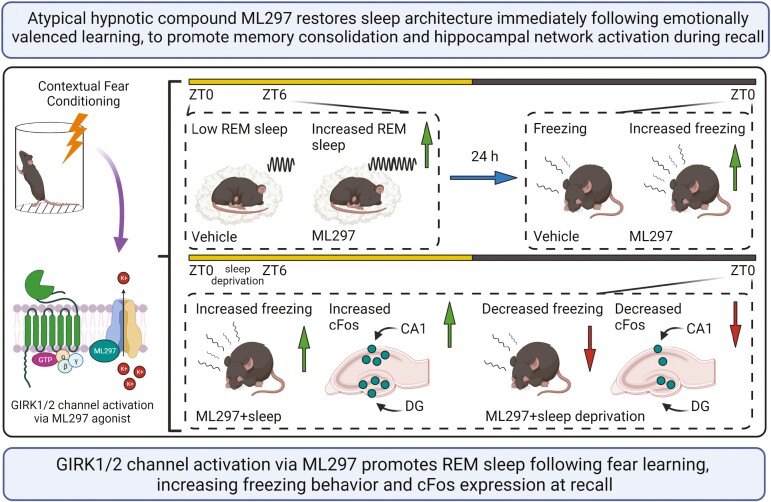
Atypical hypnotic compound ML297 restores sleep architecture immediately following emotionally valenced learning, to promote memory consolidation and hippocampal network activation during recall
Open accessThe DOI matches its Crossref record; 77 of the 77 references it cites were found in a registry or an index.
Abstract
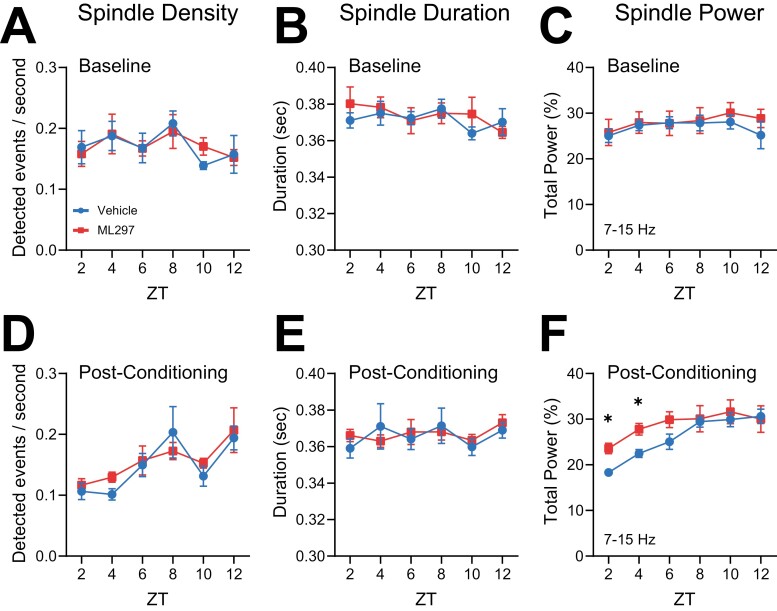
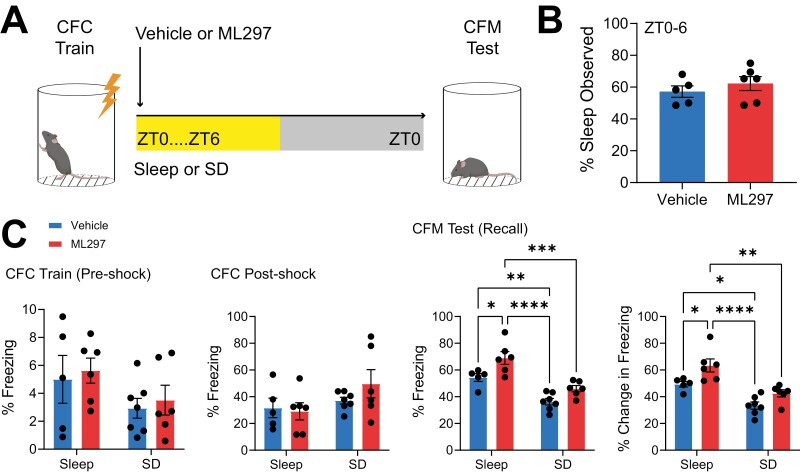
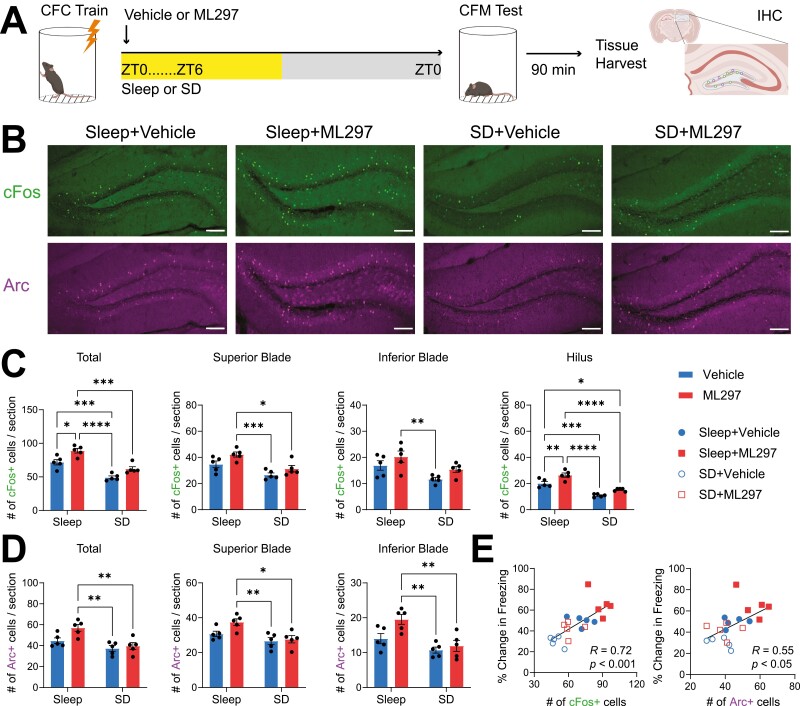
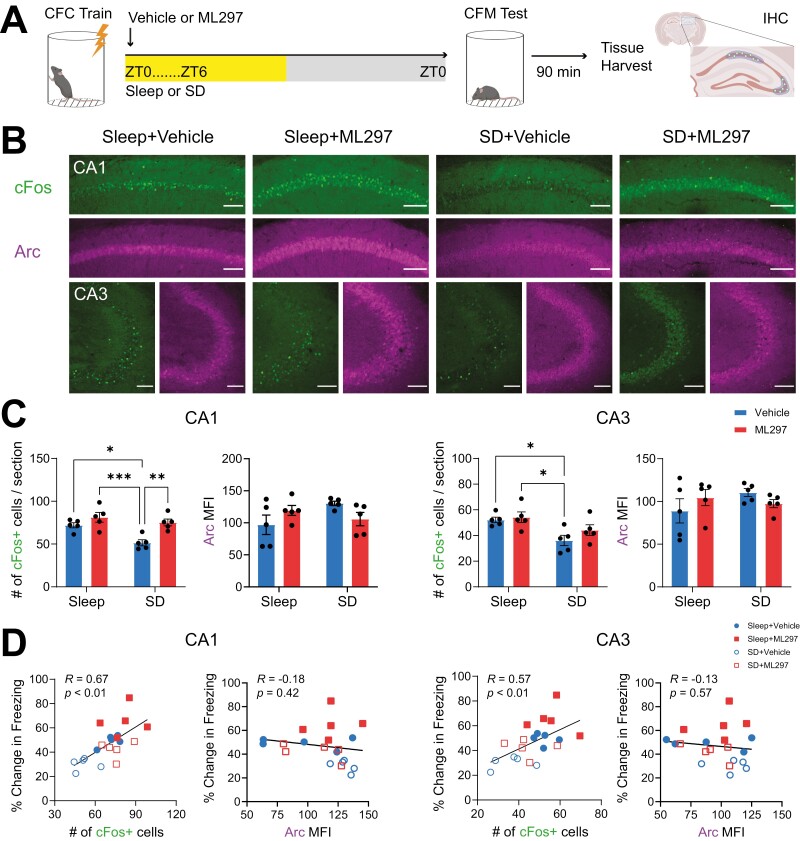
Sleep plays a critical role in consolidating many forms of hippocampus-dependent memory. While various classes of hypnotic drugs have been developed in recent years, it remains unknown whether, or how, some of them affect sleep-dependent memory consolidation mechanisms. We find that ML297, a recently developed candidate hypnotic agent targeting a new mechanism (activating GIRK1/2-subunit containing G-protein coupled inwardly rectifying potassium [GIRK] channels), alters sleep architecture in mice over the first 6 hr following a single-trial learning event. Following contextual fear conditioning (CFC), ML297 reversed post-CFC reductions in NREM sleep spindle power and REM sleep amounts and architecture, renormalizing sleep features to what was observed at baseline, prior to CFC. Renormalization of post-CFC REM sleep latency, REM sleep amounts, and NREM spindle power were all associated with improved contextual fear memory (CFM) consolidation. We find that improvements in CFM consolidation due to ML297 are sleep-dependent, and are associated with increased numbers of highly activated dentate gyrus (DG), CA1, and CA3 neurons during CFM recall. Together our findings suggest that GIRK1/2 channel activation restores normal sleep architecture— including REM sleep, which is normally suppressed following CFC—and increases the number of hippocampal neurons incorporated into the CFM engram during memory consolidation.
Overview
The claims and statistics of this paper haven’t been checked yet.
Free: it reads the open-access text and checks the first 5 claims that cite a source we can check. Create a free account to check every claim.
Integrity signals
Registry
Cites
Statistics
Figures
Verification
Claims the paper makes
The claims and statistics of this paper haven’t been checked yet.
Free: it reads the open-access text and checks the first 5 claims that cite a source we can check. Create a free account to check every claim.
Claims other papers make about this one
Each is checked against this paper’s own text: does it say what the citing paper says it does?
The source backs part of the claim, not all of it — or backs it for a different population, condition or comparison.
In the citing paper
“ML297 increases non–rapid eye movement (NREM) time, reduces wakefulness, and mimics GABA_B-linked sleep regulation, while brain-biased GIRK modulators similarly promote NREM in rodent models [305,320].”
From Synaptic Plasticity—Intrinsic Excitability and Antidepressant Discovery (2026) · cites this paper as [320]
Experimental — accuracy not yet measured
Self-check
Percentages, sums and reported differences re-computed from the paper’s own numbers.
The self-check needs the paper’s full text.
Citations
Cites
Rasch, B., & Born, J. (2013) · Physiological Reviews · doi:10.1152/physrev.00032.2012 · Cited by 2,783 · cited 2×
“It is worth noting that both spindle-rich NREM sleep (such as that present at the transition to REM) and REM sleep have been linked to memory storage, across species - from humans to rodent models [1, 68, 69].”
Optogenetic stimulation of a hippocampal engram activates fear memory recall
Liu, X., Ramirez, S., Pang, P. T., Puryear, C. B., Govindarajan, A., Deisseroth, K., & Tonegawa, S. (2012) · Nature · doi:10.1038/nature11028 · Cited by 1,674 · cited 1×
“Neuronal immediate early gene (IEG) expression increases among DG granule cells during both initial learning and memory retrieval, and granule cell activation plays a causal role in recall [67].”
Mechanisms of systems memory consolidation during sleep
Klinzing, J. G., Niethard, N., & Born, J. (2019) · Nature Neuroscience · doi:10.1038/s41593-019-0467-3 · Cited by 1,176
Lüscher, C., Jan, L. Y., Stoffel, M., Malenka, R. C., & Nicoll, R. A. (1997) · Neuron · doi:10.1016/s0896-6273(00)80381-5 · Cited by 758 · cited 2×
“In vitro studies have shown that in the hippocampus (e.g. CA1) GIRK channel activation induces hyperpolarization, reduces neuronal excitability, and suppresses LTP [49, 50, 53].”
Causal evidence for the role of REM sleep theta rhythm in contextual memory consolidation
Boyce, R., Glasgow, S. D., Williams, S., & Adamantidis, A. (2016) · Science · doi:10.1126/science.aad5252 · Cited by 696 · cited 1×
“Our present data suggest that REM is at least equally vital for CFM, and support a growing body of data indicating that REM-specific features of post-learning hippocampal activity [18, 28] and gene expression [72–74] are essential for the consolidation process.”
A deficit in the ability to form new human memories without sleep
Yoo, S.-S., Hu, P. T., Gujar, N., Jolesz, F. A., & Walker, M. P. (2007) · Nature Neuroscience · doi:10.1038/nn1851 · Cited by 597 · cited 1×
“…given an adequate opportunity for recovery sleep between SD and recall (i.e. 18 hr from ZT6 to ZT0 the following day), we believe that this alteration is due to a long-term change in the strength of the memory trace itself, rather than an acute effect of SD on hippocampal activation [11, 12, 75].”
Latchoumane, C.-F. V., Ngo, H.-V. V., Born, J., & Shin, H.-S. (2017) · Neuron · doi:10.1016/j.neuron.2017.06.025 · Cited by 561 · cited 1×
“Spindles are: (1) inversely related to NREM delta power [ [21, 64], and (3) critical for transitions between NREM and REM sleep [65, 66].”
Sleep-dependent memory consolidation and reconsolidation
Stickgold, R., & Walker, M. P. (2007) · Sleep Medicine · doi:10.1016/j.sleep.2007.03.011 · Cited by 530 · cited 1×
“It is worth noting that both spindle-rich NREM sleep (such as that present at the transition to REM) and REM sleep have been linked to memory storage, across species - from humans to rodent models [1, 68, 69].”
Roozendaal, B., Okuda, S., Van der Zee, E. A., & McGaugh, J. L. (2006) · Proceedings of the National Academy of Sciences · doi:10.1073/pnas.0601874103 · Cited by 499 · cited 1×
“This method of SD was chosen based on prior work showing that stress response (e.g. glucocorticoid production) evoked by gentle handling SD is not sufficient to disrupt consolidation of fear memory (and in fact may enhance consolidation) [57–59].”
Sleep deprivation selectively impairs memory consolidation for contextual fear conditioning
Graves, L. A., Heller, E. A., Pack, A. I., & Abel, T. (2003) · Learning & Memory · doi:10.1101/lm.48803 · Cited by 476 · cited 1×
“First, the ML297-induced changes in sleep architecture that are correlated with successful CFM consolidation occur almost exclusively within a window of time (i.e. the first 6 hr after CFC) where SD is sufficient to disrupt the consolidation process [6, 16–18].”
Sleep deprivation impairs cAMP signalling in the hippocampus
Vecsey, C. G., Baillie, G. S., Jaganath, D., Havekes, R., Daniels, A., Wimmer, M., Huang, T., Brown, K. M., Li, X.-Y., Descalzi, G., et al. (2009) · Nature · doi:10.1038/nature08488 · Cited by 454
Signorini, S., Liao, Y. J., Duncan, S. A., Jan, L. Y., & Stoffel, M. (1997) · Proceedings of the National Academy of Sciences · doi:10.1073/pnas.94.3.923 · Cited by 343 · cited 2×
“In vitro studies have shown that in the hippocampus (e.g. CA1) GIRK channel activation induces hyperpolarization, reduces neuronal excitability, and suppresses LTP [49, 50, 53].”
The Critical Role of Sleep Spindles in Hippocampal-Dependent Memory: A Pharmacology Study
Mednick, S. C., McDevitt, E. A., Walsh, J. K., Wamsley, E., Paulus, M., Kanady, J. C., & Drummond, S. P. A. (2013) · The Journal of Neuroscience · doi:10.1523/jneurosci.3127-12.2013 · Cited by 317 · cited 1×
“NREM spindles have received a great deal of recent study due to their linkage to sleep-related improvements on a range of mnemonic tasks, and to sleep-dependent synaptic plasticity in neocortex [3, 21, 33, 55, 70, 71].”
Carter, L. P., Pardi, D., Gorsline, J., & Griffiths, R. R. (2009) · Drug and Alcohol Dependence · doi:10.1016/j.drugalcdep.2009.04.012 · Cited by 281 · cited 1×
“These drugs, while effective at promoting NREM sleep, can have unwanted side effects, including over-sedation, electroencephalogram (EEG) anomalies including aberrant oscillations, and memory deficits [29, 30, 34, 36–39].”
Sleep-wake cycles drive daily dynamics of synaptic phosphorylation
Brüning, F., Noya, S. B., Bange, T., Koutsouli, S., Rudolph, J. D., Tyagarajan, S. K., Cox, J., Mann, M., Brown, S. A., & Robles, M. S. (2019) · Science · doi:10.1126/science.aav3617 · Cited by 266
The forebrain synaptic transcriptome is organized by clocks but its proteome is driven by sleep
Noya, S. B., Colameo, D., Brüning, F., Spinnler, A., Mircsof, D., Opitz, L., Mann, M., Tyagarajan, S. K., Robles, M. S., & Brown, S. A. (2019) · Science · doi:10.1126/science.aav2642 · Cited by 250
Ognjanovski, N., Schaeffer, S., Wu, J., Mofakham, S., Maruyama, D., Zochowski, M., & Aton, S. J. (2017) · Nature Communications · doi:10.1038/ncomms15039 · Cited by 229 · cited 4×
“EEG/EMG signals (0.5–300 Hz) were amplified at 20 × , digitized, further digitally amplified at 20–100 × , and continuously recorded (with a 60-Hz notch filter) using Plexon Omniplex software and hardware (Plexon Inc.) as previously described [18, 19, 54, 55].”
InfluentialSelf-citationEffects of sleep on memory for conditioned fear and fear extinction.
Pace-Schott, E. F., Germain, A., & Milad, M. R. (2015) · Psychological Bulletin · doi:10.1037/bul0000014 · Cited by 218
Inanobe, A., Yoshimoto, Y., Horio, Y., Morishige, K.-I., Hibino, H., Matsumoto, S., Tokunaga, Y., Maeda, T., Hata, Y., Takai, Y., et al. (1999) · The Journal of Neuroscience · doi:10.1523/jneurosci.19-03-01006.1999 · Cited by 207 · cited 1×
“…K ir 3.1–3.4), with homo-or hetero-tetrameric compositions that are specific to organs, brain regions, and cell types (e.g. GIRK1/2 channels are selectively expressed in hippocampal neurons, GIRK1/4 channels are present in cardiac myocytes, and GIRK2/3 channels are present in the midbrain) [43–48].”
InfluentialXia, F., Richards, B. A., Tran, M. M., Josselyn, S. A., Takehara-Nishiuchi, K., & Frankland, P. W. (2017) · eLife · doi:10.7554/elife.27868 · Cited by 206 · cited 4×
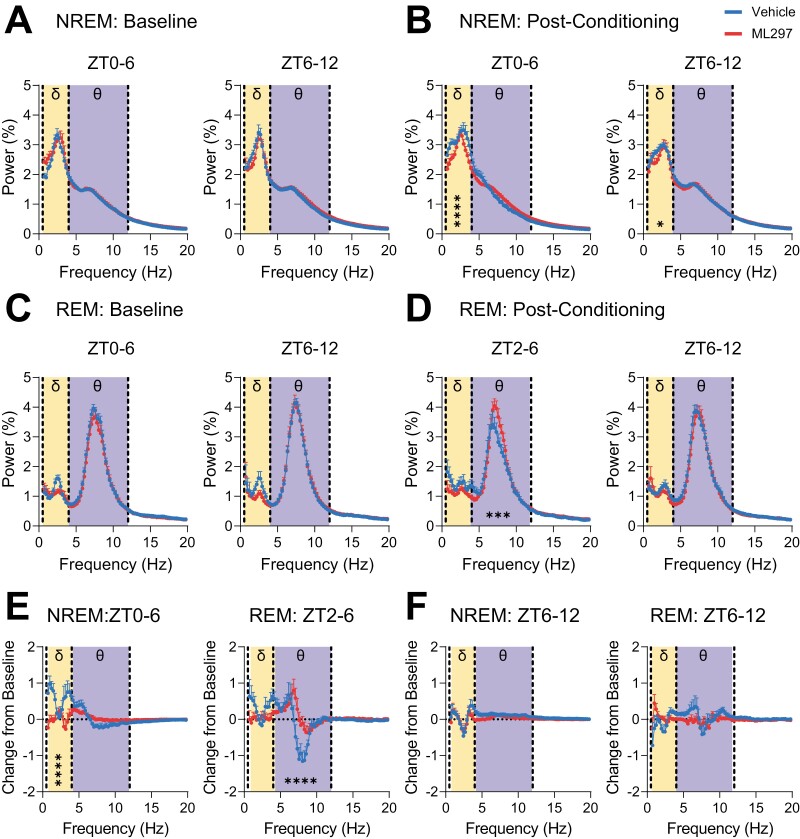
“Because these EEG oscillatory changes are similar to those known to be associated with successful sleep-dependent CFM consolidation [18, 19, 21], they are consistent with state-dependent hippocampal oscillations serving as a potential driver of memory enhancement by ML297 [3, 4].”
InfluentialRamelteon for the treatment of insomnia in adults: a systematic review and meta-analysis
Kuriyama, A., Honda, M., & Hayashino, Y. (2014) · Sleep Medicine · doi:10.1016/j.sleep.2013.11.788 · Cited by 198 · cited 1×
“Recent work has aimed to develop new classes of hypnotic drugs, including orexin receptor antagonists, melatonin receptor agonists, and most recently, activators of G-protein inward rectifying potassium (GIRK) channels [40–42].”
Form and function of sleep spindles across the lifespan
Clawson, B. C., Durkin, J., & Aton, S. J. (2016) · Neural Plasticity · doi:10.1155/2016/6936381 · Cited by 178 · cited 1×
“NREM spindles have received a great deal of recent study due to their linkage to sleep-related improvements on a range of mnemonic tasks, and to sleep-dependent synaptic plasticity in neocortex [3, 21, 33, 55, 70, 71].”
Self-citationStress-induced changes in sleep in rodents: Models and mechanisms
Pawlyk, A. C., Morrison, A. R., Ross, R. J., & Brennan, F. X. (2008) · Neuroscience & Biobehavioral Reviews · doi:10.1016/j.neubiorev.2007.06.001 · Cited by 176 · cited 1×
“Thus, ML297 treatment has the effect of renormalizing REM sleep architecture, to offset suppression of REM that typically occurs after CFC and other fear-associated learning [60].”
Evidence for GABAB-mediated mechanisms in experimental generalized absence seizures
Snead, O. C. (1992) · European Journal of Pharmacology · doi:10.1016/0014-2999(92)90623-c · Cited by 171
Hui, G. (2004) · Neurobiology of Learning and Memory · doi:10.1016/j.nlm.2003.09.002 · Cited by 168 · cited 1×
“This method of SD was chosen based on prior work showing that stress response (e.g. glucocorticoid production) evoked by gentle handling SD is not sufficient to disrupt consolidation of fear memory (and in fact may enhance consolidation) [57–59].”
Parsing the role of sleep in memory processing
Stickgold, R. (2013) · Current Opinion in Neurobiology · doi:10.1016/j.conb.2013.04.002 · Cited by 164
Regions Responsible for the Assembly of Inwardly Rectifying Potassium Channels
Tinker, A., Jan, Y. N., & Jan, L. Y. (1996) · Cell · doi:10.1016/s0092-8674(00)81993-5 · Cited by 163 · cited 1×
“This suggests additional, sleep-independent effects of ML297 within CA1, the region of hippocampus where GIRK1/2 channels are most abundant [44, 48, 52].”
The role of sleep and sleep deprivation in consolidating fear memories
Menz, M. M., Rihm, J. S., Salari, N., Born, J., Kalisch, R., Pape, H. C., Marshall, L., & Büchel, C. (2013) · NeuroImage · doi:10.1016/j.neuroimage.2013.03.001 · Cited by 158
Kaufmann, K., Romaine, I., Days, E., Pascual, C., Malik, A., Yang, L., Zou, B., Du, Y., Sliwoski, G., Morrison, R. D., et al. (2013) · ACS Chemical Neuroscience · doi:10.1021/cn400062a · Cited by 156 · cited 3×
“This suggests additional, sleep-independent effects of ML297 within CA1, the region of hippocampus where GIRK1/2 channels are most abundant [44, 48, 52].”
Reverberation, storage, and postsynaptic propagation of memories during sleep
Ribeiro, S., & Nicolelis, M. A. L. (2004) · Learning & Memory · doi:10.1101/lm.75604 · Cited by 151 · cited 1×
“It is worth noting that both spindle-rich NREM sleep (such as that present at the transition to REM) and REM sleep have been linked to memory storage, across species - from humans to rodent models [1, 68, 69].”
The tired hippocampus: the molecular impact of sleep deprivation on hippocampal function
Havekes, R., & Abel, T. (2017) · Current Opinion in Neurobiology · doi:10.1016/j.conb.2017.02.005 · Cited by 143 · cited 1×
“Sleep loss over the first few hours following training on many hippocampus-dependent tasks leads to long-term memory disruption [1, 14, 15].”
Prince, T.-M., Wimmer, M., Choi, J., Havekes, R., Aton, S., & Abel, T. (2014) · Neurobiology of Learning and Memory · doi:10.1016/j.nlm.2013.11.021 · Cited by 142 · cited 1×
“Sleep loss over the first few hours following training on many hippocampus-dependent tasks leads to long-term memory disruption [1, 14, 15].”
Self-citationPonce, A., Bueno, E., Kentros, C., Vega-Saenz de Miera, E., Chow, A., Hillman, D., Chen, S., Zhu, L., Wu, M., Wu, X., et al. (1996) · The Journal of Neuroscience · doi:10.1523/jneurosci.16-06-01990.1996 · Cited by 139 · cited 1×
“It is also worth noting that GIRK1/2 is expressed in other brain regions, including the neocortex and the thalamus [77].”
Sigma (12–15 Hz) and Delta (0.3–3 Hz) EEG oscillate reciprocally within NREM sleep
Uchida, S., Maloney, T., March, J. D., Azari, R., & Feinberg, I. (1991) · Brain Research Bulletin · doi:10.1016/0361-9230(91)90286-s · Cited by 136
Electroencephalogram analysis of non-rapid eye movement sleep in rats
Trachsel, L., Tobler, I., & Borbely, A. A. (1988) · American Journal of Physiology-Regulatory, Integrative and Comparative Physiology · doi:10.1152/ajpregu.1988.255.1.r27 · Cited by 128
Linking Network Activity to Synaptic Plasticity during Sleep: Hypotheses and Recent Data
Puentes-Mestril, C., & Aton, S. J. (2017) · Frontiers in Neural Circuits · doi:10.3389/fncir.2017.00061 · Cited by 127 · cited 2×
“Because these EEG oscillatory changes are similar to those known to be associated with successful sleep-dependent CFM consolidation [18, 19, 21], they are consistent with state-dependent hippocampal oscillations serving as a potential driver of memory enhancement by ML297 [3, 4].”
Self-citationWamsley, E. J., Shinn, A. K., Tucker, M. A., Ono, K. E., McKinley, S. K., Ely, A. V., Goff, D. C., Stickgold, R., & Manoach, D. S. (2013) · Sleep · doi:10.5665/sleep.2968 · Cited by 114
Aton, S. J., Broussard, C., Dumoulin, M., Seibt, J., Watson, A., Coleman, T., & Frank, M. G. (2013) · Proceedings of the National Academy of Sciences · doi:10.1073/pnas.1208093110 · Cited by 113 · cited 1×
“NREM spindles have received a great deal of recent study due to their linkage to sleep-related improvements on a range of mnemonic tasks, and to sleep-dependent synaptic plasticity in neocortex [3, 21, 33, 55, 70, 71].”
Self-citationWydeven, N., Marron Fernandez de Velasco, E., Du, Y., Benneyworth, M. A., Hearing, M. C., Fischer, R. A., Thomas, M. J., Weaver, C. D., & Wickman, K. (2014) · Proceedings of the National Academy of Sciences · doi:10.1073/pnas.1405190111 · Cited by 109 · cited 1×
“Recent studies have found that the GIRK1/2 subunits can be directly activated independently of G i using a selective and potent compound known as ML297 [51, 52].”
Optogenetically induced sleep spindle rhythms alter sleep architectures in mice
Kim, A., Latchoumane, C., Lee, S., Kim, G. B., Cheong, E., Augustine, G. J., & Shin, H.-S. (2012) · Proceedings of the National Academy of Sciences · doi:10.1073/pnas.1217897109 · Cited by 102 · cited 2×
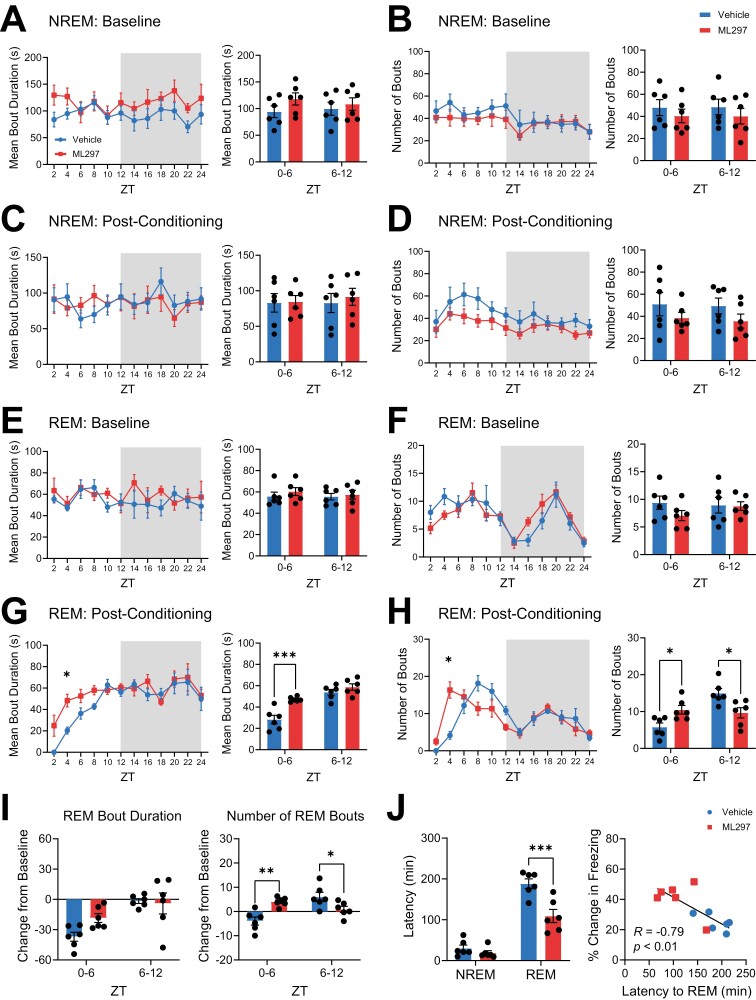
“It is likely that these changes are driven by the same underlying mechanism, due to the increasingly well-established causal relationship between spindle-rich NREM sleep and transitions from NREM into REM sleep [65, 66].”
Datta, S., Li, G., & Auerbach, S. (2008) · European Journal of Neuroscience · doi:10.1111/j.1460-9568.2008.06166.x · Cited by 99
Automated scoring of fear-related behavior using EthoVision software
Pham, J., Cabrera, S. M., Sanchis‐Segura, C., & Wood, M. A. (2008) · Journal of Neuroscience Methods · doi:10.1016/j.jneumeth.2008.12.021 · Cited by 98 · cited 1×
“Freezing was first scored based on transient periods of immobility, as described previously [56], and was verified offline based on the assessment of characteristic freezing-as-sociated posture [18, 54].”
How rhythms of the sleeping brain tune memory and synaptic plasticity
Puentes-Mestril, C., Roach, J., Niethard, N., Zochowski, M., & Aton, S. J. (2019) · Sleep · doi:10.1093/sleep/zsz095 · Cited by 97 · cited 3×
“Because these EEG oscillatory changes are similar to those known to be associated with successful sleep-dependent CFM consolidation [18, 19, 21], they are consistent with state-dependent hippocampal oscillations serving as a potential driver of memory enhancement by ML297 [3, 4].”
Self-citationHor, C. N., Yeung, J., Jan, M., Emmenegger, Y., Hubbard, J., Xenarios, I., Naef, F., & Franken, P. (2019) · Proceedings of the National Academy of Sciences · doi:10.1073/pnas.1910590116 · Cited by 95
Durkin, J., Suresh, A. K., Colbath, J., Broussard, C., Wu, J., Zochowski, M., & Aton, S. J. (2017) · Proceedings of the National Academy of Sciences · doi:10.1073/pnas.1710613114 · Cited by 94 · cited 4×
“EEG/EMG signals (0.5–300 Hz) were amplified at 20 × , digitized, further digitally amplified at 20–100 × , and continuously recorded (with a 60-Hz notch filter) using Plexon Omniplex software and hardware (Plexon Inc.) as previously described [18, 19, 54, 55].”
InfluentialSelf-citationA role for spindles in the onset of rapid eye movement sleep
Bandarabadi, M., Herrera, C. G., Gent, T. C., Bassetti, C., Schindler, K., & Adamantidis, A. R. (2020) · Nature Communications · doi:10.1038/s41467-020-19076-2 · Cited by 92 · cited 2×
“It is likely that these changes are driven by the same underlying mechanism, due to the increasingly well-established causal relationship between spindle-rich NREM sleep and transitions from NREM into REM sleep [65, 66].”
Ulloor, J., & Datta, S. (2005) · Journal of Neurochemistry · doi:10.1111/j.1471-4159.2005.03378.x · Cited by 89 · cited 1×
“Our present data suggest that REM is at least equally vital for CFM, and support a growing body of data indicating that REM-specific features of post-learning hippocampal activity [18, 28] and gene expression [72–74] are essential for the consolidation process.”
Delorme, J. E., Wang, L., Kuhn, F. R., Kodoth, V., Ma, J., Martinez, J. D., Raven, F., Toth, B. A., Balendran, V., Vega-Medina, A., et al. (2021) · Proceedings of the National Academy of Sciences · doi:10.1073/pnas.2019318118 · Cited by 85 · cited 4×
“…given an adequate opportunity for recovery sleep between SD and recall (i.e. 18 hr from ZT6 to ZT0 the following day), we believe that this alteration is due to a long-term change in the strength of the memory trace itself, rather than an acute effect of SD on hippocampal activation [11, 12, 75].”
InfluentialSelf-citationHippocampal Network Oscillations Rescue Memory Consolidation Deficits Caused by Sleep Loss
Ognjanovski, N., Broussard, C., Zochowski, M., & Aton, S. J. (2018) · Cerebral Cortex · doi:10.1093/cercor/bhy174 · Cited by 82 · cited 8×
“First, the ML297-induced changes in sleep architecture that are correlated with successful CFM consolidation occur almost exclusively within a window of time (i.e. the first 6 hr after CFC) where SD is sufficient to disrupt the consolidation process [6, 16–18].”
InfluentialSelf-citationSanford, L., Silvestri, A. J., Ross, R. J., & Morrison, A. R. (2001) · PubMed · Cited by 81
CA1 hippocampal network activity changes during sleep-dependent memory consolidation
Ognjanovski, N., Maruyama, D., Lashner, N., Zochowski, M., & Aton, S. J. (2014) · Frontiers in Systems Neuroscience · doi:10.3389/fnsys.2014.00061 · Cited by 81 · cited 1×
“Mice underwent single-trial CFC as previously described [6, 11, 18–20].”
Self-citationClawson, B. C., Pickup, E. J., Ensing, A., Geneseo, L., Shaver, J., Gonzalez-Amoretti, J., Zhao, M., York, A. K., Kuhn, F. R., Swift, K., et al. (2021) · Nature Communications · doi:10.1038/s41467-021-21471-2 · Cited by 73 · cited 2×
“EEG/EMG signals (0.5–300 Hz) were amplified at 20 × , digitized, further digitally amplified at 20–100 × , and continuously recorded (with a 60-Hz notch filter) using Plexon Omniplex software and hardware (Plexon Inc.) as previously described [18, 19, 54, 55].”
InfluentialSelf-citationVienne, J., Lecciso, G., Constantinescu, I., Schwartz, S., Franken, P., Heinzer, R., & Tafti, M. (2012) · Sleep · doi:10.5665/sleep.1992 · Cited by 72 · cited 1×
“These drugs, while effective at promoting NREM sleep, can have unwanted side effects, including over-sedation, electroencephalogram (EEG) anomalies including aberrant oscillations, and memory deficits [29, 30, 34, 36–39].”
Targeting GIRK Channels for the Development of New Therapeutic Agents
Walsh, K. B. (2011) · Frontiers in Pharmacology · doi:10.3389/fphar.2011.00064 · Cited by 68
Black, J. E., Pardi, D., Hornfeldt, C. S., & Inhaber, N. (2009) · Sleep Medicine · doi:10.1016/j.sleep.2009.05.004 · Cited by 66 · cited 1×
“These drugs, while effective at promoting NREM sleep, can have unwanted side effects, including over-sedation, electroencephalogram (EEG) anomalies including aberrant oscillations, and memory deficits [29, 30, 34, 36–39].”
Effect of sodium oxybate on disrupted nighttime sleep in patients with narcolepsy
Roth, T. G., Dauvilliers, Y. A., Guinta, D., Alvarez-Horine, S., Dynin, E., & Black, J. E. (2016) · Journal of Sleep Research · doi:10.1111/jsr.12468 · Cited by 62
The Non-Benzodiazepine Hypnotic Zolpidem Impairs Sleep-Dependent Cortical Plasticity
(2008) · Sleep · doi:10.5665/sleep/31.10.1381 · Cited by 60 · cited 1×
“These drugs, while effective at promoting NREM sleep, can have unwanted side effects, including over-sedation, electroencephalogram (EEG) anomalies including aberrant oscillations, and memory deficits [29, 30, 34, 36–39].”
Self-citationSpoormaker, V. I., Gvozdanovic, G., Sämann, P. G., & Czisch, M. (2014) · Experimental Brain Research · doi:10.1007/s00221-014-3831-2 · Cited by 54
Sleep loss disrupts Arc expression in dentate gyrus neurons
Delorme, J. E., Kodoth, V., & Aton, S. J. (2018) · Neurobiology of Learning and Memory · doi:10.1016/j.nlm.2018.04.006 · Cited by 53 · cited 3×
“Due to the widespread nature of Arc expression in CA1 and CA3, we quantified the mean fluorescence intensity (MFI) of Arc immunostaining in these sections after recall, using previously described methods [12].”
Self-citationBehavioral and Genetic Evidence for GIRK Channels in the CNS
Mayfield, J., Blednov, Y. A., & Harris, R. A. (2015) · International Review of Neurobiology · doi:10.1016/bs.irn.2015.05.016 · Cited by 51 · cited 1×
“While numerous genetic findings suggest that loss of GIRK channel activity disrupts hippocampal memory processing [76], their precise molecular role in this process remains unclear.”
Djebari, S., Iborra-Lázaro, G., Temprano-Carazo, S., Sánchez-Rodríguez, I., Nava-Mesa, M. O., Múnera, A., Gruart, A., Delgado-García, J. M., Jiménez-Díaz, L., & Navarro-López, J. D. (2021) · The Journal of Neuroscience · doi:10.1523/jneurosci.2849-20.2021 · Cited by 48 · cited 2×
“CA1) GIRK channel activation induces hyperpolarization, reduces neuronal excitability, and suppresses LTP [49, 50, 53].”
Impacts of Sleep Loss versus Waking Experience on Brain Plasticity: Parallel or Orthogonal?
Havekes, R., & Aton, S. J. (2020) · Trends in Neurosciences · doi:10.1016/j.tins.2020.03.010 · Cited by 42 · cited 1×
“While the underlying mechanisms are still under investigation, these states differ from one another, and from the wake, with respect to neuromodulation, neural network oscillatory behavior, neuronal firing patterns, gene expression, and protein translation [3–13].”
Self-citationThe Sedating Antidepressant Trazodone Impairs Sleep-Dependent Cortical Plasticity
Aton, S. J., Seibt, J., Bridi, M., Coleman, T., Shiraishi, M., & Frank, M. G. (2009) · PLoS ONE · doi:10.1371/journal.pone.0006078 · Cited by 41 · cited 2×
“These drugs, while effective at promoting NREM sleep, can have unwanted side effects, including over-sedation, electroencephalogram (EEG) anomalies including aberrant oscillations, and memory deficits [29, 30, 34, 36–39].”
Self-citationLeong, C. W. Y., Leow, J. W. S., Grunstein, R. R., Naismith, S. L., Teh, J. Z., D'Rozario, A. L., & Saini, B. (2022) · Sleep Medicine Reviews · doi:10.1016/j.smrv.2022.101605 · Cited by 39
Calais, J. B., Ojopi, E. B., Morya, E., Sameshima, K., & Ribeiro, S. (2015) · Neurobiology of Learning and Memory · doi:10.1016/j.nlm.2015.01.002 · Cited by 38 · cited 1×
“Our present data suggest that REM is at least equally vital for CFM, and support a growing body of data indicating that REM-specific features of post-learning hippocampal activity [18, 28] and gene expression [72–74] are essential for the consolidation process.”
Carter, S. D., Mifsud, K. R., & Reul, J. M. H. M. (2015) · Frontiers in Behavioral Neuroscience · doi:10.3389/fnbeh.2015.00156 · Cited by 38
Delorme, J. E., Wang, L., Kodoth, V., Wang, Y., Ma, J., Jiang, S., & Aton, S. J. (2021) · Proceedings of the National Academy of Sciences · doi:10.1073/pnas.2108534118 · Cited by 34 · cited 3×
“First, the ML297-induced changes in sleep architecture that are correlated with successful CFM consolidation occur almost exclusively within a window of time (i.e. the first 6 hr after CFC) where SD is sufficient to disrupt the consolidation process [6, 16–18].”
Self-citationThe Effect of Two Benzodiazepine Receptor Agonist Hypnotics on Sleep-Dependent Memory Consolidation
Hall-Porter, J. M., Schweitzer, P. K., Eisenstein, R. D., Ahmed, H. H., & Walsh, J. K. (2014) · Journal of Clinical Sleep Medicine · doi:10.5664/jcsm.3352 · Cited by 33
Tang, X., Yang, L., & Sanford, L. D. (2007) · Brain Research · doi:10.1016/j.brainres.2007.01.029 · Cited by 32 · cited 1×
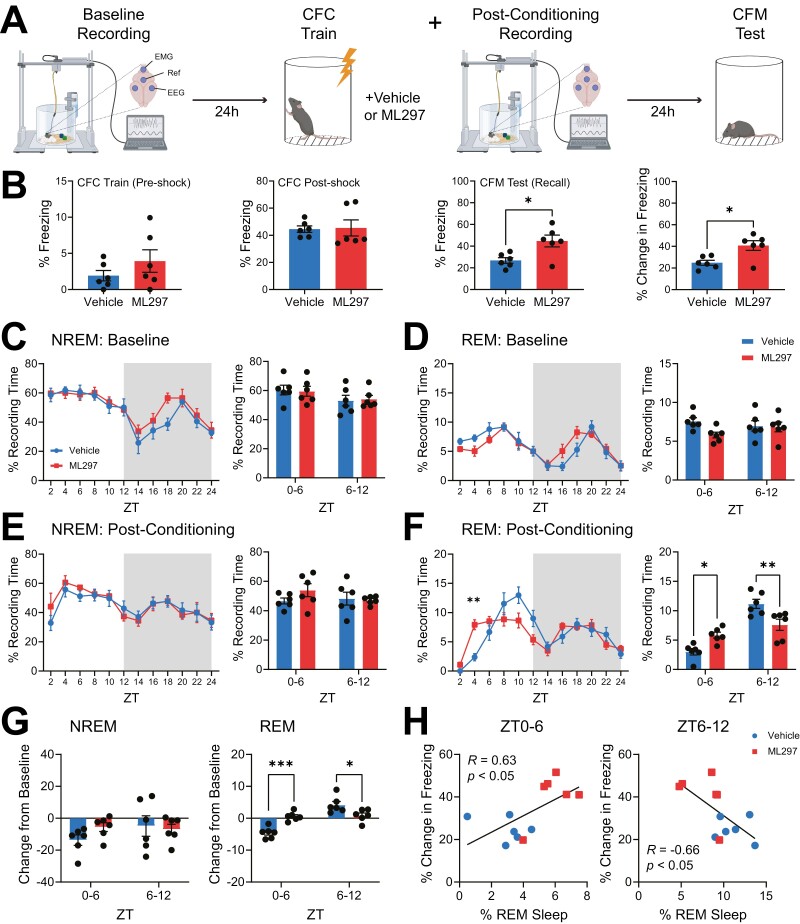
“CFC reduced REM sleep during the first 6 hr post-CFC (relative to baseline) in vehicle-treated mice (two-way RM ANOVA; p (time of day × treatment) = 0.0003; F (1,10 = 30.57)), consistent with previous findings [23, 24].”
InfluentialRaven, F., Heckman, P. R. A., Havekes, R., & Meerlo, P. (2019) · Journal of Sleep Research · doi:10.1111/jsr.12972 · Cited by 32
Puentes-Mestril, C., Delorme, J. E., Wang, L., Donnelly, M. J., Popke, D. S., Jiang, S., & Aton, S. J. (2021) · Journal of Neuroscience · doi:10.1523/jneurosci.1883-20.2021 · Cited by 31
Self-citationUnifying Mechanism of Controlling Kir3 Channel Activity by G Proteins and Phosphoinositides
Logothetis, D. E., Mahajan, R., Adney, S. K., Ha, J., Kawano, T., Meng, X.-Y., & Cui, M. (2015) · International review of neurobiology · doi:10.1016/bs.irn.2015.05.013 · Cited by 29
Selective targets for arousal-modifying drugs: implications for the treatment of sleep disorders
Szabadi, E. (2014) · Drug Discovery Today · doi:10.1016/j.drudis.2014.01.001 · Cited by 28
Skilling, Q. M., Eniwaye, B., Clawson, B. C., Shaver, J. J., Ognjanovski, N., Aton, S. J., & Żochowski, M. (2021) · PLoS Computational Biology · doi:10.1371/journal.pcbi.1009424 · Cited by 17 · cited 1×
“Within the hippocampus, spindles and other NREM-associated electrophysiological [19, 21] and neuromodulatory [11, 22] changes have been mechanistically linked to successful CFM consolidation.”
Self-citationZou, B., Cao, W. S., Guan, Z., Xiao, K., Pascual, C., Xie, J., Zhang, J., Xie, J., Kayser, F., Lindsley, C. W., et al. (2019) · Sleep · doi:10.1093/sleep/zsy244 · Cited by 15 · cited 2×
“Behavioral studies using ML297 in rodents have shown it suppresses seizures, reduces anxiety-like behaviors, and promotes NREM sleep during the circadian active phase (i.e. dark phase) [40, 52, 53].”
Kloukina, V., Herzer, S., Karlsson, N., Pérez, M. Q., Daraio, T., & Meister, B. (2012) · Journal of Chemical Neuroanatomy · doi:10.1016/j.jchemneu.2012.03.003 · Cited by 12 · cited 2×
“This suggests additional, sleep-independent effects of ML297 within CA1, the region of hippocampus where GIRK1/2 channels are most abundant [44, 48, 52].”
InfluentialSarasso, S., Zubler, F., Pigorini, A., Sartori, I., Castana, L., & Nobili, L. (2020) · Journal of Sleep Research · doi:10.1111/jsr.13166 · Cited by 4
Cited by
Wang, L., Park, L. M., Wu, W.-S., King, D., Vega-Medina, A., Raven, F., Martinez, J. D., Ensing, A., McDonald, K., Yang, Z., et al. (2024) · iScience · doi:10.1016/j.isci.2024.109408 · Cited by 25
Self-citationSatchell, M., Butel-Fry, E., Noureddine, Z., Simmons, A., Ognjanovski, N., Aton, S. J., & Żochowski, M. (2025) · PLoS Computational Biology · doi:10.1371/journal.pcbi.1013097 · Cited by 18
Self-citationMartinez, J. D., Wilson, L. G., Brancaleone, W. P., Peterson, K. G., Popke, D. S., Caicedo-Garzón, V., Perez‐Tremble, R., Donnelly, M. J., Ortega, S., Torres, D., et al. (2024) · Cell Reports · doi:10.1016/j.celrep.2024.114266 · Cited by 17
“For example, it is still unclear whether hippocampal network activity changes during recall are due to prior sleep architecture changes, 103 sleep-dependent oscillatory changes, 108,110,144 and/or direct pharmacological effects of ML297 on hippocampal neurons.”
BackgroundSelf-citationRaven, F., Vega-Medina, A., Schmidt, K., He, A., Vankampen, A. A., Balendran, V., & Aton, S. J. (2025) · SLEEP · doi:10.1093/sleep/zsaf064 · Cited by 14
Self-citationMartinez, J. D., Donnelly, M. J., Popke, D. S., Torres, D., Wilson, L. G., Brancaleone, W. P., Sheskey, S., Lin, C., Clawson, B. C., Jiang, S., et al. (2023) · Communications Biology · doi:10.1038/s42003-023-04798-y · Cited by 10
Self-citation
Metadata
- Authors
- Martinez, J. D., Brancaleone, W. P., Peterson, K. G., Wilson, L. G., & Aton, S. J.
- Affiliations
- University of Michigan (US)
- Corresponding author
- Aton, Sara J
- Venue
- Sleep
- Publisher
- Oxford University Press (OUP)
- Published
- 2022-12-13
- Volume
- 46
- Issue
- 3
- ISSN
- 0161-8105 (ISSN-L)
- 1550-9109
- PMC
- PMC9995787
- OpenAlex
- W4311282554
- Cited by
- 11
- References
- 77
- Citations by year
- 2026: 4 · 2025: 2 · 2024: 3 · 2023: 2
- FWCI
- 0.90
- Type
- journal article
- Language
- en
- Open access
- hybrid
- doi.org
- Licence
- Locations
- SLEEP (publishedVersion, cc-by)
- PubMed Central (publishedVersion, cc-by)
- PubMed (publishedVersion)
- Funders
- National Institutes of Health (R01 NS104776, RF1 NS118440)
- Topics
- Life Sciences › Neuroscience › Cognitive Neuroscience › Sleep and Wakefulness Research
- Life Sciences › Neuroscience › Cognitive Neuroscience › Memory and Neural Mechanisms
- Life Sciences › Neuroscience › Endocrine and Autonomic Systems › Neuroscience of respiration and sleep
- Keywords
- hypnotics, sleep architecture, memory consolidation, contextual fear memory, REM sleep, GIRK channels, dentate gyrus, CA1, CA3, sleep-dependent memory
- MeSH terms
- Memory Consolidation, Animals, Hippocampus, Hypnotics and Sedatives, Learning, Sleep, Mice
About these checks
Registry, retraction, Cites and statistics results are computed, not judged, with one exception: a printed reference that no index lists is read once by a model before it counts as a citation error. Claims are extracted by a model and kept only when their quote appears verbatim in the text; each cited source is then checked, with a model’s help, for whether it says what the claim relies on. Those verdicts can be wrong — read the claim’s quote and the cited source before relying on one.
Statistics and arithmetic are recomputed, not judged.
Confidence bands are shown only for fields calibrated on our annotated test set. None is calibrated yet, so no band is shown.
What counts as a claim ›How we measure confidence ›How we check this ›
Are you an author, or do you see a problem with this page? Request a review
Data sources
Bibliographic data: Semantic Scholar, OpenAlex, Crossref.
Contains information from the Semantic Scholar Academic Graph Datasets, made available under the ODC Attribution License (ODC-BY 1.0).
Semantic Scholar’s data is described in: Kinney, R., et al. (2023). The Semantic Scholar Open Data Platform. arXiv:2301.10140.
