

Clinical characteristics of fatal and recovered cases of coronavirus disease 2019 in Wuhan, China: a retrospective study.
Open accessThe DOI matches its Crossref record; 28 of the 30 references it cites were found in a registry or an index, and 2 are not checked yet.
Abstract
Background: The 2019 novel coronavirus has caused the outbreak of the acute respiratory disease in Wuhan, Hubei Province of China since December 2019. This study was performed to analyze the clinical characteristics of patients who succumbed to and who recovered from 2019 novel coronavirus disease (COVID-19). Methods: Clinical data were collected from two tertiary hospitals in Wuhan. A retrospective investigation was conducted to analyze the clinical characteristics of fatal cases of COVID-19 (death group) and we compare them with recovered patients (recovered group). Continuous variables were analyzed using the Mann-Whitney U test. Categorical variables were analyzed by χ 2 test or Fisher exact test as appropriate. Results: Our study enrolled 109 COVID-19 patients who died during hospitalization and 116 recovered patients. The median age of the death group was older than the recovered group (69 [62, 74] vs. 40 [33, 57] years, Z = 9.738, P < 0.001). More patients in the death group had underlying diseases (72.5% vs. 41.4%, χ 2 = 22.105, P < 0.001). Patients in the death group had a significantly longer time of illness onset to hospitalization (10.0 [6.5, 12.0] vs. 7.0 [5.0, 10.0] days, Z = 3.216, P = 0.001). On admission, the proportions of patients with symptoms of dyspnea (70.6% vs. 19.0%, χ 2 = 60.905, P < 0.001) and expectoration (32.1% vs. 12.1%, χ 2 = 13.250, P < 0.001) were significantly higher in the death group. The blood oxygen saturation was significantly lower in the death group (85 [77, 91]% vs. 97 [95, 98]%, Z = 10.625, P < 0.001). The white blood cell (WBC) in death group was significantly higher on admission (7.23 [4.87, 11.17] vs. 4.52 [3.62, 5.88] ×10 9/L, Z = 7.618, P < 0.001). Patients in the death group exhibited significantly lower lymphocyte count (0.63 [0.40, 0.79] vs. 1.00 [0.72, 1.27] ×10 9/L, Z = 8.037, P < 0.001) and lymphocyte percentage (7.10 [4.45, 12.73]% vs. 23.50 [15.27, 31.25]%, Z = 10.315, P < 0.001) on admission, and the lymphocyte percentage continued to decrease during hospitalization (7.10 [4.45, 12.73]% vs. 2.91 [1.79, 6.13]%, Z = 5.242, P < 0.001). Alanine transaminase (22.00 [15.00, 34.00] vs. 18.70 [13.00, 30.38] U/L, Z = 2.592, P = 0.010), aspartate transaminase (34.00 [27.00, 47.00] vs. 22.00 [17.65, 31.75] U/L, Z = 7.308, P < 0.001), and creatinine levels (89.00 [72.00, 133.50] vs. 65.00 [54.60, 78.75] μmol/L, Z = 6.478, P < 0.001) were significantly higher in the death group than those in the recovered group. C-reactive protein (CRP) levels were also significantly higher in the death group on admission (109.25 [35.00, 170.28] vs. 3.22 [1.04, 21.80] mg/L, Z = 10.206, P < 0.001) and showed no significant improvement after treatment (109.25 [35.00, 170.28] vs. 81.60 [27.23, 179.08] mg/L, Z = 1.219, P = 0.233). The patients in the death group had more complications such as acute respiratory distress syndrome (ARDS) (89.9% vs. 8.6%, χ 2 = 148.105, P < 0.001), acute cardiac injury (59.6% vs. 0.9%, χ 2 = 93.222, P < 0.001), acute kidney injury (18.3% vs. 0%, χ 2 = 23.257, P < 0.001), shock (11.9% vs. 0%, χ 2 = 14.618, P < 0.001), and disseminated intravascular coagulation (DIC) (6.4% vs. 0%, χ 2 = 7.655, P = 0.006). Conclusions: Compared to the recovered group, more patients in the death group exhibited characteristics of advanced age, pre-existing comorbidities, dyspnea, oxygen saturation decrease, increased WBC count, decreased lymphocytes, and elevated CRP levels. More patients in the death group had complications such as ARDS, acute cardiac injury, acute kidney injury, shock, and DIC.
Overview
The claims and statistics of this paper haven’t been checked yet.
Free: it reads the open-access text and checks the first 5 claims that cite a source we can check. Create a free account to check every claim.
Integrity signals
Registry
Cites
Statistics
Figures
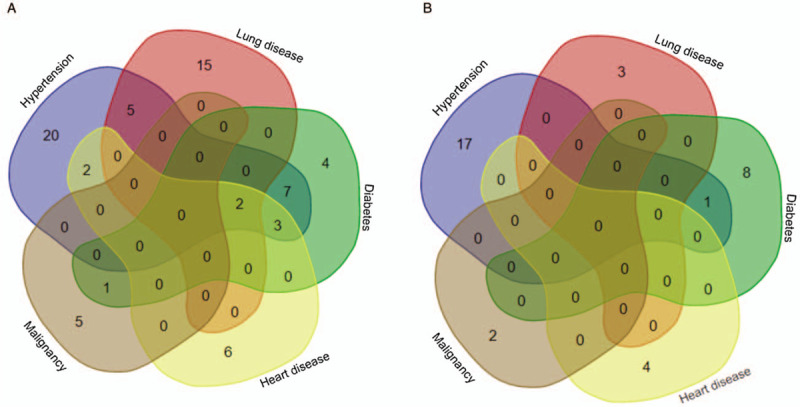
Verification
Claims the paper makes
The claims and statistics of this paper haven’t been checked yet.
Free: it reads the open-access text and checks the first 5 claims that cite a source we can check. Create a free account to check every claim.
Claims other papers make about this one
Each is checked against this paper’s own text: does it say what the citing paper says it does?
The cited source says what the claim attributes to it.
In the citing paper
“Given the fact that this group is reportedly more vulnerable during COVID-19 (Chen et al., 2020; Deng et al., 2020; Liu W. et al., 2020; Pan et al., 2020; World Health Organization, 2020), the findings are consistent with other similar studies (Rajkumar, 2020; Özdin and Bayrak Özdin, 2020).”
From Knowledge of COVID-19 and Its Influence on Mindfulness, Cognitive Emotion Regulation and Psychological Flexibility in the Indian Community (2020) · cites this paper as Deng et al., 2020
Self-check
Percentages, sums and reported differences re-computed from the paper’s own numbers.
The self-check needs the paper’s full text.
Citations
Cites
Clinical features of patients infected with 2019 novel coronavirus in Wuhan, China
Huang, C., Wang, Y., Li, X., Ren, L., Zhao, J., Hu, Y., Zhang, L., Fan, G., Xu, J., Gu, X., et al. (2020) · The Lancet · doi:10.1016/s0140-6736(20)30183-5 · Cited by 48,884
A novel coronavirus from patients with pneumonia in China, 2019
Zhu, N., Zhang, D., Wang, W., Li, X., Yang, B., Song, J., Zhao, X., Huang, B., Shi, W., Lu, R., et al. (2020) · New England Journal of Medicine · doi:10.1056/nejmoa2001017 · Cited by 28,244
Yang, X., Yu, Y., Xu, J., Shu, H., Xia, J., Liu, H., Wu, Y., Zhang, L., Yu, Z., Fang, M., et al. (2020) · The Lancet Respiratory Medicine · doi:10.1016/s2213-2600(20)30079-5 · Cited by 10,066 · cited 7×
“Discussion Table 2: Clinical symptoms and signs of the death and recovered groups with COVID-19.”
ResultInfluentialSelf-citationChan, J. F.-W., Yuan, S., Kok, K.-H., To, K. K.-W., Chu, H., Yang, J., Xing, F., Liu, J., Yip, C. C.-Y., Poon, R. W.-S., et al. (2020) · The Lancet · doi:10.1016/s0140-6736(20)30154-9 · Cited by 8,944 · cited 2×
“2019-nCoV is also a beta coronavirus that causes ARDS and can be transmitted between humans.([7]) Similar to SARS-CoV, the 2019-nCoV is speculated to use the angiotensin-converting enzyme (ACE) 2 as a receptor for cell invasion.”
BackgroundWan, Y., Shang, J., Graham, R., Baric, R. S., & Li, F. (2020) · Journal of Virology · doi:10.1128/jvi.00127-20 · Cited by 4,341
Self-citationAssiri, A., Al-Tawfiq, J. A., Al-Rabeeah, A. A., Al-Rabiah, F. A., Al-Hajjar, S., Al-Barrak, A., Flemban, H., Al-Nassir, W. N., Balkhy, H. H., Al-Hakeem, R. F., et al. (2013) · The Lancet Infectious Diseases · doi:10.1016/s1473-3099(13)70204-4 · Cited by 1,435 · cited 2×
“Previous studies also showed that the transaminases were elevated in the MERS and SARS patients.([20-23]) A recent study showed that elderly patients infected with 2019-nCoV have higher CRP levels.”
BackgroundResultWeiss, S. R., & Leibowitz, J. L. (2011) · Advances in Virus Research · doi:10.1016/b978-0-12-385885-6.00009-2 · Cited by 896 · cited 1×
“Coronaviruses are enveloped RNA viruses that could affect birds, humans, and other mammals, leading to respiratory, digestive, hepatic, and nervous system disorders.([4,5]) Among the six coronaviruses known to infect humans, two of them can cause ARDS, which are the severe acute respiratory syndrome coronavirus (SARSC…”
BackgroundFatal swine acute diarrhoea syndrome caused by an HKU2-related coronavirus of bat origin
Zhou, P., Fan, H., Lan, T., Yang, X.-L., Shi, W.-F., Zhang, W., Zhu, Y., Zhang, Y.-W., Xie, Q.-M., Mani, S., et al. (2018) · Nature · doi:10.1038/s41586-018-0010-9 · Cited by 757 · cited 1×
“Coronaviruses are enveloped RNA viruses that could affect birds, humans, and other mammals, leading to respiratory, digestive, hepatic, and nervous system disorders.([4,5]) Among the six coronaviruses known to infect humans, two of them can cause ARDS, which are the severe acute respiratory syndrome coronavirus (SARSC…”
BackgroundSelf-citationWong, R. S. M., Wu, A., To, K. F., Lee, N., Lam, C. W. K., Wong, C. K., Chan, P. K. S., Ng, M. H. L., Yu, L. M., Hui, D. S., et al. (2003) · BMJ · doi:10.1136/bmj.326.7403.1358 · Cited by 561 · cited 1×
“that during the acute phase of SARS-CoV infection in humans, the blood lymphocyte counts, particularly CD4 + and CD8 + T cell counts, were decreased.([16-18]) Another study suggested that lymphocyte cells, especially CD4 + and CD8 + T cells may play protective roles in coronavirus infection.”
BackgroundSun, P., Qie, S., Liu, Z., Ren, J., Li, K., & Xi, J. (2020) · Journal of Medical Virology · doi:10.1002/jmv.25735 · Cited by 523
Cited by
Items 201–300 of 656
Risk factors related to the severity of COVID-19 in Wuhan
Chen, Z., Bai, Y., Wang, C., Zhong, Y., Lu, N., Tian, L., Cai, F., & Jin, R. (2020) · International Journal of Medical Sciences · doi:10.7150/ijms.47193 · Cited by 43
“However, most studies have focused mainly on identifying the factors related to death and recovery [12-14].”
BackgroundIncidence of Myocardial Injury in COVID-19-Infected Patients: A Systematic Review and Meta-Analysis
Prasitlumkum, N., Chokesuwattanaskul, R., Thongprayoon, C., Bathini, T. J., Vallabhajosyula, S., & Cheungpasitporn, W. (2020) · Diseases · doi:10.3390/diseases8040040 · Cited by 39
“4 20 Deng [11] China 225 54 55 26 12 8 n/a 29 Yang [12] China 52 59.”
Drago, F., Gozzo, L., Li, L., Stella, A., & Cosmi, B. (2020) · Frontiers in Pharmacology · doi:10.3389/fphar.2020.579886 · Cited by 44
“In another study (Deng et al., 2020), non-survivors had significant higher levels of D-dimer, and 71% met the clinical criteria for disseminated intravascular dissemination (DIC).”
BackgroundCOVID-19 and congenital heart disease: a case series of nine children
Memar, E. H. E., Pourakbari, B., Gorgi, M., Ekbatani, M. S., Navaeian, A., Khodabandeh, M., Mahmoudi, S., & Mamishi, S. (2021) · World Journal of Pediatrics · doi:10.1007/s12519-020-00397-7 · Cited by 45
Hematological and Inflammatory Parameters to Predict the Prognosis in COVID-19
Keski, H. (2021) · Indian Journal of Hematology and Blood Transfusion · doi:10.1007/s12288-021-01407-y · Cited by 46
Bassetti, M., Giacobbe, D. R., Bruzzi, P., Barisione, E., Centanni, S., Castaldo, N., Corcione, S., Rosa, F. G. D., Marco, F. D., Gori, A., et al. (2021) · Infectious Diseases and Therapy · doi:10.1007/s40121-021-00487-7 · Cited by 40
Ouyang, L., Gong, Y., Zhu, Y., & Gong, J. (2020) · The American Journal of Emergency Medicine · doi:10.1016/j.ajem.2020.08.089 · Cited by 40
Ebrahimi, M., Malehi, A. S., & Rahim, F. (2020) · Osong Public Health and Research Perspectives · doi:10.24171/j.phrp.2020.11.5.02 · Cited by 36
“Studies have reported different laboratory findings [10,11].”
Prevalence and impact of cardiac injury on COVID ‐19: A systematic review and meta‐analysis
Fu, L., Liu, X., Su, Y., Ma, J., & Hong, K. (2020) · Clinical Cardiology · doi:10.1002/clc.23540 · Cited by 43
Leveraging the Electronic Health Record to Address the COVID-19 Pandemic
Satterfield, B. A., Dikilitas, O., & Kullo, I. J. (2021) · Mayo Clinic Proceedings · doi:10.1016/j.mayocp.2021.04.008 · Cited by 42
COVID-19 in Renal Transplant Recipients: Case Series and a Brief Review of Current Evidence
Elhadedy, M. A., Marie, Y., & Halawa, A. M. (2020) · The Nephron journals/Nephron journals · doi:10.1159/000512329 · Cited by 35
Immune Response to SARS-CoV-2 Infection in Obesity and T2D: Literature Review
Pérez, J., Ramírez, C. A. P., Cañadas, C., Aguirre, D., Pibaque, R., Bedón-Galarza, R., Sempértegui, F., Drexhage, H. A., & Baldeón, L. (2021) · Vaccines · doi:10.3390/vaccines9020102 · Cited by 35
“The majority of infected patients experience mild to moderate symptoms such as fever, headache, cough, myalgia, and diarrhea [6,7].”
BackgroundEstella, Á., Garmendia, J. L. G., de la Fuente, C., Casas, J. F. M., Yuste, M. E., Villar, R. A., Estecha, M. A., Mateos, L. Y., Cantón‐Bulnes, M. L., Loza, A., et al. (2021) · Medicina Intensiva · doi:10.1016/j.medin.2021.02.013 · Cited by 42
Blood purification with CytoSorb in critically ill COVID‐19 patients: A case series of 26 patients
Nassiri, A. A., Hakemi, M. S., Miri, M. M., Shahrami, R., Koomleh, A. A., & Sabaghian, T. (2021) · Artificial Organs · doi:10.1111/aor.14024 · Cited by 35
Haematological Manifestations of Covid-19 and Emerging Immunohaematological Therapeutic Strategies
Bawiskar, N., Andhale, A. G., Hulkoti, V. S., Acharya, S., & Shukla, S. (2020) · Journal of Evolution of Medical and Dental Sciences · doi:10.14260/jemds/2020/763 · Cited by 35
Wu, X., Liu, L., Jiao, J., Yang, L., Zhu, B., & Li, X. (2020) · Annals of Medicine · doi:10.1080/07853890.2020.1802061 · Cited by 39
Alderman, B., Webber, K., & Davies, A. N. (2020) · Palliative Medicine · doi:10.1177/0269216320947312 · Cited by 37
Coronavirus disease 2019 (COVID-19): Immunological approaches and emerging pharmacologic treatments
Goodarzi, P., Mahdavi, F., Mirzaei, R., Hasanvand, H., Sholeh, M., Zamani, F., Sohrabi, M., Tabibzadeh, A., Jeda, A. S., Niya, M. H. K., et al. (2020) · International Immunopharmacology · doi:10.1016/j.intimp.2020.106885 · Cited by 35
Clinically applicable approach for predicting mechanical ventilation in patients with COVID-19
Douville, N. J., Douville, C. B., Mentz, G. B., Mathis, M. R., Pancaro, C., Tremper, K. K., & Engoren, M. (2020) · British Journal of Anaesthesia · doi:10.1016/j.bja.2020.11.034 · Cited by 42
Wu, Y., Li, H., Zhang, Z., Liang, W., Zhang, T., Tong, Z., Guo, X., & Qi, X. (2021) · Annals of Palliative Medicine · doi:10.21037/apm-20-2557 · Cited by 36
Serum biomarkers for prediction of mortality in patients with COVID-19
Loomba, R. S., Villarreal, E. G., Farias, J. S., Aggarwal, G., Aggarwal, S., & Flores, S. (2021) · Annals of Clinical Biochemistry International Journal of Laboratory Medicine · doi:10.1177/00045632211014244 · Cited by 34
Zhu, Z., Wang, M., Lin, W. S., Cai, Q., Zhang, L., Chen, D., Liu, F., Xiong, X., Chu, J., Peng, J., et al. (2021) · Immunity Inflammation and Disease · doi:10.1002/iid3.471 · Cited by 37
Fu, S., Fu, X., Song, Y., Li, M., Pan, P., Tang, T., Zhang, C., Jiang, T., Tan, D.-M., Fan, X., et al. (2020) · medRxiv · doi:10.1101/2020.04.03.20051763 · Cited by 33
Moreno, A. A., Carbonell, R., Bodí, M. A., & Rodríguez, A. H. (2020) · Medicina Intensiva · doi:10.1016/j.medin.2020.06.006 · Cited by 59
Association between Chronic Kidney Disease and COVID-19 Related Mortality in New York
Mohamed, N., Benn, E. K. T., Astha, V., Okhawere, K. E., Korn, T. G., Nkemdirim, W., Rambhia, A., Ige, O. A., Funchess, H., Mihalopoulos, M., et al. (2020) · World Journal of Urology · doi:10.1007/s00345-020-03567-4 · Cited by 35
Li, Y., Zhang, Y., & Tan, B. (2021) · Journal of Medical Virology · doi:10.1002/jmv.26943 · Cited by 34
Covid-19 and diabetes in primary care – How do hematological parameters present in this cohort?
Varma, A., Dergaa, I., Mohammed, A. R., Abubaker, M., Alnaama, A., Mohammed, S., Rafique, M. A., Manu, L., Vedasalam, S., Parveze, P., et al. (2021) · Expert Review of Endocrinology & Metabolism · doi:10.1080/17446651.2021.1909472 · Cited by 35
“COVID-19 patients and lymphocytopenia was the most frequently associated hematological marker correlating to the severity of COVID-19 [27].”
BackgroundRazonable, R. R., Pennington, K. M., Meehan, A. M., Wilson, J. W., Froemming, A. T., Bennett, C. E., Marshall, A. L., Virk, A., & Carmona, E. M. (2020) · Mayo Clinic Proceedings · doi:10.1016/j.mayocp.2020.05.010 · Cited by 33
Potential Therapeutic Roles for Direct Factor Xa Inhibitors in Coronavirus Infections
Al‐Horani, R. A. (2020) · American Journal of Cardiovascular Drugs · doi:10.1007/s40256-020-00438-6 · Cited by 33
Cheruiyot, I., Henry, B. M., Lippi, G., Kipkorir, V., Ngure, B., Munguti, J. K., & Misiani, M. (2020) · Acta bio-medica dell'Ateneo parmense/Acta biomedica · doi:10.23750/abm.v91i3.10222 · Cited by 35
Effect of COVID-19 on Kidney Disease Incidence and Management
McAdams, M. C., Ostrosky-Frid, M., Rajora, N., & Hedayati, S. S. (2021) · Kidney360 · doi:10.34067/kid.0006362020 · Cited by 36
“(87) 20 Hospitalized, confirmed COVID NA NA NA 6 (30) 1 (5) 5 (25) Italy”
BackgroundInfluentialGootenberg, D. B., Kurtzman, N., O’Mara, T., Ge, J. Y., Chiu, D. T. W., Shapiro, N. I., Mechanic, O. J., & Dagan, A. S. (2021) · BMJ Health & Care Informatics · doi:10.1136/bmjhci-2021-100330 · Cited by 33
Prognostic value of liver biochemical parameters for COVID-19 mortality
Lin, Y., Chen, B., Wang, Y., Yang, Y., Zeng, J., Deng, G., Deng, Y., & Zeng, F. (2020) · Annals of Hepatology · doi:10.1016/j.aohep.2020.10.007 · Cited by 31
Self-citationPazoki, M., Keykhaei, M., Kafan, S., Montazeri, M., Hazaveh, M. M., Sotoodehnia, M., Kazemian, S., Talebpour, M., Ashraf, H., Moharari, R. S., et al. (2021) · Journal of Diabetes & Metabolic Disorders · doi:10.1007/s40200-020-00701-2 · Cited by 31
“Since the beginning of the pandemic, many studies have represented vital signs as key indicators of patients’ symptoms assessment [4, 31].”
BackgroundZhao, X., Lei, Z., Gao, F., Xie, Q., Jang, K., 吴建平, Fu, J., Du, B., & Wang, Z. (2021) · Medicine · doi:10.1097/md.0000000000024369 · Cited by 30
COVID-19: a novel menace for the practice of nephrology and how to manage it with minor devastation?
Sena Memnune, U. L. U., Güngör, Ö., Oğuz, E. G., Hasbal, N. B., Turgut, D., & Arıcı, M. (2020) · Renal Failure · doi:10.1080/0886022x.2020.1797791 · Cited by 28
Dashatan, N. A., Koushki, M., Ghorbani, F., & Naderi, N. (2020) · Gastroenterology and hepatology from bed to bench. · Cited by 34
Long, L., Wu, L., Chen, L., Zhou, D., Wu, H., Lu, D., Li, H., Duan, X., Han, Y., Li, X., et al. (2021) · PLoS neglected tropical diseases · doi:10.1371/journal.pntd.0009051 · Cited by 32
Self-citationCurrent understanding of the impact of COVID-19 on gastrointestinal disease: Challenges and openings
Sahu, T. A., Mehta, A., Ratre, Y. K., Jaiswal, A., Vishvakarma, N. K., Bhaskar, L. V., & Verma, H. K. (2021) · World Journal of Gastroenterology · doi:10.3748/wjg.v27.i6.449 · Cited by 30
Amin, M. T., Hasan, M., & Bhuiya, N. M. M. A. (2021) · Frontiers in Public Health · doi:10.3389/fpubh.2021.738352 · Cited by 37
Deep venous thrombosis in a non-critically ill patient with novel COVID-19 infection
Nauka, P. C., Oran, E., & Chekuri, S. (2020) · Thrombosis Research · doi:10.1016/j.thromres.2020.05.015 · Cited by 28
Hsia, B. C., Greige, N., Quiroz, J. A., Khokhar, A., Daily, J. P., Biase, L. D., Ferrick, K. J., Fisher, J. D., & KRUMERMAN, A. K. (2020) · Journal of Interventional Cardiac Electrophysiology · doi:10.1007/s10840-020-00822-x · Cited by 27
Zuin, M., Rigatelli, G., Zuliani, G., Bilato, C., Zonzin, P., & Roncon, L. (2020) · Journal of Cardiovascular Medicine · doi:10.2459/jcm.0000000000001064 · Cited by 27
“…CI Study or subgroup Nonsurvivors Events Total Events Total Weight Survivors Odds ratio M-H, Fixed, 95% CI Odds ratio M-H, Fixed, 95% CI Chen 2020 Deng 2020 He 2020 Javanian 2020 Wang (1) Wang (2) 2020 Wang (3) 2020 Yang 2020 Zhou 2020 72 20 22 6 107 39 8 9 32 94 109 26 19 133 65 19 32 54 18 1 2…”
InfluentialAcute Kidney Injury and Covid-19: A Scoping Review and Meta-Analysis
Jafari‐Oori, M., Fiorentino, M., Castellano, G., Ebadi, A., Rahimi‐Bashar, F., Guest, P. C., Vahedian‐Azimi, A., & Sahebkar, A. (2021) · Advances in experimental medicine and biology · doi:10.1007/978-3-030-59261-5_28 · Cited by 28
A Systematic Review and Meta-analysis of Diabetes Associated Mortality in Patients with COVID-19
Gupta, P., Gupta, M., Katoch, N., Garg, K., & Garg, B. (2021) · Intern J Endocrinol Metab · doi:10.5812/ijem.113220 · Cited by 31
“In 23 studies conducted in China, 13 studies (20-22, 24, 29, 33, 34, 38-40, 43) reported a significantly increased risk of diabetes-associated mortality, but 12 studies (23, 25-28, 30, 31, 41, 42, 44-46) only found an increased risk, which failed to cross the statistical boundaries.”
BackgroundAn updated meta-analysis of AST and ALT levels and the mortality of COVID-19 patients
Wang, Y., Shi, L., Wang, Y., & Yang, H. (2020) · The American Journal of Emergency Medicine · doi:10.1016/j.ajem.2020.05.063 · Cited by 27
An Unusual Case Report of COVID-19 Presenting with Meningitis Symptoms and Shingles
Packwood, R., Galletta, G. M., & Tennyson, J. C. (2020) · Clinical Practice and Cases in Emergency Medicine · doi:10.5811/cpcem.2020.4.47557 · Cited by 26
Encountering COVID-19 as Endocrinologists
Rhee, E., Kim, J. H., Moon, S. J., & Lee, W. (2020) · Endocrinology and Metabolism · doi:10.3803/enm.2020.35.2.197 · Cited by 25
Peritoneal dialysis for COVID-19-associated acute kidney injury
Nagatomo, M., Yamada, H., Shinozuka, K., Shimoto, M., Yunoki, T., & Ohtsuru, S. (2020) · Critical Care · doi:10.1186/s13054-020-03024-z · Cited by 25
Liu, D., Wang, Y., Wang, J., Liu, J., Yue, Y., Liu, W., Zhang, F., & Wang, Z. (2020) · Journal of Medical Internet Research · doi:10.2196/20108 · Cited by 27
“Consistent with earlier reports, hypoxemia and confusion were more frequent among patients who died [13,14]; these symptoms can be used as indicators of poor prognosis in patients with COVID-19 at baseline.”
ResultSelf-citationDima, M. A., Enătescu, I., Craina, M. L., Petre, I., Iacob, E. R., & Iacob, D. (2020) · Medicine · doi:10.1097/md.0000000000021284 · Cited by 28
Bennett, S., Tafuro, J., Mayer, J. E., Darlington, D., Wong, C. W., Muntean, E.-A., Wong, N., Mallen, C. D., & Kwok, C. S. (2020) · International Journal of Clinical Practice · doi:10.1111/ijcp.13725 · Cited by 36
“All rights reserved A total of 45 studies [3,4,5,6,7,15,16,17,18,19,20,21,22,23,24,25,26,27,28,29,30,31,32,33,34,35,36,37,38,39,40,41,42, 43,44,45,46,47,48,49,50,51,52,53,54] were included in this review (Figure 1).”
BackgroundStaub, M., Beaulieu, R. M., Graves, J. A., & Nelson, G. E. (2020) · Infection Control and Hospital Epidemiology · doi:10.1017/ice.2020.1291 · Cited by 33
Complement activation and coagulopathy - an ominous duo in COVID19
Tomo, S., Kumar, K. P., Roy, D., Sankanagoudar, S., Purohit, P., Yadav, D., Banerjee, M., Sharma, P., & Misra, S. (2021) · Expert Review of Hematology · doi:10.1080/17474086.2021.1875813 · Cited by 31
miRNAs: The Key Regulator of COVID-19 Disease
Hardin, L. T., & Xiao, N. (2022) · International Journal of Cell Biology · doi:10.1155/2022/1645366 · Cited by 27
“After infecting the host cells, SARS-CoV-2 showed ability to launch a cytokine storm and to overcome the host immune system [13, 14].”
BackgroundCOVID-19 and Liver Injury: A Systematic Review and Meta-Analysis
Ahmed, J., Rizwan, T., Malik, F., Akhter, R., Malik, M., Ahmad, J., Khan, A. W., Chaudhary, M. A., & Usman, M. (2020) · Cureus · doi:10.7759/cureus.9424 · Cited by 28
Bloukh, S. H., Edis, Z., Shaikh, A. A., & Pathan, H. M. (2020) · International Journal of Environmental Research and Public Health · doi:10.3390/ijerph17155616 · Cited by 25
“High levels of fatality were recorded in advanced age patients with immune systems compromised by diabetes, hypertension, and cardiovascular disease during SARS-CoV, MERS-CoV, and COVID-19 [31].”
BackgroundResultInfluentialAfra, H. S., Dashatan, N. A., Ghorbani, F., Maleki, I., & Rezaei–Tavirani, M. (2020) · Gastroenterology and hepatology from bed to bench. · Cited by 32
Moazzami, B., Chaichian, S., Samie, S., Zolbin, M. M., Jesmi, F., Akhlaghdoust, M., Pishkuhi, M. A., Mirshafiei, Z. S., Khalilzadeh, F., & Safari, D. (2021) · BMC Women s Health · doi:10.1186/s12905-021-01270-z · Cited by 27
Walter, L. O., Cardoso, C. C., Santos‐Pirath, Í. M., Costa, H. Z., Gartner, R., Werle, I., Mohr, E. T. B., da Rosa, J. S., Felisberto, M., Kretzer, I. F., et al. (2022) · Immunology · doi:10.1111/imm.13457 · Cited by 27
“Studies revealed that the loss of mHLADR is also accompanied by a reduction in ncMo in patients with severe or critical COVID- 19, correlating this marker with the severity of the disease [31, 70, 71].”
BackgroundWu, R., Ai, S., Cai, J., Zhang, S., Qian, Z. M., Zhang, Y., Wu, Y., Chen, L., Tian, F., Li, H., et al. (2020) · The Innovation · doi:10.1016/j.xinn.2020.100022 · Cited by 24
Self-citationZarnuji, A. (2023) · Journal International Dakwah and Communication · doi:10.55849/jidc.v3i1.193 · Cited by 38
Rabbani, A. B., Parikh, R. V., & Rafique, A. M. (2020) · JAMA Network Open · doi:10.1001/jamanetworkopen.2020.13556 · Cited by 26
Moula, A. I., Micali, L. R., Matteucci, F., Lucà, F., Rao, C. M., Parise, O., Parise, G., Gulizia, M. M., & Gelsomino, S. (2020) · Journal of Clinical Medicine · doi:10.3390/jcm9092685 · Cited by 24
Clinical presentation and outcomes of hospitalized adults with COVID‐19: A systematic review
Keller, K. G., Reangsing, C., & Schneider, J. K. (2020) · Journal of Advanced Nursing · doi:10.1111/jan.14558 · Cited by 28
Impact of cardiovascular diseases on severity of COVID-19 patients: A systematic review
Mishra, P., Parveen, R., Bajpai, R. C., Samim, M., & Agarwal, N. B. (2021) · Annals of the Academy of Medicine Singapore · doi:10.47102/annals-acadmedsg.2020367 · Cited by 25
Clinical characteristics of 2,459 severe or critically ill COVID-19 patients
Zhong, Z., Li, H., Zhu, J., Ji, P., Li, B., Pang, J., Zhang, J., & Liang, X.-D. (2021) · Medicine · doi:10.1097/md.0000000000023781 · Cited by 22
Prognostic value of Cardiac Biomarkers in COVID-19 Infection: A Meta-analysisPreprint
Dawson, D., Dominic, P. S., Sheth, A. R., & Modi, M. (2020) · doi:10.21203/rs.3.rs-34729/v1 · Cited by 23
Clinical and laboratory findings of COVID-19: A systematic review and meta-analysis
Khamis, A. H., Jaber, M. A., Azar, A. J., AlQahtani, F. A., Bishawi, K., & Shanably, A. (2020) · Journal of the Formosan Medical Association · doi:10.1016/j.jfma.2020.12.003 · Cited by 25
Hosseini, P., Afzali, S., Karimi, M., Zandi, M., Zebardast, A., Latifi, T., Tabibzadeh, A., Ramezani, A., Zakeri, A., Zakeri, A., et al. (2021) · Reviews in Medical Microbiology · doi:10.1097/mrm.0000000000000267 · Cited by 23
Simon, T.-P., Stoppe, C., Breuer, T., Stiehler, L., Dreher, M., Kersten, A., Kluge, S., Karakas, M., Zechendorf, E., Marx, G., et al. (2021) · Journal of Clinical Medicine · doi:10.3390/jcm10081667 · Cited by 21
Investigation of Coagulation Biomarkers to Assess Clinical Deterioration in SARS-CoV-2 Infection
Billoir, P., Alexandre, K., Duflot, T., Roger, M., Miranda, S., Goria, O., Joly, L. M., Demeyere, M., Feugray, G., Brunel, V., et al. (2021) · Frontiers in Medicine · doi:10.3389/fmed.2021.670694 · Cited by 25
Mohammed, S. A., Eid, K. M., Anyiam, F. E., Wadaaallah, H., Muhamed, M. A. M., Morsi, M. H., & Dahman, N. B. H. (2022) · Egyptian Liver Journal · doi:10.1186/s43066-022-00171-6 · Cited by 25
“It is known that SARS-Cov-2 infects the pulmonary system, causing hypoxia and even acute respiratory distress, sepsis, and failure of multiple organs [15, 30].”
BackgroundSpectrum of hematological changes in COVID-19.
Gajendra, S. (2022) · PubMed Central · Cited by 43
Cardiac Involvement in COVID-19 Patients: A Contemporary Review
Carretta, D. M., Silva, A. M., D’Agostino, D., Topi, S., Lovero, R., Charitos, I. A., Wegierska, A. E., Montagnani, M., & Santacroce, L. (2021) · Infectious Disease Reports · doi:10.3390/idr13020048 · Cited by 22
“Levels of troponin (troponin I or troponin T) were elevated (with remarkably high values in some patients) almost constantly [21,25,27,29,30,34,37,38,53,57,60].”
BackgroundGerotziafas, G., Dreden, P. V., Catalano, M., Colgan, M. P., Pécsvárady, Z., Wautrecht, J.-C., Fazeli, B., Olinic, D.-M., & Farkas, K. (2020) · Sang thrombose vaisseaux · doi:10.1684/stv.2020.1149 · Cited by 22
Brain and COVID-19 Crosstalk: Pathophysiological and Psychological Manifestations
Verma, K., Amitabh, Prasad, D. N., Kumar, B., & Kohli, E. (2020) · ACS Chemical Neuroscience · doi:10.1021/acschemneuro.0c00446 · Cited by 23
A Comprehensive Updated Review on SARS‐CoV‐2 and COVID‐19
Ren, Y. R., Golding, A., Sorbello, A. F., Ji, P., Chen, J., Saluja, B., Witzmann, K. A., Arya, V., Reynolds, K. S., Choi, S., et al. (2020) · The Journal of Clinical Pharmacology · doi:10.1002/jcph.1673 · Cited by 24
Neurological manifestations and complications in patients with covid-19
Ternovykh, I. К., Topuzova, M. P., Chaykovskaya, A. D., Isabekova, P. S., & Alekseeva, T. M. (2020) · Translational Medicine · doi:10.18705/2311-4495-2020-7-3-21-29 · Cited by 28
Shang, W., Li, Y., Li, H., Li, W., Li, C., Cai, Y., & Dong, J. (2020) · International Urology and Nephrology · doi:10.1007/s11255-020-02646-0 · Cited by 20
Mady, A. M., Aletreby, W., Abdulrahman, B., Lhmdi, M. H., Noor, A. S. N., Alqahtani, S. A., Soliman, I., Alharthy, A. M., Karakitsos, D., & Memish, Z. A. (2020) · Annals of Medicine and Surgery · doi:10.1016/j.amsu.2020.10.061 · Cited by 20
COVID-19 and cardiovascular system—a comprehensive review
Alshahrani, I., Hosmani, J., Shankar, V. G., Alshahrani, A., Togoo, R. A., Yassin, S. M., Khan, S., & Patil, S. (2021) · Reviews in Cardiovascular Medicine · doi:10.31083/j.rcm2202041 · Cited by 30
COVID-19 in a patient with a flare of systemic lupus erythematosus: A rare case-report
Alharthy, A. M., Faqihi, F. A., Nasim, N., Noor, A. S. N., Akhtar, S., Balshi, A. N., Balhamar, A., Alqahtani, S. A., Memish, Z. A., & Karakitsos, D. (2020) · Respiratory Medicine Case Reports · doi:10.1016/j.rmcr.2020.101252 · Cited by 22
Interventional Stroke Care in the Era of COVID-19
Salahuddin, H., Castonguay, A. C., Zaidi, S., Burgess, R., Jadhav, A. P., & Jumaa, M. (2020) · Frontiers in Neurology · doi:10.3389/fneur.2020.00468 · Cited by 23
The COVID-19 challenge to cardiac electrophysiologists: optimizing resources at a referral center
Mazzone, P., Peretto, G., Radinovic, A., Limite, L. R., Marzi, A., Sala, S., Cireddu, M., Vegara, P., Baratto, F., Paglino, G., et al. (2020) · Journal of Interventional Cardiac Electrophysiology · doi:10.1007/s10840-020-00761-7 · Cited by 19
Effect of blood analysis and immune function on the prognosis of patients with COVID-19
Fu, Y., Sun, Y., Lu, S., Yang, Y., Wang, Y., & Xu, F. (2020) · PLoS ONE · doi:10.1371/journal.pone.0240751 · Cited by 19
“Another study also indicated that COVID-19 patients in the death group had significantly lower lymphocyte count on admission than the recovered group [8].”
ResultMeng, M., Zhao, Q., Kumar, R., Bai, C., Deng, Y., & Wan, B. (2020) · Aging · doi:10.18632/aging.103991 · Cited by 19
Self-citationBerezin, L., Zhabokritsky, A., Andany, N., Chan, A. K., Estrada-Codecido, J., Gershon, A. S., Lam, P. W., Leis, J. A., MacPhee, S., Mubareka, S., et al. (2021) · BMJ Open · doi:10.1136/bmjopen-2020-046282 · Cited by 20
Patil, S. V., Gondhali, G., & Acharya, A. (2022) · Journal of Medicine · doi:10.3329/jom.v23i2.60627 · Cited by 26
Naidoo, J., Reuss, J. E., Suresh, K. S., Feller-Kopman, D. J., Forde, P. M., Steinke, S. M., Rock, C., Johnson, D. B., Nishino, M., & Brahmer, J. R. (2020) · Journal for ImmunoTherapy of Cancer · doi:10.1136/jitc-2020-000984 · Cited by 20
Pressure injuries during the SARS-CoV-2 pandemic: A retrospective, case-control study
Gallén, M. S., Pujol-García, A. M., García, M. R., Luque, C. P., Postigo, M. L., Mañosa, S. C., Camposo, M., Touriño, B. I., Obon, E. R., Rodríguez, T. S., et al. (2021) · Journal of Tissue Viability · doi:10.1016/j.jtv.2021.07.011 · Cited by 21
“This pathogen causes clinical manifestations that can range from mild to severe and lead to the deaths of large numbers of patients [2].”
InfluentialCoronavirus Disease 2019 and Diabetes: The Epidemic and the Korean Diabetes Association Perspective
Noh, J. H., Chang, H., Jeong, I., & Yoon, K. (2020) · Diabetes & Metabolism Journal · doi:10.4093/dmj.2020.0138 · Cited by 19
“[5] [11] [12] [13] [14] [15] [16] [17] [18] [19] [20] [21]”
dos Santos, R. P., Lordani, T. V. A., Peres, L. A. B., & Carvalho, A. R. D. S. (2021) · Nefrología · doi:10.1016/j.nefro.2021.09.002 · Cited by 26
Abdullah, A. J., Arif, A. T., Rahman, H. A., Sofihussein, K. Q., Hadi, J. M., Aziz, J. M. A., Tofiq, S. S., & Mustafa, A. M. (2023) · Annals of Medicine and Surgery · doi:10.1097/ms9.0000000000000761 · Cited by 18
“Early assessment of a patient’s condition is also highly valuable([10,11]).”
BackgroundClinical characteristics of COVID-19 with cardiac injury: a systematic review and meta-analysis
Zeng, L., Wang, S., Cai, J., Sun, S., Wang, S., Li, J., & Sun, L. (2020) · Epidemiology and Infection · doi:10.1017/s0950268820002587 · Cited by 20
Vieira, A. L. S., Pazeli, J. M., & Bastos, M. G. (2020) · The Ultrasound Journal · doi:10.1186/s13089-020-00177-4 · Cited by 17
“Reports from health services around the world have indicated that patients with diabetes mellitus and hypertension, two of the main causes of ESRD worldwide, and also advanced age and cardiovascular complications, two frequent accompanying conditions in dialysis patients, are more susceptible to SARS-CoV-2 infection a…”
BackgroundLiu, K.-C., Xu, P., Lv, W., Chen, L., Qiu, X.-H., Yao, J.-L., Gu, J.-F., Hu, B., & Wei, W. (2020) · Infectious Diseases of Poverty · doi:10.1186/s40249-020-00737-9 · Cited by 17
Self-citationHuang, Z., Huang, P., Du, B., Kong, L., Zhang, W., Zhang, Y., & Dong, J. (2020) · Nutrition Metabolism and Cardiovascular Diseases · doi:10.1016/j.numecd.2020.09.004 · Cited by 17
Heegaard, P. M. H., Sturek, M. S., Alloosh, M., & Belsham, G. J. (2020) · Frontiers in Microbiology · doi:10.3389/fmicb.2020.573756 · Cited by 20
Shi, P., Gao, Y., Shen, Y., Chen, E., Chen, H., Liu, J., Chen, Y., Xiao, Y., Wang, K., Shi, C., et al. (2020) · Sustainable Cities and Society · doi:10.1016/j.scs.2020.102559 · Cited by 17
“Analysis of the risk factors for clinical outcomes of cases also confirmed that people with older age and fever were prone to cause pneumonia and severe illness, which was consistent with the previous studies (Deng et al., 2020; Liu, Tao et al., 2020).”
Self-citation
Metadata
- Authors
- Deng, Y., Liu, W., Liu, K., Fang, Y.-Y., Shang, J., Zhou, L., Wang, K., Leng, F., Wei, S., Chen, L., & Liu, H.-G.
- Affiliations
- Tongji Hospital (CN)
- Central Hospital of Wuhan (CN)
- Department of Respiratory and Critical Care Medicine, Tongji Hospital, Tongji Medical College, Huazhong University of Science and Technology, Wuhan, Hubei 430030, China
- Corresponding author
- Liu, Wei
- Liu, Kui
- Venue
- Chinese Medical Journal
- Published
- 2020-03-20
- Volume
- 133
- Issue
- 11
- Pages
- 1261-1267
- ISSN
- 0366-6999 (ISSN-L)
- 2542-5641
- PMC
- PMC7289311
- OpenAlex
- W3013689008
- Semantic Scholar
- 1b052499e1ff8e4bc2bc78ca7b3d2344d47c0239
- Cited by
- 657
- References
- 29
- Citations by year
- 2026: 3 · 2025: 17 · 2024: 20 · 2023: 41 · 2022: 77 · 2021: 198 · 2020: 300
- FWCI
- 20.18
- Type
- journal article
- Language
- en
- Open access
- gold
- doi.org
- Licence
- Locations
- Chinese Medical Journal (publishedVersion, cc-by-nc-nd)
- PubMed Central (publishedVersion, cc-by-nc-nd)
- PubMed (publishedVersion)
- DOAJ (DOAJ: Directory of Open Access Journals) (submittedVersion, cc-by-sa)
- Topics
- Health Sciences › Medicine › Infectious Diseases › COVID-19 Clinical Research Studies
- Health Sciences › Medicine › Clinical Neurology › Long-Term Effects of COVID-19
- Health Sciences › Medicine › Infectious Diseases › SARS-CoV-2 and COVID-19 Research
- Keywords
- COVID-19 pandemic, SARS-CoV-2, fatal outcome, recovered patients, clinical features, dyspnea, oxygen saturation, white blood cell count, C-reactive protein, procalcitonin, length of hospital stay, underlying comorbidities, acute respiratory illness, Wuhan outbreak, prognostic factors, mortality risk factors
- MeSH terms
- Betacoronavirus, COVID-19, SARS-CoV-2, Adult, Aged, Aged, 80 and over, C-Reactive Protein, Female, Humans, Male, Middle Aged, Oxygen, Pneumonia, Viral, Retrospective Studies, Coronavirus Infections, Pandemics
About these checks
Registry, retraction, Cites and statistics results are computed, not judged, with one exception: a printed reference that no index lists is read once by a model before it counts as a citation error. Claims are extracted by a model and kept only when their quote appears verbatim in the text; each cited source is then checked, with a model’s help, for whether it says what the claim relies on. Those verdicts can be wrong — read the claim’s quote and the cited source before relying on one.
Statistics and arithmetic are recomputed, not judged.
Confidence bands are shown only for fields calibrated on our annotated test set. None is calibrated yet, so no band is shown.
What counts as a claim ›How we measure confidence ›How we check this ›
Are you an author, or do you see a problem with this page? Request a review
Data sources
Bibliographic data: Semantic Scholar, OpenAlex, Crossref.
Contains information from the Semantic Scholar Academic Graph Datasets, made available under the ODC Attribution License (ODC-BY 1.0).
Semantic Scholar’s data is described in: Kinney, R., et al. (2023). The Semantic Scholar Open Data Platform. arXiv:2301.10140.
