

Clinical characteristics of fatal and recovered cases of coronavirus disease 2019 in Wuhan, China: a retrospective study.
Open accessThe DOI matches its Crossref record; 28 of the 30 references it cites were found in a registry or an index, and 2 are not checked yet.
Abstract
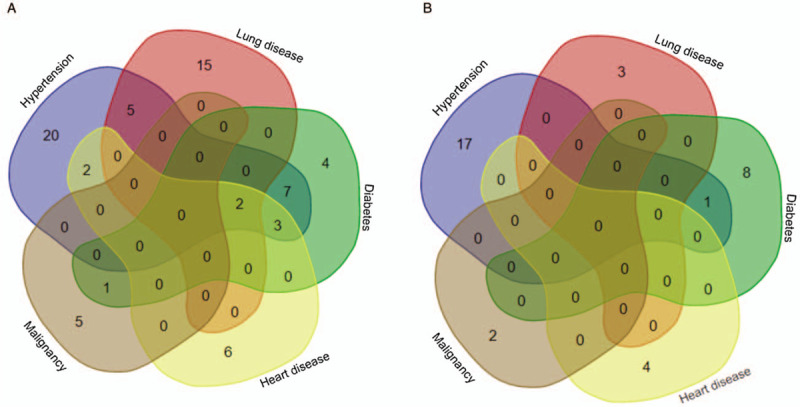
Background: The 2019 novel coronavirus has caused the outbreak of the acute respiratory disease in Wuhan, Hubei Province of China since December 2019. This study was performed to analyze the clinical characteristics of patients who succumbed to and who recovered from 2019 novel coronavirus disease (COVID-19). Methods: Clinical data were collected from two tertiary hospitals in Wuhan. A retrospective investigation was conducted to analyze the clinical characteristics of fatal cases of COVID-19 (death group) and we compare them with recovered patients (recovered group). Continuous variables were analyzed using the Mann-Whitney U test. Categorical variables were analyzed by χ 2 test or Fisher exact test as appropriate. Results: Our study enrolled 109 COVID-19 patients who died during hospitalization and 116 recovered patients. The median age of the death group was older than the recovered group (69 [62, 74] vs. 40 [33, 57] years, Z = 9.738, P < 0.001). More patients in the death group had underlying diseases (72.5% vs. 41.4%, χ 2 = 22.105, P < 0.001). Patients in the death group had a significantly longer time of illness onset to hospitalization (10.0 [6.5, 12.0] vs. 7.0 [5.0, 10.0] days, Z = 3.216, P = 0.001). On admission, the proportions of patients with symptoms of dyspnea (70.6% vs. 19.0%, χ 2 = 60.905, P < 0.001) and expectoration (32.1% vs. 12.1%, χ 2 = 13.250, P < 0.001) were significantly higher in the death group. The blood oxygen saturation was significantly lower in the death group (85 [77, 91]% vs. 97 [95, 98]%, Z = 10.625, P < 0.001). The white blood cell (WBC) in death group was significantly higher on admission (7.23 [4.87, 11.17] vs. 4.52 [3.62, 5.88] ×10 9/L, Z = 7.618, P < 0.001). Patients in the death group exhibited significantly lower lymphocyte count (0.63 [0.40, 0.79] vs. 1.00 [0.72, 1.27] ×10 9/L, Z = 8.037, P < 0.001) and lymphocyte percentage (7.10 [4.45, 12.73]% vs. 23.50 [15.27, 31.25]%, Z = 10.315, P < 0.001) on admission, and the lymphocyte percentage continued to decrease during hospitalization (7.10 [4.45, 12.73]% vs. 2.91 [1.79, 6.13]%, Z = 5.242, P < 0.001). Alanine transaminase (22.00 [15.00, 34.00] vs. 18.70 [13.00, 30.38] U/L, Z = 2.592, P = 0.010), aspartate transaminase (34.00 [27.00, 47.00] vs. 22.00 [17.65, 31.75] U/L, Z = 7.308, P < 0.001), and creatinine levels (89.00 [72.00, 133.50] vs. 65.00 [54.60, 78.75] μmol/L, Z = 6.478, P < 0.001) were significantly higher in the death group than those in the recovered group. C-reactive protein (CRP) levels were also significantly higher in the death group on admission (109.25 [35.00, 170.28] vs. 3.22 [1.04, 21.80] mg/L, Z = 10.206, P < 0.001) and showed no significant improvement after treatment (109.25 [35.00, 170.28] vs. 81.60 [27.23, 179.08] mg/L, Z = 1.219, P = 0.233). The patients in the death group had more complications such as acute respiratory distress syndrome (ARDS) (89.9% vs. 8.6%, χ 2 = 148.105, P < 0.001), acute cardiac injury (59.6% vs. 0.9%, χ 2 = 93.222, P < 0.001), acute kidney injury (18.3% vs. 0%, χ 2 = 23.257, P < 0.001), shock (11.9% vs. 0%, χ 2 = 14.618, P < 0.001), and disseminated intravascular coagulation (DIC) (6.4% vs. 0%, χ 2 = 7.655, P = 0.006). Conclusions: Compared to the recovered group, more patients in the death group exhibited characteristics of advanced age, pre-existing comorbidities, dyspnea, oxygen saturation decrease, increased WBC count, decreased lymphocytes, and elevated CRP levels. More patients in the death group had complications such as ARDS, acute cardiac injury, acute kidney injury, shock, and DIC.
Overview
The claims and statistics of this paper haven’t been checked yet.
Free: it reads the open-access text and checks the first 5 claims that cite a source we can check. Create a free account to check every claim.
Integrity signals
Registry
Cites
Statistics
Figures
Verification
Claims the paper makes
The claims and statistics of this paper haven’t been checked yet.
Free: it reads the open-access text and checks the first 5 claims that cite a source we can check. Create a free account to check every claim.
Claims other papers make about this one
Each is checked against this paper’s own text: does it say what the citing paper says it does?
The cited source says what the claim attributes to it.
In the citing paper
“Given the fact that this group is reportedly more vulnerable during COVID-19 (Chen et al., 2020; Deng et al., 2020; Liu W. et al., 2020; Pan et al., 2020; World Health Organization, 2020), the findings are consistent with other similar studies (Rajkumar, 2020; Özdin and Bayrak Özdin, 2020).”
From Knowledge of COVID-19 and Its Influence on Mindfulness, Cognitive Emotion Regulation and Psychological Flexibility in the Indian Community (2020) · cites this paper as Deng et al., 2020
Self-check
Percentages, sums and reported differences re-computed from the paper’s own numbers.
The self-check needs the paper’s full text.
Citations
Cites
Clinical features of patients infected with 2019 novel coronavirus in Wuhan, China
Huang, C., Wang, Y., Li, X., Ren, L., Zhao, J., Hu, Y., Zhang, L., Fan, G., Xu, J., Gu, X., et al. (2020) · The Lancet · doi:10.1016/s0140-6736(20)30183-5 · Cited by 48,884
A novel coronavirus from patients with pneumonia in China, 2019
Zhu, N., Zhang, D., Wang, W., Li, X., Yang, B., Song, J., Zhao, X., Huang, B., Shi, W., Lu, R., et al. (2020) · New England Journal of Medicine · doi:10.1056/nejmoa2001017 · Cited by 28,244
Yang, X., Yu, Y., Xu, J., Shu, H., Xia, J., Liu, H., Wu, Y., Zhang, L., Yu, Z., Fang, M., et al. (2020) · The Lancet Respiratory Medicine · doi:10.1016/s2213-2600(20)30079-5 · Cited by 10,066 · cited 7×
“Discussion Table 2: Clinical symptoms and signs of the death and recovered groups with COVID-19.”
ResultInfluentialSelf-citationChan, J. F.-W., Yuan, S., Kok, K.-H., To, K. K.-W., Chu, H., Yang, J., Xing, F., Liu, J., Yip, C. C.-Y., Poon, R. W.-S., et al. (2020) · The Lancet · doi:10.1016/s0140-6736(20)30154-9 · Cited by 8,944 · cited 2×
“2019-nCoV is also a beta coronavirus that causes ARDS and can be transmitted between humans.([7]) Similar to SARS-CoV, the 2019-nCoV is speculated to use the angiotensin-converting enzyme (ACE) 2 as a receptor for cell invasion.”
BackgroundWan, Y., Shang, J., Graham, R., Baric, R. S., & Li, F. (2020) · Journal of Virology · doi:10.1128/jvi.00127-20 · Cited by 4,341
Self-citationAssiri, A., Al-Tawfiq, J. A., Al-Rabeeah, A. A., Al-Rabiah, F. A., Al-Hajjar, S., Al-Barrak, A., Flemban, H., Al-Nassir, W. N., Balkhy, H. H., Al-Hakeem, R. F., et al. (2013) · The Lancet Infectious Diseases · doi:10.1016/s1473-3099(13)70204-4 · Cited by 1,435 · cited 2×
“Previous studies also showed that the transaminases were elevated in the MERS and SARS patients.([20-23]) A recent study showed that elderly patients infected with 2019-nCoV have higher CRP levels.”
BackgroundResultWeiss, S. R., & Leibowitz, J. L. (2011) · Advances in Virus Research · doi:10.1016/b978-0-12-385885-6.00009-2 · Cited by 896 · cited 1×
“Coronaviruses are enveloped RNA viruses that could affect birds, humans, and other mammals, leading to respiratory, digestive, hepatic, and nervous system disorders.([4,5]) Among the six coronaviruses known to infect humans, two of them can cause ARDS, which are the severe acute respiratory syndrome coronavirus (SARSC…”
BackgroundFatal swine acute diarrhoea syndrome caused by an HKU2-related coronavirus of bat origin
Zhou, P., Fan, H., Lan, T., Yang, X.-L., Shi, W.-F., Zhang, W., Zhu, Y., Zhang, Y.-W., Xie, Q.-M., Mani, S., et al. (2018) · Nature · doi:10.1038/s41586-018-0010-9 · Cited by 757 · cited 1×
“Coronaviruses are enveloped RNA viruses that could affect birds, humans, and other mammals, leading to respiratory, digestive, hepatic, and nervous system disorders.([4,5]) Among the six coronaviruses known to infect humans, two of them can cause ARDS, which are the severe acute respiratory syndrome coronavirus (SARSC…”
BackgroundSelf-citationWong, R. S. M., Wu, A., To, K. F., Lee, N., Lam, C. W. K., Wong, C. K., Chan, P. K. S., Ng, M. H. L., Yu, L. M., Hui, D. S., et al. (2003) · BMJ · doi:10.1136/bmj.326.7403.1358 · Cited by 561 · cited 1×
“that during the acute phase of SARS-CoV infection in humans, the blood lymphocyte counts, particularly CD4 + and CD8 + T cell counts, were decreased.([16-18]) Another study suggested that lymphocyte cells, especially CD4 + and CD8 + T cells may play protective roles in coronavirus infection.”
BackgroundSun, P., Qie, S., Liu, Z., Ren, J., Li, K., & Xi, J. (2020) · Journal of Medical Virology · doi:10.1002/jmv.25735 · Cited by 523
Cited by
Items 301–400 of 656
Toloui, A., Moshrefiaraghi, D., Neishaboori, A. M., Yousefifard, M., & Aghajani, M. H. (2021) · Archives of Academic Emergency Medicine · doi:10.22037/aaem.v9i1.1071 · Cited by 25
“Mortality rate was reported in 18 studies (8, 11, 13, 14, 16-18, 20, 26, 29, 30, 33, 34, 37, 39, 40, 44, 46).”
BackgroundConvalescent plasma for COVID-19: a meta-analysis, trial sequential analysis, and meta-regression
Snow, T. A. C., Saleem, N., Ambler, G., Nastouli, E., McCoy, L. E., Singer, M., & Arulkumaran, N. (2021) · British Journal of Anaesthesia · doi:10.1016/j.bja.2021.07.033 · Cited by 19
Understanding the role of nACE2 in neurogenic hypertension among COVID-19 patients
Kulkarni, P. G., Sakharkar, A. J., & Banerjee, T. (2021) · Hypertension Research · doi:10.1038/s41440-021-00800-4 · Cited by 18
Isla, A. E., Landy, D. C., Teasdall, R. J., Mittwede, P. N., Albano, A. Y., Tornetta, P., Bhandari, M., & Aneja, A. (2022) · European Journal of Orthopaedic Surgery & Traumatology · doi:10.1007/s00590-022-03228-9 · Cited by 16
Post-COVID-19 hematologic complications: a systematic review
Alahyari, S., Moradi, M., Rajaeinejad, M., & Jalaeikhoo, H. (2022) · Expert Review of Hematology · doi:10.1080/17474086.2022.2080051 · Cited by 18
Cancer is associated with coronavirus disease (COVID-19) severity and mortality: A pooled analysis
Cheruiyot, I., Kipkorir, V., Ngure, B., Misiani, M., & Munguti, J. K. (2020) · The American Journal of Emergency Medicine · doi:10.1016/j.ajem.2020.08.025 · Cited by 19
Arutyunov, A. G., Seferovic, P. M., Бакулин, И. Г., Бакулина, Н. В., Batyushin, М. М., Болдина, М. В., Krstačić, G., Μacut, D., Салухов, В. В., Shimosawa, T., et al. (2021) · Russian Journal of Cardiology · doi:10.15829/1560-4071-2021-4694 · Cited by 17
Alharthy, A. M., Balhamar, A., Faqihi, F. A., Alshaya, R. A., Noor, A. S. N., Alaklobi, F., Memish, Z. A., & Karakitsos, D. (2020) · Respiratory Medicine Case Reports · doi:10.1016/j.rmcr.2020.101186 · Cited by 17
COVID-19 fatality rates in hospitalized patients: A new systematic review and meta-analysis
Baptista, A., Vieira, A. M., Capela, E., Julião, P. L., & Macedo, A. (2023) · Journal of Infection and Public Health · doi:10.1016/j.jiph.2023.07.006 · Cited by 17
Clark, C. C., Jukema, B. N., Barendrecht, A. D., Spanjaard, J. S., Jorritsma, N. K. N., Smits, S. M., de Maat, S., Seinen, C. W., Verhoef, S., Parr, N. M. J., et al. (2021) · Frontiers in Medicine · doi:10.3389/fmed.2021.650129 · Cited by 19
Rangon, C.-M., Barruet, R., Mazouni, A., Cossec, C. L., Thevenin, S., Guillaume, J., Léguillier, T., Huysman, F., & Luís, D. (2021) · Frontiers in Physiology · doi:10.3389/fphys.2021.704599 · Cited by 17
“Therefore, our two groups are evidently not comparable regarding age and gender, while those remain comparable regarding comorbidities (Table 1), CRP (Table 1), and smoking status (i.e., all the patients included were non-smokers).”
BackgroundInfluentialWinkelmayer, W. C., Khairallah, P., & Charytan, D. M. (2020) · JAMA · doi:10.1001/jama.2020.16779 · Cited by 14
Clinical and whole genome characterization of SARS-CoV-2 in India
Muttineni, R., Nagamani, K., Bingi, T. C., Raja Rao, M., Putty, K., Dholaniya, P. S., Puli, R. K., Pakalapaty, S., Saritha, S., Shekar, K., et al. (2021) · PLoS ONE · doi:10.1371/journal.pone.0246173 · Cited by 16
“Studies from China have reported similar findings that majority of the affected patients were middle aged and elderly people with median age of deceased patients being 69 years [28, 47].”
BackgroundWelty, F. K., Rajai, N., & Amangurbanova, M. (2021) · Cardiology in Review · doi:10.1097/crd.0000000000000422 · Cited by 19
“Other studies summarized in Table 1 reported a higher incidence of elevated troponin levels in those who died compared to those who were discharged from the hospital.(12,23,25,28,30,32,36,37) Moreover, Harmouch et al(25) noted cardiac injury as an independent risk factor predicting mortality.”
ResultSARS-CoV-2-mediated liver injury: pathophysiology and mechanisms of disease
Choaib, A., Issa, E., Choueiry, F. E., Eldin, J. N., Shbaklo, K., Alhajj, M., Sawaya, R. T., Assi, G., Nader, M., Chatila, R., et al. (2022) · Inflammation Research · doi:10.1007/s00011-022-01683-y · Cited by 16
“A probable cause of hepatic injury may be the systemic effects of COVID-19, including hypoxia, sepsis, and multi-organ failure [29, 30].”
BackgroundSaab, F. G., Chiang, J. N., Brook, R., Adamson, P. C., Fulcher, J. A., Halperin, E., Manuel, V., & Goodman‐Meza, D. (2021) · Journal of General Internal Medicine · doi:10.1007/s11606-020-06494-7 · Cited by 15
Ostuzzi, G., Papola, D., Gastaldon, C., Schoretsanitis, G., Bertolini, F., Amaddeo, F., Cuomo, A., Emsley, R. A., Fagiolini, A. M., Imperadore, G., et al. (2020) · FOCUS The Journal of Lifelong Learning in Psychiatry · doi:10.1176/appi.focus.18308 · Cited by 17
Patil, S. V., Khule, S., Patil, D., & Toshniwal, S. (2022) · Journal of Association of Pulmonologist of Tamil Nadu · doi:10.4103/japt.japt_27_22 · Cited by 20
Patil, S. V., Dhumal, U., & Bhadake, M. (2022) · Journal of Medicine in Scientific Research · doi:10.4103/jmisr.jmisr_62_22 · Cited by 19
Brown, R., Barnard, J., Harris-Skillman, E., Harbinson, B., Dunne, B., Drake, J., Roche, S., Harris, E. W., Gunnell, J. B., Frost, J., et al. (2020) · medRxiv · doi:10.1101/2020.04.14.20064659 · Cited by 15
Cegolon, L., Einollahi, B., Panahi, Y., Imanizadeh, S., Rezapour, M., Javanbakht, M., Nikpouraghdam, M., Abolghasemi, H., & Mastrangelo, G. (2022) · Frontiers in Nutrition · doi:10.3389/fnut.2022.809823 · Cited by 14
Ding, R., Yang, Z., Huang, D. F., Wang, Y., Li, X., Zhou, X., Li, Y., Lü, W., & Zhang, Z. (2021) · International Journal of Medical Sciences · doi:10.7150/ijms.47494 · Cited by 15
“Currently, studies have reported that higher CRP levels are associated with adverse aspects of COVID-19, such as the development of ARDS, elevated troponin T levels, myocardial injury, and death [11, 30, 31].”
BackgroundNeurological Manifestation of COVID-19: A Literature Review
Azhideh, A., Oskouie, I. M., & Yousefiasl, M. (2020) · International Clinical Neuroscience Journal · doi:10.34172/icnj.2020.20 · Cited by 19
The effect of cardiovascular disease and acute cardiac injury on fatal COVID-19: a meta-analysis
Long, J., Luo, Y., Wei, Y., Xie, C., & Yuan, J. (2021) · The American Journal of Emergency Medicine · doi:10.1016/j.ajem.2021.04.013 · Cited by 16
Zhou, Q., & Zhang, C. (2021) · Journal of Informetrics · doi:10.1016/j.joi.2021.101162 · Cited by 15
Clinical Manifestations of COVID-19
Eskian, M., & Rezaei, N. (2021) · Advances in experimental medicine and biology · doi:10.1007/978-3-030-63761-3_11 · Cited by 17
Bengelloun, A. K., Ortega, G. J., Ancochea, J., García, A. S., Rodríguez-Serrano, D. A., Fernández-Jiménez, G., Girón, R. M., Ávalos, E., Soriano, J. B., & de Ulíbarri, J. I. (2021) · Chinese Medical Journal · doi:10.1097/cm9.0000000000001798 · Cited by 14
“In consequence, prognostic systems and tools which could enable an early recognition of patients with higher risk for severe health outcomes, especially on the most vulnerable ones, remain a research gap.([10]) The CONUT index is a potential candidate in this respect, because it has accumulated evidence in the past, h…”
BackgroundAn Observational Study on the Management of COVID-19 Patients in Limited-Resource Hospitals
Elgendy, M. O., Khalaf, A., EL-Gendy, A. O., Abdelrahman, M. A., Gendy, S. O. E., Hamied, A. M. A., Essam, O., Amir, K. A., Yousry, E. M., & Abdelrahim, M. E. A. (2022) · Journal of Clinical and Nursing Research · doi:10.26689/jcnr.v6i3.3852 · Cited by 13
“From the study, elderly patients were more likely to develop complications, such as cardiovascular complications and pulmonary embolism, compared to younger patients ([7-12]).”
ResultCOVID-19 and severity of liver diseases: Possible crosstalk and clinical implications
Imam, M. T., Almalki, Z. S., Alzahrani, A. R., Al-Ghamdi, S. S., Falemban, A. H., Alanazi, I. M., Shahzad, N., Alrooqi, M. M., Jabeen, Q., & Shahid, I. (2023) · International Immunopharmacology · doi:10.1016/j.intimp.2023.110439 · Cited by 15
Neurological involvement in the respiratory manifestations of COVID-19 patients
Tan, B., Liu, J., Gui, Y., Wu, S., Suo, J., & Li, Y. (2021) · Aging · doi:10.18632/aging.202665 · Cited by 18
Jain, S., Khanna, P., & Sarkar, S. (2021) · Monaldi Archives for Chest Disease · doi:10.4081/monaldi.2021.1610 · Cited by 16
“[11] indicated that bacterial pneumonia may be associated with mortality for”
BackgroundGao, Y., Liu, M., Shi, S., Chen, Y., Sun, Y., Chen, J., & Tian, J. (2020) · medRxiv · doi:10.1101/2020.05.01.20087031 · Cited by 16
“23 studies [17-39] published in English and 11 studies [40-50] published in Chinese.”
BackgroundInfluentialHosseini, S. F., Behnam-Roudsari, S., Alavinia, G., Emami, A., Toghyani, A., Moradi, S., Zadeh, M. M., Mohseni, S., & Shafiee, M. A. (2021) · Journal of Research in Medical Sciences · doi:10.4103/jrms.jrms_1295_20 · Cited by 17
Bawiskar, N., Talwar, D., Acharya, S., & Kumar, S. (2021) · Cureus · doi:10.7759/cureus.19887 · Cited by 16
“reported similar findings in studies conducted by them [14-15].”
BackgroundResultImmunohematologic Biomarkers in COVID-19: Insights into Pathogenesis, Prognosis, and Prevention
Sweet, D. R., Freeman, M. L., & Zidar, D. A. (2023) · Pathogens and Immunity · doi:10.20411/pai.v8i1.572 · Cited by 23
Outcomes and Prognostic Factors in 70 Non-Survivors and 595 Survivors with COVID-19 in Wuhan, China
Liu, M., Han, S., Liao, Q., Chang, L., Tan, Y., Jia, P., Yang, L., Cai, H., Feng, S., Chen, C., et al. (2020) · Transboundary and Emerging Diseases · doi:10.1111/tbed.13969 · Cited by 14
Tripathy, S. K., Varghese, P., Panigrahi, S., Panda, B. B., Velagada, S., Sahoo, S. S., Naik, M., & Rao, S. K. (2021) · World Journal of Orthopedics · doi:10.5312/wjo.v12.i1.35 · Cited by 13
Somova, L., Kotsyurbiy, E. A., Игоревна, Д. Е., Lyapun, I. N., & MIu, S. (2021) · CLINICAL AND EXPERIMENTAL MORPHOLOGY · doi:10.31088/cem2021.10.1.11-20 · Cited by 19
“Сообщалось, что при тяжелом протекании заболевания и летальном исходе уровень лимфоцитов как при поступлении, так и в период госпитализации был значительно ниже по сравнению с таковым у выздоровевших пациентов [34, 58].”
Li, J., Chen, Y., Chen, S., Wang, S., Zhang, D., Wang, J., Postmus, D., Zeng, H., Qin, G., Shen, Y., et al. (2020) · BMC Infectious Diseases · doi:10.1186/s12879-020-05688-y · Cited by 26
“Third, some potential risk factors confirmed by previous studies, such as D-dimer [31], C-reactive protein [37], lactate dehydrogenase [27, 38], and interleukin-6 [27], were not available in our study.”
BackgroundGatti, M., Calandri, M., Biondo, A., Geninatti, C., Piatti, C., Ruggirello, I., Santonocito, A., Varello, S., Bergamasco, L., Bironzo, P., et al. (2021) · Internal and Emergency Medicine · doi:10.1007/s11739-021-02669-0 · Cited by 13
Can Nebulised Heparin Reduce Time to Extubation in SARS-CoV-2 (CHARTER Study) – ProtocolPreprint
Dixon, B., Smith, R. J., Artigas, A., Laffey, J. G., McNicholas, B., Schmidt, E. P., Nunes, Q. M., Skidmore, M. A., de Lima, M. A., Moran, J. L., et al. (2020) · medRxiv · doi:10.1101/2020.04.28.20082552 · Cited by 16
“3, [22] [23] [24] [25] Furthermore, multivariate regression found a D-dimer level (>1 mg/L) was an independent risk factor for mortality.”
BackgroundPallarés, N., Tebé, C., Abelenda-Alonso, G., Rombauts, A., Oriol, I., Simonetti, A. F., Rodríguez‐Molinero, A., Izquierdo, E., Díaz-Brito, V., Molist, G., et al. (2022) · Infectious Diseases and Therapy · doi:10.1007/s40121-022-00705-w · Cited by 12
“Studies with noncritically ill subjects that reported higher mortality incidences analyzed a mix of subjects with and without a ceiling of care [23] or included only subjects who had severe pneumonia [24, 25].”
BackgroundCOVID‐19: An Overview of SARS‐CoV‐2 Variants—The Current Vaccines and Drug Development
Bostanghadiri, N., Ziaeefar, P., Mofrad, M. G., Yousefzadeh, P., Hashemi, A., & Darban‐Sarokhalil, D. (2023) · BioMed Research International · doi:10.1155/2023/1879554 · Cited by 18
Coronavirus Disease (COVID-19)
Fulekar, M. H., Patel, G. M., & Rai, A. (2025) · Springer eBooks · doi:10.1007/978-3-031-94270-9_7 · Cited by 15
Liu, J., Tao, L., Gao, Z., Jiang, R., & Liu, M. (2020) · Aging · doi:10.18632/aging.103716 · Cited by 13
“Data collection and analysis of cases were determined by the National Health Commission of China to be part of a continuing public health response to control the outbreak, and were thus considered exempt from institutional review board approval.”
BackgroundMethodResultInfluentialSulejmani, A., Galimberti, E., Giacobone, C., Milano, A., Scopetta, E., Intra, J., Falbo, R., Sarto, C., Leoni, V., & Brambilla, P. (2021) · Scandinavian Journal of Clinical and Laboratory Investigation · doi:10.1080/00365513.2020.1846211 · Cited by 13
“The novel coronavirus Severe Acute Respiratory Syndrome Coronavirus 2 (SARS-CoV-2) was first identified in December 2019 in Wuhan, Hubei Province of China and is responsible for coronavirus disease 2019 (COVID-19) [1 – 3].”
BackgroundCho, J., Lee, J., Sia, C., Koo, C. S., Tan, B. Y., Hong, W.-Z., Choi, E. C.-E., Goh, X., Chai, L. Y. A., Chandran, N., et al. (2021) · Singapore Medical Journal · doi:10.11622/smedj.2021100 · Cited by 13
“Severe AKI in later course of disease in tandem with ARDS and other organ dysfunction, likely related to hypercytokinaemia[9,82] In critically‐ill patients, rates of AKI increased up to 29%,[4,49,53,59,82] and AKI was observed in up to 50% of patients who eventually died[9,65,68,90]”
BackgroundInfluentialCOVID-19: только научные факты
Zhmerenetsky, K. V., Sazonova, E. A., Voronina, N., Степанович, Т. Г., Александровна, С. О., Гороховский, В. С., Diachenko, S. V., Koltsov, I., & Куцый, М. Б. (2020) · Dalʹnevostočnyj medicinskij žurnal · doi:10.35177/1994-5191-2020-1-5-22 · Cited by 19
COVID-19-Related Cardiovascular Disease and Practical Considerations for Perioperative Clinicians
Gerstein, N. S., Venkataramani, R., Goumas, A. M., Chapman, N. N., & Deriy, L. B. (2020) · Seminars in Cardiothoracic and Vascular Anesthesia · doi:10.1177/1089253220943019 · Cited by 14
Arutiunov, G. P., Тарловская, Е. И., Koziolova, N. A., Болдина, М. В., Батюшин, М. М., As, A., Арутюнов, А. Г., Белевский, А. С., Галстян, Г. Р., Григорьева, Н. Ю., et al. (2020) · Terapevticheskii arkhiv · doi:10.26442/00403660.2020.09.000703 · Cited by 14
Cardiac Injury in COVID-19: A Systematic Review
Moayed, M. S., Rahimi‐Bashar, F., Vahedian‐Azimi, A., Sathyapalan, T., Guest, P. C., Jamialahmadi, T., & Sahebkar, A. (2021) · Advances in experimental medicine and biology · doi:10.1007/978-3-030-59261-5_29 · Cited by 14
Aljarba, N. H., Hasnain, M. S., Bin-Meferij, M. M., & Alkahtani, S. H. (2022) · Journal of King Saud University - Science · doi:10.1016/j.jksus.2022.102214 · Cited by 12
Dong, G., Du, Z., Zhu, J., Guo, Y., Gao, W., Guo, W., Wang, T., & Jiang, B. (2021) · Annals of Translational Medicine · doi:10.21037/atm-20-4052 · Cited by 11
“Existing studies also indicated that COVID-19 can be complicated by various organ injuries, especially among patients who did not survive (18,26,27).”
Manoharan, L., Cattrall, J. W. S., Harris, C., Newell, K. D., Thomson, B., Pritchard, M. G., Bannister, P. G., Solomon, T., Horby, P., Sigfrid, L., et al. (2021) · PLoS ONE · doi:10.1371/journal.pone.0251250 · Cited by 13
Jasuja, S., Sagar, G., Bahl, A., & Verma, S. (2021) · International Journal of Nephrology · doi:10.1155/2021/3129411 · Cited by 11
“%e degree of leucopenia has been associated with disease severity, acute respiratory syndrome (ARDS) [24], and fatal outcome [25, 26].”
BackgroundInfluentialHow common are taste and smell abnormalities in COVID-19? A systematic review and meta-analysis
Ahmad, S., Sohail, A., Chishti, M. A. S., Rehman, M. A. U., & Farooq, H. (2021) · Journal of Taibah University Medical Sciences · doi:10.1016/j.jtumed.2021.10.009 · Cited by 12
Coagulopathy is associated with multiple organ damage and prognosis of COVID-19
Zhang, R., Liu, Y., Zhang, B., Wu, C., Zhou, J., Zhang, Y., Yang, W., Li, Z., & Shi, S. (2020) · EXCLI journal · doi:10.17179/excli2020-2853 · Cited by 11
“It has been well known that multiple organ damage is a common and lethal complication in severe COVID-19 patients (Chen et al., 2020b; Zhou et al., 2020; Guan et al., 2020; Huang et al., 2020; Deng et al., 2020; Lantner and Reisman, 1989; Wang et al., 2020c).”
BackgroundChildren With Inflammatory Bowel Disease in the COVID-19 Main Endemic Focus: The Lombardy Experience
Sansotta, N., Norsa, L., Zuin, G., Panceri, R., Dilillo, D., Pozzi, E., Giacomo, C. D., Moretti, C., Celano, R., Nuti, F., et al. (2021) · Frontiers in Pediatrics · doi:10.3389/fped.2021.607285 · Cited by 11
Prognostic Role and Diagnostic Power of Seven Indicators in COVID-19 Patients
Ding, L., Zhang, W., Zhang, F., Huang, C., Yang, M., Tang, Z., Li, Y., Mi, J., & Zhong, W. (2021) · Frontiers in Medicine · doi:10.3389/fmed.2021.733274 · Cited by 11
Çekin, N., Akın, Ş., Pınarbaşı, E., & Doğan, H. O. (2024) · Mammalian Genome · doi:10.1007/s00335-024-10085-w · Cited by 10
“…as ARDS, pneumonia, myocardial injury, severe disease, poor prognosis, increased risk of severe inflammatory responses, clotting issues, and organ damage (Deng et al. 2020 ; Zhou et al. 2020 ; Terpos et al. 2020; Guan et al. 2020 ; Lippi and Favaloro 2020 ; Huang et al. 2020; Chen et al. 2021a, b).”
Complicaciones extrapulmonares de la enfermedad por COVID-19
Pecho‐Silva, S., Arteaga‐Livias, K., Bazán-Concha, B. E., & Navarro‐Solsol, A. C. (2020) · Revista Peruana de Investigación en Salud · doi:10.35839/repis.4.4.775 · Cited by 30
Climate indicators and COVID-19 recovery: A case of Wuhan during the lockdown
Zhai, S., Iqbal, N., Hussain, R. I., Shahzad, F., Yan, Y., Fareed, Z., & Bilal, B. (2021) · Environment Development and Sustainability · doi:10.1007/s10668-021-01794-2 · Cited by 11
Hu, C. (2023) · Clinical Complementary Medicine and Pharmacology · doi:10.1016/j.ccmp.2023.100089 · Cited by 17
A Narrative Review of Emerging Therapeutics for COVID-19
Willis, V. C., Arriaga, Y. E., Weeraratne, D., Reyes, F. L., & Jackson, G. P. (2020) · Mayo Clinic Proceedings Innovations Quality & Outcomes · doi:10.1016/j.mayocpiqo.2020.07.004 · Cited by 9
Liver Chemistries in Patients With COVID-19 Who Were Discharged Alive or Died: A Meta-analysis
Xing, Q.-Q., Dong, X., Ren, Y., Chen, W.-M., Zeng, D.-Y., Cai, Y.-Y., Hong, M., & Pan, J. (2020) · Hepatology Communications · doi:10.1002/hep4.1585 · Cited by 10
“(6) An investigation by Deng et al.(17) also indicated high frequencies of developing acute respiratory distress syndrome (89.”
BackgroundD-dimer surge and coagulation disorders in COVID-19 related pneumonia patients with cardiac injury
Wang, X., Du, B., Li, J., Wang, S., Wang, X., Guo, M., Yang, B., Si, D., & Bai, O. (2020) · Medicine · doi:10.1097/md.0000000000021513 · Cited by 10
Chen, T., Li, G., Liu, H., Wan, W., Zheng, H., & Chen, C. (2020) · Journal of Medical Virology · doi:10.1002/jmv.26511 · Cited by 15
“Advanced age and pre‐existing comorbidities were the risk factors for poor outcomes.(14,21,22) With the younger age and less underlying diseases, most of our patients were mild or moderate COVID‐19 type, and none was fatal.”
BackgroundSelf-citationManolis, A. S., Manolis, T. A., Manolis, A. S., & Melita, H. (2020) · Current Opinion in Cardiology · doi:10.1097/hco.0000000000000838 · Cited by 11
“In patients who have succumbed to severe COVID-19 infection, ARDS has been reported in almost 90%, ACI in 60%, AKI in 18%, shock in 12%, and disseminated intravascular coagulation in 6% [41].”
BackgroundLiu, Z., Wu, D., Xia, H., Jiang, W., Qiu, L., Tang, R., & Yu, X. (2021) · International Immunopharmacology · doi:10.1016/j.intimp.2020.107343 · Cited by 10
Systemic thrombolysis in ischaemic stroke patients with COVID‐19
Sobolewski, P. K., Antecki, J., Brola, W., Fudala, M., Bieniaszewski, L., & Kozera, G. (2021) · Acta Neurologica Scandinavica · doi:10.1111/ane.13520 · Cited by 12
Neurological complications and effects of COVID-19: Symptoms and conceivable mechanisms
Sarıoğlu, E., Sarıaltın, S. Y., & Çoban, T. (2023) · Brain Hemorrhages · doi:10.1016/j.hest.2023.02.001 · Cited by 13
Fernandes, B. H. V., Feitosa, N. M., Barbosa, A. P., Bomfim, C. G., Garnique, A. M. B., Gomes, F. I. F., Nakajima, R. T., Belo, M. A. D. A., Eto, S. F., Fernandes, D. C., et al. (2020) · bioRxiv (Cold Spring Harbor Laboratory) · doi:10.1101/2020.10.20.346262 · Cited by 10
Focus on coronavirus disease 2019 associated coagulopathy
Yang, X., Li, R., Sun, R., Liu, J., & Chen, D. (2020) · Chinese Medical Journal · doi:10.1097/cm9.0000000000001019 · Cited by 9
“It has been known that COVID-19 patients are at high risk of venous thromboembolism (VTE) due to blood hypercoagulability conditions, prolonged immobilization during illness, dehydration, old age, and presence of other comorbidities (such as hypertension, diabetes, obesity, or cardiovascular disease).([8]) Reports hav…”
BackgroundMucolytic and Antioxidant Properties of Carbocysteine as a Strategy in COVID-19 Therapy
Bianco, A., Conte, S., Mariniello, D. F., Allocca, V., Matera, M. G., D’Agnano, V., Lanata, L., Cazzola, M., & Perrotta, F. (2022) · Life · doi:10.3390/life12111824 · Cited by 12
Coronavirus Disease 2019: Hematological Anomalies and Antithrombotic Therapy
Ornelas‐Ricardo, D., & Jaloma‐Cruz, A. R. (2020) · The Tohoku Journal of Experimental Medicine · doi:10.1620/tjem.251.327 · Cited by 10
“…protein in the group of deceased or severe patients found in 100% of the studies assessing this item highlights its strong relationship with the severity of the disease (Deng et al. 2020; Gao et al. 2020; Liu et al. 2020; Zhang et al. 2020a; Zhang et al. 2020b; Zhu et al. 2020) (Table 4).”
BackgroundResultInfluentialZhang, J., Han, C., Yang, F., Xu, S., Hu, H., & Chen, E. (2020) · Infection and Drug Resistance · doi:10.2147/idr.s256803 · Cited by 9
Complications in COVID-19 patients. Suggested mechanisms of correction
Khavinson, V. K., & Bi, K. (2020) · Clinical Medicine (Russian Journal) · doi:10.30629/0023-2149-2020-98-4-256-265 · Cited by 13
First Wave in COVID-19 Pandemic: A Single Center Experience
Karakoç, Z. Ç., Şimşek, B. P., Asil, R., Dodurgali, R., Caliskaner, F., Ozsari, A., Tuğrul, S., & Ece, F. (2020) · Klimik Dergisi/Klimik Journal · doi:10.5152/kd.2020.47 · Cited by 9
“Sık görülen klinik şikayet grubu (ateş, öksürük ve nefes darlığı) da çalışmalarla benzer oranlarda bulundu (15-17).”
InfluentialAcute kidney injury in COVID 19 – an update on pathophysiology and management modalities
Khokhar, M., Purohit, P., Roy, D., Tomo, S., Gadwal, A., Modi, A., Banerjee, M., & Sharma, P. (2020) · Archives of Physiology and Biochemistry · doi:10.1080/13813455.2020.1856141 · Cited by 8
COVID-19: Symptoms in Dying Residents of Nursing Homes and in Those Admitted to Hospitals
Strang, P. M., Martinsson, L., Bergström, J. P., & Lundström, S. (2021) · Journal of Palliative Medicine · doi:10.1089/jpm.2020.0688 · Cited by 10
Li, X., Wu, C., Xie, J., Zhang, B., Xiao, K., Jia, D., Liang, C.-N., Zhou, Q., Zhang, Q., Gao, Y., et al. (2021) · Journal of Translational Internal Medicine · doi:10.2478/jtim-2021-0030 · Cited by 10
“[33] However, it was suggested that patients with dyspnea should be closely monitored, especially 1–2 weeks after symptom onset.”
de Rojas, I., Hernández, I., Montrreal, L., Quintela, I., Calero, M., Royo, J. L., Vilas, R. H., González-Pérez, A., Macías, E. F., Macías, J., et al. (2021) · Journal of Personalized Medicine · doi:10.3390/jpm11121318 · Cited by 10
Estella, Á., Garmendia, J. L. G., de la Fuente, C., Casas, J. F. M., Yuste, M. E., Villar, R. A., Estecha, M. A., Mateos, L. Y., Cantón‐Bulnes, M. L., Loza, A., et al. (2022) · Medicina Intensiva (English Edition) · doi:10.1016/j.medine.2021.02.008 · Cited by 11
dos Santos, R. P., Lordani, T. V. A., Peres, L. A. B., & Carvalho, A. R. D. S. (2022) · Nefrología (English Edition) · doi:10.1016/j.nefroe.2022.11.005 · Cited by 15
Erol, A. T., Aşar, S., Sabaz, M. S., Bilgin, B. Ö., & Çukurova, Z. (2021) · Bakirkoy Tip Dergisi / Medical Journal of Bakirkoy · doi:10.5222/bmj.2021.77200 · Cited by 12
Skin findings in the COVID-19 pandemic in the Region of Murcia
Pérez‐Suárez, B., Martínez‐Menchón, T., & Cutillas‐Marco, E. (2020) · Medicina Clínica (English Edition) · doi:10.1016/j.medcle.2020.05.001 · Cited by 8
“5 En nuestro caso, observamos este hallazgo en una paciente con insuficiencia respiratoria que requirió ingreso hospitalario.”
(2021) · Biointerface Research in Applied Chemistry · doi:10.33263/briac124.55795590 · Cited by 10
“The general approach for comorbidities is that they often coexist and that such patients are more likely to have poor health, and this is the case with COVID-19 [13,14,53-55].”
BackgroundCosta, G. P., Camacho-Cardeñosa, A., Brazo‐Sayavera, J., Viliod, M. C. D. L., Camacho-Cardeñosa, M., Foresti, Y. F., de Carvalho, C. D., Merellano-Navarro, E., Papoti, M., & Trapé, Á. A. (2022) · Frontiers in Physiology · doi:10.3389/fphys.2022.977519 · Cited by 11
“Other symptoms that may persist and limit patients in recovery, besides cardiorespiratory impairment, are the blood oxygen content and degree of dyspnea, which have been associated with higher death rates (Deng et al., 2020; Harapan et al., 2020).”
BackgroundPandemia de COVID-19 y enfermedad renal ¿qué sabemos actualmente?
Mesa, A. C., Fandiño, Y. R. M., Salamanca, L. X. L., Lache, L. L. D., Alvarado, M. J. F., Motta, H. F. C., & Acosta, A. F. (2020) · Revista Colombiana de Nefrología · doi:10.22265/acnef.7.supl.2.438 · Cited by 15
Stolyarevich, E. S., Frolova, N. F., Аrtyukhina, L. Y., & Varyasin, V. V. (2020) · Nephrology and Dialysis · doi:10.28996/2618-9801-2020-special_issue-46-55 · Cited by 13
Viscoelastic testing reveals normalization of the coagulation profile 12 weeks after severe COVID-19
Магомедов, А. А., Zickler, D., Karaivanov, S., Kurreck, A., Münch, F. H., Kamhieh‐Milz, J., Ferse, C., Kahl, A., Piper, S. K., Eckardt, K., et al. (2021) · Scientific Reports · doi:10.1038/s41598-021-92683-1 · Cited by 11
The Impact of COVID-19 on the Cardiovascular System
Aras, R., Durães, A. R., Roever, L., Macedo, C., Aras, M. G., Nascimento, L., Caria, A. C. I., Sousa, R. A. L. D., & Mansueto, G.-N. (2021) · Revista da Associação Médica Brasileira · doi:10.1590/1806-9282.67.suppl1.20201063 · Cited by 39
Epidemiology of COVID-19 in Northern Ireland, 26 February 2020–26 April 2020
Pett, J., McAleavey, P., McGurnaghan, P., Spiers, R., O’Doherty, M. G., Patterson, L., & Johnston, J. (2021) · Epidemiology and Infection · doi:10.1017/s0950268821000224 · Cited by 7
Huang, D., Yang, H., He, Y., Wang, T., Zhu, C., Yao, R., & Liang, Z. (2021) · The American Journal of the Medical Sciences · doi:10.1016/j.amjms.2021.04.006 · Cited by 10
“Alanine aminotransferase, U/L 24 (15-38) 24.”
COVID-19 in Russia: Clinical and Immunological Features of the First-Wave Patients
Bobik, T. V., Kostin, N. N., Scriabin, G. A., Tsabai, P. N., Simonova, M. A., Knorre, V. D., Stratienko, O. N., Aleshchenko, N. L., Vorobiev, I. I., Khurs, E. N., et al. (2021) · Acta Naturae · doi:10.32607/actanaturae.11374 · Cited by 8
Tripathy, S. K., Varghese, P., Panigrahi, S., Panda, B. B., Srinivasan, A., & Sen, R. K. (2021) · Chinese Journal of Traumatology · doi:10.1016/j.cjtee.2021.05.004 · Cited by 8
“Deng et al. 42 reported that pre-existing comorbidities increased the risk of mortality from 41.5% to 72.5% among the COVID-19 þ patients.”
InfluentialZhang, Q., Li, J., Zhang, Y., Gao, J., Wang, P., Ai, M., Ding, W., & Tan, X. (2021) · Medicine · doi:10.1097/md.0000000000025913 · Cited by 8
Association of inflammatory biomarker abnormalities with mortality in COVID-19: a meta-analysis
Suri, A., Singh, N. K., & Vanamail, P. (2022) · Bulletin of the National Research Centre/Bulletin of the National Research Center · doi:10.1186/s42269-022-00733-z · Cited by 8
AKI during COVID-19 infection: low incidence, high risk of deathPreprint
Mou, Z., & Zhang, X. (2020) · medRxiv · doi:10.1101/2020.04.29.20079038 · Cited by 8
Toloui, A., Moshrefiaraghi, D., Neishaboori, A. M., Safari, S., Yousefifard, M., & Aghajani, M. H. (2020) · Research Square · doi:10.21203/rs.3.rs-122109/v1 · Cited by 8
Metadata
- Authors
- Deng, Y., Liu, W., Liu, K., Fang, Y.-Y., Shang, J., Zhou, L., Wang, K., Leng, F., Wei, S., Chen, L., & Liu, H.-G.
- Affiliations
- Tongji Hospital (CN)
- Central Hospital of Wuhan (CN)
- Department of Respiratory and Critical Care Medicine, Tongji Hospital, Tongji Medical College, Huazhong University of Science and Technology, Wuhan, Hubei 430030, China
- Corresponding author
- Liu, Wei
- Liu, Kui
- Venue
- Chinese Medical Journal
- Published
- 2020-03-20
- Volume
- 133
- Issue
- 11
- Pages
- 1261-1267
- ISSN
- 0366-6999 (ISSN-L)
- 2542-5641
- PMC
- PMC7289311
- OpenAlex
- W3013689008
- Semantic Scholar
- 1b052499e1ff8e4bc2bc78ca7b3d2344d47c0239
- Cited by
- 657
- References
- 29
- Citations by year
- 2026: 3 · 2025: 17 · 2024: 20 · 2023: 41 · 2022: 77 · 2021: 198 · 2020: 300
- FWCI
- 20.18
- Type
- journal article
- Language
- en
- Open access
- gold
- doi.org
- Licence
- Locations
- Chinese Medical Journal (publishedVersion, cc-by-nc-nd)
- PubMed Central (publishedVersion, cc-by-nc-nd)
- PubMed (publishedVersion)
- DOAJ (DOAJ: Directory of Open Access Journals) (submittedVersion, cc-by-sa)
- Topics
- Health Sciences › Medicine › Infectious Diseases › COVID-19 Clinical Research Studies
- Health Sciences › Medicine › Clinical Neurology › Long-Term Effects of COVID-19
- Health Sciences › Medicine › Infectious Diseases › SARS-CoV-2 and COVID-19 Research
- Keywords
- COVID-19 pandemic, SARS-CoV-2, fatal outcome, recovered patients, clinical features, dyspnea, oxygen saturation, white blood cell count, C-reactive protein, procalcitonin, length of hospital stay, underlying comorbidities, acute respiratory illness, Wuhan outbreak, prognostic factors, mortality risk factors
- MeSH terms
- Betacoronavirus, COVID-19, SARS-CoV-2, Adult, Aged, Aged, 80 and over, C-Reactive Protein, Female, Humans, Male, Middle Aged, Oxygen, Pneumonia, Viral, Retrospective Studies, Coronavirus Infections, Pandemics
About these checks
Registry, retraction, Cites and statistics results are computed, not judged, with one exception: a printed reference that no index lists is read once by a model before it counts as a citation error. Claims are extracted by a model and kept only when their quote appears verbatim in the text; each cited source is then checked, with a model’s help, for whether it says what the claim relies on. Those verdicts can be wrong — read the claim’s quote and the cited source before relying on one.
Statistics and arithmetic are recomputed, not judged.
Confidence bands are shown only for fields calibrated on our annotated test set. None is calibrated yet, so no band is shown.
What counts as a claim ›How we measure confidence ›How we check this ›
Are you an author, or do you see a problem with this page? Request a review
Data sources
Bibliographic data: Semantic Scholar, OpenAlex, Crossref.
Contains information from the Semantic Scholar Academic Graph Datasets, made available under the ODC Attribution License (ODC-BY 1.0).
Semantic Scholar’s data is described in: Kinney, R., et al. (2023). The Semantic Scholar Open Data Platform. arXiv:2301.10140.
