

Clinical characteristics of fatal and recovered cases of coronavirus disease 2019 in Wuhan, China: a retrospective study.
Open accessThe DOI matches its Crossref record; 28 of the 30 references it cites were found in a registry or an index, and 2 are not checked yet.
Abstract
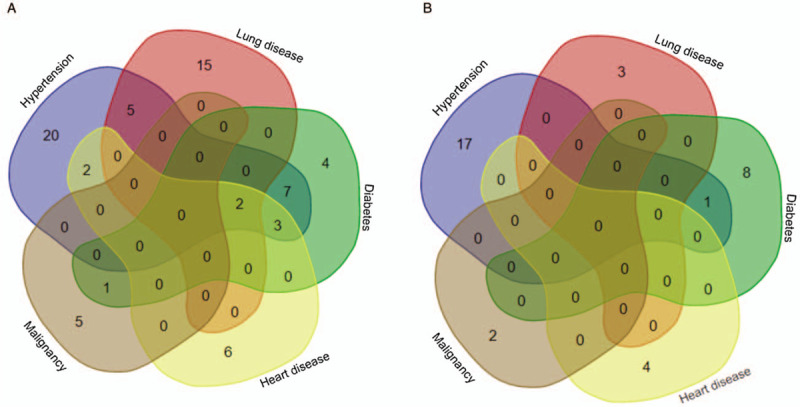
Background: The 2019 novel coronavirus has caused the outbreak of the acute respiratory disease in Wuhan, Hubei Province of China since December 2019. This study was performed to analyze the clinical characteristics of patients who succumbed to and who recovered from 2019 novel coronavirus disease (COVID-19). Methods: Clinical data were collected from two tertiary hospitals in Wuhan. A retrospective investigation was conducted to analyze the clinical characteristics of fatal cases of COVID-19 (death group) and we compare them with recovered patients (recovered group). Continuous variables were analyzed using the Mann-Whitney U test. Categorical variables were analyzed by χ 2 test or Fisher exact test as appropriate. Results: Our study enrolled 109 COVID-19 patients who died during hospitalization and 116 recovered patients. The median age of the death group was older than the recovered group (69 [62, 74] vs. 40 [33, 57] years, Z = 9.738, P < 0.001). More patients in the death group had underlying diseases (72.5% vs. 41.4%, χ 2 = 22.105, P < 0.001). Patients in the death group had a significantly longer time of illness onset to hospitalization (10.0 [6.5, 12.0] vs. 7.0 [5.0, 10.0] days, Z = 3.216, P = 0.001). On admission, the proportions of patients with symptoms of dyspnea (70.6% vs. 19.0%, χ 2 = 60.905, P < 0.001) and expectoration (32.1% vs. 12.1%, χ 2 = 13.250, P < 0.001) were significantly higher in the death group. The blood oxygen saturation was significantly lower in the death group (85 [77, 91]% vs. 97 [95, 98]%, Z = 10.625, P < 0.001). The white blood cell (WBC) in death group was significantly higher on admission (7.23 [4.87, 11.17] vs. 4.52 [3.62, 5.88] ×10 9/L, Z = 7.618, P < 0.001). Patients in the death group exhibited significantly lower lymphocyte count (0.63 [0.40, 0.79] vs. 1.00 [0.72, 1.27] ×10 9/L, Z = 8.037, P < 0.001) and lymphocyte percentage (7.10 [4.45, 12.73]% vs. 23.50 [15.27, 31.25]%, Z = 10.315, P < 0.001) on admission, and the lymphocyte percentage continued to decrease during hospitalization (7.10 [4.45, 12.73]% vs. 2.91 [1.79, 6.13]%, Z = 5.242, P < 0.001). Alanine transaminase (22.00 [15.00, 34.00] vs. 18.70 [13.00, 30.38] U/L, Z = 2.592, P = 0.010), aspartate transaminase (34.00 [27.00, 47.00] vs. 22.00 [17.65, 31.75] U/L, Z = 7.308, P < 0.001), and creatinine levels (89.00 [72.00, 133.50] vs. 65.00 [54.60, 78.75] μmol/L, Z = 6.478, P < 0.001) were significantly higher in the death group than those in the recovered group. C-reactive protein (CRP) levels were also significantly higher in the death group on admission (109.25 [35.00, 170.28] vs. 3.22 [1.04, 21.80] mg/L, Z = 10.206, P < 0.001) and showed no significant improvement after treatment (109.25 [35.00, 170.28] vs. 81.60 [27.23, 179.08] mg/L, Z = 1.219, P = 0.233). The patients in the death group had more complications such as acute respiratory distress syndrome (ARDS) (89.9% vs. 8.6%, χ 2 = 148.105, P < 0.001), acute cardiac injury (59.6% vs. 0.9%, χ 2 = 93.222, P < 0.001), acute kidney injury (18.3% vs. 0%, χ 2 = 23.257, P < 0.001), shock (11.9% vs. 0%, χ 2 = 14.618, P < 0.001), and disseminated intravascular coagulation (DIC) (6.4% vs. 0%, χ 2 = 7.655, P = 0.006). Conclusions: Compared to the recovered group, more patients in the death group exhibited characteristics of advanced age, pre-existing comorbidities, dyspnea, oxygen saturation decrease, increased WBC count, decreased lymphocytes, and elevated CRP levels. More patients in the death group had complications such as ARDS, acute cardiac injury, acute kidney injury, shock, and DIC.
Overview
The claims and statistics of this paper haven’t been checked yet.
Free: it reads the open-access text and checks the first 5 claims that cite a source we can check. Create a free account to check every claim.
Integrity signals
Registry
Cites
Statistics
Figures
Verification
Claims the paper makes
The claims and statistics of this paper haven’t been checked yet.
Free: it reads the open-access text and checks the first 5 claims that cite a source we can check. Create a free account to check every claim.
Claims other papers make about this one
Each is checked against this paper’s own text: does it say what the citing paper says it does?
The cited source says what the claim attributes to it.
In the citing paper
“Given the fact that this group is reportedly more vulnerable during COVID-19 (Chen et al., 2020; Deng et al., 2020; Liu W. et al., 2020; Pan et al., 2020; World Health Organization, 2020), the findings are consistent with other similar studies (Rajkumar, 2020; Özdin and Bayrak Özdin, 2020).”
From Knowledge of COVID-19 and Its Influence on Mindfulness, Cognitive Emotion Regulation and Psychological Flexibility in the Indian Community (2020) · cites this paper as Deng et al., 2020
Self-check
Percentages, sums and reported differences re-computed from the paper’s own numbers.
The self-check needs the paper’s full text.
Citations
Cites
Clinical features of patients infected with 2019 novel coronavirus in Wuhan, China
Huang, C., Wang, Y., Li, X., Ren, L., Zhao, J., Hu, Y., Zhang, L., Fan, G., Xu, J., Gu, X., et al. (2020) · The Lancet · doi:10.1016/s0140-6736(20)30183-5 · Cited by 48,884
A novel coronavirus from patients with pneumonia in China, 2019
Zhu, N., Zhang, D., Wang, W., Li, X., Yang, B., Song, J., Zhao, X., Huang, B., Shi, W., Lu, R., et al. (2020) · New England Journal of Medicine · doi:10.1056/nejmoa2001017 · Cited by 28,244
Yang, X., Yu, Y., Xu, J., Shu, H., Xia, J., Liu, H., Wu, Y., Zhang, L., Yu, Z., Fang, M., et al. (2020) · The Lancet Respiratory Medicine · doi:10.1016/s2213-2600(20)30079-5 · Cited by 10,066 · cited 7×
“Discussion Table 2: Clinical symptoms and signs of the death and recovered groups with COVID-19.”
ResultInfluentialSelf-citationChan, J. F.-W., Yuan, S., Kok, K.-H., To, K. K.-W., Chu, H., Yang, J., Xing, F., Liu, J., Yip, C. C.-Y., Poon, R. W.-S., et al. (2020) · The Lancet · doi:10.1016/s0140-6736(20)30154-9 · Cited by 8,944 · cited 2×
“2019-nCoV is also a beta coronavirus that causes ARDS and can be transmitted between humans.([7]) Similar to SARS-CoV, the 2019-nCoV is speculated to use the angiotensin-converting enzyme (ACE) 2 as a receptor for cell invasion.”
BackgroundWan, Y., Shang, J., Graham, R., Baric, R. S., & Li, F. (2020) · Journal of Virology · doi:10.1128/jvi.00127-20 · Cited by 4,341
Self-citationAssiri, A., Al-Tawfiq, J. A., Al-Rabeeah, A. A., Al-Rabiah, F. A., Al-Hajjar, S., Al-Barrak, A., Flemban, H., Al-Nassir, W. N., Balkhy, H. H., Al-Hakeem, R. F., et al. (2013) · The Lancet Infectious Diseases · doi:10.1016/s1473-3099(13)70204-4 · Cited by 1,435 · cited 2×
“Previous studies also showed that the transaminases were elevated in the MERS and SARS patients.([20-23]) A recent study showed that elderly patients infected with 2019-nCoV have higher CRP levels.”
BackgroundResultWeiss, S. R., & Leibowitz, J. L. (2011) · Advances in Virus Research · doi:10.1016/b978-0-12-385885-6.00009-2 · Cited by 896 · cited 1×
“Coronaviruses are enveloped RNA viruses that could affect birds, humans, and other mammals, leading to respiratory, digestive, hepatic, and nervous system disorders.([4,5]) Among the six coronaviruses known to infect humans, two of them can cause ARDS, which are the severe acute respiratory syndrome coronavirus (SARSC…”
BackgroundFatal swine acute diarrhoea syndrome caused by an HKU2-related coronavirus of bat origin
Zhou, P., Fan, H., Lan, T., Yang, X.-L., Shi, W.-F., Zhang, W., Zhu, Y., Zhang, Y.-W., Xie, Q.-M., Mani, S., et al. (2018) · Nature · doi:10.1038/s41586-018-0010-9 · Cited by 757 · cited 1×
“Coronaviruses are enveloped RNA viruses that could affect birds, humans, and other mammals, leading to respiratory, digestive, hepatic, and nervous system disorders.([4,5]) Among the six coronaviruses known to infect humans, two of them can cause ARDS, which are the severe acute respiratory syndrome coronavirus (SARSC…”
BackgroundSelf-citationWong, R. S. M., Wu, A., To, K. F., Lee, N., Lam, C. W. K., Wong, C. K., Chan, P. K. S., Ng, M. H. L., Yu, L. M., Hui, D. S., et al. (2003) · BMJ · doi:10.1136/bmj.326.7403.1358 · Cited by 561 · cited 1×
“that during the acute phase of SARS-CoV infection in humans, the blood lymphocyte counts, particularly CD4 + and CD8 + T cell counts, were decreased.([16-18]) Another study suggested that lymphocyte cells, especially CD4 + and CD8 + T cells may play protective roles in coronavirus infection.”
BackgroundSun, P., Qie, S., Liu, Z., Ren, J., Li, K., & Xi, J. (2020) · Journal of Medical Virology · doi:10.1002/jmv.25735 · Cited by 523
Cited by
Items 401–500 of 656
Predictors of death in COVID-19 vaccine breakthrough infections in Brazil
Estofolete, C. F., Fares, G. F., Banho, C. Á., Sacchetto, L., Campos, G. R. F., Moraes, M. M., Santos, T. M. D., da Silva, G. C. D., Queiroz, F., Mendes, L. D. M., et al. (2022) · Journal of Infection · doi:10.1016/j.jinf.2022.01.040 · Cited by 7
Testicular pathological alterations associated with SARS-CoV-2 infection
Ly, J., Campos, R. K., Hager-Soto, E. E., Camargos, V. N., & Rossi, S. L. (2023) · Frontiers in Reproductive Health · doi:10.3389/frph.2023.1229622 · Cited by 9
Neurological manifestations in mild and moderate cases of COVID-19
Azim, G. S. A., & Osman, M. A. (2021) · The Egyptian Journal of Neurology Psychiatry and Neurosurgery · doi:10.1186/s41983-021-00363-8 · Cited by 8
“1% in different reports of COVID-19 presentation [10, 11].”
BackgroundHaghighi, M., Khoshrang, H., Tehran, S. G., Aghajanzadeh, P., Jafarinezhad, A., Souri, Z., Masoumi, H. T., Darabipour, Z., & Alikelayeh, M. G. (2021) · Journal of Guilan University of Medical Sciences · doi:10.32598/jgums.30.2.1619.2 · Cited by 9
SARS-CoV-2 Infection in Kidney Transplant Recipients: A Single-Centre Study of 20 Cases from India
Tatapudi, R. R., Kopparti, V., Poosapati, A., Metta, S., Gongada, A. R., & Vedulla, B. (2021) · International Journal of Nephrology · doi:10.1155/2021/2243095 · Cited by 7
“, in their studies on risk factors, have shown a strong association between elevated CRP and unfavourable outcomes including ARDS and death in COVID-19 patients [21, 22].”
BackgroundPortuondo, J., Bilbao‐González, A., Tíscar-González, V., Gutiérrez, I., García‐Gutiérrez, S., Martínez-Mejuto, A., Santiago-Garín, J., Arribas-García, S., García-Asensio, J., Chart-Pascual, J., et al. (2022) · Internal and Emergency Medicine · doi:10.1007/s11739-022-02931-z · Cited by 7
Arjmand, B., Ghorbani, F., Koushki, M., & Rezai-Tavirani, M. (2020) · Gastroenterology and hepatology from bed to bench. · Cited by 10
Autopsy Findings and Inflammatory Markers in SARS-CoV-2: A Single-Center Experience
Cut, T. G., Ciocan, V., Novacescu, D., Voicu, A., Marinescu, A. R., Lăzureanu, V. E., Mureşan, C. O., Enache, A., & Dumache, R. (2022) · International Journal of General Medicine · doi:10.2147/ijgm.s389300 · Cited by 7
“Deng et al and Shi et al found that higher levels of CRP and IL-6 in SARS-CoV-2 patients were associated with myocardial injury, ARDS development, multiorgan failure and death.(40,41) In addition, Stassi et al observed a decrease in CRP levels with increasing PMI.”
BackgroundFabry disease patients have an increased risk of stroke in the COVID-19 ERA. A hypothesis
Reisin, R. C., Rozenfeld, P. A., & Bonardo, P. (2020) · Medical Hypotheses · doi:10.1016/j.mehy.2020.110282 · Cited by 7
Parohan, M., Yaghoubi, S., Djalali, M., Seraji, A., Javanbakht, M. H., & Mousavi, Z. S. (2020) · medRxiv · doi:10.1101/2020.08.27.20183632 · Cited by 7
BİSWAS, P. S., Sen, D., Homchoudhary, A., Makkar, D., KAPOOR, M., & Goyal, A. (2020) · Journal of Microbiology and Infectious Diseases · doi:10.5799/jmid.790260 · Cited by 7
“[9,20,29-31,37,47], 4 studies revealed no effect on mortality and rest 2 studies showed favorable outcome.”
BackgroundMethodClinical and laboratory characteristics of patients with COVID-19 and concomitant type 2 diabetes
Demidova, T. Y., Геннадьевна, Л. К., Perekhodov, S. N., Antsiferov, M. B., & Oynotkinova, O. S. (2021) · CARDIOVASCULAR THERAPY AND PREVENTION · doi:10.15829/1728-8800-2021-2750 · Cited by 8
García, C. G., & Vega-Sánchez, Á. E. (2021) · Medicina Crítica · doi:10.35366/100000 · Cited by 18
Parra-Izquierdo, V., Flórez-Sarmiento, C., Romero‐Sánchez, C., & del Risco, F. G. (2020) · Revista Colombiana de Gastroenterología · doi:10.22516/25007440.532 · Cited by 17
Bi-atrial thrombosis in a patient with SARS-CoV-2 infection: a case report
Torres, R., Gul, F., Azmaiparashvili, Z., & Patarroyo‐Aponte, G. (2020) · European Heart Journal - Case Reports · doi:10.1093/ehjcr/ytaa367 · Cited by 6
Nursing approaches and their effect on the health of elderly with COVID-19
Genç, F. Z., & Uslu, A. (2020) · International Journal of Emerging Trends in Health Sciences · doi:10.18844/ijeths.v4i3.5311 · Cited by 6
Lio, K. U., & Rali, P. M. (2020) · Lung India · doi:10.4103/lungindia.lungindia_226_20 · Cited by 6
“Although the clinical and epidemiological features of COVID-19 have been well-described,[1-5] the underlying mechanism influencing disease severity remains to be elucidated.”
BackgroundLadani, A. P., Loganathan, M. A., Kolikonda, M. K., & Lippmann, S. (2021) · Southern Medical Journal · doi:10.14423/smj.0000000000001337 · Cited by 10
Chen, H., Yang, G., Long, Y., & Li, C. (2021) · Evidence-based Complementary and Alternative Medicine · doi:10.1155/2021/5582908 · Cited by 6
Multimorbidity Profile of COVID-19 Deaths in Portugal during 2020
Nogueira, P., Nobre, M. D. A., Elias, C. P., Feteira-Santos, R., Martinho, A. C.-V., Camarinha, C., Bacelar–Nicolau, L., da Costa, A. C. J. S., Furtado, C., Morais, L., et al. (2022) · Journal of Clinical Medicine · doi:10.3390/jcm11071898 · Cited by 11
“Several individual [6] and clinical characteristics [7,8] have been associated with poor COVID-19 outcomes.”
BackgroundCould Preventing Thromboembolism be a New Hope for COVID-19 Patients?
Palone, M. R. T., Storari, L., & Barbari, V. (2020) · Electronic Journal of General Medicine · doi:10.29333/ejgm/8244 · Cited by 6
Arterial oxygen saturation and hypoxemia in hemodialysis patients with COVID-19
Preciado, P., Silva, L. M. T., Ye, X., Zhang, H., Wang, Y., Waguespack, P., Kooman, J. P., & Kotanko, P. (2021) · Clinical Kidney Journal · doi:10.1093/ckj/sfab019 · Cited by 6
Review of Pharmacotherapy Trialed for Management of the Coronavirus Disease-19
Hall, K., MFONE, F., Shallcross, M., & Pathak, V. (2021) · Eurasian Journal of Medicine · doi:10.5152/eurasianjmed.2021.20384 · Cited by 6
Prevalence of COVID-19: A Look behind the Scenes from the UAE and IndiaPreprint
Bloukh, S. H., Shaikh, A. A., Pathan, H. M., & Edis, Z. (2020) · Preprints.org · doi:10.20944/preprints202004.0179.v1 · Cited by 6
“Patients in this group had also complications like acute respiratory distress syndrome, acute cardiac injury, shock, acute kidney injury and disseminated intravascular coagulation [29].”
BackgroundResultInfluentialPrevalence of COVID-19: A Look behind the ScenesPreprint
Bloukh, S. H., Shaikh, A. A., Pathan, H. M., & Edis, Z. (2020) · Preprints.org · doi:10.20944/preprints202004.0179.v2 · Cited by 6
“Patients in this group had also complications like acute respiratory distress syndrome, acute cardiac injury, shock, acute kidney injury and disseminated intravascular coagulation [29].”
BackgroundInfluentialWalther, T., & Kuebler, W. M. (2020) · American Journal of Physiology-Lung Cellular and Molecular Physiology · doi:10.1152/ajplung.00118.2020 · Cited by 6
Archana, B., Shyamsunder, S., & Das, R. (2021) · medRxiv · doi:10.1101/2021.03.30.21254635 · Cited by 6
Efficacy and safety of acupuncture therapy for COVID-19: Retracted
Huang, S., Wang, S., Wang, M., Rong, J., Yu, W., Li, J., Han, J., & Yang, D. (2020) · Medicine · doi:10.1097/md.0000000000020407 · Cited by 5
RetractedEarly Changes in Clinical and Laboratory Parameters in Patients Died of COVID-19
Bakhtiyarova, K., Оганесович, П. А., Av, A., Vishnyakov, D. S., Александрович, Г. А., Gilyazova, I. R., Nasibullina, A. K., Kislitsyna, M. V., Vakhitova, A. A., Золотухин, К. Н., et al. (2022) · Messenger of Anesthesiology and Resuscitation · doi:10.21292/2078-5658-2022-19-5-55-62 · Cited by 5
Bains, S. S., Hameed, D., Dubin, J. A., Chen, Z., Rizzo, S. A., Nielen, D. L. V., Delanois, R. E., & Nace, J. (2023) · Archives of Orthopaedic and Trauma Surgery · doi:10.1007/s00402-023-04969-w · Cited by 5
Thrombosis management and challenges in COVID-19 patients presenting with acute coronary syndromes
Kaddoura, R., & Salam, A. M. (2020) · Heart Views · doi:10.4103/heartviews.heartviews_143_20 · Cited by 9
“DIC may be associated with a more severe disease[2] and with a significantly higher risk of mortality[13,14] (88%)[15] without the increased risk of bleeding events,[15] unlike the clinical manifestations with other RNA-type viral infections such as Ebola, i.”
BackgroundAtlas, A., Altay, N., Karahan, M. A., Pehlivan, V. F., Pehlivan, B., Duran, E., & Erol, M. K. (2021) · Journal of Surgery and Medicine · doi:10.28982/josam.930254 · Cited by 5
“Patients with severe diseases and fatal outcomes have been reported to have a decreased lymphocyte/white blood cell ratio both at admission and during hospitalization [9, 24].”
Routine laboratory parameters predict serious outcome as well as length of hospital stay in COVID-19
Jeraiby, M., Hakami, M. I., Albarqi, M. B., Areda, R. I., Haddad, M. A., & Iqbal, J. (2021) · Saudi Medical Journal · doi:10.15537/smj.2021.42.11.20210429 · Cited by 6
Youssry, I., Elaziz, D. S. A., Ayad, N., & Eyada, I. K. (2022) · Hematology Reports · doi:10.3390/hematolrep14020014 · Cited by 5
Trombosis y COVID-19: revisión de alcance
Baselga, M. T., Fernández, M. L., Marín, A., Fernández‐Capitán, C., Lorenzo, A., Martínez‐Alés, G., & Quintana‐Díaz, M. (2020) · Acta Colombiana de Cuidado Intensivo · doi:10.1016/j.acci.2020.09.002 · Cited by 8
Mohammed, I. A., Ali, A. H., & shenaty, J. N. A. (2020) · Journal of the Faculty of Medicine Baghdad · doi:10.32007/jfacmedbagdad.6231775 · Cited by 5
Sun, W., & Li, J. (2021) · World Academy of Sciences Journal · doi:10.3892/wasj.2021.105 · Cited by 8
CORONAVIRUS INFECTION (SARS-CoV-2) IN PREGNANT WOMEN: SYSTEMATIC REVIEWPreprint
Gracia, P. V., & Luo, C. (2020) · doi:10.22541/au.158592515.56139684 · Cited by 5
Umadevi, K., Clementina, R., Sundeep, D., Ali, M. I., Rajarikam, N., & Shankaralingappa, A. (2024) · Aspects of Molecular Medicine · doi:10.1016/j.amolm.2024.100043 · Cited by 4
de Moura, E. L., Ferreira, J. M., dos Santos, A. C. M., da Silva, D. M., da Silva, M. L. F., Silva, G. K. M. D. O., Silva, P. H. N., dos Santos, J. A., Barbosa, M. A. D. S., Neto, A. B. L., et al. (2021) · Research Society and Development · doi:10.33448/rsd-v10i2.12533 · Cited by 5
Almarashda, A., Rabbani, S. A., Kurian, M., & Cherian, A. (2022) · Journal of Clinical Medicine · doi:10.3390/jcm11092439 · Cited by 4
“Coagulation disorders are frequently reported in patients with severe COVID-19 [53].”
BackgroundPrediction of the Rehabilitation Duration and Risk Management for Mild-Moderate COVID-19
Zheng, Q.-N., Xu, M., Zheng, Y.-L., Wang, X., & Zhao, H. (2020) · Disaster Medicine and Public Health Preparedness · doi:10.1017/dmp.2020.214 · Cited by 6
Tinajero, A. S., Cueto, E. G., Martínez-Orozco, J. A., Vargas, E. B., Santillán, D. P. R., & Escobar, H. R. (2020) · American Journal of Case Reports · doi:10.12659/ajcr.926737 · Cited by 4
Skin manifestations of a new coronovirus infection COVID-19 caused by SARS-CoV-2
Khryanin, A. А., Sturov, V. G., Надеев, А. П., & Bocharova, V. K. (2020) · Vestnik dermatologii i venerologii · doi:10.25208/vdv1141 · Cited by 4
Yakar, M. N., Ergan, B., Ergün, B., Küçük, M., Cantürk, A., Ergon, M. C., Gezer, N. S., Yaka, E., Cömert, B., & Gökmen, A. N. (2021) · TURKISH JOURNAL OF MEDICAL SCIENCES · doi:10.3906/sag-2104-356 · Cited by 7
“In previous studies, hypertension [7,8,22], diabetes mellitus [7], chronic heart disease [5,7], chronic lung disease [22], cerebrovascular disease [3,7], chronic kidney Pseudomonas spp.”
BackgroundIn-stent Thrombosis and COVID-19 Infection: Current Insights on the Mechanistic Relationship
Felekos, I., El‐Medany, A. Y., Kandoole-Kabwere, V., Lonsdale, N., & Doolub, G. (2022) · Current Cardiology Reviews · doi:10.2174/1573403x18666220512142019 · Cited by 5
“Another retrospective study of 225 COVID-19 patients in Wuhan, China, found DIC present in 6.4% of reported fatalities [24].”
BackgroundInfluentialPre-Hospital Management of Patients with COVID-19 and the Impact on Hospitalization
Grannec, F., Meddeb, L., Tissot‐Dupont, H., Gentile, S., & Brouqui, P. (2023) · Medicina · doi:10.3390/medicina59081440 · Cited by 4
“In COVID-19, delaying admission to hospital after the onset of the illness is associated with prolonged SARS-COV-2 shedding [17], and the time from OS to admission (PHP duration) is significantly associated with death [18].”
BackgroundJokšić-Mazinjanin, R., Marić, N., Đuričin, A., Bjelobrk, M., Bjelić, S., Trajković, M., & Kovacevic, M. (2023) · Medicina · doi:10.3390/medicina60010039 · Cited by 4
“It has been reported that patients with severe disease and fatal outcomes present with a decreased lymphocyte/white blood cell ratio both on admission and during hospitaliza-Medicina tion [23,24].”
BackgroundAcute kidney injury during the COVID-19 outbreak
Pan, X., Xu, D., Chen, W., Chen, J., Ye, J.-Q., Zuo, L., & Cui, X. (2020) · Nephrology Dialysis Transplantation · doi:10.1093/ndt/gfaa218 · Cited by 6
Dyspnea in COVID-19: not just pneumonia
Coppola, A., Annunziata, A., Lanza, M., Imitazione, P., & Fiorentino, G. (2020) · Minerva Pneumologica · doi:10.23736/s0026-4954.20.01883-0 · Cited by 4
Promoting the Resilience of the Italian Population Against SARS-CoV-2
Bottaccioli, A. G., Lazzari, D., & Bottaccioli, F. (2021) · Frontiers in Psychiatry · doi:10.3389/fpsyt.2020.560017 · Cited by 5
Can disseminated intravascular coagulation scores predict mortality in COVID-19 patients?
Anwar, N., Tashfeen, S., Akhtar, F., Noor, A., Khan, S. A., & Omair, A. (2021) · Journal of Taibah University Medical Sciences · doi:10.1016/j.jtumed.2021.03.002 · Cited by 4
“(2020) reported that 73% of their COVID-19 patients were males.(16,17) In our sample, this could mainly be due to cultural trends of more males working outside leading to a higher exposure to the virus.”
Impact of the COVID-19 pandemic on interest in renal diseases
Oto, Ö. A., Kardeş, S., Güller, N., Şafak, S., Dirim, A. B., Başhan, Y., Demir, E., Artan, A. S., Yazıcı, H., & Türkmen, A. (2021) · Environmental Science and Pollution Research · doi:10.1007/s11356-021-15675-8 · Cited by 4
Current trends in diagnosis and treatment strategies of COVID-19 infection
Tiwari, V., Kumar, M., Tiwari, A., Sahoo, B. M., Singh, S. K., Beniwal, S. K., & Saharan, R. (2021) · Environmental Science and Pollution Research · doi:10.1007/s11356-021-16715-z · Cited by 4
Wang, L., Gao, Y., Zhang, Z., Pan, C.-K., Wang, Y., Zhu, Y.-C., Qi, Y.-P., Xie, F., Du, X., Li, N., et al. (2022) · World Journal of Clinical Cases · doi:10.12998/wjcc.v10.i23.8161 · Cited by 4
Hemostatic system and COVID-19 crosstalk: A review of the available evidence
Wifi, M.-N. A., Morad, M. A., Sheemy, R. Y. E., Abdeen, N. S., Afify, S., Abdalgaber, M., Abdellatef, A. A., Zaghloul, M. S., Alboraie, M. A. A., & El‐Kassas, M. (2022) · World Journal of Methodology · doi:10.5662/wjm.v12.i5.331 · Cited by 4
Schwartz, A., Martínez-Sánchez, G., de Lucía, A. M., Viana, S. M., & Mita, C. A. (2020) · Preprints.org · doi:10.20944/preprints202006.0233.v1 · Cited by 5
Back Pain and Related Factors in Patients with COVID-19Preprint
Uz, C., Umay, E., Gündoğdu, İ., & Uz, F. B. (2020) · Research Square · doi:10.21203/rs.3.rs-121763/v1 · Cited by 4
“The clinical characteristics of the disease may vary from asymptomatic infection to respiratory failure (3).”
BackgroundInfluentialŞanlıalp, S. Ç., & Şanlıalp, M. (2021) · Angiology · doi:10.1177/00033197211032784 · Cited by 4
“One study demonstrated that elevation in the CRP levels during hospitalization was associated with the complications due to COVID-19 disease.(11) However, in this study, no detailed information was given regarding the cause of death.”
BackgroundHallazgos cutáneos en la pandemia de COVID-19 en la Región de Murcia
Pérez‐Suárez, B., Martínez‐Menchón, T., & Cutillas‐Marco, E. (2020) · Medicina Clínica · doi:10.1016/j.medcli.2020.05.001 · Cited by 3
Bassetti, M., Brucci, G., Vena, A., & Giacobbe, D. R. (2023) · Expert Opinion on Pharmacotherapy · doi:10.1080/14656566.2023.2239154 · Cited by 3
A Mini-Review on Cardiovascular and Hematological Complications of COVID-19
Masjedi, M., & Jafari, P. (2020) · Coronaviruses · doi:10.2174/2666796701999201026211142 · Cited by 3
“One of the major contributing factors to coagulation abnormalities in patients with COVID-19 is elevated D-dimer greater to more than 6-fold of the upper limit of normal [35].”
BackgroundČerňan, M., Szotkowski, T., Obr, A., Látal, V., Hluší, A., Krhovská, P., Klementová, O., Kolář, M., Sauer, P., Faber, E., et al. (2021) · Clinical Lymphoma Myeloma & Leukemia · doi:10.1016/j.clml.2021.04.016 · Cited by 3
da Silva, G. F. R., Callante, A. A., do Nascimento, D. P., de Araújo, I. P., Ribeiro, C. H. M. A., & Prete, A. C. L. (2022) · Research Society and Development · doi:10.33448/rsd-v11i2.25772 · Cited by 4
Prediction of Length of Hospital Stay of COVID-19 Patients Using Gradient Boosting Decision Tree
Askari, G., Rouhani, M. H., & Sattari, M. A. (2022) · International Journal of Biomaterials · doi:10.1155/2022/6474883 · Cited by 3
“Considering that the mortality rate of hospitalized patients varies from 5% to 25% [11], if the system can predict the patient hospitalization time, it will implement an effective strategy to overcome this issue.”
BackgroundProcesso de enfermagem aplicado ao paciente com COVID-19 a partir de uma scoping review
de Melo, É. C. A., Noronha, J. A. F., dos Santos, S. M. P., Neto, J. H. B., da Silva, M. A., & de Oliveira, T. L. (2021) · Research Society and Development · doi:10.33448/rsd-v10i2.12741 · Cited by 3
Kidney Complications of COVID-19: A Systematic Review and Meta-Analysis
Nasiri, N., Rahmati, S., Etminan, A., Sharifi, H. P., Bazrafshan, A., Karamouzian, M., & Sharifi, A. (2021) · Journal of Research in Health Sciences · doi:10.34172/jrhs.2021.39 · Cited by 4
Association of Diabetes and Severe COVID-19 Outcomes: A Rapid Review and Meta-Analysis
Kubjane, M., McCreedy, N., Cariou, B., Rubio, M. Á., Panton, U. H., Hvid, C. A., Hettiarachchige, N., & Mearns, H. (2020) · Journal of Endocrinology and Metabolism · doi:10.14740/jem698 · Cited by 3
The impact of chronic cardiovascular disease on COVID-19 clinical course
Magalhães, B. K., Queiroz, F., Salomão, M. L. M., & de Godoy, M. F. (2022) · Journal of Clinical and Translational Research · doi:10.18053/jctres.08.202204.005 · Cited by 5
“Univariate analyses have found that having chronic CVD before COVID-19 infection is associated to worse prognoses, with factors such as elevation of cell injury markers [5-7], inflammation [7] and thrombosis [6,7], lymphopenia [7], desaturation [6], and ultimately death [6-19].”
BackgroundGrabowski, M., Ozierański, K., Główczyńska, R., Tymińska, A., Niedziela, M., Kowalik, R., Lodziński, P., Kołtowski, Ł., Kochman, J., Balsam, P., et al. (2020) · Polskie Archiwum Medycyny Wewnętrznej · doi:10.20452/pamw.15592 · Cited by 2
“(including liver and renal failure), cytokine storm or undefined etiology [37].”
BackgroundOtdelenov, V. A., Mirzaev, K. B., & Sychev, D. A. (2020) · Kachestvennaya Klinicheskaya Praktika = Good Clinical Practice · doi:10.37489/2588-0519-2020-s4-18-22 · Cited by 3
Clinical, serological, and radiological characteristics of COVID-19 patients in Makkah, Saudi Arabia
Nazir, I., Shareef, M. A., Rahman, S. S. U., Imran, I., Abdullah, H. M., Shaaban, H. E., Khalil, K. A., Hazmi, A. M. M. A., Ahmed, W. A., & Alkalkami, A. M. (2021) · Saudi Journal for Health Sciences · doi:10.4103/sjhs.sjhs_231_20 · Cited by 3
How the nature of behavior change affects the impact of asymptomatic coronavirus transmission
Alharbi, M. H., & Kribs, C. M. (2022) · Ricerche di Matematica · doi:10.1007/s11587-022-00691-8 · Cited by 3
Jänig, C. W., Gurney, J. M., Froklage, R., Groth, R., Wirth, C., van de Krol, H., Schmidbauer, W., & Güsgen, C. (2020) · Military Medicine · doi:10.1093/milmed/usaa296 · Cited by 3
Ebrahimi, M., Malehi, A. S., & Rahim, F. (2020) · SSRN Electronic Journal · doi:10.2139/ssrn.3580517 · Cited by 3
Agarwal, N., Dua, D., Sud, R., Yadav, M., Agarwal, A., & Vijayan, V. (2021) · medRxiv · doi:10.1101/2021.08.05.21261565 · Cited by 4
“One of the most persistent findings, replicated in many studies, has been the association of lymphopaenia, as well as an elevated NLR, with severity and mortality in COVID(13), (14), (15), (16)(17).”
BackgroundEffect of SARS-CoV-2 Variants (Alpha, Beta, Delta, Omicron) on Inflammatory Parameters
İrvem, A., Cakir, D. E., Aydın, C., Komurcu, S. Z. M., Çelik, Ş., & Kazezoğlu, C. (2025) · Jundishapur Journal of Microbiology · doi:10.5812/jjm-159675 · Cited by 2
Tedesco, W. L. D., Danelli, T., Tano, Z. N., Cassela, P. L. C. S., Trigo, G. L., Cardoso, K. D. M., Loni, L. P., Ahrens, T. M., Espinosa, B. R., Fernandes, Á. J., et al. (2025) · Human Immunology · doi:10.1016/j.humimm.2025.111337 · Cited by 3
Is the Thoracic and Back Muscle Mass Associated with Disease Severity in Patients with COVID-19?
Yığman, Z. A., Umay, E., Aktürk, G., & Ergün, M. Ç. (2022) · Turkish Thoracic Journal · doi:10.5152/turkthoracj.2022.21145 · Cited by 2
“123 Turk Thorac J 2022; 23(2): 123-129”
Protective effects of IL18-105G > A and IL18-137C > G genetic variants on severity of COVID-19
Mori, M. T. E., Simão, A. N. C., Danelli, T., Oliveira, S. R., Cassela, P. L. C. S., Trigo, G. L., Cardoso, K. M., Tejo, A. M., Tano, Z. N., de Almeida, E. R. D., et al. (2023) · Cytokine · doi:10.1016/j.cyto.2023.156476 · Cited by 4
Gonzalez, C., Musso, G., Louzan, J. R., Dominguez, J. M., Gomez, C., Appendino, G., Abaca, A., Clemente, L., Latasa, D., Manago, M., et al. (2024) · Medicina Intensiva · doi:10.1016/j.medin.2023.07.002 · Cited by 2
Hachimi, A., El‐Mansoury, B., & Merzouki, M. (2025) · Microbial Pathogenesis · doi:10.1016/j.micpath.2025.107360 · Cited by 3
A Review of the Hematological Picture of Severe COVID-19 Infection
Amoroso, D., Bongo, S., Copponi, A., Rossi, V., Giorgio, R. D., Bernardini, S., Ippoliti, L., & Morello, M. (2025) · Cureus · doi:10.7759/cureus.78797 · Cited by 2
Early Pharmaceutical Treatment Modalities for COVID-19 Patients in the Beginning of the Pandemic
Shareef, R. H., Sharba, Z. F., Muhammad-Baqir, B. M., & Mahbuba, W. A. (2025) · Medical Journal of Babylon · doi:10.4103/mjbl.mjbl_845_23 · Cited by 2
Anžič, N., Stoiber, W., Obermeyer, A., Mertz, K. D., Stalder, A. K., Haslbauer, J. D., & Tzankov, A. (2025) · Journal of Leukocyte Biology · doi:10.1093/jleuko/qiaf056 · Cited by 2
COVID-19’un Tanı ve Tedavi Sürecinde Hematolojik Parametreler
Orhan, M. F., & Büyükavcı, M. (2020) · JOURNAL OF BIOTECHNOLOGY AND STRATEGIC HEALTH RESEARCH · doi:10.34084/bshr.718051 · Cited by 2
The spatiotemporal trend of renal involvement in COVID-19: A pooled analysis of 17 134 patients
Feng, Y., Wang, K., Mo, J., Xu, Y., Wang, L., Jin, C., Chen, X., & Yi, B. (2021) · International Journal of Infectious Diseases · doi:10.1016/j.ijid.2021.03.082 · Cited by 2
Self-citationSpencer, K. R., Singer, E. A., & Girda, E. (2021) · Journal of Cancer Biology · doi:10.46439/cancerbiology.2.029 · Cited by 4
Alapaty, S., Dhulipala, S., Natikar, J. A., Ajit, H., Sirsikar, M., Annavarapu, U., & Mahendrakar, D. (2022) · Medical Journal of Dr D Y Patil Vidyapeeth · doi:10.4103/mjdrdypu.mjdrdypu_437_22 · Cited by 2
Williams, M. E., & Fielding, B. C. (2020) · AIDS Research and Human Retroviruses · doi:10.1089/aid.2020.0136 · Cited by 2
“148 Alternative markers which may also be dysregulated in patients with COVID-19, include CRP, 134–136 VEGF, 137 and lipocalin-2.”
Bohórquez-Rivero, J., Sáenz-López, J., Villamizar, K. E. T., & Sáenz, R. C. G. (2021) · Revista Ciencias Biomédicas · doi:10.32997/rcb-2021-3235 · Cited by 2
Liver Injury in COVID-19: A Direct Hit or Collateral Damage?
Vairappan, B., Wright, G. A. K., Corrigall, D., & Ravikumar, T. S. (2021) · Infectious Disorders - Drug Targets · doi:10.2174/1871526521666210913110500 · Cited by 2
Erken evre COVİD-19 hastalarında biyokimyasal parametrelerin değerlendirilmesi
Balcı, Ş., POYRAZ, Z., Gülüm, C., Aslan, G., Tamer, L., & Çimen, M. B. Y. (2021) · Mersin üniversitesi sağlık bilimleri dergisi/Mersin üniversitesi sağlık bilimleri dergisi · doi:10.26559/mersinsbd.959335 · Cited by 2
COVID-19 İlişkili Biyokimyasal ve Hematolojik Parametreler: Tek merkezli Popülasyon İndeks Çalışması
Kar, F., YILMAZ, S., Musmul, A., & Şentürk, H. (2022) · Kocaeli Üniversitesi Sağlık Bilimleri Dergisi · doi:10.30934/kusbed.982963 · Cited by 2
Cardiac Implications of COVID-19 in Deceased and Recovered Patients: A Systematic Review
Khanal, R., Bhattarai, S. R., Basnet, K., Shah, S., Dhital, R., Sah, S. K., Poudel, S., Frontela, O., Michel, G., Marzban, S., et al. (2022) · Interdisciplinary Perspectives on Infectious Diseases · doi:10.1155/2022/9119930 · Cited by 2
“[20] China Retrospective 225 116 109 Wang et al.”
BackgroundInfluentialPeripheral Blood Morphology and Hemogram in COVID-19 Patients Correlates with Disease Severity
Mishra, P., Agarwal, S., Patni, P., Pathak, S. M., Kaur, M., & Rehman, N. (2022) · Medical Journal of Dr D Y Patil Vidyapeeth · doi:10.4103/mjdrdypu.mjdrdypu_185_22 · Cited by 2
The Health Menace of Myriad Air Pollutants: An Indian Perspective
Satpathy, P., Mishra, M., Nath, J., Boopathy, R., & Das, T. (2024) · Springer eBooks · doi:10.1007/978-981-97-1363-9_14 · Cited by 3
Zhang, Y., Han, H., Tian, Y., Dong, J., Yu, Y., Kang, Y., Xing, L.-N., Lian, R., Zhang, R., & Xie, D. (2020) · Medicine · doi:10.1097/md.0000000000023005 · Cited by 2
Mortality of critical care interventions in the COVID-19: A systematic review
Davis, J. J., Leff, R., Patel, A. D., & Venkatesan, S. (2021) · World Journal of Meta-Analysis · doi:10.13105/wjma.v9.i1.64 · Cited by 2
An Overview of a Year with COVID-19: What We Know?
Teodorescu, M. (2021) · Electronic Journal of General Medicine · doi:10.29333/ejgm/9765 · Cited by 2
Metadata
- Authors
- Deng, Y., Liu, W., Liu, K., Fang, Y.-Y., Shang, J., Zhou, L., Wang, K., Leng, F., Wei, S., Chen, L., & Liu, H.-G.
- Affiliations
- Tongji Hospital (CN)
- Central Hospital of Wuhan (CN)
- Department of Respiratory and Critical Care Medicine, Tongji Hospital, Tongji Medical College, Huazhong University of Science and Technology, Wuhan, Hubei 430030, China
- Corresponding author
- Liu, Wei
- Liu, Kui
- Venue
- Chinese Medical Journal
- Published
- 2020-03-20
- Volume
- 133
- Issue
- 11
- Pages
- 1261-1267
- ISSN
- 0366-6999 (ISSN-L)
- 2542-5641
- PMC
- PMC7289311
- OpenAlex
- W3013689008
- Semantic Scholar
- 1b052499e1ff8e4bc2bc78ca7b3d2344d47c0239
- Cited by
- 657
- References
- 29
- Citations by year
- 2026: 3 · 2025: 17 · 2024: 20 · 2023: 41 · 2022: 77 · 2021: 198 · 2020: 300
- FWCI
- 20.18
- Type
- journal article
- Language
- en
- Open access
- gold
- doi.org
- Licence
- Locations
- Chinese Medical Journal (publishedVersion, cc-by-nc-nd)
- PubMed Central (publishedVersion, cc-by-nc-nd)
- PubMed (publishedVersion)
- DOAJ (DOAJ: Directory of Open Access Journals) (submittedVersion, cc-by-sa)
- Topics
- Health Sciences › Medicine › Infectious Diseases › COVID-19 Clinical Research Studies
- Health Sciences › Medicine › Clinical Neurology › Long-Term Effects of COVID-19
- Health Sciences › Medicine › Infectious Diseases › SARS-CoV-2 and COVID-19 Research
- Keywords
- COVID-19 pandemic, SARS-CoV-2, fatal outcome, recovered patients, clinical features, dyspnea, oxygen saturation, white blood cell count, C-reactive protein, procalcitonin, length of hospital stay, underlying comorbidities, acute respiratory illness, Wuhan outbreak, prognostic factors, mortality risk factors
- MeSH terms
- Betacoronavirus, COVID-19, SARS-CoV-2, Adult, Aged, Aged, 80 and over, C-Reactive Protein, Female, Humans, Male, Middle Aged, Oxygen, Pneumonia, Viral, Retrospective Studies, Coronavirus Infections, Pandemics
About these checks
Registry, retraction, Cites and statistics results are computed, not judged, with one exception: a printed reference that no index lists is read once by a model before it counts as a citation error. Claims are extracted by a model and kept only when their quote appears verbatim in the text; each cited source is then checked, with a model’s help, for whether it says what the claim relies on. Those verdicts can be wrong — read the claim’s quote and the cited source before relying on one.
Statistics and arithmetic are recomputed, not judged.
Confidence bands are shown only for fields calibrated on our annotated test set. None is calibrated yet, so no band is shown.
What counts as a claim ›How we measure confidence ›How we check this ›
Are you an author, or do you see a problem with this page? Request a review
Data sources
Bibliographic data: Semantic Scholar, OpenAlex, Crossref.
Contains information from the Semantic Scholar Academic Graph Datasets, made available under the ODC Attribution License (ODC-BY 1.0).
Semantic Scholar’s data is described in: Kinney, R., et al. (2023). The Semantic Scholar Open Data Platform. arXiv:2301.10140.
