

The DOI matches its Crossref record; 108 of the 109 references it cites were found in a registry or an index.
Core outcome measurement instruments for clinical trials in nonspecific low back pain
Open accessAbstract
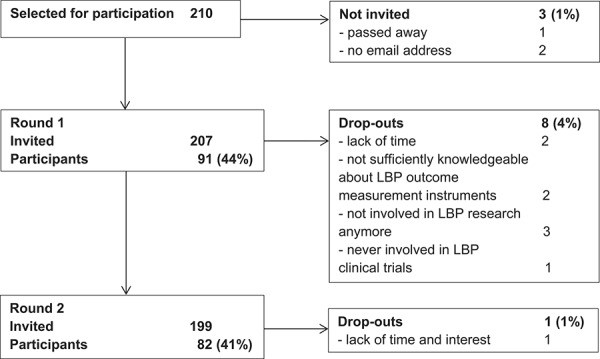
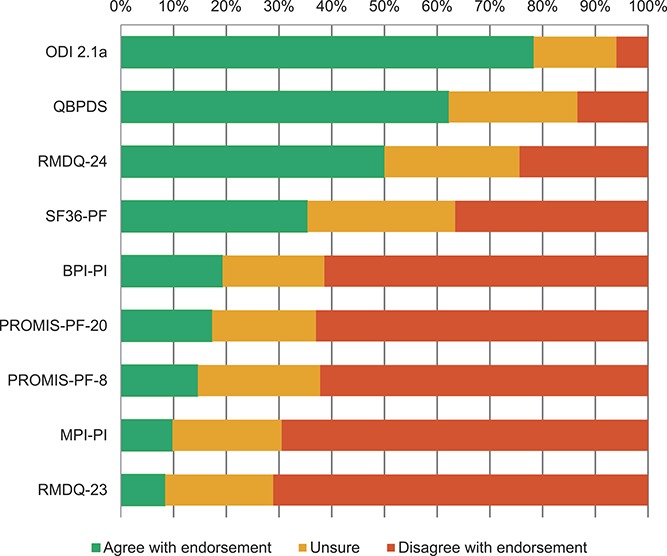
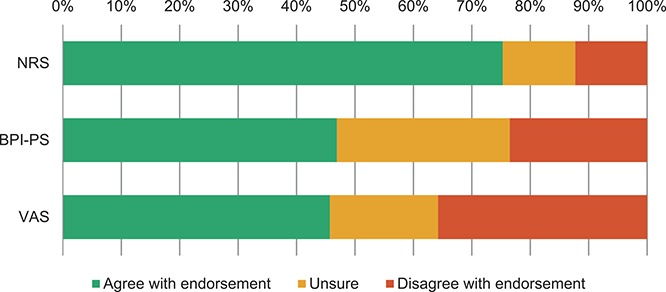
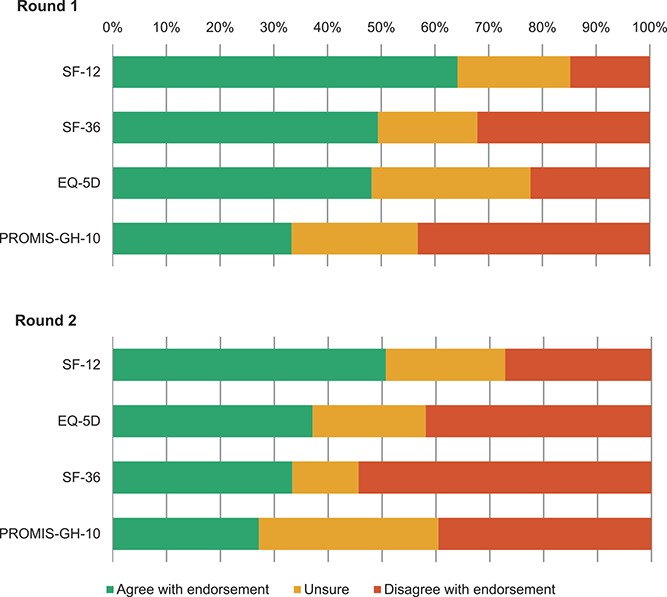
To standardize outcome reporting in clinical trials of patients with nonspecific low back pain, an international multidisciplinary panel recommended physical functioning, pain intensity, and health-related quality of life (HRQoL) as core outcome domains. Given the lack of a consensus on measurement instruments for these 3 domains in patients with low back pain, this study aimed to generate such consensus. The measurement properties of 17 patient-reported outcome measures for physical functioning, 3 for pain intensity, and 5 for HRQoL were appraised in 3 systematic reviews following the COSMIN methodology. Researchers, clinicians, and patients (n = 207) were invited in a 2-round Delphi survey to generate consensus (≥67% agreement among participants) on which instruments to endorse. Response rates were 44% and 41%, respectively. In round 1, consensus was achieved on the Oswestry Disability Index version 2.1a for physical functioning (78% agreement) and the Numeric Rating Scale (NRS) for pain intensity (75% agreement). No consensus was achieved on any HRQoL instrument, although the Short Form 12 (SF12) approached the consensus threshold (64% agreement). In round 2, a consensus was reached on an NRS version with a 1-week recall period (96% agreement). Various participants requested 1 free-to-use instrument per domain. Considering all issues together, recommendations on core instruments were formulated: Oswestry Disability Index version 2.1a or 24-item Roland-Morris Disability Questionnaire for physical functioning, NRS for pain intensity, and SF12 or 10-item PROMIS Global Health form for HRQoL. Further studies need to fill the evidence gaps on the measurement properties of these and other instruments.
Overview
The claims and statistics of this paper haven’t been checked yet.
Run the check — free, no account needed. It reads the open-access text and checks the sources it cites.
Integrity signals
Registry
Cites
Statistics
Figures
Verification
Claims the paper makes
The claims and statistics of this paper haven’t been checked yet.
Run the check — free, no account needed. It reads the open-access text and checks the sources it cites.
Claims other papers make about this one
Each is checked against this paper’s own text: does it say what the citing paper says it does?
In the citing paper
“The secondary outcome measures selected were those that had the potential to be primary or secondary outcomes of a potential full clinical trial, based on the core outcome sets recommended for LBP.39 40”
In the citing paper
“outcomes were consistent with NIH recommendations on research standards for chronic LBP38 and core outcome sets for LBP research39”
In the citing paper
“Nevertheless, we recognise that current tools specific for back pain or musculoskeletal conditions are scarce for assessing health related quality of life.30 124”
From Psychological interventions for chronic, non-specific low back pain: systematic review with network meta-analysis (2022) · cites this paper as [30]
In the citing paper
“To improve measurement standardization, the international consortium overseeing the core set initiative for LBP decided to recommend the SF-12 and the PROMIS-GH-10 for HRQoL, as they both provide PCS and MCS scores, and the PROMIS-GH-10 represents a free of charge option [26].”
From Evidence on the measurement properties of health-related quality of life instruments is largely missing in patients with low back pain: A systematic review (2018) · cites this paper as [26]
In the citing paper
“On the other hand, the SF-36 was not endorsed because it was considered too long for inclusion in every clinical trial, and the EQ-5D because it provided scores that cannot be pooled with the other instruments' scores (i.e., SF12 and PROMIS-GH-10) [26].”
From Evidence on the measurement properties of health-related quality of life instruments is largely missing in patients with low back pain: A systematic review (2018) · cites this paper as [26]
In the citing paper
“The results of this systematic review informed an international and multidisciplinary Delphi process to endorse core instruments for LBP clinical trials; however, none of the HRQoL instruments met the prespecified 67% cutoff for consensus (although the SF-12 came close) [26].”
From Evidence on the measurement properties of health-related quality of life instruments is largely missing in patients with low back pain: A systematic review (2018) · cites this paper as [26]
Self-check
Percentages, sums and reported differences re-computed from the paper’s own numbers.
The self-check needs the paper’s full text.
Citations
Cites
(1992) · PubMed · Cited by 33,716
The MOS 36-ltem Short-Form Health Survey (SF-36): I. Conceptual Framework and Item Selection
Ware, J. E., & Sherbourne, C. D. (1992) · Medical Care · doi:10.1097/00005650-199206000-00002 · Cited by 30,033
WARE, J. E., KOSINSKI, M., & KELLER, S. D. (1996) · Medical Care · doi:10.1097/00005650-199603000-00003 · Cited by 17,392
EuroQol: a new facility for the measurement of health-related quality of life
(1990) · Health Policy · doi:10.1016/0168-8510(90)90421-9 · Cited by 15,736
Development and preliminary testing of the new five-level version of EQ-5D (EQ-5D-5L)
Herdman, M., Gudex, C., Lloyd, A., Janssen, M., Kind, P., Parkin, D., Bonsel, G., & Badia, X. (2011) · Quality of Life Research · doi:10.1007/s11136-011-9903-x · Cited by 9,795
Vos, T., Allen, C., Arora, M., Barber, R. M., Bhutta, Z. A., Brown, A., Carter, A., Casey, D. C., Charlson, F. J., Chen, A. Z., et al. (2016) · The Lancet · doi:10.1016/s0140-6736(16)31678-6 · Cited by 7,253
Research guidelines for the Delphi survey technique
Hasson, F. (2000) · Journal of Advanced Nursing · doi:10.1046/j.1365-2648.2000.01567.x · Cited by 5,951
EuroQol: the current state of play
Brooks, R. (1996) · Health Policy · doi:10.1016/0168-8510(96)00822-6 · Cited by 5,815
Pain assessment: global use of the Brief Pain Inventory.
Cs, C., & Km, R. (1994) · PubMed · Cited by 5,178
Cella, D., Riley, W., Stone, A., Rothrock, N., Reeve, B., Yount, S., Amtmann, D., Bode, R., Buysse, D., Choi, S., et al. (2010) · Journal of Clinical Epidemiology · doi:10.1016/j.jclinepi.2010.04.011 · Cited by 5,128
Hawker, G. A., Mian, S., Kendzerska, T., & French, M. (2011) · Arthritis Care & Research · doi:10.1002/acr.20543 · Cited by 4,924
HUSKISSON, E. C. (1974) · The Lancet · doi:10.1016/s0140-6736(74)90884-8 · Cited by 4,533
Mokkink, L. B., Terwee, C. B., Patrick, D. L., Alonso, J., Stratford, P. W., Knol, D. L., Bouter, L. M., & de Vet, H. C. W. (2010) · Journal of Clinical Epidemiology · doi:10.1016/j.jclinepi.2010.02.006 · Cited by 4,465
Self-citationMokkink, L. B., Terwee, C. B., Patrick, D. L., Alonso, J., Stratford, P. W., Knol, D. L., Bouter, L. M., & de Vet, H. C. W. (2010) · Quality of Life Research · doi:10.1007/s11136-010-9606-8 · Cited by 4,260
Self-citationOswestry Low Back Pain Disability Questionnaire
Fairbank, J. C. T., Couper, J., Davies, J. B., & O'Brien, J. P. (2006) · Springer eBooks · doi:10.1007/978-3-540-29805-2_3023 · Cited by 3,954
Core outcome measures for chronic pain clinical trials: IMMPACT recommendations
Dworkin, R. H., Turk, D. C., Farrar, J. T., Haythornthwaite, J. A., Jensen, M. P., Katz, N. P., Kerns, R. D., Stucki, G., Allen, R. R., Bellamy, N., et al. (2005) · Pain · doi:10.1016/j.pain.2004.09.012 · Cited by 3,732
Self-citationCore outcome domains for chronic pain clinical trials: IMMPACT recommendations
Turk, D. C., Dworkin, R. H., Allen, R. R., Bellamy, N., Brandenburg, N., Carr, D. B., Cleeland, C., Dionne, R., Farrar, J. T., Galer, B. S., et al. (2003) · Pain · doi:10.1016/j.pain.2003.08.001 · Cited by 3,510
Self-citationDworkin, R. H., Turk, D. C., Wyrwich, K. W., Beaton, D., Cleeland, C. S., Farrar, J. T., Haythornthwaite, J. A., Jensen, M. P., Kerns, R. D., Ader, D. N., et al. (2008) · The Journal of Pain · doi:10.1016/j.jpain.2007.09.005 · Cited by 3,471 · cited 1×
“The Steering Committee suggests the use of previous consensusbased recommendations for reporting of outcome results(43) and for interpreting change scores on core instruments.(35,86)”
MethodSelf-citationA Study of the Natural History of Back Pain: Part I
ROLAND, M., & MORRIS, R. (1983) · Spine · doi:10.1097/00007632-198303000-00004 · Cited by 3,395 · cited 1×
“Nevertheless, pain-rating scales definitely present some shortcomings, such as capturing multiple dimensions of the pain experience, and not only its intensity.(39,93,109) For this reason, we decided to add the key word “intensity” in the recommended NRS, and more studies exploring the patients’ perspective on these t…”
BackgroundCella, D., Yount, S., Rothrock, N., Gershon, R., Cook, K., Reeve, B., Ader, D., Fries, J. F., Bruce, B., & Rose, M. (2007) · Medical Care · doi:10.1097/01.mlr.0000258615.42478.55 · Cited by 3,118
A systematic review of the global prevalence of low back pain
Hoy, D. G., Bain, C. J., Williams, G. M., MARCH, L. M., Brooks, P., Blyth, F., Woolf, A. D., Vos, T., & Buchbinder, R. (2012) · Arthritis & Rheumatism · doi:10.1002/art.34347 · Cited by 3,025
Self-citationHjermstad, M. J., Fayers, P. M., Haugen, D. F., Caraceni, A., Hanks, G. W., Loge, J. H., Fainsinger, R., Aass, N., & Kaasa, S. (2011) · Journal of Pain and Symptom Management · doi:10.1016/j.jpainsymman.2010.08.016 · Cited by 2,697
Maher, C., Underwood, M., & Buchbinder, R. (2017) · The Lancet · doi:10.1016/s0140-6736(16)30970-9 · Cited by 2,535
Self-citationCOSMIN Risk of Bias checklist for systematic reviews of Patient-Reported Outcome Measures
Mokkink, L. B., de Vet, H. C. W., Prinsen, C. A. C., Patrick, D. L., Alonso, J., Bouter, L. M., & Terwee, C. B. (2018) · Quality of Life Research · doi:10.1007/s11136-017-1765-4 · Cited by 2,479
Self-citationVerhagen, A. P., de Vet, H. C. W., de Bie, R. A., Kessels, A. G. H., Boers, M., Bouter, L. M., & Knipschild, P. G. (1998) · Journal of Clinical Epidemiology · doi:10.1016/s0895-4356(98)00131-0 · Cited by 2,470
Self-citationThe West Haven-Yale Multidimensional Pain Inventory (WHYMPI)
Kerns, R. D., Turk, D. C., & Rudy, T. E. (1985) · Pain · doi:10.1016/0304-3959(85)90004-1 · Cited by 2,128
Self-citationOswestry Low Back Pain Disability Questionnaire
Fairbank, J. C. T., Couper, J., Davies, J. B., & O'Brien, J. P. (2020) · PsycTESTS Dataset · doi:10.1037/t04205-000 · Cited by 2,033
The COMET Handbook: version 1.0
Williamson, P. R., Altman, D. G., Bagley, H., Barnes, K. L., Blazeby, J. M., Brookes, S. T., Clarke, M., Gargon, E., Gorst, S., Harman, N., et al. (2017) · Trials · doi:10.1186/s13063-017-1978-4 · Cited by 2,011
Self-citationOstelo, R. W. J. G., Deyo, R. A., Stratford, P., Waddell, G., Croft, P., Von Korff, M., Bouter, L. M., & de Vet, H. C. (2008) · Spine · doi:10.1097/brs.0b013e31815e3a10 · Cited by 2,009
Self-citationStudies with pain rating scales.
Downie, W., Leatham, P. A., Rhind, V. M., Wright, V. A., Branco, J. A., & Anderson, J. (1978) · Annals of the Rheumatic Diseases · doi:10.1136/ard.37.4.378 · Cited by 1,987
Hays, R. D., Bjorner, J. B., Revicki, D. A., Spritzer, K. L., & Cella, D. (2009) · Quality of Life Research · doi:10.1007/s11136-009-9496-9 · Cited by 1,957
Developing core outcome sets for clinical trials: issues to consider
Williamson, P. R., Altman, D. G., Blazeby, J. M., Clarke, M., Devane, D., Gargon, E., & Tugwell, P. (2012) · Trials · doi:10.1186/1745-6215-13-132 · Cited by 1,661
Janssen, M. F., Pickard, A. S., Golicki, D., Gudex, C., Niewada, M., Scalone, L., Swinburn, P., & Busschbach, J. (2013) · Quality of Life Research · doi:10.1007/s11136-012-0322-4 · Cited by 1,582
Development of the Wisconsin Brief Pain Questionnaire to assess pain in cancer and other diseases
Daut, R. L., Cleeland, C. S., & Flanery, R. C. (1983) · Pain · doi:10.1016/0304-3959(83)90143-4 · Cited by 1,562
1987 Volvo Award in Clinical Sciences: A New Clinical Model for the Treatment of Low-Back Pain
Waddell, G. (1987) · Spine · doi:10.1097/00007632-198709000-00002 · Cited by 1,244
Outcome Measures for Low Back Pain Research: A Proposal for Standardized Use
Deyo, R. A., Battie, M., Beurskens, A. J. H. M., Bombardier, C., Croft, P., Koes, B., Malmivaara, A., Roland, M., Von Korff, M., & Waddell, G. (1998) · Spine · doi:10.1097/00007632-199809150-00018 · Cited by 1,229
Self-citationKirkham, J. J., Dwan, K. M., Altman, D. G., Gamble, C., Dodd, S., Smyth, R., & Williamson, P. R. (2010) · BMJ · doi:10.1136/bmj.c365 · Cited by 1,133
Prinsen, C. A. C., Vohra, S., Rose, M. R., Boers, M., Tugwell, P., Clarke, M., Williamson, P. R., & Terwee, C. B. (2016) · Trials · doi:10.1186/s13063-016-1555-2 · Cited by 1,106
Self-citationThe Nottingham health profile: Subjective health status and medical consultations
Hunt, S. M., McKenna, S. P., McEwen, J., Williams, J., & Papp, E. (1981) · Social Science & Medicine Part A Medical Sociology · doi:10.1016/0271-7123(81)90005-5 · Cited by 1,084
Fritz, J. M., & Irrgang, J. J. (2001) · Physical Therapy · doi:10.1093/ptj/81.2.776 · Cited by 1,060
US spending on personal health care and public health, 1996-2013.
Dieleman, J. L., Baral, R., Birger, M., Bui, A. L., Bulchis, A., Chapin, A., Hamavid, H., Horst, C., Johnson, E. K., Joseph, J., et al. (2016) · JAMA · doi:10.1001/jama.2016.16885 · Cited by 1,044
Mokkink, L. B., Prinsen, C. A. C., Bouter, L. M., de Vet, H. C. W., & Terwee, C. B. (2016) · Brazilian Journal of Physical Therapy · doi:10.1590/bjpt-rbf.2014.0143 · Cited by 915
Self-citationSinha, I. P., Smyth, R. L., & Williamson, P. R. (2011) · PLoS Medicine · doi:10.1371/journal.pmed.1000393 · Cited by 891
Exercise therapy for treatment of non-specific low back pain
Hayden, J., van Tulder, M. W., Malmivaara, A., & Koes, B. W. (2005) · Cochrane Database of Systematic Reviews · doi:10.1002/14651858.cd000335.pub2 · Cited by 879
Self-citationDeveloping core outcome measurement sets for clinical trials: OMERACT filter 2.0
Boers, M., Kirwan, J. R., Wells, G., Beaton, D., Gossec, L., d'Agostino, M.-A., Conaghan, P. G., Bingham, C. O., Brooks, P., Landewé, R., et al. (2014) · Journal of Clinical Epidemiology · doi:10.1016/j.jclinepi.2013.11.013 · Cited by 781 · cited 4×
“Developing a COS is a 2-step consensus process that involves, first, determining the core outcome domains (“core domain set”), and second, selecting the best outcome measurement instruments to measure these domains (“core outcome measurement set”).(7,19,113) For nsLBP, a consensus was achieved on 4 core outcome domain…”
BackgroundMethodInfluentialSelf-citationAssessing health-related quality of life in patients with sciatica
Patrick, D. L., Deyo, R. A., Atlas, S. J., Singer, D. E., Chapin, A., & Keller, R. B. (1995) · Spine · doi:10.1097/00007632-199509000-00011 · Cited by 760
Self-citationEvaluation of Item Candidates: The PROMIS Qualitative Item Review
DeWalt, D. A., Rothrock, N., Yount, S., & Stone, A. A. (2007) · Medical Care · doi:10.1097/01.mlr.0000254567.79743.e2 · Cited by 719
Outcome Assessments in the Evaluation of Treatment of Spinal Disorders
Bombardier, C. (2000) · Spine · doi:10.1097/00007632-200012150-00003 · Cited by 674
Core outcome set–STAndards for reporting: the COS-STAR statement
Kirkham, J. J., Gorst, S., Altman, D. G., Blazeby, J. M., Clarke, M., Devane, D., Gargon, E., Moher, D., Schmitt, J., Tugwell, P., et al. (2016) · PLOS Medicine · doi:10.1371/journal.pmed.1002148 · Cited by 650
Multidisciplinary biopsychosocial rehabilitation for chronic low back pain
Kamper, S. J., Apeldoorn, A. T., Chiarotto, A., Smeets, R. J. E. M., Ostelo, R. W., Guzman, J., & van Tulder, M. W. (2014) · Cochrane Database of Systematic Reviews · doi:10.1002/14651858.cd000963.pub3 · Cited by 629 · cited 1×
“In several medical fields including nsLBP, this is a major issue.(53,70,77) It can be addressed by agreeing on a standardized set of outcomes that should be measured and reported in all clinical trials on a specific health condition: a core outcome set (COS).”
BackgroundSelf-citationEvaluating Common Outcomes for Measuring Treatment Success for Chronic Low Back Pain
Chapman, J. R., Norvell, D. C., Hermsmeyer, J. T., Bransford, R. J., DeVine, J., McGirt, M. J., & Lee, M. J. (2011) · Spine · doi:10.1097/brs.0b013e31822ef74d · Cited by 551
OMERACT: An international initiative to improve outcome measurement in rheumatology
Tugwell, P., Boers, M., Brooks, P., Simon, L. S., Strand, V., & Idzerda, L. (2007) · Trials · doi:10.1186/1745-6215-8-38 · Cited by 536
Self-citationReport of the NIH Task Force on research standards for chronic low back pain.
Deyo, R. A., Dworkin, S. F., Amtmann, D., Andersson, G., Borenstein, D., Carragee, E., Carrino, J., Chou, R., Cook, K., DeLitto, A., et al. (2014) · The Journal of Pain · doi:10.1016/j.jpain.2014.03.005 · Cited by 533
Self-citationCook, K. F., Jensen, S. E., Schalet, B. D., Beaumont, J. L., Amtmann, D., Czajkowski, S. M., DeWalt, D. A., Fries, J. F., Pilkonis, P. A., Reeve, B. B., et al. (2016) · Journal of Clinical Epidemiology · doi:10.1016/j.jclinepi.2015.08.038 · Cited by 500
Simple pain rating scales hide complex idiosyncratic meanings
Williams, A. C. D. C., Davies, H. T. O., & Chadury, Y. (2000) · Pain · doi:10.1016/s0304-3959(99)00299-7 · Cited by 450
Rose, M., Bjørner, J. B., Gandek, B., Bruce, B., Fries, J. F., & Ware, J. E. (2014) · Journal of Clinical Epidemiology · doi:10.1016/j.jclinepi.2013.10.024 · Cited by 442
Stark, S. E., Chernyshenko, O. S., & Drasgow, F. (2006) · Journal of Applied Psychology · doi:10.1037/0021-9010.91.6.1292 · Cited by 438
A systematic review and meta-synthesis of the impact of low back pain on people’s lives
Froud, R., Patterson, S., Eldridge, S. M., Seale, C. F., Pincus, T., Rajendran, D., Fossum, C., & Underwood, M. R. (2014) · BMC Musculoskeletal Disorders · doi:10.1186/1471-2474-15-50 · Cited by 436
Patient phenotyping in clinical trials of chronic pain treatments: IMMPACT recommendations
Edwards, R. R., Dworkin, R. H., Turk, D. C., Angst, M. S., Dionne, R., Freeman, R., Hansson, P., Haroutounian, S., Arendt-Nielsen, L., Attal, N., et al. (2016) · Pain · doi:10.1097/j.pain.0000000000000602 · Cited by 403
Self-citationFritz, J. M., Delitto, A., & Erhard, R. E. (2003) · Spine · doi:10.1097/01.brs.0000067115.61673.ff · Cited by 386
Consolidated Health Economic Evaluation Reporting Standards (CHEERS) statement
Husereau, D., Drummond, M., Petrou, S., Carswell, C., Moher, D., Greenberg, D., Augustovski, F., Briggs, A. H., Mauskopf, J., Loder, E., et al. (2013) · Cost Effectiveness and Resource Allocation · doi:10.1186/1478-7547-11-6 · Cited by 381
Core outcome-domains for clinical trials in non-specific low back pain
Chiarotto, A., Deyo, R. A., Terwee, C. B., Boers, M., Buchbinder, R., Corbin, T. P., Costa, L. O. P., Foster, N. E., Grotle, M., Koes, B. W., et al. (2015) · European Spine Journal · doi:10.1007/s00586-015-3892-3 · Cited by 374
Efficacy of paracetamol for acute low-back pain: a double-blind, randomised controlled trial
Williams, C. M., Maher, C. G., Latimer, J., McLachlan, A. J., Hancock, M. J., Day, R. O., & Lin, C.-W. C. (2014) · The Lancet · doi:10.1016/s0140-6736(14)60805-9 · Cited by 325
Self-citationChiarotto, A., Maxwell, L. J., Terwee, C. B., Wells, G. A., Tugwell, P., & Ostelo, R. W. (2016) · Physical Therapy · doi:10.2522/ptj.20150420 · Cited by 290
Self-citationDriving up the Quality and Relevance of Research Through the Use of Agreed Core Outcomes
Williamson, P., Altman, D., Blazeby, J., Clarke, M., & Gargon, E. (2012) · Journal of Health Services Research & Policy · doi:10.1258/jhsrp.2011.011131 · Cited by 288
Low Back Pain Rating scale: validation of a tool for assessment of low back pain
Manniche, C., Asmussen, K. H., Lauritsen, B., Vinterberg, H., Kreiner, S., & Jordan, A. (1994) · Pain · doi:10.1016/0304-3959(94)90007-8 · Cited by 286
Differential Item Functioning Analysis With Ordinal Logistic Regression Techniques
Crane, P. K., Gibbons, L. E., Jolley, L., & van Belle, G. (2006) · Medical Care · doi:10.1097/01.mlr.0000245183.28384.ed · Cited by 285
Smeets, R., Köke, A. J. A., Lin, C. C., Ferreira, M. L., & Demoulin, C. (2011) · Arthritis Care & Research · doi:10.1002/acr.20542 · Cited by 283
Self-citationValidity of PROMIS physical function measured in diverse clinical samples
Schalet, B. D., Hays, R. D., Jensen, S. E., Beaumont, J. L., Fries, J. F., & Cella, D. F. (2016) · Journal of Clinical Epidemiology · doi:10.1016/j.jclinepi.2015.08.039 · Cited by 263
The Trend in Total Cost of Back Pain in the Netherlands in the Period 2002 to 2007
Lambeek, L. C., van Tulder, M. W., Swinkels, I. C. S., Koppes, L. L. J., Anema, J. R., & van Mechelen, W. (2010) · Spine · doi:10.1097/brs.0b013e3181e70488 · Cited by 262
Fries, J. F., Cella, D. F., Rose, M., Krishnan, E., & Bruce, B. (2009) · The Journal of Rheumatology · doi:10.3899/jrheum.090358 · Cited by 244
The Quebec Back Pain Disability Scale: Conceptualization and development
Kopec, J. A., Esdaile, J. M., Abrahamowicz, M., Abenhaim, L., Wood-Dauphinee, S., Lamping, D. L., & Williams, J. I. (1996) · Journal of Clinical Epidemiology · doi:10.1016/0895-4356(96)00526-4 · Cited by 242
An International Standard Set of Patient-Centered Outcome Measures After Stroke
Salinas, J., Sprinkhuizen, S. M., Ackerson, T., Bernhardt, J. A., Davie, C., George, M. G., Gething, S., Kelly, A. G., Lindsay, P., Liu, L., et al. (2015) · Stroke · doi:10.1161/strokeaha.115.010898 · Cited by 241
Pincus, T., Kent, P., Bronfort, G., Loisel, P., Pransky, G., & Hartvigsen, J. (2013) · Spine · doi:10.1097/brs.0b013e3182a8c5d6 · Cited by 227
Taylor, A. M., Phillips, K., Patel, K. V., Turk, D. C., Dworkin, R. H., Beaton, D., Clauw, D. J., Gignac, M. A. M., Markman, J. D., Williams, D. A., et al. (2016) · Pain · doi:10.1097/j.pain.0000000000000577 · Cited by 208
Self-citationHill, J. C., Kang, S., Benedetto, E., Myers, H., Blackburn, S. J., Smith, S., Dunn, K. M., Hay, E. M., Rees, J. L., Beard, D. J., et al. (2016) · BMJ Open · doi:10.1136/bmjopen-2016-012331 · Cited by 193
Kirkham, J. J., Gargon, E., Clarke, M. J., & Williamson, P. R. (2013) · Trials · doi:10.1186/1745-6215-14-21 · Cited by 188
Content validity of patient-reported outcome measures: perspectives from a PROMIS meeting
Magasi, S., Ryan, G., Revicki, D., Lenderking, W., Hays, R. D., Brod, M., Snyder, C., Boers, M., & Cella, D. (2012) · Quality of Life Research · doi:10.1007/s11136-011-9990-8 · Cited by 187
Self-citationEvaluation of the PROMIS physical function item bank in orthopaedic patients
Hung, M., Clegg, D. O., Greene, T., & Saltzman, C. L. (2011) · Journal of Orthopaedic Research® · doi:10.1002/jor.21308 · Cited by 185
Psychometric Properties of the PROMIS Physical Function Item Bank in Patients With Spinal Disorders
Hung, M., Hon, S. D., Franklin, J. D., Kendall, R. W., Lawrence, B. D., Neese, A., Cheng, C., & Brodke, D. S. (2014) · Spine · doi:10.1097/brs.0000000000000097 · Cited by 176
A proposed set of metrics for standardized outcome reporting in the management of low back pain
Clement, R. C., Welander, A., Stowell, C. J., Cha, T. D., Chen, J. L., Davies, M., Fairbank, J. C. T., Foley, K. T., Gehrchen, M., Hägg, O., et al. (2015) · Acta Orthopaedica · doi:10.3109/17453674.2015.1036696 · Cited by 172
Self-citationGrotle, M., Brox, J. I., & Vøllestad, N. K. (2005) · PubMed · Cited by 170
Self-citationRadiofrequency denervation for chronic low back pain
Maas, E. T., Ostelo, R., Niemistö, L., Jousimaa, J., Hurri, H., Malmivaara, A. V., & van Tulder, M. W. (2015) · Cochrane Database of Systematic Reviews · doi:10.1002/14651858.cd008572.pub2 · Cited by 161
Self-citationGorst, S. L., Gargon, E., Clarke, M. J., Blazeby, J. M., Altman, D. G., & Williamson, P. R. (2016) · PLoS ONE · doi:10.1371/journal.pone.0146444 · Cited by 154
Functional Status and Disability Questionnaires: What Do They Assess?
Grotle, M., Brox, J. I., & Vøllestad, N. K. (2005) · Spine · doi:10.1097/01.brs.0000149184.16509.73 · Cited by 146
Self-citationChiarotto, A., Ostelo, R., Boers, M., & Terwee, C. B. (2017) · Journal of Clinical Epidemiology · doi:10.1016/j.jclinepi.2017.11.005 · Cited by 141
Self-citationPapuga, M. O., Mesfin, A., Molinari, R. W., & Rubery, P. T. (2016) · Spine · doi:10.1097/brs.0000000000001518 · Cited by 130
Measurement Properties of the RM-18
Stratford, P. W., & Binkley, J. M. (1997) · Spine · doi:10.1097/00007632-199710150-00018 · Cited by 121
Better assessment of physical function: item improvement is neglected but essential
Bruce, B., Fries, J. F., Ambrosini, D., Lingala, B., Gandek, B., Rose, M., & Ware, J. E. (2009) · Arthritis Research & Therapy · doi:10.1186/ar2890 · Cited by 120
Buchbinder, R., Batterham, R. W., Elsworth, G. R., Dionne, C. E., Irvin, E., & Osborne, R. H. (2011) · Arthritis Research & Therapy · doi:10.1186/ar3468 · Cited by 117
Self-citationChoosing the right outcome measurement instruments for patients with low back pain
Chiarotto, A., Terwee, C. B., & Ostelo, R. (2016) · Best Practice & Research Clinical Rheumatology · doi:10.1016/j.berh.2017.07.001 · Cited by 115
Self-citationCore outcome sets for research and clinical practice
Chiarotto, A., Ostelo, R., Turk, D. C., Buchbinder, R., & Boers, M. (2017) · Brazilian Journal of Physical Therapy · doi:10.1016/j.bjpt.2017.03.001 · Cited by 111
Self-citationBarriers to Chronic Pain Measurement: A Qualitative Study of Patient Perspectives
Robinson‐Papp, J., George, M. C., Dorfman, D., & Simpson, D. M. (2015) · Pain Medicine · doi:10.1111/pme.12717 · Cited by 90
Chiarotto, A., Terwee, C. B., Deyo, R. A., Boers, M., Lin, C. C., Buchbinder, R., Corbin, T. P., Costa, L. O. P., Foster, N. E., Grotle, M., et al. (2014) · Trials · doi:10.1186/1745-6215-15-511 · Cited by 72
Self-citationFroud, R., Patel, S., Rajendran, D., Bright, P., Bjørkli, T., Buchbinder, R., Eldridge, S. M., & Underwood, M. R. (2016) · PLoS ONE · doi:10.1371/journal.pone.0164573 · Cited by 67
Self-citationReporting outcomes of back pain trials: A modified Delphi study
Froud, R., Eldridge, S. M., Kovacs, F. M., Breen, A. C., Bolton, J., Dunn, K. M., Fritz, J. M., Keller, A., Kent, P. M., Lauridsen, H. H., et al. (2011) · European Journal of Pain · doi:10.1016/j.ejpain.2011.04.015 · Cited by 47
Self-citationCrins, M. H. P., Terwee, C. B., Klausch, T. L. T., Smits, N., de Vet, H. C. W., Westhovens, R., Cella, D. F., Cook, K. F., Revicki, D. A., van Leeuwen, J., et al. (2017) · Journal of Clinical Epidemiology · doi:10.1016/j.jclinepi.2017.03.011 · Cited by 46
Self-citationSingle vs composite measures of pain intensity: Relative sensitivity for detecting treatment effects
Jensen, M. P., Hu, X., Potts, S. L., & Gould, E. M. (2012) · Pain · doi:10.1016/j.pain.2012.12.017 · Cited by 39
Page, M. J., Huang, H., Verhagen, A. P., Buchbinder, R., & Gagnier, J. J. (2016) · RMD Open · doi:10.1136/rmdopen-2016-000380 · Cited by 36
Self-citationAssessment of Pain Intensity in Clinical Trials: Individual Ratings vs Composite Scores
Jensen, M. P., Tomé‐Pires, C., Solé, E., Racine, M., Castarlenas, E., de la Vega, R., & Miró, J. (2014) · Pain Medicine · doi:10.1111/pme.12588 · Cited by 34
(1986) · Journal of Epidemiology & Community Health · doi:10.1136/jech.40.1.12 · Cited by 31
Reliability and Validity of Individual and Composite Recall Pain Measures in Patients with Cancer
Jensen, M. P., Wang, W., Potts, S. L., & Gould, E. M. (2012) · Pain Medicine · doi:10.1111/j.1526-4637.2012.01470.x · Cited by 28
Gianola, S., Frigerio, P., Agostini, M., Bolotta, R., Castellini, G., Corbetta, D., Gasparini, M., Gozzer, P., Guariento, E., LI, L. C., et al. (2016) · Physiotherapy Canada · doi:10.3138/ptc.2015-30 · Cited by 28
Are Small Effects for Back Pain Interventions Really Surprising?
Hancock, M. J., & Hill, J. (2016) · Journal of Orthopaedic and Sports Physical Therapy · doi:10.2519/jospt.2016.0604 · Cited by 27
Franchignoni, F. P., Salaffi, F., & Tesio, L. (2012) · Journal of Rehabilitation Medicine · doi:10.2340/16501977-1030 · Cited by 25
Bagraith, K. S., Strong, J., Meredith, P. J., & McPhail, S. (2017) · Journal of Clinical Epidemiology · doi:10.1016/j.jclinepi.2016.12.016 · Cited by 18
Mechanical Low Back Pain: Secular Trend and Intervention Topics of Randomized Controlled Trials
Castellini, G., Gianola, S., Banfi, G., Bonovas, S., & Moja, L. (2015) · Physiotherapy Canada · doi:10.3138/ptc.2014-58 · Cited by 16
Introduction: PROMIS a first look across diseases
Witter, J. P. (2016) · Journal of Clinical Epidemiology · doi:10.1016/j.jclinepi.2016.02.014 · Cited by 14
Research works printed but not linked: 1
- Mokkink, 2017, COSMIN checklist 2.0 for assessing the methodological quality of studies on the measurement properties of Paitent-Reported Outcome Measures, Qual Life Res
Cited by
Sorted by citations
Chiarotto, A., Maxwell, L. J., Ostelo, R., Boers, M., Tugwell, P., & Terwee, C. B. (2018) · Journal of Pain · doi:10.1016/j.jpain.2018.07.009 · Cited by 780
Self-citationExercise therapy for chronic low back pain
Hayden, J. A., Ellis, J., Ogilvie, R., Malmivaara, A., & van Tulder, M. W. (2021) · Cochrane Database of Systematic Reviews · doi:10.1002/14651858.cd009790.pub2 · Cited by 589
Shafshak, T. S., & Elnemr, R. (2020) · JCR Journal of Clinical Rheumatology · doi:10.1097/rhu.0000000000001320 · Cited by 419
Ho, E. K.-Y., Chen, L., Simic, M., Ashton-James, C. E., Comachio, J., Wang, D. X. M., Hayden, J. A., Ferreira, M. L., & Ferreira, P. H. (2022) · BMJ · doi:10.1136/bmj-2021-067718 · Cited by 220
Domains of Chronic Low Back Pain and Assessing Treatment Effectiveness: A Clinical Perspective
Tagliaferri, S. D., Miller, C. T., Owen, P. J., Mitchell, U. H., Brisby, H., Fitzgibbon, B. M., Massé‐Alarie, H., Oosterwijck, J. V., & Belavý, D. L. (2019) · Pain Practice · doi:10.1111/papr.12846 · Cited by 240
Metadata
- Authors
- Chiarotto, A., Boers, M., Deyo, R. A., Buchbinder, R., Corbin, T. P., Costa, L. O. P., Foster, N. E., Grotle, M., Koes, B. W., Kovacs, F. M., Lin, C.-W. C., Maher, C. G., Pearson, A. M., Peul, W. C., Schoene, M. L., Turk, D. C., van Tulder, M. W., Terwee, C. B., & Ostelo, R. W.
- Affiliations
- Amsterdam Public Health (NL)
- Oregon Health & Science University (US)
- Cabrini Hospital (AU)
- Cochrane Canada (CA)
- Universidade Cidade de São Paulo (BR)
- Arthritis Research UK (GB)
- Oslo University Hospital (NO)
- Erasmus MC (NL)
- Spanish Back Pain Research Network, Hospital Universitario HLA-Moncloa, Madrid, Spain
- The University of Sydney (AU)
- Sydney School of Public Health, Sydney Medical School, University of Sydney, Sydney, Australia
- Dartmouth–Hitchcock Medical Center (US)
- Leiden University Medical Center (NL)
- Cochrane Collaboration, Back and Neck Review Group, Newbury, MA, USA
- University of Washington (US)
- Department of Health Sciences, Faculty of Science, Amsterdam Movement Sciences Research Institute, Vrije Universiteit, Amsterdam, the Netherlands
- Corresponding author
- Chiarotto, Alessandro
- ORCID
- Venue
- Pain
- Published
- 2017-11-24
- Volume
- 159
- Issue
- 3
- Pages
- 481-495
- ISSN
- 0304-3959 (ISSN-L)
- 1872-6623
- PMC
- PMC5828378
- OpenAlex
- W2768831605
- Cited by
- 461
- References
- 109
- Citations by year
- 2026: 46 · 2025: 56 · 2024: 61 · 2023: 59 · 2022: 59 · 2021: 66 · 2020: 55 · 2019: 38 · 2018: 17 · 2017: 1
- FWCI
- 21.20
- Type
- journal article
- Language
- en
- Open access
- hybrid
- doi.org
- Licence
- Locations
- Pain (publishedVersion, cc-by-nc-nd)
- PubMed Central (publishedVersion, cc-by-nc-nd)
- PubMed (publishedVersion)
- Pure Amsterdam UMC (publishedVersion, other-oa)
- EUR Research Repository (Erasmus University Rotterdam) (publishedVersion, other-oa)
- VU Research Portal (publishedVersion, other-oa)
- Leiden Repository (Leiden University) (submittedVersion)
- Keele Research Repository (Keele University) (submittedVersion, cc-by)
- Monash University Research Portal (Monash University) (submittedVersion, cc-by-nc-nd)
- EUR Research Repository (Erasmus University Rotterdam) (submittedVersion, cc-by-nc-nd)
- RePub (Erasmus University Rotterdam) (submittedVersion, cc-by-nc-nd)
- Data Archiving and Networked Services (DANS) (submittedVersion, other-oa)
- Amsterdam UMC (VU Amsterdam) - Institutional Repository (submittedVersion)
- Data Archiving and Networked Services (DANS) (submittedVersion)
- Funders
- National Institute for Health and Care Research (NF-SI-0515-10095, NIHR-RP-011-015)
- EUROSPINE (EUROSPINE TFR 5-2015)
- Topics
- Health Sciences › Health Professions › Physical Therapy, Sports Therapy and Rehabilitation › Musculoskeletal pain and rehabilitation
- Social Sciences › Sociology and Political Science › Delphi Technique in Research
- Health Sciences › Health Professions › Physical Therapy, Sports Therapy and Rehabilitation › Medical Practices and Rehabilitation
- Keywords
- non-specific low back pain, core outcome measures, patient-reported outcome measures, physical function, pain intensity, health-related quality of life, measurement properties, Oswestry Disability Index, Roland-Morris Disability Questionnaire, numerical rating scale, SF-12, PROMIS Global Health, Delphi consensus
- MeSH terms
- Adult, Clinical Trials as Topic, Delphi Technique, Disability Evaluation, Female, Humans, Male, Middle Aged, Pain Measurement, Quality of Life, Reproducibility of Results, Treatment Outcome, Outcome Assessment, Health Care, Low Back Pain
About these checks
Registry, retraction, Cites and statistics results are computed, not judged, with one exception: a printed reference that no index lists is read once by a model before it counts as a citation error. Claims are extracted by a model and kept only when their quote appears verbatim in the text; each cited source is then checked, with a model’s help, for whether it says what the claim relies on. Those verdicts can be wrong — read the claim’s quote and the cited source before relying on one.
Statistics and arithmetic are recomputed, not judged.
Confidence bands are shown only for fields calibrated on our annotated test set. None is calibrated yet, so no band is shown.
What counts as a claim ›How we measure confidence ›How we check this ›
Are you an author, or do you see a problem with this page? Request a review
