

A 2025 update on treatment strategies for the Alzheimer’s disease spectrum
Open accessThe DOI matches its Crossref record; 56 of the 59 references it cites were found in a registry or an index; 25 of the 66 sources its claims cite were checked for support.
Abstract
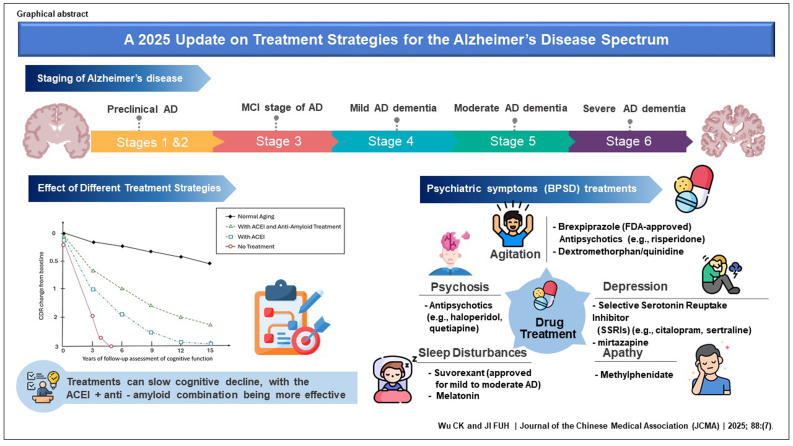
This review summarizes the 2025 treatment paradigm, including symptomatic agents and anti-amyloid monoclonal antibodies such as lecanemab and donanemab.
Overview
CoChat Summary
## TL;DR
This 2025 review summarizes how Alzheimer’s disease treatment has shifted from symptomatic therapy to biomarker-guided, stage-specific care across the Alzheimer’s disease continuum. It argues that anti-amyloid immunotherapies have changed early-stage management, but benefits are modest and access, safety, and long-term data remain major issues.
## Key findings
- The paper states that FDA-approved drugs now exist for AD stages 3 to 6, while stages 1 and 2 remain under development.
- In preclinical/asymptomatic AD, the A4 trial of solanezumab ran for 5 years and found no significant cognitive benefit; about 30% of participants in either arm progressed to symptomatic AD (stage 3 or 4).
- For stage 3 (MCI due to AD), long trials of cholinesterase inhibitors and memantine lasting 12 to 48 months “consistently failed” to show significant benefit, and the AAN does not recommend ChEIs for MCI.
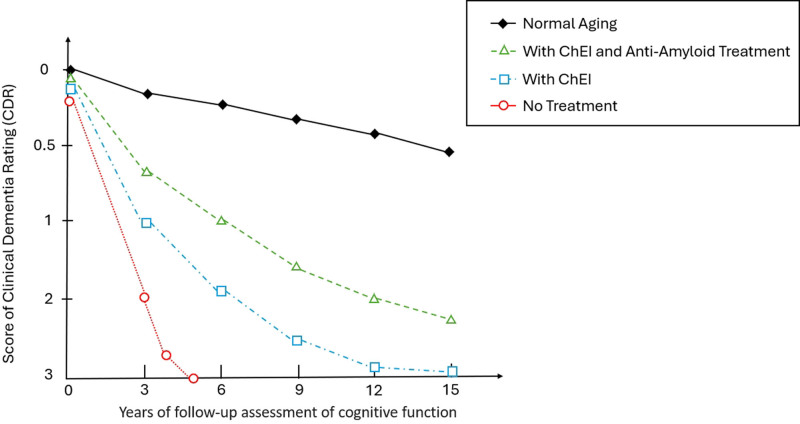
- Anti-amyloid immunotherapies changed early-stage care: lecanemab and donanemab were FDA-approved for “early-stage” AD, and the paper says their clinical effect is modest, delaying cognitive decline by about 6 to 12 months.
## Methods
- This is a narrative review, not an original study; it synthesizes published clinical trials, systematic reviews, guidelines, and real-world evidence on AD treatment.
- It organizes evidence by the six-stage Alzheimer’s disease continuum, from asymptomatic biomarker-positive disease to severe dementia, and also covers behavioral/psychiatric symptoms, atypical variants, and mixed dementia.
- The paper draws on named studies and trial data such as A4, lecanemab, donanemab, and other cited trials, but it does not present a new analytic dataset.
## Limitations
- The paper explicitly notes that early-stage anti-amyloid therapies have only modest clinical benefits and that long-term safety and cost-effectiveness remain to be determined.
- It states that access to amyloid PET, CSF biomarkers, infusion therapy, and intensive MRI monitoring limits real-world implementation, especially in low-resource settings.
- Evident from the text: this is a review article, so it depends on previously published studies rather than new primary data or a systematic search protocol; the paper does not state such a protocol.
Model-written summary. Check it against the paper before relying on it.
Integrity signals
Registry
Cites
Statistics
Figures
Verification
Claims the paper makes
18 Valid · 12 Not valid · 22 Not checked · 20 Own results and interpretations
The cited sources support only part of this claim — read each source’s verdict below.
In the paper
“However, initial clinical trials, applying methodologies of developing ChEI, failed to show efficacy over 2 to 3 years.6”
§ A 2025 update on treatment strategies for the Alzheimer’s disease spectrum > 2. EVOLUTION OF AD TREATMENT
What the sources say
- Partly supportedcites [6] Cummings J Lee G Ritter A Sabbagh M Zhong K. Alzheimer’s disease drug development pipeline: 2019. Alzheimers Dement (N Y). 2019; 5: 272– 93. 31334330 PMC6617248 sourceExperimental — accuracy not yet measured
The Discussion (page unavailable) reports that several Alzheimer’s disease agents failed to establish efficacy or show a drug–placebo difference. It does not say these were initial trials, that they used methodologies developed for cholinesterase inhibitors, or that the failures occurred over two to three years. The Phase 3 results give average trial durations, but do not connect them to those failures. (LLM, conf=0.80)
plain- Asserted: passes — The authors put it forward as true.
- Checkable: passes — It can be checked against evidence.
- Load-bearing: passes — The paper’s conclusions depend on it.
- Based: passes — The paper gives a reason why it holds.
- Partly supported
The cited sources support only part of this claim — read each source’s verdict below.
In the paper
“Most importantly, the participants who eventually progressed, in fact, had higher levels of accumulated Aβ42 levels measured in post-treatment PET.”
§ A 2025 update on treatment strategies for the Alzheimer’s disease spectrum > 4. TREATMENT FOR AD STAGE 1 AND STAGE 2
What the sources say
- Partly supportedcites [14] Sperling RA Donohue MC Raman R Rafii MS Johnson K Masters CL; A4 Study Team. Trial of solanezumab in preclinical Alzheimer’s disease. N Engl J Med. 2023; 389: 1096– 107. 37458272 PMC10559996 sourceExperimental — accuracy not yet measured
The Results (Trial End Points; page unavailable) associate higher baseline amyloid levels with greater risk of progression to symptomatic Alzheimer’s disease, while cautioning that no formal statistical conclusions can be drawn. The paper does not report that participants who progressed had higher post-treatment PET levels, nor does it identify the PET measure as accumulated Aβ42. (LLM, conf=0.85)
plainstates an association- Asserted: passes — The authors put it forward as true.
- Checkable: passes — It can be checked against evidence.
- Load-bearing: passes — The paper’s conclusions depend on it.
- Based: passes — The paper gives a reason why it holds.
- Partly supported
The cited sources support only part of this claim — read each source’s verdict below.
In the paper
“Lifestyle interventions, including exercise, cognitive training, and vascular risk management, remain essential in delaying symptom onset.13”
§ A 2025 update on treatment strategies for the Alzheimer’s disease spectrum > 4. TREATMENT FOR AD STAGE 1 AND STAGE 2
What the sources say
- Partly supportedcites [13] Livingston G Huntley J Liu KY Costafreda SG Selbæk G Alladi S. Dementia prevention, intervention, and care: 2024 report of the Lancet standing Commission. Lancet. 2024; 404: 572– 628. 39096926 sourceExperimental — accuracy not yet measured
The Conclusions and Specific actions sections recommend physical activity, cognitive stimulation, and vascular risk reduction to help prevent dementia. But the Cognitive interventions section says cognitive training has no demonstrated long-term effectiveness, and the Multicomponent dementia prevention studies section reports uncertain effects on dementia incidence. The paper therefore does not establish that all three interventions delay symptom onset. (LLM, conf=0.88)
plainstates a cause- Asserted: passes — The authors put it forward as true.
- Checkable: passes — It can be checked against evidence.
- Load-bearing: passes — The paper’s conclusions depend on it.
- Based: passes — The paper gives a reason why it holds.
- Partly supported
The cited sources support only part of this claim — read each source’s verdict below.
In the paper
“The advent of anti-amyloid immunotherapy, including the US Food & Drug Administration (FDA)-approved monoclonal antibodies such as lecanemab and donanemab, has proven efficacy in slowing cognitive decline in early-stage AD.”
§ A 2025 update on treatment strategies for the Alzheimer’s disease spectrum > Abstract Alzheimer’s disease (AD) is a complex and progressive neurodegenerative disorder with a continuum of stages ranging from preclinical/asymptomatic phase to severe dementia. Over the past decades, significant advances in diagnostic biomarkers and disease-modifying therapies have reshaped the treatment landscape. This review provides a comprehensive overview of the current treatment paradigm for AD in 2025, incorporating the latest developments in pharmacological and non-pharmacological interventions. The advent of anti-amyloid immunotherapy, including the US Food & Drug Administration (FDA)-approved monoclonal antibodies such as lecanemab and donanemab, has proven efficacy in slowing cognitive decline in early-stage AD. These therapies mark a change in thinking in AD management, emphasizing the importance of early diagnosis and intervention. Cholinesterase inhibitors and memantine remain the standard treatments for mild, moderate to severe dementia, providing symptomatic relief and functional stabilization. Additionally, emerging strategies targeting tau pathology and neuroinflammation are under investigation, offering hope for future breakthroughs. Beyond pharmacotherapy, this review highlights the importance of personalized, multimodal treatment approaches that integrate lifestyle modifications, cognitive training, and caregiver support. The updated diagnostic framework, incorporating fluid and imaging biomarkers, enables more precise staging and individualized treatment plans. Despite these advances, challenges still lie in refining patient selection, addressing treatment-related side effects, and ensuring accessibility to appropriate therapies. As the field moves forward, ongoing clinical trials and real-world evidence will further refine treatment strategies. A proactive approach, combining early detection with disease-modifying and symptomatic therapies, is essential for improving patient outcomes and quality of life. This article synthesizes current knowledge and provides a roadmap for clinicians and researchers navigating the evolving landscape of AD treatment.
What the sources say
- Partly supportedcites [10] van Dyck CH Swanson CJ Aisen P Bateman RJ Chen C Gee M. Lecanemab in early Alzheimer’s disease. N Engl J Med. 2023; 388: 9– 21. 36449413 sourceExperimental — accuracy not yet measured
The Abstract reports moderately less decline in cognition and function with lecanemab than with placebo over 18 months in people with early Alzheimer’s disease. The paper does not report efficacy for donanemab; its introductory section (10) identifies aducanumab, not lecanemab or donanemab, as having received FDA approval. (LLM, conf=0.90)
- Partly supportedcites [20] Sims JR Zimmer JA Evans CD Lu M Ardayfio P Sparks J; TRAILBLAZER-ALZ 2 Investigators. Donanemab in early symptomatic Alzheimer disease: the TRAILBLAZER-ALZ 2 randomized clinical trial. JAMA. 2023; 330: 512– 27. 37459141 PMC10352931 sourceExperimental — accuracy not yet measured
Our copy supports the donanemab half: the Clinical Assessments and Discussion sections report significant slowing of clinical progression vs placebo in early symptomatic AD (36.0% CDR-SB and 35.1%/22.3% iADRS slowing in the low/medium tau population; 'clinically meaningful benefit... on the iADRS and CDR-SB scales for both the low/medium tau and combined populations'). It does not support the lecanemab half: the Introduction (Abstract/background) says only that 'aducanumab, lecanemab, and donanemab recently showed promising amyloid plaque clearance, potentially benefitting patients,' crediting lecanemab's clinical data to van Dyck et al. (reference 10, NEJM 2023) rather than reporting cognitive-decline efficacy for lecanemab itself. No passage of our copy states that either antibody is FDA-approved (the only FDA references are florbetapir/florbetaben/flortaucipir imaging-agent labels), and the Discussion also qualifies the effect, noting no significant difference on the primary outcome in the high-tau subgroup apart from CDR-SB. (LLM, conf=0.78)
boostedstates a cause- Asserted: passes — The authors put it forward as true.
- Checkable: passes — It can be checked against evidence.
- Load-bearing: passes — The paper’s conclusions depend on it.
- Based: passes — The paper gives a reason why it holds.
- Partly supported
The cited sources support only part of this claim — read each source’s verdict below.
In the paper
“approximately 30% of participants in either group progressed to symptomatic AD (stage 3 or stage 4 of AD).”
§ A 2025 update on treatment strategies for the Alzheimer’s disease spectrum > 4. TREATMENT FOR AD STAGE 1 AND STAGE 2
What the sources say
- Partly supportedcites [14] Sperling RA Donohue MC Raman R Rafii MS Johnson K Masters CL; A4 Study Team. Trial of solanezumab in preclinical Alzheimer’s disease. N Engl J Med. 2023; 389: 1096– 107. 37458272 PMC10559996 sourceExperimental — accuracy not yet measured
The Results (Trial End Points; page unavailable) report that 33.4% of participants across both groups had progression of the global CDR score at 240 weeks. The Methods (Statistical Analysis; page unavailable) define this as progression to mild cognitive impairment or mild dementia. Our copy does not give a separate approximately 30% figure for each group or label these outcomes AD stages 3 and 4. (LLM, conf=0.85)
plain- Asserted: passes — The authors put it forward as true.
- Checkable: passes — It can be checked against evidence.
- Load-bearing: unclear — It is unclear whether the paper’s conclusions depend on it.
- Based: passes — The paper gives a reason why it holds.
- Partly supported
31 more claims · 10 with their cited sources checked
Create a free account to see all 72 claims and to verify the 25 references still open.
- It may state two separate claims as one. 30
- Probably not a substantial claim. 12
- The quote only partly states this claim. 1
Self-check
Percentages, sums and reported differences re-computed from the paper’s own numbers.
Each contradiction between two passages listed here was confirmed by an independent check.
Rated minor: it would not touch a result — a value no result rests on, a p-value that stays on the same side of the significance level, or a conflict that is clerical, resolved elsewhere in the paper, or outside its own findings.
In the paper
§ A 2025 update on treatment strategies for the Alzheimer’s disease spectrum > 4. TREATMENT FOR AD STAGE 1 AND STAGE 2
“The A4 (Anti-Amyloid treatment in Asymptomatic Alzheimer’s disease) study, a 5-year clinical trial examining the effects of solanezumab in asymptomatic individuals with amyloid accumulation, failed to show significant cognitive benefits.”
§ A 2025 update on treatment strategies for the Alzheimer’s disease spectrum > 4. TREATMENT FOR AD STAGE 1 AND STAGE 2
“While solanezumab demonstrated a favorable safety profile, amyloid levels remained elevated over the study period of about 4 years, and approximately 30% of participants in either group progressed to symptomatic AD (stage 3 or stage 4 of AD).”
Citations
Cites
Lecanemab in early Alzheimer's disease
van Dyck, C. H., Swanson, C. J., Aisen, P., Bateman, R. J., Chen, C., Gee, M., Kanekiyo, M., Li, D., Reyderman, L., Cohen, S., et al. (2023) · New England Journal of Medicine · doi:10.1056/nejmoa2212948 · Cited by 5,678
Dementia prevention, intervention, and care: 2024 report of the Lancet standing Commission
Livingston, G., Huntley, J., Liu, K. Y., Costafreda, S. G., Selbæk, G., Alladi, S., Ames, D., Banerjee, S., Burns, A., Brayne, C., et al. (2024) · The Lancet · doi:10.1016/s0140-6736(24)01296-0 · Cited by 3,860
Donanemab in Early Symptomatic Alzheimer Disease: The TRAILBLAZER-ALZ 2 Randomized Clinical Trial
Sims, J. R., Zimmer, J. A., Evans, C. D., Lu, M., Ardayfio, P., Sparks, J., Wessels, A. M., Shcherbinin, S., Wang, H., Monkul Nery, E. S., et al. (2023) · JAMA · doi:10.1001/jama.2023.13239 · Cited by 2,932
Revised criteria for diagnosis and staging of Alzheimer's disease: Alzheimer's Association Workgroup
Jack, C. R., Andrews, J. S., Beach, T. G., Buracchio, T., Dunn, B., Graf, A., Hansson, O., Ho, C., Jagust, W., McDade, E., et al. (2024) · Alzheimer's & Dementia · doi:10.1002/alz.13859 · Cited by 2,803
The cholinergic system in the pathophysiology and treatment of Alzheimer’s disease
Hampel, H., Mesulam, M.-M., Cuello, A. C., Farlow, M. R., Giacobini, E., Grossberg, G. T., Khachaturian, A. S., Vergallo, A., Cavedo, E., Snyder, P. J., et al. (2018) · Brain · doi:10.1093/brain/awy132 · Cited by 1,918
Vitamin E and Donepezil for the Treatment of Mild Cognitive Impairment
Petersen, R. C., Thomas, R. G., Grundman, M., Bennett, D., Doody, R., Ferris, S., Galasko, D., Jin, S., Kaye, J., Levey, A., et al. (2005) · New England Journal of Medicine · doi:10.1056/nejmoa050151 · Cited by 1,844
A 24-week, double-blind, placebo-controlled trial of donepezil in patients with Alzheimer's disease
Rogers, S. L., Farlow, M. R., Doody, R. S., Mohs, R., Friedhoff, L. T., & Donepezil Study Group* (1998) · Neurology · doi:10.1212/wnl.50.1.136 · Cited by 1,618
Donepezil for dementia due to Alzheimer’s disease.
Birks, J. S., & Harvey, R. J. (2018) · Cochrane Database of Systematic Reviews · doi:10.1002/14651858.cd001190.pub3 · Cited by 1,200
McShane, R., Areosa Sastre, A., & Minakaran, N. (2006) · Cochrane Database of Systematic Reviews · doi:10.1002/14651858.cd003154.pub5 · Cited by 1,155
Efficacy of acetylcholinesterase inhibitors in Alzheimer’s disease.
Marucci, G., Buccioni, M., Ben, D. D., Lambertucci, C., Volpini, R., & Amenta, F. (2021) · Neuropharmacology · doi:10.1016/j.neuropharm.2020.108352 · Cited by 1,147
Rosler, M., Anand, R., Cicin-Sain, A., Gauthier, S., Agid, Y., Dal-Bianco, P., Stahelin, H. B., Hartman, R., Gharabawi, M., & Bayer, T. (1999) · BMJ · doi:10.1136/bmj.318.7184.633 · Cited by 943
Zhao, Q.-F., Tan, L., Wang, H.-F., Jiang, T., Tan, M.-S., Tan, L., Xu, W., Li, J.-Q., Wang, J., Lai, T.-J., et al. (2016) · Journal of Affective Disorders · doi:10.1016/j.jad.2015.09.069 · Cited by 916 · cited 1×
“33,34 These symptoms greatly impact patients’ quality of life and burden of caregivers.”
Raskind (2000) · doi:10.1212/wnl.54.12.2261 · Cited by 870
Alzheimer's disease drug development pipeline: 2019
Cummings, J., Lee, G., Ritter, A., Sabbagh, M., & Zhong, K. (2019) · Alzheimer's & Dementia: Translational Research & Clinical Interventions · doi:10.1016/j.trci.2019.05.008 · Cited by 762
A Double-Blind, Placebo-Controlled Multicenter Study of Tacrine for Alzheimer's Disease
Davis, K. L., Thal, L. J., Gamzu, E. R., Davis, C. S., Woolson, R. F., Gracon, S. I., Drachman, D. A., Schneider, L. S., Whitehouse, P. J., Hoover, T. M., et al. (1992) · New England Journal of Medicine · doi:10.1056/nejm199210293271801 · Cited by 626
Kales, H. C., Gitlin, L. N., Lyketsos, C. G., & Dementia, T. D. E. P. O. T. A. A. M. O. T. N. S. O. (2014) · Journal of the American Geriatrics Society · doi:10.1111/jgs.12730 · Cited by 575
Effect of Citalopram on Agitation in Alzheimer Disease: The CitAD Randomized Clinical Trial
Porsteinsson, A. P., Drye, L. T., Pollock, B. G., Devanand, D. P., Frangakis, C., Ismail, Z., Marano, C., Meinert, C. L., Mintzer, J. E., Munro, C. A., et al. (2014) · JAMA · doi:10.1001/jama.2014.93 · Cited by 572 · cited 1×
“38,40 Nonpharmacological interventions like music therapy and physical activities are preferred first-line approaches.”
On the path to 2025: understanding the Alzheimer’s disease continuum
Aisen, P. S., Cummings, J., Jack, C. R., Morris, J. C., Sperling, R., Frölich, L., Jones, R. W., Dowsett, S. A., Matthews, B. R., Raskin, J., et al. (2017) · Alzheimer's Research & Therapy · doi:10.1186/s13195-017-0283-5 · Cited by 556
Banerjee, S., Hellier, J., Dewey, M., Romeo, R., Ballard, C., Baldwin, R., Bentham, P., Fox, C., Holmes, C., Katona, C., et al. (2011) · The Lancet · doi:10.1016/s0140-6736(11)60830-1 · Cited by 532 · cited 1×
“44 Cognitive behavioral therapy (CBT) and mindfulness practices are effective complementary approaches.”
Aging renders the brain vulnerable to amyloid β-protein neurotoxicity
Guela, C., Wu, C.-K., Saroff, D., Lorenzo, A., Yuan, M., & Yankner, B. A. (1998) · Nature Medicine · doi:10.1038/nm0798-827 · Cited by 520
Self-citationDrug development in Alzheimer’s disease: the path to 2025
Cummings, J., Aisen, P. S., DuBois, B., Frölich, L., Jack, C. R., Jones, R. W., Morris, J. C., Raskin, J., Dowsett, S. A., & Scheltens, P. (2016) · Alzheimer's Research & Therapy · doi:10.1186/s13195-016-0207-9 · Cited by 459 · cited 1×
“7 This approach culminated in the FDA’s approval of two anti-amyloid immunotherapy drugs in 2023 and 2024, marking a significant advancement in AD treatment.”
Morris, J. C., Edland, S., Clark, C., Galasko, D., Koss, E., Mohs, R., van Belle, G., Fillenbaum, G., & Heyman, A. (1993) · Neurology · doi:10.1212/wnl.43.12.2457 · Cited by 441
Trial of solanezumab in preclinical Alzheimer's disease
Sperling, R. A., Donohue, M. C., Raman, R., Rafii, M. S., Johnson, K., Masters, C. L., van Dyck, C. H., Iwatsubo, T., Marshall, G. A., Yaari, R., et al. (2023) · New England Journal of Medicine · doi:10.1056/nejmoa2305032 · Cited by 429
McShane, R., Westby, M. J., Roberts, E., Minakaran, N., Schneider, L., Farrimond, L. E., Maayan, N., Ware, J., & Debarros, J. (2019) · Cochrane Database of Systematic Reviews · doi:10.1002/14651858.cd003154.pub6 · Cited by 310
Robert, P., Lanctôt, K. L., Agüera-Ortiz, L., Aalten, P., Bremond, F., Defrancesco, M., Hanon, C., David, R., Dubois, B., Dujardin, K., et al. (2018) · European Psychiatry · doi:10.1016/j.eurpsy.2018.07.008 · Cited by 293
The AHEAD 3‐45 Study: Design of a prevention trial for Alzheimer's disease
Rafii, M. S., Sperling, R. A., Donohue, M. C., Zhou, J., Roberts, C., Irizarry, M. C., Dhadda, S., Sethuraman, G., Kramer, L. D., Swanson, C. J., et al. (2023) · Alzheimer's & Dementia · doi:10.1002/alz.12748 · Cited by 291 · cited 1×
“15,16 With clinically proved effectiveness in A β clearance for AD stages 3 and 4, hopefully after a study period of 4 years these drugs can be applicable to stage 1 or stage 2 of AD.”
Oral physostigmine and lecithin improve memory in Alzheimer disease
Thal, L. J., Fuld, P. A., Masur, D. M., & Sharpless, N. S. (1983) · Annals of Neurology · doi:10.1002/ana.410130504 · Cited by 284
Rivastigmine for Alzheimer's disease
Birks, J. S., & Grimley Evans, J. (2015) · Cochrane Database of Systematic Reviews · doi:10.1002/14651858.cd001191.pub3 · Cited by 247
Cummings, J. L., Lyketsos, C. G., Peskind, E. R., Porsteinsson, A. P., Mintzer, J. E., Scharre, D. W., De La Gandara, J. E., Agronin, M., Davis, C. S., Nguyen, U., et al. (2015) · JAMA · doi:10.1001/jama.2015.10214 · Cited by 209 · cited 1×
“38,39 Escitalopram, an antidepressant, may reduce agitation but requires further validation.”
Lipton, S. A. (2005) · Journal of Alzheimer's Disease · doi:10.3233/jad-2004-6s610 · Cited by 194
Pharmacotherapies for sleep disturbances in dementia
McCleery, J., Cohen, D. A., & Sharpley, A. L. (2016) · Cochrane Database of Systematic Reviews · doi:10.1002/14651858.cd009178.pub3 · Cited by 174
Grossberg, G. T., Kohegyi, E., Mergel, V., Josiassen, M. K., Meulien, D., Hobart, M., Slomkowski, M., Baker, R. A., McQuade, R. D., & Cummings, J. L. (2020) · The American Journal of Geriatric Psychiatry · doi:10.1016/j.jagp.2019.09.009 · Cited by 169 · cited 1×
“36 In 2023, brexpiprazole was approved by the FDA for AD-related agitation, showing moderate efficacy at 2 mg/d. 37,38 Dextromethorphan/quinidine and escitalopram may also reduce agitation.”
Depression in Alzheimer’s Disease: Epidemiology, Mechanisms, and Treatment
Huang, Y.-Y., Gan, Y.-H., Yang, L., Cheng, W., & Yu, J.-T. (2024) · Biological Psychiatry · doi:10.1016/j.biopsych.2023.10.008 · Cited by 164 · cited 2×
“43”
Mixed dementia: A review of the evidence
Custodio, N., Montesinos, R., Lira, D., Herrera-Pérez, E., Bardales, Y., & Valeriano-Lorenzo, L. (2017) · Dementia & Neuropsychologia · doi:10.1590/1980-57642016dn11-040005 · Cited by 148 · cited 2×
“54 Therapies targeting both AD and vascular pathophysiology are essential.”
Alzheimer's Disease–Related Dementias Summit 2016: National research priorities
Corriveau, R. A., Koroshetz, W. J., Gladman, J. T., Jeon, S., Babcock, D., Bennett, D. A., Carmichael, S. T., Dickinson, S. L.-J., Dickson, D. W., Emr, M., et al. (2017) · Neurology · doi:10.1212/wnl.0000000000004717 · Cited by 143
Blackman, J., Swirski, M., Clynes, J., Harding, S., Leng, Y., & Coulthard, E. (2021) · Journal of Sleep Research · doi:10.1111/jsr.13229 · Cited by 141 · cited 1×
“49 Addressing anxiety, depression, and agitation can also enhance sleep.”
Schmidt, R., Hofer, E., Bouwman, F. H., Buerger, K., Cordonnier, C., Fladby, T., Galimberti, D., Georges, J., Heneka, M. T., Hort, J., et al. (2015) · European Journal of Neurology · doi:10.1111/ene.12707 · Cited by 140
Pharmacotherapies for sleep disturbances in dementia
McCleery, J., & Sharpley, A. L. (2020) · Cochrane Database of Systematic Reviews · doi:10.1002/14651858.cd009178.pub4 · Cited by 128
Antipsychotics for agitation and psychosis in people with Alzheimer's disease and vascular dementia
Mühlbauer, V., Möhler, R., Dichter, M. N., Zuidema, S. U., Köpke, S., & Luijendijk, H. J. (2021) · Cochrane Database of Systematic Reviews · doi:10.1002/14651858.cd013304.pub2 · Cited by 117
Diagnosing and Treating Depression in Patients with Alzheimer’s Disease
Burke, A. D., Goldfarb, D., Bollam, P., & Khokher, S. (2019) · Neurology and Therapy · doi:10.1007/s40120-019-00148-5 · Cited by 115 · cited 1×
“Selective serotonin reuptake inhibitors (SSRIs) like citalopram and sertraline have shown modest efficacy, 42,43 and mirtazapine can alleviate depressive symptoms and aid sleep.”
Padala, P. R., Padala, K. P., Lensing, S. Y., Ramirez, D., Monga, V., Bopp, M. M., Roberson, P. K., Dennis, R. A., Petty, F., Sullivan, D. H., et al. (2018) · American Journal of Psychiatry · doi:10.1176/appi.ajp.2017.17030316 · Cited by 112
The Role of Neuropsychiatric Symptoms in Research Diagnostic Criteria for Neurodegenerative Diseases
Cummings, J. (2021) · The American Journal of Geriatric Psychiatry · doi:10.1016/j.jagp.2020.07.011 · Cited by 96 · cited 1×
“33,34 These symptoms greatly impact patients’ quality of life and burden of caregivers.”
Sano, M., Cummings, J., Auer, S., Bergh, S., Fischer, C. E., Gerritsen, D., Grossberg, G., Ismail, Z., Lanctôt, K., Lapid, M. I., et al. (2024) · International Psychogeriatrics · doi:10.1017/s1041610222001041 · Cited by 91 · cited 1×
“35 Both typical (eg, haloperidol) and atypical (eg, risperidone, quetiapine) antipsychotics are used but they both come with significant risks such as sedation and increased mortality.”
Petek, B., Häbel, H., Xu, H., Villa-Lopez, M., Kalar, I., Hoang, M. T., Maioli, S., Pereira, J. B., Mostafaei, S., Winblad, B., et al. (2023) · Alzheimer's Research & Therapy · doi:10.1186/s13195-023-01360-0 · Cited by 65 · cited 1×
“55 Managing vascular risk factors, such as hypertension, diabetes, and hyperlipidemia, is essential for slowing disease progression.”
Diagnosis and Management of Posterior Cortical Atrophy
Yong, K. X. X., Graff-Radford, J., Ahmed, S., Chapleau, M., Ossenkoppele, R., Putcha, D., Rabinovici, G. D., Suarez-Gonzalez, A., Schott, J. M., Crutch, S., et al. (2023) · Current Treatment Options in Neurology · doi:10.1007/s11940-022-00745-0 · Cited by 51 · cited 1×
“52 Emerging therapies, such as transcranial direct current stimulation (tDCS) combined with language therapy, show some promise for improving word retrieval in lvPPA.”
Vaci, N., Koychev, I. G., Kim, C., Kormilitzin, A., Liu, Q., Lucas, C., Dehghan, A., Nenadić, G., & Nevado‐Holgado, A. J. (2020) · The British Journal of Psychiatry · doi:10.1192/bjp.2020.136 · Cited by 45
Antipsychotics for agitation and psychosis in people with Alzheimer's disease and vascular dementia
Mühlbauer, V., Luijendijk, H., Dichter, M. N., Möhler, R., Zuidema, S. U., & Köpke, S. (2019) · Cochrane Database of Systematic Reviews · doi:10.1002/14651858.cd013304 · Cited by 42 · cited 1×
“36 In 2023, brexpiprazole was approved by the FDA for AD-related agitation, showing moderate efficacy at 2 mg/d. 37,38 Dextromethorphan/quinidine and escitalopram may also reduce agitation.”
Atypical Alzheimer Disease Variants
Polsinelli, A. J., & Apostolova, L. G. (2022) · Continuum · doi:10.1212/con.0000000000001082 · Cited by 39
Teixeira, A. L., Rocha, N. P., & Gatchel, J. (2023) · Arquivos de Neuro-Psiquiatria · doi:10.1055/s-0043-1777774 · Cited by 33
Profyri, E., Leung, P., Huntley, J., & Orgeta, V. (2022) · Ageing Research Reviews · doi:10.1016/j.arr.2022.101758 · Cited by 30
A 2023 update on the advancements in the treatment of agitation in Alzheimer’s disease
Lee, D., Clark, E. D., Antonsdottir, I. M., & Porsteinsson, A. P. (2023) · Expert Opinion on Pharmacotherapy · doi:10.1080/14656566.2023.2195539 · Cited by 28
Galantamine for dementia due to Alzheimer’s disease and mild cognitive impairment.
Lim, A. W. Y., Schneider, L., & Loy, C. (2024) · Cochrane Database of Systematic Reviews · doi:10.1002/14651858.cd001747.pub4 · Cited by 24
Roheger, M., Riemann, S., Brauer, A., McGowan, E., Grittner, U., Flöel, A., & Meinzer, M. (2024) · Cochrane Database of Systematic Reviews · doi:10.1002/14651858.cd015067.pub2 · Cited by 16 · cited 1×
“53 Antipsychotics and antidepressants may be considered for severe neuropsychiatric/behavioral symptoms but these drugs need to be used cautiously due to potentially serious side effects.”
Pharmacotherapeutic combinations for the treatment of Alzheimer’s disease.
Nagata, T., Shinagawa, S., Nakajima, S., Noda, Y., & Mimura, M. (2022) · Expert Opinion on Pharmacotherapy · doi:10.1080/14656566.2022.2042514 · Cited by 11
Efficacy of Acetylcholinesterase Inhibitors in the Logopenic Variant of Primary Progressive Aphasia
Carrier‐Auclair, J., Lavoie, M., Tastevin, M., & Laforce, R. J. (2024) · Dementia and Geriatric Cognitive Disorders · doi:10.1159/000540932 · Cited by 5
Cited by
Ebadpour, N., Abavisani, M., Karav, S., Kesharwani, P., & Sahebkar, A. (2025) · Journal of Molecular Neuroscience · doi:10.1007/s12031-025-02432-6 · Cited by 8
Targeting Microglial Activation to Modulate Neuroinflammation in Alzheimer’s Disease
Patil, V., Sharma, A., Parekh, B. K., Farah, H., Jyothi, S. R., Mishra, S. S., Nanda, A., Al-Hasnaawei, S., & Mishra, M. K. (2025) · NeuroMolecular Medicine · doi:10.1007/s12017-025-08898-2 · Cited by 9
“The available treatments, such as cholinesterase inhibitors (e.g., tacrine, donepezil) and NMDA receptor antagonists (e.g., memantine), offer only symptomatic relief rather than addressing the root causes of the disease (Wu & Fuh, 2025).”
Challenges and Opportunities of Drug Delivery for Treatment of Alzheimer’s Disease
El-Fattah, M. A. A. (2026) · AAPS PharmSciTech · doi:10.1208/s12249-025-03316-z · Cited by 10
“Moreover, focus is given to management of other symptoms including sleep disturbance, agitation and psychosis [27, 28].”
Mahajan, G., Pandya, K., Tripathi, A., & Kumar, D. (2025) · Bioorganic Chemistry · doi:10.1016/j.bioorg.2025.108949 · Cited by 4
Alzheimer Syndrome or Age-Related Dementia—History, Therapy and Prevention
Bermejo‐Pareja, F., & del Ser, T. (2025) · Journal of Clinical Medicine · doi:10.3390/jcm14217752 · Cited by 3
“…other plausible pharmacological approaches (e.g., anti-inflammatory agents, neurotrophic factors, mitochondrial targeted interventions, and many others) that are discussed in ad hoc reviews [16,24,27,167,196,197,200,209], nor the complex frameworks needed to explain emerging experimental therapies.”
Metadata
- Authors
- Wu, C.-K., & Fuh, J.-L.
- Affiliations
- Brown University (US)
- National Yang Ming Chiao Tung University (TW)
- Corresponding author
- Fuh, Jong-Ling
- ORCID
- Fuh, Jong-Ling
- Venue
- Journal of the Chinese Medical Association
- Published
- 2025-05-30
- Volume
- 88
- Issue
- 7
- Pages
- 495-502
- ISSN
- 1726-4901 (ISSN-L)
- PMC
- PMC12637128
- OpenAlex
- W4410907062
- Semantic Scholar
- 0b48bb53ba2653ee328f0613b6288738dc79234e
- Cited by
- 77
- References
- 59
- Citations by year
- 2026: 67 · 2025: 10
- FWCI
- 9.98
- Type
- journal article
- Language
- en
- Open access
- hybrid
- doi.org
- Licence
- Locations
- Journal of the Chinese Medical Association (publishedVersion, cc-by-nc-nd)
- Europe PMC (PubMed Central) (publishedVersion, cc-by-nc-nd)
- PubMed (publishedVersion)
- PubMed Central (publishedVersion, cc-by-nc-nd)
- Topics
- Life Sciences › Neuroscience › Cellular and Molecular Neuroscience › Alzheimer's disease research and treatments
- Health Sciences › Medicine › Psychiatry and Mental health › Dementia and Cognitive Impairment Research
- Health Sciences › Medicine › Pharmacology (medical) › Cholinesterase and Neurodegenerative Diseases
- Keywords
- Alzheimer's disease, anti-amyloid immunotherapy, lecanemab, donanemab, cholinesterase inhibitors, memantine, tau-targeted therapy, neuroinflammation, biomarkers, early diagnosis, dementia treatment, cognitive training, caregiver support, personalized treatment
- MeSH terms
- Cognitive Training, Alzheimer Disease, Cholinesterase Inhibitors, Dementia, Humans, Memantine, Dopamine Agents, Caregivers
About these checks
Registry, retraction, Cites and statistics results are computed, not judged, with one exception: a printed reference that no index lists is read once by a model before it counts as a citation error. Claims are extracted by a model and kept only when their quote appears verbatim in the text; each cited source is then checked, with a model’s help, for whether it says what the claim relies on. Those verdicts can be wrong — read the claim’s quote and the cited source before relying on one.
The claim verdicts this report counts are experimental: their accuracy is not yet measured.
A language model drew the claims from the paper on 2026-10-10, under version 3 of the claim definition (model deepseek-v4.1-flash, prompt extract-v3).
A second model labelled each claim on 2026-10-10 (model jev-1.13-20260917, definition revision gold-guideline-v0.2).
Cited sources are checked with a language model’s help (gpt-6-sol and qwen3.8-omni-flash).
Statistics and arithmetic are recomputed, not judged.
Confidence bands are shown only for fields calibrated on our annotated test set. None is calibrated yet, so no band is shown.
What counts as a claim ›How we measure confidence ›How we check this ›
Are you an author, or do you see a problem with this page? Request a review
Data sources
Bibliographic data: Semantic Scholar, OpenAlex, Crossref.
Contains information from the Semantic Scholar Academic Graph Datasets, made available under the ODC Attribution License (ODC-BY 1.0).
Semantic Scholar’s data is described in: Kinney, R., et al. (2023). The Semantic Scholar Open Data Platform. arXiv:2301.10140.
