

Are dietary fish oil supplements appropriate for dyslipidemia management? A review of the evidence
Open accessThe DOI matches its Crossref record; 60 of the 62 references it cites were found in a registry or an index.
Abstract
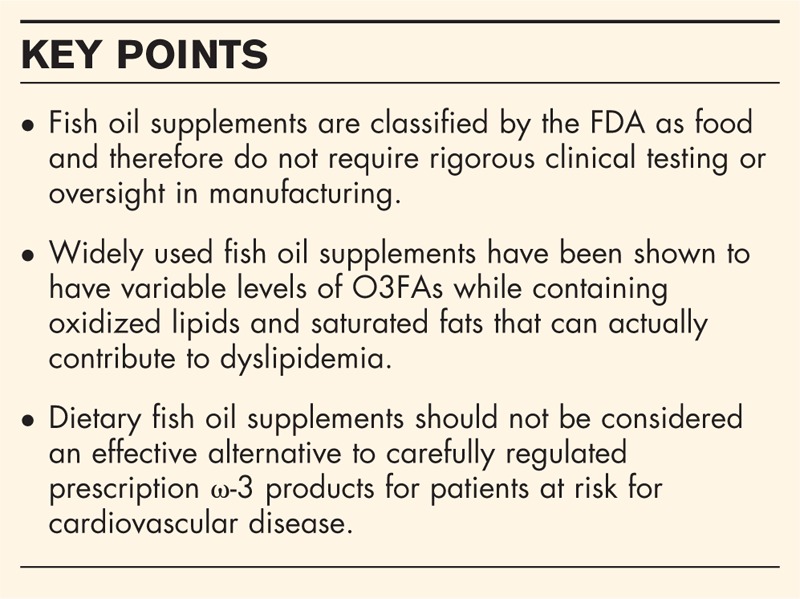
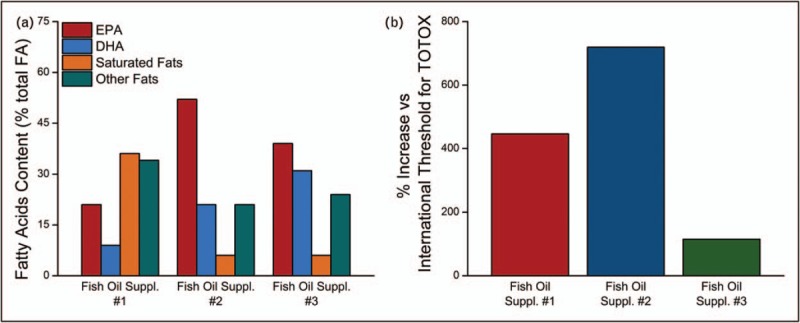
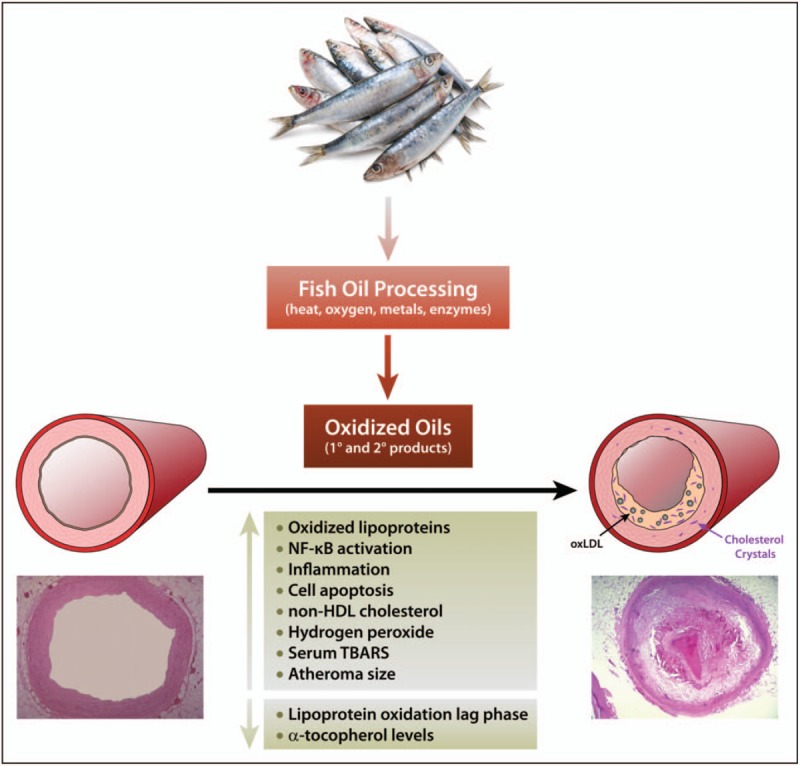
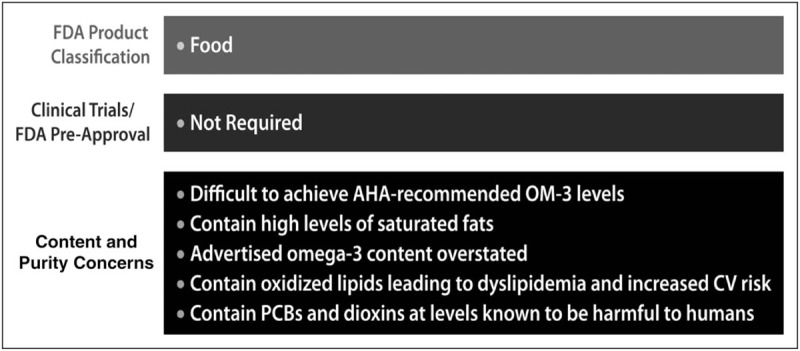
PURPOSE OF REVIEW: The purpose of this review is to assess whether dietary fish oil supplements can be appropriate for patients with elevated triglycerides and cardiovascular risk based on a comprehensive analysis of their composition, and level of regulatory oversight. RECENT FINDINGS: Approximately 19 million people in the United States take fish oil supplements, many for the purpose of treating or preventing heart disease. Unlike prescription products, fish oil supplements are classified as food by the Food and Drug Administration (FDA) and are not required to undergo manufacturing oversight or clinical testing. Analysis of widely used dietary fish oil supplements show that they may have lower amounts of ω-3 than advertised as well as significant levels of saturated fat and oxidized oils which actually may contribute to dyslipidemia. Clinical outcome trials have failed to show a consistent cardiovascular benefit with fish oil supplements and other low-dose mixed ω-3 fatty acids. SUMMARY: In light of limited regulatory oversight and evidence of quality concerns, dietary fish oil supplements are not an appropriate substitute for FDA approved prescription ω-3 fatty acids for their indicated use in treatment of elevated triglycerides or the prevention of cardiovascular events.
Overview
The claims and statistics of this paper haven’t been checked yet.
Free: it reads the open-access text and checks the first 5 claims that cite a source we can check. Create a free account to check every claim.
Integrity signals
Registry
Cites
Statistics
Figures
Verification
Claims the paper makes
The claims and statistics of this paper haven’t been checked yet.
Free: it reads the open-access text and checks the first 5 claims that cite a source we can check. Create a free account to check every claim.
Claims other papers make about this one
Each is checked against this paper’s own text: does it say what the citing paper says it does?
The cited source says what the claim attributes to it.
In the citing paper
“It is estimated that 19 million people take fish oil dietary supplements in the United States”
From Cardiovascular Impact of Nutritional Supplementation With Omega-3 Fatty Acids (2021) · cites this paper as [11]
In the citing paper
“Fish oil dietary supplements are the most commonly consumed nonvitamin, nonmineral natural products by adults.”
From Cardiovascular Impact of Nutritional Supplementation With Omega-3 Fatty Acids (2021) · cites this paper as [11]
Self-check
Percentages, sums and reported differences re-computed from the paper’s own numbers.
The self-check needs the paper’s full text.
Citations
Cites
Inflammation in atherosclerosis
Libby, P. (2002) · Nature · doi:10.1038/nature01323 · Cited by 8,315
Caspases: the executioners of apoptosis
COHEN, G. M. (1997) · Biochemical Journal · doi:10.1042/bj3260001 · Cited by 4,719
Inflammation in Atherosclerosis
Libby, P. (2012) · Arteriosclerosis, Thrombosis, and Vascular Biology · doi:10.1161/atvbaha.108.179705 · Cited by 3,736
Cardiovascular Risk Reduction with Icosapent Ethyl for Hypertriglyceridemia
Bhatt, D. L., Steg, P. G., Miller, M., Brinton, E. A., Jacobson, T. A., Ketchum, S. B., Doyle, R. T., Juliano, R. A., Jiao, L., Granowitz, C., et al. (2019) · New England Journal of Medicine · doi:10.1056/nejmoa1812792 · Cited by 3,317
Barnes, P. M., Bloom, B., & Nahin, R. L. (2008) · PsycEXTRA Dataset · doi:10.1037/e623942009-001 · Cited by 3,147
Role of oxidized low density lipoprotein in atherogenesis.
Witztum, J. L., & Steinberg, D. (1991) · Journal of Clinical Investigation · doi:10.1172/jci115499 · Cited by 2,675
Festa, A., D’Agostino, R., Howard, G., Mykkänen, L., Tracy, R. P., & Haffner, S. M. (2000) · Circulation · doi:10.1161/01.cir.102.1.42 · Cited by 2,358
Optimal Diets for Prevention of Coronary Heart Disease
Hu, F. B. (2002) · JAMA · doi:10.1001/jama.288.20.2569 · Cited by 1,503
Lipid oxidation and improving the oxidative stability
Shahidi, F., & Zhong, Y. (2010) · Chemical Society Reviews · doi:10.1039/b922183m · Cited by 1,151
Sayre, L. M., Zelasko, D. A., Harris, P. L. R., Perry, G., Salomon, R. G., & Smith, M. A. (1997) · Journal of Neurochemistry · doi:10.1046/j.1471-4159.1997.68052092.x · Cited by 1,007
Marine n−3 Fatty Acids and Prevention of Cardiovascular Disease and Cancer
Manson, J. E., Cook, N. R., Lee, I.-M., Christen, W., Bassuk, S. S., Mora, S., Gibson, H., Albert, C. M., Gordon, D., Copeland, T., et al. (2019) · New England Journal of Medicine · doi:10.1056/nejmoa1811403 · Cited by 979
The protein structures that shape caspase activity, specificity, activation and inhibition
FUENTES-PRIOR, P., & SALVESEN, G. S. (2004) · Biochemical Journal · doi:10.1042/bj20041142 · Cited by 880
Cytotoxicity and genotoxicity of lipid-oxidation products
Esterbauer, H. (1993) · The American Journal of Clinical Nutrition · doi:10.1093/ajcn/57.5.779s · Cited by 815
The oxidative modification hypothesis of atherogenesis: an overview
Chisolm, G. M., & Steinberg, D. (2000) · Free Radical Biology and Medicine · doi:10.1016/s0891-5849(00)00344-0 · Cited by 746
Effects of n−3 Fatty Acid Supplements in Diabetes Mellitus
The ASCEND Study Collaborative Group (2018) · New England Journal of Medicine · doi:10.1056/nejmoa1804989 · Cited by 698
Aung, T., Halsey, J., Kromhout, D., Gerstein, H. C., Marchioli, R., Tavazzi, L., Geleijnse, J. M., Rauch, B., Ness, A., Galan, P., et al. (2018) · JAMA Cardiology · doi:10.1001/jamacardio.2017.5205 · Cited by 632
Bartsch, H., & Nair, J. (2006) · Langenbeck's Archives of Surgery · doi:10.1007/s00423-006-0073-1 · Cited by 516
Rimm, E. B., Appel, L. J., Chiuve, S. E., Djoussé, L., Engler, M. B., Kris-Etherton, P. M., Mozaffarian, D., Siscovick, D. S., Lichtenstein, A. H., & On behalf of the American Heart Association Nutrition Committee of the Council on Lifestyle and Cardiometabolic Health; Council on Epidemiology and Prevention; Council on Cardiovascular Disease in the Young; Council on Cardiovascular and Stroke Nursing; and Council on Clinical Cardiology (2018) · Circulation · doi:10.1161/cir.0000000000000574 · Cited by 500
Khan, B. V., Parthasarathy, S. S., Alexander, R. W., & Medford, R. M. (1995) · Journal of Clinical Investigation · doi:10.1172/jci117776 · Cited by 463
Fish oil supplements in New Zealand are highly oxidised and do not meet label content of n-3 PUFA
Albert, B. B., Derraik, J. G. B., Cameron-Smith, D., Hofman, P. L., Tumanov, S., Villas-Boas, S. G., Garg, M. L., & Cutfield, W. S. (2015) · Scientific Reports · doi:10.1038/srep07928 · Cited by 238
Khan, S. U., Khan, M. U., Riaz, H., Valavoor, S., Zhao, D., Vaughan, L., Okunrintemi, V., Riaz, I. B., Khan, M. S., Kaluski, E., et al. (2019) · Annals of Internal Medicine · doi:10.7326/m19-0341 · Cited by 216
Walter, M. F., Jacob, R. F., Jeffers, B., Ghadanfar, M. M., Preston, G. M., Buch, J., & Mason, R. P. (2004) · Journal of the American College of Cardiology · doi:10.1016/j.jacc.2004.08.029 · Cited by 205
Self-citationTranscription factor NF-κB as a potential biomarker for oxidative stress
van den Berg, R., Haenen, G. R. M. M., van den Berg, H., & Bast, A. (2001) · British Journal of Nutrition · doi:10.1079/bjn2001340 · Cited by 202
Oxidized lipids in the diet are a source of oxidized lipid in chylomicrons of human serum.
Staprãns, I., Rapp, J. H., Pan, X. M., Kim, K. Y., & Feingold, K. R. (1994) · Arteriosclerosis and Thrombosis: A Journal of Vascular Biology · doi:10.1161/01.atv.14.12.1900 · Cited by 186
The role of omega-3 fatty acids in the secondary prevention of cardiovascular disease
Lee, K. W., & Lip, G. Y. H. (2003) · QJM · doi:10.1093/qjmed/hcg092 · Cited by 177
Rao, G. N., Alexander, R. W., & Runge, M. S. (1995) · Journal of Clinical Investigation · doi:10.1172/jci118130 · Cited by 153
Rapid Autoxidation of Fish Oil in Diets without Added Antioxidants
Fritsche, K. L., & Johnston, P. V. (1988) · Journal of Nutrition · doi:10.1093/jn/118.4.425 · Cited by 133
Khan, F. (2003) · Cardiovascular Research · doi:10.1016/s0008-6363(03)00395-x · Cited by 129
Lipid peroxides induce expression of catalase in cultured vascular cells
Meilhac, O., Zhou, M., Santanam, N., & Parthasarathy, S. (2000) · Journal of Lipid Research · doi:10.1016/s0022-2275(20)33427-1 · Cited by 128
Marine n-3 polyunsaturated fatty acids and coronary heart disease
Schmidt, E. B., Arnesen, H., Caterina, R. D., Rasmussen, L. H., & Kristensen, S. D. (2004) · Thrombosis Research · doi:10.1016/j.thromres.2004.09.006 · Cited by 119
Cadenas, E., & Sies, H. (1998) · Free Radical Research · doi:10.3109/10715769809065816 · Cited by 116
Mason, R. P., & Sherratt, S. C. R. (2017) · Biochemical and Biophysical Research Communications · doi:10.1016/j.bbrc.2016.12.127 · Cited by 108
Self-citationGarrido-Polonio, C., García-Linares, M. C., García-Arias, M. T., López-Varela, S., García-Fernández, M. C., Terpstra, A. H. M., & Sánchez-Muniz, F. J. (2004) · British Journal of Nutrition · doi:10.1079/bjn20041174 · Cited by 106
Oxidized Lipids in the Diet Accelerate the Development of Fatty Streaks in Cholesterol-Fed Rabbits
Staprãns, I., Rapp, J. H., Pan, X.-M., Hardman, D. A., & Feingold, K. R. (1996) · Arteriosclerosis, Thrombosis, and Vascular Biology · doi:10.1161/01.atv.16.4.533 · Cited by 105
Wang, T., Gotoh, Y., Jennings, M. H., Rhoads, C. A., & Aw, T. Y. (2000) · The FASEB Journal · doi:10.1096/fj.99-0799com · Cited by 100
A critical look at the evidence for the oxidation of LDL in atherogenesis
Steinberg, D. H. (1997) · Atherosclerosis · doi:10.1016/s0021-9150(97)06115-7 · Cited by 95
Kleiner, A. C., Cladis, D. P., & Santerre, C. R. (2015) · Journal of the Science of Food and Agriculture · doi:10.1002/jsfa.6816 · Cited by 93
Natarajan, R., Reddy, M. A., Malik, K. U., Fatima, S., & Khan, B. V. (2001) · Arteriosclerosis, Thrombosis, and Vascular Biology · doi:10.1161/hq0901.095278 · Cited by 93
Merchant, N., Penumetcha, M., Meilhac, O., & Parthasarathy, S. (2002) · Journal of Nutrition · doi:10.1093/jn/132.11.3256 · Cited by 88
Quality analysis of commercial fish oil preparations
Ritter, J. C. S., Budge, S. M., & Jovica, F. (2013) · Journal of the Science of Food and Agriculture · doi:10.1002/jsfa.5994 · Cited by 85
Staprãns, I., Rapp, J. H., Pan, X.-M., & Kr, F. (1993) · Journal of Clinical Investigation · doi:10.1172/jci116632 · Cited by 85
Antiarrhythmic effects of omega-3 fatty acids: from epidemiology to bedside
Caterina, R. D., Madonna, R., Zucchi, R., & Rovere, M. T. L. (2003) · American Heart Journal · doi:10.1016/s0002-8703(03)00327-2 · Cited by 72
Undeland, I., Ekstrand, B., & Lingnert, H. (1998) · Journal of the American Oil Chemists Society · doi:10.1007/s11746-998-0069-9 · Cited by 71
Dwarakanath, R. S., Sahar, S., Reddy, M. A., Castanotto, D., Rossi, J. J., & Natarajan, R. D. (2004) · Journal of Molecular and Cellular Cardiology · doi:10.1016/j.yjmcc.2004.02.007 · Cited by 68
Walter, M. F., Jacob, R. F., Bjork, R. E., Jeffers, B., Buch, J., Mizuno, Y., & Mason, R. P. (2008) · Journal of the American College of Cardiology · doi:10.1016/j.jacc.2007.11.051 · Cited by 63
Self-citationPoppitt, S. D., Howe, C. A., Lithander, F. E., Silvers, K. M., Lin, R.-B., Croft, J., Ratnasabapathy, Y., Gibson, R. A., & Anderson, C. S. (2009) · Stroke · doi:10.1161/strokeaha.109.555136 · Cited by 59
Eder, K., Keller, U., Hirche, F., & Brandsch, C. (2003) · Journal of Nutrition · doi:10.1093/jn/133.9.2830 · Cited by 44
Richards, M. P., & Li, R. (2004) · Journal of Agricultural and Food Chemistry · doi:10.1021/jf0497197 · Cited by 43
García-Hernández, V. M., Gallar, M., Sánchez-Soriano, J., Micol, V., Roche, E., & García-García, E. (2013) · International Journal of Food Sciences and Nutrition · doi:10.3109/09637486.2013.812619 · Cited by 39
Santanam, N., Augè, N., Zhou, M., Keshava, C., & Parthasarathy, S. (1999) · Arteriosclerosis Thrombosis and Vascular Biology · doi:10.1161/01.atv.19.8.1912 · Cited by 38
The mechanism of action of omega-3 fatty acids in secondary prevention post-myocardial infarction
Harrison, N., & Abhyankar, B. (2004) · Current Medical Research and Opinion · doi:10.1185/030079904x17956 · Cited by 37
Eder, K., & Stangl, G. I. (2000) · Journal of Nutrition · doi:10.1093/jn/130.1.116 · Cited by 36
Impact of fish species and processing technology on minor fish oil components
Merkle, S., Giese, E., Rohn, S., Karl, H., Lehmann, I., Wohltmann, A., & Fritsche, J. (2016) · Food Control · doi:10.1016/j.foodcont.2016.11.003 · Cited by 33
Feature: The emerging marine oil industry
(1987) · Journal of the American Oil Chemists Society · doi:10.1007/bf02640090 · Cited by 32
Prescription Omega-3 Fatty Acid Products and Dietary Supplements Are Not Interchangeable.
Hilleman, D. E., & Smer, A. M. (2016) · PubMed · Cited by 31
Rundblad, A., Holven, K. B., Ottestad, I. O., Myhrstad, M. C. W., & Ulven, S. M. (2017) · British Journal Of Nutrition · doi:10.1017/s0007114517001167 · Cited by 30
Brandsch, C., & Eder, K. (2004) · British Journal Of Nutrition · doi:10.1079/bjn20041195 · Cited by 23
Brandsch, C., Naß, N., & Eder, K. (2004) · Journal of Nutrition · doi:10.1093/jn/134.3.631 · Cited by 22
Enhanced solubilization and intestinal absorption of cholesterol by oxidized linoleic acid
Penumetcha, M., Merchant, N., & Parthasarathy, S. (2002) · Journal of Lipid Research · doi:10.1016/s0022-2275(20)30463-6 · Cited by 21
Keller, U., Brandsch, C., & Eder, K. (2004) · Journal of Animal Physiology and Animal Nutrition · doi:10.1046/j.1439-0396.2003.00461.x · Cited by 18
Research works printed but not linked: 1
- Frankel EN Lipid oxidation. Bridgwater, UK: The Oily Press; 2005.
Cited by
Handelsman, Y., Jellinger, P. S., Guerin, C. K., Bloomgarden, Z. T., Brinton, E. A., Budoff, M. J., Davidson, M. H., Einhorn, D., Fazio, S., Fonseca, V. A., et al. (2020) · Endocrine Practice · doi:10.4158/cs-2020-0490 · Cited by 248
“Over-the-counter fish oil dietary supplements are not FDA-approved for lowering triglycerides and are not recommended for this purpose because they contain very low amounts of polyunsaturated omega3 fatty acids as well as trans fatty acids and saturated fat (111-113).”
Wierzejska, R. E. (2021) · International Journal of Environmental Research and Public Health · doi:10.3390/ijerph18178897 · Cited by 161
“Importantly, recent years have brought a growing number of reports about low-quality fish oil supplements [46], which according to various authors are nowhere near as good as preparations registered as medicines [47].”
BackgroundFatty Acids and Cardiovascular Risk. Evidence, Lack of Evidence, and Diligence
Visioli, F., & Poli, A. (2020) · Nutrients · doi:10.3390/nu12123782 · Cited by 113
“Another often overlooked and controversial [120] issue is that fish oil is, by its own nature and be it from diet [121] or supplements [122,123], prone to oxidation [124].”
BackgroundDo patients benefit from omega-3 fatty acids?
Sherratt, S. C. R., Mason, R. P., Libby, P., Steg, P. G., & Bhatt, D. L. (2023) · Cardiovascular Research · doi:10.1093/cvr/cvad188 · Cited by 80
“22 27 While inconsistent levels of O3FAs may compromise any intended benefit of these supplements, the presence of saturated fats, excess calories, and oxidized oils might actually cause harm, especially if consumed in large quantities and for long periods of time.”
BackgroundSelf-citationChapman, M. J., Zamorano, J. L., & Parhofer, K. G. (2022) · Pharmacology & Therapeutics · doi:10.1016/j.pharmthera.2022.108172 · Cited by 67
Metadata
- Authors
- Sherratt, S. C. R., Lero, M., & Mason, R. P.
- Affiliations
- Elucida Research LLC, Beverly, MA, USA
- University of Massachusetts Chan Medical School (US)
- Brigham and Women's Hospital (US)
- Corresponding author
- Mason, R. Preston
- Venue
- Current Opinion in Lipidology
- Published
- 2020-04
- Volume
- 31
- Issue
- 2
- Pages
- 94-100
- ISSN
- 0957-9672 (ISSN-L)
- 1473-6535
- PMC
- PMC7069411
- OpenAlex
- W3005213123
- Cited by
- 33
- References
- 62
- Citations by year
- 2026: 1 · 2025: 5 · 2024: 5 · 2023: 3 · 2022: 8 · 2021: 6 · 2020: 5
- FWCI
- 0.67
- Type
- journal article
- Language
- en
- Open access
- hybrid
- doi.org
- Licence
- Locations
- Current Opinion in Lipidology (publishedVersion, cc-by-nc-nd)
- PubMed Central (publishedVersion, cc-by-nc-nd)
- PubMed (publishedVersion)
- The Journal of the American Medical Association (JAMA) Network (American Medical Association) (submittedVersion, cc-by-nc-nd)
- Topics
- Health Sciences › Nursing › Nutrition and Dietetics › Fatty Acid Research and Health
- Physical Sciences › Chemistry › Organic Chemistry › Edible Oils Quality and Analysis
- Health Sciences › Medicine › Cardiology and Cardiovascular Medicine › Lipoproteins and Cardiovascular Health
- Keywords
- fish oil supplements, dyslipidemia, triglyceride elevation, omega-3 fatty acids, cardiovascular risk, supplement quality, regulatory oversight, saturated fat, oxidized oil, cardiovascular benefits
- MeSH terms
- Animals, Cardiovascular Diseases, Fish Oils, Humans, United States, Fatty Acids, Omega-3, Dietary Supplements, Dyslipidemias
About these checks
Registry, retraction, Cites and statistics results are computed, not judged, with one exception: a printed reference that no index lists is read once by a model before it counts as a citation error. Claims are extracted by a model and kept only when their quote appears verbatim in the text; each cited source is then checked, with a model’s help, for whether it says what the claim relies on. Those verdicts can be wrong — read the claim’s quote and the cited source before relying on one.
Statistics and arithmetic are recomputed, not judged.
Confidence bands are shown only for fields calibrated on our annotated test set. None is calibrated yet, so no band is shown.
What counts as a claim ›How we measure confidence ›How we check this ›
Are you an author, or do you see a problem with this page? Request a review
Data sources
Bibliographic data: Semantic Scholar, OpenAlex, Crossref.
Contains information from the Semantic Scholar Academic Graph Datasets, made available under the ODC Attribution License (ODC-BY 1.0).
Semantic Scholar’s data is described in: Kinney, R., et al. (2023). The Semantic Scholar Open Data Platform. arXiv:2301.10140.
