

Social media, internet use and suicide attempts in adolescents
Open accessThe DOI matches its Crossref record; 40 of the 40 references it cites were found in a registry or an index; 16 of the 58 sources its claims cite were checked for support.
Abstract
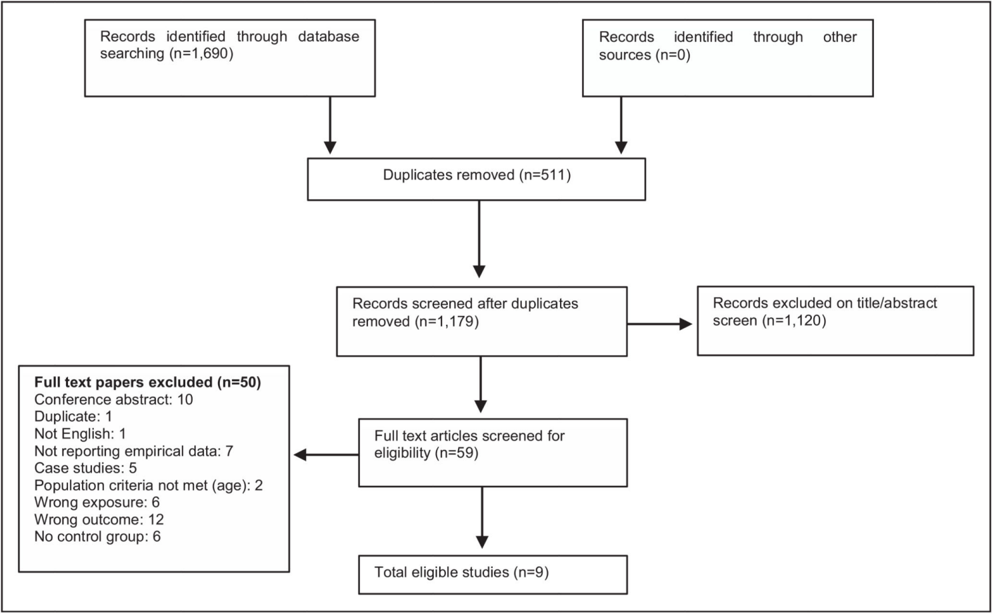
PURPOSE OF REVIEW: Suicide is the second leading cause of death in youth aged 10-24 years old globally, but detecting those at risk is challenging. Novel preventive strategies with wide influence across populations are required. Interest in the potential for both detrimental and supportive influences of social media/internet use on suicidal behaviour has been growing; however, the relationship remains unclear. RECENT FINDINGS: A systematic search of articles from database inception up to 25 January 2019 across five databases: Medline, PsycINFO, EMBASE, HMIC and CINAHL revealed nine independent studies investigating social media/internet use and suicide attempts in young people less than 19 years old (n = 346 416). An independent direct association was found between heavy social media/internet use and increased suicide attempts in seven studies (adjusted ORs ranged from 1.03 to 5.10), although adjusting for cyberbullying victimization and sleep disturbance reduced the strength of this association. Two studies found that some social media/internet use, versus no use, may be associated with fewer suicide attempts. There were no studies investigating the relationship between social media/internet use and completed suicide. SUMMARY: There is an independent association between problematic use of social media/internet and suicide attempts in young people. However, the direction of causality, if any, remains unclear. Further evaluation through longitudinal studies is needed.
Overview
CoChat Summary
TL;DR
This systematic review found an independent association between heavy or problematic social media/internet use and increased suicide attempts in adolescents, with adjusted ORs from 1.03 to 5.10 across seven studies. However, all included studies were cross-sectional, and the direction of causality remains unclear.
Key findings
- Nine independent studies (total n = 346,416) investigated social media/internet use and suicide attempts in young people under 19 years; seven found an independent direct association between heavy use and increased suicide attempts, with adjusted ORs ranging from 1.03 to 5.10.
- Adjusting for cyberbullying victimization and sleep disturbance reduced the strength of this association: Sampasa-Kanyinga’s SNS–suicide attempt association (OR 5.10, 95% CI 1.45–17.88) was explained by cyberbullying victimization, and Guo et al. found sleep disturbance partially mediated the link between Problematic Internet Use and suicide attempts.
- Two studies found that some social media/internet use, versus no use, may be associated with fewer suicide attempts: Kim found occasional internet users had the lowest attempted suicide rate, and Lee et al. found the high-risk internet addiction group (OR 1.91, 95% CI 1.71–2.14) and nonuser group (OR 1.33, 95% CI 1.25–1.42) were more likely to attempt suicide than the potential-risk group (OR 1.20, 95% CI 1.04–1.38).
- No studies investigated the relationship between social media/internet use and completed suicide.
Methods
- Systematic review reported according to PRISMA, registered on PROSPERO (ID CRD42018115259); searched Medline, PsycINFO, EMBASE, HMIC and CINAHL from database inception to 25 January 2019, including English-language, peer-reviewed observational studies with a majority of participants under 19 years and suicide attempts as the specified outcome.
- Nine cross-sectional studies published between 2012 and 2018 were included; participant age range was 11–18 years, settings included community/school-based samples plus one psychiatric outpatient and one psychiatric inpatient sample, and total participants were n = 346,416.
- Quality was assessed with an adapted Newcastle-Ottawa scale (six high quality, two medium, one low); heterogeneity in exposure and outcome measures prevented meta-analysis, so findings were summarized narratively.
Limitations
- Stated in the paper: the review excluded participants aged 19 or over, studies referring to “suicidal behaviour” without specified suicide or suicide attempts, grey literature, and non-English language publications; heterogeneity of exposure and outcome measures made synthesis challenging and prevented meta-analysis.
- Evident from the text: all nine included studies were cross-sectional, so the direction of causality, if any, remains unclear; no included study examined completed suicide; and cyberbullying victimization and sleep disturbance were not controlled for in most studies.
Model-written summary. Check it against the paper before relying on it.
Integrity signals
Registry
Cites
Statistics
Figures
Verification
Claims the paper makes
15 Valid · 5 Not valid · 48 Not checked · 35 Own results and interpretations
The cited sources support only part of this claim — read each source’s verdict below.
In the paper
“However, it is challenging to detect and intervene early, as many of those who go on to die by suicide will not have interacted with mental health services [2].”
What the sources say
- Partly supportedcites [2] 2. Kidger J, Heron J, Lewis G, et al. Adolescent self-harm and suicidal thoughts in the ALSPAC cohort: a self-report survey in England. BMC Psychiatry. 2012; 12:69. [PubMed: 22737989] sourceExperimental — accuracy not yet measured
The Discussion (Main findings; page unavailable) reports that only one third of adolescents who self-harmed with a desire to die sought medical help afterward, suggesting that many such episodes remain hidden from medical services. The study does not establish whether people who later die by suicide had previously interacted with mental health services; its outcome is self-reported self-harm, not subsequent suicide deaths. (LLM, conf=0.87)
plain- Asserted: passes — The authors put it forward as true.
- Checkable: passes — It can be checked against evidence.
- Load-bearing: passes — The paper’s conclusions depend on it.
- Based: passes — The paper gives a reason why it holds.
- Partly supported
The cited sources support only part of this claim — read each source’s verdict below.
In the paper
“There is growing evidence of specific mechanisms by which social media/internet use can be harmful, especially in relation to young people.”
What the sources say
- Not matchedcites [11 ■■ ]
This doesn’t read as a citation we can look up.
- Not matchedcites [29] 29. Brown RC, Fischer T, Goldwich AD, et al. #cutting: Nonsuicidal self-injury (NSSI) on Instagram.
Its entry has no title and year that we can search by.
- Supportedcites [30] 30. Cavazos-Rehg PA, Krauss MJ, Sowles SJ, et al. An analysis of depression, self-harm, and suicidal ideation content on Tumblr. Crisis. 2017; 38:44-52. [PubMed: 27445014] source
The Discussion (page unavailable) identifies a potential mechanism: Tumblr posts may glorify self-harm and suicide, while young users may be influenced by peers and media. The paper also reports that prior studies suggest online discussion may normalize self-harm and suicidal ideation. It treats harm as a concern requiring further study, consistent with the claim’s wording that social media use can be harmful. (LLM, conf=0.85)
plainstates a possible cause- Asserted: passes — The authors put it forward as true.
- Checkable: passes — It can be checked against evidence.
- Load-bearing: passes — The paper’s conclusions depend on it.
- Based: passes — The paper gives a reason why it holds.
- Not matched
Every source the paper cites for this claim was checked and supports it.
In the paper
“and stepwise regression (coefficient 0.552, 95% CI 0.207- 0.896, P =0.002)”
What the sources say
- Supportedcites Kaess, 2014 matched to “Pathological Internet use among European adolescents: psychopathology and self-destructive behaviours” (2014) source
Table 2 in the Results section reports a positive coefficient for suicide attempts in the final stepwise regression on pathological Internet use: 0.552 (95% CI 0.207–0.896; p = 0.002). (LLM, conf=0.95)
plainstates an association- Asserted: passes — The authors put it forward as true.
- Checkable: passes — It can be checked against evidence.
- Load-bearing: passes — The paper’s conclusions depend on it.
- Based: passes — The paper gives a reason why it holds.
- Supported
Every source the paper cites for this claim was checked and supports it.
In the paper
“Patients with PIU showed significantly more suicide attempts than patients without ( χ 2 13.78, P <0.001)”
What the sources say
- Supportedcites Fuchs, 2018 matched to “Pathological internet use—an important comorbidity in child and adolescent psychiatry: prevalence and correlation patterns in a naturalistic sample of adolescent inpatients” (2018) source
Results §3.3.2 reports that adolescent inpatients with PIU had significantly more suicide attempts than those without PIU (46.9% versus 13.9%; p < 0.001). The reported group sizes in §3.3 and the chi-squared testing method in §2.3 are consistent with χ² = 13.78, although that statistic is not printed in the retrieved passage. (LLM, conf=0.90)
plainstates an association- Asserted: passes — The authors put it forward as true.
- Checkable: passes — It can be checked against evidence.
- Load-bearing: passes — The paper’s conclusions depend on it.
- Based: passes — The paper gives a reason why it holds.
- Supported
The cited sources support only part of this claim — read each source’s verdict below.
In the paper
“Boys: NIU (OR 1.87, 95% CI 1.61-2.18)”
What the sources say
- Partly supportedcites Kim, 2012 matched to “The Nonlinear Association Between Internet Using Time for Non-Educational Purposes and Adolescent Health” (2012) sourceExperimental — accuracy not yet measured
The Results report that, with OIUs as the reference group, the odds of attempted suicide were significantly higher in both genders and describe a U-shaped association that includes NIUs. Our copy does not provide the specific estimate of OR 1.87 or its 95% CI of 1.61–2.18; searches for those numbers found no matching passage. The available passages have section labels but no page numbers. (LLM, conf=0.82)
plainstates an association- Asserted: passes — The authors put it forward as true.
- Checkable: passes — It can be checked against evidence.
- Load-bearing: passes — The paper’s conclusions depend on it.
- Based: passes — The paper gives a reason why it holds.
- Partly supported
51 more claims · 5 with their cited sources checked
Create a free account to see all 103 claims and to verify the 4 references still open.
- Probably not a substantial claim. 30
- It may state two separate claims as one. 26
- The quote only partly states this claim. 1
Claims other papers make about this one
Each is checked against this paper’s own text: does it say what the citing paper says it does?
In the citing paper
“A systematic review investigating social media/internet use and suicide attempts in youth aged 11-18 years found more frequent social media/internet use was associated with increased odds (1.03 to 5.10) for suicide attempt.32”
From Evidence-based youth suicide prevention and intervention in pediatric primary care settings. (2024) · cites this paper as [32]
Self-check
Percentages, sums and reported differences re-computed from the paper’s own numbers.
Each contradiction between two passages listed here was confirmed by an independent check.
Rated minor: it would not touch a result — a value no result rests on, a p-value that stays on the same side of the significance level, or a conflict that is clerical, resolved elsewhere in the paper, or outside its own findings.
In the paper
§ Results · p. 3
“The age range of participants studied was 11 - 18 years.”
§ Summary of included studies · p. 14
“N =5126, school based 11-20-year olds (mean age 15.2 years)”
Citations
Cites
Social network sites: definition, history, and scholarship
boyd, D. M., & Ellison, N. B. (2007) · Journal of Computer-Mediated Communication · doi:10.1111/j.1083-6101.2007.00393.x · Cited by 16,251
The Three-Step Theory (3ST): A New Theory of Suicide Rooted in the “Ideation-to-Action” Framework
Klonsky, E. D., & May, A. M. (2015) · International Journal of Cognitive Therapy · doi:10.1521/ijct.2015.8.2.114 · Cited by 1,799 · cited 1×
“Capacity (dispositional, acquired and practical) to make a suicide attempt is an important factor in the Three-Step Theory of suicide [32] and it is not yet known if, or how, social media/internet could impact this.”
BackgroundNock, M. K. (2010) · Annual Review of Clinical Psychology · doi:10.1146/annurev.clinpsy.121208.131258 · Cited by 1,550
Stiglic, N., & Viner, R. M. (2019) · BMJ Open · doi:10.1136/bmjopen-2018-023191 · Cited by 1,259
Global patterns of mortality in young people: a systematic analysis of population health data
Patton, G. C., Coffey, C., Sawyer, S. M., Viner, R. M., Haller, D. M., Bose, K., Vos, T., Ferguson, J., & Mathers, C. D. (2009) · The Lancet · doi:10.1016/s0140-6736(09)60741-8 · Cited by 1,233 · cited 1×
“Introduction Suicide is the second leading cause of death in young people aged 10–24 years, globally [1].”
Media Use in School-Aged Children and Adolescents
COUNCIL ON COMMUNICATIONS AND MEDIA, Hill, D., Ameenuddin, N., Chassiakos, Y. (. R., Cross, C., Radesky, J., Hutchinson, J., Levine, A., Boyd, R., Mendelson, R., et al. (2016) · Pediatrics · doi:10.1542/peds.2016-2592 · Cited by 622
Self-harm, suicidal behaviours, and cyberbullying in children and young people: systematic review
John, A., Glendenning, A. C., Marchant, A., Montgomery, P., Stewart, A., Wood, S., Lloyd, K., & Hawton, K. (2018) · Journal of Medical Internet Research · doi:10.2196/jmir.9044 · Cited by 580
Mars, B., Heron, J., Klonsky, E. D., Moran, P., O'Connor, R. C., Tilling, K., Wilkinson, P., & Gunnell, D. (2019) · The Lancet Psychiatry · doi:10.1016/s2215-0366(19)30030-6 · Cited by 546
Marchant, A., Hawton, K., Stewart, A., Montgomery, P., Singaravelu, V., Lloyd, K., Purdy, N., Daine, K., & John, A. (2017) · PLoS ONE · doi:10.1371/journal.pone.0181722 · Cited by 464
Correlates of suicide attempts among self-injurers: a meta-analysis
Victor, S. E., & Klonsky, E. D. (2014) · Clinical Psychology Review · doi:10.1016/j.cpr.2014.03.005 · Cited by 390 · cited 1×
“The links between self-harm, suicidal ideation and later suicide attempts are well established [5,6], but nomenclature in this field varies.”
Research works printed but not linked: 3
- 4. The SAGE Handbook of Social Media Research Methods. 2017.
- 7. National Collaborating Centre for Mental Health (UK). NICE Clinical Guidelines, No. 16. SelfHarm: The Short-Term Physical and Psychological Management and Secondary Prevention of SelfHarm in Primary and Secondary CareLeicester (UK): British Psychological Society; 2004. Available from: https://www.ncbi.nlm.nih.gov/books/NBK56385/ [Accessed 9 April 2019]
- 28. Arlington, V. Diagnostic and statistical manual of mental disorders. fifth edition. USA: American Psychiatric Association; 2013.
Cited by
Items 201–257 of 257
Institutionally Manifested Mortalities
Malik, T. H. (2023) · Springer eBooks · doi:10.1007/978-3-030-87624-1_226-1 · Cited by 2
Aprilita, B., & Andriyani, A. (2012) · Cited by 10
Marengo, D., Settanni, M., Mastrokoukou, S., & Longobardi, C. (2023) · Research Square · doi:10.21203/rs.3.rs-3478489/v1 · Cited by 1
Haasio, A., & Salminen-Tuomaala, M. H. (2021) · Informaatiotutkimus · doi:10.23978/inf.100523 · Cited by 11
A comunicação nos ambientes virtuais e o comportamento suicida
Pereira, C. C. M. (2021) · Digital Library of Theses and Dissertations (Universidade de São Paulo) · doi:10.11606/t.22.2021.tde-11062021-115249 · Cited by 1
Sun, K., Shivakumar, V., & Kishore, A. R. (2021) · Springer eBooks · doi:10.1007/978-3-030-62113-1_7
Editorial: Dialectical Behavior Therapy: More Is Not Always Better When Different Is Required
Janssen, A. C., & Walkup, J. T. (2022) · Journal of the American Academy of Child & Adolescent Psychiatry · doi:10.1016/j.jaac.2022.05.006
Desejo mimético, redes sociais e suicídio:
de Paula, B., & Donadon, F. (2022) · Pesquisas em Teologia · doi:10.46859/pucrio.acad.pqteo.2595-9409.2022v5n9p50
Hariman, K. W. (2022) · Oxford University Press eBooks · doi:10.1093/med/9780198861478.003.0030 · Cited by 1
Internet, \"fake news\" e responsabilidade civil
Biolcati, F. H. D. O. (2021) · Digital Library of Theses and Dissertations (Universidade de São Paulo) · doi:10.11606/t.2.2021.tde-17082022-112907 · Cited by 8
Perakslis, E. D., & Quintana, Y. (2022) · doi:10.2196/preprints.43174
Community Cohesion and the Church's Social Teachings in Light of the Virus Restrictions
Nicolson, S. (2022) · Caritas et Veritas · doi:10.32725/cetv.2022.011
Soudržnost komunity a sociální učení církve ve světle virových omezení
Nicolson, S. (2022) · Caritas et Veritas · doi:10.32725/cetv.2022.010
Differences in the Extent and Function of Self-Harm With Regard To the Sexual Orientation of Youths
Démuthová, S., & Démuth, A. (2022) · The Proceedings of the International Conference on Research in Social Sciences. · doi:10.33422/6th.rssconf.2022.10.010
Lawrence, O. C., Goncearenco, I., & Ziafat, K. (2023) · Oxford University Press eBooks · doi:10.1093/med/9780197582718.003.0005
THE EFFECT OF THE COVID-19 PANDEMIC ON SUICIDE ATTEMPTS OF INDIVIDUALS AGED 65 AND OVER
Şener, A., & Meral, O. (2023) · Hippocrates Medical Journal · doi:10.58961/hmj.1216106
Predictors of Suicide Behavior in Adolescents with Depression
Mo, Y., & Eun, K. (2023) · Science Insights · doi:10.15354/si.23.re406 · Cited by 3
Forecasting National-Level Self-Harm Trends With Social Networks
Tuarob, S., Chatrinan, K., Noraset, T., Tawichsri, T., & Thaipisutikul, T. (2023) · IEEE Access · doi:10.1109/access.2023.3289295 · Cited by 2
“previous research studies [53], [82], [84].”
PROBLEMATIC INTERNET USE AND ADOLESCENT MENTAL HEALTH
Пичиков, А. А., & Tikhomirov, D. I. (2023) · Themed collection of papers from Foreign intemational scientific conference «Joint innovation - joint development». Medical sciences . Part 2. Ьу НNRI «National development» in cooperation with PS of UA. June 2023 · doi:10.37539/230629.2023.52.59.045
ӘЛЕУМЕТТІК МЕДИА МАРКЕТИНГТЕ ҮЛКЕН ДЕРЕКТЕРДІ ПАЙДАЛАНУ
Сериков, М. К. (2023) · Habaršy. Fizika-matematikalyķ ġylymdary seriâsy · doi:10.51889/2022-2.1728-7901.20
Lyu, S., Guo, Z., Jiang, Y., & Li, Y. (2023) · Research Square · doi:10.31219/osf.io/yv5dk · Cited by 1
Dev, M., Kumar, M., & Saha, D. (2023) · IFIP advances in information and communication technology · doi:10.1007/978-3-031-50188-3_31
Social Media: A Brave New World
Nowrangi, K. (2022) · JAACAP Connect · doi:10.62414/001c.92277
Hot Topics in Public Mental Health
Bhui, K. S., Mooney, R., Butcher, I., & Hugh‐Jones, S. (2023) · World Social Psychiatry · doi:10.4103/wsp.wsp_29_23
Luu, N. N. T., Tran, X. T., & Tran, Q. P. (2023) · Tạp chí Y Dược Huế · doi:10.34071/jmp.2023.6.3
Pawłowska, B., Świerczyńska, J. C., Dyzma-Kasprzak, A., & Kasprzak, K. (2024) · Medical Studies · doi:10.5114/ms.2024.137601 · Cited by 1
Wei, H., Zhang, Y., Sun, N., Wang, Y., & Li, Y. (2024) · Research Square · doi:10.21203/rs.3.rs-4280256/v1 · Cited by 3
Research on Civic and Political Education and Economic Development in the Age of Digital Economy
Liu, L. (2024) · Applied Mathematics and Nonlinear Sciences · doi:10.2478/amns-2024-1476
Adolescent self-harm and suicide attempts in the emergency department in Singapore
Ong, S. H. (2025) · Annals of the Academy of Medicine Singapore · doi:10.47102/annals-acadmedsg.202531
Pediatric emergency department visits for suicidality
Beck, H., Huhulea, E. N., Issak, A., Paulino, N. A., Rana, P., Madimi, S., Suarez, A., Colon, E., Rezk, N., Kalantari, H., et al. (2025) · The American Journal of Emergency Medicine · doi:10.1016/j.ajem.2025.02.047 · Cited by 1
Sociodemographic Influences on Suicide Risk Screening and Management in Hospitalized Youths
Johnson, A. L., Porada, K., & Vepraskas, S. (2025) · Hospital Pediatrics · doi:10.1542/hpeds.2023-007680
Multiple emergency department visits and suicidal behavior in children and adolescents
Merayo-Cano, J. M., Porras‐Segovia, A., Taracena-Cuerda, M., García, S. M., Marti-Estevez, I., Carrillo-Notario, L., Martínez-Martín, N., Álvarez-García, R., Baca‐García, E., & Peñuelas‐Calvo, I. (2025) · Journal of Psychiatric Research · doi:10.1016/j.jpsychires.2025.03.029 · Cited by 1
Development of the PRINTQUAL-Web Tool for Assessing the Quality of Online News Reporting of Suicide
Jarvis, R. R., Anet, Á. A., Zheng, K., Hawley, M., Marchant, A. L., Hawton, K. E., John, A. M., & Pitman, A. (2025) · Crisis · doi:10.1027/0227-5910/a001005 · Cited by 2
“…about suicide can increase suicidality among young people (Dunlop et al., 2011), browsing of suicide-related content can expose them to suicide methods (Biddle et al., 2018), and social media attention on suicide is associated with increased suicide rates among young people (Sedgwick et al., 2019).”
Hajirnis, A. V., & Hunt, J. (2025) · Child and Adolescent Psychiatric Clinics of North America · doi:10.1016/j.chc.2025.05.012
Jain, N., Lohumi, I., & Pathare, S. (2025) · Springer eBooks · doi:10.1007/978-981-96-6553-2_9
Why Facebook and other social media companies need to be reined in
Mendes, K., Burkell, J., Bailey, J., et al. (2021) · doi:10.64628/aam.dgpxnpyk4
Ismail, I. S., Hashemi, S. S., Mehrabi, Y., Baiee, H., Lami, F., & Al-Hasnawi, S. M. (2025) · Cureus · doi:10.7759/cureus.91456 · Cited by 1
Instrumenting the Online Information Environment
Shapiro, J. N. (2024) · The Annals of the American Academy of Political and Social Science · doi:10.1177/00027162251397820 · Cited by 1
“…of physical and mental health outcomes can be either positive or negative depending on the way it is used, baseline mental health, environmental factors, and gender (cunningham et al. 2021; Odgers and Jensen 2020; Sedgwick et al. 2019; Valkenburg et al. 2022; Yin et al. 2019; Yoon et al. 2019).”
SOCIAL MEDIA USE AND ITS IMPACT ON ADOLESCENTS’ MENTAL HEALTH AND WELL-BEING
Oparcik, A., Tarczykowski, J., Stupnicki, S., Zakryś, M., Zakryś, K. A., Szot, M., & Kwaśniewska, N. (2025) · International Journal of Innovative Technologies in Social Science · doi:10.31435/ijitss.4(48).2025.4621 · Cited by 1
Patterns of media and social media consumption associated with suicidal ideation in Spanish children
Ibáñez, D. B., Garcés-Prettel, M., Castaño, L. C., Saldaña, S. M. V., Merchán-Clavellino, A., Santoya-Montes, Y., & Arroyave, J. (2026) · Humanities and Social Sciences Communications · doi:10.1057/s41599-026-06529-0 · Cited by 1
Lookingbill, V., & Mohammadi, E. (2026) · International Journal of Mental Health and Addiction · doi:10.1007/s11469-026-01654-y
Symbiotic Intelligence in Healthcare: Can AI Help Us Understand – and Prevent – Suicide?Preprint
Krumsvik, R. J., Høydal, K., & Høydal, Ø. A. (2026) · SSRN Electronic Journal · doi:10.2139/ssrn.6437298
Peng, S., Guo, Y., Jiang, G., Liu, Q., Lu, C., Wang, W., & Guo, L. (2026) · Computers in Human Behavior Reports · doi:10.1016/j.chbr.2026.101031
Harren, N. (2022) · theses.fr (ABES) · doi:10.70675/35c7d92cz534bz4cd2za939zfc1fa0155592
Martín-Calvete, J. M., & Ramírez-Uclés, I. (2026) · Child and Adolescent Psychiatry and Mental Health · doi:10.1186/s13034-026-01061-0
Balhara, Y. P. S., Dhiman, V., Sarkar, S., Ranjan, R., Bhargava, R., Ganesh, R., Kattimani, S., Patra, B. N., Ali, S. H., & Gogoi, A. (2026) · Frontiers in Psychiatry · doi:10.3389/fpsyt.2026.1804588 · Cited by 1
“Patterns characterised by impaired control and continued use despite harm resemble behavioural addictions and may co-occur with substance use and suicidal risk (10, 11).”
Quality of Family Life and Social Media Use and Its Relation to Suicidal Thoughts Among Adolescents
Mohammed, E. G. F., Saraya, O. A. A. E.-F. A., Ali, S. A.-A. O., et al. (2026) · Studies in systems, decision and control · doi:10.1007/978-3-032-15739-3_38
Dou, L., Wang, W., Zhang, L., Zou, Q., Peng, Y., Abudurexiti, X., Yang, X., Liu, X., Shu, Y., & Wu, M. (2026) · Archives of Suicide Research · doi:10.1080/13811118.2026.2686811 · Cited by 1
Krumsvik, R. J., Høydal, K. L., & Høydal, Ø. A. (2026) · Frontiers in Medicine · doi:10.3389/fmed.2026.1848732 · Cited by 2
Leung, C., Lai, J., Long, A., & Childs, K. (2026) · Children and Youth Services Review · doi:10.1016/j.childyouth.2026.109157
Understanding Rurality and Associated Suicide Risks: Perspectives of Adolescents and Caregivers
Allen, S. E., Gasper, G. M., Leavitt, H. B., Pogue, J. A., Helmling, A. C., Hernandez, N. G., Jacobs, E., Vanderwiel, S. L., Cantwell, H. M., Velmineti, V., et al. (2026) · Academic Pediatrics · doi:10.1016/j.acap.2026.103402
Qin, A., Wang, M., Yu, L., li, S., Liu, Z., Zheng, S., Shao, Z., Lv, C., & Sun, L. (2026) · Journal of Medical Internet Research · doi:10.2196/90014
Suryadi, K., Tanshzil, S. W., Sukmayadi, V., & Lestari, G. (2026) · The Open Psychology Journal · doi:10.2174/0118743501482198260813094640
Chen, Y., Shan, Q., Ma, P., Zhao, Y., Zhao, W., & Guo, J. (2026) · Intelligent Pharmacy · doi:10.1016/j.ipha.2026.08.009
Malik, T. H. (2026) · Research Square · doi:10.21203/rs.3.rs-8933406/v1
Amini, J., Clarissa, S., Zilio, M., Luca, I. D., Baaj, L., Schumacher, A., Sinyor, M., Abi‐Jaoude, E., Anthony, S. J., Campisi, S. C., et al. (2026) · JAACAP Open · doi:10.1016/j.jaacop.2026.09.003
Morales-Sanhueza, J., Parra, G. M.-M., & Puig-Amores, I. (2026) · Behavioral Sciences · doi:10.3390/bs16091674
“In contrast, leisure patterns characterized by social isolation or a high dependence on digital activities are associated with greater psychological distress and loneliness (Cai et al., 2023; Fancourt et al., 2021; Guo et al., 2024; Sedgwick et al., 2019).”
Metadata
- Authors
- Sedgwick, R., Epstein, S., Dutta, R., & Ougrin, D.
- Affiliations
- King's College London (GB)
- Corresponding author
- Sedgwick, Rosemary
- Venue
- Current Opinion in Psychiatry
- Published
- 2019-11
- Volume
- 32
- Issue
- 6
- Pages
- 534-541
- ISSN
- 0951-7367 (ISSN-L)
- PMC
- PMC6791504
- OpenAlex
- W2961274044
- Semantic Scholar
- d3be32c29a46a11a51f63086f6aa915b5d26f6d9
- Cited by
- 260
- References
- 39
- Citations by year
- 2026: 28 · 2025: 33 · 2024: 44 · 2023: 50 · 2022: 52 · 2021: 28 · 2020: 23 · 2019: 1
- FWCI
- 30.34
- Type
- journal article
- Language
- en
- Open access
- hybrid
- doi.org
- Licence
- cc-by
- Locations
- Current Opinion in Psychiatry (publishedVersion, cc-by)
- Europe PMC (PubMed Central) (publishedVersion, cc-by)
- PubMed Central (publishedVersion, cc-by)
- PubMed (publishedVersion)
- Research Portal (King's College London) (submittedVersion, cc-by)
- Bristol Research (University of Bristol) (submittedVersion)
- Explore Bristol Research (submittedVersion)
- Funders
- MQ: Transforming Mental Health (MQDS16/52)
- Psychiatry Research Trust
- National Institute for Health and Care Research (ACF-2015-17-018, ACF-2017-17-019)
- Academy of Medical Sciences (AMS-CSF4-Dutta)
- Medical Research Council (MR/R004927/1)
- Topics
- Social Sciences › Psychology › Clinical Psychology › Suicide and Self-Harm Studies
- Social Sciences › Sociology and Political Science › Impact of Technology on Adolescents
- Social Sciences › Psychology › Social Psychology › Mental Health via Writing
- Keywords
- social media use, internet use, suicide attempts, adolescents, youth suicide, cyber victimization, sleep disorders, suicide prevention, problematic internet use
- MeSH terms
- Adolescent, Adult, Child, Humans, Longitudinal Studies, Male, Suicide, Attempted, Internet, Young Adult, Bullying, Suicidal Ideation, Social Media
About these checks
Registry, retraction, Cites and statistics results are computed, not judged, with one exception: a printed reference that no index lists is read once by a model before it counts as a citation error. Claims are extracted by a model and kept only when their quote appears verbatim in the text; each cited source is then checked, with a model’s help, for whether it says what the claim relies on. Those verdicts can be wrong — read the claim’s quote and the cited source before relying on one.
The claim verdicts this report counts are experimental: their accuracy is not yet measured.
A language model drew the claims from the paper on 2026-10-10, under version 3 of the claim definition (model deepseek-v4.1-flash, prompt extract-v3).
A second model labelled each claim on 2026-10-10 (model jev-1.13-20260917, definition revision gold-guideline-v0.2).
Cited sources are checked with a language model’s help (gpt-6-sol).
Statistics and arithmetic are recomputed, not judged.
Confidence bands are shown only for fields calibrated on our annotated test set. None is calibrated yet, so no band is shown.
What counts as a claim ›How we measure confidence ›How we check this ›
Are you an author, or do you see a problem with this page? Request a review
Data sources
Bibliographic data: Semantic Scholar, OpenAlex, Crossref.
Contains information from the Semantic Scholar Academic Graph Datasets, made available under the ODC Attribution License (ODC-BY 1.0).
Semantic Scholar’s data is described in: Kinney, R., et al. (2023). The Semantic Scholar Open Data Platform. arXiv:2301.10140.
