

The DOI matches its Crossref record; 27 of the 27 references it cites were found in a registry or an index.
Genomic characterization of a novel SARS-CoV-2 lineage from Rio de Janeiro, Brazil
Open accessPreprint — published as 10.1128/jvi.00119-21 · Paper page
Abstract
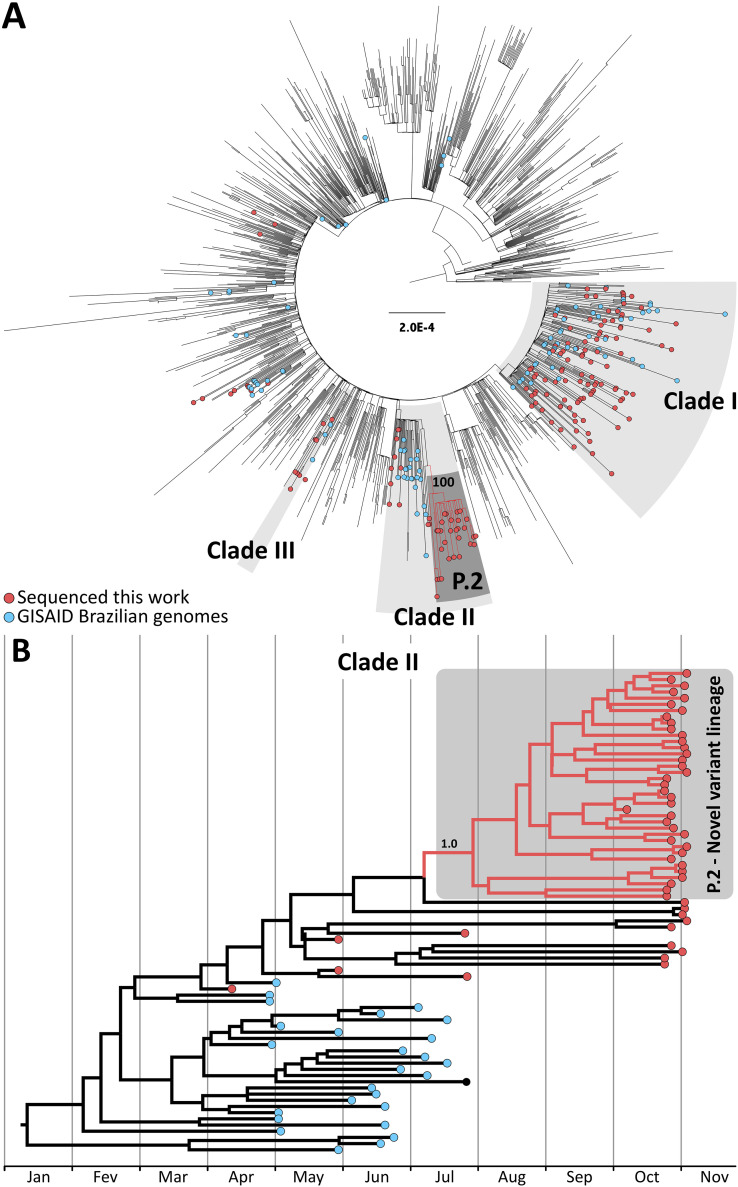
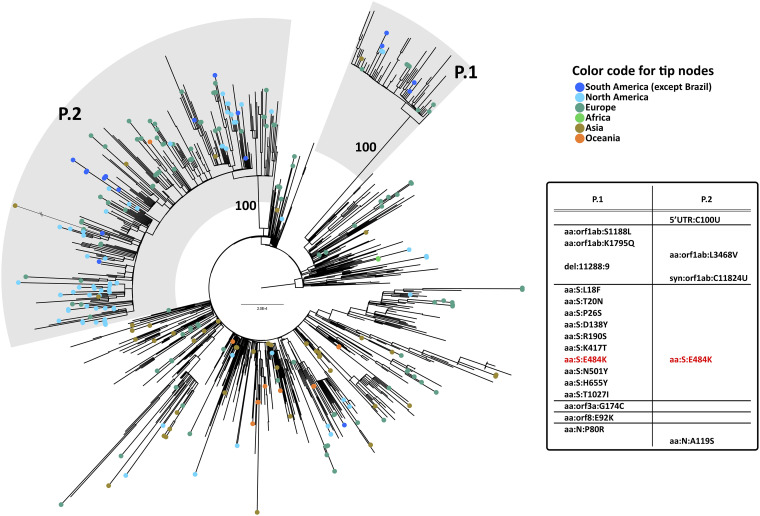
In this study, we report the sequencing of 180 new viral genomes obtained from different municipalities of the state of Rio de Janeiro from April to December 2020. We identified a novel lineage of SARS-CoV-2, originated from B.1.1.28, distinguished by five single-nucleotide variants (SNVs): C100U, C28253U, G28628U, G28975U, and C29754U. The SNV G23012A (E484K), in the receptor-binding domain of Spike protein, was widely spread across the samples. This mutation was previously associated with escape from neutralizing antibodies against SARS-CoV-2. This novel lineage emerged in late July being first detected by us in late October and still mainly restricted to the capital of the state. However, as observed for other strains it can be rapidly spread in the state. The significant increase in the frequency of this lineage raises concerns about public health management and continuous need for genomic surveillance during the second wave of infections. Article Summary Line: We identified a novel circulating lineage of SARS-CoV-2 in the state of Rio de Janeiro Brazil originated from B.1.1.28 lineage.
Overview
The claims and statistics of this paper haven’t been checked yet.
Run the check — free, no account needed. It reads the open-access text and checks the sources it cites.
Integrity signals
Registry
Cites
Statistics
Figures
Verification
Claims the paper makes
The claims and statistics of this paper haven’t been checked yet.
Run the check — free, no account needed. It reads the open-access text and checks the sources it cites.
Claims other papers make about this one
Each is checked against this paper’s own text: does it say what the citing paper says it does?
In the citing paper
“Additionally, K417N, Y453F, S477R, N501Y, and D614G represent circulating variants some of which have been associated with rapidly increasing case numbers14,15,19,33–35.”
From mRNA vaccine-elicited antibodies to SARS-CoV-2 and circulating variants (2021) · cites this paper as [35]
Self-check
Percentages, sums and reported differences re-computed from the paper’s own numbers.
The self-check needs the paper’s full text.
Citations
Cites
Trimmomatic: a flexible trimmer for Illumina sequence data
Bolger, A. M., Lohse, M., & Usadel, B. (2014) · Bioinformatics · doi:10.1093/bioinformatics/btu170 · Cited by 65,548
BEDTools: a flexible suite of utilities for comparing genomic features
Quinlan, A. R., & Hall, I. M. (2010) · Bioinformatics · doi:10.1093/bioinformatics/btq033 · Cited by 27,437
IQ-TREE 2: New Models and Efficient Methods for Phylogenetic Inference in the Genomic Era
Minh, B. Q., Schmidt, H. A., Chernomor, O., Schrempf, D., Woodhams, M. D., von Haeseler, A., & Lanfear, R. (2020) · Molecular Biology and Evolution · doi:10.1093/molbev/msaa015 · Cited by 16,873
A framework for variation discovery and genotyping using next-generation DNA sequencing data
DePristo, M. A., Banks, E., Poplin, R. E., Garimella, K. V., Maguire, J., Hartl, C., Philippakis, A., del Angel, G., Rivas, M. A., Hanna, M., et al. (2011) · Nature Genetics · doi:10.1038/ng.806 · Cited by 11,457
Posterior summarization in Bayesian phylogenetics using tracer 1.7
Rambaut, A., Drummond, A. J., Xie, D., Baele, G., & Suchard, M. A. (2018) · Systematic Biology · doi:10.1093/sysbio/syy032 · Cited by 11,159
Application of Phylogenetic Networks in Evolutionary Studies
Huson, D. H., & Bryant, D. (2005) · Molecular Biology and Evolution · doi:10.1093/molbev/msj030 · Cited by 8,895
Dating of the human–ape splitting by a molecular clock of mitochondrial DNA.
Hasegawa, M., Kishino, H., & Yano, T.-A. (1985) · Journal of Molecular Evolution · doi:10.1007/bf02101694 · Cited by 8,687
adegenet : a R package for the multivariate analysis of genetic markers
Jombart, T. (2008) · Bioinformatics · doi:10.1093/bioinformatics/btn129 · Cited by 8,335
Li, H. (2011) · Bioinformatics · doi:10.1093/bioinformatics/btr509 · Cited by 6,454
Bayesian phylogenetic and phylodynamic data integration using BEAST 1.10
Suchard, M. A., Lemey, P., Baele, G., Ayres, D. L., Drummond, A. J., & Rambaut, A. (2018) · Virus Evolution · doi:10.1093/ve/vey016 · Cited by 3,749
Cited by
Sorted by citations
Items 201–300 of 356
Agudelo, M., Muecksch, F., Schaefer-Babajew, D. J., Cho, A., DaSilva, J., Bednarski, E., Ramos, V., Oliveira, T. Y., Cipolla, M., Gazumyan, A., et al. (2022) · The Journal of Experimental Medicine · doi:10.1084/jem.20220367 · Cited by 9
Self-citationImpact of SARS-CoV-2 Mutations on PCR Assay Sequence Alignment
Negrón, D. A., Kang, J. C., Mitchell, S., Holland, M., Wist, S., Voss, J. D., Brinkac, L. M., Jennings, K., Guertin, S. L., Goodwin, B. G., et al. (2022) · Frontiers in Public Health · doi:10.3389/fpubh.2022.889973 · Cited by 12
SARS-CoV-2: Vaccinology and Emerging therapeutics; Challenges and Future Developments
Adesokan, A. M., Obeid, M. A., & Lawal, A. F. (2022) · Therapeutic Delivery · doi:10.4155/tde-2021-0075 · Cited by 12
“The Brazilian variant is also noted to carry the S protein mutation E484K and was first detected in Rio de Janeiro in October 2020 [49].”
BackgroundBekliz, M., Adea, K., Vetter, P., et al. (2021) · medRxiv · doi:10.1101/2021.12.28.21268491 · Cited by 11
“86 In addition to VOCs, other variants were identified that were of less concern and therefore classified as 87 variants of interest (VOI) due to aspects in their epidemiology or genetic signatures potentially leading 88 to an altered phenotype, among them the (former) VOI Zeta that arose in parallel with the Gamma 89…”
BackgroundZhao, L., Lybrand, T., Gilbert, P., et al. (2021) · bioRxiv · doi:10.1101/2021.06.15.448495 · Cited by 11
Islam, S. R., Prusty, D., & Manna, S. K. (2021) · medRxiv · doi:10.1101/2021.01.28.21250666 · Cited by 13
Jing, L., Wu, X., Krist, M. P., Hsiang, T.-Y., Campbell, V. L., McClurkan, C. L., Favors, S. M., Hemingway, L. A., Godornes, C., Tong, D. Q., et al. (2022) · JCI Insight · doi:10.1172/jci.insight.158126 · Cited by 18
Jing, L., Wu, X., Krist, M. P., et al. (2022) · medRxiv · doi:10.1101/2022.01.23.22269497 · Cited by 10
“1 lineage, (gamma) (93), and lineage B.”
An Integrated Platform for Serological Detection and Vaccination of COVID-19
Wei, S.-C., Hsu, W.-T., Chiu, C.-H., Chang, F., Lo, H.-R., Liao, C.-Y., Yang, H., Chou, Y., Tsai, C.-H., & Chao, Y. (2021) · Frontiers in Immunology · doi:10.3389/fimmu.2021.771011 · Cited by 11
Nunes, D. R., Braconi, C. T., Ludwig‐Begall, L. F., Arns, C. W., & Durães‐Carvalho, R. (2022) · PLoS ONE · doi:10.1371/journal.pone.0268389 · Cited by 14
Lennerstrand, J., & Palanisamy, N. (2021) · Viruses · doi:10.3390/v13101974 · Cited by 12
Tan, E., Frew, E., Cooper, J., Humphrey, J., Holden, M. T. G., Mand, A. R., Li, J., Anderson, S., Bi, M., Hatler, J. M., et al. (2021) · Diagnostics · doi:10.3390/diagnostics11071190 · Cited by 11
“Mutations in the spike RBD protein of currently circulating SARS-CoV-2 variants [2-10].”
BackgroundVolkan, E. (2021) · Molecular Biotechnology · doi:10.1007/s12033-021-00353-4 · Cited by 12
First detection of SARS-CoV-2 variant B.1.1.7 in Senegal
Padane, A., Kanteh, A., Lèye, N., Mboup, A., Manneh, J., Mbow, M., Diaw, P. A., Ndiaye, B., Lô, G., Lo, C. I., et al. (2021) · New Microbes and New Infections · doi:10.1016/j.nmni.2021.100877 · Cited by 13
Ratcliff, J., Nguyen, D., Fish, M., et al. (2021) · medRxiv · doi:10.1101/2021.02.24.21251989 · Cited by 10
Alter, G., Gorman, M. J., Patel, N., Guebre‐Xabier, M., Zhu, A. L., Atyeo, C. G., Pullen, K. M., Loos, C., Goez-Gazi, Y., Carrion, R., et al. (2021) · Research Square · doi:10.21203/rs.3.rs-200342/v1 · Cited by 9
Variantes emergentes do SARS-CoV-2 e suas implicações na saúde coletiva
Freitas, A. R. R., Giovanetti, M., & Alcantara, L. C. J. (2021) · InterAmerican Journal of Medicine and Health · doi:10.31005/iajmh.v4i.181 · Cited by 24
“[11] Voloch CM, F R da S, Almeida LGP de, et al.”
BackgroundTriveri, A., Casali, E., Frasnetti, E., Doria, F., Frigerio, F., Cinquini, F., Pavoni, S., Moroni, E., Marchetti, F., Serapian, S. A., et al. (2023) · Journal of Chemical Theory and Computation · doi:10.1021/acs.jctc.3c00077 · Cited by 9
Villaseñor-Echavarri, R., Gómez-Romero, L., Martin‐Onraët, A., Herrera, L. A., Escobar-Arrazola, M. A., Ramirez-Vega, O. A., Barrientos-Flores, C. D. J., Mendoza-Vargas, A., Hidalgo‐Miranda, A., Vilar‐Compte, D., et al. (2023) · Viruses · doi:10.3390/v15020377 · Cited by 7
“The mutation N:A119S is not present in variant BA.1.1, but in this report, was detected only on days 39 and 87; this amino acid substitution is present in 99.8% of cases of variant P.2, which circulated in Brazil in 2020 and, together with four other amino acid substitutions, evades neutralizing antibodies; the P.2 va…”
BackgroundInfluentialFarès, W., Ghedira, K., Gdoura, M., Chouikha, A., Boubaker, S., Khedhiri, M., Ayouni, K., Lamari, A., Touzi, H., Hammemi, W., et al. (2021) · Microbiology Spectrum · doi:10.1128/spectrum.00639-21 · Cited by 13
Giovanetti, M., Slavov, S., Fonseca, V., et al. (2021) · medRxiv · doi:10.1101/2021.10.07.21264644 · Cited by 9
“Zeta (P.2) is defined by the presence of the S:E484K mutation in the receptor binding domain (RBD) and other lineage-defining mutations outside the S protein 15,24 .”
Verkhivker, G. M., Agajanian, S., Öztaş, D. Y., & Gupta, G. (2021) · ACS Omega · doi:10.1021/acsomega.1c03558 · Cited by 11
Zhao, S., Ran, J., & Han, L. (2021) · American Journal of Tropical Medicine and Hygiene · doi:10.4269/ajtmh.21-0412 · Cited by 7
“2, carries the E484K substitution but not N501Y substitution.(15,16) The mutation E484K was first identified in South Africa and became prevalent in many places, including the United Kingdome and Brazil.”
BackgroundSharma, A., Pal, S., Panwar, A., Kumar, S., & Kumar, A. (2021) · Immunobiology · doi:10.1016/j.imbio.2021.152134 · Cited by 14
“Nucleocapsid N is the biggest structural gene having 908 nucleotides (Khailany et al., 2020).”
COVID-19 rhapsody: Rage towards advanced diagnostics and therapeutic strategy
Sinha, K., Chaudhury, S. S., Sharma, P., & Ruidas, B. (2021) · Journal of Pharmaceutical Analysis · doi:10.1016/j.jpha.2021.06.004 · Cited by 11
“…by multiple spike proteins such as deletion 69 e 70, deletion 144, N501Y, A570D, D614G, P681H, T716I, S982A, and D1118H, and the Brazilian B.1.1.28 strain with the fi rst detected S protein mutation E484K in the sequence of a patient from Rio de Janeiro, Brazil [65], is gaining increased concern.”
InfluentialA Novel Immunofluorescence Assay for the Rapid Serological Detection of SARS-CoV-2 Infection
Nguyen, D. V., Skelly, D., & Goonawardane, N. (2021) · Viruses · doi:10.3390/v13050747 · Cited by 11
SARS-CoV-2 Spillback to Wild Coatis in Sylvatic–Urban Hotspot, Brazil
Stoffella-Dutra, A. G., de Campos, B. H., Silva, P. H. B. E., Dias, K. L., Domingos, I. J. D. S., Hemetrio, N. S., Xavier, J., Iani, F. C. D. M., Fonseca, V., Giovanetti, M., et al. (2023) · Emerging infectious diseases · doi:10.3201/eid2903.221339 · Cited by 9
Whole‐genome single molecule real‐time sequencing of SARS‐CoV‐2 Omicron
Nicot, F., Trémeaux, P., Latour, J., Carcenac, R., Demmou, S., Jeanne, N., Ranger, N., Smet, C. D., Raymond, S., Dimeglio, C., et al. (2023) · Journal of Medical Virology · doi:10.1002/jmv.28564 · Cited by 8
Heinen, N., Marheinecke, C. S., Bessen, C., Blazquez‐Navarro, A., Roch, T., Stervbo, U., Anft, M., Plaza‐Sirvent, C., Buße, S., Klöhn, M., et al. (2022) · Frontiers in Immunology · doi:10.3389/fimmu.2022.1062210 · Cited by 10
Neutralizing Potency of Prototype and Omicron RBD mRNA Vaccines Against Omicron Variant
Zang, J., Yin, Y., Xu, S., Qiao, W., Liu, Q., Lavillette, D., Zhang, C., Wang, H., & Huang, Z. W. (2022) · Frontiers in Immunology · doi:10.3389/fimmu.2022.908478 · Cited by 11
“351) (4), Gamma (P1) (5) and Delta (B.”
López, D. (2022) · Frontiers in Immunology · doi:10.3389/fimmu.2022.832889 · Cited by 6
Zhao, L. P., Lybrand, T. P., Gilbert, P. B., Hawn, T. R., Schiffer, J. T., Stamatatos, L., Payne, T. H., Carpp, L. N., Geraghty, D. E., & Jerome, K. R. (2021) · Viruses · doi:10.3390/v14010009 · Cited by 15
Rego, N., Salazar, C., Paz, M., Costábile, A., Fajardo, Á., Ferrés, I., Perbolianachis, P., Fernández-Calero, T., Noya, V., Machado, M. R., et al. (2021) · Viruses · doi:10.3390/v13091801 · Cited by 11
Alenquer, M., Ferreira, F., Lousa, D., Valério, M., Medina-Lopes, M., Bergman, M., Gonçalves, J., Demengeot, J., Leite, R. B., Lilue, J., et al. (2021) · bioRxiv (Cold Spring Harbor Laboratory) · doi:10.1101/2021.04.22.441007 · Cited by 8
Effect of varying storage conditions on diagnostic test outcomes of SARS-CoV-2
Oguri, S., Fujisawa, S., Kamada, K., et al. (2021) · Journal of Infection · doi:10.1016/j.jinf.2021.03.026 · Cited by 8
Novel Highly Divergent SARS-CoV-2 Lineage With the Spike Substitutions L249S and E484K
Laiton‐Donato, K., Usme-Ciro, J. A., Franco-Muñoz, C., Álvarez-Díaz, D. A., Ruiz-Moreno, H. A., Reales-González, J., Prada-Cardozo, D., Corchuelo, S., Herrera-Sepúlveda, M. T., Naizaque, J., et al. (2021) · Frontiers in Medicine · doi:10.3389/fmed.2021.697605 · Cited by 7
Franceschi, V. B., Ferrareze, P. A. G., Zimerman, R. A., et al. (2021) · medRxiv · doi:10.1101/2021.03.08.21253152 · Cited by 8
“…named P.2) was dated in July 2020, however it began to appear more frequently and almost simultaneously in October 2020 in the Rio de Janeiro state (Voloch et al. 2020) and in the small municipality of Esteio, Rio Grande do Sul (Franceschi et al. 2021), suggesting its wide distribution in the…”
BackgroundInfluentialSchiffler, F. B., Moreira, S. B., Pereira, A. H. B., Arruda, I. F., Moreira, F. R. R., D’arc, M., Claro, I. M., Pissinatti, T. A., Cavalcante, L. T. D. F., Miranda, T. D. S., et al. (2023) · Microorganisms · doi:10.3390/microorganisms11122888 · Cited by 7
“…2020, during the first year of the Coronavirus Disease 2019 (COVID-19) pandemic and concomitant with the emergence of the P.2 strain in Brazil [1], eleven neotropical primates (NPs) from six different species died within approximately four days of the onset of clinical signs at the Centro de…”
BackgroundSelf-citationGenomic characterization of SARS-CoV-2 from Uganda using MinION nanopore sequencing
Kia, P., Katagirya, E., Kakembo, F. E., Adera, D. A., Nsubuga, M. L., Yiga, F., Aloyo, S. M., Aujat, B. R., Anguyo, D. F., Katabazi, F. A., et al. (2023) · Scientific Reports · doi:10.1038/s41598-023-47379-z · Cited by 7
“Following this, different countries from various regions of the world, including South Africa, Brazil, the USA and India, have identified and reported other unique variants 8 .”
BackgroundHighly Sensitive Lineage Discrimination of SARS-CoV-2 Variants through Allele-Specific Probe PCR
Ratcliff, J., Al-Beidh, F., Bibi, S., Bonsall, D., Clemens, S. C., Estcourt, L., Evans, A., Fish, M., Folegatti, P., Gordon, A., et al. (2022) · Journal of Clinical Microbiology · doi:10.1128/jcm.02283-21 · Cited by 7
Al-Qahtani, A. A. (2022) · Journal of International Medical Research · doi:10.1177/03000605221086433 · Cited by 8
“V2 is of interest because it appears to allow immune escape and evasion.(66,67)”
BackgroundFerreira, M. D. F. C., Pavón, J. A. R., Napoleão, A. C. B., Figueiredo, G. M. D. P., Florêncio, P. C. B., Arantes, R. B., Rizzo, P. S., Carmo, M. A. M. V., Nakazato, L., Dutra, V., et al. (2022) · Microbes and Infection · doi:10.1016/j.micinf.2022.104949 · Cited by 8
Martín-Galiano, A. J., Díez‐Fuertes, F., McConnell, M. J., & López, D. (2021) · Frontiers in Immunology · doi:10.3389/fimmu.2021.732693 · Cited by 7
The surveillance of spike protein for patients with COVID‐19 detected in Hong Kong in 2020
Mak, G. C. K., Lau, A. W. L., Chan, A. M. Y., Lam, E. T. K., Chan, R. C. W., & Tsang, D. N. C. (2021) · Journal of Medical Virology · doi:10.1002/jmv.27063 · Cited by 8
Lilleri, D., Cassaniti, I., Bergami, F., Percivalle, E., Gabanti, E., Sammartino, J. C., Ferrari, A., Adzasehoun, K. M. G., Zavaglio, F., Zelini, P., et al. (2021) · Research Square · doi:10.21203/rs.3.rs-396284/v1 · Cited by 5
Mucosal immunity in upper and lower respiratory tract to MERS-CoV
Shrwani, K. J., Mahallawi, W. H., Mohana, A., Algaissi, A. A., Dhayhi, N., Sharwani, N. J., Gadour, E., Aldossari, S. M., Asiri, H., Kameli, N., et al. (2024) · Frontiers in Immunology · doi:10.3389/fimmu.2024.1358885 · Cited by 8
Rural populations facilitated early SARS-CoV-2 evolution and transmission in Missouri, USA
Tang, C. Y., Li, T., Haynes, T., McElroy, J. A., Ritter, D. G., Hammer, R., Sampson, C. S., Webby, R. J., Hang, J., & Wan, X. (2023) · npj Viruses · doi:10.1038/s44298-023-00005-1 · Cited by 6
“This study has been approved by University of Missouri Institutional Review Board (IRB #2025449, #2049364).”
Spatiotemporal transmission of SARS-CoV-2 lineages during 2020–2021 in Pernambuco—Brazil
Machado, L. C., Dezordi, F. Z., de Lima, G. B., de Lima, R. E., Silva, L. C. A., Pereira, L. D. M., da Silva, A. F., Neto, A. M. D. S., de Oliveira, A. L. S., Armstrong, A. D. C., et al. (2024) · Microbiology Spectrum · doi:10.1128/spectrum.04218-23 · Cited by 6
“During October 2020, the first cases of the lineage P.2 were detected in Pernambuco, and at the time, P.2 was considered a variant of interest (VOI Zeta) due to specific spike mutations and increasing prevalence in Brazil (38, 39).”
Backgroundda Costa, V. D., Santos, A. C., da Silva, L. L., Wiggers, W. J., Ivantes, C. A. P., Lima, D. M., Colares, J. K. B., Dall’Acqua, D. S. V., Motta-Castro, A. R. C., Dávila, A. M. R., et al. (2023) · Diagnostics · doi:10.3390/diagnostics13020210 · Cited by 8
“28, named gamma and zeta, emerged in the Brazilian states of Amazonas and Rio de Janeiro, respectively [41,42].”
BackgroundHoang, T. H., Vu, G. M., Tran, M. H., Tran, T. T. H., Le, Q. D., Tran, K. V., Nguyen, T. T., Nguyen, L., Tran, T. H., Ta, V. T., et al. (2022) · BMC Infectious Diseases · doi:10.1186/s12879-022-07415-1 · Cited by 5
The past, present and future of genomics and bioinformatics: A survey of Brazilian scientists
Rocha, M., Massarani, L., SOUZA, S. J. D., & de Vasconcelos, A. T. R. (2022) · Genetics and Molecular Biology · doi:10.1590/1678-4685-gmb-2021-0354 · Cited by 6
“…of the SARS-CoV-2 virus, which caused the COVID-19 pandemic (Araujo et al. , 2020; Jesus et al. , 2020), and to study the spread of the virus in the country since March 2020 (Candido et al. , 2020; Silva Francisco Jr et al. , 2020; Buss et al. , 2021; Faria et al. , 2021; Voloch et al. , 2021).”
Sola‐Campoy, P. J., Buenestado‐Serrano, S., Pérez‐Lago, L., Rodríguez‐Grande, C., Catalán, P., Andrés-Zayas, C., Alcalá, L., Losada, C., Rico-Luna, C., Muñóz, P., et al. (2022) · Enfermedades infecciosas y microbiologia clinica (English ed ) · doi:10.1016/j.eimce.2021.05.015
Protective Immunity against Gamma and Zeta Variants after Inactivated SARS-CoV-2 Virus Immunization
Fumagalli, M. J., de Castro-Jorge, L. A., Fraga‐Silva, T. F. D. C., de Azevedo, P. O., Capato, C. F., Rattis, B. A. D. C., Hojo-Souza, N. S., Floriano, V. G., de Castro, J. T., Ramos, S. G., et al. (2021) · Viruses · doi:10.3390/v13122440 · Cited by 9
Genome sequencing of SARS-CoV-2 reveals the prevalence of variant B 1.1.7 in Egypt
Seadawy, M. G., Gad, A. F., Abo-Elmaaty, S. A., & Hassan, M. G. (2021) · Infection Genetics and Evolution · doi:10.1016/j.meegid.2021.105191 · Cited by 7
Substantial impact of post-vaccination contacts on cumulative infections during viral epidemics
Rochman, N. D., Wolf, Y. I., & Koonin, E. V. (2021) · F1000Research · doi:10.12688/f1000research.52341.2 · Cited by 9
Lopez, E., Haycroft, E., Adair, A., et al. (2021) · medRxiv · doi:10.1101/2021.03.20.21254037 · Cited by 6
“As we enter the second year of the SARS68 CoV-2 pandemic, and promising vaccines are rolled out (4, 5), the ongoing 69 transmission along with the emergence of new variants with multiple mutations at key 70 residues in the spike glycoprotein (6-8), has resulted in the continued implementation 71 of stringent public he…”
Ardisson, J. S., Monfardini, M. V., Athaydes, B. R., Vargas, A. M. C., Torezani, R., Ribeiro‐Rodrigues, R., Spano, L. C., Paneto, G. G., Delatorre, E. O., von Zeidler, S. V., et al. (2025) · Scientific Reports · doi:10.1038/s41598-025-95140-5 · Cited by 4
Simas, M. C. D. C., Costa, S. M., Gomes, P. D. S. F. C., da Cruz, N. V. G., Corrêa, I. A., de Souza, M. R. M., Dornelas-Ribeiro, M., Nogueira, T. L. S., dos Santos, C. G. M., Hoffmann, L., et al. (2023) · Viruses · doi:10.3390/v15030801 · Cited by 6
Self-citationMwangi, P. N., Okendo, J., Mogotsi, M. T., Ogunbayo, A. E., Adelabu, O. A., Sondlane, H., Maotoana, M. G., Mahomed, L., Morobadi, M. D., Vawda, S., et al. (2022) · Frontiers in Virology · doi:10.3389/fviro.2022.935131 · Cited by 6
“This variant emerged in July 2020 in the Brazilian state of Rio de Janeiro and exhibited the E484K mutation in the spike region (with the absence of N501Y mutation) (32).”
Backgroundda Silva, A. P., Ribeiro, M. A. L., Cavalcanti, M. P. E., Daboin, B. E. G., Morais, T. C., Abreu, C. I. P. D. O., Bezerra, Í. M. P., & de Abreu, L. C. (2022) · Journal of Human Growth and Development · doi:10.36311/jhgd.v32.13255 · Cited by 2
Phylogenetic and amino acid signature analysis of the SARS-CoV-2s lineages circulating in Tunisia
Sassi, M. B., Ferjani, S., Mkada, I., Arbi, M., Safer, M., Moussi, A. E., Abid, S., Souiai, O., Gharbi, A., Tejouri, A., et al. (2022) · Infection Genetics and Evolution · doi:10.1016/j.meegid.2022.105300 · Cited by 7
“Most mutations that were responsible for variants classification occurred in S protein, but several other emerging mutations were observed in both coding and non-coding sequences of other genes especially NSP12, NSP9 and N proteins (Khailany et al., 2020).”
Albutti, A. (2021) · International Journal of Environmental Research and Public Health · doi:10.3390/ijerph19010112 · Cited by 6
Verkhivker, G. M. (2022) · International Journal of Molecular Sciences · doi:10.3390/ijms23031646 · Cited by 5
Structural Insights of SARS-CoV-2 Spike Protein from Delta and Omicron VariantsPreprint
Sadek, A. H., Zaha, D., & Ahmed, M. S. (2021) · bioRxiv (Cold Spring Harbor Laboratory) · doi:10.1101/2021.12.08.471777 · Cited by 8
“glycoprotein w/o ACE2 receptor in the closed (pre fusion) and open (post fusion) conformers [14, 19-21].”
BackgroundEarly detection of community acquired of SARS-CoV-2 lineage B.1.351 in Hong Kong
Tsang, A. K. L., Mak, G. C. K., Cheng, P. K. C., Yip, P. C. W., Ng, K. H. L., Lam, E. T. K., Chan, R. C. W., & Tsang, D. N. C. (2021) · Journal of Clinical Virology Plus · doi:10.1016/j.jcvp.2021.100029 · Cited by 5
Knoop, A., Geyer, H., Lerch, O., Rubio, A. M., Schrader, Y., & Thevis, M. (2021) · Analytical Science Advances · doi:10.1002/ansa.202100009 · Cited by 6
Tierling, S., Kattler, K., Vogelgesang, M., Pfuhl, T., Lohse, S., Porto, C. L., Schmitt, B., Seiwert, N., Salhab, A., Smola, S., et al. (2021) · Open Forum Infectious Diseases · doi:10.1093/ofid/ofab364 · Cited by 15
de Alcañíz, J. G. G., López‐Rodas, V., & Costas, E. (2021) · medRxiv · doi:10.1101/2021.01.16.21249924 · Cited by 4
BRET-based biosensors for SARS-CoV-2 oligonucleotide detection
Sultana, A., Geethakumari, A. M., Islam, Z., Kolatkar, P. R., & Biswas, K. H. (2024) · Frontiers in Bioengineering and Biotechnology · doi:10.3389/fbioe.2024.1353479 · Cited by 4
Celestino, G. G., Amarante, M. K., Vespero, E. C., Tavares, E. R., Yamauchi, L. M., Candido, E. D., Oliveira, D. B. L., Durigon, E. L., Yamada‐Ogatta, S. F., & Galhardi, L. C. F. (2023) · Pathogens · doi:10.3390/pathogens12030438 · Cited by 3
SARSMutOnto: An Ontology for SARS-CoV-2 Lineages and Mutations
Bakkas, J., Hanine, M., Abderrahman, C., Gounane, S., Díez, I. D. L. T., Lipari, V., López, N. M. M., & Ashraf, I. (2023) · Viruses · doi:10.3390/v15020505 · Cited by 4
“In early 2021, The most popular variants were the British variant [20], the Indian variant [21], the South African variant [22], and the Brazilian variant [23].”
BackgroundAlves, H. J., de Araújo, J. L. F., Fonseca, P. L. C., Moreira, F. R. R., Menezes, D., Queiroz, D. C., Miguita, L., de Souza, R. M., Geddes, V. E. V., Costa, W. C., et al. (2022) · Viruses · doi:10.3390/v14122747 · Cited by 5
Antibody engineering improves neutralization activity against K417 spike mutant SARS-CoV-2 variants
Li, L., Gao, M., Jiao, P., Zu, S., Deng, Y., Wan, D., Cao, Y., Duan, J., Aliyari, S. R., Li, J., et al. (2022) · Cell & Bioscience · doi:10.1186/s13578-022-00794-7 · Cited by 8
Mapanguy, C. C. M., Batchi-Bouyou, A. L., Djontu, J. C., Pallerla, S. R., Ngoma, C. H., Linh, L. T. K., Rachakonda, S. P., Casadei, N., Angelov, A., Sonnabend, M., et al. (2022) · IJID Regions · doi:10.1016/j.ijregi.2022.03.009 · Cited by 5
Henriques‐Santos, B. M., Farjun, B., Corrêa, I. A., Figueiredo, J. D. B., Fidalgo-Neto, A. A., & Kuriyama, S. N. (2022) · Frontiers in Microbiology · doi:10.3389/fmicb.2021.757783 · Cited by 5
Design, immunogenicity, and efficacy of a pan-sarbecovirus dendritic-cell targeting vaccine
Coléon, S., Wiedemann, A., Surénaud, M., et al. (2021) · bioRxiv · doi:10.1101/2021.12.28.474244 · Cited by 4
Junior, L. J. M., Morais, T. C., Eichemberg, J. D. O., Pereira, J. E. G., Cavalcanti, M. P. E., Pereira, G. D. A. V., da Silva, H. M. R., Jacintho, L. C., & de Abreu, L. C. (2021) · Journal of Human Growth and Development · doi:10.36311/jhgd.v31.12612 · Cited by 2
Al‐Jawabreh, A., Ereqat, S., Dumaidi, K., Al-Jawabreh, H., & Nasereddin, A. (2021) · BMC Research Notes · doi:10.1186/s13104-021-05874-4 · Cited by 4
Bhatia, S., Wardle, J., Nash, R. K., Nouvellet, P., & Cori, A. (2021) · medRxiv · doi:10.1101/2021.11.26.21266899 · Cited by 4
Vitiello, G. A. F., de Oliveira, I. M., Ivanski, F., Fermino, B. L., Gustani‐Buss, E., Bezerra, R. D. S., Buss, C. E., Ximenez, J. P. B., Paz, B. M., Gabriel, K. D. O. F., et al. (2021) · Research Square · doi:10.21203/rs.3.rs-1072564/v1
Sabin, A. P., Richmond, C. S., & Kenny, P. (2021) · medRxiv · doi:10.1101/2021.10.02.21264415 · Cited by 4
Rego, N., Fernández-Calero, T., Arantes, I., Noya, V., Mir, D., Brandes, M., Zanetti, J., Arleo, M., Pereira-Flores, E., Possi, T., et al. (2021) · medRxiv · doi:10.1101/2021.07.05.21259760 · Cited by 3
“This variant harbors the E484K amino acid change in the receptor-binding domain (RBD) of the viral Spike among its five lineage-defining mutations [6].”
BackgroundFreitas, M. T. D. S., Sena, L. O. C., Fukutani, K. F., dos Santos, C. A., Neto, F. D. C. B., Ribeiro, J. S., dos Reis, É. S., Balbino, V. D. Q., Leitao, S. P. D. S., Batista, M. V. D. A., et al. (2023) · Frontiers in Public Health · doi:10.3389/fpubh.2023.1222152 · Cited by 3
Werbajh, S., Larocca, L., Carrillo, C., Stolowicz, F. G., Ogas, L., Pallotto, S., Cassará, S., Mammana, L., Zapiola, I., Bouzas, M. B., et al. (2023) · Viruses · doi:10.3390/v15091910 · Cited by 6
“1, which has 17 unique mutations, including three in the receptor binding domain of the spike protein [26], was first identified in four travelers from Brazil who were tested during routine screening at Haneda airport outside Tokyo, Japan.”
BackgroundHoudroge, F., Palmer, A. Y., Delport, D., Walsh, T., Kelly, S. L., Hainsworth, S. W., Abeysuriya, R., Stuart, R. M., Kerr, C. C., COPLAN, P. M., et al. (2023) · Scientific Reports · doi:10.1038/s41598-023-27711-3 · Cited by 6
Assato, P. A., Clemente, L. G., Giovanetti, M., Ribeiro, G. D. C., Lima, A. R. J., Palmieri, M., de Moraes, L. N., Kashima, S. H., Fukumasu, H., Nogueira, M. L., et al. (2023) · Viruses · doi:10.3390/v15020327 · Cited by 3
Chinnadurai, R. K., Ponne, S., Loganathan, C., Kumar, R., Palvannan, T., & Subramanian, B. (2022) · Molecular Diversity · doi:10.1007/s11030-022-10580-9 · Cited by 8
“Though no substantial evidence has been available to support its enhanced lethality, studies have found that the gamma variant is 2.5 times more contagious than the native strain [9, 10].”
BackgroundInfluentialSARS-CoV-2 variant N.9 identified in Rio de Janeiro, Brazil
Tort, L. F. L., Ribeiro, I. P., Menezes, L. S. R., dos Santos, A. A. C., Santos, M. P., Damasceno, L. S., Resende, P. C., Siqueira, M. M., Brasil, P., & Bonaldo, M. C. (2021) · Memórias do Instituto Oswaldo Cruz · doi:10.1590/0074-02760210166 · Cited by 3
Grosche, V. R., Santos, I. A., Ferreira, G. M., Dutra, J. V. R., Costa, L. C., Nicolau-Júnior, N., Queiroz, A. T. L., José, D. P., & Jardim, A. C. G. (2021) · Microbial Genomics · doi:10.1099/mgen.0.000656 · Cited by 4
“Most of them are focusing on reporting possible new VOIs or VOCs [22, 27, 52], or describing variants identified in specific regions or states of Brazil [53, 54].”
Reinfection cases by closely related SARS-CoV-2 lineages in Southern Brazil
Gularte, J. S., da Silva, M. S., Demoliner, M., Hansen, A. W., Heldt, F. H., Silveira, F., Filippi, M., Pereira, V. M. D. A. G., da Silva, F. P., Mallmann, L., et al. (2021) · Brazilian Journal of Microbiology · doi:10.1007/s42770-021-00621-0 · Cited by 3
Analysis of amino acid change dynamics reveals SARS-CoV-2 variant emergence
Bernasconi, A., Mari, L., Casagrandi, R., et al. (2021) · bioRxiv · doi:10.1101/2021.07.12.452076 · Cited by 3
Emerging SARS-CoV-2 variants expand species tropism to rodentsPreprint
Shuai, H., Chan, J. F., Yuen, T. T., Yoon, C., Hu, J., Wen, L., Hu, B., Yang, D., Wang, Y., Hou, Y., et al. (2021) · Research Square · doi:10.21203/rs.3.rs-676992/v1 · Cited by 1
de Souza, U. J. B., dos Santos, R. N., Belmok, A., de Melo, F. L., Galvão, J. D., Damasceno, S., de Rezende, T. C. V., Andrade, M. D. S., Ribeiro, B. M., Júnior, J. C. R., et al. (2021) · bioRxiv (Cold Spring Harbor Laboratory) · doi:10.1101/2021.06.30.450617 · Cited by 1
“Phylogenetic tree of 851 genomes retrieved from GISAID and the 24 genomes newly sequenced on Tocantins state.”
BackgroundInfluentialAlves, P., Oliveira, D., Franco-Luiz, A. P. M., et al. (2021) · medRxiv · doi:10.1101/2021.05.26.21257488 · Cited by 3
Olsen, R., Christensen, P., Long, S., Subedi, S., Hodjat, P., Olson, R., Nguyen, M., Davis, J. J., Yerramilli, P., Ojeda-Saavedra, M., et al. (2021) · medRxiv · doi:10.1101/2021.05.20.21257552 · Cited by 3
Environmental drivers of SARS-CoV-2 lineage B.1.1.7 transmission intensityPreprint
Smith, T., Dorigatti, I., Mishra, S., Volz, E., Walker, P. G. T., Ragonnet‐Cronin, M., Tristem, M., & Pearse, W. D. (2021) · medRxiv · doi:10.1101/2021.03.09.21253242 · Cited by 5
“Faria NR, Mellan TA, Whittaker C, Claro IM, Candido DS, Mishra S, et al. Genomics and 193 epidemiology of a novel SARS-CoV-2 lineage in Manaus, Brazil. medRxiv [preprint].”
BackgroundInfluentialSascha, T., Kathrin, K., Markus, V., et al. (2021) · doi:10.1101/2021.03.15.21253586 · Cited by 3
Costa, S. M., Simas, M. C. D. C., da Costa, L. J., & Silva, R. (2025) · International Journal of Molecular Sciences · doi:10.3390/ijms26094324 · Cited by 1
“P.2 was a SARS-CoV-2 variant of interest (VOI) that emerged in April 2020 and had high circulation in Rio de Janeiro [3,5].”
SARS-CoV-2: Prediction of critical ionic amino acid mutations
El-Assaad, A. M., & Hamieh, T. (2024) · Computers in Biology and Medicine · doi:10.1016/j.compbiomed.2024.108688 · Cited by 2
Overview of diagnostic tools and nano-based therapy of SARS-CoV-2 infection
Bhattacharjee, B., Rynjah, D., Ahmed, A. B., Newar, A., Sengupta, S., Chakrabarty, S., Sahu, R. K., & Khan, J. (2024) · Chemical Papers · doi:10.1007/s11696-023-03271-8 · Cited by 2
Metadata
- Authors
- Voloch, C. M., Silva F, R. D., de Almeida, L. G. P., Cardoso, C. C., Brustolini, O. J., Gerber, A. L., Guimarães, A. P. D. C., Mariani, D., Costa, R. M. D., Ferreira, O. C., Workgroup, C.-U., LNCC-Workgroup, Cavalcanti, A. C., Frauches, T. S., de Mello, C. M. B., Galliez, R. M., Faffe, D. S., Castiñeiras, T. M. P. P., Tanuri, A., & de Vasconcelos, A. T. R.
- Affiliations
- Universidade Federal do Rio de Janeiro (BR)
- Laboratório Nacional de Computação Científica (BR)
- Secretaria de Estado de Saúde do Rio de Janeiro (BR)
- ORCID
- Venue
- Journal of Virology
- Publisher
- openRxiv
- Published
- 2020-12-26
- Volume
- 95
- Issue
- 10
- ISSN
- 0022-538X (ISSN-L)
- PMC
- PMC8139668
- OpenAlex
- W3135409471
- Cited by
- 372
- References
- 31
- Citations by year
- 2026: 5 · 2025: 8 · 2024: 25 · 2023: 34 · 2022: 93 · 2021: 206
- FWCI
- 28.43
- Type
- journal article
- Language
- en
- Open access
- hybrid
- doi.org
- Licence
- cc-by
- Locations
- Journal of Virology (publishedVersion, cc-by)
- medRxiv (acceptedVersion)
- PubMed Central (publishedVersion, cc-by)
- PubMed (publishedVersion)
- Funders
- Ministério da Ciência, Tecnologia e Inovação (01.20.0029.000462/20, 303170/2017-4, 404096/2020-4)
- Conselho Nacional de Desenvolvimento Científico e Tecnológico (= 404,096/2020–4, # 303170/2017-4)
- Fundação Carlos Chagas Filho de Amparo à Pesquisa do Estado do Rio de Janeiro (E-26/202.791/2019, E-26/010.002278/2019, E-26/, E‐26/210.178/2020, E-26/210, =E-26/210.179/2020, E-26/202.903/20, E-26/010.002434/2019)
- Financiadora de Estudos e Projetos (01.20.0029.000462/20)
- Instituto Serrapilheira
- Topics
- Health Sciences › Medicine › Infectious Diseases › SARS-CoV-2 and COVID-19 Research
- Health Sciences › Medicine › Infectious Diseases › COVID-19 Clinical Research Studies
- Health Sciences › Medicine › Infectious Diseases › SARS-CoV-2 detection and testing
- Keywords
- SARS-CoV-2, novel viral lineages, genomic profiling, phylogenetic analysis, genetic divergence, Rio de Janeiro, COVID-19 pandemic
About these checks
Registry, retraction, Cites and statistics results are computed, not judged, with one exception: a printed reference that no index lists is read once by a model before it counts as a citation error. Claims are extracted by a model and kept only when their quote appears verbatim in the text; each cited source is then checked, with a model’s help, for whether it says what the claim relies on. Those verdicts can be wrong — read the claim’s quote and the cited source before relying on one.
Statistics and arithmetic are recomputed, not judged.
Confidence bands are shown only for fields calibrated on our annotated test set. None is calibrated yet, so no band is shown.
What counts as a claim ›How we measure confidence ›How we check this ›
Are you an author, or do you see a problem with this page? Request a review
