

The DOI matches its Crossref record; 27 of the 27 references it cites were found in a registry or an index.
Genomic characterization of a novel SARS-CoV-2 lineage from Rio de Janeiro, Brazil
Open accessPreprint — published as 10.1128/jvi.00119-21 · Paper page
Abstract
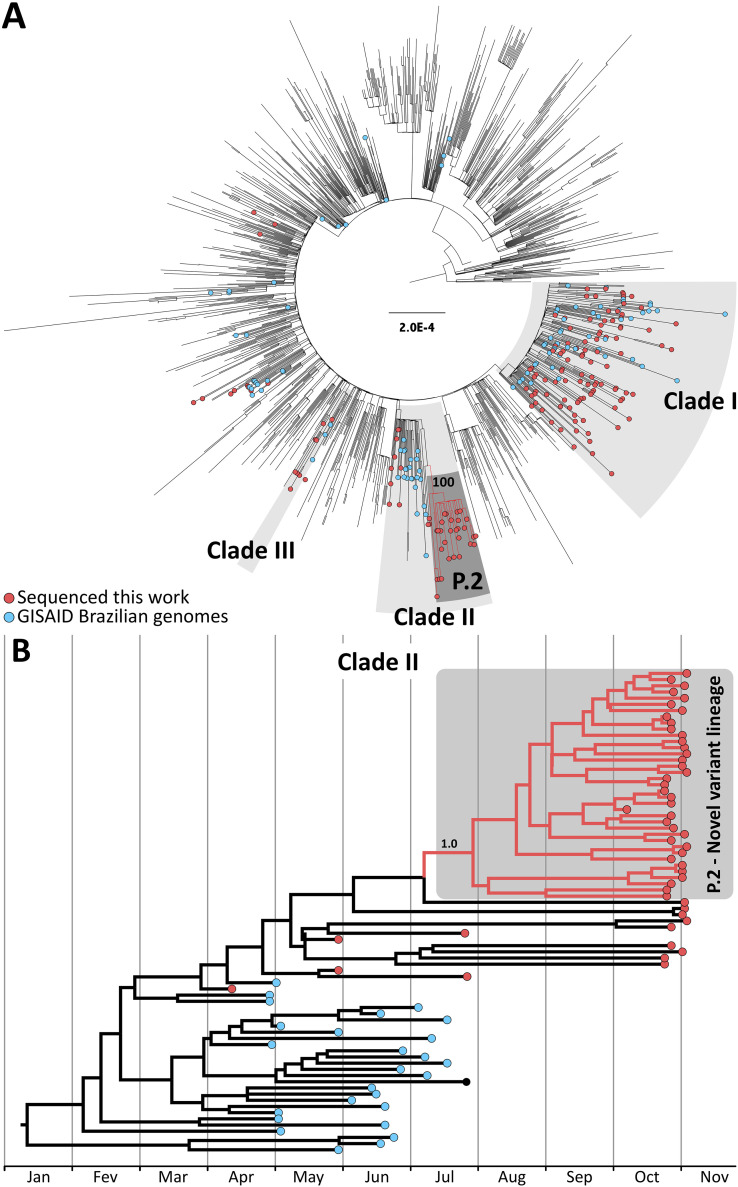
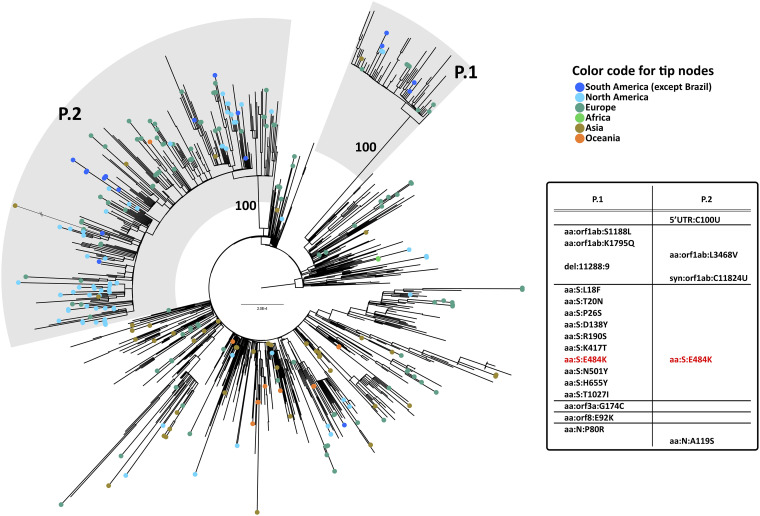
In this study, we report the sequencing of 180 new viral genomes obtained from different municipalities of the state of Rio de Janeiro from April to December 2020. We identified a novel lineage of SARS-CoV-2, originated from B.1.1.28, distinguished by five single-nucleotide variants (SNVs): C100U, C28253U, G28628U, G28975U, and C29754U. The SNV G23012A (E484K), in the receptor-binding domain of Spike protein, was widely spread across the samples. This mutation was previously associated with escape from neutralizing antibodies against SARS-CoV-2. This novel lineage emerged in late July being first detected by us in late October and still mainly restricted to the capital of the state. However, as observed for other strains it can be rapidly spread in the state. The significant increase in the frequency of this lineage raises concerns about public health management and continuous need for genomic surveillance during the second wave of infections. Article Summary Line: We identified a novel circulating lineage of SARS-CoV-2 in the state of Rio de Janeiro Brazil originated from B.1.1.28 lineage.
Overview
The claims and statistics of this paper haven’t been checked yet.
Run the check — free, no account needed. It reads the open-access text and checks the sources it cites.
Integrity signals
Registry
Cites
Statistics
Figures
Verification
Claims the paper makes
The claims and statistics of this paper haven’t been checked yet.
Run the check — free, no account needed. It reads the open-access text and checks the sources it cites.
Claims other papers make about this one
Each is checked against this paper’s own text: does it say what the citing paper says it does?
In the citing paper
“Additionally, K417N, Y453F, S477R, N501Y, and D614G represent circulating variants some of which have been associated with rapidly increasing case numbers14,15,19,33–35.”
From mRNA vaccine-elicited antibodies to SARS-CoV-2 and circulating variants (2021) · cites this paper as [35]
Self-check
Percentages, sums and reported differences re-computed from the paper’s own numbers.
The self-check needs the paper’s full text.
Citations
Cites
Trimmomatic: a flexible trimmer for Illumina sequence data
Bolger, A. M., Lohse, M., & Usadel, B. (2014) · Bioinformatics · doi:10.1093/bioinformatics/btu170 · Cited by 65,548
BEDTools: a flexible suite of utilities for comparing genomic features
Quinlan, A. R., & Hall, I. M. (2010) · Bioinformatics · doi:10.1093/bioinformatics/btq033 · Cited by 27,437
IQ-TREE 2: New Models and Efficient Methods for Phylogenetic Inference in the Genomic Era
Minh, B. Q., Schmidt, H. A., Chernomor, O., Schrempf, D., Woodhams, M. D., von Haeseler, A., & Lanfear, R. (2020) · Molecular Biology and Evolution · doi:10.1093/molbev/msaa015 · Cited by 16,873
A framework for variation discovery and genotyping using next-generation DNA sequencing data
DePristo, M. A., Banks, E., Poplin, R. E., Garimella, K. V., Maguire, J., Hartl, C., Philippakis, A., del Angel, G., Rivas, M. A., Hanna, M., et al. (2011) · Nature Genetics · doi:10.1038/ng.806 · Cited by 11,457
Posterior summarization in Bayesian phylogenetics using tracer 1.7
Rambaut, A., Drummond, A. J., Xie, D., Baele, G., & Suchard, M. A. (2018) · Systematic Biology · doi:10.1093/sysbio/syy032 · Cited by 11,159
Application of Phylogenetic Networks in Evolutionary Studies
Huson, D. H., & Bryant, D. (2005) · Molecular Biology and Evolution · doi:10.1093/molbev/msj030 · Cited by 8,895
Dating of the human–ape splitting by a molecular clock of mitochondrial DNA.
Hasegawa, M., Kishino, H., & Yano, T.-A. (1985) · Journal of Molecular Evolution · doi:10.1007/bf02101694 · Cited by 8,687
adegenet : a R package for the multivariate analysis of genetic markers
Jombart, T. (2008) · Bioinformatics · doi:10.1093/bioinformatics/btn129 · Cited by 8,335
Li, H. (2011) · Bioinformatics · doi:10.1093/bioinformatics/btr509 · Cited by 6,454
Bayesian phylogenetic and phylodynamic data integration using BEAST 1.10
Suchard, M. A., Lemey, P., Baele, G., Ayres, D. L., Drummond, A. J., & Rambaut, A. (2018) · Virus Evolution · doi:10.1093/ve/vey016 · Cited by 3,749
Cited by
Sorted by citations
Items 101–200 of 356
Yang, Z. L., Zhang, S., Tang, Y., Zhang, S., Xu, D.-Q., Yue, S., & Liu, Q. (2022) · Aging and Disease · doi:10.14336/ad.2021.1210 · Cited by 46
Alves, P. A., de Oliveira, E. G., Franco-Luiz, A. P. M., Almeida, L. T., Gonçalves, A. B., Borges, I. A., Rocha, F. D. S., Rocha, R. P., Bezerra, M. F., Miranda, P., et al. (2021) · Frontiers in Microbiology · doi:10.3389/fmicb.2021.713713 · Cited by 43
Epidemiological dynamics of SARS-CoV-2 VOC Gamma in Rio de Janeiro, Brazil
Moreira, F. R. R., D’arc, M., Mariani, D., Herlinger, A. L., Schiffler, F. B., Rossi, Á. D., Leitão, I. D. C., Miranda, T. D. S., Cosentino, M. A. C., Tôrres, M. C. D. P., et al. (2021) · Virus Evolution · doi:10.1093/ve/veab087 · Cited by 34
Self-citationNovel and emerging mutations of SARS-CoV-2: Biomedical implications
Mohammadi, E., Shafiee, F., Shahzamani, K., Ranjbar, M. M., Alibakhshi, A., Ahangarzadeh, S., Beikmohammadi, L., Shariati, L., Hooshmandi, S., Ataei, B., et al. (2021) · Biomedicine & Pharmacotherapy · doi:10.1016/j.biopha.2021.111599 · Cited by 38
de Oliveira, M. H. S., Lippi, G., & Henry, B. M. (2021) · medRxiv · doi:10.1101/2021.03.24.21254046 · Cited by 30
“1), was first identified in Japan among returning travelers from Amazonas state in the north of Brazil, and has rapidly become ubiquitous throughout the country.(2) Compared to its ancestral strain B.”
BackgroundInfluentialPrincipais variantes do SARS-CoV-2 notificadas no Brasil
Michelon, C. (2021) · Revista Brasileira de Análises Clínicas · doi:10.21877/2448-3877.202100961 · Cited by 34
“(7,38,39) Dentre as mutações presentes no RBD, a mais preocu-pante parece ser a E484K.”
BackgroundZhang, Z., Zhang, J., & Wang, J. (2022) · Frontiers in Public Health · doi:10.3389/fpubh.2022.952916 · Cited by 37
Emergence of SARS-CoV-2 New Variants and Their Clinical Significance
Singh, H., Dahiya, N., Yadav, M., & Sehrawat, N. (2022) · The Canadian journal of infectious diseases & medical microbiology = Journal canadien des maladies infectieuses et de la microbiologie medicale · doi:10.1155/2022/7336309 · Cited by 37
“It had fourmutations in the N.9 lineage (NSP3:A1711V, NSP6:F36L, S:E484K, and NS7b:E33A).*eVOIN.9 first appeared inAugust 2020, and it quickly expanded over Brazil’s Southeast, South, North, and Northeast regions [27, 28, 37].”
BackgroundInfluentialNegi, S. S., Schein, C. H., & Braun, W. A. (2022) · Scientific Reports · doi:10.1038/s41598-022-04950-4 · Cited by 35
da Cunha, L. E. R., Stolet, A. A., Strauch, M. A., Pereira, V. A. R., Dumard, C. H., Gomes, A. M. O., Monteiro, F. L. L., Higa, L. M., Souza, P. N. C., Fonseca, J. G. D. S., et al. (2021) · iScience · doi:10.1016/j.isci.2021.103315 · Cited by 37
“P.1 contains several mutations in the spike protein: K417T, E484K, and N501Y in the receptor-binding To compare the neutralizing activity of F(ab’) 2 against the P.1 and P.2 antibodies, quantitative neutralization assays against the authentic virus strains were performed (Figure 7).”
InfluentialSelf-citationvan der Wijst, M. G. P., Vazquez, S. E., Hartoularos, G. C., Bastard, P., Grant, T., Bueno, R., Lee, D. S., Greenland, J. R., Sun, Y., Perez, R. K., et al. (2021) · bioRxiv (Cold Spring Harbor Laboratory) · doi:10.1101/2021.03.09.434529 · Cited by 29
“Despite 92 increasing vaccine availability, some vulnerable individuals may develop critical disease prior to and even perhaps despite 93 vaccination, especially in the context of emerging highly transmissible, more virulent, and antigenically distinct variants of 94 SARS-CoV-2 isolates (6-11).”
BackgroundAltered Subgenomic RNA Expression in SARS-CoV-2 B.1.1.7 InfectionsPreprint
Parker, M. D., Lindsey, B., Shah, D. R., Hsu, S., Keeley, A., Partridge, D., Leary, S., Cope, A., State, A., Johnson, K., et al. (2021) · bioRxiv · doi:10.1101/2021.03.02.433156 · Cited by 33
da Silva, M. S., Demoliner, M., Hansen, A. W., Gularte, J. S., Silveira, F., Heldt, F. H., Filippi, M., Pereira, V. M. D. A. G., da Silva, F. P., Mallmann, L., et al. (2021) · Revista do Instituto de Medicina Tropical de São Paulo · doi:10.1590/s1678-9946202163058 · Cited by 30
“1) mutations, which are associated with increased transmissibility or immune evasion [2, 7].”
BackgroundMurray, M. J., McIntosh, M., Atkinson, C. E., Mahungu, T. W., Wright, E., Chatterton, W., Gandy, M., & Reeves, M. B. (2021) · Journal of Infection · doi:10.1016/j.jinf.2021.03.010 · Cited by 28
“15 27 However, the simplicity of the assay should render testing of multiple RBD-HRP constructs, if required, readily achievable.”
SARS -CoV-2 T-cell immunity to variants of concern following vaccinationPreprint
Gallagher, K., Leick, M. B., Larson, R. C., Berger, T. R., Katsis, K., Yam, J. Y., Brini, G., Grauwet, K., MGH COVID-19 Collection & Processing Team, & Maus, M. V. (2021) · bioRxiv (Cold Spring Harbor Laboratory) · doi:10.1101/2021.05.03.442455 · Cited by 32
Gupta, Y. A., Maciorowski, D., Zak, S. E., Kulkarni, C. V., Herbert, A. S., Durvasula, R. V., Fareed, J., Dye, J. M., & Kempaiah, P. M. (2021) · International Journal of Biological Macromolecules · doi:10.1016/j.ijbiomac.2021.04.148 · Cited by 35
Three SARS-CoV-2 reinfection cases by the new Variant of Concern (VOC) P.1/501Y.V3Preprint
Naveca, F. G., da Costa, C. F., do Nascimento, V. A., de Souza, V. C., Corado, A. D. L. G., Nascimento, F., Costa, Á., Duarte, D., Silva, G., Mejía, M., et al. (2021) · Research Square · doi:10.21203/rs.3.rs-318392/v1 · Cited by 83
How will emerging SARS-CoV-2 variants impact herd immunity?
Lippi, G., & Henry, B. M. (2021) · Annals of Translational Medicine · doi:10.21037/atm-21-893 · Cited by 33
SARS-CoV-2 variants: Impact on biological and clinical outcome
Mahilkar, S., Agrawal, S. R., Chaudhary, S., Parikh, S., Sonkar, S. C., Verma, D. K., Chitalia, V., Mehta, D., Koner, B. C., Vijay, N., et al. (2022) · Frontiers in Medicine · doi:10.3389/fmed.2022.995960 · Cited by 36
Evolution of the SARS-CoV-2 genome and emergence of variants of concern
Safari, I., & Elahi, E. (2021) · Archives of Virology · doi:10.1007/s00705-021-05295-5 · Cited by 41
Gräf, T., Bello, G., Naveca, F. G., Gomes, M. F. D. C., Cardoso, V. L. O., da Silva, A. F., Dezordi, F. Z., dos Santos, M. C., Santos, K. C. D. O., Batista, É. L. R., et al. (2022) · iScience · doi:10.1016/j.isci.2022.104156 · Cited by 30
“This is consistent with initial estimations (Voloch et al., 2021; Faria et al., 2021; Resende et al., 2021) and rejects the hypothesis of a much older origin of lineage P.2 in February 2020 and of VOC Gamma in August 2020 (Lamarca et al., 2021).”
BackgroundResultDermawan, D., Prabowo, B. A., & Rakhmadina, C. A. (2021) · Informatics in Medicine Unlocked · doi:10.1016/j.imu.2021.100645 · Cited by 25
da Silva, F. L. B., Giron, C., & Laaksonen, A. (2022) · bioRxiv · doi:10.1101/2022.06.16.496458 · Cited by 28
El-Hefnawy, S. M., Eid, H. A., Mostafa, R. G., Soliman, S., Omar, T. A., & Azmy, R. M. (2022) · Gene Reports · doi:10.1016/j.genrep.2022.101612 · Cited by 33
Cassaniti, I., Bergami, F., Percivalle, E., Gabanti, E., Sammartino, J. C., Ferrari, A., Adzasehoun, K. M. G., Zavaglio, F., Zelini, P., Comolli, G., et al. (2021) · Clinical Microbiology and Infection · doi:10.1016/j.cmi.2021.09.016 · Cited by 36
“1 (Brazilian, BZ or g) [13] and the 501Y.”
Cabecinhas, A. R. G., Roloff, T. C., Stange, M., Bertelli, C., Huber, M., Ramette, A., Chen, C., Nadeau, S., Gerth, Y., Yerly, S., et al. (2021) · Microorganisms · doi:10.3390/microorganisms9040677 · Cited by 37
An overview of basic molecular biology of SARS-CoV-2 and current COVID-19 prevention strategies
Das, A., Ahmed, R., Akhtar, S., Begum, K., & Banu, S. (2021) · Gene Reports · doi:10.1016/j.genrep.2021.101122 · Cited by 39
A deletion in SARS‐CoV‐2 ORF7 identified in COVID‐19 outbreak in Uruguay
Panzera, Y., Ramos, N., Frabasile, S., Calleros, L., Marandino, A. E., Tomás, G., Techera, C., Grecco, S., Fuques, E., Goñi, N., et al. (2021) · Transboundary and Emerging Diseases · doi:10.1111/tbed.14002 · Cited by 29
“SARS- CoV- 2 exhibits a significant genetic diversity (Khailany et al., 2020) which is Yanina Panzera and Natalia Ramos contributed equally to this work.”
BackgroundBezerra, B. B., da Silva, G. P. D., Coelho, S. V. A., Corrêa, I. A., de Souza, M. R. M., Macedo, K. V. G., Matos, B. M., Tanuri, A., Matassoli, F. L., da Costa, L. J., et al. (2022) · Antiviral Research · doi:10.1016/j.antiviral.2022.105373 · Cited by 26
“Isolation and sequencing of each variant were performed, as previously described (Voloch et al., 2021).”
Self-citationSousa, V. D. C., da Silva, M. C., de Mello, M. P., Guimaräes, J. A. M., & Perini, J. A. (2022) · Journal of Infection and Public Health · doi:10.1016/j.jiph.2022.06.010 · Cited by 26
“28 [25], the likely strains that infected the patients included in the present study.”
Lau, E. Y., Negrete, O. A., Bennett, W. F., Bennion, B. J., Borucki, M. K., Bourguet, F. A., Epstein, A., Franco, M., Harmon, B., He, S., et al. (2021) · Frontiers in Molecular Biosciences · doi:10.3389/fmolb.2021.678701 · Cited by 24
“These two regions include the two key mutations of the variants of concern–E484K and N501Y (Voloch et al., 2020; Fiorentini et al., 2021).”
BackgroundSallam, M., & Mahafzah, A. M. (2021) · Pathogens · doi:10.3390/pathogens10030302 · Cited by 23
Design, immunogenicity, and efficacy of a pan-sarbecovirus dendritic-cell targeting vaccine
Coléon, S., Wiedemann, A., Surénaud, M., Lacabaratz, C., Hüe, S., Prague, M., Cervantes-Gonzalez, M., Wang, Z., Ellis, J., Sansoni, A., et al. (2022) · EBioMedicine · doi:10.1016/j.ebiom.2022.104062 · Cited by 29
Cobre, A. D. F., Surek, M., Stremel, D. P., Fachi, M. M., Borba, H. H. L., Tonin, F. S., & Pontarolo, R. (2022) · Computers in Biology and Medicine · doi:10.1016/j.compbiomed.2022.105659 · Cited by 25
“As the course of COVID-19 is extremely variable among patients (especially due to emerging SARS-Cov-2 mutations and biological variability), the metabolomic profile of these cases is also uncertain, thus requiring more robust ML-based models [30 – 32].”
Nkosi, T., Chasara, C., Mbatha, A., Nsimbi, M., Papadopoulos, A. O., Nguni, T. L., Karim, F., Moosa, M. Y. S., Gazy, I., Jambo, K., et al. (2022) · eLife · doi:10.7554/elife.78374 · Cited by 31
Data-driven analysis of amino acid change dynamics timely reveals SARS-CoV-2 variant emergence
Bernasconi, A., Mari, L., Casagrandi, R., & Ceri, S. (2021) · Scientific Reports · doi:10.1038/s41598-021-00496-z · Cited by 26
Peng, J., Mann, S., Mitchell, A. M., et al. (2021) · medRxiv · doi:10.1101/2021.03.01.21252705 · Cited by 24
Liu, H., Yuan, M., Huang, D.-L., Bangaru, S., Lee, C. D., Peng, L., Zhu, X.-Y., Nemazee, D., van Gils, M. V., Sanders, R., et al. (2021) · bioRxiv · doi:10.1101/2021.02.11.430866 · Cited by 24
“…to naturally occurring mutations, similar to the N-terminal domain (NTD), where insertions and deletions have also been found (Greaney et al., 2021b; Kemp et al., 2021; Liu et al., 2021; McCarthy et al., 2020; Starr et al., 2020; Tegally et al., 2020; Van Egeren et al., 2020; Voloch et al., 2020).”
BackgroundGenetic drift in the genome of SARS COV‐2 and its global health concern
Bano, I., Sharif, M., & Alam, S. (2021) · Journal of Medical Virology · doi:10.1002/jmv.27337 · Cited by 23
“1 in Brazil.(39) There is the deletion mutation in B.”
BackgroundInfluentialBridging animal and clinical research during SARS-CoV-2 pandemic: A new-old challenge
Winkler, M. S., Skirecki, T., Brunkhorst, F. M., Cajander, S., Cavaillon, J., Ferrer, R., Flohé, S. B., García‐Salido, A., Giamarellos‐Bourboulis, E. J., Girardis, M., et al. (2021) · EBioMedicine · doi:10.1016/j.ebiom.2021.103291 · Cited by 26
Perez-Romero, C. A., Tonda, A. P., Mendoza‐Maldonado, L., Coz, E., Tabeling, P., Vanhomwegen, J., Claassen, E., Garssen, J., Kraneveld, A. D., & Lopez‐Rincon, A. (2021) · bioRxiv (Cold Spring Harbor Laboratory) · doi:10.1101/2021.01.20.427043 · Cited by 18
“In the case of the Beta 38,88,89 and Gamma 53,90 variants were identify through the increase in positive Covid-19 cases and deaths and by random whole genome sequencing of positive Covid-19 samples, through their national and international diagnosis and surveillance system efforts.”
BackgroundResearch progress in spike mutations of SARS‐CoV‐2 variants and vaccine development
He, X., He, C., Hong, W., Yang, H. J., & Wei, X. (2023) · Medicinal Research Reviews · doi:10.1002/med.21941 · Cited by 25
Genomic surveillance, evolution and global transmission of SARS-CoV-2 during 2019–2022
Sharif, N., Alzahrani, K. J., Ahmed, S. N., Khan, A., Banjer, H. J., Alzahrani, F. M., Parvez, A. K., & Dey, S. K. (2022) · PLoS ONE · doi:10.1371/journal.pone.0271074 · Cited by 26
“As the number of genome sequencing and analysis have been increasing, the diversity of SARS-CoV-2 variants is getting exposed [25,27,28,31,36,37,51].”
BackgroundNeamțu, A., Mocci, F., Laaksonen, A., & da Silva, F. L. B. (2022) · Colloids and Surfaces B Biointerfaces · doi:10.1016/j.colsurfb.2022.112986 · Cited by 23
Olsen, R. J., Christensen, P. A., Long, S. W., Subedi, S., Hodjat, P., Olson, R., Nguyen, M., Davis, J. J., Yerramilli, P., Saavedra, M. O., et al. (2021) · American Journal Of Pathology · doi:10.1016/j.ajpath.2021.07.002 · Cited by 30
Watanabe, K., Watanabe, C., Honma, T., Tian, Y., Kawashima, Y., Kawashita, N., Takagi, T., & Fukuzawa, K. (2021) · The Journal of Physical Chemistry Letters · doi:10.1021/acs.jpclett.1c00663 · Cited by 27
Sieve analysis to understand how SARS-CoV-2 diversity can impact vaccine protection
Rolland, M., & Gilbert, P. B. (2021) · PLoS Pathogens · doi:10.1371/journal.ppat.1009406 · Cited by 21
Fernandez, R. A. T., Quimque, M. T. J., Notarte, K. I., Manzano, J. A., Pilapil, D. Y. H., de Leon, V. N., Jose, J. J. P. S., Villalobos, O. A., Muralidharan, N. H., Gromiha, M. M., et al. (2021) · Journal of Biomolecular Structure and Dynamics · doi:10.1080/07391102.2021.1969281 · Cited by 29
Essential interpretations of bioinformatics in COVID-19 pandemic
Ray, M., Sable, M., Sarkar, S., & Hallur, V. (2020) · Meta Gene · doi:10.1016/j.mgene.2020.100844 · Cited by 28
“9 kb in size, and its sequence differs substantially from some of the previously identified human corona viruses including SARS and the Middle East respiratory syndrome (MERS) (Khailany et al., 2020; Chaw et al., 2020).”
InfluentialRichard, D., Shaw, L. P., Lanfear, R., Corbett-Detig, R. B., Hinrichs, A. S., McBroome, J., Turakhia, Y., Acman, M., Owen, C. J., Tan, C. C. S., et al. (2021) · bioRxiv (Cold Spring Harbor Laboratory) · doi:10.1101/2021.05.06.442903 · Cited by 20
Follmann, D. A., Fintzi, J., Fay, M. P., Janes, H., Baden, L. R., Sahly, H. M. E., Fleming, T. R., Mehrotra, D. V., Carpp, L. N., Juraska, M., et al. (2021) · Annals of Internal Medicine · doi:10.7326/m20-8149 · Cited by 48
CHARMM‐GUI Enhanced Sampler for various collective variables and enhanced sampling methods
Suh, D., Feng, S., Lee, H.-Y., Zhang, H., Park, S., Kim, S., Lee, J., Choi, S., & Im, W. (2022) · Protein Science · doi:10.1002/pro.4446 · Cited by 27
“65,77,78 83 Such strategies have been developed by mutating multiple residues, especially ones located in the RBD.”
BackgroundGoes, L. R., Siqueira, J. D., Garrido, M. M., Alves, B. M., Pereira, A. C. P. M., Cicala, C., Arthos, J. A., Viola, J. P. B., & Soares, M. A. (2021) · Infection Genetics and Evolution · doi:10.1016/j.meegid.2021.104998 · Cited by 21
Cai, H. Y., & Cai, A. (2021) · Journal of Veterinary Diagnostic Investigation · doi:10.1177/10406387211023481 · Cited by 28
Bird, P. W., Holmes, C. W., Fletcher, O., Badhwar, V., Toovey, O. T. R., & Tang, J. W.-T. (2021) · Journal of Infection · doi:10.1016/j.jinf.2021.03.007 · Cited by 2
Francisco, R. D. S., Lamarca, A. P., de Almeida, L. G. P., Cavalcante, L. T. D. F., Machado, D. T., Martins, Y., Brustolini, O. J. B., Gerber, A. L., Guimarães, A. P. D. C., Bellini, R. G., et al. (2021) · Viruses · doi:10.3390/v13102013 · Cited by 26
Self-citationRatcliff, J., Nguyen, D. V., Fish, M., Rynne, J., Jennings, A., Williams, S. V., Al-Beidh, F., Bonsall, D., Evans, A. L., Golubchik, T., et al. (2021) · The Journal of Infectious Diseases · doi:10.1093/infdis/jiab283 · Cited by 27
“…spike protein has been described [12, 13], along with more recent mutants such as B.1.1.7 in the UK, B.1.351 in South Africa [14], and P.1 in Brazil [15], all potentially more trans-missible [16–18]; furthermore, B.1.1.7 may result in a higher mortality than the original pandemic strain [19, 20].”
InfluentialEmergence of the novel SARS-CoV-2 lineage VUI-NP13L and massive spread of P.2 in South Brazil
Sant’Anna, F. H., Varela, A. P. M., Prichula, J., Comerlato, J., Comerlato, C. B., Roglio, V. S., Pereira, G. F. M., Moreno, F. F., Seixas, A., & Wendland, E. (2021) · Emerging Microbes & Infections · doi:10.1080/22221751.2021.1949948 · Cited by 16
“2 (Rio de Janeiro), which were initially detected in the last quarter of 2020 and subsequently spread to all Brazilian regions [20,21].”
BackgroundTonsils are major sites of persistence of SARS-CoV-2 in children
de Lima, T. M., Júnior, R. B. M., Miura, C. S., de Souza, M. G. M., Cassiano, M. H. A., Rodrigues, T. S., Veras, F. P., Sousa, J. F., Gomes, R., de Almeida, G. M., et al. (2023) · Microbiology Spectrum · doi:10.1128/spectrum.01347-23 · Cited by 26
β2-adrenergic signaling promotes higher-affinity B cells and antibodies
Ben-Shalom, N., Sandbank, E., Abramovitz, L., Hezroni, H., Levine, T., Trachtenberg, E., Fogel, N., Mor, M., Yefet, R., Stoler‐Barak, L., et al. (2023) · Brain Behavior and Immunity · doi:10.1016/j.bbi.2023.06.020 · Cited by 21
COVID-19 Genetic Variants and Their Potential Impact in Vaccine Development
Giau, V. V., Bagyinszky, E., & An, S. S. A. (2022) · Microorganisms · doi:10.3390/microorganisms10030598 · Cited by 21
Menasria, T., & Aguilera, J. (2022) · Microorganisms · doi:10.3390/microorganisms10020467 · Cited by 18
Temporal spread and evolution of SARS‐CoV‐2 in the second pandemic wave in Brazil
Wolf, J. M., Kipper, D., Borges, G. R., Streck, A. F., & Lunge, V. R. (2021) · Journal of Medical Virology · doi:10.1002/jmv.27371 · Cited by 21
“largely detected in several places in Brazil and abroad in the first pandemic wave.(19,20,29,42) P.”
BackgroundFranceschi, V. B., Ferrareze, P. A. G., Zimerman, R. A., Cybis, G. B., & Thompson, C. E. (2021) · Virus Research · doi:10.1016/j.virusres.2021.198532 · Cited by 25
On the origin of SARS-CoV-2—The blind watchmaker argument
Wu, C., Wen, H., Lü, J., Su, X., Hughes, A. C., Zhai, W., Chen, C., Chen, H., Li, M., Song, S., et al. (2021) · Science China Life Sciences · doi:10.1007/s11427-021-1972-1 · Cited by 21
Saha, O., Hossain, M., & Rahaman, M. (2020) · Gene Reports · doi:10.1016/j.genrep.2020.100951 · Cited by 17
“In another study by Khailany et al. (2020), the most common variants were reported in ORF1ab (C8782T), ORF8 (T28144C) and N gene (C29095T).”
InfluentialDispersion patterns of SARS-CoV-2 variants Gamma, Lambda and Mu in Latin America and the Caribbean
Gräf, T., Martínez, A. A., Bello, G., Dellicour, S., Lemey, P., Colizza, V., Mazzoli, M., Poletto, C., Cardoso, V. L. O., da Silva, A. F., et al. (2024) · Nature Communications · doi:10.1038/s41467-024-46143-9 · Cited by 16
“VOI Zeta (P.2, Pango-lineage classi fi cation 11 ) was fi rstly detected in Brazil, in October 2020, leading to the resurgence of COVID-19 in the country after the fi rst epidemic wave 12 .”
Carvalho, M. S., Bastos, L. S., Fuller, T. L., Cruz, O. G., Damasceno, L. S., Calvet, G. A., Resende, P. C., Smith, C. E., Whitworth, J. A. G., Siqueira, M. M., et al. (2022) · The Lancet Regional Health - Americas · doi:10.1016/j.lana.2022.100283 · Cited by 15
Pasquale, A. D., Radomski, N., Mangone, I., Calistri, P., Lorusso, A., & Cammà, C. (2021) · BMC Genomics · doi:10.1186/s12864-021-08112-0 · Cited by 23
Su, W., Sia, S. F., Schmitz, A. J., Bricker, T. L., Starr, T. N., Greaney, A. J., Turner, J. S., Mohammed, B. M., Liu, Z., Choy, K. T., et al. (2021) · mBio · doi:10.1128/mbio.02395-21 · Cited by 17
Greaney, A. J., Loes, A. N., Gentles, L. E., et al. (2021) · bioRxiv · doi:10.1101/2021.04.14.439844 · Cited by 16
The starting dates of COVID-19 multiple waves
Gianfelice, P. R. D. L., Oyarzabal, R. S., Cunha, A., Grzybowski, J. M. V., Batista, F. D. C., & Macau, E. E. N. (2022) · Chaos An Interdisciplinary Journal of Nonlinear Science · doi:10.1063/5.0079904 · Cited by 16
“These dates are important because they can indicate key events, such as the introduction period of a new viral strain in the population 16,17 , or a drastic change in social behavior that is capable of inciting a new phase of epidemic expansion in a given population.”
BackgroundLhomme, S., Latour, J., Jeanne, N., Trémeaux, P., Ranger, N., Migueres, M., Salin, G., Donnadieu, C., & Izopet, J. (2021) · Viruses · doi:10.3390/v13122544 · Cited by 16
Varela, A. P. M., Prichula, J., Mayer, F. Q., Salvato, R. S., Sant’Anna, F. H., Gregianini, T. S., Martins, L. G., Seixas, A., & da Veiga, A. B. G. (2021) · Infection Genetics and Evolution · doi:10.1016/j.meegid.2021.105144 · Cited by 14
Full-Length Recombinant hSP-D Binds and Inhibits SARS-CoV-2
Arroyo, R., Grant, S. N., Colombo, M., Salvioni, L., Corsi, F., Truffi, M., Ottolina, D., Hurst, B. L., Salzberg, M. O., Prosperi, D., et al. (2021) · Biomolecules · doi:10.3390/biom11081114 · Cited by 15
Epidemic Spread of SARS-CoV-2 Lineage B.1.1.7 in Brazil
Moreira, F. R. R., Menezes, D., Zauli, D. A. G., Silva, J. D. P., de Lima, A. B., Malta, F. S. V., Ferreira, A. C. D. S., Pardini, V. C., Magalhães, W. C. S., Queiroz, D. C., et al. (2021) · Viruses · doi:10.3390/v13060984 · Cited by 15
Self-citationFranceschi, V. B., Caldana, G. D., Perin, C., Horn, A., Peter, C., Cybis, G. B., Ferrareze, P. A. G., Rotta, L. N., Cadegiani, F., Zimerman, R. A., et al. (2021) · Pathogens · doi:10.3390/pathogens10080988 · Cited by 14
“2 probably emerged in the Rio de Janeiro state (Southeast) (18), but was also found in several municipalities of the RS state as of October 2020 (19,20).”
BackgroundInfluentialRapid spread and high impact of the Variant of Concern P.1 in the largest city of Brazil
Barbosa, G., Moreira, L. V. L., Justo, A. F. O., et al. (2021) · medRxiv · doi:10.1101/2021.04.10.21255111 · Cited by 15
“28, have taken over the scene since late 2020 in the country (4,5).”
BackgroundMiteva, D., Kitanova, M., Batselova, H., Lazova, S., Chervenkov, L., Peshevska-Sekulovska, M., Sekulovski, M., Gulinac, M., Vasilev, G., Tomov, L., et al. (2023) · Vaccines · doi:10.3390/vaccines11071181 · Cited by 16
“The E484K mutation was also observed in the Iota variant and played a critical role in the loss of the activity of neutralizing antibodies and the convalescent and vaccine sera [41,64].”
BackgroundInfluentialLai, A., Bergna, A., Ventura, C. D., Menzo, S., Bruzzone, B. M., Sagradi, F., Ceccherini‐Silberstein, F., Weisz, A., Clementi, N., Brindicci, G., et al. (2022) · Viruses · doi:10.3390/v14112508 · Cited by 16
Dissecting Naturally Arising Amino Acid Substitutions at Position L452 of SARS-CoV-2 Spike
Tan, T. S., Toyoda, M., Ode, H., Barabona, G., Hamana, H., Kitamatsu, M., Kishi, H., Motozono, C., Iwatani, Y., & Ueno, T. (2022) · Journal of Virology · doi:10.1128/jvi.01162-22 · Cited by 14
Bollen, N., Artesi, M., Durkin, K., Hong, S. L., Potter, B. I., Boujemla, B., Vanmechelen, B., Martí‐Carreras, J., Wawina-Bokalanga, T., Meex, C., et al. (2021) · Scientific Reports · doi:10.1038/s41598-021-97667-9 · Cited by 18
Molecular strategies for antibody binding and escape of SARS-CoV-2 and its mutations
Hendy, M. A., Kaufman, S., & Ponga, M. R. (2021) · Scientific Reports · doi:10.1038/s41598-021-01081-0 · Cited by 17
Immune response induced by novel coronavirus infection
Sun, Y., Zou, Y., Wang, H., Cui, G., Yu, Z., & Ren, Z. (2022) · Frontiers in Cellular and Infection Microbiology · doi:10.3389/fcimb.2022.988604 · Cited by 20
“The SARS-CoV-2RNA genome encodes a series of structural and non-structural proteins (Arya et al., 2021; Voloch et al., 2021), The variation between variants is caused by various molecular changes in protein properties caused by mutations in these proteins (Gralinski and Menachery, 2020).”
BackgroundNicot, F., Trémeaux, P., Latour, J., Jeanne, N., Ranger, N., Raymond, S., Dimeglio, C., Salin, G., Donnadieu, C., & Izopet, J. (2022) · Journal of Medical Virology · doi:10.1002/jmv.28123 · Cited by 15
Delshad, M., Sanaei, M., Pourbagheri‐Sigaroodi, A., & Bashash, D. (2022) · International Immunopharmacology · doi:10.1016/j.intimp.2022.109128 · Cited by 18
Sabin, A. P., Richmond, C. S., & Kenny, P. A. (2022) · Diagnostic Microbiology and Infectious Disease · doi:10.1016/j.diagmicrobio.2022.115656 · Cited by 12
Upadhyay, V., Patrick, C., Lucas, A., & Mallela, K. M. G. (2021) · bioRxiv · doi:10.1101/2021.12.23.474050 · Cited by 13
“The Gamma variant was designated as an VOC and spread to many countries affecting millions of people.(26-29) The three mutations in the Gamma variant RBD are in the protein structural regions that interact with ACE2 and also with major neutralizing antibodies.”
BackgroundBorah, M., Roy, B. K., Kapitaniak, T., Rajagopal, K., & VOLOS, C. K. (2021) · The European Physical Journal Special Topics · doi:10.1140/epjs/s11734-021-00335-2 · Cited by 14
Fukuzawa, K., Kato, K., Watanabe, C., Kawashima, Y., Handa, Y., Yamamoto, A., Watanabe, K., Ohyama, T., Kamisaka, K., Takaya, D., et al. (2021) · Journal of Chemical Information and Modeling · doi:10.1021/acs.jcim.1c00694 · Cited by 27
Pasquier, C., & Robichon, A. (2021) · Heliyon · doi:10.1016/j.heliyon.2021.e07284 · Cited by 12
SARS-CoV-2 Genomic Surveillance in Brazil: A Systematic Review with Scientometric Analysis
Menezes, D., Fonseca, P. L. C., de Araújo, J. L. F., & de Souza, R. P. (2022) · Viruses · doi:10.3390/v14122715 · Cited by 14
“VOI Zeta’s first detection was in Rio de Janeiro, with an inferred emergence date in July 2020 [25].”
BackgroundEvolutionary Traits and Genomic Surveillance of SARS-CoV-2 in South America
Ortíz-Pineda, P. A., & Sierra-Torres, C. H. (2022) · Global Health · doi:10.1155/2022/8551576 · Cited by 13
Giron, C. C., Laaksonen, A., & da Silva, F. L. B. (2022) · Journal of Biomolecular Structure and Dynamics · doi:10.1080/07391102.2022.2095305 · Cited by 18
“E484K has a high effect on the interaction with mAs and human sera, reducing neutralization capacity (Greaney et al., 2021; Uriu et al., 2021; Voloch et al., 2021; Weisblum et al., 2020).”
BackgroundThe need for a multi-level drug targeting strategy to curb the COVID-19 pandemic
Kontoghiorghes, G. J., Fetta, S., & Kontoghiorghe, C. (2021) · Frontiers in Bioscience-Landmark · doi:10.52586/5064 · Cited by 14
Sequence signatures of two IGHV3-53/3-66 public clonotypes to SARS-CoV-2 receptor binding domain
(2021) · doi:10.1101/2021.01.26.428356 · Cited by 77
“Another naturally occurring RBD mutation, K417N, which has emerged in South Africa and Brazil (B.1.351 lineage and B.1.1.28, respectively) 63,64,68 , has recently been shown to also alter antigenicity of the spike protein 66,69-71 .”
InfluentialCoelho, S. V. A., Souza, G. L. E., Bezerra, B. B., Lima, L. R., Corrêa, I. A., de Almeida, D. V., Silva-Aguiar, R. P., Pinheiro, A. A. S., Sirois, P., Caruso‐Neves, C., et al. (2025) · International Journal of Molecular Sciences · doi:10.3390/ijms26125540 · Cited by 11
“All SARS-CoV-2 strains were sequenced as previously described [72].”
Hussein, H. A. M., Thabet, A. A., Wardany, A. A., El-Adly, A. M., Ali, M. E., Hassan, M. E. A., Abdeldayem, M. A. B., Mohamed, A.-R. M. A., Sobhy, A., El‐Mokhtar, M. A., et al. (2024) · Virology Journal · doi:10.1186/s12985-024-02342-w · Cited by 17
“It has 17 unique mutations with 3 (K417T, E484K, and N501Y) of them in the RBD of S protein and 3 deletions and was clustered in B.1.1.28 lineage [137] 1.617 has seven mutations in the spike protein including D111D, G142D, L452R, E484Q, D614G, P614R, and P681R [138].”
BackgroundInfluentialEvolution of Sequence and Structure of SARS-CoV-2 Spike Protein: A Dynamic Perspective
Sinha, A., Sangeet, S., & Roy, S. (2023) · ACS Omega · doi:10.1021/acsomega.3c00944 · Cited by 14
Mutation and SARS-CoV-2 strain competition under vaccination in a modified SIR model
Ahumada, M., Ledesma-Araujo, A., Gordillo, L., & Marín, J. F. (2022) · Chaos Solitons & Fractals · doi:10.1016/j.chaos.2022.112964 · Cited by 11
Metadata
- Authors
- Voloch, C. M., Silva F, R. D., de Almeida, L. G. P., Cardoso, C. C., Brustolini, O. J., Gerber, A. L., Guimarães, A. P. D. C., Mariani, D., Costa, R. M. D., Ferreira, O. C., Workgroup, C.-U., LNCC-Workgroup, Cavalcanti, A. C., Frauches, T. S., de Mello, C. M. B., Galliez, R. M., Faffe, D. S., Castiñeiras, T. M. P. P., Tanuri, A., & de Vasconcelos, A. T. R.
- Affiliations
- Universidade Federal do Rio de Janeiro (BR)
- Laboratório Nacional de Computação Científica (BR)
- Secretaria de Estado de Saúde do Rio de Janeiro (BR)
- ORCID
- Venue
- Journal of Virology
- Publisher
- openRxiv
- Published
- 2020-12-26
- Volume
- 95
- Issue
- 10
- ISSN
- 0022-538X (ISSN-L)
- PMC
- PMC8139668
- OpenAlex
- W3135409471
- Cited by
- 372
- References
- 31
- Citations by year
- 2026: 5 · 2025: 8 · 2024: 25 · 2023: 34 · 2022: 93 · 2021: 206
- FWCI
- 28.43
- Type
- journal article
- Language
- en
- Open access
- hybrid
- doi.org
- Licence
- cc-by
- Locations
- Journal of Virology (publishedVersion, cc-by)
- medRxiv (acceptedVersion)
- PubMed Central (publishedVersion, cc-by)
- PubMed (publishedVersion)
- Funders
- Ministério da Ciência, Tecnologia e Inovação (01.20.0029.000462/20, 303170/2017-4, 404096/2020-4)
- Conselho Nacional de Desenvolvimento Científico e Tecnológico (= 404,096/2020–4, # 303170/2017-4)
- Fundação Carlos Chagas Filho de Amparo à Pesquisa do Estado do Rio de Janeiro (E-26/202.791/2019, E-26/010.002278/2019, E-26/, E‐26/210.178/2020, E-26/210, =E-26/210.179/2020, E-26/202.903/20, E-26/010.002434/2019)
- Financiadora de Estudos e Projetos (01.20.0029.000462/20)
- Instituto Serrapilheira
- Topics
- Health Sciences › Medicine › Infectious Diseases › SARS-CoV-2 and COVID-19 Research
- Health Sciences › Medicine › Infectious Diseases › COVID-19 Clinical Research Studies
- Health Sciences › Medicine › Infectious Diseases › SARS-CoV-2 detection and testing
- Keywords
- SARS-CoV-2, novel viral lineages, genomic profiling, phylogenetic analysis, genetic divergence, Rio de Janeiro, COVID-19 pandemic
About these checks
Registry, retraction, Cites and statistics results are computed, not judged, with one exception: a printed reference that no index lists is read once by a model before it counts as a citation error. Claims are extracted by a model and kept only when their quote appears verbatim in the text; each cited source is then checked, with a model’s help, for whether it says what the claim relies on. Those verdicts can be wrong — read the claim’s quote and the cited source before relying on one.
Statistics and arithmetic are recomputed, not judged.
Confidence bands are shown only for fields calibrated on our annotated test set. None is calibrated yet, so no band is shown.
What counts as a claim ›How we measure confidence ›How we check this ›
Are you an author, or do you see a problem with this page? Request a review
