

The DOI matches its Crossref record; 27 of the 27 references it cites were found in a registry or an index.
Genomic characterization of a novel SARS-CoV-2 lineage from Rio de Janeiro, Brazil
Open accessPreprint — published as 10.1128/jvi.00119-21 · Paper page
Abstract
In this study, we report the sequencing of 180 new viral genomes obtained from different municipalities of the state of Rio de Janeiro from April to December 2020. We identified a novel lineage of SARS-CoV-2, originated from B.1.1.28, distinguished by five single-nucleotide variants (SNVs): C100U, C28253U, G28628U, G28975U, and C29754U. The SNV G23012A (E484K), in the receptor-binding domain of Spike protein, was widely spread across the samples. This mutation was previously associated with escape from neutralizing antibodies against SARS-CoV-2. This novel lineage emerged in late July being first detected by us in late October and still mainly restricted to the capital of the state. However, as observed for other strains it can be rapidly spread in the state. The significant increase in the frequency of this lineage raises concerns about public health management and continuous need for genomic surveillance during the second wave of infections. Article Summary Line: We identified a novel circulating lineage of SARS-CoV-2 in the state of Rio de Janeiro Brazil originated from B.1.1.28 lineage.
Overview
The claims and statistics of this paper haven’t been checked yet.
Run the check — free, no account needed. It reads the open-access text and checks the sources it cites.
Integrity signals
Registry
Cites
Statistics
Figures
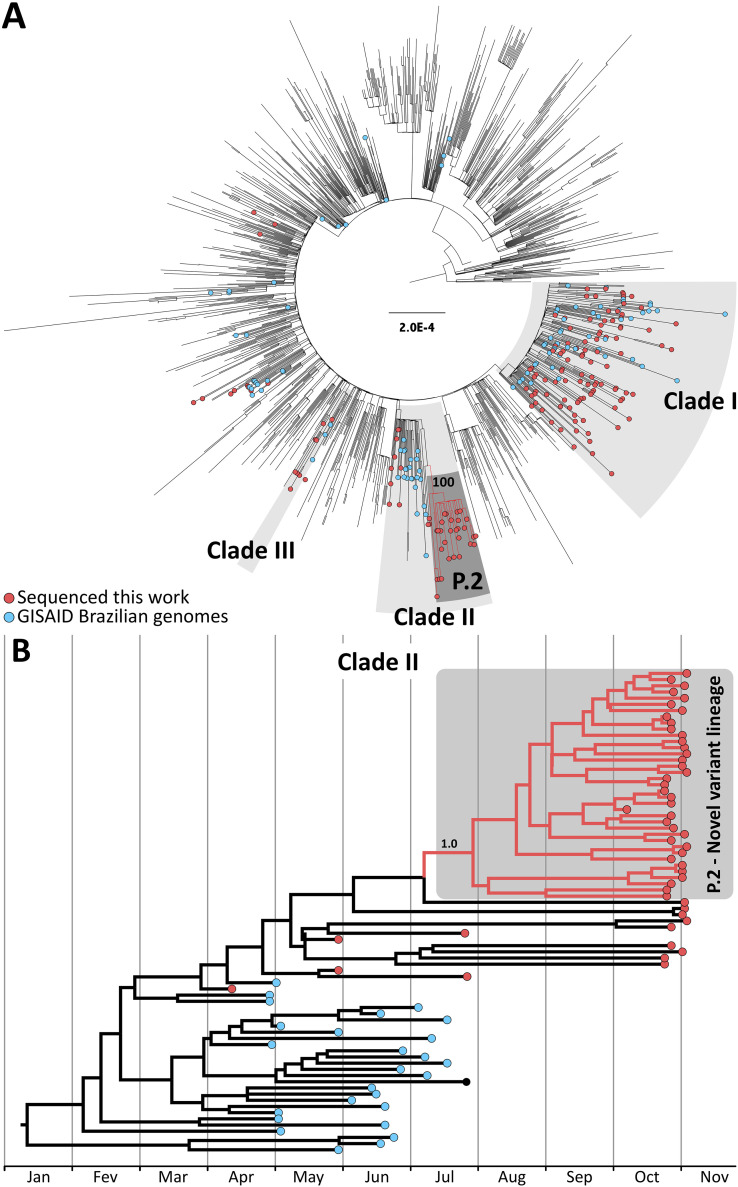
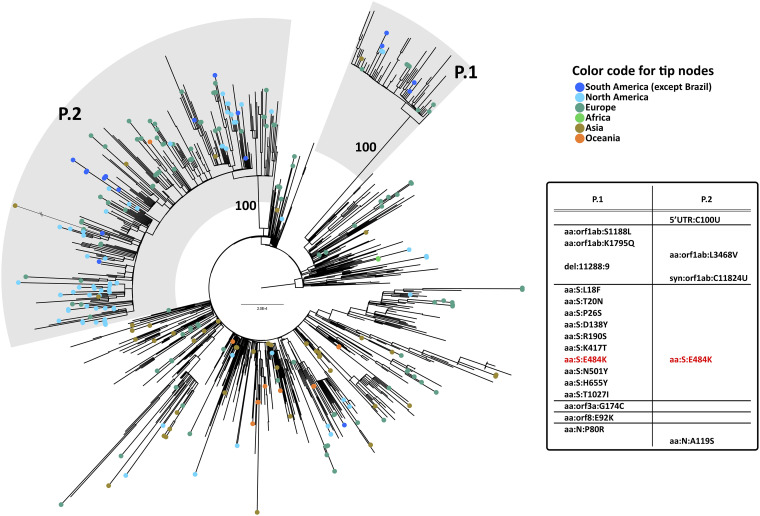
Verification
Claims the paper makes
The claims and statistics of this paper haven’t been checked yet.
Run the check — free, no account needed. It reads the open-access text and checks the sources it cites.
Claims other papers make about this one
Each is checked against this paper’s own text: does it say what the citing paper says it does?
In the citing paper
“Additionally, K417N, Y453F, S477R, N501Y, and D614G represent circulating variants some of which have been associated with rapidly increasing case numbers14,15,19,33–35.”
From mRNA vaccine-elicited antibodies to SARS-CoV-2 and circulating variants (2021) · cites this paper as [35]
Self-check
Percentages, sums and reported differences re-computed from the paper’s own numbers.
The self-check needs the paper’s full text.
Citations
Cites
Trimmomatic: a flexible trimmer for Illumina sequence data
Bolger, A. M., Lohse, M., & Usadel, B. (2014) · Bioinformatics · doi:10.1093/bioinformatics/btu170 · Cited by 65,548
BEDTools: a flexible suite of utilities for comparing genomic features
Quinlan, A. R., & Hall, I. M. (2010) · Bioinformatics · doi:10.1093/bioinformatics/btq033 · Cited by 27,437
IQ-TREE 2: New Models and Efficient Methods for Phylogenetic Inference in the Genomic Era
Minh, B. Q., Schmidt, H. A., Chernomor, O., Schrempf, D., Woodhams, M. D., von Haeseler, A., & Lanfear, R. (2020) · Molecular Biology and Evolution · doi:10.1093/molbev/msaa015 · Cited by 16,873
A framework for variation discovery and genotyping using next-generation DNA sequencing data
DePristo, M. A., Banks, E., Poplin, R. E., Garimella, K. V., Maguire, J., Hartl, C., Philippakis, A., del Angel, G., Rivas, M. A., Hanna, M., et al. (2011) · Nature Genetics · doi:10.1038/ng.806 · Cited by 11,457
Posterior summarization in Bayesian phylogenetics using tracer 1.7
Rambaut, A., Drummond, A. J., Xie, D., Baele, G., & Suchard, M. A. (2018) · Systematic Biology · doi:10.1093/sysbio/syy032 · Cited by 11,159
Application of Phylogenetic Networks in Evolutionary Studies
Huson, D. H., & Bryant, D. (2005) · Molecular Biology and Evolution · doi:10.1093/molbev/msj030 · Cited by 8,895
Dating of the human–ape splitting by a molecular clock of mitochondrial DNA.
Hasegawa, M., Kishino, H., & Yano, T.-A. (1985) · Journal of Molecular Evolution · doi:10.1007/bf02101694 · Cited by 8,687
adegenet : a R package for the multivariate analysis of genetic markers
Jombart, T. (2008) · Bioinformatics · doi:10.1093/bioinformatics/btn129 · Cited by 8,335
Li, H. (2011) · Bioinformatics · doi:10.1093/bioinformatics/btr509 · Cited by 6,454
Bayesian phylogenetic and phylodynamic data integration using BEAST 1.10
Suchard, M. A., Lemey, P., Baele, G., Ayres, D. L., Drummond, A. J., & Rambaut, A. (2018) · Virus Evolution · doi:10.1093/ve/vey016 · Cited by 3,749
Cited by
Sorted by citations
SARS-CoV-2 variants, spike mutations and immune escape
Harvey, W. T., Carabelli, A. M., Jackson, B., Gupta, R. K., Thomson, E. C., Harrison, E. M., Ludden, C., Reeve, R., Rambaut, A., COVID-19 Genomics UK (COG-UK) Consortium, et al. (2021) · Nature Reviews Microbiology · doi:10.1038/s41579-021-00573-0 · Cited by 3,528
Mechanisms of SARS-CoV-2 entry into cells
Jackson, C. B., Farzan, M., Chen, B., & Choe, H. (2022) · Nature Reviews Molecular Cell Biology · doi:10.1038/s41580-021-00418-x · Cited by 3,022
Genomics and epidemiology of the P.1 SARS-CoV-2 lineage in Manaus, Brazil
Faria, N. R., Mellan, T. A., Whittaker, C., Claro, I. M., Candido, D. D. S., Mishra, S., Crispim, M. A. E., Sales, F. C. S., Hawryluk, I., McCrone, J. T., et al. (2021) · Science · doi:10.1126/science.abh2644 · Cited by 1,461
mRNA vaccine-elicited antibodies to SARS-CoV-2 and circulating variants
Wang, Z., Schmidt, F., Weisblum, Y., Muecksch, F., Barnes, C. O., Finkin, S., Schaefer-Babajew, D., Cipolla, M., Gaebler, C., Lieberman, J. A., et al. (2021) · Nature · doi:10.1038/s41586-021-03324-6 · Cited by 1,343
Greaney, A. J., Loes, A. N., Crawford, K. H. D., Starr, T. N., Malone, K. D., Chu, H. Y., & Bloom, J. D. (2021) · Cell Host & Microbe · doi:10.1016/j.chom.2021.02.003 · Cited by 1,178
“In particular, our results predict that the emerging 20H/501Y.V2 and 20J/501Y.V3 viral lineages (originally identified in South Africa and Brazil, respectively) carrying the E484K mutation will have reduced susceptibility to neutralization by the polyclonal plasma antibodies of some individuals.”
InfluentialTarke, A., Sidney, J., Methot, N., Yu, E. D., Zhang, Y., Dan, J. M., Goodwin, B., Rubiro, P., Sutherland, A., Wang, E., et al. (2021) · Cell Reports Medicine · doi:10.1016/j.xcrm.2021.100355 · Cited by 706
“7variant is associated with increased transmissibility,(9,10) and similar epidemiological observations have been reported for the SA and BR variants.(4,5) Themutations of greatest concern are present in the viral spike (S) protein and include notable mutations in the receptor-binding domain (RBD), the N-terminal domai…”
The SARS-CoV-2 main protease as drug target
Ullrich, S., & Nitsche, C. (2020) · Bioorganic & Medicinal Chemistry Letters · doi:10.1016/j.bmcl.2020.127377 · Cited by 787
Mapping mutations to the SARS-CoV-2 RBD that escape binding by different classes of antibodies
Greaney, A. J., Starr, T. N., Barnes, C. O., Weisblum, Y., Schmidt, F., Caskey, M., Gaebler, C., Cho, A., Agudelo, M., Finkin, S., et al. (2021) · Nature Communications · doi:10.1038/s41467-021-24435-8 · Cited by 433
Testing at scale during the COVID-19 pandemic
Mercer, T. R., & Salit, M. (2021) · Nature Reviews Genetics · doi:10.1038/s41576-021-00360-w · Cited by 399
Immunogenicity of Ad26.COV2.S vaccine against SARS-CoV-2 variants in humans
Alter, G., Yu, J., Liu, J., Chandrashekar, A., Borducchi, E. N., Tostanoski, L. H., McMahan, K., Jacob-Dolan, C., Martinez, D. R., Chang, A., et al. (2021) · Nature · doi:10.1038/s41586-021-03681-2 · Cited by 304
Kundu, R., Narean, J. S., Wang, L., Fenn, J., Pillay, T. D., Derqui, N., Conibear, E., Koycheva, A., Davies, M., Tolosa-Wright, M., et al. (2022) · Nature Communications · doi:10.1038/s41467-021-27674-x · Cited by 316
Greaney, A. J., Loes, A. N., Gentles, L. E., Crawford, K. H. D., Starr, T. N., Malone, K. D., Chu, H. Y., & Bloom, J. D. (2021) · Science Translational Medicine · doi:10.1126/scitranslmed.abi9915 · Cited by 244
Genetic and structural basis for SARS-CoV-2 variant neutralization by a two-antibody cocktail
Dong, J., Zost, S. J., Greaney, A. J., Starr, T. N., Dingens, A. S., Chen, E. C., Chen, R. E., Case, J. B., Sutton, R. E., Gilchuk, P., et al. (2021) · Nature Microbiology · doi:10.1038/s41564-021-00972-2 · Cited by 285
“Chimeric viruses expressing the spoike genes of B.1.351 or B.1.1.28 were generated in the WA1/2020 backbone and have been described previously 42 .”
Influentialvan der Wijst, M. G. P., Vazquez, S. E., Hartoularos, G. C., Bastard, P., Grant, T., Bueno, R., Lee, D. S., Greenland, J. R., Sun, Y., Perez, R. K., et al. (2021) · Science Translational Medicine · doi:10.1126/scitranslmed.abh2624 · Cited by 226
Greaney, A. J., Loes, A. N., Crawford, K. H. D., Starr, T. N., Malone, K. D., Chu, H. Y., & Bloom, J. D. (2021) · doi:10.1101/2020.12.31.425021 · Cited by 1,178
“The site where mutations tend to have the largest effect on binding and neutralization is E484, which unfortunately is a site where mutations are present in several emerging SARS-CoV-2 lineages (Tegally et al., 2020; Voloch et al., 2020).”
BackgroundInfluentialCohen, M. S., Nirula, A., Mulligan, M. J., Novak, R. M., Marovich, M., Yen, C., Stemer, A., Mayer, S. M., Wohl, D., Brengle, B., et al. (2021) · JAMA · doi:10.1001/jama.2021.8828 · Cited by 193
Review of COVID-19 Variants and COVID-19 Vaccine Efficacy: What the Clinician Should Know?
Vasireddy, D., Vanaparthy, R., Mohan, G., Malayala, S. V., & Atluri, P. (2021) · Journal of Clinical Medicine Research · doi:10.14740/jocmr4518 · Cited by 197
Experimental Evidence for Enhanced Receptor Binding by Rapidly Spreading SARS-CoV-2 Variants
Laffeber, C., de Koning, K., Kanaar, R., & Lebbink, J. H. G. (2021) · Journal of Molecular Biology · doi:10.1016/j.jmb.2021.167058 · Cited by 194
The SARS-CoV-2 mutations versus vaccine effectiveness: New opportunities to new challenges
Malik, J. A., Ahmed, S., Aroosa, M., Shinde, M., Bender, O., Alshammari, F., Ansari, M., & Anwar, S. (2022) · Journal of Infection and Public Health · doi:10.1016/j.jiph.2021.12.014 · Cited by 206
Molecular basis of receptor binding and antibody neutralization of Omicron
Qin, H., Han, W., Li, J., Xu, S., Wang, Y., Xu, C., Li, Z., Wang, Y., Zhang, C., Huang, Z. W., et al. (2022) · Nature · doi:10.1038/s41586-022-04581-9 · Cited by 198
Emerging SARS-CoV-2 variants expand species tropism to murines
Shuai, H., Chan, J. F., Yuen, T. T., Yoon, C., Hu, J., Wen, L., Hu, B., Yang, D., Wang, Y., Hou, Y., et al. (2021) · EBioMedicine · doi:10.1016/j.ebiom.2021.103643 · Cited by 166
Structural basis for enhanced infectivity and immune evasion of SARS-CoV-2 variants
Cai, Y., Zhang, J., Xiao, T., Lavine, C. L., Rawson, S., Peng, H., Zhu, H., Anand, K., Tong, P., Gautam, A. K., et al. (2021) · Science · doi:10.1126/science.abi9745 · Cited by 222
“28 lineage in Brazil within a period of several months (3-5).”
Background(2021) · doi:10.1101/2021.02.27.433180 · Cited by 706
“351, P.1 and the CAL.20C variants.”
InfluentialWang, Y., Liu, C., Zhang, C., Wang, Y., Qin, H., Xu, S., Li, Z., Yang, Y. P., Huang, Z. W., & Cong, Y. (2022) · Nature Communications · doi:10.1038/s41467-022-28528-w · Cited by 175
Cao, Y., Yisimayi, A., Bai, Y., Huang, W., Li, X., Zhang, Z., Yuan, T., An, R., Wang, J., Xiao, T., et al. (2021) · Cell Research · doi:10.1038/s41422-021-00514-9 · Cited by 140
“V3, is discovered and announced in January 2021 in Brazil.(3) 501Y.”
BackgroundOngoing global and regional adaptive evolution of SARS-CoV-2
Rochman, N. D., Wolf, Y. I., Faure, G., Mutz, P., Zhang, F., & Koonin, E. V. (2021) · Proceedings of the National Academy of Sciences · doi:10.1073/pnas.2104241118 · Cited by 243
Focosi, D., & Maggi, F. (2021) · Reviews in Medical Virology · doi:10.1002/rmv.2231 · Cited by 150
Covid-19: What new variants are emerging and how are they being investigated?
Mahase, E. (2021) · BMJ · doi:10.1136/bmj.n158 · Cited by 150
Attwood, S. W., Hill, S. C., Aanensen, D. M., Connor, T. R., & Pybus, O. G. (2022) · Nature Reviews Genetics · doi:10.1038/s41576-022-00483-8 · Cited by 154
Hodcroft, E. B., Domman, D., Snyder, D. J., Oguntuyo, K. Y., Diest, M. V., Densmore, K. H., Schwalm, K. C., Femling, J., Carroll, J. L., Scott, R. S., et al. (2021) · medRxiv · doi:10.1101/2021.02.12.21251658 · Cited by 110
Evolutionary trajectory of SARS-CoV-2 and emerging variants
Singh, J., Pandit, P., McArthur, A. G., Banerjee, A., & Mossman, K. L. (2021) · Virology Journal · doi:10.1186/s12985-021-01633-w · Cited by 150
Zeiser, F. A., Donida, B., da Costa, C. A., Ramos, G. D. O., Scherer, J. N., Barcellos, N. T., Alegretti, A. P., Ikeda, M. L. R., Müller, A. P. W. C., Bohn, H. C., et al. (2021) · The Lancet Regional Health - Americas · doi:10.1016/j.lana.2021.100107 · Cited by 141
Ongoing Global and Regional Adaptive Evolution of SARS-CoV-2Preprint
Rochman, N. D., Wolf, Y., Faure, G., et al. (2020) · bioRxiv · doi:10.1101/2020.10.12.336644 · Cited by 123
Madhi, S. A., Baillie, V., Cutland, C. L., Voysey, M., Koen, A. L., Fairlie, L., Padayachee, S. D., Dheda, K., Barnabas, S. L., Bhorat, Q. E., et al. (2021) · doi:10.1101/2021.02.10.21251247 · Cited by 1,257
Molecular characteristics, immune evasion, and impact of SARS-CoV-2 variants
Sun, C., Xie, C., Bu, G., Zhong, L., & Zeng, M. (2022) · Signal Transduction and Targeted Therapy · doi:10.1038/s41392-022-01039-2 · Cited by 149
Francisco, R. D. S., Benites, L. F., Lamarca, A. P., de Almeida, L. G. P., Hansen, A. W., Gularte, J. S., Demoliner, M., Gerber, A. L., Guimarães, A. P. D. C., Eisen, A. K. A., et al. (2021) · Virus Research · doi:10.1016/j.virusres.2021.198345 · Cited by 110
“Next-generation sequencing (NGS) data was processed using a bioinformatic pipeline described in our previous study (Voloch et al., 2020a).”
InfluentialSelf-citationIslam, S., Islam, T., & Islam, M. R. (2022) · Clinical Pathology · doi:10.1177/2632010x221075584 · Cited by 133
COVID-19 Diagnosis: A Comprehensive Review of the RT-qPCR Method for Detection of SARS-CoV-2
Dutta, D., Naiyer, S., Mansuri, S., Soni, N., Singh, V., Bhat, K. H., Singh, N., Arora, G., & Mansuri, M. S. (2022) · Diagnostics · doi:10.3390/diagnostics12061503 · Cited by 151
Gorman, M. J., Patel, N., Guebre‐Xabier, M., Zhu, A. L., Atyeo, C. G., Pullen, K. M., Loos, C., Goez-Gazi, Y., Carrion, R., Tian, J.-H., et al. (2021) · Cell Reports Medicine · doi:10.1016/j.xcrm.2021.100405 · Cited by 121
The Emerging Concern and Interest SARS-CoV-2 Variants
Janik, E., Niemcewicz, M., Podogrocki, M., Majsterek, I., & Bijak, M. (2021) · Pathogens · doi:10.3390/pathogens10060633 · Cited by 113
Genomic epidemiology of the SARS-CoV-2 epidemic in Brazil
Giovanetti, M., Slavov, S. N., Fonseca, V., Wilkinson, E., Tegally, H., Patané, J. S. L., Viala, V. L., San, J. E., Rodrigues, E. S., Santos, E. V., et al. (2022) · Nature Microbiology · doi:10.1038/s41564-022-01191-z · Cited by 109
An update on COVID-19: SARS-CoV-2 variants, antiviral drugs, and vaccines
Hillary, V. E., & Ceasar, S. A. (2023) · Heliyon · doi:10.1016/j.heliyon.2023.e13952 · Cited by 121
Structural basis for enhanced infectivity and immune evasion of SARS-CoV-2 variants
Cai, Y., Zhang, J., Xiao, T., et al. (2021) · bioRxiv · doi:10.1101/2021.04.13.439709 · Cited by 92
Current status of therapeutic monoclonal antibodies against SARS-CoV-2
Kumar, S., Chandele, A., & Sharma, A. K. (2021) · PLoS Pathogens · doi:10.1371/journal.ppat.1009885 · Cited by 104
“CP, cytoplasmic tail; FP, fusion peptide; HR1, heptad repeat 1; HR2, heptad repeat 2; mAb, monoclonal antibody; NTD, N-terminal domain; PDB, Protein Data Bank; RBD, receptor-binding domain; RBM, receptor-binding motif; SARS-CoV-2, Severe Acute Respiratory Syndrome Coronavirus 2; SP, signal peptide; TM, transmembrane d…”
BackgroundInfluentialThe COVID-19 Pandemic: a Threat to Antimicrobial Resistance Containment
Founou, R. C., Blocker, A., Noubom, M., Tsayem, C., Choukem, S. P., van Dongen, M. B. M., & Founou, L. L. (2021) · Future Science OA · doi:10.2144/fsoa-2021-0012 · Cited by 108
“1 variant exhibiting around 35 mutations with 17 amino acid changes was reported in Brazil on 12 January 2021 [24].”
BackgroundNeutralizing activity of Sputnik V vaccine sera against SARS-CoV-2 variants
Ikegame, S., Siddiquey, M. N. A., Hung, C.-T., Haas, G. D., Brambilla, L., Oguntuyo, K. Y., Kowdle, S., Chiu, H.-P., Stevens, C. S., Vilardo, A. E., et al. (2021) · Nature Communications · doi:10.1038/s41467-021-24909-9 · Cited by 141
Obesity and its impact on COVID-19
de Leeuw, A. J. M., Luttikhuis, M. A. M. O., Wellen, A. C., Müller, C., & Calkhoven, C. F. (2021) · Journal of Molecular Medicine · doi:10.1007/s00109-021-02072-4 · Cited by 115
Genomic Evidence of a Sars-Cov-2 Reinfection Case With E484K Spike Mutation in BrazilPreprint
Nonaka, C. K. V., Franco, M. M., Gräf, T., Mendes, A. V. A., Aguiar, R. S., Giovanetti, M., & Souza, B. S. D. F. (2021) · Preprints.org · doi:10.20944/preprints202101.0132.v1 · Cited by 64
“Molecular characterization of a COVID-19 reinfection case in Salvador, Bahia state, Northeast Brazil.”
BackgroundInfluentialSARS-CoV-2 vaccines in advanced clinical trials: Where do we stand?
Chakraborty, S., Mallajosyula, V. V. A., Tato, C. M., Tan, G. S., & Wang, T. T. (2021) · Advanced Drug Delivery Reviews · doi:10.1016/j.addr.2021.01.014 · Cited by 90
Sequence signatures of two public antibody clonotypes that bind SARS-CoV-2 receptor binding domain
Tan, T. J. C., Yuan, M., Kuzelka, K., Padron, G. C., Beal, J. R., Chen, X., Wang, Y., Rivera-Cardona, J., Zhu, X., Stadtmueller, B. M., et al. (2021) · Nature Communications · doi:10.1038/s41467-021-24123-7 · Cited by 75
Modelling and optimal control of multi strain epidemics, with application to COVID-19
Arruda, E. F., Das, S. S., Dias, C. M., & Pastore, D. H. (2021) · PLoS ONE · doi:10.1371/journal.pone.0257512 · Cited by 85
Differential interactions between human ACE2 and spike RBD of SARS-CoV-2 variants of concern
Kim, S., Liu, Y., Lei, Z., et al. (2021) · bioRxiv · doi:10.1101/2021.07.23.453598 · Cited by 78
Heida, R., Hinrichs, W. L. J., & Frijlink, H. W. (2021) · Expert Review of Vaccines · doi:10.1080/14760584.2021.1903878 · Cited by 96
Case, J. B., Chen, R. E., Cao, L., Ying, B., Winkler, E. S., Johnson, M., Goreshnik, I., Pham, M. N., Shrihari, S., Kafai, N. M., et al. (2021) · Cell Host & Microbe · doi:10.1016/j.chom.2021.06.008 · Cited by 73
Ferrareze, P. A. G., Franceschi, V. B., Mayer, A. D. M., Caldana, G. D., Zimerman, R. A., & Thompson, C. E. (2021) · Infection, Genetics and Evolution · doi:10.1016/j.meegid.2021.104941 · Cited by 82
Bekliz, M., Adea, K., Vetter, P., Eberhardt, C. S., Hosszu-Fellous, K., Vu, D., Puhach, O., Essaidi-Laziosi, M., Waldvogel‐Abramowski, S., Stephan, C., et al. (2022) · Nature Communications · doi:10.1038/s41467-022-31556-1 · Cited by 86
Structure-guided T cell vaccine design for SARS-CoV-2 variants and sarbecoviruses
Nathan, A., Rossin, E. J., Kaseke, C., Park, R. J.-H., Khatri, A., Koundakjian, D., Urbach, J. M., Singh, N. K., Bashirova, A. A., Tano-Menka, R., et al. (2021) · Cell · doi:10.1016/j.cell.2021.06.029 · Cited by 84
“…Polack et al., 2020; Sadoff et al., 2021), the emergence of the B.1.1.7 alpha (Tang et al., 2020), B.1.351 beta (Tegally et al., 2021), P.1 gamma (Voloch et al., 2020), and B.1.617.2 delta variants (Cherian et al., 2021) has raised substantial new concerns due to their increased transmissibility…”
InfluentialIntroduction of Brazilian SARS-CoV-2 484K.V2 related variants into the UK
Toovey, O. T. R., Harvey, K. N., Bird, P. W., & Tang, J. W.-T. (2021) · Journal of Infection · doi:10.1016/j.jinf.2021.01.025 · Cited by 74
One Year of SARS-CoV-2: Genomic Characterization of COVID-19 Outbreak in Qatar
Benslimane, F. M., Al-Khatib, H. A., Al-Jamal, O., Albatesh, D., Boughattas, S., Ahmed, A. A., Bensaad, M., Younuskunju, S., Mohamoud, Y. A., Badr, M. A., et al. (2021) · Frontiers in Cellular and Infection Microbiology · doi:10.3389/fcimb.2021.768883 · Cited by 66
“Only a few samples -collected in March 2021- intermixed with genomes from Greece, South Africa, and the USA (Figure 5B).”
BackgroundInfluentialEmergence and spread of a SARS-CoV-2 lineage A variant (A.23.1) with altered spike protein in Uganda
Bugembe, D. L., Phan, M. V. T., Ssewanyana, I., Semanda, P., Nansumba, H., Dhaala, B., Nabadda, S. N., O’Toole, Á., Rambaut, A., Kaleebu, P., et al. (2021) · Nature Microbiology · doi:10.1038/s41564-021-00933-9 · Cited by 104
Fred, S. M., Kuivanen, S. H., Uğurlu, H., Casarotto, P. C., Levanov, L., Saksela, K., Vapalahti, O., & Ċastrén, E. (2022) · Frontiers in Pharmacology · doi:10.3389/fphar.2021.755600 · Cited by 67
“…of an Emergent SARS-CoV-2 Lineage in Manaus, 2021; Phylogenetic Relationship of SARS-CoV-2 Sequences from Amazonas with Emerging Brazilian Variants Harboring Mutations E484K and N501Y in the Spike Protein - SARS-CoV-2 Coronavirus /NCoV-2019 Genomic Epidemiology, 2021; Voloch et al., 2020).”
Wang, Y., Xu, C., Wang, Y., Qin, H., Zhang, C., Li, Z., Xu, S., Zuo, Q., Liu, C., Huang, Z. W., et al. (2021) · Nature Communications · doi:10.1038/s41467-021-27350-0 · Cited by 85
Genetic and structural basis for recognition of SARS-CoV-2 spike protein by a two-antibody cocktail
Dong, J., Zost, S. J., Greaney, A. J., Starr, T. N., Dingens, A. S., Chen, E. C., Chen, R. E., Case, J. B., Sutton, R. E., Gilchuk, P., et al. (2021) · doi:10.1101/2021.01.27.428529 · Cited by 55
Jette, C. A., Cohen, A. A., Gnanapragasam, P. N. P., Muecksch, F., Lee, Y. E., Huey‐Tubman, K. E., Schmidt, F., Hatziioannou, T., Bieniasz, P. D., Nussenzweig, M. C., et al. (2021) · Cell Reports · doi:10.1016/j.celrep.2021.109760 · Cited by 99
Vega‐Magaña, N., Sánchez-Sánchez, R., Hernández‐Bello, J., Venancio-Landeros, A. A., Rodríguez, M. P., Vega-Zepeda, R. A., Galindo-Ornelas, B., Díaz-Sánchez, M., García‐Chagollán, M., Ojeda, G. M., et al. (2021) · Frontiers in Cellular and Infection Microbiology · doi:10.3389/fcimb.2021.672562 · Cited by 67
Intra-host evolution during SARS-CoV-2 prolonged infection
Voloch, C. M., Francisco, R. D. S., de Almeida, L. G. P., Brustolini, O. J. B., Cardoso, C. C., Gerber, A. L., Guimarães, A. P. D. C., Leitão, I. D. C., Mariani, D., Ota, V. A., et al. (2021) · Virus Evolution · doi:10.1093/ve/veab078 · Cited by 99
Self-citationSARS-CoV-2 new variants: Characteristic features and impact on the efficacy of different vaccines
Khan, A., Khan, T., Ali, S., Aftab, S., Wang, Y., Wang, Q., Khan, M., Suleman, M., Ali, S., Heng, W., et al. (2021) · Biomedicine & Pharmacotherapy · doi:10.1016/j.biopha.2021.112176 · Cited by 75
Cobre, A. D. F., Stremel, D. P., Noleto, G. R., Fachi, M. M., Surek, M., Wiens, A., Tonin, F. S., & Pontarolo, R. (2021) · Computers in Biology and Medicine · doi:10.1016/j.compbiomed.2021.104531 · Cited by 63
Jette, C. A., Cohen, A. A., Gnanapragasam, P. N. P., Muecksch, F., Lee, Y., Huey-Tubman, K. E., Schmidt, F., Hatziioannou, T., Bieniasz, P., Nussenzweig, M., et al. (2021) · bioRxiv · doi:10.1101/2021.04.23.441195 · Cited by 54
“…SARS-CoV-2, SARS-CoV-2 RBD mutants, SARS-CoV-2 variants (Annavajhala et al., 2021; Faria et al., 2021; Rambaut et al., 2020; Tegally et al., 2020; Voloch et al., 2020; West et al., 2021; Zhang et al., 2021), and sarbecovirus strains known to infect human ACE2-expressing target cells (SARS-CoV-2,…”
InfluentialBroad-spectrum CRISPR-mediated inhibition of SARS-CoV-2 variants and endemic coronaviruses in vitro
Zeng, L., Liu, Y., Wrynla, X. H., Abbott, T. R., Han, M., Zhu, Y., Chemparathy, A., Lin, X., Chen, X., Wang, H., et al. (2022) · Nature Communications · doi:10.1038/s41467-022-30546-7 · Cited by 53
Efficacy of ChAdOx1 nCoV-19 (AZD1222) vaccine against SARS-CoV-2 lineages circulating in Brazil
Clemens, S. A. C., Folegatti, P. M., Emary, K. R. W., Weckx, L. Y., Ratcliff, J., Bibi, S., Mendes, A. V. A., Milan, E. P., Pittella, A. M., Schwarzbold, A. V., et al. (2021) · Nature Communications · doi:10.1038/s41467-021-25982-w · Cited by 57
CRISPR-Cas12a-Based Detection for the Major SARS-CoV-2 Variants of Concern
Liang, Y., Lin, H., Zou, L., Zhao, J., Li, B., Wang, H., Lu, J., Sun, J., Yang, X., Deng, X., et al. (2021) · Microbiology Spectrum · doi:10.1128/spectrum.01017-21 · Cited by 78
Fédry, J., Hurdiss, D. L., Wang, C., Li, W., Obal, G., Drulyte, I., Du, W., Howes, S. C., van Kuppeveld, F. J. M., Förster, F. G., et al. (2021) · Science Advances · doi:10.1126/sciadv.abf5632 · Cited by 54
The trispecific DARPin ensovibep inhibits diverse SARS-CoV-2 variants
Rothenberger, S., Hurdiss, D. L., Walser, M., Malvezzi, F., Mayor, J., Ryter, S., Moreno, H., Liechti, N., Bosshart, A., Iss, C., et al. (2022) · Nature Biotechnology · doi:10.1038/s41587-022-01382-3 · Cited by 75
Structural and functional insights into the spike protein mutations of emerging SARS-CoV-2 variants
Gupta, D., Sharma, P., Singh, M., Kumar, M., Ethayathulla, A. S., & Kaur, P. (2021) · Cellular and Molecular Life Sciences · doi:10.1007/s00018-021-04008-0 · Cited by 56
“It was first reported in the state of Rio de Janeiro, Brazil [63].”
BackgroundSuleman, M., Yousafi, Q., Ali, J., Ali, S. S., Hussain, Z., Ali, S., Waseem, M., Iqbal, A., Ahmad, S., Khan, A., et al. (2021) · Computers in Biology and Medicine · doi:10.1016/j.compbiomed.2021.104936 · Cited by 49
“Efforts to disclose the genomic organization of SARS-CoV-2 have revealed that the virus consists of sixteen nonstructural proteins (NSP1 – NSP16) and four structural proteins (S protein, E protein, N protein, and M protein) [17,18].”
Resende, P. C., Naveca, F. G., Lins, R. D., Dezordi, F. Z., Ferraz, M. V. F., Moreira, E. G., Coêlho, D. F., Motta, F. C., Paixão, A. C. D., Appolinario, L., et al. (2021) · Virus Evolution · doi:10.1093/ve/veab069 · Cited by 47
Assessment of SARS-CoV-2 Genome Sequencing: Quality Criteria and Low-Frequency Variants
Jacot, D., Pillonel, T., Greub, G., & Bertelli, C. (2021) · Journal of Clinical Microbiology · doi:10.1128/jcm.00944-21 · Cited by 43
Liu, H., Yuan, M., Huang, D., Bangaru, S., Zhao, F., Lee, C.-C. D., Peng, L., Barman, S., Zhu, X., Nemazee, D. A., et al. (2021) · Cell Host & Microbe · doi:10.1016/j.chom.2021.04.005 · Cited by 58
“…mutations in both human and mink populations give rise to concerns about viral escape from current vaccines and therapeutics in development (Andreano et al., 2020; Greaney et al., 2021a; Kemp et al., 2021; Mallapaty, 2020; Oude Munnink et al., 2021; Tegally et al., 2021; Voloch et al., 2021).”
BackgroundGreaney, A. J., Starr, T. N., Barnes, C., et al. (2021) · bioRxiv · doi:10.1101/2021.03.17.435863 · Cited by 45
Resende, P. C., Gräf, T., Paixão, A. C. D., Appolinario, L., Lopes, R. S., Mendonça, A. C. D. F., da Rocha, A. S. B., Motta, F. C., Neto, L. G. L., Khouri, R., et al. (2021) · Viruses · doi:10.3390/v13050724 · Cited by 45
“2, first described in samples from October 2020 in the state of Rio de Janeiro, was distinguished by the presence of the S:E484K mutation in RBD and other four lineage-defining mutations outside the S protein [6].”
BackgroundSelf-citationBugembe, D., V.T.Phan, M., Ssewanyana, I., et al. (2021) · medRxiv · doi:10.1101/2021.02.08.21251393 · Cited by 45
“1 (7) ) and applied the 250 same profileHMM analysis.”
MethodLong, S. W., Olsen, R. J., Christensen, P. A., Subedi, S., Olson, R., Davis, J. J., Saavedra, M. O., Yerramilli, P., Pruitt, L., Reppond, K., et al. (2021) · American Journal Of Pathology · doi:10.1016/j.ajpath.2021.03.004 · Cited by 46
Peng, J., Liu, J., Mann, S. A., Mitchell, A. M., Laurie, M. T., Sunshine, S., Pilarowski, G., Ayscue, P., Kistler, A., Vanaerschot, M., et al. (2022) · Clinical Infectious Diseases · doi:10.1093/cid/ciab283 · Cited by 41
Verkhivker, G. M., Agajanian, S., Oztas, D., et al. (2021) · bioRxiv · doi:10.1101/2021.04.13.439743 · Cited by 42
Neutralizing activity of Sputnik V vaccine sera against SARS-CoV-2 variantsPreprint
Ikegame, S., Siddiquey, M. N. A., Hung, C.-T., Haas, G. D., Brambilla, L., Oguntuyo, K. Y., Kowdle, S., Vilardo, A. E., Edelstein, A., Perandones, C., et al. (2021) · Research Square · doi:10.21203/rs.3.rs-400230/v1 · Cited by 27
“For example, a B.1.526 sub-lineage carrying E484K in recent weeks has expanded more rapidly than B.1.1.7 (Annavajhala et al. , 2021; West et al. , 2021), which may be indicative of the ability of S: E484K variants to penetrate herd immunity.”
InfluentialMartins, A. F., Zavascki, A. P., Wink, P. L., Volpato, F. C. Z., Monteiro, F. L., Rosset, C., de Paris, F., Ramos, Á., & Barth, A. L. (2021) · Eurosurveillance · doi:10.2807/1560-7917.es.2021.26.12.2100276 · Cited by 60
Gorman, M. J., Patel, N., Guebre‐Xabier, M., Zhu, A. L., Atyeo, C. G., Pullen, K. M., Loos, C., Goez-Gazi, Y., Carrion, R., Tian, J.-H., et al. (2021) · bioRxiv (Cold Spring Harbor Laboratory) · doi:10.1101/2021.02.05.429759 · Cited by 29
Upadhyay, V., Lucas, A., Panja, S., Miyauchi, R., & Mallela, K. M. G. (2021) · Journal of Biological Chemistry · doi:10.1016/j.jbc.2021.101208 · Cited by 44
Gawish, R., Starkl, P. M., Pimenov, L., Hladik, A., Lakovits, K., Oberndorfer, F., Cronin, S. J., Ohradanova‐Repic, A., Wirnsberger, G., Agerer, B., et al. (2022) · eLife · doi:10.7554/elife.74623 · Cited by 61
“Upon adaptation to humans, SARS-CoV-2 evolution gave rise to multiple variants including novel SARS-CoV-2 variants of concern (VOCs), characterized by increased transmissibility and/or virulence, or reduced effectiveness of countermeasures such as vaccinations or antibody therapies (WHO, 2021a).”
BackgroundResultInfluentialSimultaneous evaluation of antibodies that inhibit SARS-CoV-2 variants via multiplex assay
López, E., Haycroft, E. R., Adair, A., Mordant, F. L., O’Neill, M. T., Pymm, P., Redmond, S. J., Lee, W. S., Gherardin, N. A., Wheatley, A. K., et al. (2021) · JCI Insight · doi:10.1172/jci.insight.150012 · Cited by 38
“residues in the spike glycoprotein (6-8), has resulted in the continued implementation 74 of stringent public health measures to control infection in many parts of the world.”
BackgroundLamarca, A. P., de Almeida, L. G. P., Francisco, R. D. S., Agnez‐Lima, L. F., Scortecci, K. C., Perez, V. P., Brustolini, O. J. B., Sousa, E. S. S., Secco, D., Santos, Â., et al. (2021) · PLoS neglected tropical diseases · doi:10.1371/journal.pntd.0009835 · Cited by 35
Self-citationQasem, A., Shaw, A. M., Elkamel, E., & Naser, S. A. (2021) · Current Issues in Molecular Biology · doi:10.3390/cimb43020053 · Cited by 43
Booster dose of mRNA vaccine augments waning T cell and antibody responses against SARS-CoV-2
Kurt, F. G. Ö., Lepper, A., Gerhards, C., Roemer, M., Lasser, S., Arkhypov, I., Bitsch, R., Bugert, P., Altevogt, P., Gouttefangeas, C., et al. (2022) · Frontiers in Immunology · doi:10.3389/fimmu.2022.1012526 · Cited by 48
“Emergence of different variants has generated concern about the effectiveness of immunity after vaccination (18, 19).”
BackgroundMeyers, L. M., Gutiérrez, A. H., Boyle, C., Terry, F. E., McGonnigal, B., Salazar, A. Μ., Princiotta, M. F., Martin, W. D., Groot, A. S. D., & Moise, L. (2021) · npj Vaccines · doi:10.1038/s41541-021-00331-6 · Cited by 44
50 Years of structural immunology
Wilson, I. A., & Stanfield, R. L. (2021) · Journal of Biological Chemistry · doi:10.1016/j.jbc.2021.100745 · Cited by 44
Junejo, Y., Özaslan, M., Safdar, M., Khailany, R. A., Rehman, S. U., Yousaf, W., & Khan, M. A. (2020) · Gene Reports · doi:10.1016/j.genrep.2020.100752 · Cited by 50
“All non-coding mutations are within 3′UTR or 5′UTR regions that have C>T changes (Rozhgar et al., 2020).”
A simple reverse genetics method to generate recombinant coronaviruses
Mélade, J., Piorkowski, G., Touret, F., Fourié, T., Driouich, J., Cochin, M., Bouzidi, H. S., Coutard, B., Nougaırède, A., & de Lamballerie, X. N. (2022) · EMBO Reports · doi:10.15252/embr.202153820 · Cited by 44
Verkhivker, G. M., Agajanian, S., Oztas, D., et al. (2021) · bioRxiv · doi:10.1101/2021.02.21.432165 · Cited by 36
Genomic epidemiology of SARS-CoV-2 in Esteio, Rio Grande do Sul, Brazil
Franceschi, V. B., Caldana, G. D., Mayer, A. D. M., Cybis, G. B., Neves, C. A. M., Ferrareze, P. A. G., Demoliner, M., de Almeida, P. R., Gularte, J. S., Hansen, A. W., et al. (2021) · BMC Genomics · doi:10.1186/s12864-021-07708-w · Cited by 34
“Phylodynamics inferences pointed that this lineage emerged in early July, approximately four months before the detection of its first genomes [53].”
Metadata
- Authors
- Voloch, C. M., Silva F, R. D., de Almeida, L. G. P., Cardoso, C. C., Brustolini, O. J., Gerber, A. L., Guimarães, A. P. D. C., Mariani, D., Costa, R. M. D., Ferreira, O. C., Workgroup, C.-U., LNCC-Workgroup, Cavalcanti, A. C., Frauches, T. S., de Mello, C. M. B., Galliez, R. M., Faffe, D. S., Castiñeiras, T. M. P. P., Tanuri, A., & de Vasconcelos, A. T. R.
- Affiliations
- Universidade Federal do Rio de Janeiro (BR)
- Laboratório Nacional de Computação Científica (BR)
- Secretaria de Estado de Saúde do Rio de Janeiro (BR)
- ORCID
- Venue
- Journal of Virology
- Publisher
- openRxiv
- Published
- 2020-12-26
- Volume
- 95
- Issue
- 10
- ISSN
- 0022-538X (ISSN-L)
- PMC
- PMC8139668
- OpenAlex
- W3135409471
- Cited by
- 372
- References
- 31
- Citations by year
- 2026: 5 · 2025: 8 · 2024: 25 · 2023: 34 · 2022: 93 · 2021: 206
- FWCI
- 28.43
- Type
- journal article
- Language
- en
- Open access
- hybrid
- doi.org
- Licence
- cc-by
- Locations
- Journal of Virology (publishedVersion, cc-by)
- medRxiv (acceptedVersion)
- PubMed Central (publishedVersion, cc-by)
- PubMed (publishedVersion)
- Funders
- Ministério da Ciência, Tecnologia e Inovação (01.20.0029.000462/20, 303170/2017-4, 404096/2020-4)
- Conselho Nacional de Desenvolvimento Científico e Tecnológico (= 404,096/2020–4, # 303170/2017-4)
- Fundação Carlos Chagas Filho de Amparo à Pesquisa do Estado do Rio de Janeiro (E-26/202.791/2019, E-26/010.002278/2019, E-26/, E‐26/210.178/2020, E-26/210, =E-26/210.179/2020, E-26/202.903/20, E-26/010.002434/2019)
- Financiadora de Estudos e Projetos (01.20.0029.000462/20)
- Instituto Serrapilheira
- Topics
- Health Sciences › Medicine › Infectious Diseases › SARS-CoV-2 and COVID-19 Research
- Health Sciences › Medicine › Infectious Diseases › COVID-19 Clinical Research Studies
- Health Sciences › Medicine › Infectious Diseases › SARS-CoV-2 detection and testing
- Keywords
- SARS-CoV-2, novel viral lineages, genomic profiling, phylogenetic analysis, genetic divergence, Rio de Janeiro, COVID-19 pandemic
About these checks
Registry, retraction, Cites and statistics results are computed, not judged, with one exception: a printed reference that no index lists is read once by a model before it counts as a citation error. Claims are extracted by a model and kept only when their quote appears verbatim in the text; each cited source is then checked, with a model’s help, for whether it says what the claim relies on. Those verdicts can be wrong — read the claim’s quote and the cited source before relying on one.
Statistics and arithmetic are recomputed, not judged.
Confidence bands are shown only for fields calibrated on our annotated test set. None is calibrated yet, so no band is shown.
What counts as a claim ›How we measure confidence ›How we check this ›
Are you an author, or do you see a problem with this page? Request a review
