

Emergence and Expansion of the SARS-CoV-2 Variant B.1.526 Identified in New York
Preprint — published as 10.1038/s41586-021-03908-2 · Paper page
The DOI matches its Crossref record; 48 of the 48 references it cites were found in a registry or an index.
Abstract
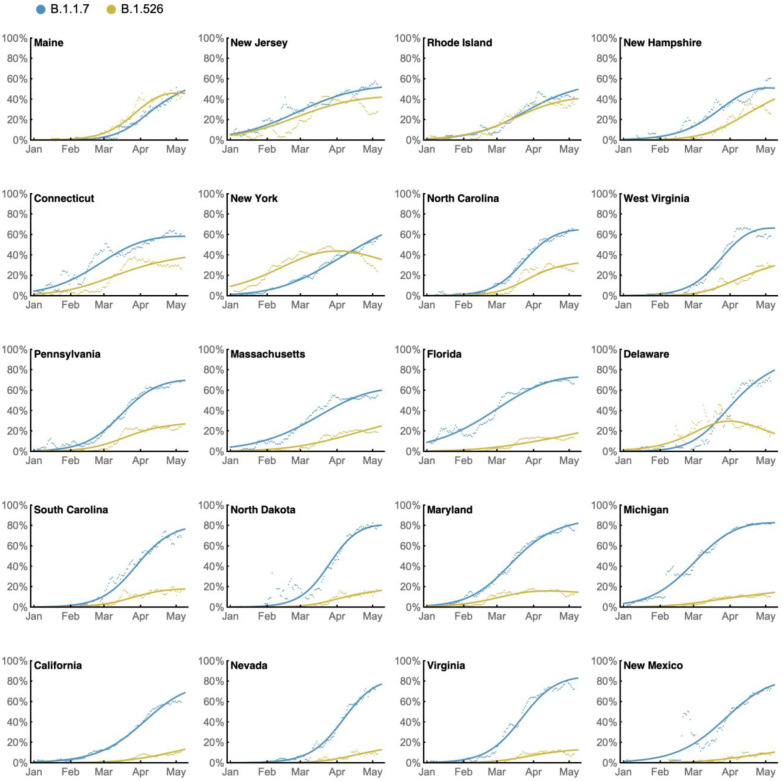
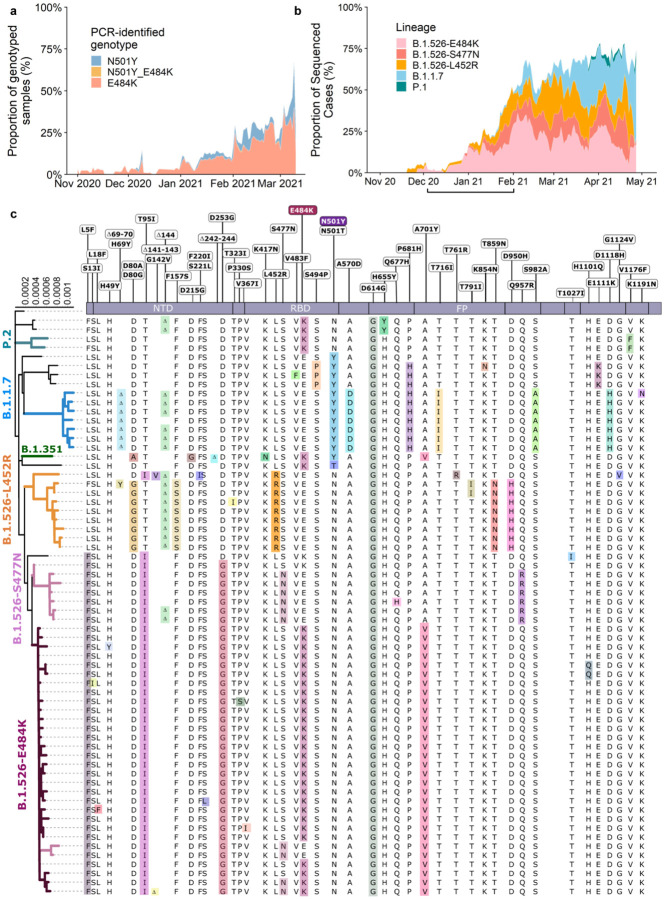
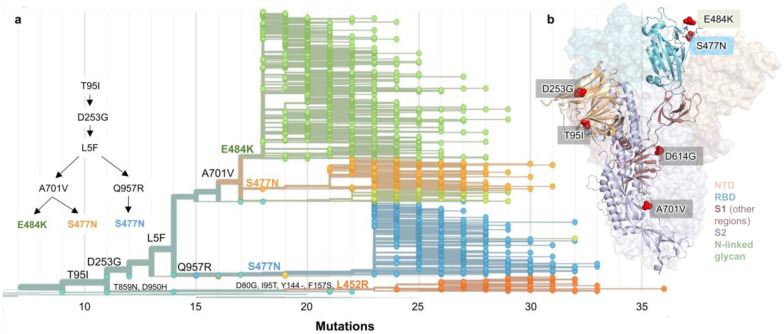
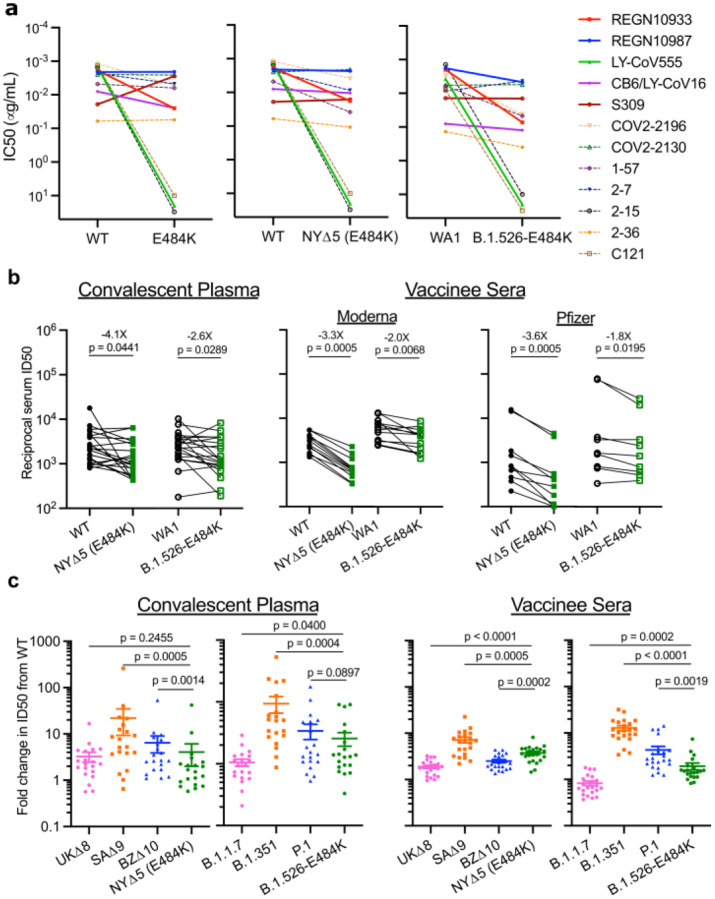
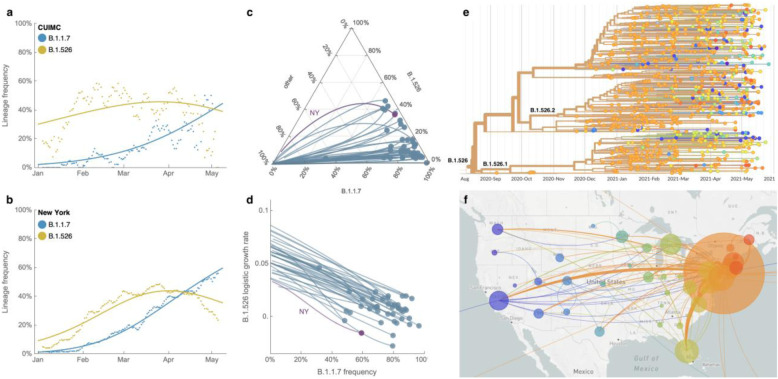
Recent months have seen surges of SARS-CoV-2 infection across the globe with considerable viral evolution 1-3 . Extensive mutations in the spike protein may threaten efficacy of vaccines and therapeutic monoclonal antibodies 4 . Two signature mutations of concern are E484K, which plays a crucial role in the loss of neutralizing activity of antibodies, and N501Y, a driver of rapid worldwide transmission of the B.1.1.7 lineage. Here, we report the emergence of variant lineage B.1.526 that contains E484K and its alarming rise to dominance in New York City in early 2021. This variant is partially or completely resistant to two therapeutic monoclonal antibodies in clinical use and less susceptible to neutralization by convalescent plasma or vaccinee sera, posing a modest antigenic challenge. The B.1.526 lineage has now been reported from all 50 states in the US and numerous other countries. B.1.526 rapidly replaced earlier lineages in New York upon its emergence, with an estimated transmission advantage of 35%. Such transmission dynamics, together with the relative antibody resistance of its E484K sub-lineage, likely contributed to the sharp rise and rapid spread of B.1.526. Although SARS-CoV-2 B.1.526 initially outpaced B.1.1.7 in the region, its growth subsequently slowed concurrent with the rise of B.1.1.7 and ensuing variants.
Overview
The claims and statistics of this paper haven’t been checked yet.
Free: it reads the open-access text and checks the first 5 claims that cite a source we can check. Create a free account to check every claim.
Integrity signals
Registry
Cites
Statistics
Figures
Verification
Claims the paper makes
The claims and statistics of this paper haven’t been checked yet.
Free: it reads the open-access text and checks the first 5 claims that cite a source we can check. Create a free account to check every claim.
Claims other papers make about this one
Each is checked against this paper’s own text: does it say what the citing paper says it does?
The source backs part of the claim, not all of it — or backs it for a different population, condition or comparison.
In the citing paper
“L5F, T95I, D253G, (L452R*), E484K, D614G, and A701V are important spike protein substitutions that may impart reduced susceptibility to MAb’s treatments along with reduced neutralization capacity by post-vaccination sera [45].”
From Waves and variants of SARS-CoV-2: understanding the causes and effect of the COVID-19 catastrophe (2022) · cites this paper as [45]
Experimental — accuracy not yet measuredIn the citing paper
“The Iota variant was first identified in New York state.In June 2021, it had a prevalence of 5-10% in the USA but remained rare outside the USA 154 .”
From The biological and clinical significance of emerging SARS-CoV-2 variants (2021) · cites this paper as [154]
Self-check
Percentages, sums and reported differences re-computed from the paper’s own numbers.
The self-check needs the paper’s full text.
Citations
Cites
IQ-TREE 2: New Models and Efficient Methods for Phylogenetic Inference in the Genomic Era
Minh, B. Q., Schmidt, H. A., Chernomor, O., Schrempf, D., Woodhams, M. D., von Haeseler, A., & Lanfear, R. (2020) · Molecular Biology and Evolution · doi:10.1093/molbev/msaa015 · Cited by 16,873
Fetal Cardiac Rhabdomyoma: A Case Report
Suwardewa, T. G. A., Negara, I. S., Kusuma, A. J., Wiradnyana, A., Surya, R., & Tunas, I. (2016) · doi:10.15562/bmj.v5i3.346 · Cited by 12,286 · cited 1×
“2 that also harbors E484K, have been documented (8, 9).”
BackgroundNextstrain: real-time tracking of pathogen evolution
Hadfield, J., Megill, C., Bell, S. M., Huddleston, J., Potter, B., Callender, C., Sagulenko, P., Bedford, T., & Neher, R. A. (2018) · Bioinformatics · doi:10.1093/bioinformatics/bty407 · Cited by 3,154
Self-citationGISAID: Global initiative on sharing all influenza data – from vision to reality
Shu, Y., & McCauley, J. (2017) · Eurosurveillance · doi:10.2807/1560-7917.es.2017.22.13.30494 · Cited by 3,039
Estimated transmissibility and impact of SARS-CoV-2 lineage B.1.1.7 in England
Davies, N. G., Abbott, S., Barnard, R. C., Jarvis, C. I., Kucharski, A. J., Munday, J. D., Pearson, C. A. B., Russell, T. W., Tully, D. C., Washburne, A. D., et al. (2021) · Science · doi:10.1126/science.abg3055 · Cited by 2,581
A dynamic nomenclature proposal for SARS-CoV-2 lineages to assist genomic epidemiology
Rambaut, A., Holmes, E. C., O’Toole, Á., Hill, V., McCrone, J. T., Ruis, C., du Plessis, L., & Pybus, O. G. (2020) · Nature Microbiology · doi:10.1038/s41564-020-0770-5 · Cited by 2,543
Tegally, H., Wilkinson, E., Giovanetti, M., Iranzadeh, A., Fonseca, V., Giandhari, J., Doolabh, D., Pillay, S., San, E. J., Msomi, N., et al. (2020) · doi:10.1101/2020.12.21.20248640 · Cited by 2,535 · cited 12×
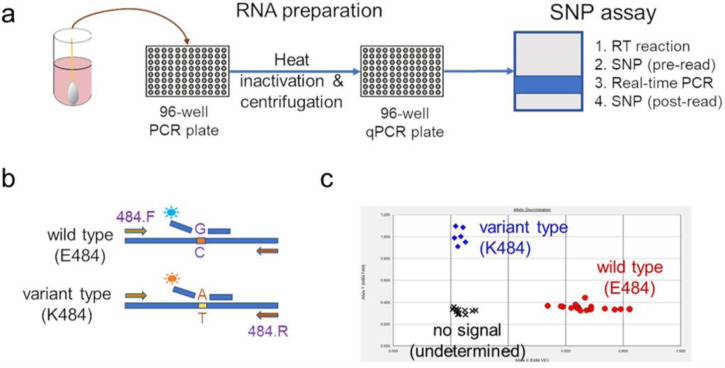
“Each reaction plate included 8 control wells, 5x10⁶ and 5x10³ copies of 413 WA-1 (wild type), UK variant and South African variant, which were generated by PCR to match 414 the variant sequences, and 2 wells with water as no template controls (NTC).”
BackgroundInfluentialAntibody resistance of SARS-CoV-2 variants B.1.351 and B.1.1.7
Wang, P., Nair, M. S., Liu, L., Iketani, S., Luo, Y., Guo, Y., Wang, M., Yu, J., Zhang, B., Kwong, P. D., et al. (2021) · Nature · doi:10.1038/s41586-021-03398-2 · Cited by 2,312
Self-citationCross-neutralization of SARS-CoV-2 by a human monoclonal SARS-CoV antibody
Pinto, D., Park, Y.-J., Beltramello, M., Walls, A. C., Tortorici, M. A., Bianchi, S., Jaconi, S., Culap, K., Zatta, F., De Marco, A., et al. (2020) · Nature · doi:10.1038/s41586-020-2349-y · Cited by 1,885
Convergent Antibody Responses to SARS-CoV-2 in Convalescent Individuals
Robbiani, D. F., Gaebler, C., Muecksch, F., Lorenzi, J. C. C., Wang, Z., Cho, A., Agudelo, M., Barnes, C. O., Gazumyan, A., Finkin, S., et al. (2020) · Nature · doi:10.1038/s41586-020-2456-9 · Cited by 1,853
Cited by
SARS-CoV-2 variants, spike mutations and immune escape
Harvey, W. T., Carabelli, A. M., Jackson, B., Gupta, R. K., Thomson, E. C., Harrison, E. M., Ludden, C., Reeve, R., Rambaut, A., COVID-19 Genomics UK (COG-UK) Consortium, et al. (2021) · Nature Reviews Microbiology · doi:10.1038/s41579-021-00573-0 · Cited by 3,528
The biological and clinical significance of emerging SARS-CoV-2 variants
Tao, K., Tzou, P. L., Nouhin, J., Gupta, R. K., de Oliveira, T., Kosakovsky Pond, S. L., Fera, D., & Shafer, R. W. (2021) · Nature Reviews Genetics · doi:10.1038/s41576-021-00408-x · Cited by 1,009
Increased resistance of SARS-CoV-2 variant P.1 to antibody neutralization
Wang, P., Casner, R. G., Nair, M. S., Wang, M., Yu, J., Cerutti, G., Liu, L., Kwong, P. D., Huang, Y., Shapiro, L., et al. (2021) · Cell Host & Microbe · doi:10.1016/j.chom.2021.04.007 · Cited by 636
“The major culprit is the E484K mutation, which has emerged independently in over 50 lineages, including in B.1.526 that we (Annavajhala et al., 2021) and others (West et al., 2021) have identified in New York recently.”
InfluentialSelf-citationSARS-CoV-2 immune evasion by the B.1.427/B.1.429 variant of concern
McCallum, M., Bassi, J., De Marco, A., Chen, A., Walls, A. C., Di Iulio, J., Tortorici, M. A., Navarro, M.-J., Silacci-Fregni, C., Saliba, C., et al. (2021) · Science · doi:10.1126/science.abi7994 · Cited by 412
Mapping mutations to the SARS-CoV-2 RBD that escape binding by different classes of antibodies
Greaney, A. J., Starr, T. N., Barnes, C. O., Weisblum, Y., Schmidt, F., Caskey, M., Gaebler, C., Cho, A., Agudelo, M., Finkin, S., et al. (2021) · Nature Communications · doi:10.1038/s41467-021-24435-8 · Cited by 433
Novel SARS-CoV-2 variants: the pandemics within the pandemic
Boehm, E., Kronig, I., Neher, R. A., Eckerle, I., Vetter, P., & Kaiser, L. (2021) · Clinical Microbiology and Infection · doi:10.1016/j.cmi.2021.05.022 · Cited by 345
Martin, D. P., Weaver, S., Tegally, H., San, E. J., Shank, S. D., Wilkinson, E., Lucaci, A. G., Giandhari, J., Naidoo, S., Pillay, Y., et al. (2021) · doi:10.1101/2021.02.23.21252268 · Cited by 291
“The lineages containing sequences with the most matches were B.1.526 and B.1.621 (both with modal matches = 5 and maximum = 7), suggesting that they too are possibly scaling the same fitness peak as the 501Y lineage viruses.”
InfluentialGreaney, A. J., Loes, A. N., Gentles, L. E., Crawford, K. H. D., Starr, T. N., Malone, K. D., Chu, H. Y., & Bloom, J. D. (2021) · Science Translational Medicine · doi:10.1126/scitranslmed.abi9915 · Cited by 244
SARS-CoV-2 mRNA vaccination induces functionally diverse antibodies to NTD, RBD, and S2
Amanat, F., Thapa, M., Lei, T., Ahmed, S. M. S., Adelsberg, D. C., Carreño, J. M., Strohmeier, S., Schmitz, A. J., Zafar, S., Zhou, J. Q., et al. (2021) · Cell · doi:10.1016/j.cell.2021.06.005 · Cited by 273
“However, recent expansion of B.1.526, a lineage also featuring E484K but without N501Y in New York City, suggests that this fitness loss may be overcome by other, yet uncharacterized, changes in the virus as well (Annavajhala et al., 2021; Lasek-Nesselquist et al., 2021).”
InfluentialImpact of circulating SARS-CoV-2 variants on mRNA vaccine-induced immunity
Lucas, C., Vogels, C. B. F., Yildirim, I., Rothman, J. E., Lu, P., Monteiro, V., Gehlhausen, J. R., Campbell, M., Silva, J., Tabachnikova, A., et al. (2021) · Nature · doi:10.1038/s41586-021-04085-y · Cited by 226
“5 anti-hCD137 (4B4-1) (1:150) (BioLegend) and PE anti-CD69 (FN-50) (1:200) (BioLegend), APC anti-hCD40L (24-31) (1:100) (BioLegend).”
A Comprehensive Review of COVID-19 Virology, Vaccines, Variants, and Therapeutics
Forchette, L., Sebastian, W., & Liu, T. (2021) · Current Medical Science · doi:10.1007/s11596-021-2395-1 · Cited by 254
Waves and variants of SARS-CoV-2: understanding the causes and effect of the COVID-19 catastrophe
Thakur, V., Bhola, S., Thakur, P., Patel, S. K. S., Kulshrestha, S., Ratho, R. K., & Kumar, P. (2022) · Infection · doi:10.1007/s15010-021-01734-2 · Cited by 195
The emergence and ongoing convergent evolution of the SARS-CoV-2 N501Y lineages
Martin, D. P., Weaver, S., Tegally, H., San, J. E., Shank, S. D., Wilkinson, E., Lucaci, A. G., Giandhari, J., Naidoo, S., Pillay, Y., et al. (2021) · Cell · doi:10.1016/j.cell.2021.09.003 · Cited by 291
“The lineages containing sequences with the most matches were B.1.526 and B.1.621 (both with modal matches = 5 and maximum = 7), suggesting that they too are possibly scaling the same fitness peak as the 501Y lineage viruses.”
InfluentialKuzmina, A., Khalaila, Y., Voloshin, O., Keren-Naus, A., Boehm-Cohen, L., Raviv, Y., Shemer-Avni, Y., Rosenberg, E., & Taube, R. (2021) · Cell Host & Microbe · doi:10.1016/j.chom.2021.03.008 · Cited by 179
“SARS-CoV-2 lineage B.1.526 emerging in the New York region detected by software utility created to query the spike mutational landscape. bioRxiv. https://doi.org/10.”
InfluentialIncreased Resistance of SARS-CoV-2 Variant P.1 to Antibody Neutralization
(2021) · doi:10.1101/2021.03.01.433466 · Cited by 626
Self-citationCOVID-19: Unmasking Emerging SARS-CoV-2 Variants, Vaccines and Therapeutic Strategies
Raman, R., Patel, K. J., & Ranjan, K. (2021) · Biomolecules · doi:10.3390/biom11070993 · Cited by 188
SARS-CoV-2 one year on: evidence for ongoing viral adaptation
Peacock, T. P., Penrice-Randal, R., Hiscox, J. A., & Barclay, W. S. (2021) · Journal of General Virology · doi:10.1099/jgv.0.001584 · Cited by 153
Review of Current COVID-19 Diagnostics and Opportunities for Further Development
Mardian, Y., Kosasih, H., Karyana, M., Neal, A., & Lau, C. (2021) · Frontiers in Medicine · doi:10.3389/fmed.2021.615099 · Cited by 177
SARS-CoV-2 immune evasion by variant B.1.427/B.1.429
McCallum, M., Bassi, J., Marco, A. D., Chen, A., Walls, A. C., Iulio, J. D., Tortorici, M. A., Navarro, M.-J., Silacci-Fregni, C., Saliba, C., et al. (2021) · bioRxiv (Cold Spring Harbor Laboratory) · doi:10.1101/2021.03.31.437925 · Cited by 127
The emerging SARS-CoV-2 variants of concern
Sanyaolu, A. O., Okorie, C., Marinkovic, A., Haider, N., Abbasi, A. F., Jaferi, U., Prakash, S., & Balendra, V. (2021) · Therapeutic Advances in Infectious Disease · doi:10.1177/20499361211024372 · Cited by 137
Fast-spreading SARS-CoV-2 variants: challenges to and new design strategies of COVID-19 vaccines
Zhou, W., & Wang, W. (2021) · Signal Transduction and Targeted Therapy · doi:10.1038/s41392-021-00644-x · Cited by 147
“This newly identified strain emerges with multiple mutations in the spike protein, including L5F, T95I, D253G, E484K, D614G, and A701V.15,16 The new strain is spreading rapidly, and the number of patients infected with the variant has accounted for more than 20% of New York cases.”
BackgroundDetection and characterization of the SARS-CoV-2 lineage B.1.526 in New York
West, A. P., Wertheim, J. O., Wang, J. C., Vasylyeva, T. I., Havens, J. L., Chowdhury, M. A., Gonzalez, E., Fang, C. E., Di Lonardo, S. S., Hughes, S., et al. (2021) · Nature Communications · doi:10.1038/s41467-021-25168-4 · Cited by 89
The Spike of Concern—The Novel Variants of SARS-CoV-2
Winger, A., & Caspari, T. (2021) · Viruses · doi:10.3390/v13061002 · Cited by 131
“526 with the E484K mutation in Spike was identified in New York [50].”
BackgroundInfluentialSARS‐CoV‐2 variants and vulnerability at the global level
Chavda, V. P., Patel, A., & Vaghasiya, D. D. (2022) · Journal of Medical Virology · doi:10.1002/jmv.27717 · Cited by 146
Mechanisms of SARS-CoV-2 Evolution Revealing Vaccine-Resistant Mutations in Europe and America
Wang, R., Chen, J., & Wei, G. (2021) · The Journal of Physical Chemistry Letters · doi:10.1021/acs.jpclett.1c03380 · Cited by 120
The Biological Functions and Clinical Significance of SARS-CoV-2 Variants of Corcern
Akkız, H. (2022) · Frontiers in Medicine · doi:10.3389/fmed.2022.849217 · Cited by 113
Neutralizing activity of Sputnik V vaccine sera against SARS-CoV-2 variants
Ikegame, S., Siddiquey, M. N. A., Hung, C.-T., Haas, G. D., Brambilla, L., Oguntuyo, K. Y., Kowdle, S., Chiu, H.-P., Stevens, C. S., Vilardo, A. E., et al. (2021) · Nature Communications · doi:10.1038/s41467-021-24909-9 · Cited by 144
Bertoglio, F., Fühner, V., Ruschig, M., Heine, P. A., Abassi, L., Klünemann, T., Rand, U., Meier, D., Langreder, N., Steinke, S., et al. (2021) · Cell Reports · doi:10.1016/j.celrep.2021.109433 · Cited by 96
Emerging SARS-CoV-2 Variants: Genetic Variability and Clinical Implications
Dubey, A., Choudhary, S., Kumar, P., & Tomar, S. (2021) · Current Microbiology · doi:10.1007/s00284-021-02724-1 · Cited by 86
Salleh, M. Z., Derrick, J. P., & Deris, Z. Z. (2021) · International Journal of Molecular Sciences · doi:10.3390/ijms22147425 · Cited by 88
“This newly discovered B.1.526 variant has a set of common mutations in the S glycoprotein: L5F, T95I, D253G, E484K, D614G and A701V [82,83].”
BackgroundInfluentialZhou, H., Dcosta, B. M., Samanovic, M. I., Mulligan, M. J., Landau, N. R., & Tada, T. (2021) · mBio · doi:10.1128/mbio.01386-21 · Cited by 68
Kumar, M., Gulati, S., Ansari, A. H., Phutela, R., Acharya, S., Azhar, M., Murthy, J., Kathpalia, P., Kanakan, A., Maurya, R., et al. (2021) · eLife · doi:10.7554/elife.67130 · Cited by 91
Jette, C. A., Cohen, A. A., Gnanapragasam, P. N. P., Muecksch, F., Lee, Y. E., Huey-Tubman, K. E., Schmidt, F., Hatziioannou, T., Bieniasz, P. D., Nussenzweig, M. C., et al. (2021) · Cell Reports · doi:10.1016/j.celrep.2021.109760 · Cited by 116
“…of the RBD also tends to accumulate amino acid changes, as evidenced by substitutions identified in the current SARSCoV-2 variants of concern (Annavajhala et al., 2021; Faria et al., 2021; Rambaut et al., 2020; Tegally et al., 2020; Voloch et al., 2020; West et al., 2021; Zhang et al.,…”
InfluentialJhun, H., Park, H., Hisham, Y., Song, C., & Kim, S. (2021) · Immune Network · doi:10.4110/in.2021.21.e32 · Cited by 68
“526) variant of New York US has 14 mutations sites, which are the largest number of mutation sites among the ten SARS-CoV-2 variants except SARS-CoV-2 δ variant of concern (Table 1) (55).”
BackgroundMethodInfluentialCerutti, G., Guo, Y., Wang, P., Nair, M. S., Wang, M., Huang, Y., Yu, J., Liu, L., Katsamba, P. S., Bahna, F., et al. (2021) · Cell Reports · doi:10.1016/j.celrep.2021.109928 · Cited by 72
“hCoV-19/USA/NY-NP-DOH1/2021 was isolated and sequence was verified (Annavajhala et al., 2021).”
Self-citationWang, H., Jean, S., Eltringham, R., Madison, J., Snyder, P. J., Tu, H., Jones, D. M., & Leber, A. L. (2021) · Journal of Clinical Microbiology · doi:10.1128/jcm.00926-21 · Cited by 76
Mohammad, T., Choudhury, A., Habib, I., Asrani, P., Mathur, Y., Umair, M., Anjum, F., Shafie, A., Yadav, D. K., & Hassan, M. I. (2021) · Frontiers in Cellular and Infection Microbiology · doi:10.3389/fcimb.2021.765039 · Cited by 62
“This mutation was also found in the Zeta (P.2), Eta (B.1.525) and Iota (B.1.526) variants (Huh et al., 2021).”
BackgroundInfluentialThompson, C. N., Hughes, S., Ngai, S., Baumgartner, J., Wang, J. C., McGibbon, E., Devinney, K., Luoma, E., Bertolino, D., Hwang, C., et al. (2021) · MMWR. Morbidity and Mortality Weekly Report · doi:10.15585/mmwr.mm7019e1 · Cited by 54
“526 variants identified were found to have the E484K mutation, which has been shown to attenuate antibody neutralization in vitro (3).”
BackgroundJette, C. A., Cohen, A. A., Gnanapragasam, P. N. P., Muecksch, F., Lee, Y., Huey-Tubman, K. E., Schmidt, F., Hatziioannou, T., Bieniasz, P., Nussenzweig, M., et al. (2021) · bioRxiv · doi:10.1101/2021.04.23.441195 · Cited by 54
“…correlates with authentic virus neutralization (Schmidt et al., 2020) to evaluate SARS-CoV-2, SARS-CoV-2 RBD mutants, SARS-CoV-2 variants (Annavajhala et al., 2021; Faria et al., 2021; Rambaut et al., 2020; Tegally et al., 2020; Voloch et al., 2020; West et al., 2021; Zhang et al.,…”
InfluentialEmerging SARS-CoV-2 variants: impact on vaccine efficacy and neutralizing antibodies
Sharun, K., Tiwari, R., Dhama, K., Emran, T. B., Rabaan, A. A., & Mutair, A. S. A. (2021) · Human Vaccines & Immunotherapeutics · doi:10.1080/21645515.2021.1923350 · Cited by 53
Dominance of Alpha and Iota variants in SARS-CoV-2 vaccine breakthrough infections in New York City
Duerr, R., Dimartino, D., Marier, C., Zappile, P., Wang, G.-Q., Lighter, J. L., Elbel, B. D., Troxel, A., & Heguy, A. (2021) · medRxiv · doi:10.1101/2021.07.05.21259547 · Cited by 52
Bolze, A., Cirulli, E. T., Luo, S., White, S., Wyman, D., Dei Rossi, A., Machado, H., Cassens, T., Jacobs, S., Schiabor Barrett, K. M., et al. (2021) · doi:10.1101/2021.06.20.21259195 · Cited by 116
Zhang, L., Cui, Z., Li, Q., Wang, B., Yu, Y., Wu, J., Nie, J., Ding, R., Wang, H., Zhang, Y., et al. (2021) · Communications Biology · doi:10.1038/s42003-021-02728-4 · Cited by 62
Lives saved and hospitalizations averted by COVID-19 vaccination in New York City: a modeling study
Shoukat, A., VILCHES, T. N., Moghadas, S. M., Sah, P., Schneider, E. C., Shaff, J., Zucker, J. R., Quinn, C., Chokshi, D. A., & Galvani, A. P. (2021) · The Lancet Regional Health - Americas · doi:10.1016/j.lana.2021.100085 · Cited by 61
Insights into SARS-CoV-2 Persistence and Its Relevance
Desimmie, B. A., Raru, Y., Awadh, H., He, P., Teka, S. T., & Willenburg, K. S. (2021) · Viruses · doi:10.3390/v13061025 · Cited by 66
Amanat, F., Thapa, M., Lei, T., Ahmed, S. M. S., Adelsberg, D. C., Carreño, J. M., Strohmeier, S., Schmitz, A. J., Zafar, S., Zhou, J. Q., et al. (2021) · medRxiv · doi:10.1101/2021.03.07.21253098 · Cited by 41
Structural and functional insights into the spike protein mutations of emerging SARS-CoV-2 variants
Gupta, D., Sharma, P., Singh, M., Kumar, M., Ethayathulla, A. S., & Kaur, P. (2021) · Cellular and Molecular Life Sciences · doi:10.1007/s00018-021-04008-0 · Cited by 61
“V1 21F L5F, T95I, D253G, S477N, E484K, D614G, A701V [67] United States of America, November, 2020”
BackgroundGreaney, A. J., Starr, T. N., Barnes, C., et al. (2021) · bioRxiv · doi:10.1101/2021.03.17.435863 · Cited by 45
Hirotsu, Y., & Omata, M. (2021) · PLoS Pathogens · doi:10.1371/journal.ppat.1009619 · Cited by 50
Neutralizing activity of Sputnik V vaccine sera against SARS-CoV-2 variantsPreprint
Ikegame, S., Siddiquey, M. N. A., Hung, C.-T., Haas, G. D., Brambilla, L., Oguntuyo, K. Y., Kowdle, S., Vilardo, A. E., Edelstein, A., Perandones, C., et al. (2021) · Research Square · doi:10.21203/rs.3.rs-400230/v1 · Cited by 27
(2021) · doi:10.1101/2021.03.24.436620 · Cited by 68
Fast-track development of vaccines for SARS-CoV-2: The shots that saved the world
Chavda, V. P., Yao, Q., Vora, L. K., Apostolopoulos, V., Patel, C. A., Bezbaruah, R., Patel, A., & Chen, Z. (2022) · Frontiers in Immunology · doi:10.3389/fimmu.2022.961198 · Cited by 67
“Herein, we discuss different targets and platforms that are currently being used as COVID-19 vaccine candidates, the effects of variants on vaccine efficacy, as well as the issues connected with fast-tracking of vaccines and vaccination ethics (21).”
BackgroundPseudoscience and fraudulent products for COVID-19 management
Chavda, V. P., Sonak, S. S., Munshi, N. K., & Dhamade, P. N. (2022) · Environmental Science and Pollution Research · doi:10.1007/s11356-022-21967-4 · Cited by 53
Laurini, E., Marson, D., Aulic, S., Fermeglia, A., & Pricl, S. (2021) · Scientific Reports · doi:10.1038/s41598-021-99827-3 · Cited by 48
Lusvarghi, S., Wang, W., Herrup, R., Neerukonda, S. N., Vassell, R. A., Bentley, L., Eakin, A. E., Erlandson, K. J., & Weiss, C. D. (2021) · Journal of Virology · doi:10.1128/jvi.01110-21 · Cited by 37
A Sanger-based approach for scaling up screening of SARS-CoV-2 variants of interest and concern
Bezerra, M. F., Machado, L. C., de Carvalho, V. D. C. V., Docena, C., Brandão-Filho, S. P., Ayres, C. F. J., Paiva, M. H. S., & Wallau, G. L. (2021) · Infection Genetics and Evolution · doi:10.1016/j.meegid.2021.104910 · Cited by 40
Focosi, D., Tuccori, M., Baj, A., & Maggi, F. (2021) · Viruses · doi:10.3390/v13071211 · Cited by 40
Estimating the strength of selection for new SARS-CoV-2 variants
van Dorp, C. H., Goldberg, E. E., Hengartner, N., Ke, R., & Romero-Severson, E. O. (2021) · Nature Communications · doi:10.1038/s41467-021-27369-3 · Cited by 32
“A possible solution would be to develop models that track multiple, simultaneously-competing variants, with the fitness of each variant measured against a fixed reference strain [45].”
The Development of mRNA Vaccines for Infectious Diseases: Recent Updates
Nitika, Wei, J., & Hui, A. (2021) · Infection and Drug Resistance · doi:10.2147/idr.s341694 · Cited by 47
Negi, S. S., Schein, C. H., & Braun, W. A. (2022) · Scientific Reports · doi:10.1038/s41598-022-04950-4 · Cited by 36
Emerging vaccine-breakthrough SARS-CoV-2 variantsPreprint
Wang, R., Chen, J., Hozumi, Y., Yin, C., & Wei, G. (2021) · arXiv (Cornell University) · doi:10.48550/arxiv.2109.04509 · Cited by 20
Weber, S., Ramirez, C. M., Weiser, B., Burger, H., & Doerfler, W. (2021) · EMBO Molecular Medicine · doi:10.15252/emmm.202114062 · Cited by 30
“The New York variant was described during the same time period (preprint: Annavajhala et al, 2021; preprint: West et al, 2021), although it is not deemed a variant of concern yet.”
MethodA Comprehensive Overview on COVID-19: Future Perspectives
Rana, R., Tripathi, A., Kumar, N., & Ganguly, N. K. (2021) · Frontiers in Cellular and Infection Microbiology · doi:10.3389/fcimb.2021.744903 · Cited by 44
Wilson, P. C., Changrob, S., Fu, Y., Guthmiller, J. J., Halfmann, P., Li, L., Stamper, C. T., Dugan, H. L., Accola, M. A., Rehrauer, W. M., et al. (2021) · Research Square · doi:10.21203/rs.3.rs-678247/v1 · Cited by 3
The Variation of SARS-CoV-2 and Advanced Research on Current Vaccines
Jiang, Y., Wu, Q. Y., Song, P., & You, C. (2022) · Frontiers in Medicine · doi:10.3389/fmed.2021.806641 · Cited by 36
Humoral Immunity against SARS-CoV-2 and the Impact on COVID-19 Pathogenesis
Lee, E.-J., & Oh, J. E. (2021) · Molecules and Cells · doi:10.14348/molcells.2021.0075 · Cited by 30
Data-driven analysis of amino acid change dynamics timely reveals SARS-CoV-2 variant emergence
Bernasconi, A., Mari, L., Casagrandi, R., & Ceri, S. (2021) · Scientific Reports · doi:10.1038/s41598-021-00496-z · Cited by 28
A tale of three SARS-CoV-2 variants with independently acquired P681H mutations in New York StatePreprint
Lasek‐Nesselquist, E., Pata, J. D., Schneider, E., & George, K. S. (2021) · medRxiv · doi:10.1101/2021.03.10.21253285 · Cited by 26
Neamțu, A., Mocci, F., Laaksonen, A., & da Silva, F. L. B. (2022) · Colloids and Surfaces B Biointerfaces · doi:10.1016/j.colsurfb.2022.112986 · Cited by 25
“…L452R and E484Q (Kappa/B.1.617.1), (i) G339D, S371L, S373P, S375F, K417N, N440K, G446S, S477N, T478K, E484A, Q493R, G496S, Q498R, N501Y, Y505H (Omicron/B.1.1.529), and (j) Y453F (mink) (Annavajhala et al., 2021, p. 526; Callaway, 2021; Deng et al., 2021; Ford et al., 2021; Khateeb et al., 2021).”
InfluentialCarreño, J., Alshammary, H., Singh, G., et al. (2021) · medRxiv · doi:10.1101/2021.07.21.21260961 · Cited by 22
Sarmiento, K., Haileyesus, T., Waltzman, D., et al. (2021) · MMWR. Morbidity and mortality weekly report · doi:10.15585/mmwr.mm7019a1 · Cited by 22
SARS-CoV-2 infection and immune responses
Harne, R., Williams, B., Abdelaal, H. F. M., Baldwin, S. L., & Coler, R. N. (2023) · AIMS Microbiology · doi:10.3934/microbiol.2023015 · Cited by 25
Adhikari, P., Jawad, B., Podgornik, R., & Ching, W. Y. (2022) · International Journal of Molecular Sciences · doi:10.3390/ijms23052870 · Cited by 23
“Despite significant progress in SARS-CoV-2 research yielding effective vaccines, the virus continues to mutate and develop, providing ever new variants of concern (VOCs) [1-5] and variants of interests (VOIs) [6-10] that have instigated new anxieties.”
BackgroundEpidemiological characteristics of the B.1.526 SARS-CoV-2 variant
Yang, W., Greene, S. K., Peterson, E. R., Li, W., Mathes, R. W., Graf, L. E., Lall, R., Hughes, S., Wang, J., & Fine, A. D. (2022) · Science Advances · doi:10.1126/sciadv.abm0300 · Cited by 20
Chaintoutis, S. C., Chassalevris, T., Tsiolas, G., Balaska, S., Vlatakis, I., Mouchtaropoulou, E., Siarkou, V. I., Tychala, A., Koutsioulis, D., Skoura, L., et al. (2021) · Journal of Virological Methods · doi:10.1016/j.jviromet.2021.114242 · Cited by 11
“Strains of the latter case (only S.C. Chaintoutis et al. Journal of Virological Methods 296 (2021) 114242 484K) may belong to recently emerging VOCs associated e.g. with the Iota variant (lineage B.1.526), which have been reported to rapidly spread in New York (Annavajhala et al., 2021).”
InfluentialBarona‐Gómez, F., Delaye, L., Díaz-Valenzuela, E., Plisson, F., Cruz‐Pérez, A., Díaz-Sánchez, M., García-Sepúlveda, C. A., Sánchez‐Flores, A., Abreu, R. P., Valencia-Valdespino, F. J., et al. (2021) · Microbial Genomics · doi:10.1099/mgen.0.000684 · Cited by 30
“525/526, eta/iota [14, 15], amongst others.”
ResultAn overview of the ongoing challenges in SARS-CoV-2 global control
Shehata, A. A., Parvin, R., Nagy, A., Wang, Y., Azhar, T. M., Attia, Y. A., Azhar, E. I., Paul, A. K., & Rahmatullah, M. (2021) · German Journal of Microbiology · doi:10.51585/gjm.2021.2.0006 · Cited by 24
Rabaan, A. A., Al-Ahmed, S. H., Albayat, H., Alwarthan, S. M., Alhajri, M. M., Najim, M. A., Alshehail, B. M., Al-Adsani, W., Alghadeer, A., Abduljabbar, W. A., et al. (2023) · Medicina · doi:10.3390/medicina59030507 · Cited by 29
Sah, P., Vilches, T., Pandey, A., et al. (2022) · Journal of Global Health · doi:10.7189/jogh.12.03062 · Cited by 18
Zhou, H., Ni, W., Huang, W., Wang, Z., Cai, M., & Sun, Y.-C. (2022) · Frontiers in Immunology · doi:10.3389/fimmu.2022.834942 · Cited by 22
Chen, X., Zhou, Z., Huang, C., Zhou, Z., Kang, S., Huang, Z., Jiang, G., Hong, Z., Chen, Q., Yang, M., et al. (2021) · Frontiers in Immunology · doi:10.3389/fimmu.2021.807134 · Cited by 28
Why are some coronavirus variants more infectious?
Mukherjee, R., & Satardekar, R. (2021) · Journal of Biosciences · doi:10.1007/s12038-021-00221-y · Cited by 25
“Monoclonal antibodies formulated by Eli Lilly and one present in the Regeneron cocktail also showed markedly reduced activity against the mutated spike protein, ‘Eek mutation (E484K)’ present in this variant (Annavajhala et al. 2021).”
BackgroundChadha, J., Khullar, L., & Mittal, N. (2021) · Environmental Microbiology · doi:10.1111/1462-2920.15687 · Cited by 38
“The S477N/G mutation is present in smaller fractions among this variant, while E484K has been reported in more than half of the lineage (Annavajhala et al., 2021).”
BackgroundClassifying COVID-19 variants based on genetic sequences using deep learning modelsPreprint
Basu, S., & Campbell, R. H. (2021) · bioRxiv (Cold Spring Harbor Laboratory) · doi:10.1101/2021.06.29.450335 · Cited by 11
“Also known as the Iota variant, this variant was identified in NewYork, United States [46].”
Nguyen, K. V. (2021) · Nucleosides Nucleotides & Nucleic Acids · doi:10.1080/15257770.2021.1914851 · Cited by 19
“This variant was also described in research published online by researchers at the California Institute of Technology (Caltech) while analyzing viral genetic sequences stored in the GISAID database.([60,61]) Experts are expressing concern that the B.”
BackgroundInfluentialGreaney, A. J., Loes, A. N., Gentles, L. E., et al. (2021) · bioRxiv · doi:10.1101/2021.04.14.439844 · Cited by 16
A novel diagnostic test to screen SARS-CoV-2 variants containing E484K and N501Y mutations
Zhao, Y., Lee, A., Composto, K., Cunningham, M. H., Mediavilla, J. R., Fennessey, S., Corvelo, A., Chow, K. F., Zody, M. C., Chen, L., et al. (2021) · Emerging Microbes & Infections · doi:10.1080/22221751.2021.1929504 · Cited by 15
Miteva, D., Kitanova, M., Batselova, H., Lazova, S., Chervenkov, L., Peshevska-Sekulovska, M., Sekulovski, M., Gulinac, M., Vasilev, G., Tomov, L., et al. (2023) · Vaccines · doi:10.3390/vaccines11071181 · Cited by 20
Adhikari, P., Jawad, B., Rao, P. R., Podgornik, R., & Ching, W. Y. (2022) · Viruses · doi:10.3390/v14030465 · Cited by 14
“The recent emergence of various variants of concern (VOC) in Severe Acute Respiratory Syndrome Coronavirus-2 (SARS-CoV-2) 1 like Alpha 2, Beta 3, Delta 4, and Gamma 5, and variants of interest (VOI) such as Eta 6, Iota 7, Kappa 8, Lambda 9, and Mu 10, instigates new anxieties.”
BackgroundUp State of the SARS-COV-2 Spike Homotrimer Favors an Increased Virulence for New Variants
Giron, C. C., Laaksonen, A., & da Silva, F. L. B. (2021) · Frontiers in Medical Technology · doi:10.3389/fmedt.2021.694347 · Cited by 28
Bertoglio, F., Fühner, V., Ruschig, M., Heine, P. A., Abasi, L., Klünemann, T., Rand, U., Meier, D., Langreder, N., Steinke, S., et al. (2020) · bioRxiv (Cold Spring Harbor Laboratory) · doi:10.1101/2020.12.03.409318 · Cited by 19
Gargouri, S., Souissi, A., Abid, N., Chtourou, A., Fki‐Berrajah, L., Karray, R., Kossentini, H., Ayed, I. B., Abdelmoula, F., Chakroun-Walha, O., et al. (2022) · International Journal of Infectious Diseases · doi:10.1016/j.ijid.2022.01.006 · Cited by 13
Suppiah, J. (2021) · Tropical biomedicine · doi:10.47665/tb.38.3.070 · Cited by 14
“Another study finding revealed that the A701V spike mutation is located at the furin cleavage site which is also found in the highly transmissible Beta variant (B.1.351) (Annavajhala et al., 2021).”
BackgroundInfluentialSARS-COV-2/COVID-19: scenario, epidemiology, adaptive mutations, and environmental factors
Asghar, A., Imran, H. M., Bano, N., Maalik, S., Mushtaq, S., Hussain, A., Varjani, S., Aleya, L., Iqbal, H. M. N., & Bilal, M. (2022) · Environmental Science and Pollution Research · doi:10.1007/s11356-022-22333-0 · Cited by 21
Gao, F., Huang, J., Li, T., Hu, C., Shen, M., Mu, S., Luo, F., Song, S., Hao, Y., Wang, W., et al. (2021) · Frontiers in Immunology · doi:10.3389/fimmu.2021.789905 · Cited by 16
Chong, Z. X., Liew, W.-P.-P., Ong, H. K., Yong, C. Y., Shit, C. S., Ho, W. Y., Ng, S., & Yeap, S. K. (2021) · Pathology - Research and Practice · doi:10.1016/j.prp.2021.153565 · Cited by 14
On the Evolutionary Trajectory of SARS-CoV-2: Host Immunity as a Driver of Adaptation in RNA Viruses
Warger, J., & Gaudieri, S. (2022) · Viruses · doi:10.3390/v15010070 · Cited by 11
Haematological and radiological-based prognostic markers of COVID-19
Alsagaby, S. A., Aljouie, A., Alshammari, T. H., Mir, S. A., Alhumaydhi, F. A., Abdulmonem, W. A., Alshaalan, H., Alomaish, H., Daghistani, R. A., Alsehawi, A., et al. (2021) · Journal of Infection and Public Health · doi:10.1016/j.jiph.2021.09.021 · Cited by 11
Lennerstrand, J., & Palanisamy, N. (2021) · Viruses · doi:10.3390/v13101974 · Cited by 14
Tan, E., Frew, E., Cooper, J., Humphrey, J., Holden, M. T. G., Mand, A. R., Li, J., Anderson, S., Bi, M., Hatler, J. M., et al. (2021) · Diagnostics · doi:10.3390/diagnostics11071190 · Cited by 11
“Mutations in the spike RBD protein of currently circulating SARS-CoV-2 variants [2-10].”
Background
Metadata
- Authors
- Annavajhala, M. K., Mohri, H., Wang, P., Nair, M., Zucker, J. E., Sheng, Z., Gomez-Simmonds, A., Kelley, A. L., Tagliavia, M., Huang, Y., Bedford, T., Ho, D. D., & Uhlemann, A.-C.
- ORCID
- Publisher
- openRxiv
- Published
- 2021-02-25
- PMC
- PMC7924303
- References
- 20
- Type
- Preprint
About these checks
Registry, retraction, Cites and statistics results are computed, not judged, with one exception: a printed reference that no index lists is read once by a model before it counts as a citation error. Claims are extracted by a model and kept only when their quote appears verbatim in the text; each cited source is then checked, with a model’s help, for whether it says what the claim relies on. Those verdicts can be wrong — read the claim’s quote and the cited source before relying on one.
Statistics and arithmetic are recomputed, not judged.
Confidence bands are shown only for fields calibrated on our annotated test set. None is calibrated yet, so no band is shown.
What counts as a claim ›How we measure confidence ›How we check this ›
Are you an author, or do you see a problem with this page? Request a review
Data sources
Bibliographic data: Semantic Scholar, OpenAlex, Crossref.
Contains information from the Semantic Scholar Academic Graph Datasets, made available under the ODC Attribution License (ODC-BY 1.0).
Semantic Scholar’s data is described in: Kinney, R., et al. (2023). The Semantic Scholar Open Data Platform. arXiv:2301.10140.
