

Flipped C-Terminal Ends of APOA1 Promote ABCA1-dependent Cholesterol Efflux by Small HDLs
Preprint — published as 10.1161/circulationaha.123.065959 · Paper page
The DOI matches its Crossref record; 48 of the 48 references it cites were found in a registry or an index.
Abstract
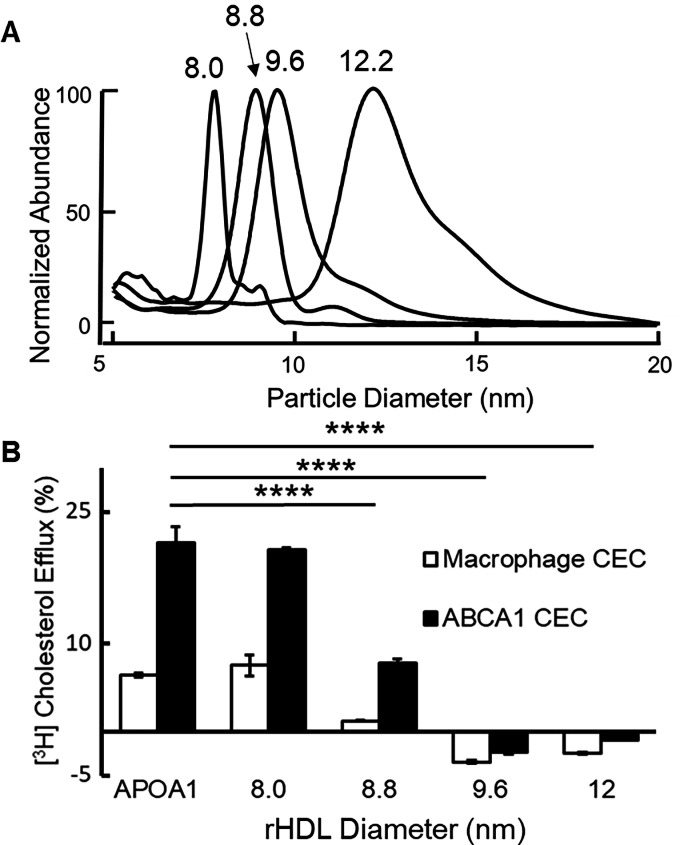
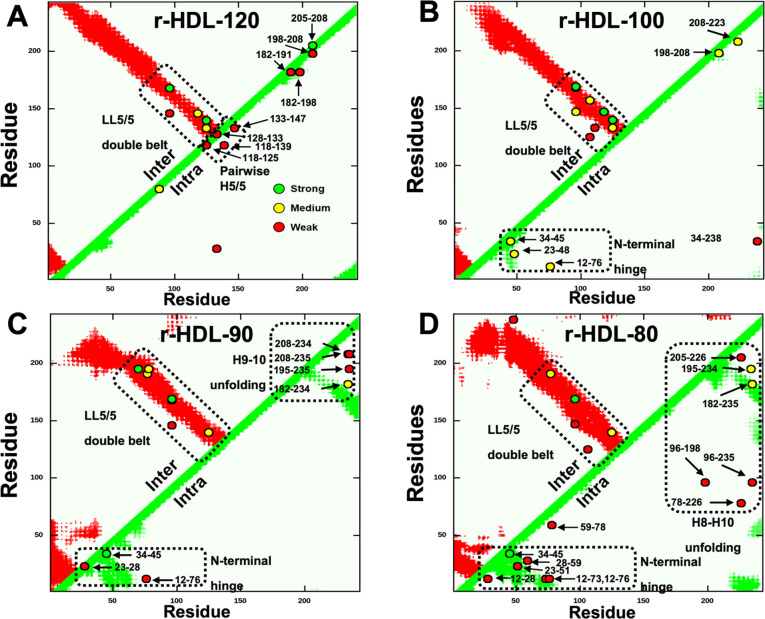
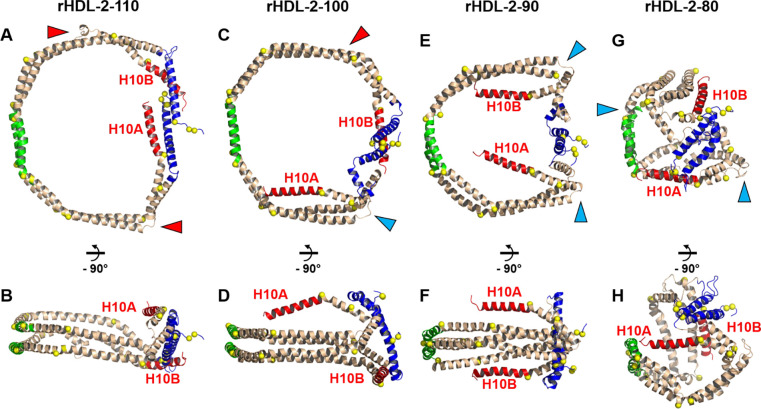
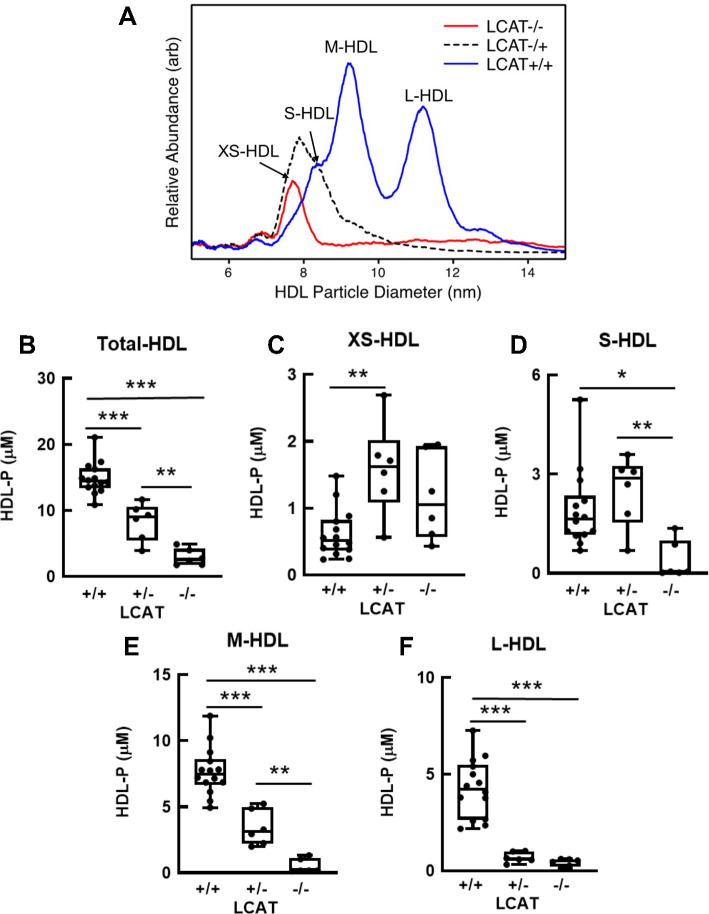
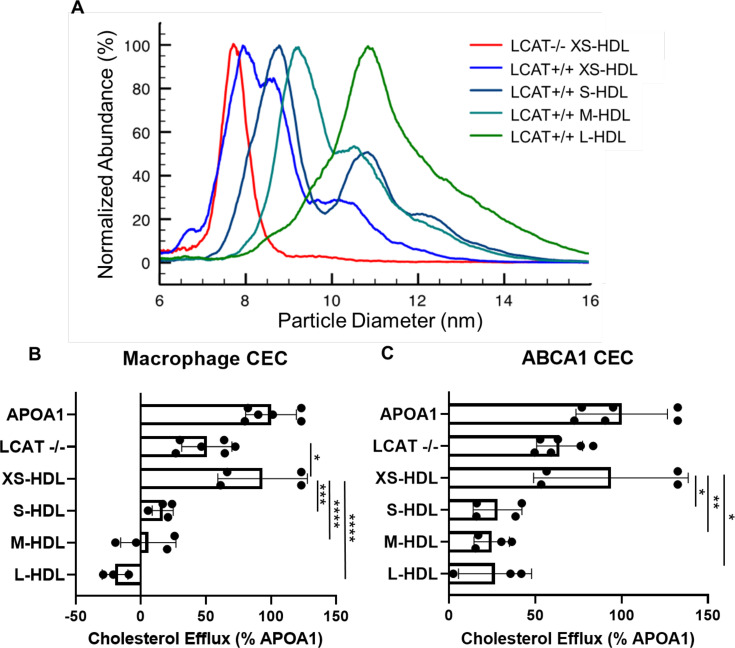
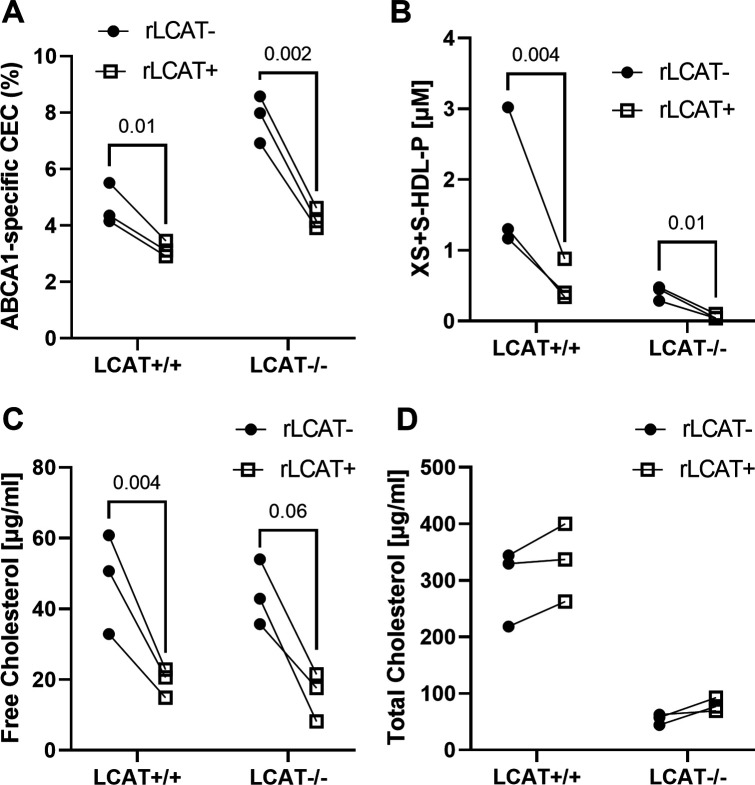
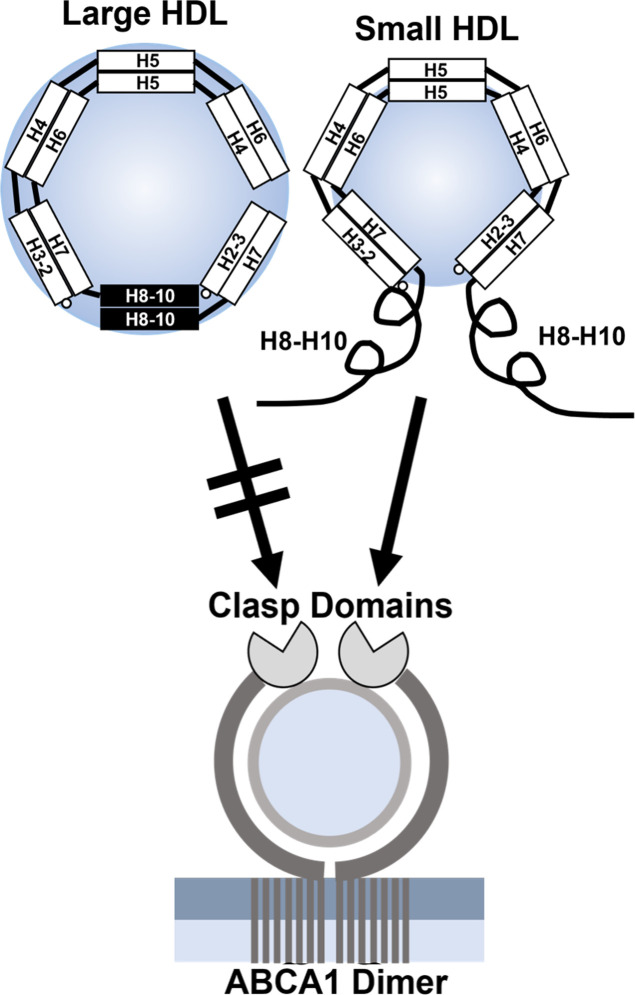
Background: Cholesterol efflux capacity (CEC) predicts cardiovascular disease (CVD) independently of HDL cholesterol (HDL-C) levels. Isolated small HDL particles are potent promoters of macrophage CEC by the ABCA1 pathway, but the underlying mechanisms are unclear. Methods: We used model system studies of reconstituted HDL and plasma from control and lecithin-cholesterol acyltransferase (LCAT)-deficient subjects to investigate the relationships among the sizes of HDL particles, the structure of APOA1 in the different particles, and the CECs of plasma and isolated HDLs. Results: We quantified macrophage and ABCA1 CEC of four distinct sizes of reconstituted HDL (r-HDL). CEC increased as particle size decreased. MS/MS analysis of chemically crosslinked peptides and molecular dynamics simulations of APOA1 (HDL’s major protein) indicated that the mobility of that protein’s C-terminus was markedly higher and flipped off the surface in the smallest particles. To explore the physiological relevance of the model system studies, we isolated HDL from LCAT-deficient subjects, whose small HDLs–like r-HDLs–are discoidal and composed of APOA1, cholesterol, and phospholipid. Despite their very low plasma levels of HDL particles, these subjects had normal CEC. In both the LCAT-deficient subjects and control subjects, the CEC of isolated extra-small HDL (a mixture of extra-small and small HDL by calibrated ion mobility analysis) was 3–5-fold greater than that of the larger sizes of isolated HDL. Incubating LCAT-deficient plasma and control plasma with human LCAT converted extra-small and small HDL particles into larger particles, and it markedly inhibited CEC. Conclusions: We present a mechanism for the enhanced CEC of small HDLs. In smaller particles, the C-termini of the two antiparallel molecules of APOA1 are flipped off the lipid surface of HDL. This extended conformation allows them to engage with ABCA1. In contrast, the C-termini of larger HDLs are unable to interact productively with ABCA1 because they form a helical bundle that strongly adheres to the lipid on the particle. Enhanced CEC, as seen with the smaller particles, predicts decreased CVD risk. Thus, extra-small and small HDLs may be key mediators and indicators of HDL’s cardioprotective effects. Clinical Perspective: Using chemical crosslinking and molecular dynamics simulations, we showed that the C-termini of APOA1, HDL’s major protein, have increased mobility and conformational freedom in small HDL particles. The enhanced mobility of the C-termini of APOA1 in small HDLs allows the C-termini to ‘flip’ off a particle’s surface, activating ABCA1 thereby stimulating cholesterol removal from cells. Because of small HDLs’ vital role in cholesterol efflux, quantification of HDL-P (the size and concentration of HDL subspecies) might be a better metric for gauging cardiovascular disease risk than HDL-cholesterol levels. Therapeutic interventions that increase small HDL levels, with or without increasing HDL-cholesterol levels, may be cardioprotective.
Overview
The claims and statistics of this paper haven’t been checked yet.
Free: it reads the open-access text and checks the first 5 claims that cite a source we can check. Create a free account to check every claim.
Integrity signals
Registry
Cites
Statistics
Figures
Verification
Claims the paper makes
The claims and statistics of this paper haven’t been checked yet.
Free: it reads the open-access text and checks the first 5 claims that cite a source we can check. Create a free account to check every claim.
Claims other papers make about this one
Each is checked against this paper’s own text: does it say what the citing paper says it does?
The source backs part of the claim, not all of it — or backs it for a different population, condition or comparison.
In the citing paper
“ABCA1 is instrumental in this process, as it mediates the efflux of cholesterol and phospholipids to apolipoprotein A-I (ApoA-I) and apolipoprotein E (ApoE), culminating in the formation of nascent high-density lipoprotein (HDL) [21, 22].”
From miR-223 accelerates lipid droplets clearance in microglia following spinal cord injury by upregulating ABCA1 (2024) · cites this paper as [21]
Experimental — accuracy not yet measured
Self-check
Percentages, sums and reported differences re-computed from the paper’s own numbers.
The self-check needs the paper’s full text.
Citations
Cites
CHARMM‐GUI: A web‐based graphical user interface for CHARMM
Jo, S., Kim, T., Iyer, V. G., & Im, W. (2008) · Journal of Computational Chemistry · doi:10.1002/jcc.20945 · Cited by 9,284
Cholesterol efflux capacity, high-density lipoprotein function, and atherosclerosis
Khera, A. V., Cuchel, M., de la Llera-Moya, M., Rodrigues, A., Burke, M. F., Jafri, K., French, B. C., Phillips, J. A., Mucksavage, M. L., Wilensky, R. L., et al. (2011) · New England Journal of Medicine · doi:10.1056/nejmoa1001689 · Cited by 1,943
High-Density Lipoprotein — The Clinical Implications of Recent Studies
Desforges, J. F., Gordon, D. J., & Rifkind, B. M. (1989) · New England Journal of Medicine · doi:10.1056/nejm198911093211907 · Cited by 1,547
HDL cholesterol efflux capacity and incident cardiovascular events
Rohatgi, A., Khera, A., Berry, J. D., Givens, E. G., Ayers, C. R., Wedin, K. E., Neeland, I. J., Yuhanna, I. S., Rader, D. R., de Lemos, J. A., et al. (2014) · New England Journal of Medicine · doi:10.1056/nejmoa1409065 · Cited by 1,390
HDL and cardiovascular disease
Rader, D. J., & Hovingh, G. K. (2014) · The Lancet · doi:10.1016/s0140-6736(14)61217-4 · Cited by 870
Segrest, J., Jones, M., De Loof, H., Brouillette, C., Venkatachalapathi, Y., & Anantharamaiah, G. (1992) · Journal of Lipid Research · doi:10.1016/s0022-2275(20)41536-6 · Cited by 866
Self-citationRole of HDL, ABCA1, and ABCG1 Transporters in Cholesterol Efflux and Immune Responses
Yvan-Charvet, L., Wang, N., & Tall, A. R. (2010) · Arteriosclerosis, Thrombosis, and Vascular Biology · doi:10.1161/atvbaha.108.179283 · Cited by 680
The role of reverse cholesterol transport in animals and humans and relationship to atherosclerosis
Rader, D. J., Alexander, E. T., Weibel, G. L., Billheimer, J., & Rothblat, G. H. (2009) · Journal of Lipid Research · doi:10.1194/jlr.r800088-jlr200 · Cited by 597
Oram, J. F., & Heinecke, J. W. (2005) · Physiological Reviews · doi:10.1152/physrev.00005.2005 · Cited by 521
Self-citationRosenson, R. S., Brewer, H. B., Chapman, M. J., Fazio, S., Hussain, M. M., Kontush, A., Krauss, R. M., Otvos, J. D., Remaley, A. T., & Schaefer, E. J. (2011) · Clinical Chemistry · doi:10.1373/clinchem.2010.155333 · Cited by 511
Self-citationSaleheen, D., Scott, R., Javad, S., Zhao, W., Rodrigues, A., Picataggi, A., Lukmanova, D., Mucksavage, M. L., Luben, R., Billheimer, J., et al. (2015) · The Lancet Diabetes & Endocrinology · doi:10.1016/s2213-8587(15)00126-6 · Cited by 470
de la Llera-Moya, M., Drazul-Schrader, D., Asztalos, B. F., Cuchel, M., Rader, D. J., & Rothblat, G. H. (2010) · Arteriosclerosis, Thrombosis, and Vascular Biology · doi:10.1161/atvbaha.109.199158 · Cited by 386
A Detailed Molecular Belt Model for Apolipoprotein A-I in Discoidal High Density Lipoprotein
Segrest, J. P., Jones, M. K., Klon, A. E., Sheldahl, C. J., Hellinger, M., De Loof, H., & Harvey, S. C. (1999) · Journal of Biological Chemistry · doi:10.1074/jbc.274.45.31755 · Cited by 341
Self-citationHDL Particle Size Is a Critical Determinant of ABCA1-Mediated Macrophage Cellular Cholesterol Export
Du, X.-M., Kim, M.-J., Hou, L., Le Goff, W., Chapman, M. J., Van Eck, M., Curtiss, L. K., Burnett, J. R., Cartland, S. P., Quinn, C. M., et al. (2015) · Circulation Research · doi:10.1161/circresaha.116.305485 · Cited by 304
Is it time to revise the HDL cholesterol hypothesis?
Rader, D. J., & Tall, A. R. (2012) · Nature Medicine · doi:10.1038/nm.2937 · Cited by 272
Mendez, A. J., Oram, J. F., & Bierman, E. L. (1991) · Journal of Biological Chemistry · doi:10.1016/s0021-9258(18)99196-9 · Cited by 256
Forte, T., Norum, K. R., Glomset, J. A., & Nichols, A. V. (1971) · Journal of Clinical Investigation · doi:10.1172/jci106586 · Cited by 247
Direct Determination of Lipoprotein Particle Sizes and Concentrations by Ion Mobility Analysis
Caulfield, M. P., Li, S., Lee, G., Blanche, P. J., Salameh, W. A., Benner, W. H., Reitz, R. E., & Krauss, R. M. (2008) · Clinical Chemistry · doi:10.1373/clinchem.2007.100586 · Cited by 227
The Structure of Apolipoprotein A-I in High Density Lipoproteins
Davidson, W. S., & Thompson, T. B. (2007) · Journal of Biological Chemistry · doi:10.1074/jbc.r700014200 · Cited by 213
Self-citationBérard, A. M., Föger, B., Remaley, A., Shamburek, R., Vaisman, B. L., Talley, G., Paigen, B., Hoyt, R. F., Marcovina, S., Brewer, H. B., et al. (1997) · Nature Medicine · doi:10.1038/nm0797-744 · Cited by 209
Self-citationMei, X., & Atkinson, D. (2011) · Journal of Biological Chemistry · doi:10.1074/jbc.m111.260422 · Cited by 199
Lecithin:cholesterol acyltransferase: old friend or foe in atherosclerosis?
Kunnen, S., & Van Eck, M. (2012) · Journal of Lipid Research · doi:10.1194/jlr.r024513 · Cited by 179
Calabresi, L., Pisciotta, L., Costantin, A., Frigerio, I., Eberini, I., Alessandrini, P., Arca, M., Bittolo Bon, G., Boscutti, G., Busnach, G., et al. (2005) · Arteriosclerosis, Thrombosis, and Vascular Biology · doi:10.1161/01.atv.0000175751.30616.13 · Cited by 173
Self-citationRole of LCAT in HDL remodeling: investigation of LCAT deficiency states
Asztalos, B. F., Schaefer, E. J., Horvath, K. V., Yamashita, S., Miller, M., Franceschini, G., & Calabresi, L. (2007) · Journal of Lipid Research · doi:10.1194/jlr.m600403-jlr200 · Cited by 172
Self-citationIs ABCA1 a lipid transfer protein?
Phillips, M. C. (2018) · Journal of Lipid Research · doi:10.1194/jlr.r082313 · Cited by 165
Erratum: Corrigendum: Identification of cross-linked peptides from large sequence databases
Rinner, O., Seebacher, J., Walzthoeni, T., Mueller, L. N., Beck, M., Schmidt, A., Mueller, M., & Aebersold, R. H. (2008) · Nature Methods · doi:10.1038/nmeth0808-748a · Cited by 155
ABCA1-Induced Cell Surface Binding Sites for ApoA-I
Vedhachalam, C., Ghering, A. B., Davidson, W. S., Lund-Katz, S., Rothblat, G. H., & Phillips, M. C. (2007) · Arteriosclerosis, Thrombosis, and Vascular Biology · doi:10.1161/atvbaha.107.145789 · Cited by 132
Self-citationPan, A. C., Weinreich, T. M., Piana, S., & Shaw, D. E. (2016) · Journal of Chemical Theory and Computation · doi:10.1021/acs.jctc.5b00913 · Cited by 120
Shao, B., Fu, X., McDonald, T. O., Green, P. S., Uchida, K., O’Brien, K. D., Oram, J. F., & Heinecke, J. W. (2005) · Journal of Biological Chemistry · doi:10.1074/jbc.m508169200 · Cited by 115
Self-citationThree-dimensional models of HDL apoA-I: implications for its assembly and function
Thomas, M. J., Bhat, S., & Sorci-Thomas, M. G. (2008) · Journal of Lipid Research · doi:10.1194/jlr.r800010-jlr200 · Cited by 107
Didichenko, S. A., Navdaev, A. V., Cukier, A. M. O., Gille, A., Schuetz, P., Spycher, M. O., Thérond, P., Chapman, M. J., Kontush, A., & Wright, S. D. (2016) · Circulation Research · doi:10.1161/circresaha.116.308685 · Cited by 106
Electrospray–differential mobility analysis of bionanoparticles
Guha, S., Li, M., Tarlov, M. J., & Zachariah, M. R. (2012) · Trends in biotechnology · doi:10.1016/j.tibtech.2012.02.003 · Cited by 98
Cavigiolio, G., Shao, B., Geier, E. G., Ren, G., Heinecke, J. W., & Oda, M. N. (2008) · Biochemistry · doi:10.1021/bi7023354 · Cited by 95
Self-citationQuantification of HDL Particle Concentration by Calibrated Ion Mobility Analysis
Hutchins, P. M., Ronsein, G. E., Monette, J. S., Pamir, N., Wimberger, J., He, Y., Anantharamaiah, G. M., Kim, D. S., Ranchalis, J. E., Jarvik, G. P., et al. (2014) · Clinical Chemistry · doi:10.1373/clinchem.2014.228114 · Cited by 92
Self-citationTanigawa, H., Billheimer, J. T., Tohyama, J.-I., Fuki, I. V., Ng, D. S., Rothblat, G. H., & Rader, D. J. (2009) · Circulation · doi:10.1161/circulationaha.108.825109 · Cited by 90
Dullaart, R. P. F., Perton, F. G., van der Klauw, M. M., Hillege, H. L., & Sluiter, W. J. (2009) · Atherosclerosis · doi:10.1016/j.atherosclerosis.2009.07.042 · Cited by 89
Diabetes Impairs Cellular Cholesterol Efflux From ABCA1 to Small HDL Particles
He, Y., Ronsein, G. E., Tang, C., Jarvik, G. P., Davidson, W. S., Kothari, V. M., Song, H. D., Segrest, J. P., Bornfeldt, K., & Heinecke, J. W. (2020) · Circulation Research · doi:10.1161/circresaha.120.317178 · Cited by 82
Self-citationABCA1 is an extracellular phospholipid translocase
Segrest, J. P., Tang, C., Song, H. D., Jones, M. K., Davidson, W. S., Aller, S. G., & Heinecke, J. W. (2022) · Nature Communications · doi:10.1038/s41467-022-32437-3 · Cited by 72
Self-citationHolleboom, A. G., Kuivenhoven, J. A., Vergeer, M., Hovingh, G. K., van Miert, J. N., Wareham, N. J., Kastelein, J. J. P., Khaw, K.-T., & Boekholdt, S. M. (2010) · Journal of Lipid Research · doi:10.1194/p900038-jlr200 · Cited by 64
Lima, D. B., Melchior, J., Morris, J. C., Barbosa, V. C., Chamot‐Rooke, J., Fioramonte, M., Souza, T. A. C. B., Fischer, J. D. S. D. G., Gozzo, F. C., Carvalho, P. C., et al. (2018) · Nature Protocols · doi:10.1038/nprot.2017.113 · Cited by 63
Self-citationTertiary structure of apolipoprotein A-I in nascent high-density lipoproteins
Pourmousa, M., Song, H. D., He, Y., Heinecke, J. W., Segrest, J. P., & Pastor, R. W. (2018) · Proceedings of the National Academy of Sciences · doi:10.1073/pnas.1721181115 · Cited by 52
Self-citationHDL and Cardiovascular-Disease Risk — Time for a New Approach?
Heinecke, J. W. (2011) · New England Journal of Medicine · doi:10.1056/nejme1012520 · Cited by 47
Self-citationHeinecke, J. W. (2015) · Circulation Research · doi:10.1161/circresaha.115.306052 · Cited by 38
Self-citationAntiatherosclerotic Effects of CSL112 Mediated by Enhanced Cholesterol Efflux Capacity
Kingwell, B. A., Nicholls, S. J., Velkoska, E., Didichenko, S. A., Duffy, D., Korjian, S., & Gibson, C. M. (2022) · Journal of the American Heart Association · doi:10.1161/jaha.121.024754 · Cited by 34
Tubb, M. R., Smith, L. E., & Davidson, W. S. (2009) · Journal of Lipid Research · doi:10.1194/jlr.d900003-jlr200 · Cited by 33
Self-citationApolipoprotein A1 Forms 5/5 and 5/4 Antiparallel Dimers in Human High-density Lipoprotein
He, Y., Song, H. D., Anantharamaiah, G. M., Palgunachari, M. N., Bornfeldt, K. E., Segrest, J. P., & Heinecke, J. W. (2019) · Molecular & Cellular Proteomics · doi:10.1074/mcp.ra118.000878 · Cited by 29
Self-citationJones, M. K., Gu, F., Catte, A., Li, L., & Segrest, J. P. (2011) · Biochemistry · doi:10.1021/bi101301g · Cited by 26
Self-citationMei, X., Liu, M., Herscovitz, H., & Atkinson, D. (2016) · Journal of Lipid Research · doi:10.1194/jlr.m068874 · Cited by 20
Research works printed but not linked: 2
- Calabresi L, Baldassarre D, Castelnuovo S, Conca P, Bocchi L, Candini C, Frigerio B, Amato M, Sirtori CR, Alessandrini P, Arca M, Boscutti G, Cattin L, Gesualdo L, Sampietro T, Vaudo G, Veglia F, Calandra S and Franceschini G. Functional lecithin: cholesterol acyltransferase is not required for efficient atheroprotection in humans. Circulation. 2009; 120: 628– 35. 19687369 · DOI · Paper page
- George RT, Abuhatzira L, Stoughton SM, Karathanasis SK, She D, Jin C, Buss N, Bakker-Arkema R, Ongstad EL, Koren M and Hirshberg B. MEDI6012: Recombinant Human Lecithin Cholesterol Acyltransferase, High-Density Lipoprotein, and Low-Density Lipoprotein Receptor-Mediated Reverse Cholesterol Transport. J Am Heart Assoc. 2021; 10: e014572. 34121413 PMC8403308
Cited by
Ou, Z., Cheng, Y., Ma, H., Chen, K., Lin, Q., Chen, J., Guo, R., Huang, Z., Cheng, Q., Alaeiilkhchi, N., et al. (2024) · Journal of Translational Medicine · doi:10.1186/s12967-024-05480-5 · Cited by 23
“ABCA1 is instrumental in this process, as it mediates the efflux of cholesterol and phospholipids to apolipoprotein A-I (ApoA-I) and apolipoprotein E (ApoE), culminating in the formation of nascent high-density lipoprotein (HDL) [21, 22].”
Background
Metadata
- Authors
- He, Y., Pavanello, C., Hutchins, P. M., Tang, C., Pourmousa, M., Vaisar, T., Song, H. D., Pastor, R. W., Remaley, A. T., Goldberg, I. J., Costacou, T., Davidson, W. S., Bornfeldt, K. E., Calabresi, L., Segrest, J. P., & Heinecke, J. W.
- Publisher
- openRxiv
- Published
- 2023-11-04
- PMC
- PMC10635269
- Semantic Scholar
- c797860a0a53e90d4269d93e7ab0e0ffb0111a00
- Cited by
- 2
- References
- 48
- Type
- Preprint
About these checks
Registry, retraction, Cites and statistics results are computed, not judged, with one exception: a printed reference that no index lists is read once by a model before it counts as a citation error. Claims are extracted by a model and kept only when their quote appears verbatim in the text; each cited source is then checked, with a model’s help, for whether it says what the claim relies on. Those verdicts can be wrong — read the claim’s quote and the cited source before relying on one.
Statistics and arithmetic are recomputed, not judged.
Confidence bands are shown only for fields calibrated on our annotated test set. None is calibrated yet, so no band is shown.
What counts as a claim ›How we measure confidence ›How we check this ›
Are you an author, or do you see a problem with this page? Request a review
Data sources
Bibliographic data: Semantic Scholar, OpenAlex, Crossref.
Contains information from the Semantic Scholar Academic Graph Datasets, made available under the ODC Attribution License (ODC-BY 1.0).
Semantic Scholar’s data is described in: Kinney, R., et al. (2023). The Semantic Scholar Open Data Platform. arXiv:2301.10140.
