

Mitigating loneliness with companion robots in the COVID-19 pandemic and beyond: an integrative framework and research agenda
Open accessThe DOI matches its Crossref record; 48 of the 48 references it cites were found in a registry or an index.
Abstract
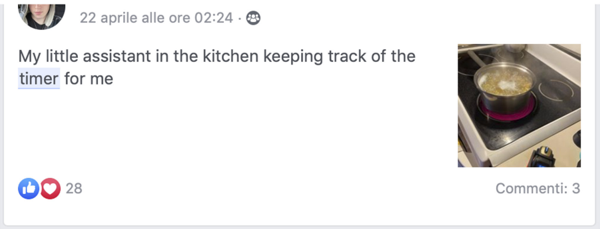
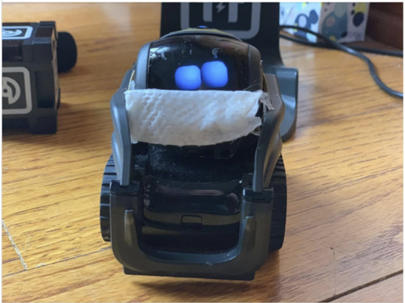
Purpose: Loneliness and isolation are on the rise, globally threatening the well-being across age groups; global social distancing measures during the COVID-19 crisis have intensified this so-called “loneliness virus”. The purpose of this paper is to develop an integrative framework and research agenda on the role of companion robots in mitigating feelings of loneliness. Design/methodology/approach: A netnographic analysis of 595 online visual and textual descriptions offer empirical insights about the role of the companion robot Vector during the COVID-19 pandemic. Findings: The contributions of this study are twofold. First, it postulates that companion robots have the potential of mitigating feelings of loneliness (i.e. indicator of well-being). Second, this study contributes to transformative service by developing an integrative framework introducing the roles (personal assistant, relational peer and intimate buddy) that companion robots can fulfill to mitigate feelings of loneliness through building different types of supportive relationships. Research limitations/implications: The proposed research agenda encourages future service scholars to investigate 1) the role of robots in addressing loneliness, 2) design features that drive adoption of robots, 3) social support for different groups, 4) the operationalization and the measurement of loneliness and 5) an impact analysis of companion robots. Practical implications: Service providers and policy makers can leverage the insights about how companion robots can help reduce a sense of loneliness. Originality/value: The integrative framework on loneliness reduction, based on 595 unprompted online contributions issued during the COVID-19 pandemic, offers initial evidence for the impact of companion robots in reducing people's feelings of loneliness.
Overview
The claims and statistics of this paper haven’t been checked yet.
Free: it reads the open-access text and checks the first 5 claims that cite a source we can check. Create a free account to check every claim.
Integrity signals
Registry
Cites
Statistics
Figures

Verification
Claims the paper makes
The claims and statistics of this paper haven’t been checked yet.
Free: it reads the open-access text and checks the first 5 claims that cite a source we can check. Create a free account to check every claim.
Claims other papers make about this one
Each is checked against this paper’s own text: does it say what the citing paper says it does?
The cited source says what the claim attributes to it.
In the citing paper
“Thus, this paves the way to futuristic robotics-assisted telemedicine and telehealth applications, based on the lessons learnt and to-be-learnt, during the Ebola outbreak and the ongoing COVID-19 pandemic, such as the smart field hospital trial in Wuhan, China, and the use of smart medical “Xiao Bao” robot [126], as well as the use of “companion robots” to combat loneliness [127].”
From Robotics cyber security: vulnerabilities, attacks, countermeasures, and recommendations (2022) · cites this paper as [127]
Self-check
Percentages, sums and reported differences re-computed from the paper’s own numbers.
The self-check needs the paper’s full text.
Citations
Cites
Social Relationships and Health.
Cohen, S. (2004) · American Psychologist · doi:10.1037/0003-066x.59.8.676 · Cited by 4,852 · cited 1×
“In Weiss’s (1973) theory of relational loneliness, such resources compensate for a lack of help and provide a means to deal with adverse signs of stress and loneliness (Cohen, 2004; Sorkin et al., 2002).”
BackgroundArtificial intelligence in service
Huang, M.-H., & Rust, R. T. (2018) · Journal of Service Research · doi:10.1177/1094670517752459 · Cited by 3,978
The Field behind the Screen: Using Netnography for Marketing Research in Online Communities
Kozinets, R. V. (2002) · Journal of Marketing Research · doi:10.1509/jmkr.39.1.61.18935 · Cited by 3,962
Brave new world: service robots in the frontline
Wirtz, J., Patterson, P. G., Kunz, W. H., Gruber, T., Lu, V. N., Paluch, S., & Martins, A. (2018) · Journal of Service Management · doi:10.1108/josm-04-2018-0119 · Cited by 2,315
van Doorn, J., Mende, M., Noble, S. M., Hulland, J., Ostrom, A. L., Grewal, D., & Petersen, J. A. (2017) · Journal of Service Research · doi:10.1177/1094670516679272 · Cited by 1,344
Socially intelligent robots: Dimensions of human-robot interaction
Dautenhahn, K. (2007) · Philosophical Transactions of the Royal Society B: Biological Sciences · doi:10.1098/rstb.2006.2004 · Cited by 1,210
Controllability of Stressful Events and Satisfaction With Spouse Support Behaviors
CUTRONA, C. E., & SUHR, J. A. (1992) · Communication Research · doi:10.1177/009365092019002002 · Cited by 928 · cited 3×
“Another route for continued research relates to the importance of social support for different groups (Cutrona and Suhr, 1992).”
BackgroundMethodSocial and emotional loneliness: An examination of Weiss's typology of loneliness.
Russell, D., Cutrona, C. E., Rose, J., & Yurko, K. (1984) · Journal of Personality and Social Psychology · doi:10.1037//0022-3514.46.6.1313 · Cited by 708
Schwarzer, R., & Knoll, N. (2007) · International Journal of Psychology · doi:10.1080/00207590701396641 · Cited by 635
Lu, V. N., Wirtz, J., Kunz, W. H., Paluch, S., Gruber, T., Martins, A., & Patterson, P. G. (2020) · Journal of Service Theory and Practice · doi:10.1108/jstp-04-2019-0088 · Cited by 596
Research works printed but not linked: 7
- Anderson, L., Ostrom, A.L. and Bitner, M.J. (2011), Surrounded by Services: a New Lens for Examining the Influence of Services as Social Structures on Well-being, Working paper: W. P. Carey School of Business, Arizona State University.
- Bavel, J.J.V., Baicker, K. and Boggio, P.S., et al. (2020), "Using social and behavioural science to support COVID-19 pandemic response", Nature Human Behavior, pp. 460-471, doi: 10.1108/ JOSM-05-2020-0157. · DOI · Paper page
- Cacioppo, J.T. and Patrick, W. (2008), Loneliness: Human Nature and the Need for Social Connection, WW Norton & Company, NY, NY.
- Weiss, R.S. (1973), Loneliness: The Experience of Emotional and Social Isolation, MIT Press, Cambridge.
- Prof. Dr. Cristina Mele is Full Professor of Management at the Department of Economics, Management and Institutions, University of Naples Federico II. She is the coordinator of the PhD in Management. Her main research interests are service innovation, value creation, markets and service ecosystems. Her articles have appeared in leading international journals, including Journal of The Academy of Marketing Science, Marketing Theory, Industrial Marketing Management, Journal of Business Research, Journal of Service Management, Journal of Service Theory and Practice and Managing Service Quality. She is Ambassador of ISSIP.org. She is one of co-chairs of The Naples Forum on Service.
- Dr. Tiziana Russo Spena is an Associate professor of Management at the Department of Economics, Management and Institutions, University of Naples Federico II. She obtained her PhD in Management in 2002. Her main areas of interest are service innovation, value co-creation and service technology research. She has written many articles and books and published in Italian and International Journals, including the Journal of Business research, Industrial Marketing and Management, Journal of Business Ethics, Journal of Service Theory and Practices, Journal of Service Management.
- Prof. Dr. Dominik Mahr is a professor of Digital Innovation and Marketing, head of the Marketing and Supply Chain Management department and the Scientific Director of the Service Science Factory at Maastricht University, The Netherlands. His research focuses on the human side of digitalization, so the implications of digital data, devices and technologies for customers, organizations and society and has been published in journals including Journal of Marketing, Journal of Consumer Research, Journal of Service Research, MIS Quarterly and Journal of Product Innovation Management. Prior to his academic career, he worked as a consultant in the automotive and high-tech industry.
Cited by
Service Robots in the Healthcare Sector
Holland, J., Kingston, L., McCarthy, C., Armstrong, E., O’Dwyer, P., Merz, F., & McConnell, M. (2021) · Robotics · doi:10.3390/robotics10010047 · Cited by 322
“Vector provides social connectivity, shares daily activities such as lunch and dinner, and takes part in enjoyable activities like dancing [115].”
BackgroundRobotics cyber security: vulnerabilities, attacks, countermeasures, and recommendations
Yaacoub, J.-P. A., Noura, H. N., Salman, O., & Chehab, A. (2022) · International Journal of Information Security · doi:10.1007/s10207-021-00545-8 · Cited by 320
“Hence, a self-healing process is required to ensure that robotic systems can sense faults or disruptions and can reconfigure the back-up resources.”
Adapting research methodology during COVID-19: lessons for transformative service research
Dodds, S., & Hess, A. C. (2021) · Journal of Service Management · doi:10.1108/josm-05-2020-0153 · Cited by 260
Robots Under COVID-19 Pandemic: A Comprehensive Survey
Shen, Y., Guo, D., Long, F., Mateos, L. A., Ding, H., Xiu, Z., Hellman, R. B., King, A., Chen, S., Zhang, C., et al. (2021) · IEEE Access · doi:10.1109/access.2020.3045792 · Cited by 259
“are loneliness and isolation, which are dramatically amplified [123].”
BackgroundTuzovic, S., & Kabadayi, S. (2021) · Journal of Service Management · doi:10.1108/josm-05-2020-0140 · Cited by 255
A literature survey of the robotic technologies during the COVID-19 pandemic
Wang, X. V., & Wang, L. (2021) · Journal of Manufacturing Systems · doi:10.1016/j.jmsy.2021.02.005 · Cited by 246
“The role of companion robots during the pandemic was analysed based on 595 online descriptions [111].”
Social companionship with artificial intelligence: Recent trends and future avenues
Chaturvedi, R., Verma, S., Das, R., & Dwivedi, Y. K. (2023) · Technological Forecasting and Social Change · doi:10.1016/j.techfore.2023.122634 · Cited by 244
Alabed, A., Javornik, A., & Gregory-Smith, D. (2022) · Technological Forecasting and Social Change · doi:10.1016/j.techfore.2022.121786 · Cited by 233
Friend, mentor, lover: does chatbot engagement lead to psychological dependence?
Xie, T., Pentina, I., & Hancock, T. (2023) · Journal of Service Management · doi:10.1108/josm-02-2022-0072 · Cited by 204
Henkel, A. P., Čaić, M., Blaurock, M., & Okan, M. (2020) · Journal of Service Management · doi:10.1108/josm-05-2020-0145 · Cited by 173
Pentina, I., Xie, T., Hancock, T., & Bailey, A. (2023) · Psychology & Marketing · doi:10.1002/mar.21853 · Cited by 174
Smart nudging: How cognitive technologies enable choice architectures for value co-creation
Mele, C., Russo Spena, T., Kaartemo, V., & Marzullo, M. L. (2021) · Journal of Business Research · doi:10.1016/j.jbusres.2020.09.004 · Cited by 173
Self-citationHow Smart Should a Service Robot Be?
Schepers, J., Belanche, D., Casaló, L. V., & Flavián, C. (2022) · Journal of Service Research · doi:10.1177/10946705221107704 · Cited by 169
“The reasons are that some empirical works generate their own typology (e.g., Mele et al., 2021), while others identify “ should-be ” types or qualities (e.g., Odekerken-Schr¨oder et al., 2020), and still others include some but not all AI types (e.g., Belanche et al., 2020).”
BackgroundCoping with crisis: The paradox of technology and consumer vulnerability
Yap, S., Xu, Y., & Tan, L. (2021) · International Journal of Consumer Studies · doi:10.1111/ijcs.12724 · Cited by 164
The service triad: an empirical study of service robots, customers and frontline employees
Odekerken‐Schröder, G., Mennens, K., Steins, M. M. H. M. G., & Mahr, D. (2021) · Journal of service management · doi:10.1108/josm-10-2020-0372 · Cited by 188
Self-citationEquilibrating resources and challenges during crises: a framework for service ecosystem well-being
Finsterwalder, J., & Kuppelwieser, V. G. (2020) · Journal of Service Management · doi:10.1108/josm-06-2020-0201 · Cited by 154
AI companions for lonely individuals and the role of social presence
Merrill, K., Kim, J., & Collins, C. (2022) · Communication Research Reports · doi:10.1080/08824096.2022.2045929 · Cited by 142
“In particular, acknowledging the potential for AI to serve a social or relational role (Odekerken-Schröder et al., 2020), this study examines how people perceive the use of an AI companion for lonely individuals.”
BackgroundThe impact of service robots in retail: Exploring the effect of novelty priming on consumer behavior
Wang, Y., Kang, Q., Zhou, S., Dong, Y., & Liu, J. (2022) · Journal of Retailing and Consumer Services · doi:10.1016/j.jretconser.2022.103002 · Cited by 118
Dinh, C.-M., & Park, S. (2024) · Electronic Commerce Research · doi:10.1007/s10660-022-09662-5 · Cited by 102
“Particularly, social support helps to modify the appraisal of stress, reduce adverse effects of stress, and facilitate adaptive coping against stress [94].”
BackgroundRole of trust in customer attitude and behaviour formation towards social service robots
Corte, V. D., Sepe, F., Gürsoy, D., & Prisco, A. (2023) · International Journal of Hospitality Management · doi:10.1016/j.ijhm.2023.103587 · Cited by 129
Prosumers in times of crisis: definition, archetypes and implications
Lang, B., Dolan, R., Kemper, J., & Northey, G. (2021) · Journal of Service Management · doi:10.1108/josm-05-2020-0155 · Cited by 99
Trends, Technologies, and Key Challenges in Smart and Connected Healthcare
Navaz, A. N., Serhani, M. A., El Kassabi, H. T., Al-Qirim, N., & Ismail, H. (2021) · IEEE Access · doi:10.1109/access.2021.3079217 · Cited by 99
“It has been aggravated with global social-distancing interventions since the COVID-19 crisis, and this situation suggests the need for companion robots to alleviate feelings of seclusion [219].”
BackgroundParasocial Interaction, the COVID-19 Quarantine, and Digital Age Media
Jarzyna, C. L. (2021) · Human Arenas · doi:10.1007/s42087-020-00156-0 · Cited by 92
Technology acceptance before and after COVID-19: no-touch service from hotel robots
Zhong, L., Coca‐Stefaniak, J. A., Morrison, A. M., Yang, L., & Deng, B. (2022) · Tourism Review · doi:10.1108/tr-06-2021-0276 · Cited by 114
Robotics in crisis management: A review
Wilk-Jakubowski, G., Harabin, R., & Ivanov, S. H. (2022) · Technology in Society · doi:10.1016/j.techsoc.2022.101935 · Cited by 98
Guemghar, I., Padilha, P. P. D. O., Abdel‐Baki, A., Jutras‐Aswad, D., Paquette, J., & Pomey, M. (2022) · JMIR Mental Health · doi:10.2196/36094 · Cited by 128
“The possible use of social robots to reduce social isolation during the pandemic is a significant issue that could be explored [69,70].”
BackgroundHow does service robot anthropomorphism affect human co-workers?
Tojib, D., Sujan, R., Ma, J., & Tsarenko, Y. (2023) · Journal of service management · doi:10.1108/josm-03-2022-0090 · Cited by 89
Karpen, I. O., & Conduit, J. (2020) · Journal of Service Management · doi:10.1108/josm-05-2020-0156 · Cited by 72
Wang, Y., Zhang, M., Li, S., McLeay, F., & Gupta, S. (2021) · British Journal of Management · doi:10.1111/1467-8551.12497 · Cited by 97
Metaperception benefits of service robots in uncomfortable service encounters
Pitardi, V., Wirtz, J., Paluch, S., & Kunz, W. H. (2024) · Tourism Management · doi:10.1016/j.tourman.2024.104939 · Cited by 90
Past, present and future of AI in marketing and knowledge management
Marvi, R., Foroudi, P., & Cuomo, M. T. (2024) · Journal of Knowledge Management · doi:10.1108/jkm-07-2023-0634 · Cited by 109
Abelsen, S. N., Vatne, S.-H., Mikalef, P., & Choudrie, J. (2021) · Information Technology and People · doi:10.1108/itp-12-2020-0870 · Cited by 94
Liaison, safeguard, and well-being: Analyzing the role of social robots during the COVID-19 pandemic
Aymerich-Franch, L., & Ferrer, I. (2022) · Technology in Society · doi:10.1016/j.techsoc.2022.101993 · Cited by 124
“Social robots could also contribute to palliate mental health issues, reduce isolation, and promote social connectedness during this period [20,23,24].”
BackgroundSocial exclusion and consumer responses: A comprehensive review and theoretical framework
Rawat, G., Dewani, P. P., & Kulashri, A. (2022) · International Journal of Consumer Studies · doi:10.1111/ijcs.12832 · Cited by 66
The Role of Internet of Things to Control the Outbreak of COVID-19 Pandemic
Castiglione, A., Umer, M., Sadiq, S., Obaidat, M. S., & Vijayakumar, P. (2021) · IEEE Internet of Things Journal · doi:10.1109/jiot.2021.3070306 · Cited by 72
“Paro is an example of such robots that help COVID-19 isolated patients to relieve their stress [40].”
BackgroundAI is Changing the World: For Better or for Worse?
Grewal, D., Guha, A., & Becker, M. (2024) · Journal of Macromarketing · doi:10.1177/02761467241254450 · Cited by 78
“However, in addition to companionship bene fi ts (e.g., decreased loneliness; Odekerken-Schröder et al. 2020), such AI applications also can impose (signi fi cant) costs, in terms of a loss of autonomy and loss of human connection.”
Hazée, S., & Van Vaerenbergh, Y. (2021) · Journal of Service Management · doi:10.1108/josm-04-2020-0129 · Cited by 54
Christou, P., Hadjielias, Ε., Simillidou, A., & Kvasova, O. (2022) · Journal of Business Research · doi:10.1016/j.jbusres.2022.113415 · Cited by 73
From screens to scenes: A survey of embodied AI in healthcare
Liu, Y., Cao, X., Chen, T., Jiang, Y., You, J., Wu, M., Wang, X., Feng, M., Jin, Y., & Chen, J. (2025) · Information Fusion · doi:10.1016/j.inffus.2025.103033 · Cited by 92
Can technological advancements help to alleviate COVID-19 pandemic? a review
Thomas, M. J., Lal, V., Baby, A. K., Rabeeh, V. M., James, A., & Raj, A. K. (2021) · Journal of Biomedical Informatics · doi:10.1016/j.jbi.2021.103787 · Cited by 62
“Recent studies show that loneliness and isolation due to coronavirus has created a global threat among people of all age groups [99].”
Yin, S., Zhang, N., & Xu, J. (2021) · Journal of Management Analytics · doi:10.1080/23270012.2021.1945499 · Cited by 51
Wang, D., Ma, E., & Leung, X. Y. (2024) · Journal of Hospitality and Tourism Management · doi:10.1016/j.jhtm.2024.09.012 · Cited by 50
Zhou, P., Xie, Y., & Liang, C. (2023) · Electronic Markets · doi:10.1007/s12525-023-00681-0 · Cited by 51
“…by the use of information technologies, such as social media and companion robots, has been proven to provide users with more social support, promote people’s well-being, and ultimately lead to consumers’ continued use intention of this information technology (Odekerken-Schröder et al., 2020).”
Li, X., Yuen, K. F., Wang, X., & Wong, Y. D. (2021) · Technology Analysis and Strategic Management · doi:10.1080/09537325.2021.1988919 · Cited by 45
“Companion robots are able to decrease loneliness and bene fi t the mental well-being of humans by providing company in social distancing, especially for the elders (Odekerken-Schröder et al. 2020).”
BackgroundUnderstanding Continued Use Intention of AI Assistants
Xie, Y., Zhao, S., Zhou, P., & Liang, C. (2023) · Journal of Computer Information Systems · doi:10.1080/08874417.2023.2167134 · Cited by 57
“52 In the context of this study, loneliness relief is an important emotional gratification variable for users.”
BackgroundEffects of human-robot interaction type on customer tolerance of humanoid robot service failure
Ma, K., Duan, X., Fu, X., Liu, W., & Zheng, M. (2024) · Journal of Hospitality Marketing & Management · doi:10.1080/19368623.2024.2379263 · Cited by 45
Kumar, S., & Choudhury, S. (2022) · Humanities and Social Sciences Communications · doi:10.1057/s41599-022-01043-5 · Cited by 49
“Many South Asian countries have a patri-archal and male-dominated society, and their culture has a strong preference for male offspring (Kristof, 1993; Bhalotra et al., 2020; Oomman and Ganatra, 2002).”
BackgroundTowards a theory of well-being in digital sports viewing behavior
Rejikumar, G., Jose, A., Mathew, S., Chacko, D. P., & Ajitha, A. A. (2021) · Journal of Services Marketing · doi:10.1108/jsm-06-2020-0247 · Cited by 44
Smart Business and the Social Value of AI
Leszkiewicz, A., Hormann, T., & Krafft, M. (2022) · Emerald Group Publishing Limited eBooks · doi:10.1108/s1877-636120220000028004 · Cited by 56
Zhang, C.-B., Li, T.-G., Li, Y., Chang, Y., & Zhang, Z.-P. (2024) · International Journal of Information Management · doi:10.1016/j.ijinfomgt.2024.102822 · Cited by 59
A survey of AI ethics in business literature: Maps and trends between 2000 and 2021
Daza, M. T., & Ilozumba, U. J. (2022) · Frontiers in Psychology · doi:10.3389/fpsyg.2022.1042661 · Cited by 49
“, 2020), and service robots and chatbots (Wirtz et al., 2018; Henkel et al., 2020; Odekerken-Schröder et al., 2020; Syvänen andValentini, 2020; Borau et al., 2021; Söderlund andOikarinen, 2021).”
BackgroundCOVID-19 Sport Transformation: New Challenges and New Opportunities
Glebova, E., Zare, F., Desbordes, M., et al. (2022) · Physical Culture and Sport Studies and Research · doi:10.2478/pcssr-2022-0011 · Cited by 31
Boundary work in value co-creation practices: the mediating role of cognitive assistants
Mele, C., Spena, T. R., Marzullo, M., & Ruggiero, A. (2021) · Journal of service management · doi:10.1108/josm-10-2020-0381 · Cited by 38
Self-citationThe Robotic-Human Service Trilemma: the challenges for well-being within the human service triad
Phillips, C., Russell‐Bennett, R., Odekerken‐Schröder, G., Mahr, D., & Letheren, K. (2023) · Journal of service management · doi:10.1108/josm-03-2022-0091 · Cited by 37
Self-citationEvolution of service robots in marketing: A relational framework and future research agenda
Mahr, D., Odekerken‐Schröder, G., & van Doorn, J. (2025) · Journal of Business Research · doi:10.1016/j.jbusres.2025.115204 · Cited by 31
Self-citationEmergency preparedness for public health threats, surveillance, modelling & forecasting
Bedi, J. S., Vijay, D., Dhaka, P., Gill, J. P. S., & Barbuddhe, S. B. (2021) · The Indian Journal of Medical Research · doi:10.4103/ijmr.ijmr_653_21 · Cited by 44
“In hospitals, robots for delivery of food and medicines to patients 51 and drones for patrolling and broadcasting awareness messages and site disinfections, were employed 52 .”
MethodRevolutionizing services with cutting-edge technologies post major exogenous shocks
Ameen, N., Viglia, G., & Altinay, L. (2023) · The Service Industries Journal · doi:10.1080/02642069.2023.2185934 · Cited by 27
“For example, consumer loneliness, which applies to both younger and older consumers, has been highlighted as one of the major consequences of the pandemic (Odekerken-Schröder et al., 2020).”
BackgroundThe Impact of the COVID 19 Shock on Intention to Adopt Social Commerce
Al-Omoush, K. S., Yaseen, S. G., & Qirem, I. A. E. (2022) · Studies in computational intelligence · doi:10.1007/978-3-031-05258-3_9 · Cited by 29
Le, K. B. Q., & Cayrat, C. (2024) · Journal of service management · doi:10.1108/josm-09-2023-0408 · Cited by 36
Sun, H., Zhang, Q., Si, T. L., Bai, W., Chen, P., Lam, M. I., Lok, K.-I., Su, Z., Cheung, T. C. C., Ungvari, G. S., et al. (2024) · Psychiatry Research · doi:10.1016/j.psychres.2024.115744 · Cited by 28
Mele, C., Marzullo, M., Morandé, S., & Spena, T. R. (2022) · Service Science · doi:10.1287/serv.2021.0289 · Cited by 32
Self-citationInvestigating the importance of social presence on intentions to adopt an AI romantic partner
Kim, J., Merrill, K., & Collins, C. (2023) · Communication Research Reports · doi:10.1080/08824096.2022.2159800 · Cited by 24
Customers' value changes on robot‐serviced restaurants
Kim, C. Y., & Cha, S. (2024) · International Journal of Tourism Research · doi:10.1002/jtr.2631 · Cited by 31
Lonely human and dominant robot: Similarity versus complementary attraction
Yu, L., & Fan, X. (2024) · Psychology and Marketing · doi:10.1002/mar.21975 · Cited by 26
Theories, constructs, and methodologies to study COVID-19 in the service industries
Cambra‐Fierro, J., Gao, L. X., Melero‐Polo, I., & Patrício, L. (2022) · Service Industries Journal · doi:10.1080/02642069.2022.2060209 · Cited by 25
“…and viewpoints of internationally renowned authors (e.g. Berry et al., 2020; Rosenbaum & Russell-Bennett, 2020), although these first trials progressively led to the appearance of works of a qualitative (e.g. Odekerken-Schröder et al., 2020) and quantitative nature (e.g. Joo & Shin, 2020).”
BackgroundConsumer loneliness: A systematic review and research agenda
Huang, S., & Li, M. (2023) · Frontiers in Psychology · doi:10.3389/fpsyg.2023.1071341 · Cited by 29
“Increasing research attention has been paid to the phenomenon of consumer loneliness (CL) in various contexts (Pieters, 2013; Pittman and Reich, 2016; Tan and Lu, 2019; Odekerken-Schröder et al., 2020; Loh et al., 2021).”
BackgroundEmbodied AI with Large Language Models: A Survey and New HRI Framework
Lin, M., Lee, O.-W., & Lu, C.-J. (2024) · International Conference on Advanced Robotics and Mechatronics (ICARM) · doi:10.1109/icarm62033.2024.10715872 · Cited by 38
“Furry tales”: pet ownership’s influence on subjective well-being during Covid-19 times
Damberg, S., & Frömbling, L. (2021) · Quality & Quantity · doi:10.1007/s11135-021-01303-7 · Cited by 27
“Social support systems, which could refer to friends, family, co-workers, but also pets, contribute to feelings of well-being, thereby addressing the current global loneliness challenge (Odekerken-Schröder et al. 2020).”
Ashique, S., Mishra, N., Mohanto, S., Garg, A. K., Taghizadeh‐Hesary, F., Gowda, B. H. J., & Chellappan, D. K. (2024) · Heliyon · doi:10.1016/j.heliyon.2024.e25754 · Cited by 31
RetractedTouch-and-Heal: Data-driven Affective Computing in Tactile Interaction with Robotic Dog
Guo, S., Zhan, L., Cao, Y., Chen, Z., Zhou, G., & Gong, J. (2023) · Proceedings of the ACM on Interactive Mobile Wearable and Ubiquitous Technologies · doi:10.1145/3596258 · Cited by 29
“In such cases, a pet robot with natural interaction ability may have the potential to reduce the sense of social isolation and increase happiness [28, 63].”
BackgroundService robots and innovation: An ecosystem approach
Mahr, D., Odekerken‐Schröder, G., & Steins, M. M. H. M. G. (2024) · Journal of Product Innovation Management · doi:10.1111/jpim.12756 · Cited by 29
Self-citationChallenges Deploying Robots During a Pandemic: An Effort to Fight Social Isolation Among Children
Tsoi, N., Connolly, J., Adéníran, E., Hansen, A., Pineda, K. T., Adamson, T., Thompson, S., Ramnauth, R., Vázquez, M., & Scassellati, B. M. (2021) · ACM/IEEE International Conference on Human-Robot Interaction (HRI) · doi:10.1145/3434073.3444665 · Cited by 27
“[25] conducted a study in which they analyzed data from social media posts related to how people perceived and engaged with Vector robots during the COVID-19 pandemic.”
BackgroundMethodInfluential“Live” Together with You: Livestream Views Mitigate the Effects of Loneliness on Well-being
Goh, Z. H., Tandoc, E. C., & Ng, B. (2021) · Journal of Broadcasting & Electronic Media · doi:10.1080/08838151.2021.1994970 · Cited by 22
“Studies have been investigating ways to mitigate loneliness, such as using companion robots with artificial intelligence (Odekerken-Schröder et al., 2020) or simply by offering physical contact (Heatley Tejada et al.”
BackgroundMele, C., Marzullo, M., Bernardo, I. D., Spena, T. R., Massi, R., Salandra, A. L., & Cialabrini, S. (2021) · Journal of Service Theory and Practice · doi:10.1108/jstp-12-2020-0292 · Cited by 24
Self-citationWorking in a bubble: techno-isolation as an emerging techno-stressor in teleworkers
Mirowska, A., & Bakici, T. Y. (2023) · Information Technology and People · doi:10.1108/itp-09-2022-0657 · Cited by 31
“Are We Now Post-COVID?”: Exploring Post-COVID Futures Through a Gamified Story Completion Method
Troiano, G. M., Wood, M., Sonbudak, M. F., Padte, R. C., & Harteveld, C. (2021) · Designing Interactive Systems Conference · doi:10.1145/3461778.3462069 · Cited by 23
“, neuroscience [5], robotics [95], social sciences [122]).”
BackgroundJiang, H., & Cheng, L. (2021) · International Journal of Environmental Research and Public Health · doi:10.3390/ijerph182010908 · Cited by 20
“The second type is the robots indirectly fighting against the pandemic, such as the autonomous delivery robots (ADRs) that have previously been used outside hospitals and in quarantine camps [14] and Anki’s Vector companion robot designed to relieve loneliness for home users [15].”
BackgroundChoubey, V. M., Chakraborty, D., & Joshi, Y. (2025) · Asia Pacific Journal of Tourism Research · doi:10.1080/10941665.2025.2486015 · Cited by 22
“Additionally, customers may reject robotic services due to a lack of social interaction (Odekerken-Schröder et al., 2020).”
Technology affordances and social withdrawal: The rise of hikikomori
Park, H., & Yap, S. F. (2024) · Psychology and Marketing · doi:10.1002/mar.21991 · Cited by 37
“…et al.'s (2020) conceptual development of a social robot typology for advancing the wellbeing of older adults and children in social isolation, Odekerken ‐ Schröder et al.'s (2020) netnographic analysis of the potential of companion robots in mitigating loneliness and Lyngdoh et al.'s (2023)…”
Shah, S. H. H., Steinnes, O.-M. H., Gustafsson, E. G., & Hameed, I. A. (2021) · Applied Sciences · doi:10.3390/app11167200 · Cited by 19
Dogerlioglu‐Demir, K., Akpınar, E., & Ceylan, M. (2021) · Journal of Consumer Behaviour · doi:10.1002/cb.2015 · Cited by 24
Societal Attitudes Toward Service Robots: Adore, Abhor, Ignore, or Unsure?
Yoganathan, V., Osburg, V., Colladon, A. F., Charles, V., & Toporowski, W. (2024) · Journal of Service Research · doi:10.1177/10946705241295841 · Cited by 19
“…uence on customers by substituting interpersonal connections with impersonal service provision, such that individuals who have a need for relatedness in technology use may adopt a stronger resistance to service robots ( ˇ Cai´c, Odekerken-Schr¨oder, and Mahr 2018; Odekerken-Schr¨oder et al. 2020).”
InfluentialLi, M., Rao, W., Su, Y., Sul, Y., Caron, G., D’Arcy, C., Fleury, M., & Meng, X. (2023) · Age and Ageing · doi:10.1093/ageing/afad076 · Cited by 20
Penner, A., & Eyssel, F. (2022) · Robotics · doi:10.3390/robotics11060121 · Cited by 17
No filter: navigating well-being in troubled times as social media influencers
Levesque, N., Hachey, A., & Pergelova, A. (2023) · Journal of Marketing Management · doi:10.1080/0267257x.2023.2218858 · Cited by 21
“Lurking has been viewed as a continuum (Jeffrey et al., 2021), and while some studies employ unobtrusive netnography (e.g. Azer & Alexander, 2018; Odekerken-Schröder et al., 2020), in the present study, the researchers were engaging in the conversation through likes and comments and formalised…”
BackgroundMethodZhao, L., Sun, J., Zhang, L., & Ma, B. (2022) · Asia Pacific Journal of Marketing and Logistics · doi:10.1108/apjml-09-2021-0663 · Cited by 19
Park, E. H., & Kim, S. (2024) · SAGE Open · doi:10.1177/21582440241258281 · Cited by 21
“First, previous studies have focused on the role/ application/use of service robots (e.g., room service delivery and porter robots, robot receptionists, and robot baristas) in various H&T sectors (Hwang et al., 2021; Odekerken-Schro¨der et al., 2020; Tuomi et al., 2020).”
The Rise of AI Companions and the Quest for Authentic Connection
Wiederhold, B. K. (2024) · Cyberpsychology Behavior and Social Networking · doi:10.1089/cyber.2024.0309 · Cited by 21
Responsible aging: integrating individual and intergenerational well-being
Heinonen, K., Kurtmollaiev, S., Lervik-Olsen, L., Mele, C., Streukens, S., & Andreassen, T. W. (2025) · Journal of service management · doi:10.1108/josm-12-2024-0529 · Cited by 16
Self-citationNguyễn, T. P., Nguyen, H. T., & Ngo, H. Q. T. (2023) · International Journal of Advanced Robotic Systems · doi:10.1177/17298806231162202 · Cited by 14
Unintended consequences of service robots – Recent progress and future research directions
Heirati, N., Pitardi, V., Wirtz, J., Jayawardhena, C., Kunz, W. H., & Paluch, S. (2025) · Journal of Business Research · doi:10.1016/j.jbusres.2025.115366 · Cited by 22
Blažević, V., & Sidaoui, K. (2022) · Journal of service management · doi:10.1108/josm-10-2021-0402 · Cited by 19
Reimagining our futures together: An early bird's‐eye view of inclusive organizational behavior
Dhir, A., Kaur, P., Hassan, S., & Vrontis, D. (2024) · Journal of Organizational Behavior · doi:10.1002/job.2776 · Cited by 14
Hansen, J. M., Hansen, J. W., & Madsen, S. R. (2022) · Journal of Business and Industrial Marketing · doi:10.1108/jbim-01-2021-0073 · Cited by 15
Transformative Service Research: Where We Are and Moving Forward at the Collective Level
Anderson, L., & Xue, Y. W. (2022) · Springer eBooks · doi:10.1007/978-3-030-91828-6_23 · Cited by 14
Hsieh, T.-Y., & Cross, E. S. (2022) · Cognition & Emotion · doi:10.1080/02699931.2022.2054781 · Cited by 16
“…COVID-19 pandemic has further highlighted the potential utility for robots in replacing human labour to reduce the risk of infection, but also for their social abilities, such as helping to alleviate loneliness during lockdown (Kim et al., 2021; Odekerken-Schröder et al., 2020; Yang et al., 2020).”
BackgroundZou, R., Lu, L., Cai, J., & Ran, Y. (2024) · International Journal of Hospitality Management · doi:10.1016/j.ijhm.2023.103666 · Cited by 17
Querci, I., Monsurrò, L., & Peverini, P. (2024) · Technovation · doi:10.1016/j.technovation.2024.102971 · Cited by 16
Ajibo, C. A., Ishi, C. T., & Ishiguro, H. (2021) · IEEE Robotics and Automation Letters · doi:10.1109/lra.2021.3094783 · Cited by 13
Exploring the Role of Empathy in Designing Social Robots for Elderly People
Carolis, B. N. D., Palestra, G., & Castellano, G. (2024) · ACM Conference on User Modeling, Adaptation and Personalization (UMAP) · doi:10.1145/3631700.3664887 · Cited by 12
“Social robots may also alleviate some of the side effects of loneliness, such as depression or the degradation of cognitive abilities [17, 20].”
Background
Metadata
- Authors
- Odekerken-Schröder, G., Mele, C., Russo-Spena, T., Mahr, D., & Ruggiero, A.
- Affiliations
- Maastricht University Department of Marketing and Supply Chain Management, , Maastricht,
- University of Naples Federico II (IT)
- University of Naples Federico II Department of Business Economics, , Naples,
- Maastricht University (NL)
- Venue
- Journal of Service Management
- Publisher
- Emerald
- Published
- 2020-08-25
- Volume
- 31
- Issue
- 6
- Pages
- 1149-1162
- ISSN
- 1757-5818 (ISSN-L)
- 1757-5826
- OpenAlex
- W3080101757
- Cited by
- 212
- References
- 48
- Citations by year
- 2026: 24 · 2025: 25 · 2024: 41 · 2023: 37 · 2022: 34 · 2021: 40 · 2020: 11
- FWCI
- 33.34
- Type
- journal article
- Language
- en
- Open access
- hybrid
- doi.org
- Licence
- cc-by
- Locations
- Journal of service management (publishedVersion, cc-by)
- Research Publications (Maastricht University) (publishedVersion, cc-by)
- Työväentutkimus Vuosikirja (acceptedVersion)
- Research Publications (Maastricht University) (submittedVersion, other-oa)
- Funders
- European Regional Development Fund (2014-2020’)
- Topics
- Social Sciences › Psychology › Social Psychology › Social Robot Interaction and HRI
- Social Sciences › Business, Management and Accounting › Marketing › AI in Service Interactions
- Physical Sciences › Computer Science › Human-Computer Interaction › Innovative Human-Technology Interaction
- Keywords
- loneliness, companion robots, COVID-19 pandemic, social isolation, personal assistants, social support, robot adoption, loneliness measurement, service design, netnography
About these checks
Registry, retraction, Cites and statistics results are computed, not judged, with one exception: a printed reference that no index lists is read once by a model before it counts as a citation error. Claims are extracted by a model and kept only when their quote appears verbatim in the text; each cited source is then checked, with a model’s help, for whether it says what the claim relies on. Those verdicts can be wrong — read the claim’s quote and the cited source before relying on one.
Statistics and arithmetic are recomputed, not judged.
Confidence bands are shown only for fields calibrated on our annotated test set. None is calibrated yet, so no band is shown.
What counts as a claim ›How we measure confidence ›How we check this ›
Are you an author, or do you see a problem with this page? Request a review
Data sources
Bibliographic data: Semantic Scholar, OpenAlex, Crossref.
Contains information from the Semantic Scholar Academic Graph Datasets, made available under the ODC Attribution License (ODC-BY 1.0).
Semantic Scholar’s data is described in: Kinney, R., et al. (2023). The Semantic Scholar Open Data Platform. arXiv:2301.10140.
