

The DOI matches its Crossref record; 48 of the 49 references it cites were found in a registry or an index.
Trimethylamine‐N‐oxide promotes brain aging and cognitive impairment in mice
Open accessAbstract
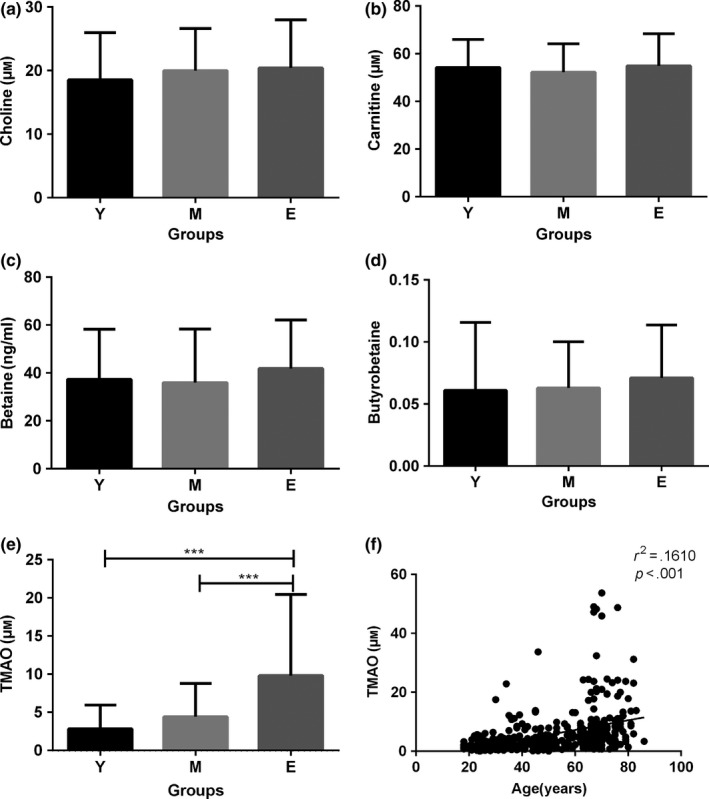
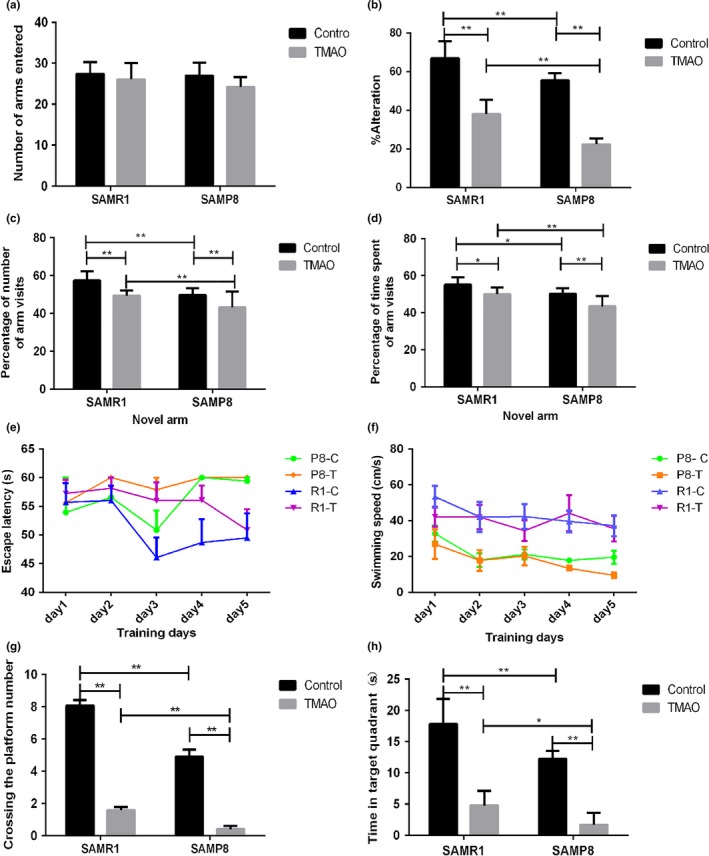
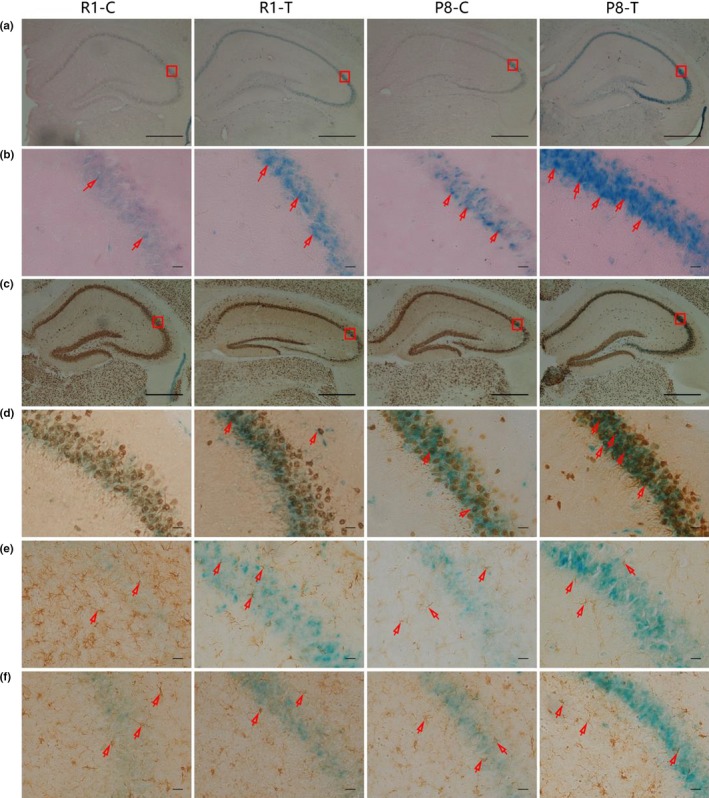
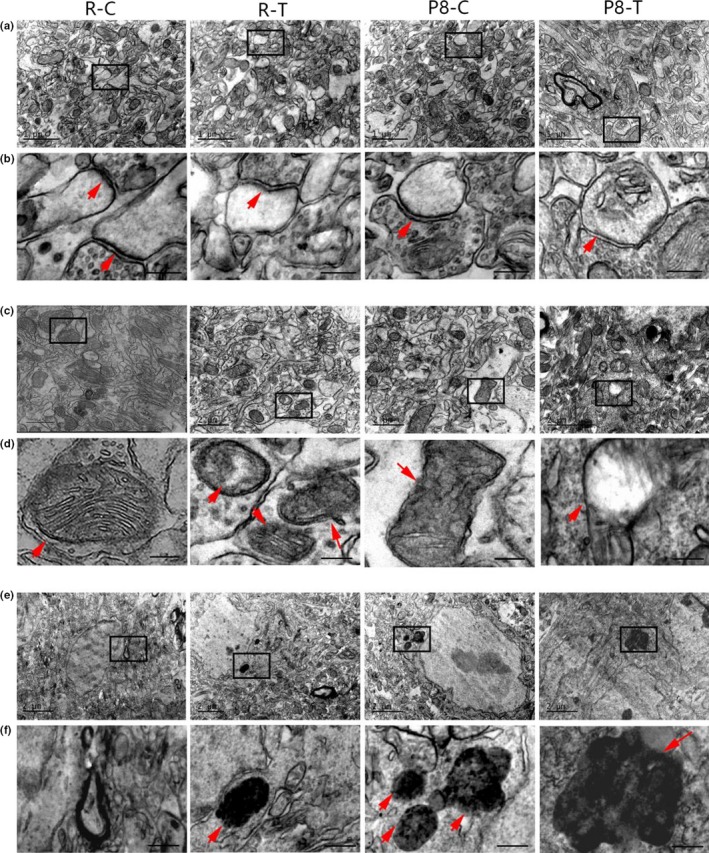
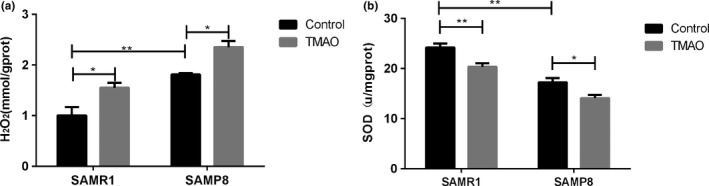
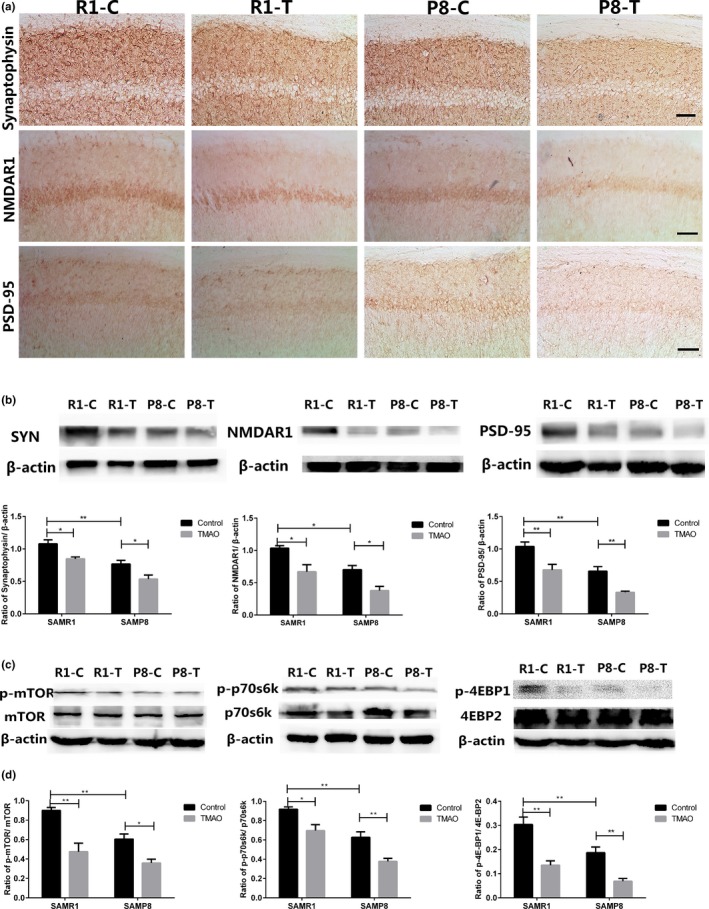
Summary: Gut microbiota can influence the aging process and may modulate aging‐related changes in cognitive function. Trimethylamine‐N‐oxide (TMAO), a metabolite of intestinal flora, has been shown to be closely associated with cardiovascular disease and other diseases. However, the relationship between TMAO and aging, especially brain aging, has not been fully elucidated. To explore the relationship between TMAO and brain aging, we analysed the plasma levels of TMAO in both humans and mice and administered exogenous TMAO to 24‐week‐old senescence‐accelerated prone mouse strain 8 (SAMP 8) and age‐matched senescence‐accelerated mouse resistant 1 (SAMR 1) mice for 16 weeks. We found that the plasma levels of TMAO increased in both the elderly and the aged mice. Compared with SAMR 1‐control mice, SAMP 8‐control mice exhibited a brain aging phenotype characterized by more senescent cells in the hippocampal CA 3 region and cognitive dysfunction. Surprisingly, TMAO treatment increased the number of senescent cells, which were primarily neurons, and enhanced the mitochondrial impairments and superoxide production. Moreover, we observed that TMAO treatment increased synaptic damage and reduced the expression levels of synaptic plasticity‐related proteins by inhibiting the mTOR signalling pathway, which induces and aggravates aging‐related cognitive dysfunction in SAMR 1 and SAMP 8 mice, respectively. Our findings suggested that TMAO could induce brain aging and age‐related cognitive dysfunction in SAMR 1 mice and aggravate the cerebral aging process of SAMP 8 mice, which might provide new insight into the effects of intestinal microbiota on the brain aging process and help to delay senescence by regulating intestinal flora metabolites.
Overview
The claims and statistics of this paper haven’t been checked yet.
Run the check — free, no account needed. It reads the open-access text and checks the sources it cites.
Integrity signals
Registry
Cites
Statistics
Figures
Verification
Claims the paper makes
The claims and statistics of this paper haven’t been checked yet.
Run the check — free, no account needed. It reads the open-access text and checks the sources it cites.
Claims other papers make about this one
Each is checked against this paper’s own text: does it say what the citing paper says it does?
In the citing paper
“In the brain, TMAO is detrimental to neuronal physiology as it induces neuronal senescence, oxidative stress, and alters synaptic plasticity.”
From Microbiota–gut–brain axis and its therapeutic applications in neurodegenerative diseases (2024) · cites this paper as [668]
In the citing paper
“mice treated with dietary TMAO show increased brain aging and cognitive impairment, likely due to increased oxidative stress, mitochondrial dysfunction, and inhibition of mammalian target of rapamycin (mTOR) signaling in the brain [11].”
From The gut microbiota-derived metabolite trimethylamine N-oxide is elevated in Alzheimer’s disease (2018) · cites this paper as [11]
In the citing paper
“TMAO is an amine oxide product of the bacterial metabolism that has been implicated in oxidative stress enhancement, BBB disruption, mitochondria dysfunction, brain aging and neurodegeneration [105,106,107]”
From The Interplay between Gut Microbiota and Parkinson’s Disease: Implications on Diagnosis and Treatment (2022) · cites this paper as [107]
Self-check
Percentages, sums and reported differences re-computed from the paper’s own numbers.
The self-check needs the paper’s full text.
Citations
Cites
TOR signaling in growth and metabolism
Wullschleger, S., Loewith, R., & Hall, M. N. (2006) · Cell · doi:10.1016/j.cell.2006.01.016 · Cited by 5,787
Mind-altering microorganisms: the impact of the gut microbiota on brain and behaviour
Cryan, J. F., & Dinan, T. G. (2012) · Nature Reviews Neuroscience · doi:10.1038/nrn3346 · Cited by 4,572
Intestinal microbiota metabolism of l-carnitine, a nutrient in red meat, promotes atherosclerosis
Koeth, R. A., Wang, Z., Levison, B. S., Buffa, J. A., Org, E., Sheehy, B. T., Britt, E. B., Fu, X., Wu, Y., Li, L., et al. (2013) · Nature Medicine · doi:10.1038/nm.3145 · Cited by 4,386
Gut microbiota composition correlates with diet and health in the elderly
Claesson, M. J., Jeffery, I. B., Conde, S., Power, S. E., O’Connor, E. M., Cusack, S., Harris, H. M. B., Coakley, M., Lakshminarayanan, B., O’Sullivan, O., et al. (2012) · Nature · doi:10.1038/nature11319 · Cited by 3,314
Hsiao, E. Y., McBride, S. W., Hsien, S., Sharon, G., Hyde, E. R., McCue, T., Codelli, J. A., Chow, J., Reisman, S. E., Petrosino, J. F., et al. (2013) · Cell · doi:10.1016/j.cell.2013.11.024 · Cited by 3,283
O’Toole, P. W., & Jeffery, I. B. (2015) · Science · doi:10.1126/science.aac8469 · Cited by 1,202
Migaud, M., Charlesworth, P., Dempster, M., Webster, L. C., Watabe, A. M., Makhinson, M., He, Y., Ramsay, M. F., Morris, R. G. M., Morrison, J. H., et al. (1998) · Nature · doi:10.1038/24790 · Cited by 1,160
Romano, K. A., Vivas, E. I., Amador-Noguez, D., & Rey, F. E. (2015) · mBio · doi:10.1128/mbio.02481-14 · Cited by 777
Tang, W. H. W., Wang, Z., Fan, Y., Levison, B., Hazen, J. E., Donahue, L. M., Wu, Y., & Hazen, S. L. (2014) · Journal of the American College of Cardiology · doi:10.1016/j.jacc.2014.02.617 · Cited by 681
The contributory role of gut microbiota in cardiovascular disease
Tang, W. H. W., & Hazen, S. L. (2014) · Journal of Clinical Investigation · doi:10.1172/jci72331 · Cited by 641
Cited by
Sorted by citations
Microbiota–gut–brain axis and its therapeutic applications in neurodegenerative diseases
Loh, J. S., Mak, W. Q., Tan, L. K. S., Ng, C. X., Chan, H. H., Yeow, S. H., Foo, J. B., Ong, Y. S., How, C. W., & Khaw, K. Y. (2024) · Signal Transduction and Targeted Therapy · doi:10.1038/s41392-024-01743-1 · Cited by 1,193
The gut microbiome as a modulator of healthy ageing
Ghosh, T. S., Shanahan, F., & O’Toole, P. W. (2022) · Nature Reviews Gastroenterology & Hepatology · doi:10.1038/s41575-022-00605-x · Cited by 817
The gut microbiota-derived metabolite trimethylamine N-oxide is elevated in Alzheimer’s disease
Vogt, N. M., Romano, K. A., Darst, B. F., Engelman, C. D., Johnson, S. C., Carlsson, C. M., Asthana, S., Blennow, K., Zetterberg, H., Bendlin, B. B., et al. (2018) · Alzheimer's Research & Therapy · doi:10.1186/s13195-018-0451-2 · Cited by 471
Trimethylamine N-Oxide Binds and Activates PERK to Promote Metabolic Dysfunction
Chen, S., Henderson, A., Petriello, M. C., Romano, K. A., Gearing, M., Miao, J., Schell, M., Sandoval-Espinola, W. J., Tao, J., Sha, B., et al. (2019) · Cell Metabolism · doi:10.1016/j.cmet.2019.08.021 · Cited by 427
Gut liver brain axis in diseases: the implications for therapeutic interventions
Yan, M., Man, S., Sun, B., Ma, L., Guo, L., Huang, L., & Gao, W. (2023) · Signal Transduction and Targeted Therapy · doi:10.1038/s41392-023-01673-4 · Cited by 314
Metadata
- Authors
- Li, D., Ke, Y., Zhan, R., Liu, C., Zhao, M., Zeng, A., Shi, X., Ji, L., Cheng, S., Pan, B., Zheng, L., & Hong, H.
- Affiliations
- Union Hospital (CN)
- Peking University (CN)
- The Institute of Cardiovascular Sciences and Institute of Systems Biomedicine School of Basic Medical Sciences Peking University Health Science Center Key Laboratory of Molecular Cardiovascular Science Ministry of Education; Key Laboratory of Cardiovascular Molecular Biology and Regulatory Peptides Ministry of Health; Beijing Key Laboratory of Cardiovascular Receptors Research Beijing China
- Capital Medical University (CN)
- Corresponding author
- Zheng, Lemin
- Hong, Huashan
- Venue
- Aging Cell
- Publisher
- Wiley
- Published
- 2018-05-10
- Volume
- 17
- Issue
- 4
- Pages
- e12768-e12768
- ISSN
- 1474-9718 (ISSN-L)
- 1474-9726
- PMC
- PMC6052480
- OpenAlex
- W2800864806
- Cited by
- 304
- References
- 49
- Citations by year
- 2026: 32 · 2025: 46 · 2024: 52 · 2023: 50 · 2022: 60 · 2021: 33 · 2020: 19 · 2019: 11 · 2018: 1
- FWCI
- 6.42
- Type
- journal article
- Language
- en
- Open access
- gold
- doi.org
- Licence
- Locations
- Aging Cell (publishedVersion, cc-by)
- Europe PMC (PubMed Central) (publishedVersion, other-oa)
- PubMed Central (publishedVersion, cc-by)
- PubMed (publishedVersion)
- Funders
- National Natural Science Foundation of China (81570448, 91639108, 81370235, 81770272)
- Topics
- Life Sciences › Biochemistry, Genetics and Molecular Biology › Aging › Genetics, Aging, and Longevity in Model Organisms
- Life Sciences › Neuroscience › Cellular and Molecular Neuroscience › Antioxidants, Aging, Portulaca oleracea
- Health Sciences › Medicine › Psychiatry and Mental health › Dementia and Cognitive Impairment Research
- Keywords
- trimethylamine N-oxide, brain aging, cognitive impairment, gut microbiota, cellular senescence, neuronal senescence, hippocampal CA3, mitochondrial dysfunction, superoxide, synaptic damage, synaptic plasticity, mTOR signaling, SAMP8 mice, SAMR1 mice
- MeSH terms
- Adolescent, Adult, Aged, Animals, Brain, Humans, Male, Methylamines, Middle Aged, Cellular Senescence, Mice, Young Adult, Cognitive Dysfunction
About these checks
Registry, retraction, Cites and statistics results are computed, not judged, with one exception: a printed reference that no index lists is read once by a model before it counts as a citation error. Claims are extracted by a model and kept only when their quote appears verbatim in the text; each cited source is then checked, with a model’s help, for whether it says what the claim relies on. Those verdicts can be wrong — read the claim’s quote and the cited source before relying on one.
Statistics and arithmetic are recomputed, not judged.
Confidence bands are shown only for fields calibrated on our annotated test set. None is calibrated yet, so no band is shown.
What counts as a claim ›How we measure confidence ›How we check this ›
Are you an author, or do you see a problem with this page? Request a review
