

The DOI matches its Crossref record; 89 of the 90 references it cites were found in a registry or an index, and 1 are not checked yet.
Structural basis of SARS-CoV-2 Omicron immune evasion and receptor engagement
Open accessPublished version of a preprint
Abstract
The severe acute respiratory syndrome coronavirus 2 (SARS-CoV-2) Omicron variant of concern evades antibody-mediated immunity that comes from vaccination or infection with earlier variants due to accumulation of numerous spike mutations. To understand the Omicron antigenic shift, we determined cryo–electron microscopy and x-ray crystal structures of the spike protein and the receptor-binding domain bound to the broadly neutralizing sarbecovirus monoclonal antibody (mAb) S309 (the parent mAb of sotrovimab) and to the human ACE2 receptor. We provide a blueprint for understanding the marked reduction of binding of other therapeutic mAbs that leads to dampened neutralizing activity. Remodeling of interactions between the Omicron receptor-binding domain and human ACE2 likely explains the enhanced affinity for the host receptor relative to the ancestral virus.
Overview
The claims and statistics of this paper haven’t been checked yet.
Run the check — free, no account needed. It reads the open-access text and checks the sources it cites.
Integrity signals
Registry
Cites
Statistics
Figures
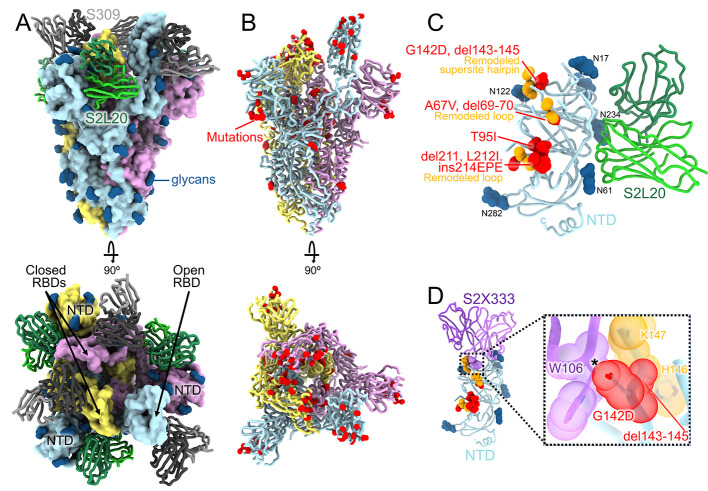
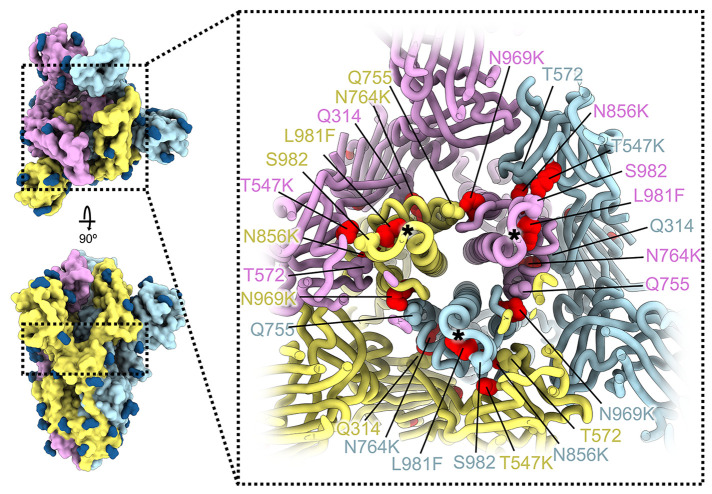
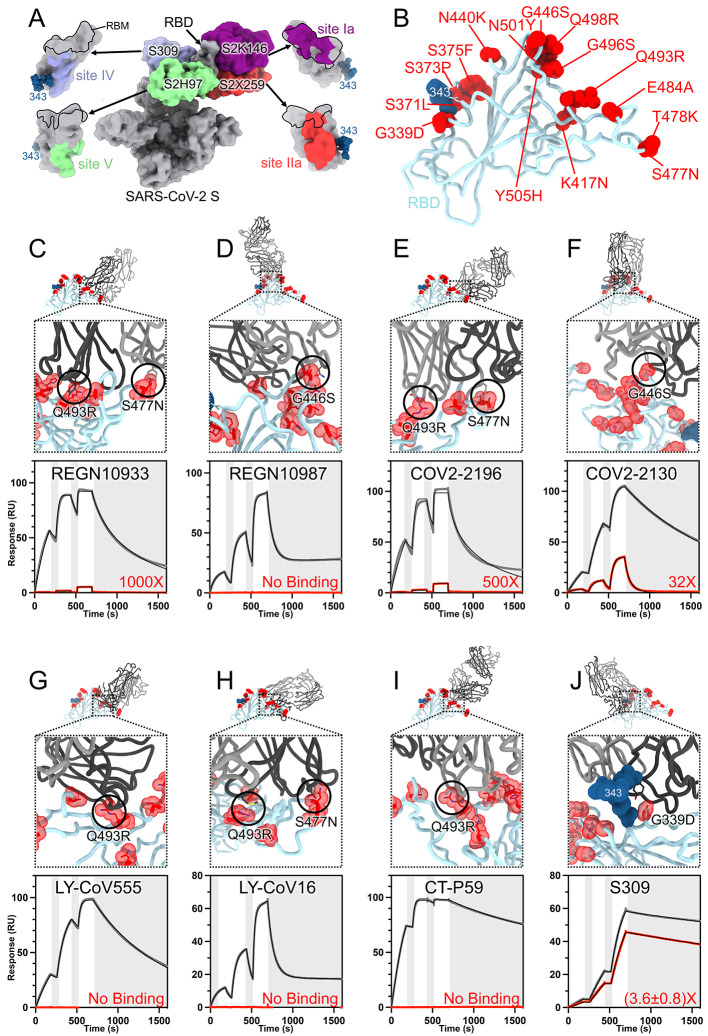
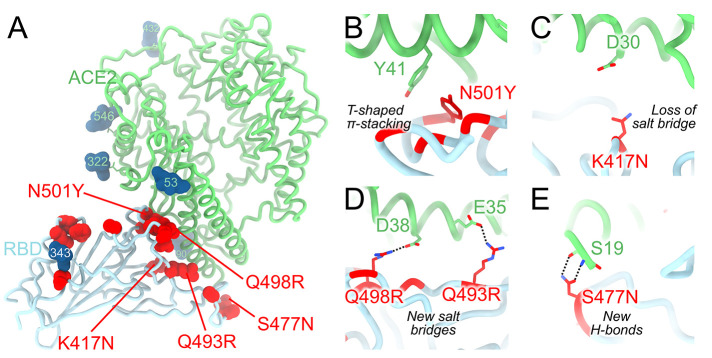
Verification
Claims the paper makes
The claims and statistics of this paper haven’t been checked yet.
Run the check — free, no account needed. It reads the open-access text and checks the sources it cites.
Claims other papers make about this one
Each is checked against this paper’s own text: does it say what the citing paper says it does?
The cited source says what the claim attributes to it.
In the citing paper
“Several VOCs which have mutated, such as Beta1 and Omicron2, evade humoral responses elicited by vaccines based on ancestral S-protein sequences3.”
From Efficacy of an unmodified bivalent mRNA vaccine against SARS-CoV-2 variants in female small animal models (2023) · cites this paper as [2]
In the citing paper
“Reinfections and vaccine breakthrough infections accounted for the majority of Omicron BA.1/2 infections, likely attributable to a minority of population remaining naïve prior to the Omicron BA.1/2 wave and to Omicron BA.1/2's immune-escape properties 16,21,22 .”
From Rapidly shifting immunologic landscape and severity of SARS-CoV-2 in the Omicron era in South Africa (2023) · cites this paper as [22]
Self-check
Percentages, sums and reported differences re-computed from the paper’s own numbers.
The self-check needs the paper’s full text.
Citations
Cites
UCSF Chimera—A visualization system for exploratory research and analysis
Pettersen, E. F., Goddard, T. D., Huang, C. C., Couch, G. S., Greenblatt, D. M., Meng, E. C., & Ferrin, T. E. (2004) · Journal of Computational Chemistry · doi:10.1002/jcc.20084 · Cited by 45,882
Features and development of Coot
Emsley, P., Lohkamp, B., Scott, W. G., & Cowtan, K. (2010) · Acta Crystallographica Section D Biological Crystallography · doi:10.1107/s0907444910007493 · Cited by 29,915
Phaser crystallographic software
McCoy, A. J., Grosse-Kunstleve, R. W., Adams, P. D., Winn, M. D., Storoni, L. C., & Read, R. J. (2007) · Journal of Applied Crystallography · doi:10.1107/s0021889807021206 · Cited by 20,612
MolProbity : all-atom structure validation for macromolecular crystallography
Chen, V. B., Arendall, W. B., Headd, J. J., Keedy, D. A., Immormino, R. M., Kapral, G. J., Murray, L. W., Richardson, J. S., & Richardson, D. C. (2010) · Acta Crystallographica Section D Biological Crystallography · doi:10.1107/s0907444909042073 · Cited by 14,115
cryoSPARC: algorithms for rapid unsupervised cryo-EM structure determination
Punjani, A., Rubinstein, J. L., Fleet, D. J., & Brubaker, M. A. (2017) · Nature Methods · doi:10.1038/nmeth.4169 · Cited by 11,626
Cryo-EM structure of the 2019-nCoV spike in the prefusion conformation
Wrapp, D., Wang, N., Corbett, K. S., Goldsmith, J. A., Hsieh, C.-L., Abiona, O., Graham, B. S., & McLellan, J. S. (2020) · Science · doi:10.1126/science.abb2507 · Cited by 8,897
Structure, function and antigenicity of the SARS-CoV-2 spike glycoprotein
Walls, A. C., Park, Y.-J., Tortorici, M. A., Wall, A., McGuire, A. T., & Veesler, D. (2020) · doi:10.1101/2020.02.19.956581 · Cited by 8,586 · cited 1×
“However, the region comprising residues 366 to 375, which harbors the S371L/S373P/S375F substitutions, deviates markedly from the conformation observed for the Wuhan-Hu-1 RBD, irrespective of the presence of bound linoleic acid ( 4 , 42 , 43 ).”
Self-citationREFMAC 5 for the refinement of macromolecular crystal structures
Murshudov, G. N., Skubák, P., Lebedev, A. A., Pannu, N. S., Steiner, R. A., Nicholls, R. A., Winn, M., Long, F., & Vagin, A. A. (2011) · Acta Crystallographica Section D Biological Crystallography · doi:10.1107/s0907444911001314 · Cited by 8,415
Liebschner, D., Afonine, P. V., Baker, M. L., Bunkóczi, G., Chen, V. B., Croll, T. I., Hintze, B., Hung, L.-W., Jain, S., McCoy, A. J., et al. (2019) · Acta Crystallographica Section D Structural Biology · doi:10.1107/s2059798319011471 · Cited by 7,953
Self-citationStructure of the SARS-CoV-2 spike receptor-binding domain bound to the ACE2 receptor
Lan, J., Ge, J., Yu, J., Shan, S., Zhou, H., Fan, S., Zhang, Q., Shi, X., Wang, Q., Zhang, L., et al. (2020) · Nature · doi:10.1038/s41586-020-2180-5 · Cited by 5,983 · cited 2×
“The Omicron RBD is structurally similar to the Wuhan-Hu-1 RBD and both structures can be superimposed with an r.m.s.d. of 0.8Å over 183 aligned C ɑ residues (as compared to PDB 6m0j ( 42 )).”
Research works printed but not linked: 2
- 10.1016/j.cell.2020.02.058 · DOI · Paper page
- 10.1126/science.abh1139 · DOI · Paper page
Cited by
Sorted by citations
Items 301–400 of 535
Potent antibodies against immune invasive SARS-CoV-2 Omicron subvariants
Wang, L., Wang, Y., & Zhou, H. (2023) · International Journal of Biological Macromolecules · doi:10.1016/j.ijbiomac.2023.125997 · Cited by 8
SARS-COV-2 Omicron variants conformationally escape a rare quaternary antibody binding mode
Goike, J., Hsieh, C., Horton, A. P., Gardner, E. C., Zhou, L., Bartzoka, F., Wang, N., Javanmardi, K., Herbert, A. S., Abbasi, S. A., et al. (2023) · Communications Biology · doi:10.1038/s42003-023-05649-6 · Cited by 8
“Instead, altered RBD conformational dynamics contribute to the antigenic drift observed by evading conformational binders 12,13 .”
Stäb, S., Pearce, N. M., Tronrud, D. E., Ginn, H. M., Fadda, E., Santoni, G., & Thorn, A. (2024) · Crystallography Reviews · doi:10.1080/0889311x.2024.2363756 · Cited by 7
“For Omicron and Delta , recent studies suggest that due to their mutations, both strains are less sensitive to neutralizing monoclonal antibodies from recovered patients and capable of evading immunity conferred through prior infections [252,253].”
Concerted deletions eliminate a neutralizing supersite in SARS-CoV-2 BA.2.87.1 spike
Duyvesteyn, H. M. E., Dijokaite-Guraliuc, A., Liu, C., Supasa, P., Kronsteiner, B., Jeffery, K. J., Stafford, L., Klenerman, P., Dunachie, S. J., Mongkolsapaya, J., et al. (2024) · Structure · doi:10.1016/j.str.2024.07.020 · Cited by 7
SARS-CoV-2 nsp1 mediates broad inhibition of translation in mammals
Gen, R., Addetia, A., Asarnow, D. E., Park, Y., Quispe, J. D., Chan, M. C., Brown, J. T., Lee, J., Campbell, M. G., Lapointe, C. P., et al. (2025) · Cell Reports · doi:10.1016/j.celrep.2025.115696 · Cited by 7
“The conserved nsp1-binding site on the 40S ribosomal subunit along with the reduced nsp1 genetic drift among SARS-CoV-2 variants 98 , relative to the spike glycoprotein 94,96,99 , suggest the possibility of targeting this key virulence factor to develop next-generation COVID-19 countermeasures.”
Self-citationAlshahrani, M., Parikh, V., Foley, B., & Verkhivker, G. M. (2025) · Viruses · doi:10.3390/v17060741 · Cited by 7
Lamb, K. D., Hughes, J., Lytras, S., Young, F., Koci, O., Herzig, J. C., Lovell, S. C., Grove, J., Yuan, K., & Robertson, D. L. (2026) · Nature Communications · doi:10.1038/s41467-026-69569-9 · Cited by 20
“N969K forms electrostatic contacts with Q755 on the adjacent protomer in the pre-fusion state 27 , as well as interacting with and displacing the HR2 backbone in the post-fusion spike structure 22 .”
Planchais, C., Reyes‐Ruiz, A., Lacombe, R. V., Zarantonello, A., Lecerf, M., Revel, M., Roumenina, L. T., Atanasov, B. P., Mouquet, H., & Dimitrov, J. D. (2022) · Protein Science · doi:10.1002/pro.4447 · Cited by 7
“15,17,19 This His residue might be an important contributor for overall energy of binding, and it may control the interaction with ACE2.”
Shikha, S., Jogi, M. K., Jha, R., Kumar, R. A., Sah, T., Singh, P., Sagar, R., Kumar, A., Marwal, R., Ponnusamy, K., et al. (2023) · Frontiers in Immunology · doi:10.3389/fimmu.2023.1209513 · Cited by 8
“and NTD mutations to retain ACE2 binding affinity similar to the Delta variant with a remarkable antibody evasion (3, 4).”
Shah, M., & Woo, H. G. (2022) · Molecular Therapy · doi:10.1016/j.ymthe.2022.08.020 · Cited by 7
Boer, J. C., Pan, Q., Holien, J. K., Nguyen, T., Ascher, D. B., & Plebanski, M. (2022) · Frontiers in Immunology · doi:10.3389/fimmu.2022.954435 · Cited by 7
“For instance, SARS-CoV-2 Omicron G339D and N440K mutations are located in a neighbouring site called antigenic site IV, which in turn is a known recognition site by the S309 mAb (76).”
Yang, Y., Liu, S., Luo, Y., Wang, B., Wang, J., Li, J., Li, J., Ye, B., Wang, Y., & Xi, J. (2023) · PLoS Pathogens · doi:10.1371/journal.ppat.1011119 · Cited by 7
Izumi, H., Aoki, H., Nafié, L. A., & Dukor, R. K. (2023) · ACS Omega · doi:10.1021/acsomega.2c08075 · Cited by 6
Digital PCR Discriminates between SARS-CoV-2 Omicron Variants and Immune Escape Mutations
Holland, S. C., Holland, L., Smith, M. F., Lee, M. B., Hu, J. C., & Lim, E. (2022) · medRxiv · doi:10.1128/spectrum.05258-22 · Cited by 7
Yao, H., Wang, H., Zhang, Z., Lu, Y., Zhang, Z., Zhang, Y., Xiong, X., Wang, Y., Wang, Z., Yang, H., et al. (2023) · MedComm · doi:10.1002/mco2.397 · Cited by 6
Up or down: where comes Omicron?
Liu, Z., Lu, L., & Jiang, S. (2022) · Cell Research · doi:10.1038/s41422-022-00675-1 · Cited by 7
Effectiveness of Naturally Acquired and Vaccine-Induced Immune Responses to SARS-CoV-2 Mu Variant
de Oliveira-Filho, E. F., Rincón‐Orozco, B., Jones-Cifuentes, N. A., Peña-López, B. O., Mühlemann, B., Drosten, C., Moreira‐Soto, A., & Drexler, J. F. (2022) · Emerging infectious diseases · doi:10.3201/eid2808.220584 · Cited by 7
“In addition, the mutation leading to the amino acid exchange R346K in Mu is known to be involved in the evasion of monoclonal antibody–mediated neutralization (9), and genomic exchanges occurring at 3 adjacent sites (Y144T, Y145S, and insertion of the amino acid asparagine [N] between spike residues 145 and 146) have…”
Potent bivalent nanobody constructs that protect against the SARS-CoV-2 XBB variant
Halfmann, P., Lee, J. S., McArthur, N., Gupta, O., Kawaoka, Y., & Kane, R. S. (2025) · npj Viruses · doi:10.1038/s44298-025-00101-4 · Cited by 6
Molecular mechanisms of SARS-CoV-2 entry: implications for biomedical strategies
Santamaria-Castro, I., Leiva-Rebollo, R., Marín‐Wong, S., Jiménez-Guardeño, J. M., & Ortega‐Prieto, A. M. (2025) · Microbiology and Molecular Biology Reviews · doi:10.1128/mmbr.00260-24 · Cited by 7
dos Santos, C. A. L., Monteiro, A. A. D. A., Costa, A. R., Barros, L. M., Aloufi, A. D., Almutairi, M. M., Hassan, W., Kamdem, J. P., Duarte, A. E., Ali, A., et al. (2025) · Scientific Reports · doi:10.1038/s41598-025-93121-2 · Cited by 6
“SARS-CoV-2 enters cells by utilizing the ACE2 receptor 86 .”
Alshahrani, M., Parikh, V., Foley, B., & Verkhivker, G. M. (2025) · Viruses · doi:10.3390/v17081029 · Cited by 6
Ren, P., Peng, L., Yang, L., Suzuki, K., Fang, Z., Renauer, P. A., Lin, Q., Bai, M., Li, T., Clark, P. R., et al. (2023) · Cell chemical biology · doi:10.1016/j.chembiol.2022.12.005 · Cited by 6
da Silva, E. S., Servais, J.-Y., Kohnen, M., Arendt, V., Gilson, G., Staub, T., Seguin‐Devaux, C., & Perez-Bercoff, D. (2023) · Current Issues in Molecular Biology · doi:10.3390/cimb45020112 · Cited by 6
“The Omicron Spike also adopts a distinct, more compact conformation and glycosylation patterns which shield it from type 1, 2 and 3 Neutralizing antibodies (NAbs) [33,36,37].”
Paulino-Ramírez, R., López, P. L., Mueses, S., Cuevas, P., Jabier, M., & Rivera‐Amill, V. (2023) · International Journal of Environmental Research and Public Health · doi:10.3390/ijerph20085503 · Cited by 6
“The high number of mutations raised much concern because this region mediates host entry and is the main target of neutralizing antibodies [57].”
Lyukmanova, E. N., Pichkur, E., Nolde, D. E., Kocharovskaya, M. V., Manuvera, V. A., Shirokov, D. A., Kharlampieva, D. D., Grafskaia, E. N., Svetlova, J. I., Лазарев, В. Н., et al. (2024) · Communications Biology · doi:10.1038/s42003-024-07422-9 · Cited by 6
Ndzouboukou, J. B., Kamara, A. A., Ullah, N., Lei, Q., & Fan, X. (2025) · Journal of Microbiology and Biotechnology · doi:10.4014/jmb.2411.11059 · Cited by 7
Immune evasion, infectivity, and membrane fusion of the SARS-CoV-2 JN.1 variant
Tang, H., Zhuo, Y., Chen, J., Zhang, R., Zheng, M., Huang, X., Chen, Y., Huang, M., Zeng, Z., Huang, X., et al. (2025) · Virology Journal · doi:10.1186/s12985-025-02737-3 · Cited by 7
“Furthermore, structural analyses demonstrate that Q493R and Q498R mutations establish new electrostatic interactions with ACE2 residues Glu35 and Asp38, respectively, while the S477N mutation facilitates hydrogen bond formation with ACE2 Ser19 [12, 35].”
Teruel, N., Crown, M. R., Rajsbaum, R., Bashton, M., & Najmanovich, R. (2025) · Virus Evolution · doi:10.1093/ve/veaf027 · Cited by 7
“…provide a limited view of functional aspects, as they typically rely on a single or few structures (Hong et al. 2022, Mannar et al. 2022, McCallum et al. 2022) that fail to capture the full variability and dynamic nature of a moving protein, a limitation that can be seen when comparing…”
Laura, L., Dalmatin-Dragišić, M., Martinović, K., Tutiš, B., Herceg, I., Arapović, M., & Arapović, J. (2022) · Infection · doi:10.1007/s15010-022-01859-y · Cited by 7
Immune Evasion by the Highly Mutated SARS-CoV-2 Omicron Variant
Mengist, H. M., Kombe, A. J. K., & Jin, T. (2022) · Infection and Drug Resistance · doi:10.2147/idr.s366437 · Cited by 6
Physical-Chemical Regulation of Membrane Receptors Dynamics in Viral Invasion and Immune Defense
Qin, R., An, C., & Chen, W. (2022) · Journal of Molecular Biology · doi:10.1016/j.jmb.2022.167800 · Cited by 6
Ma, J., Liu, X., Zhou, M., Chen, P., Chen, R., Wang, J., Zhu, H., Wu, K., Ye, J., Zhang, Y., et al. (2023) · Journal of Virology · doi:10.1128/jvi.01684-22 · Cited by 6
Cheng, Y., Zheng, D., Zhang, D., Guo, D., Wang, Y., Liu, W. Y., Liang, L., Hu, J., Shi, H., & Luo, T. (2023) · Journal of Molecular Modeling · doi:10.1007/s00894-023-05509-4 · Cited by 6
Simon, G., Favresse, J., Gillot, C., Closset, M., Catry, É., Dogné, J., Douxfils, J., Wieërs, G., & Bayart, J. (2023) · Clinical Chemistry and Laboratory Medicine (CCLM) · doi:10.1515/cclm-2022-1258 · Cited by 7
Update on Remdesivir in the Treatment of Novel Coronavirus Pneumonia
Feng, H., Lakshmi, K. V., Ng, C. T., Sasikumar, M., Arip, M., Hassan, M., Chin, V. K., Rajagopal, M. S., Fatokun, O. O., Parvathi, N., et al. (2023) · Progress In Microbes & Molecular Biology · doi:10.36877/pmmb.a0000341 · Cited by 6
“Both transcription and genome replication of RNA viruses are dominated by RdRp [27, 42] .”
Song, N., Chakravarthy, K. B., Jeon, H., Bolyard, C. M., Reynolds, K., Weller, K. P., Reisinger, S. A., Wang, Y., Li, A., Jiang, S., et al. (2024) · Journal for ImmunoTherapy of Cancer · doi:10.1136/jitc-2023-007922 · Cited by 6
Velásquez, S. R., Biru, L., Hakiza, S., Al‐Gobari, M., Triulzi, I., Dalal, J., Valera, C. B., Mesa, S. B., & Keiser, O. (2024) · Swiss Medical Weekly · doi:10.57187/s.3732 · Cited by 7
“Of the five variants of concern, Omicron has accumulated the highest number of mutations and has mediated the greatest level of immune escape [6].”
Valuable Contributions and Lessons Learned from Proteomics and Metabolomics Studies of COVID-19
Chatterjee, B., & Thakur, S. S. (2024) · Journal of Proteome Research · doi:10.1021/acs.jproteome.4c00340 · Cited by 5
Alshahrani, M., Parikh, V., Foley, B., & Verkhivker, G. M. (2025) · Physical Chemistry Chemical Physics · doi:10.1039/d5cp02468d · Cited by 5
Repeated COVID-19 vaccine boosters elicit variant-specific memory B cells in humans
Tortorici, M. A., Sprouse, K. R., Addetia, A., Brown, J. T., Lee, J., Stewart, C., Merz, B., Harteloo, A., Elias-Warren, A., Chu, H. Y., et al. (2026) · Cell Reports · doi:10.1016/j.celrep.2026.117052 · Cited by 8
Self-citationSaini, S., Pareekh, S., & Kumar, Y. (2023) · Journal of Biomolecular Structure and Dynamics · doi:10.1080/07391102.2023.2222174 · Cited by 5
“The conformational geometry of RBD plays an essential role in the spatial chemistry of interaction between human ACE-2 and RBD of SARS-CoV-2 and its variants.”
InfluentialEvolution of SARS-CoV-2 Spikes shapes their binding affinities to animal ACE2 orthologs
Yao, W., Li, Y., Ma, D., Hou, X.-D., Wang, H., Tang, X., Cheng, D., Zhang, H., Du, C., Pan, H., et al. (2023) · Microbiology Spectrum · doi:10.1128/spectrum.02676-23 · Cited by 5
“Since both K417N and Y505H mutations are present in Omicron’s major sublineages (47, 73, 74), the above data also suggest that, in contrast to the WHU01 and Delta variants, the Omicron lineage might be generally less hazardous to livestock and pet animals.”
Vaccine-induced strain replacement: theory and real-life implications
Mahroum, N., Karaoglan, B. S., Ulucam, E. S., & Shoenfeld, Y. (2024) · Future Microbiology · doi:10.1080/17460913.2024.2345003 · Cited by 5
An integrated multiscale computational framework deciphers SARS-CoV-2 resistance to sotrovimab
Sharma, A., Maurya, S., Kumar, S., Tripathi, T., Kar, R. K., & Padhi, A. K. (2025) · Biophysical Journal · doi:10.1016/j.bpj.2025.05.015 · Cited by 6
Samanta, A., Alam, S. S. M., Ali, S., & Hoque, M. (2021) · bioRxiv (Cold Spring Harbor Laboratory) · doi:10.17179/excli2022-4721 · Cited by 14
Williams, E., Colson, J., Valiathan, R., Carreño, J. M., Krammer, F., Hoffer, M. E., Pallikkuth, S., Pahwa, S. G., & Andrews, D. M. (2022) · Vaccine · doi:10.1016/j.vaccine.2022.08.058 · Cited by 5
Continued Complexity of Mutations in Omicron Sublineages
Spratt, A. N., Kannan, S. R., Sharma, K., Sachdev, S., Kandasamy, S. L., Sönnerborg, A. B., Lorson, C. L., & Singh, K. (2022) · Biomedicines · doi:10.3390/biomedicines10102593 · Cited by 4
“The loop harboring F486 also has another Omicron signature mutation (E484A), which abrogates the binding of the LYCoV555 monoclonal antibody (mAb) to S-RBD [23].”
Brown, K. L., Ceci, A., Roby, C. D., Briggs, R., Ziolo, D., Korba, R., Mejia, R., Kelly, S., TONEY, D. M., Friedlander, M. J., et al. (2022) · Emerging Microbes & Infections · doi:10.1080/22221751.2022.2154617 · Cited by 5
“activity among vaccinated and previously infected individuals [15-19].”
A systematic study on the binding affinity of SARS-CoV-2 spike protein to antibodies
An, K., Zhu, X., Yan, J., Xu, P., Hu, L., & Bai, C. (2022) · AIMS Microbiology · doi:10.3934/microbiol.2022038 · Cited by 5
Qiu, S., Chen, Z., Zhu, A., Zeng, Q., Liu, H., Liu, X., Ye, F., Jin, Y., Wu, J., Yang, C., et al. (2023) · Signal Transduction and Targeted Therapy · doi:10.1038/s41392-023-01345-3 · Cited by 5
“Single-vaccination dose induced durable and broad nAbs against various SARS-CoV-2 VOCs in PA cases The ongoing transmission of SARS-CoV-2 has led to the emergence of VOCs with higher transmissibility or resistance to prior immunity.(26,27) To further investigate the protection efficiency of this vaccine in facing emer…”
Hsieh, Y.-C., Delarue, M. H., Orland, H., & Koehl, P. (2023) · Viruses · doi:10.3390/v15061366 · Cited by 6
Update on Central Nervous System Effects of the Intersection of HIV-1 and SARS-CoV-2
Ocampo, F. F., Promsena, P., & Chan, P. (2023) · Current HIV/AIDS Reports · doi:10.1007/s11904-023-00676-8 · Cited by 5
“Compared to pre-Omicron (wild-type, Alpha, Beta, and Delta) variants, Omicron and its subvariants exhibit high immune evasion [10, 11] and increased transmissibility [9].”
Peroxide derivatives as SARS-CoV-2 entry inhibitors
Zhang, D., Ma, Q., Yang, M.-C., Belyakova, Y. Y., Yang, Z., Radulov, P. S., Chen, R., Yang, L., Wei, J., Peng, Y.-T., et al. (2023) · Virus Research · doi:10.1016/j.virusres.2023.199295 · Cited by 5
Wang, E., Yang, Q., Xu, X., Zou, Q., Long, Y., Ma, G., Deng, Z., Zhao, J., Li, M., & Zeng, J. (2024) · Journal of Medical Virology · doi:10.1002/jmv.29357 · Cited by 5
Morris, J. S. (2024) · American Journal of Epidemiology · doi:10.1093/aje/kwae280 · Cited by 5
Mackin, R. T., Edwards, J. V., Atuk, E. B., Beltrami, N., Condon, B., Jayawickramarajah, J., & French, A. D. (2022) · Molecules · doi:10.3390/molecules27072070 · Cited by 5
“These mutations correspond to positive charge changes and allow for the formation of new salt bridges and hydrogen bonds, while other mutations improve antibody evasion [20,83].”
Pidal, P., Fernández, J. O., Airola, C., Araujo, M., Menjiba, A. M., Martín, H. S., Bruneau, N., Balanda, M., Elgueta, C., Fasce, R., et al. (2022) · Medical Microbiology and Immunology · doi:10.1007/s00430-022-00753-6 · Cited by 5
Liwsrisakun, C., Pata, S., Laopajon, W., Takheaw, N., Chaiwong, W., Duangjit, P., Inchai, J., Chuensirikulchai, K., Cheyasawan, P., Pothirat, C., et al. (2023) · Asian Pacific Journal of Allergy and Immunology · doi:10.12932/ap-120822-1434 · Cited by 5
“26 Vaccine effectiveness for the Omicron was reported to be lower than WT and other VOCs.”
Novel ACE2 fusion protein with adapting activity against SARS-CoV-2 variants in vitro
Zekri, L., Ruétalo, N., Christie, M., Walker, C., Manz, T., Rammensee, H., Salih, H. R., Schindler, M., & Jung, G. (2023) · Frontiers in Immunology · doi:10.3389/fimmu.2023.1112505 · Cited by 5
Understanding the host-pathogen evolutionary balance through Gaussian process modeling of SARS-CoV-2
Loguercio, S., Calverley, B. C., Wang, C., Shak, D., Zhao, P., Sun, S., Budinger, G. R. S., & Balch, W. E. (2023) · Patterns · doi:10.1016/j.patter.2023.100800 · Cited by 5
“This can be done through the prism of GP-based SCV and EWAD to advance understanding of viral pathology and/or advancing new therapeutics, 63,65,66 as our GP analysis treats the virus as whole (the collective sum of its covariate parts) in driving the rapid evolution of the pandemic.”
Martins, M., Nooruzzaman, M., Cunningham, J. L., Ye, C., Caserta, L. C., Jackson, N. D., Martínez‐Sobrido, L., Fāng, Y., & Diel, D. G. (2024) · Journal of Virology · doi:10.1128/jvi.01902-23 · Cited by 5
Mehta, S. R., Smith, D. M., Boukadida, C., & Chaillon, A. (2022) · Viruses · doi:10.3390/v14071494 · Cited by 5
Smit, W. L., Thijsen, S. F. T., van der Kieft, R., van Tol, S., Reimerink, J. H. J., Reusken, C. B. E. M., Rümke, L. W., Bossink, A. W. J., Limonard, G. J. M., & Heron, M. (2022) · Pathogens and Disease · doi:10.1093/femspd/ftac035 · Cited by 5
Durable protection against SARS-CoV-2 Omicron induced by an adjuvanted subunit vaccinePreprint
Arunachalam, P. S., Feng, Y., Ashraf, U., Hu, M., Edara, V. V., Zarnitsyna, V. I., Aye, P. P., Golden, N., Green, K. M., Threeton, B., et al. (2022) · bioRxiv (Cold Spring Harbor Laboratory) · doi:10.1101/2022.03.18.484950 · Cited by 5
“Protection against Omicron Omicron is characterized by high resistance to vaccine-induced nAbs and therapeutic monoclonal nAbs (Cameroni et al., 2022; McCallum et al., 2022), which results in a striking decline in vaccine efficacy against Omicron (Andrews et al., 2022).”
Self-citationLimited Neutralization of Omicron by Antibodies from the BNT162b2 Vaccination against SARS-CoV-2Preprint
Lanz, T. V., Brewer, R. C., Jahanbani, S., & Robinson, W. H. (2022) · Research Square · doi:10.21203/rs.3.rs-1518378/v1 · Cited by 5
Structural and functional characteristics of SARS-CoV-2 Omicron subvariant BA.2 spikePreprint
Zhang, J., Tang, W., Gao, H., Lavine, C. L., Shi, W., Peng, H., Zhu, H., Anand, K., Kosikova, M., Kwon, H. J., et al. (2022) · bioRxiv (Cold Spring Harbor Laboratory) · doi:10.1101/2022.04.28.489772 · Cited by 5
“Q493R and Q498R have been shown to enhance ACE2 affinity by creating additional contacts with the receptor (38-42), while K417N and E484A eliminate ionic interactions with ACE2 and may reduce the ACE2 affinity (27, 43).”
Adhikari, P., Jawad, B., Podgornik, R., & Ching, W. Y. (2022) · bioRxiv (Cold Spring Harbor Laboratory) · doi:10.1101/2022.06.03.494698 · Cited by 5
Genome-first detection of emerging resistance to novel therapeutic agents for SARS-CoV-2Preprint
Ragonnet‐Cronin, M., Nutalai, R., Huo, J., Dijokaite-Guraliuc, A., Das, R., Tuekprakhon, A., Supasa, P., Liu, C., Selvaraj, M., Groves, N., et al. (2022) · bioRxiv (Cold Spring Harbor Laboratory) · doi:10.1101/2022.07.14.500063 · Cited by 5
Touizer, E., Alrubayyi, A., Ford, R., Hussain, N., Gerber, P. P., Shum, H.-L., Rees-Spear, C., Muir, L., Gea‐Mallorquí, E., Kopycinski, J. T., et al. (2022) · bioRxiv (Cold Spring Harbor Laboratory) · doi:10.1101/2022.11.11.516111 · Cited by 5
Raisinghani, N., Alshahrani, M., Gupta, G., Xiao, S., Tao, P., & Verkhivker, G. M. (2024) · bioRxiv (Cold Spring Harbor Laboratory) · doi:10.1101/2024.04.02.587850 · Cited by 6
Ma, S., Liang, Y., Song, H., Wang, T., Zhang, Y., Zhang, L., Chen, J., Lu, H., & Zhang, Y. (2026) · Journal of the American Chemical Society · doi:10.1021/jacs.5c14196 · Cited by 4
Structural Insights into the SARS-CoV-2 Spike Protein and Its Implications for Antibody Resistance
Yamamoto, Y., & Noguchi, K. (2025) · Biomolecules · doi:10.3390/biom15111489 · Cited by 5
“Although REGN10987 (Class 3) is primarily impaired by other Omicron mutations such as G446S, Q493R in combination with adjacent substitutions contributes to the extensive immune escape phenotype observed in Omicron [78,80].”
Singh, U. B., Deb, S., Rani, L., Bhardwaj, D., Gupta, R., Kabra, M., Bala, K., Kumari, L., Perumalla, S., Shukla, J., et al. (2023) · The Lancet Regional Health - Southeast Asia · doi:10.1016/j.lansea.2023.100148 · Cited by 4
Remesh, S. G., Merz, G. E., Brilot, A. F., Chio, U. S., Rizo, A. N., Pospiech, T. H., Lui, I., Laurie, M. T., Glasgow, J. E., Le, C. Q., et al. (2023) · Structure · doi:10.1016/j.str.2023.01.009 · Cited by 4
“3,4,28 For example, while the Y505H mutation leads to loss in hydrogen bond interactions with WT-ACE2 residue E37, there are several compensatory mutations in the Omicron-RBD.”
Verkhivker, G. M., Alshahrani, M., & Gupta, G. (2023) · International Journal of Molecular Sciences · doi:10.3390/ijms24076642 · Cited by 4
“4 various functional states and complexes with antibodies revealed a remarkable versatility of molecular mechanisms and diversity of binding epitopes that underlie binding affinity of S proteins with different classes of antibodies [19-28].”
Guan, X., Verma, A. K., Wang, G., Roy, A., Perlman, S. M., & Du, L. (2024) · Vaccines · doi:10.3390/vaccines12060605 · Cited by 4
Martinez, E. J., Chang, W. C., Chen, W., Hajduczki, A., Thomas, P. V., Jensen, J. L., Choe, M., Sankhala, R. S., Peterson, C. E., Rees, P. A., et al. (2024) · iScience · doi:10.1016/j.isci.2024.110624 · Cited by 3
Characterization of key spike RBD residues influencing SARS-CoV-2 variant adaptation to avian ACE2
Yao, W., Li, Y., Sun, H., Ma, D., Tang, X., Zeng, A., & Huang, F. (2025) · Frontiers in Cellular and Infection Microbiology · doi:10.3389/fcimb.2025.1631926 · Cited by 4
Being a Public Health Statistician During a Global Pandemic
Mukherjee, B. (2022) · Statistical Science · doi:10.1214/22-sts859 · Cited by 4
Molecular Insights into Striking Antibody Evasion of SARS-CoV-2 Omicron Variant
Yan, Z., Xu, Y., Ding, H., & Ma, Y. (2022) · Chinese Physics Letters · doi:10.1088/0256-307x/39/10/108701 · Cited by 4
Li, Z., & Buck, M. (2022) · Computational and Structural Biotechnology Journal · doi:10.1016/j.csbj.2022.10.044 · Cited by 4
“For the Omicron variant, the current electron microscope results indicate the existence of both 2 RBD ‘‘open” and 1 RBD ‘‘open” states, but the relative ratio is unknown [10].”
Mapping the Accessory Proteins (Orfs) of Severe Acute Respiratory Syndrome Coronavirus 2
Thomas, S. (2023) · Re GEN Open · doi:10.1089/regen.2022.0056 · Cited by 4
Genomic evidence for reinfection with different Omicron subvariants
Hirotsu, Y., & Omata, M. (2023) · Journal of Infection · doi:10.1016/j.jinf.2023.01.010 · Cited by 4
Du, W., Hurdiss, D. L., Drabek, D., Mykytyn, A. Z., Kaiser, F. K., González-Hernández, M. C., Muñoz‐Santos, D., Lamers, M. M., van Haperen, R., Li, W., et al. (2022) · bioRxiv (Cold Spring Harbor Laboratory) · doi:10.1101/2022.02.17.480751 · Cited by 4
Structural dynamics in the evolution of SARS-CoV-2 spike glycoproteinPreprint
Calvaresi, V., Wrobel, A. G., Toporowska, J., Hammerschmid, D., Doores, K. J., Bradshaw, R. T., Parsons, R. B., Benton, D. J., Roustan, C., Reading, E., et al. (2022) · Research Square · doi:10.21203/rs.3.rs-2049401/v1 · Cited by 4
Human neutralizing antibodies to cold linear epitopes and to subdomain 1 of SARS-CoV-2Preprint
Bianchini, F., Crivelli, V., Abernathy, M. E., Guerra, C., Palus, M., Muri, J., Marcotte, H., Piralla, A., Pedotti, M., Gasparo, R. D., et al. (2022) · bioRxiv (Cold Spring Harbor Laboratory) · doi:10.1101/2022.11.24.515932 · Cited by 4
Editorial: COVID-19 booster vaccination: increasing immunity against life-threatening infection
Yorsaeng, R., Atsawawaranunt, K., & Riad, A. (2024) · Frontiers in Public Health · doi:10.3389/fpubh.2023.1342118 · Cited by 4
Addetia, A., Schäfer, A., Sprouse, K. R., Valdez, A., Taylor, A., Navarro, M.-J., Brown, J. T., Leaf, E. M., Miranda, M. C., Walls, A. C., et al. (2025) · bioRxiv (Cold Spring Harbor Laboratory) · doi:10.1101/2025.05.11.652904 · Cited by 4
Self-citationWang, C., Chen, W., Yu, L., Wang, X., Zhang, L., Zhang, X., Tang, S., Han, J., Gao, W., Huang, X., et al. (2025) · Water Research · doi:10.1016/j.watres.2025.123649 · Cited by 3
Design of Entry Inhibitor Peptides Covalently Bonding SARS-CoV-2 Variants in Wastewater
Xue, B., Li, R., Zhu, Q., Yang, Y., Wang, F., Cheng, Z., & Zhou, X. (2025) · Environmental Science & Technology · doi:10.1021/acs.est.5c02307 · Cited by 3
Shi, L., Roy, S., Lang, Y., Wen, Y., Mitchell, W. J., Yang, W., Wang, L., Zhang, J., Liu, H., Driver, J. P., et al. (2025) · mBio · doi:10.1128/mbio.01107-25 · Cited by 3
Katte, R. H., Ao, Y., Wang, X., Han, Y., Zhong, G., Ghimire, D., Florence, J., Tucker, T. A., & Lu, M. (2024) · Viruses · doi:10.3390/v16030391 · Cited by 3
“BA.1 and its descendants harbor an unusually large number of mutations (over 30) in S [11,35,36].”
Alshahrani, M., Parikh, V., Foley, B., Raisinghani, N., & Verkhivker, G. M. (2025) · International Journal of Molecular Sciences · doi:10.3390/ijms26041507 · Cited by 3
Liu, Q., Xiao, Y., & Smith, R. J. (2025) · Bulletin of Mathematical Biology · doi:10.1007/s11538-025-01517-y · Cited by 3
“2 (McCallum et al. 2022; Day et al. 2022).”
A Pathway Model to Understand the Evolution of Spike Protein Binding to ACE2 in SARS-CoV-2 Variants
Pipitò, L., Reynolds, C. A., Mobarec, J. C., Vickery, O. N., & Deganutti, G. (2022) · Biomolecules · doi:10.3390/biom12111607 · Cited by 3
“Mutations K417N, G446S, S477N, T478K, E484A, Q493R, G496S, Q498R, N501Y, and Y505H are part of the immunodominant antigenic site I [8].”
Kreye, J., Reincke, S. M., Edelburg, S., Jeworowski, L. M., Kornau, H., Trimpert, J., Hombach, P., Halbe, S., Nölle, V., Meyer, M., et al. (2023) · iScience · doi:10.1016/j.isci.2023.106323 · Cited by 3
Efficacy of novel SARS-CoV-2 rapid antigen tests in the era of omicron outbreak
Widyasari, K., & Kim, S. (2023) · PLoS ONE · doi:10.1371/journal.pone.0289990 · Cited by 3
“In comparison to the prior SARS-CoV-2 variants, the Omicron showed a significant number of mutations [30], with a greater rate of transmissibility [31, 32] and the ability to evade the efficacy of the currently administered COVID-19 vaccines or monoclonal antibody therapies [33, 34].”
Sitthiyotha, T., Treewattanawong, W., & Chunsrivirot, S. (2023) · PLoS ONE · doi:10.1371/journal.pone.0292589 · Cited by 3
A human antibody derived from original SARS-CoV-2 infection effectively neutralizes omicron
Li, T., Zhou, B., Dong, H., Lavillette, D., & Li, D. (2024) · Advanced Biotechnology · doi:10.1007/s44307-024-00011-1 · Cited by 3
Mallory, M. L., Munt, J. E., Narowski, T. M., Castillo, I. N., Cuadra, E., Pisanic, N., Fields, P., Powers, J. M., Dickson, A. M., Harris, R., et al. (2024) · Science Advances · doi:10.1126/sciadv.adi1379 · Cited by 5
“Some spike RBD mutations enhanced viral interaction with the host cell surface receptor, angiotensin-converting enzyme 2 (ACE2) ( 7 ).”
Metadata
- Authors
- McCallum, M., Czudnochowski, N., Rosen, L. E., Zepeda, S. K., Bowen, J. E., Walls, A. C., Hauser, K., Joshi, A., Stewart, C., Dillen, J. R., Powell, A. E., Croll, T. I., Nix, J., Virgin, H. W., Corti, D., Snell, G., & Veesler, D.
- Affiliations
- University of Washington (US)
- VIR Biotechnology (United States) (US)
- Howard Hughes Medical Institute (US)
- University of Cambridge (GB)
- Lawrence Berkeley National Laboratory (US)
- Washington University in St. Louis (US)
- Vir Biotechnology (Switzerland) (CH)
- Corresponding author
- McCallum, Matthew
- Czudnochowski, Nadine
- Snell, Gyorgy
- Veesler, David
- ORCID
- Venue
- Science
- Published
- 2022-02-25
- Volume
- 375
- Issue
- 6583
- Pages
- 864-868
- ISSN
- 0036-8075 (ISSN-L)
- 1095-9203
- PMC
- PMC9427005
- OpenAlex
- W4220861013
- Cited by
- 535
- References
- 85
- Citations by year
- 2026: 25 · 2025: 56 · 2024: 85 · 2023: 122 · 2022: 246
- FWCI
- 62.11
- Type
- journal article
- Language
- en
- Open access
- hybrid
- doi.org
- Licence
- cc-by
- Locations
- Science (publishedVersion, cc-by)
- bioRxiv (Cold Spring Harbor Laboratory) (acceptedVersion, cc-by-nc-nd)
- PubMed Central (publishedVersion, cc-by)
- PubMed (publishedVersion)
- OSTI OAI (U.S. Department of Energy Office of Scientific and Technical Information) (submittedVersion, cc-by)
- eScholarship (California Digital Library) (submittedVersion)
- Funders
- Howard Hughes Medical Institute (DE-AC02-05CH11231)
- U.S. Department of Energy (-AC02-05CH11231, Contract No. DE-AC02-05-CH11231, 05CH11231, No. DE-AC02-05-CH11231, DE AC02 05CH11231, DE-AC02-)
- Burroughs Wellcome Fund (DE-AC02-05CH11231)
- University of Washington
- Wellcome Trust (Z/17/Z, 209407/Z/17/Z)
- Fast Grants
- National Institutes of Health (S10 OD032290, DE-AC02–05CH11231, 1s10od023476-01, HHSN272201700059C)
- Office of Science (No. DE-AC02- 05-CH11231, DEAC02–05CH11231, AC02-05CH11231, DE-AC02, 05CH11231, Contract No. DE-AC02-05CH11231)
- National Institute of General Medical Sciences (DE-AC02-05CH11231, R01GM120553, T32GM008268, P30GM124169)
- National Institute of Allergy and Infectious Diseases (HHSN272201700059C, DP1AI158186)
- Topics
- Health Sciences › Medicine › Infectious Diseases › SARS-CoV-2 and COVID-19 Research
- Life Sciences › Biochemistry, Genetics and Molecular Biology › Molecular Biology › vaccines and immunoinformatics approaches
- Life Sciences › Agricultural and Biological Sciences › Animal Science and Zoology › Animal Virus Infections Studies
- Keywords
- Omicron variant, spike protein, receptor binding domain, antibody escape, sotrovimab, ACE2 receptor, antigenic shift, spike protein mutations, antibody affinity
- MeSH terms
- Protein Domains, Broadly Neutralizing Antibodies, Receptors, Coronavirus, Angiotensin-Converting Enzyme 2, SARS-CoV-2, Antigenic Drift and Shift, Antibodies, Monoclonal, Antibodies, Viral, Humans, Models, Molecular, Mutation, Protein Binding, Protein Conformation, Crystallography, X-Ray, Amino Acid Substitution, Cryoelectron Microscopy, Protein Interaction Domains and Motifs, Immune Evasion, Spike Glycoprotein, Coronavirus
About these checks
Registry, retraction, Cites and statistics results are computed, not judged, with one exception: a printed reference that no index lists is read once by a model before it counts as a citation error. Claims are extracted by a model and kept only when their quote appears verbatim in the text; each cited source is then checked, with a model’s help, for whether it says what the claim relies on. Those verdicts can be wrong — read the claim’s quote and the cited source before relying on one.
Statistics and arithmetic are recomputed, not judged.
Confidence bands are shown only for fields calibrated on our annotated test set. None is calibrated yet, so no band is shown.
What counts as a claim ›How we measure confidence ›How we check this ›
Are you an author, or do you see a problem with this page? Request a review
