

Hallucinating symmetric protein assemblies
Open accessPublished version of a preprint
The DOI matches its Crossref record; 65 of the 65 references it cites were found in a registry or an index.
Abstract
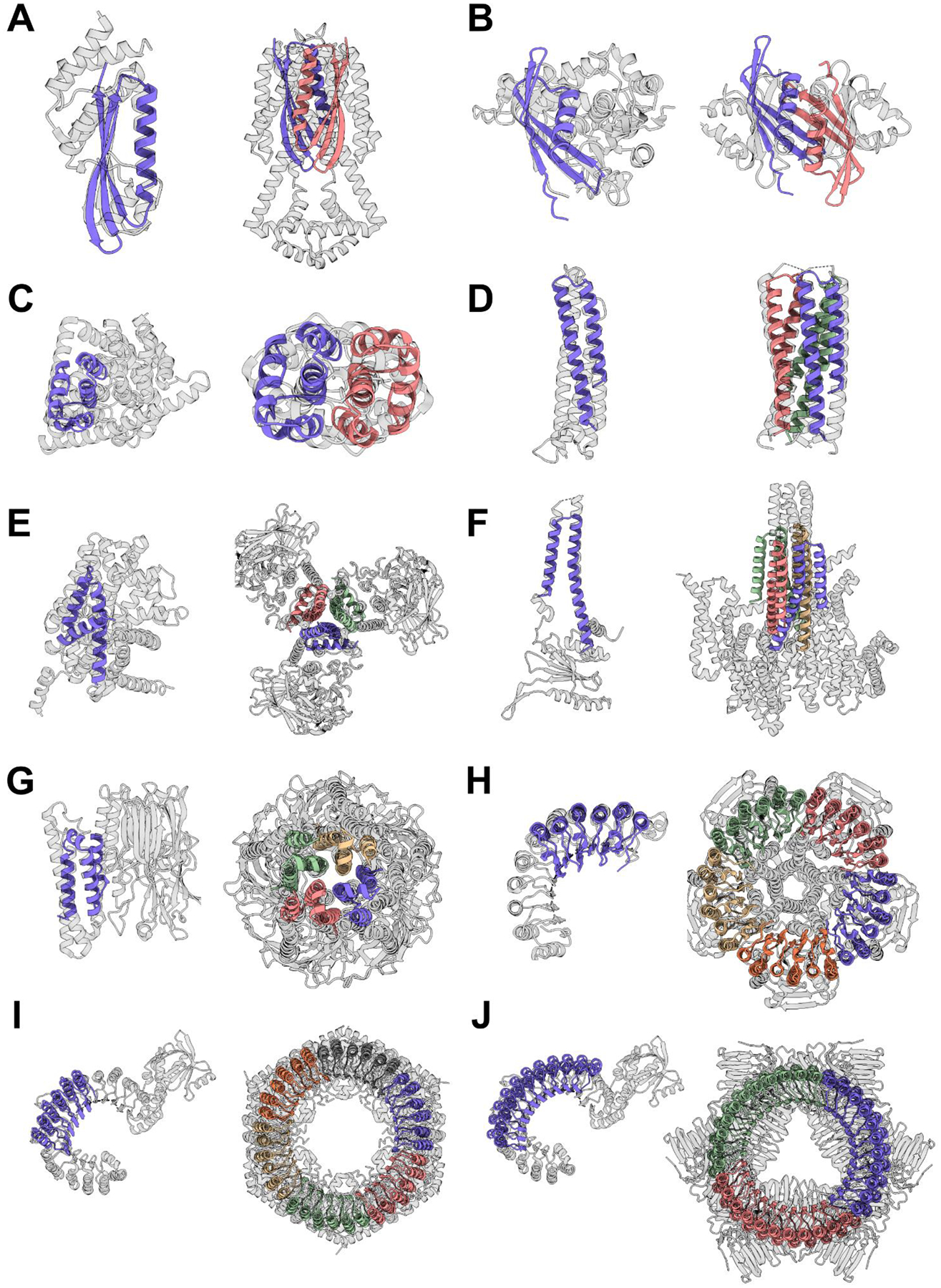
Deep learning generative approaches provide an opportunity to broadly explore protein structure space beyond the sequences and structures of natural proteins. Here, we use deep network hallucination to generate a wide range of symmetric protein homo-oligomers given only a specification of the number of protomers and the protomer length. Crystal structures of seven designs are very similar to the computational models (median root mean square deviation: 0.6 angstroms), as are three cryo–electron microscopy structures of giant 10-nanometer rings with up to 1550 residues and C 33 symmetry; all differ considerably from previously solved structures. Our results highlight the rich diversity of new protein structures that can be generated using deep learning and pave the way for the design of increasingly complex components for nanomachines and biomaterials.
Overview
The claims and statistics of this paper haven’t been checked yet.
Free: it reads the open-access text and checks the first 5 claims that cite a source we can check. Create a free account to check every claim.
Integrity signals
Registry
Cites
Statistics
Figures


Verification
Claims the paper makes
The claims and statistics of this paper haven’t been checked yet.
Free: it reads the open-access text and checks the first 5 claims that cite a source we can check. Create a free account to check every claim.
Claims other papers make about this one
Each is checked against this paper’s own text: does it say what the citing paper says it does?
The source backs part of the claim, not all of it — or backs it for a different population, condition or comparison.
In the citing paper
“This measure of in silico success has been found to correlate with experimental success4,7,26 and is significantly more stringent than template modelling (TM)-score-based metrics used elsewhere5,16,27–29”
From De novo design of protein structure and function with RFdiffusion (2023) · cites this paper as [7]
Experimental — accuracy not yet measuredThe source backs part of the claim, not all of it — or backs it for a different population, condition or comparison.
In the citing paper
“Cyclic oligomers have been designed using structure prediction networks with an adaptation of Hallucination that searches for sequences predicted to fold to the desired cyclic symmetry, but this approach fails for higher-order dihedral, tetrahedral, octahedral and icosahedral symmetries, probably in part because of the much lower representation of such structures in the PDB7.”
From De novo design of protein structure and function with RFdiffusion (2023) · cites this paper as [7]
Experimental — accuracy not yet measured
Self-check
Percentages, sums and reported differences re-computed from the paper’s own numbers.
The self-check needs the paper’s full text.
Citations
Cites
Highly accurate protein structure prediction with AlphaFold
Jumper, J., Evans, R., Pritzel, A., Green, T., Figurnov, M., Ronneberger, O., Tunyasuvunakool, K., Bates, R., Žídek, A., Potapenko, A., et al. (2021) · Nature · doi:10.1038/s41586-021-03819-2 · Cited by 43,764
Coot : model-building tools for molecular graphics
Emsley, P., & Cowtan, K. (2004) · Acta Crystallographica Section D Biological Crystallography · doi:10.1107/s0907444904019158 · Cited by 30,571
PHENIX : a comprehensive Python-based system for macromolecular structure solution
Adams, P. D., Afonine, P. V., Bunkóczi, G., Chen, V. B., Davis, I. W., Echols, N., Headd, J. J., Hung, L.-W., Kapral, G. J., Grosse-Kunstleve, R. W., et al. (2010) · Acta Crystallographica Section D Biological Crystallography · doi:10.1107/s0907444909052925 · Cited by 23,716
Phaser crystallographic software
McCoy, A. J., Grosse-Kunstleve, R. W., Adams, P. D., Winn, M. D., Storoni, L. C., & Read, R. J. (2007) · Journal of Applied Crystallography · doi:10.1107/s0021889807021206 · Cited by 20,612
Kabsch, W. (2010) · Acta Crystallographica Section D Biological Crystallography · doi:10.1107/s0907444909047337 · Cited by 16,463
Kabsch, W., & Sander, C. (1983) · Biopolymers · doi:10.1002/bip.360221211 · Cited by 15,320
Refinement of Macromolecular Structures by the Maximum-Likelihood Method
Murshudov, G. N., Vagin, A. A., & Dodson, E. J. (1997) · Acta Crystallographica Section D Biological Crystallography · doi:10.1107/s0907444996012255 · Cited by 14,742
Overview of the CCP 4 suite and current developments
Winn, M. D., Ballard, C. C., Cowtan, K. D., Dodson, E. J., Emsley, P., Evans, P. R., Keegan, R. M., Krissinel, E. B., Leslie, A. G. W., McCoy, A., et al. (2011) · Acta Crystallographica Section D Biological Crystallography · doi:10.1107/s0907444910045749 · Cited by 12,353
cryoSPARC: algorithms for rapid unsupervised cryo-EM structure determination
Punjani, A., Rubinstein, J. L., Fleet, D. J., & Brubaker, M. A. (2017) · Nature Methods · doi:10.1038/nmeth.4169 · Cited by 11,626
MotionCor2: anisotropic correction of beam-induced motion for improved cryo-electron microscopy
Zheng, S. Q., Palovcak, E., Armache, J.-P., Verba, K. A., Cheng, Y., & Agard, D. A. (2017) · Nature Methods · doi:10.1038/nmeth.4193 · Cited by 7,777
Cited by
Items 201–265 of 265
Modeling the structure-conditioned sequence landscape for large-scale protein design with TriFlowPreprint
Srinivasan, H., Yuan, R., Zhang, J., Cong, Q., & Zhou, J. (2025) · bioRxiv (Cold Spring Harbor Laboratory) · doi:10.64898/2025.11.30.691458 · Cited by 3
Large-scale exploration of protein space by automated NMRPreprint
Müntener, T., Abramson, D., Stern, E., Hertel, I., Jankevicius, G., Mas, G., Folkers, G. E., Wicky, B. I. M., & Hiller, S. (2026) · bioRxiv (Cold Spring Harbor Laboratory) · doi:10.64898/2026.02.16.706194 · Cited by 3
Self-citationProgress in protein pre-training models integrating structural knowledge
Tang, T.-Y., Xiong, Y., Zhang, R.-G., Zhang, J., Li, W., Wang, J., & Wang, W. (2024) · Acta Physica Sinica · doi:10.7498/aps.73.20240811 · Cited by 2
Structure prediction and engineering of de novo proteins
Qi, L., & Isalan, M. (2025) · Biochimica et Biophysica Acta (BBA) - Proteins and Proteomics · doi:10.1016/j.bbapap.2025.141100 · Cited by 2
Buttressing ligand‐binding pockets in de novo designed NTF2 ‐like domains
Nadal, M., Albi‐Puig, J., Castellví, A., Garcia-Franco, P. M., Vega, S., Velázquez‐Campoy, A., & Marcos, E. (2025) · Protein Science · doi:10.1002/pro.70323 · Cited by 2
From evolution to rational design: AI-driven engineering of safe and highly efficient food enzymes
Wu, X., Yuan, Y., Wang, F., Lu, F., & Liu, F. (2026) · Biotechnology Advances · doi:10.1016/j.biotechadv.2026.108901 · Cited by 2
Stabilizing Plasmodium falciparum proteins for small molecule drug discovery
Amann, M., Sträßer, T., Einsle, O., & Günther, S. (2026) · Protein Science · doi:10.1002/pro.70614 · Cited by 2
Searching together: Human–AI complementarities in innovation search
Hassan, R., & Nair, S. (2026) · Research Policy · doi:10.1016/j.respol.2026.105597 · Cited by 2
Programming biological behavior with AI-guided de novo protein design
Huettemann, P., & Kortemme, T. (2026) · Molecular Cell · doi:10.1016/j.molcel.2026.08.027 · Cited by 2
AI ‐Based Protein Structure Predictions and Their Implications in Drug Discovery
Kellici, T. F., Hristozov, D., & Morao, I. (2024) · Wiley eBooks · doi:10.1002/9783527840748.ch10 · Cited by 2
Cortada, E. P., & Osuna, S. (2025) · Comptes Rendus Chimie · doi:10.5802/crchim.389 · Cited by 2
Spontaneous Emergence of Symmetry in a Generative Model of Protein StructurePreprint
Oresten, A., Sato, K., Stålmarck, A., Billera, L., Nordlinder, H. N., Ryder, J. C., Kaduk, M., & Murrell, B. (2025) · bioRxiv (Cold Spring Harbor Laboratory) · doi:10.1101/2025.11.03.686219 · Cited by 2
Multi-objective optimization for designing structurally similar proteins with dissimilar sequences
Akiba, R., Moriwaki, Y., Ishitani, R., & Yoshikawa, N. (2026) · Science and Technology of Advanced Materials: Methods · doi:10.1080/27660400.2025.2611575 · Cited by 1
Zheng, Z., Zhang, B., Zhong, B., Yu, J., Liu, K., Li, Z., Zhu, J., Wei, T., & Chen, H.-F. (2026) · PLOS Computational Biology · doi:10.1371/journal.pcbi.1014290 · Cited by 1
Redesign of energetically frustrated regions rescues function in defective T4 clamp loaders
Nimkar, S., Nguyen, T., Karandur, D., Subramanian, S., O’Donnell, M. E., & Kuriyan, J. (2026) · Molecular Biology and Evolution · doi:10.1093/molbev/msag204 · Cited by 1
Rubin, A. E. (2023) · Springer eBooks · doi:10.1007/978-3-031-23749-2_6 · Cited by 1
The prokaryotic origins of the COMMD protein family involved in eukaryotic membrane trafficking
Liu, M., Moody, E. R. R., Blades, F., Puente-Lelièvre, C., Chen, K., Stephens, E. J., Michie, K. A., Cater, R. J., Williams, T. A., Collins, B. M., et al. (2026) · Nature Communications · doi:10.1038/s41467-026-73536-9 · Cited by 1
ITO, S., & Nishino, T. (2025) · Crystals · doi:10.3390/cryst16010036 · Cited by 1
Design of programmable molecular interfaces for synthetic biology and therapeutic applications
Nickel, L., Pyatova, E., & Correia, B. E. (2026) · Current Opinion in Chemical Biology · doi:10.1016/j.cbpa.2026.102759 · Cited by 1
Beck, T. (2024) · Nachrichten aus der Chemie · doi:10.1002/nadc.20244143087 · Cited by 1
A Generative Model for Creating Path Delineated Helical ProteinsPreprint
Kibler, R. D., Wicky, B. I. M., Coventry, B., & Woodall, N. B. (2023) · bioRxiv (Cold Spring Harbor Laboratory) · doi:10.1101/2023.05.24.542095 · Cited by 1
Self-citationPrinciples of self-assembly for particles with simple geometries and complex interactions
Koehler, L. (2023) · theses.fr (ABES) · doi:10.70675/2ac3368bz03e7z4155zb193z13dcfb107b5c · Cited by 1
Brokmar, L. (2023) · KTH Publication Database DiVA (KTH Royal Institute of Technology) · Cited by 1
State-selective inhibition of alpha-synuclein aggregation by de novo oligomer-binding proteinsPreprint
Zhang, Y., Han, H. L., Ortigosa-Pascual, L., Miles, U. Z., Wei, J., Berkowicz, L. E., Snow, F., Tu, D., Meisl, G., Sansaria, S., et al. (2026) · bioRxiv (Cold Spring Harbor Laboratory) · doi:10.64898/2026.07.13.738012 · Cited by 1
Multi-objective optimization for designing structurally similar proteins with diverse sequences
Akiba, R., Moriwaki, Y., Ishitani, R., & Yoshikawa, N. (2025) · doi:10.1101/2025.09.13.676063 · Cited by 1
Supramolecular assembling systems of hemoproteins using chemical modifications
Oohora, K. (2023) · Journal of Inclusion Phenomena and Macrocyclic Chemistry · doi:10.1007/s10847-023-01181-6
Virtual Screening of Synthetic Proteins Based on ESM2 ModelPreprint
Song, H., Lin, X., Zhao, L., & Wen, Z. (2024) · Research Square · doi:10.21203/rs.3.rs-3890441/v1
A Unified Framework of Scaffold-Lab for Critical Assessment of Protein Backbone Generation MethodsPreprint
Chen, H., Zheng, Z., Zhang, B., Zhong, B., Liu, K., Li, Z., Zhu, J., Yu, J.-L., & Wei, T. (2024) · Research Square · doi:10.21203/rs.3.rs-4249839/v1
Dai, W. (2025) · Journal of Applied Statistics · doi:10.1080/02664763.2025.2460076
DeepUSPS : Deep Learning‐Empowered Unconstrained‐Structural Protein Sequence Design
Ma, Z., & Yang, J. (2025) · Proteins Structure Function and Bioinformatics · doi:10.1002/prot.26847
AF2Ring: A Memory Efficient Method for Predicting Quaternary Structure of Cyclic Protein Oligomers
Wang, W., Wang, J., & Shang, Y. (2025) · IEEE Transactions on Computational Biology and Bioinformatics · doi:10.1109/tcbbio.2025.3595940
Design of proteins by parallel tempering in the sequence space
Kalani, P., & Spiwok, V. (2025) · Protein Science · doi:10.1002/pro.70246
Generative models for drug design
Zhou, Y., & Wang, Y. (2025) · Elsevier eBooks · doi:10.1016/b978-0-44-332908-1.00015-5
Artificial intelligence in protein science and engineering
Ashrafuzzaman, M. (2025) · Elsevier eBooks · doi:10.1016/b978-0-323-95464-8.00001-3
Developing Methods for Protein-Protein Complex Structure Prediction and Design
Woo, H. (2023) · Seoul National University Open Repository (Seoul National University)
Computational Strategies to Explore Glycan Recognition and Protein Design
Núñez‐Franco, R. (2024) · Communities in ADDI (University of the Basque Country)
Computational Design of Peptides and Proteins for Cyclic Peptide Applications
Said, M. Y. (2023) · ResearchWorks at the University of Washington (University of Washington)
Kennedy, M. A. (2023) · ResearchWorks at the University of Washington (University of Washington)
Discovery amidst Artificial Intelligence: Protein–Receptor Interactions
Crowley, P. B. (2026) · Biochemistry · doi:10.1021/acs.biochem.5c00711
A Remarkable Case of Conserved Domain Swapping in the COMMD Family of ProteinsPreprint
Hall, R. J., Liu, M., Hospenthal, M. K., Celligoi, D. J., Ghai, R., Chen, K., Sacharz, J., Stroud, D. A., Lott, J. S., Healy, M. D., et al. (2026) · SSRN Electronic Journal · doi:10.64898/2026.02.02.703414
Dahmani, Z. L., & Banerjee, A. (2026) · bioRxiv (Cold Spring Harbor Laboratory) · doi:10.64898/2026.03.10.710391
Structural prediction of protein assemblies with deep learning
Bret, H. (2023) · theses.fr (ABES) · doi:10.70675/b3849091zce01z4ab0z91efz2b71d9cc754d
Computational Protein Design with Deep Learning and Automated Reasoning
Defresne, M. (2023) · theses.fr (ABES) · doi:10.70675/7ff841f2zb67bz4045zb373z10940e3fea00
Machine learning approaches in protein-protein and protein-drug binding
Schlichthaerle, T. (2026) · Elsevier eBooks · doi:10.1016/b978-0-323-99507-8.00061-5
Protein design for cyclic peptide and small molecule binding
Hanna, S. (2026) · ResearchWorks at the University of Washington (University of Washington)
Backbone Structure-Conditioned Sequence Design Using Machine Learning-Based Approaches
Gushchin, I., Nikolaev, A. S., Kuznetsova, E. A., Bugrova, A. D., Afanasev, A. A., & Remeeva, A. (2026) · Russian Journal of Bioorganic Chemistry · doi:10.1134/s1068162026601497
STGAT : A Novel Spatiotemporal Graph Attention Approach for Dynamical Trajectory Prediction
Tong, H., Zhang, N., Lu, Z., Wei, T., & Chen, H. (2026) · Chemical Biology & Drug Design · doi:10.1111/cbdd.70319
Redesign to Mechanism: Interpretable AI Reveals Determinants of Protein Hydrate Binding
Zhang, N., Ba, T., Li, Y., Liu, J., & Zhang, L.-R. (2026) · The Journal of Physical Chemistry Letters · doi:10.1021/acs.jpclett.6c00954
Zhang, Z., Zhao, X., Chen, M., & Wu, D. (2026) · ChemRxiv · doi:10.26434/chemrxiv.15004407/v1
Gardiner, S. (2026) · ScholarsArchive (Brigham Young University)
De Novo Design of Protein Switches with Diffusion-Based Ensemble SamplingPreprint
Omidi, A., He, J., Bui, J. M., Gsponer, J., & Syed, S. (2026) · bioRxiv (Cold Spring Harbor Laboratory) · doi:10.64898/2026.07.20.739027
Predicting membrane protein localization by deep learning on structure and chemistry
Pokhrel, B., Munley, C., Pedraza-Joya, M. A., & Lyman, E. R. (2026) · Protein Science · doi:10.1002/pro.70747
Li, Z., Tian, F., Jiang, S., Dong, S., & Tian, F. (2026) · Molecular Diversity · doi:10.1007/s11030-026-11714-z
CatESO: Differentiable Enzyme Sequence Optimization Guided by Substrate-Aware K cat Prediction
Gan, Z., Xu, Y., Xu, J., Wu, Z., Huang, J., Yin, J., Chen, G., & Zhang, J. Z. H. (2026) · Journal of the American Chemical Society · doi:10.1021/jacs.6c14365
Advances in de novo protein design for anti-infective applications
Yin, J., 顾子春, Sun, Y., & Tao, L. (2026) · Chinese Science Bulletin (Chinese Version) · doi:10.1360/csb-2026-0714
A Unified 3D Generative Model for Synthesizable Structure-Based Drug DesignPreprint
Igashov, I., Schneuing, A., Dobbelstein, A. W., Morozova, I., Neeser, R. M., Zielinski, K., Abriata, L. A., Petruzzella, A. S., Iosub, D. R. P., Gampp, O., et al. (2026) · bioRxiv (Cold Spring Harbor Laboratory) · doi:10.64898/2026.09.15.751537
Probing the sequence variability tolerance in a de novo α-helical barrel biocatalystPreprint
Elaily, W., BRAUN, M. J., Stoll, D. B., Chakatok, M., Aleotti, M., Grill, B., Bijelic, A., Hall, M., & Oberdorfer, G. (2026) · Research Square · doi:10.21203/rs.3.rs-11197390/v1
Structural basis for protocadherin-1 recognition by New World hantaviruses
Battini, L., Slough, M. M., Kaur, R., Guo, L., Florez, C., Serris, A., Meola, A., Lasso, G., Tischler, N. D., Alvarez, R., et al. (2026) · Nature · doi:10.1038/s41586-026-11184-1
Projected Gradient Descent for Hallucination-Based Protein Binder DesignPreprint
Ross, M., Miller, D. M., & Wells, J. (2026) · bioRxiv (Cold Spring Harbor Laboratory) · doi:10.64898/2026.10.22.760942
Zeng, Z., & Xu, C. (2026) · bioRxiv (Cold Spring Harbor Laboratory) · doi:10.64898/2026.10.19.760047
Disruption of R2TP-mediated PIKK maturation with de novo designed bindersPreprint
González-Rodríguez, N., López‐Perrote, A., Reglero, C., Louro, J. A., Failde-Soler, M., Chacón-Sánchez, C., Blanco‐Romero, E., Casajús-Pelegay, E., López-Pernas, G., Hernández, I. H., et al. (2026) · bioRxiv (Cold Spring Harbor Laboratory) · doi:10.64898/2026.10.26.761954
Coiled Coils as a Programmable Platform for Computational Biosensor Design
Kluge, P., Shabani, F., Gemming, S., & Kuenze, G. (2026) · ChemBioChem · doi:10.1002/cbic.70585 · Cited by 1
Liu, Y., Wang, H., Zhang, X., & 茶桂宏 (2026) · Artificial Intelligence in the Life Sciences · doi:10.1016/j.ailsci.2026.100193
Sheffler, W., Yang, E. C., Dowling, Q., Hsia, Y., Fries, C. N., Stanislaw, J., Langowski, M. D., Brandys, M., Li, Z., Skotheim, R., et al. (2023) · doi:10.1371/journal.pcbi.1010680.r003
Self-citationPeer review history of Optimisation strategies for directed evolution without sequencing (part 7)
James, J., Towers, S., Foerster, J., & Steel, H. (2024) · doi:10.1371/journal.pcbi.1012695.r007
Metadata
- Authors
- Wicky, B. I. M., Milles, L. F., Courbet, A., Ragotte, R. J., Dauparas, J., Kinfu, E., Tipps, S., Kibler, R. D., Baek, M., DiMaio, F., Li, X., Carter, L., Kang, A., Nguyen, H., Bera, A. K., & Baker, D.
- Affiliations
- University of Washington (US)
- Howard Hughes Medical Institute (US)
- Corresponding author
- Baker, D.
- ORCID
- Venue
- Science
- Published
- 2022-10-07
- Volume
- 378
- Issue
- 6615
- Pages
- 56-61
- ISSN
- 0036-8075 (ISSN-L)
- 1095-9203
- PMC
- PMC9724707
- OpenAlex
- W4296031103
- Cited by
- 240
- References
- 58
- Citations by year
- 2026: 46 · 2025: 72 · 2024: 62 · 2023: 52 · 2022: 8
- FWCI
- 15.84
- Type
- journal article
- Language
- en
- Open access
- green
- doi.org
- Licence
- cc-by-nc-nd
- Locations
- Science (publishedVersion)
- bioRxiv (Cold Spring Harbor Laboratory) (acceptedVersion, cc-by-nc-nd)
- PubMed (publishedVersion)
- PubMed Central (acceptedVersion, cc-by)
- Funders
- National Science Foundation (P30 GM124165, P30 CA015704, CA015704, DE-AC02–06CH11357, P41-GM103311, 1629214)
- Howard Hughes Medical Institute
- U.S. Department of Energy (DE‐ AC02‐06CH11357, Contract No. DE-AC02-06CH11357., AC02‐06CH11357, P30 GM124165, 06CH11357, No. DE-AC02-06CH11357, DE-AC02-)
- Alfred P. Sloan Foundation (g-2021-16899)
- University of Washington (DE-AC02-06CH11357, P30 CA015704)
- Open Philanthropy Project
- National Institutes of Health (S10 OD032290, DE-AC02–06CH11357, GM124165, CA015704)
- Office of Science (Contract No. DE-AC02-06CH11357, AC02‐06CH11357, DE-AC02, No. DE-AC02-06CH11357., 06CH11357, DE-AC02-06CH11357)
- University of California, San Francisco (NIH P41-GM103311, P41-GM103311)
- National Cancer Institute (P30CA015704)
- National Institute of General Medical Sciences (GM103311, P41GM103311, P41GM103533, DE-AC02-06CH11357, NIH P41-GM103311, 103533, GM124165, P30GM124165)
- Division of Chemistry (1629214, CHE 1629214)
- Argonne National Laboratory (DE- AC02-06-CH11357, DE-AC02, AC02–06CH11357, No. DE-AC02-06CH11357, 06CH11357, Contract No. DE-AC02-06CH11357., P30 GM124165)
- Topics
- Life Sciences › Biochemistry, Genetics and Molecular Biology › Molecular Biology › Protein Structure and Dynamics
- Life Sciences › Biochemistry, Genetics and Molecular Biology › Structural Biology › Enzyme Structure and Function
- Life Sciences › Biochemistry, Genetics and Molecular Biology › Molecular Biology › Machine Learning in Bioinformatics
- Keywords
- protein structure design, homo-oligomers, nanorobots, biomaterials
- MeSH terms
- Deep Learning, Biocompatible Materials, Models, Molecular, Protein Conformation, Protein Engineering, Cryoelectron Microscopy, Protein Subunits
About these checks
Registry, retraction, Cites and statistics results are computed, not judged, with one exception: a printed reference that no index lists is read once by a model before it counts as a citation error. Claims are extracted by a model and kept only when their quote appears verbatim in the text; each cited source is then checked, with a model’s help, for whether it says what the claim relies on. Those verdicts can be wrong — read the claim’s quote and the cited source before relying on one.
Statistics and arithmetic are recomputed, not judged.
Confidence bands are shown only for fields calibrated on our annotated test set. None is calibrated yet, so no band is shown.
What counts as a claim ›How we measure confidence ›How we check this ›
Are you an author, or do you see a problem with this page? Request a review
Data sources
Bibliographic data: Semantic Scholar, OpenAlex, Crossref.
Contains information from the Semantic Scholar Academic Graph Datasets, made available under the ODC Attribution License (ODC-BY 1.0).
Semantic Scholar’s data is described in: Kinney, R., et al. (2023). The Semantic Scholar Open Data Platform. arXiv:2301.10140.
