

The DOI matches its Crossref record; 65 of the 65 references it cites were found in a registry or an index.
Hallucinating symmetric protein assemblies
Open accessPublished version of a preprint
Abstract
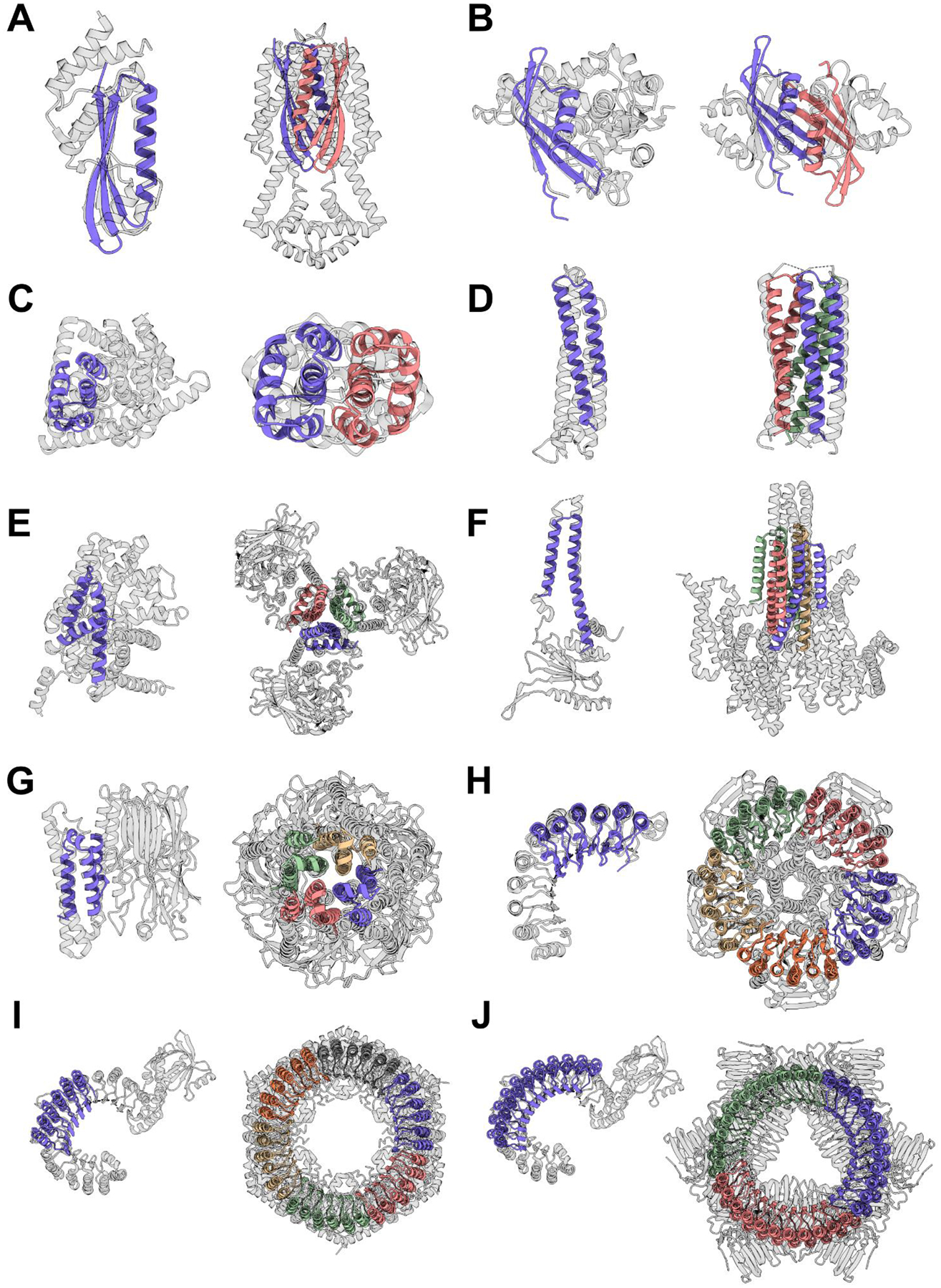
Deep learning generative approaches provide an opportunity to broadly explore protein structure space beyond the sequences and structures of natural proteins. Here, we use deep network hallucination to generate a wide range of symmetric protein homo-oligomers given only a specification of the number of protomers and the protomer length. Crystal structures of seven designs are very similar to the computational models (median root mean square deviation: 0.6 angstroms), as are three cryo–electron microscopy structures of giant 10-nanometer rings with up to 1550 residues and C 33 symmetry; all differ considerably from previously solved structures. Our results highlight the rich diversity of new protein structures that can be generated using deep learning and pave the way for the design of increasingly complex components for nanomachines and biomaterials.
Overview
The claims and statistics of this paper haven’t been checked yet.
Free: it reads the open-access text and checks the first 5 claims that cite a source we can check. Create a free account to check every claim.
Integrity signals
Registry
Cites
Statistics
Figures


Verification
Claims the paper makes
The claims and statistics of this paper haven’t been checked yet.
Free: it reads the open-access text and checks the first 5 claims that cite a source we can check. Create a free account to check every claim.
Claims other papers make about this one
Each is checked against this paper’s own text: does it say what the citing paper says it does?
The source backs part of the claim, not all of it — or backs it for a different population, condition or comparison.
In the citing paper
“This measure of in silico success has been found to correlate with experimental success4,7,26 and is significantly more stringent than template modelling (TM)-score-based metrics used elsewhere5,16,27–29”
From De novo design of protein structure and function with RFdiffusion (2023) · cites this paper as [7]
Experimental — accuracy not yet measuredThe source backs part of the claim, not all of it — or backs it for a different population, condition or comparison.
In the citing paper
“Cyclic oligomers have been designed using structure prediction networks with an adaptation of Hallucination that searches for sequences predicted to fold to the desired cyclic symmetry, but this approach fails for higher-order dihedral, tetrahedral, octahedral and icosahedral symmetries, probably in part because of the much lower representation of such structures in the PDB7.”
From De novo design of protein structure and function with RFdiffusion (2023) · cites this paper as [7]
Experimental — accuracy not yet measured
Self-check
Percentages, sums and reported differences re-computed from the paper’s own numbers.
The self-check needs the paper’s full text.
Citations
Cites
Highly accurate protein structure prediction with AlphaFold
Jumper, J., Evans, R., Pritzel, A., Green, T., Figurnov, M., Ronneberger, O., Tunyasuvunakool, K., Bates, R., Žídek, A., Potapenko, A., et al. (2021) · Nature · doi:10.1038/s41586-021-03819-2 · Cited by 43,764
Coot : model-building tools for molecular graphics
Emsley, P., & Cowtan, K. (2004) · Acta Crystallographica Section D Biological Crystallography · doi:10.1107/s0907444904019158 · Cited by 30,571
PHENIX : a comprehensive Python-based system for macromolecular structure solution
Adams, P. D., Afonine, P. V., Bunkóczi, G., Chen, V. B., Davis, I. W., Echols, N., Headd, J. J., Hung, L.-W., Kapral, G. J., Grosse-Kunstleve, R. W., et al. (2010) · Acta Crystallographica Section D Biological Crystallography · doi:10.1107/s0907444909052925 · Cited by 23,716
Phaser crystallographic software
McCoy, A. J., Grosse-Kunstleve, R. W., Adams, P. D., Winn, M. D., Storoni, L. C., & Read, R. J. (2007) · Journal of Applied Crystallography · doi:10.1107/s0021889807021206 · Cited by 20,612
Kabsch, W. (2010) · Acta Crystallographica Section D Biological Crystallography · doi:10.1107/s0907444909047337 · Cited by 16,463
Kabsch, W., & Sander, C. (1983) · Biopolymers · doi:10.1002/bip.360221211 · Cited by 15,320
Refinement of Macromolecular Structures by the Maximum-Likelihood Method
Murshudov, G. N., Vagin, A. A., & Dodson, E. J. (1997) · Acta Crystallographica Section D Biological Crystallography · doi:10.1107/s0907444996012255 · Cited by 14,742
Overview of the CCP 4 suite and current developments
Winn, M. D., Ballard, C. C., Cowtan, K. D., Dodson, E. J., Emsley, P., Evans, P. R., Keegan, R. M., Krissinel, E. B., Leslie, A. G. W., McCoy, A., et al. (2011) · Acta Crystallographica Section D Biological Crystallography · doi:10.1107/s0907444910045749 · Cited by 12,353
cryoSPARC: algorithms for rapid unsupervised cryo-EM structure determination
Punjani, A., Rubinstein, J. L., Fleet, D. J., & Brubaker, M. A. (2017) · Nature Methods · doi:10.1038/nmeth.4169 · Cited by 11,626
MotionCor2: anisotropic correction of beam-induced motion for improved cryo-electron microscopy
Zheng, S. Q., Palovcak, E., Armache, J.-P., Verba, K. A., Cheng, Y., & Agard, D. A. (2017) · Nature Methods · doi:10.1038/nmeth.4193 · Cited by 7,777
Cited by
Evolutionary-scale prediction of atomic level protein structure with a language model
Lin, Z., Akin, H., Rao, R., Hie, B., Zhu, Z., Lu, W., Smetanin, N., Verkuil, R., Kabeli, O., Shmueli, Y., et al. (2022) · doi:10.1101/2022.07.20.500902 · Cited by 5,990
Watson, J. L., Juergens, D., Bennett, N. R., Trippe, B. L., Yim, J., Eisenach, H. E., Ahern, W., Borst, A. J., Ragotte, R. J., Milles, L. F., et al. (2022) · doi:10.1101/2022.12.09.519842 · Cited by 2,369
Self-citationDe novo design of protein structure and function with RFdiffusion
Watson, J. L., Juergens, D., Bennett, N. R., Trippe, B. L., Yim, J., Eisenach, H. E., Ahern, W., Borst, A. J., Ragotte, R. J., Milles, L. F., et al. (2023) · Nature · doi:10.1038/s41586-023-06415-8 · Cited by 2,325
Self-citationRobust deep learning–based protein sequence design using ProteinMPNN
Dauparas, J., Anishchenko, I., Bennett, N., Bai, H., Ragotte, R. J., Milles, L. F., Wicky, B. I. M., Courbet, A., de Haas, R. J., Bethel, N., et al. (2022) · Science · doi:10.1126/science.add2187 · Cited by 2,210
Self-citationRobust deep learning based protein sequence design using ProteinMPNN
Dauparas, J., Anishchenko, I., Bennett, N., Bai, H., Ragotte, R. J., Milles, L. F., Wicky, B. I. M., Courbet, A., de Haas, R. J., Bethel, N., et al. (2022) · doi:10.1101/2022.06.03.494563 · Cited by 2,107
Self-citationScientific discovery in the age of artificial intelligence.
Wang, H., Fu, T., Du, Y., Gao, W., Huang, K., Liu, Z., Chandak, P., Liu, S., Van Katwyk, P., Deac, A., et al. (2023) · Nature · doi:10.1038/s41586-023-06221-2 · Cited by 1,823
Generalized biomolecular modeling and design with RoseTTAFold All-Atom
Krishna, R., Wang, J., Ahern, W., Sturmfels, P., Venkatesh, P., Kalvet, I., Lee, G. R., Morey-Burrows, F. S., Anishchenko, I., Humphreys, I. R., et al. (2024) · Science · doi:10.1126/science.adl2528 · Cited by 978
Self-citationFrom nature to industry: Harnessing enzymes for biocatalysis
Buller, R., Lutz, S., Kazlauskas, R. J., Snajdrova, R., Moore, J. C., & Bornscheuer, U. T. (2023) · Science · doi:10.1126/science.adh8615 · Cited by 706
Illuminating protein space with a programmable generative model
Ingraham, J. B., Baranov, M., Costello, Z., Barber, K. W., Wang, W., Ismail, A., Frappier, V., Lord, D. M., Ng-Thow-Hing, C., Van Vlack, E. R., et al. (2023) · Nature · doi:10.1038/s41586-023-06728-8 · Cited by 444
De novo design of luciferases using deep learning
Yeh, A. H.-W., Norn, C., Kipnis, Y., Tischer, D., Pellock, S. J., Evans, D., Ma, P., Lee, G. R., Zhang, J. Z., Anishchenko, I., et al. (2023) · Nature · doi:10.1038/s41586-023-05696-3 · Cited by 441
Self-citationImproving Protein Expression, Stability, and Function with ProteinMPNN
(2024) · doi:10.1021/jacs.3c10941 · Cited by 344
Self-citationDe novo protein design—From new structures to programmable functions
Kortemme, T. (2024) · Cell · doi:10.1016/j.cell.2023.12.028 · Cited by 344
Atomic context-conditioned protein sequence design using LigandMPNN
Dauparas, J., Lee, G. R., Pecoraro, R., An, L., Anishchenko, I., Glasscock, C., & Baker, D. (2025) · Nature Methods · doi:10.1038/s41592-025-02626-1 · Cited by 279
Self-citationMachine learning for functional protein design
Notin, P., Rollins, N., Gal, Y., Sander, C., & Marks, D. (2024) · Nature Biotechnology · doi:10.1038/s41587-024-02127-0 · Cited by 270
Multistate and functional protein design using RoseTTAFold sequence space diffusion
Lisanza, S. L., Gershon, J. M., Tipps, S. W. K., Sims, J. N., Arnoldt, L., Hendel, S. J., Simma, M. K., Liu, G., Yase, M., Wu, H., et al. (2024) · Nature Biotechnology · doi:10.1038/s41587-024-02395-w · Cited by 248
Self-citationOpportunities and Challenges for Machine Learning-Assisted Enzyme Engineering
Yang, J., Li, F.-Z., & Arnold, F. H. (2024) · ACS Central Science · doi:10.1021/acscentsci.3c01275 · Cited by 246
De novo design of high-affinity binders of bioactive helical peptides
Vázquez Torres, S., Leung, P. J. Y., Venkatesh, P., Lutz, I. D., Hink, F., Huynh, H.-H., Becker, J., Yeh, A. H.-W., Juergens, D., Bennett, N. R., et al. (2024) · Nature · doi:10.1038/s41586-023-06953-1 · Cited by 239
Self-citationOne-shot design of functional protein binders with BindCraft
Pacesa, M., Nickel, L., Schellhaas, C., Schmidt, J., Pyatova, E., Kissling, L., Barendse, P., Choudhury, J., Kapoor, S., Alcaraz-Serna, A., et al. (2025) · Nature · doi:10.1038/s41586-025-09429-6 · Cited by 236
Computational design of serine hydrolases
Lauko, A., Pellock, S. J., Sumida, K. H., Anishchenko, I., Juergens, D., Ahern, W., Jeung, J., Shida, A. F., Hunt, A., Kalvet, I., et al. (2025) · Science · doi:10.1126/science.adu2454 · Cited by 235
Self-citationBoltzGen: Toward Universal Binder DesignPreprint
Stark, H., Faltings, F., Choi, M., Xie, Y., Hur, E., O’Donnell, T. J., Bushuiev, A., Uçar, T., Passaro, S., Mao, W., et al. (2025) · bioRxiv (Cold Spring Harbor Laboratory) · doi:10.1101/2025.11.20.689494 · Cited by 220
Machine Learning-Guided Protein Engineering
Kouba, P., Kohout, P., Haddadi, F., Bushuiev, A., Samusevich, R., Sedlar, J., Damborsky, J., Pluskal, T., Sivic, J., & Mazurenko, S. (2023) · ACS Catalysis · doi:10.1021/acscatal.3c02743 · Cited by 209
Atom-level enzyme active site scaffolding using RFdiffusion2
Ahern, W., Yim, J., Tischer, D., Salike, S., Woodbury, S. M., Kim, D., Kalvet, I., Kipnis, Y., Coventry, B., Altae-Tran, H., et al. (2025) · Nature Methods · doi:10.1038/s41592-025-02975-x · Cited by 196
Self-citationComputational design of soluble and functional membrane protein analogues
Goverde, C. A., Pačesa, M., Goldbach, N. M., Dornfeld, L., Balbi, P. E. M., Georgeon, S., Rosset, S., Kapoor, S., Choudhury, J., Dauparas, J., et al. (2024) · Nature · doi:10.1038/s41586-024-07601-y · Cited by 193
Self-citationLanguage models generalize beyond natural proteins
Verkuil, R., Kabeli, O., Du, Y., Wicky, B. I. M., Milles, L. F., Dauparas, J., Baker, D., Ovchinnikov, S., Sercu, T., & Rives, A. (2022) · doi:10.1101/2022.12.21.521521 · Cited by 181
Self-citationOpportunities and challenges in design and optimization of protein function
Listov, D., Goverde, C. A., Correia, B. E., & Fleishman, S. J. (2024) · Nature Reviews Molecular Cell Biology · doi:10.1038/s41580-024-00718-y · Cited by 180
The JAK-STAT pathway: from structural biology to cytokine engineering
Lv, Y., Qi, J., Babon, J. J., Cao, L., Fan, G.-H., Lang, J., Zhang, J., Mi, P., Kobe, B., & Wang, F. (2024) · Signal Transduction and Targeted Therapy · doi:10.1038/s41392-024-01934-w · Cited by 175
Top-down design of protein architectures with reinforcement learning
Lutz, I. D., Wang, S., Norn, C., Courbet, A., Borst, A. J., Zhao, Y. T., Dosey, A. M., Cao, L., Xu, J., Leaf, E. M., et al. (2023) · Science · doi:10.1126/science.adf6591 · Cited by 158
Self-citationArtificial Intelligence‐Driven Nanoarchitectonics for Smart Targeted Drug Delivery
Bae, H., Ji, H., Konstantinov, K., Sluyter, R., Ariga, K., Kim, J. H., & Kim, J. H. (2025) · Advanced Materials · doi:10.1002/adma.202510239 · Cited by 149
Sparks of function by de novo protein design
Chu, A. E., Lu, T., & Huang, P. (2024) · Nature Biotechnology · doi:10.1038/s41587-024-02133-2 · Cited by 147
Language Modeling Materializes a World Model of Protein BiologyPreprint
Candido, S., Hayes, T., Derry, A., Rao, R., Lin, Z., Verkuil, R., Wu, B. Z., Lee, J. S., Bruguera, E. S., Keval, J. A., et al. (2026) · bioRxiv (Cold Spring Harbor Laboratory) · doi:10.64898/2026.06.03.729735 · Cited by 151
Koh, H. Y., Zheng, Y., Yang, M., Arora, R., Webb, G. I., Pan, S., Li, L., & Church, G. M. (2025) · Nature Reviews Bioengineering · doi:10.1038/s44222-025-00349-8 · Cited by 143
A new age in protein design empowered by deep learning
Khakzad, H., Igashov, I., Schneuing, A., Goverde, C. A., Bronstein, M. M., & Correia, B. E. (2023) · Cell Systems · doi:10.1016/j.cels.2023.10.006 · Cited by 142
Noncanonical Amino Acids in Biocatalysis
Birch-Price, Z., Hardy, F. J., Lister, T. M., Kohn, A. R., & Green, A. P. (2024) · Chemical Reviews · doi:10.1021/acs.chemrev.4c00120 · Cited by 123
Generative artificial intelligence for de novo protein design
Winnifrith, A., Outeiral, C., & Hie, B. (2024) · Current Opinion in Structural Biology · doi:10.1016/j.sbi.2024.102794 · Cited by 113
Albanese, K. I., Barbe, S., Tagami, S., Woolfson, D. N., & Schiex, T. (2025) · Nature Reviews Methods Primers · doi:10.1038/s43586-025-00383-1 · Cited by 112
Building Enzymes through Design and Evolution
Hossack, E. J., Hardy, F. J., & Green, A. P. (2023) · ACS Catalysis · doi:10.1021/acscatal.3c02746 · Cited by 109
Kalvet, I., Ortmayer, M., Zhao, J., Crawshaw, R., Ennist, N. M., Levy, C., Roy, A., Green, A. P., & Baker, D. A. (2023) · Journal of the American Chemical Society · doi:10.1021/jacs.3c02742 · Cited by 106
Self-citationAlphaFold two years on: Validation and impact
Kovalevskiy, O. V., Mateos-Garcia, J. C., & Tunyasuvunakool, K. (2024) · Proceedings of the National Academy of Sciences · doi:10.1073/pnas.2315002121 · Cited by 106
De novo protein design by inversion of the AlphaFold structure prediction network
Goverde, C. A., Wolf, B., Khakzad, H., Rosset, S., & Correia, B. E. (2023) · Protein Science · doi:10.1002/pro.4653 · Cited by 103
Accurate de novo design of high-affinity protein-binding macrocycles using deep learning
Rettie, S. A., Juergens, D., Adebomi, V., Bueso, Y. F., Zhao, Q., Leveille, A. N., Liu, A., Bera, A. K., Wilms, J. A., Üffing, A., et al. (2025) · Nature Chemical Biology · doi:10.1038/s41589-025-01929-w · Cited by 103
Self-citationCyclic peptide structure prediction and design using AlphaFold2
Rettie, S. A., Campbell, K. V., Bera, A. K., Kang, A., Kozlov, S., Bueso, Y. F., De La Cruz, J., Ahlrichs, M., Cheng, S., Gerben, S. R., et al. (2025) · Nature Communications · doi:10.1038/s41467-025-59940-7 · Cited by 102
Self-citationSelf-play reinforcement learning guides protein engineering
Wang, Y., Tang, H., Huang, L., Pan, L., Yang, L., Yang, H., Mu, F., & Yang, M. (2023) · Nature Machine Intelligence · doi:10.1038/s42256-023-00691-9 · Cited by 104
Design of high-specificity binders for peptide–MHC-I complexes
Liu, B., Greenwood, N. F., Bonzanini, J. E., Motmaen, A., Meyerberg, J., Dao, T., Xiang, X., Ault, R., Sharp, J., Wang, C., et al. (2025) · Science · doi:10.1126/science.adv0185 · Cited by 102
Self-citationComputational scoring and experimental evaluation of enzymes generated by neural networks
Johnson, S. R., Fu, X., Viknander, S., Goldin, C., Monaco, S., Zelezniak, A., & Yang, K. K. (2025) · Nature Biotechnology · doi:10.1038/s41587-024-02214-2 · Cited by 99
Scalable protein design using optimization in a relaxed sequence space
Frank, C., Khoshouei, A., Fuβ, L., Schiwietz, D., Putz, D., Weber, L., Zhao, Z., Hattori, M., Feng, S., de Stigter, Y., et al. (2024) · Science · doi:10.1126/science.adq1741 · Cited by 99
A high-level programming language for generative protein designPreprint
Hie, B., Candido, S., Lin, Z., Kabeli, O., Rao, R., Smetanin, N., Sercu, T., & Rives, A. W. (2022) · bioRxiv (Cold Spring Harbor Laboratory) · doi:10.1101/2022.12.21.521526 · Cited by 92
Design of stimulus-responsive two-state hinge proteins
Praetorius, F., Leung, P. J. Y., Tessmer, M. H., Broerman, A., Demakis, C., Dishman, A. F., Pillai, A., Idris, A., Juergens, D., Dauparas, J., et al. (2023) · Science · doi:10.1126/science.adg7731 · Cited by 90
Self-citationIlluminating protein space with a programmable generative model
Ingraham, J., Baranov, M., Costello, Z., Frappier, V., Ismail, A., Tie, S., Wang, W., Xue, V., Obermeyer, F., Beam, A., et al. (2022) · doi:10.1101/2022.12.01.518682 · Cited by 83
Target-conditioned diffusion generates potent TNFR superfamily antagonists and agonists
Glögl, M., Krishnakumar, A., Ragotte, R. J., Goreshnik, I., Coventry, B., Bera, A. K., Kang, A., Joyce, E., Ahn, G., Huang, B., et al. (2024) · Science · doi:10.1126/science.adp1779 · Cited by 88
Self-citationBlueprinting extendable nanomaterials with standardized protein blocks
Huddy, T. F., Hsia, Y., Kibler, R. D., Xu, J., Bethel, N. P., Nagarajan, D., Redler, R. L., Leung, P. J. Y., Weidle, C., Courbet, A., et al. (2024) · Nature · doi:10.1038/s41586-024-07188-4 · Cited by 84
Self-citationThe past, present and future of de novo protein design
Yang, W., Wang, S., Lee, G. R., Zhang, J. Z., Courbet, A., Juergens, D., Wang, X., Schlichthaerle, T., Abedi, M. H., Ragotte, R. J., et al. (2026) · Nature · doi:10.1038/s41586-026-10328-7 · Cited by 79
Self-citationCasadevall, G., Duran, C., & Osuna, S. (2023) · JACS Au · doi:10.1021/jacsau.3c00188 · Cited by 77
Artificial intelligence in peptide-based drug design
Zhai, S., Liu, T., Lin, S., Li, D., Liu, H., Yao, X., & Hou, T. (2025) · Drug Discovery Today · doi:10.1016/j.drudis.2025.104300 · Cited by 73
Hierarchical design of pseudosymmetric protein nanocages
Dowling, Q. M., Park, Y., Fries, C. N., Gerstenmaier, N., Ols, S., Yang, E. C., Wargacki, A. J., Dosey, A. M., Hsia, Y., Ravichandran, R., et al. (2024) · Nature · doi:10.1038/s41586-024-08360-6 · Cited by 71
Self-citationEdman, N. I., Phal, A., Redler, R. L., Schlichthaerle, T., Srivatsan, S. R., Ehnes, D. D., Etemadi, A., An, S. J., Favor, A., Li, Z., et al. (2024) · Cell · doi:10.1016/j.cell.2024.05.025 · Cited by 68
Self-citationDesigning Multifunctional Biomaterials via Protein Self‐Assembly
Solomonov, A. V., Kozell, A., & Shimanovich, U. (2024) · Angewandte Chemie International Edition · doi:10.1002/anie.202318365 · Cited by 61
The Nobel Prize in Chemistry: past, present, and future of AI in biology
Abriata, L. A. (2024) · Communications Biology · doi:10.1038/s42003-024-07113-5 · Cited by 59
In silico evolution of autoinhibitory domains for a PD-L1 antagonist using deep learning models
Goudy, O. J., Nallathambi, A., Kinjo, T., Randolph, N. Z., & Kuhlman, B. A. (2023) · Proceedings of the National Academy of Sciences · doi:10.1073/pnas.2307371120 · Cited by 55
Harnessing the power of artificial intelligence to advance cell therapy
Capponi, S., & Daniels, K. G. (2023) · Immunological Reviews · doi:10.1111/imr.13236 · Cited by 54
De novo design of transmembrane fluorescence-activating proteins
Zhu, J., Liang, M., Sun, K., Yu, W., Guo, R., Zhang, L., Shi, J., Ma, D., Hu, Q., Huang, G., et al. (2025) · Nature · doi:10.1038/s41586-025-08598-8 · Cited by 54
Efficient generation of epitope-targeted antibodies with Germinal
Mille, L. S., Driscoll, C. L., Wang, J. N., Dai, H., Widatalla, T., Zhang, J. L., Zhang, X., Rao, B., Feng, L., Hie, B., et al. (2026) · Nature Biotechnology · doi:10.1038/s41587-026-03187-0 · Cited by 51
Hutskalov, I., Linden, A., & Čorić, I. (2023) · Journal of the American Chemical Society · doi:10.1021/jacs.3c01030 · Cited by 50
Design of amyloidogenic peptide traps
Sahtoe, D. D., Andrzejewska, E. A., Han, H. L., Rennella, E., Schneider, M. M., Meisl, G., Ahlrichs, M., Decarreau, J., Nguyen, H., Kang, A., et al. (2024) · Nature Chemical Biology · doi:10.1038/s41589-024-01578-5 · Cited by 48
Self-citationWang, G., Feng, Y., Gao, C., Zhang, X., Wang, Q., Zhang, J., Zhang, H., Wu, Y., Li, X., Wang, L., et al. (2023) · Regenerative Biomaterials · doi:10.1093/rb/rbad056 · Cited by 48
Self-citationWang, J., Watson, J. L., & Lisanza, S. L. (2024) · Cold Spring Harbor Perspectives in Biology · doi:10.1101/cshperspect.a041472 · Cited by 48
Context-aware geometric deep learning for protein sequence design
(2024) · doi:10.1038/s41467-024-50571-y · Cited by 47
Feng, S., Chen, Z., Zhang, C., Xie, Y., Ovchinnikov, S., Gao, Y. Q., & Liu, S. (2024) · Nature Machine Intelligence · doi:10.1038/s42256-024-00873-z · Cited by 46
Akpinaroglu, D., Seki, K., Guo, A., Zhu, E., Kelly, M. J. S., & Kortemme, T. (2023) · bioRxiv (Cold Spring Harbor Laboratory) · doi:10.1101/2023.12.15.571823 · Cited by 43
Rapid and automated design of two-component protein nanomaterials using ProteinMPNN
de Haas, R. J., Brunette, N., Goodson, A., Dauparas, J., Yi, S. Y., Yang, E. C., Dowling, Q., Nguyen, H., Kang, A., Bera, A. K., et al. (2024) · Proceedings of the National Academy of Sciences · doi:10.1073/pnas.2314646121 · Cited by 42
Self-citationSmall-molecule binding and sensing with a designed protein family
(2026) · doi:10.1038/s41467-026-70953-8 · Cited by 41
Self-citationImproved protein binder design using β-pairing targeted RFdiffusion
Sappington, I., Toul, M., Lee, D. S., Robinson, S. A., Goreshnik, I., McCurdy, C., Chan, T. C., Buchholz, N., Huang, B., Vafeados, D. K., et al. (2026) · Nature Communications · doi:10.1038/s41467-025-67866-3 · Cited by 40
Self-citationDe novo design of miniproteins targeting GPCRs
Muratspahić, E., Feldman, D., Kim, D. E., Qu, X., Bratovianu, A.-M., Rivera-Sánchez, P., Voss, J. H., Hertz, E. P. T., Jeppesen, M. G., Dimitri, F., et al. (2026) · Nature · doi:10.1038/s41586-026-10656-8 · Cited by 40
Self-citationProtein‐Based Controllable Nanoarchitectonics for Desired Applications
Li, L., Zhang, Y., Wu, Y., Wang, Z., Cui, W., Zhang, C., Wang, J., Liu, Y., & Yang, P. (2024) · Advanced Functional Materials · doi:10.1002/adfm.202315509 · Cited by 37
Design of facilitated dissociation enables timing of cytokine signalling
Broerman, A. J., Pollmann, C., Zhao, Y., Lichtenstein, M. A., Jackson, M. D., Tessmer, M. H., Ryu, W. H., Ogishi, M., Abedi, M. H., Sahtoe, D. D., et al. (2025) · Nature · doi:10.1038/s41586-025-09549-z · Cited by 37
Self-citationFast and versatile sequence-independent protein docking for nanomaterials design using RPXDock
Sheffler, W., Yang, E. C., Dowling, Q. M., Hsia, Y., Fries, C. N., Stanislaw, J., Langowski, M. D., Brandys, M., Li, Z., Skotheim, R., et al. (2023) · PLoS Computational Biology · doi:10.1371/journal.pcbi.1010680 · Cited by 37
Self-citationAlphaDesign: a de novo protein design framework based on AlphaFold
(2025) · doi:10.1038/s44320-025-00119-z · Cited by 36
Meta learning addresses noisy and under-labeled data in machine learning-guided antibody engineering
Minot, M., & Reddy, S. T. (2024) · Cell Systems · doi:10.1016/j.cels.2023.12.003 · Cited by 35
Towards quantum-enabled cell-centric therapeuticsPreprint
Basu, S., Born, J., Bose, A., Capponi, S., Chalkia, D., Chan, T. A.-T., Doğa, H., Flöther, F. F., Getz, G. A., Goldsmith, M., et al. (2023) · arXiv (Cornell University) · doi:10.48550/arxiv.2307.05734 · Cited by 35
Garcia, M., Dixit, S. M., & Rocklin, G. J. (2026) · Protein Science · doi:10.1002/pro.70453 · Cited by 33
PXDesign: Fast, Modular, and Accurate De Novo Design of Protein BindersPreprint
Protenix Team, Ren, M., Sun, J., Guan, J., Liu, C., Gong, C., Wang, Y. X., Wang, L., Cai, Q., Ma, W., et al. (2025) · bioRxiv (Cold Spring Harbor Laboratory) · doi:10.1101/2025.08.15.670450 · Cited by 32
Guo, X.-Y., Yi, L., Yang, J., An, H., Yang, Z., & Wang, H. (2024) · Chemical Communications · doi:10.1039/d3cc05811e · Cited by 31
Efficient and scalable de novo protein design using a relaxed sequence spacePreprint
Frank, C., Khoshouei, A., de Stigter, Y., Schiewitz, D., Feng, S., Ovchinnikov, S., & Dietz, H. (2023) · bioRxiv (Cold Spring Harbor Laboratory) · doi:10.1101/2023.02.24.529906 · Cited by 31
Artificial Intelligence-Driven de Novo Design of Robust Enzymes to Enhance Their Performance
Tang, M., Ge, F., Li, A., Hu, L., Wang, C., Tang, J., Song, X., Liu, X., Shi, H. S., & Tan, Z. (2025) · ACS Synthetic Biology · doi:10.1021/acssynbio.5c00452 · Cited by 30
Accelerating protein design by scaling experimental characterization
Qian, J., Milles, L. F., Wicky, B. I. M., Ragotte, R. J., Motmaen, A., Borst, A. J., Skotheim, R., Ols, S., Coventry, B., Li, X., et al. (2026) · Nature Communications · doi:10.1038/s41467-026-76740-9 · Cited by 29
Self-citationDesign and applications of synthetic biomolecular condensates
Leshem, A. B., Gaash, D., & Lampel, A. (2025) · Nature Nanotechnology · doi:10.1038/s41565-025-02053-5 · Cited by 29
An integrative approach to protein sequence design through multiobjective optimization
Hong, L., & Kortemme, T. (2024) · PLoS Computational Biology · doi:10.1371/journal.pcbi.1011953 · Cited by 28
Adapting protein language models for structure-conditioned designPreprint
Ruffolo, J. A., Bhatnagar, A., Beazer, J., Nayfach, S., Russ, J., Hill, E., Hussain, R., Gallagher, J. P., & Madani, A. (2024) · bioRxiv (Cold Spring Harbor Laboratory) · doi:10.1101/2024.08.03.606485 · Cited by 28
In vivo functional phenotypes from a computational epistatic model of evolution
Alvarez, S., Nartey, C. M., Mercado, N., de la Paz, J. A., Huseinbegovic, T., & Morcos, F. (2024) · Proceedings of the National Academy of Sciences · doi:10.1073/pnas.2308895121 · Cited by 26
Determinants for an Efficient Enzymatic Catalysis in Poly(Ethylene Terephthalate) Degradation
Castro-Rodríguez, J. A., Rodríguez‐Sotres, R., & Farrés, A. (2023) · Catalysts · doi:10.3390/catal13030591 · Cited by 25
Tuning insulin receptor signaling using de novo-designed agonists
Wang, X., Cardoso, S., Cai, K., Venkatesh, P., Hung, A., Ng, M., Hall, C., Coventry, B., Lee, D. S., Chowhan, R., et al. (2025) · Molecular Cell · doi:10.1016/j.molcel.2025.09.020 · Cited by 24
Self-citationThe Role of AI-Driven De Novo Protein Design in the Exploration of the Protein Functional Universe
Zhang, G., Liu, C., Lu, J., Zhang, S., & Zhu, L. (2025) · Biology · doi:10.3390/biology14091268 · Cited by 24
Self-assembly systems to troubleshoot metabolic engineering challenges
Chen, Z., Wu, T., Yu, S., Li, M., Fan, X., & Huo, Y. (2023) · Trends in biotechnology · doi:10.1016/j.tibtech.2023.06.009 · Cited by 24
Spatially Patterned, Porous Protein Crystals as Multifunctional Materials
Han, K., Zhang, Z.-Y., & Tezcan, F. A. (2023) · Journal of the American Chemical Society · doi:10.1021/jacs.3c06348 · Cited by 24
Rapid and accurate prediction of protein homo-oligomer symmetry using Seq2Symm
Kshirsagar, M., Meller, A., Humphreys, I. R., Sledzieski, S., Xu, Y., Dodhia, R., Horvitz, E., Berger, B., Bowman, G. R., Ferres, J. L., et al. (2025) · Nature Communications · doi:10.1038/s41467-025-57148-3 · Cited by 23
Self-citationDesigned miniproteins potently inhibit and protect against MERS-CoV
Ragotte, R. J., Tortorici, M. A., Catanzaro, N., Addetia, A., Coventry, B., Froggatt, H. M., Lee, J., Stewart, C., Brown, J. T., Goreshnik, I., et al. (2025) · Cell Reports · doi:10.1016/j.celrep.2025.115760 · Cited by 23
Self-citationDe Novo Design of Polyhedral Protein Assemblies: Before and After the AI Revolution
Mallik, B. B., Stanislaw, J., Alawathurage, T. M., & Khmelinskaia, A. (2023) · ChemBioChem · doi:10.1002/cbic.202300117 · Cited by 23
Hermosilla, A. M., Berner, C., Ovchinnikov, S., & Vorobieva, A. A. (2024) · Protein Science · doi:10.1002/pro.5033 · Cited by 23
Bond-centric modular design of protein assemblies
Wang, S., Favor, A., Kibler, R. D., Lubner, J. M., Borst, A. J., Coudray, N., Redler, R. L., Chiang, H. T., Sheffler, W., Hsia, Y., et al. (2025) · Nature Materials · doi:10.1038/s41563-025-02297-5 · Cited by 22
Self-citationFadini, A., Li, M., McCoy, A. J., Banjara, S., Okumura, H., Napier, E., Fontana, P., Khan, A. R., Jovine, L., Terwilliger, T. C., et al. (2026) · Nature Methods · doi:10.1038/s41592-026-03047-4 · Cited by 22
De novo design of high-affinity protein binders to bioactive helical peptides
Vázquez Torres, S., Leung, P. J. Y., Lutz, I. D., Venkatesh, P., Watson, J. L., Hink, F., Huynh, H.-H., Yeh, A. H.-W., Juergens, D., Bennett, N. R., et al. (2022) · doi:10.1101/2022.12.10.519862 · Cited by 22
Self-citation
Metadata
- Authors
- Wicky, B. I. M., Milles, L. F., Courbet, A., Ragotte, R. J., Dauparas, J., Kinfu, E., Tipps, S., Kibler, R. D., Baek, M., DiMaio, F., Li, X., Carter, L., Kang, A., Nguyen, H., Bera, A. K., & Baker, D.
- Affiliations
- University of Washington (US)
- Howard Hughes Medical Institute (US)
- Corresponding author
- Baker, D.
- ORCID
- Venue
- Science
- Published
- 2022-10-07
- Volume
- 378
- Issue
- 6615
- Pages
- 56-61
- ISSN
- 0036-8075 (ISSN-L)
- 1095-9203
- PMC
- PMC9724707
- OpenAlex
- W4296031103
- Cited by
- 240
- References
- 58
- Citations by year
- 2026: 46 · 2025: 72 · 2024: 62 · 2023: 52 · 2022: 8
- FWCI
- 15.84
- Type
- journal article
- Language
- en
- Open access
- green
- doi.org
- Licence
- cc-by-nc-nd
- Locations
- Science (publishedVersion)
- bioRxiv (Cold Spring Harbor Laboratory) (acceptedVersion, cc-by-nc-nd)
- PubMed (publishedVersion)
- PubMed Central (acceptedVersion, cc-by)
- Funders
- National Science Foundation (P30 GM124165, P30 CA015704, CA015704, DE-AC02–06CH11357, P41-GM103311, 1629214)
- Howard Hughes Medical Institute
- U.S. Department of Energy (DE‐ AC02‐06CH11357, Contract No. DE-AC02-06CH11357., AC02‐06CH11357, P30 GM124165, 06CH11357, No. DE-AC02-06CH11357, DE-AC02-)
- Alfred P. Sloan Foundation (g-2021-16899)
- University of Washington (DE-AC02-06CH11357, P30 CA015704)
- Open Philanthropy Project
- National Institutes of Health (S10 OD032290, DE-AC02–06CH11357, GM124165, CA015704)
- Office of Science (Contract No. DE-AC02-06CH11357, AC02‐06CH11357, DE-AC02, No. DE-AC02-06CH11357., 06CH11357, DE-AC02-06CH11357)
- University of California, San Francisco (NIH P41-GM103311, P41-GM103311)
- National Cancer Institute (P30CA015704)
- National Institute of General Medical Sciences (GM103311, P41GM103311, P41GM103533, DE-AC02-06CH11357, NIH P41-GM103311, 103533, GM124165, P30GM124165)
- Division of Chemistry (1629214, CHE 1629214)
- Argonne National Laboratory (DE- AC02-06-CH11357, DE-AC02, AC02–06CH11357, No. DE-AC02-06CH11357, 06CH11357, Contract No. DE-AC02-06CH11357., P30 GM124165)
- Topics
- Life Sciences › Biochemistry, Genetics and Molecular Biology › Molecular Biology › Protein Structure and Dynamics
- Life Sciences › Biochemistry, Genetics and Molecular Biology › Structural Biology › Enzyme Structure and Function
- Life Sciences › Biochemistry, Genetics and Molecular Biology › Molecular Biology › Machine Learning in Bioinformatics
- Keywords
- protein structure design, homo-oligomers, nanorobots, biomaterials
- MeSH terms
- Deep Learning, Biocompatible Materials, Models, Molecular, Protein Conformation, Protein Engineering, Cryoelectron Microscopy, Protein Subunits
About these checks
Registry, retraction, Cites and statistics results are computed, not judged, with one exception: a printed reference that no index lists is read once by a model before it counts as a citation error. Claims are extracted by a model and kept only when their quote appears verbatim in the text; each cited source is then checked, with a model’s help, for whether it says what the claim relies on. Those verdicts can be wrong — read the claim’s quote and the cited source before relying on one.
Statistics and arithmetic are recomputed, not judged.
Confidence bands are shown only for fields calibrated on our annotated test set. None is calibrated yet, so no band is shown.
What counts as a claim ›How we measure confidence ›How we check this ›
Are you an author, or do you see a problem with this page? Request a review
Data sources
Bibliographic data: Semantic Scholar, OpenAlex, Crossref.
Contains information from the Semantic Scholar Academic Graph Datasets, made available under the ODC Attribution License (ODC-BY 1.0).
Semantic Scholar’s data is described in: Kinney, R., et al. (2023). The Semantic Scholar Open Data Platform. arXiv:2301.10140.
