

A Histone Deacetylase Complex Mediates Biofilm Dispersal and Drug Resistance in Candida albicans
Open accessThe DOI matches its Crossref record; 56 of the 56 references it cites were found in a registry or an index; 23 of the 30 sources its claims cite were checked for support.
Abstract
Core members of a conserved histone deacetylase complex are needed for proper biofilm formation, including dispersal of cells from biofilms and multifactorial drug resistance.
Overview
CoChat Summary
TL;DR
The core Set3 histone deacetylase complex subunits Set3, Hos2, Snt1, and Sif2 are required for normal Candida albicans biofilm dispersal and biofilm-specific drug resistance. Deleting any core subunit produces hypercohesive, rubbery biofilms with increased biomass, impaired dispersal, and increased resistance to multiple antifungals, while planktonic drug susceptibility remains unchanged.
Key findings
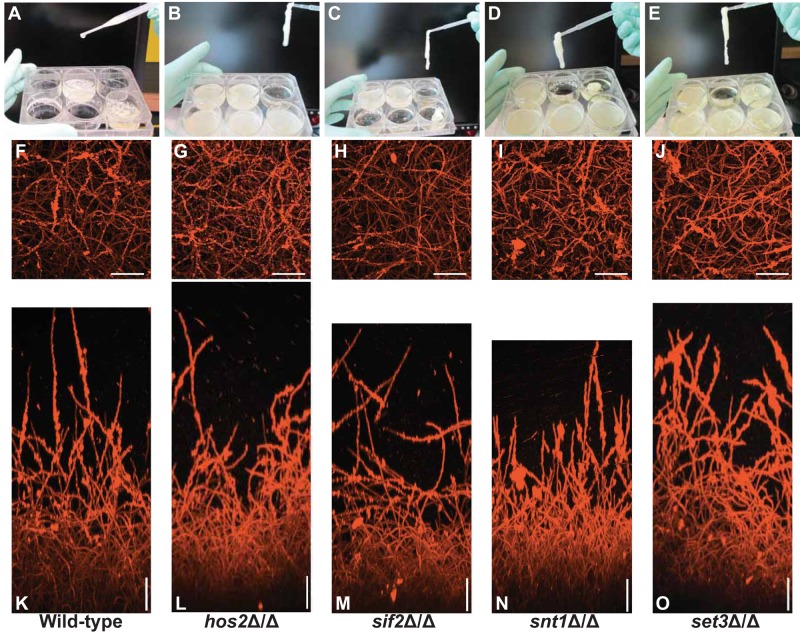
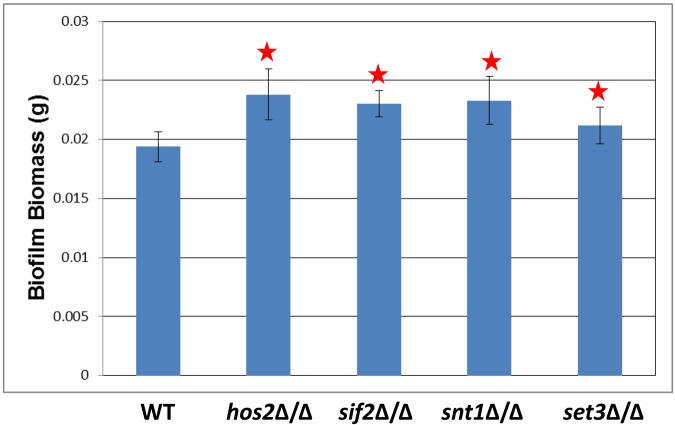
- All four core Set3 complex mutants (hos2Δ/Δ, sif2Δ/Δ, snt1Δ/Δ, set3Δ/Δ) formed biofilms with significantly increased dry-weight biomass versus wild type: P = 0.01 for hos2Δ/Δ, P = 0.02 for sif2Δ/Δ, P = 0.01 for snt1Δ/Δ, and P = 0.04 for set3Δ/Δ.
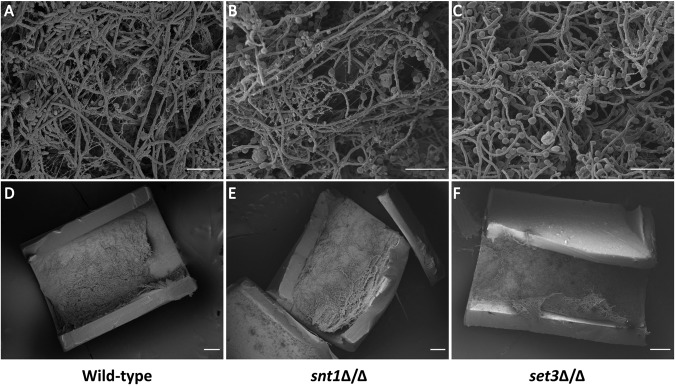
- Mutant biofilms were physically distinct: they remained intact after pipette agitation, whereas wild-type biofilms broke apart; in a rat catheter model, hos2Δ/Δ and set3Δ/Δ biofilms were exceptionally sticky.
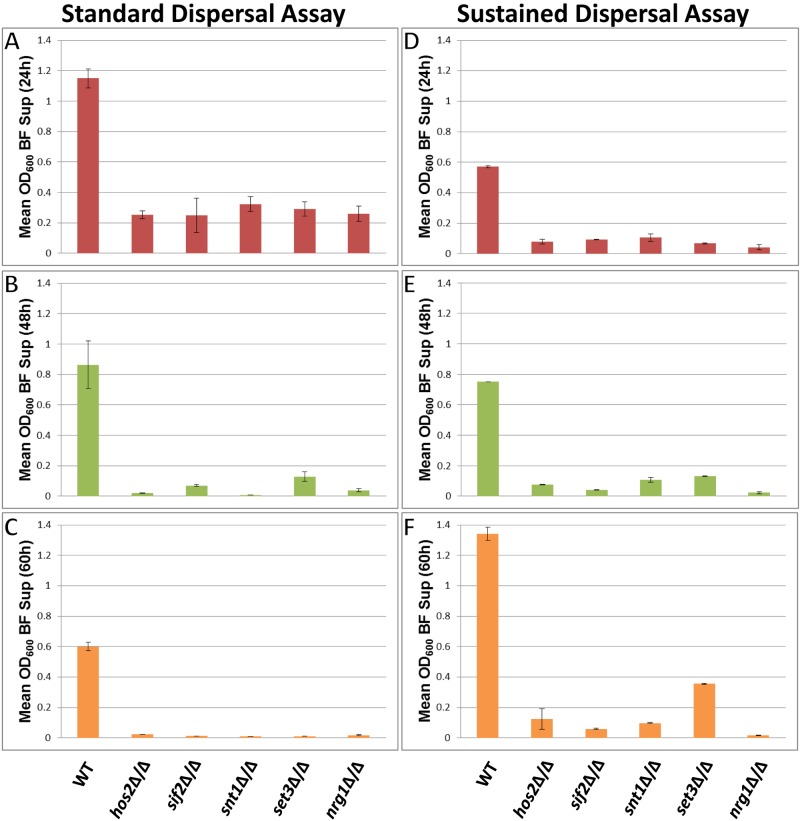
- All four mutants were significantly defective in both standard and sustained biofilm dispersal assays at every time point examined (P < 0.005), while the nrg1Δ/Δ reference was also dispersal-defective (P < 0.002).
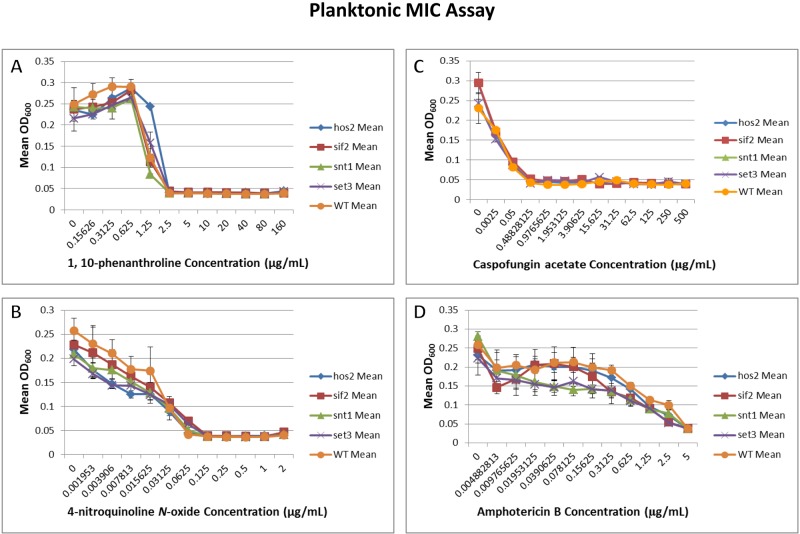
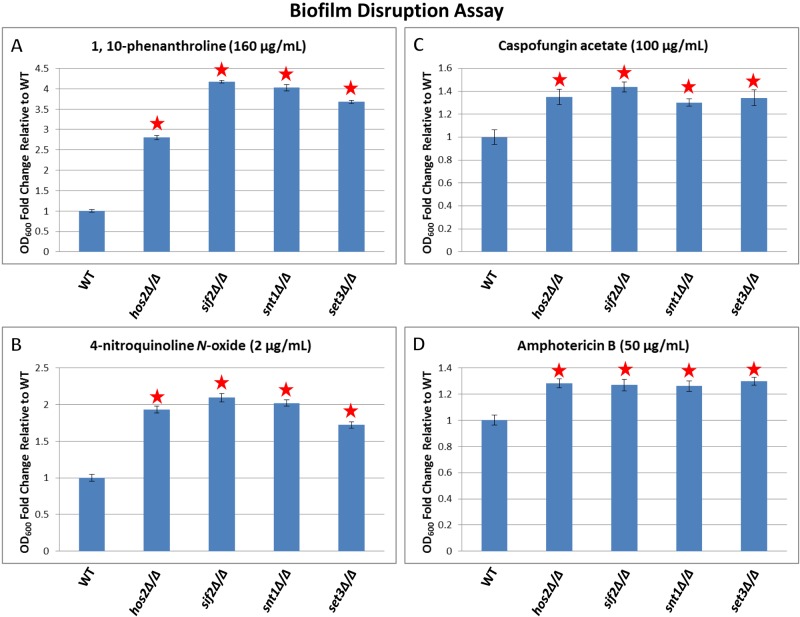
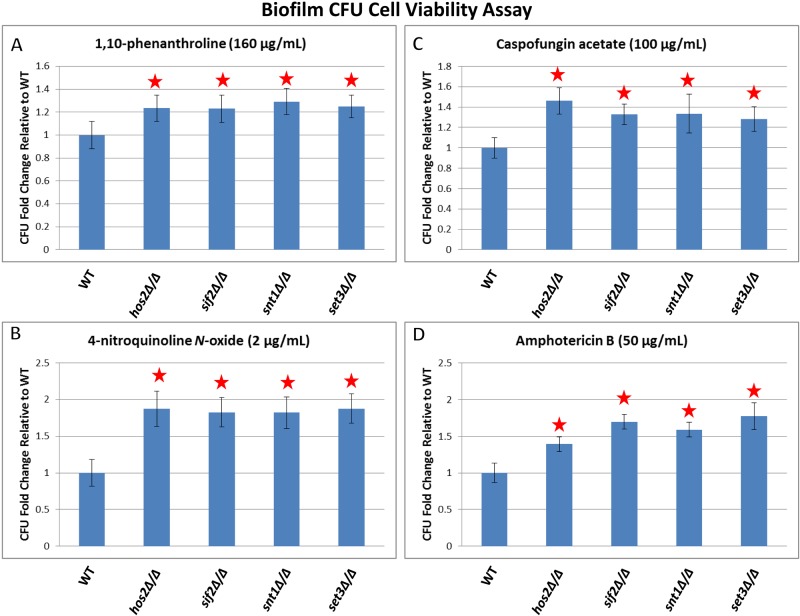
- Biofilms of all four mutants were significantly more resistant than wild type to 1,10-phenanthroline, 4-nitroquinoline N-oxide, caspofungin acetate, and amphotericin B (P < 0.05 each); planktonic MIC assays showed similar drug susceptibility to wild type, and no significant changes were detected in CDR1, CDR2, CDR3, membrane permeability, or matrix β-1,3-glucan.
Methods
- Used four constructed C. albicans core Set3 complex homozygous deletion mutants (hos2Δ/Δ, sif2Δ/Δ, snt1Δ/Δ, set3Δ/Δ), wild-type references, and an nrg1Δ/Δ dispersal reference; biofilms were grown under standard in vitro conditions and, for a subset, in an in vivo rat central venous catheter model.
- Phenotypes were assessed by visual perturbation assay, dry-weight biomass, crystal violet staining, confocal scanning laser microscopy, scanning electron microscopy, standard and sustained biofilm dispersal assays, planktonic MIC assays, 96-well biofilm drug disruption assays, CFU and XTT viability assays, qPCR for efflux pumps, FDA membrane permeability assay, and matrix β-1,3-glucan measurement.
- Statistical significance was calculated with Student’s one-tailed paired t test; many assays used five replicate wells or five independent samples per strain.
Limitations
- The paper states that add-back strains were not tested in vivo to minimize the number of animals used, and that it cannot rule out the possibility that loss of Set3 complex members alters expression of other unknown genes with effects on virulence.
- The paper states that the XTT assay showed high day-to-day variation for the Set3 complex mutants, so the authors consider the quantitative biofilm CFU viability assay more accurate.
- Evident from the text: only two mutants (hos2Δ/Δ and set3Δ/Δ) were tested in the in vivo rat catheter model, and the specific physical or molecular basis for the increased biofilm drug resistance was not identified, although efflux pumps, membrane integrity, and β-1,3-glucan were ruled out.
Model-written summary. Check it against the paper before relying on it.
Integrity signals
Registry
Cites
Statistics
Figures
Verification
Claims the paper makes
16 Valid · 1 Not valid · 5 Not checked · 40 Own results and interpretations
The sources with a verdict support this claim; the rest weren’t checked yet, have no full text we could read, or their verdicts aren’t rated yet.
In the paper
“C. albicans biofilms are resistant to standard antifungal drugs; not only do biofilms provide physical protection from drugs, cells in biofilms become intrinsically resistant to antimicrobial compounds because of their altered metabolic states and their constitutive upregulation of drug efflux pumps (7–10).”
§ A Histone Deacetylase Complex Mediates Biofilm Dispersal and Drug Resistance in Candida albicans > INTRODUCTION
What the sources say
- Not checked — no full text of the sourcecites [7] Akins RA 2005 An update on antifungal targets and mechanisms of resistance in Candida albicans. Med. Mycol. 43: 285– 318. 10.1080/13693780500138971 16110776 source
- Supportedcites [8] Mathé L Van Dijck P 2013 Recent insights into Candida albicans biofilm resistance mechanisms. Curr. Genet. 59: 251– 264. 10.1007/s00294-013-0400-3 23974350 PMC3824241 source
The “Resistance to antifungals” section describes high resistance of biofilm-associated C. albicans cells to commonly used antifungals and identifies several drug classes that are inactive against biofilms. It also notes that some antifungals are effective, so the claim is supported as a general statement, not as applying to every drug. (LLM, conf=0.93)
- Supportedcites [9] Ramage G Rajendran R Sherry L Williams C 2012 Fungal biofilm resistance. Int. J. Microbiol. 2012: 528521. 10.1155/2012/528521 22518145 PMC3299327 source
Section 1 says fungal biofilms, discussed primarily through C. albicans, are refractory to antifungal treatment. Section 4.1 specifically reports C. albicans biofilm resistance to amphotericin B and azole antifungals. (LLM, conf=0.94)
- Supportedcites [10] Taff HT Mitchell KF Edward JA Andes DR 2013 Mechanisms of Candida biofilm drug resistance. Future Microbiol. 8: 1325– 1337. 10.2217/fmb.13.101 24059922 PMC3859465 source
The Abstract says Candida biofilms withstand extraordinarily high antifungal concentrations and that currently available antifungals have minimal activity against them. It states that the review focuses mostly on C. albicans biofilms. (LLM, conf=0.94)
plainstates a cause- Asserted: passes — The authors put it forward as true.
- Checkable: passes — It can be checked against evidence.
- Load-bearing: passes — The paper’s conclusions depend on it.
- Based: passes — The paper gives a reason why it holds.
The sources with a verdict support this claim; the rest weren’t checked yet, have no full text we could read, or their verdicts aren’t rated yet.
In the paper
“cells typically dispersed from C. albicans biofilms have been found to exist in the yeast form (15, 20)”
§ A Histone Deacetylase Complex Mediates Biofilm Dispersal and Drug Resistance in Candida albicans > DISCUSSION
What the sources say
- Supportedcites [15] Uppuluri P Chaturvedi AK Srinivasan A Banerjee M Ramasubramaniam AK Köhler JR Kadosh D Lopez-Ribot JL 2010 Dispersion as an important step in the Candida albicans biofilm developmental cycle. PLoS Pathog. 6: e1000828. 10.1371/journal.ppat.1000828 20360962 PMC2847914 source
The Results section, under “C. albicans cells dispersed from biofilms are predominantly in the yeast form,” reports that dispersed cells were predominantly yeast regardless of the growth medium tested. This supports the citing sentence’s “typically” qualifier; the paper also notes occasional pseudohyphal cells. (LLM, conf=0.94)
- Not checked — no full text of the sourcecites [20] Uppuluri P Pierce CG Thomas DP Bubeck SS Saville SP Lopez-Ribot JL 2010 The transcriptional regulator Nrg1p controls Candida albicans biofilm formation and dispersion. Eukaryot. Cell 9: 1531– 1537. 10.1128/EC.00111-10 20709787 PMC2950430 source
plain- Asserted: passes — The authors put it forward as true.
- Checkable: passes — It can be checked against evidence.
- Load-bearing: passes — The paper’s conclusions depend on it.
- Based: passes — The paper gives a reason why it holds.
- Supported
The cited sources support only part of this claim — read each source’s verdict below.
In the paper
“Set3 complex mutants are almost completely avirulent in a murine disseminated infection model (24).”
§ A Histone Deacetylase Complex Mediates Biofilm Dispersal and Drug Resistance in Candida albicans > DISCUSSION
What the sources say
- Partly supportedcites [24] Hnisz D Majer O Frohner IE Komnenovic V Kuchler K 2010 The Set3/Hos2 histone deacetylase complex attenuates cAMP/PKA signaling to regulate morphogenesis and virulence of Candida albicans. PLoS Pathog. 6: e1000889. 10.1371/journal.ppat.1000889 20485517 PMC2869326 sourceExperimental — accuracy not yet measured
The Results section (‘The set3Δ/Δ mutant shows attenuated virulence in a murine infection model’; page not supplied) reports strongly attenuated virulence: 6 of 10 mice infected with set3Δ/Δ remained alive after three weeks, compared with 1 of 10 infected with wild type after seven days. Because 4 of 10 mice infected with the mutant died, ‘almost completely avirulent’ overstates the finding; the infection experiment also tested set3Δ/Δ, not Set3-complex mutants generally. (LLM, conf=0.90)
plain- Asserted: passes — The authors put it forward as true.
- Checkable: passes — It can be checked against evidence.
- Load-bearing: passes — The paper’s conclusions depend on it.
- Based: passes — The paper gives a reason why it holds.
- Partly supported
Every source the paper cites for this claim was checked and supports it.
In the paper
“the Set3 complex mutants are hyperfilamentous (23)”
§ A Histone Deacetylase Complex Mediates Biofilm Dispersal and Drug Resistance in Candida albicans > DISCUSSION
What the sources say
- Supportedcites [23] Hnisz D Bardet AF Nobile CJ Petryshyn A Glaser W Schöck U Stark A Kuchler K 2012 A histone deacetylase adjusts transcription kinetics at coding sequences during Candida albicans morphogenesis. PLoS Genet. 8: e1003118. 10.1371/journal.pgen.1003118 23236295 PMC3516536 source
The Results section states that deletion of Set3C causes hyperfilamentation and identifies set3Δ/Δ cells as hyperfilamentous. The Discussion specifies that this phenotype appears under intermediate hypha-inducing conditions. (LLM, conf=0.94)
plainstates an association- Asserted: passes — The authors put it forward as true.
- Checkable: passes — It can be checked against evidence.
- Load-bearing: passes — The paper’s conclusions depend on it.
- Based: passes — The paper gives a reason why it holds.
- Supported
The cited sources support only part of this claim — read each source’s verdict below.
In the paper
“suggesting that trichostatin A inhibition of Set3 and Hos2 is directly responsible for the effects on filamentation and possibly virulence.”
§ A Histone Deacetylase Complex Mediates Biofilm Dispersal and Drug Resistance in Candida albicans > DISCUSSION
What the sources say
- Partly supportedcites [24] Hnisz D Majer O Frohner IE Komnenovic V Kuchler K 2010 The Set3/Hos2 histone deacetylase complex attenuates cAMP/PKA signaling to regulate morphogenesis and virulence of Candida albicans. PLoS Pathog. 6: e1000889. 10.1371/journal.ppat.1000889 20485517 PMC2869326 sourceExperimental — accuracy not yet measured
The Results section ('Loss of SET3 promotes filamentation'; page unavailable) reports that trichostatin A enhances filamentation and that deleting Set3 or Hos2 produces a similar effect. The Discussion ('Morphogenesis as a virulence factor'; page unavailable) calls this compelling evidence that trichostatin A inhibits the Set3/Hos2 complex to cause the morphogenetic effect. It does not establish direct inhibition of both proteins or test trichostatin A's effect on virulence in vivo; the virulence experiment used a set3 deletion mutant. (LLM, conf=0.86)
hedgedstates a cause- Asserted: passes — The authors put it forward as true.
- Checkable: passes — It can be checked against evidence.
- Load-bearing: passes — The paper’s conclusions depend on it.
- Based: passes — The paper gives a reason why it holds.
- Partly supported
32 more claims · 3 with their cited sources checked
Create a free account to see all 62 claims and every source verdict.
- It may state two separate claims as one. 14
- Probably not a substantial claim. 14
Claims other papers make about this one
Each is checked against this paper’s own text: does it say what the citing paper says it does?
The cited source doesn’t support the claim as written.
In the citing paper
“Nrg1 probably acts through a Set3 chromatin-modifying complex (77, 139).”
From Candida albicans Biofilms and Human Disease (2015) · cites this paper as [139]
Checked by a reasoning model — may be wrong.
Experimental — accuracy not yet measuredThe cited source says what the claim attributes to it.
In the citing paper
“Indeed, mutant strains of individual Set3 complex members formed extra strong biofilms that were incapable of normal biofilm dispersal and especially recalcitrant to mechanical perturbation (139).”
From Candida albicans Biofilms and Human Disease (2015) · cites this paper as [139]
Self-check
Percentages, sums and reported differences re-computed from the paper’s own numbers.
Each contradiction between two passages listed here was confirmed by an independent check.
Rated major: it would touch a result — a value a result rests on, reported and recomputed p-values on opposite sides of the significance level, two passages that conflict with no sign which is right, or a cited work retracted before this paper was published.
In the paper
§ A Histone Deacetylase Complex Mediates Biofilm Dispersal and Drug Resistance in Candida albicans > RESULTS > Set3 complex mutants form distinctive biofilms.
“we chose to test two complex mutants (hos2Δ/Δ and set3Δ/Δ) in vivo.”
§ A Histone Deacetylase Complex Mediates Biofilm Dispersal and Drug Resistance in Candida albicans > RESULTS > Set3 complex mutants form distinctive biofilms.
“Set3 complex mutant strains CJN2775 (snt1Δ/Δ) and CJN2770 (set3Δ/Δ) (B, C, E, and F) were inoculated into rat intravenous catheters”
Rated minor: it would not touch a result — a value no result rests on, a p-value that stays on the same side of the significance level, or a conflict that is clerical, resolved elsewhere in the paper, or outside its own findings.
In the paper
§ A Histone Deacetylase Complex Mediates Biofilm Dispersal and Drug Resistance in Candida albicans > RESULTS > The Set3 complex modulates biofilm drug resistance.
“caspofungin acetate was tested at 100 µg/ml down to 0 µg/ml in various dilution steps (C)”
§ A Histone Deacetylase Complex Mediates Biofilm Dispersal and Drug Resistance in Candida albicans > MATERIALS AND METHODS > MIC assay.
“Caspofungin acetate was tested at 500, 250, 125, 62.5, 31.25, 15.625, 3.906, 1.953, 0.977, 0.488, 0.05, 0.003, and 0 µg/ml.”
Citations
Cites
Biofilms: Survival Mechanisms of Clinically Relevant Microorganisms
Donlan, R. M., & Costerton, J. W. (2002) · Clinical Microbiology Reviews · doi:10.1128/cmr.15.2.167-193.2002 · Cited by 6,644 · cited 4×
“To measure soluble -1,3glucan levels in the matrix, samples were diluted 1/1,000 and 1/5,000 and 50 l of diluted sample was measured with a Glucatell (1,3)- -D-glucan detection reagent kit (Cape Cod Incorporated GD12002) by following the manufacturer’s protocol for an endpoint assay.”
BackgroundMethodInfluentialChandra, J., Kuhn, D. M., Mukherjee, P. K., Hoyer, L. L., McCormick, T., & Ghannoum, M. A. (2001) · Journal of Bacteriology · doi:10.1128/jb.183.18.5385-5394.2001 · Cited by 1,578 · cited 1×
“By CSLM, the wild-type reference strain and all four Set3 complex mutant strains formed mature biofilms with typical architecture and thickness (5, 13, 14, 16) after 24 h of development (Fig.”
BackgroundBiofilm Formation: A Clinically Relevant Microbiological Process
Donlan, R. M. (2001) · Clinical Infectious Diseases · doi:10.1086/322972 · Cited by 1,343
Candida biofilms and their role in infection
Douglas, L. J. (2003) · Trends in Microbiology · doi:10.1016/s0966-842x(02)00002-1 · Cited by 1,150 · cited 1×
“By CSLM, the wild-type reference strain and all four Set3 complex mutant strains formed mature biofilms with typical architecture and thickness (5, 13, 14, 16) after 24 h of development (Fig.”
BackgroundCandida Infections of Medical Devices
Kojic, E. M., & Darouiche, R. O. (2004) · Clinical Microbiology Reviews · doi:10.1128/cmr.17.2.255-267.2004 · Cited by 1,055 · cited 2×
“Biofilms are notorious for forming on various implanted medical devices, including catheters, pacemakers, heart valves, dentures, and prosthetic joints, which provide a surface and sanctuary for biofilm growth (1, 2).”
BackgroundSignals, Regulatory Networks, and Materials That Build and Break Bacterial Biofilms
Karatan, E., & Watnick, P. (2009) · Microbiology and Molecular Biology Reviews · doi:10.1128/mmbr.00041-08 · Cited by 1,048 · cited 1×
“In bacterial biofilms, dispersal is triggered by several signal transduction pathways, effector molecules, and environmental cues that often act in concert (36, 37).”
BackgroundBiofilm Dispersal: Mechanisms, Clinical Implications, and Potential Therapeutic Uses
Kaplan, J. B. (2010) · Journal of Dental Research · doi:10.1177/0022034509359403 · Cited by 949 · cited 1×
“In bacterial biofilms, dispersal is triggered by several signal transduction pathways, effector molecules, and environmental cues that often act in concert (36, 37).”
BackgroundSuppression of Hyphal Formation in Candida albicans by Mutation of a STE12 Homolog
Liu, H., Köhler, J., & Fink, G. R. (1994) · Science · doi:10.1126/science.7992058 · Cited by 786 · cited 1×
“films were grown in Spider medium (51) at 37°C, except for the drug”
MethodA Recently Evolved Transcriptional Network Controls Biofilm Development in Candida albicans
Nobile, C. J., Fox, E. P., Nett, J. E., Sorrells, T. R., Mitrovich, Q. M., Hernday, A. D., Tuch, B. B., Andes, D. R., & Johnson, A. D. (2012) · Cell · doi:10.1016/j.cell.2011.10.048 · Cited by 711 · cited 5×
“This complex binds directly to the coding regions of five out of the six biofilm “master” regulators (BRG1, TEC1, EFG1, NDT80, and ROB1), three of which (BRG1, TEC1, and EFG1) show altered transcription kinetics in set3 / mutant cells (16, 23).”
BackgroundMethodInfluentialSelf-citationNoble, S. M., French, S., Kohn, L. A., Chen, V., & Johnson, A. D. (2010) · Nature Genetics · doi:10.1038/ng.605 · Cited by 678 · cited 4×
“isogenic Arg wild-type strain is SN425 (29).”
BackgroundMethodSelf-citation
Research works printed but not linked: 1
- 10.1002/(sici)1521-1878(200004)22:4 · doi:10.1002/(sici)1521-1878(200004)22:4
Cited by
Candida albicans Biofilms and Human Disease
Nobile, C. J., & Johnson, A. D. (2015) · Annual Review of Microbiology · doi:10.1146/annurev-micro-091014-104330 · Cited by 1,057
Self-citationCandida albicans biofilms: development, regulation, and molecular mechanisms
Gulati, M., & Nobile, C. J. (2016) · Microbes and Infection · doi:10.1016/j.micinf.2016.01.002 · Cited by 738
Self-citationDevelopment and regulation of single- and multi-species Candida albicans biofilms
Lohse, M. B., Gulati, M., Johnson, A. D., & Nobile, C. J. (2018) · Nature Reviews Microbiology · doi:10.1038/nrmicro.2017.107 · Cited by 643
Self-citationBiofilm of Candida albicans : formation, regulation and resistance
Pereira, R., Santos Fontenelle, R. O., Brito, E. H. S., & Morais, S. M. (2021) · Journal of Applied Microbiology · doi:10.1111/jam.14949 · Cited by 368
“Overexpression of Ume6 reduces dispersion, whereas overexpression of Nrg1 or Pes1 increases the number of cells released from the biofilm (Uppuluri et al. 2010a, 2010b; Nobile et al. 2014).”
BackgroundFungicide Resistance: Progress in Understanding Mechanism, Monitoring, and Management
Yin, Y., Miao, J., Shao, W., Liu, X., Zhao, Y., & Ma, Z. (2023) · Phytopathology® · doi:10.1094/phyto-10-22-0370-kd · Cited by 279
Candida albicans biofilms and polymicrobial interactions
Ponde, N. O., Lortal, L., Ramage, G., Naglik, J. R., & Richardson, J. P. (2021) · Critical Reviews in Microbiology · doi:10.1080/1040841x.2020.1843400 · Cited by 281
“Members of the C. albicans histone deacetylase complex have also been implicated in biofilm dispersal, with C. albicans mutants unable to express HOS2, SET3, SIF2 or SNT1 exhibiting increased cohesiveness and impaired dispersal over a 60 h period (Nobile et al. 2014).”
BackgroundPolke, M., Hube, B., & Jacobsen, I. D. (2015) · Advances in Applied Microbiology · doi:10.1016/bs.aambs.2014.12.002 · Cited by 184
Biofilm formation in medically important Candida species
Malinovská, Z., Čonková, E., & Váczi, P. (2023) · Journal of Fungi · doi:10.3390/jof9100955 · Cited by 167
“The inducer of dispersal PES1 genetically interacts with the repressor of filamentation NRG1 [95–97].”
BackgroundHistone Methylation by SET Domain Proteins in Fungi
Freitag, M. (2017) · Annual Review of Microbiology · doi:10.1146/annurev-micro-102215-095757 · Cited by 160
In Vitro Culturing and Screening of Candida albicans Biofilms
Gulati, M., Lohse, M. B., Ennis, C. L., Gonzalez, R. E., Perry, A. M., Bapat, P., Arevalo, A. V., Rodriguez, D. L., & Nobile, C. J. (2018) · Current Protocols in Microbiology · doi:10.1002/cpmc.60 · Cited by 129
Self-citationCandida albicans Dispersed Cells Are Developmentally Distinct from Biofilm and Planktonic Cells
Uppuluri, P., Acosta Zaldívar, M., Anderson, M. Z., Dunn, M. J., Berman, J., Lopez Ribot, J. L., & Köhler, J. R. (2018) · mBio · doi:10.1128/mbio.01338-18 · Cited by 107
Biofilm-Based Central Line-Associated Bloodstream Infections
Yousif, A., Jamal, M. A., & RAAD, I. I. (2014) · Advances in experimental medicine and biology · doi:10.1007/978-3-319-11038-7_10 · Cited by 121
Bor, B., Cen, L., Agnello, M., Shi, W., & He, X. (2016) · Scientific Reports · doi:10.1038/srep27956 · Cited by 84
“Although it can not achieve total separation, mild sonication is still a relatively effective and widely used method for disrupting C. albicans clumps as well as physical association between C. albicans and other bacteria before plating for colony-forming unit determination 22,48–50 .”
Histone Deacetylases and Their Inhibition in Candida Species
Garnaud, C., Champleboux, M., Maubon, D., Cornet, M., & Govin, J. (2016) · Frontiers in Microbiology · doi:10.3389/fmicb.2016.01238 · Cited by 81
Plasticity of Candida albicans Biofilms
Soll, D. R., & Daniels, K. J. (2016) · Microbiology and Molecular Biology Reviews · doi:10.1128/mmbr.00068-15 · Cited by 78
“(190) subsequently demonstrated, in a variation of the Douglas model using Spider medium, that the rate of accumulation of budding yeast cells in the medium decreased between 24 and 60 h.”
Epigenetic mechanisms of drug resistance in fungi
Chang, Z., Yadav, V., Lee, S. C., & Heitman, J. (2019) · Fungal Genetics and Biology · doi:10.1016/j.fgb.2019.103253 · Cited by 92
Chua, S. L., Hultqvist, L. D., Yuan, M., Rybtke, M., Nielsen, T. E., Givskov, M., Tolker‐Nielsen, T., & Yang, L. (2015) · Nature Protocols · doi:10.1038/nprot.2015.067 · Cited by 91
McCrory, C., Lenardon, M. D., & Traven, A. (2024) · Trends in Microbiology · doi:10.1016/j.tim.2024.04.004 · Cited by 77
Fungal Biofilms: Update on Resistance
Borghi, E., Borgo, F., & Morace, G. (2016) · Advances in experimental medicine and biology · doi:10.1007/5584_2016_7 · Cited by 76
Assessment and Optimizations of Candida albicans In Vitro Biofilm Assays
Lohse, M. B., Gulati, M., Valle Arevalo, A., Fishburn, A., Johnson, A. D., & Nobile, C. J. (2017) · Antimicrobial Agents and Chemotherapy · doi:10.1128/aac.02749-16 · Cited by 66
Self-citationLohse, M. B., Gulati, M., Craik, C. S., Johnson, A. D., & Nobile, C. J. (2020) · Frontiers in Microbiology · doi:10.3389/fmicb.2020.01027 · Cited by 67
Self-citationSerrano‐Fujarte, I., López-Romero, E., Reyna-López, G. E., Martínez-Gámez, M. A., Vega‐González, A., & Cuéllar‐Cruz, M. (2015) · BioMed Research International · doi:10.1155/2015/783639 · Cited by 74
“Dedicated to the late Julio César Cuéllar-Cruz who will always be remembered as the beloved brother whom inspired me all the time to pursuit my goals and who was also an example of perseverance to all our family members”
BackgroundBiofilm formation in Candida glabrata: What have we learnt from functional genomics approaches?
d'Enfert, C., & Janbon, G. (2016) · FEMS Yeast Research · doi:10.1093/femsyr/fov111 · Cited by 53
“…to modulate the transcription kinetics of several key regulators of biofilm formation and promote biofilm dispersal and decreased drug tolerance (Hnisz et al. 2012; Nobile et al. 2014) while the contribution of the Sir2 NAD-dependent histone deacetylase to biofilm formation has not been tested.”
BackgroundUnder oil open-channel microfluidics empowered by exclusive liquid repellency
Li, C., Hite, Z., Warrick, J. W., Li, J., Geller, S. H., Trantow, V. G., McClean, M. N., & Beebe, D. J. (2020) · Science Advances · doi:10.1126/sciadv.aay9919 · Cited by 58
Go Forth and Colonize: Dispersal from Clinically Important Microbial Biofilms
Uppuluri, P., & Lopez-Ribot, J. L. (2016) · PLoS Pathogens · doi:10.1371/journal.ppat.1005397 · Cited by 57
“albicans (Set3, Hos2, Snt1, and Sif2) that are additionally needed for proper biofilm formation and multifactorial drug resistance [15].”
BackgroundBhattacharya, A., Mathur, M., Kumar, P., & Malik, A. (2019) · Biotechnology for Biofuels · doi:10.1186/s13068-019-1519-3 · Cited by 45
Moonlight-like proteins of the cell wall protect sessile cells of Candida from oxidative stress
Serrano‐Fujarte, I., López-Romero, E., & Cuéllar‐Cruz, M. (2015) · Microbial Pathogenesis · doi:10.1016/j.micpath.2015.10.001 · Cited by 49
Fungal KATs/KDACs: A New Highway to Better Antifungal Drugs?
Kuchler, K., Jenull, S., Shivarathri, R., & Chauhan, N. (2016) · PLOS Pathogens · doi:10.1371/journal.ppat.1005938 · Cited by 40
Self-citationPourhajibagher, M., Valian, N. K., & Bahador, A. (2022) · BMC Microbiology · doi:10.1186/s12866-022-02481-6 · Cited by 47
“Assessment of biofilm dispersal in enamel slab model The biofilm dispersal assays were done as described previously [33].”
MethodLagree, K., & Mitchell, A. P. (2017) · Microbiology Spectrum · doi:10.1128/microbiolspec.funk-0024-2016 · Cited by 46
“In addition, defects in a histone deacetylase complex encoded by HOS2 , SIF2 , SNT1 , and SET2 reduce the abundance of dispersed cells (65).”
BackgroundHistone deacetylase-mediated morphological transition in Candida albicans
Kim, J., Lee, J., & Lee, J. (2015) · The Journal of Microbiology · doi:10.1007/s12275-015-5488-3 · Cited by 47
“…interacting with transcription factors play important roles in various biological phenomena such as drug resistance, biofilms formation in host (Nobile et al., 2014), white-opaque phenotypic switching (Klar et al., 2001; Hnisz et al., 2009), and morphological transition from yeast to hypha…”
BackgroundIdentification of proteins involved in the adhesionof Candida species to different medical devices
Beltrán, A. N., López-Romero, E., & Cuéllar‐Cruz, M. (2017) · Microbial Pathogenesis · doi:10.1016/j.micpath.2017.04.009 · Cited by 46
Protein Acetylation/Deacetylation: A Potential Strategy for Fungal Infection Control
Chen, J.-Z., Liu, Q., Zeng, L., & Huang, X. (2020) · Frontiers in Microbiology · doi:10.3389/fmicb.2020.574736 · Cited by 38
Li, Z., Huang, Y., Tu, J., Yang, W., Liu, N., Wang, W., & Sheng, C. (2023) · Journal of Medicinal Chemistry · doi:10.1021/acs.jmedchem.3c00165 · Cited by 36
Sun, W., Zhang, L., Lu, X., Feng, L., & Sun, S. (2018) · Canadian Journal of Microbiology · doi:10.1139/cjm-2018-0337 · Cited by 34
Epigenetic Regulation of Antifungal Drug Resistance
Patra, S., Raney, M., Pareek, A., & Kaur, R. (2022) · Journal of Fungi · doi:10.3390/jof8080875 · Cited by 38
“albicans cells against caspofungin and amphotericin B drugs [59].”
BackgroundEpigenetic determinants of phenotypic plasticity in Candida albicans
Rai, L. S., Singha, R., Brahma, P., & Sanyal, K. (2017) · Fungal Biology Reviews · doi:10.1016/j.fbr.2017.07.002 · Cited by 26
On and Off: Epigenetic Regulation of C. albicans Morphological Switches
Iracane, E., Vega, S. B. P., & Buscaino, A. (2021) · Pathogens · doi:10.3390/pathogens10111463 · Cited by 21
“albicans strain deleted for the SET3 gene are hyper filamentous and have a reduced number of yeast cells leading to a reduced biofilm dispersal [84].”
BackgroundOverexpression approaches to advance understanding of Candida albicans
Rai, L. S., van Wijlick, L., Chauvel, M., d’Enfert, C., Legrand, M., & Bachellier‐Bassi, S. (2021) · Molecular Microbiology · doi:10.1111/mmi.14818 · Cited by 20
“Key transcription regulators of biofilm formation have been identified and their function during C. albicans biofilm development has been studied by classical knockout approaches (Bonhomme et al., 2011; Fox et al., 2015; Nobile et al., 2012; Nobile & Johnson, 2015; Nobile & Mitchell, 2005).”
BackgroundLearning the ABC of oral fungal drug resistance
Cannon, R. D., & Holmes, A. R. (2015) · Molecular Oral Microbiology · doi:10.1111/omi.12109 · Cited by 24
Xie, J., Jenull, S., Tscherner, M., & Kuchler, K. (2016) · mBio · doi:10.1128/mbio.01807-16 · Cited by 26
“For example, the SET3C histone deacetylase (HDAC) complex operates in concert with transcription factors to modulate W/O switching (15), as well as filamentation (21) and biofilm formation (22).”
BackgroundSelf-citationA fungal sirtuin modulates development and virulence in the insect pathogen, Beauveria bassiana
Cai, Q., Li, T., Xiè, J., Huang, Q., Feng, M., & Keyhani, N. O. (2021) · Environmental Microbiology · doi:10.1111/1462-2920.15497 · Cited by 21
Chromatin Structure and Drug Resistance in Candida spp.
O’Kane, C. J., Weild, R., & M. Hyland, E. (2020) · Journal of Fungi · doi:10.3390/jof6030121 · Cited by 18
“albicans biofilms formed by cells lacking SET3C function have altered physical characteristics compared to WT cells, including increased biomass, enhanced cohesiveness and, most importantly, increased phenotypic resistance [109].”
BackgroundLan, H., Wu, L., Fan, K., Sun, R., Yang, G., Zhang, F., Yang, K., Lin, X., Chen, Y., Tian, J., et al. (2019) · Frontiers in Microbiology · doi:10.3389/fmicb.2019.00530 · Cited by 19
Osorio-Concepción, M., Lax, C., Navarro, E., Nicolás, F. E., & Garre, V. (2021) · Journal of Fungi · doi:10.3390/jof7090738 · Cited by 16
Transcriptional response of Candida albicans to Pseudomonas aeruginosa in a polymicrobial biofilm
Fourie, R., Cason, E. D., Albertyn, J., & Pohl, C. H. (2021) · G3 Genes Genomes Genetics · doi:10.1093/g3journal/jkab042 · Cited by 20
Nobile, C. J., Ennis, C. L., Hartooni, N., Johnson, A. D., & Lohse, M. B. (2020) · Microorganisms · doi:10.3390/microorganisms8050756 · Cited by 13
“The low throughput Adherence Inhibition variant of the Standard Optical Density Biofilm Assay followed the previously reported 96-well format protocol [51,52,54,55] with the following differences from the 384-well format protocol described above.”
MethodSelf-citationTranscriptional Profiling of C. albicans in a Two Species Biofilm with Rothia dentocariosa
Uppuluri, P., Busscher, H. J., Chakladar, J., van der Mei, H. C., & Chaffin, W. L. (2017) · Frontiers in Cellular and Infection Microbiology · doi:10.3389/fcimb.2017.00311 · Cited by 14
“In fact, we also saw elevation in the SET3 gene, which is contraindicative for biofilm dispersal (Nobile et al., 2014).”
BackgroundFourie, R., Albertyn, J., Sebolai, O. M., Gcilitshana, O. M. N., & Pohl, C. H. (2021) · Frontiers in Cellular and Infection Microbiology · doi:10.3389/fcimb.2021.680732 · Cited by 13
“F indicate that the mature monomicrobial biofilms of set3D/D is composed of a thicker layer of hyphal cells (Figure 1E), confirming previous observations by Nobile et al. (2014).”
ResultČernáková, L., Dižová, S., & Bujdáková, H. (2017) · Medical Mycology · doi:10.1093/mmy/myw137 · Cited by 16
Zhao, X., Tang, B., Xu, J., Wang, N., Zhou, Z., & Zhang, J. (2020) · Fungal Genetics and Biology · doi:10.1016/j.fgb.2020.103474 · Cited by 14
The SAGA and NuA4 component Tra1 regulates Candida albicans drug resistance and pathogenesis
Razzaq, I., Berg, M. D., Jiang, Y., Genereaux, J. L., Uthayakumar, D., Kim, G. H., Agyare-Tabbi, M. R., Halder, V., Brandl, C. J., Lajoie, P., et al. (2021) · Genetics · doi:10.1093/genetics/iyab131 · Cited by 11
Fungal Lysine Deacetylases in Virulence, Resistance, and Production of Small Bioactive Compounds
Bauer, I., & Graessle, S. (2021) · Genes · doi:10.3390/genes12101470 · Cited by 14
“hallmark of antifungal resistance [62].”
A Screen for Small Molecules to Target Candida albicans Biofilms
Lohse, M. B., Ennis, C. L., Hartooni, N., Johnson, A. D., & Nobile, C. J. (2020) · Journal of Fungi · doi:10.3390/jof7010009 · Cited by 11
“The adherence inhibition, the sustained inhibition, and the disruption optical density biofilm assays followed previously reported 384-well format standard protocols [46,47,49,50].”
MethodSelf-citationLagree, K., & Mitchell, A. P. (2017) · ASM Press eBooks · doi:10.1128/9781555819583.ch42 · Cited by 10
Cai, Q., Li, T., Xiè, J., Jiāng, D., & Keyhani, N. O. (2022) · Journal of Fungi · doi:10.3390/jof8030236 · Cited by 11
Liu, L., Chen, X., Li, Y., Yuan, L., & Rao, Y. (2023) · LWT · doi:10.1016/j.lwt.2023.115332 · Cited by 10
Antimicrobial resistance in the wild: Insights from epigenetics
de la Peña, M. V., & Kronholm, I. (2024) · Evolutionary Applications · doi:10.1111/eva.13707 · Cited by 10
Costa, A. C. B. P., Omran, R. P., Correia‐Mesquita, T. O., Dumeaux, V., & Whiteway, M. S. (2019) · Scientific Reports · doi:10.1038/s41598-019-45624-y · Cited by 12
Ghugari, R., Tsao, S., Schmidt, M. S., Bonneil, É., Brenner, C., & Verreault, A. (2020) · FEBS Journal · doi:10.1111/febs.15622 · Cited by 9
Defining Biological and Biochemical Functions of Noncanonical SET Domain Proteins
Sun, W., Justice, I., & Green, E. M. (2023) · Journal of Molecular Biology · doi:10.1016/j.jmb.2023.168318 · Cited by 9
Post-transcriptional control of antifungal resistance in human fungal pathogens
Sharma, C., & Kadosh, D. (2023) · Critical Reviews in Microbiology · doi:10.1080/1040841x.2022.2080527 · Cited by 6
“The core Set3 histone deacetylase complex, composed of Set3, Hos2, Snt1, and Sif2, was shown to mediate C. albicans drug resistance by promoting biofilm formation (Nobile et al. 2014).”
BackgroundThe Extracellular Matrix of Yeasts: A Key Player in the Microbial Biology Change of Paradigm
Lucas, C., & da Silva, C. F. (2023) · Frontiers in Bioscience-Elite · doi:10.31083/j.fbe1502013 · Cited by 6
“albicans that operates regularly on histones was found to mediate this yeast biofilm dispersal and drug resistance [141].”
BackgroundGong, C., Xu, D., Sun, D., Kang, J., Wang, W., Xu, J., & Zhang, X. (2022) · PLoS Genetics · doi:10.1371/journal.pgen.1010510 · Cited by 6
“In the human pathogen Candida albicans, Snt1 is important for biofilm formation [33].”
BackgroundEvolution of regulatory networks inCandida glabrata: learning to live with the human host
Roy, S., & Thompson, D. A. (2015) · FEMS Yeast Research · doi:10.1093/femsyr/fov087 · Cited by 9
“The transcriptional network governing biofilm formation in C. albicans has been elucidated in fine detail (Nobile et al. 2009, 2012, 2014), butmuch less is known about the regulation of biofilm formation in C. glabrata.”
Backgroundde Oliveira, A. S., de Oliveira, J. S., Kumar, R., Brandão, F., Fernandes, M. R., Nobre, F. D., Costa, A. D. C., Albuquerque, P., Sidrim, J. J. C., Rocha, M. F. G., et al. (2023) · Medical Mycology · doi:10.1093/mmy/myad073 · Cited by 7
Priming enhances tolerance of Fusarium graminearum to triazole
Wang, L., Wang, H., Liu, Z., Chen, Y., & Ma, Z. (2025) · Pesticide Biochemistry and Physiology · doi:10.1016/j.pestbp.2025.106333 · Cited by 6
Singha, R., Aggarwal, R., & Sanyal, K. (2023) · Molecular Microbiology · doi:10.1111/mmi.15050 · Cited by 3
“…in the human fungal pathogen Candida albicans (Hnisz et al., 2009; Hnisz et al., 2010; Hnisz et al., 2012; Jenull et al., 2017; Li et al., 2015; Nobile et al., 2014; Robbins et al., 2012; Shivarathri et al., 2019; Srikantha et al., 2001; Stevenson & Liu, 2011; Tscherner et al., 2012; Tscherner…”
BackgroundBai, W., Wang, Y., Ma, J., Li, G., Wang, Y., Yang, C., Zhang, Q., Li, Q., Zhang, J., & Zhang, P. (2025) · Microbiological Research · doi:10.1016/j.micres.2025.128132 · Cited by 4
Phylogenomic and Evolutionary Analyses Reveal Diversifications of SET-Domain Proteins in Fungi
Ding, G., Shang, L., Zhou, W., Lu, S., Zhou, Z., Huang, X., & Li, J. (2022) · Journal of Fungi · doi:10.3390/jof8111159 · Cited by 4
“albicans has been confirmed to play a role in biofilm production and drug resistance [48].”
BackgroundRąpała‐Kozik, M., Zawrotniak, M., Gogól, M., Bartnicka, D., Satała, D., Smolarz, M., Karkowska‐Kuleta, J., & Kozik, A. (2019) · IntechOpen eBooks · doi:10.5772/intechopen.81537 · Cited by 4
“Furthermore, the conserved histone deacetylase complex, including Set3, Hos2, Snt1, and Sif2 proteins also participates in the dispersal of biofilm, modulating the transcription kinetics of the genes that regulate biofilm maturation [51].”
BackgroundSystemic Acetylome Analysis of Evolution in Fluconazole Resistance Candida auris
Zhou, X., Jing, D., Huang, Y., Song, N., Li, D., Liu, W., Liu, C., & Li, X. (2025) · Journal of Proteome Research · doi:10.1021/acs.jproteome.4c01031 · Cited by 2
Stress-driven emergence of heritable non-genetic drug resistancePreprint
Xie, J. L., Yin, S., Yang, T. S., Chandrasekher, K. A., Hanson, L., Kim, S. H., Esqueda, L., Hogan, C. A., Banaei, N., Round, J. L., et al. (2024) · Research Square · doi:10.1101/2024.12.20.629823 · Cited by 6
The type VI secretion system governs strain maintenance in a wild mammalian gut microbiome
Shen, B. A., Asfahl, K. L., Lim, B., Bertolli, S. K., Minot, S. S., Radey, M. C., Penewit, K. M., Ngo, B., Salipante, S. J., Johnston, C. D., et al. (2026) · eLife · doi:10.1101/2025.11.29.690828 · Cited by 2
Lee, Y.-H., Hsu, L.-H., Yu, Z.-H., Leong, K.-Q., Chiang, H.-S., & Chen, Y. (2025) · Journal of Infection · doi:10.1016/j.jinf.2025.106595 · Cited by 2
Ali, N., Voorhies, M., Rodriguez, R. A., & Sil, A. (2026) · PLoS Biology · doi:10.1371/journal.pbio.3003341 · Cited by 1
Sun, J., Luo, Q., Yang, T., Xu, X., Luo, T., Jian, H., Chen, X., Cui, G., & Chen, Z. (2026) · Gut Pathogens · doi:10.1186/s13099-026-00831-7 · Cited by 1
“These interactions significantly impact the growth and development, pathogenicity, physiological state, survival adaptation, and dissemination of fungi [40].”
Alghurabi, M. N. A. K., Mubarak, T. H., Judran, A. K., et al. (2026) · BioNanoScience · doi:10.1007/s12668-026-02584-8 · Cited by 1
“However, the emergence of drug-resistant bacterial strains remains a pressing public health concern [90, 91].”
Epigenetic Regulation in Early-Diverging Fungi
Lax, C., & Garre, V. (2024) · The mycota · doi:10.1007/978-3-031-75666-5_7 · Cited by 1
Nabeela, S., & Uppuluri, P. (2025) · Springer series on biofilms · doi:10.1007/978-3-031-93315-8_9 · Cited by 1
Etude fonctionnelle et inhibition de la protéine Bdf1 chez Candida albicans
Champleboux, M. (2016) · theses.fr (ABES) · doi:10.70675/07079ce8z25e3z45dfz98e6ze8e3ccbc6182 · Cited by 1
Barone, S., Mateu, B., Piccolo, M., Guadagni, A., Irace, C., Lembo, F., Summa, V., Buommino, E., & Brindisi, M. (2026) · ACS Infectious Diseases · doi:10.1021/acsinfecdis.6c00195 · Cited by 2
Antifungal ternary mixture targeting fungal viability and virulence: In vitro and in vivo evaluation
Cordisco, E., Vranych, C. V., Mendoza, D. D., Svetaz, L. A., & Sortino, M. A. (2026) · Phytomedicine · doi:10.1016/j.phymed.2026.158755
Metadata
- Authors
- Nobile, C. J., Fox, E. P., Hartooni, N., Mitchell, K. F., Hnisz, D., Andes, D. R., Kuchler, K., & Johnson, A. D.
- Affiliations
- University of California, Merced (US)
- University of California, San Francisco (US)
- University of Wisconsin–Madison (US)
- Max Perutz Labs (AT)
- Corresponding author
- Nobile, Clarissa J.
- ORCID
- Venue
- mBio
- Publisher
- American Society for Microbiology
- Published
- 2014-07
- Volume
- 5
- Issue
- 3
- Pages
- e01201-14
- ISSN
- 2150-7511 (ISSN-L)
- 2161-2129
- PMC
- PMC4056552
- OpenAlex
- W2123140871
- Cited by
- 87
- References
- 56
- Citations by year
- 2026: 7 · 2025: 5 · 2024: 5 · 2023: 9 · 2022: 6 · 2021: 9 · 2020: 9 · 2019: 5 · 2018: 4 · 2017: 8 · 2016: 10 · 2015: 9 · 2014: 1
- FWCI
- 6.54
- Type
- journal article
- Language
- en
- Open access
- gold
- doi.org
- Licence
- cc-by-nc-sa
- creativecommons.org/licenses/by-nc-sa/3.0/ (vor)
- journals.asm.org/non-commercial-tdm-license (tdm)
- Locations
- mBio (publishedVersion, cc-by-nc-sa)
- Europe PMC (PubMed Central) (publishedVersion, cc-by-nc-sa)
- PubMed Central (publishedVersion, cc-by-nc-sa)
- PubMed (publishedVersion)
- DOAJ (DOAJ: Directory of Open Access Journals) (submittedVersion, cc-by-sa)
- eScholarship (California Digital Library) (submittedVersion)
- Funders
- Austrian Science Fund (FWF-P25333-B22)
- National Institutes of Health
- University of California, San Francisco
- National Institute of General Medical Sciences (T32GM007810)
- National Institute of Allergy and Infectious Diseases (K99AI100896, R01AI083311, R01AI073289, T32AI060537)
- Topics
- Health Sciences › Medicine › Infectious Diseases › Antifungal resistance and susceptibility
- Life Sciences › Biochemistry, Genetics and Molecular Biology › Molecular Biology › Fungal and yeast genetics research
- Life Sciences › Biochemistry, Genetics and Molecular Biology › Molecular Biology › Bacterial biofilms and quorum sensing
- Keywords
- Candida albicans, biofilm dispersal, histone deacetylase complex, Hos2, silicon difluoride, antifungal resistance, biofilm formation, fungal pathogens
- MeSH terms
- Antifungal Agents, Candida albicans, Candidiasis, Fungal Proteins, Histone Deacetylases, Humans, Microbial Sensitivity Tests, Fluconazole, Gene Expression Regulation, Fungal, Biofilms, Drug Resistance, Fungal
About these checks
Registry, retraction, Cites and statistics results are computed, not judged, with one exception: a printed reference that no index lists is read once by a model before it counts as a citation error. Claims are extracted by a model and kept only when their quote appears verbatim in the text; each cited source is then checked, with a model’s help, for whether it says what the claim relies on. Those verdicts can be wrong — read the claim’s quote and the cited source before relying on one.
The claim verdicts this report counts are experimental: their accuracy is not yet measured.
A language model drew the claims from the paper on 2026-10-10, under version 3 of the claim definition (model deepseek-v4.1-flash, prompt extract-v3).
A second model labelled each claim on 2026-10-10 (model jev-1.13-20260917, definition revision gold-guideline-v0.2).
Cited sources are checked with a language model’s help (gpt-6-sol).
Statistics and arithmetic are recomputed, not judged.
Confidence bands are shown only for fields calibrated on our annotated test set. None is calibrated yet, so no band is shown.
What counts as a claim ›How we measure confidence ›How we check this ›
Are you an author, or do you see a problem with this page? Request a review
Data sources
Bibliographic data: Semantic Scholar, OpenAlex, Crossref.
Contains information from the Semantic Scholar Academic Graph Datasets, made available under the ODC Attribution License (ODC-BY 1.0).
Semantic Scholar’s data is described in: Kinney, R., et al. (2023). The Semantic Scholar Open Data Platform. arXiv:2301.10140.
