

Novel Entries in a Fungal Biofilm Matrix Encyclopedia
Open accessThe DOI matches its Crossref record; 95 of the 98 references it cites were found in a registry or an index.
Abstract
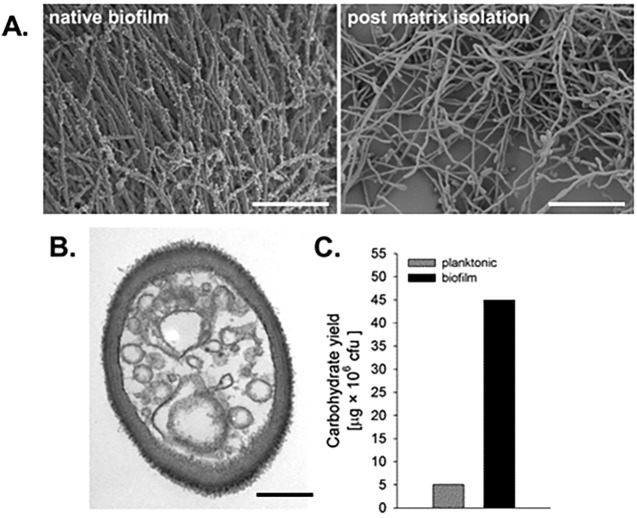
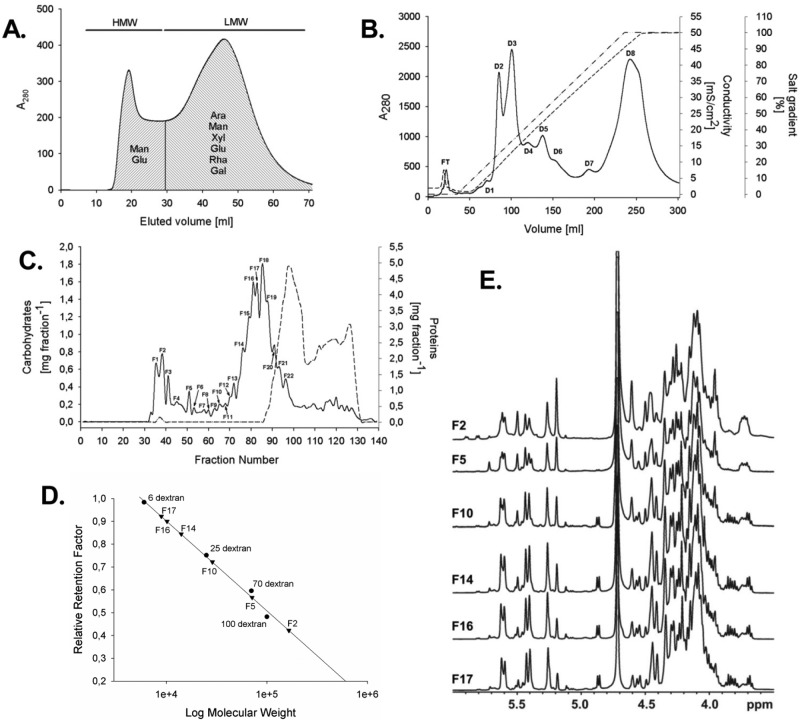
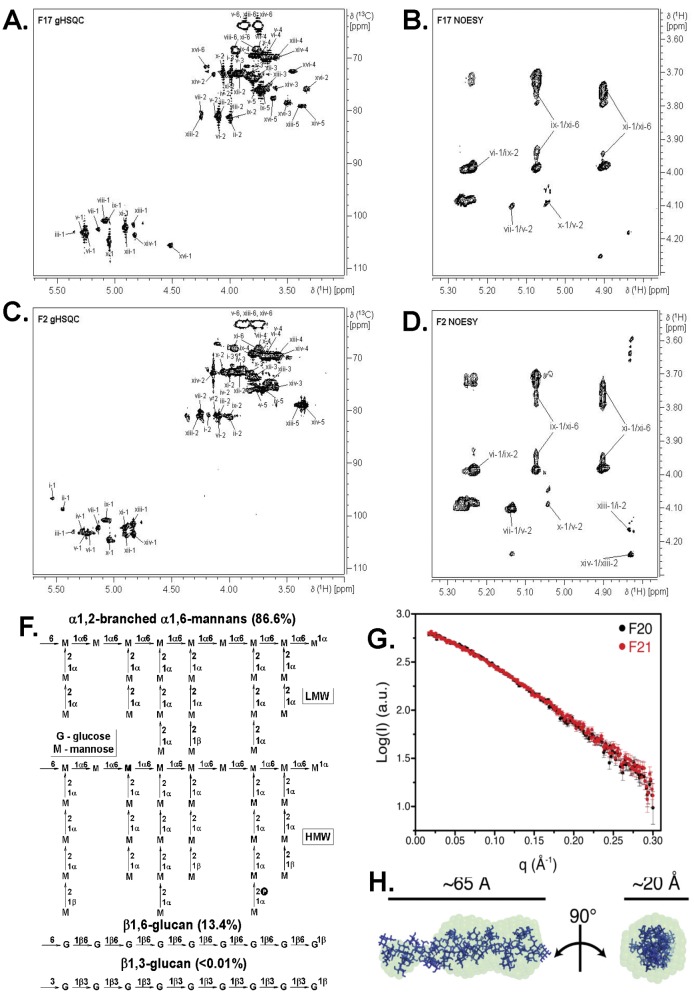
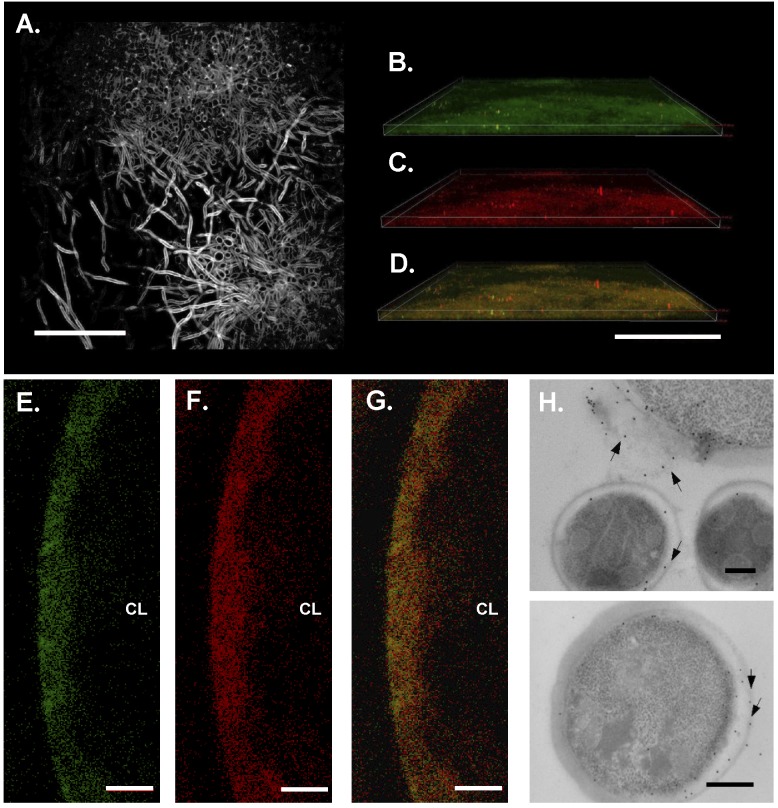
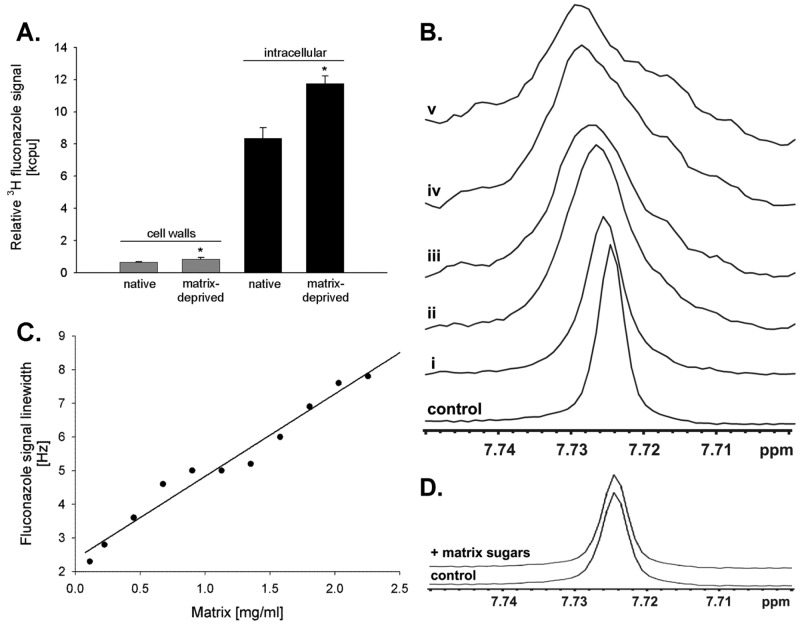
Virulence of Candida is linked with its ability to form biofilms. Once established, biofilm infections are nearly impossible to eradicate. Biofilm cells live immersed in a self-produced matrix, a blend of extracellular biopolymers, many of which are uncharacterized. In this study, we provide a comprehensive analysis of the matrix manufactured by Candida albicans both in vitro and in a clinical niche animal model. We further explore the function of matrix components, including the impact on drug resistance. We uncovered components from each of the macromolecular classes (55% protein, 25% carbohydrate, 15% lipid, and 5% nucleic acid) in the C. albicans biofilm matrix. Three individual polysaccharides were identified and were suggested to interact physically. Surprisingly, a previously identified polysaccharide of functional importance, β-1,3-glucan, comprised only a small portion of the total matrix carbohydrate. Newly described, more abundant polysaccharides included α-1,2 branched α-1,6-mannans (87%) associated with unbranched β-1,6-glucans (13%) in an apparent mannan-glucan complex (MGCx). Functional matrix proteomic analysis revealed 458 distinct activities. The matrix lipids consisted of neutral glycerolipids (89.1%), polar glycerolipids (10.4%), and sphingolipids (0.5%). Examination of matrix nucleic acid identified DNA, primarily noncoding sequences. Several of the in vitro matrix components, including proteins and each of the polysaccharides, were also present in the matrix of a clinically relevant in vivo biofilm. Nuclear magnetic resonance (NMR) analysis demonstrated interaction of aggregate matrix with the antifungal fluconazole, consistent with a role in drug impedance and contribution of multiple matrix components. IMPORTANCE This report is the first to decipher the complex and unique macromolecular composition of the Candida biofilm matrix, demonstrate the clinical relevance of matrix components, and show that multiple matrix components are needed for protection from antifungal drugs. The availability of these biochemical analyses provides a unique resource for further functional investigation of the biofilm matrix, a defining trait of this lifestyle.
Overview
The claims and statistics of this paper haven’t been checked yet.
Free: it reads the open-access text and checks the first 5 claims that cite a source we can check. Create a free account to check every claim.
Integrity signals
Registry
Cites
Statistics
Figures
Verification
Claims the paper makes
The claims and statistics of this paper haven’t been checked yet.
Free: it reads the open-access text and checks the first 5 claims that cite a source we can check. Create a free account to check every claim.
Claims other papers make about this one
Each is checked against this paper’s own text: does it say what the citing paper says it does?
The source backs part of the claim, not all of it — or backs it for a different population, condition or comparison.
In the citing paper
“Proteins are estimated to contribute greater than 50% of the biomass of C. albicans biofilms, and include enzymes in metabolic pathways for carbohydrates, amino acids, and energy metabolism.98”
From The dental plaque biofilm matrix (2021) · cites this paper as [98]
Experimental — accuracy not yet measuredThe source backs part of the claim, not all of it — or backs it for a different population, condition or comparison.
In the citing paper
“In the biofilm community, a unique extracellular mannan-glucan complex has been shown to prevent antifungal drugs from reaching intracellular drug targets (17–20).”
From Dual function of Candida auris mannosyltransferase, MNT5, in biofilm community protection from antifungal therapy and the host (2025) · cites this paper as [19]
Experimental — accuracy not yet measuredThe cited source says what the claim attributes to it.
In the citing paper
“The C. albicans biofilm matrix is predominantly composed of proteins and glycoproteins (55%), carbohydrates (25%), lipids (15%), and nucleic acids (5%).”
From Candida albicans Biofilms and Human Disease (2015) · cites this paper as [209]
The cited source says what the claim attributes to it.
In the citing paper
“Over 500 proteins were identified in the matrix.”
From Candida albicans Biofilms and Human Disease (2015) · cites this paper as [209]
The cited source says what the claim attributes to it.
In the citing paper
“Thus, although β-1,3-glucans contribute to drug resistance and are the major cell wall polysaccharide (130), we now know that they constitute only a small fraction of the total polysaccharides present, implying that the matrix is not constructed simply of released cell wall constituents.”
From Candida albicans Biofilms and Human Disease (2015) · cites this paper as [209]
4 more claims about this paper
Create a free account to see every claim other papers make about this one.
Self-check
Percentages, sums and reported differences re-computed from the paper’s own numbers.
The self-check needs the paper’s full text.
Citations
Cites
KEGG: Kyoto Encyclopedia of Genes and Genomes
Kanehisa, M. (2000) · Nucleic Acids Research · doi:10.1093/nar/28.1.27 · Cited by 37,077 · cited 1×
“Functional mapping of the matrix proteome was performed using the KEGG database (80, 81).”
MethodKEGG: Kyoto Encyclopedia of Genes and Genomes
Ogata, H., Goto, S., Sato, K., Fujibuchi, W., Bono, H., & Kanehisa, M. (1999) · Nucleic Acids Research · doi:10.1093/nar/27.1.29 · Cited by 31,232
Measurement of protein using bicinchoninic acid
Smith, P. K., Krohn, R. I., Hermanson, G. T., Mallia, A. K., Gartner, F. H., Provenzano, M. D., Fujimoto, E. K., Goeke, N. M., Olson, B. J., & Klenk, D. C. (1985) · Analytical Biochemistry · doi:10.1016/0003-2697(85)90442-7 · Cited by 18,482 · cited 1×
“The protein concentration of the crude matrix sample was assessed colorimetrically at 562 nm using the BCA protein assay kit (Pierce Biotechnology, Rockford, IL) (76).”
MethodBacterial Biofilms: A Common Cause of Persistent Infections
Costerton, J. W., Stewart, P. S., & Greenberg, E. P. (1999) · Science · doi:10.1126/science.284.5418.1318 · Cited by 12,167 · cited 2×
“The biofilm lifestyle represents a common form of microbial growth and persistence in nature (1, 29, 30).”
BackgroundFlemming, H.-C., & Wingender, J. (2010) · Nature Reviews Microbiology · doi:10.1038/nrmicro2415 · Cited by 10,137
Perkins, D. N., Pappin, D. J. C., Creasy, D. M., & Cottrell, J. S. (1999) · Electrophoresis · doi:10.1002/(sici)1522-2683(19991201)20:18<3551::aid-elps3551>3.0.co;2-2 · Cited by 8,203
Biofilms: Survival Mechanisms of Clinically Relevant Microorganisms
Donlan, R. M., & Costerton, J. W. (2002) · Clinical Microbiology Reviews · doi:10.1128/cmr.15.2.167-193.2002 · Cited by 6,644 · cited 2×
“Arguably, the most clinically relevant phenotype of biofilm growth in the medical setting is resistance to antimicrobial therapy and the immune system (2, 59, 60).”
BackgroundKEGG for integration and interpretation of large-scale molecular data sets
Kanehisa, M., Goto, S., Sato, Y., Furumichi, M., & Tanabe, M. (2012) · Nucleic Acids Research · doi:10.1093/nar/gkr988 · Cited by 4,848 · cited 1×
“Functional mapping of the matrix proteome was performed using the KEGG database (80, 81).”
MethodKeller, A., Nesvizhskii, A. I., Kolker, E., & Aebersold, R. (2002) · Analytical Chemistry · doi:10.1021/ac025747h · Cited by 4,830
Epidemiology of Invasive Candidiasis: a Persistent Public Health Problem
Pfaller, M. A., & Diekema, D. J. (2007) · Clinical Microbiology Reviews · doi:10.1128/cmr.00029-06 · Cited by 4,174 · cited 1×
“Candida albicans is the most common hospital-associated fungal pathogen and frequently produces biofilm infection of medical devices, resulting in the highest mortality among nosocomial pathogens (6, 7).”
Background
Cited by
Items 201–300 of 318
The Functional Resistance of Biofilms
Manavathu, E. K., & Vázquez, J. A. (2017) · Springer eBooks · doi:10.1007/978-3-319-46718-4_11 · Cited by 9
Fathoming Aspergillus oryzae metabolomes in formulated growth matrices
Singh, D., Lee, S., & Lee, C. H. (2018) · Critical Reviews in Biotechnology · doi:10.1080/07388551.2018.1490246 · Cited by 8
“protection against the deleterious agents [34].”
Żarnowski, R., Jaromin, A., Zagórska, A., Dominguez, E. G., Sidoryk, K., Gubernator, J., & Andes, D. R. (2020) · International Journal of Molecular Sciences · doi:10.3390/ijms22010108 · Cited by 9
“The isolated cell walls were subjected to monocarbohydrate analysis [7,8].”
BackgroundMethodSelf-citationSong, Y., Wang, Z., Long, Y., Mao, Y., Jiang, F., & Lu, Y. (2022) · Research in Microbiology · doi:10.1016/j.resmic.2022.103955 · Cited by 9
Rao, K. H., Paul, S., Natarajan, K., & Ghosh, S. (2022) · Microbiological Research · doi:10.1016/j.micres.2022.127146 · Cited by 9
Park, Y., Srikantha, T., Daniels, K. J., Jacob, M. R., Agarwal, A. K., Li, X., & Soll, D. R. (2017) · Antimicrobial Agents and Chemotherapy · doi:10.1128/aac.01319-17 · Cited by 10
Costa, A. C. B. P., Omran, R. P., Correia‐Mesquita, T. O., Dumeaux, V., & Whiteway, M. S. (2019) · Scientific Reports · doi:10.1038/s41598-019-45624-y · Cited by 12
Regimen and different surfaces interfere with photodynamic therapy on Candida albicans biofilms
Garcia, B. A., Panariello, B. H. D., Pontes, K. M. D. F., & Duarte, S. (2020) · Journal of Microbiological Methods · doi:10.1016/j.mimet.2020.106080 · Cited by 9
The hypoxic microenvironment of Candida albicans biofilms shapes neutrophil responses
Juszczak, M., Brankiewicz, A., Zawrotniak, M., & Rąpała‐Kozik, M. (2025) · Frontiers in Immunology · doi:10.3389/fimmu.2025.1547559 · Cited by 7
Overcoming Candida biofilm resistance: targeting persister cells with probiotic-derived metabolites
Debta, P., Sahu, B. K., Patra, S. K., Debta, F. M., Mishra, E., & Panda, S. K. (2026) · Frontiers in Antibiotics · doi:10.3389/frabi.2026.1767028 · Cited by 8
Extracellular Self-DNA Effects on Yeast Cell Cycle and Transcriptome during Batch Growth
Palomba, E., Chiusano, M. L., Monticolo, F., Langella, M. C., Sanchez, M., Tirelli, V., de Alteriis, E., Iannaccone, M., Termolino, P., Capparelli, R., et al. (2024) · Biomolecules · doi:10.3390/biom14060663 · Cited by 7
“In fungi, exDNA has also been reported to be a component of the extracellular matrix of Candida albicans [10] and Aspergillus fumigatus [11] biofilms.”
BackgroundAdvances and Challenges in Oral Biofilm Control
Panariello, B. H. D., Costa, C. A. G. D. A., Pavarina, A. C., Santiago, S. L., & Duarte, S. (2017) · Current Oral Health Reports · doi:10.1007/s40496-017-0120-8 · Cited by 8
Characteristics of monolayer formation in vitro by the chytrid Batrachochytrium dendrobatidis
Silva, S., Matz, L. M., Elmassry, M. M., & Francisco, M. J. S. (2019) · Biofilm · doi:10.1016/j.bioflm.2019.100009 · Cited by 10
Formation, Resistance, and Pathogenicity of Fungal Biofilms: Current Trends and Future Challenges
Aguilar-Marcelino, L., Al‐Ani, L. K. T., Soares, F. E. D. F., Moreira, A. L. E., Téllez‐Téllez, M., Castañeda-Ramírez, G. S., Acosta-Urdapilleta, M. D. L., Díaz-Godínez, G., & Pineda-Alegría, J. A. (2021) · Fungal biology · doi:10.1007/978-3-030-60659-6_18 · Cited by 9
Franco‐Duarte, R., Seabra, C. L., Rocha, S. M., Henriques, M., Sampaio, P., Teixeira, J. A., & Botelho, C. (2022) · FEMS Microbiology Ecology · doi:10.1093/femsec/fiac031 · Cited by 7
Ishchuk, O. P., Sterner, O., Ellervik, U., & Manner, S. (2019) · Antibiotics · doi:10.3390/antibiotics9010010 · Cited by 7
“Xylose and fucose are found in the fungal extracellular biofilm matrix [46].”
BackgroundOliveira, L. T., Marcos, C. M., Cabral, A. K. L. F., Medina‐Alarcón, K. P., Pires, R. H., Fusco‐Almeida, A. M., & Mendes‐Giannini, M. J. S. (2024) · Frontiers in Microbiology · doi:10.3389/fmicb.2024.1354140 · Cited by 10
“…according to the microorganism and can be affected by the environment and changes in growth conditions, such as the amount of nutrients, temperature, and pH. Zarnowski et al. (2014) reported that the C. albicans biofilm matrix comprises 55% protein, 25% carbohydrates, 15% lipids, and 5% nucleic acid.”
BackgroundGonçalves, B., Pires, D. P., Fernandes, L. C., Pacheco, M., Ferreira, T., Osório, H., Soares, A. R., Henriques, M., & Silva, S. (2024) · Microbiology Spectrum · doi:10.1128/spectrum.01201-24 · Cited by 6
Zerumbone disrupts mixed biofilms of Candida albicans and Streptococcus mutans on acrylic resin
Pereira, A. L. G., Abreu‐Pereira, C. A., Dias, L. M., Jorge, J. H., & Pavarina, A. C. (2024) · Biofouling · doi:10.1080/08927014.2024.2441259 · Cited by 8
“These findings corroborate with previous observations on MGCx complex encasing eDNA and suggests ZER disrupts interactions between eDNA and WSP within the biofilm matrix (Zarnowski et al. 2014).”
The Extracellular Matrix of Yeasts: A Key Player in the Microbial Biology Change of Paradigm
Lucas, C., & da Silva, C. F. (2023) · Frontiers in Bioscience-Elite · doi:10.31083/j.fbe1502013 · Cited by 6
“6% of the polar lipid fraction consisting of phosphatidylethanolamine (PE) [107]) is identical to that of this yeast plasma membrane (90% neutral lipids and 70.”
BackgroundInfluentialKumar, A., Francis, A., Hans, S., & Thakur, A. (2024) · Springer eBooks · doi:10.1007/978-981-97-4909-6_8 · Cited by 7
Production and Isolation of the Candida Species Biofilm Extracellular Matrix
Heredia, M. Y., & Andes, D. R. (2022) · Methods in molecular biology · doi:10.1007/978-1-0716-2549-1_19 · Cited by 7
Self-citationYu, J., Holbrook, E. D., Liao, Y.-R., Żarnowski, R., Andes, D. R., Wheat, L. J., Malo, J., & Hung, C.-Y. (2019) · PLoS ONE · doi:10.1371/journal.pone.0221228 · Cited by 6
Self-citationZarnowski, R., Horton, M. V., Johnson, C. J., Vang, P. C., Uram, J., Fernando, L. D. P., Vlach, J., Heiss, C., Azadi, P., Nett, J. E., et al. (2025) · mBio · doi:10.1128/mbio.00346-25 · Cited by 5
“While the biofilm matrix mannan component exhibits similarities to cell wall mannan with a α-1,6 backbone and α-1,2 branching (19), the polysaccharide length, branching pattern, and linkage to glucans are unique.”
Self-citationCharacterization of the metabolism of the yeast Yarrowia lipolytica growing as a biofilm
Jenjitwanich, A., Marx, H., & Sauer, M. (2024) · FEMS Microbes · doi:10.1093/femsmc/xtae026 · Cited by 5
“Although the composition of the EPS varies depending on the microbial species, the primary composition is often made of pol ysacc harides, whic h possibl y contribute to a major part of the organic carbon of biofilms (Donlan 2002 , Zarnowski et al. 2014 ).”
BackgroundAntimicrobial Tolerance in Cross-Kingdom Dual-Species Biofilms Formed by Fungi and Bacteria
Kurakado, S., Matsumoto, Y., Eshima, S., & Sugita, T. (2024) · Medical Mycology Journal · doi:10.3314/mmj.24.004 · Cited by 7
Daily Phototherapy with Red Light to Regulate Candida albicans Biofilm Growth
Panariello, B. H. D., Garcia, B. A., & Duarte, S. (2019) · Journal of Visualized Experiments · doi:10.3791/59326 · Cited by 6
Polymicrobial biofilms: Impact on fungal pathogenesis
Costa-Orlandi, C. B., Bila, N. M., Vaso, C. O., Pires, A. C. M. D. S., Silva, S. D. M., Medina‐Alarcón, K. P., Marcos, C. M., Fusco‐Almeida, A. M., & Mendes‐Giannini, M. J. S. (2023) · Elsevier eBooks · doi:10.1016/b978-0-323-99977-9.00040-5 · Cited by 9
Sfl1 is required for Candida albicans biofilm formation under acidic conditions
Gonçalves, B., BARBOSA, A. B. D. O., Soares, A. R., Henriques, M., & Silva, S. M. (2023) · Biochimie · doi:10.1016/j.biochi.2023.01.011 · Cited by 8
Novel Myco-Composite Material Obtained with Fusarium oxysporum
Iordache, O. G., Perdum, E., Mitran, E.-C., CHIVU, A., DUMITRESCU, I., Ferdeș, M., & SĂNDULACHE, I.-M. (2018) · ICAMS · doi:10.24264/icams-2018.i.16 · Cited by 5
Vesicle inhibition reduces Candida biofilm resistance
Kim, M.-J., Żarnowski, R., Jones, R., Nett, J. E., & Andes, D. R. (2025) · Antimicrobial Agents and Chemotherapy · doi:10.1128/aac.00045-25 · Cited by 5
“The intrinsic resistance of biofilms is multifactorial but largely attributable to a vesicle-delivered extracellular matrix that shields biofilm cells (5–7).”
Self-citationCurrent and emerging therapies for fungal biofilms and systemic infections
Elgammal, Y., Martinez, R. I. G., Requejo, A., & Martinez, L. R. (2025) · Critical Reviews in Microbiology · doi:10.1080/1040841x.2025.2570185 · Cited by 4
“…community with an extracellular matrix (ecM), which consists of polysaccharides such as β-glucans, and mannans (Robertson and casadevall 2009; Zarnowski et al. 2014; Mitchell et al. 2015; Mitchell et al. 2016). these characteristics make biofilm-derived cells more than 1000-fold resistant to…”
Abreu‐Pereira, C. A., Pereira, A. L. G., Jordão, C. C., Paro, C. B., Barbugli, P. A., & Pavarina, A. C. (2025) · Journal of Dentistry · doi:10.1016/j.jdent.2025.105631 · Cited by 4
Biofilm and methods of its eradication
Szlauer, W., Obłąk, E., Paluch, E., & Baldy-Chudzik, K. (2019) · Postępy Higieny i Medycyny Doświadczalnej · doi:10.5604/01.3001.0013.1605 · Cited by 5
Ishchuk, O. P., Sterner, O., Strevens, H., Ellervik, U., & Manner, S. (2019) · RSC Advances · doi:10.1039/c9ra01204d · Cited by 6
Evolution of antimicrobial drug resistance in human pathogenic fungi
Mir, M. A. (2022) · Elsevier eBooks · doi:10.1016/b978-0-323-96127-1.00009-7 · Cited by 5
Antibodies Against Biofilms: Mechanisms and Applications
Watson, A., Maan, H., Kolodkin‐Gal, I., & Freund, N. T. (2022) · Springer series on biofilms · doi:10.1007/978-3-031-10992-8_11 · Cited by 5
Biosurfactant‐Based Antibiofilm Nano Materials
Gupta, S. (2021) · Wiley eBooks · doi:10.1002/9781119671022.ch12 · Cited by 4
Daneshnia, F., Cai, L., Gunasekaran, D., Gautam, I., Perry, A. M., Ghahfarokhy, P. M., Ebadati, A., Munoz, J., Padilla, D., Hilmioglu-Polat, S., et al. (2026) · Microbiology Spectrum · doi:10.1128/spectrum.03043-25 · Cited by 4
“We first examined surface carbohy drate exposure by fluorescence microscopy using wheat germ agglutinin (chitin), anti– dectin-1 antibody (β-glucan), and concanavalin A (mannan).”
Implications of Fungal Biofilms in Microbial Keratitis
Fingerhut, L., Cheng, K. K. W., Ali, A., & Mills, B. (2025) · Springer series on biofilms · doi:10.1007/978-3-031-93315-8_15 · Cited by 4
Da, W., Shao, J., Li, Q., Shi, G., Wang, T., Wu, D., & Wang, C. (2019) · Frontiers in Microbiology · doi:10.3389/fmicb.2019.00752 · Cited by 5
Shailaja, A., Kerrigan, J., Bruce, T. F., & Gerard, P. D. (2021) · Microscopy and Microanalysis · doi:10.1017/s1431927621006917 · Cited by 3
Contributions of Extracellular Vesicles to Fungal Biofilm Pathogenesis
Heredia, M. Y., & Andes, D. R. (2021) · Current topics in microbiology and immunology · doi:10.1007/978-3-030-83391-6_7 · Cited by 3
Self-citationMasfufatun, M., Purbowati, R., Arum, N. A., Yasinta, M. S., Sumarsih, S., & Baktir, A. (2022) · Veterinary World · doi:10.14202/vetworld.2022.1134-1140 · Cited by 7
“However, it is not the only cause of biofilm resistance [5,9,10].”
BackgroundKumar, D., & Kumar, A. (2022) · RENDICONTI LINCEI · doi:10.1007/s12210-022-01115-3 · Cited by 3
Rąpała‐Kozik, M., Zawrotniak, M., Gogól, M., Bartnicka, D., Satała, D., Smolarz, M., Karkowska‐Kuleta, J., & Kozik, A. (2019) · IntechOpen eBooks · doi:10.5772/intechopen.81537 · Cited by 4
“The highly complicated and heterogeneous extracellular biofilm matrix (ECM) is composed of numerous proteins (55%), carbohydrates (25%), mainly branched α-1,6-mannans, unbranched β-1,6-glucans, and β-1,3-glucans, as well as lipids (15%), including neutral glycerolipids, polar glycerolipids and sphingolipids, and nucle…”
BackgroundMicrobially-derived cocktail of carbohydrases as an anti-biofouling agents: a ‘green approach’
Kaur, H., Kaur, A., Soni, S. K., & Rishi, P. (2022) · Biofouling · doi:10.1080/08927014.2022.2085566 · Cited by 3
“Various Candida species synthesize an extracellular MGCx, which contributes to the sequestration of antifungal drugs, thus protecting the fungus against these agents (Zarnowski et al. 2014; Dominguez et al. 2018).”
BackgroundMetabolic shifts induced by pH variation in Yarrowia lipolytica biofilm
Jenjitwanich, A., Marx, H., & Sauer, M. (2025) · FEMS Microbiology Letters · doi:10.1093/femsle/fnaf101 · Cited by 2
“The biofilm matrix consists of exopolysaccharides and proteins and sometimes nucleic acids (Donlan 2002 , Zarnowski et al. 2014 ), which surround the cells and fix them on a solid surface.”
Breaking the Barrier: Cutting‐Edge Microbial Strategies Against Candida Biofilm Infections
Mallick, U., Sahu, B. K., Patra, S. K., Sahu, M. C., & Panda, S. K. (2026) · Apmis · doi:10.1111/apm.70214 · Cited by 3
“This discovery underscores the need for antifungal treatments that target the matrix itself [14].”
Tuan, D. A., & Uyen, P. V. N. (2026) · Future Microbiology · doi:10.1080/17460913.2026.2678152 · Cited by 2
Haliem, N. F. A. E., Hassan, E. M., Rhman, E. A. A., Seadawy, L. A., Fouhil, D. F. I. E., & Asheiba, Z. F. (2018) · The Egyptian Journal of Medical Microbiology · doi:10.12816/0054182 · Cited by 2
Biofilm Formation in Candida Species
Elibe, M. I., & Innocent, N. E. (2024) · Springer eBooks · doi:10.1007/978-981-97-4909-6_9 · Cited by 2
Clinical Implications of Candida Biofilms
Bernardo, S. M., Ilieva, V. P., Walraven, C. J., & Lee, S. A. (2017) · Current Fungal Infection Reports · doi:10.1007/s12281-017-0302-9 · Cited by 3
Lipidomics Approaches: Applied to the Study of Pathogenesis in Candida Species
Singh, A., Khandelwal, N., & Prasad, R. (2019) · Progress in molecular and subcellular biology · doi:10.1007/978-3-030-13035-0_8 · Cited by 2
Genetic regulations of microbial biofilm
Sinha, B., Sengupta, C., Sahoo, P. K., Nath, T., & Mukherjee, O. (2022) · Elsevier eBooks · doi:10.1016/b978-0-323-88480-8.00018-2 · Cited by 4
Biofilm characterization in the maize pathogen, Fusarium verticillioidesPreprint
Peremore, C., Wingfield, B. D., Santana, Q. C., Steenkamp, E. T., & Motaung, T. E. (2022) · bioRxiv (Cold Spring Harbor Laboratory) · doi:10.1101/2022.11.18.517162 · Cited by 7
Liu, S., Wang, Y., & Xu, C. (2025) · Journal of Oral Biosciences · doi:10.1016/j.job.2025.100657 · Cited by 2
Andreu, C., & del Olmo, M. (2024) · Current Research in Biotechnology · doi:10.1016/j.crbiot.2024.100242 · Cited by 2
Kraus, K., Mikziński, P., Widelski, J., & Paluch, E. (2025) · Molecules · doi:10.3390/molecules30234500 · Cited by 3
“According to Zarnowski et al. [17], the extracellular matrix (ECM) of biofilms formed by the most prevalent species, C. albicans , consists predominantly of proteins and glycoproteins ( ≈ 55% by weight), followed by carbohydrates ( ≈ 25%), lipids ( ≈ 15%), and extracellular DNA ( ≈ 5%).”
From Oral Candidiasis to Candidemia: A Review of Superficial to Invasive Progression
Jerez, J. R., Ambrosio, M. V., Fernandes, M. E. O., & Mima, E. G. D. O. (2026) · MicrobiologyOpen · doi:10.1002/mbo3.70353 · Cited by 1
“In C. albicans , ECM is composed of carbohydrates, proteins, lipids, and extracellular DNA (Zarnowski et al. 2014), as well as hexosamine, phosphorus, and uronic acid (Al‐Fattani and Douglas 2006).”
InfluentialAntifungal activity of propolis against Candida spp.
Rohmatin, E., Sahlan, M., & Hermansyah, H. (2026) · New Microbes and New Infections · doi:10.1016/j.nmni.2026.101856 · Cited by 1
“The ability of propolis to disrupt biofilms appears to be linked to its capacity to destabilize key components of the extracellular matrix (ECM), including polysaccharides, proteins, and extracellular DNA, which are critical for biofilm stability and antifungal tolerance [89].”
Clinical Significance, Molecular Formation, and Natural Antibiofilm Agents of Candida albicans
Abdulghani, M. M. M., & Zore, G. B. (2024) · Springer eBooks · doi:10.1007/978-981-97-5165-5_9 · Cited by 2
Ratsoma, F. M., Santana, Q. C., Wingfield, B. D., Steenkamp, E. T., & Motaung, T. E. (2025) · Fungal Biology Reviews · doi:10.1016/j.fbr.2025.100411 · Cited by 2
Kanchanapiboon, J., Tuntoaw, S., Poonsatha, S., Maiuthed, A., Rukthong, P., Thumanu, K., Siriwong, S., Thunyaharn, S., Wachisuthon, D., Sakpetch, A., et al. (2026) · Microbial Pathogenesis · doi:10.1016/j.micpath.2026.108417 · Cited by 1
Rivera-Yañez, N., Hernández-Sánchez, K. M., Hernández-Rosas, N. A., Francisco-Cruz, L., Nieto-Yáñez, Ó., Ortega, C. C. B., Pozo‐Molina, G., Méndez-Catalá, C. F., Méndez‐Cruz, A. R., Ruiz-Hurtado, P. A., et al. (2026) · Journal of Fungi · doi:10.3390/jof12050301 · Cited by 1
“These findings are consistent with previous descriptions of the dynamic and compositionally complex nature of the C. albicans biofilm matrix [49,50].”
Ibrahim, O. M., El-Sherbiny, G. M., Sharaf, M. H., & Shehata, M. E. (2026) · Medicine in Microecology · doi:10.1016/j.medmic.2026.100183 · Cited by 1
Anti-recurrent therapy of chronic VVC: realities and perspectives
Татарчук, Т. Ф., & Kaluginа, L. V. (2017) · Reproductive Endocrinology · doi:10.18370/2309-4117.2017.33.48-55 · Cited by 1
Role of Glucan-Derived Polymers in the Pathogenic Fungus Candida albicans
Prieto, D., Román, E., Alonso‐Monge, R., & Plá, J. (2019) · Biologically-inspired systems · doi:10.1007/978-3-030-12919-4_9 · Cited by 1
BIOFILM AND RELATED ANTIMICROBIAL RESISTANCE
(2021) · Webology · doi:10.29121/web/v18i2/47 · Cited by 2
Singh, D., & Mittal, N. (2023) · Elsevier eBooks · doi:10.1016/b978-0-323-99977-9.00031-4 · Cited by 1
Functionalized magnetic nanosystems in nanomedicine
Renushe, A. P., Devi, K. K., Singh, G., Sathua, K. B., Navik, U., Banothu, A. K., Bharani, K. K., & Khurana, A. (2024) · Elsevier eBooks · doi:10.1016/b978-0-443-19012-4.00014-x · Cited by 1
Vulvovaginal candidiasis: evolution of a therapeutic approachs
Медведев, М. В. (2015) · Reproductive Endocrinology · doi:10.18370/2309-4117.2015.22.29-32 · Cited by 1
“жественной лекарственной устойчивостью [33].”
InfluentialThe effect of metals on growth, reproduction and attachment of zoosporic true fungi
Henderson, L. (2018) · The Sydney eScholarship Repository (The University of Sydney) · Cited by 2
Genetic Insights into the Rheological Phenotype of Candida albicans BiofilmsPreprint
Abriat, C., Huang, L., Sunder, S., Bauman, J. S., Landry, G. A., Mueller, H. R. L., VanEpps, J. S., Solomon, M. J., & Kumar, A. (2026) · Research Square · doi:10.21203/rs.3.rs-8555167/v1 · Cited by 1
“The C. albicans bio�lm ECM is composed of proteins, lipids, eDNA, and carbohydrates 24 .”
Mechmechani, S. (2022) · theses.fr (ABES) · doi:10.70675/303a937eza63bz4a61z8e54z3a9ce1941a53 · Cited by 1
Domingues, N. (2014) · Americanae (AECID Library) · Cited by 1
Guimarães, C. M. D. D. S., Vila, T. V. M., & Bittencourt-Sampaio, S. (2016) · Springer eBooks · doi:10.1007/978-3-319-20251-8_20-1
de Arruda, C. N. F. (2019) · Digital Library of Theses and Dissertations (Universidade de São Paulo) · doi:10.11606/t.58.2019.tde-04092018-124930
Candida albicans Biofilm: Risks, Complications and Preventive Strategies
Pathak, P. (2019) · Springer eBooks · doi:10.1007/978-981-32-9409-7_9 · Cited by 2
Guimarães, C. M. D. D. S., Vila, T. V. M., & Bittencourt-Sampaio, S. (2018) · Clinical approaches and procedures in cosmetic dermatology · doi:10.1007/978-3-319-16799-2_20
Vila, T. V. M., Montelongo‐Jauregui, D., Romo, J. A., Wall, G., Pierce, C. G., & Lopez-Ribot, J. L. (2016) · Elsevier eBooks · doi:10.1016/b978-0-12-809633-8.12092-8
Efeito do uso de própolis associada a vitrocerâmica bioativa na interface dentina-adesivo
Vivanco, R. G. (2020) · Digital Library of Theses and Dissertations (Universidade de São Paulo) · doi:10.11606/d.58.2020.tde-03102022-171436
Lipidomics profiling of microbial biofilm
Kumaraguru, G., Moorthy, S., Ashok Kumar, K., & Malaiyandi, J. (2023) · Elsevier eBooks · doi:10.1016/b978-0-323-95715-1.00007-8 · Cited by 4
Luperini, R. S. (2023) · Digital Library of Theses and Dissertations (Universidade de São Paulo) · doi:10.11606/d.17.2023.tde-17102023-105339
Silva, P. A., Souza, A. A., de Oliveira, G. M., Ramada, M. H. S., Hernández, N. V., Mora-Montes, H. M., Bueno, R. V., Martins-de-Sa, D., de Freitas, S. M., Felipe, M. S. S., et al. (2024) · Fungal Biology and Biotechnology · doi:10.1186/s40694-024-00174-5 · Cited by 1
“Investigations into the composition of the matrix have culminated in the recent identification of a novel mannan-glucan material consisting of α-1,2-branched α-1,6-mannan, β-1,6-glucan, and β-1,3-glucan [26].”
BackgroundMDR in Candida: The Real Storm
Srivastava, P., Tiwari, S., Kumar, M., Murhekar, M. V., & Dwivedi, G. R. (2024) · Springer eBooks · doi:10.1007/978-981-97-4909-6_4
Abdul-Sada, H., Jawad, R. N., & Al-Badran, I. M. (2025) · Iranian Journal of Medical Microbiology · doi:10.30699/ijmm.18.6.343
Shailaja, A., Bruce, T. F., Gerard, P. D., & Kerrigan, J. (2026) · Microorganisms · doi:10.1101/2025.05.12.651018
The Oral Biofilm Microenvironment
Babeer, A., Hwang, G., Koo, H., & Ren, Z. F. (2025) · Springer series on biofilms · doi:10.1007/978-3-031-82202-5_3
The Oral Mucosa-Fungi Interactome
Neelakantan, P., Kalimuthu, S., Pudipeddi, A., Krom, B. P., Ramage, G., Butcher, M. C., & Brown, J. L. (2025) · Springer series on biofilms · doi:10.1007/978-3-031-82202-5_7 · Cited by 1
The Extracellular Matrix: A Scaffold for Microbial Community Assembly and Function
Kim, D., & Klein, M. I. (2025) · Springer series on biofilms · doi:10.1007/978-3-031-82202-5_5 · Cited by 1
Nett, J. E., & Holt, A. M. (2025) · Springer series on biofilms · doi:10.1007/978-3-031-93315-8_10
Self-citationComposition and Role of the Extracellular Matrix in Fungal Biofilm Drug Resistance
Kim, M.-J., Żarnowski, R., & Andes, D. R. (2025) · Springer series on biofilms · doi:10.1007/978-3-031-93315-8_8 · Cited by 1
Self-citationGenetic Regulation and Development of Candida albicans Biofilms: A Literature Review
Anoma, J. N. P. N., Hendrayanab, M. A., & Tarini, N. M. A. (2025) · International Journal of Research Publication and Reviews · doi:10.55248/gengpi.6.0625.2334
NAJAHAH, W., & Masfufatun, M. (2025) · Hang Tuah Medical journal · doi:10.30649/htmj.v22i2.693
Xie, Y., Zhang, Y., Gu, F., Lu, Q., Yu, X., Wu, Z., Min-Yan, C. H. E. N., Guo, Q., Zhu, J., Tang, Y., et al. (2025) · Technology in Horticulture · doi:10.48130/tihort-0025-0023
Combined Approaches for Photodynamic Inactivation Against Oral Biofilms
Pavarina, A. C., Dovigo, L. N., Dias, L. M., & Jordão, C. C. (2025) · Springer eBooks · doi:10.1007/978-3-031-55858-0_77-1 · Cited by 1
Ghosh, S., Sarkar, S., Garai, P., Maiti, A. K., Saha, N. C., & Banerjee, P. (2025) · Discover Applied Sciences · doi:10.1007/s42452-025-07493-1
“In this connection, gene knockout techniques, genome wide transcriptional profiling and proteomic studies have proved effective to identify the genes and proteins encoded in a biofilm [27–29].”
Silva, P. A., Souza, A. A., de Oliveira, G. M., Ramada, M. H. S., Hernández, N. V., Mora-Montes, H. M., Bueno, R. V., Martins-de-Sa, D., de Freitas, S. M., Felipe, M. S. S., et al. (2024) · Figshare · doi:10.6084/m9.figshare.25770402
Silva, P. A., Souza, A. A., de Oliveira, G. M., Ramada, M. H. S., Hernández, N. V., Mora-Montes, H. M., Bueno, R. V., Martins-de-Sa, D., de Freitas, S. M., Felipe, M. S. S., et al. (2024) · Figshare · doi:10.6084/m9.figshare.26717259
Metadata
- Authors
- Zarnowski, R., Westler, W. M., Lacmbouh, G. A., Marita, J. M., Bothe, J. R., Bernhardt, J., Lounes-Hadj Sahraoui, A., Fontaine, J., Sanchez, H., Hatfield, R. D., Ntambi, J. M., Nett, J. E., Mitchell, A. P., & Andes, D. R.
- Affiliations
- Department of Medicine, Infectious Diseases, University of Wisconsin, Madison, Wisconsin, USA
- University of Wisconsin–Madison (US)
- U.S. Dairy Forage Research Center (US)
- Universität Greifswald (DE)
- Université du Littoral Côte d’Opale, Unité de Chimie Environnementale at Interactions sur le Vivant, Calais, France
- Université du littoral côte d'opale (FR)
- Carnegie Mellon University (US)
- Corresponding author
- Andes, David R.
- ORCID
- Venue
- mBio
- Publisher
- American Society for Microbiology
- Published
- 2014-08-29
- Volume
- 5
- Issue
- 4
- Pages
- e01333-14
- ISSN
- 2150-7511 (ISSN-L)
- 2161-2129
- PMC
- PMC4128356
- OpenAlex
- W2149297795
- Cited by
- 315
- References
- 98
- Citations by year
- 2026: 18 · 2025: 24 · 2024: 23 · 2023: 23 · 2022: 31 · 2021: 27 · 2020: 34 · 2019: 30 · 2018: 26 · 2017: 27 · 2016: 29 · 2015: 19 · 2014: 4
- FWCI
- 18.51
- Type
- journal article
- Language
- en
- Open access
- gold
- doi.org
- Licence
- cc-by-nc-sa
- creativecommons.org/licenses/by-nc-sa/3.0/ (vor)
- journals.asm.org/non-commercial-tdm-license (tdm)
- Locations
- mBio (publishedVersion, cc-by-nc-sa)
- PubMed Central (publishedVersion, cc-by-nc-sa)
- PubMed (publishedVersion)
- OSTI OAI (U.S. Department of Energy Office of Scientific and Technical Information) (submittedVersion)
- HAL (submittedVersion, cc-by-nc-sa)
- DOAJ (DOAJ: Directory of Open Access Journals) (submittedVersion, cc-by-sa)
- Figshare (submittedVersion, cc-by-nc-sa)
- KiltHub Repository
- Funders
- National Science Foundation (8415048, OIA‐9977486, 9214394)
- U.S. Department of Energy
- U.S. Department of Agriculture
- University of Georgia
- National Institutes of Health (5f32gm010399-02, NIH-R01, 2p41rr005351-21)
- National Heart, Lung, and Blood Institute (T32HL007899)
- National Institute of General Medical Sciences (P41GM10399)
- National Institute of Allergy and Infectious Diseases (R01AI067703, R01AI073289)
- National Center for Research Resources (RR-02781, S10RR002781, P41RR002301, S10RR008438, S10RR027000, P41-RR02301, RR-08438, P41-RR005351)
- Topics
- Health Sciences › Medicine › Infectious Diseases › Antifungal resistance and susceptibility
- Life Sciences › Biochemistry, Genetics and Molecular Biology › Molecular Biology › Bacterial biofilms and quorum sensing
- Life Sciences › Biochemistry, Genetics and Molecular Biology › Molecular Biology › Fungal and yeast genetics research
- Keywords
- Candida albicans, fungal biofilms, biofilm matrix composition, β-1,6-glucan, β-1,3-glucan, glycerolipids, antifungal resistance, fluconazole, virulence
- MeSH terms
- Antifungal Agents, Candida albicans, Fungal Proteins, Gene Expression Regulation, Fungal, Biofilms, Proteomics
About these checks
Registry, retraction, Cites and statistics results are computed, not judged, with one exception: a printed reference that no index lists is read once by a model before it counts as a citation error. Claims are extracted by a model and kept only when their quote appears verbatim in the text; each cited source is then checked, with a model’s help, for whether it says what the claim relies on. Those verdicts can be wrong — read the claim’s quote and the cited source before relying on one.
Statistics and arithmetic are recomputed, not judged.
Confidence bands are shown only for fields calibrated on our annotated test set. None is calibrated yet, so no band is shown.
What counts as a claim ›How we measure confidence ›How we check this ›
Are you an author, or do you see a problem with this page? Request a review
Data sources
Bibliographic data: Semantic Scholar, OpenAlex, Crossref.
Contains information from the Semantic Scholar Academic Graph Datasets, made available under the ODC Attribution License (ODC-BY 1.0).
Semantic Scholar’s data is described in: Kinney, R., et al. (2023). The Semantic Scholar Open Data Platform. arXiv:2301.10140.
