

Novel Entries in a Fungal Biofilm Matrix Encyclopedia
Open accessThe DOI matches its Crossref record; 95 of the 98 references it cites were found in a registry or an index.
Abstract
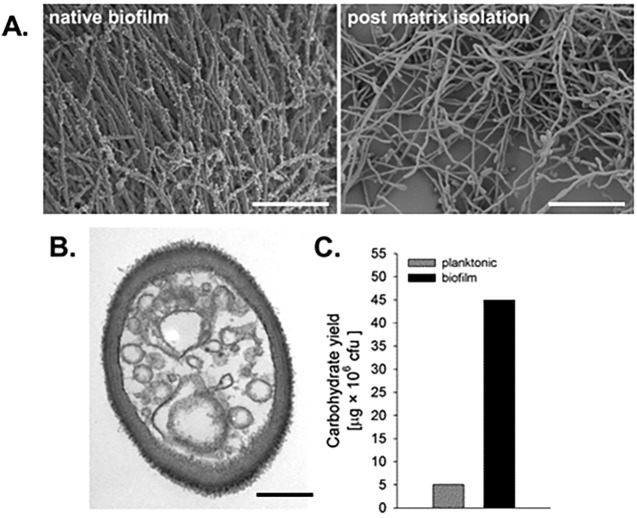
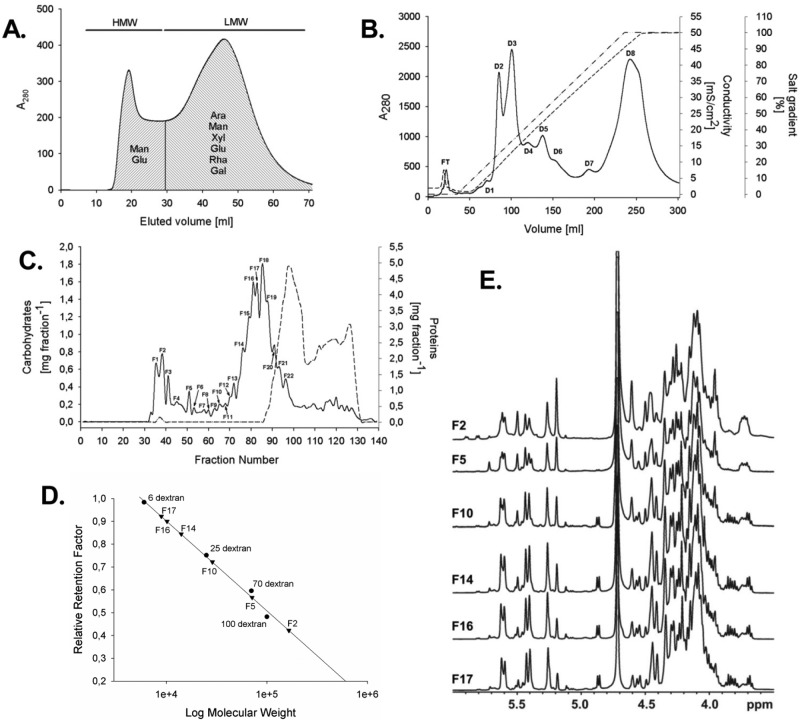
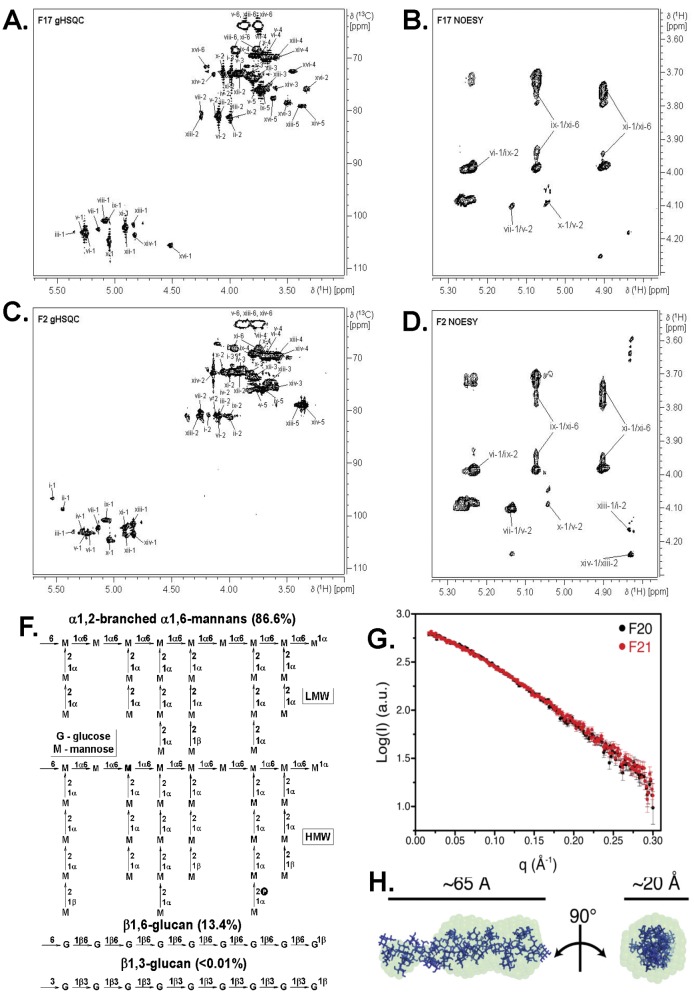
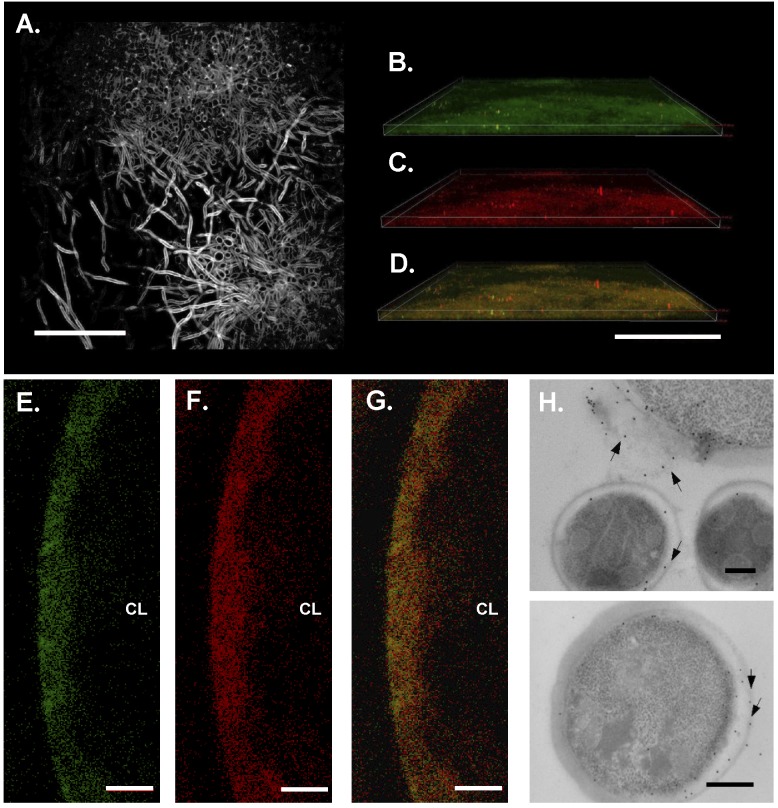
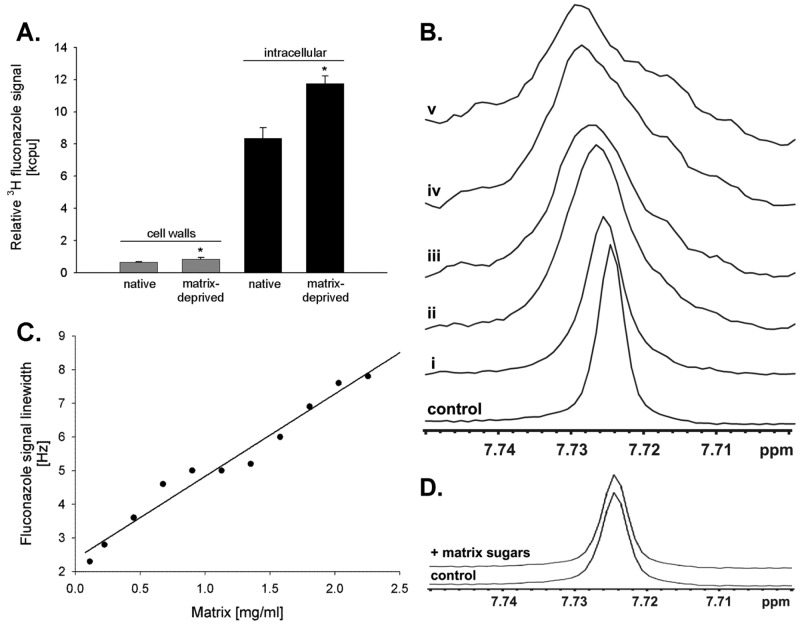
Virulence of Candida is linked with its ability to form biofilms. Once established, biofilm infections are nearly impossible to eradicate. Biofilm cells live immersed in a self-produced matrix, a blend of extracellular biopolymers, many of which are uncharacterized. In this study, we provide a comprehensive analysis of the matrix manufactured by Candida albicans both in vitro and in a clinical niche animal model. We further explore the function of matrix components, including the impact on drug resistance. We uncovered components from each of the macromolecular classes (55% protein, 25% carbohydrate, 15% lipid, and 5% nucleic acid) in the C. albicans biofilm matrix. Three individual polysaccharides were identified and were suggested to interact physically. Surprisingly, a previously identified polysaccharide of functional importance, β-1,3-glucan, comprised only a small portion of the total matrix carbohydrate. Newly described, more abundant polysaccharides included α-1,2 branched α-1,6-mannans (87%) associated with unbranched β-1,6-glucans (13%) in an apparent mannan-glucan complex (MGCx). Functional matrix proteomic analysis revealed 458 distinct activities. The matrix lipids consisted of neutral glycerolipids (89.1%), polar glycerolipids (10.4%), and sphingolipids (0.5%). Examination of matrix nucleic acid identified DNA, primarily noncoding sequences. Several of the in vitro matrix components, including proteins and each of the polysaccharides, were also present in the matrix of a clinically relevant in vivo biofilm. Nuclear magnetic resonance (NMR) analysis demonstrated interaction of aggregate matrix with the antifungal fluconazole, consistent with a role in drug impedance and contribution of multiple matrix components. IMPORTANCE This report is the first to decipher the complex and unique macromolecular composition of the Candida biofilm matrix, demonstrate the clinical relevance of matrix components, and show that multiple matrix components are needed for protection from antifungal drugs. The availability of these biochemical analyses provides a unique resource for further functional investigation of the biofilm matrix, a defining trait of this lifestyle.
Overview
The claims and statistics of this paper haven’t been checked yet.
Free: it reads the open-access text and checks the first 5 claims that cite a source we can check. Create a free account to check every claim.
Integrity signals
Registry
Cites
Statistics
Figures
Verification
Claims the paper makes
The claims and statistics of this paper haven’t been checked yet.
Free: it reads the open-access text and checks the first 5 claims that cite a source we can check. Create a free account to check every claim.
Claims other papers make about this one
Each is checked against this paper’s own text: does it say what the citing paper says it does?
The source backs part of the claim, not all of it — or backs it for a different population, condition or comparison.
In the citing paper
“Proteins are estimated to contribute greater than 50% of the biomass of C. albicans biofilms, and include enzymes in metabolic pathways for carbohydrates, amino acids, and energy metabolism.98”
From The dental plaque biofilm matrix (2021) · cites this paper as [98]
Experimental — accuracy not yet measuredThe source backs part of the claim, not all of it — or backs it for a different population, condition or comparison.
In the citing paper
“In the biofilm community, a unique extracellular mannan-glucan complex has been shown to prevent antifungal drugs from reaching intracellular drug targets (17–20).”
From Dual function of Candida auris mannosyltransferase, MNT5, in biofilm community protection from antifungal therapy and the host (2025) · cites this paper as [19]
Experimental — accuracy not yet measuredThe cited source says what the claim attributes to it.
In the citing paper
“The C. albicans biofilm matrix is predominantly composed of proteins and glycoproteins (55%), carbohydrates (25%), lipids (15%), and nucleic acids (5%).”
From Candida albicans Biofilms and Human Disease (2015) · cites this paper as [209]
The cited source says what the claim attributes to it.
In the citing paper
“Over 500 proteins were identified in the matrix.”
From Candida albicans Biofilms and Human Disease (2015) · cites this paper as [209]
The cited source says what the claim attributes to it.
In the citing paper
“Thus, although β-1,3-glucans contribute to drug resistance and are the major cell wall polysaccharide (130), we now know that they constitute only a small fraction of the total polysaccharides present, implying that the matrix is not constructed simply of released cell wall constituents.”
From Candida albicans Biofilms and Human Disease (2015) · cites this paper as [209]
4 more claims about this paper
Create a free account to see every claim other papers make about this one.
Self-check
Percentages, sums and reported differences re-computed from the paper’s own numbers.
The self-check needs the paper’s full text.
Citations
Cites
KEGG: Kyoto Encyclopedia of Genes and Genomes
Kanehisa, M. (2000) · Nucleic Acids Research · doi:10.1093/nar/28.1.27 · Cited by 37,077 · cited 1×
“Functional mapping of the matrix proteome was performed using the KEGG database (80, 81).”
MethodKEGG: Kyoto Encyclopedia of Genes and Genomes
Ogata, H., Goto, S., Sato, K., Fujibuchi, W., Bono, H., & Kanehisa, M. (1999) · Nucleic Acids Research · doi:10.1093/nar/27.1.29 · Cited by 31,232
Measurement of protein using bicinchoninic acid
Smith, P. K., Krohn, R. I., Hermanson, G. T., Mallia, A. K., Gartner, F. H., Provenzano, M. D., Fujimoto, E. K., Goeke, N. M., Olson, B. J., & Klenk, D. C. (1985) · Analytical Biochemistry · doi:10.1016/0003-2697(85)90442-7 · Cited by 18,482 · cited 1×
“The protein concentration of the crude matrix sample was assessed colorimetrically at 562 nm using the BCA protein assay kit (Pierce Biotechnology, Rockford, IL) (76).”
MethodBacterial Biofilms: A Common Cause of Persistent Infections
Costerton, J. W., Stewart, P. S., & Greenberg, E. P. (1999) · Science · doi:10.1126/science.284.5418.1318 · Cited by 12,167 · cited 2×
“The biofilm lifestyle represents a common form of microbial growth and persistence in nature (1, 29, 30).”
BackgroundFlemming, H.-C., & Wingender, J. (2010) · Nature Reviews Microbiology · doi:10.1038/nrmicro2415 · Cited by 10,137
Perkins, D. N., Pappin, D. J. C., Creasy, D. M., & Cottrell, J. S. (1999) · Electrophoresis · doi:10.1002/(sici)1522-2683(19991201)20:18<3551::aid-elps3551>3.0.co;2-2 · Cited by 8,203
Biofilms: Survival Mechanisms of Clinically Relevant Microorganisms
Donlan, R. M., & Costerton, J. W. (2002) · Clinical Microbiology Reviews · doi:10.1128/cmr.15.2.167-193.2002 · Cited by 6,644 · cited 2×
“Arguably, the most clinically relevant phenotype of biofilm growth in the medical setting is resistance to antimicrobial therapy and the immune system (2, 59, 60).”
BackgroundKEGG for integration and interpretation of large-scale molecular data sets
Kanehisa, M., Goto, S., Sato, Y., Furumichi, M., & Tanabe, M. (2012) · Nucleic Acids Research · doi:10.1093/nar/gkr988 · Cited by 4,848 · cited 1×
“Functional mapping of the matrix proteome was performed using the KEGG database (80, 81).”
MethodKeller, A., Nesvizhskii, A. I., Kolker, E., & Aebersold, R. (2002) · Analytical Chemistry · doi:10.1021/ac025747h · Cited by 4,830
Epidemiology of Invasive Candidiasis: a Persistent Public Health Problem
Pfaller, M. A., & Diekema, D. J. (2007) · Clinical Microbiology Reviews · doi:10.1128/cmr.00029-06 · Cited by 4,174 · cited 1×
“Candida albicans is the most common hospital-associated fungal pathogen and frequently produces biofilm infection of medical devices, resulting in the highest mortality among nosocomial pathogens (6, 7).”
Background
Cited by
Biofilm Matrixome: Extracellular Components in Structured Microbial Communities
Karygianni, L., Ren, Z., Koo, H., & Thurnheer, T. (2020) · Trends in Microbiology · doi:10.1016/j.tim.2020.03.016 · Cited by 1,487
The Fungal Cell Wall: Structure, Biosynthesis, and Function
Gow, N. A. R., Latge, J.-P., & Munro, C. A. (2017) · Microbiology Spectrum · doi:10.1128/microbiolspec.funk-0035-2016 · Cited by 1,423
“neoformans, while other fungi, such as some Candida species, form biofilms growing on solid surfaces, where the extracellular matrix has a more loose structure composed of glucans, chitin, nucleic acids, and other polymers (25, 26).”
BackgroundCandida albicans Biofilms and Human Disease
Nobile, C. J., & Johnson, A. D. (2015) · Annual Review of Microbiology · doi:10.1146/annurev-micro-091014-104330 · Cited by 1,057
Candida albicans biofilms: development, regulation, and molecular mechanisms
Gulati, M., & Nobile, C. J. (2016) · Microbes and Infection · doi:10.1016/j.micinf.2016.01.002 · Cited by 738
“Over 500 proteins have been identified in the matrix [25], most of 322 which are predicted to be enzymes, including hydrolyzing enzymes, suggesting that the 323 matrix may play an active role in breaking down biopolymers.”
BackgroundMethodInfluentialCandida Biofilms: Threats, Challenges, and Promising Strategies
Cavalheiro, M., & Teixeira, M. C. (2018) · Frontiers in Medicine · doi:10.3389/fmed.2018.00028 · Cited by 690
“α-1,2-Branched α-1,6-mannans were the more abundant polysaccharides found associated with unbranched α-1,6-glucans, forming a mannan–glucan complex on the matrix (42).”
BackgroundDevelopment and regulation of single- and multi-species Candida albicans biofilms
Lohse, M. B., Gulati, M., Johnson, A. D., & Nobile, C. J. (2018) · Nature Reviews Microbiology · doi:10.1038/nrmicro.2017.107 · Cited by 643
The dental plaque biofilm matrix
Jakubovics, N. S., Goodman, S. D., Mashburn‐Warren, L., Stafford, G. P., & Cieplik, F. (2021) · Periodontology 2000 · doi:10.1111/prd.12361 · Cited by 488
Pathogenesis of Candida albicans biofilm
Tsui, C., Kong, E. F., & Jabra-Rizk, M. A. (2016) · Pathogens and Disease · doi:10.1093/femspd/ftw018 · Cited by 481
“In C. albicans, the biofilm matrix is largely composed of polysaccharides such as β-1,3-glucan, β-1,6-glucan, and mannans and to a lesser extent, proteins (Al-Fattani and Douglas 2006; Nett et al. 2007; Nett, Sanchez and Andes 2011; Zarnowski et al. 2014).”
BackgroundKong, E. F., Tsui, C., Kucharíková, S., Andes, D., Van Dijck, P., & Jabra-Rizk, M. A. (2016) · mBio · doi:10.1128/mbio.01365-16 · Cited by 294
Self-citationCandida albicans biofilms and polymicrobial interactions
Ponde, N. O., Lortal, L., Ramage, G., Naglik, J. R., & Richardson, J. P. (2021) · Critical Reviews in Microbiology · doi:10.1080/1040841x.2020.1843400 · Cited by 281
“(Zarnowski et al. 2014).”
BackgroundAntifungal drug-resistance mechanisms in Candida biofilms
Kaur, J., & Nobile, C. J. (2023) · Current Opinion in Microbiology · doi:10.1016/j.mib.2022.102237 · Cited by 261
“Recent work has shown that Candida species release extracellular vesicles during biofilm formation that transport components of the extracellular matrix, including glucan and mannan, throughout the biofilm structure [30,50–52].”
Candida albicans biofilm–induced vesicles confer drug resistance through matrix biogenesis
Zarnowski, R., Sanchez, H., Covelli, A. S., Dominguez, E., Jaromin, A., Bernhardt, J., Mitchell, K. F., Heiss, C., Azadi, P., Mitchell, A., et al. (2018) · PLOS Biology · doi:10.1371/journal.pbio.2006872 · Cited by 260
Self-citationKean, R., Delaney, C., Sherry, L., Borman, A., Johnson, E. M., Richardson, M. D., Rautemaa-Richardson, R., Williams, C., & Ramage, G. (2018) · mSphere · doi:10.1128/msphere.00334-18 · Cited by 220
“cans, respectively, two genes involved in matrix formation (44, 45).”
BackgroundPromising Therapeutic Strategies Against Microbial Biofilm Challenges
Zhang, K., Li, X., Yu, C., & Wang, Y. (2020) · Frontiers in Cellular and Infection Microbiology · doi:10.3389/fcimb.2020.00359 · Cited by 190
Polke, M., Hube, B., & Jacobsen, I. D. (2015) · Advances in Applied Microbiology · doi:10.1016/bs.aambs.2014.12.002 · Cited by 184
Community participation in biofilm matrix assembly and function
Mitchell, K. F., Zarnowski, R., Sanchez, H., Edward, J. A., Reinicke, E. L., Nett, J. E., Mitchell, A. P., & Andes, D. R. (2015) · Proceedings of the National Academy of Sciences · doi:10.1073/pnas.1421437112 · Cited by 183
“For example, matrix mannan exists as a much larger structure (up to 12,000 mannose residues) compared with that described for cell wall mannan (∼150 residues) (21, 24).”
BackgroundMethodInfluentialSelf-citationGao, S., Liu, G., Li, J., Chen, J., Li, L., Li, Z., Zhang, X., Zhang, S., Thorne, R. F., & Zhang, S. (2020) · Frontiers in Cellular and Infection Microbiology · doi:10.3389/fcimb.2020.603858 · Cited by 172
An expanded regulatory network temporally controls C andida albicans biofilm formation
Fox, E. P., Bui, C. K., Nett, J. E., Hartooni, N., Mui, M. C., Andes, D. R., Nobile, C. J., & Johnson, A. D. (2015) · Molecular Microbiology · doi:10.1111/mmi.13002 · Cited by 173
Self-citationBiofilm formation in medically important Candida species
Malinovská, Z., Čonková, E., & Váczi, P. (2023) · Journal of Fungi · doi:10.3390/jof9100955 · Cited by 167
“…and hexosamine), 15% lipids (mostly neutral glycerolipids and polar glycerolipids, and, to a lesser extent, sphingolipids), and 5% noncoding DNA [61,69 The ECM in C. albicans bio fi lm consists of 55% proteins and their glycosylated counterparts, 25% carbohydrates (mostly glucose and hexosamine),…”
BackgroundThe Candida albicans Biofilm Matrix: Composition, Structure and Function
Pierce, C., Vila, T., Romo, J., Montelongo-Jauregui, D., Wall, G., Ramasubramanian, A., & Lopez-Ribot, J. (2017) · Journal of Fungi · doi:10.3390/jof3010014 · Cited by 159
“albicans biofilm matrix, accounting for approximately 25% of its dry weight [10].”
BackgroundMethodInfluentialContributions of the Biofilm Matrix to Candida Pathogenesis
Nett, J. E., & Andes, D. R. (2020) · Journal of Fungi · doi:10.3390/jof6010021 · Cited by 157
“Less abundant macromolecules of the biofilm matrix include lipids and nucleic acid [29,60,61].”
BackgroundInfluentialSelf-citationShould the biofilm mode of life be taken into consideration for microbial biocontrol agents?
Pandin, C., Le Coq, D., Canette, A., Aymerich, S., & Briandet, R. (2017) · Microbial Biotechnology · doi:10.1111/1751-7915.12693 · Cited by 157
“Although less explored, the formation of biofilms by moulds, yeast and algae, alone or in combination, in a variety of biotopes has also been reported (Morris and Monier, 2003; Aparna and Yadav, 2008; Zarnowski et al., 2014; He et al., 2016; Rajendran and Hu, 2016; Sheppard and Howell, 2016).”
BackgroundThe Interface between Fungal Biofilms and Innate Immunity
Kernien, J. F., Snarr, B. D., Sheppard, D. C., & Nett, J. E. (2018) · Frontiers in Immunology · doi:10.3389/fimmu.2017.01968 · Cited by 142
“albicans, in vitro studies have revealed that the mature biofilm matrix consists of a variety of macromolecules, including protein (55%), carbohydrate (25%), lipid (15%), and DNA (5%) (23, 38, 40, 80).”
BackgroundSelf-citationReichhardt, C., & Parsek, M. R. (2019) · Frontiers in Microbiology · doi:10.3389/fmicb.2019.00677 · Cited by 145
Dynamic cell–matrix interactions modulate microbial biofilm and tissue 3D microenvironments
Koo, H., & Yamada, K. M. (2016) · Current Opinion in Cell Biology · doi:10.1016/j.ceb.2016.05.005 · Cited by 140
“For example, function-composition analyses of in vitro and in vivo biofilm matrix revealed clinical relevance of certain matrix components in limiting antifungal [15] and antibiotic [16] penetration, contributing to drug resistance.”
BackgroundPortrait of Candida Species Biofilm Regulatory Network Genes
Araújo, D., Henriques, M., & Silva, S. M. (2016) · Trends in Microbiology · doi:10.1016/j.tim.2016.09.004 · Cited by 157
Conserved Role for Biofilm Matrix Polysaccharides in Candida auris Drug Resistance
Dominguez, E. G., Zarnowski, R., Choy, H. L., Zhao, M., Sanchez, H., Nett, J. E., & Andes, D. R. (2019) · mSphere · doi:10.1128/mspheredirect.00680-18 · Cited by 132
“To determine the concentration of mannan and glucan within the matrix, sugars were quantified by gas-liquid chromatography–flame ionization detector (GLC-FID) on a Shimadzu GC-2010 system after conversion to alditol acetate derivatives as previously described (12).”
MethodSelf-citationJohnson, C. J., Cabezas-Olcoz, J., Kernien, J. F., Wang, S. X., Beebe, D. J., Huttenlocher, A., Ansari, H., & Nett, J. E. (2016) · PLOS Pathogens · doi:10.1371/journal.ppat.1005884 · Cited by 133
“Recent analysis of C . albicans matrix identified α -mannan and β -1,6-glucan as the most abundant polysaccharides [11].”
Self-citationFungal Super Glue: The Biofilm Matrix and Its Composition, Assembly, and Functions
Mitchell, K. F., Zarnowski, R., & Andes, D. R. (2016) · PLOS Pathogens · doi:10.1371/journal.ppat.1005828 · Cited by 132
Self-citationBiofilm Exopolysaccharides of Pathogenic Fungi: Lessons from Bacteria
Sheppard, D. C., & Howell, P. L. (2016) · Journal of Biological Chemistry · doi:10.1074/jbc.r116.720995 · Cited by 123
“Studies of the biofilm matrix have revealed a cooperative role of -1,3-glucans with a mannanglucan complex in the development and maintenance of biofilm structure (3, 4).”
BackgroundInfluentialNeutrophil extracellular traps in fungal infection
Urban, C. F., & Nett, J. E. (2019) · Seminars in Cell & Developmental Biology · doi:10.1016/j.semcdb.2018.03.020 · Cited by 120
Self-citationCoordination of fungal biofilm development by extracellular vesicle cargo
Zarnowski, R., Noll, A., Chevrette, M. G., Sanchez, H., Jones, R., Anhalt, H., Fossen, J., Jaromin, A., Currie, C., Nett, J. E., et al. (2021) · Nature Communications · doi:10.1038/s41467-021-26525-z · Cited by 123
Self-citationAdapting to survive: How Candida overcomes host-imposed constraints during human colonization
Alves, R., Barata-Antunes, C., Casal, M., Brown, A. J. P., Van Dijck, P., & Paiva, S. (2020) · PLOS Pathogens · doi:10.1371/journal.ppat.1008478 · Cited by 122
Pathogenesis and Clinical Relevance of Candida Biofilms in Vulvovaginal Candidiasis
Rodríguez‐Cerdeira, C., Martínez-Herrera, E. O., Carnero-Gregorio, M., López-Bárcenas, A., Fabbrocini, G., Fida, M., El-Samahy, M., & González-Cespón, J. L. (2020) · Frontiers in Microbiology · doi:10.3389/fmicb.2020.544480 · Cited by 146
The role of fungi in fungal keratitis
Mills, B., Radhakrishnan, N., Karthikeyan, R. S. G., Rameshkumar, G., Lalitha, P., & Prajna, N. V. (2020) · Experimental Eye Research · doi:10.1016/j.exer.2020.108372 · Cited by 127
Microbial Biofilms in Pulmonary and Critical Care Diseases
Boisvert, A.-A., Cheng, M. P., Sheppard, D. C., & Nguyen, D. M. (2016) · Annals of the American Thoracic Society · doi:10.1513/annalsats.201603-194fr · Cited by 126
Divergent Approaches to Virulence in C. albicans and C. glabrata: Two Sides of the Same Coin
Galocha, M., Pais, P., Cavalheiro, M., Pereira, D., Viana, R., & Teixeira, M. C. (2019) · International Journal of Molecular Sciences · doi:10.3390/ijms20092345 · Cited by 105
“albicans’ matrix is also composed by other lipids (mainly neutral glycerolipids, polar glycerolipids, and a small percentage of sphingolipids) [139], phosphorus, and uronic acid [140].”
BackgroundBrucker, K. D., Tan, Y., Vints, K., Cremer, K. D., Braem, A., Verstraeten, N., Michiels, J. J., Vleugels, J., Cammue, B. P. A., & Thevissen, K. (2015) · Antimicrobial Agents and Chemotherapy · doi:10.1128/aac.04650-14 · Cited by 109
Candida Biofilms: An Update on Developmental Mechanisms and Therapeutic Challenges
de Barros, P. P., Rossoni, R. D., de Souza, C. M., Scorzoni, L., Fenley, J. D. C., & Junqueira, J. C. (2020) · Mycopathologia · doi:10.1007/s11046-020-00445-w · Cited by 121
“enzymes, including hydrolyzing enzymes, suggesting that the matrix may play an active role in breaking down biopolymers [29, 50].”
BackgroundCandida and its dual lifestyle as a commensal and a pathogen
Cauchie, M., Desmet, S., & Lagrou, K. (2017) · Research in Microbiology · doi:10.1016/j.resmic.2017.02.005 · Cited by 118
Garcia, L. G. S., Guedes, G. M. D. M., da Silva, M. L. Q., Castelo‐Branco, D. D. S. C. M., Sidrim, J. J. C., Cordeiro, R. D. A., Rocha, M. F. G., Vieira, R. S., & Brilhante, R. S. N. (2018) · Carbohydrate Polymers · doi:10.1016/j.carbpol.2018.04.091 · Cited by 98
Reichhardt, C., Ferreira, J. A. G., Joubert, L.-M., Clemons, K. V., Stevens, D. A., & Cegelski, L. (2015) · Eukaryotic Cell · doi:10.1128/ec.00050-15 · Cited by 91
Opportunistic yeast pathogens: reservoirs, virulence mechanisms, and therapeutic strategies
Polvi, E. J., Li, X., O’Meara, T. R., Leach, M. D., & Cowen, L. E. (2015) · Cellular and Molecular Life Sciences · doi:10.1007/s00018-015-1860-z · Cited by 106
“The ECM is composed of mainly protein and carbohydrates, including mannans and glucans; however, lipids and nucleic acids are also found in the ECM [239].”
BackgroundThe Fungal Cell Wall: Structure, Biosynthesis, and Function
Gow, N. A. R., Latge, J.-P., & Munro, C. A. (2017) · The Fungal Kingdom · doi:10.1128/9781555819583.ch12 · Cited by 86
Global Identification of Biofilm-Specific Proteolysis in Candida albicans
Winter, M. B., Salcedo, E. C., Lohse, M. B., Hartooni, N., Gulati, M., Sanchez, H., Takagi, J., Hube, B., Andes, D. R., Johnson, A. D., et al. (2016) · mBio · doi:10.1128/mbio.01514-16 · Cited by 86
“albicans biofilm matrix identified several cytosolic metabolic proteins (15), suggesting that the extracellular localization of Kex2, possibly through extracellular vesicle release (16), may represent a relevant biofilm-specific feature.”
BackgroundSelf-citationStreptococcus gordonii comCDE (competence) operon modulates biofilm formation with Candida albicans
Jack, A. A., Daniels, D. E., Jepson, M. A., Vickerman, M. M., Lamont, R. J., Jenkinson, H. F., & Nobbs, A. H. (2015) · Microbiology · doi:10.1099/mic.0.000010 · Cited by 88
“50 % protein, branched-chain mannans, mannan–glucan complexes and a small proportion (~5 %) of eDNA (Zarnowski et al., 2014).”
BackgroundInfluentialSpecial Issue: Fungal Cell Wall
Beauvais, A., & Latgé, J. (2018) · Journal of Fungi · doi:10.3390/jof4030091 · Cited by 104
Gamaletsou, M. N., Rammaert, B., Brause, B. D., Bueno, M. A., Dadwal, S., Henry, M. W., Katragkou, A., Kontoyiannis, D. P., McCarthy, M. W., Miller, A. O., et al. (2022) · Clinical Microbiology Reviews · doi:10.1128/cmr.00086-19 · Cited by 102
The Extracellular Matrix of Fungal Biofilms
Mitchell, K. F., Żarnowski, R., & Andes, D. R. (2016) · Advances in experimental medicine and biology · doi:10.1007/5584_2016_6 · Cited by 111
Self-citationManoharan, R. K., Lee, J.-H., & Lee, J. (2017) · Frontiers in Microbiology · doi:10.3389/fmicb.2017.01476 · Cited by 83
“Matured biofilms form a protein and carbohydrate rich extracellular matrix, which plays a key role in drug resistance (Zarnowski et al., 2014).”
BackgroundKhoury, Z. H., Vila, T. V. M., Puthran, T. R., Sultan, A. S., Montelongo‐Jauregui, D., Melo, M. A. S., & Jabra‐Rizk, M. A. (2020) · Frontiers in Microbiology · doi:10.3389/fmicb.2020.00307 · Cited by 90
Ismaila, A. A., Ahmad, K., Siddique, Y., Wahab, M. A. A., Kutawa, A. B., Adamu, A., Zobir, S. A. M., Abdu, A., & Abdullah, S. N. A. (2022) · Horticultural Plant Journal · doi:10.1016/j.hpj.2022.02.004 · Cited by 103
Plasticity of Candida albicans Biofilms
Soll, D. R., & Daniels, K. J. (2016) · Microbiology and Molecular Biology Reviews · doi:10.1128/mmbr.00068-15 · Cited by 78
Niemirowicz, K., Durnaś, B., Tokajuk, G., Głuszek, K., Wilczewska, A. Z., Misztalewska‐Turkowicz, I., Mystkowska, J., Michalak, G., Sodo, A., Wątek, M., et al. (2016) · Nanomedicine Nanotechnology Biology and Medicine · doi:10.1016/j.nano.2016.07.006 · Cited by 85
Horton, M. V., Johnson, C. J., Zarnowski, R., Andes, B. D., Schoen, T. J., Kernien, J. F., Lowman, D., Kruppa, M. D., Ma, Z., Williams, D. L., et al. (2021) · mSphere · doi:10.1128/msphere.00406-21 · Cited by 79
Self-citationDominguez, E., Zarnowski, R., Sanchez, H., Covelli, A. S., Westler, W. M., Azadi, P., Nett, J., Mitchell, A. P., & Andes, D. R. (2018) · mBio · doi:10.1128/mbio.00451-18 · Cited by 77
Self-citationThe Significance of Lipids to Biofilm Formation in Candida albicans: An Emerging Perspective
Alim, D., Sircaik, S., & Panwar, S. L. (2018) · Journal of Fungi · doi:10.3390/jof4040140 · Cited by 86
“Its chemical nature suggests that it is less likely formed by secretion of components alone, but rather by lysis of some of its own cells along with other components [15].”
BackgroundInfluentialOptimization the removal of lead ions by fungi: Explanation of the mycosorption mechanism
Şenol, Z. M., Gül, Ü. D., Gurbanov, R., & Şimşek, S. (2020) · Journal of environmental chemical engineering · doi:10.1016/j.jece.2020.104760 · Cited by 79
Gowri, M., Jayashree, B., Jeyakanthan, J., & Girija, E. K. (2019) · Journal of Applied Microbiology · doi:10.1111/jam.14490 · Cited by 93
Antifungal Activity and Synergism with Azoles of Polish Propolis
Gucwa, K., Kusznierewicz, B., Milewski, S., Dijck, P. V., & Szweda, P. (2018) · Pathogens · doi:10.3390/pathogens7020056 · Cited by 80
“The ECM of fungal biofilm has been shown to provide numerous functions, including cellular cohesion, community structure, nutritional resource, and, especially important from the clinical point of view, protection from xenobiotics, antimicrobials, and the host immune system [6].”
BackgroundAnti-Biofilm Activity of Cannabidiol against Candida albicans
Feldman, M., Sionov, R. V., Mechoulam, R., & Steinberg, D. (2021) · Microorganisms · doi:10.3390/microorganisms9020441 · Cited by 81
“ConA binds to glucose and mannose residues of cell wall exopolysaccharides (EPS) [30].”
BackgroundInfluentialSong, J., Zhai, P., Zhang, Y., Zhang, C., Sang, H., Han, G., Keller, N. P., & Lu, L. (2016) · mBio · doi:10.1128/mbio.01919-15 · Cited by 73
Combination Therapy to Treat Fungal Biofilm-Based Infections
Tits, J., Cammue, B. P. A., & Thevissen, K. (2020) · International Journal of Molecular Sciences · doi:10.3390/ijms21228873 · Cited by 69
“albicans biofilms, in which hyphae are embedded, is most intensively studied and consists mainly of proteins (55%) and carbohydrates (25%) with smaller fractions of lipids (15%) and nucleic acids (5%) [65].”
BackgroundInfluentialHow Biofilm Growth Affects Candida-Host Interactions
Eix, E. F., & Nett, J. E. (2020) · Frontiers in Microbiology · doi:10.3389/fmicb.2020.01437 · Cited by 79
“(Zarnowski et al., 2014).”
BackgroundInfluentialSelf-citationHost Contributions to Construction of Three Device-Associated Candida albicans Biofilms
Nett, J. E., Zarnowski, R., Cabezas-Olcoz, J., Brooks, E. G., Bernhardt, J., Marchillo, K., Mosher, D. F., & Andes, D. R. (2015) · Infection and Immunity · doi:10.1128/iai.00931-15 · Cited by 67
Self-citationFungal Biofilms: Update on Resistance
Borghi, E., Borgo, F., & Morace, G. (2016) · Advances in experimental medicine and biology · doi:10.1007/5584_2016_7 · Cited by 76
Assessment and Optimizations of Candida albicans In Vitro Biofilm Assays
Lohse, M. B., Gulati, M., Valle Arevalo, A., Fishburn, A., Johnson, A. D., & Nobile, C. J. (2017) · Antimicrobial Agents and Chemotherapy · doi:10.1128/aac.02749-16 · Cited by 66
A common vesicle proteome drives fungal biofilm development
Zarnowski, R., Sanchez, H., Jaromin, A., Zarnowska, U. J., Nett, J. E., Mitchell, A. P., & Andes, D. (2022) · Proceedings of the National Academy of Sciences · doi:10.1073/pnas.2211424119 · Cited by 63
Self-citationTurbinmicin inhibits Candida biofilm growth by disrupting fungal vesicle-mediated trafficking
Zhao, M., Zhang, F., Zarnowski, R., Barns, K., Jones, R., Fossen, J., Sanchez, H., Rajski, S. R., Audhya, A., Bugni, T. S., et al. (2021) · Journal of Clinical Investigation · doi:10.1172/jci145123 · Cited by 62
“We have reported that Candida biofilm extracellular matrix components critical for biofilm cell drug resistance are delivered by extracellular vesicles (12-14).”
BackgroundSelf-citationWu, R., Tao, Y., Cao, Y., Zhou, Y. N., & Lin, H. (2020) · Frontiers in Microbiology · doi:10.3389/fmicb.2020.581184 · Cited by 68
Casillo, A., Fabozzi, A., Krauss, I. R., Parrilli, E., Biggs, C. I., Gibson, M. I., Lanzetta, R., Appavou, M., Rădulescu, A., Tutino, M. L., et al. (2021) · Biomacromolecules · doi:10.1021/acs.biomac.0c01659 · Cited by 61
Saha, P., & Rafe, M. R. (2023) · Heliyon · doi:10.1016/j.heliyon.2023.e19287 · Cited by 65
Johnson, C. J., Kernien, J. F., Hoyer, A. R., & Nett, J. E. (2017) · Scientific Reports · doi:10.1038/s41598-017-13588-6 · Cited by 58
Self-citationGalinari, É., Sabry, D. A., Sassaki, G. L., de Macêdo, G. R., Passos, F. M. L., Mantovani, H. C., & Rocha, H. A. O. (2016) · Carbohydrate Polymers · doi:10.1016/j.carbpol.2016.11.015 · Cited by 61
“…to have glycosidic bonds in the α-configuration, by comparing the anomeric carbons and their respective hydrogen signals to those reported on literature (Kobayashi et al., 1997; Kobayashi, Kawakami, Ogawa, Shibata, & Suzuki, 2013; Shibata, Suzuki, Kobayashi, & Okawa, 2007; Zarnowski et al., 2014).”
BackgroundResultBiofilm formation in Candida glabrata: What have we learnt from functional genomics approaches?
d'Enfert, C., & Janbon, G. (2016) · FEMS Yeast Research · doi:10.1093/femsyr/fov111 · Cited by 53
“Biochemical characterization of the C. albicans biofilmmatrix has revealed that it includes proteins, carbohydrates, lipids and nucleic acids (Baillie and Douglas 2000; Martins et al. 2010; Zarnowski et al. 2014).”
BackgroundRole of Exopolysaccharides in Biofilm Formation
Gupta, P., Pruthi, P. A., & Pruthi, V. (2019) · ACS symposium series · doi:10.1021/bk-2019-1323.ch002 · Cited by 76
Gaining Insights from Candida Biofilm Heterogeneity: One Size Does Not Fit All
Kean, R., Delaney, C., Rajendran, R., Sherry, L., Metcalfe, R., Thomas, R., McLean, W., Williams, C., & Ramage, G. (2018) · Journal of Fungi · doi:10.3390/jof4010012 · Cited by 55
“This demonstrated its clinical relevance of providing biofilm stability, sequestration of drugs, and protection from the surrounding environmental stressors, as well as subsequently facilitating biofilm dispersal [130].”
BackgroundAhmed, H. Y., Safwat, N. A., Shehata, R. M., Althubaiti, E. H., Kareem, S. A. E., Atef, A., Qari, S. H., Aljahani, A. H., Al-Meshal, A. S., Youssef, M., et al. (2022) · Membranes · doi:10.3390/membranes12040408 · Cited by 60
“Biofilms are crucial virulence agents for certain pathogen microorganisms, and some biofilm infections appear almost impossible to stop [60].”
BackgroundVila, T. V. M., Ishida, K., Seabra, S. H., & Rozental, S. (2016) · International Journal of Antimicrobial Agents · doi:10.1016/j.ijantimicag.2016.07.022 · Cited by 54
“Recovered Candida spp. biofilm cells are susceptible to miltefosine To elucidate the role of the biofilm three-dimensional structure in the susceptibility to miltefosine and the standard antifungals, control and pre-treated biofilm cells were recovered and their susceptibility to antifungals was tested after the ECM w…”
BackgroundInfluentialDectin-2-Targeted Antifungal Liposomes Exhibit Enhanced Efficacy
Ambati, S., Ellis, E. C., Lin, J., Lin, X., Lewis, Z., & Meagher, R. B. (2019) · mSphere · doi:10.1128/msphere.00715-19 · Cited by 61
“albicans contains approximately 13% -1,6-glucan and 87% -1,6-mannan (74).”
BackgroundSmolarz, M., Zawrotniak, M., Satała, D., & Rąpała‐Kozik, M. (2021) · Frontiers in Cellular and Infection Microbiology · doi:10.3389/fcimb.2021.681030 · Cited by 55
“Subsequent studies showed that eDNA of C.albicans consistsmainlyof randomnon-coding sequences, and the only exon found was a fragment encoding a cyclophilin-type peptidyl-prolyl cis-trans-isomerase (CPR3) (Zarnowski et al., 2014).”
BackgroundDrotleff, B., Roth, S. R., Henkel, K., Calderón, C., Schlotterbeck, J., Neukamm, M. A., & Lämmerhofer, M. (2020) · Analytical and Bioanalytical Chemistry · doi:10.1007/s00216-019-02364-2 · Cited by 55
Vila, T. V. M., Chaturvedi, A. K., Rozental, S., & Lopez-Ribot, J. L. (2015) · Antimicrobial Agents and Chemotherapy · doi:10.1128/aac.01890-15 · Cited by 47
Role of the extracellular matrix in Candida biofilm antifungal resistance
Massey, J., Żarnowski, R., & Andes, D. R. (2023) · FEMS Microbiology Reviews · doi:10.1093/femsre/fuad059 · Cited by 52
Self-citationIn Vitro Activity of Propolis on Oral Microorganisms and Biofilms
Stähli, A., Schröter, H., Bullitta, S., Serralutzu, F., Dore, A., Nietzsche, S., Milia, E. P., Sculean, A., & Eick, S. (2021) · Antibiotics · doi:10.3390/antibiotics10091045 · Cited by 57
“Of the latter a mannan–glucan complex was most abundant [40].”
BackgroundYeast cell differentiation: Lessons from pathogenic and non-pathogenic yeasts
Palková, Z., & Váchová, L. (2016) · Seminars in Cell and Developmental Biology · doi:10.1016/j.semcdb.2016.04.006 · Cited by 53
Woolford, C. A., Lagree, K., Xu, W., Aleynikov, T., Adhikari, H., Sanchez, H., Cullen, P. J., Lanni, F., Andes, D. R., & Mitchell, A. P. (2016) · PLOS Genetics · doi:10.1371/journal.pgen.1006487 · Cited by 47
Self-citationPanariello, B. H. D., Klein, M. I., Pavarina, A. C., & Duarte, S. (2017) · Journal of Oral Microbiology · doi:10.1080/20002297.2017.1385372 · Cited by 51
“tion as an external digestive structure that disrupts extracellular biopolymers as an energy source’ [16].”
BackgroundInfluentialCandida–Bacterial Biofilms and Host–Microbe Interactions in Oral Diseases
Negrini, T. D. C., Koo, H., & Arthur, R. A. (2019) · Advances in experimental medicine and biology · doi:10.1007/978-3-030-28524-1_10 · Cited by 51
Lagree, K., & Mitchell, A. P. (2017) · Microbiology Spectrum · doi:10.1128/microbiolspec.funk-0024-2016 · Cited by 46
“albicans ECM has recently been defined comprehensively through a chemical and biochemical tour de force (110).”
BackgroundSelf-citationYeast biofilms on abiotic surfaces: Adhesion factors and control methods
Alonso, V. P. P., Lemos, J. G., & do Nascimento, M. D. S. (2023) · International Journal of Food Microbiology · doi:10.1016/j.ijfoodmicro.2023.110265 · Cited by 44
Ligation of Dectin-2 with a novel microbial ligand promotes adjuvant activity for vaccination
Wang, H., Lee, T.-J., Fites, J. S., Merkhofer, R. M., Żarnowski, R., Brandhorst, T. T., Galles, K., Klein, B. S., & Wüthrich, M. (2017) · PLoS Pathogens · doi:10.1371/journal.ppat.1006568 · Cited by 42
Panariello, B. H. D., Klein, M. I., Mima, E. G. D. O., & Pavarina, A. C. (2018) · Journal of Oral Microbiology · doi:10.1080/20002297.2018.1476644 · Cited by 41
“biofilms, but not to their establishment [24,25], while the recognized role of some proteins is linked to metabolism [26].”
BackgroundCandida albicans Induces Oral Microbial Dysbiosis and Promotes Oral Diseases
Kashyap, B., Padala, S. R., Kaur, G., & Kullaa, A. M. (2024) · Microorganisms · doi:10.3390/microorganisms12112138 · Cited by 42
Fungal Biofilm Composition and Opportunities in Drug Discovery
Reichhardt, C., Stevens, D. A., & Cegelski, L. (2016) · Future Medicinal Chemistry · doi:10.4155/fmc-2016-0049 · Cited by 36
Microbial biofilm monitoring by electrochemical transduction methods
Poma, N. V., Vivaldi, F. M., Bonini, A., Salvo, P., Kirchhain, A., Ateş, Z., Melai, B., Bottai, D., Tavanti, A., & Francesco, F. D. (2020) · TrAC Trends in Analytical Chemistry · doi:10.1016/j.trac.2020.116134 · Cited by 40
Photodynamic Therapy Is Effective Against Candida auris Biofilms
Bapat, P. S., & Nobile, C. J. (2021) · Frontiers in Cellular and Infection Microbiology · doi:10.3389/fcimb.2021.713092 · Cited by 35
“auris biofilms, and are composed of yeast-form cells, pseudohyphal cells, and hyphal cells, encased in an extracellular matrix composed of proteins, lipids, carbohydrates, and nucleic acids (Zarnowski et al., 2014; Mukherjee and Chandra, 2015; Nobile and Johnson, 2015; Gulati and Nobile, 2016).”
BackgroundRas signalling in pathogenic yeasts
Pentland, D. R., Piper-Brown, E., Muehlschlegel, F. A., & Gourlay, C. W. (2018) · Microbial Cell · doi:10.15698/mic2018.02.612 · Cited by 37
“Hyphalspecific genes are repressed by the global-repressor Tup1 [48] via the specific DNA-binding proteins Nrg1 [49][50] and Rfg1 [51]; the deletions of each of these three proteins results in C. albicans cells which are constitutively hyphal even under non-hyphal inducing conditions [48, 49, 50, 51].”
BackgroundMolecules and Metabolites from Natural Products as Inhibitors of Biofilm in Candida spp. pathogens
Singla, R. K., & Dubey, A. K. (2019) · Current Topics in Medicinal Chemistry · doi:10.2174/1568026619666191025154834 · Cited by 38
Current Understanding on Adhesion and Biofilm Development in Actinobacteria
Othmany, R. E., Zahir, H., Ellouali, M., & Latrache, H. (2021) · International Journal of Microbiology · doi:10.1155/2021/6637438 · Cited by 39
Metadata
- Authors
- Zarnowski, R., Westler, W. M., Lacmbouh, G. A., Marita, J. M., Bothe, J. R., Bernhardt, J., Lounes-Hadj Sahraoui, A., Fontaine, J., Sanchez, H., Hatfield, R. D., Ntambi, J. M., Nett, J. E., Mitchell, A. P., & Andes, D. R.
- Affiliations
- Department of Medicine, Infectious Diseases, University of Wisconsin, Madison, Wisconsin, USA
- University of Wisconsin–Madison (US)
- U.S. Dairy Forage Research Center (US)
- Universität Greifswald (DE)
- Université du Littoral Côte d’Opale, Unité de Chimie Environnementale at Interactions sur le Vivant, Calais, France
- Université du littoral côte d'opale (FR)
- Carnegie Mellon University (US)
- Corresponding author
- Andes, David R.
- ORCID
- Venue
- mBio
- Publisher
- American Society for Microbiology
- Published
- 2014-08-29
- Volume
- 5
- Issue
- 4
- Pages
- e01333-14
- ISSN
- 2150-7511 (ISSN-L)
- 2161-2129
- PMC
- PMC4128356
- OpenAlex
- W2149297795
- Cited by
- 315
- References
- 98
- Citations by year
- 2026: 18 · 2025: 24 · 2024: 23 · 2023: 23 · 2022: 31 · 2021: 27 · 2020: 34 · 2019: 30 · 2018: 26 · 2017: 27 · 2016: 29 · 2015: 19 · 2014: 4
- FWCI
- 18.51
- Type
- journal article
- Language
- en
- Open access
- gold
- doi.org
- Licence
- cc-by-nc-sa
- creativecommons.org/licenses/by-nc-sa/3.0/ (vor)
- journals.asm.org/non-commercial-tdm-license (tdm)
- Locations
- mBio (publishedVersion, cc-by-nc-sa)
- PubMed Central (publishedVersion, cc-by-nc-sa)
- PubMed (publishedVersion)
- OSTI OAI (U.S. Department of Energy Office of Scientific and Technical Information) (submittedVersion)
- HAL (submittedVersion, cc-by-nc-sa)
- DOAJ (DOAJ: Directory of Open Access Journals) (submittedVersion, cc-by-sa)
- Figshare (submittedVersion, cc-by-nc-sa)
- KiltHub Repository
- Funders
- National Science Foundation (8415048, OIA‐9977486, 9214394)
- U.S. Department of Energy
- U.S. Department of Agriculture
- University of Georgia
- National Institutes of Health (5f32gm010399-02, NIH-R01, 2p41rr005351-21)
- National Heart, Lung, and Blood Institute (T32HL007899)
- National Institute of General Medical Sciences (P41GM10399)
- National Institute of Allergy and Infectious Diseases (R01AI067703, R01AI073289)
- National Center for Research Resources (RR-02781, S10RR002781, P41RR002301, S10RR008438, S10RR027000, P41-RR02301, RR-08438, P41-RR005351)
- Topics
- Health Sciences › Medicine › Infectious Diseases › Antifungal resistance and susceptibility
- Life Sciences › Biochemistry, Genetics and Molecular Biology › Molecular Biology › Bacterial biofilms and quorum sensing
- Life Sciences › Biochemistry, Genetics and Molecular Biology › Molecular Biology › Fungal and yeast genetics research
- Keywords
- Candida albicans, fungal biofilms, biofilm matrix composition, β-1,6-glucan, β-1,3-glucan, glycerolipids, antifungal resistance, fluconazole, virulence
- MeSH terms
- Antifungal Agents, Candida albicans, Fungal Proteins, Gene Expression Regulation, Fungal, Biofilms, Proteomics
About these checks
Registry, retraction, Cites and statistics results are computed, not judged, with one exception: a printed reference that no index lists is read once by a model before it counts as a citation error. Claims are extracted by a model and kept only when their quote appears verbatim in the text; each cited source is then checked, with a model’s help, for whether it says what the claim relies on. Those verdicts can be wrong — read the claim’s quote and the cited source before relying on one.
Statistics and arithmetic are recomputed, not judged.
Confidence bands are shown only for fields calibrated on our annotated test set. None is calibrated yet, so no band is shown.
What counts as a claim ›How we measure confidence ›How we check this ›
Are you an author, or do you see a problem with this page? Request a review
Data sources
Bibliographic data: Semantic Scholar, OpenAlex, Crossref.
Contains information from the Semantic Scholar Academic Graph Datasets, made available under the ODC Attribution License (ODC-BY 1.0).
Semantic Scholar’s data is described in: Kinney, R., et al. (2023). The Semantic Scholar Open Data Platform. arXiv:2301.10140.
