

The DOI matches its Crossref record; 31 of the 31 references it cites were found in a registry or an index.
Alterations in Gut Glutamate Metabolism Associated with Changes in Gut Microbiota Composition in Children with Autism Spectrum Disorder
Open accessAbstract
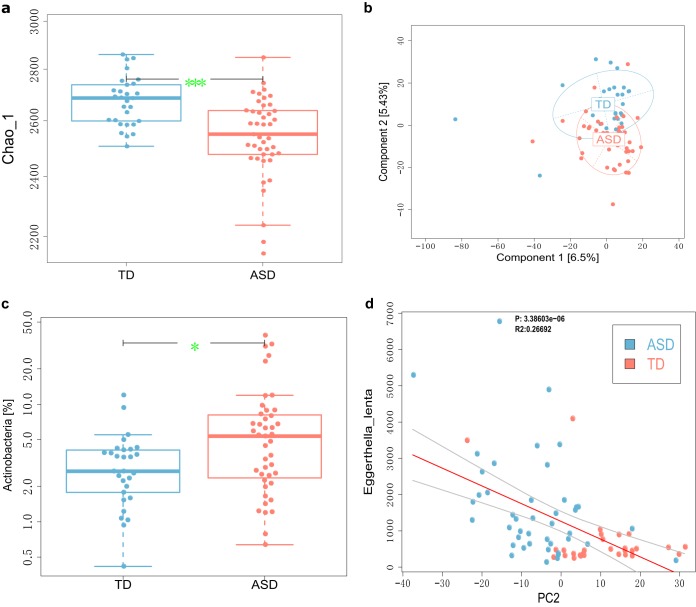
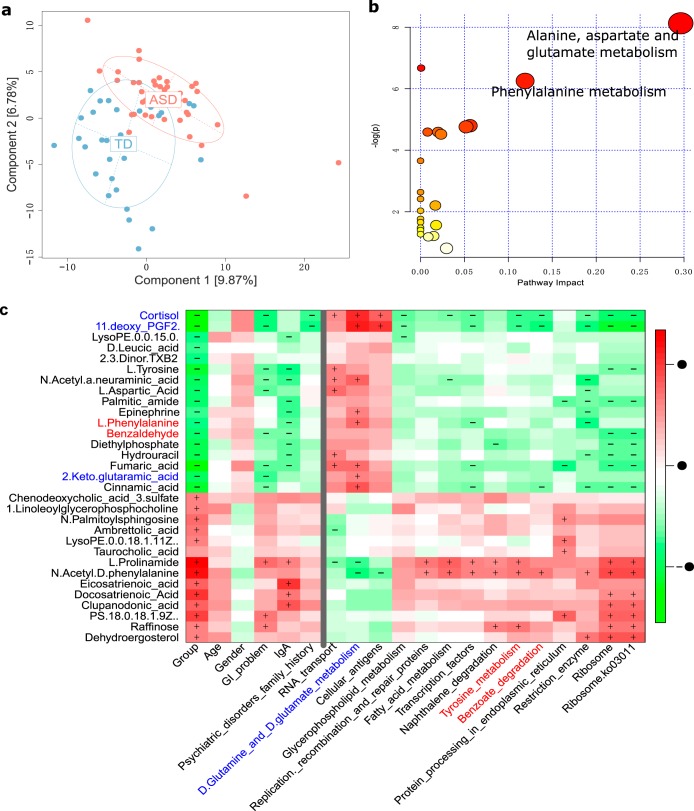
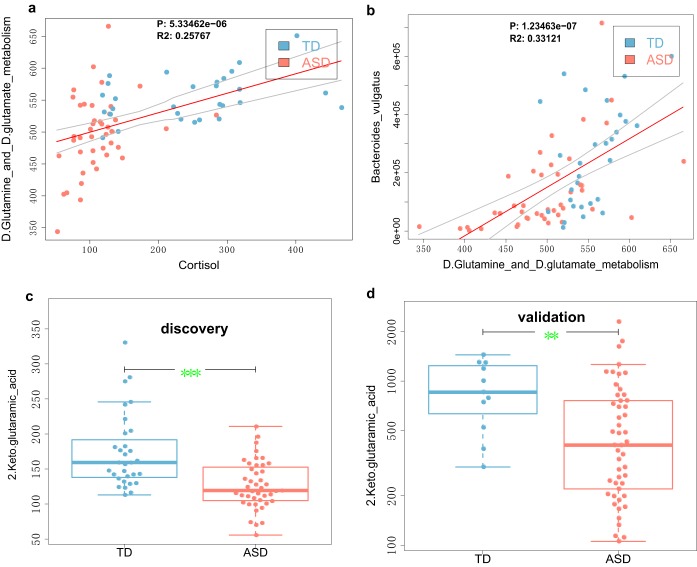
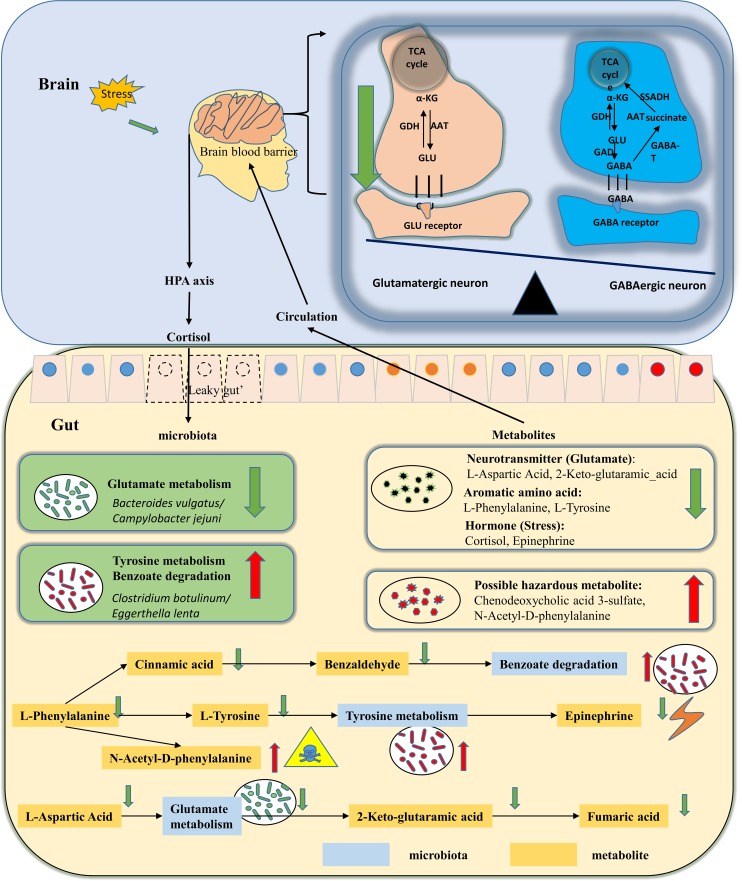
Multiple lines of evidence suggest that the gut microbiota may play an important role in the pathogenesis of ASD, but the specific mechanism is still unclear. Through a comprehensive gut metagenomic and metabolome study of children with ASD, alterations in gut metabolite composition were found in children with ASD, and these alterations were linked to changes in gut microbiota composition. This may give us a deeper understanding of the role of gut microbiota in the pathogenesis of ASD.
Overview
The claims and statistics of this paper haven’t been checked yet.
Run the check — free, no account needed. It reads the open-access text and checks the sources it cites.
Integrity signals
Registry
Cites
Statistics
Figures
Verification
Claims the paper makes
The claims and statistics of this paper haven’t been checked yet.
Run the check — free, no account needed. It reads the open-access text and checks the sources it cites.
Claims other papers make about this one
Each is checked against this paper’s own text: does it say what the citing paper says it does?
In the citing paper
“Furthermore, the findings of independent studies have indicated a potential increase in the abundance of Collinsella, Eggerthella, Haemophilus, Klebsiella, and Phyllobacterium bacteria in the intestines of individuals diagnosed with ASD compared to the general population [18,102,104,111].”
From The Gut–Brain–Microbiota Connection and Its Role in Autism Spectrum Disorders (2025) · cites this paper as [104]
In the citing paper
“In addition, a scientific study of bacteria in the Eggerthella genus revealed an increase in the prevalence of two distinct taxa: Eggerthella lenta and Eggerthella lenta DSM 2243 [104].”
From The Gut–Brain–Microbiota Connection and Its Role in Autism Spectrum Disorders (2025) · cites this paper as [104]
Self-check
Percentages, sums and reported differences re-computed from the paper’s own numbers.
The self-check needs the paper’s full text.
Citations
Cites
Moderated estimation of fold change and dispersion for RNA-seq data with DESeq2
Love, M. I., Huber, W., & Anders, S. (2014) · Genome Biology · doi:10.1186/s13059-014-0550-8 · Cited by 95,106
A metagenome-wide association study of gut microbiota in type 2 diabetes
Qin, J., Li, Y., Cai, Z., Li, S., Zhu, J., Zhang, F., Liang, S., Zhang, W., Guan, Y., Shen, D., et al. (2012) · Nature · doi:10.1038/nature11450 · Cited by 6,762
Self-citationMetaboAnalyst 4.0: towards more transparent and integrative metabolomics analysis
Chong, J., Soufan, O., Li, C., Caraus, I., Li, S., Bourque, G., Wishart, D. S., & Xia, J. (2018) · Nucleic Acids Research · doi:10.1093/nar/gky310 · Cited by 3,637
Hsiao, E. Y., McBride, S. W., Hsien, S., Sharon, G., Hyde, E. R., McCue, T., Codelli, J. A., Chow, J., Reisman, S. E., Petrosino, J. F., et al. (2013) · Cell · doi:10.1016/j.cell.2013.11.024 · Cited by 3,283
Vogt, T. (2009) · Molecular Plant · doi:10.1093/mp/ssp106 · Cited by 3,100
The gut microbiota influences blood-brain barrier permeability in mice
Braniste, V., Al-Asmakh, M., Kowal, C., Anuar, F., Abbaspour, A., Tóth, M., Korecka, A., Bakocevic, N., Ng, L. G., Kundu, P., et al. (2014) · Science Translational Medicine · doi:10.1126/scitranslmed.3009759 · Cited by 2,530
Functional Gastrointestinal Disorders: History, Pathophysiology, Clinical Features, and Rome IV
Drossman, D. A. (2016) · Gastroenterology · doi:10.1053/j.gastro.2016.02.032 · Cited by 2,444
Gut microbiome and serum metabolome alterations in obesity and after weight-loss intervention
Liu, R., Hong, J., Xu, X., Feng, Q., Zhang, D., Gu, Y., Shi, J., Zhao, S., Liu, W., Wang, X., et al. (2017) · Nature Medicine · doi:10.1038/nm.4358 · Cited by 1,501
Kang, D.-W., Adams, J. B., Gregory, A. C., Borody, T., Chittick, L., Fasano, A., Khoruts, A., Geis, E., Maldonado, J., McDonough-Means, S., et al. (2017) · Microbiome · doi:10.1186/s40168-016-0225-7 · Cited by 1,391
The Gut Microbiota Mediates the Anti-Seizure Effects of the Ketogenic Diet
Olson, C. A., Vuong, H. E., Yano, J. M., Liang, Q. Y., Nusbaum, D. J., & Hsiao, E. Y. (2018) · Cell · doi:10.1016/j.cell.2018.04.027 · Cited by 1,057
Excitatory/Inhibitory Balance and Circuit Homeostasis in Autism Spectrum Disorders
Nelson, S. B., & Valakh, V. (2015) · Neuron · doi:10.1016/j.neuron.2015.07.033 · Cited by 1,001
Common circuit defect of excitatory-inhibitory balance in mouse models of autism
Gogolla, N., LeBlanc, J. J., Quast, K. B., Südhof, T. C., Fagiolini, M., & Hensch, T. K. (2009) · Journal of Neurodevelopmental Disorders · doi:10.1007/s11689-009-9023-x · Cited by 610
Emerging Roles for the Gut Microbiome in Autism Spectrum Disorder
Vuong, H. E., & Hsiao, E. Y. (2017) · Biological Psychiatry · doi:10.1016/j.biopsych.2016.08.024 · Cited by 595
Zablotsky, B., Black, L. I., Maenner, M. J., Schieve, L. A., & Blumberg, S. J. (2015) · PubMed · Cited by 535
Mattila, M., Hurtig, T. M., Haapsamo, H., Jussila, K. K., Kuusikko‐Gauffin, S., Kielinen, M., Linna, S., Ebeling, H. E., Bloigu, R., Joskitt, L., et al. (2010) · Journal of Autism and Developmental Disorders · doi:10.1007/s10803-010-0958-2 · Cited by 427
Enhanced Cortisol Response to Stress in Children in Autism
Spratt, E. G., Nicholas, J. S., Brady, K. T., Carpenter, L. A., Hatcher, C. R., Meekins, K. A., Furlanetto, R. W., & Charles, J. M. (2012) · Journal of Autism and Developmental Disorders · doi:10.1007/s10803-011-1214-0 · Cited by 222
Huo, R., Zeng, B., Zeng, L., Cheng, K., Li, B., Luo, Y., Wang, H., Zhou, C., Fang, L., Li, W., et al. (2017) · Frontiers in Cellular and Infection Microbiology · doi:10.3389/fcimb.2017.00489 · Cited by 221
Self-citationXue, J., Balamurugan, S., Li, D., Liu, Y., Zeng, H., Wang, L., Yang, W., Liu, J., & Li, H. (2017) · Metabolic Engineering · doi:10.1016/j.ymben.2017.04.008 · Cited by 202
The Emerging Clinical Neuroscience of Autism Spectrum Disorder
Muhle, R., Reed, H. E., Stratigos, K. A., & Veenstra-VanderWeele, J. M. (2018) · JAMA Psychiatry · doi:10.1001/jamapsychiatry.2017.4685 · Cited by 176
A review of rhythm and responsiveness of cortisol in individuals with autism spectrum disorders
Taylor, J. L., & Corbett, B. A. (2014) · Psychoneuroendocrinology · doi:10.1016/j.psyneuen.2014.07.015 · Cited by 165
van Elst, L. T., Maier, S. J., Fangmeier, T., Endres, D., Mueller, G. T., Nickel, K., Ebert, D., Lange, T., Hennig, J., Biscaldi, M., et al. (2014) · Molecular Psychiatry · doi:10.1038/mp.2014.62 · Cited by 154
Lower Cortisol and Higher ACTH Levels in Individuals with Autism
Ćurin, J. M., Terzić, J., Petković, Z. B., Zekan, L., Marinovic‐Terzić, I., & Šušnjara, I. M. (2003) · Journal of Autism and Developmental Disorders · doi:10.1023/a:1025019030121 · Cited by 92
Tanaka, Y., Matsuoka, M., Yamanoto, N., Ohashi, Y., Kano‐Murakami, Y., & Ozeki, Y. (1989) · PLANT PHYSIOLOGY · doi:10.1104/pp.90.4.1403 · Cited by 91
Heberling, C., Dhurjati, P., & Sasser, M. (2012) · Medical Hypotheses · doi:10.1016/j.mehy.2012.11.044 · Cited by 88
Alteration of gut microbiota-associated epitopes in children with autism spectrum disorders
Wang, M., Zhou, J., He, F., Cai, C., Wang, H., Wang, Y., Lin, Y., Rong, H., Cheng, G., Xu, R., et al. (2019) · Brain, Behavior, and Immunity · doi:10.1016/j.bbi.2018.10.006 · Cited by 77
Self-citationAssociation of serum bilirubin in newborns affected by jaundice with gut microbiota dysbiosis
Zhou, S., Wang, Z., He, F., Qiu, H., Wang, Y., Wang, H., Zhou, J., Zhou, J., Cheng, G., Zhou, W., et al. (2018) · The Journal of Nutritional Biochemistry · doi:10.1016/j.jnutbio.2018.09.016 · Cited by 64
Self-citationDiversity of Gut Microbiota Metabolic Pathways in 10 Pairs of Chinese Infant Twins
Zhou, S., Xu, R., He, F., Zhou, J., Wang, Y., Zhou, J., Wang, M., & Zhou, W. (2016) · PLoS ONE · doi:10.1371/journal.pone.0161627 · Cited by 36
Self-citationImpaired conditioned fear response and startle reactivity in epinephrine-deficient mice
Tóth, M., Ziegler, M. G., Sun, P., Gresack, J. E., & Risbrough, V. B. (2012) · Behavioural Pharmacology · doi:10.1097/fbp.0b013e32835cf408 · Cited by 35
Increased stool immunoglobulin A level in children with autism spectrum disorders
Zhou, J., He, F., Yang, F., Yang, Z., Xie, Y., Zhou, S., Liang, J., Xu, R., Wang, Y., Guo, H., et al. (2017) · Research in Developmental Disabilities · doi:10.1016/j.ridd.2017.10.009 · Cited by 35
Self-citationAdrenergic and noradrenergic regulation of poultry behavior and production
Dennis, R. L. (2016) · Domestic Animal Endocrinology · doi:10.1016/j.domaniend.2016.02.007 · Cited by 32
van der Stel, A., van Mourik, A., Łaniewski, P., van Putten, J. P. M., Jagusztyn-Krynicka, E. K., & Wösten, M. M. S. M. (2015) · Frontiers in Microbiology · doi:10.3389/fmicb.2015.00567 · Cited by 28
Cited by
Sorted by citations
Human Gut Microbiota from Autism Spectrum Disorder Promote Behavioral Symptoms in Mice
Sharon, G., Cruz, N. J., Kang, D.-W., Gandal, M. J., Wang, B., Kim, Y.-M., Zink, E. M., Casey, C. P., Taylor, B. C., Lane, C. J., et al. (2019) · Cell · doi:10.1016/j.cell.2019.05.004 · Cited by 1,182
Romano, S., Savva, G. M., Bedarf, J. R., Charles, I. G., Hildebrand, F., & Narbad, A. (2021) · npj Parkinson's Disease · doi:10.1038/s41531-021-00156-z · Cited by 707
McGuinness, A. J., Davis, J. A., Dawson, S. L., Loughman, A., Collier, F., O’Hely, M., Simpson, C. A., Green, J., Marx, W., Hair, C., et al. (2022) · Molecular Psychiatry · doi:10.1038/s41380-022-01456-3 · Cited by 502
Autism-related dietary preferences mediate autism-gut microbiome associations
Yap, C. X., Henders, A. K., Alvares, G. A., Wood, D., Krause, L., Tyson, G. W., Restuadi, R., Wallace, L. M., McLaren, T., Hansell, N. K., et al. (2021) · Cell · doi:10.1016/j.cell.2021.10.015 · Cited by 371
Dan, Z., Mao, X., Liu, Q., Guo, M., Zhuang, Y., Liu, Z., Chen, K., Chen, J., Xu, R., Tang, J., et al. (2020) · Gut Microbes · doi:10.1080/19490976.2020.1747329 · Cited by 350
Self-citation
Metadata
- Authors
- Wang, M., Wan, J., Rong, H., He, F., Wang, H., Zhou, J., Cai, C., Wang, Y., Xu, R., Yin, Z., & Zhou, W.
- Affiliations
- Fudan University (CN)
- Division of Neonatology, The People’s Hospital of Dehong Autonomous Prefecture, Mangshi, Yunnan, China
- Shenzhen KangNing Hospital (CN)
- Imunobio, Shenzhen, Guangdong, China
- Children’s Hospital of Fudan University Xiamen Branch (CN)
- Shenzhen Children's Hospital (CN)
- Tianjin Children's Hospital (CN)
- Longgang Central Hospital (CN)
- Corresponding author
- Wang, Mingbang
- Yin, Zhaoqing
- Zhou, Wenhao
- Venue
- mSystems
- Publisher
- American Society for Microbiology
- Published
- 2019-02-26
- Volume
- 4
- Issue
- 1
- ISSN
- 2379-5077 (ISSN-L)
- PMC
- PMC6351726
- OpenAlex
- W2914854965
- Cited by
- 181
- References
- 31
- Citations by year
- 2026: 14 · 2025: 20 · 2024: 28 · 2023: 23 · 2022: 29 · 2021: 36 · 2020: 22 · 2019: 9
- FWCI
- 7.94
- Type
- journal article
- Language
- en
- Open access
- gold
- doi.org
- Licence
- Locations
- mSystems (publishedVersion, cc-by)
- Europe PMC (PubMed Central) (publishedVersion, cc-by)
- PubMed Central (publishedVersion, cc-by)
- PubMed (publishedVersion)
- DOAJ (DOAJ: Directory of Open Access Journals) (submittedVersion)
- DOAJ (DOAJ: Directory of Open Access Journals) (submittedVersion, cc-by-sa)
- Funders
- National Natural Science Foundation of China (81701351, 81720108018)
- Topics
- Life Sciences › Biochemistry, Genetics and Molecular Biology › Molecular Biology › Gut microbiota and health
- Life Sciences › Neuroscience › Cognitive Neuroscience › Autism Spectrum Disorder Research
- Health Sciences › Medicine › Psychiatry and Mental health › Child Nutrition and Feeding Issues
- Keywords
- autism spectrum disorder, gut microbiota, glutamate metabolism, gut metabolome, gut metagenomics, children, ASD pathogenesis, microbial metabolites
About these checks
Registry, retraction, Cites and statistics results are computed, not judged, with one exception: a printed reference that no index lists is read once by a model before it counts as a citation error. Claims are extracted by a model and kept only when their quote appears verbatim in the text; each cited source is then checked, with a model’s help, for whether it says what the claim relies on. Those verdicts can be wrong — read the claim’s quote and the cited source before relying on one.
Statistics and arithmetic are recomputed, not judged.
Confidence bands are shown only for fields calibrated on our annotated test set. None is calibrated yet, so no band is shown.
What counts as a claim ›How we measure confidence ›How we check this ›
Are you an author, or do you see a problem with this page? Request a review
