

Dose-response association of screen time-based sedentary behaviour in children and adolescents and depression: a meta-analysis of observational studies
Open accessThe DOI matches its Crossref record; 75 of the 77 references it cites were found in a registry or an index.
Abstract
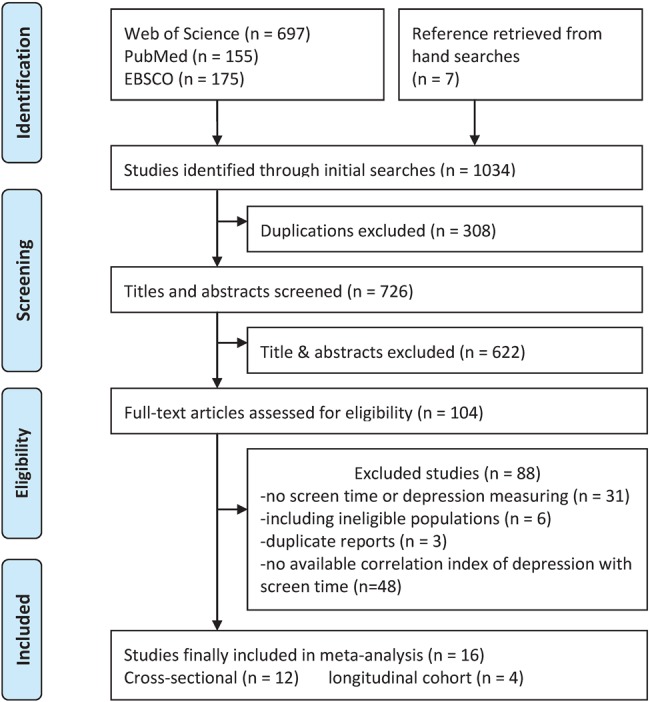
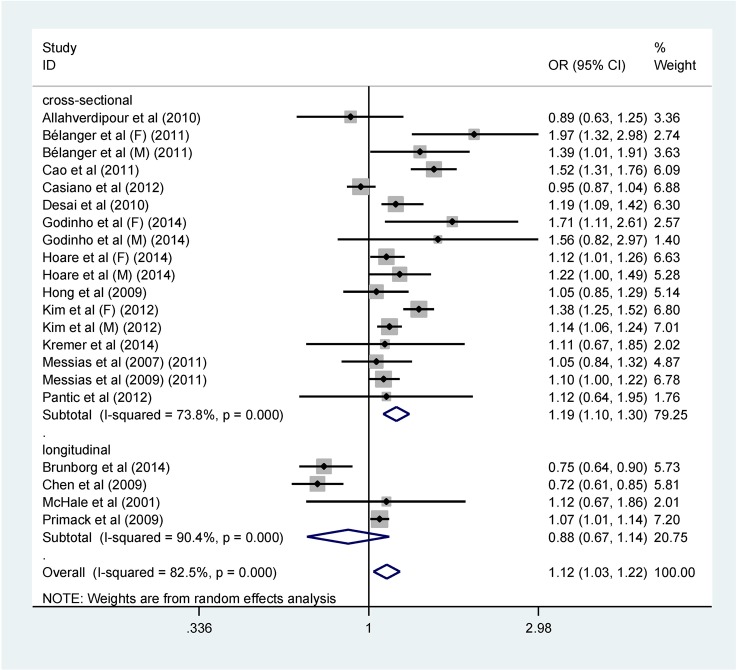
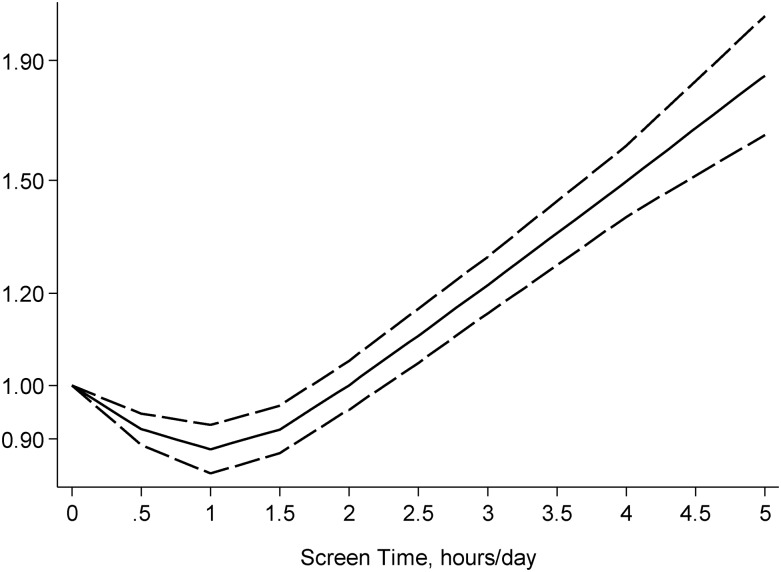
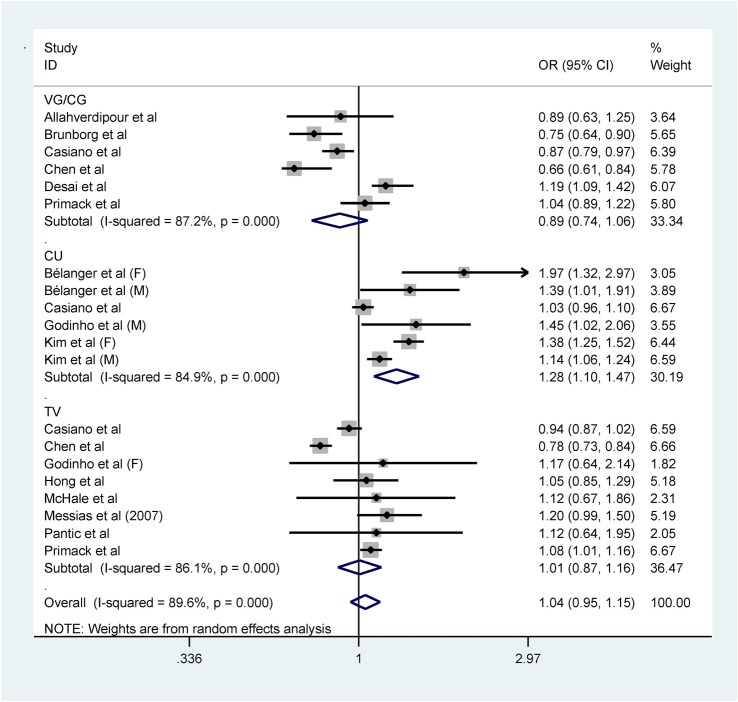
Background: Depression represents a growing public health burden. Understanding how screen time (ST) in juveniles may be associated with risk of depression is critical for the development of prevention and intervention strategies. Findings from studies addressing this question thus far have been inconsistent. Therefore, we conducted a comprehensive systematic review and meta-analysis of data related to this question. Methods: The meta-analysis was conducted in accordance with the PRISMA guideline. We searched the electronic databases of PubMed, Web of Science and EBSCO systematically (up to 6 May 2015). OR was adopted as the pooled measurement of association between ST and depression risk. Dose–response was estimated by a generalised least squares trend estimation. Results: Twelve cross-sectional studies and four longitudinal studies (including 1 cohort study) involving a total of 127 714 participants were included. Overall, higher ST in preadolescent children and adolescents was significantly associated with a higher risk of depression (OR=1.12; 95% CI 1.03 to 1.22). Screen type, age, population and reference category acted as significant moderators. Compared with the reference group who had no ST, there was a non-linear dose–response association of ST with a decreasing risk of depression at ST<2 h/day, with the lowest risk being observed for 1 h/day (OR=0.88; 95% CI 0.84 to 0.93). Conclusions: Our meta-analysis suggests that ST in children and adolescents is associated with depression risk in a non-linear dose–response manner.
Overview
The claims and statistics of this paper haven’t been checked yet.
Free: it reads the open-access text and checks the first 5 claims that cite a source we can check. Create a free account to check every claim.
Integrity signals
Registry
Cites
Statistics
Figures
Verification
Claims the paper makes
The claims and statistics of this paper haven’t been checked yet.
Free: it reads the open-access text and checks the first 5 claims that cite a source we can check. Create a free account to check every claim.
Claims other papers make about this one
Each is checked against this paper’s own text: does it say what the citing paper says it does?
The cited source says what the claim attributes to it.
In the citing paper
“More screen time has been associated with depressive symptoms among children and adolescents in several systematic reviews [11, 12, 43–50].”
From Screen time and mental health: a prospective analysis of the Adolescent Brain Cognitive Development (ABCD) Study (2024) · cites this paper as [50]
The cited source says what the claim attributes to it.
In the citing paper
“However, the presence of a cross-sectional association found in this and several previous studies [38] conveys no information about the temporal sequence of the 2 processes or the underlying mechanisms of the association, therefore potential explanations remain speculative.”
From Social Media and Mental Health Among Early Adolescents in Sweden: A Longitudinal Study With 2-Year Follow-Up (KUPOL Study). (2021) · cites this paper as [38]
The check wasn’t confident either way, so it gives no verdict — never disputed.
In the citing paper
“Most previous studies did not distinguish these 2 levels of associations, which might explain the reports of social media use being associated with depressive symptoms [38].”
From Social Media and Mental Health Among Early Adolescents in Sweden: A Longitudinal Study With 2-Year Follow-Up (KUPOL Study). (2021) · cites this paper as [38]
Experimental — accuracy not yet measuredIn the citing paper
“and depression [4,5]”
From Using Wearable Cameras to Categorize the Type and Context of Screen-Based Behaviors Among Adolescents: Observational Study (2022) · cites this paper as [5]
Self-check
Percentages, sums and reported differences re-computed from the paper’s own numbers.
The self-check needs the paper’s full text.
Citations
Cites
Preferred Reporting Items for Systematic Reviews and Meta-Analyses: the PRISMA statement
Moher, D., Liberati, A., Tetzlaff, J., Altman, D. G., & for the PRISMA Group (2009) · BMJ · doi:10.1136/bmj.b2535 · Cited by 83,823
Preferred Reporting Items for Systematic Reviews and Meta-Analyses: The PRISMA Statement
Moher, D., Liberati, A., Tetzlaff, J., Altman, D. G., & The PRISMA Group (2009) · PLoS Medicine · doi:10.1371/journal.pmed.1000097 · Cited by 64,042
Bias in meta-analysis detected by a simple, graphical test
Egger, M., Smith, G. D., Schneider, M., & Minder, C. (1997) · BMJ · doi:10.1136/bmj.315.7109.629 · Cited by 56,722
The CES-D Scale: A Self-Report Depression Scale for Research in the General Population
Radloff, L. S. (1977) · Applied Psychological Measurement · doi:10.1177/014662167700100306 · Cited by 53,267
Preferred reporting items for systematic reviews and meta-analyses: the PRISMA Statement.
(2009) · PubMed Central · Cited by 44,859
An inventory for measuring depression
BECK, A. T. (1961) · Archives of General Psychiatry · doi:10.1001/archpsyc.1961.01710120031004 · Cited by 38,032
Dermyshi, E., Wang, Y., Yan, C., Hong, W., Qiu, G., Gong, X., & Zhang, T. (2017) · Neonatology · doi:10.1159/000454668 · Cited by 24,451
von Elm, E., Altman, D. G., Egger, M., Pocock, S. J., Gøtzsche, P. C., Vandenbroucke, J. P., & Initiative, F. T. S. (2007) · PLoS Medicine · doi:10.1371/journal.pmed.0040296 · Cited by 23,020
Meta-analysis of Observational Studies in Epidemiology<SUBTITLE>A Proposal for Reporting</SUBTITLE>
Stroup, D. F. (2000) · JAMA · doi:10.1001/jama.283.15.2008 · Cited by 20,623
Wang, G., Ma, R., Qiao, G., Wada, K., Aizawa, Y., & Satoh, T. (2015) · Integrative Medicine International · doi:10.1159/000368408 · Cited by 18,657
Cited by
Items 201–300 of 364
Giacolini, T., Alcaro, A., Conversi, D., & Tarsitani, L. (2025) · Frontiers in Psychology · doi:10.3389/fpsyg.2024.1391664 · Cited by 12
Gong, F., Jia, Y., Sun, X., Min, H., Jia, X., Wang, F., Huang, X., Lin, X. C., Li, Z., & Wu, Y. (2023) · BMC Psychiatry · doi:10.1186/s12888-023-05097-w · Cited by 12
“Many studies have shown that media use, such as social media, video games, TV and movies was related to the development of public depression [18–22].”
BackgroundResultLiu, Y., Sun, Y., Zheng, K., Zheng, J., Kong, L., Gu, J., & Huang, T. (2023) · Cyberpsychology Behavior and Social Networking · doi:10.1089/cyber.2022.0373 · Cited by 9
“10,11 Although evidence for the relationship between excessive ST and anxiety and depression is accumulating in youth, 12–14 investigations of ST and its mental health effects among college students are relatively sparse.”
Ardelean, V. P., Andrei, V. L., Miuţa, C. C., Boroș-Balint, I., Deak, G.-F., Molnár, A. H., Berki, T., Győri, F. J., Geantă, V. A., Dehelean, C. A., et al. (2022) · Healthcare · doi:10.3390/healthcare10071198 · Cited by 12
“Continuous monitoring of the everyday emotions and behavior of a child or adolescent, alongside with observation of their mental symptoms, could prevent the extent of serious problematic mental health, even depression [14,15].”
BackgroundLu, H., Liang, G., Li, D., Liu, M.-X., Yin, Z.-J., Li, Y.-Z., Zhang, T., & Pan, C.-W. (2023) · Psychology Health & Medicine · doi:10.1080/13548506.2023.2217380 · Cited by 12
“With the rapid development of information technology, screen time has become a central component of daily life, with the situation that both adults and adolescents will spend a substantial amount of time on television or electronic products (M. Liu et al., 2016).”
BackgroundSelf-citationScreen Time Among and Youth Children With Disabilities: A Systematic Review and Meta‐Analysis
Vanderloo, L. M., Bourke, M., Taylor, L. G., Phillips, S. M., Loh, A., Disimino, K., Bassett-Gunter, R. L., Koo, T., Thompson‐Hill, M., & Tucker, P. (2025) · Child Care Health and Development · doi:10.1111/cch.70136 · Cited by 15
“However, a dose–response meta-analysis including children aged 5–18 years demonstrated that not all screen time is detrimental, finding that children engaging in up to ~2 h of screen time a day may not be related to depression (Liu et al. 2016).”
Lu, S., Sun, J., Guo, Z., Yi, M., Zhang, Y., Wang, J., & Wang, Y. (2024) · Frontiers in Psychology · doi:10.3389/fpsyg.2024.1465974 · Cited by 11
Güzel, Y., & Öztürk, M. (2024) · Journal of Pediatric Nursing · doi:10.1016/j.pedn.2024.12.019 · Cited by 8
Ma, Z., Zhao, F., Wang, Y.-Y., Liu, T., & Chao, N. (2022) · Frontiers in Psychiatry · doi:10.3389/fpsyt.2022.809745 · Cited by 9
Pogorskiy, E., & Beckmann, J. F. (2022) · Computers and Education Artificial Intelligence · doi:10.1016/j.caeai.2022.100094 · Cited by 13
Forte, C., McDowell, C. P., Woods, C. B., Hallgren, M. Å., O’Brien, W., Belton, S., MURPHY, M. H., Powell, C., & Herring, M. P. (2022) · International Journal of Behavioral Medicine · doi:10.1007/s12529-022-10133-2 · Cited by 7
“Present results are consistent with sub-group analysis within a meta-analysis [20] and a cohort study [21], which both showed greater computer use was associated with greater risk of depression for adolescents.”
BackgroundResultBeck, F., Mutz, M., Engels, E. S., & Reimers, A. K. (2021) · Sports · doi:10.3390/sports9070102 · Cited by 10
“Reviews indicated an increase in anxiety and depression [2,6,7] and lower life satisfaction [8,9] caused by a decrease in PA.”
BackgroundUS State Policies Regarding Social Media: Do Policies Match the Evidence?
Thimm-Kaiser, M., & Keyes, K. M. (2025) · Milbank Quarterly · doi:10.1111/1468-0009.70021 · Cited by 7
Høy, T. V., Tjørnhøj‐Thomsen, T., Pawlowski, C. S., Gejl, A. K., Danielsen, D., & Toftager, M. (2025) · Discover Psychology · doi:10.1007/s44202-025-00404-w · Cited by 11
Olivella-Cirici, M., Continente, X., Checa, M. B., Serral, G., & Albarracín, G. P. (2023) · PubMed Central · Cited by 13
Screen time and diagnoses of anxiety and depression in autistic versus neurotypical youth
Menezes, M., Soland, J., & Mazurek, M. O. (2023) · Research in Autism · doi:10.1016/j.rasd.2023.102222 · Cited by 6
Association between commuting and mental health among Japanese adolescents
Nakajima, S., Otsuka, Y., Itani, O., Kaneko, Y., Suzuki, M., & Kaneita, Y. (2024) · Psychiatry and Clinical Neurosciences · doi:10.1111/pcn.13714 · Cited by 14
“31,55,56 However, it includes risks such as unexpected exposure to online content (including obscene or violent language) or being slandered through social networking sites; such risks are thought to cause depression.”
Multidimensional screen exposure and its impact on psychological well-being in toddlers
Luo, S., Guo, W., Chen, H., Zhu, Y., Zhu, G., & Jia, Y. (2024) · Frontiers in Public Health · doi:10.3389/fpubh.2024.1466541 · Cited by 13
Zhang, X., Teng, H., Zhu, L., & Qiu, B. (2025) · Frontiers in Psychology · doi:10.3389/fpsyg.2025.1505360 · Cited by 7
Liu, S., Yu, F., & Yan, C. (2023) · Sustainability · doi:10.3390/su15075705 · Cited by 13
Sedentary Behaviour and Depression
Hamer, M., & Smith, L. (2017) · Springer series on epidemiology and public health · doi:10.1007/978-3-319-61552-3_11 · Cited by 8
van Sluijs, E. M. F., Brown, H. E., Coombes, E. G., Hughes, C. H., Jones, A., Morton, K., & Guagliano, J. M. (2021) · Public Health Research · doi:10.3310/phr09090 · Cited by 9
Physical activity, physical fitness, and health
Sherar, L. B., & Cumming, S. P. (2017) · Oxford University Press eBooks · doi:10.1093/med/9780198757672.003.0016 · Cited by 9
Aggarwal, D., Das, A., Krishna, S. T. R., Hyndavi, S., Palepu, S., & Kumar, S. (2024) · Journal of Family Medicine and Primary Care · doi:10.4103/jfmpc.jfmpc_1915_23 · Cited by 8
“[6] In addition to its adverse effects on mental health, higher screen time has also been associated with disruptions to sleep patterns.”
BackgroundLi, Q., Chan, K. K.-Y., Ramos, M. R., Wang, X., Wong, S. Y. S., & Yang, X. (2025) · Psychiatry Research Communications · doi:10.1016/j.psycom.2025.100205 · Cited by 10
Álvarez-Mon, M. Á., Sánchez‐Villegas, A., Gutiérrez-Rojas, L., & Martínez‐González, M. Á. (2024) · Journal of Epidemiology & Community Health · doi:10.1136/jech-2023-220577 · Cited by 12
“20 A third meta-analysis included 12 cross-sectional studies and 7 longitudinal studies and found that screen time was also associated with higher depression risk.”
BackgroundXu, J., Yan, P., Ma, G., Liu, Z., Zhang, T., Liu, L., & Gu, C. (2025) · Journal of Pediatric Nursing · doi:10.1016/j.pedn.2025.01.019 · Cited by 5
Association of Physical Activity, Screen Time and Sleep with Depressive Symptoms in Adolescents
Sun, Q., & Zhan, X. (2021) · International Journal of Mental Health Promotion · doi:10.32604/ijmhp.2021.014634 · Cited by 5
Depression and Anxiety in the Context of Digital Media
Moreno, M. A., & Jolliff, A. F. (2022) · Cambridge University Press eBooks · doi:10.1017/9781108976237.013 · Cited by 9
Screen Time and Mental Health in Canadian Youth: An Examination of Nationally Representative Data
Atwal, S., & Browne, D. T. (2022) · Psychological Reports · doi:10.1177/00332941221139995 · Cited by 7
“Additionally, linear associations between social media usage and depression were established (Liu et al., 2016).”
BackgroundInfluentialRelations among Screen Time and Commonly Co-occurring Conditions in Autistic Youth
Menezes, M., Pappagianopoulos, J. E., Cross, R. D., & Mazurek, M. O. (2023) · Journal of Developmental and Physical Disabilities · doi:10.1007/s10882-023-09915-7 · Cited by 6
“Much research has been conducted on the relations among screen time and health indicators in children and adolescents without autism (e.g., Cao et al., 2011; Gentile et al., 2012; Gunnel et al., 2016; Liu et al., 2016).”
Huang, C., Yang, Y., Lu, C., Qin, P., Jiang, W., Ma, J., & Guo, L. (2024) · Social Psychiatry and Psychiatric Epidemiology · doi:10.1007/s00127-024-02712-3 · Cited by 6
“Conversely, excessive ST has been found to increase the risk of poor mental health status [15] and the development of emotional and behavioral problems [16] in children and adolescents, with a dose-response relationship potentially existing [17].”
Association Between Socio-Emotional Health, Physical Activity and Screen Time Among Children
Aliyas, Z., Mahmoudian, A., & Cloutier, M. (2024) · American Journal of Health Education · doi:10.1080/19325037.2024.2396602 · Cited by 6
“Our findings align with those of other studies that have highlighted the connection between screen time and the severity of negative emotions such as depression, anxiety, or sadness (Liu et al., 2016; Maras et al., 2015; Sachs, 2019).”
Huang, Y., Zhang, H., Fan, Y., Ji, M., Wang, L., & Ai, T. (2021) · Translational Pediatrics · doi:10.21037/tp-21-19 · Cited by 4
“The Chinese government has implemented a series of strategies to prevent the potential mental health problems that might arise among children who are quarantined during the COVID-19 pandemic (20).”
The Effects of Social Media on Adolescent Mental Health
Walton, B., & Rizzolo, D. (2022) · Pediatrics and Neonatal Nursing - Open Journal · doi:10.17140/pnnoj-8-138 · Cited by 11
Bourke, M., & Phillips, S. M. (2023) · Mental health and physical activity · doi:10.1016/j.mhpa.2023.100550 · Cited by 6
Kaye, L. K., & Levy, A. R. (2017) · Cyberpsychology Behavior and Social Networking · doi:10.1089/cyber.2017.0067 · Cited by 5
“2 7 Ac-cordingly, the majority of empirical research supports the displacement hypothesis 8,9 that asserts screen time leads to a decline in physical pursuits.”
Zeng, Q., Zhang, Y., Li, H., Yuan, J., Feng, D., & Zhu, G. (2025) · Frontiers in Psychology · doi:10.3389/fpsyg.2025.1507198 · Cited by 5
Xia, Z., Tan, T. C., Liu, Y., Zheng, J., Li, Z., Gu, Q., & Huang, T. (2024) · Physiology & Behavior · doi:10.1016/j.physbeh.2024.114796 · Cited by 8
Yang, W., Li, M., Yu, J. J., Wong, S. H., Sum, R. K. W., & Sit, C. H. P. (2022) · Journal of Autism and Developmental Disorders · doi:10.1007/s10803-022-05777-8 · Cited by 6
“Moreover, a dose–response relationship has been found between physical inactivity and mental disorders in children and adolescents (Liu et al., 2016).”
BackgroundCorkin, M. T., Liang, J., Meissel, K., Peterson, E. R., Corkin, E., Lee, K. M., & Giacaman, N. (2023) · Behaviour and Information Technology · doi:10.1080/0144929x.2023.2296955 · Cited by 4
“…a concern due to associations of higher screen time with adverse health outcomes, including poorer vision (Alvarez-Peregrina et al. 2020), wellbeing (Liu, Wu, and Yao 2016), sleep (Nightingale et al. 2017), executive functions (Zeng et al. 2021) and ADHD-related behaviours (Nikkelen et al. 2014).”
Health-Related Quality of Life in Relation to Health Behaviour Patterns among Canadian Children
Wu, X., Öhinmaa, A., Veugelers, P. J., & Maximova, K. (2024) · Children · doi:10.3390/children11030346 · Cited by 6
Olivella-Cirici, M., Sánchez, E., Continente, X., Clotas, C., & Pérez, G. (2021) · Journal of Technology in Behavioral Science · doi:10.1007/s41347-021-00228-0 · Cited by 8
“In addition, for individuals outside the at-risk population, the behavior can provide various benefits for both mental health and socialization (Kardefelt-Winther et al., 2017; Liu et al., 2015).”
BackgroundZadjali, F., Al-Futaisi, A. M., Al-Hosni, A., Al‐Huseini, S., Crommelin, M., & Mirza, H. (2022) · International Journal of Public Health · doi:10.3389/ijph.2022.1604474 · Cited by 6
Deshpande, S., Sachdev, A., Maharana, A., Zadey, S., Dharmadhikari, S. P., Ghate, S., Godatwar, P., Ojha, N. K., & Sharma, S. (2023) · JMIR Research Protocols · doi:10.2196/39707 · Cited by 8
“A meta-analysis included 16 studies conducted in North America, Australia, and countries in Asia and Europe; the group aged 5-18 years shows a curvilinear dose-response between screen use time and the risk of depression, with or without increasing screen use time per day [3].”
BackgroundMethodCharacteristics of Canadian Youth Adhering to Physical Activity and Screen Time Recommendations
Fitzpatrick, C., Burkhalter, R., & Asbridge, M. (2019) · The Journal of School Nursing · doi:10.1177/1059840519881185 · Cited by 9
Nutrition for Adolescent Female Team Sport Athletes: A Review
Sharples, A., Baker, D., & Black, K. (2020) · Strength and conditioning journal · doi:10.1519/ssc.0000000000000559 · Cited by 4
“Social media plays an important role during this age, and although there are benefits to social media use, there is growing evidence for negative associations between mental health, including body image and social media use among young people (37).”
BackgroundStraker, L. M., Beynon, A. M., Smith, S. S., Johnson, D. M., Wyeth, P. A., Sefton‐Green, J., & Kervin, L. K. (2022) · OSF Preprints (OSF Preprints) · doi:10.31219/osf.io/7krjv · Cited by 4
Volpini, V., Bricca, S., Ubaldi, F., Ghaffar, T., Platania, S., Valeriani, F., & Spica, V. R. (2025) · Sports Medicine and Health Science · doi:10.1016/j.smhs.2025.07.007 · Cited by 8
Yang, J., Zhang, Y., Wu, M., Shi, H., Bianjiang, Z., & Li, Z. (2025) · PLoS ONE · doi:10.1371/journal.pone.0331584 · Cited by 5
Yang, F., Liu, L., Zhang, Y. Y., Cheng, D., Yu, R., & Lin, J. (2026) · Annals of General Psychiatry · doi:10.1186/s12991-026-00656-3 · Cited by 3
Association between visual impairment and body mass index in students from rural China
Guan, H., Wang, Z., Ding, Y., Zhang, Y., Du, K., & Shi, Y. (2023) · Singapore Medical Journal · doi:10.4103/singaporemedj.smj-2021-387 · Cited by 3
Chau, K., Perrin, P., & Chau, N. (2023) · Psychiatry Research · doi:10.1016/j.psychres.2023.115679 · Cited by 6
Koc‐Arik, G. (2024) · Psikiyatride Guncel Yaklasimlar - Current Approaches in Psychiatry · doi:10.18863/pgy.1368538 · Cited by 3
Aulbach, M. B., Puukko, S., Palsola, M., Haukkala, A., Sund, R., Vasankari, T. J., & Hankonen, N. E. (2023) · Psychology Health & Medicine · doi:10.1080/13548506.2023.2285734 · Cited by 3
“Sedentary behavior, defined as behavior characterized by low energy expenditure performed sitting or lying down (Tremblay et al., 2017), poses significant health risks, such as type 2 diabetes, some cancers and depressive symptoms (Lee et al., 2012; Liu et al., 2016; Thorp et al., 2011).”
BackgroundSedentary Behaviour and Depression
Hamer, M., & Smith, L. (2023) · Springer series on epidemiology and public health · doi:10.1007/978-3-031-41881-5_10 · Cited by 7
Zimmermann, L. V., & Somasundaram, J. (2024) · Palgrave studies in marketing, organizations and society · doi:10.1007/978-3-031-60199-6_5 · Cited by 3
Ray, A., Oulamine, A., & Lim, B. C. Y. (2024) · International Journal of Educational Management · doi:10.1108/ijem-06-2024-0328 · Cited by 4
Biswas, T., Edmed, S. L., Tran, N., Huda, M. M., Pattinson, C. L., Maravilla, J. C., Baxter, J., & Mamun, A. A. (2021) · Child Indicators Research · doi:10.1007/s12187-025-10217-x · Cited by 3
Efetividade de intervenções na redução do tempo de tela: Revisão sistemática
de Mendonça, R. G., Vasconcelos, G. M. T., dos Santos, A. D., Tanajura, D. M., & de Menezes, A. F. (2021) · Research Society and Development · doi:10.33448/rsd-v10i9.18023 · Cited by 10
“Assim, adolescentes e adultos começaram a passar uma grande parte do tempo em uso de computador, smartphone e televisão (Liu, Wu & Yao, 2016).”
BackgroundAre smartphone use and nature contact predictive of depression in a UK university population?
Dewar, E., & Catling, J. C. (2024) · The Journal of Mental Health Training Education and Practice · doi:10.1108/jmhtep-10-2022-0081 · Cited by 2
Singh, A., Lekha, P. P. S., Jadhav, B. N., & Azeez, E. P. A. (2025) · Adolescent Psychiatry · doi:10.2174/0122106766351202250110055724 · Cited by 2
Obeidat, M. S., & AL-Shalabi, F. H. (2025) · Theoretical Issues in Ergonomics Science · doi:10.1080/1463922x.2025.2506425 · Cited by 3
“Furthermore, effects encompass depression and self-destructive tendencies, with a non-linear link established between smartphone use and depressive symptoms in children aged 5 to 18 who engage with digital media over two hours daily (Liu, Wu, and Yao 2016).”
Myszkowska-Ryciak, J., Hamułka, J., Czarniecka‐Skubina, E., Gębski, J., Chmurzyńska, A., & Gutkowska, K. (2025) · Nutrients · doi:10.3390/nu17172891 · Cited by 4
Ali, N. M. A., & Abu-Libdha, A. E. (2025) · Adolescents · doi:10.3390/adolescents5040055 · Cited by 4
“Globally, increased screen time has been linked to declining adolescent mental health [11] and higher depression risk [12].”
Tremblay, M. S., Vanderloo, L. M., Saunders, T. J., Madigan, S. L., Kuzik, N., Heather, L., Zhang, N., Curle, M., Helleman, A., Goldfield, G. S., et al. (2025) · Child Care Health and Development · doi:10.1111/cch.70204 · Cited by 2
“For context, a widely cited systematic review published in 2016 used ≥ 5 h/day as the most excessive category for daily screen time (Liu et al. 2016), an amount that is now several hours per day below the average daily screen time reported in more recent Canadian samples (Poirier et al. 2024).”
Simões, C. F., Nardo, N., Locatelli, J. C., Mendes, V. H. D. S., de Oliveira, G. H., Werneck, A. O., dos Santos, T. L. C., Remor, J. M., Oliveira, R. P., & Lopes, W. A. (2021) · Current Psychology · doi:10.1007/s12144-021-01399-y · Cited by 3
Ikefuna, A., Uwaezuoke, N. A., Eze, J., Eke, A. L., & Eke, C. (2022) · Nigerian Journal of Clinical Practice · doi:10.4103/njcp.njcp_1706_21 · Cited by 2
Subjective impact of COVID-19 pandemic on youth with tic and OCD spectrum disorders
Tomczak, K. K., Worhach, J., Nguyen, S. T. T., Liu, S., Hoeppner, S. S., Zhang, B., & Greenberg, E. (2023) · Personalized Medicine in Psychiatry · doi:10.1016/j.pmip.2023.100103 · Cited by 4
“Previous research has found that excessive screen use (>2 h) in children and adolescents has been associated with higher risk of depression [38,39].”
BackgroundThe rate of student’s academic burnout during Covid-19 pandemic
Tanputera, A. G., Palit, H. C., & Aysia, D. A. Y. (2024) · AIP conference proceedings · doi:10.1063/5.0185304 · Cited by 3
Sharma, K. K., Somasundaram, J., & Sachdeva, A. (2024) · JMIR Research Protocols · doi:10.2196/53756 · Cited by 2
“Existing research links excessive screen time to lower subjective well-being, depression, anxiety, sleep disorders, and poor physical health [6-13].”
BackgroundHuang, X., Chen, Y., Luo, J., Wang, D., Yang, C., Luo, W., & Zhou, Y. (2024) · PLoS ONE · doi:10.1371/journal.pone.0304084 · Cited by 5
Chen, S., Andrews, L. N., Jeong, R., Gilbertson, M. L., Geisler, M., & Demaray, M. K. (2025) · Child & Youth Care Forum · doi:10.1007/s10566-025-09884-2 · Cited by 4
Salin, K., Huhtiniemi, M., Watt, A., Hakonen, H., Mononen, K., & Jaakkola, T. T. (2019) · Journal of Physical Education and Sport · doi:10.7752/jpes.2019.s3138 · Cited by 11
Slussareff, M., & Lukavská, K. (2021) · Pediatrie pro praxi · doi:10.36290/ped.2021.021 · Cited by 3
Haddad, M. E., Hecker, I., Wallez, S., Mary‐Krause, M., & Melchior, M. (2024) · Cambridge Prisms Global Mental Health · doi:10.1017/gmh.2024.2 · Cited by 2
“In particular, there is evidence that internet use or high screen time can be related to adolescents ’ symptoms of depression, anxiety, suicidal ideation and suicide attempts (Liu et al., 2016).”
BackgroundDigital Media Usage Trends Among Children Aged 8–11 Years Before and After the COVID-19
Kim, K., Jeon, S., Lee, S., Kim, D., & Shin, Y. (2025) · Psychiatry Investigation · doi:10.30773/pi.2024.0109 · Cited by 2
“24,26 Our research revealed that increases in screen time continued for over 2 years after the pandemic ended, even after many restrictions were lifted.”
Saucier, A., Charland, K., McKinnon, B., Dupont, F., Laurin, I., Nguyen, C. T., Pierce, L., Torre, M. B. D., Cheriet, I., Quach, C., et al. (2025) · Journal of Child and Adolescent Mental Health · doi:10.2989/17280583.2025.2504586 · Cited by 1
González-Pérez, D., Huertas-Moreno, D. S., Granados-Pinilla, M., Hernandez-Rojas, S., González-Rincon, L., Hurtado-Garcia, G., Grisales-Calle, S., González-Mariño, M. J., Gutiérrez-Castañeda, L. D., & Camacho, J. H. (2025) · Korean Journal of Pediatrics · doi:10.3345/cep.2025.00178 · Cited by 4
Salvador, S. K. O., Sabalo, B. P. T., Saez, H. R. G., Sahagun, T. A. E., Saito, K. Y. P., Sales, J. G. R., Saligan, J. D., Salud, G. B. R., & Rosales, R. L. (2025) · Journal of Medicine University of Santo Tomas · doi:10.35460/2546-1621.2024-0033 · Cited by 2
Çolak, B. B., Timurtaş, E., Inceer, M., & Polat, M. G. (2025) · Clinical and Experimental Health Sciences · doi:10.33808/clinexphealthsci.1778484 · Cited by 1
“Inactive lifestyle in children and adolescents is associated with many health problems such as cardiovascular and metabolic diseases and symptoms of psychological diseases (5-7).”
Smith, M. H., Longmuir, P. E., Robb, M., Norris, M. L., DiGasparro, M., Laurie, K., Baechler, N., McBrearty, N., Courtney, K., Cooligan, F., et al. (2026) · Children · doi:10.3390/children13020163 · Cited by 2
“…prior research has shown that incremental reduction in screen time is associated with progressive improvement in depression and anxiety symptoms [37,38], supporting the continued inclusion of screen time reduction guidance within the HELP e-resources even when guideline targets are not fully…”
Liu, R., Lyu, Q., Liu, X., Zou, Y., Liu, J., Yu, Y., & Zhou, X. (2026) · BMC Psychology · doi:10.1186/s40359-026-04087-3 · Cited by 1
“The result was consistent with the research conducted by Mingli Liu et al. [57], and this finding was further corroborated by evidence linking baseline mobile phone usage to heightened depressive symptoms in adolescents after a one-year follow-up [58].”
Guan, D., Wang, J., Yang, Q., & Qiao, Z. (2026) · Mental health and physical activity · doi:10.1016/j.mhpa.2026.100766 · Cited by 1
Hu, Z., Sun, X., Luo, C., Du, W., Yang, D., Xue, H., Zhang, F., & Fan, L. (2026) · Public Health · doi:10.1016/j.puhe.2026.106193 · Cited by 1
Wang, J., Chen, Q., & Meng, J. (2026) · BMC Psychology · doi:10.1186/s40359-026-04129-w · Cited by 2
“Reduced physical activity levels in university students increase the likelihood of phubbing, leading to more frequent engagement in such behavior [37].”
Mendes, T. C., Oliveira, R. S., dos Santos, D. F., Christófaro, D. G. D., Elsangedy, H. M., Bloch, K. V., Schaan, B. D., & Cureau, F. V. (2026) · Mental health and physical activity · doi:10.1016/j.mhpa.2026.100767 · Cited by 1
Costa, T. G., Ramos-Urrea, C., Santos, D. D. A. T., Ostolin, T. L. V. D. P., & de Lira, C. A. B. (2022) · Research Society and Development · doi:10.33448/rsd-v11i6.28689 · Cited by 2
Stigmatization and Society’s Inclusiveness Across Cultures
Gronholm, P. C., & Eaton, J. (2020) · Mental health and illness worldwide · doi:10.1007/978-981-10-2348-4_23 · Cited by 2
Validation of a Modified Version of the German Sedentary Behavior Questionnaire
Kalisch, T., Theil, C., Gosheger, G., Schwarze, J., Voss, K., Schoenhals, I., & Moellenbeck, B. (2022) · Healthcare · doi:10.3390/healthcare10050807 · Cited by 1
“With technological advances, screen time, including watching television, using a computer or smartphone, is becoming a central component of the daily lives [23] and the most common SB [24].”
BackgroundMALAYSIA, U. K., Bukhori, A. B. M., Ja'afar, M. H., & MALAYSIA, U. K. (2022) · International Journal of Public Health Research · doi:10.17576/ijphr.1202.2022.05 · Cited by 3
Sedentary behaviour and health
Pearson, N., & Sherar, L. B. (2023) · Oxford University Press eBooks · doi:10.1093/med/9780192843968.003.0018 · Cited by 4
The Impact of TV Exposure and Computer Use on Obese Adolescents
Trandafir, L. M., Baciu, G., Frăsinariu, O. E., Mihalache, L., Goroftei, E. R. B., & Moscalu, M. (2018) · Revista de Cercetare si Interventie Sociala · Cited by 1
Novel Methods of Measuring and Visualising Youths’ Physical Activity
Crossley, S. G. M. (2019) · Cronfa (Swansea University) · doi:10.23889/suthesis.50756 · Cited by 1
The Associations between DNA Methylation and Depression: A Systematic Review and Meta-AnalysisPreprint
zhu, J., Liu, B.-P., Jia, C.-X., & Bo, H.-H. (2022) · SSRN Electronic Journal · doi:10.2139/ssrn.4141241 · Cited by 1
Wu, H. T., Li, J., & Tsurumi, A. (2023) · medRxiv · doi:10.1101/2023.03.20.23287490 · Cited by 1
“Introduction: Previous studies have shown that children and adolescents’ psychological well-being (hereinafter referred to as children and children’s well-being) is negatively associated with screen time.(1,2,3,4,5,6) The recreational use of video and online games, television, internet, and smartphones, in addition to…”
Backgroundde Andrade, M. M., Stefane, C. A., & Sato, T. D. O. (2019) · Revista Brasileira de Saúde Funcional · doi:10.25194/rebrasf.v7i1.1118
Stigmatization and Society’s Inclusiveness Across Cultures
Gronholm, P. C., & Eaton, J. (2020) · Mental health and illness worldwide · doi:10.1007/978-981-10-0753-8_23-1
Metadata
- Authors
- Liu, M., Wu, L., & Yao, S.
- Affiliations
- Hunan University of Science and Technology (CN)
- Mayo Clinic (US)
- Second Xiangya Hospital of Central South University (CN)
- Corresponding author
- Yao, Shuqiao
- Venue
- British Journal of Sports Medicine
- Publisher
- BMJ
- Published
- 2015-11-09
- Volume
- 50
- Issue
- 20
- Pages
- 1252-1258
- ISSN
- 0306-3674 (ISSN-L)
- 1473-0480
- PMC
- PMC4977203
- OpenAlex
- W2140004648
- Semantic Scholar
- 0ec12b65042be69b6cdf8832f689895b20f9b6f0
- Cited by
- 364
- References
- 77
- Citations by year
- 2026: 28 · 2025: 33 · 2024: 36 · 2023: 58 · 2022: 57 · 2021: 42 · 2020: 43 · 2019: 29 · 2018: 16 · 2017: 11 · 2016: 10
- FWCI
- 1.51
- Type
- journal article
- Language
- en
- Open access
- hybrid
- doi.org
- Licence
- cc-by-nc
- Locations
- British Journal of Sports Medicine (publishedVersion, cc-by-nc)
- PubMed Central (publishedVersion, cc-by-nc)
- PubMed (publishedVersion)
- HighWire Press Open Archive (submittedVersion)
- Funders
- National Cancer Institute (R25CA160056)
- Topics
- Health Sciences › Medicine › Public Health, Environmental and Occupational Health › Physical Activity and Health
- Social Sciences › Education › Child Development and Digital Technology
- Social Sciences › Sociology and Political Science › Impact of Technology on Adolescents
- Keywords
- screen time, sedentary behavior, depression, children, adolescents, dose-response relationship, nonlinear relationship, depression risk
- MeSH terms
- Adolescent, Child, Computers, Depression, Female, Humans, Male, Risk Factors, Television, Time Factors, Video Games, Sedentary Behavior, Observational Studies as Topic
About these checks
Registry, retraction, Cites and statistics results are computed, not judged, with one exception: a printed reference that no index lists is read once by a model before it counts as a citation error. Claims are extracted by a model and kept only when their quote appears verbatim in the text; each cited source is then checked, with a model’s help, for whether it says what the claim relies on. Those verdicts can be wrong — read the claim’s quote and the cited source before relying on one.
Statistics and arithmetic are recomputed, not judged.
Confidence bands are shown only for fields calibrated on our annotated test set. None is calibrated yet, so no band is shown.
What counts as a claim ›How we measure confidence ›How we check this ›
Are you an author, or do you see a problem with this page? Request a review
Data sources
Bibliographic data: Semantic Scholar, OpenAlex, Crossref.
Contains information from the Semantic Scholar Academic Graph Datasets, made available under the ODC Attribution License (ODC-BY 1.0).
Semantic Scholar’s data is described in: Kinney, R., et al. (2023). The Semantic Scholar Open Data Platform. arXiv:2301.10140.
