

Dose-response association of screen time-based sedentary behaviour in children and adolescents and depression: a meta-analysis of observational studies
Open accessThe DOI matches its Crossref record; 75 of the 77 references it cites were found in a registry or an index.
Abstract
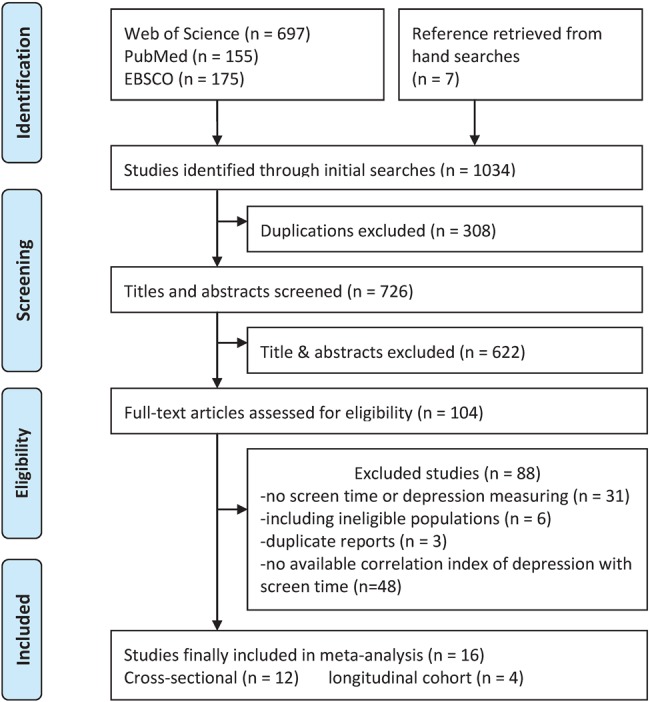
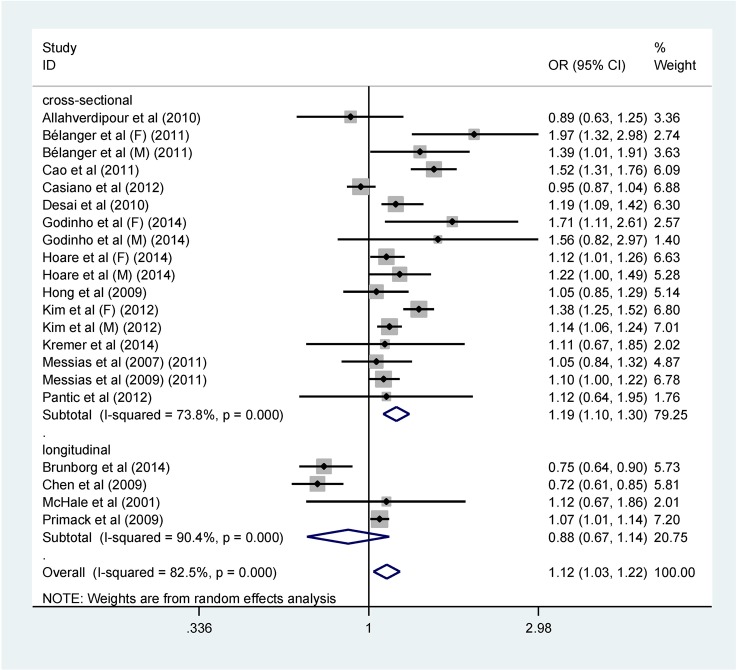
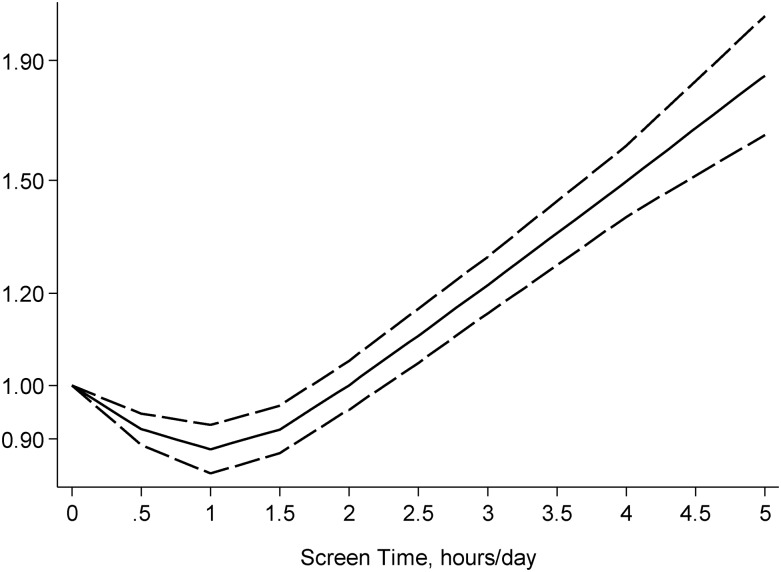
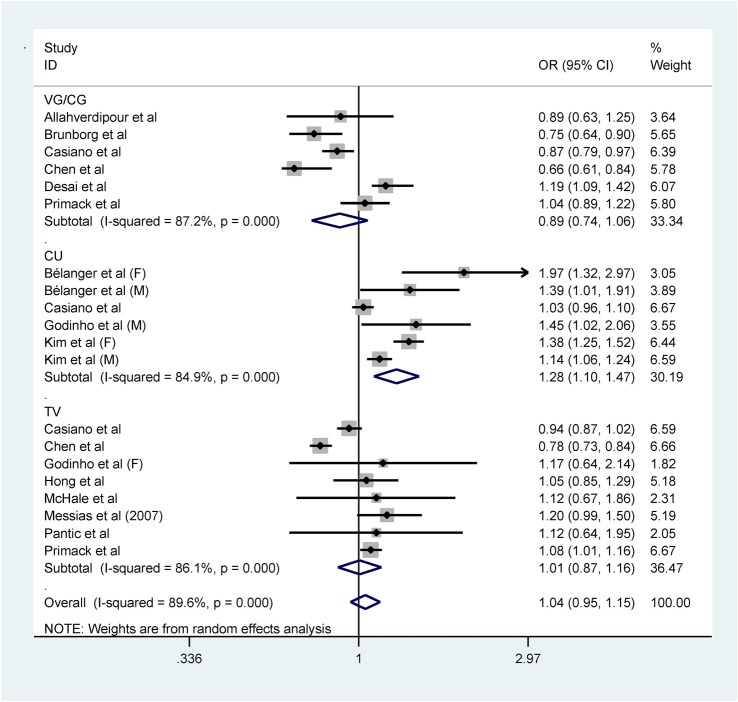
Background: Depression represents a growing public health burden. Understanding how screen time (ST) in juveniles may be associated with risk of depression is critical for the development of prevention and intervention strategies. Findings from studies addressing this question thus far have been inconsistent. Therefore, we conducted a comprehensive systematic review and meta-analysis of data related to this question. Methods: The meta-analysis was conducted in accordance with the PRISMA guideline. We searched the electronic databases of PubMed, Web of Science and EBSCO systematically (up to 6 May 2015). OR was adopted as the pooled measurement of association between ST and depression risk. Dose–response was estimated by a generalised least squares trend estimation. Results: Twelve cross-sectional studies and four longitudinal studies (including 1 cohort study) involving a total of 127 714 participants were included. Overall, higher ST in preadolescent children and adolescents was significantly associated with a higher risk of depression (OR=1.12; 95% CI 1.03 to 1.22). Screen type, age, population and reference category acted as significant moderators. Compared with the reference group who had no ST, there was a non-linear dose–response association of ST with a decreasing risk of depression at ST<2 h/day, with the lowest risk being observed for 1 h/day (OR=0.88; 95% CI 0.84 to 0.93). Conclusions: Our meta-analysis suggests that ST in children and adolescents is associated with depression risk in a non-linear dose–response manner.
Overview
The claims and statistics of this paper haven’t been checked yet.
Free: it reads the open-access text and checks the first 5 claims that cite a source we can check. Create a free account to check every claim.
Integrity signals
Registry
Cites
Statistics
Figures
Verification
Claims the paper makes
The claims and statistics of this paper haven’t been checked yet.
Free: it reads the open-access text and checks the first 5 claims that cite a source we can check. Create a free account to check every claim.
Claims other papers make about this one
Each is checked against this paper’s own text: does it say what the citing paper says it does?
The cited source says what the claim attributes to it.
In the citing paper
“More screen time has been associated with depressive symptoms among children and adolescents in several systematic reviews [11, 12, 43–50].”
From Screen time and mental health: a prospective analysis of the Adolescent Brain Cognitive Development (ABCD) Study (2024) · cites this paper as [50]
The cited source says what the claim attributes to it.
In the citing paper
“However, the presence of a cross-sectional association found in this and several previous studies [38] conveys no information about the temporal sequence of the 2 processes or the underlying mechanisms of the association, therefore potential explanations remain speculative.”
From Social Media and Mental Health Among Early Adolescents in Sweden: A Longitudinal Study With 2-Year Follow-Up (KUPOL Study). (2021) · cites this paper as [38]
The check wasn’t confident either way, so it gives no verdict — never disputed.
In the citing paper
“Most previous studies did not distinguish these 2 levels of associations, which might explain the reports of social media use being associated with depressive symptoms [38].”
From Social Media and Mental Health Among Early Adolescents in Sweden: A Longitudinal Study With 2-Year Follow-Up (KUPOL Study). (2021) · cites this paper as [38]
Experimental — accuracy not yet measuredIn the citing paper
“and depression [4,5]”
From Using Wearable Cameras to Categorize the Type and Context of Screen-Based Behaviors Among Adolescents: Observational Study (2022) · cites this paper as [5]
Self-check
Percentages, sums and reported differences re-computed from the paper’s own numbers.
The self-check needs the paper’s full text.
Citations
Cites
Preferred Reporting Items for Systematic Reviews and Meta-Analyses: the PRISMA statement
Moher, D., Liberati, A., Tetzlaff, J., Altman, D. G., & for the PRISMA Group (2009) · BMJ · doi:10.1136/bmj.b2535 · Cited by 83,823
Preferred Reporting Items for Systematic Reviews and Meta-Analyses: The PRISMA Statement
Moher, D., Liberati, A., Tetzlaff, J., Altman, D. G., & The PRISMA Group (2009) · PLoS Medicine · doi:10.1371/journal.pmed.1000097 · Cited by 64,042
Bias in meta-analysis detected by a simple, graphical test
Egger, M., Smith, G. D., Schneider, M., & Minder, C. (1997) · BMJ · doi:10.1136/bmj.315.7109.629 · Cited by 56,722
The CES-D Scale: A Self-Report Depression Scale for Research in the General Population
Radloff, L. S. (1977) · Applied Psychological Measurement · doi:10.1177/014662167700100306 · Cited by 53,267
Preferred reporting items for systematic reviews and meta-analyses: the PRISMA Statement.
(2009) · PubMed Central · Cited by 44,859
An inventory for measuring depression
BECK, A. T. (1961) · Archives of General Psychiatry · doi:10.1001/archpsyc.1961.01710120031004 · Cited by 38,032
Dermyshi, E., Wang, Y., Yan, C., Hong, W., Qiu, G., Gong, X., & Zhang, T. (2017) · Neonatology · doi:10.1159/000454668 · Cited by 24,451
von Elm, E., Altman, D. G., Egger, M., Pocock, S. J., Gøtzsche, P. C., Vandenbroucke, J. P., & Initiative, F. T. S. (2007) · PLoS Medicine · doi:10.1371/journal.pmed.0040296 · Cited by 23,020
Meta-analysis of Observational Studies in Epidemiology<SUBTITLE>A Proposal for Reporting</SUBTITLE>
Stroup, D. F. (2000) · JAMA · doi:10.1001/jama.283.15.2008 · Cited by 20,623
Wang, G., Ma, R., Qiao, G., Wada, K., Aizawa, Y., & Satoh, T. (2015) · Integrative Medicine International · doi:10.1159/000368408 · Cited by 18,657
Cited by
Items 101–200 of 364
Rosenberg, M., Houghton, S. J., Hunter, S. C., Zadow, C., Shilton, T., Wood, L. J., & Lawrence, D. M. (2018) · BMC Public Health · doi:10.1186/s12889-018-5240-0 · Cited by 39
“That is, screen use up to one hour per day can be beneficial, but more extensive use may be detrimental [26].”
BackgroundMarques, A., Bordado, J., Tesler, R., Demetriou, Y., Sturm, D. J., & de Matos, M. G. (2020) · American Journal of Human Biology · doi:10.1002/ajhb.23419 · Cited by 42
Tan, S. T., Tan, S. S., & Tan, C. X. (2021) · Nutrition & Food Science · doi:10.1108/nfs-05-2021-0156 · Cited by 39
Cárdenas-Fuentes, G., Homs, C., Ramírez‐Contreras, C., Juton, C., Esteve, R. C., Grau, M., Aguilar‐Palacio, I., Fitó, M., Gómez, S. F., & Schröder, H. (2021) · Nutrients · doi:10.3390/nu14010160 · Cited by 48
“It is relevant to highlight that increasing physical activity levels and reducing screen time is longitudinally related to better health-related quality-of-life and socio-emotional outcomes [55] and a reduced risk of non-communicable diseases such as depression [56] or obesity [9,10].”
BackgroundChau, K., Bhattacherjee, A., Senapati, A., Guillemin, F., & Chau, N. (2022) · Psychiatry Research · doi:10.1016/j.psychres.2022.114467 · Cited by 41
Johnstad, P. G. (2024) · Frontiers in Public Health · doi:10.3389/fpubh.2023.1268339 · Cited by 41
Associations of lifestyle with mental health and well-being in Chinese adults: a nationwide study
Wang, X., Wu, Y., Shi, X., Chen, Y., Xu, Y., Xu, H., Ma, Y., & Zang, S. (2023) · Frontiers in Nutrition · doi:10.3389/fnut.2023.1198796 · Cited by 48
“Similarly, sedentary behaviors, sleep duration, diet behaviors, physical activity, alcohol, and smoking consumption were associated with individuals’ health outcomes (82, 83).”
BackgroundMedia screen time use and mental health in school aged children during the pandemic
Hmidan, A., Séguin, D., & Duerden, E. G. (2023) · BMC Psychology · doi:10.1186/s40359-023-01240-0 · Cited by 53
Relationship between Smoking, Physical Activity, Screen Time, and Quality of Life among Adolescents
Dong, X., Ding, M., Chen, W., Liu, Z., & Yi, X. (2020) · International Journal of Environmental Research and Public Health · doi:10.3390/ijerph17218043 · Cited by 35
“However, accompanied by technology advances, screen time for teens watching TV or playing with a mobile phone has become an important part of daily life [26].”
BackgroundScreen-time during the after-school period: A contextual perspective
Haycraft, E., Sherar, L. B., Griffiths, P., Biddle, S. J. H., & Pearson, N. (2020) · Preventive Medicine Reports · doi:10.1016/j.pmedr.2020.101116 · Cited by 30
“Sedentary behaviours are highly prevalent in young people and time spent sedentary is associated with adverse physical and psychosocial health and conditions like obesity, insulin resistance and depression (Carson et al., 2016; Liu et al., 2016; Boers et al., 2019).”
BackgroundInfluentialImpact on adolescent mental health of replacing screen-use with exercise: A prospective cohort study
Kandola, A., del Pozo Cruz, B., Hayes, J. F., Owen, N., Dunstan, D. W., & Hallgren, M. (2022) · Journal of Affective Disorders · doi:10.1016/j.jad.2021.12.064 · Cited by 30
“These findings broadly align with those of previous studies showing positive associations between time in sedentary behaviour or using screen-based devices and the risk of depressive symptoms in adolescents (13,14).”
BackgroundResultInfluentialForte, C., O’Sullivan, D., McDowell, C. P., Hallgren, M., Woods, C. B., & Herring, M. P. (2023) · European Child & Adolescent Psychiatry · doi:10.1007/s00787-022-02080-w · Cited by 30
“Previous research has shown positive associations between computer [9, 37] and social media use [38–40] and increased the risk of depression in adolescents.”
Félez-Nóbrega, M., Bort‐Roig, J., Briones, L., Niubo, A. S., Koyanagi, A., Puigoriol, E., & Puig-Ribera, A. M. (2020) · Journal of Sports Sciences · doi:10.1080/02640414.2020.1748359 · Cited by 42
“…associations for weekdays and weekends, our results are consistent with previous findings reporting detrimental associations of television time for several mental health indicators in children and adolescents (Biddle & Asare, 2011; Biddle et al., 2019; Liu et al., 2016; Stiglic & Viner, 2019).”
ResultAssociations of Passive and Active Screen Time With Psychosomatic Complaints of Adolescents
Khan, A., Lee, E., Janssen, I., & Tremblay, M. S. (2022) · American Journal of Preventive Medicine · doi:10.1016/j.amepre.2022.01.008 · Cited by 42
“Emerging evidence suggests a curvilinear relationship between ST and mental well-being, such that low ST may have some beneficial effects over abstinence/high use.(7,8) A study of U.”
BackgroundKe, Y., Chen, S., Hong, J., Liang, Y., & Liu, Y. (2023) · PLoS ONE · doi:10.1371/journal.pone.0280248 · Cited by 42
“With the ongoing advancement of technology and rapid changes in lifestyles, ST including watching TV or playing with a mobile phone has become an important part of daily life in young people [32].”
BackgroundKhan, A., & Burton, N. W. (2017) · Mental Health and Physical Activity · doi:10.1016/j.mhpa.2017.03.001 · Cited by 27
Zink, J., Ebrahimian, S., Belcher, B. R., & Leventhal, A. M. (2019) · Journal of Affective Disorders · doi:10.1016/j.jad.2019.11.130 · Cited by 35
“This dichotomization cut point was also based on evidence from a meta-analysis (Liu et al., 2016) and from a recent population-based study among 14 to 17-year-olds that both suggest that rates of depression continuously increase once 2 or more hours of daily screen-based sedentary behaviors are accumulated (Twenge and…”
MethodZhang, Y., Pan, Y., Ma, Z., Wang, D., Zou, R., & Fan, F. (2023) · Journal of Psychosomatic Research · doi:10.1016/j.jpsychores.2023.111352 · Cited by 31
Targeting sedentary behavior as a feasible health strategy during COVID-19
Zieff, G. H., Bates, L., Kerr, Z. Y., Moore, J. B., Hanson, E. D., Battaglini, C. L., & Stoner, L. R. (2020) · Translational Behavioral Medicine · doi:10.1093/tbm/ibaa101 · Cited by 30
Kosma, M., & Buchanan, D. R. (2017) · Quest · doi:10.1080/00336297.2017.1355818 · Cited by 29
Thomas, G., Bennie, J. A., De Cocker, K., Dwi Andriyani, F., Booker, B., & Biddle, S. J. H. (2022) · JMIR Pediatrics and Parenting · doi:10.2196/28208 · Cited by 26
“Systematic reviews and meta-analyses have shown that higher levels of adolescent screen use are associated with detrimental health outcomes, such as increased adiposity [2,3] and depression [4,5], as well as low academic achievement [6].”
BackgroundNdagire, C. T., Muyonga, J. H., & Nakimbugwe, D. (2019) · Food Science & Nutrition · doi:10.1002/fsn3.883 · Cited by 29
Engels, E. S., Mutz, M., Demetriou, Y., & Reimers, A. K. (2021) · Archives of Public Health · doi:10.1186/s13690-021-00651-y · Cited by 27
“It is also well examined that inactivity has negative effects on mental health such as an increase in stress [41] and depression [26].”
BackgroundLiu, M., Xiao, J., Kamper‐DeMarco, K. E., & Fu, Z. (2023) · Journal of Affective Disorders · doi:10.1016/j.jad.2023.01.019 · Cited by 29
Self-citationBalanzá‐Martínez, V., & Cervera-Martínez, J. (2022) · International Journal of Environmental Research and Public Health · doi:10.3390/ijerph19095094 · Cited by 25
“Further studies are clearly needed to better estimate the dose–response relationship between ST and depression and tentatively establish appropriate time limits for ST [62].”
BackgroundSociété canadienne de pédiatrie, G. D. T. S. L. S. N. (2019) · Paediatrics & Child Health · doi:10.1093/pch/pxz096 · Cited by 33
Frielingsdorf, H., Fomichov, V., Rystedt, I., Lindstrand, S., Korhonen, L., & Henriksson, H. (2025) · Scientific Reports · doi:10.1038/s41598-024-83951-x · Cited by 32
Li, T. M. H., Chan, N. Y., Li, C.-T., Chen, J., Chan, J. W. Y., Liu, Y., Li, S. X., Li, A. M., Zhang, J., & Wing, Y. K. (2022) · Frontiers in Psychiatry · doi:10.3389/fpsyt.2022.892583 · Cited by 32
Raudsepp, L., & Vink, K. (2019) · Journal of Physical Activity and Health · doi:10.1123/jpah.2018-0123 · Cited by 23
Associations of physical activity and screen time with adolescent idiopathic scoliosis
Zhu, L., Ru, S., Wang, W., Dou, Q., Li, Y., Guo, L., Chen, X., Wang, W., Li, W., Zhu, Z., et al. (2023) · Environmental Health and Preventive Medicine · doi:10.1265/ehpm.23-00004 · Cited by 26
“Several studies explore the physical (e.g., poor sleep, obesity) [37 – 43], psychological (e.g., depressive symptoms and suicidal behavior) [44 – 46], social and neurological adverse health consequence (e.g., less social support [47], low life satisfaction [48]) of excessive screen time (ST).”
Gao, J., & Gao, L. (2024) · Acta Psychologica · doi:10.1016/j.actpsy.2024.104530 · Cited by 32
Impact of Screen Time on Development of Children
Kar, S. S., Dube, R., Goud, M., Gibrata, Q. S., El-Balbissi, A. A., Salim, T. A. A., & Fatayerji, R. N. M. A. K. (2025) · Children · doi:10.3390/children12101297 · Cited by 67
“Establishing areas of the house where screens are not allowed can be a successful intervention [39,40].”
Jiang, Y. L., Zhang, M., & Cui, J. (2024) · Journal of Affective Disorders · doi:10.1016/j.jad.2024.07.097 · Cited by 27
Scherr, S. (2018) · Current Psychology · doi:10.1007/s12144-018-0020-7 · Cited by 22
“Another example is a study by Liu et al. (2015) that identified seven reported measures from four studies that allowed them to perform a meta-analysis.”
BackgroundInfluentialPhysical Activity, Sedentary Behaviour and Mental Health in Young People: A Review of Reviews
Rodríguez‐Ayllón, M., Estévez‐López, F., Cadenas‐Sánchez, C., Gracia‐Marco, L., Lubans, D. R., Ortega, F. B., & Esteban‐Cornejo, I. (2019) · Springer eBooks · doi:10.1007/978-3-030-25816-0_3 · Cited by 25
Wang, W., Jiang, J., Qi, L., Zhao, F., Wu, J., Zhu, X., Wang, B., & Hong, X. (2023) · BMJ Open · doi:10.1136/bmjopen-2023-073347 · Cited by 26
White, K. N., Lubans, D. R., & Eather, N. (2022) · Pilot and Feasibility Studies · doi:10.1186/s40814-021-00964-3 · Cited by 23
“, depression and anxiety) and recreational screen-time in youth [47, 59, 108].”
BackgroundAssociation between sedentary behavior and depression among South Korean adolescents
Kim, J., Kim, H., Jang, S., & Park, E. (2022) · BMC Psychiatry · doi:10.1186/s12888-022-04262-x · Cited by 26
“Specifically, for teenagers below 14 years old, two hours or more of ST and only playing computer games are associated with depression [22].”
BackgroundAssociations between smartphone use and mental health and well-being among young Swiss men
Studer, J., Marmet, S., Wicki, M., Khazaal, Y., & Gmel, G. E. (2022) · Journal of Psychiatric Research · doi:10.1016/j.jpsychires.2022.10.036 · Cited by 22
Electronic media use and symptoms of depression among adolescents in Norway
Kleppang, A. L., Steigen, A. M., Ma, L., Finbråten, H. S., & Hagquist, C. (2021) · PLoS ONE · doi:10.1371/journal.pone.0254197 · Cited by 28
“Some studies on video gaming have reported no association between video gaming and symptoms of depression [11, 18, 19].”
BackgroundPerrino, T., Brincks, A., Lee, T. K., Quintana, K., & Prado, G. (2019) · Journal of Adolescence · doi:10.1016/j.adolescence.2019.02.014 · Cited by 18
“Within each time-point, SBS behaviors were significantly associated with internalizing symptoms for both genders, a cross-sectional association documented in previous research (Kremer et al., 2014; Liu et al., 2016; Maras et al., 2015).”
BackgroundResultThe Differential Impact of Screen Time on Children’s Wellbeing
Belton, S., Issartel, J., Behan, S., Goss, H. R., & Peers, C. (2021) · International Journal of Environmental Research and Public Health · doi:10.3390/ijerph18179143 · Cited by 54
“Specifically, authors have highlighted the negative health association with adiposity [3–8] and cardiorespiratory fitness [4,5], depression and mental health [5,9], diet and quality of life [5], lower academic achievement [5,10], sleep [5,11], and lower levels of physical activity [3,6].”
BackgroundWu, H., Ji, J.-M., Qian, Y., Jin, X., Yu, H.-R., Liu, X., Du, L., Fu, X., & Chen, H. (2022) · Psychiatry Research · doi:10.1016/j.psychres.2022.114603 · Cited by 23
Alenezi, N., & Alfaleh, M. (2024) · Frontiers in Education · doi:10.3389/feduc.2024.1494487 · Cited by 53
Zhang, Y., Chen, S., Wang, C., Zhang, X., Zou, L., Chi, X., & Jiao, C. (2021) · Frontiers in Pediatrics · doi:10.3389/fped.2021.603177 · Cited by 21
“, TV, electronic games) compared to older adolescents (35).”
BackgroundWu, Y., Amirfakhraei, A., Ebrahimzadeh, F., Jahangiry, L., & Farhangi, M. A. (2022) · Frontiers in Pediatrics · doi:10.3389/fped.2022.822108 · Cited by 25
RetractedSitting time among adolescents across 26 Asia–Pacific countries: a population-based study
Khan, A., Uddin, R., Lee, E., & Tremblay, M. S. (2019) · International Journal of Public Health · doi:10.1007/s00038-019-01282-5 · Cited by 22
Liu, M., Zhang, J., Kamper‐DeMarco, K. E., Hu, E., & Yao, S. (2020) · PeerJ · doi:10.7717/peerj.8775 · Cited by 22
Self-citationBEATTY, C. J. P., & Egan, S. (2020) · Cyberpsychology Behavior and Social Networking · doi:10.1089/cyber.2019.0420 · Cited by 21
“23,24 However, meta-analyses of multiple combined studies of children suggest that higher levels of screen time are linked with future depression risk (drawing on findings from 16 studies) 25 and socioemotional difficulties (drawing on findings from 45 studies).”
Cárceles-Álvarez, A., Ortega-García, J. A., Hernández, F. A. L., Fuster-Soler, J. L., Monllor, A. S., Ramis, R., & Cláudio, L. (2020) · Environmental Research · doi:10.1016/j.envres.2020.109910 · Cited by 17
Werneck, A. O., Araujo, R. H. O., Oyeyemi, A. L., & Silva, D. R. (2023) · Preventive Medicine · doi:10.1016/j.ypmed.2023.107677 · Cited by 16
Childhood and adolescent television viewing and internalising disorders in adulthood
McAnally, H. M., Young, T. R., & Hancox, R. J. (2019) · Preventive Medicine Reports · doi:10.1016/j.pmedr.2019.100890 · Cited by 21
Arumí-Prat, I., Cirera-Viñolas, E., Martori, J. C., Wasley, D., & Puig-Ribera, A. M. (2020) · European Journal of Pediatrics · doi:10.1007/s00431-020-03655-y · Cited by 16
Problematic use of screen media and mobile devices
Domoff, S. E., Borgen, A. L., & Robinson, C. (2020) · Clinician's Toolkit for Children's Behavioral Health · doi:10.1016/b978-0-12-816024-4.00008-5 · Cited by 15
Ma, C., Li, Z., Tong, Y., Zhao, M., Magnussen, C. G., & Xi, B. (2021) · Journal of Affective Disorders · doi:10.1016/j.jad.2021.11.025 · Cited by 16
Zhang, Y., Liu, Z., Liu, B.-P., Yang, X., Wan, L.-P., Liu, X., & Jia, C.-X. (2022) · Journal of Affective Disorders · doi:10.1016/j.jad.2022.07.035 · Cited by 20
Sun, W., Li, J., Zhou, J., Li, S., Hou, L., Xiao, W., Luo, Z., Shan, S., Zhang, R., & Song, P. (2023) · Journal of Psychosomatic Research · doi:10.1016/j.jpsychores.2023.111544 · Cited by 16
Association between Active Travel to School and Depressive Symptoms among Early Adolescents
Gu, J., & Chen, S. (2020) · Children · doi:10.3390/children7050041 · Cited by 20
“On the basis of previous studies, we included the variables of grade (age) [17,21], sex [17,23,24], screen time [17,22,25], smoking [9], drinking [9], friends [26,27], and weight status (BMI: body mass index) [28,29].”
MethodÖstenberg, A. H., Enberg, A., Pojskić, H., Gilić, B., Sekulić, D., & Alricsson, M. (2022) · International Journal of Environmental Research and Public Health · doi:10.3390/ijerph191912841 · Cited by 32
“Moreover, the finding is in line with several studies showing higher sedentary behavior being associated with worse mental health [20,22,54,55].”
ResultDevelopment of the Adolescent Preoccupation with Screens Scale
Hunter, S. C., Houghton, S. J., Zadow, C., Rosenberg, M., Wood, L. J., Shilton, T., & Lawrence, D. (2017) · BMC Public Health · doi:10.1186/s12889-017-4657-1 · Cited by 17
“While there is evidence showing both positive and negative behavioural and health related outcomes associated with SMT, a separate meta-analysis suggested the relationship was not straightforward [16].”
BackgroundGoldfield, G. S., Cameron, J. D., Sigal, R. J., Kenny, G. P., Holčík, M., Prud’homme, D., Guérin, E., Alberga, A. S., D’Angiulli, A., Tremblay, M. S., et al. (2021) · Applied Physiology, Nutrition, and Metabolism · doi:10.1139/apnm-2020-0756 · Cited by 18
Wrzesińska, M. A., Urzędowicz, B., Motylewski, S., Zeman, K., & Pawlicki, L. (2016) · Medicine · doi:10.1097/md.0000000000004397 · Cited by 19
Health4Life Team, Sunderland, M., Champion, K. E., Slade, T. N., Chapman, C., Newton, N. C., Thornton, L. K., KAY‐LAMBKIN, F. J., MCBRIDE, N. T., ALLSOP, S. J., et al. (2020) · Social Psychiatry and Psychiatric Epidemiology · doi:10.1007/s00127-020-01888-8 · Cited by 18
A dual process model to predict adolescents’ screen time and physical activity
Aulbach, M. B., Konttinen, H. M., Gardner, B., Kujala, E., Araújo‐Soares, V., Sniehotta, F. F., Lintunen, T., Haukkala, A., & Hankonen, N. E. (2021) · Psychology and Health · doi:10.1080/08870446.2021.1988598 · Cited by 17
“outcomes, including type 2 diabetes, some cancers, and depressive symptoms (Lee et al., 2012; Liu et al., 2016; Thorp et al., 2011).”
BackgroundWerling, A. M., Walitza, S., Gerstenberg, M., Grünblatt, E., & Drechsler, R. (2022) · Journal of Psychiatric Research · doi:10.1016/j.jpsychires.2022.01.004 · Cited by 15
Alexander, J. D., Nguyen‐Louie, T. T., Gupta, S., Cummins, K. M., & Wade, N. E. (2025) · Psychiatry Research · doi:10.1016/j.psychres.2025.116523 · Cited by 21
Inatividade física e sintomas de depressão, ansiedade e estresse em adolescentes estudantes
Costa, M. P. D. S., Schmidt, A., Vitorino, P. V. D. O., & Corrêa, K. D. S. (2021) · Acta Paulista de Enfermagem · doi:10.37689/acta-ape/2021ao03364 · Cited by 55
The Association between Active Mobility and Subjective Wellbeing during COVID-19 in MENA Countries
Ranjbarnia, B., Kamelifar, M. J., & Masoumi, H. (2022) · Healthcare · doi:10.3390/healthcare10091603 · Cited by 15
“According to previous studies, the pandemic has hindered individuals from associating with others and is likely to have harmed emotions of self-esteem and circumstances [7], stress [8], and depression [9].”
BackgroundFanxing, K., Gao, Y., Herold, F., Hossain, M. M., Yeung, A., Ng, J. L., Kramer, A. F., & Zou, L. (2023) · Complementary Therapies in Clinical Practice · doi:10.1016/j.ctcp.2023.101806 · Cited by 20
Screen-based behaviour in children is more than meets the eye
Munsamy, A. J., Chetty, V., & Ramlall, S. (2022) · South African Family Practice · doi:10.4102/safp.v64i1.5374 · Cited by 19
Liu, M., Dong, D., Xiao, J., Lai, C., Zhuang, A., & Wang, Y. (2022) · Psychology Research and Behavior Management · doi:10.2147/prbm.s382066 · Cited by 13
“Both addictive and excessive use of the internet have been extensively reported to be associated with negative consequences,(9) including risk of substance use experience,(10) sleep problems, depression, anxiety, and even suicidality in adolescents.(11,12) Because of adolescents’ specific neuro-developmental plasticit…”
BackgroundSelf-citation[Minocycline hypersensitivity syndrome].
Antunes, A., Davril, A., Tréchot, P., Grandidier, M. H., Truchetet, F., & Cuny, J.-F. (1999) · PubMed · Cited by 15
Trends in Well-Being Among Youth in Australia, 2017-2022
Dumuid, D., Singh, B., Brinsley, J., Virgara, R., Curtis, R., Brinkman, S. A., & Maher, C. A. (2023) · JAMA Network Open · doi:10.1001/jamanetworkopen.2023.30098 · Cited by 15
An Unfiltered Look at Idealized Images: A Social Media Intervention for Adolescent Girls
Casares, D. R., & Binkley, E. E. (2021) · Journal of Creativity in Mental Health · doi:10.1080/15401383.2021.1892556 · Cited by 21
“Psychological impacts such as increased social anxiety, depression, and lower rates of well-being are also becoming more prevalent for adolescent users (Liu et al., 2016; Nesi et al., 2017; Nesi & Prinstein, 2015; Steers et al., 2014).”
BackgroundKhan, A., Khan, S. R., & Lee, E. (2022) · International Journal of Environmental Research and Public Health · doi:10.3390/ijerph19116899 · Cited by 15
“A meta-analysis reported a non-linear dose–response association in young people with a higher risk of depression when ST exceeds 2 hrs/d [17]; however, our study showed higher odds of poor wellbeing when ST exceeded 6 hrs/d in boys and 4 hrs/d in girls.”
BackgroundRoos, Y., & Wrzus, C. (2022) · Current Psychology · doi:10.1007/s12144-022-03593-y · Cited by 16
“…more closely linked to well-being among adolescents and perhaps young adults: a meta-analysis including 127,714 participants demonstrated a significantly higher risk of depression with longer screen time among teenagers younger than 14 years, but not in those older than 14 years (Liu et al., 2016).”
BackgroundWhitmore, L. M., & Smith, T. C. (2018) · Archives of Suicide Research · doi:10.1080/13811118.2018.1456992 · Cited by 15
Sedentary Behavior and Mental Health
Smith, L., Hamer, M., & Gardner, B. (2018) · Elsevier eBooks · doi:10.1016/b978-0-12-812605-9.00006-x · Cited by 18
Bui, C., Lin, L.-Y., Lin, C.-J., Chiu, Y.-W., & Chiou, H.-Y. (2023) · Frontiers in Public Health · doi:10.3389/fpubh.2023.1049836 · Cited by 13
“Previous studies reveal the association between depressive symptoms with overconsumption of sugar-sweetened drinks (13), inadequate physical activity (14) and sedentary behaviors (15).”
BackgroundSedentary Behavior and Risk of Depression in Older Adults: A Systematic Meta-Analysis
Li, Q., Zhao, Z., Yang, C., Chen, Z., & Yin, W. (2024) · Iranian Journal of Public Health · doi:10.18502/ijph.v53i2.14914 · Cited by 13
Prospective Association of Sedentary Behavior With Psychological Distress Among Adolescents
Werneck, A. O., Hallgren, M. Å., & Stubbs, B. (2024) · Journal of Adolescent Health · doi:10.1016/j.jadohealth.2024.10.019 · Cited by 17
Screen time and myopia: A serial multiple mediator SEM analysis
Xie, J., Lu, C., & Zhu, J. W. (2022) · Frontiers in Public Health · doi:10.3389/fpubh.2022.860098 · Cited by 18
Aspects of Depression Among Socioeconomically Disadvantaged African American Young Adults
Kosma, M., & Buchanan, D. R. (2019) · International Quarterly of Community Health Education · doi:10.1177/0272684x19829612 · Cited by 12
Cyberchondria, cyberhoarding, and other compulsive online disorders
Vismara, M. E. M., Caricasole, V., Varinelli, A., & Fineberg, N. A. (2021) · Elsevier eBooks · doi:10.1016/b978-0-12-822201-0.00001-0 · Cited by 15
Sedentary Behavior During School Recess in Southern Brazil
Greca, J. P. D. A., & Silva, D. A. S. (2016) · Perceptual and Motor Skills · doi:10.1177/0031512516681693 · Cited by 11
Aksoy, B., Cırık, V. A., & Bektaş, M. (2023) · Journal of Pediatric Nursing · doi:10.1016/j.pedn.2023.08.023 · Cited by 10
Montgomery, L. R. C., Swain, M. S., Dario, A. B., O’Keeffe, M., Yamato, T. P., Hartvigsen, J., French, S., Williams, C. M., & Kamper, S. J. (2024) · British Journal of Sports Medicine · doi:10.1136/bjsports-2024-108648 · Cited by 20
“28 31 32 No existing systematic review has comprehensively explored the link between sedentary behaviour and spinal pain exclusively in children and adolescents.”
Machine learning applications in the analysis of sedentary behavior and associated health risks
Hammad, A. S., Tajammul, A., Dergaa, I., & Al‐Asmakh, M. (2025) · Frontiers in Artificial Intelligence · doi:10.3389/frai.2025.1538807 · Cited by 16
Zahedi, S., Jaffer, R., & Iyer, A. (2021) · International Journal of Educational Research Open · doi:10.1016/j.ijedro.2021.100094 · Cited by 13
Sriwaranun, T., Sittanomai, N., Chantaratin, S., & Boon‐yasidhi, V. (2023) · Journal of Attention Disorders · doi:10.1177/10870547231171726 · Cited by 19
“Excessive use of electronic media has been found to be associated with physical and psychological adverse consequences including poor sleep, decreased social coping, and increased ADHD symptoms (Brand et al., 2014; Goldfield et al., 2011; Liu et al., 2016; Martinez-Gomez et al., 2010; Swing et al., 2010; Wu et al., 20…”
BackgroundWang, S., Xu, W., Gao, L., Tan, W., Zheng, H., Hou, C., & Jia, F. (2023) · Frontiers in Psychiatry · doi:10.3389/fpsyt.2023.1104841 · Cited by 16
The prevalence of abdominal obesity among pupils with visual impairment in Poland
Wrzesińska, M. A., Urzędowicz, B., Nawarycz, T., Motylewski, S., & Pawlicki, L. (2017) · Disability and health journal · doi:10.1016/j.dhjo.2017.02.004 · Cited by 14
Examining the Effects of Social Media on Mental Health Among Adolescents in Saudi Arabia
Faqihi, F. A., Qutob, R. A., Subh, R. H. M., Aljathalin, L. A. M., Alshalan, L. Z., Yati, S. M. A., Alaryni, A. A., Alghamdi, A., Alsolamy, E. N., Bukhari, A. I., et al. (2024) · Cureus · doi:10.7759/cureus.53261 · Cited by 27
“Earlier studies have indicated that children may be especially vulnerable to the adverse impacts of media use [27,28], which is also characterized as "developmental susceptibility" [29].”
BackgroundDendup, T., Putra, I. G. N. E., Dorji, T., Tobgay, T., Dorji, G., Phuntsho, S., & Tshering, P. (2020) · Children and Youth Services Review · doi:10.1016/j.childyouth.2020.105520 · Cited by 11
Villanueva‐Blasco, V. J., Soidán, J. L. G., Folgar, M. I., & Arufe-Giráldez, V. (2021) · International Journal of Environmental Research and Public Health · doi:10.3390/ijerph18105464 · Cited by 16
Videogame-related experiences among regular adolescent gamers
Ponce‐Blandón, J. A., Espejel-Hernández, I., Romero‐Martín, M., Campos, M. D. L. M. L., Picón, N. J., & Gómez-Salgado, J. C. (2020) · PLoS ONE · doi:10.1371/journal.pone.0235327 · Cited by 13
Functional training program: the impact on depression, anxiety and sleep quality in adolescents
de Sousa, I., Nunes, R. S. M., Corrêa, H. D. L., & Vieira, E. C. (2020) · Sport Sciences for Health · doi:10.1007/s11332-020-00679-7 · Cited by 16
“Sedentary lifestyle is increasing among the youth and some studies showed an association being sedentary with increased depressive and anxiety symptoms in adolescence [6, 7].”
BackgroundScreen Time and Early Childhood Well-Being: A Systematic Literature Review Approach
Irzalinda, V., & Latifah, M. (2023) · Journal of Family Sciences · doi:10.29244/jfs.vi.49792 · Cited by 34
Wu, H. T., Li, J., & Tsurumi, A. (2024) · Child and Adolescent Psychiatry and Mental Health · doi:10.1186/s13034-023-00688-7 · Cited by 12
Shawon, M. S. R., Hossain, F. B., Thabrew, K. A. S., Kabir, S., Mahmood, S., & Islam, S. (2024) · Mental health and physical activity · doi:10.1016/j.mhpa.2024.100665 · Cited by 14
Metadata
- Authors
- Liu, M., Wu, L., & Yao, S.
- Affiliations
- Hunan University of Science and Technology (CN)
- Mayo Clinic (US)
- Second Xiangya Hospital of Central South University (CN)
- Corresponding author
- Yao, Shuqiao
- Venue
- British Journal of Sports Medicine
- Publisher
- BMJ
- Published
- 2015-11-09
- Volume
- 50
- Issue
- 20
- Pages
- 1252-1258
- ISSN
- 0306-3674 (ISSN-L)
- 1473-0480
- PMC
- PMC4977203
- OpenAlex
- W2140004648
- Semantic Scholar
- 0ec12b65042be69b6cdf8832f689895b20f9b6f0
- Cited by
- 364
- References
- 77
- Citations by year
- 2026: 28 · 2025: 33 · 2024: 36 · 2023: 58 · 2022: 57 · 2021: 42 · 2020: 43 · 2019: 29 · 2018: 16 · 2017: 11 · 2016: 10
- FWCI
- 1.51
- Type
- journal article
- Language
- en
- Open access
- hybrid
- doi.org
- Licence
- cc-by-nc
- Locations
- British Journal of Sports Medicine (publishedVersion, cc-by-nc)
- PubMed Central (publishedVersion, cc-by-nc)
- PubMed (publishedVersion)
- HighWire Press Open Archive (submittedVersion)
- Funders
- National Cancer Institute (R25CA160056)
- Topics
- Health Sciences › Medicine › Public Health, Environmental and Occupational Health › Physical Activity and Health
- Social Sciences › Education › Child Development and Digital Technology
- Social Sciences › Sociology and Political Science › Impact of Technology on Adolescents
- Keywords
- screen time, sedentary behavior, depression, children, adolescents, dose-response relationship, nonlinear relationship, depression risk
- MeSH terms
- Adolescent, Child, Computers, Depression, Female, Humans, Male, Risk Factors, Television, Time Factors, Video Games, Sedentary Behavior, Observational Studies as Topic
About these checks
Registry, retraction, Cites and statistics results are computed, not judged, with one exception: a printed reference that no index lists is read once by a model before it counts as a citation error. Claims are extracted by a model and kept only when their quote appears verbatim in the text; each cited source is then checked, with a model’s help, for whether it says what the claim relies on. Those verdicts can be wrong — read the claim’s quote and the cited source before relying on one.
Statistics and arithmetic are recomputed, not judged.
Confidence bands are shown only for fields calibrated on our annotated test set. None is calibrated yet, so no band is shown.
What counts as a claim ›How we measure confidence ›How we check this ›
Are you an author, or do you see a problem with this page? Request a review
Data sources
Bibliographic data: Semantic Scholar, OpenAlex, Crossref.
Contains information from the Semantic Scholar Academic Graph Datasets, made available under the ODC Attribution License (ODC-BY 1.0).
Semantic Scholar’s data is described in: Kinney, R., et al. (2023). The Semantic Scholar Open Data Platform. arXiv:2301.10140.
