

Dose-response association of screen time-based sedentary behaviour in children and adolescents and depression: a meta-analysis of observational studies
Open accessThe DOI matches its Crossref record; 75 of the 77 references it cites were found in a registry or an index.
Abstract
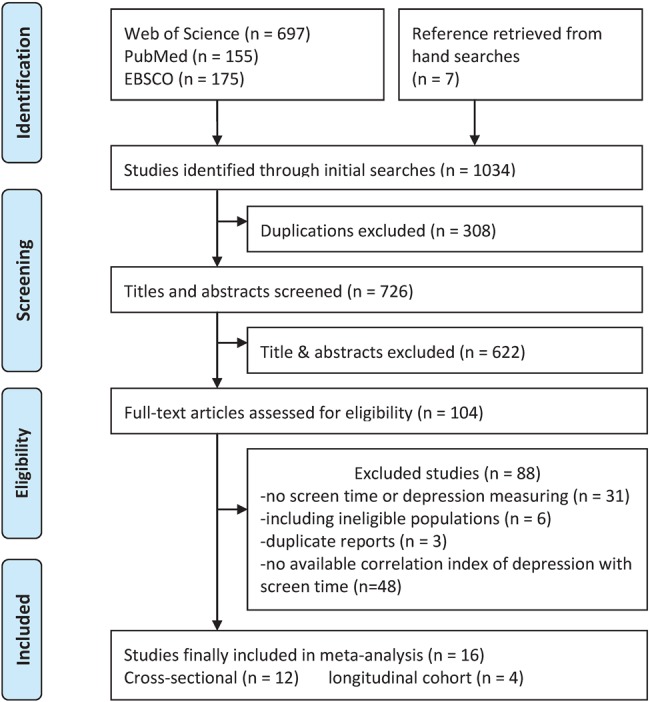
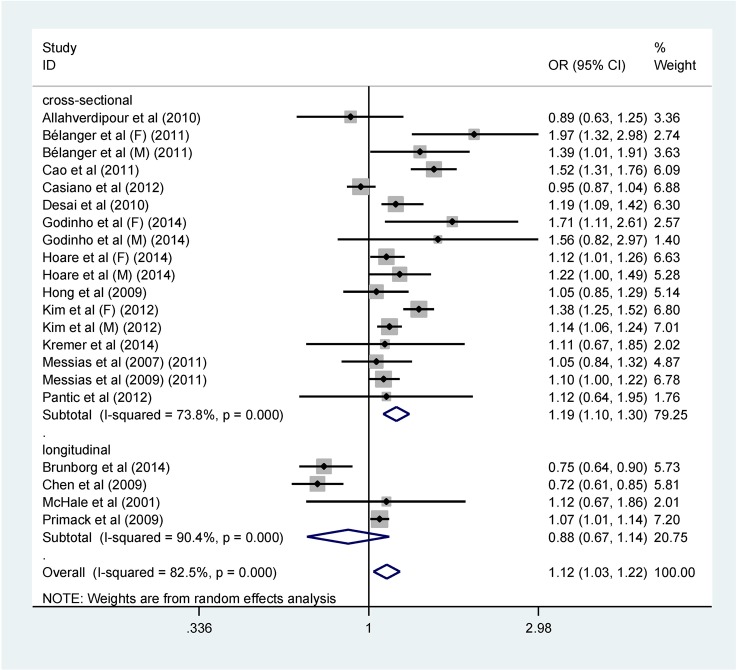
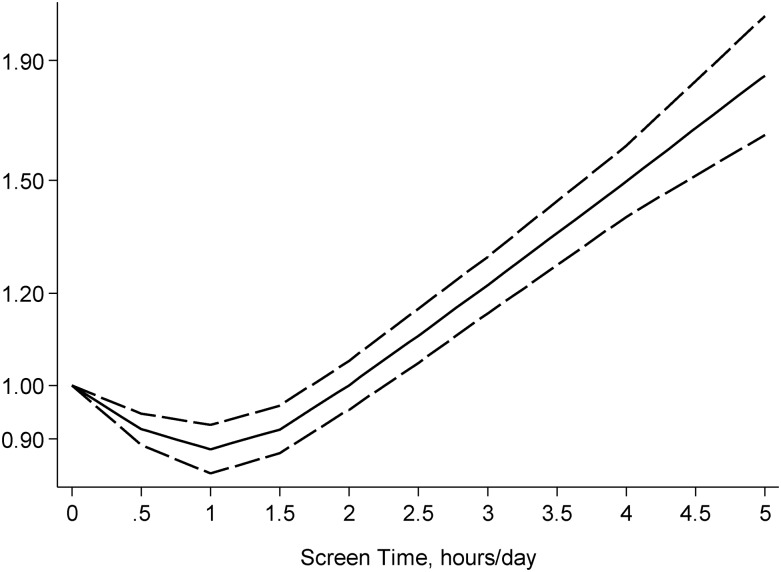
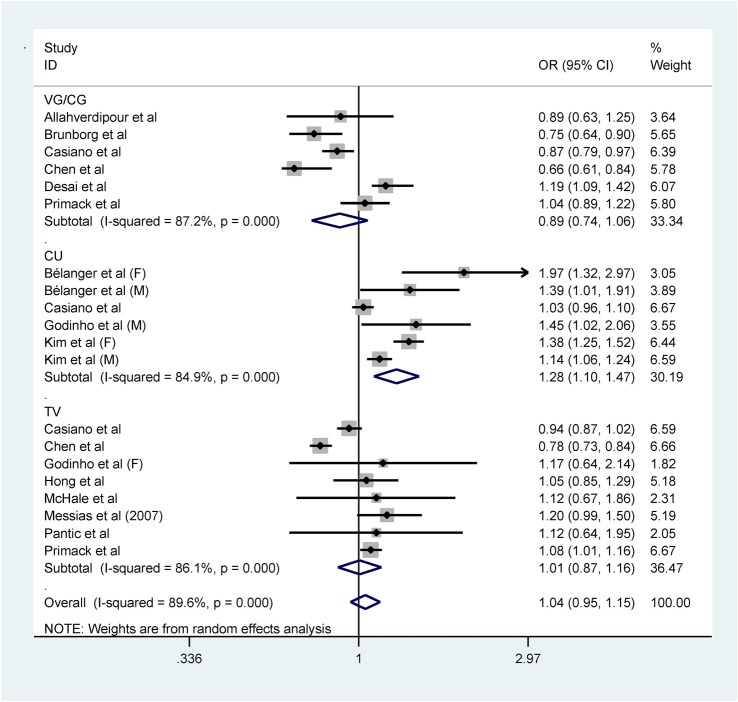
Background: Depression represents a growing public health burden. Understanding how screen time (ST) in juveniles may be associated with risk of depression is critical for the development of prevention and intervention strategies. Findings from studies addressing this question thus far have been inconsistent. Therefore, we conducted a comprehensive systematic review and meta-analysis of data related to this question. Methods: The meta-analysis was conducted in accordance with the PRISMA guideline. We searched the electronic databases of PubMed, Web of Science and EBSCO systematically (up to 6 May 2015). OR was adopted as the pooled measurement of association between ST and depression risk. Dose–response was estimated by a generalised least squares trend estimation. Results: Twelve cross-sectional studies and four longitudinal studies (including 1 cohort study) involving a total of 127 714 participants were included. Overall, higher ST in preadolescent children and adolescents was significantly associated with a higher risk of depression (OR=1.12; 95% CI 1.03 to 1.22). Screen type, age, population and reference category acted as significant moderators. Compared with the reference group who had no ST, there was a non-linear dose–response association of ST with a decreasing risk of depression at ST<2 h/day, with the lowest risk being observed for 1 h/day (OR=0.88; 95% CI 0.84 to 0.93). Conclusions: Our meta-analysis suggests that ST in children and adolescents is associated with depression risk in a non-linear dose–response manner.
Overview
The claims and statistics of this paper haven’t been checked yet.
Free: it reads the open-access text and checks the first 5 claims that cite a source we can check. Create a free account to check every claim.
Integrity signals
Registry
Cites
Statistics
Figures
Verification
Claims the paper makes
The claims and statistics of this paper haven’t been checked yet.
Free: it reads the open-access text and checks the first 5 claims that cite a source we can check. Create a free account to check every claim.
Claims other papers make about this one
Each is checked against this paper’s own text: does it say what the citing paper says it does?
The cited source says what the claim attributes to it.
In the citing paper
“More screen time has been associated with depressive symptoms among children and adolescents in several systematic reviews [11, 12, 43–50].”
From Screen time and mental health: a prospective analysis of the Adolescent Brain Cognitive Development (ABCD) Study (2024) · cites this paper as [50]
The cited source says what the claim attributes to it.
In the citing paper
“However, the presence of a cross-sectional association found in this and several previous studies [38] conveys no information about the temporal sequence of the 2 processes or the underlying mechanisms of the association, therefore potential explanations remain speculative.”
From Social Media and Mental Health Among Early Adolescents in Sweden: A Longitudinal Study With 2-Year Follow-Up (KUPOL Study). (2021) · cites this paper as [38]
The check wasn’t confident either way, so it gives no verdict — never disputed.
In the citing paper
“Most previous studies did not distinguish these 2 levels of associations, which might explain the reports of social media use being associated with depressive symptoms [38].”
From Social Media and Mental Health Among Early Adolescents in Sweden: A Longitudinal Study With 2-Year Follow-Up (KUPOL Study). (2021) · cites this paper as [38]
Experimental — accuracy not yet measuredIn the citing paper
“and depression [4,5]”
From Using Wearable Cameras to Categorize the Type and Context of Screen-Based Behaviors Among Adolescents: Observational Study (2022) · cites this paper as [5]
Self-check
Percentages, sums and reported differences re-computed from the paper’s own numbers.
The self-check needs the paper’s full text.
Citations
Cites
Preferred Reporting Items for Systematic Reviews and Meta-Analyses: the PRISMA statement
Moher, D., Liberati, A., Tetzlaff, J., Altman, D. G., & for the PRISMA Group (2009) · BMJ · doi:10.1136/bmj.b2535 · Cited by 83,823
Preferred Reporting Items for Systematic Reviews and Meta-Analyses: The PRISMA Statement
Moher, D., Liberati, A., Tetzlaff, J., Altman, D. G., & The PRISMA Group (2009) · PLoS Medicine · doi:10.1371/journal.pmed.1000097 · Cited by 64,042
Bias in meta-analysis detected by a simple, graphical test
Egger, M., Smith, G. D., Schneider, M., & Minder, C. (1997) · BMJ · doi:10.1136/bmj.315.7109.629 · Cited by 56,722
The CES-D Scale: A Self-Report Depression Scale for Research in the General Population
Radloff, L. S. (1977) · Applied Psychological Measurement · doi:10.1177/014662167700100306 · Cited by 53,267
Preferred reporting items for systematic reviews and meta-analyses: the PRISMA Statement.
(2009) · PubMed Central · Cited by 44,859
An inventory for measuring depression
BECK, A. T. (1961) · Archives of General Psychiatry · doi:10.1001/archpsyc.1961.01710120031004 · Cited by 38,032
Dermyshi, E., Wang, Y., Yan, C., Hong, W., Qiu, G., Gong, X., & Zhang, T. (2017) · Neonatology · doi:10.1159/000454668 · Cited by 24,451
von Elm, E., Altman, D. G., Egger, M., Pocock, S. J., Gøtzsche, P. C., Vandenbroucke, J. P., & Initiative, F. T. S. (2007) · PLoS Medicine · doi:10.1371/journal.pmed.0040296 · Cited by 23,020
Meta-analysis of Observational Studies in Epidemiology<SUBTITLE>A Proposal for Reporting</SUBTITLE>
Stroup, D. F. (2000) · JAMA · doi:10.1001/jama.283.15.2008 · Cited by 20,623
Wang, G., Ma, R., Qiao, G., Wada, K., Aizawa, Y., & Satoh, T. (2015) · Integrative Medicine International · doi:10.1159/000368408 · Cited by 18,657
Cited by
Rodriguez-Ayllon, M., Cadenas-Sánchez, C., Estévez-López, F., Muñoz, N. E., Mora-Gonzalez, J., Migueles, J. H., Molina-García, P., Henriksson, H., Mena-Molina, A., Martínez-Vizcaíno, V., et al. (2019) · Sports Medicine · doi:10.1007/s40279-019-01099-5 · Cited by 1,360
Firth, J., Solmi, M., Wootton, R. E., Vancampfort, D., Schuch, F. B., Hoare, E., Gilbody, S., Torous, J., Teasdale, S. B., Jackson, S. E., et al. (2020) · World Psychiatry · doi:10.1002/wps.20773 · Cited by 1,242
Lissak, G. (2018) · Environmental Research · doi:10.1016/j.envres.2018.01.015 · Cited by 1,024
Social media use and adolescent mental health: Findings from the UK Millennium Cohort Study
Kelly, Y., Zilanawala, A., Booker, C., & Sacker, A. (2018) · EClinicalMedicine · doi:10.1016/j.eclinm.2018.12.005 · Cited by 740
“Undoubtedly, using social media can be beneficial including as a source of social support and knowledge acquisition, however, a mounting body of evidence suggests associations with poor mental health among young people [7,8].”
BackgroundResultTeenagers, screens and social media: a narrative review of reviews and key studies
Orben, A. (2020) · Social Psychiatry and Psychiatric Epidemiology · doi:10.1007/s00127-019-01825-4 · Cited by 706
Hoare, E., Milton, K., Foster, C., & Allender, S. (2016) · International Journal of Behavioral Nutrition and Physical Activity · doi:10.1186/s12966-016-0432-4 · Cited by 616
“comes of interest were limited to depression [20, 21], anxiety [3], or self-harm and suicide [22].”
Tremblay, M. S., Barnes, J. D., González, S. A., Katzmarzyk, P. T., Onywera, V. O., Reilly, J. J., Tomkinson, G. R., & _, _. (2016) · Journal of Physical Activity and Health · doi:10.1123/jpah.2016-0594 · Cited by 451
Madigan, S., Racine, N., Vaillancourt, T., Korczak, D. J., Hewitt, J. M. A., Pador, P., Park, J. L., McArthur, B. A., Holy, C., & Neville, R. D. (2023) · JAMA Pediatrics · doi:10.1001/jamapediatrics.2023.0846 · Cited by 354
Sedentary behaviors and risk of depression: a meta-analysis of prospective studies
Huang, Y., Li, L., Gan, Y., Wang, C., Jiang, H., Cao, S., & Lu, Z. (2020) · Translational Psychiatry · doi:10.1038/s41398-020-0715-z · Cited by 336
Kandola, A., Lewis, G., Osborn, D. P. J., Stubbs, B., & Hayes, J. F. (2020) · The Lancet Psychiatry · doi:10.1016/s2215-0366(20)30034-1 · Cited by 334
Wang, X., Li, Y., & Fan, H. (2019) · BMC Public Health · doi:10.1186/s12889-019-7904-9 · Cited by 299
Eirich, R., McArthur, B. A., Anhorn, C., McGuinness, C., Christakis, D. A., & Madigan, S. (2022) · JAMA Psychiatry · doi:10.1001/jamapsychiatry.2022.0155 · Cited by 293
Tang, S., Werner-Seidler, A., Torok, M., Mackinnon, A. J., & Christensen, H. (2021) · Clinical Psychology Review · doi:10.1016/j.cpr.2021.102021 · Cited by 284
Association between digital smart device use and myopia: a systematic review and meta-analysis
Foreman, J., Salim, A. T., Praveen, A., Fonseka, D., Ting, D. S. W., Guang He, M., Bourne, R. R. A., Crowston, J., Wong, T. Y., & Dirani, M. (2021) · The Lancet Digital Health · doi:10.1016/s2589-7500(21)00135-7 · Cited by 276
Booker, C. L., Kelly, Y. J., & Sacker, A. (2018) · BMC Public Health · doi:10.1186/s12889-018-5220-4 · Cited by 268
“However among longitudinal studies’ findings suggest a negative, although non-significant association [26].”
BackgroundInfluentialTrott, M., Driscoll, R., Iraldo, E., & Pardhan, S. (2022) · eClinicalMedicine · doi:10.1016/j.eclinm.2022.101452 · Cited by 266
Directed acyclic graphs: a tool for causal studies in paediatrics
Williams, T. C., Bach, C. C., Matthiesen, N. B., Henriksen, T. B., & Gagliardi, L. (2018) · Pediatric Research · doi:10.1038/s41390-018-0071-3 · Cited by 261
Saunders, T. J., & Vallance, J. K. (2017) · Applied Health Economics and Health Policy · doi:10.1007/s40258-016-0289-3 · Cited by 221
Association between digital smart device use and myopia: a systematic review and meta-analysis
Foreman, J., Salim, A. T., Praveen, A., Fonseka, D., Ting, D. S. W., He, M., Bourne, R., Crowston, J. G., Wong, T. Y., & Dirani, M. (2021) · Anglia Ruskin Research Online (Anglia Ruskin University) · Cited by 222
Serra, G., Lo Scalzo, L., Giuffrè, M., Ferrara, P., & Corsello, G. (2021) · Italian Journal of Pediatrics · doi:10.1186/s13052-021-01102-8 · Cited by 219
Wilhite, K., Booker, B., Huang, B.-H., Antczak, D., Corbett, L., Parker, P., Noetel, M., Rissel, C., Lonsdale, C., del Pozo Cruz, B., et al. (2023) · American Journal of Epidemiology · doi:10.1093/aje/kwac212 · Cited by 213
Bélair, M.-A., Kohen, D. E., Kingsbury, M., & Colman, I. (2018) · BMJ Open · doi:10.1136/bmjopen-2017-021119 · Cited by 211
Time Spent on Social Media and Risk of Depression in Adolescents: A Dose–Response Meta-Analysis
Liu, M., Kamper-DeMarco, K. E., Zhang, J., Xiao, J., Dong, D., & Xue, P. (2022) · International Journal of Environmental Research and Public Health · doi:10.3390/ijerph19095164 · Cited by 167
“In support of these theories, the association of TSSM and depression in adolescents would follow a U-shaped curve as a previous work suggested [14].”
MethodResultSelf-citationSanders, T., Parker, P. D., del Pozo-Cruz, B., Noetel, M., & Lonsdale, C. (2019) · International Journal of Behavioral Nutrition and Physical Activity · doi:10.1186/s12966-019-0881-7 · Cited by 164
Houghton, S., Lawrence, D., Hunter, S. C., Rosenberg, M., Zadow, C., Wood, L., & Shilton, T. (2018) · Journal of Youth and Adolescence · doi:10.1007/s10964-018-0901-y · Cited by 162
Is screen time associated with anxiety or depression in young people? Results from a UK birth cohort
Khouja, J. N., Munafò, M. R., Tilling, K., Wiles, N. J., Joinson, C., Etchells, P. J., John, A., Hayes, F. M., Gage, S. H., & Cornish, R. P. (2019) · BMC Public Health · doi:10.1186/s12889-018-6321-9 · Cited by 161
“The existing evidence regarding the association between screen use and anxiety is limited, whereas the evidence for an association between depression and screen time is more consistent [4, 10, 13].”
BackgroundPositive Effects of Digital Technology Use by Adolescents: A Scoping Review of the Literature
Haddock, A., Ward, N., Yu, R., & O’Dea, N. (2022) · International Journal of Environmental Research and Public Health · doi:10.3390/ijerph192114009 · Cited by 153
“Meta-analyses have also found that connecting with others via social media enhances both social support and users’ perceived social resources [79,80].”
BackgroundSewall, C. J. R., Bear, T. M., Merranko, J., & Rosen, D. (2020) · Mobile Media & Communication · doi:10.1177/2050157920902830 · Cited by 139
“Despite these mixed findings, evidence from three meta-analyses examining 220 effects across 157 studies (Huang, 2017; D. Liu & Baumeister, 2016; M. Liu, Wu, & Yao, 2016) suggests that there is a slight negative association between digital technology use and well-being.”
ResultDigital media: Promoting healthy screen use in school-aged children and adolescents
Canadian Paediatric Society, D. H. T. F. (2019) · Paediatrics & Child Health · doi:10.1093/pch/pxz095 · Cited by 153
“However, research suggests that teens are less susceptible to the negative effects of high screen time levels (i.e., over 6 hours per day) than younger children (17,21,38).”
Sarris, J., Thomson, R., Hargraves, F., Eaton, M., de Manincor, M., Veronese, N., Solmi, M., Stubbs, B., Yung, A. R., & Firth, J. (2020) · BMC Medicine · doi:10.1186/s12916-020-01813-5 · Cited by 146
Sanders, T., Noetel, M., Parker, P., Del Pozo Cruz, B., Biddle, S., Ronto, R., Hulteen, R., Parker, R., Thomas, G., De Cocker, K., et al. (2023) · Nature Human Behaviour · doi:10.1038/s41562-023-01712-8 · Cited by 148
What are the keys to a longer, happier life? Answers from five decades of health psychology research
Johnson, B. T., & Acabchuk, R. L. (2018) · Social Science & Medicine · doi:10.1016/j.socscimed.2017.11.001 · Cited by 147
Thorell, L. B., Burén, J., Ström Wiman, J., Sandberg, D., & Nutley, S. B. (2024) · European Child & Adolescent Psychiatry · doi:10.1007/s00787-022-02130-3 · Cited by 132
“A previous meta-analysis [72] even found that moderate use of digital media (i.e., less than 2 h/day) was related to lower levels of mental health problems compared to no digital media use at all, while the reverse was true for more excessive use.”
BackgroundVancampfort, D., Stubbs, B., Firth, J., Van Damme, T., & Koyanagi, A. (2018) · International Journal of Behavioral Nutrition and Physical Activity · doi:10.1186/s12966-018-0708-y · Cited by 129
“Third, most previous studies on the sedentary behavior and depressive symptom relationship in adolescence are of small sample size, limited to a single country, and often restricted to a particular setting [22].”
BackgroundInfluentialHallgren, M., Owen, N., Stubbs, B., Zeebari, Z., Vancampfort, D., Schuch, F., Bellocco, R., Dunstan, D., & Trolle Lagerros, Y. (2018) · Journal of Affective Disorders · doi:10.1016/j.jad.2018.08.020 · Cited by 127
Obesity and Eating Disorders in Children and Adolescents: The Bidirectional Link
Stabouli, S., Erdine, S., Suurorg, L., Jankauskienė, A., & Lurbe, E. (2021) · Nutrients · doi:10.3390/nu13124321 · Cited by 123
“Time spent on screen-based activities can replace time for physical activity and may affect physical and mental health in youth [14].”
BackgroundParrish, A., Tremblay, M. S., Carson, S., Veldman, S. L. C., Cliff, D. P., Vella, S. A., Chong, K. H., Nácher, M., Cruz, B. D. P., Ellis, Y., et al. (2020) · International Journal of Behavioral Nutrition and Physical Activity · doi:10.1186/s12966-020-0914-2 · Cited by 151
“Much of this evidence centred on screen-based sedentary pastimes [2, 3].”
BackgroundInfluentialKhan, A., Lee, E.-Y., Rosenbaum, S., Khan, S. R., & Tremblay, M. S. (2021) · The Lancet Child & Adolescent Health · doi:10.1016/s2352-4642(21)00200-5 · Cited by 108
Kunugi, H. (2023) · Psychiatry and Clinical Neurosciences · doi:10.1111/pcn.13551 · Cited by 140
“A meta-analysis of studies on children and adolescents also reported an association between screen time and risk of depression, with 1 h per day having the lowest risk and with the risk of depression increasing as the number of hours increases beyond 2 h.(180) In addition, a 2-year follow-up study of elementary school…”
BackgroundHallgren, M., Herring, M. P., Owen, N., Dunstan, D., Ekblom, Ö., Helgadottir, B., Nakitanda, O. A., & Forsell, Y. (2016) · Frontiers in Psychiatry · doi:10.3389/fpsyt.2016.00036 · Cited by 107
“conducted the first meta-analysis examining associations between “screen time” (a measure of sedentary behavior based on time spent using computers and smartphones) and depression in children and adolescents (24).”
BackgroundInfluentialThe Challenges of Defining and Studying “Digital Addiction” in Children
Christakis, D. (2019) · JAMA · doi:10.1001/jama.2019.4690 · Cited by 152
Zink, J., Belcher, B. R., Imm, K., & Leventhal, A. M. (2020) · BMC Public Health · doi:10.1186/s12889-020-08572-1 · Cited by 105
“While the abovementioned systematic reviews and meta-analyses were critical for identifying potentially positive associations between screen-based SB and internalizing symptoms, they also highlighted inconsistencies in the findings across the individual studies [12, 14].”
ResultBeeres, D. T., Andersson, F., Vossen, H. G. M., & Galanti, M. R. (2021) · Journal of Adolescent Health · doi:10.1016/j.jadohealth.2020.07.042 · Cited by 102
Peltzer, K., & Pengpid, S. (2016) · International Journal of Environmental Research and Public Health · doi:10.3390/ijerph13020217 · Cited by 101
Lu, C., Chi, X., Liang, K., Chen, S.-T., Huang, L., Guo, T., Jiao, C., Yu, Q., Veronese, N., Soares, F. C., et al. (2020) · Psychology Research and Behavior Management · doi:10.2147/prbm.s284103 · Cited by 99
Prolonged mobile phone use is associated with depressive symptoms in Chinese adolescents
Liu, J., Liu, C. X., Wu, T., Liu, B.-P., Jia, C.-X., & Liu, X. (2019) · Journal of Affective Disorders · doi:10.1016/j.jad.2019.08.017 · Cited by 98
Nagata, J. M., Al-Shoaibi, A. A. A., Leong, A. W., Zamora, G., Testa, A., Ganson, K. T., & Baker, F. C. (2024) · BMC Public Health · doi:10.1186/s12889-024-20102-x · Cited by 103
“More screen time has been associated with depressive symptoms among children and adolescents in several systematic reviews [11, 12, 43–50].”
BackgroundWong, R. S. M., Tung, K. T. S., Rao, N., Leung, C., Hui, A. N. N., Tso, W. W. Y., Fu, K., Jiang, F., Zhao, J. H., & Ip, P. (2020) · The Journal of Pediatrics · doi:10.1016/j.jpeds.2020.07.006 · Cited by 126
Self-rated health and health-related quality of life are related with adolescents' healthy lifestyle
Marques, A., Peralta, M., Santos, T., Martins, J., & de Matos, M. G. (2019) · Public Health · doi:10.1016/j.puhe.2019.02.022 · Cited by 110
Yu, Y., Yang, X., Wang, S., Wang, H., Chang, R., Tsamlag, L., Zhang, S., Xu, C., Yu, X., Cai, Y., et al. (2020) · BMC Psychiatry · doi:10.1186/s12888-020-02870-z · Cited by 90
Primordial Prevention of High Blood Pressure in Childhood: An Opportunity Not to be Missed
Falkner, B. E., & Lurbe, E. (2020) · Hypertension · doi:10.1161/hypertensionaha.119.14059 · Cited by 103
“Time spent on screen-based activities can replace time for physical activity and may affect physical and mental health in youth.(42) Adverse effects of excessive ST on physical strength, obesity, and sleep disturbances have been documented in many studies.”
BackgroundZhang, J., Yang, S. X., Wang, L., Han, L. H., & Wu, X. (2022) · Journal of Affective Disorders · doi:10.1016/j.jad.2022.03.018 · Cited by 108
Musculoskeletal disorders in video gamers – a systematic review
Tholl, C., Bickmann, P., Wechsler, K., Froböse, I., & Grieben, C. (2022) · BMC Musculoskeletal Disorders · doi:10.1186/s12891-022-05614-0 · Cited by 115
“Moreover, plenty of other health risk factors like depression in adults [65] and children [66] or obesity in childhood [67] have been linked to screen-based activities.”
BackgroundThe relationship between academic stress and adolescents’ problematic smartphone usage
Xu, T.-T., Wang, H.-Z., Fonseca, W., Zimmerman, M. A., Rost, D. H., Gaskin, J., & Wang, J.-L. (2019) · Addiction Research & Theory · doi:10.1080/16066359.2018.1488967 · Cited by 76
“…or specific forms of screen activity may not necessarily lead to problematic outcomes (Marshall et al. 2004; Hellman et al. 2013; Ferguson 2015; Liu et al. 2016), it is possible that spending extensive time on smartphones may diminish users’ sense of volitional control and induce persistent…”
BackgroundHutton, T. M., Aaronson, S. T., Carpenter, L. L., Pages, K. P., Krantz, D., Lucas, L., Chen, B., & Sackeïm, H. A. (2023) · Brain stimulation · doi:10.1016/j.brs.2023.10.001 · Cited by 80
“Across medicine, scores of important dose-response associations have been detected or confirmed in observational studies [41-44], with one of the most salient being the association between smoking exposure and cancer risk [45].”
Screen time and depression risk: A meta-analysis of cohort studies
Li, L., Zhang, Q., Zhu, L., Zeng, G., Huang, H., Zhuge, J., Kuang, X., Yang, S., Yang, D., Chen, Z., et al. (2022) · Frontiers in Psychiatry · doi:10.3389/fpsyt.2022.1058572 · Cited by 71
Associations Among Screen Time, Sleep Duration and Depressive Symptoms Among Chinese Adolescents
Wang, W., Du, X., Guo, Y., Li, W., Zhang, S., Zhang, W., McIntyre, R. S., Tamura, J. K., Guo, L., & Lu, C. (2021) · Journal of Affective Disorders · doi:10.1016/j.jad.2021.01.082 · Cited by 80
Netz, Y. (2017) · Frontiers in Pharmacology · doi:10.3389/fphar.2017.00257 · Cited by 66
“In addition to exercise, additional studies (Adamson et al., 2016) and reviews (Zhai et al., 2015; Hallgren et al., 2016; Liu et al., 2016; Schuch et al., 2017) in recent years examined the relationship between sedentary behavior, physical activity, and depression.”
BackgroundMedia Use during Adolescence: The Recommendations of the Italian Pediatric Society
Bozzola, E., Spina, G., Ruggiero, M., Vecchio, D., Caruso, C., Bozzola, M., Staiano, A. M., Agostiniani, R., Del Vecchio, A., Banderali, G., et al. (2019) · Italian Journal of Pediatrics · doi:10.1186/s13052-019-0725-8 · Cited by 65
“Main psychological problems correlated to addiction are: low self-esteem, stress, anxiety, depression, insecurity and solitude [18, 67].”
BackgroundMethodLi, J., Wu, Y., & Hesketh, T. M. (2022) · Computers in Human Behavior · doi:10.1016/j.chb.2022.107461 · Cited by 89
“A meta-analysis reported the dose – response association of screen time and depression in children and adolescents (M. Liu, Wu, & Yao, 2016).”
Finnerty, R., Marshall, S. A., Imbault, C., & Trainor, L. J. (2021) · Frontiers in Psychology · doi:10.3389/fpsyg.2021.647402 · Cited by 96
Association between physical activity and risk of nonalcoholic fatty liver disease: a meta-analysis
Qiu, S., Cai, X., Sun, Z., Li, L., Zügel, M., Steinacker, J. M., & Schümann, U. (2017) · Therapeutic Advances in Gastroenterology · doi:10.1177/1756283x17725977 · Cited by 70
Media use and Internet addiction in adult depression: A case-control study
Dieris-Hirche, J., Bottel, L., Bielefeld, M., Steinbüchel, T., Kehyayan, A., Dieris, B., & Wildt, B. T. T. (2016) · Computers in Human Behavior · doi:10.1016/j.chb.2016.11.016 · Cited by 81
Prolonged Mobile Phone Use Is Associated with Poor Academic Performance in Adolescents
Liu, X., Luo, Y., Liu, Z.-Z., Yang, Y., Liu, J., & Jia, C.-X. (2020) · Cyberpsychology, Behavior, and Social Networking · doi:10.1089/cyber.2019.0591 · Cited by 61
Adolescent social media use and well-being: a systematic review and thematic meta-synthesis
Shankleman, M., Hammond, L., & Jones, F. W. (2021) · Adolescent Research Review · doi:10.1007/s40894-021-00154-5 · Cited by 61
“Such disruptions to learning fit with the theoretical literature, lending support to the displacement hypothesis, which suggests that time on social media replaces other, health-enhancing behaviors (Liu, Wu, & Yao, 2016; Suchert, Hanewinkel, & Isensee, 2015).”
ResultMental Health, Smartphone Use Type, and Screen Time Among Adolescents in South Korea
Woo, K. S., Bong, S. H., Choi, T. Y., & Kim, J. W. (2021) · Psychology Research and Behavior Management · doi:10.2147/prbm.s324235 · Cited by 77
Groves, C. I., Huong, C., Porter, C. D., Summerville, B., Swafford, I., Witham, B., Hayward, M., KWAN, M. Y. W., & Brown, D. M. Y. (2024) · Journal of Activity Sedentary and Sleep Behaviors · doi:10.1186/s44167-024-00048-6 · Cited by 82
Ge, Y., Xin, S., Luan, D., Zou, Z., Bai, X., Liu, M., & Gao, Q. (2019) · Addictive Behaviors · doi:10.1016/j.addbeh.2019.106224 · Cited by 78
Self-citationIrmer, A., & Schmiedek, F. (2023) · Communications Psychology · doi:10.1038/s44271-023-00013-0 · Cited by 58
“Third, previous research has suggested children to be particularly susceptible to the (negative) effects of media use 62,63 , which has also been described as “ developmental susceptibility ” 64(p.227) .”
The Associations between DNA Methylation and Depression: A Systematic Review and Meta-Analysis
Zhu, J., Bo, H.-H., Liu, B.-P., & Jia, C.-X. (2022) · Journal of Affective Disorders · doi:10.1016/j.jad.2023.01.079 · Cited by 69
Mougharbel, F., Chaput, J., Sampasa‐Kanyinga, H., Colman, I., Leatherdale, S. T., Patte, K. A., & Goldfield, G. S. (2023) · Frontiers in Public Health · doi:10.3389/fpubh.2023.1101594 · Cited by 80
“For example, television viewing was shown to be more weakly associated with depression than other types of screen use, such as using a computer or video gaming (13, 14, 24).”
Rashid, S. M. M., Mawah, J., Banik, E., Akter, Y., Deen, J. I., Jahan, A., Khan, N. M., Rahman, M. M., Lipi, N., Akter, F., et al. (2021) · Health Science Reports · doi:10.1002/hsr2.388 · Cited by 85
Shutzman, B., & Gershy, N. (2022) · Computers in Human Behavior · doi:10.1016/j.chb.2022.107559 · Cited by 63
Farren, G. L., Zhang, T., Gu, X., & Thomas, K. T. (2017) · Journal of sport and health science/Journal of Sport and Health Science · doi:10.1016/j.jshs.2017.03.008 · Cited by 58
“Over the past few decades sedentary behavior (SB) has become a critical concern.1 Activity trend research indicates PA is declining, whereas SB is rising, especially among adolescents.13,14 Though PA and SB superficially appear to be inversely related, research indicates SB may not significantly displace fitness-produ…”
BackgroundInfluentialLiu, M., Ming, Q., Yi, J., Wang, X., & Yao, S. (2016) · Frontiers in Psychology · doi:10.3389/fpsyg.2016.00574 · Cited by 50
Self-citationWahyuni, A. S., Siahaan, F. B., Arfa, M., Alona, I., & Nerdy, N. (2019) · Open Access Macedonian Journal of Medical Sciences · doi:10.3889/oamjms.2019.037 · Cited by 50
Patte, K. A., Faulkner, G., Qian, W., Duncan, M. J., & Leatherdale, S. T. (2020) · BMC Public Health · doi:10.1186/s12889-020-08887-z · Cited by 53
Fors, P. Q., & Barch, D. M. (2019) · Child Psychiatry & Human Development · doi:10.1007/s10578-019-00892-7 · Cited by 49
Exercise and Depressive Disorder
Bueno‐Antequera, J., & Munguía‐Izquierdo, D. (2020) · Advances in experimental medicine and biology · doi:10.1007/978-981-15-1792-1_18 · Cited by 61
Liu, H., Tao, T. J., Chan, S. K. Y., Him, J. C., Lau, A. Y. T., Yeung, E. T. F., Hobfoll, S. E., & Hou, W. K. (2024) · BMC Medicine · doi:10.1186/s12916-024-03253-x · Cited by 60
“Screen time was found to have a non-linear dose–response association with depression, with a decreasing risk of depression at less than two hours per day and an increasing risk of depression at more screen time [94].”
BackgroundKandola, A., Owen, N., Dunstan, D. W., & Hallgren, M. (2022) · Psychological Medicine · doi:10.1017/s0033291721000258 · Cited by 48
“A previous meta-analysis identified gender as an effect modifier of associations between screen time and depressive symptoms, with an association only present in boys (Liu et al., 2016).”
BackgroundMethodResultInfluentialWerling, A. M., Walitza, S., Grünblatt, E., & Drechsler, R. (2021) · Comprehensive Psychiatry · doi:10.1016/j.comppsych.2021.152260 · Cited by 58
“Additionally, very high media use may be associated with unhappiness / depression risk in a non-linear dose-response manner [49].”
BackgroundZhou, Q., Guo, C., Yang, X., & He, N. (2023) · Journal of Affective Disorders · doi:10.1016/j.jad.2022.12.098 · Cited by 59
da Costa, B. G. G., Chaput, J., Lopes, M. V. V., Malheiros, L. E. A., & da Silva, K. S. (2020) · Journal of sport and health science/Journal of Sport and Health Science · doi:10.1016/j.jshs.2020.08.003 · Cited by 59
“For example, a meta-analysis found a positive relationship between the use of computers and depression, but this relationship was not significant for television viewing and videogames.(23) One explanation for this association is that using social media exposes adolescents to social harassment,(24) which is unlikely to…”
BackgroundLi, S., Guo, J., Zheng, K., Shi, M., & Huang, T. (2022) · Frontiers in Public Health · doi:10.3389/fpubh.2022.832845 · Cited by 76
Brodersen, K., Hammami, N., & Katapally, T. R. (2022) · Youth · doi:10.3390/youth2010003 · Cited by 65
“On the other hand, similar to our findings, a meta-analysis (on all screen time) and a recent longitudinal study from the UK (on gaming specifically) reported that more frequent video gaming was associated with fewer depressive symptoms [41,42].”
ResultJakobsson, M., Josefsson, K., Jutengren, G., Sandsjö, L., & Högberg, K. M. (2018) · Scandinavian Journal of Caring Sciences · doi:10.1111/scs.12621 · Cited by 71
Throuvala, M. A., Griffiths, M. D., Rennoldson, M., & Kuss, D. J. (2020) · International Journal of Mental Health and Addiction · doi:10.1007/s11469-019-00213-y · Cited by 67
“…factor for adolescent obesity (Griffiths 2010) and to partially displace physical exercise (Liu et al. 2015) as well as face-to-face time spent with friends and family, resulting in lower levels of psychological wellbeing (Liu et al. 2015; Mannell et al. 2005; Nie et al. 2002; Twenge et al. 2018).”
BackgroundInfluentialChong, K. H., Parrish, A., Cliff, D. P., Dumuid, D., & Okely, A. D. (2021) · International Journal of Environmental Research and Public Health · doi:10.3390/ijerph18115995 · Cited by 50
“This implies that excessive screen-based sedentary activities during recreational time may be a distinct risk factor for psychosocial health [7,19,65].”
BackgroundAnhedonia, screen time, and substance use in early adolescents: A longitudinal mediation analysis
Christodoulou, G., Majmundar, A., Chou, C., & Pentz, M. A. (2019) · Journal of Adolescence · doi:10.1016/j.adolescence.2019.11.007 · Cited by 50
Sedentary Behavior and Lack of Physical Activity among Children in Indonesia
Hanifah, L., Nasrulloh, N., & Sufyan, D. L. (2023) · Children · doi:10.3390/children10081283 · Cited by 156
“Unfortunately, this sedentary lifestyle has serious consequences for physical and mental health [45,46].”
BackgroundLiu, M., Zhang, J., Hu, E., Yang, H., Cheng, C., & Yao, S. (2019) · Psychology Research and Behavior Management · doi:10.2147/prbm.s220075 · Cited by 40
“Also in line with the previous studies, SSB were categorized into four groups: no SSB group (0 h/d), low SSB group (≤1 h/d), moderate SSB group (>1 to <2h/d), and high SSB group (≥2 h/d).(38) The internal consistency reliability (Cronbach’s Alpha) of all scales or subscales was ranged from 0.”
BackgroundMethodSelf-citationOutdoor adventures and adolescents’ mental health: daily screen time as a moderator of changes
Mutz, M., Müller, J., & Göring, A. (2019) · Journal of Adventure Education and Outdoor Learning · doi:10.1080/14729679.2018.1507830 · Cited by 41
“Systematic reviews demonstrated that ST is associated with more depressive symptomatology (Liu et al., 2016), less self-esteem (Tremblay et al., 2011), negative body image and eating disorders (Brown & Bobkowski, 2011) and less psychological well-being (Costigan et al., 2013; Iannotti et al., 2009;…”
BackgroundResultInfluentialBrown, D. M. Y., KWAN, M. Y. W., Arbour‐Nicitopoulos, K. P., & Cairney, J. (2020) · Preventive Medicine · doi:10.1016/j.ypmed.2020.106352 · Cited by 47
Increased Screen Time for Children and Youth During the COVID-19 Pandemic
Toombs, E., Mushquash, C. J., Mah, L., Short, K., Young, N. L., Cheng, C., Zhu, L., Strudwick, G., Birken, C. S., Hopkins, J. P., et al. (2022) · doi:10.47326/ocsat.2022.03.59.1.0 · Cited by 58
Medical student wellness in the United States during the COVID-19 pandemic: a nationwide survey
Nikolis, A., Wakim, A., Adams, W., & Bajaj, P. S. (2021) · BMC Medical Education · doi:10.1186/s12909-021-02837-y · Cited by 54
Kjellenberg, K., Ekblom, O., Ahlen, J., Helgadóttir, B., & Nyberg, G. (2022) · BMJ Open · doi:10.1136/bmjopen-2022-061929 · Cited by 38
Tang, Z., Yang, X., Tan, W., Ke, Y.-F., Kou, C., Zhang, M., Liu, L., Zhang, Y., Li, X., Li, W., et al. (2024) · Journal of Affective Disorders · doi:10.1016/j.jad.2024.02.055 · Cited by 44
Vancampfort, D., Probst, M., Daenen, A., Damme, T. V., Binder, M. D., Rosenbaum, S., & Bruyninckx, D. (2016) · Psychiatry Research · doi:10.1016/j.psychres.2016.05.042 · Cited by 39
Saunders, T. J., McIsaac, T., Campbell, J., Douillette, K., Janssen, I., Tomasone, J. R., Ross‐White, A., Prince, S. A., & Chaput, J. (2022) · Health Promotion and Chronic Disease Prevention in Canada · doi:10.24095/hpcdp.42.4.03 · Cited by 52
Metadata
- Authors
- Liu, M., Wu, L., & Yao, S.
- Affiliations
- Hunan University of Science and Technology (CN)
- Mayo Clinic (US)
- Second Xiangya Hospital of Central South University (CN)
- Corresponding author
- Yao, Shuqiao
- Venue
- British Journal of Sports Medicine
- Publisher
- BMJ
- Published
- 2015-11-09
- Volume
- 50
- Issue
- 20
- Pages
- 1252-1258
- ISSN
- 0306-3674 (ISSN-L)
- 1473-0480
- PMC
- PMC4977203
- OpenAlex
- W2140004648
- Cited by
- 364
- References
- 77
- Citations by year
- 2026: 28 · 2025: 33 · 2024: 36 · 2023: 58 · 2022: 57 · 2021: 42 · 2020: 43 · 2019: 29 · 2018: 16 · 2017: 11 · 2016: 10
- FWCI
- 1.51
- Type
- journal article
- Language
- en
- Open access
- hybrid
- doi.org
- Licence
- cc-by-nc
- Locations
- British Journal of Sports Medicine (publishedVersion, cc-by-nc)
- PubMed Central (publishedVersion, cc-by-nc)
- PubMed (publishedVersion)
- HighWire Press Open Archive (submittedVersion)
- Funders
- National Cancer Institute (R25CA160056)
- Topics
- Health Sciences › Medicine › Public Health, Environmental and Occupational Health › Physical Activity and Health
- Social Sciences › Education › Child Development and Digital Technology
- Social Sciences › Sociology and Political Science › Impact of Technology on Adolescents
- Keywords
- screen time, sedentary behavior, depression, children, adolescents, dose-response relationship, nonlinear relationship, depression risk
- MeSH terms
- Adolescent, Child, Computers, Depression, Female, Humans, Male, Risk Factors, Television, Time Factors, Video Games, Sedentary Behavior, Observational Studies as Topic
About these checks
Registry, retraction, Cites and statistics results are computed, not judged, with one exception: a printed reference that no index lists is read once by a model before it counts as a citation error. Claims are extracted by a model and kept only when their quote appears verbatim in the text; each cited source is then checked, with a model’s help, for whether it says what the claim relies on. Those verdicts can be wrong — read the claim’s quote and the cited source before relying on one.
Statistics and arithmetic are recomputed, not judged.
Confidence bands are shown only for fields calibrated on our annotated test set. None is calibrated yet, so no band is shown.
What counts as a claim ›How we measure confidence ›How we check this ›
Are you an author, or do you see a problem with this page? Request a review
Data sources
Bibliographic data: Semantic Scholar, OpenAlex, Crossref.
Contains information from the Semantic Scholar Academic Graph Datasets, made available under the ODC Attribution License (ODC-BY 1.0).
Semantic Scholar’s data is described in: Kinney, R., et al. (2023). The Semantic Scholar Open Data Platform. arXiv:2301.10140.
