

Gestational diabetes mellitus and adverse pregnancy outcomes: systematic review and meta-analysis
Open accessThe DOI matches its Crossref record; 191 of the 196 references it cites were found in a registry or an index.
Abstract
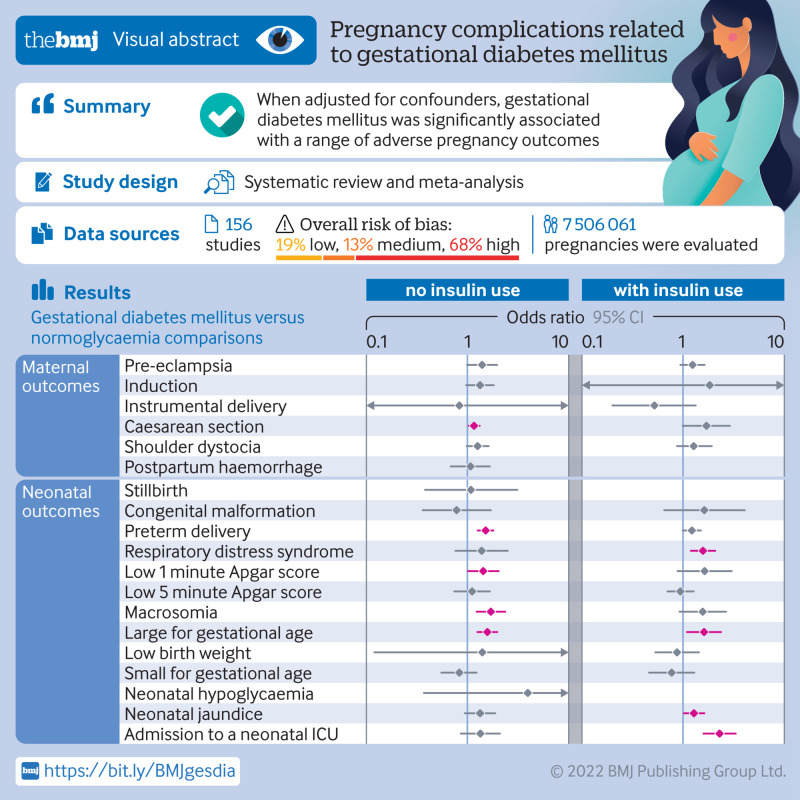
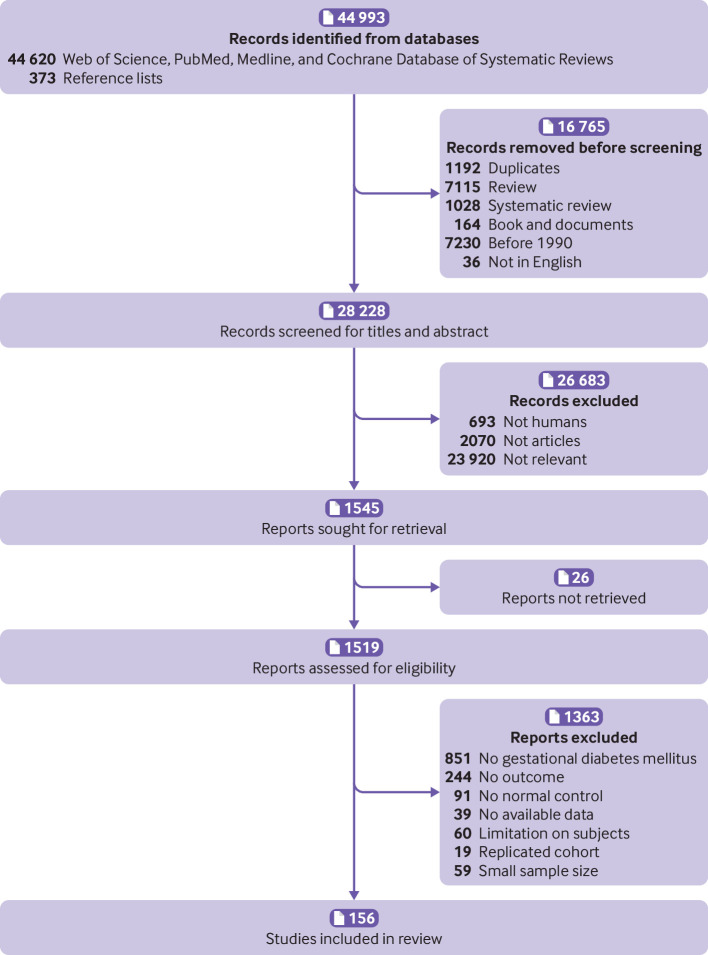
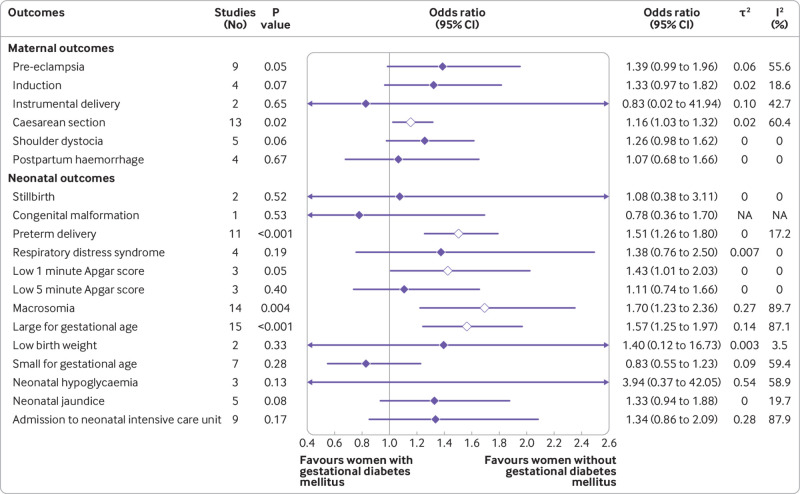
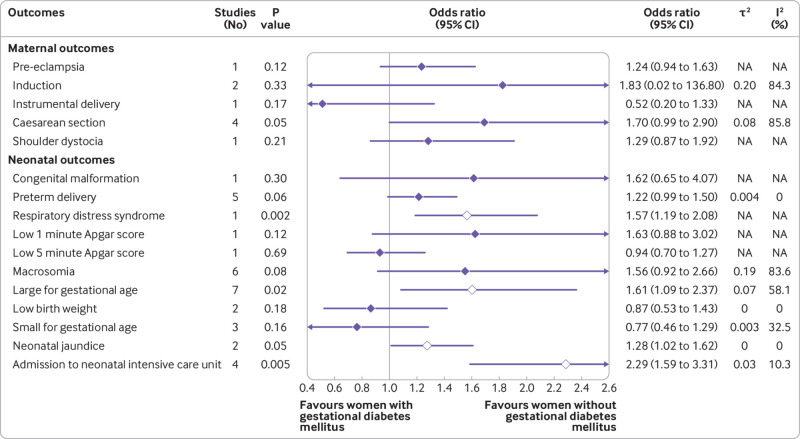
Objective: To investigate the association between gestational diabetes mellitus and adverse outcomes of pregnancy after adjustment for at least minimal confounding factors. Design: Systematic review and meta-analysis. Data sources: Web of Science, PubMed, Medline, and Cochrane Database of Systematic Reviews, from 1 January 1990 to 1 November 2021. Review methods: Cohort studies and control arms of trials reporting complications of pregnancy in women with gestational diabetes mellitus were eligible for inclusion. Based on the use of insulin, studies were divided into three subgroups: no insulin use (patients never used insulin during the course of the disease), insulin use (different proportions of patients were treated with insulin), and insulin use not reported. Subgroup analyses were performed based on the status of the country (developed or developing), quality of the study, diagnostic criteria, and screening method. Meta-regression models were applied based on the proportion of patients who had received insulin. Results: 156 studies with 7 506 061 pregnancies were included, and 50 (32.1%) showed a low or medium risk of bias. In studies with no insulin use, when adjusted for confounders, women with gestational diabetes mellitus had increased odds of caesarean section (odds ratio 1.16, 95% confidence interval 1.03 to 1.32), preterm delivery (1.51, 1.26 to 1.80), low one minute Apgar score (1.43, 1.01 to 2.03), macrosomia (1.70, 1.23 to 2.36), and infant born large for gestational age (1.57, 1.25 to 1.97). In studies with insulin use, when adjusted for confounders, the odds of having an infant large for gestational age (odds ratio 1.61, 1.09 to 2.37), or with respiratory distress syndrome (1.57, 1.19 to 2.08) or neonatal jaundice (1.28, 1.02 to 1.62), or requiring admission to the neonatal intensive care unit (2.29, 1.59 to 3.31), were higher in women with gestational diabetes mellitus than in those without diabetes. No clear evidence was found for differences in the odds of instrumental delivery, shoulder dystocia, postpartum haemorrhage, stillbirth, neonatal death, low five minute Apgar score, low birth weight, and small for gestational age between women with and without gestational diabetes mellitus after adjusting for confounders. Country status, adjustment for body mass index, and screening methods significantly contributed to heterogeneity between studies for several adverse outcomes of pregnancy. Conclusions: When adjusted for confounders, gestational diabetes mellitus was significantly associated with pregnancy complications. The findings contribute to a more comprehensive understanding of the adverse outcomes of pregnancy related to gestational diabetes mellitus. Future primary studies should routinely consider adjusting for a more complete set of prognostic factors. Review registration: PROSPERO CRD42021265837.
Overview
The claims and statistics of this paper haven’t been checked yet.
Free: it reads the open-access text and checks the first 5 claims that cite a source we can check. Create a free account to check every claim.
Integrity signals
Registry
Cites
Statistics
Figures
Verification
Claims the paper makes
The claims and statistics of this paper haven’t been checked yet.
Free: it reads the open-access text and checks the first 5 claims that cite a source we can check. Create a free account to check every claim.
Self-check
Percentages, sums and reported differences re-computed from the paper’s own numbers.
The self-check needs the paper’s full text.
Citations
Cites
Measuring inconsistency in meta-analyses
Higgins, J. P. T., Thompson, S. G., Deeks, J. J., & Altman, D. G. (2003) · BMJ · doi:10.1136/bmj.327.7414.557 · Cited by 63,139
Bias in meta-analysis detected by a simple, graphical test
Egger, M., Smith, G. D., Schneider, M., & Minder, C. (1997) · BMJ · doi:10.1136/bmj.315.7109.629 · Cited by 56,722
Hyperglycemia and adverse pregnancy outcomes
(2008) · New England Journal of Medicine · doi:10.1056/nejmoa0707943 · Cited by 5,563
2. Classification and Diagnosis of Diabetes: Standards of Medical Care in Diabetes—2020
American Diabetes Association (2020) · Diabetes Care · doi:10.2337/dc20-s002 · Cited by 3,187
IntHout, J., Ioannidis, J. P., & Borm, G. F. (2014) · BMC Medical Research Methodology · doi:10.1186/1471-2288-14-25 · Cited by 2,419
McIntyre, H. D., Catalano, P., Zhang, C., Desoye, G., Mathiesen, E. R., & Damm, P. (2019) · Nature Reviews Disease Primers · doi:10.1038/s41572-019-0098-8 · Cited by 1,850
What to add to nothing? Use and avoidance of continuity corrections in meta‐analysis of sparse data
J. Sweeting, M., J. Sutton, A., & C. Lambert, P. (2004) · Statistics in Medicine · doi:10.1002/sim.1761 · Cited by 1,734
Prevalence of Gestational Diabetes and Risk of Progression to Type 2 Diabetes: a Global Perspective
Zhu, Y., & Zhang, C. (2016) · Current Diabetes Reports · doi:10.1007/s11892-015-0699-x · Cited by 1,260
(1964) · PubMed · Cited by 1,230
The Hyperglycemia and Adverse Pregnancy Outcome Study
Catalano, P. M., McIntyre, H. D., Cruickshank, J. K., McCance, D. R., Dyer, A. R., Metzger, B. E., Lowe, L. P., Trimble, E. R., Coustan, D. R., Hadden, D. R., et al. (2012) · Diabetes Care · doi:10.2337/dc11-1790 · Cited by 954
Research works printed but not linked: 3
- Cochran WG. Some methods for strengthening the common×2 tests. Bioethics 1954; 10: 417.
- Zhao E Zhang Y Zeng X Liu B. Association between maternal diabetes mellitus and the risk of congenital malformations: A meta-analysis of cohort studies. Drug Discov Ther 2015; 9: 274- 81. 10.5582/ddt.2015.01044. 26370526 · DOI · Paper page
- Li Y Wang W Zhang D. Maternal diabetes mellitus and risk of neonatal respiratory distress syndrome: a meta-analysis. Acta Diabetol 2019; 56: 729- 40. 10.1007/s00592-019-01327-4. 30955125 · DOI
Cited by
Items 901–1,000 of 1,000
Abate, B. B., Dachew, B. A., Ayano, G., Betts, K. S., & Alati, R. (2025) · Annals of Epidemiology · doi:10.1016/j.annepidem.2025.10.002
BHARDWAJ, S., Pasricha, C., SINGH, P., Kumari, P., KAUR, R., & Singh, R. (2025) · Asian Journal of Pharmaceutical and Clinical Research · doi:10.22159/ajpcr.2025v18i10.55487
Opportunity Screening for Early Detection of Gestational Diabetes: Results from the MERGD Study
Mamtani, M., Kurhe, K., Patel, A. A., Jaisinghani, M. T., Pipal, K. V., Bhargav, S., Mundhada, S. G., Das, P. K., Parvekar, S., Khedikar, V., et al. (2025) · Journal of Clinical Medicine · doi:10.3390/jcm14207151
Bashir, M. M., Ahmed, L. A., Al‐Rifai, R. H., Elbarazi, I., Loney, T., Afandi, B. O., Alkaabi, J., & Al‐Maskari, F. (2025) · Frontiers in Endocrinology · doi:10.3389/fendo.2025.1641326
“These were selected based on the evidence from a meta-analysis of adverse perinatal outcomes among more than 7.5 million pregnancies and the most commonly found in the Arab population (32, 33).”
InfluentialLin, X., Xie, Q., Xu, Y., Shen, L., Lian, J., & Xiao, Q. (2025) · Medicine · doi:10.1097/md.0000000000045108 · Cited by 1
“[7,9,10] Although several studies have explored whether the altered metabolic and inflammatory profiles in GDM might exacerbate ELA-related complications.”
Editorial: Neglected nuances in gestational diabetes
Mathad, J. S., & Yajnik, C. S. (2025) · Frontiers in Clinical Diabetes and Healthcare · doi:10.3389/fcdhc.2025.1706918
Comparing Fetal and Maternal Outcomes in Pregestational and Gestational Diabetes Mellitus Patients
Zafar, T., Masood, T., Farooq, A., Batool, S., & Ghani, U. (2025) · Indus journal of bioscience research. · doi:10.70749/ijbr.v3i4.2456
Yu, S., & Tan, H. H. (2026) · Ginekologia Polska · doi:10.5603/gpl.101605
Dietary Patterns and Occurrence of Gestational Diabetes Mellitus in Pregnant Women
Khalid, S., Hussain, M. I., Sajad, S., & Zohaib, M. (2023) · Riphah Journal of Allied Health Sciences · doi:10.53389/rjahs.2023020105
Wang, X., Lu, Y., Wang, S., Wang, X., Yang, S., & Zhao, C. (2025) · Reproductive Sciences · doi:10.1007/s43032-025-02008-0
“GDM is linked to various adverse effects for both mothers and babies, such as fetal macrosomia, neo-natal hypoglycemia, birth complications such as shoulder dystocia, birth canal injury, postpartum hemorrhage, and an increased risk of diabetes in offspring [ 3, 4].”
Cao, Y., Fan, T., Lu, R., Liu, J., Weng, T., Huang, K., Gao, H. J., Yan, S., Gao, G., Yang, F., et al. (2025) · BMC Pediatrics · doi:10.1186/s12887-025-06255-7
Goifman, L. R., Fausto, A. T., Pacífico, M. E. D. C., Griczinski, G. M., & Dahmer, E. Q. (2025) · Seven Editora eBooks · doi:10.56238/edimpacto2025.091-005
From Glucose to Insight: Analysis of GDM Predictive Models
Bhosale, P. C., & Gunjan, R. (2025) · International Conference on Intelligent Algorithms for Computational Intelligence Systems (IACIS) · doi:10.1109/iacis65746.2025.11211172
“Advocates integrative prevention Yung [20] Meta-analytical Regression”
Advances in the Study of Adipokine Apelin and Pathogenesis of Gestational Diabetes Mellitus
叶, 玉. (2024) · Advances in Clinical Medicine · doi:10.12677/acm.2024.1492506
Li, X., Zhu, Y., Xue, J., Liu, S., Hu, J. H., Zhang, M., Bai, M., Xu, X., & Yao, H. (2025) · Cytotechnology · doi:10.1007/s10616-025-00866-9
“Gestational diabetes mellitus (GDM) is a common complication of pregnancy that occurs when there are no abnormalities in glucose metabolism prior to pregnancy and diabetes mellitus first appears after pregnancy (Ye et al. 2022).”
Ağaoğlu, R. T., Öztürk, Ö., Şeyhanlı, Z., Karabay, G., Ergani, S. Y., Ulusoy, C. O., Tezcan, A. Y., Azimli, G., Yılmaz, Z. V., & Yücel, K. Y. (2025) · BMC Pregnancy and Childbirth · doi:10.1186/s12884-025-08434-x
“This can lead to increased fetal oxygen consumption, decreased perfusion of the placenta, fetal osmotic diuresis and many hormonal and metabolic changes in the fetus, resulting in severe neonatal mortality and morbidity [6–8].”
The role of diabetes mellitus in the course and complications of pregnancy: A literature review
Akhmentayeva, D., Toktarova, Z., Izhanova, A. K., М.О., Т., Issabekova, A., & Zhansarina, G. K. (2025) · Meditsinskiy sovet = Medical Council · doi:10.21518/ms2025-426
Wang, X., Zhu, M., Ji, X., Xu, R., Lin, H., Zhu, L., Mai, Z., Xie, H., Tang, J. Y., Bai, S., et al. (2025) · BMC Pregnancy and Childbirth · doi:10.1186/s12884-025-08380-8
“Gestational diabetes mellitus was defined as hyperglycemia first identified during pregnancy [46].”
The Features of Pregnancy and Childbirth for Women Over 35: Risks and Opportunities
Kaushanskaya, L. V., Fetisov, D. O., Zagranichnaya, D. K., Davydov, M. N., Babaeva, E. A., Evloev, S.-A. T., Mirzaev, M. M., Ichalov, M. G., Mutaeva, S. O., & Kukina, L. A. (2025) · Journal Of Biochemical Technology · doi:10.51847/bqyh5yumib
Gestational Diabetes mellitus: The evolution of diagnostic criteria
Holtz, B. M., Paula, V. G., Gomes, M. E. P., Volpato, G. T., & Damasceno, D. C. (2025) · Research Society and Development · doi:10.33448/rsd-v14i11.50245
Development and validation of gestational diabetes dietary psychological evaluation scale
Liu, A., Li, Y., Yao, A., Zhao, J. V., Sun, H., Zhang, Y., Lv, J., Gao, P., Chen, D., & Wang, J. (2025) · BMC Pregnancy and Childbirth · doi:10.1186/s12884-025-08505-z · Cited by 1
“An epidemiological study on hyperglycemia and adverse pregnancy outcomes involving multiple countries [11–13] led to the development of new diagnostic criteria for GDM.”
Research Progress on the Relationship between Vitamin D Deficiency and Gestational Diabetes Mellitus
王, 心. (2025) · Journal of Clinical Personalized Medicine · doi:10.12677/jcpm.2025.46496
Ernährung in der Schwangerschaft
Burgard, L., Weber, L., Rüttinger, R., & Zopf, Y. (2025) · Aktuelle Ernährungsmedizin · doi:10.1055/a-2607-5473
“GDM steht in Zusammenhang mit einem erhöhten Risiko für Kaiserschnittgeburten, Frühge-burten und einem hohen Geburtsgewicht und den damit verbundenen Risiken für metabolische sowie kardiovasku-läre Erkrankungen im späteren Leben des Kindes [44].”
Gutsu, V., Владимировна, Т. Е., Игнатко, И. В., Sarakhova, D. K., Popova, Y. M., Георгиевич, Р. С., Lyubchich, N. I., Fedyunina, I. A., Churganova, A. A., Kovalev, N. N., et al. (2025) · V F Snegirev Archives of Obstetrics and Gynecology · doi:10.17816/aog690539
Mao, Y., Zhang, Z., Shen, Y., Li, M., Fei, X., Wang, D., Zhu, Q., Chen, X., & Du, J. (2025) · Frontiers in Nutrition · doi:10.3389/fnut.2025.1652265
Balke, S., Brachaczek, I. A., Aigner, A., Weid, P., Henrich, W., & Königbauer, J. T. (2025) · Zeitschrift für Geburtshilfe und Neonatologie · doi:10.1055/s-0045-1814032
Zhao, D., Li, N., Song, Y., Chen, J., Li, X., Huang, Y., Liu, D., Li, S., Mi, Y., Qu, P., et al. (2025) · BMC Pregnancy and Childbirth · doi:10.1186/s12884-025-08559-z
“Hyperglycemia during pregnancy has been shown to adversely affect maternal health, intrauterine growth, and fetal development [3, 4].”
Ren, H., & Zhao, S. (2025) · Informatica · doi:10.31449/inf.v49i21.8814
Li, X., Yang, Q., Zhang, X., He, L., & Wu, J. (2025) · Revista da Associação Médica Brasileira · doi:10.1590/1806-9282.20251162
“Gestational diabetes mellitus (GDM) is a prevalent pregnancy complication, with an estimated global prevalence of 13.4%, rising to 17% in China 1 .”
InfluentialPlisic, I., Petrović, O., Primorac, G. S., Baždarić, K., Klarić, M., & Jurišić‐Eržen, D. (2025) · Medicina · doi:10.3390/medicina61122218
“Furthermore, neonates born to mothers with GDM are at a higher risk of developing adolescent obesity, glucose intolerance, hypertension, and metabolic syndrome [6].”
Diaz, J. K. O., Lantion-Ang, F. L., Diaz, M. R. L. C., Lancero, D. A. P., & Rivere-Ocampo, D. (2025) · Philippine Journal of Internal Medicine · doi:10.65564/pjim.6301a4b156
Victory, J. (2024) · cIRcle (University of British Columbia) · doi:10.14288/1.0444951
Schwangerschaftskomplikationen: Totgeburt - Erwachsene
Koch-Institut, N. D.-S. A. R. (2024) · Publication server of the Robert Koch Institute (Robert Kock Institute) · doi:10.25646/12382
Ntshauba, E., Maimela, E., Mamogobo, M., Mokoena, O., & Ntuli, T. (2024) · Arta Medica · doi:10.5281/zenodo.11106416
Wang, L., Zhou, Z., Xu, X., Li, Y., Zhang, R., Yu, Z., Huang, X., Zang, S., & Sun, T. (2024) · Figshare · doi:10.6084/m9.figshare.24934472
Liu, W., Zou, H., Liu, W., & Qin, J. (2024) · Figshare · doi:10.6084/m9.figshare.26785977
Zhang, Y., Dai, K., Chen, X., Cui, L., & Chen, Z.-J. (2024) · Figshare · doi:10.6084/m9.figshare.26722770
Zheng, W., Wang, J., Li, Y., Shang, X., Ma, K., Yuan, X., Zhang, K., Yang, R., Ma, Y., & Li, G. (2024) · Figshare · doi:10.6084/m9.figshare.24993833
Zhang, Y., Dai, K., Chen, X., Cui, L., & Chen, Z.-J. (2024) · Figshare · doi:10.6084/m9.figshare.25857547
Filippo, D. D., Henry, A., Bell, C., Haynes, S., Chang, M. H. Y., Darling, J., & Welsh, A. (2024) · Figshare · doi:10.6084/m9.figshare.26575865
Chen, S., Persson, M., Wang, R., Dalman, C., Lee, B. K., Karlsson, H., & Gardner, R. M. (2023) · Figshare · doi:10.6084/m9.figshare.23714104
Zhang, Y., Dai, K., Chen, X., Cui, L., & Chen, Z.-J. (2024) · Figshare · doi:10.6084/m9.figshare.26722773
Zhou, B.-G., Xia, J., Jiang, X., Ding, Y.-B., & She, Q. (2024) · Figshare · doi:10.6084/m9.figshare.25440968
Wang, Y., Gong, Y., Xu, Y., Wang, X., Shan, S., Cheng, G., & Zhang, B. (2024) · Figshare · doi:10.6084/m9.figshare.24953153
Razo-Azamar, M., Nambo‐Venegas, R., Meraz‐Cruz, N., Guevara‐Cruz, M., Ibarra-González, I., Vela-Amieva, M., Delgadillo‐Velazquez, J., Santiago, X. C., Escobar, R. F., Vadillo-Ortega, F., et al. (2024) · Figshare · doi:10.6084/m9.figshare.26593211
Zheng, W., Wang, J., Li, Y., Shang, X., Ma, K., Yuan, X., Zhang, K., Yang, R., Ma, Y., & Li, G. (2024) · Figshare · doi:10.6084/m9.figshare.24993715
Zhang, Y., Dai, K., Chen, X., Cui, L., & Chen, Z.-J. (2024) · Figshare · doi:10.6084/m9.figshare.26722779
Filippo, D. D., Henry, A., Bell, C., Haynes, S., Chang, M. H. Y., Darling, J., & Welsh, A. (2024) · Figshare · doi:10.6084/m9.figshare.26575862
Zhang, Y., Dai, K., Chen, X., Cui, L., & Chen, Z.-J. (2024) · Figshare · doi:10.6084/m9.figshare.26722785
Filippo, D. D., Henry, A., Bell, C., Haynes, S., Chang, M. H. Y., Darling, J., & Welsh, A. (2024) · Figshare · doi:10.6084/m9.figshare.26575856
Pregnancy complications: Stillbirth –Adults
Koch-Institut, N. D.-S. A. R. (2024) · Publication server of the Robert Koch Institute (Robert Kock Institute) · doi:10.25646/12383
Zhang, Y., Dai, K., Chen, X., Cui, L., & Chen, Z.-J. (2024) · Figshare · doi:10.6084/m9.figshare.26722782
Chen, S., Persson, M., Wang, R., Dalman, C., Lee, B. K., Karlsson, H., & Gardner, R. M. (2023) · Figshare · doi:10.6084/m9.figshare.23714101
Lin, Y., Chen, J. S., Zhong, N., Zhang, A., & Pan, H. (2024) · Figshare · doi:10.6084/m9.figshare.26632162
Ottaro, A. A., Ayodo, G., & Amolo, A. S. (2023) · Research Square · doi:10.21203/rs.3.rs-2552197/v1
Filippo, D. D., Henry, A., Bell, C., Haynes, S., Chang, M. H. Y., Darling, J., & Welsh, A. (2024) · Figshare · doi:10.6084/m9.figshare.26575859
Chen, S., Persson, M., Wang, R., Dalman, C., Lee, B. K., Karlsson, H., & Gardner, R. M. (2023) · Figshare · doi:10.6084/m9.figshare.23714107
Zhang, Y., Dai, K., Chen, X., Cui, L., & Chen, Z.-J. (2024) · Figshare · doi:10.6084/m9.figshare.26722767
Razo-Azamar, M., Nambo‐Venegas, R., Meraz‐Cruz, N., Guevara‐Cruz, M., Ibarra-González, I., Vela-Amieva, M., Delgadillo‐Velazquez, J., Santiago, X. C., Escobar, R. F., Vadillo-Ortega, F., et al. (2024) · Figshare · doi:10.6084/m9.figshare.26593214
Basil, B., Mba, I. N., Myke-Mbata, B. K., Adebisi, S. A., & Oghagbon, E. K. (2024) · Figshare · doi:10.6084/m9.figshare.25762966
Liang, W., Feng, Y., Yang, D., Qin, J., 智喜梅, Wu, W., & Jie, Q. (2023) · Figshare · doi:10.6084/m9.figshare.24113032
Zhang, Y., Dai, K., Chen, X., Cui, L., & Chen, Z.-J. (2024) · Figshare · doi:10.6084/m9.figshare.26722776
Zhang, Y., Dai, K., Chen, X., Cui, L., & Chen, Z.-J. (2024) · Figshare · doi:10.6084/m9.figshare.25857604
Boutros, P. H. (2024) · eScholarship@McGill (McGill) · doi:10.82308/24447
RISK OF ADVERSE OUTCOMES IN GESTATIONAL DIABETES MELLITUS
Гавриловна, Г. Л., Ордиянц, И. М., Старцева, Н. М., Сергеевич, А. А., Игоревич, К. С., & Викторовна, Н. Е. (2023) · Matʹ i ditâ v Kuzbasse
An exploration of a weight management programme for pregnant women living with obesity
Ellis, S. (2023) · Nottingham ePrints (University of Nottingham)
Gómez‐Vilarrubla, A. (2024) · DUGiDocs (Universitat de Girona)
Kouiti, M. (2024) · Institutional Repository of the University of Granada (University of Granada)
Postpartum type 2 diabetes mellitus detection in women with gestational diabetes mellitus
Carbonell Hernández, R. (2023) · Gredos (University of Salamanca)
Mota, S. I. G. (2023) · Portuguese National Funding Agency for Science, Research and Technology (RCAAP Project by FCT)
PERFIL DAS GESTANTES DE ALTO RISCO ASSISTIDAS NA ATENÇÃO PRIMÁRIA À SAÚDE
COSTA, V. F., SILVA, E. D. D., SOCCOL, K. L. S., ZAMBERLAN, C., BACKES, D. S., & SILVA, N. C. D. (2025) · Jornada Internacional de Enfermagem (JIE) · doi:10.48195/jie2025.29106
Thompson, A. R. (2025) · Springer Publishing Company eBooks · doi:10.1891/9780826174567.0001
Yin, X., Gao, Y., & Liu, Y. (2025) · Clinical and Experimental Obstetrics & Gynecology · doi:10.31083/ceog41004
“For fetuses, uncontrolled A2GDM heightens the likelihood of hypoglycemia, macrosomia, respiratory distress, and other adverse outcomes [5,16,17], posing significant threats to maternal and neonatal health.”
Li, L., Görlach, A., & München, T. U. (2023)
Saros, L. (2025) · UTUPub (University of Turku)
Electroconvulsive therapy: from mechanisms to clinical practice
(2025) · Frontiers research topics · doi:10.3389/978-2-8325-7182-8
Derdak, M., Chakit, M., Ouardi, M. E., Belkhaoud, M., Quyou, A., & Ouahidi, M. L. (2025) · La Tunisie Médicale · doi:10.62438/tunismed.v103i8.5900
“…the results reported in this work separately on each of the adverse pregnancy outcomes related to pre-pregnancy body mass index and other previous studies, preeclampsia, macrosomia and cesarean delivery were respectively well reported as outcomes linked to the risk of gestational diabetes (47,48).”
Musthafa, M. K., Jayaseelan, V., Subbaiah, M., Nanda, N., Varadharajalu, A., Arikrishnan, K., Duraiswamy, M., & Cheriyarath, P. K. (2025) · Indian Journal of Endocrinology and Metabolism · doi:10.4103/ijem.ijem_645_25
Liu, Z., Ji, C., Wang, R., Liu, Q., Guo, X., Li, F., Kong, Y., Chen, L., Yang, X., & Gao, S. (2025) · BMC Endocrine Disorders · doi:10.1186/s12902-025-02103-y
“Moreover, this common medical complication in pregnancy poses an amplified possibility of adverse neonatal outcomes, including respiratory distress syndrome, large for gestational age, neonatal jaundice, and admission to the neonatal intensive care unit [6].”
Self-citationComplicaciones obstétricas en gestantes con edad materna avanzada
Ramírez, S. M. G. (2025) · Revista Científica Internacional · doi:10.46734/revcientifica.v8i1.193
Factores de riesgo asociados al parto pretérmino en Hgz 46
Ocampo, A. M., Vega, G. M. D., & García, A. E. G. (2025) · Ciencia Latina Revista Científica Multidisciplinar · doi:10.37811/cl_rcm.v9i6.21493
Jin, W. Y., Huang, Y., Qiu, Y., Alifu, X., Cheng, H., Xu, N., Wang, B., Wang, S., Liu, H., Chen, D., et al. (2025) · Journal of Translational Medicine · doi:10.1186/s12967-025-07474-3
“Extensive studies have underlined the close associations between GDM and adverse perinatal outcomes, such as increased risk for large for gestational age (LGA), macrosomia, caesarean delivery, preterm birth (PTB) and cardiovascular disease, etc [3, 4].”
Diabetes gestacional y preclampsia: asociación y riesgo metabólico a futuro. Reporte de caso.
Peñarreta-Quezada, S. X., Correa, O. D. S., & Ochoa-Yánez, C. A. (2025) · Revista electrónica "Dr. Zoilo E. Marinello Vidaurreta"
İsenlik, B. S., Kalfagil, Ö. Ö., Kalfagil, M. V., Ellidağ, H. Y., & İnal, H. A. (2026) · BMC Pregnancy and Childbirth · doi:10.1186/s12884-025-08618-5
“Canine studies have reported the emergence of hyperglycemia, increased insulin secretion from the pancreas, and hyperplasia development in beta cells following the administration of serum xenopsin under anesthesia [22].”
Payne, E. K., Heaney, S. E., Collins, C. E., Rollo, M. E., & Brown, L. (2026) · Australian Journal of Rural Health · doi:10.1111/ajr.70141
Yang, K., Zhai, P., Zhang, M., & Zhou, W. (2026) · Ecotoxicology and Environmental Safety · doi:10.1016/j.ecoenv.2025.119635
Yin, Y., Wang, F., & Gong, H. (2026) · Journal of Multidisciplinary Healthcare · doi:10.2147/jmdh.s566504
Pin, W., Li, Y., Peng, Y., Zheng, X., Chen, G., Ma, J., Wang, S., & Liu, L. (2026) · The Journal of Maternal-Fetal & Neonatal Medicine · doi:10.1080/14767058.2026.2612891
Luef, B. M., Jensen, N. H., Knorr, S., Kristensen, K., Overgaard, M., Stentebjerg, L. L., Catalano, P. M., Möller, S., Maindal, H. T., Jensen, D. M., et al. (2026) · Trials · doi:10.1186/s13063-025-09418-0
“…weight gain (GWG) have been recognized as significant and independent predictors of future child and adult obesity; in-utero exposures can increase the risk of obesity in childhood [9, 10], which is now recognized as one of the most serious public health challenges of the twenty-first century.”
Yan, S., Chen, S., Shen, T., Zeng, S., Wang, J., Zhang, Z., Li, B., Zhou, H., Long, Y., & Zhang, D. (2026) · Ecotoxicology and Environmental Safety · doi:10.1016/j.ecoenv.2026.119747
Examining the impact of poly- and perfluoroalkyl substances (PFAS) exposure on metabolic health
Palaniyandi, J. (2025) · Carleton University's Institutional Repository (MacOdrum Library, Carleton University) · doi:10.22215/etd/2025-16702
Pandit, R., Drusini, F. S., Wu, J., Guhde, H., Nwosu, O., Kinghorn, T. E., Steinbrunner, A., Gregory, D., Vickers, S., Landon, M. B., et al. (2026) · American Journal of Perinatology · doi:10.1055/a-2788-1901
Taşkın, S. N., Doğan, V., Acungil, Z. K., Cinni, R. G., Bilge, S., Gök, Ş. Ü., Aydoğan, L., Benli, İ., Kara, A. E., İnce, D. A., et al. (2026) · The Italian Journal of Pediatrics/Italian journal of pediatrics · doi:10.1186/s13052-025-02178-2
“GDM, defined as glucose intolerance with onset or first recognition during pregnancy, is associated with a range of adverse maternal and neonatal outcomes [1, 2].”
The role of vitamin D in pregnancy outcomes in gestational diabetes: a randomized controlled trial
Liu, Y., Luo, L., Yu, J., & Yin, Q. (2026) · Endocrine Connections · doi:10.1530/ec-25-0932 · Cited by 1
“GDM refers to impaired glucose tolerance fi rst diagnosed during pregnancy (37, 38, 39).”
Arum, P., Kdekian, A., Lutgers, H. L., Gordijn, S. J., Veenstra, M. K., Sietzema, M., Kruit, J. K., & van der Beek, E. M. (2026) · Frontiers in Endocrinology · doi:10.3389/fendo.2026.1763137
“GDM is associated with risks for pre-eclampsia, obstetrical intervention, large-for-gestational-age neonates, shoulder dystocia and neonatal hypoglycemia (9).”
Nambaje, J., Mukanumviye, M. S., Rutayisire, D. M., Ntirushwa, D., Mucyo, H. M., Rutaganda, E., Munyaneza, E., Kabakambira, J. D., Bavuma, C. M., Niyitegeka, P., et al. (2025) · Rwanda Journal of Medicine and Health Sciences · doi:10.4314/rjmhs.v8i3.12
Wang, W., Lu, S., Fu, Y., Yao, Y., & Hu, W. (2026) · BMC Pregnancy and Childbirth · doi:10.1186/s12884-026-08677-2
“Pregnant women with GDM have an increased risk of cesarean section, preterm birth, low 1-minute Apgar score, macrosomia, and large-for-gestational-age infants [4].”
InfluentialWang, Y., Ma, X., Ren, Y., Liu, B. C.-S., Yang, B., & Luo, T. (2026) · Research Square · doi:10.21203/rs.3.rs-8615013/v1
Ard, N., Baghsheikhi, H., Shahin, S., Albergamo, V., Cowell, W., Kahn, L. G., Kannan, K., Long, S. E., Ghassabian, A., Mehta‐Lee, S. S., et al. (2026) · Journal of the Endocrine Society · doi:10.1210/jendso/bvag018
“…blood glucose levels in pregnancy, even if they are below clinical diagnostic thresholds for GDM [2], are associated with adverse neonatal outcomes such as lower one-minute Apgar score, macrosomia, respiratory distress syndrome, and higher odds of neonatal intensive care unit (NICU) admission [3].”
Макашева, А. М., Yermukhanova, L. S., Kudabayeva, K. I., Dzhusupov, K. O., Tazhbenova, S., А.А., К., & Zhylkybekova, A. (2026) · Ġylym men densaulyķ saķtau. · doi:10.34689/sh.2025.27.6.010
Metadata
- Authors
- Ye, W., Luo, C., Huang, J., Li, C., Liu, Z., & Liu, F.
- Affiliations
- Central South University (CN)
- Corresponding author
- Liu, Fangkun
- Venue
- BMJ
- Publisher
- BMJ
- Published
- 2022-05-25
- Volume
- 377
- Pages
- e067946
- ISSN
- 1756-1833 (ISSN-L)
- PMC
- PMC9131781
- OpenAlex
- W4281563604
- Cited by
- 1,073
- References
- 196
- Citations by year
- 2026: 258 · 2025: 321 · 2024: 313 · 2023: 160 · 2022: 20
- FWCI
- 41.00
- Type
- journal article
- Language
- en
- Open access
- hybrid
- doi.org
- Licence
- Locations
- BMJ (publishedVersion, cc-by-nc)
- PubMed Central (publishedVersion, cc-by-nc)
- PubMed (publishedVersion)
- Funders
- National Natural Science Foundation of China
- Topics
- Health Sciences › Medicine › Obstetrics and Gynecology › Gestational Diabetes Research and Management
- Health Sciences › Medicine › Public Health, Environmental and Occupational Health › Pregnancy and Medication Impact
- Health Sciences › Medicine › Endocrinology, Diabetes and Metabolism › Diabetes, Cardiovascular Risks, and Lipoproteins
- Keywords
- gestational diabetes mellitus, adverse pregnancy outcomes, cesarean section, preterm birth, macrosomia, large for gestational age, insulin therapy, neonatal respiratory distress syndrome, neonatal jaundice, neonatal intensive care admission, Apgar score, maternal risk factors, confounding adjustment, parity, maternal obesity
- MeSH terms
- Cesarean Section, Female, Fetal Macrosomia, Humans, Infant, Newborn, Insulin, Pregnancy, Pregnancy Complications, Pregnancy Outcome, Diabetes, Gestational
About these checks
Registry, retraction, Cites and statistics results are computed, not judged, with one exception: a printed reference that no index lists is read once by a model before it counts as a citation error. Claims are extracted by a model and kept only when their quote appears verbatim in the text; each cited source is then checked, with a model’s help, for whether it says what the claim relies on. Those verdicts can be wrong — read the claim’s quote and the cited source before relying on one.
Statistics and arithmetic are recomputed, not judged.
Confidence bands are shown only for fields calibrated on our annotated test set. None is calibrated yet, so no band is shown.
What counts as a claim ›How we measure confidence ›How we check this ›
Are you an author, or do you see a problem with this page? Request a review
Data sources
Bibliographic data: Semantic Scholar, OpenAlex, Crossref.
Contains information from the Semantic Scholar Academic Graph Datasets, made available under the ODC Attribution License (ODC-BY 1.0).
Semantic Scholar’s data is described in: Kinney, R., et al. (2023). The Semantic Scholar Open Data Platform. arXiv:2301.10140.
