

Gestational diabetes mellitus and adverse pregnancy outcomes: systematic review and meta-analysis
Open accessThe DOI matches its Crossref record; 191 of the 196 references it cites were found in a registry or an index.
Abstract
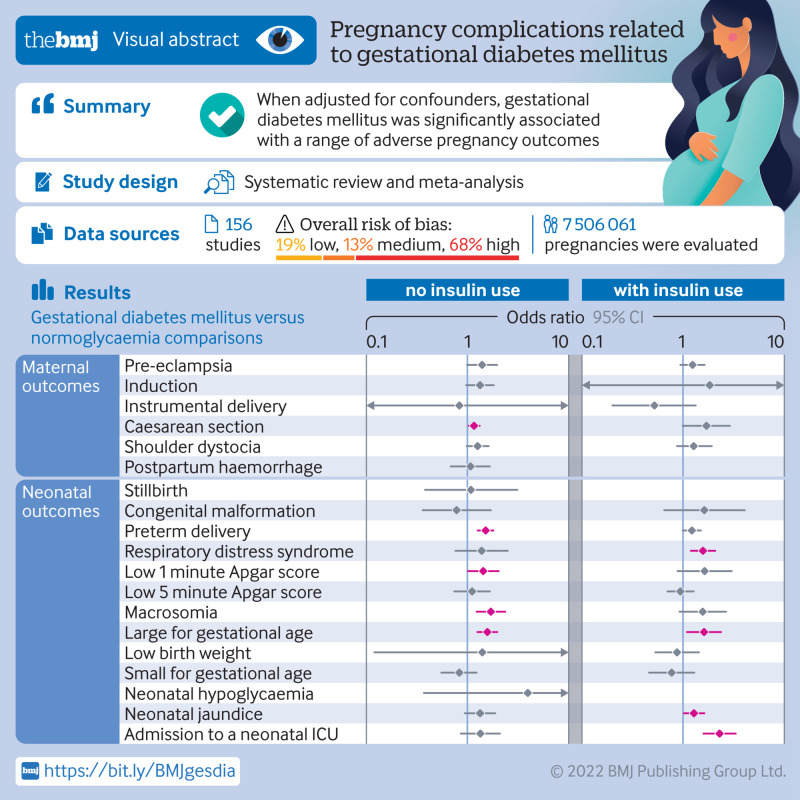
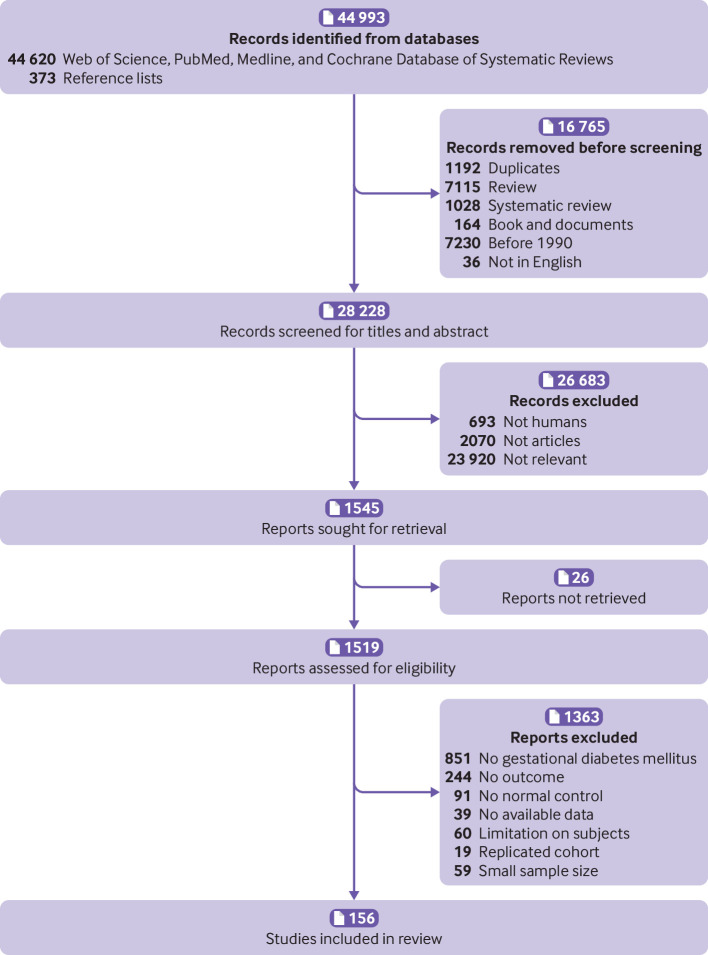
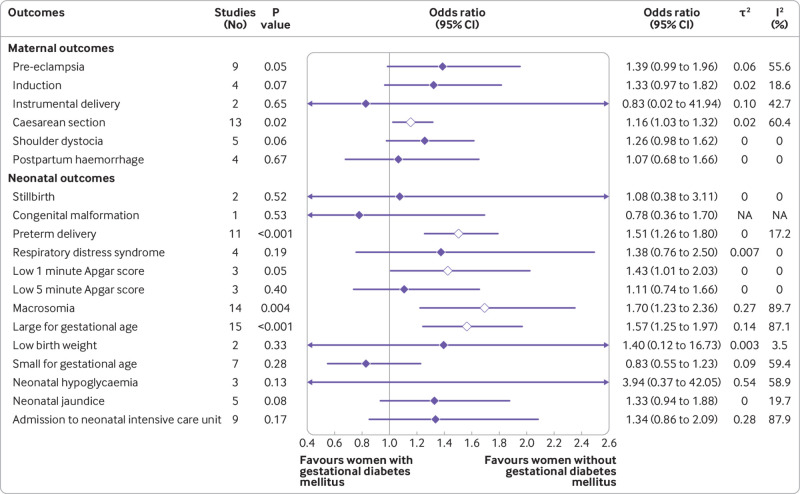
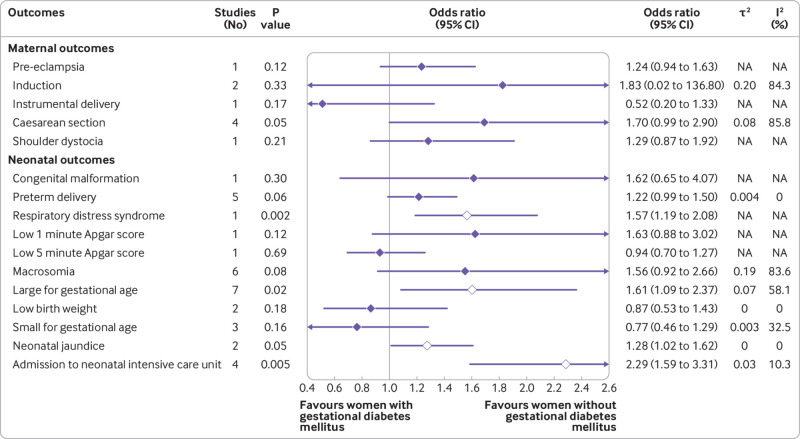
Objective: To investigate the association between gestational diabetes mellitus and adverse outcomes of pregnancy after adjustment for at least minimal confounding factors. Design: Systematic review and meta-analysis. Data sources: Web of Science, PubMed, Medline, and Cochrane Database of Systematic Reviews, from 1 January 1990 to 1 November 2021. Review methods: Cohort studies and control arms of trials reporting complications of pregnancy in women with gestational diabetes mellitus were eligible for inclusion. Based on the use of insulin, studies were divided into three subgroups: no insulin use (patients never used insulin during the course of the disease), insulin use (different proportions of patients were treated with insulin), and insulin use not reported. Subgroup analyses were performed based on the status of the country (developed or developing), quality of the study, diagnostic criteria, and screening method. Meta-regression models were applied based on the proportion of patients who had received insulin. Results: 156 studies with 7 506 061 pregnancies were included, and 50 (32.1%) showed a low or medium risk of bias. In studies with no insulin use, when adjusted for confounders, women with gestational diabetes mellitus had increased odds of caesarean section (odds ratio 1.16, 95% confidence interval 1.03 to 1.32), preterm delivery (1.51, 1.26 to 1.80), low one minute Apgar score (1.43, 1.01 to 2.03), macrosomia (1.70, 1.23 to 2.36), and infant born large for gestational age (1.57, 1.25 to 1.97). In studies with insulin use, when adjusted for confounders, the odds of having an infant large for gestational age (odds ratio 1.61, 1.09 to 2.37), or with respiratory distress syndrome (1.57, 1.19 to 2.08) or neonatal jaundice (1.28, 1.02 to 1.62), or requiring admission to the neonatal intensive care unit (2.29, 1.59 to 3.31), were higher in women with gestational diabetes mellitus than in those without diabetes. No clear evidence was found for differences in the odds of instrumental delivery, shoulder dystocia, postpartum haemorrhage, stillbirth, neonatal death, low five minute Apgar score, low birth weight, and small for gestational age between women with and without gestational diabetes mellitus after adjusting for confounders. Country status, adjustment for body mass index, and screening methods significantly contributed to heterogeneity between studies for several adverse outcomes of pregnancy. Conclusions: When adjusted for confounders, gestational diabetes mellitus was significantly associated with pregnancy complications. The findings contribute to a more comprehensive understanding of the adverse outcomes of pregnancy related to gestational diabetes mellitus. Future primary studies should routinely consider adjusting for a more complete set of prognostic factors. Review registration: PROSPERO CRD42021265837.
Overview
The claims and statistics of this paper haven’t been checked yet.
Free: it reads the open-access text and checks the first 5 claims that cite a source we can check. Create a free account to check every claim.
Integrity signals
Registry
Cites
Statistics
Figures
Verification
Claims the paper makes
The claims and statistics of this paper haven’t been checked yet.
Free: it reads the open-access text and checks the first 5 claims that cite a source we can check. Create a free account to check every claim.
Self-check
Percentages, sums and reported differences re-computed from the paper’s own numbers.
The self-check needs the paper’s full text.
Citations
Cites
Measuring inconsistency in meta-analyses
Higgins, J. P. T., Thompson, S. G., Deeks, J. J., & Altman, D. G. (2003) · BMJ · doi:10.1136/bmj.327.7414.557 · Cited by 63,139
Bias in meta-analysis detected by a simple, graphical test
Egger, M., Smith, G. D., Schneider, M., & Minder, C. (1997) · BMJ · doi:10.1136/bmj.315.7109.629 · Cited by 56,722
Hyperglycemia and adverse pregnancy outcomes
(2008) · New England Journal of Medicine · doi:10.1056/nejmoa0707943 · Cited by 5,563
2. Classification and Diagnosis of Diabetes: Standards of Medical Care in Diabetes—2020
American Diabetes Association (2020) · Diabetes Care · doi:10.2337/dc20-s002 · Cited by 3,187
IntHout, J., Ioannidis, J. P., & Borm, G. F. (2014) · BMC Medical Research Methodology · doi:10.1186/1471-2288-14-25 · Cited by 2,419
McIntyre, H. D., Catalano, P., Zhang, C., Desoye, G., Mathiesen, E. R., & Damm, P. (2019) · Nature Reviews Disease Primers · doi:10.1038/s41572-019-0098-8 · Cited by 1,850
What to add to nothing? Use and avoidance of continuity corrections in meta‐analysis of sparse data
J. Sweeting, M., J. Sutton, A., & C. Lambert, P. (2004) · Statistics in Medicine · doi:10.1002/sim.1761 · Cited by 1,734
Prevalence of Gestational Diabetes and Risk of Progression to Type 2 Diabetes: a Global Perspective
Zhu, Y., & Zhang, C. (2016) · Current Diabetes Reports · doi:10.1007/s11892-015-0699-x · Cited by 1,260
(1964) · PubMed · Cited by 1,230
The Hyperglycemia and Adverse Pregnancy Outcome Study
Catalano, P. M., McIntyre, H. D., Cruickshank, J. K., McCance, D. R., Dyer, A. R., Metzger, B. E., Lowe, L. P., Trimble, E. R., Coustan, D. R., Hadden, D. R., et al. (2012) · Diabetes Care · doi:10.2337/dc11-1790 · Cited by 954
Research works printed but not linked: 3
- Cochran WG. Some methods for strengthening the common×2 tests. Bioethics 1954; 10: 417.
- Zhao E Zhang Y Zeng X Liu B. Association between maternal diabetes mellitus and the risk of congenital malformations: A meta-analysis of cohort studies. Drug Discov Ther 2015; 9: 274- 81. 10.5582/ddt.2015.01044. 26370526 · DOI · Paper page
- Li Y Wang W Zhang D. Maternal diabetes mellitus and risk of neonatal respiratory distress syndrome: a meta-analysis. Acta Diabetol 2019; 56: 729- 40. 10.1007/s00592-019-01327-4. 30955125 · DOI
Cited by
Items 101–200 of 1,000
Hirsch, A., Peled, T., Schlesinger, S., Sela, H. Y., Grisaru‐Granovsky, S., & Rottenstreich, M. (2024) · Archives of Gynecology and Obstetrics · doi:10.1007/s00404-024-07587-y · Cited by 17
Effect of Gestational Diabetes on Fetal Growth Rate and Later Overweight in the Offspring
Leth‐Møller, M., Hulmán, Á., Kampmann, U., Hede, S., Ovesen, P., & Knorr, S. (2024) · The Journal of Clinical Endocrinology & Metabolism · doi:10.1210/clinem/dgae428 · Cited by 18
Kong, F., Wang, S., Zhang, Y., Li, C., Dai, D., Wang, Y., Cao, Z., Yang, H., Li, S., & Wang, W. (2025) · Research · doi:10.34133/research.0682 · Cited by 17
“In humans, insulin resistance typically manifests as peripartum diabetes mellitus [ 6 , 7 ].”
Self-citationRazo-Azamar, M., Nambo‐Venegas, R., Quevedo, I. R., Juárez-Luna, G., Salomón, C., Guevara‐Cruz, M., & Palacios‐González, B. (2023) · The Journal of Clinical Endocrinology & Metabolism · doi:10.1210/clinem/dgad751 · Cited by 17
Aberrant NK cell profile in gestational diabetes mellitus with fetal growth restriction
Xiong, Y., Wang, Y., Wu, M., Chen, S., Lei, H., Mu, H., Yu, H., Hou, Y., Tang, K., Chen, X., et al. (2024) · Frontiers in Immunology · doi:10.3389/fimmu.2024.1346231 · Cited by 17
“Recent studies indicated an increased likelihood of preeclampsia, surgical delivery, and subsequent development of type 2 diabetes mellitus in GDM moms (39).”
BackgroundDong, Y., Hu, A., Han, B., Cao, M.-T., Liu, H., Li, Z.-G., Li, Q., & Zheng, Y.-J. (2024) · Cardiovascular Diabetology · doi:10.1186/s12933-024-02429-2 · Cited by 17
“…complications in both mother and offspring, including preterm birth, hypertension, obesity, impaired glucose metabolism, and cardiovascular disease [2, 3], but relatively little is known about the modifiable targets for prevention and treatment strategies of GDM. Randomized clinical trials have…”
BackgroundZhong, J., Zhang, H., Wu, J., Zhang, B., & Lan, L. (2024) · International Journal of General Medicine · doi:10.2147/ijgm.s473972 · Cited by 20
Yin, B., Ding, L., Chen, Z., Chen, Y., Zhu, B., & Zhu, Y. (2023) · Diabetes Research and Clinical Practice · doi:10.1016/j.diabres.2023.110673 · Cited by 17
Benton, M., Hotung, N., Bird, J., Ismail, K., & Silverio, S. A. (2025) · Journal of Health Psychology · doi:10.1177/13591053241241863 · Cited by 15
Gomes, C. P., Futterman, I. D., Sher, O., Gluck, B., Hillier, T. A., Tehrani, F. R., Chaarani, N., Fisher, N., Berghella, V., & McLaren, R. A. (2024) · American Journal of Obstetrics & Gynecology MFM · doi:10.1016/j.ajogmf.2024.101346 · Cited by 17
A Fuzzy Logic Approach for Predicting Gestational Diabetes Mellitus Using Risk Factors
Hasan, N., Islam, M. S., & Hayat, M. T. (2024) · International Conference on Electrical Engineering and Information Communication Technology · doi:10.1109/iceeict62016.2024.10534451 · Cited by 17
“A history of poor obstetric outcomes indicates an elevated risk of GDM in subsequent pregnancies [21].”
BackgroundByrne, J., Ranaei‐Zamani, N., Hutchinson, J. C., & Hillman, S. L. (2025) · Placenta · doi:10.1016/j.placenta.2025.02.008 · Cited by 17
Karataş, E., Tanaçan, A., Özkavak, O. O., Özdal, B. B., Ucar, H. B., Kara, Ö., & Şahın, D. (2025) · American Journal of Reproductive Immunology · doi:10.1111/aji.70069 · Cited by 16
Risk factors for extremely preterm and very preterm birth
Евгеньевич, Б. Д., Артымук, Н. В., Новикова, О. Н., Marochko, M. K. V., & Parfenova, Y. A. (2022) · Fundamental and Clinical Medicine · doi:10.23946/2500-0764-2022-7-4-8-17 · Cited by 15
Maternal and Child Health, Non-Communicable Diseases and Metabolites
Cerf, M. E. (2023) · Metabolites · doi:10.3390/metabo13060756 · Cited by 15
Li, Y., Xiao, C., Ren, H., Li, W., Guo, Z., & Luo, J. (2024) · Food & Function · doi:10.1039/d3fo04456d · Cited by 16
Diet, Exercise and Gestational Diabetes Mellitus
Moholdt, T. T. (2023) · Nutrients · doi:10.3390/nu15102251 · Cited by 18
“48 in studies that did not report the use of insulin [5].”
BackgroundWong, M. M. H., Yuen-Man Chan, M., Ng, T. P., & Louie, J. C. Y. (2024) · Diabetes & Metabolic Syndrome: Clinical Research & Reviews · doi:10.1016/j.dsx.2024.102941 · Cited by 14
Prevalence and treatment of gestational diabetes in Norway 2010–2020
Kjerpeseth, L. J., Hjellvik, V., Gulseth, H. L., Karlstad, Ø., Ruiz, P. L., Wensaas, K., & Furu, K. (2023) · Diabetes Research and Clinical Practice · doi:10.1016/j.diabres.2023.111025 · Cited by 15
Benefits of Resistance Training During Pregnancy for Maternal and Fetal Health: A Brief Overview
Duchette, C., Perera, M., Arnett, S. W., White, E. E., Belcher, E., & Tinius, R. A. (2024) · International Journal of Women s Health · doi:10.2147/ijwh.s462591 · Cited by 16
Biochemical Markers in the Prediction of Pregnancy Outcome in Gestational Diabetes Mellitus
Mandić, V., Dobrijević, Z., Robajac, D., Miljuš, G., Šunderić, M., Penezić, A., Nedić, O., Ardalić, D., Miković, Ž., Radojičić, O., et al. (2024) · Medicina · doi:10.3390/medicina60081250 · Cited by 16
Maternal Glycemia During Pregnancy and Child Lung Function: A Prospective Cohort Study
Yang, M., Cao, Z., Li, W., Zhou, J., Liu, J., Zhong, Y., Zhou, Y. F., Sun, L., Li, R., Cai, X., et al. (2024) · Diabetes Care · doi:10.2337/dc24-0865 · Cited by 14
Calancie, L., Brown, M. O., Choi, W. A., Caouette, J. L., McCann, J., Nam, E. Y., & Werner, E. F. (2025) · American Journal of Obstetrics & Gynecology MFM · doi:10.1016/j.ajogmf.2025.101606 · Cited by 15
Pal, A., Rawat, D., Sadananda, S., Goyal, A., Haldar, P., Garg, D., Gupta, Y., & Tandon, N. (2025) · Diabetes Obesity and Metabolism · doi:10.1111/dom.16400 · Cited by 14
Yu, Y., Platt, R. W., Reynier, P., Yu, O. H. Y., & Filion, K. B. (2023) · Diabetic Medicine · doi:10.1111/dme.15108 · Cited by 14
“those initiating metformin; and (3) among metformin initiators, women with GDM adding on or switching to insulin vs.”
BackgroundCASTORINO, K. N., Durnwald, C. P., Ehrenberg, S., Ehrhardt, N. M., Isaacs, D., Levy, C. J., Valent, A. M., & Continuous Glucose Monitoring for Gestational Diabetes Management Working Group (2024) · Journal of Women s Health · doi:10.1089/jwh.2023.0864 · Cited by 15
Impact of semaglutide exposure on fetal and neonatal outcomes in pregnant women: a systematic review
Mandal, L., Andersen, L. S., Luef, B. M., Tanvig, M. H., & Vinter, C. A. (2025) · European Journal of Obstetrics & Gynecology and Reproductive Biology · doi:10.1016/j.ejogrb.2025.114836 · Cited by 15
Noah, A. I., Perez-Patron, M. J., Gongalla, M., Hill, A. V., & Taylor, B. D. (2023) · Scientific Reports · doi:10.1038/s41598-023-36789-8 · Cited by 14
Tao, J., Huang, Y., Li, Y., & Dai, W. (2023) · Scientific Reports · doi:10.1038/s41598-023-48371-3 · Cited by 13
Li, X., Zhang, L., He, Y., Zhang, D., & Zhang, S. (2024) · Biomolecules and Biomedicine · doi:10.17305/bb.2024.10377 · Cited by 14
“Emerging research indicates that GDM is not only linked to immediate adverse outcomes, such as miscarriage, preterm birth, and macrosomia [4, 5], but it is also associated with a range of long-term health risks for both mothers and their offspring, including maternal and child obesity, increased…”
BackgroundZhou, X., Jiang, Y., Wang, Z., Wei, L., Zhang, H., Fang, C., Zhu, S., Du, Y., Su, R., Li, W., et al. (2024) · Molecular Medicine · doi:10.1186/s10020-024-01007-2 · Cited by 14
“Gestational diabetes mellitus (GDM) is a special type of diabetes associated with adverse pregnancy outcomes (Ye et al. 2022; Vounzoulaki et al. 2020).”
Benhalima, K., Minschart, C., Geerts, I., Ameye, L., der Schueren, B. V., Devlieger, R., Bogaerts, A., & Mathieu, C. (2025) · BMC Medicine · doi:10.1186/s12916-025-03992-5 · Cited by 13
“Without these data, it is difficult to assess whether variations in GWG are potentially confounded by differences in glycaemic control and/or diabetes treatment, which can have an impact on pregnancy outcomes, such as the risk of mac-rosomia or LGA infants [43, 44].”
Arcot, A., Walker, R. E., Gallagher, K., Goldstein, J. A., & Gernand, A. D. (2025) · International Journal of Gynecology & Obstetrics · doi:10.1002/ijgo.70127 · Cited by 13
Chen, W., Luo, M., Guo, J., Wang, S., Yan, D., Feng, X., Huang, Y., Zeng, T., Shen, L., Zhang, R., et al. (2025) · Cardiovascular Diabetology · doi:10.1186/s12933-025-02746-0 · Cited by 13
“Gestational diabetes mellitus (GDM) affects 14.2% of pregnant women globally and is associated with a variety of adverse pregnancy outcomes (APOs), including preeclampsia, macrosomia, preterm labor, stillbirth, and neonatal hyperinsulinemia [1–3].”
InfluentialCai, Y., Liu, J., Wang, Q., Ren, X., Xie, J., Yu, J., Xiao, Y., Zhang, Y., Chen, X., & Hong, A. (2025) · Diabetes Obesity and Metabolism · doi:10.1111/dom.16450 · Cited by 13
Cui, J., Jiang, H., Huang, F., Xie, M., Cui, Z., Chen, X., OUYang, L., Li, P., & Wang, Y. (2025) · BMC Pregnancy and Childbirth · doi:10.1186/s12884-025-07885-6 · Cited by 14
“Of note, these pregnancy complications have been identified as risk factors of abnormal birth weight [15–18].”
Approach of Acromegaly during Pregnancy
Popescu, A. D., Carşote, M., Valea, A., Nicola, A. G., Dascălu, I. T., Ţîrcă, T., Abdul-Razzak, J., & Țuculină, M. J. (2022) · Diagnostics · doi:10.3390/diagnostics12112669 · Cited by 14
Maternal Dietary Inflammatory Potential and Offspring Birth Outcomes in a Chinese Population
Zhang, B., Xu, K., Mi, B., Liu, H., Wang, Y., Huo, Y., Ma, L., Liu, D., Jing, H., Liu, J., et al. (2023) · Journal of Nutrition · doi:10.1016/j.tjnut.2023.03.006 · Cited by 13
Chen, S., Persson, M., Wang, R., Dalman, C., Lee, B. K., Karlsson, H., & Gardner, R. M. (2023) · BMC Medicine · doi:10.1186/s12916-023-02926-3 · Cited by 13
“Covariates The selection of potential confounders was based on previous studies that identified factors which have been associated with both exposure and outcomes, including the child’s sex [39], birth year [6], maternal age [1, 6], maternal education level [6, 40], maternal BMI measured in early pregnancy [1, 6], mat…”
BackgroundMethodYang, M. M., Wei, J., Xu, L., Yan, Y., Chen, Y., Lv, M., Jiang, Y., & Luo, Q. (2023) · Acta Diabetologica · doi:10.1007/s00592-023-02169-x · Cited by 13
Complicaciones obstétricas y edad materna avanzada
Ramos, S. C. (2023) · Revista Peruana de Ginecología y Obstetricia · doi:10.31403/rpgo.v69i2553 · Cited by 13
The environmental risk factors associated with fetal macrosomia: An umbrella review
Jenabi, E., Salehi, A. M., Farashi, S., & Salimi, Z. (2023) · Pediatrics & Neonatology · doi:10.1016/j.pedneo.2023.09.007 · Cited by 15
Reitzle, L., Heidemann, C., Krause, L., & Hoebel, J. (2024) · PubMed Central · doi:10.25646/12086 · Cited by 16
“Furthermore, GDM increases the risk of preterm birth [ 7 , 8 ].”
BackgroundLang, Q., Qin, X., Yu, X., Wei, S., Wei, J., Zhang, M., Zhao, C., Zhang, J., Zeng, D., Zhang, X., et al. (2024) · BMC Pregnancy and Childbirth · doi:10.1186/s12884-024-06925-x · Cited by 12
Yu, H., Sun, J., & Hu, H. (2023) · Irish Journal of Medical Science (1971 -) · doi:10.1007/s11845-023-03380-z · Cited by 13
Wang, X., Zhang, S., Yu, W., Li, G., Li, J., Ji, J., Mi, Y., & Luo, X. (2023) · Frontiers in Endocrinology · doi:10.3389/fendo.2023.1238873 · Cited by 15
“It can trigger a series of adverse pregnancy outcomes like cesarean delivery, perinatal mortality and macrosomia (4).”
BackgroundGestational Diabetes Mellitus and Colostral Appetite-Regulating Adipokines
Lis-Kuberka, J., Berghausen-Mazur, M., & Orczyk‐Pawiłowicz, M. (2024) · International Journal of Molecular Sciences · doi:10.3390/ijms25073853 · Cited by 12
“These changes result in women having impaired glucose metabolism, which may translate into the development of gestational diabetes mellitus, associated with short-and long-term maternal and fetal adverse outcomes [35–37].”
BackgroundMathew, A. P., Cutshaw, G., Appel, O., Funk, M. L., Synan, L., Waite, J. R., Ghazvini, S., Wen, X., Sarkar, S., Santillan, M. K., et al. (2024) · Bioengineering & Translational Medicine · doi:10.1002/btm2.10691 · Cited by 12
Sadiq, R., Broni, E. K., Levine, L. D., Retnakaran, R. R., & Echouffo-Tcheugui, J. B. (2024) · Diabetes Research and Clinical Practice · doi:10.1016/j.diabres.2024.111857 · Cited by 13
Ku, C. W., Zheng, R. T., Tan, H. Y., Lim, J., Chen, L., Cheung, Y. B., Godfrey, K. M., Chan, J. K. Y., Yap, F. K. P., Lek, N., et al. (2024) · Diabetology & Metabolic Syndrome · doi:10.1186/s13098-024-01508-4 · Cited by 13
Stephens, J. H., Grande, E. D., Roberts, T., Kerr, M., Northcott, C., Johnson, T., Sleep, J., & Ryder, C. (2025) · Current Hypertension Reports · doi:10.1007/s11906-025-01327-6 · Cited by 14
“In general, the findings reported herein are consistent with other meta-analyses of the factors associated with the development of preeclampsia/HDP amongst non-Indigenous pregnant women [10, 13, 14, 52–62].”
Wang, Y., Ren, Q., Yuan, H., Wang, Y., Liu, Y., Wei, Y., Sun, R., Yang, H., Tian, P., Yang, J., et al. (2025) · Frontiers in Endocrinology · doi:10.3389/fendo.2025.1486848 · Cited by 14
“GDM poses immediate and long-term health risks for both mother and child, such as pre-eclampsia, premature membrane rupture, shoulder dystocia, macrosomia, perinatal death, and future risks of hyperglycemia, diabetes, obesity, and cardiovascular disease (4 – 6).”
Ru, Z., Hu, J., Li, Y., Chen, X., Wang, Q., Wu, T., Zhou, W., Bi, Y., Shen, S., & Ge, Z. (2025) · Frontiers in Endocrinology · doi:10.3389/fendo.2025.1545393 · Cited by 13
“GDM women and infants are at great risk of perinatal and long-term complications (3, 4).”
Impact of parity on gestational diabetes mellitus in Chinese women: a retrospective cohort study
Dai, Y., Wang, Y., Chen, M., Lin, Q., Situ, J., Yu, Y., & Meng, L. (2025) · BMC Pregnancy and Childbirth · doi:10.1186/s12884-025-07620-1 · Cited by 14
Dubois, N., & Giroux, I. (2025) · Healthcare · doi:10.3390/healthcare13182261 · Cited by 15
“Fetal complications related to GDM include macrosomia, congenital abnormalities, growth retardation, premature birth, and stillbirth [10,11].”
Ayele, A. D., Gedefaw, G. A., Alemu, B. K., Wang, Y., & wang, C. C. (2025) · BMJ Evidence-Based Medicine · doi:10.1136/bmjebm-2025-114065 · Cited by 13
Body Esteem and Self-Efficacy of Pregnant Women with Gestational Diabetes Mellitus
Bień, A., Pieczykolan, A., Korżyńska‐Piętas, M., & Grzesik‐Gąsior, J. (2023) · International Journal of Environmental Research and Public Health · doi:10.3390/ijerph20032171 · Cited by 13
“Women who have had gestational diabetes mellitus in the past, in the future have several times higher risk of developing type 2 diabetes [5,6].”
BackgroundPu, Y., Liu, Q., Hu, K., Liu, X., Bai, H., Wu, Y., Zhou, M., & Fan, P. (2023) · BMC Pregnancy and Childbirth · doi:10.1186/s12884-023-05742-y · Cited by 13
“), glycation and oxidation of proteins caused by hyperglycemia were associated with unfavourable metabolic profiles, insulin resistance, increased oxidative stress, and state of chronic inflammation in patients with GDM, which might increase the risk of adverse perinatal outcomes [6, 8, 11, 20, 21, 47].”
BackgroundResultRisk factors for adverse pregnancy outcomes in Chinese women: a meta-analysis
Huang, Y., Xu, J., Peng, B., & Zhang, W. (2023) · PeerJ · doi:10.7717/peerj.15965 · Cited by 12
Duo, Y., Song, S., Qiao, X., Zhang, Y., Xu, J., Zhang, J., Peng, Z., Chen, Y., Nie, X., Sun, Q., et al. (2023) · Diabetes Therapy · doi:10.1007/s13300-023-01480-8 · Cited by 13
“Among pregnant women with GDM requiring insulin therapy, the odds of having an infant with respiratory distress syndrome were also higher [37].”
BackgroundZhou, X., Wang, Y., Yang, J.-M., Yang, L.-Y., Zhao, W., Chen, Y., & Yang, Q. (2023) · BMC Pregnancy and Childbirth · doi:10.1186/s12884-023-06079-2 · Cited by 12
“All of these outcomes seriously affect the quality of life (QOL) of pregnant women with GDM [4–10].”
Sewor, C., Obeng, A. A., Eliason, S., Agbeno, E. K., & Amegah, A. K. (2024) · BMC Nutrition · doi:10.1186/s40795-023-00814-w · Cited by 13
“%) whereas Ye et al. [10] found GDM to be associated with increased odds of PTB (OR = 1.51; 95% CI: 1.26, 1.80) and LBW (OR = 1.40; 95% CI: 0.12 to 16.73) among mothers who did not use insulin.”
BackgroundInfluentialSuthasmalee, S., & Phaloprakarn, C. (2024) · International Breastfeeding Journal · doi:10.1186/s13006-024-00632-1 · Cited by 12
“GDM has a significant impact not only on the outcomes of pregnancy [3, 4] but also on the risk of developing type 2 diabetes mellitus (T2DM) and metabolic syndrome (MetS) [5–8].”
BackgroundGao, X. X., Zheng, Q. X., Chen, X. Q., Jiang, X. M., Liao, Y. P., Pan, Y. Q., Zou, J. J., & Liu, G. (2024) · Frontiers in Nutrition · doi:10.3389/fnut.2024.1409025 · Cited by 12
Lifetime history of gestational diabetes and cognitive function in parous women in midlife
Soria‐Contreras, D. C., Wang, S., Liu, J., Lawn, R. B., Mitsunami, M., Purdue‐Smithe, A., Zhang, C., Oken, E., & Chavarro, J. E. (2024) · Diabetologia · doi:10.1007/s00125-024-06270-w · Cited by 11
Zulkiply, S. H., Ratnam, K. K. Y., & Liew, S. H. (2024) · BMC Public Health · doi:10.1186/s12889-024-20215-3 · Cited by 13
“The neonates born to mothers with GDM are associated with macrosomia and respiratory distress syndrome [5].”
BackgroundValdimarsdottir, R., Vanky, E., Elenis, E., Ahlsson, F., Lindström, L., Junus, K., Wikström, A., & Poromaa, I. S. (2024) · Acta Obstetricia Et Gynecologica Scandinavica · doi:10.1111/aogs.14998 · Cited by 15
The Impact of Gestational Diabetes on Kidney Development: is There an Epigenetic Link?
Tortelote, G. G. (2024) · Current Diabetes Reports · doi:10.1007/s11892-024-01569-9 · Cited by 12
“However, obesity-related insulin resistance reduces the effect of insulin on lipolysis, altering lipid metabolism and leading to a several-fold increase in triglyceride and cholesterol levels late in pregnancy [6, 8, 26].”
Žutić, M., Matijaš, M., Štefulj, J., Brekalo, M., & Radoš, S. N. (2024) · BMC Pregnancy and Childbirth · doi:10.1186/s12884-024-07046-1 · Cited by 13
Li, X., Yang, Z., Mu, Q., Ji, Y., & Lyu, J. (2025) · Diabetes Metabolic Syndrome and Obesity · doi:10.2147/dmso.s502043 · Cited by 13
Association of gut microbiota with overweight/obesity combined with gestational diabetes mellitus
Mei, S., Chen, Y.-S., Long, Y., Cen, X., Zhao, X., Zhang, X., Ye, J., Gao, X., & Zhu, C. (2025) · Journal of Medical Microbiology · doi:10.1099/jmm.0.002010 · Cited by 13
“A large number of studies have shown that GDM has both short-term and long-term effects on the health of mothers and offspring [1].”
Wu, J., Pérez-López, F. R., Peng, T., Xie, F., & Li, M. (2022) · Endocrine Practice · doi:10.1016/j.eprac.2022.10.009 · Cited by 11
Wang, N., Zhou, T., Ma, X., Lin, Y., & Ding, Y. (2022) · Nutrients · doi:10.3390/nu14235016 · Cited by 11
Shen, X., Ding, M., Yuan, Y., Huang, C., Wang, S., Zhou, J., & Xing, J. (2023) · BMC Pregnancy and Childbirth · doi:10.1186/s12884-023-05369-z · Cited by 11
“Studies have shown that hypertensive disorders of pregnancy increase the prevalence of low birth weight [31], and gestational diabetes mellitus (GDM) increases the incidence of macrosomia [32, 33].”
BackgroundZeng, S., Yang, Y., Han, C., Mu, R., Deng, Y., Lv, X., Xie, W., Huang, J., Wu, S., Zhang, Y., et al. (2023) · Healthcare · doi:10.3390/healthcare11030331 · Cited by 12
Self-citationEffects of insulin aspart and metformin on gestational diabetes mellitus and inflammatory markers
Wang, Y., Song, M., & Qi, B. (2023) · World Journal of Diabetes · doi:10.4239/wjd.v14.i10.1532 · Cited by 11
Nazeer, S. A., Chen, H.-Y., Chauhan, S. P., Blackwell, S. C., Sibai, B. M., & Bartal, M. F. (2024) · American Journal of Obstetrics & Gynecology MFM · doi:10.1016/j.ajogmf.2023.101268 · Cited by 12
Sex-Specific Alterations in Placental Proteomics Induced by Intrauterine Hyperglycemia
Ren, Z., Luo, S., Qin, X., Huang, H., & Ding, G. (2024) · Journal of Proteome Research · doi:10.1021/acs.jproteome.3c00735 · Cited by 11
A prospective cohort study of multimetal exposure and risk of gestational diabetes mellitus
Song, J., Wu, Y., Ma, Y., He, J., Zhu, S., Tang, Y., Tang, J., Hu, M., Hu, L., Zhang, L., et al. (2024) · The Science of The Total Environment · doi:10.1016/j.scitotenv.2024.174568 · Cited by 11
Martín-O’Connor, R., Ramos-Levi, A. M., Melero, V., Arnoriaga‐Rodríguez, M., Barabash, A., Valerio, J., del Valle, L., de Miguel, P., Díaz, J. Á., Familiar, C., et al. (2024) · Nutrients · doi:10.3390/nu16142206 · Cited by 11
Fareed, A., Siblini, D., Vaid, R., Farhat, H., Rida, A., Moradeyo, A. A., & Khan, M. A. (2024) · Congenital Anomalies · doi:10.1111/cga.12581 · Cited by 11
“28 Furthermore, a history of spontaneous or induced abortion can augment the likelihood of developing GDM, preeclampsia, and other associated complications such as placenta previa and preterm delivery.”
Muntean, M., Săsăran, V., Luca, S.-T., Suciu, L. M., Nyulas, V. A., Elena, M. I., & Claudiu, M. (2024) · Medicina · doi:10.3390/medicina60091544 · Cited by 14
“Fetal and newborn short-term complications include large for gestational age (LGA) and macrosomia, preterm birth, low one-minute APGAR score, respiratory distress syndrome, congenital malformation, and jaundice [20,21].”
BackgroundResultLevy, C. J., Galindo, R. J., Parkin, C. G., Gillis, J., & Argento, N. B. (2023) · Journal of Diabetes Science and Technology · doi:10.1177/19322968231161317 · Cited by 13
“15,64,65 The only difference observed in maternal outcomes was worsening of diabetes-related microvascular complications in women with T1D and T2D.”
Weight Bias in the Perinatal Period: An Integrative Review
Bradford, H. M., Puhl, R. M., Phillippi, J. C., Dietrich, M. S., & Neal, J. L. (2024) · Birth · doi:10.1111/birt.12870 · Cited by 11
“Gestational diabetes is associated with higher prevalence of preterm birth, cesarean birth, infant born large for gestational age, as well as an increased risk of developing diabetes mellitus in the birthing individual later in life [64].”
Oikonomou, E., Chatzakis, C., Stavros, S., Potiris, A., Nikolettos, K., Sotiriou, S., Domali, E., Nikolettos, N., Sotiriadis, A., & Gerede, A. (2025) · Life · doi:10.3390/life15020210 · Cited by 11
Duong, T. L., Shahunja, K. M., Le, M., McIntyre, D. H., Ward, J. S., & Mamun, A. A. (2025) · Diabetes Research and Clinical Practice · doi:10.1016/j.diabres.2025.112462 · Cited by 11
Pan, Y., Gu, R., Wang, J., Li, Q., Zhang, Y., Xu, Y., Ji, S., Wu, J., & Wei, L. S. (2025) · Diabetes Research and Clinical Practice · doi:10.1016/j.diabres.2025.112949 · Cited by 11
Tang, J., Chen, Y., Sun, M., Luo, M., Chen, Y., Chen, K., Zou, Q., Peng, Y., Wang, T., & Qin, J. (2025) · Journal of Lipid Research · doi:10.1016/j.jlr.2025.100942 · Cited by 10
Sharma, S., Subrahmanyam, Y. V., Gupta, P., Vadivel, S., Deepa, M., Tandon, A., Sreedevi, S., Ram, U., Narad, P., Parmar, D. S., et al. (2025) · Cardiovascular Diabetology · doi:10.1186/s12933-025-02978-0 · Cited by 10
Yalcın, B. Y., Mutlu, Ü., Ok, A. M., Çaklılı, Ö. T., Hacışahinoğulları, H., Yalın, G. Y., Selçukbiricik, Ö. S., Üzüm, A. K., & Karşıdağ, K. (2025) · Scientific Reports · doi:10.1038/s41598-025-27235-y · Cited by 10
“Additionally, it substantially increases the mother’s long-term risk of developing type 2 diabetes 3–5 .”
Mclennan, N., Lindsay, R., Saravanan, P., Sukumar, N., White, S. L., von Dadelszen, P., Burden, C., Hunt, K. F., George, P., Hirst, J. E., et al. (2023) · BJOG An International Journal of Obstetrics & Gynaecology · doi:10.1111/1471-0528.17716 · Cited by 10
Yang, X. M., Han, R., Song, Y., Zhang, J., Huang, H., Zhang, J., Wang, Y., & Gao, L. (2023) · Journal of Midwifery & Women s Health · doi:10.1111/jmwh.13589 · Cited by 10
Lv, X., & An, Y. (2024) · Endocrine Metabolic & Immune Disorders - Drug Targets · doi:10.2174/0118715303275367240103102801 · Cited by 11
Zhou, Z., Yao, Y., Sun, Y., Wang, X., Huang, S., Hou, J., Wang, L., & Wei, F. (2024) · Endocrine · doi:10.1007/s12020-024-03732-4 · Cited by 10
“GDM not only increases the risk of preeclampsia, preterm labor, and cesarean section but may also lead to the future development of type 2 diabetes in pregnant women [3, 4].”
Lin, L., Lin, J., & Yan, J. (2024) · The Journal of Maternal-Fetal & Neonatal Medicine · doi:10.1080/14767058.2024.2316732 · Cited by 11
“It is well known that both gestational diabetes mellitus(GDM) and/or excessive maternal nutrition during pregnancy are associated with LGA fetuses [16–19].”
Zhao, A., Yang, Y., Yang, Y., Chi, Z., & Sun, Y. (2024) · American Journal of Reproductive Immunology · doi:10.1111/aji.70017 · Cited by 10
Gerede, A., Domali, E., Chatzakis, C., Margioula‐Siarkou, C., Petousis, S., Stavros, S., Nikolettos, K., Gouveri, E., Sotiriou, S., Tsikouras, P. N., et al. (2025) · Life · doi:10.3390/life15010130 · Cited by 13
Shen, L., Wang, D., Huang, Y., Ye, L., Zhu, C., Zhang, S., Cai, S., Wang, Z., & Chen, H. (2023) · Frontiers in Endocrinology · doi:10.3389/fendo.2022.1080633 · Cited by 11
Zhang, H., Dai, J., Zhang, W., Sun, X., Sun, Y., Wang, L., Li, H., & Zhang, J. (2023) · Frontiers in Endocrinology · doi:10.3389/fendo.2023.1216832 · Cited by 10
Kiljan, M., & Szablewska, A. W. (2025) · Nutrients · doi:10.3390/nu17050786 · Cited by 9
“This condition, characterized by disturbances in glucose metabolism that first appear during pregnancy, has become a growing global health concern [1].”
Influential
Metadata
- Authors
- Ye, W., Luo, C., Huang, J., Li, C., Liu, Z., & Liu, F.
- Affiliations
- Central South University (CN)
- Corresponding author
- Liu, Fangkun
- Venue
- BMJ
- Publisher
- BMJ
- Published
- 2022-05-25
- Volume
- 377
- Pages
- e067946
- ISSN
- 1756-1833 (ISSN-L)
- PMC
- PMC9131781
- OpenAlex
- W4281563604
- Cited by
- 1,073
- References
- 196
- Citations by year
- 2026: 258 · 2025: 321 · 2024: 313 · 2023: 160 · 2022: 20
- FWCI
- 41.00
- Type
- journal article
- Language
- en
- Open access
- hybrid
- doi.org
- Licence
- Locations
- BMJ (publishedVersion, cc-by-nc)
- PubMed Central (publishedVersion, cc-by-nc)
- PubMed (publishedVersion)
- Funders
- National Natural Science Foundation of China
- Topics
- Health Sciences › Medicine › Obstetrics and Gynecology › Gestational Diabetes Research and Management
- Health Sciences › Medicine › Public Health, Environmental and Occupational Health › Pregnancy and Medication Impact
- Health Sciences › Medicine › Endocrinology, Diabetes and Metabolism › Diabetes, Cardiovascular Risks, and Lipoproteins
- Keywords
- gestational diabetes mellitus, adverse pregnancy outcomes, cesarean section, preterm birth, macrosomia, large for gestational age, insulin therapy, neonatal respiratory distress syndrome, neonatal jaundice, neonatal intensive care admission, Apgar score, maternal risk factors, confounding adjustment, parity, maternal obesity
- MeSH terms
- Cesarean Section, Female, Fetal Macrosomia, Humans, Infant, Newborn, Insulin, Pregnancy, Pregnancy Complications, Pregnancy Outcome, Diabetes, Gestational
About these checks
Registry, retraction, Cites and statistics results are computed, not judged, with one exception: a printed reference that no index lists is read once by a model before it counts as a citation error. Claims are extracted by a model and kept only when their quote appears verbatim in the text; each cited source is then checked, with a model’s help, for whether it says what the claim relies on. Those verdicts can be wrong — read the claim’s quote and the cited source before relying on one.
Statistics and arithmetic are recomputed, not judged.
Confidence bands are shown only for fields calibrated on our annotated test set. None is calibrated yet, so no band is shown.
What counts as a claim ›How we measure confidence ›How we check this ›
Are you an author, or do you see a problem with this page? Request a review
Data sources
Bibliographic data: Semantic Scholar, OpenAlex, Crossref.
Contains information from the Semantic Scholar Academic Graph Datasets, made available under the ODC Attribution License (ODC-BY 1.0).
Semantic Scholar’s data is described in: Kinney, R., et al. (2023). The Semantic Scholar Open Data Platform. arXiv:2301.10140.
