

Gestational diabetes mellitus and adverse pregnancy outcomes: systematic review and meta-analysis
Open accessThe DOI matches its Crossref record; 191 of the 196 references it cites were found in a registry or an index.
Abstract
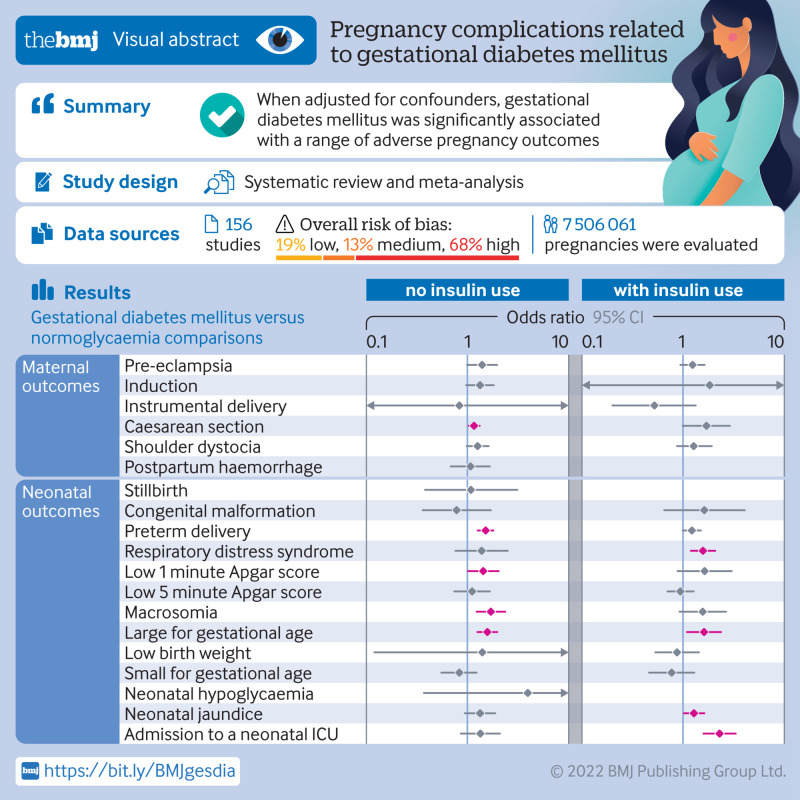
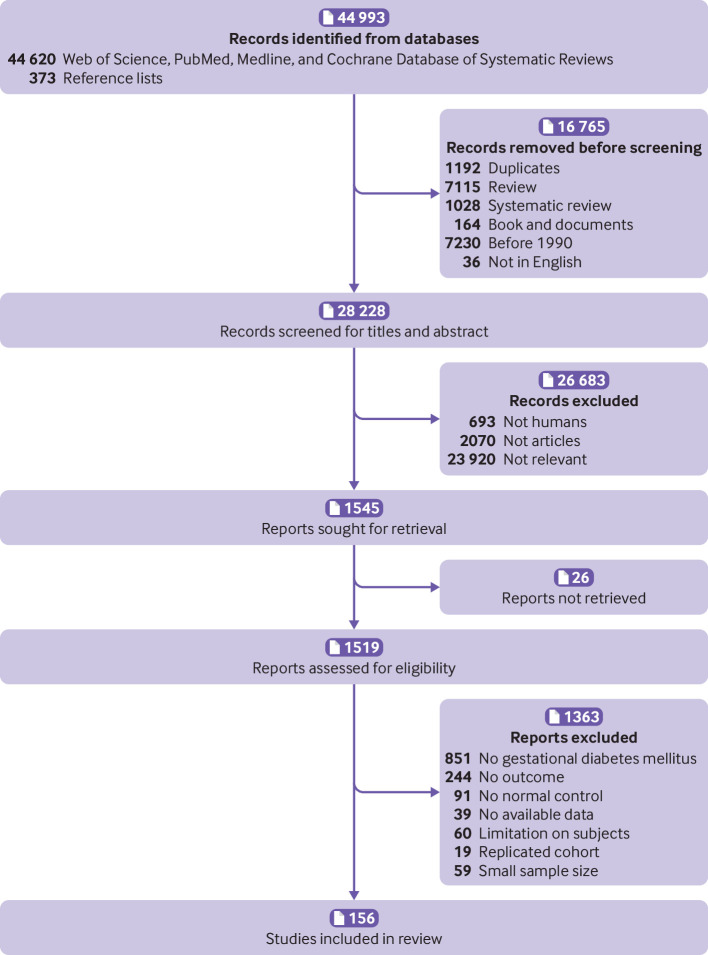
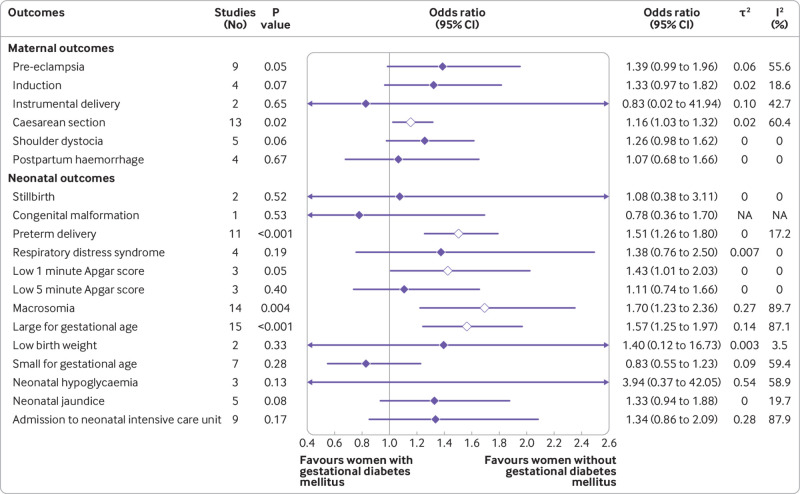
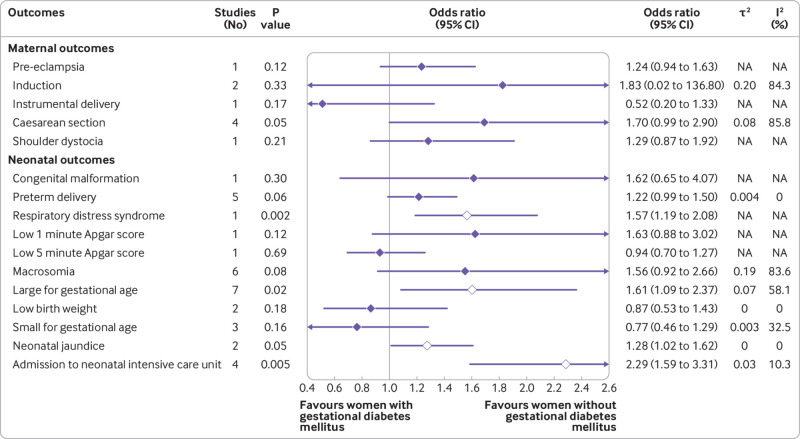
Objective: To investigate the association between gestational diabetes mellitus and adverse outcomes of pregnancy after adjustment for at least minimal confounding factors. Design: Systematic review and meta-analysis. Data sources: Web of Science, PubMed, Medline, and Cochrane Database of Systematic Reviews, from 1 January 1990 to 1 November 2021. Review methods: Cohort studies and control arms of trials reporting complications of pregnancy in women with gestational diabetes mellitus were eligible for inclusion. Based on the use of insulin, studies were divided into three subgroups: no insulin use (patients never used insulin during the course of the disease), insulin use (different proportions of patients were treated with insulin), and insulin use not reported. Subgroup analyses were performed based on the status of the country (developed or developing), quality of the study, diagnostic criteria, and screening method. Meta-regression models were applied based on the proportion of patients who had received insulin. Results: 156 studies with 7 506 061 pregnancies were included, and 50 (32.1%) showed a low or medium risk of bias. In studies with no insulin use, when adjusted for confounders, women with gestational diabetes mellitus had increased odds of caesarean section (odds ratio 1.16, 95% confidence interval 1.03 to 1.32), preterm delivery (1.51, 1.26 to 1.80), low one minute Apgar score (1.43, 1.01 to 2.03), macrosomia (1.70, 1.23 to 2.36), and infant born large for gestational age (1.57, 1.25 to 1.97). In studies with insulin use, when adjusted for confounders, the odds of having an infant large for gestational age (odds ratio 1.61, 1.09 to 2.37), or with respiratory distress syndrome (1.57, 1.19 to 2.08) or neonatal jaundice (1.28, 1.02 to 1.62), or requiring admission to the neonatal intensive care unit (2.29, 1.59 to 3.31), were higher in women with gestational diabetes mellitus than in those without diabetes. No clear evidence was found for differences in the odds of instrumental delivery, shoulder dystocia, postpartum haemorrhage, stillbirth, neonatal death, low five minute Apgar score, low birth weight, and small for gestational age between women with and without gestational diabetes mellitus after adjusting for confounders. Country status, adjustment for body mass index, and screening methods significantly contributed to heterogeneity between studies for several adverse outcomes of pregnancy. Conclusions: When adjusted for confounders, gestational diabetes mellitus was significantly associated with pregnancy complications. The findings contribute to a more comprehensive understanding of the adverse outcomes of pregnancy related to gestational diabetes mellitus. Future primary studies should routinely consider adjusting for a more complete set of prognostic factors. Review registration: PROSPERO CRD42021265837.
Overview
The claims and statistics of this paper haven’t been checked yet.
Free: it reads the open-access text and checks the first 5 claims that cite a source we can check. Create a free account to check every claim.
Integrity signals
Registry
Cites
Statistics
Figures
Verification
Claims the paper makes
The claims and statistics of this paper haven’t been checked yet.
Free: it reads the open-access text and checks the first 5 claims that cite a source we can check. Create a free account to check every claim.
Self-check
Percentages, sums and reported differences re-computed from the paper’s own numbers.
The self-check needs the paper’s full text.
Citations
Cites
Measuring inconsistency in meta-analyses
Higgins, J. P. T., Thompson, S. G., Deeks, J. J., & Altman, D. G. (2003) · BMJ · doi:10.1136/bmj.327.7414.557 · Cited by 63,139
Bias in meta-analysis detected by a simple, graphical test
Egger, M., Smith, G. D., Schneider, M., & Minder, C. (1997) · BMJ · doi:10.1136/bmj.315.7109.629 · Cited by 56,722
Hyperglycemia and adverse pregnancy outcomes
(2008) · New England Journal of Medicine · doi:10.1056/nejmoa0707943 · Cited by 5,563
2. Classification and Diagnosis of Diabetes: Standards of Medical Care in Diabetes—2020
American Diabetes Association (2020) · Diabetes Care · doi:10.2337/dc20-s002 · Cited by 3,187
IntHout, J., Ioannidis, J. P., & Borm, G. F. (2014) · BMC Medical Research Methodology · doi:10.1186/1471-2288-14-25 · Cited by 2,419
McIntyre, H. D., Catalano, P., Zhang, C., Desoye, G., Mathiesen, E. R., & Damm, P. (2019) · Nature Reviews Disease Primers · doi:10.1038/s41572-019-0098-8 · Cited by 1,850
What to add to nothing? Use and avoidance of continuity corrections in meta‐analysis of sparse data
J. Sweeting, M., J. Sutton, A., & C. Lambert, P. (2004) · Statistics in Medicine · doi:10.1002/sim.1761 · Cited by 1,734
Prevalence of Gestational Diabetes and Risk of Progression to Type 2 Diabetes: a Global Perspective
Zhu, Y., & Zhang, C. (2016) · Current Diabetes Reports · doi:10.1007/s11892-015-0699-x · Cited by 1,260
(1964) · PubMed · Cited by 1,230
The Hyperglycemia and Adverse Pregnancy Outcome Study
Catalano, P. M., McIntyre, H. D., Cruickshank, J. K., McCance, D. R., Dyer, A. R., Metzger, B. E., Lowe, L. P., Trimble, E. R., Coustan, D. R., Hadden, D. R., et al. (2012) · Diabetes Care · doi:10.2337/dc11-1790 · Cited by 954
Research works printed but not linked: 3
- Cochran WG. Some methods for strengthening the common×2 tests. Bioethics 1954; 10: 417.
- Zhao E Zhang Y Zeng X Liu B. Association between maternal diabetes mellitus and the risk of congenital malformations: A meta-analysis of cohort studies. Drug Discov Ther 2015; 9: 274- 81. 10.5582/ddt.2015.01044. 26370526 · DOI · Paper page
- Li Y Wang W Zhang D. Maternal diabetes mellitus and risk of neonatal respiratory distress syndrome: a meta-analysis. Acta Diabetol 2019; 56: 729- 40. 10.1007/s00592-019-01327-4. 30955125 · DOI
Cited by
Items 301–400 of 1,000
Gómez‐Cabrera, A. S., Santiago, A. E. G., Castañeda‐Arellano, R., Corona-Meraz, F.-I., Baptista-Rosas, R. C., & Parada, M. G. S. (2025) · International Journal of Molecular Sciences · doi:10.3390/ijms26167977 · Cited by 6
“The most common complications include an increased likelihood of requiring a cesarean section [3], preeclampsia [4], and a higher risk of progressing to type 2 diabetes mellitus (T2DM), although GDM resolves in most cases after delivery [5].”
Li, J., Li, Q., Zhang, Y., Chen, X., Zhang, C., Chen, Y., Gu, Y., & Yue, C. (2026) · Journal of Inflammation Research · doi:10.2147/jir.s548249 · Cited by 7
“37 The model was adjusted for potential confounders selected a priori based on clinical knowledge and previous literature.”
Bravo, N., Torres, J., González, M., & Staforelli, J. P. (2023) · Biochemistry and Biophysics Reports · doi:10.1016/j.bbrep.2023.101556 · Cited by 9
“Importantly, GDM is associated with adverse outcomes for children and mothers, like fetal macrosomia, neonatal hypoglycemia, and a higher risk for metabolic and cardiovascular diseases [2,3].”
BackgroundRayas, M. S., Munoz, J. L., Boyd, A. R., Kim, J., Mangold, C., & Moreira, A. G. (2023) · American Journal of Perinatology · doi:10.1055/s-0043-1776345 · Cited by 6
Trends in the prevalence of gestational diabetes in Catalonia from 2010 to 2019
Soldevila, B., Alarcón, L., Vlacho, B., Real, J., Hernández, M., Cos, X., Franch‐Nadal, J., & Mauricio, D. (2024) · Primary care diabetes · doi:10.1016/j.pcd.2023.12.007 · Cited by 7
Ling, P., Yang, D., Wang, C., Zheng, X., Luo, S., Yang, X., Deng, H., Xu, W., Yan, J., & Weng, J. (2024) · The Journal of Clinical Endocrinology & Metabolism · doi:10.1210/clinem/dgae291 · Cited by 6
Zhang, Y., Dai, K., Chen, X., Cui, L., & Chen, Z. (2024) · BMC Medicine · doi:10.1186/s12916-024-03419-7 · Cited by 7
“Several factors determine the occurrence of LGA including genes [7], race [8], intrauterine mal-nutrition [9–11], and artificial intervention in gametes or embryos [12].”
BackgroundMansor, E., Ahmad, N., Zulkefli, N. A. M., & Lim, P. Y. (2024) · PLoS ONE · doi:10.1371/journal.pone.0306387 · Cited by 9
The relationship between small for gestational age infants and maternal health: a meta-analysis
Lü, Y., Qie, D., Yang, F., & Wu, J. (2024) · American Journal of Translational Research · doi:10.62347/egpt7518 · Cited by 6
Fabricius, E. E., Bergholt, T., Kelstrup, L., & Jangö, H. (2024) · International Urogynecology Journal · doi:10.1007/s00192-024-05989-9 · Cited by 6
“GDM is associated with adverse outcomes including low 1 minute Apgar scores and macrosomia [4].”
López‐de‐Andrés, A., Jiménez‐García, R., Carabantes-Alarcón, D., Cuadrado‐Corrales, N., Bodas-Pinedo, A., Sierra, J. M., Jiménez-Sierra, A., & Zamorano‐León, J. J. (2024) · Journal of Clinical Medicine · doi:10.3390/jcm13247740 · Cited by 7
“Diabetes in pregnancy is associated with a high risk of severe maternal and neonatal morbidity [1].”
Causal Associations Between Sarcopenia and Gestational Diabetes Mellitus
Huang, Y., Zhao, S., Hong, J., Shen, L., Wang, Z., & Wang, D. (2025) · International Journal of Women s Health · doi:10.2147/ijwh.s494910 · Cited by 6
“…participants, elevated levels of the inflammatory cytokines TWEAK and TNF-α were linked to a higher likelihood of developing sarcopenia, whereas increased concentrations of the metabolic hormone insulin-like growth factor 1, insulin, and adiponectin were linked to a reduced risk of sarcopenia.”
Identification and validation of palmitoylation-related biomarkers in gestational diabetes mellitus
Zhang, K., Shi, X., Bian, R., Shi, W., Yang, L., & Ren, C. (2025) · Scientific Reports · doi:10.1038/s41598-025-93046-w · Cited by 6
“GDM is a dysglycemic condition resulting from impaired insulin production and resistance during pregnancy, adversely affecting both maternal and offspring health 1,6 .”
Mutalib, N. A., Yusof, J., Saman, M. S. A., & Kadir, S. H. S. A. (2025) · BMC Pregnancy and Childbirth · doi:10.1186/s12884-025-07366-w · Cited by 9
“In order to assess the methodological quality of selection, comparability, and outcome of the included studies, Newcastle-Ottawa scale for observational studies was used [30].”
Zhao, D., Chen, J., Li, X., Huang, Y., Zhang, Y., Zhao, F., Liu, D., Li, S., Mi, Y., Shang, L., et al. (2025) · BMC Pregnancy and Childbirth · doi:10.1186/s12884-025-07336-2 · Cited by 6
Timing of eating and glycemic control during pregnancy: A systematic review
Boege, H. L., Park, C., Gagnier, R., & Deierlein, A. L. (2025) · Nutrition Metabolism and Cardiovascular Diseases · doi:10.1016/j.numecd.2025.104094 · Cited by 6
Liu, R., Chen, X.-Q., Liu, J., Zheng, Q.-X., Li, J.-N., Yu, Z., Liu, J., & Jiang, X.-M. (2025) · Microbial Pathogenesis · doi:10.1016/j.micpath.2025.107607 · Cited by 7
Mazzone, P., Stephen, J., Weir, C. J., Bhattacharya, S., Black, M. E., & Chin, R. (2025) · Epilepsia · doi:10.1111/epi.18484 · Cited by 6
“, 9, 25”
Wegrzynowicz, A. K., Dudley, C. M., Cooney, L. G., & Stanic, A. K. (2025) · Reproduction · doi:10.1530/rep-25-0108 · Cited by 6
Analyzing serum tryptophan metabolites in patients with gestational diabetes mellitus
Özdemir, M., Abuşoğlu, S., Baldane, S., Kıraç, C. O., Ünlü, A., Onmaz, D. E., Çelik, M., & Abuşoğlu, G. (2023) · Revista română de medicină de laborator · doi:10.2478/rrlm-2023-0027 · Cited by 8
Gao, Y., Zhou, M., Xu, X., Yang, J. J., & Qin, M. F. (2023) · Journal of Diabetes Investigation · doi:10.1111/jdi.14115 · Cited by 6
Awareness of Gestational Diabetes Mellitus Among Women in the Al-Baha Region, Saudi Arabia
Ali, T. M., Kishk, E. A., Almaqadi, O. M., Alsawlihah, K. M. A., Alzahrani, M. M., Alzahrani, A. A., Alsalhi, A. Y., Alzahrani, S. M., Alzahrani, J. A., & Alzahrani, M. A. (2023) · Cureus · doi:10.7759/cureus.50163 · Cited by 6
“GDM is a pregnancy illness that harms the health of many millions of women globally [13].”
BackgroundAntepartum Fetal Surveillance and Optimal Timing of Delivery in Diabetic Women: A Narrative Review
Braverman-Poyastro, A., Suárez-Rico, B. V., Borboa-Olivares, H. J., y Sosa, S. E., Torres‐Torres, J., Arce-Sánchez, L., Martínez-Cruz, N., & Reyes-Muñoz, E. (2024) · Journal of Clinical Medicine · doi:10.3390/jcm13020313 · Cited by 7
“On the other hand, regarding GDM and PDM, FIGO and ADA guidelines recommend performing BPP at 32 weeks of gestation, with weekly follow-ups in the case of abnormalities [13,21–23 In the presence of GDM, the NICE guidelines do not recommend the routine use of the biophysical profile.”
BackgroundMethodAbindu, V., Hope, D., Aleni, M., Andru, M., Ayiasi, R. M., Afayo, V., Oyet, C., & Kiconco, R. (2024) · Diabetes Metabolic Syndrome and Obesity · doi:10.2147/dmso.s447855 · Cited by 8
da Silva, L. B. G., Zajdenverg, L., Keating, E., Silvestre, M. P. S., dos Santos, B. M. B., & Saunders, C. (2024) · The Yale Journal of Biology and Medicine · doi:10.59249/wpty4075 · Cited by 6
“M N T g r oup – d i d no t r e c e i v ed s pe c i a li z ed nu t r i t i ona l t he r ap y ; RR – r e l a t i v e r i sk . a systematic review [36] found higher proportions of macrosomia, LGA, NICU admission, preterm birth, and other complications in the groups that used insulin when compared to…”
BackgroundGao, S., Su, S., Zhang, E., Liu, J., Xie, S., Zhang, Y., Cui, Y. J., Wang, X., Huang, K., Hu, M., et al. (2024) · Public Health · doi:10.1016/j.puhe.2024.04.028 · Cited by 6
Li, J., Sun, Z., Sun, F., Lai, Y., Yi, X., Zhang, W., Yuan, J., Hu, Y., Pan, A., Pan, X., et al. (2024) · Journal of Hazardous Materials · doi:10.1016/j.jhazmat.2024.135434 · Cited by 7
Prenatal Vitamin D Deficiency and Maternal and Fetal Health Outcomes
Tsenkova-Toncheva, L., Hristova-Atanasova, E., Iskrov, G. G., & Stefanov, R. S. (2024) · Cureus · doi:10.7759/cureus.69508 · Cited by 9
Wang, Y., Fan, Z., Ren, J., & Ma, L. (2024) · Diabetes Metabolic Syndrome and Obesity · doi:10.2147/dmso.s475385 · Cited by 6
Zhang, B., Zhan, Z., Zhang, F., Xi, S., Yuan, X., & Shi, Z. (2024) · Diabetology & Metabolic Syndrome · doi:10.1186/s13098-024-01503-9 · Cited by 6
“Prior studies have shown that the importance of pregnancy complications including PE, GDM, ICP and PIH in modulating fetal growth, adversely impacted fetal gestational age and birthweight in pregnant women [27– 29].”
BackgroundResultYu, Y., Platt, R. W., Reynier, P., Yu, O. H. Y., & Filion, K. B. (2024) · Diabetes Obesity and Metabolism · doi:10.1111/dom.16115 · Cited by 6
Yim, G., Howe, C. G., Gallagher, L. G., Gilbert‐Diamond, D., Calafat, A. M., Botelho, J. C., Karagas, M. R., & Romano, M. E. (2025) · The Science of The Total Environment · doi:10.1016/j.scitotenv.2025.179446 · Cited by 6
Reitzle, L. (2024) · Publication server of the Robert Koch Institute (Robert Kock Institute) · doi:10.25646/12009 · Cited by 8
Lyu, X., Jia, J., Yang, H., Deng, Y., Wu, H., Wang, S., Zhao, C., Lei, J., Zou, X., & Yang, Y. (2023) · China CDC Weekly · doi:10.46234/ccdcw2023.035 · Cited by 7
Risk Factors for Pneumothorax and Its Association with Ventilation in Neonates
Donda, K., Babu, S., Rastogi, D., & Rastogi, S. (2023) · American Journal of Perinatology · doi:10.1055/s-0043-1768070 · Cited by 6
Pregnancy & neonatal outcomes in spondyloarthritis
Maguire, S., & Moltó, A. (2023) · Best Practice & Research Clinical Rheumatology · doi:10.1016/j.berh.2023.101868 · Cited by 6
Establishment and validation of a prediction model for gestational diabetes
Wang, X., He, C., Wu, N. F., Tian, Y., An, S., Chen, W., Liu, X., Zhang, H., Xiong, S., Liu, Y., et al. (2023) · Diabetes Obesity and Metabolism · doi:10.1111/dom.15356 · Cited by 6
“…33 occupation, 33 height and weight 34,35 ), personal and family history (history of hypertension, 36 diabetes 33,35 and pregnancy disorders 37 ), behaviour and lifestyle (exercise frequency and mental stress), 28 and diet (frequency of consuming staple foods, 38 pork, 39 vegetables 33 and…”
BackgroundOsman, T., Kishk, E. A., Alghamdi, M. A., Alzahrani, F. A., Alghamdi, A. A. M., Alzahrani, A. M., Alzahrani, Y. A., Alghamdi, M., Alghamdi, A. S. I., & Alghamdi, A. A. M. (2024) · Cureus · doi:10.7759/cureus.52421 · Cited by 6
“The questionnaire was developed based on a comprehensive review of previous literature related to GDM and adverse pregnancy outcomes [11,12].”
MethodLiang, Q., Li, M., Huang, G., Li, R., Qin, L., Zhong, P., Xing, X., & Yu, X. (2024) · The Journal of Clinical Endocrinology & Metabolism · doi:10.1210/clinem/dgae200 · Cited by 6
Zhao, D., Yuan, N., Sun, J., Zhao, X., & Zhang, X. (2024) · Endokrynologia Polska · doi:10.5603/ep.98554 · Cited by 6
“Diagnosing and intervening in GDM early can improve adverse pregnancy outcomes [11, 25], and early prediction of GDM has become a hot topic of research in recent years [25–28].”
BackgroundLi, Y., Wang, F., Huang, X., Zong, S., Shen, Y., Guo, L., Cai, Q., Sun, T., Zhang, R., Yu, Z., et al. (2024) · Nutrition and Diabetes · doi:10.1038/s41387-024-00309-y · Cited by 7
Mid-upper arm circumference predicts the risk of gestational diabetes in early pregnancy
Ma, N., Bai, L., Niu, Z., & Lü, Q. (2024) · BMC Pregnancy and Childbirth · doi:10.1186/s12884-024-06664-z · Cited by 8
Gao, X., Qin, X., Pei, S., Wang, W., Wu, R., Mei, J., Liu, Y., Xie, Y., & Ni, G. (2024) · Placenta · doi:10.1016/j.placenta.2024.07.310 · Cited by 6
A Bayesian network perspective on neonatal pneumonia in pregnant women with diabetes mellitus
Lin, Y., Chen, J. S., Zhong, N., Zhang, A., & Pan, H. (2023) · BMC Medical Research Methodology · doi:10.1186/s12874-023-02070-9 · Cited by 5
“Therefore, it is very important to diagnose neonatal pneumonia in pregnant women with diabetes [8].”
BackgroundLi, H., Gao, L., Yang, X. M., & Chen, L. (2024) · Clinical Endocrinology · doi:10.1111/cen.15044 · Cited by 5
Vergani, M., Conti, M., Lari, A., Mion, E., Bertuzzi, F., & Pintaudi, B. (2024) · Diabetes Research and Clinical Practice · doi:10.1016/j.diabres.2024.111654 · Cited by 5
Large for Gestational Age and Adverse Outcomes: Stratified By Diabetes Status
Nazeer, S. A., Chen, H.-Y., Cornthwaite, J. A. A., Chauhan, S. P., Sibai, B. M., Wagner, S., & Bartal, M. F. (2024) · American Journal of Perinatology · doi:10.1055/a-2316-9007 · Cited by 6
Neonatal outcomes in women with diabetes mellitus — analysis of DAPSY data
Kapustin, R. V., Kopteeva, E. V., Alekseenkova, E. N., Владимировна, К.-К. О., Rybachek, A. V., Arzhanova, O. N., & Kogan, I. Y. (2024) · Journal of obstetrics and women s diseases · doi:10.17816/jowd624553 · Cited by 5
Tian, M.-L., Jin, Y., Du, L.-Y., Zhou, G.-Y., Zhang, C., Ma, G.-J., & Shi, Y. (2024) · Frontiers in Endocrinology · doi:10.3389/fendo.2024.1343172 · Cited by 5
Maghalian, M., & Mirghafourvand, M. (2024) · BMC Endocrine Disorders · doi:10.1186/s12902-024-01781-4 · Cited by 5
Sonaglioni, A., Casieri, F., Nicolosi, G. L., Bianchi, S., & Lombardo, M. (2025) · Journal of Clinical Medicine · doi:10.3390/jcm14041271 · Cited by 5
“Data from the literature indicate that GDM is associated with an increased risk of adverse maternal and neonatal outcomes [2–4].”
Dai, M., Liu, J., Hu, M., Zhang, F., Wang, Y., Dai, F., Qu, R., Fang, Z., & Yang, J. (2025) · Toxics · doi:10.3390/toxics13020141 · Cited by 6
Lv, L., Yang, J., Li, L., Huang, C., Shi, H., Fang, Y., Zuo, L., Liu, T., Duan, H., Wen, J., et al. (2025) · BMC Medicine · doi:10.1186/s12916-025-03990-7 · Cited by 6
“…growth pathway as adverse pregnancy outcomes have been noted to be worse in HDP pregnancies with higher maternal BP. Maternal hyperglycemia, however, is strongly associated with the development of LGA infants [5], due to the corresponding excess fetal glucose and fat storage [6].”
Damtie, Y., Dachew, B. A., Ayano, G., Tadesse, A. W., Betts, K. S., & Alati, R. (2025) · Journal of Psychosomatic Research · doi:10.1016/j.jpsychores.2025.112115 · Cited by 5
Maghalian, M., Jafarabadi, M. A., Abbasalizadeh, F., Mohammad‐Alizadeh‐Charandabi, S., Ghanbari-Homaie, S., & Mirghafourvand, M. (2025) · BMC Endocrine Disorders · doi:10.1186/s12902-025-01931-2 · Cited by 7
“Women with GDM are also more likely to develop Type 2 diabetes and cardiovascular diseases later in life [10, 11].”
Ghadban, Y. A., Astbury, N. M., Kurdi, A., Sharma, A., Ope, B. W., Liu, T., Mackillop, L. H., Lu, H. Y., & Hirst, J. E. (2025) · Obesity Reviews · doi:10.1111/obr.13934 · Cited by 6
Understanding the Experiences of Women with Gestational Diabetes in Singapore: A Qualitative Study
Lazarus, M., Lee, V. V., Ong, D. L. S., Yew, T. W., Shorey, S., Young, D. Y. L., & Eriksson, J. G. (2025) · International Journal of Women s Health · doi:10.2147/ijwh.s517739 · Cited by 6
Hascoët, J., Mitanchez, D., Saliba, É., & Athéa, Y. (2025) · BMJ Paediatrics Open · doi:10.1136/bmjpo-2025-003557 · Cited by 5
“To achieve this target, they include the use of room temperatures of ≥ 23°C at birth, the immediate use of a head covering after birth, and heated and humidified gases for respiratory support in the delivery room.”
Gestational diabetes mellitus alters neonatal gut microbiota and increases infection susceptibility
Hu, Y., Zheng, S., Xu, J., Zhao, Y., Wang, J., Fang, Z., & Zhou, L. (2025) · Frontiers in Microbiology · doi:10.3389/fmicb.2025.1600325 · Cited by 8
“Furthermore, GDM is independently associated with a two-to threefold increased risk of neonatal infections in offspring, a phenomenon that is not fully explainable through traditional metabolic mechanisms (Ye et al., 2022).”
Liu, P., Yang, J., Tobias, D. K., Tabung, F. K., Hu, F. B., & Zhang, C. (2025) · BMC Medicine · doi:10.1186/s12916-025-04188-7 · Cited by 5
Quansah, D. Y., Visintini, S. M., Kim, H., Ahmed, F., Harris, L. A., Dai, N., O’Neill, C. D., Savard, K., Mir, H. R., Coutinho, T. A., et al. (2025) · European Journal of Preventive Cardiology · doi:10.1093/eurjpc/zwaf435 · Cited by 5
Hyperglycaemia in pregnancy: Outcomes and diagnostic accuracy of combined modalities
Manga, J., Odell, N., Khambule, L., Harishun, S., & Mohamed, F. (2025) · Clinical Medicine · doi:10.1016/j.clinme.2025.100495 · Cited by 6
“24 Stillbirths were more frequent in pre-gestational DM, likely due to chronic hyperglycemia-related vasculopathy impairing placental perfusion via oxidative stress and endothelial dysfunction.”
Role of pyroptosis in pregnancy-related diseases
Li, W., Zheng, R., Shi, C., Chen, D., Sun, Y., Hu, B., & Xu, G. (2025) · PeerJ · doi:10.7717/peerj.19922 · Cited by 6
Moncadas, M. C., Serednytskyy, O., Larrínaga, A. Á. R. D., Cànaves‐Gómez, L., Barón, A. S., Marcet, M. C., de la Peña, M., Coma, A. I., Morell‐García, D., Zarza, J. A. P., et al. (2025) · Journal of Sleep Research · doi:10.1111/jsr.70204 · Cited by 5
Zhang, J., Liu, J., Mao, C., Yu, H., & Wang, X. (2025) · PubMed Central · doi:10.12182/20250560101 · Cited by 6
Wang, L., Tang, C., Cheng, M., Hao, Y., Chen, S., Zhang, S., Zhang, C., Mol, B. W., Wu, Y., & Huang, H. (2025) · PLoS Medicine · doi:10.1371/journal.pmed.1004722 · Cited by 5
Fu, M., Qiu, M., Xie, Z., Guo, L., Zhou, Y., Jia, Y., Yang, W., Ouyang, L., Ding, Y., & Wang, Z. (2025) · Nutrients · doi:10.3390/nu17213400 · Cited by 5
Wootton, O., Campbell, P., Richardson, S., Lindsay, S., Huang, Q. Q., Delage, E., Amanat, S., Wong, H. S., Firth, H. V., Hurles, M. E., et al. (2025) · Genome Medicine · doi:10.1186/s13073-025-01560-3 · Cited by 5
“We started by estimating the association between degree of prematurity and selected antenatal factors, recapitulating established associations observed in the general population [58–61].”
Xia, D., Wang, H., & Wang, W. (2025) · BMC Pregnancy and Childbirth · doi:10.1186/s12884-025-08324-2 · Cited by 5
“GDM significantly increases maternal adverse perinatal and postpartum outcomes, including miscarriage, fetal malformation, preeclampsia, fetal growth restriction, fetal death, mac-rosomia, neonatal hypoglycemia, neonatal hyperbiliru-binemia, and neonatal respiratory distress syndrome [3].”
Diabetes in pregnancy attenuates the sFlt-1/PlGF ratio for prediction of preeclampsia
Bastiansen, S. O., Nielsen, T. M., Rode, L., Lynggaard, R. B., Vinholt, P. J., Sperling, L., Vinter, C. A., Jensen, D. M., Andersen, L. L. T., & Overgaard, M. (2026) · Pregnancy Hypertension · doi:10.1016/j.preghy.2026.101430 · Cited by 5
Wang, Y., Gong, Y., Xu, Y., Wang, X., Shan, S., Cheng, G., & Zhang, B. (2024) · BMC Pregnancy and Childbirth · doi:10.1186/s12884-023-06231-y · Cited by 5
Zheng, Q., Yu, Z., Jiang, X., Huang, L., Li, J., & Liu, R. (2024) · Scientific Reports · doi:10.1038/s41598-024-51879-x · Cited by 5
“Compared with women with normoglycemia, women with GDM were at an increased odds of pregnancy adverse outcomes, such as caesarean section, preterm birth, macrosomia and neonatal hypoglycemia 5,6 .”
BackgroundAn, Z., Niu, T., Lu, Y., Yao, B., Feng, F., Zhang, H., & Li, H. (2024) · Scientific Reports · doi:10.1038/s41598-024-76656-8 · Cited by 6
The Impact of Gestational Diabetes Mellitus on Minipuberty in Girls
Kowalcze, K. E., Burgio, S., Gullo, G., Kula-Gradzik, J., Ott, J., & Krysiak, R. G. (2024) · International Journal of Molecular Sciences · doi:10.3390/ijms252111766 · Cited by 5
Huang, B., & Zhai, H. (2024) · Journal of Obstetrics and Gynaecology · doi:10.1080/01443615.2024.2435065 · Cited by 6
Qiu, Y., Yu, W., Zhang, X., Zhang, M., Ni, Y., Lai, S., & Wu, Q. (2025) · Cell Biochemistry and Biophysics · doi:10.1007/s12013-024-01655-5 · Cited by 5
“Notably, GDM increases the risk of serious pregnancy complications, including macrosomia, shoulder dystocia, and neonatal hypoglycemia as well as enlarges the likelihood of long-term metabolic disorders in the offspring [2, 3].”
Zeng, G., Zou, W., Liu, C., Chen, Y., & Wen, T. (2025) · Human & Experimental Toxicology · doi:10.1177/09603271241307835 · Cited by 5
RetractedChileshe, M., Imanga, F., Zulu, A. C., & Kazonga, E. (2025) · Open Journal of Epidemiology · doi:10.4236/ojepi.2025.152027 · Cited by 5
Shyu, I.-L., Tsai, Y.-C., Kuo, T.-N., & Shiue, Y. (2025) · American Journal of Reproductive Immunology · doi:10.1111/aji.70087 · Cited by 4
Ling, P., Yang, D., Wang, C., Zheng, X., Luo, S., Yang, X., Deng, H., Xu, W., Yan, J., & Weng, J. (2023) · Diabetes/Metabolism Research and Reviews · doi:10.1002/dmrr.3689 · Cited by 5
Zhou, B., Xia, J.-L., Jiang, X., Ding, Y., & She, Q. (2024) · BMC Endocrine Disorders · doi:10.1186/s12902-024-01569-6 · Cited by 6
Wu, W., Luo, D., Ji, C., Diao, F., Wu, L., Ruan, X., Gu, C., & Luo, M. (2024) · Diabetes/Metabolism Research and Reviews · doi:10.1002/dmrr.3794 · Cited by 5
“2,9,24,25 These discrepancies might be ascribed to low levels of maternal .”
BackgroundAssessing the causal association of pregnancy complications with diabetes and cardiovascular disease
Xie, Y., Zhang, J., Ni, S., & Ji, L. (2024) · Frontiers in Endocrinology · doi:10.3389/fendo.2024.1293292 · Cited by 5
Mommy’s microbes: Gestational diabetes mellitus shapes the maternal and infant gut microbiome
Aja, E., & Jacobs, J. P. (2024) · Cell Host & Microbe · doi:10.1016/j.chom.2024.06.007 · Cited by 5
Siemers, K. M., Joss‐Moore, L. A., & Baack, M. L. (2024) · International Journal of Molecular Sciences · doi:10.3390/ijms252111534 · Cited by 6
“Notably, macrosomia and long-chain polyunsaturated fatty acid (LCPUFA) deficiency in offspring can persist despite good blood glucose control [6,7].”
BackgroundÖren, E. D. T., Avdal, E. Ü., Polat, G., Sofulu, F., Düzgün, G., & Pamuk, G. (2024) · Medicine · doi:10.1097/md.0000000000037755 · Cited by 5
“[1,4] In the physiopathology of GDM, the use of glucose in the periphery increases in the first trimester of pregnancy and causes a decrease in fasting blood sugar levels.”
BackgroundInfluentialPayne, E., Schoenaker, D., Turner, K., Murphy, H. R., Skouteris, H., Ismail, K., Silverio, S. A., & Benton, M. (2026) · Health Expectations · doi:10.1111/hex.70617 · Cited by 4
Vaajala, M., Kekki, M., Mattila, V. M., & Kuitunen, I. (2023) · International Journal of Obstetric Anesthesia · doi:10.1016/j.ijoa.2023.103924 · Cited by 4
Li, H., Chen, C., Liu, S., Shi, Y., Kuang, X., Song, X., Li, D., & Li, K. (2024) · Nutrients · doi:10.3390/nu16081182 · Cited by 4
Iwama, N., Yokoyama, M., Yamashita, H., Miyakoshi, K., Yasuhi, I., Kawasaki, M., Arata, N., SATO, S. T., Iimura, Y., Masako, W., et al. (2025) · Journal of Diabetes Investigation · doi:10.1111/jdi.14411 · Cited by 5
Li, Y., Li, X., Xu, T., Chen, D., Zhou, F., & Wang, X. (2025) · Reproductive Sciences · doi:10.1007/s43032-025-01847-1 · Cited by 4
“…perinatal outcomes, including preterm birth, congenital malformations, macrosomia, neonatal hypoglycemia, and long-term metabolic risks for the offspring, and significantly increases the risk of a range of complications for pregnant women, especially hypertensive disorders of pregnancy [4– 6].”
Impact of maternal health on neonatal and long-term kidney outcomes
Kamath, N., Nesargi, S. V., Bajpai, D., Singarayar, P., Vidal, E., & Luyckx, V. A. (2025) · Pediatric Nephrology · doi:10.1007/s00467-025-06771-9 · Cited by 4
Mirabelli, M., Greco, M., Iuliano, S., Dragone, F., CHIEFARI, E. D., FOTI, D. P., & Brunetti, A. (2025) · Journal of Clinical & Translational Endocrinology · doi:10.1016/j.jcte.2025.100404 · Cited by 4
“Gestational diabetes mellitus (GDM), defined as glucose intolerance first identified during pregnancy, has become a significant global health concern [1,2].”
Chen, B., Chen, M., Pan, X., Bai, M., Sun, D., Jiang, H., Lin, N., & Ma, Z. (2025) · Drug Metabolism and Disposition · doi:10.1016/j.dmd.2025.100133 · Cited by 4
Wang, Y., & Quan, Y. (2025) · BMC Pregnancy and Childbirth · doi:10.1186/s12884-025-07916-2 · Cited by 4
“…complicated with depression in pregnant women: a biopsychosocial analysis and intervention strategies Yan Wang 1 and Yunxia Quan 2,3* Gestational diabetes mellitus (GDM), one of the most prevalent metabolic disorders during pregnancy, has shown a sustained upward trend in global incidence [1, 2].”
Nakajima, K., Kumasawa, K., Kinugawa, M., Nemoto, K., Ichinose, M., Toshimitsu, M., Sayama, S., Seyama, T., Iriyama, T., Hirota, Y., et al. (2025) · Placenta · doi:10.1016/j.placenta.2025.09.005 · Cited by 4
Adeoye, I. A., Adedapo, K. S., Sonuga, O. O., Fagbamigbe, A. F., Adeleye, J., Olayemi, O. O., Omigbodun, A. O., & Bamgboye, A. E. (2025) · BMJ Open · doi:10.1136/bmjopen-2024-095252 · Cited by 6
“29 30 31–33 Several studies have also shown that GDM increases the risk of overweight, obesity, metabolic syndrome and type 2 diabetes in the offspring in later life.”
Food is medicine programs for pregnant women in the United States: a systematic review
Palmer, S., Shanks, C. B., Balis, L. E., Shaw, E., Santos, P. L., & Yaroch, A. L. (2025) · Translational Behavioral Medicine · doi:10.1093/tbm/ibaf060 · Cited by 4
Wang, B., Qiu, Y., Xu, N., Wang, S., Alifu, X., Cheng, H., Liu, H., Yu, L., Lin, Z., Chen, D., et al. (2025) · Journal of Hazardous Materials · doi:10.1016/j.jhazmat.2025.140487 · Cited by 4
Zhu, H., Pan, J., & Pan, H. (2025) · Journal of Diabetes Investigation · doi:10.1111/jdi.70195 · Cited by 4
Metadata
- Authors
- Ye, W., Luo, C., Huang, J., Li, C., Liu, Z., & Liu, F.
- Affiliations
- Central South University (CN)
- Corresponding author
- Liu, Fangkun
- Venue
- BMJ
- Publisher
- BMJ
- Published
- 2022-05-25
- Volume
- 377
- Pages
- e067946
- ISSN
- 1756-1833 (ISSN-L)
- PMC
- PMC9131781
- OpenAlex
- W4281563604
- Cited by
- 1,073
- References
- 196
- Citations by year
- 2026: 258 · 2025: 321 · 2024: 313 · 2023: 160 · 2022: 20
- FWCI
- 41.00
- Type
- journal article
- Language
- en
- Open access
- hybrid
- doi.org
- Licence
- Locations
- BMJ (publishedVersion, cc-by-nc)
- PubMed Central (publishedVersion, cc-by-nc)
- PubMed (publishedVersion)
- Funders
- National Natural Science Foundation of China
- Topics
- Health Sciences › Medicine › Obstetrics and Gynecology › Gestational Diabetes Research and Management
- Health Sciences › Medicine › Public Health, Environmental and Occupational Health › Pregnancy and Medication Impact
- Health Sciences › Medicine › Endocrinology, Diabetes and Metabolism › Diabetes, Cardiovascular Risks, and Lipoproteins
- Keywords
- gestational diabetes mellitus, adverse pregnancy outcomes, cesarean section, preterm birth, macrosomia, large for gestational age, insulin therapy, neonatal respiratory distress syndrome, neonatal jaundice, neonatal intensive care admission, Apgar score, maternal risk factors, confounding adjustment, parity, maternal obesity
- MeSH terms
- Cesarean Section, Female, Fetal Macrosomia, Humans, Infant, Newborn, Insulin, Pregnancy, Pregnancy Complications, Pregnancy Outcome, Diabetes, Gestational
About these checks
Registry, retraction, Cites and statistics results are computed, not judged, with one exception: a printed reference that no index lists is read once by a model before it counts as a citation error. Claims are extracted by a model and kept only when their quote appears verbatim in the text; each cited source is then checked, with a model’s help, for whether it says what the claim relies on. Those verdicts can be wrong — read the claim’s quote and the cited source before relying on one.
Statistics and arithmetic are recomputed, not judged.
Confidence bands are shown only for fields calibrated on our annotated test set. None is calibrated yet, so no band is shown.
What counts as a claim ›How we measure confidence ›How we check this ›
Are you an author, or do you see a problem with this page? Request a review
Data sources
Bibliographic data: Semantic Scholar, OpenAlex, Crossref.
Contains information from the Semantic Scholar Academic Graph Datasets, made available under the ODC Attribution License (ODC-BY 1.0).
Semantic Scholar’s data is described in: Kinney, R., et al. (2023). The Semantic Scholar Open Data Platform. arXiv:2301.10140.
