

Gestational diabetes mellitus and adverse pregnancy outcomes: systematic review and meta-analysis
Open accessThe DOI matches its Crossref record; 191 of the 196 references it cites were found in a registry or an index.
Abstract
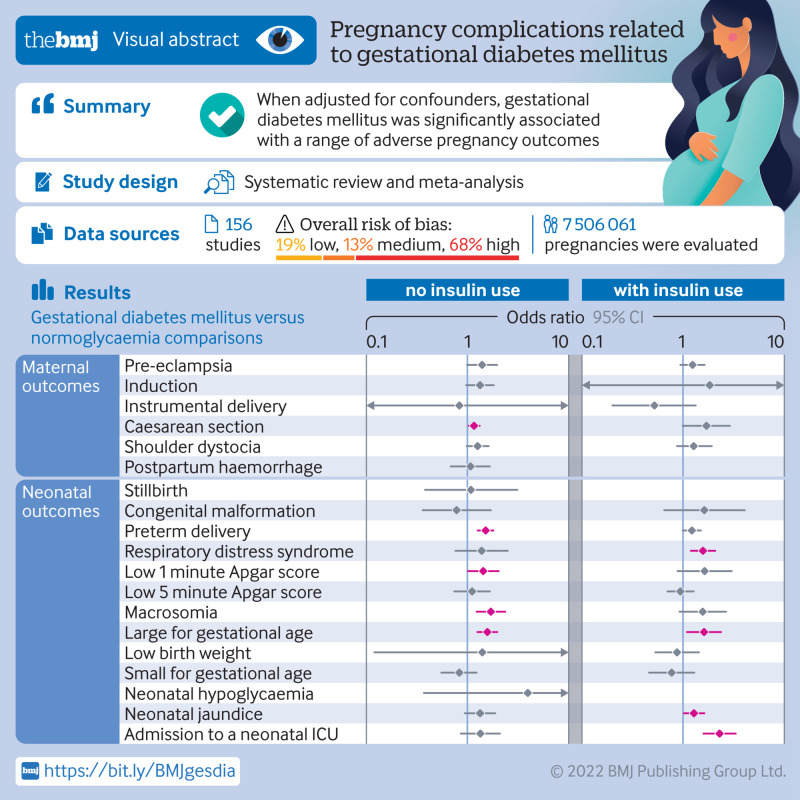
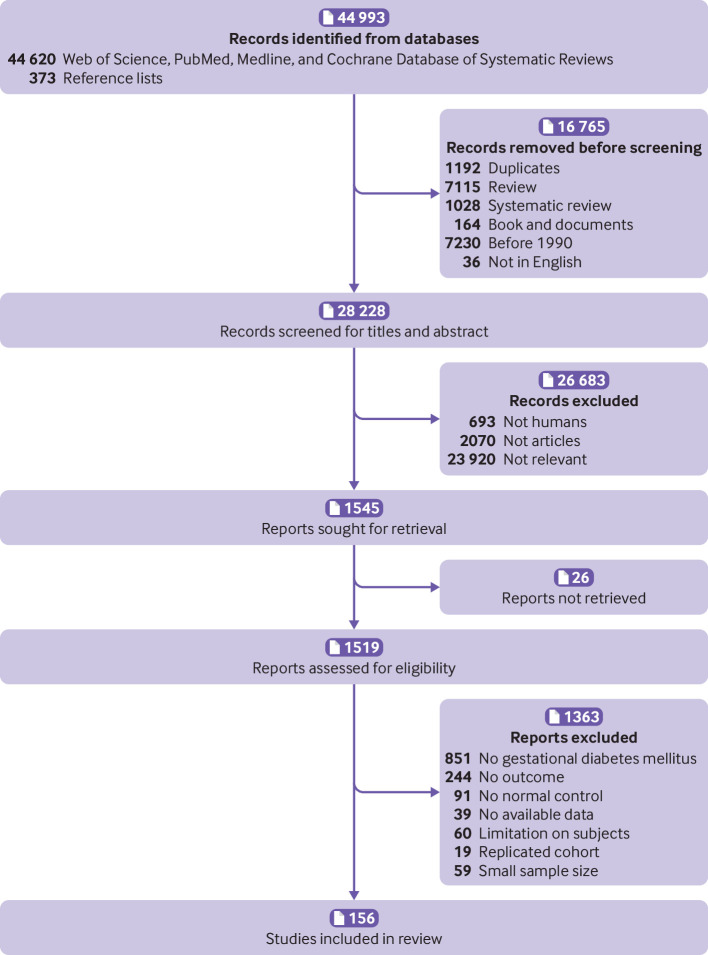
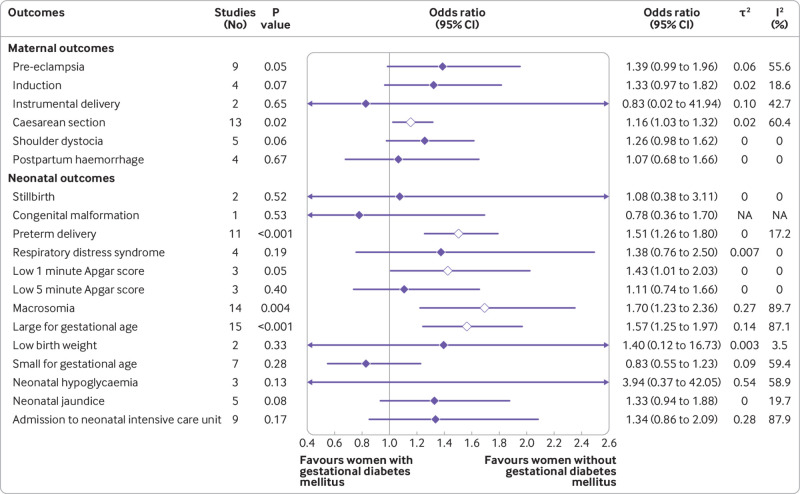
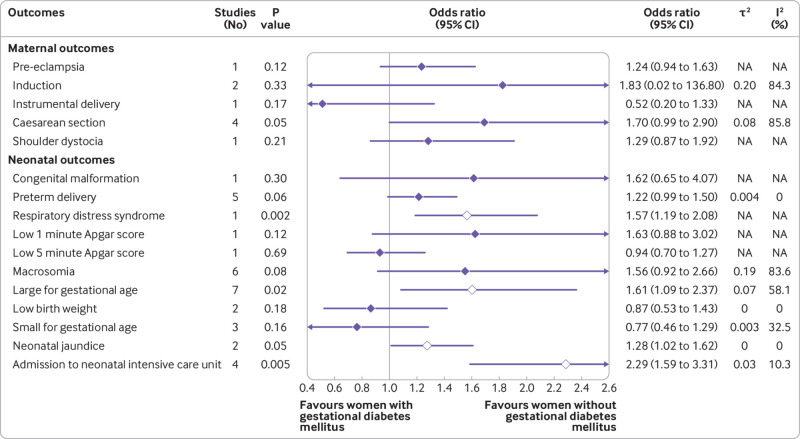
Objective: To investigate the association between gestational diabetes mellitus and adverse outcomes of pregnancy after adjustment for at least minimal confounding factors. Design: Systematic review and meta-analysis. Data sources: Web of Science, PubMed, Medline, and Cochrane Database of Systematic Reviews, from 1 January 1990 to 1 November 2021. Review methods: Cohort studies and control arms of trials reporting complications of pregnancy in women with gestational diabetes mellitus were eligible for inclusion. Based on the use of insulin, studies were divided into three subgroups: no insulin use (patients never used insulin during the course of the disease), insulin use (different proportions of patients were treated with insulin), and insulin use not reported. Subgroup analyses were performed based on the status of the country (developed or developing), quality of the study, diagnostic criteria, and screening method. Meta-regression models were applied based on the proportion of patients who had received insulin. Results: 156 studies with 7 506 061 pregnancies were included, and 50 (32.1%) showed a low or medium risk of bias. In studies with no insulin use, when adjusted for confounders, women with gestational diabetes mellitus had increased odds of caesarean section (odds ratio 1.16, 95% confidence interval 1.03 to 1.32), preterm delivery (1.51, 1.26 to 1.80), low one minute Apgar score (1.43, 1.01 to 2.03), macrosomia (1.70, 1.23 to 2.36), and infant born large for gestational age (1.57, 1.25 to 1.97). In studies with insulin use, when adjusted for confounders, the odds of having an infant large for gestational age (odds ratio 1.61, 1.09 to 2.37), or with respiratory distress syndrome (1.57, 1.19 to 2.08) or neonatal jaundice (1.28, 1.02 to 1.62), or requiring admission to the neonatal intensive care unit (2.29, 1.59 to 3.31), were higher in women with gestational diabetes mellitus than in those without diabetes. No clear evidence was found for differences in the odds of instrumental delivery, shoulder dystocia, postpartum haemorrhage, stillbirth, neonatal death, low five minute Apgar score, low birth weight, and small for gestational age between women with and without gestational diabetes mellitus after adjusting for confounders. Country status, adjustment for body mass index, and screening methods significantly contributed to heterogeneity between studies for several adverse outcomes of pregnancy. Conclusions: When adjusted for confounders, gestational diabetes mellitus was significantly associated with pregnancy complications. The findings contribute to a more comprehensive understanding of the adverse outcomes of pregnancy related to gestational diabetes mellitus. Future primary studies should routinely consider adjusting for a more complete set of prognostic factors. Review registration: PROSPERO CRD42021265837.
Overview
The claims and statistics of this paper haven’t been checked yet.
Free: it reads the open-access text and checks the first 5 claims that cite a source we can check. Create a free account to check every claim.
Integrity signals
Registry
Cites
Statistics
Figures
Verification
Claims the paper makes
The claims and statistics of this paper haven’t been checked yet.
Free: it reads the open-access text and checks the first 5 claims that cite a source we can check. Create a free account to check every claim.
Self-check
Percentages, sums and reported differences re-computed from the paper’s own numbers.
The self-check needs the paper’s full text.
Citations
Cites
Measuring inconsistency in meta-analyses
Higgins, J. P. T., Thompson, S. G., Deeks, J. J., & Altman, D. G. (2003) · BMJ · doi:10.1136/bmj.327.7414.557 · Cited by 63,139
Bias in meta-analysis detected by a simple, graphical test
Egger, M., Smith, G. D., Schneider, M., & Minder, C. (1997) · BMJ · doi:10.1136/bmj.315.7109.629 · Cited by 56,722
Hyperglycemia and adverse pregnancy outcomes
(2008) · New England Journal of Medicine · doi:10.1056/nejmoa0707943 · Cited by 5,563
2. Classification and Diagnosis of Diabetes: Standards of Medical Care in Diabetes—2020
American Diabetes Association (2020) · Diabetes Care · doi:10.2337/dc20-s002 · Cited by 3,187
IntHout, J., Ioannidis, J. P., & Borm, G. F. (2014) · BMC Medical Research Methodology · doi:10.1186/1471-2288-14-25 · Cited by 2,419
McIntyre, H. D., Catalano, P., Zhang, C., Desoye, G., Mathiesen, E. R., & Damm, P. (2019) · Nature Reviews Disease Primers · doi:10.1038/s41572-019-0098-8 · Cited by 1,850
What to add to nothing? Use and avoidance of continuity corrections in meta‐analysis of sparse data
J. Sweeting, M., J. Sutton, A., & C. Lambert, P. (2004) · Statistics in Medicine · doi:10.1002/sim.1761 · Cited by 1,734
Prevalence of Gestational Diabetes and Risk of Progression to Type 2 Diabetes: a Global Perspective
Zhu, Y., & Zhang, C. (2016) · Current Diabetes Reports · doi:10.1007/s11892-015-0699-x · Cited by 1,260
(1964) · PubMed · Cited by 1,230
The Hyperglycemia and Adverse Pregnancy Outcome Study
Catalano, P. M., McIntyre, H. D., Cruickshank, J. K., McCance, D. R., Dyer, A. R., Metzger, B. E., Lowe, L. P., Trimble, E. R., Coustan, D. R., Hadden, D. R., et al. (2012) · Diabetes Care · doi:10.2337/dc11-1790 · Cited by 954
Research works printed but not linked: 3
- Cochran WG. Some methods for strengthening the common×2 tests. Bioethics 1954; 10: 417.
- Zhao E Zhang Y Zeng X Liu B. Association between maternal diabetes mellitus and the risk of congenital malformations: A meta-analysis of cohort studies. Drug Discov Ther 2015; 9: 274- 81. 10.5582/ddt.2015.01044. 26370526 · DOI · Paper page
- Li Y Wang W Zhang D. Maternal diabetes mellitus and risk of neonatal respiratory distress syndrome: a meta-analysis. Acta Diabetol 2019; 56: 729- 40. 10.1007/s00592-019-01327-4. 30955125 · DOI
Cited by
Items 501–600 of 1,000
Lv, Y., Zhou, Y., Hu, R., Liang, Y., Lian, Y., Wang, J., Wei, Y., Zhang, Y., Qiao, Y., & He, T. (2023) · BMJ Open · doi:10.1136/bmjopen-2023-071835 · Cited by 3
Luo, J., Geng, X., Zhou, J., Liang, S., Zheng, W., & Li, G. (2023) · Clinics · doi:10.1016/j.clinsp.2023.100272 · Cited by 4
Хара, М. Р., Korda, I. V., & Podilska, T. I. (2023) · Pathologia · doi:10.14739/2310-1237.2023.2.282626 · Cited by 3
“For the fetus or newborn, GDM is fraught with antenatal and neonatal death, congenital malformations, preterm birth, macrosomia, neonatal hypoglycemia, neonatal jaundice, respiratory distress syndrome, low Apgar score, and hospitalization in the neonatal intensive care unit [36].”
BackgroundDoğan, Y., Arslan, O. A., Öztaş, B., Kurtali, A., Daryal, A. S., & Eser, M. D. (2024) · Fetal and Pediatric Pathology · doi:10.1080/15513815.2023.2300981 · Cited by 3
“Preterm birth, macrosomia, shoulder dystocia, and birth injury are all possibilities in the short term [2].”
BackgroundXue, L., Chen, R., Liu, Y., Liu, Y., Zhou, J., 刘金华, Liu, J., & Chen, H. (2024) · Reproductive Biology · doi:10.1016/j.repbio.2024.100859 · Cited by 3
Jiang, J., Wei, S., Chen, M., Tan, Y., Yang, Z., Yang, G., Feng, W., Han, Z., Wei, X., & Luo, X. M. (2024) · Biomedicines · doi:10.3390/biomedicines12051128 · Cited by 3
“GDM is a high-risk pregnancy that is associated with obstetric and neonatal complications relating to macrosomia and postpartum hemorrhage and is increasingly recognized as a risk factor for future maternal and offspring metabolic disease [3,4].”
BackgroundGestational Diabetes and Poor Healthcare Affordability Among Pregnant Women: A Double Whammy!
Parikh, R., Bhargava, Y., & Shukla, A. (2024) · Procedia Computer Science · doi:10.1016/j.procs.2024.04.073 · Cited by 3
Li, X., Kang, T., Cui, Z., Bo, Y., Liu, Y., Ullah, A., Suo, X., Chen, H., & Lyu, Q. (2024) · PubMed Central · doi:10.6133/apjcn.202409_33(3).0013 · Cited by 3
Andreani, G. A., Mahmood, S., Kua, K. L., Patel, M. S., & Rideout, T. C. (2024) · The Journal of Nutritional Biochemistry · doi:10.1016/j.jnutbio.2024.109731 · Cited by 3
Hyams, E., Brackenridge, A., & White, S. L. (2024) · Practical Diabetes · doi:10.1002/pdi.2510 · Cited by 3
Qiu, H., Jin-fen, L., Chen, C., & Xiao, F. (2024) · American Journal of Translational Research · doi:10.62347/pkay4284 · Cited by 3
“This condition is associated with a range of adverse pregnancy outcomes, such as premature birth, cesarean section (CS), and premature rupture of membranes (PROM), as well as unfavorable neonatal outcomes such as stillbirth, macrosomia, and neo-natal respiratory distress syndrome (NRDS) [6, 7].”
BackgroundZhang, J., Chang, C., Yu, C., Peng, Y., Feng, W. S., Song, J., & Wu, J. (2024) · Echocardiography · doi:10.1111/echo.15944 · Cited by 3
Aljani, B., Garbe, A. I., Sedlmeier, E., Lickert, R., Rost, F., Ziegler, A., Bonifacio, E. E., & Eugster, A. (2024) · Placenta · doi:10.1016/j.placenta.2024.10.008 · Cited by 3
Hantoushzadeh, S., Shariat, M., Sahebi, L., Lamiyan, M., Moghaddam‐Banaem, L., & Moradi, R. (2024) · Iranian Journal of Public Health · doi:10.18502/ijph.v53i10.16723 · Cited by 3
Liu, Y., Guo, N., Dai, Y., Zhang, L., Li, J., Li, X., & Jiang, H. (2024) · BMC Pregnancy and Childbirth · doi:10.1186/s12884-024-06961-7 · Cited by 4
Neupane, B., Karki, S., Sharma, M., & Farooq, U. (2025) · Postgraduate Medical Journal · doi:10.1093/postmj/qgae191 · Cited by 3
Zheng, Y., Zheng, X., Sun, J., Zhang, P., Zhong, Y., Lv, X., Yuan, H., Liang, F., Wang, D., & Yang, J. (2025) · Scientific Reports · doi:10.1038/s41598-025-88210-1 · Cited by 3
van den Berg, M., Spaan, J. J., van der Kooy, J., Klerkx, M., Król, C., Franx, A., Ahaus, K., & van Elten, H. J. (2025) · BMC Pregnancy and Childbirth · doi:10.1186/s12884-025-07576-2 · Cited by 5
“The occurrence of GDM is associated with short-and long-term adverse outcomes for both mother and neonate [2].”
Diagnosis and management of gestational diabetes mellitus
Oh, T. J. (2023) · Journal of Korean Medical Association · doi:10.5124/jkma.2023.66.7.414 · Cited by 3
The serum leptin can be a predictable marker for gestational diabetes mellitus
Harika, V., Thilak, S., & Narayanswamy, R. (2024) · Indian Journal of Obstetrics and Gynecology Research · doi:10.18231/j.ijogr.2024.040 · Cited by 2
Koushki, M., Doustimotlagh, A. H., Dashatan, N. A., Farahani, M., Chiti, H., Vanda, R., & Aramesh, S. (2024) · Journal of Diabetes & Metabolic Disorders · doi:10.1007/s40200-024-01485-5 · Cited by 3
“Moreover, there is evidence that mothers with a history of GDM may indicate an underlying susceptibility to complications such as hypertension, type 2 diabetes, metabolic syndrome, and ischemic heart disease compared with mothers without prior GDM [5, 6].”
Emeklioğlu, Ç. N., Sirinoglu, H. A., Özalp, M., Eren, M., Demirel, E. A., Genç, S., & Mihmanlı, V. (2024) · Journal of the Turkish-German Gynecological Association · doi:10.4274/jtgga.galenos.2023.2023-4-6 · Cited by 2
Bune, G. T. (2024) · International Journal of Africa Nursing Sciences · doi:10.1016/j.ijans.2024.100789 · Cited by 3
Optimizing Diabetes-in-Pregnancy Outcomes Requires a Care Continuum
Huang, A. M., Miodovnik, M., & Reece, E. A. (2025) · American Journal of Perinatology · doi:10.1055/a-2505-5330 · Cited by 2
O'Flynn, J., McMorrow, R., Foley, T., Forde, R., McHugh, S., Newman, C., & Jennings, A. (2025) · HRB Open Research · doi:10.12688/hrbopenres.14022.1 · Cited by 2
Sartayeva, A., Kudabayeva, K. I., Abenova, N. A., Bazargaliyev, Y., Danyarova, L., Adilova, G., Zhylkybekova, A., & Tamadon, A. (2025) · International Journal of Women s Health · doi:10.2147/ijwh.s486267 · Cited by 2
Yue, S., Su, M., Zhang, Z., Li, J., Leng, J., Li, W., Liu, J., Zhang, T., Qiao, Y., Yu, Z., et al. (2025) · BMC Pregnancy and Childbirth · doi:10.1186/s12884-025-07418-1 · Cited by 2
Leech, S. M., Barrett, H. L., Dorey, E. S., MULLINS, T. P., Laurie, J. G., & Nitert, M. D. (2025) · Microbial Genomics · doi:10.1099/mgen.0.001385 · Cited by 2
“Due to this, women with pre-existing T2DM are at higher risk of experiencing complications during pregnancy such as large- for- gestational-age infants, pre-term delivery, pre-eclampsia, congenital malformations and neonatal hypoglycaemia [20, 21].”
Byford, A. R., Walsh, K., Wang, D., Baird-Rayner, C., Pensabene, V., SCOTT, E. M., & Forbes, K. A. (2025) · Placenta · doi:10.1016/j.placenta.2025.06.006 · Cited by 3
Zhang, Y., Wang, D., Su, J., Wu, F.-T., He, Y., Wang, C., Yang, F., & Yao, X. (2025) · Nutrition Reviews · doi:10.1093/nutrit/nuaf076 · Cited by 3
Ni, W., Chen, Z., Zhu, M., Li, Y., Lai, L., Lin, B., Ouyang, Z., Jiang, L., Jing, Y., & Fan, J. (2025) · Diabetes Obesity and Metabolism · doi:10.1111/dom.16555 · Cited by 2
Schiavenin, A., Bergoza, L., Edrada‐Ebel, R., & Moura, S. (2025) · Diabetes Research and Clinical Practice · doi:10.1016/j.diabres.2025.112380 · Cited by 2
Dietary Approaches for Managing Gestational Diabetes Mellitus: A Narrative Review
Tan, J., Morgan, S., Compher, C. W., & Creasy, K. T. (2025) · Nutrition Reviews · doi:10.1093/nutrit/nuaf113 · Cited by 2
Liu, J., Zhang, J., Qi, X., Li, S., Mao, C., Pan, X., & Wang, X. (2025) · Endocrine · doi:10.1007/s12020-025-04366-w · Cited by 2
“GDM is associated with higher risks of short-and long-term adverse outcomes such as pre-eclampsia and type 2 diabetes mellitus for the mothers and macrosomia and obesity for the offspring [2].”
Xia, D., Xu, X., Zhang, Y., Zhang, C., & Wang, H. (2025) · Reproductive Sciences · doi:10.1007/s43032-025-01946-z · Cited by 2
“Gestational diabetes mellitus (GDM) is defined as abnormal glucose metabolism first detected or occurring during pregnancy, which significantly increases the risk of adverse outcomes during the perinatal period and postpartum [1].”
Xu, J., Xu, W., Song, J., Wang, D., & Sun, J. (2025) · Lipids · doi:10.1002/lipd.70002 · Cited by 2
Jin, Y., Cheng, X., Wu, J., Zhu, Y., Xu, H., & Cao, C. (2025) · Experimental and Therapeutic Medicine · doi:10.3892/etm.2025.12956 · Cited by 2
“This condition elevates both immediate obstetric risks, including pregnancy/delivery complications (6), and long‑term metabolic sequelae for mothers and offspring, such as type 2 diabetes predisposition (7) and childhood obesity (8,9), respec‑ tively.”
Myo-inositol supplementation in gestational diabetes mellitus: is there any interference with diet?
Ahmed, S. H., Ibrahim, I., Abdullahi, H., Khamlaoui, W., Samuel, C. G., Badri, F., Ahmad, F., Okunoye, G. O., & Terranegra, A. (2025) · Frontiers in Nutrition · doi:10.3389/fnut.2025.1623699 · Cited by 2
Gestational age and models for predicting gestational diabetes mellitus
Murphy, A. M., GORNBEIN, J. A., Yin, O., & Koos, B. J. (2025) · Metabolomics · doi:10.1007/s11306-025-02314-3 · Cited by 4
“(Kautzky-Willer et al., 2023; Koos & Gornbein, 2021; Rudge et al., 2023; Sweeting et al., 2022; Wicklow & Retnakaran, 2023; Xie et al., 2022; Ye et al., 2022).”
Dong, Y., Zheng, J., Yang, Y., Wang, T., Li, F., Wu, P., Lai, Y., Wang, Y., He, X., Zhang, P., et al. (2025) · American Journal of Clinical Nutrition · doi:10.1016/j.ajcnut.2025.09.036 · Cited by 2
Kang, H. S., Park, H. R., Kang, J., & Kim, C. (2025) · The Science of Diabetes Self-Management and Care · doi:10.1177/26350106251378719 · Cited by 2
“30,31 32-34 These risks highlight the critical importance of effective diabetes self-care during pregnancy.”
Leow, H. W., Forbes, K. A., & SCOTT, E. M. (2025) · Best Practice & Research Clinical Endocrinology & Metabolism · doi:10.1016/j.beem.2025.102060 · Cited by 2
Broni, E. K., Levine, L. D., Lewey, J., Retnakaran, R. R., Hays, A. G., & Echouffo-Tcheugui, J. B. (2025) · Journal of the American Heart Association · doi:10.1161/jaha.125.042329 · Cited by 2
A bibliometric and visual analysis of global gestational diabetes mellitus over the past 24 years
Sun, Y., Zhu, L.-M., Wei, C.-X., & Ren, Y.-J. (2025) · Journal of Diabetes & Metabolic Disorders · doi:10.1007/s40200-025-01752-z · Cited by 2
“It is a high-quality academic contribute to a more comprehensive understanding of the adverse pregnancy outcomes related to gestational diabetes [ 59 , 60].”
Chichelero, G. M., Hoss, G. J., Auler, A., Oppermann, M. L. D. R., Reichelt, A. J., Schaan, B. D., & Alessi, J. (2025) · Archives of Endocrinology and Metabolism · doi:10.20945/2359-4292-2025-0177 · Cited by 2
da Silva, A. L., Santos, B. R., Santos, L. C., Cordeiro, J. M. D. A., Barbosa, E. M., Martins, B. G. C., Oliveira, C. L., Santos, E. O., Rodrigues, N. P., Malheiros, R. O., et al. (2025) · Biomedicine & Pharmacotherapy · doi:10.1016/j.biopha.2025.118694 · Cited by 2
Sun, X., Guo, X., Wu, T., Tao, W., Lin, R., Song, Y., Zheng, Y., Ma, C., Shen, F., Zhou, Y., et al. (2025) · Metabolic Brain Disease · doi:10.1007/s11011-025-01746-z · Cited by 2
“Globally, rising gestational diabetes mellitus (GDM) affects fetal metabolic and neurodevelopmental trajectories via intrauterine hyperglycemia, creating a distinct vulner - able brain state(Ye et al. 2022, 2025 ).”
Chen, Z., Liu, J., Lin, L., Shi, J., Huang, H., Chen, R., Liao, Q., Huang, L., & Zheng, L. (2025) · Frontiers in Nutrition · doi:10.3389/fnut.2025.1688268 · Cited by 2
“GDM is associated with numerous short-term adverse maternal and offspring outcomes and long-term health risks, including pregnancy-related hypertension, preterm birth, cesarean delivery, large for gestational age (LGA), etc. (5–10).”
Cheng, Y., Kivimäki, M., Zhang, Y., Carrillo-Larco, R. M., Dai, X., Wang, Y., & Xu, X. (2025) · Journal of Global Health · doi:10.7189/jogh.15.04333 · Cited by 2
Gestational Diabetes Mellitus—A Brief Overview and Current Situation in Romania
Salmen, B.-M., & Bohîlțea, R. E. (2025) · Romanian Journal of Preventive Medicine · doi:10.3390/rjpm3010005 · Cited by 2
“…birth, neonatal pathologies (hypoglycemia, hypocalcemia, hyperbilirubinemia, polycythemia, hypomagnesemia, respiratory disorders) that require neonatal intensive care unit admissions and are associated with a higher cost on the healthcare system [9]; and, the most rare complication—stillbirth [10].”
Davies, A. K., Howell, A., O'Reilly, S. L., Teede, H. J., Harrison, C. L., Clayton, G., McAuliffe, F. M., Geraghty, A. A., Williams, C., & Burden, C. (2025) · BMC Pregnancy and Childbirth · doi:10.1186/s12884-025-08472-5 · Cited by 3
“GDM is associated with adverse pregnancy outcomes including pre-term birth, caesarean section, shoulder dystocia, stillbirth and neonatal intensive care admission [5–7].”
Diagnosing Breastfeeding Difficulties: Where Do We Stand?
Galante, L., KOBAYASHI, E., & Nishikawa, M. (2025) · Maternal and Child Nutrition · doi:10.1111/mcn.70153 · Cited by 2
Liu, X., Hu, F., Yan, R., Liu, R., Su, S., Peng, Y., Peng, X., & Yin, C. (2025) · Diabetes Research and Clinical Practice · doi:10.1016/j.diabres.2025.113048 · Cited by 2
Prevalence and complications of diabetes mellitus in Uganda: A systematic review and meta-analysis
Makeri, D., Eilu, E., Odoki, M., Dilli, P. P., & Agwu, E. (2025) · Health Sciences Review · doi:10.1016/j.hsr.2025.100253 · Cited by 5
Zhao, S. N., Deng, Z. N., Xing, B., Hu, X. N., Xu, W. N., Hong, M. N., & Jiang, P. N. (2025) · Clinical and Experimental Obstetrics & Gynecology · doi:10.31083/ceog45098 · Cited by 2
Bendek, M. J., Mizgier, M. L., Rojas, C., Ramírez, V., Valdebenito, P., Hoare, A., Hernández, M., Vasquez, M. J., González, W., Illanes, S. E., et al. (2025) · Journal of Periodontology · doi:10.1002/jper.70051 · Cited by 2
Shedding light on the function of autophagy in complicated pregnancies
Wan, S., Huang, Y., & Yang, H. (2026) · Cell Death and Disease · doi:10.1038/s41419-025-08311-7 · Cited by 2
“GDM, a common complication of pregnancy, is de fi ned as hyperglycemia that is fi rst discovered during gestation and poses risks to maternal and fetal health worldwide [78].”
Liu, R., She, J., Li, X., Yan, Y., Mo, J., Sheng, J., Yang, H., & Huang, H. (2026) · Journal of Cachexia Sarcopenia and Muscle · doi:10.1002/jcsm.70177 · Cited by 3
Huang, J., Yin, X., Zhang, Y., Zheng, W., & Li, G. (2026) · Frontiers in Microbiology · doi:10.3389/fmicb.2025.1723816 · Cited by 3
“Immediate complications include preeclampsia, fetal macrosomia, and cesarean delivery, while long-term consequences encompass elevated risks of type 2 diabetes (T2DM) and metabolic syndrome in mothers and their ospring (Eletri and Mitanchez, 2022; Ye et al., 2022).”
Self-citationD’Souza, A., Abdullahi, H., & Ibrahim, I. I. (2026) · International Journal of Endocrinology · doi:10.1155/ije/3725182 · Cited by 2
“Defned as “any degree of glucose intolerance with onset or frst recognition during pregnancy” [2], GDM poses risks for various adverse maternal and neonatal outcomes [3].”
Malm, H. T., Brown, A. S., Cheslack‐Postava, K., Gissler, M., Gyllenberg, D., Heinonen, E., Hinkka‐Yli‐Salomäki, S., McKeague, I. W., Tornio, A., Upadhyaya, S., et al. (2026) · American Journal of Obstetrics & Gynecology MFM · doi:10.1016/j.ajogmf.2026.101910 · Cited by 3
“19,21 While this study focused on pregnancy and neonatal complications, prenatal exposure to maternal hyperglycemia also predisposes offspring to long-term health problems, including childhood obesity and neuropsychiatric disorders.”
Pang, Q., Peng, L., Wu, J., Wang, Y., Zhang, R., Liu, Z., & Jiang, L. (2026) · International Journal of Women s Health · doi:10.2147/ijwh.s541610 · Cited by 3
“GDM pathogenesis demonstrates significant associations with both established clinical predictors (including maternal age ≥35 years, smoking status, and insulin resistance) 9,10 and inflammatory alterations.”
Self-citationFakonti, G., Mappa, G., Orsi, N. M., Scott, E. M., Holder, B. S., & Forbes, K. A. (2026) · American Journal of Reproductive Immunology · doi:10.1111/aji.70216 · Cited by 2
Chen, N., Shi, S., Xu, H., Zhao, S., Hong, L., Zeng, C., Huang, Y., Shen, L., Wang, D., & Wang, Z. (2026) · Frontiers in Molecular Biosciences · doi:10.3389/fmolb.2026.1706588 · Cited by 2
“Long-term consequences include elevated risks of type 2 diabetes and cardiovascular disease in mothers and offspring, as well as obesity and metabolic syndrome in children (Hivert et al., 2024; Johns et al., 2018; Ye et al., 2022).”
Wang, J., Jiang, Y., Lv, H., Pi, D., Han, X., Xu, B., Liu, X., Zhou, K., Jiang, Y., Yang, X., et al. (2026) · Diabetes · doi:10.2337/db25-0920 · Cited by 2
Naz, M. S. G., Farahmand, M., Noroozzadeh, M., Farhadi‐Azar, M., Mousavi, M. A., Azizi, F., Amirshekari, S., & Tehrani, F. R. (2026) · Intern J Endocrinol Metab · doi:10.5812/ijem-167128 · Cited by 2
“Gestational diabetes mellitus is a common APO that contributes to the development of other pregnancy complications (27).”
Gestational Diabetes and Genetics: MTNR1B, CDKAL1, and IRS1 as Critical Players
Turan, G. A., Aran, N., & Delibasi, B. T. (2026) · Genes · doi:10.3390/genes17030287 · Cited by 2
“Fetal complications include macro-somia and the long-term risk of obesity [15].”
Luo, R., Fell, D. B., Corsi, D. J., Taljaard, M., Wen, S. W., & Walker, M. C. (2026) · BMC Pregnancy and Childbirth · doi:10.1186/s12884-026-08648-7 · Cited by 2
Arzik, I. G., Gölbaşı, H., Bayraktar, B., Aktaş, H. A., Sağlam, C., Çakır, Z. E., Ceylan, M., TUNÇEL, F., Ömeroğlu, İ., & Ekin, A. (2026) · International Journal of Gynecology & Obstetrics · doi:10.1002/ijgo.70960 · Cited by 2
“3 In the long term, GDM increases the risk of obesity and type 2 diabetes for both mother and child, and women with a history of GDM have been shown to have an almost eight-fold higher risk of developing type 2 diabetes later in life.”
Gestational diabetes mellitus in women with polycystic ovary syndrome
Mionnet, A., Ramdane, N., Vambergue, A., Catteau-Jonard, S., Robin, G., Decanter, C., & Lemaître, M. (2026) · Diabetes & Metabolism · doi:10.1016/j.diabet.2026.101755 · Cited by 2
Kayaalp, H., Tanaçan, A., Altınboğa, O., Paksoy, E., Özdal, B. B., Bal, A. A., Öcal, F. D., & Şahin, D. (2026) · International Journal of Gynecology & Obstetrics · doi:10.1002/ijgo.70936 · Cited by 2
Fang, Q., Zhang, L., Peng, J., Zheng, L., Wu, L., Song, L., Liu, Q., Fan, G., Wang, Y., & Liu, G. C. (2026) · BMC Pregnancy and Childbirth · doi:10.1186/s12884-026-08968-8 · Cited by 2
“Women diagnosed with GDM are at an increased risk for suboptimal obstetric outcomes, developing type 2 diabetes and cardiovascular complications later in life [1–4].”
Wu, Y., Ni, Z., Liu, S., Fang, S., Li, Y., Lu, Q., Ye, D., Zang, S., & Jiang, G. (2026) · BMC Pregnancy and Childbirth · doi:10.1186/s12884-026-09088-z · Cited by 2
Gammeltoft, T. M., Vũ, T. K. D., Dang, N.-A. T., Nguyen, T. M. P., Nguyen, A. T., & Bygbjerg, I. C. (2026) · Frontiers in Clinical Diabetes and Healthcare · doi:10.3389/fcdhc.2026.1738433 · Cited by 3
Shao, J., Li, X., Wang, L., & Dong, B. (2026) · Frontiers in Endocrinology · doi:10.3389/fendo.2026.1805525 · Cited by 3
“Elevated maternal glucose levels facilitate the passive diffusion of glucose across the placenta, stimulating fetal pancreatic b -cell hyperplasia and excessive insulin secretion, which drives fat accumulation and weight gain in the fetus (19, 20).”
Fauci, L. L., D'Anna, R., Gulino, F. A., Barracato, C., Zangla, E., Nibali, C. C., Benedetto, A. D., & Corrado, F. (2026) · Journal of Clinical Medicine · doi:10.3390/jcm15103835 · Cited by 2
“This reinforces the paradigm that GDM identifies a specific subgroup of women with an intrinsically elevated obstetric risk profile, likely rooted in underlying genetic and metabolic predispositions [22–24].”
Wang, Y., Lai, J., Zeng, H., Ouyang, Y., & Li, N. (2026) · Journal of Diabetes Science and Technology · doi:10.1177/19322968261443538 · Cited by 2
Synergistic Potential of Berberine and Metformin: Unlocking Enhanced Anti‐Diabetic Efficacy
Bhushan, R., Rehman, M. T., Alajmi, M. F., Alam, M. R., Rahman, S., & Dubey, P. K. (2026) · Chemical Biology & Drug Design · doi:10.1111/cbdd.70317 · Cited by 2
Wang, X., Bian, M., Li, F., Zhou, C., & Mu, L. (2026) · JMIR mhealth and uhealth · doi:10.2196/67410 · Cited by 2
“Beyond the perinatal period, women with a history of GDM face an increased likelihood of developing chronic conditions such as type 2 diabetes, metabolic syndrome, and cardiovascular disease in the long run [4].”
Oral microbiome modulation mitigates hyperglycemia exacerbation in gestational diabetes mellitus
Gao, S., Yin, N., Wei, R., Li, X., Cheng, Q., Zhula, A., Zhou, W., Zhang, Y., Li, S., Wei, Z., et al. (2026) · Nature Communications · doi:10.1038/s41467-026-74917-w · Cited by 2
Gestational diabetes mellitus: state of art
Pletneva, S. A., Enkova, E. V., Khoperskaya, O. V., Вячеславович, Ш. С., & Enkova, V. V. (2023) · Meditsinskiy sovet = Medical Council · doi:10.21518/ms2023-112 · Cited by 4
Minami, M., Watanabe, T., Eitoku, M., Maeda, N., Fujieda, M., Suganuma, N., & the Japan Environment and Children’s Study (JECS) Group (2023) · Journal of Diabetes & Metabolic Disorders · doi:10.1007/s40200-023-01294-2 · Cited by 2
“…was obtained from all participants. retinopathy [38], whereas fetal and neonatal complications include miscarriage, shoulder dystocia due to large infant size, morphological abnormalities, enlarged heart, hypoglycemia, polycythemia, electrolyte abnormalities, jaundice, and fetal death [39, 40].”
BackgroundKouiti, M., Lozano‐Lorca, M., Youlyouz‐Marfak, I., Mozas‐Moreno, J., Torres, C. G., Olmedo‐Requena, R., Gea, A., & Jiménez‐Moleón, J. J. (2023) · International Journal of Gynecology & Obstetrics · doi:10.1002/ijgo.15209 · Cited by 2
Jin, J., Han, X., Su, Y., Qi, T., Hong, X., Xie, Y., & Xu, J. (2023) · Journal of Multidisciplinary Healthcare · doi:10.2147/jmdh.s440448 · Cited by 2
Glycemic variability in diagnosis of gestational diabetes as predictor of pharmacological treatment
Pardo, R. M., Baena-Nieto, M.-G., Córdoba-Doña, J. A., Cruzado-Begines, C., García-García-Doncel, L., Aguilar‐Diosdado, M., & Torres-Barea, I. M. (2024) · Endocrinología Diabetes y Nutrición (English ed ) · doi:10.1016/j.endien.2024.03.010 · Cited by 3
Wang, X., Lan, Y. W., Li, N., Gao, J., Meng, D., & Miao, S. (2024) · Heliyon · doi:10.1016/j.heliyon.2024.e29000 · Cited by 2
Outcome of Pregnancy Oral Glucose Tolerance Test and Preterm Birth
Liang, R., Panelli, D. M., Stevenson, D. K., Rehkopf, D. H., Shaw, G. M., Sørensen, H. T., & Pedersen, L. H. (2024) · Epidemiology · doi:10.1097/ede.0000000000001752 · Cited by 2
Li, X., & Xiong, R. (2024) · Frontiers in Endocrinology · doi:10.3389/fendo.2024.1382516 · Cited by 2
“Gestational diabetes mellitus (GDM) is one of the most common complications during pregnancy, affecting 14.2% of pregnancy individuals and having serious adverse effects on both maternal and infant health (1, 2).”
BackgroundInfluentialEvolution of biosynthetic human insulin and its analogues for diabetes management
Francis, D., Chacko, A. M., Anoop, A., Nadimuthu, S., & Venugopal, V. (2024) · Advances in protein chemistry and structural biology · doi:10.1016/bs.apcsb.2024.06.004 · Cited by 2
Ma, M., & Zhao, Y.-S. (2024) · World Journal of Clinical Cases · doi:10.12998/wjcc.v12.i26.5937 · Cited by 2
Haas, D. M., Faysal, H., Grecu, M., Flannery, K. M., Schmidt, H., Aamir, M., Guerrero, R. F., Chung, C.-F., Scordalakes, C., Fitzpatrick, B., et al. (2024) · North American Proceedings in Gynecology & Obstetrics · doi:10.54053/001c.121481 · Cited by 2
Nutraceuticals with Antidiabetic Potentials from Plants
Lysiuk, R., Olіinyk, S., Boiko, A., Lozynska, I., Oliynyk, P. V., & Boiko, A. (2024) · Wiley eBooks · doi:10.1002/9781394241576.ch6 · Cited by 2
Zhu, J., & Xie, Y. (2024) · American Journal of Translational Research · doi:10.62347/mqqf2601 · Cited by 2
Taousani, E., Savvaki, D., Grammatikopoulou, M. G., Mintziori, G., Theodoridou, A., Koukou, Z., & Goulis, D. G. (2024) · HORMONES · doi:10.1007/s42000-024-00605-3 · Cited by 3
Gether, I. M., Andersen, E. S., Foghsgaard, S., Ellegaard, A., Kelstrup, L., Sonne, D. P., Brønden, A., Gillum, M. P., Holst, J. J., Hartmann, B., et al. (2024) · Diabetes Obesity and Metabolism · doi:10.1111/dom.16064 · Cited by 2
Cohen, N., Toledano, Y., Shafir, M., Lavie, O., & Zilberlicht, A. (2024) · Archives of Gynecology and Obstetrics · doi:10.1007/s00404-024-07845-z · Cited by 3
Racialized Police Use of Force and Maternal Health
Muchomba, F. M., Teitler, J. O., Fox, C., & Reichman, N. E. (2024) · American Journal of Preventive Medicine · doi:10.1016/j.amepre.2024.11.017 · Cited by 2
Morelli, A., Smith, L., Karia, A. M., Marshall, A., Plachcinski, R., Tyler, W., & Rowe, R. E. (2024) · BMJ Open · doi:10.1136/bmjopen-2024-087161 · Cited by 2
Xiao, B., Zhang, W., Ji, N., & Chen, Q. (2025) · Open Medicine · doi:10.1515/med-2024-1119 · Cited by 2
Shu, X., Yao, M., Li, C., Kang, X., Juan, J., & Yang, H. (2025) · International Journal of Gynecology & Obstetrics · doi:10.1002/ijgo.16191 · Cited by 2
Self-citation
Metadata
- Authors
- Ye, W., Luo, C., Huang, J., Li, C., Liu, Z., & Liu, F.
- Affiliations
- Central South University (CN)
- Corresponding author
- Liu, Fangkun
- Venue
- BMJ
- Publisher
- BMJ
- Published
- 2022-05-25
- Volume
- 377
- Pages
- e067946
- ISSN
- 1756-1833 (ISSN-L)
- PMC
- PMC9131781
- OpenAlex
- W4281563604
- Cited by
- 1,073
- References
- 196
- Citations by year
- 2026: 258 · 2025: 321 · 2024: 313 · 2023: 160 · 2022: 20
- FWCI
- 41.00
- Type
- journal article
- Language
- en
- Open access
- hybrid
- doi.org
- Licence
- Locations
- BMJ (publishedVersion, cc-by-nc)
- PubMed Central (publishedVersion, cc-by-nc)
- PubMed (publishedVersion)
- Funders
- National Natural Science Foundation of China
- Topics
- Health Sciences › Medicine › Obstetrics and Gynecology › Gestational Diabetes Research and Management
- Health Sciences › Medicine › Public Health, Environmental and Occupational Health › Pregnancy and Medication Impact
- Health Sciences › Medicine › Endocrinology, Diabetes and Metabolism › Diabetes, Cardiovascular Risks, and Lipoproteins
- Keywords
- gestational diabetes mellitus, adverse pregnancy outcomes, cesarean section, preterm birth, macrosomia, large for gestational age, insulin therapy, neonatal respiratory distress syndrome, neonatal jaundice, neonatal intensive care admission, Apgar score, maternal risk factors, confounding adjustment, parity, maternal obesity
- MeSH terms
- Cesarean Section, Female, Fetal Macrosomia, Humans, Infant, Newborn, Insulin, Pregnancy, Pregnancy Complications, Pregnancy Outcome, Diabetes, Gestational
About these checks
Registry, retraction, Cites and statistics results are computed, not judged, with one exception: a printed reference that no index lists is read once by a model before it counts as a citation error. Claims are extracted by a model and kept only when their quote appears verbatim in the text; each cited source is then checked, with a model’s help, for whether it says what the claim relies on. Those verdicts can be wrong — read the claim’s quote and the cited source before relying on one.
Statistics and arithmetic are recomputed, not judged.
Confidence bands are shown only for fields calibrated on our annotated test set. None is calibrated yet, so no band is shown.
What counts as a claim ›How we measure confidence ›How we check this ›
Are you an author, or do you see a problem with this page? Request a review
Data sources
Bibliographic data: Semantic Scholar, OpenAlex, Crossref.
Contains information from the Semantic Scholar Academic Graph Datasets, made available under the ODC Attribution License (ODC-BY 1.0).
Semantic Scholar’s data is described in: Kinney, R., et al. (2023). The Semantic Scholar Open Data Platform. arXiv:2301.10140.
