

Gestational diabetes mellitus and adverse pregnancy outcomes: systematic review and meta-analysis
Open accessThe DOI matches its Crossref record; 191 of the 196 references it cites were found in a registry or an index.
Abstract
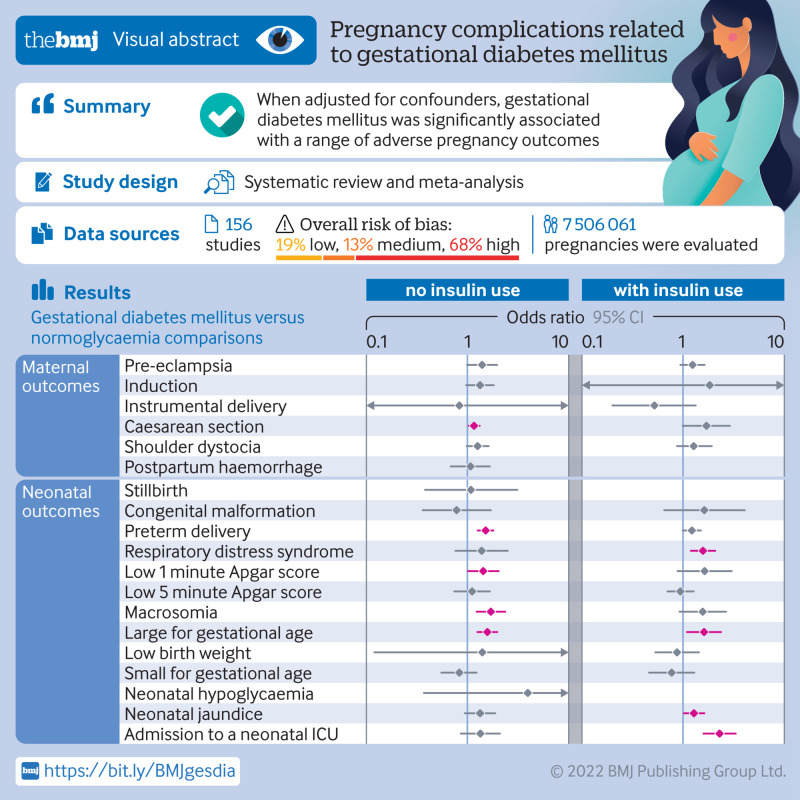
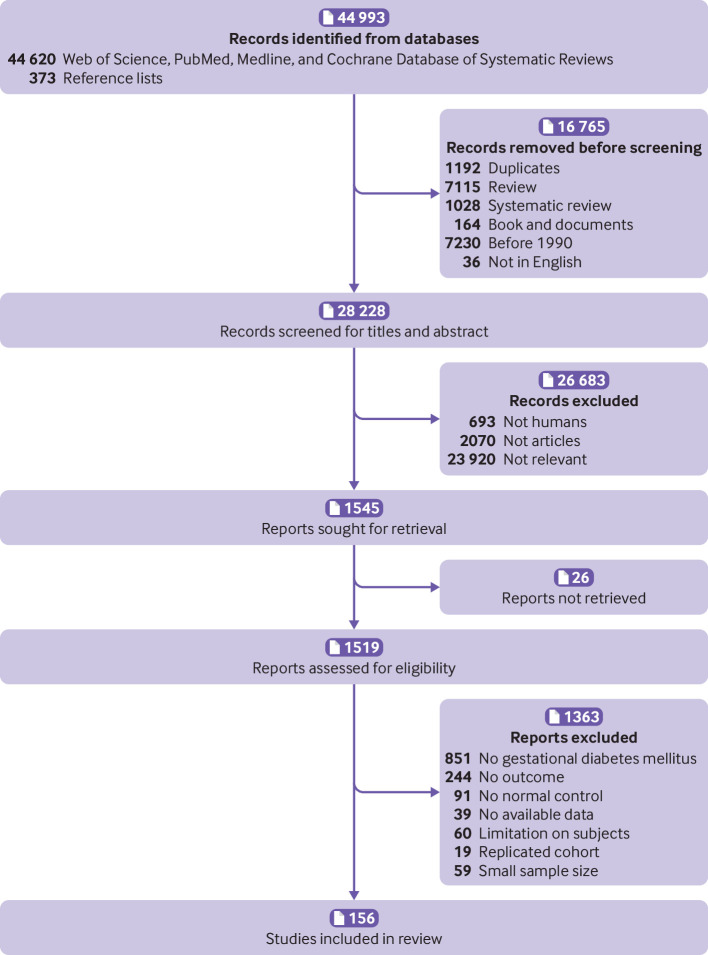
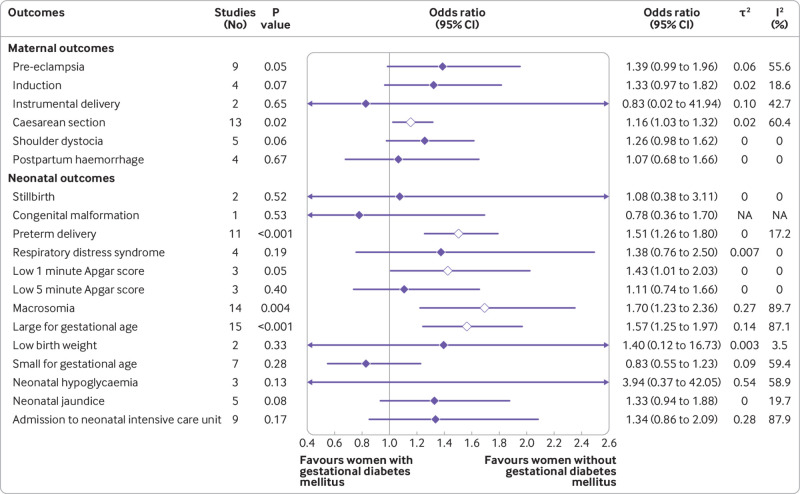
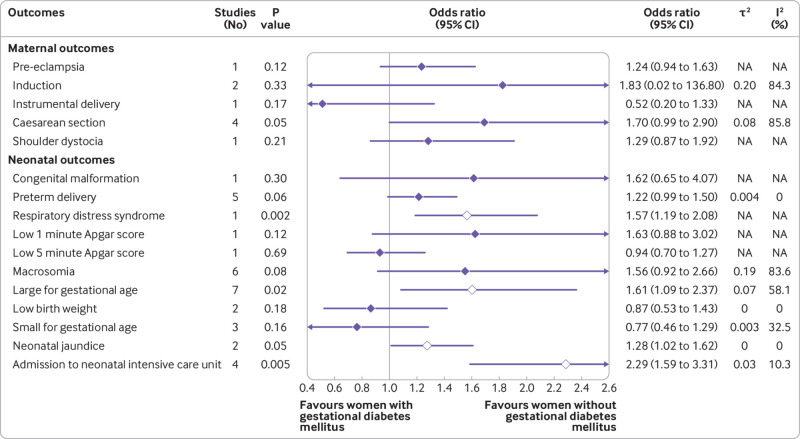
Objective: To investigate the association between gestational diabetes mellitus and adverse outcomes of pregnancy after adjustment for at least minimal confounding factors. Design: Systematic review and meta-analysis. Data sources: Web of Science, PubMed, Medline, and Cochrane Database of Systematic Reviews, from 1 January 1990 to 1 November 2021. Review methods: Cohort studies and control arms of trials reporting complications of pregnancy in women with gestational diabetes mellitus were eligible for inclusion. Based on the use of insulin, studies were divided into three subgroups: no insulin use (patients never used insulin during the course of the disease), insulin use (different proportions of patients were treated with insulin), and insulin use not reported. Subgroup analyses were performed based on the status of the country (developed or developing), quality of the study, diagnostic criteria, and screening method. Meta-regression models were applied based on the proportion of patients who had received insulin. Results: 156 studies with 7 506 061 pregnancies were included, and 50 (32.1%) showed a low or medium risk of bias. In studies with no insulin use, when adjusted for confounders, women with gestational diabetes mellitus had increased odds of caesarean section (odds ratio 1.16, 95% confidence interval 1.03 to 1.32), preterm delivery (1.51, 1.26 to 1.80), low one minute Apgar score (1.43, 1.01 to 2.03), macrosomia (1.70, 1.23 to 2.36), and infant born large for gestational age (1.57, 1.25 to 1.97). In studies with insulin use, when adjusted for confounders, the odds of having an infant large for gestational age (odds ratio 1.61, 1.09 to 2.37), or with respiratory distress syndrome (1.57, 1.19 to 2.08) or neonatal jaundice (1.28, 1.02 to 1.62), or requiring admission to the neonatal intensive care unit (2.29, 1.59 to 3.31), were higher in women with gestational diabetes mellitus than in those without diabetes. No clear evidence was found for differences in the odds of instrumental delivery, shoulder dystocia, postpartum haemorrhage, stillbirth, neonatal death, low five minute Apgar score, low birth weight, and small for gestational age between women with and without gestational diabetes mellitus after adjusting for confounders. Country status, adjustment for body mass index, and screening methods significantly contributed to heterogeneity between studies for several adverse outcomes of pregnancy. Conclusions: When adjusted for confounders, gestational diabetes mellitus was significantly associated with pregnancy complications. The findings contribute to a more comprehensive understanding of the adverse outcomes of pregnancy related to gestational diabetes mellitus. Future primary studies should routinely consider adjusting for a more complete set of prognostic factors. Review registration: PROSPERO CRD42021265837.
Overview
The claims and statistics of this paper haven’t been checked yet.
Free: it reads the open-access text and checks the first 5 claims that cite a source we can check. Create a free account to check every claim.
Integrity signals
Registry
Cites
Statistics
Figures
Verification
Claims the paper makes
The claims and statistics of this paper haven’t been checked yet.
Free: it reads the open-access text and checks the first 5 claims that cite a source we can check. Create a free account to check every claim.
Self-check
Percentages, sums and reported differences re-computed from the paper’s own numbers.
The self-check needs the paper’s full text.
Citations
Cites
Measuring inconsistency in meta-analyses
Higgins, J. P. T., Thompson, S. G., Deeks, J. J., & Altman, D. G. (2003) · BMJ · doi:10.1136/bmj.327.7414.557 · Cited by 63,139
Bias in meta-analysis detected by a simple, graphical test
Egger, M., Smith, G. D., Schneider, M., & Minder, C. (1997) · BMJ · doi:10.1136/bmj.315.7109.629 · Cited by 56,722
Hyperglycemia and adverse pregnancy outcomes
(2008) · New England Journal of Medicine · doi:10.1056/nejmoa0707943 · Cited by 5,563
2. Classification and Diagnosis of Diabetes: Standards of Medical Care in Diabetes—2020
American Diabetes Association (2020) · Diabetes Care · doi:10.2337/dc20-s002 · Cited by 3,187
IntHout, J., Ioannidis, J. P., & Borm, G. F. (2014) · BMC Medical Research Methodology · doi:10.1186/1471-2288-14-25 · Cited by 2,419
McIntyre, H. D., Catalano, P., Zhang, C., Desoye, G., Mathiesen, E. R., & Damm, P. (2019) · Nature Reviews Disease Primers · doi:10.1038/s41572-019-0098-8 · Cited by 1,850
What to add to nothing? Use and avoidance of continuity corrections in meta‐analysis of sparse data
J. Sweeting, M., J. Sutton, A., & C. Lambert, P. (2004) · Statistics in Medicine · doi:10.1002/sim.1761 · Cited by 1,734
Prevalence of Gestational Diabetes and Risk of Progression to Type 2 Diabetes: a Global Perspective
Zhu, Y., & Zhang, C. (2016) · Current Diabetes Reports · doi:10.1007/s11892-015-0699-x · Cited by 1,260
(1964) · PubMed · Cited by 1,230
The Hyperglycemia and Adverse Pregnancy Outcome Study
Catalano, P. M., McIntyre, H. D., Cruickshank, J. K., McCance, D. R., Dyer, A. R., Metzger, B. E., Lowe, L. P., Trimble, E. R., Coustan, D. R., Hadden, D. R., et al. (2012) · Diabetes Care · doi:10.2337/dc11-1790 · Cited by 954
Research works printed but not linked: 3
- Cochran WG. Some methods for strengthening the common×2 tests. Bioethics 1954; 10: 417.
- Zhao E Zhang Y Zeng X Liu B. Association between maternal diabetes mellitus and the risk of congenital malformations: A meta-analysis of cohort studies. Drug Discov Ther 2015; 9: 274- 81. 10.5582/ddt.2015.01044. 26370526 · DOI · Paper page
- Li Y Wang W Zhang D. Maternal diabetes mellitus and risk of neonatal respiratory distress syndrome: a meta-analysis. Acta Diabetol 2019; 56: 729- 40. 10.1007/s00592-019-01327-4. 30955125 · DOI
Cited by
Neutrophil extracellular traps in homeostasis and disease
Wang, H., Kim, S. J., Lei, Y., Wang, S., Wang, H., Huang, H., Zhang, H., & Tsung, A. (2024) · Signal Transduction and Targeted Therapy · doi:10.1038/s41392-024-01933-x · Cited by 537
Epidemiology and management of gestational diabetes
Sweeting, A., Hannah, W., Backman, H., Catalano, P., Feghali, M., Herman, W. H., Hivert, M.-F., Immanuel, J., Meek, C., Oppermann, M. L., et al. (2024) · The Lancet · doi:10.1016/s0140-6736(24)00825-0 · Cited by 585
Xie, W., Wang, Y., Xiao, S., Qiu, L., Yu, Y., & Zhang, Z. (2022) · BMJ · doi:10.1136/bmj-2022-070244 · Cited by 204
Pathophysiology from preconception, during pregnancy, and beyond.
Hivert, M.-F., Backman, H., Benhalima, K., Catalano, P., Desoye, G., Immanuel, J., McKinlay, C. J. D., Meek, C. L., Nolan, C. J., Ram, U., et al. (2024) · The Lancet · doi:10.1016/s0140-6736(24)00827-4 · Cited by 186
Unveiling Gestational Diabetes: An Overview of Pathophysiology and Management
Mittal, R., Prasad, K., Lemos, J. R. N., Arevalo, G., & Hirani, K. (2025) · International Journal of Molecular Sciences · doi:10.3390/ijms26052320 · Cited by 189
“Macrosomia, a direct fetal consequence of GDM, occurs due to the excessive transfer of maternal glucose across the placenta [4,53–57].”
Systematic review and meta-analysis of pregnancy outcomes in women with polycystic ovary syndrome
Khomami, M. B., Shorakae, S., Hashemi, S., Harrison, C. L., Piltonen, T., Romualdi, D., Tay, C. T., Teede, H. J., Vanky, E., & Mousa, A. (2024) · Nature Communications · doi:10.1038/s41467-024-49749-1 · Cited by 166
“It is associated with increased rates of cesarean section, preterm labor, macrosomia, and large-for-gestational age offspring 126 and with increased maternal risk for cardiovascular and cerebrovascular diseases later in life 127 .”
BackgroundRodolaki, K., Pergialiotis, V., Iakovidou, N., Boutsikou, Τ., Iliodromiti, Z., & Kanaka‐Gantenbein, C. (2023) · Frontiers in Endocrinology · doi:10.3389/fendo.2023.1125628 · Cited by 141
“It has been observed that infants born to women with diabetes generally have lower Apgar scores and a higher incidence of neonatal hypoglycemia, particularly in cases of pre-existing diabetes (7, 8).”
BackgroundPrenatal environmental risk factors for autism spectrum disorder and their potential mechanisms
Love, C., Sominsky, L., O’Hely, M., Berk, M., Vuillermin, P., & Dawson, S. L. (2024) · BMC Medicine · doi:10.1186/s12916-024-03617-3 · Cited by 110
“Consequently, obesity and GDM may disrupt the interaction between maternal metabolic hormones such as leptin and insulin [90, 99], leading to heightened secre - tion of inflammatory cytokines [100].”
BackgroundNeutrophil Extracellular Traps (NETs) in health and disease
Shahzad, A., Ni, Y., Yang, Y., Liu, W., Teng, Z., Bai, H., Liu, X., Sun, Y., Xia, J., Cui, K., et al. (2025) · Molecular Biomedicine · doi:10.1186/s43556-025-00337-9 · Cited by 112
“…neutrophils in GDM exhibit an exaggerated pro-NETotic phenotype, characterized by spontane-ous NETs formation and increased placental infiltration, particularly with NE. NE disrupts trophoblast physiology and alters glucose metabolism through the modulation of key signaling pathways [218–220].”
Eades, C. E., Burrows, K. A., Andreeva, R., Stansfield, D., & Evans, J. M. M. (2024) · BMC Pregnancy and Childbirth · doi:10.1186/s12884-024-06378-2 · Cited by 96
“This accords with evidence suggesting that the variability in reported prevalence for GDM may be the due to different methodologies and criteria [2].”
BackgroundYe, W., Luo, C., Zhou, J., Liang, X., Wen, J., Huang, J., Zeng, Y., Wu, Y., Gao, Y., Liu, Z., et al. (2025) · The Lancet Diabetes & Endocrinology · doi:10.1016/s2213-8587(25)00036-1 · Cited by 82
Self-citationMicrobiome Changes in Pregnancy Disorders
Giannella, L., Grelloni, C., Quintili, D., Fiorelli, A., Montironi, R., Alia, S., Carpini, G. D., Giuseppe, J. D., Vignini, A., & Ciavattini, A. (2023) · Antioxidants · doi:10.3390/antiox12020463 · Cited by 69
Sun, Z., Pan, X., Li, X., Jiang, L., Hu, P., Wang, Y., Ye, Y., Wu, P., Zhao, B., Xu, J., et al. (2023) · Advanced Science · doi:10.1002/advs.202205289 · Cited by 67
Machine Learning Approach for Diabetes Detection Using Fine-Tuned XGBoost Algorithm
Maulana, A., Faisal, F. R., Noviandy, T. R., Rizkia, T., Idroes, G. M., Tallei, T. E., El‐Shazly, M., & Idroes, R. (2023) · Infolitika Journal of Data Science · doi:10.60084/ijds.v1i1.72 · Cited by 65
The Hidden Impact of Gestational Diabetes: Unveiling Offspring Complications and Long-Term Effects
Bekai, E. A., Beaini, C. E., Kalout, K., Safieddine, O., Semaan, S., Sahyoun, F., Ghadieh, H. E., Azar, S. T., Kanaan, A., & Harb, F. (2025) · Life · doi:10.3390/life15030440 · Cited by 77
“Regard-less, the numbers are rising internationally, and this is directly correlated to the increased levels of obesity over a long-time frame [3].”
Neonates at Risk: Understanding the Impact of High-Risk Pregnancies on Neonatal Health
Sokou, R., Lianou, A., Lampridou, M., Panagiotounakou, P., Kafalidis, G., Paliatsiou, S., Volaki, P., Tsantes, A. G., Boutsikou, Τ., Iliodromiti, Z., et al. (2025) · Medicina · doi:10.3390/medicina61061077 · Cited by 65
“A systematic review and meta-analysis of 156 studies involving over 7.5 million pregnancies demonstrated that GDM is significantly associated with increased odds of several adverse perinatal outcomes, even after adjustment for confounding factors [76].”
InfluentialPreda, A., Iliescu, D. G., Comănescu, A. C., Zorilă, G. L., Vladu, I. M., Forțofoiu, M.-C., Ţenea-Cojan, T. Ş., Preda, S. D., Diaconu, I.-D., Moța, E., et al. (2023) · Journal of Clinical Medicine · doi:10.3390/jcm12144572 · Cited by 65
“GDM is also associated with an increased risk of neonatal complications such as hypoglycemia, hyperbilirubinemia, hypocalcemia, polycythemia, respiratory distress syndrome, and birth trauma [17].”
BackgroundMurphy, K., Berk, J., Muhwava, L. S., Booley, S., Harbron, J., Ware, L. J., Norris, S. A., Zarowsky, C., Lambert, E. V., & Levitt, N. S. (2023) · BMC Public Health · doi:10.1186/s12889-023-15586-y · Cited by 55
“It is now one of the most common complications seen in pregnancy worldwide and is associated with several adverse pregnancy outcomes [2, 3].”
BackgroundStillbirth: prevention and supportive bereavement care
Atkins, B., Kindinger, L. M., Mahindra, M. P., Moatti, Z., & Siassakos, D. M. (2023) · BMJ Medicine · doi:10.1136/bmjmed-2022-000262 · Cited by 57
Pregnancy outcomes in type 2 diabetes: a systematic review and meta-analysis
Clement, N. S., Abul, A., Farrelly, R., Murphy, H. R., Forbes, K. A., Simpson, N., & SCOTT, E. M. (2024) · American Journal of Obstetrics and Gynecology · doi:10.1016/j.ajog.2024.11.026 · Cited by 58
Pregnancy and postpartum dynamics revealed by millions of lab tests
Bar, A., Moran, R., Cohen, N. M., Kohanim, Y. K., Mayo, A., Toledano, Y., & Alon, U. S. (2025) · Science Advances · doi:10.1126/sciadv.adr7922 · Cited by 54
“It usually appears in the second or third trimester and can affect the health of both mother and fetus ( 45 , 46 ).”
Chen, J., Guo, L., Liu, H., Jin, L., Meng, W., Fang, J., Zhao, L., Zeng, X., Yang, B., Wang, Q., et al. (2023) · Environment International · doi:10.1016/j.envint.2023.107791 · Cited by 48
Hyperglycemia in Pregnancy and Women’s Health in the 21st Century
McIntyre, D. H., Fuglsang, J., Kampmann, U., Knorr, S., & Ovesen, P. (2022) · International Journal of Environmental Research and Public Health · doi:10.3390/ijerph192416827 · Cited by 56
“A recent sy tematic review and meta-analysis quantified the short-term outcomes in pregnancies complicated by gestational diabetes mellitus [19].”
BackgroundYu, J., Ren, J. F., Ren, Y., Wu, Y., Zeng, Y., Zhang, Q., & Xiao, X. (2024) · EBioMedicine · doi:10.1016/j.ebiom.2024.105008 · Cited by 50
Benton, M., Silverio, S. A., & Ismail, K. (2023) · PLoS ONE · doi:10.1371/journal.pone.0288395 · Cited by 45
Phelan, S., Jelalian, E., Coustan, D. R., Caughey, A. B., CASTORINO, K. N., Hagobian, T. A., Muñoz‐Christian, K., Schaffner, A. A., Shields, L. E., Heaney, C., et al. (2023) · American Journal of Obstetrics and Gynecology · doi:10.1016/j.ajog.2023.01.037 · Cited by 48
Yang, F., Liu, H., & Ding, C. (2024) · Diabetology & Metabolic Syndrome · doi:10.1186/s13098-024-01539-x · Cited by 47
Chen, L., & Zhu, Y. (2024) · Current Diabetes Reports · doi:10.1007/s11892-024-01552-4 · Cited by 44
“Pregnant individuals with GDM are at greater risk for other pregnancy complications such as hypertensive disorders of pregnancy (gestational hypertensive and preeclampsia) and cesarean delivery [27].”
The Autism Spectrum Disorder and Its Possible Origins in Pregnancy
Botelho, R. M., Silva, A. L. M., & Borbely, A. U. (2024) · International Journal of Environmental Research and Public Health · doi:10.3390/ijerph21030244 · Cited by 51
“In addition to elevated glucose levels, this disease is accompanied by an imbalance in the mother’s inflammatory response, with an increase in the production of pro-inflammatory cytokines to the detriment of anti-inflammatory ones [105,106].”
BackgroundHassan, A., Ahmad, S. G., Iqbal, T., Munir, E. U., Ayyub, K., & Ramzan, N. (2025) · International Journal of Computational Intelligence Systems · doi:10.1007/s44196-025-00760-4 · Cited by 39
“From the fetal perspective, GDM has negative effects on macrosomia that result in a larger size of the newborn baby [15], neonatal hypoglycemia which is low blood sugar in newborns [16], and respiratory distress syndrome [17] which may result in long-term complications.”
Venkatesh, K. K., Huang, X., Cameron, N. A., Petito, L. C., Joseph, J. J., Landon, M. B., Grobman, W. A., & Khan, S. S. (2023) · BJOG An International Journal of Obstetrics & Gynaecology · doi:10.1111/1471-0528.17587 · Cited by 40
Cardiovascular risk stratification in young women: the pivotal role of pregnancy
Mattioli, A. V., Coppi, F., Bucciarelli, V., & Gallina, S. (2023) · Journal of Cardiovascular Medicine · doi:10.2459/jcm.0000000000001557 · Cited by 39
Xu, J., Lin, X., Fang, Y. Z., Cui, J., Li, Z., Yu, F., Tian, L., Guo, H., Lu, X., Ding, J., et al. (2023) · Frontiers in Immunology · doi:10.3389/fimmu.2023.1191184 · Cited by 43
Metformin in Gestational Diabetes Mellitus: To Use or Not to Use, That Is the Question
Tocci, V., Mirabelli, M., Salatino, A., Sicilia, L., Giuliano, S., Brunetti, F. S., CHIEFARI, E. D., Sarro, G. D., FOTI, D. P., & Brunetti, A. (2023) · Pharmaceuticals · doi:10.3390/ph16091318 · Cited by 39
“A robust meta-analysis conducted by Ye and colleagues has recently quantified the risk of short-term adverse pregnancy outcomes associated with GDM across a sample size of 7,506,061 pregnancies [2].”
MethodAn overview of diabetes mellitus in pregnant women with obesity
Bashir, M., Fagier, Y., Ahmed, B., & Konje, J. C. (2024) · Best Practice & Research Clinical Obstetrics & Gynaecology · doi:10.1016/j.bpobgyn.2024.102469 · Cited by 47
Ma, N., Bai, L., & Lü, Q. (2024) · Diabetes Metabolic Syndrome and Obesity · doi:10.2147/dmso.s454826 · Cited by 40
Zhang, L., Wang, F., Tashiro, S., & Liu, P. J. (2024) · Advances in Nutrition · doi:10.1016/j.advnut.2024.100330 · Cited by 42
Diabetes Mellitus Gestacional: Fisiopatologia, fatores de risco e manejo terapêutico
Godinho, B. V., Parma, I. T., Ferraz, N. D. O., Borges, M. S. G., Rocha, T. A. F., Nascimento, M. E. M., Vasconcelos, G. M. D., Barros, J. L. J., ́Anna, V. S. S., & Campos, E. C. P. (2023) · Brazilian Journal of Development · doi:10.34117/bjdv9n4-090 · Cited by 36
A new continuous glucose monitor for the diagnosis of gestational diabetes mellitus: a pilot study
Filippo, D. D., Henry, A., Bell, C., Haynes, S., Chang, M. H. Y., Darling, J., & Welsh, A. W. (2023) · BMC Pregnancy and Childbirth · doi:10.1186/s12884-023-05496-7 · Cited by 34
“Rates of negative outcomes (macrosomia defined as birthweight > 4 kg, preterm delivery 37 weeks’ gestation, respiratory distress and elective/emergency caesarean sections) in the results of the NGT group in this study were used together with their OR described in a recent meta-analysis in GDM women to calculate the sa…”
BackgroundMethodInfluentialDiniz, M. S., Magalhães, C. C., Tocantins, C., Grilo, L. F., Teixeira, J., & Pereira, S. P. (2023) · Nutrients · doi:10.3390/nu15214623 · Cited by 35
“Gestational diabetes mellitus (GDM) is defined as hyperglycemic and glucose intolerance states that are detected, for the first time, either in the second or third trimester of pregnancy [10].”
BackgroundRoustaei, Z., Anttonen, S., Räisänen, S., Gissler, M., & Heinonen, S. T. (2023) · BMJ Open Diabetes Research & Care · doi:10.1136/bmjdrc-2022-003278 · Cited by 35
Gestational Diabetes: An Update 60 Years After O’Sullivan and Mahan
McIntyre, H. D., Kampmann, U., Dalsgaard Clausen, T., Laurie, J., & Ma, R. C. W. (2024) · The Journal of Clinical Endocrinology & Metabolism · doi:10.1210/clinem/dgae709 · Cited by 32
Lu, Q., Li, Y., Ye, D., Yu, X., Huang, W., Zang, S., & Jiang, G. (2023) · Free Radical Biology and Medicine · doi:10.1016/j.freeradbiomed.2023.10.014 · Cited by 33
Zhang, D., Zeng, Y., Sun, B., Li, W., Liu, W., Gao, H., Zhu, Y., Li, H., & Chen, Q. (2024) · Journal of Inflammation Research · doi:10.2147/jir.s474154 · Cited by 40
“1,2 GDM increases the risk of adverse pregnancy outcomes, 3 as well as the long-term risk of cardiometabolic disorders in both mothers and offspring.”
BackgroundGestational diabetes and future cardiovascular diseases: associations by sex-specific genetic data
Zhang, Y., Yu, S., Chen, Z., Liu, H., Li, H., Long, X., Ye, F., Luo, W., Dai, Y., Tu, S., et al. (2024) · European Heart Journal · doi:10.1093/eurheartj/ehae706 · Cited by 34
Expression and clinical significance of short-chain fatty acids in pregnancy complications
Chen, S., Li, J., Ren, S., Gao, Y., Zhou, Y., & Xuan, R. (2023) · Frontiers in Cellular and Infection Microbiology · doi:10.3389/fcimb.2022.1071029 · Cited by 33
“Gestational diabetes mellitus (GDM) increases the risk of gestational hypertension and preterm delivery, and it also causes disorders such as congenital malformations and hyperbilirubinemia in the offspring (Ye et al., 2022; Yan et al., 2022).”
An early prediction model for gestational diabetes mellitus based on metabolomic biomarkers
Razo-Azamar, M., Nambo‐Venegas, R., Meraz‐Cruz, N., Guevara‐Cruz, M., Ibarra‐González, I., Vela-Amieva, M. B., Delgadillo‐Velazquez, J., Santiago, X. C., Escobar, R. F., Vadillo‐Ortega, F., et al. (2023) · Diabetology & Metabolic Syndrome · doi:10.1186/s13098-023-01098-7 · Cited by 36
“GDM places a heavy burden on patients and is associated with higher rates of adverse neonatal outcomes such as premature delivery, shoulder dystocia, macrosomia, birth injuries, neonatal hypoglycemia, neonatal cardiac dysfunction, and stillbirth [10, 11].”
BackgroundHuang, K., Su, S., Wang, X., Hu, M., Zhao, R., Gao, S., Zhang, E., Liu, J., Xie, S., Luan, Y., et al. (2023) · The Journal of Clinical Endocrinology & Metabolism · doi:10.1210/clinem/dgad518 · Cited by 31
Mahmoud, E., Elsayed, A. M., Elsayed, B. M. S., Elsalakawi, Y., Gopinath, A., & Chivese, T. (2024) · BMJ Open · doi:10.1136/bmjopen-2024-091258 · Cited by 34
Genetic Risk Factors and Gene–Lifestyle Interactions in Gestational Diabetes
Jääskeläinen, T. J., & Klemetti, M. M. (2022) · Nutrients · doi:10.3390/nu14224799 · Cited by 36
Quotah, O. F., Andreeva, D., Nowak, K. G., Dalrymple, K. V., Almubarak, A., Patel, A. N., Vyas, N. D., Çakır, G. S., Heslehurst, N., Bell, Z., et al. (2024) · Diabetology & Metabolic Syndrome · doi:10.1186/s13098-023-01217-4 · Cited by 31
“Infants of mothers with GDM are at increased risk of stillbirth, macrosomia, and neonatal hypoglycaemia [3, 4].”
BackgroundKytö, M., Hotta, S., Niinistö, S., Marttinen, P., Korhonen, T. E., Markussen, L. T., Jacucci, G., Sievänen, H. T., Vähä‐Ypyä, H., Korhonen, I., et al. (2024) · American Journal of Obstetrics and Gynecology · doi:10.1016/j.ajog.2024.02.303 · Cited by 31
Hill, R., Gibbons, A., Suwakulsiri, W., Taseska, A., Darke, H., Malhotra, A. K., Yee, H., Fahey, M. C., Hunt, R. W., Lim, I., et al. (2024) · Molecular Psychiatry · doi:10.1038/s41380-024-02808-x · Cited by 30
A meta-analysis of adverse offspring health outcomes in patients with gestational diabetes mellitus
Guan, J., Qiu, J., Li, L., Fu, M., Zhang, M., Wu, Y., Xu, Y., Ding, H., & Gao, Q. (2025) · Diabetes, Obesity and Metabolism · doi:10.1111/dom.16341 · Cited by 27
Balke, S., Weid, P., Fangmann, L., Rostin, P., Henrich, W., & Königbauer, J. T. (2023) · Journal of Clinical Medicine · doi:10.3390/jcm12113709 · Cited by 29
Linder, T., Dressler‐Steinbach, I., Wegener, S., Schellong, K., Schmidt, S., Eppel, D., Monod, C., Heinzl, F., Redling, K., Winzeler, B. F., et al. (2025) · The Lancet Diabetes & Endocrinology · doi:10.1016/s2213-8587(25)00288-8 · Cited by 30
Gao, S., Su, S., Zhang, E., Zhang, Y., Liu, J., Xie, S., Yue, W., Liu, R., & Yin, C. (2023) · Annals of Medicine · doi:10.1080/07853890.2023.2224046 · Cited by 29
“GDM is one of the most common pregnancy-related complications and has been proven to increase the risk of adverse pregnancy outcomes such as caesarean section, preterm birth, large for gestational age, and macrosomia [2].”
BackgroundTaousani, E., Savvaki, D., Tsirou, E., Grammatikopoulou, M. G., Tarlatzis, B. C., Vavilis, D., & Goulis, D. G. (2022) · Metabolites · doi:10.3390/metabo12100998 · Cited by 26
“Moreover, they have more chances of delivering babies who are classified as large for gestational age, require admission to the neonatal intensive care unit, have neonatal jaundice or respiratory distress syndrome [12,13].”
BackgroundNeven, A. C. H., Mousa, A., Boyle, J. A., & Teede, H. J. (2023) · Frontiers in Endocrinology · doi:10.3389/fendo.2022.993619 · Cited by 36
“In studies with insulin use, when adjusted for confounders, women with GDM had increased odds of having an infant born large for gestational age, with respiratory distress syndrome, neonatal jaundice, and/or requiring admission to the neonatal intensive care unit compared to women without GDM (120).”
BackgroundMethodYang, A., Tam, C. H. T., Wong, K. K., Ozaki, R., Lowe, W. L., Metzger, B. E., Chow, E., Tam, W. H., Wong, C. K. C., & Ronald, C. W. (2024) · The Science of The Total Environment · doi:10.1016/j.scitotenv.2024.170220 · Cited by 27
Zhou, X., Zhang, H., Wei, L., Wang, Z., Zhu, S., Yu, J. J., Wang, S., Ding, W., Feng, L., & Wu, J. (2025) · Journal of Molecular Medicine · doi:10.1007/s00109-025-02629-7 · Cited by 29
Obesity and Pregnancy: Impact on Childbirth Timing, Delivery Mode, and Maternal Recovery: An Update
Gerede, A., Danavasi, M., Stavros, S., Potiris, A., Zikopoulos, A., Moustakli, E., Skentou, C., Domali, E., Nikolettos, N., & Eleftheriades, M. I. (2025) · Medical Sciences · doi:10.3390/medsci13030182 · Cited by 25
Joensuu, J., Saarijärvi, H., Rouhe, H., Gissler, M., Ulander, V., Heinonen, S. T., Torkki, P. M., & Mikkola, T. S. (2023) · BMJ Open · doi:10.1136/bmjopen-2022-069918 · Cited by 29
Screening and diagnosis of gestational diabetes
White, S. L., Ayman, G., Bakhai, C., Hillier, T. A., & Magee, L. A. (2023) · BMJ · doi:10.1136/bmj-2022-071920 · Cited by 30
Fetal brain development in pregnancies complicated by gestational diabetes mellitus
Marra, M. C., Mappa, I., Pietrolucci, M. E., Lu, J. L. A., D’Antonio, F., & Rizzo, G. (2024) · Journal of Perinatal Medicine · doi:10.1515/jpm-2023-0456 · Cited by 24
Yu, Z., Zheng, Q., Huang, L., Jiang, X., Gao, X., Li, J., & Liu, R. (2023) · PLoS ONE · doi:10.1371/journal.pone.0291732 · Cited by 25
Jeer, B., Haberfeld, E., Khalil, A. A., Thangaratinam, S., & Allotey, J. (2023) · European Journal of Obstetrics & Gynecology and Reproductive Biology · doi:10.1016/j.ejogrb.2023.07.021 · Cited by 26
Liang, W., Feng, Y., Yang, D., Qin, J., Zhi, X., Wu, W., & Jie, Q. (2023) · Molecular Medicine · doi:10.1186/s10020-023-00716-4 · Cited by 23
“Introduction Gestational diabetes mellitus (GDM) is a common pregnancy complication associated with poor maternal and fetal outcomes (Ye et al. 2022).”
BackgroundTan, J., Chen, L., Wu, Y., Zhu, X., & Fei, H. (2023) · International Journal of General Medicine · doi:10.2147/ijgm.s423565 · Cited by 30
“6,8,9 GDM is also associated with an elevated long-term risk of obesity, T2DM and cardiovascular disease in children.”
BackgroundLi, Z., Zhang, M., Hong, X., Wang, G., Choi, G., Nadeau, K. C., Buckley, J. P., & Wang, X. (2024) · Environment International · doi:10.1016/j.envint.2024.109144 · Cited by 25
ASPECTOS DA SUPLEMENTAÇÃO COM MIO-INOSITOL NA DIABETES MELLITUS GESTACIONAL: UMA REVISÃO INTEGRATIVA
de Vasconcelos, J. A., Fukushima, A. R., & Nicoletti, M. A. (2025) · Revista Foco · doi:10.54751/revistafoco.v18n1-040 · Cited by 22
First‐trimester biomarkers of gestational diabetes mellitus: A scoping review
Swinburne, M., Krasner, S., Mathewlynn, S., & Collins, S. (2025) · Acta Obstetricia Et Gynecologica Scandinavica · doi:10.1111/aogs.70046 · Cited by 21
Diabetes mellitus: Complications, emerging therapeutic targets, and evolving treatment approaches
Mohd, S., Kumar, L. L., Harish, V., Kumar, R., Chaudhary, A., & Sharma, V. (2025) · Obesity Medicine · doi:10.1016/j.obmed.2025.100652 · Cited by 28
Hong, L., Zhu, L., Zhang, J., Fu, Y., Qi, X., & Zhao, M. (2023) · British Journal Of Nutrition · doi:10.1017/s0007114523001678 · Cited by 21
Gazis, D., Tranidou, A., Siargkas, A., Apostolopoulou, A., Koutsouki, G., Goulis, D. G., Tsakalidis, C., Tsakiridis, I. G., & Dagklis, T. (2025) · Journal of Clinical Medicine · doi:10.3390/jcm14134789 · Cited by 26
Hyperglycaemia in pregnancy: the role of ethnicity and geography in risk and outcomes
Yuen, L., Hannah, W., Hare, M. J. L., & Simmons, D. S. (2025) · Diabetologia · doi:10.1007/s00125-025-06510-7 · Cited by 23
Preventing Adverse Cardiovascular Outcomes in Pregnancy Complicated by Obesity
Purohit, A. M., Oyeka, C. P., Khan, S. S., Toscano, M. A., Nayak, S., Lawson, S. M., Blumenthal, R. S., & Sharma, G. V. (2023) · Current Obstetrics and Gynecology Reports · doi:10.1007/s13669-023-00356-9 · Cited by 21
Barriers to progress in pregnancy research: How can we break through?
Stock, S. J., & Aiken, C. (2023) · Science · doi:10.1126/science.adf9347 · Cited by 20
Perkovic-Kepeci, S., Cirkovic, A. M., Milic, N. M., Dugalić, S., Stanisavljevic, D. M., Milinčić, M., Kostić, K., Milic, N., Todorović, J., Marković, K., et al. (2023) · Medicina · doi:10.3390/medicina59081502 · Cited by 24
Alduayji, M. M., & Selim, M. (2023) · Cureus · doi:10.7759/cureus.44200 · Cited by 25
“Several studies have shown that biomarkers, antenatal diet modifications, or early treatment can have beneficial effects on the mother and child [19,20].”
Liao, J., Yu, C., Cai, J., Tian, R., Li, X., Wang, H., Li, L., Song, G., Fu, L., Li, X., et al. (2024) · The Science of The Total Environment · doi:10.1016/j.scitotenv.2024.170849 · Cited by 21
Self-citationDeng, Y., Wu, H., Ng, N. Y. H., Tam, C. H. T., Tsang, A. Y. T., Chan, M. H. M., Lo, K. K.-H., Wang, C. C., Tam, W. H., & Ronald, C. W. (2025) · Diabetologia · doi:10.1007/s00125-025-06476-6 · Cited by 19
Evaluation of 2-year outcomes in infants born to mothers with and without NAFLD in pregnancy
Gross, A. S., Lange, M., Rosenbluth, E., Carroll, C., SPERLING, R. S., Juliano, C. E., Sigel, K. M., Friedman, S. L., Argiriadi, P. A., Chu, J., et al. (2023) · European Journal of Pediatrics · doi:10.1007/s00431-023-05044-7 · Cited by 20
“However, both GDM and pre-gestational maternal DM are associated with neonatal jaundice [21, 22].”
BackgroundDeng, Y., Yu, J., Tao, A., Liu, J., Wang, Q., Cao, Y., Han, S., Xu, X., Yan, X. J., Fang, X., et al. (2023) · Clinical Nutrition ESPEN · doi:10.1016/j.clnesp.2023.07.091 · Cited by 21
Suárez‐Idueta, L., Ohuma, E. O., Chang, C.-J., Hazel, E., Yargawa, J., Okwaraji, Y. B., Bradley, E., Gordon, A., Sexton, J. K., Lawford, H. L. S., et al. (2023) · BJOG An International Journal of Obstetrics & Gynaecology · doi:10.1111/1471-0528.17706 · Cited by 22
“These national variations might reflect true differences in maternal risk factors (including, for instance, overweight, obesity and diabetes) 36 as well as differences in care, including access to intensive obstetric monitoring and labour induction practices, delivery mode preferences and access to…”
Zhang, J., Yin, B., Xi, Y., & Bai, Y. (2024) · Preventive Medicine Reports · doi:10.1016/j.pmedr.2024.102683 · Cited by 21
Basil, B., Mba, I. N., Myke-Mbata, B. K., Adebisi, S., & Oghagbon, E. K. (2024) · BMC Pregnancy and Childbirth · doi:10.1186/s12884-024-06519-7 · Cited by 20
“Gestational Diabetes Mellitus (GDM) poses a significant health concern during pregnancy, impacting both maternal and foetal outcomes [1].”
BackgroundNazarpour, S., Simbar, M., Kiani, Z., Khalaji, N., Khorrami, M., & Naeiji, Z. (2024) · BMC Psychiatry · doi:10.1186/s12888-024-05960-4 · Cited by 29
Influence of Nutrition on Growth and Development of Metabolic Syndrome in Children
Quarta, A., Quarta, M. T., Mastromauro, C., Chiarelli, F., & Giannini, C. (2024) · Nutrients · doi:10.3390/nu16223801 · Cited by 22
“In another study conducted in a pig model, reduced methylation of the gene encoding for the enzyme glucose-6-phosphatase (G6PC) was demonstrated, resulting in increased expression and a consequent hyperglycemic effect [64].”
Yin, M., Zhang, Y., Li, X., Deng, W., Liu, S., Huang, J., Yu, H., Zhou, Z., & Li, X. (2023) · iScience · doi:10.1016/j.isci.2023.108637 · Cited by 19
Self-citationReconsidering the developmental origins of adult disease paradigm
Wells, J. C. K., Desoyé, G., & Leon, D. A. (2024) · Evolution Medicine and Public Health · doi:10.1093/emph/eoae002 · Cited by 19
“Similarly, gestational diabetes mellitus has been associated with a 50% increased risk of preterm birth relative to non-diabetic mothers [151].”
BackgroundLiu, K., Gu, Y., Pan, X., Chen, S., Cheng, J., Zhang, L., & Cao, M. (2024) · iScience · doi:10.1016/j.isci.2024.111019 · Cited by 18
Depression and diet‐related distress among Japanese women with gestational diabetes mellitus
Yamada, K., Endo, M., & Ohashi, K. (2023) · Nursing and Health Sciences · doi:10.1111/nhs.13054 · Cited by 19
“Because GDM is associated with both maternal and fetal perinatal complications (Ye et al., 2022), GDM pregnant women must begin treatment soon after diagnosis to ensure their blood glucose levels remain within normal limits.”
Feng, B.-Y., Zhang, Z., Wei, Q., Mo, Y., Luo, M., Jing, L., & Li, Y. (2023) · Frontiers in Pediatrics · doi:10.3389/fped.2023.1242978 · Cited by 20
“As we know, GDM is a common pregnancy complication linked to adverse newborn outcomes (30, 31).”
BackgroundThe Role of Ultra-Rapid-Acting Insulin Analogs in Diabetes: An Expert Consensus
Giorgino, F., Battelino, T., Bergenstal, R. M., Forst, T. M., Green, J. B., Mathieu, C., Rodbard, H. W., Schnell, O., & Wilmot, E. G. (2023) · Journal of Diabetes Science and Technology · doi:10.1177/19322968231204584 · Cited by 20
“79 Accordingly, treatment of GDM was shown to reduce perinatal morbidity 80 and screening for GDM is therefore largely recommended in current guidelines for pregnant women at elevated risk.”
Ying, Q., Xu, Y., Zhang, Z., Cai, L., Zhao, Y. M., & Jin, L. (2024) · Cardiovascular Diabetology · doi:10.1186/s12933-024-02131-3 · Cited by 20
“GDM can have an impact on perinatal outcomes, including a higher incidence of preterm birth, neonatal hypoglycemia, mac-rosomia, maternal and neonatal birth injuries [19–23].”
BackgroundZou, C., Shen, Q., Yang, Y., Liao, Y., & Du, Q. (2025) · Frontiers in Endocrinology · doi:10.3389/fendo.2025.1555409 · Cited by 18
“Substantial evidence demonstrates that GDM adversely impacts maternal health through inducing metabolic abnormalities (1 – 3) and higher risks of adverse pregnancy outcomes, including macrosomia, large for gestational age (LGA) infants (4), cesarean delivery, and preterm birth (5).”
Huang, Q., Hu, Y.-C., Wang, C.-K., Huang, J., Shen, M., & Ren, L. (2022) · Biological Research For Nursing · doi:10.1177/10998004221131993 · Cited by 17
“The risk of adverse pregnancy outcomes, such as cesarean section, preterm birth, and macrosomia, is 1.5–2 times greater for pregnant women with GDM (Ye et al., 2022).”
BackgroundInfluentialSelf-citationOffomiyor, F. A., & Rehal, S. S. (2022) · Qualitative Health Research · doi:10.1177/10497323221139105 · Cited by 23
“Something that has to do with hereditary though” … (P13, second trimester) “I think maybe it is too much consumption of some kind of some kind classes of food like carbohydrates, too much intake of carbohydrates” … (P14, third trimester) Although some participants could correctly state some causes of GDM, they were ho…”
BackgroundInfluentialA portrait of gestational diabetes mellitus in Brazil: A systematic review and meta-analysis
Iser, B. P. M., Stein, C., Alves, L. F., Carvalho, M. L. D. S., Espinoza, S. A. R., & Schmidt, M. I. (2023) · Archives of Endocrinology and Metabolism · doi:10.20945/2359-4292-2022-0521 · Cited by 21
Metadata
- Authors
- Ye, W., Luo, C., Huang, J., Li, C., Liu, Z., & Liu, F.
- Affiliations
- Central South University (CN)
- Corresponding author
- Liu, Fangkun
- Venue
- BMJ
- Publisher
- BMJ
- Published
- 2022-05-25
- Volume
- 377
- Pages
- e067946
- ISSN
- 1756-1833 (ISSN-L)
- PMC
- PMC9131781
- OpenAlex
- W4281563604
- Cited by
- 1,073
- References
- 196
- Citations by year
- 2026: 258 · 2025: 321 · 2024: 313 · 2023: 160 · 2022: 20
- FWCI
- 41.00
- Type
- journal article
- Language
- en
- Open access
- hybrid
- doi.org
- Licence
- Locations
- BMJ (publishedVersion, cc-by-nc)
- PubMed Central (publishedVersion, cc-by-nc)
- PubMed (publishedVersion)
- Funders
- National Natural Science Foundation of China
- Topics
- Health Sciences › Medicine › Obstetrics and Gynecology › Gestational Diabetes Research and Management
- Health Sciences › Medicine › Public Health, Environmental and Occupational Health › Pregnancy and Medication Impact
- Health Sciences › Medicine › Endocrinology, Diabetes and Metabolism › Diabetes, Cardiovascular Risks, and Lipoproteins
- Keywords
- gestational diabetes mellitus, adverse pregnancy outcomes, cesarean section, preterm birth, macrosomia, large for gestational age, insulin therapy, neonatal respiratory distress syndrome, neonatal jaundice, neonatal intensive care admission, Apgar score, maternal risk factors, confounding adjustment, parity, maternal obesity
- MeSH terms
- Cesarean Section, Female, Fetal Macrosomia, Humans, Infant, Newborn, Insulin, Pregnancy, Pregnancy Complications, Pregnancy Outcome, Diabetes, Gestational
About these checks
Registry, retraction, Cites and statistics results are computed, not judged, with one exception: a printed reference that no index lists is read once by a model before it counts as a citation error. Claims are extracted by a model and kept only when their quote appears verbatim in the text; each cited source is then checked, with a model’s help, for whether it says what the claim relies on. Those verdicts can be wrong — read the claim’s quote and the cited source before relying on one.
Statistics and arithmetic are recomputed, not judged.
Confidence bands are shown only for fields calibrated on our annotated test set. None is calibrated yet, so no band is shown.
What counts as a claim ›How we measure confidence ›How we check this ›
Are you an author, or do you see a problem with this page? Request a review
Data sources
Bibliographic data: Semantic Scholar, OpenAlex, Crossref.
Contains information from the Semantic Scholar Academic Graph Datasets, made available under the ODC Attribution License (ODC-BY 1.0).
Semantic Scholar’s data is described in: Kinney, R., et al. (2023). The Semantic Scholar Open Data Platform. arXiv:2301.10140.
