

Comparative effectiveness of GLP-1 receptor agonists on glycaemic control, body weight, and lipid profile for type 2 diabetes: systematic review and network meta-analysis
Open accessThe DOI matches its Crossref record; 46 of the 46 references it cites were found in a registry or an index; 1 of the 4 sources its claims cite were checked for support.
Abstract
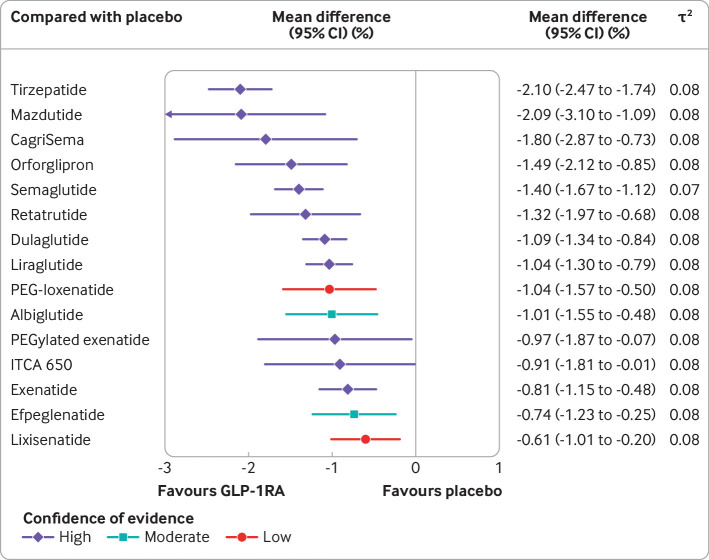
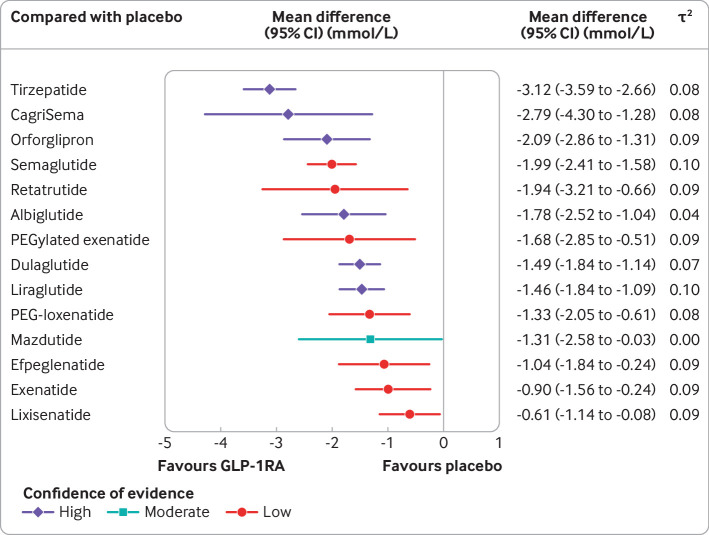
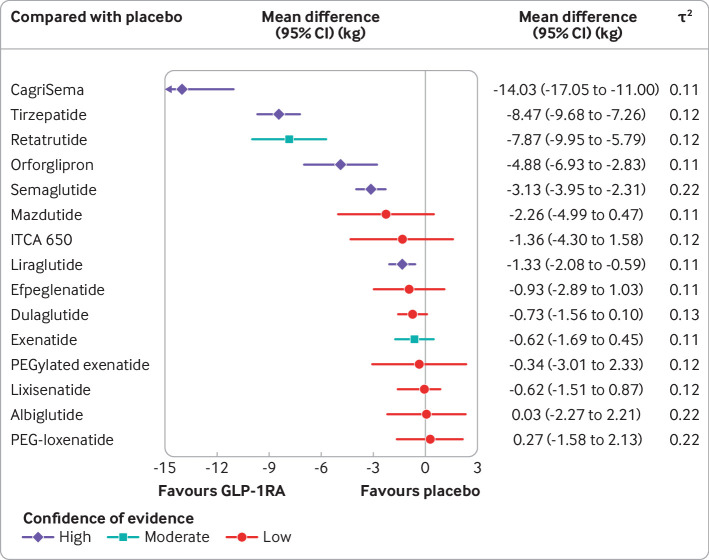
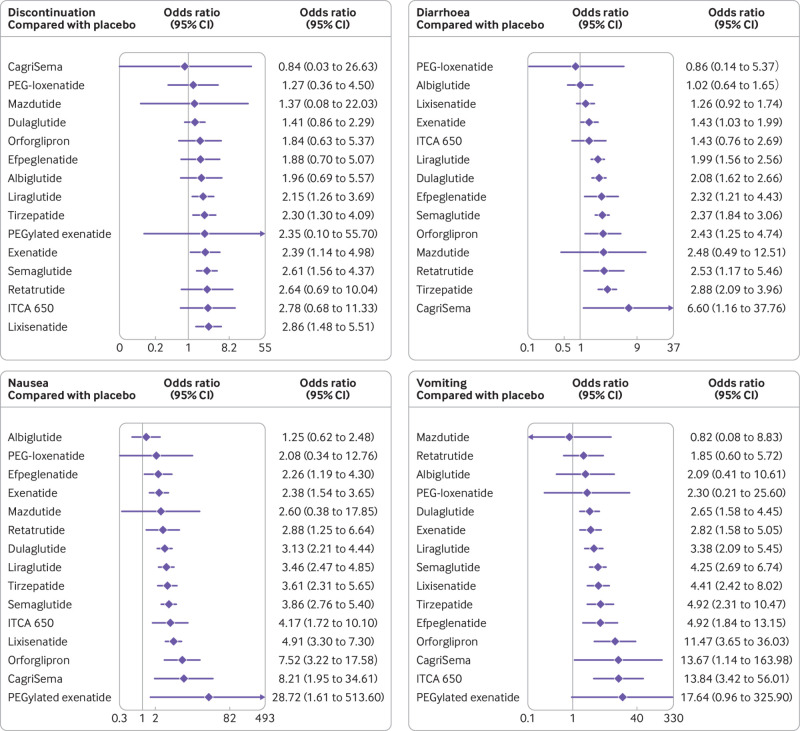
Abstract Objective To evaluate the comparative efficacy and safety of glucagon-like peptide-1 receptor agonists (GLP-1RAs) on glycaemic control, body weight, and lipid profile in adults with type 2 diabetes. Design Systematic review and network meta-analysis. Data sources PubMed, Web of Science, Cochrane Central Register of Controlled Trials (CENTRAL), and Embase from database inception to 19 August 2023. Eligibility criteria for selecting studies Eligible randomised controlled trials enrolled adults with type 2 diabetes who received GLP-1RA treatments and compared effects with placebo or any GLP-1RA drug, with a follow-up duration of at least 12 weeks. Trials with a crossover design, non-inferiority studies comparing GLP-1RA and other drug classes without a placebo group, using withdrawn drugs, and non-English studies were deemed ineligible. Results 76 eligible trials involving 15 GLP-1RA drugs and 39 246 participants were included in this network meta-analysis; all subsequent estimates refer to the comparison with placebo. All 15 GLP-1RAs effectively lowered haemoglobin A 1c and fasting plasma glucose concentrations. Tirzepatide induced the largest reduction of haemoglobin A 1c concentrations (mean difference −2.10% (95% confidence interval −2.47% to −1.74%), surface under the cumulative ranking curve 94.2%; high confidence of evidence), and fasting plasma glucose concentrations (−3.12 mmol/L (−3.59 to −2.66), 97.2%; high confidence), and proved the most effective GLP-1RA drug for glycaemic control. Furthermore, GLP-1RAs were shown to have strong benefits to weight management for patients with type 2 diabetes. CagriSema (semaglutide with cagrilintide) resulted in the highest weight loss (mean difference −14.03 kg (95% confidence interval −17.05 to −11.00); high confidence of evidence), followed by tirzepatide (−8.47 kg (−9.68 to −7.26); high confidence). Semaglutide was effective in lowering the concentration of low density lipoprotein (−0.16 mmol/L (−0.30 to −0.02)) and total cholesterol (−0.48 mmol/L (−0.84 to −0.11)). Moreover, this study also raises awareness of gastrointestinal adverse events induced by GLP-1RAs, and concerns about safety are especially warranted for high dose administration. Conclusions GLP-1RAs are efficacious in treating adults with type 2 diabetes. Compared with the placebo, tirzepatide was the most effective GLP-1RA drug for glycaemic control by reducing haemoglobin A 1c and fasting plasma glucose concentrations. GLP-1RAs also significantly improved weight management for type 2 diabetes, with CagriSema performing the best for weight loss. The results prompt safety concerns for GLP-1RAs, especially with high dose administration, regarding gastrointestinal adverse events. Systematic review registration PROSPERO CRD42022342845.
Overview
CoChat Summary
## TL;DR
This systematic review and network meta-analysis of 76 randomized controlled trials (39,246 participants) compared 15 GLP-1 receptor agonists for type 2 diabetes. Tirzepatide ranked best for glycaemic control, CagriSema for weight loss, and several drugs increased gastrointestinal adverse events.
## Key findings
- Across 76 trials involving 39,246 adults, all 15 GLP-1RAs significantly reduced HbA1c and fasting plasma glucose versus placebo.
- Tirzepatide had the largest HbA1c reduction: mean difference −2.10% (95% CI −2.47% to −1.74%) and fasting plasma glucose reduction: −3.12 mmol/L (−3.59 to −2.66), both with high confidence of evidence.
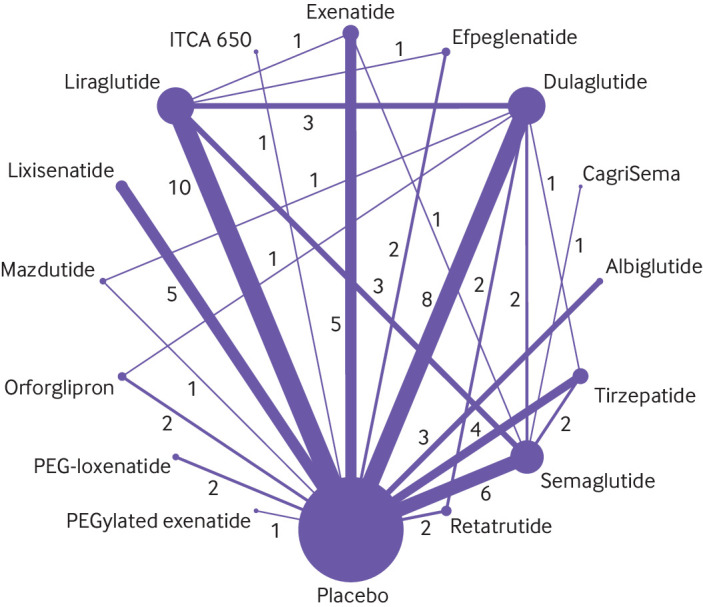
- CagriSema produced the greatest weight loss: −14.03 kg (95% CI −17.05 to −11.00); tirzepatide was next: −8.47 kg (−9.68 to −7.26).
- Semaglutide lowered low-density lipoprotein by −0.16 mmol/L (−0.30 to −0.02) and total cholesterol by −0.48 mmol/L (−0.84 to −0.11); PEG-loxenatide increased HDL by 0.16 mmol/L (0.00 to 0.31).
## Methods
- Systematic review and network meta-analysis of randomized controlled trials, registered in PROSPERO (CRD42022342845) and reported under PRISMA/PRISMA-NMA.
- Searched PubMed, Web of Science, CENTRAL, and Embase from inception to 19 August 2023, plus conference websites, ClinicalTrials.gov, references, and prior reviews; included English-language peer-reviewed RCTs in adults with type 2 diabetes, follow-up ≥12 weeks.
- Used frequentist random-effects network meta-analysis in Stata, with SUCRA rankings, node-splitting/design-treatment interaction for consistency, CINeMA and RoB 2 for evidence quality/bias, and meta-regression/subgroup analyses by dose, follow-up, age, diabetes duration, and background treatment.
## Limitations
- The paper states that included trials varied in population characteristics and follow-up durations, which may have led to imprecise effect estimates.
- The paper states that participants had little control over diet and exercise, which may have influenced blood glucose and body weight.
- The paper states that some trials did not provide enough information to assess randomization, allocation concealment, or blinding, and some drugs had few studies, so subgroup and comparative results should be interpreted cautiously.
- Evident from the text: the review excluded non-English studies, conference abstracts, crossover trials, and non-inferiority studies without a placebo arm, so the evidence base may be narrower than all available GLP-1RA trials.
Model-written summary. Check it against the paper before relying on it.
Integrity signals
Registry
Cites
Statistics
Figures
Verification
Claims the paper makes
1 Valid · 0 Not valid · 1 Not checked · 41 Own results and interpretations
The sources with a verdict support this claim; the rest weren’t checked yet, have no full text we could read, or their verdicts aren’t rated yet.
In the paper
“GLP-1RAs have been shown to greatly reduce the body weight of obese people with type 2 diabetes.8 14”
§ Comparative effectiveness of GLP-1 receptor agonists on glycaemic control, body weight, and lipid profile for type 2 diabetes: systematic review and network meta-analysis > Introduction
What the sources say
- Supportedcites [8] Garvey WT Frias JP Jastreboff AM SURMOUNT-2 investigators. Tirzepatide once weekly for the treatment of obesity in people with type 2 diabetes (SURMOUNT-2): a double-blind, randomised, multicentre, placebo-controlled, phase 3 trial. Lancet 2023; 402: 613- 26. 10.1016/S0140-6736(23)01200-X. 37385275 source
The Research in context section reports that the GLP-1 receptor agonists liraglutide and semaglutide produced placebo-adjusted body-weight reductions of 4.0%–6.2% in people with overweight or obesity and type 2 diabetes. This supports the citing sentence's broad claim; the section also distinguishes these drugs from tirzepatide, a dual GIP and GLP-1 receptor agonist. (LLM, conf=0.91)
- Not checked — no full text of the sourcecites [14] Wharton S Blevins T Connery L GZGI Investigators. Daily oral glp-1 receptor agonist orforglipron for adults with obesity. N Engl J Med 2023; 389: 877- 88. 10.1056/NEJMoa2302392. 37351564 source
boostedstates a cause- Asserted: passes — The authors put it forward as true.
- Checkable: passes — It can be checked against evidence.
- Load-bearing: unclear — It is unclear whether the paper’s conclusions depend on it.
- Based: passes — The paper gives a reason why it holds.
- Supported
A result the paper reports from its own data — it cites no other source for it, so there is none to check. The quote shows it is in the paper.
In the paper
“All 15 GLP-1RA drugs showed significant efficacy in reducing HbA1c levels compared with placebo in adults with type 2 diabetes (fig 2, fig 3).”
§ Comparative effectiveness of GLP-1 receptor agonists on glycaemic control, body weight, and lipid profile for type 2 diabetes: systematic review and network meta-analysis > Results > Glycaemic control
plainstates a causen = 343- Asserted: passes — The authors put it forward as true.
- Checkable: passes — It can be checked against evidence.
- Load-bearing: passes — The paper’s conclusions depend on it.
- Based: passes — The paper gives a reason why it holds.
A result the paper reports from its own data — it cites no other source for it, so there is none to check. The quote shows it is in the paper.
In the paper
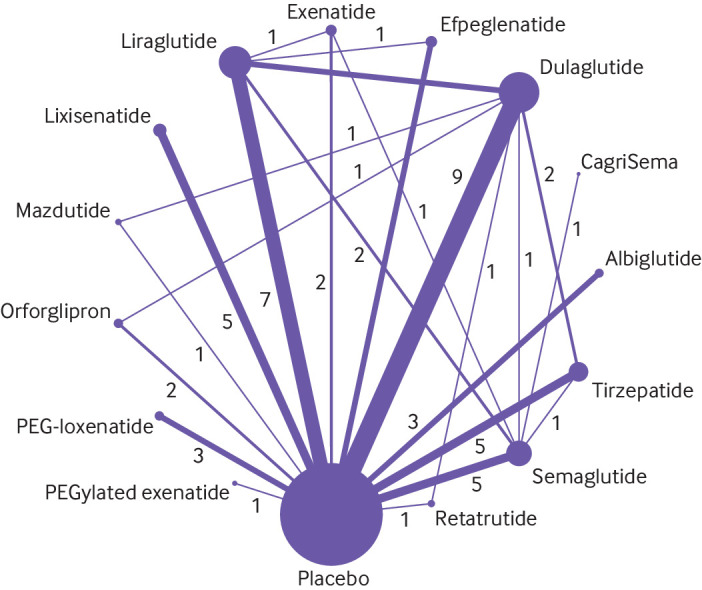
“Evaluated by fasting blood glucose, the network meta-analysis enrolled 47 randomised controlled trials with 17 163 subjects, confirming the placebo controlled effectiveness of all the 15 GLP-1RAs (fig 4, fig 5).”
§ Comparative effectiveness of GLP-1 receptor agonists on glycaemic control, body weight, and lipid profile for type 2 diabetes: systematic review and network meta-analysis > Results > Glycaemic control
boostedstates a causen = 163- Asserted: passes — The authors put it forward as true.
- Checkable: passes — It can be checked against evidence.
- Load-bearing: passes — The paper’s conclusions depend on it.
- Based: passes — The paper gives a reason why it holds.
A result the paper reports from its own data — it cites no other source for it, so there is none to check. The quote shows it is in the paper.
In the paper
“The efficacy of tirzepatide in lowering concentrations of HbA1c and fasting blood glucose, and lowering body weight was directly proportional to the length of follow-up duration (appendix 15).”
§ Comparative effectiveness of GLP-1 receptor agonists on glycaemic control, body weight, and lipid profile for type 2 diabetes: systematic review and network meta-analysis > Results > Subgroup analyses
plainstates an association- Asserted: passes — The authors put it forward as true.
- Checkable: passes — It can be checked against evidence.
- Load-bearing: unclear — It is unclear whether the paper’s conclusions depend on it.
- Based: passes — The paper gives a reason why it holds.
A result the paper reports from its own data — it cites no other source for it, so there is none to check. The quote shows it is in the paper.
In the paper
“followed by tirzepatide (−8.47 kg (−9.68 to −7.26); high confidence).”
§ Comparative effectiveness of GLP-1 receptor agonists on glycaemic control, body weight, and lipid profile for type 2 diabetes: systematic review and network meta-analysis > Abstract > Results
plainstates a cause- Asserted: passes — The authors put it forward as true.
- Checkable: passes — It can be checked against evidence.
- Load-bearing: passes — The paper’s conclusions depend on it.
- Based: passes — The paper gives a reason why it holds.
23 more claims
Create a free account to see all 43 claims and every source verdict.
- It may state two separate claims as one. 13
- Probably not a substantial claim. 5
Claims other papers make about this one
Each is checked against this paper’s own text: does it say what the citing paper says it does?
The source backs part of the claim, not all of it — or backs it for a different population, condition or comparison.
In the citing paper
“However, GLP‐1RA treatments showed over twice the odds of discontinuation due to adverse events compared with placebo. 27”
From Real‐world evidence on the utilization, clinical and comparative effectiveness, and adverse effects of newer GLP ‐ 1RA ‐based weight‐loss therapies (2025) · cites this paper as [27]
Experimental — accuracy not yet measuredThe source backs part of the claim, not all of it — or backs it for a different population, condition or comparison.
In the citing paper
“According to recent studies, tirzepatide, orforglipron, semaglutide, liraglutide, and exenatide were positively associated with diarrhea when compared with placebo, while liraglutide was associated with diarrhea when compared with exenatide and placebo [51, 53, 56].”
From Gastrointestinal adverse events associated with GLP-1 RA in non-diabetic patients with overweight or obesity: a systematic review and network meta-analysis (2025) · cites this paper as [53]
Experimental — accuracy not yet measuredThe source backs part of the claim, not all of it — or backs it for a different population, condition or comparison.
In the citing paper
“Nausea was the most frequently reported symptom, besides vomiting and diarrhea, findings consistent with prior research in diabetic populations [51–56].”
From Gastrointestinal adverse events associated with GLP-1 RA in non-diabetic patients with overweight or obesity: a systematic review and network meta-analysis (2025) · cites this paper as [53]
Experimental — accuracy not yet measuredThe source backs part of the claim, not all of it — or backs it for a different population, condition or comparison.
In the citing paper
“The benefits of this form of therapy to treat T2DM include 1) delayed gastric emptying, and 2) inhibiting the production of glucagon from pancreatic α- cells (71–73).”
From A critical review on diabetes mellitus type 1 and type 2 management approaches: from lifestyle modification to current and novel targets and therapeutic agents. (2024) · cites this paper as [73]
Experimental — accuracy not yet measuredThe cited source says what the claim attributes to it.
In the citing paper
“In a meta‐analysis of 76 RCTs in T2D, liraglutide, semaglutide and tirzepatide were all associated with significantly increased ORs of nausea, vomiting and diarrhoea. 27”
From Real‐world evidence on the utilization, clinical and comparative effectiveness, and adverse effects of newer GLP ‐ 1RA ‐based weight‐loss therapies (2025) · cites this paper as [27]
7 more claims about this paper
Create a free account to see every claim other papers make about this one.
Citations
Cites
The PRISMA 2020 statement: An updated guideline for reporting systematic reviews
Page, M. J., McKenzie, J. E., Bossuyt, P. M., Boutron, I., Hoffmann, T. C., Mulrow, C. D., Shamseer, L., Tetzlaff, J. M., Akl, E. A., Brennan, S. E., et al. (2021) · BMJ · doi:10.1136/bmj.n71 · Cited by 108,283
RoB 2: a revised tool for assessing risk of bias in randomised trials
Sterne, J. A. C., Savović, J., Page, M. J., Elbers, R. G., Blencowe, N. S., Boutron, I., Cates, C. J., Cheng, H.-Y., Corbett, M. S., Eldridge, S. M., et al. (2019) · BMJ · doi:10.1136/bmj.l4898 · Cited by 34,787
James, S. L., Abate, D., Abate, K. H., Abay, S. M., Abbafati, C., Abbasi, N., Abbastabar, H., Abd-Allah, F., Abdela, J., Abdelalim, A., et al. (2018) · The Lancet · doi:10.1016/s0140-6736(18)32279-7 · Cited by 13,867
Self-citationHutton, B., Salanti, G., Caldwell, D. M., Chaimani, A., Schmid, C. H., Cameron, C., Ioannidis, J. P. A., Straus, S., Thorlund, K., Jansen, J. P., et al. (2015) · Annals of Internal Medicine · doi:10.7326/m14-2385 · Cited by 8,269
The PRISMA 2020 statement: an updated guideline for reporting systematic reviews
Page, M. J., McKenzie, J., Bossuyt, P., Boutron, I., Hoffmann, T., mulrow, C., Shamseer, L., Tetzlaff, J., Akl, E., Brennan, S. E., et al. (2020) · doi:10.31222/osf.io/v7gm2_v1 · Cited by 8,090
The PRISMA 2020 statement: an updated guideline for reporting systematic reviews
Page, M. J., McKenzie, J., Bossuyt, P., Boutron, I., Hoffmann, T., mulrow, C., Shamseer, L., Tetzlaff, J., Akl, E., Brennan, S. E., et al. (2020) · doi:10.31222/osf.io/v7gm2 · Cited by 5,177
Biology of Incretins: GLP-1 and GIP
Baggio, L. L., & Drucker, D. J. (2007) · Gastroenterology · doi:10.1053/j.gastro.2007.03.054 · Cited by 3,639
Investigating and dealing with publication and other biases in meta-analysis
Sterne, J. A. C., Egger, M., & Smith, G. D. (2001) · BMJ · doi:10.1136/bmj.323.7304.101 · Cited by 2,225
PPARγ signaling and metabolism: the good, the bad and the future
Ahmadian, M., Suh, J. M., Hah, N., Liddle, C., Atkins, A. R., Downes, M., & Evans, R. M. (2013) · Nature Medicine · doi:10.1038/nm.3159 · Cited by 2,016
CINeMA: an approach for assessing confidence in the results of a network meta-analysis
Nikolakopoulou, A., Higgins, J. P. T., Papakonstantinou, T., Chaimani, A., Del Giovane, C., Egger, M., & Salanti, G. (2020) · PLOS Medicine · doi:10.1371/journal.pmed.1003082 · Cited by 1,935
Cited by
Karakasis, P., Patoulias, D., Fragakis, N., & Mantzoros, C. S. (2025) · Metabolism · doi:10.1016/j.metabol.2024.156113 · Cited by 242
Wong, H. J., Sim, B., Teo, Y. H., Teo, Y. N., Chan, M. Y., Yeo, L. L. L., Eng, P. C., Tan, B. Y. Q., Sattar, N., Dalakoti, M., et al. (2025) · Diabetes Care · doi:10.2337/dc24-1678 · Cited by 208
Thomsen, R. W., Mailhac, A., Løhde, J. B., & Pottegård, A. (2025) · Diabetes Obesity and Metabolism · doi:10.1111/dom.16364 · Cited by 207
Moiz, A., Filion, K. B., Toutounchi, H., Tsoukas, M. A., Yu, O. H. Y., Peters, T. M., & Eisenberg, M. J. (2025) · Annals of Internal Medicine · doi:10.7326/annals-24-01590 · Cited by 149
“Previous systematic reviews and meta-analyses of RCTs have examined the ef fi cacy and safety of GLP-1 RAs for weight loss in people with overweight or obesity, both with diabetes (46 – 48) and without diabetes (1, 49 – 51).”
Mitochondrial metabolic reprogramming in diabetic kidney disease
Fan, X., Yang, M., Lang, Y., Lu, S., Kong, Z., Gao, Y., Shen, N., Zhang, D., & Lv, Z. (2024) · Cell Death and Disease · doi:10.1038/s41419-024-06833-0 · Cited by 184
Clinical Outcomes of Tirzepatide or GLP-1 Receptor Agonists in Individuals With Type 2 Diabetes
Chuang, M.-H., Chen, J.-Y., Wang, H.-Y., Jiang, Z.-H., & Wu, V.-C. (2024) · JAMA Network Open · doi:10.1001/jamanetworkopen.2024.27258 · Cited by 133
Evolving Global Etiology of Hepatocellular Carcinoma (HCC): Insights and Trends for 2024
Koshy, A. (2024) · Journal of Clinical and Experimental Hepatology · doi:10.1016/j.jceh.2024.102406 · Cited by 153
Ismaiel, A., Scarlata, G. G. M., Boitos, I., Leucuta, D.-C., Popa, S.-L., Al Srouji, N., Abenavoli, L., & Dumitrascu, D. L. (2025) · International Journal of Obesity · doi:10.1038/s41366-025-01859-6 · Cited by 99
“Trials with strati fi ed data by age, disease status, and treatment duration will be instrumental in re fi ning patient-centered prescribing practices.”
Diabetes and its complications: molecular mechanisms, prevention and treatment
Zhao, L., Yuan, J., Yang, Q., Ma, J., Yang, F., Zou, Y., Liu, K., & Liu, F. (2026) · Signal Transduction and Targeted Therapy · doi:10.1038/s41392-025-02401-w · Cited by 80
De Giorgi, R., Koychev, I., Adler, A. I., Cowen, P. J., Harmer, C. J., Harrison, P. J., & Taquet, M. (2024) · eClinicalMedicine · doi:10.1016/j.eclinm.2024.102726 · Cited by 78
Tzang, C.-C., Wu, P.-H., Luo, C.-A., Chen, Z.-T., Lee, Y.-T., Huang, E. S., Kang, Y.-F., Lin, W.-C., Tzang, B.-S., & Hsu, T.-C. (2025) · EClinicalMedicine · doi:10.1016/j.eclinm.2025.103680 · Cited by 73
de Lima, E. P., Moretti, R. C., Pomini, K. T., Laurindo, L. F., Sloan, K. P., Sloan, L. A., de Castro, M. V. M., Baldi, E., Ferraz, B. F. R., Pereira, E. D. S. B. M., et al. (2024) · Biology · doi:10.3390/biology13070519 · Cited by 86
Glycaemic control is still central in the hierarchy of priorities in type 2 diabetes management
Khunti, K., Zaccardi, F., Amod, A., Aroda, V. R., Montoya, P. A., Colagiuri, S., Mohan, V., & Chan, J. C. N. (2024) · Diabetologia · doi:10.1007/s00125-024-06254-w · Cited by 93
Johnson, B., Milstead, M., Thomas, O., McGlasson, T., Green, L., Kreider, R., & Jones, R. (2025) · Frontiers in Nutrition · doi:10.3389/fnut.2025.1566498 · Cited by 64
Liu, L., Li, Z., Ye, W., Peng, P., Wang, Y., Wan, L., Li, J., Zhang, M., Wang, Y., Liu, R., et al. (2025) · eClinicalMedicine · doi:10.1016/j.eclinm.2024.103020 · Cited by 62
“Yao et al., 36 also found that tirze-patide is the most effective GLP-1 receptor agonist for reducing fasting glucose levels.”
Tegegne, B. A., Adugna, A., Yenet, A., Yihunie Belay, W., Yibeltal, Y., Dagne, A., Hibstu Teffera, Z., Amare, G. A., Abebaw, D., Tewabe, H., et al. (2024) · Frontiers in Endocrinology · doi:10.3389/fendo.2024.1440456 · Cited by 61
Facciorusso, A., Ramai, D., Dhar, J., Samanta, J., Chandan, S., Gkolfakis, P., Crinò, S. F., Maida, M., Anderloni, A., Boskoski, I., et al. (2025) · Clinical Gastroenterology and Hepatology · doi:10.1016/j.cgh.2024.07.021 · Cited by 59
Haykal, D., Hersant, B., Cartier, H., & Meningaud, J. (2024) · Journal of Cosmetic Dermatology · doi:10.1111/jocd.16716 · Cited by 76
Petković-Dabić, J., Binić, I., Carić, B., Božić, L., Umičević-Šipka, S., Bednarčuk, N., Dabić, S., Šitum, M., Popović‐Pejičić, S., Stojiljković, M. P., et al. (2025) · Biomolecules · doi:10.3390/biom15010046 · Cited by 67
Ren, Q., Zhi, L., & Liu, H. (2025) · Drug Design, Development and Therapy · doi:10.2147/dddt.s531778 · Cited by 44
Structural pharmacology and mechanisms of GLP-1R signaling
Zhou, Q., Zhao, F., Zhang, Y., Yang, D., & Wang, M. (2025) · Trends in Pharmacological Sciences · doi:10.1016/j.tips.2025.03.003 · Cited by 53
Medications for adults with type 2 diabetes: a living systematic review and network meta-analysis
Nong, K., Jeppesen, B. T., Shi, Q., Agoritsas, T., Guyatt, G. H., White, H., Gao, Y., Agarwal, A., Macdonald, H., Zou, X., et al. (2025) · BMJ · doi:10.1136/bmj-2024-083039 · Cited by 53
“This NMA considers both glucose-lowering and emerging disease-modifying medications including SGLT-2 inhibitors, GLP-1RAs, dual glucose-dependent insulinotropic polypeptide and glucagon-like peptide-1 receptor agonists (tirzepatide), non-steroidal mineralocorticoid receptor antagonists (finerenone), dipeptidyl peptida…”
Self-citationSubhani, M., Dhanda, A., King, J. A., Warren, F. C., Creanor, S., Davies, M. J., Eldeghaidy, S., Bawden, S., Gowland, P. A., Bataller, R. A., et al. (2024) · EClinicalMedicine · doi:10.1016/j.eclinm.2024.102920 · Cited by 58
Tang, H., Lu, Y., Donahoo, W. T., Shao, H., Shi, L., Fonseca, V. A., Guo, Y., Bian, J., & Guo, J. (2024) · Annals of Internal Medicine · doi:10.7326/m24-0329 · Cited by 40
Almeida, G. D. O., Nienkotter, T. F., Balieiro, C. C. A., Pasqualotto, E., Cintra, J. B., Carvalho, H. C. P., Silva, A. L. S., Kabariti, J. C., Minucci, B. S., Bertoli, E. D., et al. (2024) · American Journal of Cardiovascular Drugs · doi:10.1007/s40256-024-00647-3 · Cited by 54
“GLP-1 RAs are also effective in the treatment of patients with T2DM, causing, in addition to glycemic control and weight loss, a significant improvement in the lipid profile [51, 52].”
Wiener, J. M., Sanghvi, P. A., Vlastaris, K., Mroz, T. E., Belding, J., Kaelber, D. C., Olson, T. E., Francis, K. P., Adams, J. S., Bernthal, N. M., et al. (2025) · Spine · doi:10.1097/brs.0000000000005283 · Cited by 52
Semaglutide as a GLP-1 Agonist: A Breakthrough in Obesity Treatment
Salvador, R., Moutinho, C. M. S. G., Sousa, C., Vinha, A. F., Carvalho, M. C., & Matos, C. M. (2025) · Pharmaceuticals · doi:10.3390/ph18030399 · Cited by 56
“Among these, SMG has emerged as one of the most promising drugs due to its superior efficacy in both glycemic control and weight reduction compared to other GLP-1 receptor agonists [35,41–43].”
A Closer Look at the Dermatological Profile of GLP-1 Agonists
Persson, C., Eaton, A. C., & MAYROVITZ, H. N. (2025) · Diseases · doi:10.3390/diseases13050127 · Cited by 57
“Dual actions from GLP-1RAs result in decreased fasting and postprandial blood glucose levels, which are fundamental for diabetes management [5].”
Urkon, M., Ferencz, E., Szász, J. A., Szabó, M. I. M., Orbán-Kis, K., Szatmári, S., & Nagy, E. E. (2025) · Pharmaceuticals · doi:10.3390/ph18050614 · Cited by 45
“Similar trends are revealed by the meta-analysis of Yao et al. [106].”
InfluentialCapuccio, S., Scilletta, S., Rocca, F. L., Miano, N., Marco, M. D., Bosco, G., Barbagallo, F. D. G., Scicali, R., Piro, S., & Pino, A. D. (2024) · Biomolecules · doi:10.3390/biom14060687 · Cited by 48
Karakasis, P., Fragakis, N., Patoulias, D., Theofilis, P., Sagris, Μ., Koufakis, T., Vlachakis, P. K., Rangraze, I. R., El‐Tanani, M., Tsioufis, K. P., et al. (2024) · Biomedicines · doi:10.3390/biomedicines12092112 · Cited by 41
“…were initially designed for glycemic management in patients with type 2 diabetes, their impressive effects beyond glucose control, particularly in reducing cardiovascular risk and promoting weight loss, have prompted consideration of their potential use in patients without concurrent T2DM [31].”
BackgroundChan, Y.-C., Chuang, S., Kuo, Y., Lian, Y.-Z., & Chen, Y. (2025) · The Journal of Arthroplasty · doi:10.1016/j.arth.2025.06.083 · Cited by 44
Bao, Y., Hu, Y., Shi, M., & Zhao, Z. (2024) · Diabetes Obesity and Metabolism · doi:10.1111/dom.16107 · Cited by 50
The promise of tirzepatide: A narrative review of metabolic benefits
Sokary, S., & Bawadi, H. A. (2025) · Primary care diabetes · doi:10.1016/j.pcd.2025.03.008 · Cited by 44
Rosenstock, J., Yabe, D., Cox, D., Li, J., Denning, M., Wu, W.-S., Liu, R., Zhao, Y., Manghi, F. P., Abalos, F., et al. (2026) · The Lancet · doi:10.1016/s0140-6736(26)00202-3 · Cited by 50
Emerging Frontiers in GLP-1 Therapeutics: A Comprehensive Evidence Base (2025)
Patel, S., & Niazi, S. K. (2025) · Pharmaceutics · doi:10.3390/pharmaceutics17081036 · Cited by 54
“…efficacy advantage has been confirmed through a comprehensive network meta-analysis of 76 trials encompassing 39,246 participants, which demonstrated tirzepatide 15 mg as the most efficacious agent for HbA1c reduction relative to a placebo (mean difference − 2.00%; 95% CI − 2.16 to − 1.84) [62].”
InfluentialSalvio, G., Ciarloni, A., Ambo, N., Bordoni, M., Perrone, M., Rossi, S., & Balercia, G. (2025) · Andrology · doi:10.1111/andr.70022 · Cited by 41
“39 Several hypotheses have been made, including the weight gain effect of concomitant antidiabetic drugs (e.g., insulin and sulfanilureas), reduced dietary adherence due to fear of hypoglycemia, reduced glycosuria achieved by improved glycemic compensation, and…”
Chu, J., Zhang, H., Wu, Y. F., Huang, Y., Zhu, T., Zhou, Z., & Wang, H. (2025) · EClinicalMedicine · doi:10.1016/j.eclinm.2025.103464 · Cited by 46
“14,15 However, whether combining GLP-1RAs with lifestyle interventions can yield superior outcomes in obesity management and further improve cardiometabolic markers remains to be fully elucidated.”
Self-citationKamarajah, S. K., Gudiozzi, N., Findlay, J. M., Lee, M. J., Pinkney, T., & Markar, S. R. (2025) · eClinicalMedicine · doi:10.1016/j.eclinm.2025.103408 · Cited by 29
“Pharmacological agents such as liraglutide and semaglutide have demonstrated efficacy in weight loss, 10 offering an alternative to more invasive interventions, and shifting the paradigm of non-surgical obesity treatment from behavioural strategies to targeted effective medical therapy.”
Bailey, C. J., Flatt, P. R., & Conlon, J. M. (2025) · Peptides · doi:10.1016/j.peptides.2025.171380 · Cited by 42
“…patients with T2DM with a GLP-1RA has typically reduced the onset and progression of albuminuria independently of the extent of reductions in blood glucose, body weight or blood pressure, and generally with little effect on the rate of decline in estimated glomerular filtration rate (eGFR) [57,58].”
Body image and interest in GLP-1 weight loss medications
Markey, C. N., August, K. J., Malik, D., & Richeson, A. L. (2025) · Body Image · doi:10.1016/j.bodyim.2025.101890 · Cited by 38
Kassem, S., Khalaila, B., Stein, N., Saliba, W., & Zaina, A. (2024) · Diabetes, Obesity and Metabolism · doi:10.1111/dom.15828 · Cited by 28
“11 As a result of these promising RCTs and the pharmacodynamics/pharmacokinetics of this class, it is suggested that treatment intensification will be associated with fewer barriers and subsequently increased treatment adherence and persistence, leading to improved glucose control.”
Physiological Mechanisms by Which the Functional Ingredients in Beer Impact Human Health
Zeng, Y., Ahmed, H. G. M., Li, X., Yang, L., Pu, X., Yang, X., Yang, T., & Yang, J. (2024) · Molecules · doi:10.3390/molecules29133110 · Cited by 41
Somani, S. S., Jain, S. S., Sarraju, A., Sandhu, A. T., Hernandez‐Boussard, T., & Rodríguez, F. (2024) · Communications Medicine · doi:10.1038/s43856-024-00566-z · Cited by 36
“5) 7 , which is trained over an extensive text corpus on both supervised and unsupervised techniques to achieve state-of-the-art performance on the Massive Text Embedding Benchmark 8 .”
Xie, F., Xiong, F., Yang, B., Yan, Z., Shen, Y., Qin, H., Chen, L., Chen, T., Chen, J., Zhu, S., et al. (2025) · BMC Public Health · doi:10.1186/s12889-025-23237-7 · Cited by 41
Dong, W., Bai, J., Yuan, Q., Zhang, Y., Zhang, Y., Zhang, Z., Yang, M., Li, H., Zhao, Z., & Jiang, H. (2025) · EBioMedicine · doi:10.1016/j.ebiom.2025.105791 · Cited by 32
Vanek, L., Kurnikowski, A., Krenn, S., Mussnig, S., & Hecking, M. (2024) · Diabetes, Obesity and Metabolism · doi:10.1111/dom.15967 · Cited by 28
“48,49 Nevertheless, from a clinical perspective, the fact that only one patient discontinued treatment and most side effects were mild and primarily gastrointestinal indicates that semaglutide was generally well tolerated in dialysis patients. a Post hoc comparisons were adjusted using the…”
Abbasi, S. A., Rahim, F., Hussain, R., Khan, S., Ullah, H., Iqbal, T., Iqbal, N., Khan, H. U., Khan, S., Iqbal, R., et al. (2024) · Results in Chemistry · doi:10.1016/j.rechem.2024.101556 · Cited by 27
Causal cardiovascular risk factors for dementia: insights from observational and genetic studies
Kjeldsen, E. W., & Frikke‐Schmidt, R. (2024) · Cardiovascular Research · doi:10.1093/cvr/cvae235 · Cited by 39
“123,124 Considering the impact of these drugs on cardiovascular risk factors, it is plausible that they could also affect the risk of dementia.”
Heo, K. Y., Goel, R. K., Woltemath, A., Fuqua, A. A., Hrudka, B. T., Syed, O. Z., Arellano, E., Premkumar, A., & Wilson, J. M. (2024) · The Journal of Arthroplasty · doi:10.1016/j.arth.2024.10.099 · Cited by 30
Yin, Y., Zhang, M., Cao, Q., Lin, L., Lu, J., Bi, Y., & Chen, Y. (2025) · Journal of Diabetes · doi:10.1111/1753-0407.70082 · Cited by 35
“Network meta-analyses have confirmed that in type 2 diabetes patients, particularly at a dose of 15 mg once weekly, tirzepatide was most effective in reducing HbA1c and FBG [55], consistent with our findings in nondiabetic populations.”
Levidy, M. F., Vatsia, S. K., Gohel, N., Rowe, N. D., Kirchner, G. J., DeMedal, S., & Mason, M. (2025) · Journal of the American Academy of Orthopaedic Surgeons · doi:10.5435/jaaos-d-24-01284 · Cited by 30
Lipid-Lowering Therapy after Acute Coronary Syndrome
Pogran, E., Burger, A. L., Zweiker, D., Kaufmann, C. C., Muthspiel, M., Rega‐Kaun, G., Wenkstetten-Holub, A., Wojta, J., Drexel, H., & Huber, K. (2024) · Journal of Clinical Medicine · doi:10.3390/jcm13072043 · Cited by 29
“However, the impact of GLP-1RAs on the lipid profile has yielded mixed results in meta-analyses, with some agents significantly increasing high-density lipoprotein (HDL) concentrations and others showing significant effects on triglyceride levels or no effect on lipid profile at all [80–82].”
BackgroundResultWong, H. J., Toh, K. Z. X., Teo, Y. H., Teo, Y. N., Chan, M. Y., Yeo, L. L. L., Eng, P. C., Tan, B. Y., Zhou, X., Yang, Q., et al. (2024) · Journal of Hypertension · doi:10.1097/hjh.0000000000003903 · Cited by 30
Kuo, C., Li, C., Chuang, M., Huang, P., Kuo, H., & Lai, C. (2025) · Alimentary Pharmacology & Therapeutics · doi:10.1111/apt.70007 · Cited by 27
Clarke, L. M., Pasam, R. T., Falahee, B. E., Jirapinyo, P., Allegretti, J. R., & Kelly, C. R. (2025) · Digestive Diseases and Sciences · doi:10.1007/s10620-025-08964-6 · Cited by 28
Cagrilintide lowers bodyweight through brain amylin receptors 1 and 3
Carvas, A. O., Leuthardt, A. S., Kulka, P., Lommi, G., Hassan, S., Coester, B., Lundh, S. H., Pers, T. H., Secher, A. L., Raun, K., et al. (2025) · EBioMedicine · doi:10.1016/j.ebiom.2025.105836 · Cited by 29
Gastrointestinal Motility Effects of GLP-1 Receptor Agonists
Bellavance, D. R., Chua, S. G., & Mashimo, H. L. (2025) · Current Gastroenterology Reports · doi:10.1007/s11894-025-00995-3 · Cited by 33
Semaglutide treatment of hypothalamic obesity – a real-life data study
Svendstrup, M., Rasmussen, A. K., Kistorp, C., Klose, M., & Andreassen, M. (2024) · Pituitary · doi:10.1007/s11102-024-01429-5 · Cited by 23
Ou, Y., Cui, Z., Lou, S., Zhu, C., Chen, J., Zhou, L., Zhao, R., Wang, L., & Zou, F. (2024) · Frontiers in Pharmacology · doi:10.3389/fphar.2024.1463657 · Cited by 32
Body-wide multi-omic counteraction of aging with GLP-1R agonism
Huang, J., Kwok, A. J., Li, J. C. Y., Chiu, C. L. H., Ip, B. Y. M., Tung, L. Y., Chan, R. C. H., Chan, D. T.-M., Wang, Z., Zheng, X., et al. (2025) · Cell Metabolism · doi:10.1016/j.cmet.2025.10.014 · Cited by 38
Karakasis, P., Sagris, Μ., Patoulias, D., Koufakis, T., Theofilis, P., Klisic, A. N., Fragakis, N., El‐Tanani, M., & Rizzo, M. (2024) · Biomedicines · doi:10.3390/biomedicines12112503 · Cited by 24
Huang, H., Hu, C., Liu, F., Ji, F., Fu, Y., & Cao, M. (2024) · British Journal of Anaesthesia · doi:10.1016/j.bja.2024.10.013 · Cited by 26
Kim, T. H., Lee, K., Park, S., Oh, J., Park, J., Jo, H., Lee, H., Cho, J., Wen, X., Cho, H., et al. (2025) · Diabetes Obesity and Metabolism · doi:10.1111/dom.16376 · Cited by 37
“6 However, gastro-intestinal effects such as nausea and vomiting limit the maximum therapeutic potential.”
Ahmad, P., Estrin, N. E., Farshidfar, N., Zhang, Y., & Miron, R. J. (2025) · Journal of Periodontal Research · doi:10.1111/jre.13410 · Cited by 34
Pathogenesis and Therapeutic Perspectives of Tubular Injury in Diabetic Kidney Disease: An Update
Geng, J., Ma, S., Tang, H. R., & Zhang, C. (2025) · Biomedicines · doi:10.3390/biomedicines13061424 · Cited by 31
“A study involving 15 kinds of GLP-1RA verified that GLP-1RA can effectively lower hemoglobin A1c (HbA1c) and fasting plasma glucose concentrations, with benefits for weight control in patients with diabetes [209].”
Liu, Z., Yu, S., Jin, X., Sheng, L., Rouzi, M. R. Y., Gao, J., Lü, J., & Lei, T. (2025) · Drug Design Development and Therapy · doi:10.2147/dddt.s559919 · Cited by 35
Kang, Y. M., Punov, V., Lim, S., & Nauck, M. A. (2025) · Diabetes, Obesity and Metabolism · doi:10.1111/dom.16398 · Cited by 20
“Similar analyses for diarrhoea and treatment discontinuation, presented in Supplementary Figures 8 and 9, support the conclusions derived for nausea, vomiting and diarrhoea.”
Ghasemi, P., Jafari, M., Jafari-Maskouni, S., Hosseini, S. A., Amiri, R., Hejazi, J., Chambari, M., Tavasolian, R., & Rahimlou, M. (2024) · Nutrition & Metabolism · doi:10.1186/s12986-024-00824-w · Cited by 25
“These findings are corroborated by additional meta-analyses [71, 72].”
ResultAn, X., Sun, W., Wen, Z., Duan, L., Zhang, Y., Kang, X., Ji, H., Sun, Y., Jiang, L., Zhao, X., et al. (2025) · Diabetes Obesity and Metabolism · doi:10.1111/dom.16228 · Cited by 25
Romariz, L. M., de Melo, A. A. C., Finnegan, E. A., de Mesquita, Y. L. L., & Janovsky, C. C. P. S. (2025) · Pediatric Research · doi:10.1038/s41390-025-04228-1 · Cited by 31
“Abbreviations: CI con fi dence interval, RR risk ratio, GLP1RA glucagon-like peptide 1 receptor agonist.”
Deng, S., Chen, Z., & Shi, Y. (2025) · Cell & Bioscience · doi:10.1186/s13578-025-01486-8 · Cited by 30
“Figure created with BioRender.com albiglutide [59–61], dulaglutide [62–64], oral semaglutide [58, 65–67], PEG-loxenatide [68] and tirzepatide [68–73] (Table 1).”
Transforming steatotic liver disease management: The emerging role of GLP-1 receptor agonists
Jensen, E., Israelsen, M. E., & Krag, A. A. (2024) · Hepatology Communications · doi:10.1097/hc9.0000000000000561 · Cited by 25
“[53] In the European Association for the Study of the Liver Clinical Practice Guidelines on the management of MASLD, incretin-based weight loss drugs are recommended to be considered in patients with MASLD and overweight or obesity.”
BackgroundBreit, S., & Hubl, D. (2025) · Psychoneuroendocrinology · doi:10.1016/j.psyneuen.2025.107415 · Cited by 29
Li, Z., Han, Z., Sun, R., Xuan, X., & Huang, C. (2025) · Diabetes Metabolic Syndrome and Obesity · doi:10.2147/dmso.s539822 · Cited by 23
“22 For long-term glycemic control, maintaining weight loss has also emerged as a key factor, 30 as a retrospective study suggested that modest and sustained weight loss could meaningfully improve glycemic control.”
Olukorode, J., Orimoloye, D. A., Nwachukwu, N. O., ONWUZO, C. N., Oloyede, P. O., Fayemi, T., Odunaike, O. S., Ayobami-Ojo, P. S., Divine, N., Alo, D. J., et al. (2024) · Cureus · doi:10.7759/cureus.72080 · Cited by 42
Glucagon-Like Peptide-1 Agonists: A Practical Overview for Plastic and Reconstructive Surgeons
Stanton, E. W., Manasyan, A., Banerjee, R., Hong, K. M., Koesters, E. C., & Daar, D. A. (2024) · Annals of Plastic Surgery · doi:10.1097/sap.0000000000004089 · Cited by 23
Endocrine and metabolic effects of GLP-1 receptor agonists on women with PCOS, a narrative review
Monney, M., Mavromati, M., Leboulleux, S., & Gariani, K. (2025) · Endocrine Connections · doi:10.1530/ec-24-0529 · Cited by 31
Lu, J., Zou, S., Liu, X., Wong, T. Y. P., Zhang, X., Xu, K., Zhao, Y., Hong, Y., Cen, A., & Wang, Y. (2025) · European Journal of Pharmacology · doi:10.1016/j.ejphar.2025.177885 · Cited by 28
Ren, X., Hua, H., Wu, Y., Zhang, W., Long, X., Bai, Y., & Cheng, N. (2025) · Scientific Reports · doi:10.1038/s41598-025-09807-0 · Cited by 38
“The study by Yao et al. demonstrated that all GLP-1 RAs can significantly improve weight conditions 86 , but their research was limited to comparisons only with placebo.”
Self-citationLiu, S., Hu, J., Zhao, C., Liu, H., & He, C. (2025) · Frontiers in Endocrinology · doi:10.3389/fendo.2025.1513641 · Cited by 17
Yakubu, I., Spengler, J., Taylor, P. D., LaPorte, M., Brown, A., Sterling, S., Agegnehu, B., Iaria, A., Marks, R., Sprague, T., et al. (2025) · Transplantation · doi:10.1097/tp.0000000000005361 · Cited by 20
Cedirian, S., Donati, M., Rapparini, L., Pampaloni, F., Plaça, M. L., Sgarzani, R., Negosanti, L., Raschi, E., & Starace, M. V. R. (2025) · Dermatology and Therapy · doi:10.1007/s13555-025-01537-5 · Cited by 29
“The most commonly reported side effects of GLP-1 RAs are gastrointestinal, including nausea, vomiting, diarrhea, constipation, abdominal pain, and dyspepsia [113–115].”
Delivery of DNA-Based Therapeutics for Treatment of Chronic Diseases
Sussman, C., Liberatore, R. A., & Drozdz, M. M. (2024) · Pharmaceutics · doi:10.3390/pharmaceutics16040535 · Cited by 21
Berra, C., Manfrini, R., Bifari, F., Cipponeri, E., Ghelardi, R., Centofanti, L., Mortola, U., Lunati, E., Bucciarelli, L. G., Cimino, V., et al. (2024) · Pharmacological Research · doi:10.1016/j.phrs.2024.107517 · Cited by 20
Patino, L. R., Strawn, J. R., Adler, C. M., Blom, T. J., Welge, J. A., & DelBello, M. P. (2025) · Journal of Affective Disorders · doi:10.1016/j.jad.2025.04.046 · Cited by 22
Kałas, M., Stępniewska, E., Gniedziejko, M., Leszczyński-Czeczatka, J., & Siemiński, M. (2025) · Journal of Clinical Medicine · doi:10.3390/jcm14093122 · Cited by 24
Mao, X., Zhang, X., Henry, L. L., Cheung, K. S., Yuen, M., Cheung, R. C., Seto, W., & Nguyen, M. H. (2025) · JNCI Journal of the National Cancer Institute · doi:10.1093/jnci/djaf163 · Cited by 20
Król, M., Kupnicka, P., Żychowska, J., Kapczuk, P., Szućko-Kociuba, I., Prajwos, E., & Chlubek, D. (2025) · International Journal of Molecular Sciences · doi:10.3390/ijms26146777 · Cited by 19
The Expanding Scope of GLP-1 Receptor Agonists: Six Uses Beyond Diabetes
Sheth, K., Kim, S., Porterfield, L. R., Virani, S. S., Wadhwani, S., & Vaughan, E. M. (2025) · Current Atherosclerosis Reports · doi:10.1007/s11883-025-01319-6 · Cited by 23
Tamilwanan, S., Aziz, Z., Rong, L. Y., Bitar, A. N., Zarzour, R. A., & Alshehade, S. A. (2025) · BMC Gastroenterology · doi:10.1186/s12876-025-04358-0 · Cited by 26
“The variable responses observed across patient sub-groups suggest that personalised medicine approaches may enhance therapeutic outcomes while minimising unnecessary exposure in non-responders [82].”
Chae, Y., Kwon, S., Nam, J. H., Kang, E., Im, J., Kim, H.-J., & Lee, E. (2024) · Expert Review of Clinical Pharmacology · doi:10.1080/17512433.2024.2363838 · Cited by 18
“Yao et al.. (2024) also conducted a study on the effectiveness of GLP-1 agonist for treating T2DM [39], but the study design differed from ours.”
Weight Loss Blockbuster Development: A Role for Unimolecular Polypharmacology
Zhou, Q., Li, G., Hang, K., Li, J., Yang, D., & Wang, M. (2024) · The Annual Review of Pharmacology and Toxicology · doi:10.1146/annurev-pharmtox-061324-011832 · Cited by 16
Wong, H. J., Lin, N., Teo, Y. H., Yeo, B. S. Y., Toh, K. Z. X., Teo, Y. N., Chan, M. Y., Yeo, L. L. L., Poh, K. K., Kong, W. K. F., et al. (2024) · Diabetes Obesity and Metabolism · doi:10.1111/dom.16136 · Cited by 20
“13 One possible explanation is that the included studies for dulaglutide group exclusively included studies with DM, while the studies for other GLP-1 RAs included a mix of both DM and non-DM patients.”
InfluentialTian, Q., Song, Y., Deng, Y., & Lin, S. (2025) · Frontiers in Endocrinology · doi:10.3389/fendo.2025.1593134 · Cited by 26
Hankosky, E. R., Lebrec, J., Lee, C. J., Dimitriadis, G. K., Jouravskaya, I., Stefanski, A., & Garvey, W. T. (2025) · Diabetes, Obesity and Metabolism · doi:10.1111/dom.70143 · Cited by 17
“39 40 – 43 In the SELECT trial, treatment with semaglutide, a GLP-1 RA, significantly reduced the risk of major adverse cardiovascular events (MACE-3: non-fatal myocardial infarction, non-fatal stroke, cardiovascular death) by 20% compared with placebo (HR, 0.80; 95% CI [0.72, 0.90], p < 0.001) in…”
InfluentialRegulation of host metabolic health by parasitic helminths
Sıkder, S., Pierce, D. R., Sarkar, E. R., McHugh, C., Quinlan, K. G. R., Giacomin, P., & Loukas, A. C. (2024) · Trends in Parasitology · doi:10.1016/j.pt.2024.03.006 · Cited by 21
Barakat, E. H., Kassem, A. M., Ibrahim, M. F., Elsayad, M. K., Abdelgawad, W. Y., Salama, A., Alruwaili, N. K., Alsaidan, O. A., & Elmowafy, M. (2024) · Journal of Drug Delivery Science and Technology · doi:10.1016/j.jddst.2024.105804 · Cited by 16
Singh, G., Singh, R., Monga, V., & Mehan, S. (2024) · RSC Medicinal Chemistry · doi:10.1039/d4md00199k · Cited by 18
Fabrication of novel vildagliptin loaded ZnO nanoparticles for anti diabetic activity
Samad, A., Shahid, S., Mansoor, S., Afzal, S., Javed, M., Zidan, A., Shoaib, A., Jaber, F. T., Iqbal, S., Saad, M., et al. (2024) · Scientific Reports · doi:10.1038/s41598-024-67420-z · Cited by 19
Metadata
- Authors
- Yao, H., Zhang, A., Li, D., Wu, Y., Wang, C.-Z., Wan, J.-Y., & Yuan, C.-S.
- Affiliations
- Beijing University of Chinese Medicine (CN)
- University of Chicago (US)
- Venue
- BMJ
- Publisher
- BMJ
- Published
- 2024-01-29
- Volume
- 384
- Pages
- e076410
- ISSN
- 1756-1833 (ISSN-L)
- PMC
- PMC10823535
- OpenAlex
- W4391309422
- Cited by
- 558
- References
- 42
- Citations by year
- 2026: 196 · 2025: 259 · 2024: 103
- FWCI
- 32.55
- Type
- journal article
- Language
- en
- Open access
- hybrid
- doi.org
- Licence
- Locations
- BMJ (publishedVersion, cc-by-nc)
- PubMed Central (publishedVersion, cc-by-nc)
- PubMed (publishedVersion)
- HighWire Press Open Archive (submittedVersion)
- Funders
- National Natural Science Foundation of China (82274379)
- Beijing University of Chinese Medicine
- Fundamental Research Funds for the Central Universities
- Topics
- Health Sciences › Medicine › Endocrinology, Diabetes and Metabolism › Diabetes Treatment and Management
- Health Sciences › Medicine › Pharmacology (medical) › Pharmacology and Obesity Treatment
- Health Sciences › Medicine › Endocrinology, Diabetes and Metabolism › Diabetes Management and Research
- Keywords
- GLP-1 receptor agonists, type 2 diabetes, glycemic control, weight loss, lipid profile, HbA1c, fasting blood glucose, tirzepatide, semaglutide, cagrilintide, LDL cholesterol, triglycerides, drug safety, drug efficacy comparison, weight management
- MeSH terms
- Glycemic Control, Glucagon-Like Peptide-1 Receptor Agonists, Adult, Blood Glucose, Body Weight, Diabetes Mellitus, Type 2, Glycated Hemoglobin, Humans, Hypoglycemic Agents, Weight Loss, Lipid Metabolism
About these checks
Registry, retraction, Cites and statistics results are computed, not judged, with one exception: a printed reference that no index lists is read once by a model before it counts as a citation error. Claims are extracted by a model and kept only when their quote appears verbatim in the text; each cited source is then checked, with a model’s help, for whether it says what the claim relies on. Those verdicts can be wrong — read the claim’s quote and the cited source before relying on one.
A language model drew the claims from the paper on 2026-10-10, under version 3 of the claim definition (model deepseek-v4.1-flash, prompt extract-v3).
A second model labelled each claim on 2026-10-10 (model jev-1.13-20260917, definition revision gold-guideline-v0.2).
Cited sources are checked with a language model’s help (gpt-6-sol).
Statistics and arithmetic are recomputed, not judged.
Confidence bands are shown only for fields calibrated on our annotated test set. None is calibrated yet, so no band is shown.
What counts as a claim ›How we measure confidence ›How we check this ›
Are you an author, or do you see a problem with this page? Request a review
Data sources
Bibliographic data: Semantic Scholar, OpenAlex, Crossref.
Contains information from the Semantic Scholar Academic Graph Datasets, made available under the ODC Attribution License (ODC-BY 1.0).
Semantic Scholar’s data is described in: Kinney, R., et al. (2023). The Semantic Scholar Open Data Platform. arXiv:2301.10140.
