

Comparative effectiveness of GLP-1 receptor agonists on glycaemic control, body weight, and lipid profile for type 2 diabetes: systematic review and network meta-analysis
Open accessThe DOI matches its Crossref record; 46 of the 46 references it cites were found in a registry or an index; 1 of the 4 sources its claims cite were checked for support.
Abstract
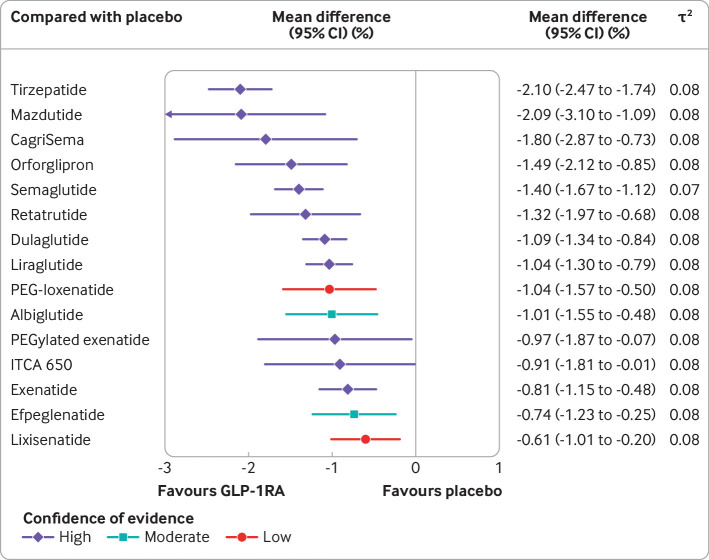
Abstract Objective To evaluate the comparative efficacy and safety of glucagon-like peptide-1 receptor agonists (GLP-1RAs) on glycaemic control, body weight, and lipid profile in adults with type 2 diabetes. Design Systematic review and network meta-analysis. Data sources PubMed, Web of Science, Cochrane Central Register of Controlled Trials (CENTRAL), and Embase from database inception to 19 August 2023. Eligibility criteria for selecting studies Eligible randomised controlled trials enrolled adults with type 2 diabetes who received GLP-1RA treatments and compared effects with placebo or any GLP-1RA drug, with a follow-up duration of at least 12 weeks. Trials with a crossover design, non-inferiority studies comparing GLP-1RA and other drug classes without a placebo group, using withdrawn drugs, and non-English studies were deemed ineligible. Results 76 eligible trials involving 15 GLP-1RA drugs and 39 246 participants were included in this network meta-analysis; all subsequent estimates refer to the comparison with placebo. All 15 GLP-1RAs effectively lowered haemoglobin A 1c and fasting plasma glucose concentrations. Tirzepatide induced the largest reduction of haemoglobin A 1c concentrations (mean difference −2.10% (95% confidence interval −2.47% to −1.74%), surface under the cumulative ranking curve 94.2%; high confidence of evidence), and fasting plasma glucose concentrations (−3.12 mmol/L (−3.59 to −2.66), 97.2%; high confidence), and proved the most effective GLP-1RA drug for glycaemic control. Furthermore, GLP-1RAs were shown to have strong benefits to weight management for patients with type 2 diabetes. CagriSema (semaglutide with cagrilintide) resulted in the highest weight loss (mean difference −14.03 kg (95% confidence interval −17.05 to −11.00); high confidence of evidence), followed by tirzepatide (−8.47 kg (−9.68 to −7.26); high confidence). Semaglutide was effective in lowering the concentration of low density lipoprotein (−0.16 mmol/L (−0.30 to −0.02)) and total cholesterol (−0.48 mmol/L (−0.84 to −0.11)). Moreover, this study also raises awareness of gastrointestinal adverse events induced by GLP-1RAs, and concerns about safety are especially warranted for high dose administration. Conclusions GLP-1RAs are efficacious in treating adults with type 2 diabetes. Compared with the placebo, tirzepatide was the most effective GLP-1RA drug for glycaemic control by reducing haemoglobin A 1c and fasting plasma glucose concentrations. GLP-1RAs also significantly improved weight management for type 2 diabetes, with CagriSema performing the best for weight loss. The results prompt safety concerns for GLP-1RAs, especially with high dose administration, regarding gastrointestinal adverse events. Systematic review registration PROSPERO CRD42022342845.
Overview
CoChat Summary
## TL;DR
This systematic review and network meta-analysis of 76 randomized controlled trials (39,246 participants) compared 15 GLP-1 receptor agonists for type 2 diabetes. Tirzepatide ranked best for glycaemic control, CagriSema for weight loss, and several drugs increased gastrointestinal adverse events.
## Key findings
- Across 76 trials involving 39,246 adults, all 15 GLP-1RAs significantly reduced HbA1c and fasting plasma glucose versus placebo.
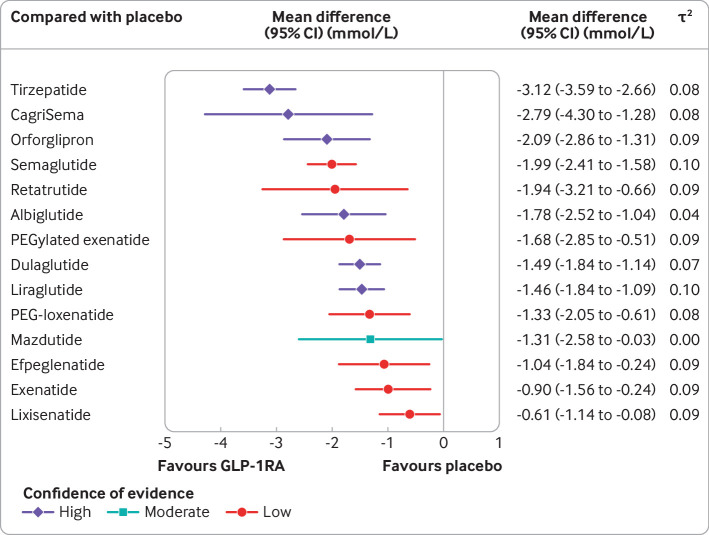
- Tirzepatide had the largest HbA1c reduction: mean difference −2.10% (95% CI −2.47% to −1.74%) and fasting plasma glucose reduction: −3.12 mmol/L (−3.59 to −2.66), both with high confidence of evidence.
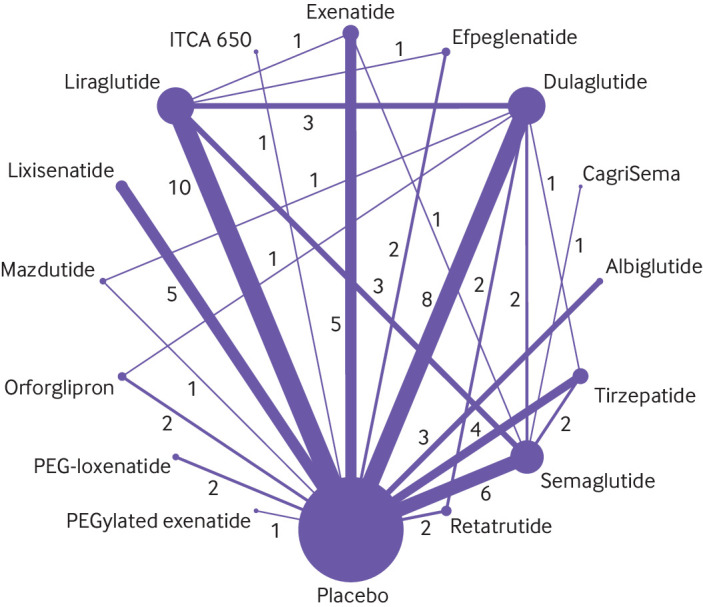
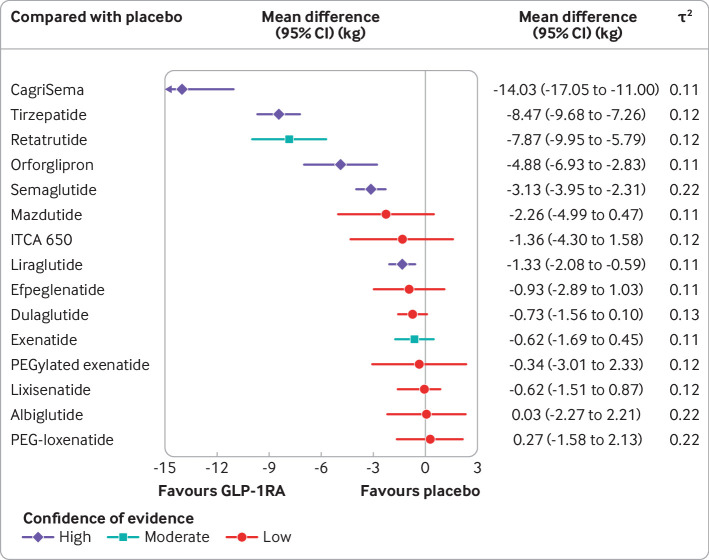
- CagriSema produced the greatest weight loss: −14.03 kg (95% CI −17.05 to −11.00); tirzepatide was next: −8.47 kg (−9.68 to −7.26).
- Semaglutide lowered low-density lipoprotein by −0.16 mmol/L (−0.30 to −0.02) and total cholesterol by −0.48 mmol/L (−0.84 to −0.11); PEG-loxenatide increased HDL by 0.16 mmol/L (0.00 to 0.31).
## Methods
- Systematic review and network meta-analysis of randomized controlled trials, registered in PROSPERO (CRD42022342845) and reported under PRISMA/PRISMA-NMA.
- Searched PubMed, Web of Science, CENTRAL, and Embase from inception to 19 August 2023, plus conference websites, ClinicalTrials.gov, references, and prior reviews; included English-language peer-reviewed RCTs in adults with type 2 diabetes, follow-up ≥12 weeks.
- Used frequentist random-effects network meta-analysis in Stata, with SUCRA rankings, node-splitting/design-treatment interaction for consistency, CINeMA and RoB 2 for evidence quality/bias, and meta-regression/subgroup analyses by dose, follow-up, age, diabetes duration, and background treatment.
## Limitations
- The paper states that included trials varied in population characteristics and follow-up durations, which may have led to imprecise effect estimates.
- The paper states that participants had little control over diet and exercise, which may have influenced blood glucose and body weight.
- The paper states that some trials did not provide enough information to assess randomization, allocation concealment, or blinding, and some drugs had few studies, so subgroup and comparative results should be interpreted cautiously.
- Evident from the text: the review excluded non-English studies, conference abstracts, crossover trials, and non-inferiority studies without a placebo arm, so the evidence base may be narrower than all available GLP-1RA trials.
Model-written summary. Check it against the paper before relying on it.
Integrity signals
Registry
Cites
Statistics
Figures
Verification
Claims the paper makes
1 Valid · 0 Not valid · 1 Not checked · 41 Own results and interpretations
The sources with a verdict support this claim; the rest weren’t checked yet, have no full text we could read, or their verdicts aren’t rated yet.
In the paper
“GLP-1RAs have been shown to greatly reduce the body weight of obese people with type 2 diabetes.8 14”
§ Comparative effectiveness of GLP-1 receptor agonists on glycaemic control, body weight, and lipid profile for type 2 diabetes: systematic review and network meta-analysis > Introduction
What the sources say
- Supportedcites [8] Garvey WT Frias JP Jastreboff AM SURMOUNT-2 investigators. Tirzepatide once weekly for the treatment of obesity in people with type 2 diabetes (SURMOUNT-2): a double-blind, randomised, multicentre, placebo-controlled, phase 3 trial. Lancet 2023; 402: 613- 26. 10.1016/S0140-6736(23)01200-X. 37385275 source
The Research in context section reports that the GLP-1 receptor agonists liraglutide and semaglutide produced placebo-adjusted body-weight reductions of 4.0%–6.2% in people with overweight or obesity and type 2 diabetes. This supports the citing sentence's broad claim; the section also distinguishes these drugs from tirzepatide, a dual GIP and GLP-1 receptor agonist. (LLM, conf=0.91)
- Not checked — no full text of the sourcecites [14] Wharton S Blevins T Connery L GZGI Investigators. Daily oral glp-1 receptor agonist orforglipron for adults with obesity. N Engl J Med 2023; 389: 877- 88. 10.1056/NEJMoa2302392. 37351564 source
boostedstates a cause- Asserted: passes — The authors put it forward as true.
- Checkable: passes — It can be checked against evidence.
- Load-bearing: unclear — It is unclear whether the paper’s conclusions depend on it.
- Based: passes — The paper gives a reason why it holds.
- Supported
A result the paper reports from its own data — it cites no other source for it, so there is none to check. The quote shows it is in the paper.
In the paper
“All 15 GLP-1RA drugs showed significant efficacy in reducing HbA1c levels compared with placebo in adults with type 2 diabetes (fig 2, fig 3).”
§ Comparative effectiveness of GLP-1 receptor agonists on glycaemic control, body weight, and lipid profile for type 2 diabetes: systematic review and network meta-analysis > Results > Glycaemic control
plainstates a causen = 343- Asserted: passes — The authors put it forward as true.
- Checkable: passes — It can be checked against evidence.
- Load-bearing: passes — The paper’s conclusions depend on it.
- Based: passes — The paper gives a reason why it holds.
A result the paper reports from its own data — it cites no other source for it, so there is none to check. The quote shows it is in the paper.
In the paper
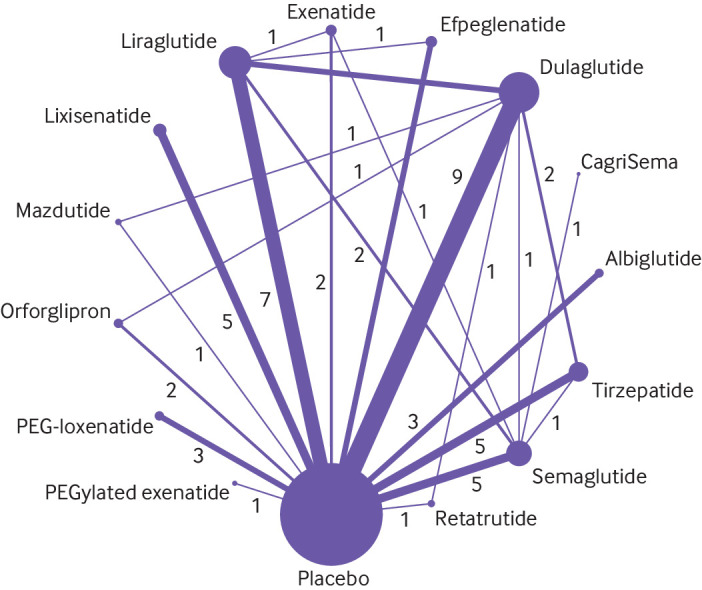
“Evaluated by fasting blood glucose, the network meta-analysis enrolled 47 randomised controlled trials with 17 163 subjects, confirming the placebo controlled effectiveness of all the 15 GLP-1RAs (fig 4, fig 5).”
§ Comparative effectiveness of GLP-1 receptor agonists on glycaemic control, body weight, and lipid profile for type 2 diabetes: systematic review and network meta-analysis > Results > Glycaemic control
boostedstates a causen = 163- Asserted: passes — The authors put it forward as true.
- Checkable: passes — It can be checked against evidence.
- Load-bearing: passes — The paper’s conclusions depend on it.
- Based: passes — The paper gives a reason why it holds.
A result the paper reports from its own data — it cites no other source for it, so there is none to check. The quote shows it is in the paper.
In the paper
“The efficacy of tirzepatide in lowering concentrations of HbA1c and fasting blood glucose, and lowering body weight was directly proportional to the length of follow-up duration (appendix 15).”
§ Comparative effectiveness of GLP-1 receptor agonists on glycaemic control, body weight, and lipid profile for type 2 diabetes: systematic review and network meta-analysis > Results > Subgroup analyses
plainstates an association- Asserted: passes — The authors put it forward as true.
- Checkable: passes — It can be checked against evidence.
- Load-bearing: unclear — It is unclear whether the paper’s conclusions depend on it.
- Based: passes — The paper gives a reason why it holds.
A result the paper reports from its own data — it cites no other source for it, so there is none to check. The quote shows it is in the paper.
In the paper
“followed by tirzepatide (−8.47 kg (−9.68 to −7.26); high confidence).”
§ Comparative effectiveness of GLP-1 receptor agonists on glycaemic control, body weight, and lipid profile for type 2 diabetes: systematic review and network meta-analysis > Abstract > Results
plainstates a cause- Asserted: passes — The authors put it forward as true.
- Checkable: passes — It can be checked against evidence.
- Load-bearing: passes — The paper’s conclusions depend on it.
- Based: passes — The paper gives a reason why it holds.
23 more claims
Create a free account to see all 43 claims and every source verdict.
- It may state two separate claims as one. 13
- Probably not a substantial claim. 5
Claims other papers make about this one
Each is checked against this paper’s own text: does it say what the citing paper says it does?
The source backs part of the claim, not all of it — or backs it for a different population, condition or comparison.
In the citing paper
“However, GLP‐1RA treatments showed over twice the odds of discontinuation due to adverse events compared with placebo. 27”
From Real‐world evidence on the utilization, clinical and comparative effectiveness, and adverse effects of newer GLP ‐ 1RA ‐based weight‐loss therapies (2025) · cites this paper as [27]
Experimental — accuracy not yet measuredThe source backs part of the claim, not all of it — or backs it for a different population, condition or comparison.
In the citing paper
“According to recent studies, tirzepatide, orforglipron, semaglutide, liraglutide, and exenatide were positively associated with diarrhea when compared with placebo, while liraglutide was associated with diarrhea when compared with exenatide and placebo [51, 53, 56].”
From Gastrointestinal adverse events associated with GLP-1 RA in non-diabetic patients with overweight or obesity: a systematic review and network meta-analysis (2025) · cites this paper as [53]
Experimental — accuracy not yet measuredThe source backs part of the claim, not all of it — or backs it for a different population, condition or comparison.
In the citing paper
“Nausea was the most frequently reported symptom, besides vomiting and diarrhea, findings consistent with prior research in diabetic populations [51–56].”
From Gastrointestinal adverse events associated with GLP-1 RA in non-diabetic patients with overweight or obesity: a systematic review and network meta-analysis (2025) · cites this paper as [53]
Experimental — accuracy not yet measuredThe source backs part of the claim, not all of it — or backs it for a different population, condition or comparison.
In the citing paper
“The benefits of this form of therapy to treat T2DM include 1) delayed gastric emptying, and 2) inhibiting the production of glucagon from pancreatic α- cells (71–73).”
From A critical review on diabetes mellitus type 1 and type 2 management approaches: from lifestyle modification to current and novel targets and therapeutic agents. (2024) · cites this paper as [73]
Experimental — accuracy not yet measuredThe cited source says what the claim attributes to it.
In the citing paper
“In a meta‐analysis of 76 RCTs in T2D, liraglutide, semaglutide and tirzepatide were all associated with significantly increased ORs of nausea, vomiting and diarrhoea. 27”
From Real‐world evidence on the utilization, clinical and comparative effectiveness, and adverse effects of newer GLP ‐ 1RA ‐based weight‐loss therapies (2025) · cites this paper as [27]
7 more claims about this paper
Create a free account to see every claim other papers make about this one.
Citations
Cites
The PRISMA 2020 statement: An updated guideline for reporting systematic reviews
Page, M. J., McKenzie, J. E., Bossuyt, P. M., Boutron, I., Hoffmann, T. C., Mulrow, C. D., Shamseer, L., Tetzlaff, J. M., Akl, E. A., Brennan, S. E., et al. (2021) · BMJ · doi:10.1136/bmj.n71 · Cited by 108,283
RoB 2: a revised tool for assessing risk of bias in randomised trials
Sterne, J. A. C., Savović, J., Page, M. J., Elbers, R. G., Blencowe, N. S., Boutron, I., Cates, C. J., Cheng, H.-Y., Corbett, M. S., Eldridge, S. M., et al. (2019) · BMJ · doi:10.1136/bmj.l4898 · Cited by 34,787
James, S. L., Abate, D., Abate, K. H., Abay, S. M., Abbafati, C., Abbasi, N., Abbastabar, H., Abd-Allah, F., Abdela, J., Abdelalim, A., et al. (2018) · The Lancet · doi:10.1016/s0140-6736(18)32279-7 · Cited by 13,867
Self-citationHutton, B., Salanti, G., Caldwell, D. M., Chaimani, A., Schmid, C. H., Cameron, C., Ioannidis, J. P. A., Straus, S., Thorlund, K., Jansen, J. P., et al. (2015) · Annals of Internal Medicine · doi:10.7326/m14-2385 · Cited by 8,269
The PRISMA 2020 statement: an updated guideline for reporting systematic reviews
Page, M. J., McKenzie, J., Bossuyt, P., Boutron, I., Hoffmann, T., mulrow, C., Shamseer, L., Tetzlaff, J., Akl, E., Brennan, S. E., et al. (2020) · doi:10.31222/osf.io/v7gm2_v1 · Cited by 8,090
The PRISMA 2020 statement: an updated guideline for reporting systematic reviews
Page, M. J., McKenzie, J., Bossuyt, P., Boutron, I., Hoffmann, T., mulrow, C., Shamseer, L., Tetzlaff, J., Akl, E., Brennan, S. E., et al. (2020) · doi:10.31222/osf.io/v7gm2 · Cited by 5,177
Biology of Incretins: GLP-1 and GIP
Baggio, L. L., & Drucker, D. J. (2007) · Gastroenterology · doi:10.1053/j.gastro.2007.03.054 · Cited by 3,639
Investigating and dealing with publication and other biases in meta-analysis
Sterne, J. A. C., Egger, M., & Smith, G. D. (2001) · BMJ · doi:10.1136/bmj.323.7304.101 · Cited by 2,225
PPARγ signaling and metabolism: the good, the bad and the future
Ahmadian, M., Suh, J. M., Hah, N., Liddle, C., Atkins, A. R., Downes, M., & Evans, R. M. (2013) · Nature Medicine · doi:10.1038/nm.3159 · Cited by 2,016
CINeMA: an approach for assessing confidence in the results of a network meta-analysis
Nikolakopoulou, A., Higgins, J. P. T., Papakonstantinou, T., Chaimani, A., Del Giovane, C., Egger, M., & Salanti, G. (2020) · PLOS Medicine · doi:10.1371/journal.pmed.1003082 · Cited by 1,935
Cited by
Items 101–200 of 547
Tabernacki, T., Wang, L., Kaelber, D. C., Xu, R., & Berger, N. A. (2024) · Cancers · doi:10.3390/cancers16132377 · Cited by 17
Therapeutic Potential of GLP-1 Receptor Agonists in Metabolic Associated Steatotic Liver Disease
Nowak, K., Łupina, K., Romac, A., Kalisz, A., Ilkiewicz, Ł., & Janczura, J. (2025) · Annals of Pharmacotherapy · doi:10.1177/10600280251322002 · Cited by 21
“21 A recent meta-analysis by Yao et al, 50 which included 15 studies with 39 246 participants, reported that among 15 different GLP-1 RAs, semaglutide combined with cagrilintide led to the greatest weight loss (−14.03 kg), followed by tirzepatide (−8.47 kg).”
InfluentialCatalfamo, L. M., Ponte, F. S. D., & Rinaldis, D. D. (2025) · Journal of Clinical Medicine · doi:10.3390/jcm14155269 · Cited by 25
“…are progressively replacing these conventional therapies due to their favorable safety profile, particularly the markedly lower risk of hypoglycemia and the additional benefit of promoting weight loss, rather than weight gain—an adverse effect commonly associated with older antidiabetic drugs [1].”
GLP-1RA precision medicine in people with type 2 diabetes: current insights and future prospects
Cardoso, P., Dennis, J., & Pearson, E. R. (2026) · Journal of Clinical Investigation · doi:10.1172/jci194742 · Cited by 21
Hachuła, M., Basiak, M., Kosowski, M., & Okopień, B. (2024) · Life · doi:10.3390/life14060690 · Cited by 18
“Additional studies, especially randomized clinical trials with long-term observation, are needed to un-questionably assess the effect of this group of drugs on the development of atherosclerotic cardiovascular disease.”
BackgroundLiang, J., Pillai, T., Chopra, S., Cathey, J. M., & Patel, A. (2025) · Aesthetic Surgery Journal · doi:10.1093/asj/sjaf029 · Cited by 20
Zamanian, N., Imani, H., Talebi, S., Rahimlou, M., Khosroshahi, R. A., & Mohammadi, H. (2025) · European Journal of Pharmacology · doi:10.1016/j.ejphar.2025.177966 · Cited by 19
Patoulias, D., Koufakis, T., Ruža, I., El‐Tanani, M., & Rizzo, M. (2024) · Pragmatic and Observational Research · doi:10.2147/por.s471476 · Cited by 19
“24,25,27 According to the hallmark SCALE Obesity and Prediabetes trial, published in 2015, treatment with liraglutide 3.0 mg once daily, injected subcutaneously, in a total of 3731 individuals with overweight or obesity without T2DM at baseline, was shown to result in a significant reduction in…”
BackgroundInfluentialWen, Z., Sun, W., Wang, H., Chang, R., Wang, J., Song, C., Zhang, S., Ni, Q., & An, X. (2025) · Diabetes Research and Clinical Practice · doi:10.1016/j.diabres.2025.111999 · Cited by 16
Wu, J., Cheng, A. S., Weimbs, T., Harris, P. C., Zhou, J. X., & Li, X. (2025) · The FASEB Journal · doi:10.1096/fj.202501605r · Cited by 15
“Because it has been reported that treatment with Semaglutide may affect weight loss and blood glucose level [30–32], we monitored body weight and blood glucose levels in Pkd1 RC/RC mice treated with Semaglutide and vehicle (DMSO).”
Wan, R., Zheng, Q., Zeng, X., Luo, Y., Sun, L., Chen, S., Luo, F., Zhang, Y., Zhu, Z., Chen, X., et al. (2025) · BMC Complementary Medicine and Therapies · doi:10.1186/s12906-025-05055-x · Cited by 16
“The heterogeneity of network models was evaluated using τ 2 [27].”
Johnson, B. V. B., Milstead, M., Kreider, R., & Jones, R. (2025) · Obesity Pillars · doi:10.1016/j.obpill.2025.100209 · Cited by 27
“Recent pharmaceutical developments with Glucagon-like Peptide-1 Receptor Agonist (GLP-1RA), such as incretin-based and glucagon-like peptide-1 receptor agonists, have significantly advanced medical treatments for obesity [1].”
Alam, A., Zainab, Z., Elhenawy, A. A., Rehman, N. U., Islam, M. S., Dahlous, K. A., Talab, F., Shah, S. A. A., Ali, M., & Ahmad, M. (2024) · ChemistrySelect · doi:10.1002/slct.202401296 · Cited by 13
Research progress of GLP-1RAs in the treatment of type 2 diabetes mellitus
He, X., Zhao, W., Li, P., Zhang, Y., Li, G., Su, H., Lu, B., & Pang, Z. (2025) · Frontiers in Pharmacology · doi:10.3389/fphar.2024.1483792 · Cited by 21
Huang, X., Wu, M., Huang, B., & Zhang, Y. (2025) · Frontiers in Medicine · doi:10.3389/fmed.2025.1509947 · Cited by 12
LeBlanc, E. S., Brooks, N., Davies, M., & Chatterjee, R. (2024) · The Journal of Clinical Endocrinology & Metabolism · doi:10.1210/clinem/dgae655 · Cited by 11
Advances in Oral Biomacromolecule Therapies for Metabolic Diseases
Jiao, Q., Huang, Y., He, J., & Xu, Y. (2025) · Pharmaceutics · doi:10.3390/pharmaceutics17020238 · Cited by 13
“For example, oral GLP-1 mimics can simulate natural GLP-1 secretion from the gut and retain its physiological benefits [24,40].”
Tummala, S., Gibbs, D. L., Chavarria, J. C., Alder, J., Avramis, I., & Rizkalla, J. (2025) · Journal of Orthopaedics · doi:10.1016/j.jor.2025.05.018 · Cited by 17
The multifaceted effects of semaglutide: exploring its broad therapeutic applications
Alkhatib, M., Almasri, N., Alshwayyat, S., Almahariq, H., Hammadeh, B. M., Taimeh, Z., Alkhatib, L., Alshwayat, A. R. I., Saadeh, N. A., & Al‐kurdi, M. A. (2025) · Future Science OA · doi:10.1080/20565623.2025.2483607 · Cited by 18
“Most systematic reviews of semaglutide focus on glycemic control and weight loss benefits, highlighting a gap in exploring other medical applications [8,9].”
Podocyte Metabolic Reprogramming and Targeted Therapy
Hu, H., Liang, W., & Ding, G. (2025) · Journal of the American Society of Nephrology · doi:10.1681/asn.0000000917 · Cited by 14
Ahmed, M., Burhan, M., Shafiq, A., Hashmi, T. M., Ahmed, R., Fudim, M., Mentz, R. J., & Fonarow, G. C. (2025) · Clinical Cardiology · doi:10.1002/clc.70234 · Cited by 12
“The weight‐reducing and anti‐inflammatory properties of GLP‐1 and GLP‐1/GIP RAs may add a unique therapeutic value to managing HFpEF [16].”
GLP-1 receptor agonists and next-generation metabolic hormone therapies in chronic kidney disease
Alicic, R. Z., Neumiller, J. J., & Tuttle, K. R. (2026) · Nature Reviews Nephrology · doi:10.1038/s41581-025-01036-y · Cited by 22
A graphene oxide-modified biosensor for non-invasive glucose monitoring in college athletes
Chen, L., Zhang, Y., & Hu, T. (2024) · Alexandria Engineering Journal · doi:10.1016/j.aej.2024.03.051 · Cited by 11
Ligumsky, H., Amir, S., Rubinstein, T. A., Guion, K., Scherf, T., Karasik, A., Wolf, I., & Rubinek, T. (2024) · Medical Oncology · doi:10.1007/s12032-024-02390-w · Cited by 17
“Similarly, there is a concentration disparity between liraglutide formulations; victoza for diabetes is marketed at lower concentrations than saxenda for obesity [34].”
Rahimlou, M., Ahmadi, A. R., Cheraghian, B., Baghdadi, G., Ghalishourani, S. S., Nozarian, S., Hashemi, S. J., Rahimi, Z., Banaei-Jahromi, N., & Hosseini, S. A. (2024) · BMC Endocrine Disorders · doi:10.1186/s12902-024-01624-2 · Cited by 13
Cao, H., Shi, C., Aihemaiti, Z., Dai, X., Yu, F., & Wang, S. (2024) · International Urology and Nephrology · doi:10.1007/s11255-024-04275-3 · Cited by 12
Fracture events associated with GLP-1 receptor agonists in FDA adverse events reporting system
Xiao, Y., Zhou, M., & Xiao, W. (2024) · Acta Diabetologica · doi:10.1007/s00592-024-02415-w · Cited by 13
Yan, K., Yu, H., & Blaise, B. (2025) · Acta Diabetologica · doi:10.1007/s00592-025-02534-y · Cited by 20
“…have either focused on GLP-1 receptor-specific agonists and polyago - nists for weight management in individuals with obesity or overweight without diabetes, or, as in the case of the recent meta-analysis by Yao et al. (2024), has evaluated GLP-1 receptor agonists for T2DM in a broader sense.”
Semaglutide versus other GLP-1 receptor agonists in patients with MASLD
Kuo, C.-C., Li, C., Chuang, M., Huang, P., Kuo, H., & Lai, C. (2025) · Hepatology Communications · doi:10.1097/hc9.0000000000000747 · Cited by 16
“[34] Other meta-analyses involving patients with T2D and NAFLD identify semaglutide as the most effective agent for improving liver-related markers.”
Zhang, S., Yu, B., Xu, J., Jin, S., Li, Y., Bing, H., Li, J., Ma, X., Zhang, X., & Zhao, L. (2025) · Diabetes Technology & Therapeutics · doi:10.1089/dia.2024.0533 · Cited by 10
“21,38 These differences may be attributed to the varying covariate effects estimated for each outcome.”
Singal, A., Ong, M. M., Neubauer, Z., & Lipner, S. R. (2025) · International Journal of Dermatology · doi:10.1111/ijd.17971 · Cited by 11
“%]) and glucose ( − 3.12 mmol/L [ − 3.59 to − 2.66]) reductions, highlighting its efficacy in improving glycemic control [4].”
InfluentialRabbani, S. A., El‐Tanani, M., Kumar, R., Saini, M., El‐Tanani, Y., Sharma, S., Aljabali, A. A. A., Hajeer, E., & Rizzo, M. (2025) · Pharmaceuticals · doi:10.3390/ph18081130 · Cited by 17
Niu, C., Sun, K., Zhang, J., Elkhapery, A. M. R., Zhu, K., Malik, S., Xue, C., & Okolo, P. I., III (2025) · The American Journal of Gastroenterology · doi:10.14309/ajg.0000000000003760 · Cited by 20
Pantanetti, P., Ronconi, V., Sguanci, M. E., Palomares, S. M., Mancin, S., Tartaglia, F. C., Cangelosi, G., & Petrelli, F. (2024) · Journal of Clinical Medicine · doi:10.3390/jcm13164752 · Cited by 12
Aa, B., Serova, M., Chashkina, M. I., Kosharnaia, R. S., Salpagarova, Z. K., Andreev, D. A., & Giverts, I. (2024) · Cardiac failure review · doi:10.15420/cfr.2024.06 · Cited by 13
Li, L., Jin, L., Tian, Y., & Wang, J. (2025) · Molecular Medicine Reports · doi:10.3892/mmr.2025.13476 · Cited by 13
Zhou, Y., Tu, L., Wang, X., Xu, J., Xu, S., Ning, X., Xiong, X., & Zheng, N. (2025) · Journal of Medicinal Chemistry · doi:10.1021/acs.jmedchem.5c01399 · Cited by 10
Bhaumik, S., Sarkar, A., Debnath, S., Debnath, B., Ghosh, R., Zaki, M. E. A., & Al‐Hussain, S. A. (2024) · Saudi Pharmaceutical Journal · doi:10.1016/j.jsps.2024.102095 · Cited by 14
Rea, N., & Ramdass, P. V. A. K. (2025) · Frontiers in Clinical Diabetes and Healthcare · doi:10.3389/fcdhc.2025.1579961 · Cited by 20
Obesity and Chronic Kidney Disease: The Dual Epidemic in Cardiovascular Health
Grant, C. H., & Bell, S. (2025) · European Cardiology Review · doi:10.15420/ecr.2025.33 · Cited by 12
“68,69 Similar benefits in cardiovascular risk reduction have been demonstrated among adults with obesity but without type 2 diabetes.”
Tong, J., Li, N., Hu, F., & Yue, Y. (2025) · Diabetes Care · doi:10.2337/dc25-1822 · Cited by 9
Rosenstock, J., Billings, L. K., Gajria, R., Giorgino, F., Johansen, N. B., Klein, K. R., Thamattoor, U. K., Buse, J. B., & Jain, A. B. (2026) · The Lancet · doi:10.1016/s0140-6736(26)01022-6 · Cited by 15
Huang, X., Wu, M., Lin, J., Mou, L., Zhang, Y., & Jiang, J. (2024) · Medicine · doi:10.1097/md.0000000000038236 · Cited by 11
“[16,42,43] Analyzing the mechanism of action of GLP-1RAs, it is evident that most GLP-1 is produced in the GI tract.”
BackgroundThe Metabolic and Endocrine Effects of a 12-Week Allulose-Rich Diet
Cayabyab, K. B., Shin, M. J., Heimuli, M. S., Kim, I. J., D’Agostino, D. P., Johnson, R. J., Koutnik, A. P., Bellissimo, N., Diamond, D. M., Norwitz, N. G., et al. (2024) · Nutrients · doi:10.3390/nu16121821 · Cited by 18
“However, while clearly eliciting an increase in endogenous glucagon-like peptide-1 (GLP-1) release [9], which is heavily exploited with weight loss drugs [10,11], the mechanisms underlying these beneficial effects remain to be fully elucidated.”
BackgroundWen, J., Nadora, D., Bernstein, E., How-Volkman, C., Truong, A., Akhtar, M., Prakash, N. A., Puglisi, J. L., & Frezza, E. E. (2024) · Cureus · doi:10.7759/cureus.69008 · Cited by 22
“GLP-1 RA’s weight loss has been attributed to their ability to decrease gastric emptying, suppress appetite, increase satiety, and exhibit glucose-dependent insulin secretion which contributes to improved glycemic control and subsequent weight loss in diabetic patients [26].”
BackgroundInfluentialPantea, I., Repanovici, A., & Andreescu, O. (2024) · Medicina · doi:10.3390/medicina60111761 · Cited by 10
Enrollment of Females in Randomized Trials for Glucagon-Like Peptide 1 Receptor Agonists
Rivera, F. B., Ybañez, M. J. C., Magalong, J. V., Prado, M. B., Aguirre, E. A., Cañares, A. P. T., Rubia, J. M. M., Hiyas, A. R., Pine, P. L. S., Lara-Breitinger, K. M., et al. (2024) · JACC Advances · doi:10.1016/j.jacadv.2024.101386 · Cited by 11
Approach to Lipid Management in the Patient With Diabetes
Kim, S. J., & Subramanian, S. (2025) · The Journal of Clinical Endocrinology & Metabolism · doi:10.1210/clinem/dgaf018 · Cited by 15
Pan, S., Weng, C., Tsai, S.-F., Sheen, Y., Lin, H., Tien, P., Lin, J., Lin, C., Wang, I., & Chou, C. (2025) · Ophthalmology Science · doi:10.1016/j.xops.2025.100734 · Cited by 13
“46,47 The high homology of human-analog GLP-1RAs to native GLP-1 may help explain their association with reduced RVO and BRVO risk when compared with DPP-4 inhibitors.”
Innovative Molecules and Delivery Technologies Enabling the Future of GLP-1-based Therapies
Xu, Y., Drucker, D. J., Traverso, G., & Beloqui, A. (2025) · Endocrine Reviews · doi:10.1210/endrev/bnaf027 · Cited by 13
Liraglutide vs Semaglutide vs Dulaglutide in Veterans With Type 2 Diabetes
Derington, C. G., Sarwal, A., Wei, G., Hartsell, S. E., Throolin, M. J., Singh, R., Nevers, M. R., Zhang, C., Katkam, N., Takyi, A., et al. (2025) · JAMA Network Open · doi:10.1001/jamanetworkopen.2025.37297 · Cited by 13
Kamrul-Hasan, A. B. M., Dutta, D., Nagendra, L., Bhattacharya, S., Singla, R., & Kalra, S. (2024) · Medicine · doi:10.1097/md.0000000000038568 · Cited by 10
“[10] As weight loss, even modest, is associated with glycemic improvement, GLP-1RAs are GLDs preferred in individuals with T2D having excess weight.”
BackgroundGul, U., Aung, T., Martin, M., Farrukh, D. N., Shah, P., Lovely, Z. S., León, E. M., Alansaari, M., Maini, S., Fariduddin, M. M., et al. (2024) · Cureus · doi:10.7759/cureus.76519 · Cited by 16
Wright, E. E., Miller, E. M., Bindal, A., & Poon, Y. (2025) · Journal of Managed Care & Specialty Pharmacy · doi:10.18553/jmcp.2025.24253 · Cited by 10
Relevance of Glucagon-Like Peptide 1 (GLP-1) in Inflammatory Bowel Diseases: A Narrative Review
Gravina, A. G., Pellegrino, R., Izzo, M., Costanzo, I. D., Imperio, G., Landa, F., Tambaro, A., & Federico, A. (2025) · Current Issues in Molecular Biology · doi:10.3390/cimb47050383 · Cited by 10
“Yao et al. [44] conducted a meta-analysis concluding that tirzepatide was the most effective in controlling glycaemia (with a mean difference in haemoglobin A 1c of − 2.10%).”
InfluentialSpexin is a biomarker of the process that regulates leptin sensitivity
Ahmed, M. B., Habib, A. M., Badran, S. M., Alsherawi, A., Syed, A., Khoogaly, H., Hammouda, A., Abou‐Samra, A., & Doi, S. A. R. (2025) · Peptides · doi:10.1016/j.peptides.2025.171416 · Cited by 8
Nunns, M., Febrey, S., Buckland, J., Abbott, R. A., Whear, R., Bethel, A. C., Boddy, K., Shaw, L., Coon, J. T., & Meléndez‐Torres, G. J. (2025) · Health Technology Assessment · doi:10.3310/skht8119 · Cited by 10
Effects of animal-derived peptides on aging-related diseases: a narrative review
Liu, T., Song, X., Dai, X., Ma, H., Muhammad, A., He, Z., & Zhao, K. (2025) · Aging advances. · doi:10.4103/agingadv.agingadv-d-25-00012 · Cited by 9
Homoródi, N., Varga, É., Szabó, Z., Sztanek, F., & Harangi, M. (2025) · Biomedicines · doi:10.3390/biomedicines13112595 · Cited by 15
“A significant reduction in triglyceride levels was observed specifically with tirzepatide treatment [57].”
InfluentialAssessment of thyroid cancer risk associated with glucagon‐like peptide 1 receptor agonist use
Vilsbøll, T., Stellfeld, M., Aroda, V. R., Dandanell, S., David, J., Kristiansen, C. T. P., Rasmussen, S., Roberts, F. L., & Hegedűs, L. D. (2025) · Diabetes Obesity and Metabolism · doi:10.1111/dom.70291 · Cited by 12
Nutritional Approaches to Enhance GLP-1 Analogue Therapy in Obesity: A Narrative Review
Dias, D. D., Vasconcelos, A. R., Souza, A. C. R., Menezes, C. D., Silva, I. S. T. E., & Name, J. J. (2025) · Obesities · doi:10.3390/obesities5040088 · Cited by 8
Tirzepatide modulates gut microbiota homeostasis to protect against diabetic kidney disease
Ma, J., Tao, M., Zhang, W., Zhou, L., Zhang, H., Li, F., Zhang, H., Yao, D., Lu, W., & Wang, M. (2025) · Frontiers in Molecular Biosciences · doi:10.3389/fmolb.2025.1715024 · Cited by 13
Prevention and treatment of hypertriglyceridemia-mediated acute pancreatitis: A narrative review
Subramanian, S., Soran, H., Kessler, A. S., McClain, M. R., Eckel, R. H., & Rosenson, R. S. (2025) · European Journal of Internal Medicine · doi:10.1016/j.ejim.2025.106648 · Cited by 13
Guidelines on primary healthcare for type 2 diabetes in China, 2025
Jia, W., Zhu, D., Guo, L., Chen, L., Cai, C., & Song, J. (2025) · Family Medicine and Community Health · doi:10.1136/fmch-2025-003765 · Cited by 11
“51 54 The major adverse effects are gastrointestinal reactions including diarrhoea, nausea, abdominal distension and vomiting.”
Visceral adiposity, metabolic health and aging
Maeyens, L. T., Nelson, J. F., & Zhao, S. (2026) · Nature Aging · doi:10.1038/s43587-026-01076-4 · Cited by 17
Tewari, J., Qidwai, K. A., Tewari, A., Kaur, S., Tewari, V., & Maheshwari, A. (2025) · Expert Review of Clinical Pharmacology · doi:10.1080/17512433.2025.2450254 · Cited by 9
Hoffmann, K., Michalak, M., Rizzo, M., Maggio, V., & Paczkowska, A. (2026) · Expert Opinion on Drug Safety · doi:10.1080/14740338.2025.2586703 · Cited by 8
“…mazdutide, survodutide and a combination of long-acting amylin receptor, cagrilintide, with GLP-1 receptor agonist, semaglutide – CagriSema) or triple agonists (retatrutide) suggest that the latter two drugs are much more effective in weight management, HbA1c control and FSG reduction [42].”
InfluentialTian, X., Wang, W., Zhang, L., Wang, L., Zhang, K., Ge, X., Luo, Z., Zhao, Y., Zhai, X., & Li, C. (2024) · Diabetes Metabolic Syndrome and Obesity · doi:10.2147/dmso.s492626 · Cited by 9
“89 Multiple high-quality clinical and preclinical studies suggest that acupuncture may improve obesity and insulin resistance through GLP-1 receptor activation.”
Old and new anti-obesity drugs
Dodangeh, S., & Hasani‐Ranjbar, S. (2024) · Journal of Diabetes & Metabolic Disorders · doi:10.1007/s40200-024-01512-5 · Cited by 8
“The most reported adverse reactions were gastrointestinal events, with cagrisema, lixisenatide, orforglipron, semaglutide, liraglutide, exenatide, and dulaglutide causing the most vomiting [60].”
Gulati, K., Wijndaele, K., Webb, J., von Arx, L., Seif, M., Jennison, T., Geneidat, A., Wild, R., Wood, R. P., & Khunti, K. (2025) · Diabetes Obesity and Metabolism · doi:10.1111/dom.16201 · Cited by 9
“22,23 When stratified by years since T2D diagnosis, the greatest proportion of patients in this study with target HbA1c 7% at 6 months was observed in those initiating QW injectable GLP-1 RA therapy within 5 years of diagnosis.”
GLP-1 receptor agonists show no detrimental effect on sperm quality in mouse models and cell lines
Yin, D., Li, F., Li, X., Wei, T., Shan, C., Zhang, Z., & Wei, R. (2025) · Endocrine · doi:10.1007/s12020-025-04245-4 · Cited by 12
“GLP-1R agonists have been widely used in clinical practice, and have demonstrated extensive beni fi cial effects, including glucose lowering, weight loss, cardiovascular protection and metabolic homeostasis [6].”
Soler‐Espejo, E., Chen, Y., Rivera‐Caravaca, J. M., Ramos‐Bratos, M. P., López‐Gálvez, R., Marín, F. R., Roldán, V., & Lip, G. Y. H. (2025) · Cardiovascular Diabetology · doi:10.1186/s12933-025-02831-4 · Cited by 7
“Moreover, the potential relevance of cardiometabolic therapies such as glucagon-like peptide-1 (GLP-1) receptor agonists, known to influence lipid metabolism, reduce systemic inflammation, and improve vascular outcomes, warrants further investigation in this context [44].”
Rahman, E., Webb, W. R., Esfahlani, S. S., Rao, P., Garcia, P. E., Sayed, K., Ioannidis, S., Yu, N., Nassif, A. D., Goodman, G. J., et al. (2025) · Plastic & Reconstructive Surgery · doi:10.1097/prs.0000000000012307 · Cited by 10
Barkmeier, A. J., Deng, Y., SWARNA, K. S., Herrin, J. S., Polley, E. C., Umpierrez, G. E., Galindo, R. J., Ross, J. S., Mickelson, M. M., & McCoy, R. G. (2025) · Ophthalmology Retina · doi:10.1016/j.oret.2025.07.019 · Cited by 13
Hoffmann, K., Michalak, M., & Paczkowska, A. (2025) · Diabetes Metabolic Syndrome and Obesity · doi:10.2147/dmso.s531697 · Cited by 11
Repurposing metabolic drugs as anti-inflammatory agents
Hogan, A. E., Davis, C., Jenkins, B. J., Jones, N., & O'Shea, D. B. (2025) · Trends in Endocrinology and Metabolism · doi:10.1016/j.tem.2025.07.003 · Cited by 15
Efficacy and safety of incretin co-agonists: Transformative advances in cardiometabolic healthcare
Bhat, S., Fernandez, C. J., Lakshmi, V., & Pappachan, J. M. (2025) · World Journal of Cardiology · doi:10.4330/wjc.v17.i8.107991 · Cited by 9
Rad, J., & Meléndez‐Torres, G. J. (2025) · BMC Public Health · doi:10.1186/s12889-025-24197-8 · Cited by 24
Addressing the risk of ocular complications of GLP ‐ 1RAs ; a multi‐disciplinary expert consensus
Carter, P., Simó, R., Lövestam‐Adrian, M., Pearce, I., Bain, S. C., Dinah, C. B., Davies, S. J., Strain, W. D., Burgess, P. I., Gamble, A., et al. (2025) · Diabetes Obesity and Metabolism · doi:10.1111/dom.70160 · Cited by 16
“…have shown significant reductions in HbA1c with GLP-1RA treatment, yet, despite differences in magnitude of reduction in HbA1c between GLP-1RAs, 17,27 a recent real-world observational study found no difference in risk of DR following initiation of liraglutide, dulaglutide, or exenatide in people…”
Murray, M., Schifano, F., Chiappini, S., Corkery, J., & Guirguis, A. (2025) · American Journal of Ophthalmology · doi:10.1016/j.ajo.2025.12.015 · Cited by 14
Yılmaz, N., & Baştemir, M. (2026) · Diabetes Metabolic Syndrome and Obesity · doi:10.2147/dmso.s584175 · Cited by 15
“13 These findings are consistent with results from the SURPASS-1 trial, in which tirzepatide at all studied doses significantly improved HbA1c over 40 weeks without increasing hypoglycemia risk.”
Malandris, K., Charalampidis, K., Loomba, R. S., & Sinakos, E. (2026) · Current Diabetes Reports · doi:10.1007/s11892-026-01621-w · Cited by 12
Causes and consequences of discontinuation of GLP1RAs or tirzepatide
Ceriello, A., Prattichizzo, F., Abdullah, A. R. M. S., Grotta, R. L., Berra, C., McGowan, B. M., Jenkins, A., Cohen, N. D., Nauck, M. A., & Russo, G. T. (2026) · Nature Reviews Endocrinology · doi:10.1038/s41574-026-01258-5 · Cited by 23
“…have proven their general safety 4,27 , with the reported adverse effects being most commonly gastrointestinal and less commonly eye complications 20,28 , real-world data published within the past 2 years suggest that many people starting a GLP1RA discontinue these medications, even within the…”
Mao, T., Chen, J., Su, T., Xie, L., Qu, X., Feng, R., Pan, Y., Wan, J., Cui, X., Jia, W., et al. (2024) · Diabetology & Metabolic Syndrome · doi:10.1186/s13098-024-01448-z · Cited by 11
“GLP1R agonists have exhibited favorable effects on the improvement of cardio-metabolic dysregulation, particularly lipid metabolism in recent clinical studies and animal experiments [10–12].”
BackgroundSelf-citationTang, H., Donahoo, W. T., DeKosky, S. T., Lee, Y. A., Svensson, M., Bian, J., & Guo, J. S. (2025) · Alzheimer s & Dementia · doi:10.1002/alz.70161 · Cited by 11
“4 One potential pathway involves the ability of GLP-1RAs to decrease glycated hemoglobin (HbA1c) and body mass index (BMI), 5,6 which are related to the risk of ADRD.”
Yu, G., Fu, X., Mo, X., Tan, L., & Yang, S. Y. (2024) · International Journal of Biological Macromolecules · doi:10.1016/j.ijbiomac.2024.134854 · Cited by 6
Prattichizzo, F., Veronesi, V., Rigoni, M., Grotta, R. L., Pellegrini, V., Lucisano, G., Nicolucci, A., Berra, C., Carlsen, H. K., Eliasson, B., et al. (2024) · Diabetes Obesity and Metabolism · doi:10.1111/dom.16038 · Cited by 7
“23 Glucagon-like peptide-1 (GLP-1) receptor agonists (RA) promote consistent weight losses in large range of individuals, 24 including individuals with T1D.”
Hejazi, J., Ghobadian, B., Ghasemi, N., Sadeh, H., Abedimanesh, N., & Rahimlou, M. (2025) · Journal of Health Population and Nutrition · doi:10.1186/s41043-024-00730-0 · Cited by 7
Wang, J., Lin, C., Cai, X., Wang, Y., Wei, T., Wang, Y., Tie, C., Yang, Y., Lv, F., Yang, W., et al. (2025) · Diabetes Obesity and Metabolism · doi:10.1111/dom.16552 · Cited by 7
Zheng, M., Zhao, J., Wang, Y., Cui, Z., Qiao, Z., Wu, H., Shi, C., & Wang, X. (2025) · Medicine · doi:10.1097/md.0000000000043239 · Cited by 9
“Glucagon-like peptide-1 (GLP-1) is an enteric insulin that stimulates insulin secretion, inhibits glucagon secretion, delays stomach emptying, suppresses appetite, reduces food intake, and lowers blood glucose [5] and weight.”
Alibilli, A. S., Jain, V., Mane, H., Yue, X., Ratzki‐Leewing, A. A., Merchant, J. S., Criss, S., Nguyen, Q. C., McCoy, R. G., & Nguyen, T. T. X. (2025) · JMIR Infodemiology · doi:10.2196/73619 · Cited by 11
“GI adverse events, including nausea and vomiting, were the most frequently mentioned for all the drugs, consistent with both clinical trial and social media analysis data [27,28].”
Real-World Safety Concerns of Tirzepatide: A Retrospective Analysis of FAERS Data (2022–2025)
Almansour, H. A., Thaibah, H. A., Alfarhan, M., Al-Qahtani, S. A., Khardali, A., & Alshammari, T. M. (2025) · Healthcare · doi:10.3390/healthcare13182259 · Cited by 18
“Such safety concerns, especially for dose-dependent ADEs of tirzepatide, could lead to severe gastrointestinal AEs, as evident by related clinical trials [31].”
Boutari, C., Hill, M. A., & Mantzoros, C. S. (2025) · Metabolism · doi:10.1016/j.metabol.2025.156397 · Cited by 7
Yao, Y., Liu, N., Chen, S., Sun, M., & Guo, Y. (2025) · European journal of medical research · doi:10.1186/s40001-025-03241-8 · Cited by 7
“This finding aligns with prior meta-analyses confirming the efficacy of GLP-1 receptor agonists in improving the lipid profile [65, 66], and likely contributes to the overall cardioprotective effect of this drug class.”
Advances in Incretin‐Based Therapies for MAFLD: Mechanisms and Clinical Evidence
Dong, W., Zhang, H., Mu, S., Shi, S., Zhang, J., & Xu, K. (2025) · Clinical Pharmacology & Therapeutics · doi:10.1002/cpt.70131 · Cited by 7
“Notably, a 2024 study 77 found that while discontinuation rates were similar between dual/triple agonists and single agonists, the incidence of diarrhea was higher with multi-receptor agonists.”
Griffiths, A., Gregory, S., Malcomson, F. C., Spreckley, M., Matu, J., Ells, L. J., & Shannon, O. M. (2026) · International Journal of Obesity · doi:10.1038/s41366-026-02190-4 · Cited by 5
Ma, H., Wu, Y., Li, D., Sun, H., Xie, Y., Zhao, S., Guo, W., Wang, M., Cui, R., Huang, Y., et al. (2025) · Acta Pharmaceutica Sinica B · doi:10.1016/j.apsb.2025.12.006 · Cited by 11
“Furthermore, the supplement with GDCA exerted marked metabolic benefits in a TGR5-dependent fashion by increasing the energy expenditure in BAT and enhancing the GLP-1 secretion in the ileum 41 , therefore reducing adiposity and improving glycolipid metabolic disorders (Fig.”
Self-citationBorges, R. D. S., de Abreu, E. S., Berton, G. G., de Paula, L. H., Conegundes, A. F., Martins, J. M. B., Martins, M. A. B., Dahbour, A., Fernandes, M. V., & Abdelmalek, M. F. (2025) · JHEP Reports · doi:10.1016/j.jhepr.2025.101708 · Cited by 14
“17,18 GLP-1 RAs have achieved up to 20% weight loss and 2.1% HbA1c reduction, 19,20 sparking interest in their potential therapeutic role in MASLD, a disease closely linked to obesity and T2DM.”
InfluentialTargeting neuroinflammation in neurodegenerative disorders: the emerging potential of semaglutide
Evola, V., & Parmar, M. S. (2026) · Inflammation Research · doi:10.1007/s00011-025-02166-6 · Cited by 8
Kowalska, M. K., El‐Mallul, A., Hudecka, W., Lubojańska, J. E., Lubojański, P. J., Orłowska, S. M., & Bednarczyk, Ł. (2026) · International Journal of Molecular Sciences · doi:10.3390/ijms27041886 · Cited by 10
Metadata
- Authors
- Yao, H., Zhang, A., Li, D., Wu, Y., Wang, C.-Z., Wan, J.-Y., & Yuan, C.-S.
- Affiliations
- Beijing University of Chinese Medicine (CN)
- University of Chicago (US)
- Venue
- BMJ
- Publisher
- BMJ
- Published
- 2024-01-29
- Volume
- 384
- Pages
- e076410
- ISSN
- 1756-1833 (ISSN-L)
- PMC
- PMC10823535
- OpenAlex
- W4391309422
- Cited by
- 558
- References
- 42
- Citations by year
- 2026: 196 · 2025: 259 · 2024: 103
- FWCI
- 32.55
- Type
- journal article
- Language
- en
- Open access
- hybrid
- doi.org
- Licence
- Locations
- BMJ (publishedVersion, cc-by-nc)
- PubMed Central (publishedVersion, cc-by-nc)
- PubMed (publishedVersion)
- HighWire Press Open Archive (submittedVersion)
- Funders
- National Natural Science Foundation of China (82274379)
- Beijing University of Chinese Medicine
- Fundamental Research Funds for the Central Universities
- Topics
- Health Sciences › Medicine › Endocrinology, Diabetes and Metabolism › Diabetes Treatment and Management
- Health Sciences › Medicine › Pharmacology (medical) › Pharmacology and Obesity Treatment
- Health Sciences › Medicine › Endocrinology, Diabetes and Metabolism › Diabetes Management and Research
- Keywords
- GLP-1 receptor agonists, type 2 diabetes, glycemic control, weight loss, lipid profile, HbA1c, fasting blood glucose, tirzepatide, semaglutide, cagrilintide, LDL cholesterol, triglycerides, drug safety, drug efficacy comparison, weight management
- MeSH terms
- Glycemic Control, Glucagon-Like Peptide-1 Receptor Agonists, Adult, Blood Glucose, Body Weight, Diabetes Mellitus, Type 2, Glycated Hemoglobin, Humans, Hypoglycemic Agents, Weight Loss, Lipid Metabolism
About these checks
Registry, retraction, Cites and statistics results are computed, not judged, with one exception: a printed reference that no index lists is read once by a model before it counts as a citation error. Claims are extracted by a model and kept only when their quote appears verbatim in the text; each cited source is then checked, with a model’s help, for whether it says what the claim relies on. Those verdicts can be wrong — read the claim’s quote and the cited source before relying on one.
A language model drew the claims from the paper on 2026-10-10, under version 3 of the claim definition (model deepseek-v4.1-flash, prompt extract-v3).
A second model labelled each claim on 2026-10-10 (model jev-1.13-20260917, definition revision gold-guideline-v0.2).
Cited sources are checked with a language model’s help (gpt-6-sol).
Statistics and arithmetic are recomputed, not judged.
Confidence bands are shown only for fields calibrated on our annotated test set. None is calibrated yet, so no band is shown.
What counts as a claim ›How we measure confidence ›How we check this ›
Are you an author, or do you see a problem with this page? Request a review
Data sources
Bibliographic data: Semantic Scholar, OpenAlex, Crossref.
Contains information from the Semantic Scholar Academic Graph Datasets, made available under the ODC Attribution License (ODC-BY 1.0).
Semantic Scholar’s data is described in: Kinney, R., et al. (2023). The Semantic Scholar Open Data Platform. arXiv:2301.10140.
