

Comparative effectiveness of GLP-1 receptor agonists on glycaemic control, body weight, and lipid profile for type 2 diabetes: systematic review and network meta-analysis
Open accessThe DOI matches its Crossref record; 46 of the 46 references it cites were found in a registry or an index; 1 of the 4 sources its claims cite were checked for support.
Abstract
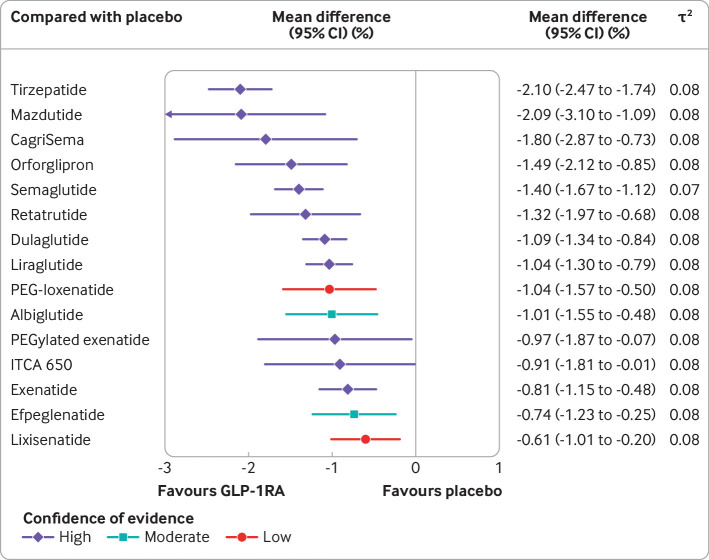
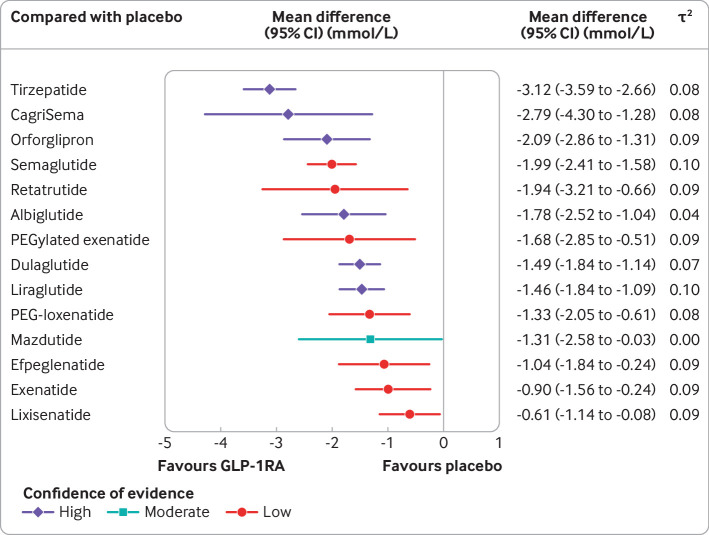
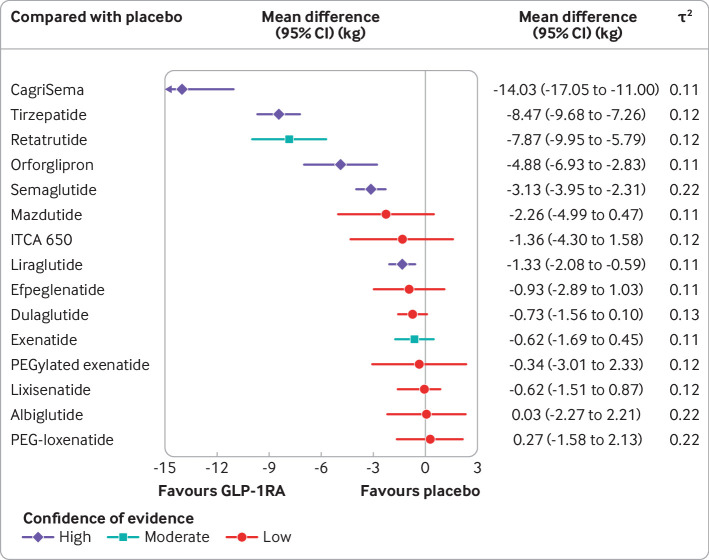
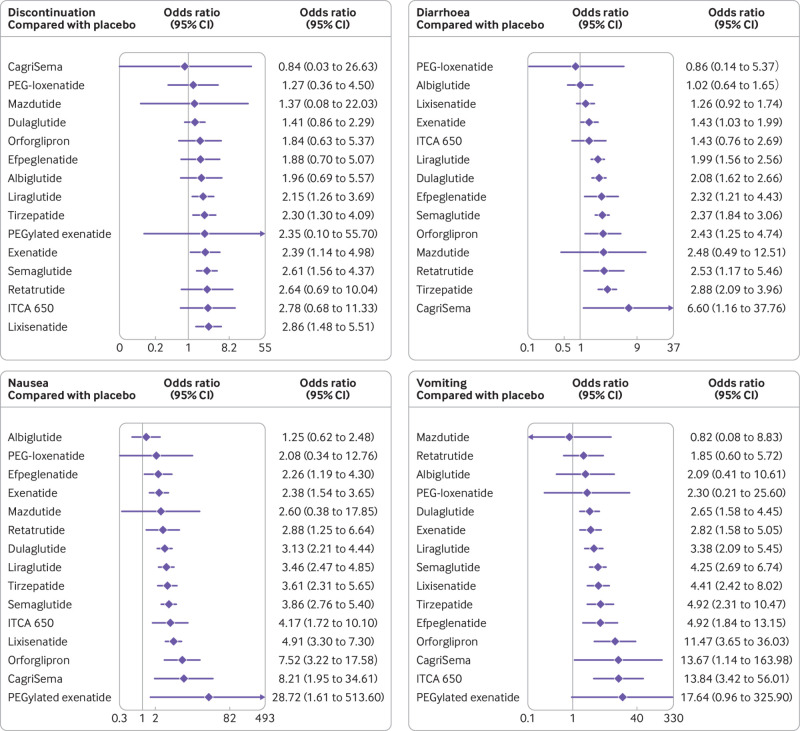
Abstract Objective To evaluate the comparative efficacy and safety of glucagon-like peptide-1 receptor agonists (GLP-1RAs) on glycaemic control, body weight, and lipid profile in adults with type 2 diabetes. Design Systematic review and network meta-analysis. Data sources PubMed, Web of Science, Cochrane Central Register of Controlled Trials (CENTRAL), and Embase from database inception to 19 August 2023. Eligibility criteria for selecting studies Eligible randomised controlled trials enrolled adults with type 2 diabetes who received GLP-1RA treatments and compared effects with placebo or any GLP-1RA drug, with a follow-up duration of at least 12 weeks. Trials with a crossover design, non-inferiority studies comparing GLP-1RA and other drug classes without a placebo group, using withdrawn drugs, and non-English studies were deemed ineligible. Results 76 eligible trials involving 15 GLP-1RA drugs and 39 246 participants were included in this network meta-analysis; all subsequent estimates refer to the comparison with placebo. All 15 GLP-1RAs effectively lowered haemoglobin A 1c and fasting plasma glucose concentrations. Tirzepatide induced the largest reduction of haemoglobin A 1c concentrations (mean difference −2.10% (95% confidence interval −2.47% to −1.74%), surface under the cumulative ranking curve 94.2%; high confidence of evidence), and fasting plasma glucose concentrations (−3.12 mmol/L (−3.59 to −2.66), 97.2%; high confidence), and proved the most effective GLP-1RA drug for glycaemic control. Furthermore, GLP-1RAs were shown to have strong benefits to weight management for patients with type 2 diabetes. CagriSema (semaglutide with cagrilintide) resulted in the highest weight loss (mean difference −14.03 kg (95% confidence interval −17.05 to −11.00); high confidence of evidence), followed by tirzepatide (−8.47 kg (−9.68 to −7.26); high confidence). Semaglutide was effective in lowering the concentration of low density lipoprotein (−0.16 mmol/L (−0.30 to −0.02)) and total cholesterol (−0.48 mmol/L (−0.84 to −0.11)). Moreover, this study also raises awareness of gastrointestinal adverse events induced by GLP-1RAs, and concerns about safety are especially warranted for high dose administration. Conclusions GLP-1RAs are efficacious in treating adults with type 2 diabetes. Compared with the placebo, tirzepatide was the most effective GLP-1RA drug for glycaemic control by reducing haemoglobin A 1c and fasting plasma glucose concentrations. GLP-1RAs also significantly improved weight management for type 2 diabetes, with CagriSema performing the best for weight loss. The results prompt safety concerns for GLP-1RAs, especially with high dose administration, regarding gastrointestinal adverse events. Systematic review registration PROSPERO CRD42022342845.
Overview
CoChat Summary
## TL;DR
This systematic review and network meta-analysis of 76 randomized controlled trials (39,246 participants) compared 15 GLP-1 receptor agonists for type 2 diabetes. Tirzepatide ranked best for glycaemic control, CagriSema for weight loss, and several drugs increased gastrointestinal adverse events.
## Key findings
- Across 76 trials involving 39,246 adults, all 15 GLP-1RAs significantly reduced HbA1c and fasting plasma glucose versus placebo.
- Tirzepatide had the largest HbA1c reduction: mean difference −2.10% (95% CI −2.47% to −1.74%) and fasting plasma glucose reduction: −3.12 mmol/L (−3.59 to −2.66), both with high confidence of evidence.
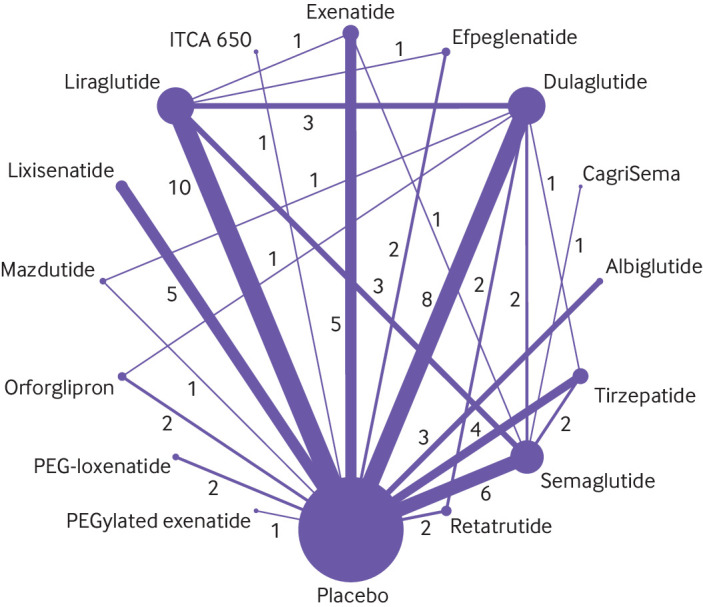
- CagriSema produced the greatest weight loss: −14.03 kg (95% CI −17.05 to −11.00); tirzepatide was next: −8.47 kg (−9.68 to −7.26).
- Semaglutide lowered low-density lipoprotein by −0.16 mmol/L (−0.30 to −0.02) and total cholesterol by −0.48 mmol/L (−0.84 to −0.11); PEG-loxenatide increased HDL by 0.16 mmol/L (0.00 to 0.31).
## Methods
- Systematic review and network meta-analysis of randomized controlled trials, registered in PROSPERO (CRD42022342845) and reported under PRISMA/PRISMA-NMA.
- Searched PubMed, Web of Science, CENTRAL, and Embase from inception to 19 August 2023, plus conference websites, ClinicalTrials.gov, references, and prior reviews; included English-language peer-reviewed RCTs in adults with type 2 diabetes, follow-up ≥12 weeks.
- Used frequentist random-effects network meta-analysis in Stata, with SUCRA rankings, node-splitting/design-treatment interaction for consistency, CINeMA and RoB 2 for evidence quality/bias, and meta-regression/subgroup analyses by dose, follow-up, age, diabetes duration, and background treatment.
## Limitations
- The paper states that included trials varied in population characteristics and follow-up durations, which may have led to imprecise effect estimates.
- The paper states that participants had little control over diet and exercise, which may have influenced blood glucose and body weight.
- The paper states that some trials did not provide enough information to assess randomization, allocation concealment, or blinding, and some drugs had few studies, so subgroup and comparative results should be interpreted cautiously.
- Evident from the text: the review excluded non-English studies, conference abstracts, crossover trials, and non-inferiority studies without a placebo arm, so the evidence base may be narrower than all available GLP-1RA trials.
Model-written summary. Check it against the paper before relying on it.
Integrity signals
Registry
Cites
Statistics
Figures
Verification
Claims the paper makes
1 Valid · 0 Not valid · 1 Not checked · 41 Own results and interpretations
The sources with a verdict support this claim; the rest weren’t checked yet, have no full text we could read, or their verdicts aren’t rated yet.
In the paper
“GLP-1RAs have been shown to greatly reduce the body weight of obese people with type 2 diabetes.8 14”
§ Comparative effectiveness of GLP-1 receptor agonists on glycaemic control, body weight, and lipid profile for type 2 diabetes: systematic review and network meta-analysis > Introduction
What the sources say
- Supportedcites [8] Garvey WT Frias JP Jastreboff AM SURMOUNT-2 investigators. Tirzepatide once weekly for the treatment of obesity in people with type 2 diabetes (SURMOUNT-2): a double-blind, randomised, multicentre, placebo-controlled, phase 3 trial. Lancet 2023; 402: 613- 26. 10.1016/S0140-6736(23)01200-X. 37385275 source
The Research in context section reports that the GLP-1 receptor agonists liraglutide and semaglutide produced placebo-adjusted body-weight reductions of 4.0%–6.2% in people with overweight or obesity and type 2 diabetes. This supports the citing sentence's broad claim; the section also distinguishes these drugs from tirzepatide, a dual GIP and GLP-1 receptor agonist. (LLM, conf=0.91)
- Not checked — no full text of the sourcecites [14] Wharton S Blevins T Connery L GZGI Investigators. Daily oral glp-1 receptor agonist orforglipron for adults with obesity. N Engl J Med 2023; 389: 877- 88. 10.1056/NEJMoa2302392. 37351564 source
boostedstates a cause- Asserted: passes — The authors put it forward as true.
- Checkable: passes — It can be checked against evidence.
- Load-bearing: unclear — It is unclear whether the paper’s conclusions depend on it.
- Based: passes — The paper gives a reason why it holds.
- Supported
A result the paper reports from its own data — it cites no other source for it, so there is none to check. The quote shows it is in the paper.
In the paper
“All 15 GLP-1RA drugs showed significant efficacy in reducing HbA1c levels compared with placebo in adults with type 2 diabetes (fig 2, fig 3).”
§ Comparative effectiveness of GLP-1 receptor agonists on glycaemic control, body weight, and lipid profile for type 2 diabetes: systematic review and network meta-analysis > Results > Glycaemic control
plainstates a causen = 343- Asserted: passes — The authors put it forward as true.
- Checkable: passes — It can be checked against evidence.
- Load-bearing: passes — The paper’s conclusions depend on it.
- Based: passes — The paper gives a reason why it holds.
A result the paper reports from its own data — it cites no other source for it, so there is none to check. The quote shows it is in the paper.
In the paper
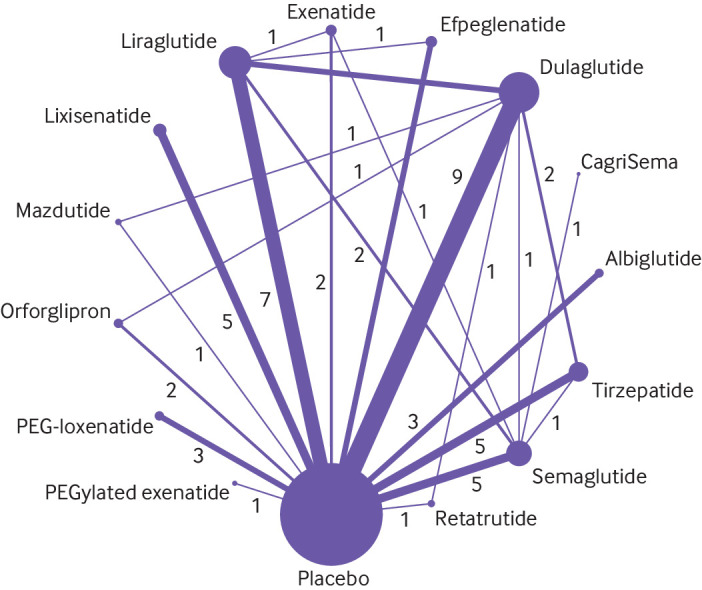
“Evaluated by fasting blood glucose, the network meta-analysis enrolled 47 randomised controlled trials with 17 163 subjects, confirming the placebo controlled effectiveness of all the 15 GLP-1RAs (fig 4, fig 5).”
§ Comparative effectiveness of GLP-1 receptor agonists on glycaemic control, body weight, and lipid profile for type 2 diabetes: systematic review and network meta-analysis > Results > Glycaemic control
boostedstates a causen = 163- Asserted: passes — The authors put it forward as true.
- Checkable: passes — It can be checked against evidence.
- Load-bearing: passes — The paper’s conclusions depend on it.
- Based: passes — The paper gives a reason why it holds.
A result the paper reports from its own data — it cites no other source for it, so there is none to check. The quote shows it is in the paper.
In the paper
“The efficacy of tirzepatide in lowering concentrations of HbA1c and fasting blood glucose, and lowering body weight was directly proportional to the length of follow-up duration (appendix 15).”
§ Comparative effectiveness of GLP-1 receptor agonists on glycaemic control, body weight, and lipid profile for type 2 diabetes: systematic review and network meta-analysis > Results > Subgroup analyses
plainstates an association- Asserted: passes — The authors put it forward as true.
- Checkable: passes — It can be checked against evidence.
- Load-bearing: unclear — It is unclear whether the paper’s conclusions depend on it.
- Based: passes — The paper gives a reason why it holds.
A result the paper reports from its own data — it cites no other source for it, so there is none to check. The quote shows it is in the paper.
In the paper
“followed by tirzepatide (−8.47 kg (−9.68 to −7.26); high confidence).”
§ Comparative effectiveness of GLP-1 receptor agonists on glycaemic control, body weight, and lipid profile for type 2 diabetes: systematic review and network meta-analysis > Abstract > Results
plainstates a cause- Asserted: passes — The authors put it forward as true.
- Checkable: passes — It can be checked against evidence.
- Load-bearing: passes — The paper’s conclusions depend on it.
- Based: passes — The paper gives a reason why it holds.
23 more claims
Create a free account to see all 43 claims and every source verdict.
- It may state two separate claims as one. 13
- Probably not a substantial claim. 5
Claims other papers make about this one
Each is checked against this paper’s own text: does it say what the citing paper says it does?
The source backs part of the claim, not all of it — or backs it for a different population, condition or comparison.
In the citing paper
“However, GLP‐1RA treatments showed over twice the odds of discontinuation due to adverse events compared with placebo. 27”
From Real‐world evidence on the utilization, clinical and comparative effectiveness, and adverse effects of newer GLP ‐ 1RA ‐based weight‐loss therapies (2025) · cites this paper as [27]
Experimental — accuracy not yet measuredThe source backs part of the claim, not all of it — or backs it for a different population, condition or comparison.
In the citing paper
“According to recent studies, tirzepatide, orforglipron, semaglutide, liraglutide, and exenatide were positively associated with diarrhea when compared with placebo, while liraglutide was associated with diarrhea when compared with exenatide and placebo [51, 53, 56].”
From Gastrointestinal adverse events associated with GLP-1 RA in non-diabetic patients with overweight or obesity: a systematic review and network meta-analysis (2025) · cites this paper as [53]
Experimental — accuracy not yet measuredThe source backs part of the claim, not all of it — or backs it for a different population, condition or comparison.
In the citing paper
“Nausea was the most frequently reported symptom, besides vomiting and diarrhea, findings consistent with prior research in diabetic populations [51–56].”
From Gastrointestinal adverse events associated with GLP-1 RA in non-diabetic patients with overweight or obesity: a systematic review and network meta-analysis (2025) · cites this paper as [53]
Experimental — accuracy not yet measuredThe source backs part of the claim, not all of it — or backs it for a different population, condition or comparison.
In the citing paper
“The benefits of this form of therapy to treat T2DM include 1) delayed gastric emptying, and 2) inhibiting the production of glucagon from pancreatic α- cells (71–73).”
From A critical review on diabetes mellitus type 1 and type 2 management approaches: from lifestyle modification to current and novel targets and therapeutic agents. (2024) · cites this paper as [73]
Experimental — accuracy not yet measuredThe cited source says what the claim attributes to it.
In the citing paper
“In a meta‐analysis of 76 RCTs in T2D, liraglutide, semaglutide and tirzepatide were all associated with significantly increased ORs of nausea, vomiting and diarrhoea. 27”
From Real‐world evidence on the utilization, clinical and comparative effectiveness, and adverse effects of newer GLP ‐ 1RA ‐based weight‐loss therapies (2025) · cites this paper as [27]
7 more claims about this paper
Create a free account to see every claim other papers make about this one.
Citations
Cites
The PRISMA 2020 statement: An updated guideline for reporting systematic reviews
Page, M. J., McKenzie, J. E., Bossuyt, P. M., Boutron, I., Hoffmann, T. C., Mulrow, C. D., Shamseer, L., Tetzlaff, J. M., Akl, E. A., Brennan, S. E., et al. (2021) · BMJ · doi:10.1136/bmj.n71 · Cited by 108,283
RoB 2: a revised tool for assessing risk of bias in randomised trials
Sterne, J. A. C., Savović, J., Page, M. J., Elbers, R. G., Blencowe, N. S., Boutron, I., Cates, C. J., Cheng, H.-Y., Corbett, M. S., Eldridge, S. M., et al. (2019) · BMJ · doi:10.1136/bmj.l4898 · Cited by 34,787
James, S. L., Abate, D., Abate, K. H., Abay, S. M., Abbafati, C., Abbasi, N., Abbastabar, H., Abd-Allah, F., Abdela, J., Abdelalim, A., et al. (2018) · The Lancet · doi:10.1016/s0140-6736(18)32279-7 · Cited by 13,867
Self-citationHutton, B., Salanti, G., Caldwell, D. M., Chaimani, A., Schmid, C. H., Cameron, C., Ioannidis, J. P. A., Straus, S., Thorlund, K., Jansen, J. P., et al. (2015) · Annals of Internal Medicine · doi:10.7326/m14-2385 · Cited by 8,269
The PRISMA 2020 statement: an updated guideline for reporting systematic reviews
Page, M. J., McKenzie, J., Bossuyt, P., Boutron, I., Hoffmann, T., mulrow, C., Shamseer, L., Tetzlaff, J., Akl, E., Brennan, S. E., et al. (2020) · doi:10.31222/osf.io/v7gm2_v1 · Cited by 8,090
The PRISMA 2020 statement: an updated guideline for reporting systematic reviews
Page, M. J., McKenzie, J., Bossuyt, P., Boutron, I., Hoffmann, T., mulrow, C., Shamseer, L., Tetzlaff, J., Akl, E., Brennan, S. E., et al. (2020) · doi:10.31222/osf.io/v7gm2 · Cited by 5,177
Biology of Incretins: GLP-1 and GIP
Baggio, L. L., & Drucker, D. J. (2007) · Gastroenterology · doi:10.1053/j.gastro.2007.03.054 · Cited by 3,639
Investigating and dealing with publication and other biases in meta-analysis
Sterne, J. A. C., Egger, M., & Smith, G. D. (2001) · BMJ · doi:10.1136/bmj.323.7304.101 · Cited by 2,225
PPARγ signaling and metabolism: the good, the bad and the future
Ahmadian, M., Suh, J. M., Hah, N., Liddle, C., Atkins, A. R., Downes, M., & Evans, R. M. (2013) · Nature Medicine · doi:10.1038/nm.3159 · Cited by 2,016
CINeMA: an approach for assessing confidence in the results of a network meta-analysis
Nikolakopoulou, A., Higgins, J. P. T., Papakonstantinou, T., Chaimani, A., Del Giovane, C., Egger, M., & Salanti, G. (2020) · PLOS Medicine · doi:10.1371/journal.pmed.1003082 · Cited by 1,935
Cited by
Items 201–300 of 547
Pierro, F. D., Thacharodi, A., Kumaraswami, M., Suvorov, A. N., Zupet, J., & Zerbinati, N. (2026) · Microbial Cell Factories · doi:10.1186/s12934-026-02997-w · Cited by 12
“In addition to broader health benefits [160], the glucagon-like peptide-1 (GLP-1) has recently emerged as effective first-line therapies in treating hyperglycemia [161].”
Saeed, Z. I., Aktürk, H. K., Aleppo, G., Kruger, D. F., Levy, C. J., Mader, J. K., Sherr, J. L., & Shah, V. N. (2024) · Clinical Diabetes · doi:10.2337/cd24-0067 · Cited by 8
Choe, H. J., Nauck, M. A., & Moon, J. H. (2024) · Endocrinology and Metabolism · doi:10.3803/enm.2024.2150 · Cited by 9
Comparing medication persistence with oral and subcutaneous semaglutide in a real-world setting
Conti, M., Pontiggia, L., Vergani, M., Muraca, E., Cannistraci, R., Perra, S., Lattuada, G., Perseghin, G., & Ciardullo, S. (2024) · Acta Diabetologica · doi:10.1007/s00592-024-02424-9 · Cited by 12
“…proved to be the most effective among single agonists in reducing HbA1c (mean difference: − 1.40%; 95% CI − 1.67 to − 1.12%), fasting blood glucose (mean difference: − 35.8 mg/dl; 95% CI − 43.4 to 28.4 mg/dl), and body weight (mean difference: − 3.13 kg; CI 95% − 3.95 to − 2.31 kg) [20 ].”
InfluentialFunctional and multi-omic aging rejuvenation with GLP-1R agonismPreprint
Huang, J., Kwok, A. J., Li, J. C. Y., Chiu, C. L. H., Ip, B. Y. M., Tung, L. Y., Zheng, X., Chow, H. T., Lo, M. P. S., Li, Z., et al. (2024) · bioRxiv (Cold Spring Harbor Laboratory) · doi:10.1101/2024.05.06.592653 · Cited by 6
Mody, R., Desai, K. R., Teng, C., Reznor, G., Stockbower, G. E., Grabner, M., & Benneyworth, B. D. (2025) · Diabetes Obesity and Metabolism · doi:10.1111/dom.16372 · Cited by 9
Xu, S. M., Li, J., Qiu, J., Zhang, Y., Yang, S., & Liu, J. (2025) · Nutrition Reviews · doi:10.1093/nutrit/nuaf115 · Cited by 7
Research Progress on the Association Between GLP-1 Receptor Agonists and Cardiomyopathy
Yang, X., & Li, X. (2025) · Reviews in Cardiovascular Medicine · doi:10.31083/rcm37180 · Cited by 6
“Triazinate (TZT), compared to a placebo, has been identified as the most effective GLP-1RA in controlling blood glucose in T2DM patients, as evidenced by reductions in HbA1c and fasting glucose concentrations [22].”
Cheng, X. L., Jiang, Z., Li, G., Wang, J., & Han, F. (2025) · Journal of Endocrinological Investigation · doi:10.1007/s40618-025-02712-3 · Cited by 9
Ponzo, V., Vitale, M., Bo, S., Broglio, F., Goitre, I., & Cioffi, I. (2025) · Nutrients · doi:10.3390/nu17213318 · Cited by 7
Drexel, H., Festa, A., Schmidt, T. A., Rocca, B., Dobrev, D., Agewall, S., Tamargo, J. L., & Kaser, S. (2025) · European Heart Journal - Cardiovascular Pharmacotherapy · doi:10.1093/ehjcvp/pvaf076 · Cited by 7
“130 semaglutide was reported to be the only glucagon-like peptide-1 (GLP-1) receptor agonist, which reduced LDL-C by 6.19 mg/dL (0.16 mmol/L) 95% CI ( − 0.3–0.02) while exenatide and tirzepatide displayed TG lowering effects when compared with placebo (exenatide: − 140.72 mg/dL ( − 1.59 mmol/L)…”
InfluentialGLP-1R Agonists for Weight Loss in Psychiatric Disorders: A Systematic Review and Meta-analysis
Alves, K. M., da Silva, M. T., Kramer, C. K., & Viana, L. V. (2025) · Journal of the Endocrine Society · doi:10.1210/jendso/bvaf150 · Cited by 14
Choi, J., Kamath, T., Nguyen, V. H., Przybyszewski, E. M., Song, J., Carroll, A., Michta, M., Almazan, E., Simon, T. G., & Chung, R. T. (2025) · Liver International · doi:10.1111/liv.70447 · Cited by 10
Effect of liraglutide on the dysglycemia, inflammation, and gut microbiota in prediabetic KKay mice
Zhang, Y., Yang, X., Yang, P., Sun, H., Chen, L., Zhang, X., & Liu, S. (2025) · Frontiers in Pharmacology · doi:10.3389/fphar.2025.1714859 · Cited by 6
Obesity and emerging intervention strategies: Mechanistic insights and novel drug targets
Feng, X., Li, S., Li, J., & Su, Z. (2025) · Chinese Medical Journal · doi:10.1097/cm9.0000000000003919 · Cited by 7
“[120,121] Notably, sema-glutide has been associated with a decreased risk of 10 obesity-related cancers, potentially through metabolic regulation and inflammation suppression.”
Kwan, A. T. H., Lakhani, M., & McIntyre, R. S. (2026) · Clinical Nutrition · doi:10.1016/j.clnu.2026.106620 · Cited by 10
GLP-1 Receptor Agonists and Noncardiometabolic Outcomes: An Umbrella Review of Meta-Analyses
Yang, K., Liu, C., Guo, Q., & Li, Y. (2026) · JAMA Network Open · doi:10.1001/jamanetworkopen.2026.4722 · Cited by 15
Are glucagon-like peptide-1 receptor agonists anti-consummatory drugs?
Mansur, R. B., Vincenzo, J. D. D., Badulescu, S., Gill, H., Tabassum, A., Llach, C.-D., Rosenblat, J. D., & McIntyre, R. S. (2024) · CNS Spectrums · doi:10.1017/s109285292400244x · Cited by 9
Obesity Management for Patients with Coronary Artery Disease and Heart Failure
Syed, A. A., Adam, S., Miller, C., & Alkhaffaf, B. H. (2025) · Heart Failure Clinics · doi:10.1016/j.hfc.2024.12.006 · Cited by 6
Santos, G. L., dos Santos, C. F., Rocha, G. R., Calmon, M. S., Lemos, F. F. B., Silva, L. G., Luz, M. S., Pinheiro, S. L. R., Botelho, A. C., & de Melo, F. F. (2025) · World Journal of Diabetes · doi:10.4239/wjd.v16.i6.104706 · Cited by 12
Wang, J.-K., Zhang, D., Wang, J.-F., Lu, W., Wang, J., Liang, S.-F., Liu, R., Jiang, J., Li, H., & Yang, X. (2025) · World Journal of Diabetes · doi:10.4239/wjd.v16.i1.99526 · Cited by 6
Chen, H., Ding, Y., & Shan, Y. (2025) · Expert Opinion on Drug Safety · doi:10.1080/14740338.2025.2468860 · Cited by 12
“Although detailed dose data were not available in the FAERS database, previous clinical trials indicate that tirzepatide’s gastrointestinal ADEs are dose-dependent, with higher doses associated with more frequent and severe ADEs [27].”
Current and Emerging Parenteral and Peroral Medications for Weight Loss: A Narrative Review
Lawati, A. A., Alhabsi, A. N., Rahul, R., Savino, M.-L., Alwahaibi, H., Das, S., & Lawati, H. A. (2025) · Diseases · doi:10.3390/diseases13050129 · Cited by 6
“Cagrilintide, primarily being evaluated for its role in weight loss treatments, has shown efficacy when combined with other medications, such as Semaglutide [115].”
InfluentialSrivastava, G., Campbell, S. L., Hill, C. R., Stanley, T. L., Lawson, E. A., Apovian, C. M., Almandoz, J. P., Leggio, L., Lakdawalla, D. N., Dar, M., et al. (2025) · The American Journal of Clinical Nutrition · doi:10.1016/j.ajcnut.2025.06.015 · Cited by 5
Bank, N. C., Perle, S. J., Lauck, B. J., Rajesh, A. J., Jeffs, A. D., & Draeger, R. W. (2025) · Journal of Hand Surgery Global Online · doi:10.1016/j.jhsg.2025.100746 · Cited by 6
Hanna, S., Sethiadi, J., Ali, Q., & Sinha, S. (2025) · Cancers · doi:10.3390/cancers17162600 · Cited by 7
“Glucagon-like peptide-1 receptor agonists (GLP-1RAs) have demonstrated substantial therapeutic success, initially revolutionizing the management of type 2 diabetes mellitus through their potent effects on glycemic control [13].”
Zahed, M., Elmesalmi, M., Al-Kharouf, K. F., Elbahnasawy, S. E., Menawy, Z. E., Elhanash, S., Odeh, M., Elnaggar, N., Gamal, M. H., & Elhady, M. M. (2025) · Cureus · doi:10.7759/cureus.93065 · Cited by 8
“GLP-1 agonists have been shown to enhance glycemic control through hemoglobin A1c (HbA1c) reduction as the first use for diabetic patients [11].”
Xu, J. J., Johnson, M. C., Lama, G. A., Budin, J. S., Tabbaa, A., Chen, A. Z., & Magruder, M. L. (2025) · The Journal of Arthroplasty · doi:10.1016/j.arth.2025.09.056 · Cited by 7
Wang, X., Wang, X., Zhuang, H., Lu, G., & Zhao, G. (2025) · European Journal of Pharmacology · doi:10.1016/j.ejphar.2025.178429 · Cited by 5
Argano, C., Orlando, V., Maggio, D., Pollicino, C., Torres, A., Cangialosi, V., Manno, S. B., & Corrao, S. (2025) · Metabolites · doi:10.3390/metabo15120773 · Cited by 6
Joy, B., Ramsamooj, A., Ibrahim, S., Wen, J., Hsu, N., & Frezza, E. (2026) · Endocrine · doi:10.1007/s12020-025-04494-3 · Cited by 13
“Furthermore, Yao et al. 2024 supports evidence of a dose-dependent risk with high-dose GLP-1RA administra - tion in their meta-analysis analyzing comparative efficacy of 15 different GLP-1RA preparations [ 111].”
邵倩, Xiong, J., Wu, J., Mao, J., & Hu, Q. (2026) · Frontiers in Molecular Biosciences · doi:10.3389/fmolb.2025.1729904 · Cited by 5
Alper, A., Peleg, G., Fagin, A., Shah, P. P., Chowdhury, I. Z., Gonzales, A., & FAILLACE, R. T. (2026) · Cardiovascular Diabetology – Endocrinology Reports · doi:10.1186/s40842-025-00270-4 · Cited by 7
“A 2024 network meta-analysis ranks orforglipron highest for nausea risk among oral GLP-1 RAs in non-diabetic patients, potentially due to its rapid absorption profile [44].”
InfluentialAlbor, C., Anyiam, O., Boyle, L., Makaronidis, J., Tan, R. J. L., Iftikhar, S., Burzić, A., Lajeunesse‐Trempe, F., Stanley, M., Bhatti, A. I., et al. (2026) · Current Obesity Reports · doi:10.1007/s13679-026-00707-6 · Cited by 5
Garg, S. K., Aktürk, H. K., Garg, S., Beck, R. W., Bellini, N. J., Bjornstad, P., Carlson, A. L., Carroll, J., Close, K., Block, C., et al. (2026) · Diabetes Technology & Therapeutics · doi:10.1177/15209156261449879 · Cited by 9
Reilly-Harrington, N. A., Himes, S. M., Lauretti, J. M., & Sogg, S. (2025) · Cognitive and Behavioral Practice · doi:10.1016/j.cbpra.2025.02.004 · Cited by 6
Wu, Q., Zeng, Y., Liu, Y., Teng, F., Zhou, T., Guo, M., Jiang, Z., & Xu, Y. (2025) · Frontiers in Endocrinology · doi:10.3389/fendo.2025.1532587 · Cited by 10
Atypical diabetic neuropathies
McCray, B. A., Stino, A. M., Davalos, L., Quigley, S., Becker, B., & Callaghan, B. C. (2025) · BMJ · doi:10.1136/bmj-2024-081109 · Cited by 10
“These agents are highly effective in reducing HbA 1c levels in patients with type 2 diabetes, 134 with absolute percentage reductions of approximately 1-2 depending on the agent.”
Liraglutide for adults living with obesity
Meza, N., Bracchiglione, J., Liquitay, C. M. E., Madrid, E., Varela, L. B., Guo, Y., Urrútia, G., er, S. F. S., Tiller, S., Shokraee, K., et al. (2025) · Cochrane Database of Systematic Reviews · doi:10.1002/14651858.cd016017 · Cited by 16
Radić, J., Vučković, M., Đogaš, H., Grubić, M., Belančić, A., Tandara, L., Šegvić, L. Š., Novak, I., & Radić, M. (2024) · Medicina · doi:10.3390/medicina60101643 · Cited by 4
“GLP-1RAs have demonstrated a significant reduction in MACE and possess strong anti-obesogenic properties, making them particularly suited for this high-risk population [44–49].”
BackgroundTailoring Weight Loss Before Hernia Surgery: Distinguishing Between Two Types of Obesity
Findlay, J. M., & Sanders, D. L. (2025) · Journal of Abdominal Wall Surgery · doi:10.3389/jaws.2025.14322 · Cited by 7
Access to GLP-1s: Where Do Employers Fit in?
Imboden, M. T. (2025) · American Journal of Health Promotion · doi:10.1177/08901171251335507 · Cited by 4
Salvatore, M., Zhang, B., Tang, H., Lu, Y., Zhang, D., Zhou, T., Lu, Y., Amaro, A., Ritchie, M. D., & Chen, Y. (2025) · medRxiv · doi:10.1101/2025.06.03.25328908 · Cited by 4
“GLP-1 RA analyses may be affected by heterogeneity in effects 16,29,84–86 and prescribing practices, 87,88 as shown by statistically significant baseline covariate differences between semaglutide and other GLP-1 RAs (Table 1).”
Orforglipron: A Novel Oral GLP-1 Agonist for the Treatment of Obesity and Diabetes
Pillai, A. A., Sharma, A. M., Krayem, H., Frishman, W. H., & Aronow, W. S. (2025) · Cardiology in Review · doi:10.1097/crd.0000000000001139 · Cited by 3
Baran, K., Jankowska, M., Jańczyk, N., Mędrysa, K., Pokrzepa, J. J., Presak, M., Blecharz, G., Szwech, J., Winkowska, A., & Machalica, J. (2024) · Quality in Sport · doi:10.12775/qs.2024.30.56469 · Cited by 4
Ozempic v Mounjaro: what is the difference between semaglutide and tirzepatide?
Lang, K. (2025) · BMJ · doi:10.1136/bmj.q2636 · Cited by 4
Vujosevic, S., Toma, C., Ferrulli, A., Cillà, S. D., Nucci, P., & Luzi, L. (2025) · Acta Diabetologica · doi:10.1007/s00592-025-02552-w · Cited by 6
Li, Y., Yu, R., Song, T., Xiao, Y., Xu, W., Zhang, T., & Li, X. (2025) · BMC Pediatrics · doi:10.1186/s12887-025-05886-0 · Cited by 3
“Glucagon-like peptide-1 receptor agonists (GLP-1RAs) have gained attention for their renal and cardiovascular benefits in patients with type 2 diabetes and have been found to be safely effective for glycemic control and weight management [10, 11].”
Spry, E. R., Travis, K. B., Ragland, K. J., Klein, A. J., Zimmerman, J. M., & Vaughan, R. A. (2025) · Molecular and Cellular Endocrinology · doi:10.1016/j.mce.2025.112629 · Cited by 3
Kamrul-Hasan, A. B. M., Pappachan, J. M., Ashraf, H., Nagendra, L., Dutta, D., Kuchay, M. S., & Shaikh, S. S. (2025) · World Journal of Methodology · doi:10.5662/wjm.v15.i4.105478 · Cited by 5
Clauss, M., Puissant, C., Bastani, N. E., Nielsen, L. L. K., Skålhegg, B. S., Jeppesen, P. B., & Jensen, J. (2025) · Frontiers in Endocrinology · doi:10.3389/fendo.2025.1618142 · Cited by 4
Lv, M., Yue, M., Yang, M., Li, X., Wu, K., Yao, T., Qian, H., Chen, L., Wu, W., Min, X., et al. (2025) · Reviews in Cardiovascular Medicine · doi:10.31083/rcm39927 · Cited by 4
“These mechanisms underpin its glycemic con-trol [17], cardioprotective actions (via endothelial stabilization, infarct size limitation, and ventricular remodeling mitigation) [18–20], and immune-modulatory effects [21,22].”
Wan, S., Yan, H., Sun, Q., Zhu, J., Wang, H., Qu, K., & Yi, X. (2025) · Diabetes Obesity and Metabolism · doi:10.1111/dom.70201 · Cited by 7
“Not only can GLP-1RAs mitigate neuroinflammation and reduce tau protein phosphorylation, 35 but they may also preserve cognitive function by improving cerebral hemodynamics, such as augmenting cerebral perfusion pressure.”
RetractedFlorescu, A. G., Pucerea, S. A., Floria, M., Rusu, E., Cuiban, E., Jinga, M., Galrinho, R. D., & Stanciu, S. M. (2025) · Romanian Journal of Military Medicine · doi:10.55453/rjmm.2025.128.6.9 · Cited by 8
Kamrul-Hasan, A. B. M., Dutta, D., Nagendra, L., Basavarajappa, S. D., Girijashankar, H. B., Joshi, A., & Pappachan, J. M. (2025) · World Journal of Diabetes · doi:10.4239/wjd.v16.i12.112830 · Cited by 4
Huang, L., Lin, B., Mu, Y., Ren, Y., Li, Q., Li, Y., Ma, Y., Fan, Y., Zhu, G., Song, Z., et al. (2025) · Diabetology & Metabolic Syndrome · doi:10.1186/s13098-025-02062-3 · Cited by 3
“…and CagriSema, may offer integrated benefits in CKM management by improving glycemic control, lipid metabolism, and systemic inflammation [53, 54] These agents also show cardioprotective effects and may represent a promising adjunctive therapy, particularly when combined with resistance…”
Zhou, J., Wang, F., & Li, S. (2025) · Frontiers in Endocrinology · doi:10.3389/fendo.2025.1646956 · Cited by 3
Consumer Food Purchases After Glucagon-Like Peptide-1 Receptor Agonist Initiation
Sørensen, K. K., Møller, F. T., Yazdanfard, P. D. W., Hasselbalch, R. B., Kragholm, K. H., Andersen, M. P., & Torp-Pedersen, C. T. (2026) · JAMA Network Open · doi:10.1001/jamanetworkopen.2025.55449 · Cited by 6
Kim, M. T., Lee, S., Goh, G. S.-H., & Riew, K. D. (2026) · Global Spine Journal · doi:10.1177/21925682261419753 · Cited by 8
Wang, Y., Zhou, T., Bai, S., Wang, S., Wang, Y., Wang, W., Zhou, Y., Tian, J., Qin, X., & Gao, X. (2026) · Journal of Ethnopharmacology · doi:10.1016/j.jep.2026.121451 · Cited by 4
Sridhar, A., Palmer, E. S., Craig, S. L., Krason‐Kidzinska, E., Irwin, N., & O'Harte, F. P. M. (2026) · Diabetes Obesity and Metabolism · doi:10.1111/dom.70647 · Cited by 3
“liraglutide and semaglutide, provide established glucose-regulating and body weight reducing actions [5].”
Hu, Z., Tian, D., Yang, Z., Zhang, J., Zhang, L., Xu, Y., & Lu, X. (2026) · Frontiers in Pharmacology · doi:10.3389/fphar.2026.1754721 · Cited by 7
Kanbay, M., Abdel‐Rahman, S. M., Güldan, M., Özbek, L., Genc, N. I., Ak, A. B., Covic, A. C., & Goren, H. K. (2026) · Clinical Kidney Journal · doi:10.1093/ckj/sfag105 · Cited by 5
Lipid management in type 2 diabetes and non-HDL-cholesterol: target all atherogenic lipoproteins
Brandts, J., Verket, M., Zambon, A., Marx, N., Müller-Wieland, D., & Federici, M. (2026) · Cardiovascular Diabetology · doi:10.1186/s12933-026-03166-4 · Cited by 4
“A meta-analysis of 76 trials found that semaglutide lowered LDL-C (−0.16 mmol/L) and total cholesterol (−0.48 mmol/L), while tirzepatide (−0.89 mmol/L) and ITCA 650 (−1.59 mmol/L) significantly reduced TG [79].”
InfluentialZambrano-Villacres, R., Campuzano-Donoso, M., Reytor-González, C., Rossetti, G., Cobellis, L., Cobellis, F., Pilone, V., Simancas‐Racines, D., & Schiavo, L. (2026) · Nutrients · doi:10.3390/nu18111751 · Cited by 9
“…network meta-analysis of 76 randomized trials confirms these effects, demonstrating that while all GLP-1RAs improve glycemic control and weight management, combination therapies like dual-agonists like tirzepatide yield the most significant reductions in body weight (up to 14.03 kg) [39].”
InfluentialCarter, V., Desverreaux, E., Amin, I., Fogarty, A. E. C., Hussain, N., D'Souza, R. S., & Karri, J. V. (2026) · Regional Anesthesia & Pain Medicine · doi:10.1136/rapm-2026-107658 · Cited by 6
Metabolic Modulation in Cancer Care: The Potential Role of Glucagon-Like Peptide-1 Receptor Agonists
Temperley, H. C., & Kelly, M. E. (2026) · Journal of Clinical Oncology · doi:10.1200/jco-26-00062 · Cited by 3
“16 , 40 Cardiovascular outcome trials have shown reductions in major adverse events.”
Bartoszko, J. M., & van Klei, W. A. (2024) · Canadian Journal of Anesthesia/Journal canadien d anesthésie · doi:10.1007/s12630-024-02809-y · Cited by 3
Metformin: Beyond Type 2 Diabetes Mellitus
Ahmad, R., & Haque, M. (2024) · Cureus · doi:10.7759/cureus.71730 · Cited by 6
Falcetta, P., Zilich, R., Baccetti, F., Baronti, W., Masi, D., Morviducci, L., Musacchio, N., Muselli, M., Ozzello, A., Rossi, A., et al. (2025) · The Journal of Clinical Endocrinology & Metabolism · doi:10.1210/clinem/dgaf229 · Cited by 3
Mijajlovic, M. D., Bornstein, N. M., & Aleksić, V. (2025) · Therapeutic Advances in Neurological Disorders · doi:10.1177/17562864251326769 · Cited by 4
“15,16 This comprehensive review consolidates the evidence regarding current pharmacological approaches and future prospects for secondary stroke prevention, extending beyond antithrombotic therapies, and primarily focused on a review of the efficacy of colchicine and GLP-1RA.”
Li, W., Cai, R., Yin, B., Zhou, Y., Dong, X., Li, W., & Wen, J. (2025) · Biology · doi:10.3390/biology14050575 · Cited by 4
“However, their application in GLP-1RA is restricted by challenges such as the poor skin permeability of macromolecular drugs and the need for advanced formulation techniques [15,16].”
Shen, B., Wang, W., Guo, Y., Chen, Z., Liu, C., Huang, J., & Li, Y. (2025) · Diabetology & Metabolic Syndrome · doi:10.1186/s13098-025-01878-3 · Cited by 5
“…for the treatment of individuals with type 2 diabetes (T2D) and obesity, glucagon-like peptide-1 receptor agonists (GLP-1RAs) such as semaglutide and liraglutide significantly improved body weight in patients with T2D while reducing glycated haemoglobin (HbA1c) levels in these patients [3, 4].”
Seijas‐Amigo, J., Salgado‐Barreira, Á., Castelo-Dominguez, R., Pérez-Álvarez, M. T., Ponce-Piñón, B., Fernández-Silva, M., Rodríguez-Barreiro, M., Pereira-Pía, M., Iglesias-Moreno, J. M., Gago-García, M., et al. (2025) · Diabetes & Metabolic Syndrome Clinical Research & Reviews · doi:10.1016/j.dsx.2025.103312 · Cited by 5
Zubair, A., Zaib, S., Zhu, M., & Mohany, M. (2024) · Biological Trace Element Research · doi:10.1007/s12011-024-04305-2 · Cited by 3
Lalic, N. M., Jotić, A., Lukić, L., Milicic, T. J., Macesic, M. V., Gajović, J. S., Stoiljkovic, M. M., Milovancevic, M. M., Cvetković, D. R., & Lalic, K. S. (2024) · Diabetes Research and Clinical Practice · doi:10.1016/j.diabres.2024.111816 · Cited by 3
Energy balance and obesity: the emerging role of glucagon like peptide-1 receptor agonists
Beauregard, N., McInnis, K., Goldfield, G. S., & Doucet, É. (2024) · Current Opinion in Clinical Nutrition & Metabolic Care · doi:10.1097/mco.0000000000001064 · Cited by 11
Treatment of Type 2 Diabetes in Patients with Obesity
Guzman, H., Hasan, L. Z., & Reid, T. J. (2024) · Endocrinology and Metabolism Clinics of North America · doi:10.1016/j.ecl.2024.10.004 · Cited by 4
Nakamura, H., Endo, T., & Tsuda, M. (2025) · Biological and Pharmaceutical Bulletin · doi:10.1248/bpb.b24-00737 · Cited by 3
Antidiabetic combination therapy and cardiovascular outcomes: An evidence-based approach
Ganakumar, V., Fernandez, C. J., & Pappachan, J. M. (2025) · World Journal of Diabetes · doi:10.4239/wjd.v16.i4.102390 · Cited by 4
Nekidy, W. S. E., Hasan, H., Abidi, E., Sayegh, L. A., Dajani, R. Z., El-Kaissi, S., Hegazin, S. B., & Mallat, J. (2025) · Hospital Pharmacy · doi:10.1177/00185787251340645 · Cited by 8
Alrasheed, T., Mostafa, M. E. A., Madkhali, M. A., & Khairy, H. A. (2026) · Frontiers in Endocrinology · doi:10.3389/fendo.2025.1734549 · Cited by 4
Design, synthesis and inhibition evaluation of novel chalcone amide α-glucosidase inhibitors
Lv, S. Y., & Cheng, L. P. (2024) · Future Medicinal Chemistry · doi:10.1080/17568919.2024.2347092 · Cited by 4
Relapse in Anorexia Nervosa Associated With Tirzepatide: A Case Report
Guerdjikova, A. I., Dlugosz, H., Wolterman, R., & McElroy, S. L. (2025) · Journal of Clinical Psychopharmacology · doi:10.1097/jcp.0000000000001975 · Cited by 5
Alali, S., Alotaibi, W. S., Ashodian, K., Achour, N., Almulla, A., & Mutlaq, H. (2025) · Frontiers in Nutrition · doi:10.3389/fnut.2025.1590379 · Cited by 5
Wang, L., Wang, F., Wang, Y., & Zhao, Q. (2025) · Diabetology & Metabolic Syndrome · doi:10.1186/s13098-025-01927-x · Cited by 2
“This may limit the short-term cost-effectiveness of oral semaglutide, as semaglutide could be more effective than liraglutide in weight management [34].”
Potential Impact of Next-Generation Weight Loss Drugs on Cancer Incidence
Brenner, D. R., Ruan, Y., & Carbonell, C. (2025) · JAMA Network Open · doi:10.1001/jamanetworkopen.2025.30904 · Cited by 2
Xiao, Z., Yin, X., Lai, X., Zhou, X., Zhang, Y., Yang, D., Wu, R., Wang, H., Zhou, J., Yang, X., et al. (2025) · Frontiers in Nutrition · doi:10.3389/fnut.2025.1648314 · Cited by 2
Comparative analysis of LJ-4378 and tirzepatide in mouse models of obesity and weight regain
Kim, H., Kim, S. W., Choi, C., Joo, S., Kim, G., Kim, M., Yang, E., Lee, J., Chung, S., Jeong, L. S., et al. (2025) · Archives of Pharmacal Research · doi:10.1007/s12272-025-01575-9 · Cited by 3
“Tirzepatide (TZP), a dual agonist of GLP-1 and glucose-dependent insulinotropic polypeptide (GIP) receptors, has shown enhanced therapeutic efficacy among the GLP-1 agonists (Yao et al. 2024).”
Shahidifar, E., Lesniowska, M., Deschenes, E., POLCHA, G., Manzo, C. E., Barreiro, T. J., Bigdeli, G., Hemmat, A., Brine, P., Malik, A. K., et al. (2025) · Digestive Diseases and Sciences · doi:10.1007/s10620-025-09570-2 · Cited by 6
“Glucagon-like peptide-1 receptor agonists (GLP-1 RAs) are increasingly prescribed for the management of type 2 diabetes and obesity due to their proven benefits in glycemic con-trol, weight reduction, and cardiovascular risk reduction [1, 2].”
InfluentialNasser, A., Ladadweh, H., Madia, R., Dalashi, A., Wahdan, A., & Alawi, A. A. (2025) · Case Reports in Gastrointestinal Medicine · doi:10.1155/crgm/9918202 · Cited by 2
Tan, S., Yin, Y., & Lu, J. (2025) · Frontiers in Cardiovascular Medicine · doi:10.3389/fcvm.2025.1731127 · Cited by 3
Recent progress of remission in type 2 diabetes
Zhao, Z., Yue, H., Zhang, X., Chen, F., Xu, J., & Shao, S. (2025) · Therapeutic Advances in Endocrinology and Metabolism · doi:10.1177/20420188251408210 · Cited by 4
“149 Among them, CagriSema (semaglutide and cagrilintide) led to a mean weight reduction of 14.03 kg, followed by tirzepatide, inducing a mean weight reduction of 8.47 kg.”
InfluentialPharmacogenetics of incretin-based therapies
Yaluri, A. S., Ürgeová, A., Maršálek, M., Javorský, M., & Tkáč, I. (2025) · Postgraduate Medical Journal · doi:10.1093/postmj/qgaf232 · Cited by 3
Excess burden of hospitalizations in adults with diabetes – a national US cross-sectional study
Harding, J. L., Uppal, T. S., Tomic, D., Ali, M. K., Salim, A., & Magliano, D. J. (2026) · Diabetes & Metabolism · doi:10.1016/j.diabet.2026.101726 · Cited by 2
Kamrul-Hasan, A. B. M., Chatterjee, S., Nagendra, L., Dutta, D., & Pappachan, J. M. (2025) · Postgraduate Medical Journal · doi:10.1093/postmj/qgaf238 · Cited by 5
Revitalizing GIP: Therapeutic Potential in Metabolic and Neurodegenerative Disorders
Qiao, Y., Zhou, F., Mao, T., & Gao, L. (2026) · Diabetes Metabolic Syndrome and Obesity · doi:10.2147/dmso.s559587 · Cited by 4
Barakat, G. M., Hassan, S. E. H., Akhdar, H., Duong-Trung, N., & Ramadan, W. (2026) · JMIR AI · doi:10.2196/86960 · Cited by 2
“In response, modern therapies, particularly glucagon-like peptide-1 (GLP-1) receptor agonists [10,11], are now widely used in diabetes management.”
Iglesias, P., Nobre, E. L., Hanzu, F. A., Schweizer, J. R. D. O. L., Valero, L. M., Araujo-Castro, M., Luna, A. C., Albacete, F. J., Villar‐Taibo, R., & Reinke, M. (2026) · Endocrine · doi:10.1007/s12020-026-04587-7 · Cited by 2
Ko, D., Kim, D. H., Tan, F. X. N., Ho, G. J. K., Chandra, R., Xuan, Z. Z., Tham, E. K. J., Tang, N. S. Y., Yang, H. S., Koh, J. W. H., et al. (2026) · Cell Reports Medicine · doi:10.1016/j.xcrm.2026.102614 · Cited by 3
Metadata
- Authors
- Yao, H., Zhang, A., Li, D., Wu, Y., Wang, C.-Z., Wan, J.-Y., & Yuan, C.-S.
- Affiliations
- Beijing University of Chinese Medicine (CN)
- University of Chicago (US)
- Venue
- BMJ
- Publisher
- BMJ
- Published
- 2024-01-29
- Volume
- 384
- Pages
- e076410
- ISSN
- 1756-1833 (ISSN-L)
- PMC
- PMC10823535
- OpenAlex
- W4391309422
- Cited by
- 558
- References
- 42
- Citations by year
- 2026: 196 · 2025: 259 · 2024: 103
- FWCI
- 32.55
- Type
- journal article
- Language
- en
- Open access
- hybrid
- doi.org
- Licence
- Locations
- BMJ (publishedVersion, cc-by-nc)
- PubMed Central (publishedVersion, cc-by-nc)
- PubMed (publishedVersion)
- HighWire Press Open Archive (submittedVersion)
- Funders
- National Natural Science Foundation of China (82274379)
- Beijing University of Chinese Medicine
- Fundamental Research Funds for the Central Universities
- Topics
- Health Sciences › Medicine › Endocrinology, Diabetes and Metabolism › Diabetes Treatment and Management
- Health Sciences › Medicine › Pharmacology (medical) › Pharmacology and Obesity Treatment
- Health Sciences › Medicine › Endocrinology, Diabetes and Metabolism › Diabetes Management and Research
- Keywords
- GLP-1 receptor agonists, type 2 diabetes, glycemic control, weight loss, lipid profile, HbA1c, fasting blood glucose, tirzepatide, semaglutide, cagrilintide, LDL cholesterol, triglycerides, drug safety, drug efficacy comparison, weight management
- MeSH terms
- Glycemic Control, Glucagon-Like Peptide-1 Receptor Agonists, Adult, Blood Glucose, Body Weight, Diabetes Mellitus, Type 2, Glycated Hemoglobin, Humans, Hypoglycemic Agents, Weight Loss, Lipid Metabolism
About these checks
Registry, retraction, Cites and statistics results are computed, not judged, with one exception: a printed reference that no index lists is read once by a model before it counts as a citation error. Claims are extracted by a model and kept only when their quote appears verbatim in the text; each cited source is then checked, with a model’s help, for whether it says what the claim relies on. Those verdicts can be wrong — read the claim’s quote and the cited source before relying on one.
A language model drew the claims from the paper on 2026-10-10, under version 3 of the claim definition (model deepseek-v4.1-flash, prompt extract-v3).
A second model labelled each claim on 2026-10-10 (model jev-1.13-20260917, definition revision gold-guideline-v0.2).
Cited sources are checked with a language model’s help (gpt-6-sol).
Statistics and arithmetic are recomputed, not judged.
Confidence bands are shown only for fields calibrated on our annotated test set. None is calibrated yet, so no band is shown.
What counts as a claim ›How we measure confidence ›How we check this ›
Are you an author, or do you see a problem with this page? Request a review
Data sources
Bibliographic data: Semantic Scholar, OpenAlex, Crossref.
Contains information from the Semantic Scholar Academic Graph Datasets, made available under the ODC Attribution License (ODC-BY 1.0).
Semantic Scholar’s data is described in: Kinney, R., et al. (2023). The Semantic Scholar Open Data Platform. arXiv:2301.10140.
