

The DOI matches its Crossref record; 53 of the 55 references it cites were found in a registry or an index.
Adoption, non-adoption, and abandonment of a personal electronic health record: case study of HealthSpace
Open accessAbstract
OBJECTIVE: To evaluate the policy making process, implementation by NHS organisations, and patients' and carers' experiences of efforts to introduce an internet accessible personal electronic health record (HealthSpace) in a public sector healthcare system. DESIGN: Mixed method, multilevel case study. SETTING: English National Health Service; the basic HealthSpace technology (available throughout England) and the advanced version (available in a few localities where this option had been introduced) were considered. MAIN OUTCOME MEASURES: National statistics on invitations sent, HealthSpace accounts created, and interviews and ethnographic observation of patients and carers. Data analysis was informed by a socio-technical approach which considered macro and micro influences on both adoption and non-adoption of innovations, and by the principles of critical discourse analysis. PARTICIPANTS: 56 patients and carers (of whom 21 opened a basic HealthSpace account, 20 had diabetes but were not initially using HealthSpace, and 15 used advanced HealthSpace accounts to exchange messages with their general practitioner), 3000 pages of documents (policies, strategies, business plans, minutes of meetings, correspondence), observational field notes, and 160 interviews with policy makers, project managers, and clinical staff. RESULTS: Between 2007 and October 2010, 172 950 people opened a basic HealthSpace account. 2913 (0.13% of those invited) opened an advanced account, compared with 5-10% of the population anticipated in the original business case. Overall, patients perceived HealthSpace as neither useful nor easy to use and its functionality aligned poorly with their expectations and self management practices. Those who used email-style messaging were positive about its benefits, but enthusiasm beyond three early adopter clinicians was low, and fewer than 100 of 30 000 patients expressed interest. Policy makers' hopes that "deploying" HealthSpace would lead to empowered patients, personalised care, lower NHS costs, better data quality, and improved health literacy were not realised over the three year evaluation period. CONCLUSION: Unless personal electronic health records align closely with people's attitudes, self management practices, identified information needs, and the wider care package (including organisational routines and incentive structures for clinicians), the risk that they will be abandoned or not adopted at all is substantial. Conceptualising such records dynamically (as components of a socio-technical network) rather than statically (as containers for data) and employing user centred design techniques might improve their chances of adoption and use. The findings raise questions about how eHealth programmes in England are developed and approved at policy level.
Overview
The claims and statistics of this paper haven’t been checked yet.
Run the check — free, no account needed. It reads the open-access text and checks the sources it cites.
Integrity signals
Registry
Cites
Statistics
Figures
Verification
Claims the paper makes
The claims and statistics of this paper haven’t been checked yet.
Run the check — free, no account needed. It reads the open-access text and checks the sources it cites.
Claims other papers make about this one
Each is checked against this paper’s own text: does it say what the citing paper says it does?
In the citing paper
“For example, attempts to introduce shareable electronic records by first encouraging patients to enroll, and then hoping that health care providers and organisations will follow, have failed due to resistance of clinicians and healthcare organisations [27, 28].”
From Transitioning a home telehealth project into a sustainable, large-scale service: a qualitative study (2016) · cites this paper as [27]
In the citing paper
“Additionally, these findings suggest the need for closer proximity between innovation design and evaluation, so that critical insights might usefully feed back into design and implementation [11,13] ensuring interventions are ‘minimally disruptive’ for recipients [42].”
From Exploring barriers to participation and adoption of telehealth and telecare within the Whole System Demonstrator trial: a qualitative study (2012) · cites this paper as [13]
In the citing paper
“Previous studies have described the challenges brought by the new ‘work’ and scrutiny associated with such interventions [12,38,39] and where the disruption of normalised everyday practices and interactions regarding management have been recognised a major barrier to the integration of e-health interventions into routine care and management [13,40,41].”
From Exploring barriers to participation and adoption of telehealth and telecare within the Whole System Demonstrator trial: a qualitative study (2012) · cites this paper as [13]
In the citing paper
“However, the existing evidence mainly relates to organizational readiness within the health service [17,18] or the readiness of health professionals [19-21], patients or carers for a specific single digital health service [22].”
In the citing paper
“Previous research relating to the use of personal electronic health records has demonstrated less public and professional appetite than anticipated [22,44].”
In the citing paper
“Information and communication technology (ICT) programmes in health care fail partly because people do not use the technologies.”
Self-check
Percentages, sums and reported differences re-computed from the paper’s own numbers.
The self-check needs the paper’s full text.
Citations
Cites
The Discovery of Grounded Theory: Strategies for Qualitative Research
Glaser, B. G., & Strauss, A. L. (2017) · Aldine (Routledge reprint) · doi:10.4324/9780203793206 · Cited by 25,789
Diffusion of Innovations in Service Organizations: Systematic Review and Recommendations
GREENHALGH, T., ROBERT, G., MACFARLANE, F., BATE, P., & KYRIAKIDOU, O. (2004) · The Milbank Quarterly · doi:10.1111/j.0887-378x.2004.00325.x · Cited by 7,448
Self-citationA Set of Principles for Conducting and Evaluating Interpretive Field Studies in Information Systems1
Klein, H. K., & Myers, M. D. (1999) · MIS Quarterly · doi:10.2307/249410 · Cited by 5,263
The Constant Comparative Method of Qualitative Analysis
Glaser, B. G. (1965) · Social Problems · doi:10.2307/798843 · Cited by 4,937
Improving Primary Care for Patients With Chronic Illness
Bodenheimer, T. (2002) · JAMA · doi:10.1001/jama.288.14.1775 · Cited by 2,961
Tales of the Field: On Writing Ethnography
Roufs, T. G., & Maanen, J. V. (1992) · The American Indian Quarterly · doi:10.2307/1185464 · Cited by 2,607
Improving Primary Care for Patients With Chronic Illness: The Chronic Care Model, Part 2
Bodenheimer, T., Wagner, E. H., & Grumbach, K. (2002) · JAMA · doi:10.1001/jama.288.15.1909 · Cited by 2,413
Pratt, M. G., Rockmann, K. W., & Kaufmann, J. B. (2006) · Academy of Management Journal · doi:10.5465/amj.2006.20786060 · Cited by 1,973
Discourse: A Critical Introduction.
Blommaert, J. (2008) · Linguistische Berichte (LB) · doi:10.46771/2366077500214_7 · Cited by 1,525
Tales of the field: on writing ethnography
(1988) · Choice Reviews Online · doi:10.5860/choice.26-1597 · Cited by 1,394
Research works printed but not linked: 3
- [2]Darzi A. NHS next stage review: our vision for primary and community care. Stationery Office, 2008.
- [13]Gamble KH. Is it registering? Patient portals, part II. Healthc Inform 2009; 26: 24,26,28. 19514236
- [21]Simborg DW. Consumer empowerment versus consumer populism in healthcare IT. J Am Med Inform Assoc 2010; 17: 370-2. 20595301 10.1136/jamia.2010.003392 PMC2995650 · DOI
Cited by
Sorted by citations
American Academy of Family Physicians
(1966) · New England Journal of Medicine · doi:10.1056/nejm196611172752014 · Cited by 1,947
Electronic Health Records: Then, Now, and in the Future
Evans, R. S. (2016) · Yearbook of Medical Informatics · doi:10.15265/iys-2016-s006 · Cited by 816
“Recent reports have highlighted the need for efforts to better understand the collection and use of this information in the EHR [97] and there is a lack of consensus on how PHR success will be determined [98, 99].”
O’Connor, S., Hanlon, P., O’Donnell, C. A., Garcia, S., Glanville, J., & Mair, F. S. (2016) · BMC Medical Informatics and Decision Making · doi:10.1186/s12911-016-0359-3 · Cited by 636
Patient Portals and Patient Engagement: A State of the Science Review
Irizarry, T., DeVito Dabbs, A., & Curran, C. R. (2015) · Journal of Medical Internet Research · doi:10.2196/jmir.4255 · Cited by 732
“Of the 20 studies that addressed usability of patient portals, 6 performed some form of heuristic and usability testing with objective observation and various forms of “think aloud” sessions [25,84,85,92,94,96].”
BackgroundSecurity and privacy in electronic health records: a systematic literature review.
Fernández-Alemán, J. L., Señor, I. C., Lozoya, P. Á. O., & Toval, A. (2013) · Journal of Biomedical Informatics · doi:10.1016/j.jbi.2012.12.003 · Cited by 675
Granja, C., Janssen, W., & Johansen, M. A. (2018) · Journal of Medical Internet Research · doi:10.2196/10235 · Cited by 578
“Multimedia Appendix 1 [19-239] presents the outcomes.”
Lessons from Complex Interventions to Improve Health
Hawe, P. (2015) · Annual Review of Public Health · doi:10.1146/annurev-publhealth-031912-114421 · Cited by 607
Bostock, S., & Steptoe, A. (2012) · BMJ · doi:10.1136/bmj.e1602 · Cited by 638
Nguyen, L., Bellucci, E., & Nguyen, L. T. (2014) · International Journal of Medical Informatics · doi:10.1016/j.ijmedinf.2014.06.011 · Cited by 549
Sanders, C., Rogers, A., Bowen, R., Bower, P., Hirani, S., Cartwright, M., Fitzpatrick, R., Knapp, M., Barlow, J., Hendy, J., et al. (2012) · BMC Health Services Research · doi:10.1186/1472-6963-12-220 · Cited by 450
Virtual online consultations: advantages and limitations (VOCAL) study
Greenhalgh, T., Vijayaraghavan, S., Wherton, J. P., Shaw, S. E., Byrne, E., Campbell-Richards, D., Bhattacharya, S., Hanson, P., Ramoutar, S., Gutteridge, C., et al. (2016) · BMJ Open · doi:10.1136/bmjopen-2015-009388 · Cited by 336
Self-citationWhy Do Evaluations of eHealth Programs Fail? An Alternative Set of Guiding Principles
Greenhalgh, T., & Russell, J. (2010) · PLoS Medicine · doi:10.1371/journal.pmed.1000360 · Cited by 273
Self-citationLennon, M. R., Bouamrane, M.-M., Devlin, A. M., O'Connor, S., O'Donnell, C., Chetty, U., Agbakoba, R., Bikker, A., Grieve, E., Finch, T., et al. (2017) · Journal of Medical Internet Research · doi:10.2196/jmir.6900 · Cited by 264
de Lusignan, S., Mold, F., Sheikh, A., Majeed, A., Wyatt, J. C., Quinn, T., Cavill, M., Gronlund, T. A., Franco, C., Chauhan, U., et al. (2014) · BMJ Open · doi:10.1136/bmjopen-2014-006021 · Cited by 212
Beyond TAM and UTAUT: Future directions for HIT implementation research
Shachak, A., Kuziemsky, C., & Petersen, C. (2019) · Journal of Biomedical Informatics · doi:10.1016/j.jbi.2019.103315 · Cited by 263
Cheng, C. C., Beauchamp, A., Elsworth, G. R., & Osborne, R. H. (2020) · Journal of Medical Internet Research · doi:10.2196/18476 · Cited by 219
“Even if an intervention is grounded in theory, it will not be usable if it does not align with the literacy needs and abilities of end users and may lead to nonadoption [30,99,100].”
BackgroundNørgaard, O., Furstrand, D., Klokker, L., Karnoe, A., Batterham, R. W., Kayser, L., & Osborne, R. H. (2015) · Knowledge Management & E-Learning An International Journal · doi:10.34105/j.kmel.2015.07.035 · Cited by 228
Electronic Consultation in Primary Care Between Providers and Patients: Systematic Review
Mold, F., Hendy, J., Lai, Y.-L., & de Lusignan, S. (2019) · JMIR Medical Informatics · doi:10.2196/13042 · Cited by 181
“However, as time is cumulative, even small additions, for example, between 2 and 6 min per email consultation [84], may lengthen the working day [70,76].”
BackgroundInfluentialSpencer, K., Sanders, C., Whitley, E. A., Lund, D., Kaye, J. S., & Dixon, W. G. (2016) · Journal of Medical Internet Research · doi:10.2196/jmir.5011 · Cited by 191
“This is a common finding in various studies of IT-based interventions to support home monitoring [31] and some have found major barriers associated with nonadoption of IT-based initiatives [32].”
BackgroundDigital Health Literacy: Bibliometric Analysis
Yang, K., Hu, Y., & Qi, H. (2022) · Journal of Medical Internet Research · doi:10.2196/35816 · Cited by 188
“Using a HealthSpace case study, Greenhalgh et al [72] found that policymakers hoped for patient empowerment, personalized care, lower health care costs, better data quality, and improved health literacy through personal XSL • FO RenderX electronic health records.”
"This does my head in". Ethnographic study of self-management by people with diabetes
Hinder, S., & Greenhalgh, T. (2012) · BMC Health Services Research · doi:10.1186/1472-6963-12-83 · Cited by 206
Self-citationGenerative Innovation: A Comparison of Lightweight and Heavyweight IT
Bygstad, B. (2016) · Journal of Information Technology · doi:10.1057/jit.2016.15 · Cited by 186
Patient access to electronic health records: Differences across ten countries
Essén, A., Scandurra, I., Gerrits, R. G., Humphrey, G., Johansen, M. A., Kierkegaard, P., Koskinen, J. S. S., Liaw, S., Odeh, S., Ross, P., et al. (2017) · Health Policy and Technology · doi:10.1016/j.hlpt.2017.11.003 · Cited by 171
Greenhalgh, T., Maylor, H., Shaw, S., Wherton, J., Papoutsi, C., Betton, V., Nelissen, N., Gremyr, A., Rushforth, A., Koshkouei, M., et al. (2020) · JMIR Research Protocols · doi:10.2196/16861 · Cited by 152
“In that and other studies of large-scale innovation and technology implementation projects (see definitions), we have observed a tendency among policymakers and planners to employ bounded rationality—that is, to address an oversimplified and overly rationalized version of the challenge to make solutions seem more achi…”
BackgroundSelf-citationEffect of self-monitoring on long-term patient engagement with mobile health applications
Lee, K., Kwon, H., Lee, B., Lee, G., Lee, J. H., Park, Y. R., & Shin, S.-Y. (2018) · PLOS ONE · doi:10.1371/journal.pone.0201166 · Cited by 132
Shaw, S. E., Wherton, J. P., Vijayaraghavan, S., Morris, J. H., Bhattacharya, S., Hanson, P., Campbell-Richards, D., Ramoutar, S., Collard, A., Hodkinson, I., et al. (2018) · Health Services and Delivery Research · doi:10.3310/hsdr06210 · Cited by 147
“In reality, the literature on national roll-outs of ‘transformational’ IT projects in health care suggests that this assumption may be overoptimistic.(69) Indeed, just because a DOI: 10.”
BackgroundSelf-citationUse of Electronic Health Records in sub-Saharan Africa: Progress and challenges.
Akanbi, M. O., Ocheke, A. N., Agaba, P. A., Daniyam, C. A., Agaba, E. I., Okeke, E. N., & Ukoli, C. O. (2012) · PubMed · Cited by 134
Artificial intelligence and primary care research: a scoping review
Kueper, J. K., Terry, A. L., Zwarenstein, M., & Lizotte, D. J. (2020) · The Annals of Family Medicine · doi:10.1370/afm.2518 · Cited by 143
GREENHALGH, T., RUSSELL, J., ASHCROFT, R. E., & PARSONS, W. (2011) · Milbank Quarterly · doi:10.1111/j.1468-0009.2011.00642.x · Cited by 119
“Those aspects of the Summary Care Record and HealthSpace programs that failed could sometimes be traced back to a missioncritical loss of overview (or, sometimes, a change of job) by one of these pivotal individuals.”
BackgroundInfluentialSelf-citationAgarwal, R., Anderson, C. L., Zarate, J., & Ward, C. (2013) · Journal of Medical Internet Research · doi:10.2196/jmir.2243 · Cited by 116
“Google’s announcement that it plans to close its health records service [7] in 2012 further underscores the limited diffusion of consumer controlled PHRs, a phenomenon not restricted to the United States alone [8].”
BackgroundUse of Epic Electronic Health Record System for Health Care Research: Scoping Review
Chishtie, J., Sapiro, N., Wiebe, N., Rabatach, L., Lorenzetti, D., Leung, A. A. C., Rabi, D. M., Quan, H., & Eastwood, C. A. (2023) · Journal of Medical Internet Research · doi:10.2196/51003 · Cited by 138
“Assessing data quality for research use can prove onerous because of the diversity in data elements, study settings, populations, and clinical conditions across EHR implementations [180,185,250,273].”
Abd-Alrazaq, A. A., Bewick, B. M., Farragher, T. M., & Gardner, P. H. (2019) · International Journal of Medical Informatics · doi:10.1016/j.ijmedinf.2019.03.014 · Cited by 113
Magrabi, F., Baker, M., Sinha, I., Ong, M.-S., Harrison, S., Kidd, M. R., Runciman, W. B., & Coiera, E. (2015) · International Journal of Medical Informatics · doi:10.1016/j.ijmedinf.2014.12.003 · Cited by 100
Design of Secure Protocol for Cloud-Assisted Electronic Health Record System Using Blockchain
Kim, M., Yu, S., Lee, J., Park, Y., & Park, Y. (2020) · Sensors · doi:10.3390/s20102913 · Cited by 102
“As patient healthcare records have been developed from traditional paper management to electronic record management, they can be safely stored and accessed and authorized only by legitimate medical centers [1].”
BackgroundConditions potentially sensitive to a Personal Health Record (PHR) intervention, a systematic review
Price, M., Bellwood, P., Kitson, N., Davies, I., Weber, J. H., & Lau, F. (2015) · BMC Medical Informatics and Decision Making · doi:10.1186/s12911-015-0159-1 · Cited by 99
“There has been early positive evidence as well as dramatic challenges in adoption of PHRs [8].”
BackgroundSustainable Adoption of Digital Health Innovations: Perspectives From a Stakeholder Workshop
van Velthoven, M. H., & Cordón, C. (2018) · Journal of Medical Internet Research · doi:10.2196/11922 · Cited by 97
“Those who did, found it not easy or useful to use, and their expectations regarding self-management were not met [6].”
Digital health now and in the future: Findings from a participatory design stakeholder workshop
Lupton, D. A. (2017) · Digital Health · doi:10.1177/2055207617740018 · Cited by 94
“There are numerous questions and issues to be resolved in facilitating the provision and efficacy of digital health, including use of and access to electronic medical records and patient portals by healthcare consumers and providers.(5) 7 Many telemedicine and telehealth technologies are still not adequately meeting p…”
BackgroundNiazkhani, Z., Toni, E., Cheshmekaboodi, M., Georgiou, A., & Pirnejad, H. (2020) · BMC Medical Informatics and Decision Making · doi:10.1186/s12911-020-01159-1 · Cited by 104
Reasons and Barriers for Using a Patient Portal: Survey Among Patients With Diabetes Mellitus
Ronda, M. C. M., Dijkhorst-Oei, L.-T., & Rutten, G. E. H. M. (2014) · Journal of Medical Internet Research · doi:10.2196/jmir.3457 · Cited by 97
“In a general population, there is even less inclination to activate an account [11].”
MethodInfluentialSeñor, I. C., Fernández‐Alemán, J. L., & Toval, A. (2012) · Journal of Medical Internet Research · doi:10.2196/jmir.1904 · Cited by 96
“This characteristic is particularly important because users require more flexible ways of sharing data, allowing the user to choose who can access their data, which data they can access, and at what level of access [57].”
BackgroundDesign and Development of a Person-Centered Patient Portal Using Participatory Stakeholder Co-Design
Kildea, J., Battista, J., Cabral, B., Hendren, L. J., Herrera, D., Hijal, T., & Joseph, A. (2018) · Journal of Medical Internet Research · doi:10.2196/11371 · Cited by 96
Tith, D., Lee, J.-S., Suzuki, H., Wijesundara, W. M. A. B., Taira, N., Obi, T., & Ohyama, N. (2020) · Healthcare Informatics Research · doi:10.4258/hir.2020.26.1.3 · Cited by 101
van der Vaart, R., Drossaert, C. H. C., Taal, E., Drossaers-Bakker, K. W., Vonkeman, H. E., & van de Laar, M. A. F. J. (2014) · BMC Musculoskeletal Disorders · doi:10.1186/1471-2474-15-102 · Cited by 86
“Previous research focusing on adoption of patient web portals, has also found that computer literacy can be a barrier in the uptake of health technologies [35,36].”
BackgroundDesign thinking as an approach for innovation in healthcare: systematic review and research avenues
de Oliveira, M. S., Zancul, E. D. S., & Fleury, A. L. (2020) · BMJ Innovations · doi:10.1136/bmjinnov-2020-000428 · Cited by 102
Improving the quality of EHR recording in primary care: a data quality feedback tool
van der Bij, S., Khan, N., ten Veen, P., de Bakker, D. H., & Verheij, R. A. (2016) · Journal of the American Medical Informatics Association · doi:10.1093/jamia/ocw054 · Cited by 85
“Therefore, the tool primarily focuses on data elements that are incorporated into the Dutch equivalent of the summary care record that is used in the UK.(15) The assumption was that these data elements are the most important in the exchange of patient information.”
MethodGawande, M. S., Zade, N., Kumar, P., Gundewar, S. K., Weerarathna, I. N., & Verma, P. (2025) · Molecular Biomedicine · doi:10.1186/s43556-024-00238-3 · Cited by 109
“It uses controlled simulations to test hypotheses and determine causation [44–46].”
Atherton, H., Brant, H., Ziébland, S., Bikker, A., Campbell, J., Gibson, A., McKinstry, B., Porqueddu, T., & Salisbury, C. (2018) · Health Services and Delivery Research · doi:10.3310/hsdr06200 · Cited by 83
“on the failed introduction of the HealthSpace communication platform also highlighted the importance of ensuring that the technology used meets people’s perceived needs and fits with their other health-care arrangements.(52) We will take account of these related theoretical perspectives, including insights from the no…”
BackgroundMethodOzok, A. A., Wu, H., Garrido, M. M., Pronovost, P. J., & Gürses, A. P. (2013) · Applied Ergonomics · doi:10.1016/j.apergo.2013.09.005 · Cited by 80
Bragazzi, N. L. (2013) · Patient Preference and Adherence · doi:10.2147/ppa.s38578 · Cited by 80
“Patients do not limit themselves to browse healthrelated information on the Web, but they actively exploit all of the Web’s potential.(57,58) In this sense, P6 medicine incorporates P5 medicine, because once again the patient is clearly at the center of the medical services.”
BackgroundWherton, J. P., Sugarhood, P., Procter, R., Rouncefield, M., Dewsbury, G., Hinder, S., & Greenhalgh, T. (2012) · BMC Medical Research Methodology · doi:10.1186/1471-2288-12-188 · Cited by 71
Self-citationCheng, C. C., Elsworth, G. R., & Osborne, R. H. (2020) · Frontiers in Public Health · doi:10.3389/fpubh.2020.604401 · Cited by 75
Conditional Anonymous Remote Healthcare Data Sharing Over Blockchain
Liu, J., Jiang, W., Sun, R. X., Bashir, A. K., Alshehri, M. D., Hua, Q., & Yu, K. (2022) · IEEE Journal of Biomedical and Health Informatics · doi:10.1109/jbhi.2022.3183397 · Cited by 72
“Compared with traditional physical medical records, EMRs have the advantages of reducing overhead, improving efficiency and mobility, facilitating storage and promoting the development of medical research [6], [7].”
BackgroundGreenhalgh, T., Swinglehurst, D., & Stones, R. (2014) · Health Services and Delivery Research · doi:10.3310/hsdr02390 · Cited by 71
Self-citationFamily perceptions of the usability and value of chronic disease web-based patient portals
Byczkowski, T. L., Munafo, J. K., & Britto, M. T. (2013) · Health Informatics Journal · doi:10.1177/1460458213489054 · Cited by 71
“3,4,6,12 Most notably, the National Health Service in Great Britain recently closed its PHR due to a lack of interest among patients.”
BackgroundLau, A. Y. S., Sintchenko, V., Crimmins, J., Magrabi, F., Gallego, B., & Coiera, E. W. (2012) · Journal of the American Medical Informatics Association · doi:10.1136/amiajnl-2011-000433 · Cited by 69
Hogan, T. P., Wakefield, B. J., Nazi, K. M., Houston, T. K., & Weaver, F. M. (2011) · Journal of General Internal Medicine · doi:10.1007/s11606-011-1765-y · Cited by 69
Studying Scale-Up and Spread as Social Practice: Theoretical Introduction and Empirical Case Study
Shaw, J., Shaw, S. E., Wherton, J. P., Hughes, G., & Greenhalgh, T. (2017) · Journal of Medical Internet Research · doi:10.2196/jmir.7482 · Cited by 76
“In earlier field work, we developed a set of methodologies for combining detailed ethnographic studies of the intended technology user with an analysis of the meso (organizational) and macro (eg, policy) context to begin to theorize both the successes and failures of technology implementation efforts [17-23].”
Self-citationGreenhalgh, T., Wherton, J., Shaw, S., Papoutsi, C., Vijayaraghavan, S., & Stones, R. (2019) · Journal of Medical Internet Research · doi:10.2196/16093 · Cited by 63
“Narrativizing helped illuminate the unique and subtle socio-technical interdependencies hidden within technology-supported change programs [42] since the significance of seemingly mundane or unrelated data items (eg, a short exchange of emails, field notes from different clinics, minutes of meetings held over months o…”
Self-citationBarriers to the use of personal health records by patients: a structured review
Showell, C. (2017) · PeerJ · doi:10.7717/peerj.3268 · Cited by 72
“Greenhalgh et al. (2010) found that many subjects who described their attitude to portal use as “...‘not bothered’ or ‘don’t care’...” were also judged by the researchers to have low levels of health literacy.”
User profiles of an electronic mental health tool for ecological momentary assessment: MEmind
Barrigón, M. L., Berrouiguet, S., Carballo, J. J., Bonal-Giménez, C., Fernández‐Navarro, P., Pfang, B., Delgado‐Gómez, D., Courtet, P., Aroca, F., López‐Castromán, J., et al. (2017) · International Journal of Methods in Psychiatric Research · doi:10.1002/mpr.1554 · Cited by 68
Greenberg, A. J., Falisi, A. L., Rutten, L. J. F., Chou, W. S., Patel, V., Moser, R. P., & Hesse, B. W. (2017) · Journal of Medical Internet Research · doi:10.2196/jmir.7417 · Cited by 64
“Several recent studies have documented barriers, namely a lack of information about the availability of the portals and/or motivation to use them [47,48].”
BackgroundTransitioning a home telehealth project into a sustainable, large-scale service: a qualitative study
Wade, V. A., Taylor, A. D., Kidd, M. R., & Carati, C. (2016) · BMC Health Services Research · doi:10.1186/s12913-016-1436-0 · Cited by 63
“For example, attempts to introduce shareable electronic records by first encouraging patients to enroll, and then hoping that health care providers and organisations will follow, have failed due to resistance of clinicians and healthcare organisations [27, 28].”
BackgroundFree Web-based Personal Health Records: An Analysis of Functionality
Fernández‐Alemán, J. L., Llor, C. L. S., Toval, A., Ouhbi, S., & Fernández-Luque, L. (2013) · Journal of Medical Systems · doi:10.1007/s10916-013-9990-z · Cited by 62
“Some usability barriers to PHR adoption have already been identified: difficulties in navigation [115, 116], medical language complexity [115, 117], difficulties in registration [9], error recovery [115], limited options for sharing data with clinicians [9, 27] and the amount of data available [27].”
BackgroundAlpert, J. M., Krist, A. H., Aycock, R. A., & Kreps, G. L. (2016) · Journal of Medical Internet Research · doi:10.2196/jmir.5451 · Cited by 59
“However, thus far there has been little evidence to demonstrate that portals can create a sense of immediacy [16].”
Georgiou, A., Hyppönen, H., Ammenwerth, E., de Keizer, N. F., Magrabi, F., Scott, P., & Rigby, M. (2015) · Yearbook of Medical Informatics · doi:10.15265/iy-2015-007 · Cited by 66
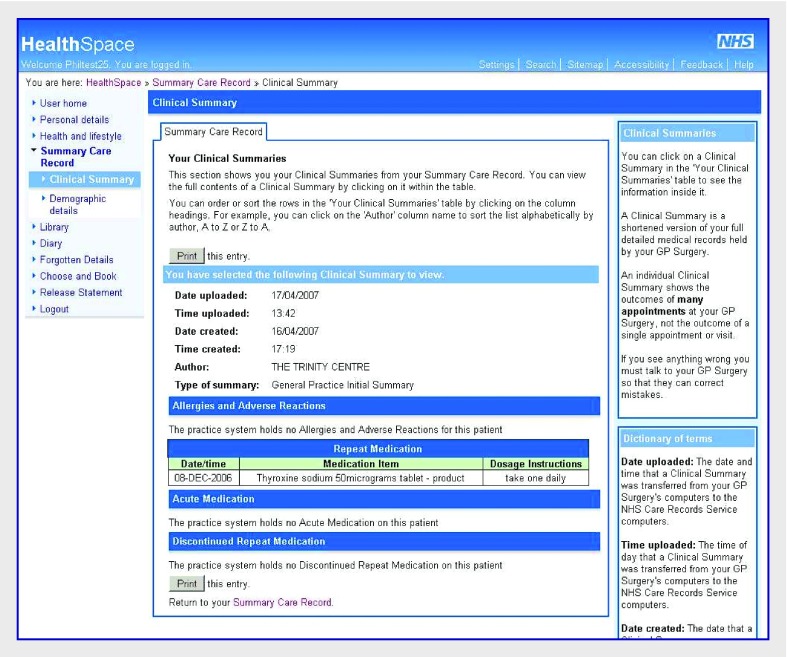
“• In the English portal called HealthSpace, a summary of medicines, allergies, and adverse reactions was shared across the English NHS and was accessible to patients [54].”
BackgroundUser Evaluation of the Swedish Patient Accessible Electronic Health Record: System Usability Scale
Hägglund, M., & Scandurra, I. (2021) · JMIR Human Factors · doi:10.2196/24927 · Cited by 54
“Despite these benefits, adoption and use can be low [19], and several studies have explored factors that influence adoption [20,21].”
BackgroundPhelps, R. G., Taylor, J., Simpson, K., Samuel, J., & Turner, N. (2014) · Journal of Medical Internet Research · doi:10.2196/jmir.3371 · Cited by 55
“Patient-accessible electronic health records (EHRs) could have many advantages, but patient enthusiasm and use have been variable [1,2].”
Undertaking sociotechnical evaluations of health information technologies
Cresswell, K. M., & Sheikh, A. (2014) · Journal of Innovation in Health Informatics · doi:10.14236/jhi.v21i2.54 · Cited by 58
“2,14,15 With this in mind, it is, for example, often insufficient to only explore healthcare professional perspectives on technology implementation and adoption; there is also a need to gain insights into managerial and organisational perspectives to get a more rounded understanding of…”
BackgroundMixed methods for telehealth research
Caffery, L. J., Martin‐Khan, M., & Wade, V. (2016) · Journal of Telemedicine and Telecare · doi:10.1177/1357633x16665684 · Cited by 51
“The theoretical approaches of ethnography and the socio-technical approach have also been combined by Greenhalgh et al.(37) in researching the uptake of e-health and telehealth.”
MethodHemsley, B., Rollo, M. E., Georgiou, A., Balandin, S., & Hill, S. (2017) · Patient Education and Counseling · doi:10.1016/j.pec.2017.07.010 · Cited by 53
Over promised, over-sold and underperforming? – e-health in mental health
Wykes, T., & Brown, M. (2016) · Journal of Mental Health · doi:10.3109/09638237.2015.1124406 · Cited by 52
“– e-health in mental health”
BackgroundOlder adults using a patient portal: registration and experiences, one year after implementation
Wildenbos, G. A., Maasri, K., Jaspers, M., & Peute, L. (2018) · Digital Health · doi:10.1177/2055207618797883 · Cited by 53
Shen, N., Sequeira, L., Silver, M. P., Carter-Langford, A., Strauss, J., & Wiljer, D. (2019) · JMIR Mental Health · doi:10.2196/13306 · Cited by 52
Factors influencing consumer adoption of USB-based Personal Health Records in Taiwan
Jian, W., Syed-Abdul, S., Sood, S. P., Lee, P., Hsu, M., Ho, C.-H., Li, Y., & Wen, H. (2012) · BMC Health Services Research · doi:10.1186/1472-6963-12-277 · Cited by 49
“The American Academy of Pediatrics supports development of educational programs for families and clinicians to promote effective and efficient use of the personal version of Electronic Health Records, called Personal Health Records (PHRs) as a way of improving the quality of healthcare for children [6].”
BackgroundInfluentialFontelo, P. A., Rossi, E., Ackerman, M., & Marceglia, S. R. F. (2015) · Applied Clinical Informatics · doi:10.4338/aci-2014-12-ra-0115 · Cited by 49
Patient perspectives on a personally controlled electronic health record used in regional Australia
Hanna, L., Gill, S. D., Newstead, L., Hawkins, M., & Osborne, R. H. (2016) · Health Information Management Journal · doi:10.1177/1833358316661063 · Cited by 48
Ethical questions must be considered for electronic health records
Spriggs, M. P., Arnold, M., Pearce, C. M., & FRY, C. L. (2012) · Journal of Medical Ethics · doi:10.1136/medethics-2011-100413 · Cited by 48
“We know that many people will not take up these options and will not engage with PCEHRs or in their own healthcare more generally, often due to higher priority factors like social instability, poverty, major family stress or serious disabilities.(1) A medical record is an important resource in the healthcare platform,…”
BackgroundInfluentialHistory and Trends of "Personal Health Record" Research in PubMed
Kim, J., Jung, H., & Bates, D. W. (2011) · Healthcare Informatics Research · doi:10.4258/hir.2011.17.1.3 · Cited by 46
Transforming healthcare: policy discourses of IT and patient-centred care
Klecuń, E. (2015) · European Journal of Information Systems · doi:10.1057/ejis.2014.40 · Cited by 45
“…PCC agenda, an Internet-based personal electronic health record (HealthSpace) was not taken up in any significant numbers, partly because of its limited functionality and lack of integration with wider care package but also due to lack of interest on the part of citizens (Greenhalgh et al., 2010a).”
BackgroundGordon, P. C., Camhi, E., Hesse, R., Odlum, M. L., Schnall, R., Rodriguez, M., Valdez, E., & Henry, S. B. (2012) · International Journal of Medical Informatics · doi:10.1016/j.ijmedinf.2012.06.004 · Cited by 45
Lee, S., Kim, J., Kwon, Y., Kim, T., & Cho, S. (2022) · Journal of Medical Internet Research · doi:10.2196/29108 · Cited by 47
“As a result, we contribute business process optimization, cost reduction, patient outcome improvements, and enhanced compliance in the health care field [57,58].”
BackgroundLau, A. Y. S., Arguel, A., Dennis, S. M., Liaw, S., & Coiera, E. W. (2015) · Journal of Medical Internet Research · doi:10.2196/jmir.4734 · Cited by 44
Primary Care Patient Records in the United Kingdom: Past, Present, and Future Research Priorities
McMillan, B., Eastham, R., Brown, B. C., Fitton, R., & Dickinson, D. (2018) · Journal of Medical Internet Research · doi:10.2196/11293 · Cited by 44
An Open Science Approach to Artificial Intelligence in Healthcare
Paton, C., & Kobayashi, S. (2019) · Yearbook of Medical Informatics · doi:10.1055/s-0039-1677898 · Cited by 43
“Implementation research shows that even if new medical technologies work “in the lab”, they might not be readily transferable to real world clinical practice [27].”
BackgroundPersonal Electronic Health Records: Understanding User Requirements and Needs in Chronic Cancer Care
Baudendistel, I., Winkler, E. C., Kamradt, M., Längst, G., Eckrich, F., Heinze, O., Bergh, B., Szécsényi, J., & Ose, D. J. (2015) · Journal of Medical Internet Research · doi:10.2196/jmir.3884 · Cited by 42
“Experiences from nationwide approaches such as the National Health Service implemented personal electronic health record HealthSpace (England) show that it failed due to a lack of usefulness and user friendliness, as well as poor alignment to users’ expectations and self-management practices [9].”
Banfield, M., Gardner, K., McRae, I., Gillespie, J., Wells, R. W., & Yen, L. E. (2013) · BMC Family Practice · doi:10.1186/1471-2296-14-34 · Cited by 41
“Greenhalgh and colleagues have argued that systems that are not aligned with these needs, but designed top down according to static standard protocols, are unlikely to be taken up by patients and clinicians [20].”
BackgroundThe patients’ active role in managing a personal electronic health record: a qualitative analysis
Baudendistel, I., Winkler, E. C., Kamradt, M., Brophy, S., Längst, G., Eckrich, F., Heinze, O., Bergh, B., Szécsényi, J., & Ose, D. J. (2015) · Supportive Care in Cancer · doi:10.1007/s00520-015-2620-1 · Cited by 41
“Problems with accessibility regarding ICTs and the need for overcoming accessibility barriers are often mentioned in literature [22, 33, 34].”
BackgroundPrivacy-Preserving Tensor Factorization for Collaborative Health Data Analysis
Ma, J., Zhang, Q., Lou, J., Ho, J. C., Xiong, L., & Jiang, X. (2019) · Proceedings of the 28th ACM International Conference on Information and Knowledge Management · doi:10.1145/3357384.3357878 · Cited by 51
“Recent studies have suggested that the integration of health records can provide more benefits [12], which motivated the application of federated tensor learning framework [20].”
BackgroundA Blockchain Based Decentralized Identifiers for Entity Authentication in Electronic Health Records
Manoj, T., Makkithaya, K., & Narendra, V. G. (2022) · Cogent Engineering · doi:10.1080/23311916.2022.2035134 · Cited by 47
“Compared with the conventional paper-based system, EHRs offer ease of use, flexible record keeping and reduced operational costs (Greenhalgh et al., 2010).”
BackgroundMonkman, H., & Kushniruk, A. W. (2015) · Knowledge Management & E-Learning An International Journal · doi:10.34105/j.kmel.2015.07.036 · Cited by 39
“Furthermore, based on this analysis, Greenhalgh and colleagues argues that future projects of this nature aimed at consumers and the general population should be developed by applying user-centered methods, taking user literacy needs into account (Greenhalgh et al., 2010).”
MethodEmani, S., Peters, E. M., Desai, S. P., Karson, A. S., Lipsitz, S. R., LaRocca, R., Stone, J., Suric, V., Wald, J. S., Wheeler, A., et al. (2018) · BMJ Health & Care Informatics · doi:10.14236/jhi.v25i3.991 · Cited by 41
Mullins, A. K., O’Donnell, R., Mousa, M. M., Rankin, D., Ben‐Meir, M., Boyd-Skinner, C., & Skouteris, H. (2020) · Journal of Medical Systems · doi:10.1007/s10916-020-01660-0 · Cited by 38
Rapid progress or lengthy process? electronic personal health records in mental health
Ennis, L., Rose, D. S., Callard, F. J., Denis, M., & Wykes, T. (2011) · BMC Psychiatry · doi:10.1186/1471-244x-11-117 · Cited by 38
Byrd, T. F., Kim, J. S., Yeh, C., Lee, J. J., & O’Leary, K. J. (2021) · Journal of Biomedical Informatics · doi:10.1016/j.jbi.2021.103749 · Cited by 39
Motivations of nurses who migrate to C anada as domestic workers
Salami, B. O., Nelson, S., Hawthorne, L., Muntaner, C., & Hall, L. M. (2014) · International Nursing Review · doi:10.1111/inr.12125 · Cited by 36
Scheder-Bieschin, J., Blümke, B., de Buijzer, E., Cotte, F., Echterdiek, F., Nacsa, J., Ondrésik, M., Ott, M., Paul, G., Schilling, T., et al. (2021) · JMIR Formative Research · doi:10.2196/28199 · Cited by 40
Patient portal implementation: resident and attending physician attitudes.
Keplinger, L. E., Koopman, R. J., Mehr, D. R., Kruse, R. L., Wakefield, D. S., Wakefield, B. J., & Canfield, S. M. (2013) · PubMed · Cited by 35
Measuring Health Literacy Levels of a Patient Portal Using the CDC’s Clear Communication Index
Alpert, J. M., Desens, L., Krist, A. H., Aycock, R. A., & Kreps, G. L. (2016) · Health Promotion Practice · doi:10.1177/1524839916643703 · Cited by 36
Baudendistel, I., Winkler, E. C., Kamradt, M., Brophy, S., Längst, G., Eckrich, F., Heinze, O., Bergh, B., Szécsényi, J., & Ose, D. J. (2016) · European Journal of Cancer Care · doi:10.1111/ecc.12429 · Cited by 35
“Closely related to this issue was also online security (Earnest et al. 2004; Pyper et al. 2004; Honeyman et al. 2005; Greenhalgh et al. 2010).”
A security approach for health care information systems
Chiuchisan, I., Balan, D. G., Geman, O., Chiuchisan, I., & Gordin, I. (2017) · E-Health and Bioengineering Conference (EHB) · doi:10.1109/ehb.2017.7995525 · Cited by 34
Metadata
- Authors
- Greenhalgh, T., Hinder, S., Stramer, K., Bratan, T., & Russell, J.
- Affiliations
- Queen Mary University of London (GB)
- University College London (GB)
- Corresponding author
- Greenhalgh, T.
- Venue
- BMJ
- Publisher
- BMJ
- Published
- 2010-11-16
- Volume
- 341
- Issue
- nov16 1
- Pages
- c5814-c5814
- ISSN
- 0007-1447 (ISSN-L)
- 0959-8138
- 1468-5833
- PMC
- PMC2982892
- OpenAlex
- W2053939792
- Cited by
- 343
- References
- 55
- Citations by year
- 2026: 3 · 2025: 10 · 2024: 13 · 2023: 14 · 2022: 16 · 2021: 25 · 2020: 21 · 2019: 24 · 2018: 26 · 2017: 35 · 2016: 31 · 2015: 27 · 2014: 29 · 2013: 29 · 2012: 21
- FWCI
- 40.54
- Type
- journal article
- Language
- en
- Open access
- hybrid
- doi.org
- Licence
- cc-by-nc
- Locations
- BMJ (publishedVersion, cc-by-nc)
- PubMed Central (publishedVersion, cc-by-nc)
- PubMed (publishedVersion)
- Topics
- Health Sciences › Health Professions › Health Information Management › Electronic Health Records Systems
- Social Sciences › Business, Management and Accounting › Management Information Systems › Information Systems Theories and Implementation
- Health Sciences › Health Professions › General Health Professions › Health Literacy and Information Accessibility
- Keywords
- technology adoption, non-adoption, patient and caregiver experiences, socio-technical approach, patient empowerment, self-management, user-centered design, patient-clinician communication, health information needs, health literacy, critical discourse analysis, patient-centered care
- MeSH terms
- England, Health Policy, Humans, Patient Acceptance of Health Care, Patient Participation, Software, State Medicine, Internet, Electronic Mail, Electronic Health Records
About these checks
Registry, retraction, Cites and statistics results are computed, not judged, with one exception: a printed reference that no index lists is read once by a model before it counts as a citation error. Claims are extracted by a model and kept only when their quote appears verbatim in the text; each cited source is then checked, with a model’s help, for whether it says what the claim relies on. Those verdicts can be wrong — read the claim’s quote and the cited source before relying on one.
Statistics and arithmetic are recomputed, not judged.
Confidence bands are shown only for fields calibrated on our annotated test set. None is calibrated yet, so no band is shown.
What counts as a claim ›How we measure confidence ›How we check this ›
Are you an author, or do you see a problem with this page? Request a review
