

The DOI matches its Crossref record; 67 of the 67 references it cites were found in a registry or an index; none of the 57 sources its claims cite is checked for support yet.
History of modern nutrition science—implications for current research, dietary guidelines, and food policy
Open accessAbstract
Dariush Mozaffarian and colleagues describe how the history of modern nutrition science has shaped current thinking
Overview
AI snapshot
Written from the paper’s full text.
TL;DR
This historical review argues that modern nutrition science is young and was shaped by early single-nutrient deficiency discoveries, leaving a reductionist legacy in research, dietary guidelines, and policy. It calls for a shift toward food-based diet patterns and systems-level policy to address both undernutrition and diet-related non-communicable diseases.
Key findings
- Modern nutrition science is less than a century old: the first vitamin was isolated and chemically defined in 1926, and the first half of the 20th century focused on identifying and synthesizing vitamins and minerals to prevent deficiency diseases such as scurvy, beriberi, pellagra, rickets, xerophthalmia, and nutritional anaemias.
- A reductionist, single-nutrient model was extended to diet-related non-communicable diseases, exemplified by the 1977 US Senate report *Dietary Goals for the United States* and the 1980 *Dietary Guidelines for Americans*, which focused on total fat, saturated fat, cholesterol, sugar, sodium, and fiber.
- Later evidence showed that a focus on total fat produced little measurable health benefit, while diet patterns such as Mediterranean and similar food-based patterns showed more consistent benefits; single-nutrient theories were inadequate to explain many effects of diet on non-communicable diseases.
- Lower income countries now face a “double burden” of conventional malnutrition (insufficient calories and micronutrients) and modern malnutrition (poor diet quality) leading to obesity, type 2 diabetes, cardiovascular diseases, and cancer; policy should prioritize food-based targets, trusted communication, and integrated systems-level strategies.
Methods
- Design: narrative historical review and commentary on modern nutrition science, dietary guidelines, and food policy; no systematic review, data sample, or formal quantitative analysis is described.
- Approach: chronological synthesis of key historical events from the 1910s to the present, organized into eras such as vitamin discovery, fat versus sugar and the protein gap, diet-related chronic diseases and supplementation, and recent evidence debates and diet patterns.
- Main analysis: interpretive synthesis linking historical developments to current research priorities, dietary guidelines, and policy recommendations.
Limitations
- The paper does not state formal limitations.
- Evident from the text: as a narrative historical review, it does not describe systematic search or selection criteria, quantitative synthesis, or formal risk-of-bias assessment; conclusions rely on selected historical events and cited literature.
Model-written summary. Check it against the paper before relying on it.
Integrity signals
Registry
Cites
Statistics
Figures
Verification
Claims the paper makes
30 Not checked yet · 28 Own interpretation · 24 No basis given · 1 Own method
None of the sources cited for this claim have been checked yet.
In the paper
“This new science of single nutrient deficiency diseases also led to fortification of selected staple foods with micronutrients, such as iodine in salt and niacin (vitamin B3) and iron in wheat flour and bread.8 9 10”
§ History of modern nutrition science—implications for current research, dietary guidelines, and food policy > 1910s to 1950s: era of vitamin discovery
What the sources say
- Not checked yetcites [8] Backstrand JR The history and future of food fortification in the United States: a public health perspective. Nutr Rev 2002; 60: 15- 26. 10.1301/002966402760240390 11842999
- Not checked yetcites [9] Bishai D Nalubola R The history of food fortification in the United States: Its relevance for current fortification efforts in developing countries. Econ Dev Cult Change 2002; 51: 37- 53 10.1086/345361
- Not checked yetcites [10] Fletcher RJ Bell IP Lambert JP Public health aspects of food fortification: a question of balance. Proc Nutr Soc 2004; 63: 605- 14. 10.1079/PNS2004391 15831133
plaindirect- Asserted: passes — The authors put it forward as true.
- Checkable: passes — It can be checked against evidence.
- Load-bearing: unclear — It is unclear whether the paper’s conclusions depend on it.
- Based: passes — The paper gives a reason why it holds.
The paper states this without a source or data behind it here, so there is nothing to check it against. The quote shows it is in the paper.
In the paper
“These approaches proved to be effective at reducing the prevalence of many common deficiency diseases, including goitre (iodine), xerophthalmia (vitamin A), rickets (vitamin D), and anaemia (iron).”
§ History of modern nutrition science—implications for current research, dietary guidelines, and food policy > 1910s to 1950s: era of vitamin discovery
plaindirect- Asserted: passes — The authors put it forward as true.
- Checkable: passes — It can be checked against evidence.
- Load-bearing: unclear — It is unclear whether the paper’s conclusions depend on it.
- Based: passes — The paper gives a reason why it holds.
A conclusion the paper draws from its own results — it cites no other source for it, so there is none to check. The quote shows it is in the paper.
In the paper
“However, the chemical synthesis of vitamins quickly led to food based strategies being supplanted by treatment with individual vitamin supplements.”
§ History of modern nutrition science—implications for current research, dietary guidelines, and food policy > 1910s to 1950s: era of vitamin discovery
plaindirect- Asserted: passes — The authors put it forward as true.
- Checkable: passes — It can be checked against evidence.
- Load-bearing: unclear — It is unclear whether the paper’s conclusions depend on it.
- Based: unclear — It is unclear why the paper says it holds.
None of the sources cited for this claim have been checked yet.
In the paper
“This pushed the field beyond the RDA framework and other nutrient metrics designed to identify thresholds for nutrient deficiency diseases, and towards complex biological effects of foods and diet patterns.40 41 42 43 44”
§ History of modern nutrition science—implications for current research, dietary guidelines, and food policy > 1990s to the present: evidence debates, diet patterns, the double burden
What the sources say
- Not checked yetcites [40] Jacobs DR Jr Tapsell LC Food, not nutrients, is the fundamental unit in nutrition. Nutr Rev 2007; 65: 439- 50. 17972438
- Not checked yetcites [41] Mozaffarian D Ludwig DS Dietary guidelines in the 21st century–a time for food. JAMA 2010; 304: 681- 2. 10.1001/jama.2010.1116 20699461
- Not checked yetcites [42] Jacobs DR Tapsell LC Food synergy: the key to a healthy diet. Proc Nutr Soc 2013; 72: 200- 6. 10.1017/S0029665112003011 23312372
plaindirect- Asserted: passes — The authors put it forward as true.
- Checkable: passes — It can be checked against evidence.
- Load-bearing: passes — The paper’s conclusions depend on it.
- Based: passes — The paper gives a reason why it holds.
A conclusion the paper draws from its own results — it cites no other source for it, so there is none to check. The quote shows it is in the paper.
In the paper
“Together, these advances suggested that single nutrient theories were inadequate to explain many effects of diet on non-communicable diseases.”
§ History of modern nutrition science—implications for current research, dietary guidelines, and food policy > 1990s to the present: evidence debates, diet patterns, the double burden
hedged- Asserted: passes — The authors put it forward as true.
- Checkable: passes — It can be checked against evidence.
- Load-bearing: passes — The paper’s conclusions depend on it.
- Based: passes — The paper gives a reason why it holds.
None of the sources cited for this claim have been checked yet.
In the paper
“The debate essentially ended when in 1975 leading scientists in the US and London independently concluded from the scientific evidence that a lack of food was the main problem:22”
§ History of modern nutrition science—implications for current research, dietary guidelines, and food policy > 1950s to 1970s: fat versus sugar and the protein gap
What the sources say
- Not checked yetcites [22] Carpenter K Protein and energy: a study of changing ideas in nutrition. Cambridge University Press, 1994.
- Not checked yetcites [23] Waterlow JC Payne PR The protein gap. Nature 1975; 258: 113- 7. 10.1038/258113a0 810729
plaindirect- Asserted: passes — The authors put it forward as true.
- Checkable: passes — It can be checked against evidence.
- Load-bearing: unclear — It is unclear whether the paper’s conclusions depend on it.
- Based: passes — The paper gives a reason why it holds.
A conclusion the paper draws from its own results — it cites no other source for it, so there is none to check. The quote shows it is in the paper.
In the paper
“However, the earlier decades of uncertainty had fostered a multinational industry that continued to promote formula and baby foods in low income countries based on their protein content and nutrient fortification.”
§ History of modern nutrition science—implications for current research, dietary guidelines, and food policy > 1950s to 1970s: fat versus sugar and the protein gap
plaindirect- Asserted: passes — The authors put it forward as true.
- Checkable: passes — It can be checked against evidence.
- Load-bearing: unclear — It is unclear whether the paper’s conclusions depend on it.
- Based: unclear — It is unclear why the paper says it holds.
A conclusion the paper draws from its own results — it cites no other source for it, so there is none to check. The quote shows it is in the paper.
In the paper
“This conclusion influenced subsequent efforts to tackle malnutrition in developing countries.”
§ History of modern nutrition science—implications for current research, dietary guidelines, and food policy > 1950s to 1970s: fat versus sugar and the protein gap
plaindirect- Asserted: passes — The authors put it forward as true.
- Checkable: passes — It can be checked against evidence.
- Load-bearing: unclear — It is unclear whether the paper’s conclusions depend on it.
- Based: passes — The paper gives a reason why it holds.
In the paper
“This was not without controversy: in 1980, the US National Academy of Sciences Food and Nutrition Board reviewed the data and concluded that insufficient evidence existed to limit total fat, saturated fat, and dietary cholesterol across the population.20”
§ History of modern nutrition science—implications for current research, dietary guidelines, and food policy > 1950s to 1970s: fat versus sugar and the protein gap
What the sources say
- Not checked yetcites [20] National Research Council Food and Nutrition Board Toward healthful diets. National Academy of Sciences, 1980.
plain- Asserted: passes — The authors put it forward as true.
- Checkable: passes — It can be checked against evidence.
- Load-bearing: unclear — It is unclear whether the paper’s conclusions depend on it.
- Based: passes — The paper gives a reason why it holds.
None of the sources cited for this claim have been checked yet.
In the paper
“This progress was extended to recognition of the relevance of diet patterns such as traditional Mediterranean or vegetarian diets that emphasised minimally processed foods such as fruits, vegetables, nuts, beans, whole grains, and plant oils and low amounts of highly processed foods rich in starch, sugar, salt, and additives.32 33”
§ History of modern nutrition science—implications for current research, dietary guidelines, and food policy > 1990s to the present: evidence debates, diet patterns, the double burden
What the sources say
- Not checked yetcites [32] Dietary Guidelines Advisory Committee Scientific Report of the 2015 Dietary Guidelines Advisory Committee 2015. http://www.health.gov/dietaryguidelines/2015-scientific-report/
- Not checked yetcites [33] Mozaffarian D Dietary and policy priorities for cardiovascular disease, diabetes, and obesity: a comprehensive review. Circulation 2016; 133: 187- 225. 10.1161/CIRCULATIONAHA.115.018585 26746178 PMC4814348
plaincorrelational- Asserted: passes — The authors put it forward as true.
- Checkable: passes — It can be checked against evidence.
- Load-bearing: unclear — It is unclear whether the paper’s conclusions depend on it.
- Based: passes — The paper gives a reason why it holds.
- Probably not a substantial claim. 29
- It may state two separate claims as one. 25
The paper states this without a source or data behind it here, so there is nothing to check it against. The quote shows it is in the paper.
In the paper
“The first vitamin was isolated and chemically defined in 1926, less than 100 years ago”
§ History of modern nutrition science—implications for current research, dietary guidelines, and food policy > Abstract
plain- Asserted: passes — The authors put it forward as true.
- Checkable: passes — It can be checked against evidence.
- Load-bearing: fails — The paper’s conclusions may not depend on it.
- Based: fails — The paper may give no reason why it holds.
Probably not a substantial claim. The paper’s conclusions may not depend on it. The paper may give no reason why it holds.
None of the sources cited for this claim have been checked yet.
In the paper
“In 1932, vitamin C was isolated and definitively documented, for the first time, to protect against scurvy,6 some 200 years after ship’s surgeon James Lind tested lemons for treating scurvy in sailors.7”
§ History of modern nutrition science—implications for current research, dietary guidelines, and food policy > 1910s to 1950s: era of vitamin discovery
What the sources say
- Not checked yetcites [6] American Chemical Society National Historic Chemical Landmarks. The Discovery of Vitamin C by Albert Szent-Györgyi. 2002. https://www.acs.org/content/acs/en/education/whatischemistry/landmarks/szentgyorgyi.html
- Not checked yetcites [7] Lind J A Treatise of the scurvy. A Millar, 1753.
boosteddirect- Asserted: passes — The authors put it forward as true.
- Checkable: passes — It can be checked against evidence.
- Load-bearing: fails — The paper’s conclusions may not depend on it.
- Based: passes — The paper gives a reason why it holds.
Probably not a substantial claim. The paper’s conclusions may not depend on it.
The paper states this without a source or data behind it here, so there is nothing to check it against. The quote shows it is in the paper.
In the paper
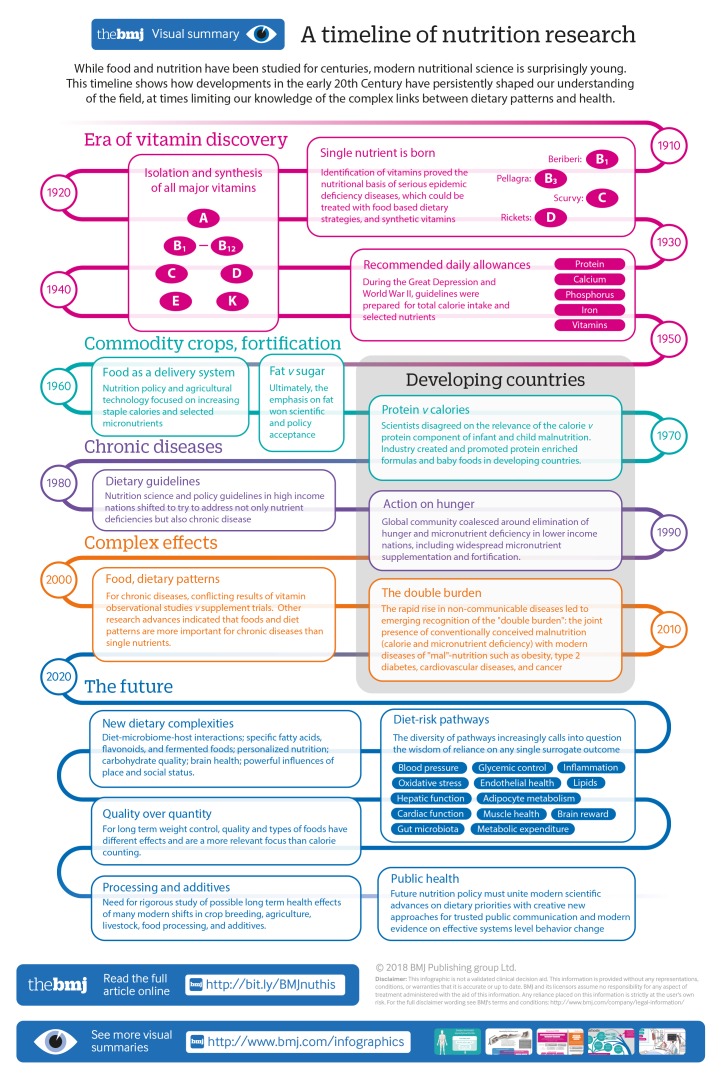
“Their identification in animal and human studies proved the nutritional basis of serious deficiency diseases and initially led to dietary strategies to tackle beriberi (vitamin B1), pellagra (vitamin B3), scurvy (vitamin C), pernicious anaemia (vitamin B12), rickets (vitamin D), and other deficiency conditions.”
§ History of modern nutrition science—implications for current research, dietary guidelines, and food policy > 1910s to 1950s: era of vitamin discovery
plaindirect- Asserted: passes — The authors put it forward as true.
- Checkable: passes — It can be checked against evidence.
- Load-bearing: unclear — It is unclear whether the paper’s conclusions depend on it.
- Based: passes — The paper gives a reason why it holds.
It may state two separate claims as one.
In the paper
“Casimir Funk in 1913 came up with idea of a “vital amine” in food, originating from the observation that the hulk of unprocessed rice protected chickens against a beriberi-like condition.5”
§ History of modern nutrition science—implications for current research, dietary guidelines, and food policy > 1910s to 1950s: era of vitamin discovery
What the sources say
- Not checked yetcites [5] Eijkman C. Nobel Lecture: the Nobel Prize in Physiology or Medicine. 1929. https://www.nobelprize.org/nobel_prizes/medicine/laureates/1929/eijkman-lecture.html.
plaindirect- Asserted: passes — The authors put it forward as true.
- Checkable: passes — It can be checked against evidence.
- Load-bearing: fails — The paper’s conclusions may not depend on it.
- Based: passes — The paper gives a reason why it holds.
Probably not a substantial claim. The paper’s conclusions may not depend on it. It may state two separate claims as one.
A conclusion the paper draws from its own results — it cites no other source for it, so there is none to check. The quote shows it is in the paper.
In the paper
“This article describes key historical events in modern nutrition science that form the basis of our current understanding of diet and health and clarify contemporary priorities, new trends, and controversies in nutrition science and policy.”
§ History of modern nutrition science—implications for current research, dietary guidelines, and food policy > Abstract
plaindirect- Asserted: passes — The authors put it forward as true.
- Checkable: fails — It may be too vague to check against evidence.
- Load-bearing: passes — The paper’s conclusions depend on it.
- Based: passes — The paper gives a reason why it holds.
Probably not a substantial claim. It may be too vague to check against evidence. It may state two separate claims as one.
The paper states this without a source or data behind it here, so there is nothing to check it against. The quote shows it is in the paper.
In the paper
“By the mid-20th century all major vitamins had been isolated and synthesised (fig 1).”
§ History of modern nutrition science—implications for current research, dietary guidelines, and food policy > 1910s to 1950s: era of vitamin discovery
plain- Asserted: passes — The authors put it forward as true.
- Checkable: passes — It can be checked against evidence.
- Load-bearing: fails — The paper’s conclusions may not depend on it.
- Based: fails — The paper may give no reason why it holds.
Probably not a substantial claim. The paper’s conclusions may not depend on it. The paper may give no reason why it holds.
The paper states this without a source or data behind it here, so there is nothing to check it against. The quote shows it is in the paper.
In the paper
“The first half of the 20th century witnessed the identification and synthesis of many of the known essential vitamins and minerals and their use to prevent and treat nutritional deficiency related diseases including scurvy, beriberi, pellagra, rickets, xerophthalmia, and nutritional anaemias.”
§ History of modern nutrition science—implications for current research, dietary guidelines, and food policy > 1910s to 1950s: era of vitamin discovery
plaindirect- Asserted: passes — The authors put it forward as true.
- Checkable: passes — It can be checked against evidence.
- Load-bearing: unclear — It is unclear whether the paper’s conclusions depend on it.
- Based: passes — The paper gives a reason why it holds.
It may state two separate claims as one.
In the paper
“For example, the first recommended dietary allowances (RDAs) were a direct result of these concerns, when the League of Nations, British Medical Association, and the US government separately commissioned scientists to generate new minimum dietary requirements to be prepared for war.14”
§ History of modern nutrition science—implications for current research, dietary guidelines, and food policy > 1910s to 1950s: era of vitamin discovery
What the sources say
- Not checked yetcites [14] Harper AE Evolution of recommended dietary allowances–new directions? Annu Rev Nutr 1987; 7: 509- 37. 10.1146/annurev.nu.07.070187.002453 3300745
plaindirect- Asserted: passes — The authors put it forward as true.
- Checkable: passes — It can be checked against evidence.
- Load-bearing: unclear — It is unclear whether the paper’s conclusions depend on it.
- Based: passes — The paper gives a reason why it holds.
It may state two separate claims as one.
The paper states this without a source or data behind it here, so there is nothing to check it against. The quote shows it is in the paper.
In the paper
“This “vital amine” or vitamin was first isolated in 1926 and named thiamine, and subsequently synthesised in 1936 as vitamin B1.”
§ History of modern nutrition science—implications for current research, dietary guidelines, and food policy > 1910s to 1950s: era of vitamin discovery
plain- Asserted: passes — The authors put it forward as true.
- Checkable: passes — It can be checked against evidence.
- Load-bearing: fails — The paper’s conclusions may not depend on it.
- Based: fails — The paper may give no reason why it holds.
Probably not a substantial claim. The paper’s conclusions may not depend on it. The paper may give no reason why it holds. It may state two separate claims as one.
A conclusion the paper draws from its own results — it cites no other source for it, so there is none to check. The quote shows it is in the paper.
In the paper
“Research on the role of nutrition in complex non-communicable chronic diseases, such as cardiovascular disease, diabetes, obesity, and cancers, is even more recent, accelerating over the past two or three decades and especially after 2000.”
§ History of modern nutrition science—implications for current research, dietary guidelines, and food policy > Abstract
plain- Asserted: passes — The authors put it forward as true.
- Checkable: passes — It can be checked against evidence.
- Load-bearing: fails — The paper’s conclusions may not depend on it.
- Based: fails — The paper may give no reason why it holds.
Probably not a substantial claim. The paper’s conclusions may not depend on it. The paper may give no reason why it holds.
A conclusion the paper draws from its own results — it cites no other source for it, so there is none to check. The quote shows it is in the paper.
In the paper
“Accelerating economic development and modernisation of agricultural, food processing, and food formulation techniques continued to reduce single nutrient deficiency diseases globally.”
§ History of modern nutrition science—implications for current research, dietary guidelines, and food policy > 1970s to 1990s: diet related chronic diseases and supplementation
plaindirect- Asserted: passes — The authors put it forward as true.
- Checkable: passes — It can be checked against evidence.
- Load-bearing: fails — The paper’s conclusions may not depend on it.
- Based: fails — The paper may give no reason why it holds.
Probably not a substantial claim. The paper’s conclusions may not depend on it. The paper may give no reason why it holds.
The paper states this without a source or data behind it here, so there is nothing to check it against. The quote shows it is in the paper.
In the paper
“Among the most important scientific development of recent decades was the design and completion of multiple, complementary, large nutrition studies, including prospective observational cohorts, randomised clinical trials, and, more recently, genetic consortiums.”
§ History of modern nutrition science—implications for current research, dietary guidelines, and food policy > 1990s to the present: evidence debates, diet patterns, the double burden
plain- Asserted: passes — The authors put it forward as true.
- Checkable: passes — It can be checked against evidence.
- Load-bearing: fails — The paper’s conclusions may not depend on it.
- Based: fails — The paper may give no reason why it holds.
Probably not a substantial claim. The paper’s conclusions may not depend on it. The paper may give no reason why it holds.
The paper states this without a source or data behind it here, so there is nothing to check it against. The quote shows it is in the paper.
In the paper
“Field trials provided a basis for WHO recommendations for widespread micronutrient supplementation, especially during pregnancy, with iron and vitamin A, and for fortification of salt with iodine to prevent goitre and developmental abnormalities such as congenital hypothyroidism and hearing loss.”
§ History of modern nutrition science—implications for current research, dietary guidelines, and food policy > 1970s to 1990s: diet related chronic diseases and supplementation
plaindirect- Asserted: passes — The authors put it forward as true.
- Checkable: passes — It can be checked against evidence.
- Load-bearing: unclear — It is unclear whether the paper’s conclusions depend on it.
- Based: passes — The paper gives a reason why it holds.
It may state two separate claims as one.
None of the sources cited for this claim have been checked yet.
In the paper
“For weight loss and glycaemic control, decades of emphasis on low fat diets were questioned by the results of a series of prospective cohort studies, metabolic feeding studies, and randomised trials, which showed that foods rich in healthy fats produced benefit, while foods rich in starch and sugar caused harm.33 45 46 47”
§ History of modern nutrition science—implications for current research, dietary guidelines, and food policy > 1990s to the present: evidence debates, diet patterns, the double burden
What the sources say
- Not checked yetcites [33] Mozaffarian D Dietary and policy priorities for cardiovascular disease, diabetes, and obesity: a comprehensive review. Circulation 2016; 133: 187- 225. 10.1161/CIRCULATIONAHA.115.018585 26746178 PMC4814348
- Not checked yetcites [45] Mensink RP Zock PL Kester AD Katan MB Effects of dietary fatty acids and carbohydrates on the ratio of serum total to HDL cholesterol and on serum lipids and apolipoproteins: a meta-analysis of 60 controlled trials. Am J Clin Nutr 2003; 77: 1146- 55. 10.1093/ajcn/77.5.1146 12716665
- Not checked yetcites [46] Tobias DK Chen M Manson JE Ludwig DS Willett W Hu FB Effect of low-fat diet interventions versus other diet interventions on long-term weight change in adults: a systematic review and meta-analysis. Lancet Diabetes Endocrinol 2015; 3: 968- 79. 10.1016/S2213-8587(15)00367-8 26527511 PMC4667723
plaindirect- Asserted: passes — The authors put it forward as true.
- Checkable: passes — It can be checked against evidence.
- Load-bearing: passes — The paper’s conclusions depend on it.
- Based: passes — The paper gives a reason why it holds.
It may state two separate claims as one.
A conclusion the paper draws from its own results — it cites no other source for it, so there is none to check. The quote shows it is in the paper.
In the paper
“This led to a proliferation of industrially crafted food products low in fat, saturated fat, and cholesterol and fortified with micronutrients, as well as expansion of other nutrient focused technologies to reduce saturated fat such as partial hydrogenation of vegetable oils.”
§ History of modern nutrition science—implications for current research, dietary guidelines, and food policy > 1970s to 1990s: diet related chronic diseases and supplementation
plaindirect- Asserted: passes — The authors put it forward as true.
- Checkable: passes — It can be checked against evidence.
- Load-bearing: unclear — It is unclear whether the paper’s conclusions depend on it.
- Based: passes — The paper gives a reason why it holds.
It may state two separate claims as one.
The paper states this without a source or data behind it here, so there is nothing to check it against. The quote shows it is in the paper.
In the paper
“Ultimately, the emphasis on fat won scientific and policy acceptance, embodied in the 1977 US Senate committee report Dietary Goals for the United States, which recommended low fat, low cholesterol diets for all.”
§ History of modern nutrition science—implications for current research, dietary guidelines, and food policy > 1950s to 1970s: fat versus sugar and the protein gap
plaindirect- Asserted: passes — The authors put it forward as true.
- Checkable: passes — It can be checked against evidence.
- Load-bearing: unclear — It is unclear whether the paper’s conclusions depend on it.
- Based: passes — The paper gives a reason why it holds.
It may state two separate claims as one.
A conclusion the paper draws from its own results — it cites no other source for it, so there is none to check. The quote shows it is in the paper.
In the paper
“At the same time, the rising burdens of diet related non-communicable diseases began to be recognised, leading to new research directions.”
§ History of modern nutrition science—implications for current research, dietary guidelines, and food policy > 1950s to 1970s: fat versus sugar and the protein gap
plaindirect- Asserted: passes — The authors put it forward as true.
- Checkable: passes — It can be checked against evidence.
- Load-bearing: fails — The paper’s conclusions may not depend on it.
- Based: passes — The paper gives a reason why it holds.
Probably not a substantial claim. The paper’s conclusions may not depend on it. It may state two separate claims as one.
In the paper
“Evidence was increasing that vitamin A supplements could prevent child mortality from infection, such as measles, as well as preventing night blindness and xerophthalmia.26”
§ History of modern nutrition science—implications for current research, dietary guidelines, and food policy > 1970s to 1990s: diet related chronic diseases and supplementation
What the sources say
- Not checked yetcites [26] Sommer A West KPJ Vitamin A deficiency: health, survival, and vision. Oxford University Press, 1996.
hedgeddirect- Asserted: passes — The authors put it forward as true.
- Checkable: passes — It can be checked against evidence.
- Load-bearing: unclear — It is unclear whether the paper’s conclusions depend on it.
- Based: passes — The paper gives a reason why it holds.
It may state two separate claims as one.
The paper states this without a source or data behind it here, so there is nothing to check it against. The quote shows it is in the paper.
In the paper
“Coronary mortality also began to fall in high income countries, but many other diet related chronic diseases were increasing, including obesity, type 2 diabetes, and several cancers.”
§ History of modern nutrition science—implications for current research, dietary guidelines, and food policy > 1970s to 1990s: diet related chronic diseases and supplementation
plaincorrelational- Asserted: passes — The authors put it forward as true.
- Checkable: passes — It can be checked against evidence.
- Load-bearing: fails — The paper’s conclusions may not depend on it.
- Based: fails — The paper may give no reason why it holds.
Probably not a substantial claim. The paper’s conclusions may not depend on it. The paper may give no reason why it holds. It may state two separate claims as one.
The paper states this without a source or data behind it here, so there is nothing to check it against. The quote shows it is in the paper.
In the paper
“Clinical trials allowed further testing of specific questions in targeted, often high risk populations, in particular effects of isolated vitamin supplements and, more recently, specific diet patterns.”
§ History of modern nutrition science—implications for current research, dietary guidelines, and food policy > 1990s to the present: evidence debates, diet patterns, the double burden
plain- Asserted: passes — The authors put it forward as true.
- Checkable: passes — It can be checked against evidence.
- Load-bearing: fails — The paper’s conclusions may not depend on it.
- Based: passes — The paper gives a reason why it holds.
Probably not a substantial claim. The paper’s conclusions may not depend on it.
The paper states this without a source or data behind it here, so there is nothing to check it against. The quote shows it is in the paper.
In the paper
“Genetic consortiums provided important evidence on genetic influences on dietary choices, gene-diet interactions affecting disease risk factors and endpoints, and Mendelian randomisation studies of causal effects of nutritional biomarkers.”
§ History of modern nutrition science—implications for current research, dietary guidelines, and food policy > 1990s to the present: evidence debates, diet patterns, the double burden
plaincorrelational- Asserted: passes — The authors put it forward as true.
- Checkable: passes — It can be checked against evidence.
- Load-bearing: fails — The paper’s conclusions may not depend on it.
- Based: passes — The paper gives a reason why it holds.
Probably not a substantial claim. The paper’s conclusions may not depend on it. It may state two separate claims as one.
A conclusion the paper draws from its own results — it cites no other source for it, so there is none to check. The quote shows it is in the paper.
In the paper
“Thus, despite the shift in scientific thinking to focus on economic development, substantial emphasis remained or even accelerated on providing sufficient calories, most often as starchy staples, plus vitamin fortification and supplementation.”
§ History of modern nutrition science—implications for current research, dietary guidelines, and food policy > 1950s to 1970s: fat versus sugar and the protein gap
plain- Asserted: passes — The authors put it forward as true.
- Checkable: passes — It can be checked against evidence.
- Load-bearing: passes — The paper’s conclusions depend on it.
- Based: passes — The paper gives a reason why it holds.
It may state two separate claims as one.
None of the sources cited for this claim have been checked yet.
In the paper
“In contrast to single nutrients, physiological intervention trials, large cohort studies, and randomised clinical trials provided more consistent evidence for diet patterns, such as low fat diets (few significant effects) or Mediterranean and similar food based patterns (consistent benefits).32 33”
§ History of modern nutrition science—implications for current research, dietary guidelines, and food policy > 1990s to the present: evidence debates, diet patterns, the double burden
What the sources say
- Not checked yetcites [32] Dietary Guidelines Advisory Committee Scientific Report of the 2015 Dietary Guidelines Advisory Committee 2015. http://www.health.gov/dietaryguidelines/2015-scientific-report/
- Not checked yetcites [33] Mozaffarian D Dietary and policy priorities for cardiovascular disease, diabetes, and obesity: a comprehensive review. Circulation 2016; 133: 187- 225. 10.1161/CIRCULATIONAHA.115.018585 26746178 PMC4814348
plaincorrelational- Asserted: passes — The authors put it forward as true.
- Checkable: passes — It can be checked against evidence.
- Load-bearing: passes — The paper’s conclusions depend on it.
- Based: passes — The paper gives a reason why it holds.
It may state two separate claims as one.
The paper states this without a source or data behind it here, so there is nothing to check it against. The quote shows it is in the paper.
In the paper
“In addition, nutrient supplementation strategies remained effective at preventing or treating endemic deficiency diseases.”
§ History of modern nutrition science—implications for current research, dietary guidelines, and food policy > 1950s to 1970s: fat versus sugar and the protein gap
plaindirect- Asserted: passes — The authors put it forward as true.
- Checkable: passes — It can be checked against evidence.
- Load-bearing: passes — The paper’s conclusions depend on it.
- Based: fails — The paper may give no reason why it holds.
Probably not a substantial claim. The paper may give no reason why it holds.
A conclusion the paper draws from its own results — it cites no other source for it, so there is none to check. The quote shows it is in the paper.
In the paper
“More importantly, these studies followed the deficiency disease model, largely considering isolated single nutrients.”
§ History of modern nutrition science—implications for current research, dietary guidelines, and food policy > 1970s to 1990s: diet related chronic diseases and supplementation
plain- Asserted: passes — The authors put it forward as true.
- Checkable: passes — It can be checked against evidence.
- Load-bearing: passes — The paper’s conclusions depend on it.
- Based: passes — The paper gives a reason why it holds.
It may state two separate claims as one.
A conclusion the paper draws from its own results — it cites no other source for it, so there is none to check. The quote shows it is in the paper.
In the paper
“During the next 20 to 30 years, calorie malnutrition and specific vitamin deficiencies fell sharply in high income countries because of economic development and large increases in low cost processing of staple foods fortified with minerals and vitamins.”
§ History of modern nutrition science—implications for current research, dietary guidelines, and food policy > 1950s to 1970s: fat versus sugar and the protein gap
plaindirect- Asserted: passes — The authors put it forward as true.
- Checkable: passes — It can be checked against evidence.
- Load-bearing: fails — The paper’s conclusions may not depend on it.
- Based: fails — The paper may give no reason why it holds.
Probably not a substantial claim. The paper’s conclusions may not depend on it. The paper may give no reason why it holds.
The paper states this without a source or data behind it here, so there is nothing to check it against. The quote shows it is in the paper.
In the paper
“At the same time, work by John Yudkin and others implicated excess sugar in coronary disease, hypertriglyceridemia, cancer, and dental caries.”
§ History of modern nutrition science—implications for current research, dietary guidelines, and food policy > 1950s to 1970s: fat versus sugar and the protein gap
plaindirect- Asserted: passes — The authors put it forward as true.
- Checkable: passes — It can be checked against evidence.
- Load-bearing: fails — The paper’s conclusions may not depend on it.
- Based: fails — The paper may give no reason why it holds.
Probably not a substantial claim. The paper’s conclusions may not depend on it. The paper may give no reason why it holds. It may state two separate claims as one.
The paper states this without a source or data behind it here, so there is nothing to check it against. The quote shows it is in the paper.
In the paper
“Cohort studies provided, for the first time, individual level, multivariable adjusted findings on a range of nutrients, foods, and diet patterns and a diversity of health outcomes.”
§ History of modern nutrition science—implications for current research, dietary guidelines, and food policy > 1990s to the present: evidence debates, diet patterns, the double burden
plain- Asserted: passes — The authors put it forward as true.
- Checkable: passes — It can be checked against evidence.
- Load-bearing: fails — The paper’s conclusions may not depend on it.
- Based: fails — The paper may give no reason why it holds.
Probably not a substantial claim. The paper’s conclusions may not depend on it. The paper may give no reason why it holds.
The paper states this without a source or data behind it here, so there is nothing to check it against. The quote shows it is in the paper.
In the paper
“Modern nutrition science is young: It is less than one century since the first vitamin was isolated in 1926”
§ History of modern nutrition science—implications for current research, dietary guidelines, and food policy > Nutrition policy
plain- Asserted: passes — The authors put it forward as true.
- Checkable: passes — It can be checked against evidence.
- Load-bearing: passes — The paper’s conclusions depend on it.
- Based: fails — The paper may give no reason why it holds.
Probably not a substantial claim. The paper may give no reason why it holds.
A conclusion the paper draws from its own results — it cites no other source for it, so there is none to check. The quote shows it is in the paper.
In the paper
“After decades of focus on simple, reductionist metrics such as dietary fat, saturated fat, nutrient density, and energy density, the emerging true complexities of different foods and diet patterns create genuine challenges for understanding influences on health and wellbeing.”
§ History of modern nutrition science—implications for current research, dietary guidelines, and food policy > 1990s to the present: evidence debates, diet patterns, the double burden
plaindirect- Asserted: passes — The authors put it forward as true.
- Checkable: fails — It may be too vague to check against evidence.
- Load-bearing: passes — The paper’s conclusions depend on it.
- Based: passes — The paper gives a reason why it holds.
Probably not a substantial claim. It may be too vague to check against evidence.
A conclusion the paper draws from its own results — it cites no other source for it, so there is none to check. The quote shows it is in the paper.
In the paper
“Recognition of complexity is a key lesson of the past.”
§ History of modern nutrition science—implications for current research, dietary guidelines, and food policy > Future of nutrition science
plain- Asserted: passes — The authors put it forward as true.
- Checkable: fails — It may be too vague to check against evidence.
- Load-bearing: passes — The paper’s conclusions depend on it.
- Based: passes — The paper gives a reason why it holds.
Probably not a substantial claim. It may be too vague to check against evidence.
A conclusion the paper draws from its own results — it cites no other source for it, so there is none to check. The quote shows it is in the paper.
In the paper
“This is seen, for example, in the reductionist, single nutrient focus of many of the UN sustainable development goals.”
§ History of modern nutrition science—implications for current research, dietary guidelines, and food policy > 1990s to the present: evidence debates, diet patterns, the double burden
plaincorrelational- Asserted: passes — The authors put it forward as true.
- Checkable: passes — It can be checked against evidence.
- Load-bearing: fails — The paper’s conclusions may not depend on it.
- Based: fails — The paper may give no reason why it holds.
Probably not a substantial claim. The paper’s conclusions may not depend on it. The paper may give no reason why it holds.
In the paper
“This is common in scientific progress whether in nutrition, clinical medicine, physics, political science, or economics: initial observations lead to reasonable, simplified theories that achieve certain practical benefits, which are then inevitably advanced by new knowledge and recognition of ever-increasing complexity.35”
§ History of modern nutrition science—implications for current research, dietary guidelines, and food policy > Future of nutrition science
What the sources say
- Not checked yetcites [35] Mozaffarian D Forouhi NG Dietary guidelines and health—is nutrition science up to the task? BMJ 2018; 360: k822. 10.1136/bmj.k822 29549076
boosteddirect- Asserted: passes — The authors put it forward as true.
- Checkable: fails — It may be too vague to check against evidence.
- Load-bearing: passes — The paper’s conclusions depend on it.
- Based: passes — The paper gives a reason why it holds.
Probably not a substantial claim. It may be too vague to check against evidence.
In the paper
“Even when non-communicable diseases are considered, the predominant focus is on obesity rather than the diverse risk pathways and conditions affected by nutrition—facilitating a misleading concept of “overnutrition” rather than unhealthy dietary composition as the root problem.55”
§ History of modern nutrition science—implications for current research, dietary guidelines, and food policy > 1990s to the present: evidence debates, diet patterns, the double burden
What the sources say
- Not checked yetcites [55] Min J Zhao Y Slivka L Wang Y Double burden of diseases worldwide: coexistence of undernutrition and overnutrition-related non-communicable chronic diseases. Obes Rev 2018; 19: 49- 61. 10.1111/obr.12605 28940822 PMC5962023
plaindirect- Asserted: passes — The authors put it forward as true.
- Checkable: passes — It can be checked against evidence.
- Load-bearing: passes — The paper’s conclusions depend on it.
- Based: passes — The paper gives a reason why it holds.
It may state two separate claims as one.
The paper states this without a source or data behind it here, so there is nothing to check it against. The quote shows it is in the paper.
In the paper
“Relatively little rigorous evaluation has been done on potential long term health consequences of modern shifts in agricultural practices, livestock feeding, crop breeding, and food processing methods such as grain milling and processing; plant oil extraction, deodorisation, and interesterification; dairy fat homogenisation; and use of emulsifiers and thickeners.”
§ History of modern nutrition science—implications for current research, dietary guidelines, and food policy > Future of nutrition science
plain- Asserted: passes — The authors put it forward as true.
- Checkable: passes — It can be checked against evidence.
- Load-bearing: passes — The paper’s conclusions depend on it.
- Based: fails — The paper may give no reason why it holds.
Probably not a substantial claim. The paper may give no reason why it holds.
None of the sources cited for this claim have been checked yet.
In the paper
“However, it is now clear that knowledge alone has relatively limited effects on behaviour, and that broader systems, policy, and environmental strategies are needed for effective change.66 67”
§ History of modern nutrition science—implications for current research, dietary guidelines, and food policy > Nutrition policy
What the sources say
- Not checked yetcites [66] Afshin A Micha R Khatibzadeh S Dietary policies to reduce non-communicable diseases. In: Brown GW Yamey G Wamala S, eds. The handbook of global health policy. 1st ed John Wiley & Sons, Ltd, 2014. 10.1002/9781118509623.ch9
- Not checked yetcites [67] Mozaffarian D Afshin A Benowitz NL American Heart Association Council on Epidemiology and Prevention, Council on Nutrition, Physical Activity and Metabolism, Council on Clinical Cardiology, Council on Cardiovascular Disease in the Young, Council on the Kidney in Cardiovasc Population approaches to improve diet, physical activity, and smoking habits: a scientific statement from the American Heart Association. Circulation 2012; 126: 1514- 63. 10.1161/CIR.0b013e318260a20b 22907934 PMC3881293
boosteddirect- Asserted: passes — The authors put it forward as true.
- Checkable: passes — It can be checked against evidence.
- Load-bearing: passes — The paper’s conclusions depend on it.
- Based: passes — The paper gives a reason why it holds.
It may state two separate claims as one.
The paper states this without a source or data behind it here, so there is nothing to check it against. The quote shows it is in the paper.
In the paper
“The first half of the 20th century focused on the discovery, isolation, and synthesis of essential micronutrients and their role in deficiency diseases”
§ History of modern nutrition science—implications for current research, dietary guidelines, and food policy > Nutrition policy
plain- Asserted: passes — The authors put it forward as true.
- Checkable: passes — It can be checked against evidence.
- Load-bearing: passes — The paper’s conclusions depend on it.
- Based: fails — The paper may give no reason why it holds.
Probably not a substantial claim. The paper may give no reason why it holds.
None of the sources cited for this claim have been checked yet.
In the paper
“In addition, a precipitous rise in non-communicable diseases in these countries has led to new focus on the “double burden”—both conventionally conceived malnutrition (insufficient calories and micronutrients) leading to poor maternal and child health and modern malnutrition (poor diet quality) leading to obesity, type 2 diabetes, cardiovascular diseases, and cancer.”
§ History of modern nutrition science—implications for current research, dietary guidelines, and food policy > 1990s to the present: evidence debates, diet patterns, the double burden
What the sources say
- Not checked yetcites [53] Black RE Victora CG Walker SP Maternal and Child Nutrition Study Group Maternal and child undernutrition and overweight in low-income and middle-income countries. Lancet 2013; 382: 427- 51. 10.1016/S0140-6736(13)60937-X 23746772
- Not checked yetcites [54] Kosaka S Umezaki M A systematic review of the prevalence and predictors of the double burden of malnutrition within households. Br J Nutr 2017; 117: 1118- 27. 10.1017/S0007114517000812 28514987
- Not checked yetcites [55] Min J Zhao Y Slivka L Wang Y Double burden of diseases worldwide: coexistence of undernutrition and overnutrition-related non-communicable chronic diseases. Obes Rev 2018; 19: 49- 61. 10.1111/obr.12605 28940822 PMC5962023
plaindirect- Asserted: passes — The authors put it forward as true.
- Checkable: passes — It can be checked against evidence.
- Load-bearing: passes — The paper’s conclusions depend on it.
- Based: passes — The paper gives a reason why it holds.
It may state two separate claims as one.
None of the sources cited for this claim have been checked yet.
In the paper
“In lower income countries, concerns about vitamin supplementation have emerged, such as harms associated with higher dose vitamin A supplements, risk of exacerbating infections such as malaria with iron, and safety concerns about folic acid fortification of flour, which might exacerbate neurological and cognitive deficits among people with low vitamin B12 levels.49 50 51 52”
§ History of modern nutrition science—implications for current research, dietary guidelines, and food policy > 1990s to the present: evidence debates, diet patterns, the double burden
What the sources say
- Not checked yetcites [49] Crider KS Bailey LB Berry RJ Folic acid food fortification—its history, effect, concerns, and future directions. Nutrients 2011; 3: 370- 84. 10.3390/nu3030370 22254102 PMC3257747
- Not checked yetcites [50] Castillo-Lancellotti C Tur JA Uauy R Impact of folic acid fortification of flour on neural tube defects: a systematic review. Public Health Nutr 2013; 16: 901- 11. 10.1017/S1368980012003576 22850218 PMC10271422
- Not checked yetcites [51] Fawzi WW The benefits and concerns related to vitamin a supplementation. J Infect Dis 2006; 193: 756- 9. 10.1086/500369 16479507
hedgedconditional- Asserted: passes — The authors put it forward as true.
- Checkable: passes — It can be checked against evidence.
- Load-bearing: unclear — It is unclear whether the paper’s conclusions depend on it.
- Based: passes — The paper gives a reason why it holds.
It may state two separate claims as one.
A conclusion the paper draws from its own results — it cites no other source for it, so there is none to check. The quote shows it is in the paper.
In the paper
“Over months to years, some foods may impair pathways of weight homeostasis, others may have relatively neutral effects, and others may promote integrity of weight regulation.”
§ History of modern nutrition science—implications for current research, dietary guidelines, and food policy > Future of nutrition science
hedgedconditional- Asserted: passes — The authors put it forward as true.
- Checkable: passes — It can be checked against evidence.
- Load-bearing: passes — The paper’s conclusions depend on it.
- Based: passes — The paper gives a reason why it holds.
It may state two separate claims as one.
The paper states this without a source or data behind it here, so there is nothing to check it against. The quote shows it is in the paper.
In the paper
“●Lower income countries are recognising a growing “double burden” (combined undernutrition and non-communicable disease)”
§ History of modern nutrition science—implications for current research, dietary guidelines, and food policy > Nutrition policy
plain- Asserted: passes — The authors put it forward as true.
- Checkable: passes — It can be checked against evidence.
- Load-bearing: fails — The paper’s conclusions may not depend on it.
- Based: fails — The paper may give no reason why it holds.
Probably not a substantial claim. The paper’s conclusions may not depend on it. The paper may give no reason why it holds.
A conclusion the paper draws from its own results — it cites no other source for it, so there is none to check. The quote shows it is in the paper.
In the paper
“These long term effects will be especially relevant as anti-obesity efforts shift from secondary prevention (weight loss in people with obesity) towards primary prevention (avoidance of long term weight gain in populations).”
§ History of modern nutrition science—implications for current research, dietary guidelines, and food policy > Future of nutrition science
plaincorrelational- Asserted: passes — The authors put it forward as true.
- Checkable: fails — It may be too vague to check against evidence.
- Load-bearing: passes — The paper’s conclusions depend on it.
- Based: passes — The paper gives a reason why it holds.
Probably not a substantial claim. It may be too vague to check against evidence.
A conclusion the paper draws from its own results — it cites no other source for it, so there is none to check. The quote shows it is in the paper.
In the paper
“Although reductionist policies may have some value to reduce specific additives—eg, trans fats, sodium, added sugar—whole food based policies will be crucial to fully address diet related illnesses.”
§ History of modern nutrition science—implications for current research, dietary guidelines, and food policy > Nutrition policy
hedgedconditional- Asserted: passes — The authors put it forward as true.
- Checkable: fails — It may be too vague to check against evidence.
- Load-bearing: passes — The paper’s conclusions depend on it.
- Based: passes — The paper gives a reason why it holds.
Probably not a substantial claim. It may be too vague to check against evidence. It may state two separate claims as one.
The paper states this without a source or data behind it here, so there is nothing to check it against. The quote shows it is in the paper.
In the paper
“Recent advances in nutrition science have shown that foods and diet patterns, rather than nutrient focused metrics, explain many effects of diet on non-communicable disease”
§ History of modern nutrition science—implications for current research, dietary guidelines, and food policy > Nutrition policy
boosteddirect- Asserted: passes — The authors put it forward as true.
- Checkable: passes — It can be checked against evidence.
- Load-bearing: passes — The paper’s conclusions depend on it.
- Based: fails — The paper may give no reason why it holds.
Probably not a substantial claim. The paper may give no reason why it holds.
In the paper
“Growing realisation of the importance of overall diet patterns has stimulated not only scientific inquiry but also a deluge of empirical, commercial, and popular dietary patterns of varying origin and scientific backing.48”
§ History of modern nutrition science—implications for current research, dietary guidelines, and food policy > 1990s to the present: evidence debates, diet patterns, the double burden
What the sources say
- Not checked yetcites [48] US News and World Report. Best diets. 2018. https://health.usnews.com/best-diet.
plaindirect- Asserted: passes — The authors put it forward as true.
- Checkable: passes — It can be checked against evidence.
- Load-bearing: unclear — It is unclear whether the paper’s conclusions depend on it.
- Based: passes — The paper gives a reason why it holds.
It may state two separate claims as one.
A conclusion the paper draws from its own results — it cites no other source for it, so there is none to check. The quote shows it is in the paper.
In the paper
“This construct breaks down for incentivising consumption of healthy foods.”
§ History of modern nutrition science—implications for current research, dietary guidelines, and food policy > Nutrition policy
plain- Asserted: passes — The authors put it forward as true.
- Checkable: passes — It can be checked against evidence.
- Load-bearing: passes — The paper’s conclusions depend on it.
- Based: fails — The paper may give no reason why it holds.
Probably not a substantial claim. The paper may give no reason why it holds.
- Rests on an assumption: Most policy innovation has focused on sugar sweetened drinks, following the WHO Framework Convention on Tobacco Control model of tax, restrict places of sale, restrict marketing, and warning labels.
The paper relies on this without support.
Nutrition policy to reduce non-communicable diseases has so far generally relied on consumer knowledge—informing the public through education, dietary guidelines, and product nutrition labels—assuming people will make better choices.
“Nutrition policy to reduce non-communicable diseases has so far generally relied on consumer knowledge—simply inform the public through education, dietary guidelines, product nutrition labels, etc, and people will make better choices.”
The paper relies on this without support.
Policy makers continue to promote total calorie labelling laws for menus and packaging and other calorie reduction policies, rather than aiming to increase calories from healthy foods and reduce calories from unhealthy foods.
“Another example of policy lag involves energy balance. Policy makers continue to promote total calorie labelling laws for menus and packaging and other calorie reduction policies, rather than aiming to increase calories from healthy foods and reduce calories from unhealthy foods.”
The paper relies on this without support.
The public is bewildered by evolving dietary messages.
“The public is understandably bewildered by these evolving dietary messages.”
The paper relies on this without support.
Many food companies compound the confusion by marketing products rich in refined flours, sugar, salt, and industrial additives, exploiting added micronutrients or terms such as organic, local, or natural to supply a false aura of healthiness.
“Many food companies compound the confusion by marketing products rich in refined flours, sugar, salt, and industrial additives, exploiting added micronutrients or terms such as “organic,” “local,” or “natural” to supply a false aura of healthiness.”
The paper relies on this without support.
Most policy innovation has focused on sugar sweetened drinks, following the WHO Framework Convention on Tobacco Control model of tax, restrict places of sale, restrict marketing, and warning labels.
“Most policy innovation has focused on sugar sweetened drinks, following the model of the WHO Framework Convention on Tobacco Control: tax, restrict places of sale, restrict marketing, use warning labels.”
Claims other papers make about this one
Each is checked against this paper’s own text: does it say what the citing paper says it does?
The source backs part of the claim, not all of it — or backs it for a different population, condition or comparison.
In the citing paper
“The recommendation to limit dietary saturated fat intake is primarily drawn from observational studies rather than randomized controlled trials of cardiovascular disease prevention.”
From Saturated Fat Restriction for Cardiovascular Disease Prevention: A Systematic Review and Meta-analysis of Randomized Controlled Trials (2025) · cites this paper as [1]
Experimental — accuracy not yet measuredIn the citing paper
“The majority of these actions have been taken in HICs in Europe 189 , although UMICs with high obesity and diet-related NCD burdens in Latin America and the Pacific Islands are world leaders 88,192,193 .”
From Ultra‐processed foods and the nutrition transition: global, regional and national trends, food systems transformations and political economy drivers (2020) · cites this paper as [192]
Citations
Cites
Maternal and child undernutrition and overweight in low-income and middle-income countries
Black, R. E., Victora, C. G., Walker, S. P., Bhutta, Z. A., Christian, P., de Onis, M., Ezzati, M., Grantham-McGregor, S., Katz, J., Martorell, R., et al. (2013) · The Lancet · doi:10.1016/s0140-6736(13)60937-x · Cited by 8,475
Self-citationMensink, R. P., Zock, P. L., Kester, A. D., & Katan, M. B. (2003) · The American Journal of Clinical Nutrition · doi:10.1093/ajcn/77.5.1146 · Cited by 2,811 · cited 1×
“33 45-47 This progress was extended to recognition of the relevance of diet patterns such as traditional Mediterranean or vegetarian diets that emphasised minimally processed foods such as fruits, vegetables, nuts, beans, whole grains, and plant oils and low amounts of highly processed foods rich…”
BackgroundMozaffarian, D. (2016) · Circulation · doi:10.1161/circulationaha.115.018585 · Cited by 2,216 · cited 8×
“32 33 This concordance was”
InfluentialSelf-citationEnergy and protein requirements : report of a Joint FAO/WHO/UNU Expert Consultation
Fao, J., Energy, U. E. C. O., & Requirements, P. (1985) · Medical Entomology and Zoology · Cited by 1,857
Omega-3 Fatty Acids and Cardiovascular Disease
Mozaffarian, D., & Wu, J. H. Y. (2011) · Journal of the American College of Cardiology · doi:10.1016/j.jacc.2011.06.063 · Cited by 1,771 · cited 1×
“Our understanding of diet related biological pathways will continue to expand (fig 1), 33 57 61 highlighting the limitations of using single surrogate outcomes to determine the full health effects of any dietary factor.”
BackgroundSelf-citationWillett, W. C. (2012) · Oxford University Press eBooks · doi:10.1093/acprof:oso/9780199754038.001.0001 · Cited by 1,754
Diet, Nutrition, and the Prevention of Chronic Diseases
Leong, A. (1992) · Pathology · doi:10.1016/s0031-3025(16)36541-2 · Cited by 1,633
Interactions of Nutrition and Infection
Scrimshaw, N. S., Taylor, C. E., & Gordon, J. E. (1969) · Public Health · doi:10.1016/s0033-3506(69)80119-8 · Cited by 1,298
Mente, A., de Koning, L., Shannon, H. S., & Anand, S. S. (2009) · Archives of Internal Medicine · doi:10.1001/archinternmed.2009.38 · Cited by 1,267 · cited 1×
“30 31 Some experts interpreted the discordance as evidence for irredeemable shortcomings of observational studies (inherent residual confounding).”
BackgroundEvidence for Health Decision Making — Beyond Randomized, Controlled Trials
Frieden, T. R. (2017) · New England Journal of Medicine · doi:10.1056/nejmra1614394 · Cited by 770 · cited 2×
“34-39 Together, these advances suggested that single nutrient theories were inadequate to explain many effects of diet on non-communicable diseases.”
Background
Research works printed but not linked: 2
- [6]American Chemical Society National Historic Chemical Landmarks. The Discovery of Vitamin C by Albert Szent-Györgyi. 2002. https://www.acs.org/content/acs/en/education/whatischemistry/landmarks/szentgyorgyi.html
- [24]Davis C Saltos E Dietary recommendations and how they have changed over time. America’s eating habits: changes and consequences. Agriculture Information Bulletin No 750.USDA, ERA, 1999.
Cited by
Sorted by citations
Baker, P., Machado, P., Santos, T., Sievert, K., Backholer, K., Hadjikakou, M., Russell, C., Huse, O., Bell, C., Scrinis, G., et al. (2020) · Obesity Reviews · doi:10.1111/obr.13126 · Cited by 1,194
“Policy actions in many countries are informed by reductionist approaches, including nutrient-profiling models, to assess the healthiness of foods.(192,193) Such models have an important role to play.”
BackgroundSaturated Fats and Health: A Reassessment and Proposal for Food-Based Recommendations
Astrup, A. V., Magkos, F., Bier, D. M., Brenna, J. T., Otto, M. C. D. O., Hill, J. O., King, J. C., Mente, A., Ordovás, J. M., Volek, J. S., et al. (2020) · Journal of the American College of Cardiology · doi:10.1016/j.jacc.2020.05.077 · Cited by 581
“Since 1980, it has been recommended that saturated fatty acid (SFA) intake be limited to <10% of total calories as a means of reducing risk for cardiovascular disease (CVD) (1).”
BackgroundRole of government policy in nutrition—barriers to and opportunities for healthier eating
Mozaffarian, D., Angell, S. Y., Lang, T., & Rivera, J. Á. (2018) · BMJ · doi:10.1136/bmj.k2426 · Cited by 567
“A separate article in this series reviews the trends in nutrition science over this period, 1 which have slowly shifted focus from undernutrition defined by calories and micronutrient deficiency to food based diet patterns and overall health effects of the food supply.”
BackgroundSelf-citationPerioperative nutrition: Recommendations from the ESPEN expert group
Lobo, D. N., Gianotti, L. V., Adiamah, A., Barazzoni, R., Deutz, N. E. P., Dhatariya, K., Greenhaff, P. L., Hiesmayr, M., Jakobsen, D. H., Kłęk, S., et al. (2020) · Clinical Nutrition · doi:10.1016/j.clnu.2020.03.038 · Cited by 311
“The identification, characterization and synthesis of essential vitamins and minerals during the earlier part of the 20th century [7], allowing their use in the treatment of nutritional deficiency-related diseases such as scurvy, pellagra, rickets, and nutritional anemias [7].”
BackgroundThe unmapped chemical complexity of our diet
Barabási, A.-Ĺ., Menichetti, G., & Loscalzo, J. (2019) · Nature Food · doi:10.1038/s43016-019-0005-1 · Cited by 301
“Recent trends in nutrition research, aiming to explore the synergies, competitions and interactions among the entire matrix of what constitutes a food product, increasingly acknowledge the complexity of the problem, and the need for new tools to address it 58 .”
Current Status and Future Prospects for Esophageal Cancer
Sheikh, M., Roshandel, G., McCormack, V., & Malekzadeh, R. (2023) · Cancers · doi:10.3390/cancers15030765 · Cited by 283
“Because different dietary components are consumed in combination and because they usually correlate and interact with one another, recent recommendations suggest studying whole dietary patterns in relation to different health outcomes [165,166].”
BackgroundGrosso, G., Laudisio, D., Frias-Toral, E., Barrea, L., Muscogiuri, G., Savastano, S., & Colao, A. (2022) · Nutrients · doi:10.3390/nu14061137 · Cited by 255
“Over the last 100 years, nutritional sciences have attempted to understand the role of nutrition as a major determinant of health [1].”
BackgroundDicken, S. J., & Batterham, R. L. (2021) · Nutrients · doi:10.3390/nu14010023 · Cited by 256
Rethinking healthy eating in light of the gut microbiome
Armet, A. M., Deehan, E. C., O’Sullivan, A. F., Mota, J. F., Field, C. J., Prado, C. M., Lucey, A. J., & Walter, J. (2022) · Cell Host & Microbe · doi:10.1016/j.chom.2022.04.016 · Cited by 252
Diet, nutrition, and cancer risk: what do we know and what is the way forward?
Key, T. J., Bradbury, K. E., Perez‐Cornago, A., Sinha, R. R., Tsilidis, K. K., & Tsugane, S. (2020) · BMJ · doi:10.1136/bmj.m511 · Cited by 254
The Role of Nutrients in Reducing the Risk for Noncommunicable Diseases during Aging
Bruins, M. J., Dael, P. V., & Eggersdorfer, M. L. (2019) · Nutrients · doi:10.3390/nu11010085 · Cited by 244
Miller, V., Webb, P., Micha, R., & Mozaffarian, D. (2020) · The Lancet Planetary Health · doi:10.1016/s2542-5196(20)30162-5 · Cited by 233
Self-citationKamiński, M., Skonieczna‐Żydecka, K., Nowak, J. K., & Stachowska, E. (2020) · Nutrition · doi:10.1016/j.nut.2020.110759 · Cited by 217
Healthy Eating Patterns and Risk of Total and Cause-Specific Mortality
Shan, Z., Wang, F., Li, Y., Baden, M. Y., Bhupathiraju, S. N., Wang, D. D., Sun, Q., Rexrode, K. M., Rimm, E. B., Qi, L., et al. (2023) · JAMA Internal Medicine · doi:10.1001/jamainternmed.2022.6117 · Cited by 212
WHO draft guidelines on dietary saturated and trans fatty acids: time for a new approach?
Astrup, A. V., Bertram, H. C., Bonjour, J., de Groot, C. P. G. M., Otto, M. C. D. O., Feeney, E. L., Garg, M. L., Givens, I. D., Kok, F. J., Krauss, R. M., et al. (2019) · BMJ · doi:10.1136/bmj.l4137 · Cited by 206
Self-citationGlobal Improvement in Dietary Quality Could Lead to Substantial Reduction in Premature Death
Wang, D. D., Li, Y., Afshin, A., Springmann, M., Mozaffarian, D., Stampfer, M. J., Hu, F. B., Murray, C. J. L., & Willett, W. C. (2019) · Journal of Nutrition · doi:10.1093/jn/nxz010 · Cited by 194
“the end of World War II focused more on addressing hunger and the supply of basic starchy staples, animal-sourced foods, and cash crops such as sugar cane and palm oil (62).”
BackgroundSelf-citationMeat and Human Health—Current Knowledge and Research Gaps
Geiker, N. R. W., Bertram, H. C., Mejborn, H., Dragsted, L. O., Kristensen, L., Ruiz, J., Bügel, S., & Astrup, A. V. (2021) · Foods · doi:10.3390/foods10071556 · Cited by 212
“As a means of reducing the risk of mortality and disease, dietary guidelines have, during the past 30 years, advocated limiting SFA intake to less than 10% of total dietary energy [7,8].”
BackgroundDietary fats and cardiometabolic disease: mechanisms and effects on risk factors and outcomes
Wu, J. H. Y., Micha, R., & Mozaffarian, D. (2019) · Nature Reviews Cardiology · doi:10.1038/s41569-019-0206-1 · Cited by 172
Self-citationHealthy and Sustainable Diets and Food Systems: the Key to Achieving Sustainable Development Goal 2?
Fanzo, J. (2019) · Food Ethics · doi:10.1007/s41055-019-00052-6 · Cited by 185
Genomic analysis of diet composition finds novel loci and associations with health and lifestyle
Meddens, S. F. W., de Vlaming, R., Bowers, P., Burik, C. A. P., Linnér, R. K., Lee, C. W., Okbay, A., Turley, P., Rietveld, C. A., Fontana, M. A., et al. (2020) · Molecular Psychiatry · doi:10.1038/s41380-020-0697-5 · Cited by 165
Touvier, M., da Costa Louzada, M. L., Mozaffarian, D., Baker, P., Juul, F., & Srour, B. (2023) · BMJ · doi:10.1136/bmj-2023-075294 · Cited by 159
Self-citationScalvedi, M. L., Gennaro, L., Saba, A., & Rossi, L. (2021) · Frontiers in Nutrition · doi:10.3389/fnut.2021.714493 · Cited by 147
“Nutrition policy relied on consumer knowledge since the information of the public through education and dietary guidelines influences the behavior of people to make better choices (1).”
BackgroundDhakal, S. P., & He, J. (2020) · Food Research International · doi:10.1016/j.foodres.2020.109326 · Cited by 153
Mozaffarian, D. (2019) · Advances in Nutrition · doi:10.1093/advances/nmz053 · Cited by 139
“A look back at the history of modern nutrition science provides important perspectives on the origins of the reductionist approach to nutrition (1).”
BackgroundSelf-citationDietary and policy priorities to reduce the global crises of obesity and diabetes
Mozaffarian, D. (2020) · Nature Food · doi:10.1038/s43016-019-0013-1 · Cited by 135
Self-citationLagoumintzis, G., & Patrinos, G. P. (2023) · Human Genomics · doi:10.1186/s40246-023-00561-w · Cited by 132
“The commencement of contemporary nutrition science was initiated in the 1910s with the identification of numerous micronutrients [2].”
BackgroundLeme, A. C. B., Hou, S., Fisberg, R. M., Fisberg, M., & Haines, J. (2021) · Nutrients · doi:10.3390/nu13031038 · Cited by 125
“Country-specific food-based dietary guidelines (FBDGs) are crucial for policy reference standards in food and nutrition, health, and agriculture [11,14].”
BackgroundConsumer attitudes and behaviors toward more sustainable diets: a scoping review
Kenny, T., Woodside, J. V., Perry, I. J., & Harrington, J. M. (2023) · Nutrition Reviews · doi:10.1093/nutrit/nuad033 · Cited by 135
Sustainable plant-based ingredients as wheat flour substitutes in bread making
Wang, Y., & Jian, C. (2022) · npj Science of Food · doi:10.1038/s41538-022-00163-1 · Cited by 131
The Impact of Free Sugar on Human Health—A Narrative Review
Gillespie, K. M., Kemps, E., White, M. J., & Bartlett, S. E. (2023) · Nutrients · doi:10.3390/nu15040889 · Cited by 139
“These contrary propositions are: (1) the added sugar hypothesis proposed by John Yudkin; and (2) the saturated fat and cholesterol theory proposed predominantly by Ancel Keys, Frederick Stare, and Mark Hegsted [66,70].”
ResultPerspective: Obesity—an unexplained epidemic
Mozaffarian, D. (2022) · The American Journal of Clinical Nutrition · doi:10.1093/ajcn/nqac075 · Cited by 101
Self-citationMaugeri, A., & Barchitta, M. (2019) · Nutrients · doi:10.3390/nu11112696 · Cited by 111
“Yet, doubts on their accuracy were raised in the 2000s [1], a topic that is still debated among epidemiologists and nutritional professionals.”
BackgroundInfluentialThorpe, M. G., Milte, C. M., Crawford, D. A., & McNaughton, S. A. (2019) · Nutrition Journal · doi:10.1186/s12937-019-0495-6 · Cited by 119
Gressier, M., Swinburn, B. A., Frost, G. S., Segal, A. B., & Sassi, F. (2020) · Obesity Reviews · doi:10.1111/obr.13139 · Cited by 107
“Exposure to a heathy food environment has been shown to be a stronger driver of healthy eating than health promotion and education efforts.(2,3) Food environment interventions include changes to the availability, price, information or composition of food products.”
BackgroundLow, J. W., & Thiele, G. (2019) · Agricultural Systems · doi:10.1016/j.agsy.2019.102770 · Cited by 102
“Since 2015, there has been increasing emphasis on working to improve whole food systems rather than focusing on single nutrients (Mozaffarian et al., 2018).”
BackgroundMiller, V., Micha, R., Choi, E., Karageorgou, D., Webb, P., & Mozaffarian, D. (2022) · JAMA Network Open · doi:10.1001/jamanetworkopen.2021.46705 · Cited by 103
Self-citationNutrition and traditional Chinese medicine (TCM): a system’s theoretical perspective
Zhao, X., Tan, X., Shi, H., et al. (2020) · European Journal of Clinical Nutrition · doi:10.1038/s41430-020-00737-w · Cited by 96
Nutrition Policy and Healthy China 2030 Building
Gao, C., Jiao, X., Liu, Y., & Yang, Y. (2020) · European Journal of Clinical Nutrition · doi:10.1038/s41430-020-00765-6 · Cited by 98
“guiding people to eat a balanced and healthy diet as well as follow a healthy lifestyle [44, 45].”
BackgroundMIND diet and the risk of dementia: a population-based study
de Crom, T. O. E., Mooldijk, S. S., Ikram, M. K., Ikram, M. A., & Voortman, T. (2022) · Alzheimer s Research & Therapy · doi:10.1186/s13195-022-00957-1 · Cited by 105
“In this regard, it is important to realize that healthy diet and lifestyle awareness increased steeply over the past few decades and most likely thereby also the relation between diet quality and other lifestyle factors [21].”
BackgroundRidgway, E., Baker, P., Woods, J., & Lawrence, M. A. (2019) · Nutrients · doi:10.3390/nu11030531 · Cited by 98
“Several studies of this nature have framed personalised nutrition as the next frontier for nutrition science and guidance [25,27].”
BackgroundResultThe SDG of zero hunger 75 years on: Turning full circle on agriculture and nutrition
Byerlee, D., & Fanzo, J. (2019) · Global Food Security · doi:10.1016/j.gfs.2019.06.002 · Cited by 91
Climate Change, Food Supply, and Dietary Guidelines
Binns, C. W., Lee, M. K., Maycock, B. R., Torheim, L. E., Nanishi, K., & Duong, D. T. T. (2021) · Annual Review of Public Health · doi:10.1146/annurev-publhealth-012420-105044 · Cited by 91
Koios, D., Machado, P. P., & Lacy‐Nichols, J. (2022) · International Journal of Health Policy and Management · doi:10.34172/ijhpm.2022.6443 · Cited by 88
Puhlmann, M.-L., & de Vos, W. M. (2022) · Frontiers in Immunology · doi:10.3389/fimmu.2022.954845 · Cited by 80
Nutrition Knowledge as a Driver of Adherence to the Mediterranean Diet in Italy
Aureli, V., & Rossi, L. (2022) · Frontiers in Nutrition · doi:10.3389/fnut.2022.804865 · Cited by 76
Marchioni, D. M. L., Cacau, L. T., Carli, E. D., de Carvalho, A. M., & Rulli, M. C. (2022) · Nutrients · doi:10.3390/nu14061187 · Cited by 73
“The field of modern nutrition has evolved from focusing on single nutrient to food and dietary patterns to explain many effects of diets, since it is recognized that we ate foods, not nutrients [5].”
BackgroundThe heuristics that guide healthiness perception of ultra-processed foods: a qualitative exploration
Machín, L., Antúnez, L., Curutchet, M. R., & Ares, G. (2020) · Public Health Nutrition · doi:10.1017/s1368980020003158 · Cited by 72
“Food healthiness is a complex and dynamic concept, which has evolved over time as new scientific evidence emerged(9,10).”
BackgroundInternal coherence matters: Lessons for nutrition and dietetics research
Palermo, C. E., Reidlinger, D. P., & Rees, C. E. (2021) · Nutrition & Dietetics · doi:10.1111/1747-0080.12680 · Cited by 70
“Alongside this transition, nutrition and dietetics research now preferences whole of diet approaches acknowledging complexity, rather than focusing on single nutrients.(4) However, nutrition and dietetics research remains somewhat “reductionist”.”
BackgroundDigesting the complex metabolic effects of diet on the host and microbiome
Carmody, R. N., Varady, K. A., & Turnbaugh, P. J. (2024) · Cell · doi:10.1016/j.cell.2024.06.032 · Cited by 76
Potential Cardiometabolic Health Benefits of Full-Fat Dairy: The Evidence Base
Hirahatake, K. M., Astrup, A. V., Hill, J. O., Slavin, J. L., Allison, D. B., & Maki, K. C. (2019) · Advances in Nutrition · doi:10.1093/advances/nmz132 · Cited by 70
“As nutrition research has increasingly focused on dietary patterns (9), it has become apparent that the food matrix (the food structure and nutrients therein) (10) and other dietary components affect the bioactive properties of food.”
BackgroundCohen, C. W., Fontaine, K. R., Arend, R. C., & Gower, B. A. (2019) · Nutrition and Cancer · doi:10.1080/01635581.2019.1645864 · Cited by 66
“Specifically, the high proportion of dietary fat in the KD conflicts with dietary guidelines that have historically discouraged fat intake to achieve optimal blood lipid values (1).”
BackgroundDefining healthy and sustainable diets for infants, children and adolescents
Hollis, J., Collins, C. E., DeClerck, F., Chai, L. K., McColl, K., & Demaio, S. (2020) · Global Food Security · doi:10.1016/j.gfs.2020.100401 · Cited by 81
Yasin, H. K., Taylor, A. H., & Ayakannu, T. (2021) · Cancers · doi:10.3390/cancers13092149 · Cited by 65
Healthy Foods and Healthy Diets. How Government Policies Can Steer Food Reformulation
Gressier, M., Sassi, F., & Frost, G. S. (2020) · Nutrients · doi:10.3390/nu12071992 · Cited by 66
“Traditionally, fortification strategies were used to improve public health by addressing common nutrient deficiencies or by adding back nutrients lost in the manufacturing process, such as vitamins and minerals in bread and breakfast cereal [6].”
BackgroundFleischhacker, S. E., Woteki, C. E., Coates, P. M., Hubbard, V. S., Flaherty, G., Glickman, D. R., Harkin, T. R., Kessler, D. A., Li, W. W., Loscalzo, J., et al. (2020) · American Journal of Clinical Nutrition · doi:10.1093/ajcn/nqaa179 · Cited by 61
“While advancing nutrition research has provided evidence to describe the general contours of healthy eating patterns, it has also highlighted many critical new, unanswered questions on food and nutrition and the national challenges we face (10).”
BackgroundSelf-citationRusso, G. L., Siani, A., Fogliano, V., Geleijnse, J. M., Giacco, R., Giampaoli, S., Iacoviello, L., Kromhout, D., Lionetti, L., Naska, A., et al. (2021) · Nutrition Metabolism and Cardiovascular Diseases · doi:10.1016/j.numecd.2020.12.020 · Cited by 65
“empirical evidence, recognizing its limitation and striving to acquire further and more reliable evidence [35].”
BackgroundCommunication of nutrition information by influencers on social media: A scoping review
Rogers, A., Wilkinson, S. A., Downie, O., & Truby, H. (2021) · Health Promotion Journal of Australia · doi:10.1002/hpja.563 · Cited by 56
Sustainability analysis of French dietary guidelines using multiple criteria
Kesse‐Guyot, E., Chaltiel, D., Wang, J., Pointereau, P., Langevin, B., Allès, B., Rebouillat, P., Lairon, D., Vidal, R., Mariotti, F., et al. (2020) · Nature Sustainability · doi:10.1038/s41893-020-0495-8 · Cited by 65
Back to the Roots: Revisiting the Use of the Fiber-Rich Cichorium intybus L. Taproots
Puhlmann, M.-L., & de Vos, W. M. (2020) · Advances in Nutrition · doi:10.1093/advances/nmaa025 · Cited by 58
“Introduction While the relation between nutrition and health has been studied since Hippocrates, scientific approaches focusing on what we eat and how our diets affect our body, only developed in the last century (1).”
BackgroundTransforming Food Systems: The Missing Pieces Needed to Make Them Work
Kennedy, E., Webb, P., Block, S., et al. (2020) · Current Developments in Nutrition · doi:10.1093/cdn/nzaa177 · Cited by 57
“Today’s food systems were designed to address problems of the mid20th century: to provide ample, cheap, shelf-stable, starchy calories for a growing world population, fortified with key micronutrients where feasible to prevent clinical nutrient deficiencies (5).”
BackgroundSelf-citationRadonjić, S. Š., Maraš, V., Raičević, J., & Košmerl, T. (2020) · Molecules · doi:10.3390/molecules25214960 · Cited by 54
“Key roles as antioxidants in wine and beer belong to the phenolic compounds, and many of them, such as flavonoids, have an effect on cardiovascular and chronic degenerative diseases [15,16], non-flavonoids (stilbenes, hydroxycinnamic, and hydroxybenzoic acids) also positively affect the cardiovascular system [17].”
BackgroundSmil, V. (2021) · doi:10.1093/oso/9780190060664.001.0001 · Cited by 59
Zhu, Y., Zhang, Y., & Zhu, X. (2023) · Resources Conservation and Recycling · doi:10.1016/j.resconrec.2023.106964 · Cited by 55
Reframing malnutrition in all its forms: A critique of the tripartite classification of malnutrition
Scrinis, G. (2020) · Global Food Security · doi:10.1016/j.gfs.2020.100396 · Cited by 49
Saturated Fat: Part of a Healthy Diet
Gershuni, V. M. (2018) · Current Nutrition Reports · doi:10.1007/s13668-018-0238-x · Cited by 48
From dearth to excess: the rise of obesity in an ultra-processed food system
Hall, K. D. (2023) · Philosophical Transactions of the Royal Society B Biological Sciences · doi:10.1098/rstb.2022.0214 · Cited by 56
Phytochemical profile and pro-healthy properties of Terminalia chebula : A comprehensive review
Sultan, M. T., Anwar, M. J., Imran, M., et al. (2023) · International Journal of Food Properties · doi:10.1080/10942912.2023.2166951 · Cited by 44
“[4] The 21 st century shifted the gears from balanced to optimum nutrition and scientists developed novel foods and novel ingredients to improve human health.”
BackgroundStrategies to Improve Health Communication: Can Health Professionals Be Heroes?
Jenkins, E. L., Ilicic, J., Molenaar, A., Chin, S., & McCaffrey, T. A. (2020) · Nutrients · doi:10.3390/nu12061861 · Cited by 49
“Whilst nutrition science has enabled countless discoveries and progressions in science [4], nutrition science is more complicated than other disciplines of science in multiple ways.”
BackgroundHemp (Cannabis sativa L.) Flour-Based Wheat Bread as Fortified Bakery Product
Rusu, I. E., Marc (Vlaic), R. A., Mureşan, C. C., Mureşan, A. E., Mureşan, V., Pop, C. R., Chiş, M. S., Man, S. M., Filip, M. R., Onica, B.-M., et al. (2021) · Plants · doi:10.3390/plants10081558 · Cited by 43
“In recent years, and in developing countries, fortification programs have progressed rapidly, becoming increasingly attractive [14].”
BackgroundFood matrices as delivery units of nutrients in processed foods
Aguilera, J. M. (2025) · Journal of Food Science · doi:10.1111/1750-3841.70049 · Cited by 49
Korkalo, L., Vepsäläinen, H., Ray, C., Skaffari, E., Lehto, R., Hauta‐alus, H., Nissinen, K., Meinilä, J. M., Roos, E., & Erkkola, M. (2019) · Nutrients · doi:10.3390/nu11010159 · Cited by 50
“Currently, explorative or data-driven dietary patterns are used frequently in modern nutrition science [11].”
BackgroundBeyond Calories: The New Economics of Nutrition
Finaret, A. B., & Masters, W. A. (2019) · Annual Review of Resource Economics · doi:10.1146/annurev-resource-100518-094053 · Cited by 43
“Modern nutrition science, which began in 1926 with the isolation of vitamin B1 (Mozaffarian et al. 2018), often delves deeper into health outcomes that require more physically invasive measurement, such as vitamin and mineral status, bone density, blood glucose, and blood lipids, as well as to the diseases of malnutri…”
BackgroundInfluentialKarbownik, M. S., Paul, E., Nowicka, M., Nowicka, Z., Kowalczyk, R. P., Kowalczyk, E., & Pietras, T. (2019) · PLoS ONE · doi:10.1371/journal.pone.0218398 · Cited by 42
Kumanyika, S., Afshin, A., Arimond, M., Lawrence, M. A., McNaughton, S. A., & Nishida, C. (2020) · Food and Nutrition Bulletin · doi:10.1177/0379572120973111 · Cited by 40
Maugeri, A., Barchitta, M., Favara, G., Mastra, C. L., Rosa, M. C. L., Lio, R. M. S., & Agodi, A. (2022) · Nutrients · doi:10.3390/nu15010195 · Cited by 35
“One of the most important achievements of nutritional research in the last decades was the design of several large studies, including observational cohorts and clinical trials [1].”
BackgroundInfluentialThe role of dietary protein in obesity
Magkos, F. (2020) · Reviews in Endocrine and Metabolic Disorders · doi:10.1007/s11154-020-09576-3 · Cited by 37
“The dietary treatment of obesity is a rather “new” development in experimental nutrition research [17], but diets for weight loss have been around for more than 2500 years [18].”
BackgroundThe economics of malnutrition: Dietary transition and food system transformation
Masters, W. A., Finaret, A. B., & Block, S. (2022) · Handbook of agricultural economics · doi:10.1016/bs.hesagr.2022.03.006 · Cited by 44
COVID-19: repositioning nutrition research for the next pandemic
Jaggers, G. K., Watkins, B. A., & Rodriguez, R. L. (2020) · Nutrition Research · doi:10.1016/j.nutres.2020.07.005 · Cited by 34
Mulet-Cabero, A.-I., Torres‐Gonzalez, M., Geurts, J. M. W., Rosales, A., Farhang, B., Marmonier, C., Ulleberg, E. K., Hocking, E., Neiderer, I., Gandolfi, I., et al. (2024) · Nutrients · doi:10.3390/nu16172908 · Cited by 37
“…by the Food and Agriculture Organization of the United Nations and the World Health Organization [2], the focus of nutrition research has evolved and shifted to examining the association of foods and dietary patterns with health [3], which is mainly achieved through epidemiological studies.”
BackgroundRaiten, D. J., Combs, G. F., Steiber, A. L., & Bremer, A. A. (2021) · Advances in Nutrition · doi:10.1093/advances/nmab046 · Cited by 33
“Current Status of Knowledge Now only in its second century, the science of nutrition is relatively young (1).”
BackgroundU.S. Policies Addressing Ultraprocessed Foods, 1980–2022
Pomeranz, J. L., Mande, J. R., & Mozaffarian, D. (2023) · American Journal of Preventive Medicine · doi:10.1016/j.amepre.2023.07.006 · Cited by 38
Self-citationFuture Directions for Integrative Objective Assessment of Eating Using Wearable Sensing Technology
Skinner, A., Toumpakari, Z., Stone, C., & Johnson, L. (2020) · Frontiers in Nutrition · doi:10.3389/fnut.2020.00080 · Cited by 38
A profound explanation of why eating green (wild) edible plants promote health and longevity
Åhlberg, M. (2021) · Food Frontiers · doi:10.1002/fft2.106 · Cited by 32
Hansen, K. L., Golubovic, S., Eriksen, C. U., Jørgensen, T., & Toft, U. (2021) · European Journal of Clinical Nutrition · doi:10.1038/s41430-021-01008-y · Cited by 42
Decoding the Foodome: Molecular Networks Connecting Diet and Health
Menichetti, G., Barabási, A.-L., & Loscalzo, J. (2024) · Annual Review of Nutrition · doi:10.1146/annurev-nutr-062322-030557 · Cited by 32
“Single-nutrient studies are the legacy of the twentieth century’s nutrition research, which focused on the discovery, isolation, and synthesis of essential micronutrients, such as vitamins, and their role in deficiency diseases (106).”
BackgroundWhat is wrong with biofortification
van Ginkel, M., & Cherfas, J. J. (2023) · Global Food Security · doi:10.1016/j.gfs.2023.100689 · Cited by 31
Mediterranean diet: a nutrient‐packed diet and a healthy lifestyle for a sustainable world
Petkoska, A. T., & Trajkovska‐Broach, A. (2020) · Journal of the Science of Food and Agriculture · doi:10.1002/jsfa.10907 · Cited by 33
Vitamin nutrition in salmonid aquaculture: From avoiding deficiencies to enhancing functionalities
Liu, A., To, V. P. T. H., Santigosa, E., Dumas, A., & Hernandez, J. M. (2022) · Aquaculture · doi:10.1016/j.aquaculture.2022.738654 · Cited by 31
The evolution of the heart-healthy diet for vascular health: A walk through time
Fischer, N. M., Pallazola, V. A., Xun, H., Cainzos‐Achirica, M., & Michos, E. D. (2020) · Vascular Medicine · doi:10.1177/1358863x19901287 · Cited by 34
Determining Dietary Patterns to Recommend for Type 2 Diabetes: An Umbrella Review
Whiteley, C., Benton, F., Matwiejczyk, L., & Luscombe‐Marsh, N. D. (2023) · Nutrients · doi:10.3390/nu15040861 · Cited by 36
“Collating the latest evidence from a number of systematic reviews that have examined various eating patterns should help alleviate confusion about which dietary patterns are optimal for type 2 diabetes management [7,20].”
BackgroundDoes a carrot a day keep the allergy away?
Hufnagl, K., & Jensen‐Jarolim, E. (2018) · Immunology Letters · doi:10.1016/j.imlet.2018.10.009 · Cited by 29
Fundamentals of a healthy and sustainable diet
Lawrence, M. A. (2024) · Nutrition Journal · doi:10.1186/s12937-024-01049-6 · Cited by 40
Trébuchet, A., Julia, C., Fezeu, L., Touvier, M., Chaltiel, D., Herçberg, S., Galan, P., Adjibade, M., & Kesse‐Guyot, E. (2019) · American Heart Journal · doi:10.1016/j.ahj.2019.07.009 · Cited by 28
Chan, L., Vasilevsky, N., Thessen, A., McMurry, J. A., & Haendel, M. A. (2021) · Database · doi:10.1093/database/baab003 · Cited by 29
“(2) Creation of new relationships and modeling of nutrition as a factor in disease and phenotype presentation, prevention and management is needed.”
BackgroundBuro, A. W., Gray, H. L., Kirby, R. S., Berkman, K. A., Agazzi, H. C., & Shaffer‐Hudkins, E. (2020) · Disability and health journal · doi:10.1016/j.dhjo.2020.100981 · Cited by 30
Barchitta, M., Maugeri, A., Favara, G., Lio, R. M. S., Riela, P. M., Guarnera, L., Battiato, S., & Agodi, A. (2022) · Nutrients · doi:10.3390/nu14020330 · Cited by 28
“Despite being relatively simple, costeffective, and time-efficient, even food frequency questionnaires (FFQs) are not exempt from inaccuracies [5].”
BackgroundLawrence, M. A., Pollard, C. M., Vidgen, H. A., et al. (2019) · Public Health Research & Practice · doi:10.17061/phrp2911906 · Cited by 27
Prevalence of processed foods in major US grocery stores
Ravandi, B., Ispirova, G., Sebek, M., Mehler, P., Barabási, A.-Ĺ., & Menichetti, G. (2025) · Nature Food · doi:10.1038/s43016-024-01095-7 · Cited by 35
“Indeed, food labels often show mixed messages, partly driven by reductionist metrics focusing on one nutrient at a time 26 and partly because of the contrasting criteria on how to classify processed foods 27 .”
Schönknecht, Y. B., Crommen, S., Stoffel‐Wagner, B., Coenen, M., Fimmers, R., Holst, J. J., Simon, M., Stehle, P., & Egert, S. (2020) · Molecular Nutrition & Food Research · doi:10.1002/mnfr.201901035 · Cited by 28
Maugeri, A., Barchitta, M., Lio, R. M. S., Scalisi, A., & Agodi, A. (2021) · Public Health Nutrition · doi:10.1017/s1368980021001944 · Cited by 28
“However, doubts on their accuracy were raised in the last decades, an issue that is still debated among nutritional epidemiologists (59) .”
Metadata
- Authors
- Mozaffarian, D., Rosenberg, I., & Uauy, R.
- Affiliations
- Tufts University (US)
- University of London (GB)
- Venue
- BMJ
- Publisher
- BMJ
- Published
- 2018-06-13
- Volume
- 361
- Pages
- k2392
- ISSN
- 1756-1833 (ISSN-L)
- 0959-8138
- PMC
- PMC5998735
- OpenAlex
- W2808671770
- Semantic Scholar
- 1849f3a34ef73ad70bc3adec0cd226e7300aad4a
- Cited by
- 484
- References
- 65
- Citations by year
- 2026: 43 · 2025: 53 · 2024: 53 · 2023: 67 · 2022: 72 · 2021: 78 · 2020: 69 · 2019: 43 · 2018: 6
- FWCI
- 45.89
- Type
- journal article
- Language
- en
- Open access
- hybrid
- doi.org
- Licence
- Locations
- BMJ (publishedVersion, cc-by-nc)
- Europe PMC (PubMed Central) (publishedVersion, other-oa)
- PubMed Central (publishedVersion, cc-by-nc)
- PubMed (publishedVersion)
- LSHTM Research Online (London School of Hygiene and Tropical Medicine) (acceptedVersion)
- HighWire Press Open Archive (submittedVersion)
- Universidad de Chile (submittedVersion, cc-by-nc-nd)
- Funders
- National Heart, Lung, and Blood Institute (R01HL130735)
- Topics
- Life Sciences › Agricultural and Biological Sciences › Food Science › Nutrition, Health, and Society Studies
- Social Sciences › Arts and Humanities › History and Philosophy of Science › History of Science and Medicine
- Health Sciences › Nursing › Nutrition and Dietetics › Dietetics, Nutrition, and Education
- Keywords
- history of nutrition science, nutrition research, dietary guidelines, food policy, nutrition science
- MeSH terms
- Chronic Disease, Diet, Dietary Carbohydrates, Dietary Fats, Humans, Vitamins, Nutrition Policy, Dietary Supplements, Biomedical Research, History, 20th Century, History, 21st Century, Nutritional Sciences
About these checks
Registry, retraction, Cites and statistics results are computed, not judged, with one exception: a printed reference that no index lists is read once by a model before it counts as a citation error. Claims are extracted by a model and kept only when their quote appears verbatim in the text; each cited source is then checked, with a model’s help, for whether it says what the claim relies on. Those verdicts can be wrong — read the claim’s quote and the cited source before relying on one.
A language model drew the claims from the paper on 2026-10-10, under version 3 of the claim definition (model deepseek-v4.1-flash, prompt extract-v3).
A second model labelled each claim on 2026-10-10 (model jev-1.13-20260917, definition revision gold-guideline-v0.2).
Statistics and arithmetic are recomputed, not judged.
Confidence bands are shown only for fields calibrated on our annotated test set. None is calibrated yet, so no band is shown.
What counts as a claim ›How we measure confidence ›How we check this ›
Are you an author, or do you see a problem with this page? Request a review
