

Synthesising quantitative evidence in systematic reviews of complex health interventions
Open accessThe DOI matches its Crossref record; 105 of the 108 references it cites were found in a registry or an index.
Abstract
Public health and health service interventions are typically complex: they are multifaceted, with impacts at multiple levels and on multiple stakeholders. Systematic reviews evaluating the effects of complex health interventions can be challenging to conduct. This paper is part of a special series of papers considering these challenges particularly in the context of WHO guideline development. We outline established and innovative methods for synthesising quantitative evidence within a systematic review of a complex intervention, including considerations of the complexity of the system into which the intervention is introduced. We describe methods in three broad areas: non-quantitative approaches, including tabulation, narrative and graphical approaches; standard meta-analysis methods, including meta-regression to investigate study-level moderators of effect; and advanced synthesis methods, in which models allow exploration of intervention components, investigation of both moderators and mediators, examination of mechanisms, and exploration of complexities of the system. We offer guidance on the choice of approach that might be taken by people collating evidence in support of guideline development, and emphasise that the appropriate methods will depend on the purpose of the synthesis, the similarity of the studies included in the review, the level of detail available from the studies, the nature of the results reported in the studies, the expertise of the synthesis team and the resources available.
Overview
The claims and statistics of this paper haven’t been checked yet.
Free: it reads the open-access text and checks the first 5 claims that cite a source we can check. Create a free account to check every claim.
Integrity signals
Registry
Cites
Statistics
Figures
Verification
Claims the paper makes
The claims and statistics of this paper haven’t been checked yet.
Free: it reads the open-access text and checks the first 5 claims that cite a source we can check. Create a free account to check every claim.
Claims other papers make about this one
Each is checked against this paper’s own text: does it say what the citing paper says it does?
The source backs part of the claim, not all of it — or backs it for a different population, condition or comparison.
In the citing paper
“Presenting data from individual studies facilitates understanding of each study’s contribution to the findings and reuse of the data by others seeking to perform additional analyses or perform an update of the review.”
From PRISMA 2020 explanation and elaboration: updated guidance and exemplars for reporting systematic reviews (2021) · cites this paper as [115]
Experimental — accuracy not yet measuredThe cited source says what the claim attributes to it.
In the citing paper
“When study data are not amenable to meta-analysis of effect estimates, alternative statistical synthesis methods (such as calculating the median effect across studies, combining P values) or structured summaries might be used.28 115”
From PRISMA 2020 explanation and elaboration: updated guidance and exemplars for reporting systematic reviews (2021) · cites this paper as [115]
The cited source says what the claim attributes to it.
In the citing paper
“methods have been proposed to synthesise and present findings when meta-analysis is not possible or appropriate,[25–27]”
From The PRISMA 2020 statement: An updated guideline for reporting systematic reviews (2021) · cites this paper as [26]
Experimental — accuracy not yet measuredThe cited source says what the claim attributes to it.
In the citing paper
“methods have been proposed to synthesise and present findings when meta-analysis is not possible or appropriate [25–27]”
From The PRISMA 2020 statement: an updated guideline for reporting systematic reviews (2021) · cites this paper as [26]
In the citing paper
“se han propuesto me ´ todos para sintetizar y presentar los hallazgos cuando no es posible o apropiado realizar un metana ´lisis 24-26”
From Declaración PRISMA 2020: una guía actualizada para la publicación de revisiones sistemáticas (2021) · cites this paper as [25]
2 more claims about this paper
Create a free account to see every claim other papers make about this one.
Self-check
Percentages, sums and reported differences re-computed from the paper’s own numbers.
The self-check needs the paper’s full text.
Citations
Cites
Cochrane Handbook for Systematic Reviews of Interventions: Cochrane Book Series
(2008) · doi:10.1002/9780470712184 · Cited by 25,048
Self-citationGRADE: an emerging consensus on rating quality of evidence and strength of recommendations
Guyatt, G. H., Oxman, A. D., Vist, G. E., Kunz, R., Falck-Ytter, Y., Alonso-Coello, P., & Schünemann, H. J. (2008) · BMJ · doi:10.1136/bmj.39489.470347.ad · Cited by 23,305 · cited 1×
“83 At minimum, internal and external validity should be examined and reported, and the risk of publication bias assessed, and these can be achieved through the GRADE framework.”
BackgroundThe Handbook of Research Synthesis and Meta-Analysis
(2019) · doi:10.7758/9781610448864 · Cited by 4,553
Systematic reviews in the social sciences: a practical guide
(2006) · Choice Reviews Online · doi:10.5860/choice.43-5664 · Cited by 4,089
The Handbook of Research Synthesis.
Howel, D., Cooper, H., & Hedges, L. V. (1995) · Biometrics · doi:10.2307/2533295 · Cited by 3,642
Systematic Reviews in the Social Sciences: A Practical Guide
Petticrew, M., & Roberts, H. (2006) · doi:10.1002/9780470754887 · Cited by 3,586 · cited 1×
“26 They identify three stages in the initial narrative synthesis: (1) Organisation of studies into logical categories, the structure of which will depend on the purpose of the synthesis, possibly relating to study design, outcome or intervention types.”
BackgroundEffectiveness and efficiency of guideline dissemination and implementation strategies
Grimshaw, J., Thomas, R., MacLennan, G., Fraser, C., Ramsay, C., Vale, L., Whitty, P., Eccles, M., Matowe, L., Shirran, L., et al. (2004) · Health Technology Assessment · doi:10.3310/hta8060 · Cited by 3,044 · cited 1×
“41 exploring heterogeneity Diversity in the types of participants (and contexts), interventions and outcomes are key to understanding sources of complexity.”
BackgroundSelf-citationHow should meta‐regression analyses be undertaken and interpreted?
Thompson, S. G., & Higgins, J. P. T. (2002) · Statistics in Medicine · doi:10.1002/sim.1187 · Cited by 3,026
Self-citationThe well-built clinical question: A key to evidence-based decisions
(1995) · ACP Journal Club · doi:10.7326/acpjc-1995-123-3-a12 · Cited by 2,931
A Re-Evaluation of Random-Effects Meta-Analysis
Higgins, J. P. T., Thompson, S. G., & Spiegelhalter, D. J. (2009) · Journal of the Royal Statistical Society Series A: Statistics in Society · doi:10.1111/j.1467-985x.2008.00552.x · Cited by 2,569
Self-citationPopay, J., Roberts, H., Sowden, A., Petticrew, M., Arai, L., Rodgers, M., Britten, N., Roen, K., & Duffy, S. (2006) · Lancaster University · doi:10.13140/2.1.1018.4643 · Cited by 2,070
Analysing Data and Undertaking Meta‐Analyses
Deeks, J. J., Higgins, J. P., & Altman, D. G. (2008) · Cochrane Handbook for Systematic Reviews of Interventions · doi:10.1002/9780470712184.ch9 · Cited by 1,800
Self-citationSimultaneous comparison of multiple treatments: Combining direct and indirect evidence.
Caldwell, D. M., Ades, A. E., & Higgins, J. P. T. (2005) · BMJ · doi:10.1136/bmj.331.7521.897 · Cited by 1,600 · cited 1×
“47 58 59 As an example, Achana et al examined the effectiveness of safety interventions on the uptake of three poisoning prevention practices in households with children.”
BackgroundSelf-citationAdvanced methods in meta‐analysis: multivariate approach and meta‐regression
van Houwelingen, H. C., Arends, L. R., & Stijnen, T. (2002) · Statistics in Medicine · doi:10.1002/sim.1040 · Cited by 1,580
Sterne, J. A. C. (2001) · BMJ · doi:10.1136/bmj.322.7280.226 · Cited by 1,466
Savović, J., Jones, H. E., Altman, D. G., Harris, R. J., Jüni, P., Pildal, J., Als-Nielsen, B., Balk, E. M., Gluud, C., Gluud, L. L., et al. (2012) · Annals of Internal Medicine · doi:10.7326/0003-4819-157-6-201209180-00537 · Cited by 1,049 · cited 1×
“86 For example, Wolf et al implemented a prior distribution based on findings of a meta-epidemiological study 87 to adjust for lack of blinding in studies of interventions to improve quality of point- of-use water sources in low-income and middle-income settings.”
MethodAvenell, A., Broom, J., Brown, T., Poobalan, A., Aucott, L., Stearns, S., Smith, W., Jung, R., Campbell, M., & Grant, A. (2004) · Health Technology Assessment · doi:10.3310/hta8210 · Cited by 1,041
A consumer's guide to subgroup analyses
Oxman, A. D., & Guyatt, G. H. (1992) · Annals of Internal Medicine · doi:10.7326/0003-4819-116-1-78 · Cited by 914 · cited 1×
“Several texts provide guidance for using subgroup analysis and meta-regression in a general context 45 46 and for complex interventions.”
MethodEffectiveness and efficiency of guideline dissemination and implementation strategies
Grimshaw, J. M., Thomas, R. E., MacLennan, G., Fraser, C., Ramsay, C. R., Vale, L., Whitty, P., Eccles, M. P., Matowe, L., Shirran, L., et al. (2005) · International Journal of Technology Assessment in Health Care · doi:10.1017/s0266462305290190 · Cited by 864
Self-citationBorenstein, M., & Higgins, J. P. T. (2013) · Prevention Science · doi:10.1007/s11121-013-0377-7 · Cited by 767 · cited 1×
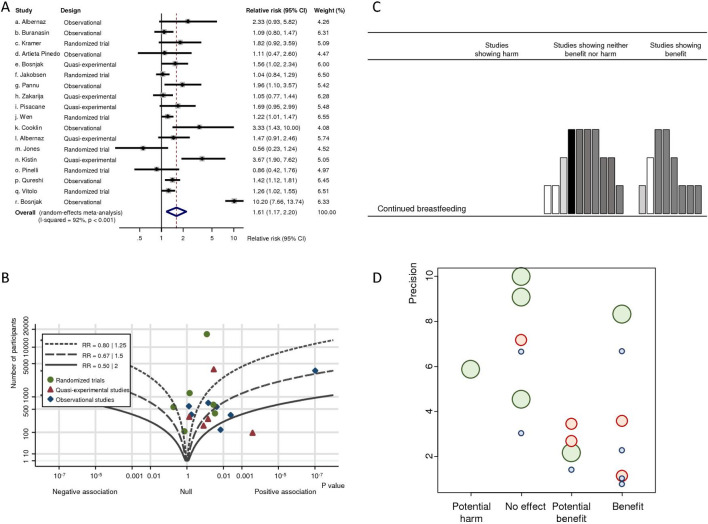
“42 As an example, McFadden et al conducted a systematic review and meta-analysis of 73 studies of support for healthy breastfeeding mothers with healthy term babies.”
MethodSelf-citationSystems Science Methods in Public Health: Dynamics, Networks, and Agents
Luke, D. A., & Stamatakis, K. A. (2012) · Annual Review of Public Health · doi:10.1146/annurev-publhealth-031210-101222 · Cited by 710
A systematic review of rapid diagnostic tests for the detection of tuberculosis infection
Dinnes, J., Deeks, J., Kunst, H., Gibson, A., Cummins, E., Waugh, N., Drobniewski, F., & Lalvani, A. (2007) · Health Technology Assessment · doi:10.3310/hta11030 · Cited by 666
Support for healthy breastfeeding mothers with healthy term babies
Renfrew, M. J., McCormick, F. M., Wade, A., Quinn, B., & Dowswell, T. (2012) · Cochrane Database of Systematic Reviews · doi:10.1002/14651858.cd001141.pub4 · Cited by 665
Summing up evidence: one answer is not always enough
Lau, J., Ioannidis, J. P., & Schmid, C. H. (1998) · The Lancet · doi:10.1016/s0140-6736(97)08468-7 · Cited by 655
Meta-analytic structural equation modeling: A two-stage approach.
Cheung, M. W.-L., & Chan, W. (2005) · Psychological Methods · doi:10.1037/1082-989x.10.1.40 · Cited by 637 · cited 1×
“Such syntheses have been described in frequentist 19 67–70 and Bayesian 71 72 frameworks and are variously known as model-driven meta-analysis, linked meta-analysis, meta-mediation analysis and meta-analysis of structural equation models.”
MethodSupport for healthy breastfeeding mothers with healthy term babies
McFadden, A., Gavine, A., Renfrew, M. J., Wade, A., Buchanan, P., Taylor, J. L., Veitch, E., Rennie, A. M., Crowther, S. A., Neiman, S., et al. (2017) · Cochrane Database of Systematic Reviews · doi:10.1002/14651858.cd001141.pub5 · Cited by 581 · cited 1×
“43 They calculated separate average effects for interventions delivered by a health professional, a lay supporter or with mixed support, and found that the effect on cessation of exclusive breast feeding at up to 6 months was greater for lay support compared with professionals or mixed support…”
Psychological interventions for coronary heart disease.
Richards, S. H., Anderson, L., Jenkinson, C. E., Whalley, B., Rees, K., Davies, P., Bennett, P., Liu, Z., West, R., Thompson, D. R., et al. (2017) · Cochrane Database of Systematic Reviews · doi:10.1002/14651858.cd002902.pub4 · Cited by 571
A systematic review and economic evaluation of statins for the prevention of coronary events
Ward, S., Lloyd Jones, M., Pandor, A., Holmes, M., Ara, R., Ryan, A., Yeo, W., & Payne, N. (2007) · Health Technology Assessment · doi:10.3310/hta11140 · Cited by 556
Multivariate meta‐analysis: Potential and promise
Jackson, D., Riley, R., & White, I. R. (2011) · Statistics in Medicine · doi:10.1002/sim.4172 · Cited by 530 · cited 1×
“64 65 If the synthesis suggests that hypothesised chains of outcomes hold, this lends weight to the theoretical model underlying the hypothesis.”
ResultNoyes, J., Booth, A., Moore, G., Flemming, K., Tunçalp, Ö., & Shakibazadeh, E. (2019) · BMJ Global Health · doi:10.1136/bmjgh-2018-000893 · Cited by 497
A systematic review of the role of bisphosphonates in metastatic disease
Ross, J., Saunders, Y., Edmonds, P., Patel, S., Wonderling, D., Normand, C., & Broadley, K. (2004) · Health Technology Assessment · doi:10.3310/hta8040 · Cited by 467
Wolf, J., Prüss‐Ustün, A., Cumming, O., Bartram, J., Bonjour, S., Cairncross, S., Clasen, T., Colford, J. M., Curtis, V., De France, J., et al. (2014) · Tropical Medicine & International Health · doi:10.1111/tmi.12331 · Cited by 461
Self-citationMeta-Analysis for Explanation: A Casebook.
Jackson, S., Cook, T. D., Cooper, H., Cordray, D. S., Hartmann, H., Hedges, L. V., Light, R. J., Louis, T. A., & Mosteller, F. (1993) · Contemporary Sociology · doi:10.2307/2074578 · Cited by 434
The harvest plot: A method for synthesising evidence about the differential effects of interventions
Ogilvie, D., Fayter, D., Petticrew, M., Sowden, A., Thomas, S., Whitehead, M., & Worthy, G. (2008) · BMC Medical Research Methodology · doi:10.1186/1471-2288-8-8 · Cited by 418
Gupta, J. K., Daniels, J. P., Middleton, L. J., Pattison, H. M., Prileszky, G., Roberts, T. E., Sanghera, S., Barton, P., Gray, R., Kai, J., et al. (2015) · Health Technology Assessment · doi:10.3310/hta19880 · Cited by 399
Flemming, K., Booth, A., Garside, R., Tunçalp, Ö., & Noyes, J. (2019) · BMJ Global Health · doi:10.1136/bmjgh-2018-000882 · Cited by 389 · cited 2×
“Such syntheses of quantitative data may complement syntheses of qualitative data, 11 and the two forms might be integrated.”
BackgroundMethodSterne, J. A. C., Jüni, P., Schulz, K. F., Altman, D. G., Bartlett, C., & Egger, M. (2002) · Statistics in Medicine · doi:10.1002/sim.1184 · Cited by 382 · cited 1×
“85 The choice of a prior distribution may be informed by formal assessments of risk of bias, by expert judgement, or possibly by empirical data from meta-epidemiological studies of biases in randomised and/or non-randomised studies.(86) For example, Wolf et al implemented a prior distribution based on findings of a me…”
Interventions to improve breastfeeding outcomes: a systematic review and meta‐analysis
Sinha, B., Chowdhury, R., Sankar, M. J., Martines, J., Taneja, S., Mazumder, S., Rollins, N., Bahl, R., & Bhandari, N. (2015) · Acta Paediatrica · doi:10.1111/apa.13127 · Cited by 378 · cited 2×
“15 In practice, many methodologists generally recommend against combining randomised with non-randomised studies.”
BackgroundWelton, N. J., Caldwell, D. M., Adamopoulos, E., & Vedhara, K. (2009) · American Journal of Epidemiology · doi:10.1093/aje/kwp014 · Cited by 362 · cited 2×
“55 The Cochrane review focused on the effectiveness of any psychological intervention compared with usual care, and found evidence that psychological interventions reduced non-fatal reinfarctions and depression and anxiety symptoms.”
BackgroundMethodSelf-citationBias Modelling in Evidence Synthesis
Turner, R. M., Spiegelhalter, D. J., Smith, G. C. S., & Thompson, S. G. (2009) · Journal of the Royal Statistical Society Series A: Statistics in Society · doi:10.1111/j.1467-985x.2008.00547.x · Cited by 321 · cited 1×
“84 85 The choice of a prior distribution may be informed by formal assessments of risk of bias, by expert judgement, or possibly by empirical data from meta-epidemiological studies of biases in randomised and/or non-randomised studies.”
Backgroundvon Philipsborn, P., Stratil, J. M., Burns, J., Busert, L. K., Pfadenhauer, L. M., Polus, S., Holzapfel, C., Hauner, H., & Rehfuess, E. (2019) · Cochrane Database of Systematic Reviews · doi:10.1002/14651858.cd012292.pub2 · Cited by 304
Self-citationDealing with effect size multiplicity in systematic reviews and meta‐analyses
López‐López, J. A., Page, M. J., Lipsey, M. W., & Higgins, J. P. T. (2018) · Research Synthesis Methods · doi:10.1002/jrsm.1310 · Cited by 294 · cited 2×
“40 A very simple strategy that has been used in systematic reviews of complex interventions is to take the median effect size within each study, and to summarise these using the median of these effect sizes across studies.”
MethodSelf-citationPetticrew, M., Rehfuess, E., Noyes, J., Higgins, J. P. T., Mayhew, A., Pantoja, T., Shemilt, I., & Sowden, A. (2013) · Journal of Clinical Epidemiology · doi:10.1016/j.jclinepi.2013.06.005 · Cited by 292 · cited 1×
“2 A 3–6 This paper is part of a series to explore the implications of complexity for systematic reviews and guideline development, commissioned by WHO.”
Self-citationIncluding Non‐Randomized Studies
Reeves, B. C., Deeks, J. J., Higgins, J. P., & Wells, G. A. (2008) · Cochrane Handbook for Systematic Reviews of Interventions · doi:10.1002/9780470712184.ch13 · Cited by 288 · cited 1×
“23 prepAring for A quAnTiTATive synTHesis Before undertaking a quantitative synthesis of complex interventions, it can be helpful to begin the synthesis non-quantitatively, looking at patterns and characteristics of the data identified.”
BackgroundSelf-citationGraphical displays for meta-analysis: An overview with suggestions for practice
Anzures‐Cabrera, J., & Higgins, J. P. T. (2010) · Research Synthesis Methods · doi:10.1002/jrsm.6 · Cited by 233 · cited 1×
“27 We illustrate some options in figure 1.”
BackgroundSelf-citationPresseau, J., Ivers, N. M., Newham, J. J., Knittle, K., Danko, K. J., & Grimshaw, J. M. (2015) · Implementation Science · doi:10.1186/s13012-015-0248-7 · Cited by 222 · cited 1×
“51 Meta-regression can be used for this, using covariates to code the presence of particular features in each intervention implementation.”
MethodSelf-citationComplex interventions and their implications for systematic reviews: a pragmatic approach
Petticrew, M., Anderson, L., Elder, R., Grimshaw, J., Hopkins, D., Hahn, R., Krause, L., Kristjansson, E., Mercer, S., Sipe, T., et al. (2013) · Journal of Clinical Epidemiology · doi:10.1016/j.jclinepi.2013.06.004 · Cited by 206 · cited 1×
“Interest is growing on how the standard systematic review and meta-analysis toolkit can be enhanced to address complexity of interventions and their impact.(2) A recent report from the Agency for Healthcare Research and Quality and a series of papers in the Journal of Clinical Epidemiology provide useful background on…”
BackgroundSelf-citationPetticrew, M., Knai, C., Thomas, J., Rehfuess, E. A., Noyes, J., Gerhardus, A., Grimshaw, J. M., Rutter, H., & McGill, E. (2019) · BMJ Global Health · doi:10.1136/bmjgh-2018-000899 · Cited by 204 · cited 3×
“A summary of how these methods link to many of the types of complexity encountered is provided in table 1, based on the examples provided in a table from an earlier paper in the series.(1) An annotated list of the methods we cover is provided in table 2.”
BackgroundMethodInfluentialSelf-citationRehfuess, E. A., Stratil, J. M., Scheel, I. B., Portela, A., Norris, S. L., & Baltussen, R. (2019) · BMJ Global Health · doi:10.1136/bmjgh-2018-000844 · Cited by 200 · cited 2×
“8 The included interventions were predominantly multicomponent, and were implemented in complex systems across multiple contexts.”
Self-citationModeling multivariate effect sizes.
Raudenbush, S. W., Becker, B. J., & Kalaian, H. (1988) · Psychological Bulletin · doi:10.1037/0033-2909.103.1.111 · Cited by 195 · cited 1×
“64 65 If the synthesis suggests that hypothesised chains of outcomes hold, this lends weight to the theoretical model underlying the hypothesis.”
ResultSelf-citationRaine, R., Fitzpatrick, R., Barratt, H., Bevan, G., Black, N., Boaden, R., Bower, P., Campbell, M., Denis, J.-L., Devers, K., et al. (2016) · Health Services and Delivery Research · doi:10.3310/hsdr04160 · Cited by 186
Self-citationUsing Results from Replicated Studies to Estimate Linear Models
Becker, B. J. (1992) · Journal of Educational Statistics · doi:10.2307/1165128 · Cited by 181
Self-citationThomas, J., O’Mara-Eves, A., & Brunton, G. (2014) · Systematic Reviews · doi:10.1186/2046-4053-3-67 · Cited by 177 · cited 1×
“62 QCA involves: (1) Identifying theoretically driven thresholds for determining intervention success or failure.”
Self-citationVote-Counting Procedures In Meta-Analysis
Bushman, B. J., & Wang, M. C. (2009) · STARS (University of Central Florida) · Cited by 175
Briggs, A. D. M., Mytton, O. T., Kehlbacher, A., Tiffin, R., Elhussein, A., Rayner, M., Jebb, S. A., Blakely, T., & Scarborough, P. (2017) · The Lancet Public Health · doi:10.1016/s2468-2667(16)30037-8 · Cited by 160
Psychological interventions for coronary heart disease
Rees, K., Bennett, P., West, R., Davey Smith, G., & Ebrahim, S. (2004) · Cochrane Database of Systematic Reviews · doi:10.1002/14651858.cd002902.pub2 · Cited by 160
Models for Potentially Biased Evidence in Meta-Analysis using Empirically Based Priors
Welton, N. J., Ades, A. E., Carlin, J. B., Altman, D. G., & Sterne, J. A. C. (2009) · Journal of the Royal Statistical Society Series A: Statistics in Society · doi:10.1111/j.1467-985x.2008.00548.x · Cited by 150 · cited 1×
“84 85 The choice of a prior distribution may be informed by formal assessments of risk of bias, by expert judgement, or possibly by empirical data from meta-epidemiological studies of biases in randomised and/or non-randomised studies.”
BackgroundThomson, H. J., & Thomas, S. (2013) · Research Synthesis Methods · doi:10.1002/jrsm.1060 · Cited by 141 · cited 1×
“32”
Harrison, S., Jones, H. E., Martin, R. M., Lewis, S. J., & Higgins, J. P. T. (2017) · Research Synthesis Methods · doi:10.1002/jrsm.1239 · Cited by 133 · cited 1×
“A recent development is the albatross plot, which plots p values against sample sizes, with approximate effect-size contours superimposed (see figure 1, panel B).(28) The contours are computed from the p values and sample sizes, based on an assumption about the type of analysis that would have given rise to the p valu…”
MethodSelf-citationBrown, S. A., García, A. A., Brown, A., Becker, B. J., Conn, V. S., Ramírez, G., Winter, M. A., Sumlin, L. L., Garcia, T. J., & Cuevas, H. E. (2016) · Patient Education and Counseling · doi:10.1016/j.pec.2016.03.020 · Cited by 132 · cited 2×
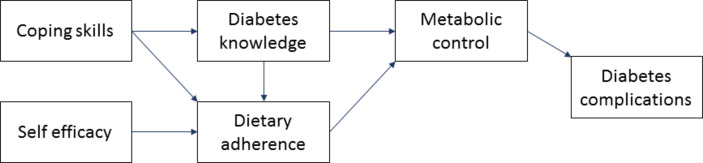
“outcomes, with medication and dietary adherence factors as mediators.(76) In a linked methodological paper, they present the a priori theoretical model on which their analysis is based.”
BackgroundSelf-citationDunn, G., Emsley, R., Liu, H., Landau, S., Green, J., White, I., & Pickles, A. (2015) · Health Technology Assessment · doi:10.3310/hta19930 · Cited by 122 · cited 1×
“77 synTHesis ApproACHes for undersTAnding ComplexiTies of THe sysTem Syntheses may seek to address complexities of the system to understand either the impact of the system on the effects of the intervention or the effects of the intervention on the system.”
BackgroundControversies in meta-analysis: the case of the trials of serum cholesterol reduction
Thompson, S. (1993) · Statistical Methods in Medical Research · doi:10.1177/096228029300200205 · Cited by 118 · cited 1×
“Two possibilities for analysis are to use these intermediate measurements as predictors of main outcomes using meta-regression methods, 63 or to use multivariate meta-analysis to model the intermediate and main outcomes simultaneously, exploiting and estimating the correlations between them.”
MethodTaking account of context in systematic reviews and guidelines considering a complexity perspective
Booth, A., Moore, G., Flemming, K., Garside, R., Rollins, N., Tunçalp, Ö., & Noyes, J. (2019) · BMJ Global Health · doi:10.1136/bmjgh-2018-000840 · Cited by 116 · cited 3×
“…in this series, guideline development encompasses the consideration of many different aspects, 8 such as intervention effectiveness, economic considerations, acceptability 9 or certainty of evidence, 10 and requires the integration of different types of quantitative as well as qualitative evidence.”
BackgroundCombining significance levels.
Becker, B. J. (1994) · Cited by 115
Self-citationCommunity-level interventions for improving access to food in low- and middle-income countries
Durão, S., Visser, M. E., Ramokolo, V., de Oliveira, J. M., Schmidt, B., Balakrishna, Y., Brand, A., Kristjansson, E., & Schoonees, A. (2020) · Cochrane Database of Systematic Reviews · doi:10.1002/14651858.cd011504.pub2 · Cited by 110
Community-level interventions for improving access to food in low- and middle-income countries
Durão, S., Visser, M. E., Ramokolo, V., de Oliveira, J. M., Schmidt, B., Balakrishna, Y., Brand, A., Kristjansson, E., & Schoonees, A. (2020) · Cochrane Database of Systematic Reviews · doi:10.1002/14651858.cd011504.pub3 · Cited by 106 · cited 1×
“20 The model includes direct effects, such as increased financial resources of individuals and decreased food prices; intermediate effects, such as increased quantity of food available and increase in intake; and main outcomes of interest, such as nutritional status and health indicators.”
BackgroundComplex Causal Process Diagrams for Analyzing the Health Impacts of Policy Interventions
Joffe, M., & Mindell, J. (2006) · American Journal of Public Health · doi:10.2105/ajph.2005.063693 · Cited by 106 · cited 2×
“18 They may encompass mediators of effect and moderators of effect.”
BackgroundIMPRoving Outcomes for children exposed to domestic ViolencE (IMPROVE): an evidence synthesis
Howarth, E., Moore, T. H., Welton, N. J., Lewis, N., Stanley, N., MacMillan, H., Shaw, A., Hester, M., Bryden, P., & Feder, G. (2016) · Public Health Research · doi:10.3310/phr04100 · Cited by 105 · cited 1×
“61 A network meta-analysis approach was taken to the synthesis, with the people targeted by the intervention used as a distinguishing feature of the interventions included in the network.”
MethodSelf-citationColbourn, T., Asseburg, C., Bojke, L., Philips, Z., Claxton, K., Ades, A. E., & Gilbert, R. E. (2007) · Health Technology Assessment · doi:10.3310/hta11290 · Cited by 99 · cited 1×
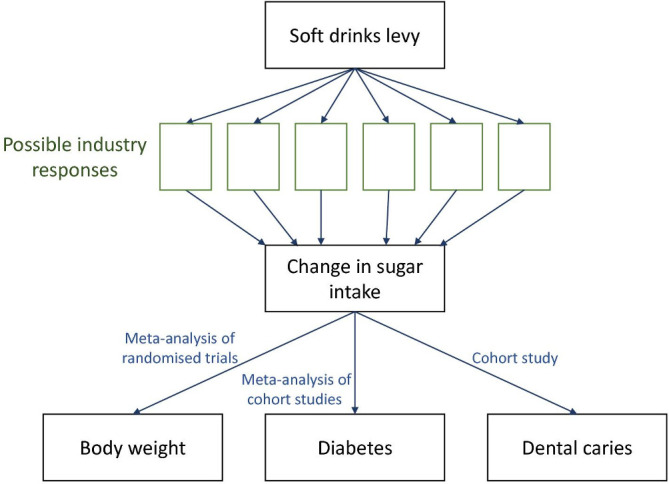
“81 82 Approaches include models to represent systems (eg, systems dynamics models) and approaches that simulate individuals within the system (eg, agent-based models).”
BackgroundWarhurst, G., Dunn, G., Chadwick, P., Blackwood, B., McAuley, D., Perkins, G. D., McMullan, R., Gates, S., Bentley, A., Young, D., et al. (2015) · Health Technology Assessment · doi:10.3310/hta19350 · Cited by 90
Identifying, documenting, and examining heterogeneity in systematic reviews of complex interventions
Pigott, T., & Shepperd, S. (2013) · Journal of Clinical Epidemiology · doi:10.1016/j.jclinepi.2013.06.013 · Cited by 90
Achana, F. A., Cooper, N. J., Bujkiewicz, S., Hubbard, S., Kendrick, D., Jones, D. R., & Sutton, A. J. (2014) · BMC Medical Research Methodology · doi:10.1186/1471-2288-14-92 · Cited by 82 · cited 1×
“60 Network meta-analysis may also be useful when there is a need to compare multiple interventions to answer an ‘in principle’ question of which intervention is most effective.”
Meta-Analysis: Literature Synthesis or Effect-Size Surface Estimation?
Rubin, D. B. (1992) · Journal of Educational Statistics · doi:10.2307/1165129 · Cited by 80 · cited 1×
“3 4 47 50 However, in practice, the number of studies is often too small for reliable conclusions to be drawn.”
BackgroundBeyond ACP Journal Club: how to harness MEDLINE for diagnostic problems.
McKibbon, K. A., & Walker‐Dilks, C. (1994) · PubMed · Cited by 76
Approaches for synthesising complex mental health interventions in meta-analysis
Caldwell, D. M., & Welton, N. J. (2016) · Evidence Based Mental Health · doi:10.1136/eb-2015-102275 · Cited by 75 · cited 1×
“In the context of complex interventions, this is described by Caldwell and Welton as the ‘lumping’ approach, 38 and by Guise et al as the ‘holistic’ approach.”
MethodSelf-citationA methodology for describing and decomposing complex psychosocial and behavioral interventions.
Czaja, S. J., Schulz, R., Lee, C. C., & Belle, S. H. (2003) · Psychology and Aging · doi:10.1037/0882-7974.18.3.385 · Cited by 74 · cited 1×
“S ee s ec t i o n 8 .”
A further use for the Harvest plot: a novel method for the presentation of data synthesis
Crowther, M., Avenell, A., MacLennan, G., & Mowatt, G. (2011) · Research Synthesis Methods · doi:10.1002/jrsm.37 · Cited by 72 · cited 1×
“31 A similar idea to the harvest plot is the effect direction plot proposed by Thomson and Thomas.”
MethodMontgomery, P., Movsisyan, A., Grant, S. P., Macdonald, G., & Rehfuess, E. A. (2019) · BMJ Global Health · doi:10.1136/bmjgh-2018-000848 · Cited by 68 · cited 2×
“…in this series, guideline development encompasses the consideration of many different aspects, 8 such as intervention effectiveness, economic considerations, acceptability 9 or certainty of evidence, 10 and requires the integration of different types of quantitative as well as qualitative evidence.”
BackgroundMethodSelf-citationGuise, J., Chang, C., Viswanathan, M., Glick, S., Treadwell, J. R., Umscheid, C. A., Whitlock, E. P., Fu, R. F., Berliner, E., Paynter, R. A., et al. (2014) · Journal of Clinical Epidemiology · doi:10.1016/j.jclinepi.2014.06.010 · Cited by 65 · cited 2×
“5 6 One key limitation of the simple approach is that it requires similar types of data from each study.”
Developing WHO guidelines: Time to formally include evidence from mathematical modelling studies
Egger, M., Johnson, L. F., Althaus, C. L., Schöni, A., Salanti, G., Low, N. N., & Norris, S. L. (2017) · F1000Research · doi:10.12688/f1000research.12367.1 · Cited by 65
Emergent approaches to the meta-analysis of multiple heterogeneous complex interventions
Melendez-Torres, G. J., Bonell, C., & Thomas, J. (2015) · BMC Medical Research Methodology · doi:10.1186/s12874-015-0040-z · Cited by 64
Self-citationMultiparameter evidence synthesis in epidemiology and medical decision-making
Ades, A. E., Welton, N. J., Caldwell, D., Price, M., Goubar, A., & Lu, G. (2008) · Journal of Health Services Research & Policy · doi:10.1258/jhsrp.2008.008020 · Cited by 60 · cited 1×
“81 82 Approaches include models to represent systems (eg, systems dynamics models) and approaches that simulate individuals within the system (eg, agent-based models).”
BackgroundSelf-citationUsing a new taxonomy to combine the uncombinable: Integrating results across diverse interventions.
Belle, S. H., Czaja, S. J., Schulz, R., Zhang, S., Burgio, L. D., Gitlin, L. N., Jones, R., Mendelsohn, A. B., & Ory, M. G. (2003) · Psychology and Aging · doi:10.1037/0882-7974.18.3.396 · Cited by 58 · cited 1×
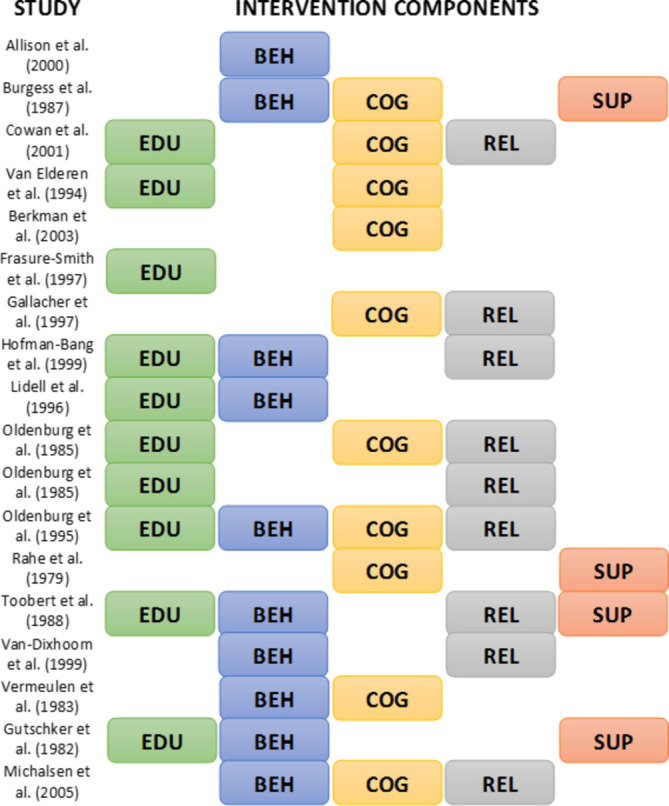
“In another example, of interventions to support family caregivers of people with Alzheimer’s disease, 53 the authors used methods for decomposing complex interventions proposed by Czaja et al , 54 and created covariates that reduced the complexity of the interventions to a small number of features…”
MethodHempel, S., Taylor, S. L., Solloway, M. R., Miake-Lye, I. M., Beroes, J. M., Shanman, R., Booth, M. J., Siroka, A. M., & Shekelle, P. (2014) · PubMed · Cited by 57
Developing WHO guidelines: Time to formally include evidence from mathematical modelling studies
Egger, M., Johnson, L. F., Althaus, C. L., Schoeni, A., Salanti, G., Low, N. N., & Norris, S. L. (2018) · F1000Research · doi:10.12688/f1000research.12367.2 · Cited by 57
Corrections to “Using Results From Replicated Studies to Estimate Linear Models”
Becker, B. J. (1995) · Journal of Educational and Behavioral Statistics · doi:10.3102/10769986020001100 · Cited by 52 · cited 1×
“75 Each study is likely to contribute fragments of the correlation matrix.”
BackgroundSelf-citationLenz, M., Steckelberg, A., Richter, B., & Mühlhauser, I. (2007) · Diabetologia · doi:10.1007/s00125-007-0679-z · Cited by 48
Stewart, G. B., Mengersen, K. L., & Meader, N. (2013) · Research Synthesis Methods · doi:10.1002/jrsm.1087 · Cited by 47 · cited 1×
“Such syntheses have been described in frequentist 19 67–70 and Bayesian 71 72 frameworks and are variously known as model-driven meta-analysis, linked meta-analysis, meta-mediation analysis and meta-analysis of structural equation models.”
MethodQuasi-experimental study designs series—paper 9: collecting data from quasi-experimental studies
Aloe, A. M., Becker, B. J., Duvendack, M., Valentine, J. C., Shemilt, I., & Waddington, H. S. (2017) · Journal of Clinical Epidemiology · doi:10.1016/j.jclinepi.2017.02.013 · Cited by 43 · cited 1×
“21 22 Randomised trials and non-randomised studies might both be included in a review, and analysts may have to decide whether to combine these in one synthesis, and whether to combine results from different types of non-randomised studies in a single analysis.”
BackgroundSelf-citationApplying tests of combined significance in meta-analysis.
Becker, B. J. (1987) · Psychological Bulletin · doi:10.1037/0033-2909.102.1.164 · Cited by 42 · cited 1×
“Rejecting the null model based on such tests provides no information about the magnitude of the effect, providing information only on whether at least one study shows an effect is present, and if so, its direction.(37)”
MethodSelf-citationCollins, D., Johnson, K., & Becker, B. J. (2007) · Substance Use & Misuse · doi:10.1080/10826080701373238 · Cited by 39 · cited 1×
“16 In the breast-feeding review, interest moved from the overall effects across interventions to investigations of how effects varied by such factors as intervention delivery setting, high-income versus low-income country, and urban versus rural setting.”
BackgroundSelf-citationComplex intervention modelling should capture the dynamics of adaptation
Greenwood-Lee, J., Hawe, P., Nettel-Aguirre, A., Shiell, A., & Marshall, D. A. (2016) · BMC Medical Research Methodology · doi:10.1186/s12874-016-0149-8 · Cited by 36
von Philipsborn, P., Stratil, J. M., Burns, J., Busert, L. K., Pfadenhauer, L. M., Polus, S., Holzapfel, C., Hauner, H., & Rehfuess, E. (2016) · Cochrane Database of Systematic Reviews · doi:10.1002/14651858.cd012292 · Cited by 35
Self-citationSpecial issue on meta‐analytic structural equation modeling: introduction from the guest editors
Cheung, M. W. ‐., & Hafdahl, A. R. (2016) · Research Synthesis Methods · doi:10.1002/jrsm.1212 · Cited by 32
Ivers, N., Tricco, A. C., Trikalinos, T. A., Dahabreh, I. J., Danko, K. J., Moher, D., Straus, S. E., Lavis, J. N., Yu, C. H., Shojania, K., et al. (2014) · Systematic Reviews · doi:10.1186/2046-4053-3-88 · Cited by 31 · cited 1×
“More sophisticated models for examining components have been described by Welton et al , 55 Ivers et al 56 and Madan et al .”
MethodSelf-citationMadan, J. J., Chen, Y., Aveyard, P. N., Wang, D., Yahaya, I., Munafo, M. R., Bauld, L., & Welton, N. J. (2013) · Journal of the Royal Statistical Society Series A (Statistics in Society) · doi:10.1111/rssa.12018 · Cited by 30 · cited 1×
“57 A component-level approach may be useful when there is a need to disentangle the ‘active ingredients’ of an intervention, for example, when adapting an existing intervention for a new setting.”
Corrections to "Using Results from Replicated Studies to Estimate Linear Models"
Becker, B. J. (1995) · Journal of Educational and Behavioral Statistics · doi:10.2307/1165390 · Cited by 30
Self-citationBecker, B. J., Aloe, A. M., Duvendack, M., Stanley, T. D., Valentine, J. C., Fretheim, A., & Tugwell, P. (2017) · Journal of Clinical Epidemiology · doi:10.1016/j.jclinepi.2017.02.014 · Cited by 27 · cited 1×
“21 22 Randomised trials and non-randomised studies might both be included in a review, and analysts may have to decide whether to combine these in one synthesis, and whether to combine results from different types of non-randomised studies in a single analysis.”
BackgroundSelf-citationNetwork Meta-Analysis for Complex Social Interventions: Problems and Potential
Grant, E. S., & Calderbank-Batista, T. (2013) · Journal of the Society for Social Work and Research · doi:10.5243/jsswr.2013.25 · Cited by 24
Should we extend the indications for therapeutic hypothermia?
Saliba, É. (2015) · Acta Paediatrica · doi:10.1111/apa.12891 · Cited by 21
Model-Driven Meta-Analyses for Informing Health Care: A Diabetes Meta-Analysis as an Exemplar
Brown, S. A., Becker, B. J., García, A. A., Brown, A., & Ramírez, G. (2014) · Western Journal of Nursing Research · doi:10.1177/0193945914548229 · Cited by 10
Self-citationIntegrating multiple sources of evidence: a Bayesian perspective
Watson, S. I. 0.-0.-8.-7., & Lilford, R. J. (2018) · University of Birmingham Research Portal (University of Birmingham) · Cited by 10
Blakemore, A., Dickens, C. M., Anderson, R., Tomenson, B., Woodcock, A. A., & Guthrie, E. (2014) · Respiratory Medicine · doi:10.1016/j.rmed.2014.11.002 · Cited by 9 · cited 1×
“52 Effect size estimates were coded according to components used in the interventions, and the authors found that multicomponent interventions including skills training, education and relapse prevention appeared particularly effective.”
MethodUsing Linked Meta-Analysis To Build Policy Models
Lipsey, M. W. (1997) · PsycEXTRA Dataset · doi:10.1037/e495592006-012 · Cited by 8
Meta-Analysis and Models of Substance Abuse Prevention
Becker, B. J. (1997) · PsycEXTRA Dataset · doi:10.1037/e495592006-005 · Cited by 3
Self-citation
Research works printed but not linked: 3
- Guise JM, Chang C, Viswanathan M, et al. Systematic reviews of complex multicomponent health care interventions (AHRQ publication no. 14-EHC003-EF). Rockville, MD: Agency for Healthcare Research and Quality, 2014. 24696890
- World Health Organization. Guideline: protecting, promoting and supporting breastfeeding in facilities providing maternity and newborn services. Geneva: World Health Organization, 2017. 29565522
- Ryan R, Cochrane Consumers and Communication Review Group. Cochrane consumers and communication review group: data synthesis and analysis. 2016. Available: http://cccrg.cochrane.org
Cited by
The PRISMA 2020 statement: An updated guideline for reporting systematic reviews
Page, M. J., McKenzie, J. E., Bossuyt, P. M., Boutron, I., Hoffmann, T. C., Mulrow, C. D., Shamseer, L., Tetzlaff, J. M., Akl, E. A., Brennan, S. E., et al. (2021) · BMJ · doi:10.1136/bmj.n71 · Cited by 108,283
Self-citationThe PRISMA 2020 statement: an updated guideline for reporting systematic reviews
Page, M. J., McKenzie, J. E., Bossuyt, P. M., Boutron, I., Hoffmann, T. C., Mulrow, C. D., Shamseer, L., Tetzlaff, J. M., Akl, E. A., Brennan, S. E., et al. (2021) · Systematic Reviews · doi:10.1186/s13643-021-01626-4 · Cited by 13,874
Self-citationPage, M. J., Moher, D., Bossuyt, P. M., Boutron, I., Hoffmann, T. C., Mulrow, C. D., Shamseer, L., Tetzlaff, J. M., Akl, E. A., Brennan, S. E., et al. (2021) · BMJ · doi:10.1136/bmj.n160 · Cited by 13,262
Self-citationThe PRISMA 2020 Statement: An Updated Guideline for Reporting Systematic Reviews
Page, M. J., McKenzie, J. E., Bossuyt, P. M., Boutron, I., Hoffmann, T. C., Mulrow, C. D., Shamseer, L., Tetzlaff, J. M., Akl, E. A., Brennan, S. E., et al. (2021) · International Journal of Surgery · doi:10.1016/j.ijsu.2021.105906 · Cited by 11,748
Self-citationThe PRISMA 2020 statement: An updated guideline for reporting systematic reviews
Page, M. J., McKenzie, J. E., Bossuyt, P. M., Boutron, I., Hoffmann, T. C., Mulrow, C. D., Shamseer, L., Tetzlaff, J. M., Akl, E. A., Brennan, S. E., et al. (2021) · PLoS Medicine · doi:10.1371/journal.pmed.1003583 · Cited by 5,148
Self-citation
Metadata
- Authors
- Higgins, J. P. T., López-López, J. A., Becker, B. J., Davies, S. R., Dawson, S., Grimshaw, J. M., McGuinness, L. A., Moore, T. H. M., Rehfuess, E. A., Thomas, J., & Caldwell, D. M.
- Affiliations
- University of Bristol (GB)
- Florida State University (US)
- University of Ottawa (CA)
- University Hospitals Bristol NHS Foundation Trust (GB)
- Institut für Medizinische Informationsverarbeitung, Biometrie und Epidemiologie (DE)
- University College London (GB)
- Corresponding author
- Higgins, Julian P T
- ORCID
- Venue
- BMJ Global Health
- Publisher
- BMJ
- Published
- 2019-01
- Volume
- 4
- Issue
- Suppl 1
- Pages
- e000858
- ISSN
- 2059-7908 (ISSN-L)
- PMC
- PMC6350707
- OpenAlex
- W2914938986
- Cited by
- 322
- References
- 108
- Citations by year
- 2026: 44 · 2025: 53 · 2024: 58 · 2023: 29 · 2022: 42 · 2021: 50 · 2020: 30 · 2019: 14
- Type
- conference abstract
- Language
- en
- Open access
- gold
- doi.org
- Locations
- BMJ Global Health (publishedVersion, cc-by-nc)
- Europe PMC (PubMed Central) (publishedVersion, cc-by-nc)
- PubMed Central (publishedVersion, cc-by-nc)
- PubMed (publishedVersion)
- DOAJ (DOAJ: Directory of Open Access Journals) (submittedVersion)
- Open access LMU (Ludwid Maxmilian's Universitat Munchen) (submittedVersion, cc-by-nc)
- Bristol Research (University of Bristol) (submittedVersion, cc-by-nc)
- Funders
- World Health Organization
- Topics
- Social Sciences › Decision Sciences › Statistics, Probability and Uncertainty › Meta-analysis and systematic reviews
- Health Sciences › Health Professions › General Health Professions › Health Policy Implementation Science
- Health Sciences › Medicine › Public Health, Environmental and Occupational Health › Clinical practice guidelines implementation
- Keywords
- complex health interventions, meta-analysis, meta-regression, mediators, intervention mechanisms, tabulation, graphical synthesis, narrative synthesis, public health interventions, health service interventions
About these checks
Registry, retraction, Cites and statistics results are computed, not judged, with one exception: a printed reference that no index lists is read once by a model before it counts as a citation error. Claims are extracted by a model and kept only when their quote appears verbatim in the text; each cited source is then checked, with a model’s help, for whether it says what the claim relies on. Those verdicts can be wrong — read the claim’s quote and the cited source before relying on one.
Statistics and arithmetic are recomputed, not judged.
Confidence bands are shown only for fields calibrated on our annotated test set. None is calibrated yet, so no band is shown.
What counts as a claim ›How we measure confidence ›How we check this ›
Are you an author, or do you see a problem with this page? Request a review
Data sources
Bibliographic data: Semantic Scholar, OpenAlex, Crossref.
Contains information from the Semantic Scholar Academic Graph Datasets, made available under the ODC Attribution License (ODC-BY 1.0).
Semantic Scholar’s data is described in: Kinney, R., et al. (2023). The Semantic Scholar Open Data Platform. arXiv:2301.10140.
