

Hypnotics' association with mortality or cancer: a matched cohort study
Open accessThe DOI matches its Crossref record; 39 of the 39 references it cites were found in a registry or an index.
Abstract
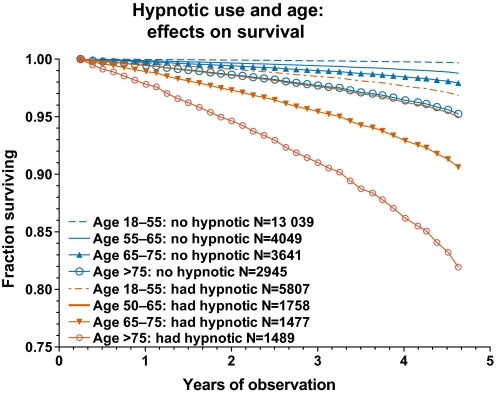
Objectives: An estimated 6%–10% of US adults took a hypnotic drug for poor sleep in 2010. This study extends previous reports associating hypnotics with excess mortality. Setting: A large integrated health system in the USA. Design: Longitudinal electronic medical records were extracted for a one-to-two matched cohort survival analysis. Subjects: Subjects (mean age 54 years) were 10 529 patients who received hypnotic prescriptions and 23 676 matched controls with no hypnotic prescriptions, followed for an average of 2.5 years between January 2002 and January 2007. Main outcome measures: Data were adjusted for age, gender, smoking, body mass index, ethnicity, marital status, alcohol use and prior cancer. Hazard ratios (HRs) for death were computed from Cox proportional hazards models controlled for risk factors and using up to 116 strata, which exactly matched cases and controls by 12 classes of comorbidity. Results: As predicted, patients prescribed any hypnotic had substantially elevated hazards of dying compared to those prescribed no hypnotics. For groups prescribed 0.4–18, 18–132 and >132 doses/year, HRs (95% CIs) were 3.60 (2.92 to 4.44), 4.43 (3.67 to 5.36) and 5.32 (4.50 to 6.30), respectively, demonstrating a dose–response association. HRs were elevated in separate analyses for several common hypnotics, including zolpidem, temazepam, eszopiclone, zaleplon, other benzodiazepines, barbiturates and sedative antihistamines. Hypnotic use in the upper third was associated with a significant elevation of incident cancer; HR=1.35 (95% CI 1.18 to 1.55). Results were robust within groups suffering each comorbidity, indicating that the death and cancer hazards associated with hypnotic drugs were not attributable to pre-existing disease. Conclusions: Receiving hypnotic prescriptions was associated with greater than threefold increased hazards of death even when prescribed <18 pills/year. This association held in separate analyses for several commonly used hypnotics and for newer shorter-acting drugs. Control of selective prescription of hypnotics for patients in poor health did not explain the observed excess mortality.
Overview
The claims and statistics of this paper haven’t been checked yet.
Free: it reads the open-access text and checks the first 5 claims that cite a source we can check. Create a free account to check every claim.
Integrity signals
Registry
Cites
Statistics
Figures
Verification
Claims the paper makes
The claims and statistics of this paper haven’t been checked yet.
Free: it reads the open-access text and checks the first 5 claims that cite a source we can check. Create a free account to check every claim.
Claims other papers make about this one
Each is checked against this paper’s own text: does it say what the citing paper says it does?
The source backs part of the claim, not all of it — or backs it for a different population, condition or comparison.
In the citing paper
“They found that the hazard of death was doubled in patients prescribed BZD compared to control patients [47].”
From Benzodiazepines: Uses, Dangers, and Clinical Considerations (2021) · cites this paper as [47]
Experimental — accuracy not yet measuredThe source backs part of the claim, not all of it — or backs it for a different population, condition or comparison.
In the citing paper
“There was an association between the prescription of anxiolytic drugs and mortality, resulting in 4 excess deaths in the anxiolytic drug group within an average of 7.6 years [47].”
From Benzodiazepines: Uses, Dangers, and Clinical Considerations (2021) · cites this paper as [47]
Experimental — accuracy not yet measuredThe source backs part of the claim, not all of it — or backs it for a different population, condition or comparison.
In the citing paper
“One study further showed that the risk of dying is doubled in patients prescribed BZD compared with controls [47].”
From Benzodiazepines: Uses, Dangers, and Clinical Considerations (2021) · cites this paper as [47]
Experimental — accuracy not yet measuredIn the citing paper
“All of these interventions resulted in higher discontinuation rates than usual care. 37,38”
From Comparative efficacy of two interventions to discontinue long-term benzodiazepine use: cluster randomised controlled trial in primary care (2014) · cites this paper as [38]
Self-check
Percentages, sums and reported differences re-computed from the paper’s own numbers.
The self-check needs the paper’s full text.
Citations
Cites
Risk Factors for Falls among Elderly Persons Living in the Community
Tinetti, M. E., Speechley, M., & Ginter, S. F. (1988) · New England Journal of Medicine · doi:10.1056/nejm198812293192604 · Cited by 6,509
The global health burden of infection‐associated cancers in the year 2002
Parkin, D. M. (2006) · International Journal of Cancer · doi:10.1002/ijc.21731 · Cited by 2,932
Mortality Associated With Sleep Duration and Insomnia
Kripke, D. F., Garfinkel, L., Wingard, D. L., Klauber, M. R., & Marler, M. R. (2002) · Archives of General Psychiatry · doi:10.1001/archpsyc.59.2.131 · Cited by 1,614
Self-citationSedative hypnotics in older people with insomnia: meta-analysis of risks and benefits
Glass, J., Lanctôt, K. L., Herrmann, N., Sproule, B. A., & Busto, U. E. (2005) · BMJ · doi:10.1136/bmj.38623.768588.47 · Cited by 1,161 · cited 2×
“21 30 Zolpidem has been shown to increase gastroesophageal regurgitation.”
BackgroundSmith, G. C. S., & Pell, J. P. (2003) · BMJ · doi:10.1136/bmj.327.7429.1459 · Cited by 1,157
Excess mortality in depression: a meta-analysis of community studies
Cuijpers, P., & Smit, F. (2002) · Journal of Affective Disorders · doi:10.1016/s0165-0327(01)00413-x · Cited by 775
Short and Long Sleep and Sleeping Pills: Is Increased Mortality Associated?
Kripke, D. F. (1979) · Archives of General Psychiatry · doi:10.1001/archpsyc.1979.01780010109014 · Cited by 660
Self-citationSmoking in relation to the death rates of one million men and women.
Ec, H. (1966) · PubMed · Cited by 648
Jacobs, G. D., Pace-Schott, E. F., Stickgold, R., & Otto, M. W. (2004) · Archives of Internal Medicine · doi:10.1001/archinte.164.17.1888 · Cited by 579
Bronstein, A. C., Spyker, D. A., Cantilena, L. R., Green, J. L., Rumack, B. H., & Giffin, S. L. (2009) · Clinical Toxicology · doi:10.3109/15563650903438566 · Cited by 485
Research works printed but not linked: 1
- National Institute for Clinical Excellence Guidance of the use of zaleplon, zolpidem and zopiclone for the short-term management of insomnia. Technol Appraisal 2004; 77: 1– 27
Cited by
Items 101–200 of 418
Use of Sedative-Hypnotics and Mortality: A Population-Based Retrospective Cohort Study
Choi, J.-W., Lee, J., Jung, S. J., Shin, A., & Lee, Y. J. (2018) · Journal of Clinical Sleep Medicine · doi:10.5664/jcsm.7370 · Cited by 44
Association between hypnotics use and increased mortality: causation or confounding?
Neutel, C. I., & Johansen, H. L. (2015) · European Journal of Clinical Pharmacology · doi:10.1007/s00228-015-1841-z · Cited by 49
“The association was found not only for hypnotic use and all-cause mortality [1–4] but also for more specific causes of death such as cardiovascular disease [2, 5, 6], diabetes [2], kidney disease [7], and cancer deaths [1, 9].”
InfluentialLinnet, K., Gudmundsson, L. S., Birgisdottir, F. G., Sigurdsson, E. L., Jóhannsson, M., Tómasdóttir, M. Ó., & Sigurdsson, J. A. (2016) · BMC Family Practice · doi:10.1186/s12875-016-0469-0 · Cited by 48
“The serious side effects of benzodiazepines have been known for decades [12], and in recent years, concerns have been raised about possible links between the use of these drugs and increased mortality [13–16].”
BackgroundMelatonin, hypnotics and their association with fracture: a matched cohort study
Frisher, M., Gibbons, N., Bashford, J., Chapman, S., & Weich, S. (2016) · Age and Ageing · doi:10.1093/ageing/afw123 · Cited by 44
The association between zolpidem and infection in patients with sleep disturbance
Huang, C., Chou, F. H., Huang, Y.-S., Yang, C.-J., Su, Y., Juang, S.-Y., Chen, P.-F., Chou, P., Lee, C.-A., & Lee, C.-C. (2014) · Journal of Psychiatric Research · doi:10.1016/j.jpsychires.2014.03.017 · Cited by 39
“; 95% CI, 95% confidence interval. associated with an increased risk of death in a recent matched cohort study (Kripke et al., 2012).”
BackgroundLimited Utility for Benzodiazepines in Chronic Pain Management: A Narrative Review
Wright, S. L. (2020) · Advances in Therapy · doi:10.1007/s12325-020-01354-6 · Cited by 44
The misuse of Ambien among adolescents: Prevalence and correlates in a national sample
Ford, J. A., & McCutcheon, J. C. (2012) · Addictive Behaviors · doi:10.1016/j.addbeh.2012.06.015 · Cited by 41
“Research has also linked the use of Ambien to an increased risk of accidental injury due to hangover sedation (Gustavsen, J.G., Skurtveit, Engeland, & Morland, 2008; Kripke et al., 2012; Wang, Bohn, Glynn, Mogun, & Avorn, 2001).”
BackgroundMelatonin Receptor Agonists for Treating Delirium in Elderly Patients with Acute Stroke
Ohta, T., Murao, K., Miyake, K., & Takemoto, K. (2012) · Journal of Stroke and Cerebrovascular Diseases · doi:10.1016/j.jstrokecerebrovasdis.2012.08.012 · Cited by 39
Internet-Based Cognitive-Behavioral Therapy for Insomnia in Adults With Asthma: A Pilot Study
Luyster, F. S., Ritterband, L. M., Sereika, S. M., Buysse, D. J., Wenzel, S. E., & Strollo, P. J. (2020) · Behavioral Sleep Medicine · doi:10.1080/15402002.2018.1518229 · Cited by 37
Dementia is Associated with an Increased Risk of Hip Fractures: A Nationwide Analysis in Korea
Jeon, J.-H., Park, J. H., Oh, C., Chung, J. K., Song, J. Y., Kim, S., Lee, S.-H., Jang, J., & Kim, Y.-J. (2019) · Journal of Clinical Neurology · doi:10.3988/jcn.2019.15.2.243 · Cited by 37
Zolpidem-Associated Consequences: An Updated Literature Review With Case Reports
Westermeyer, J. J., & Batres‐y‐Carr, T. (2019) · The Journal of Nervous and Mental Disease · doi:10.1097/nmd.0000000000001074 · Cited by 37
“Despite such tragedies and vastly greater public health consequences, zolpidem has become the most widely prescribed sedative drug in the United States over the last 25 years (Kripke et al., 2012; Walsh and Schweitzer, 1999).”
BackgroundSelecting a pharmacotherapy regimen for patients with chronic insomnia
Hassinger, A. B., Bletnisky, N., Dudekula, R., & El-Solh, A. (2020) · Expert Opinion on Pharmacotherapy · doi:10.1080/14656566.2020.1743265 · Cited by 45
“Further, epidemiological studies have alluded to the fact that the use of benzodiazepine medications were associated with increased mortality [96,100].”
BackgroundEvaluation and Management of Sleep and Circadian Rhythm Disturbance in Cancer
Balachandran, D. D., Miller, M. A., Faiz, S. A., Yennurajalingam, S., & Innominato, P. F. (2021) · Current Treatment Options in Oncology · doi:10.1007/s11864-021-00872-x · Cited by 40
Lee, M. H., Choi, J., Lee, J., Shin, A., Oh, S. M., Jung, S. J., & Lee, Y. J. (2018) · Social Psychiatry and Psychiatric Epidemiology · doi:10.1007/s00127-018-1615-x · Cited by 39
Martin, P., Tamblyn, R. M., Ahmed, S., Benedetti, A., & Tannenbaum, C. (2015) · Trials · doi:10.1186/s13063-015-0791-1 · Cited by 41
“• Hypnotics are associated with a greater than 3-fold increased risk of death even when prescribed < 18 pills/year [51]”
BackgroundFifty years of pharmacovigilance – Medicines safety and public health
Laporte, J. (2016) · Pharmacoepidemiology and Drug Safety · doi:10.1002/pds.3967 · Cited by 41
Melatonin Deficiency Hypothesis in Delirium: A Synthesis of Current Evidence
de Rooij, S. E., & Munster, B. C. V. (2013) · Rejuvenation Research · doi:10.1089/rej.2012.1405 · Cited by 38
“Pharmacological treatment with current drugs often leads, despite careful dosing, to serious side effects, such as drowsiness and falls.(83) Earlier studies on anti-psychotics prescribed in elderly patients also showed a ten-fold increased cardiovascular and cerebral mortality during the first weeks, especially in cog…”
Lähteenmäki, R., Neuvonen, P. J., Puustinen, J., Vahlberg, T., Partinen, M., Räihä, I., & Kivelä, S. (2019) · Basic & Clinical Pharmacology & Toxicology · doi:10.1111/bcpt.13144 · Cited by 34
“062 Daytime work 6 (18) 6 (11) Shift work 4 (12) 1 (2)”
BackgroundThe Use of Hypnotics and Mortality - A Population-Based Retrospective Cohort Study
Lan, T.-Y., Zeng, Y.-F., Tang, G., Kao, H., Chiu, H.-J., Lan, T., & Ho, H.-F. (2015) · PLoS ONE · doi:10.1371/journal.pone.0145271 · Cited by 35
“Our results are compatible with the findings of studies conducted in other countries, which showed that taking BZDs could lead to a higher risk of mortality [8, 9, 13, 17, 20].”
BackgroundResultNew and emerging pharmacotherapeutic approaches for insomnia
Neubauer, D. N. (2014) · International Review of Psychiatry · doi:10.3109/09540261.2014.888990 · Cited by 35
der Linden, L. R. V., Decoutere, L., Flamaing, J., Spriet, I., Willems, L., Milisen, K., Boonen, S., & Tournoy, J. (2014) · European Geriatric Medicine · doi:10.1016/j.eurger.2013.12.005 · Cited by 32
“For example, regardless of duration of use, past use of benzodiazepines or neuroleptic agents drugs may be associated with increased morbidity and perhaps even mortality [26–28].”
BackgroundJennum, P., Baandrup, L., Iversen, H. K., Ibsen, R., & Kjellberg, J. (2016) · BMJ Open · doi:10.1136/bmjopen-2015-010662 · Cited by 34
Nakafero, G., Sanders, R., Nguyen‐Van‐Tam, J. S., & Myles, P. R. (2016) · Pharmacoepidemiology and Drug Safety · doi:10.1002/pds.4028 · Cited by 32
Hedlund, J., Ahlner, J., Kristiansson, M., & Sturup, J. (2014) · Forensic Science International · doi:10.1016/j.forsciint.2014.07.015 · Cited by 32
“In recent years, there have been several reports on the role of benzodiazepines (BDZs) as a trigger of violence and risk factor for all-cause mortality [25–29].”
BackgroundElder, G. J., Altena, E., Palagini, L., & Ellis, J. G. (2023) · Journal of Sleep Research · doi:10.1111/jsr.13842 · Cited by 33
“…benzodiazepine receptor agonists, can be used in the treatment of insomnia in the short-term (Riemann et al., 2017), these can have a number of side-effects, including drowsiness, tolerance and negative impacts upon cognition (Kripke et al., 2012; Siriwardena et al., 2008; Stranks & Crowe, 2014).”
BackgroundChoi, J., Song, J. S., Lee, Y. J., Won, T., & Jeong, D. U. (2017) · Journal of Clinical Sleep Medicine · doi:10.5664/jcsm.6386 · Cited by 30
The value of mindfulness meditation in the treatment of insomnia
Martires, J. S., & Zeidler, M. R. (2015) · Current Opinion in Pulmonary Medicine · doi:10.1097/mcp.0000000000000207 · Cited by 38
“All rights rese with increased mortality [10,11].”
Cho, C., Jee, H., Nam, Y.-J., An, H., Kim, L., & Lee, H. (2020) · Scientific Reports · doi:10.1038/s41598-020-61694-9 · Cited by 28
Insomnia (primary) in older people: non-drug treatments.
Alessi, C., & Vitiello, M. V. (2015) · PubMed Central · Cited by 32
Cannabis use in a Swiss male prison: Qualitative study exploring detainees’ and staffs’ perspectives
Ritter, C., Broers, B., & Elger, B. S. (2013) · International Journal of Drug Policy · doi:10.1016/j.drugpo.2013.05.001 · Cited by 33
Chiu, H.-Y., Huang, C., Fan, Y., & Tsai, P.-S. (2018) · Journal of Women s Health · doi:10.1089/jwh.2017.6626 · Cited by 28
“28 Therefore, the role of BZDs and non-BZDs in the development of breast cancer remains unclear.”
Cohort study of the association of hypnotic use with mortality in postmenopausal women
Hartz, A. J., & Ross, J. J. (2012) · BMJ Open · doi:10.1136/bmjopen-2012-001413 · Cited by 26
“6 for the use of only 4–18 pills a year.(9) Other HRs for regular users were between 2.”
BackgroundIndicators of Benzodiazepine Use in Nursing Home Residents in France: A Cross-Sectional Study
Barreto, P. D. S., Lapeyre‐Mestre, M., Mathieu, C., Piau, C., Bouget, C., Cayla, F., Vellas, B. J., & Rolland, Y. (2012) · Journal of the American Medical Directors Association · doi:10.1016/j.jamda.2012.09.002 · Cited by 29
Insomnia Symptoms Are Not Associated with Dyslipidemia: A Population-Based Study
Vozoris, N. T. (2016) · SLEEP · doi:10.5665/sleep.5524 · Cited by 28
What can predict and prevent the long-term use of benzodiazepines?
Hata, T., Kanazawa, T., Hamada, T., Nishihara, M., Bush, A. I., Yoneda, H., Nakajima, M., & Katsumata, T. (2017) · Journal of Psychiatric Research · doi:10.1016/j.jpsychires.2017.11.012 · Cited by 29
“Receiving hypnotic prescriptions is also associated with excess mortality (Belleville, 2010) and cancer incidence (Kripke et al., 2012).”
BackgroundThe medicalization of sleeplessness: Results of U.S. office visit outcomes, 2008–2015
Moloney, M., Ciciurkaite, G., & Brown, R. L. (2019) · SSM - Population Health · doi:10.1016/j.ssmph.2019.100388 · Cited by 26
“Even when adjusting for age, gender, smoking, body mass index, ethnicity, marital status, alcohol use, and prior cancer, patients prescribed > 132 doses in a year had substantial elevations in incident cancer and mortality (Kripke et al., 2012).”
InfluentialPetrov, M. E. R., Howard, V. J., Kleindorfer, D., Grandner, M. A., Molano, J. R. V., & Howard, G. (2014) · Journal of Stroke and Cerebrovascular Diseases · doi:10.1016/j.jstrokecerebrovasdis.2014.03.025 · Cited by 28
“Furthermore, prescription sleep medications have also been associated with mortality across multiple causes of death including stroke, ischemic heart disease, cancer, and accidents.(14,23,24)”
Role of the prescriber in supporting patients to discontinue benzodiazepines: a qualitative study
Oldenhof, E., Mason, T., Anderson‐Wurf, J., & Staiger, P. K. (2021) · British Journal of General Practice · doi:10.3399/bjgp.2020.1062 · Cited by 27
Use of sleep medications and risk of cancer: a matched case–control study
Sivertsen, B., Salo, P., Pentti, J., Kivimäki, M., & Vahtera, J. (2015) · Sleep Medicine · doi:10.1016/j.sleep.2015.05.003 · Cited by 28
“compared with non-users [7,9].”
BackgroundResultInfluentialUncovering the source of new benzodiazepine prescriptions in community‐dwelling older adults’
Halme, A. S., Béland, S., Préville, M., & Tannenbaum, C. (2012) · International Journal of Geriatric Psychiatry · doi:10.1002/gps.3818 · Cited by 25
“Benzodiazepines have also been linked tomortality (odds ratio, 3.6; 95%CI, 2.94–4.44) and cancer (OR, 1.35; 95% CI, 1.18–1.55) (Kripke et al., 2012).”
BackgroundInfluentialNakafero, G., Sanders, R., Nguyen‐Van‐Tam, J. S., & Myles, P. R. (2015) · Pharmacoepidemiology and Drug Safety · doi:10.1002/pds.3799 · Cited by 28
Insomnia among cancer caregivers: A proposal for tailored cognitive behavioral therapy.
Shaffer, K. M., Garland, S. N., Mao, J. J. J., & Applebaum, A. J. (2018) · Journal of Psychotherapy Integration · doi:10.1037/int0000105 · Cited by 27
Tang, N. K. Y., Moore, C., Parsons, H. M., Sandhu, H. K., Patel, S., Ellard, D. R., Nichols, V. P., Madan, J. J., Collard, V. E. J., Sharma, U., et al. (2020) · BMJ Open · doi:10.1136/bmjopen-2019-034764 · Cited by 26
Dalong, G., Jiyuan, L., Zhang, Y., Lei, Z., Yanhong, H., & Shao, Y. (2018) · Brain Imaging and Behavior · doi:10.1007/s11682-018-9979-9 · Cited by 25
Insomnia and Hypnotic Medications are Associated with Suicidal Ideation in a Community Population
Pigeon, W. R., Woosley, J. A., & Lichstein, K. L. (2014) · Archives of Suicide Research · doi:10.1080/13811118.2013.824837 · Cited by 23
Impact of the Combined Use of Benzodiazepines and Opioids on Workers' Compensation Claim Cost
Lavin, R. A., Tao, X. G., Yuspeh, L., & Bernacki, E. J. (2014) · Journal of Occupational and Environmental Medicine · doi:10.1097/jom.0000000000000203 · Cited by 25
Sleep and mortality: cause, consequence, or symptom?
Cappuccio, F. P., & Miller, M. A. (2013) · Sleep Medicine · doi:10.1016/j.sleep.2013.04.001 · Cited by 21
“Some of the confounders included the presence of depression, self-rated health, other mental health concerns, and crucially the use hypnotics, which are a cause for concern, given their growing use (up to 10%) and their potential association with mortality [5].”
BackgroundRobbins, R., DiClemente, R. J., Troxel, A. B., Jean‐Louis, G., Butler, M. J., Rapoport, D. M., & Czeisler, C. A. (2020) · Sleep Medicine · doi:10.1016/j.sleep.2020.11.004 · Cited by 21
Is suvorexant a better choice than alternative hypnotics?
Kripke, D. F. (2015) · F1000Research · doi:10.12688/f1000research.6845.1 · Cited by 25
“Finally, there are now more than 20 epidemiologic studies showing that use of benzodiazepine-agonists and diphenhydramine has been significantly associated with excess mortality, with hazard ratios as high as 3 to 5 64,79–81 .”
InfluentialSelf-citationBenzodiazepine drug use and cancer risk: a dose-response meta analysis of prospective cohort studies
Zhang, T., Yang, X., Zhou, J., Liu, P., Wang, H., Li, A., & Zhou, Y. (2017) · Oncotarget · doi:10.18632/oncotarget.22057 · Cited by 22
Hilmisson, H., Sveinsdóttir, E. G., Lange, N. R., & Magnúsdóttir, S. (2019) · European Journal of Internal Medicine · doi:10.1016/j.ejim.2019.01.011 · Cited by 24
Prescripciones inconvenientes en el tratamiento del paciente con deterioro cognitivo
Bayón, A. R., & Sampedro, F. G. (2012) · Neurología · doi:10.1016/j.nrl.2012.05.004 · Cited by 23
“318 (63,6) 430 (86) 64 (12,8) 338 (67,6) 180 (36) 143 (28,6)”
Sleep duration and cancer risk: time to use a “sleep-years” index?
Erren, T. C. (2012) · Cancer Causes & Control · doi:10.1007/s10552-012-0027-6 · Cited by 20
Son, C., Lim, Y., Lee, Y., Lim, J.-H., Kim, B.-K., & Ha, I. (2021) · Healthcare · doi:10.3390/healthcare10010007 · Cited by 19
“Thus, hypnotics may be associated with an array of adverse events; in addition, the use of hypnotics is associated with high cancer incidence and mortality [46,47].”
BackgroundSleep Disturbances and Driving Practices of Older Drivers
Fragoso, C. A. V., Ness, P. H. V., Araujo, K. L. B., Iannone, L. P., & Marottoli, R. A. (2013) · Journal of the American Geriatrics Society · doi:10.1111/jgs.12454 · Cited by 20
“Regarding insomnia therapy, the emphasis is on cognitive-behavioral interventions, rather than hypnotics.(11,48,49) Regarding polypharmacy, effective medication reduction may be achieved by implementing nonpharmacological interventions for comorbidities, including promoting healthy lifestyles through greater physical…”
BackgroundResultSystematic Review of Dietary Interventions Targeting Sleep Behavior
Knowlden, A. P., Hackman, C., & Sharma, M. (2016) · The Journal of Alternative and Complementary Medicine · doi:10.1089/acm.2015.0238 · Cited by 21
Insomnia management in prisons in England and Wales: a mixed‐methods study
Dewa, L. H., Hassan, L., Shaw, J. J., & Senior, J. (2017) · Journal of Sleep Research · doi:10.1111/jsr.12503 · Cited by 20
Educational needs, practice patterns and quality indicators to improve geriatric pharmacy care
Zou, D., & Tannenbaum, C. (2014) · Canadian Pharmacists Journal / Revue des Pharmaciens du Canada · doi:10.1177/1715163514521378 · Cited by 19
“Additionally, the highest fracture rates occur in patients who initiate benzodiazepines within 2 weeks prior to sustaining a fracture, suggesting that new, intermittent or infrequent use of benzodiazepines may be just as, if not more, dangerous than long-term consumption.(18,19) Pharmacists estimated that in their pra…”
BackgroundFighting Insomnia and Battling Lethargy: The Yin and Yang of Palliative Care
Davis, M. P., & Goforth, H. W. (2014) · Current Oncology Reports · doi:10.1007/s11912-014-0377-1 · Cited by 22
The influence of sex and gonadal hormones on sleep disorders
Parry, B. L., Orff, H. J., Meliska, C. J., & Martinez, F. (2014) · ChronoPhysiology and Therapy · doi:10.2147/cpt.s44667 · Cited by 25
“Long-term use of hypnotics also appears to be associated with increased rates of cancer and morbidity.(88) As comorbid depression and insomnia are more prevalent in women than in men, selective serotonin reuptake inhibitors may also be an effective alternative treatment of sleep disturbances.”
Delivering a Brief Insomnia Intervention to Depressed VA Primary Care Patients
Pigeon, W. R., & Funderburk, J. S. (2013) · Cognitive and Behavioral Practice · doi:10.1016/j.cbpra.2013.10.007 · Cited by 19
Opioid management of pain: the impact of the prescription opioid abuse epidemic
Rauenzahn, S. L., & Fabbro, E. D. (2014) · Current Opinion in Supportive and Palliative Care · doi:10.1097/spc.0000000000000065 · Cited by 20
Vicens, C., Leiva, A., Bejarano‐Romero, F., Sempere, E., Rodríguez-Rincón, R. M., Fiol, F., Mengual, M., Ajenjo-Navarro, A., do Pazo-Oubiña, F., Mateu, C., et al. (2019) · BMJ Open · doi:10.1136/bmjopen-2018-022046 · Cited by 22
Daniel, L. C., Wang, H., Brinkman, T. M., Ruble, K., Zhou, E. S., Palesh, O. G., Stremler, R., Howell, R. M., Mulrooney, D. A., Crabtree, V. M., et al. (2024) · JNCI Cancer Spectrum · doi:10.1093/jncics/pkae010 · Cited by 17
“Specifically, the risk of cancer (42) and increased rates of infection (43) are particularly relevant to adult survivors of childhood cancer.”
Kang, B., Kim, Y. J., Suh, S. W., Son, K., Ahn, G. S., & Park, H. Y. (2018) · Psycho-Oncology · doi:10.1002/pon.4926 · Cited by 17
Herhaus, B., Kalin, A., Gouveris, H., & Petrowski, K. (2022) · Frontiers in Physiology · doi:10.3389/fphys.2022.821741 · Cited by 16
“, 2012) and are related to a threefold increased risk of death (Kripke et al., 2012).”
BackgroundUse of benzodiazepine and Z‐drugs and mortality in older adults after myocardial infarction
Liu, S., Soedamah‐Muthu, S. S., van Meerten, S. C., Kromhout, D., Geleijnse, J. M., & Giltay, E. J. (2022) · International Journal of Geriatric Psychiatry · doi:10.1002/gps.5861 · Cited by 17
Diagnostic and Management Approach to Common Sleep Disorders During Pregnancy
JONES, C. R. (2013) · Clinical Obstetrics & Gynecology · doi:10.1097/grf.0b013e31828f2717 · Cited by 16
“Significant hazard ratios for death or cancer, including a dose-response effect, from these drugs have been reported from several large health care plans.(12,13) A nation-wide (Taiwanese) population-based study found elevated adjusted odds ratios for adverse pregnancy outcomes in mothers prescribed zolpidem.”
BackgroundLevenson, J. C., Rollman, B. L., Ritterband, L. M., Strollo, P. J., Smith, K. J., Yabes, J. G., Moore, C. G., Harvey, A. G., & Buysse, D. J. (2017) · Trials · doi:10.1186/s13063-017-2001-9 · Cited by 18
Sleep Fragmentation Does Not Explain Misperception of Latency or Total Sleep Time
Saline, A., Goparaju, B., & Bianchi, M. T. (2016) · Journal of Clinical Sleep Medicine · doi:10.5664/jcsm.6124 · Cited by 16
“18,45 Those without objective short sleep duration may carry less medical and psychiatric risk than previously thought, and may respond to non-pharmacological interventions.”
Vicens, C., Leiva, A., Bejarano, F., Sempere-Verdú, E., Rodríguez-Rincón, R. M., Fiol, F., Mengual, M., Ajenjo-Navarro, A., Do Pazo, F., Mateu, C., et al. (2022) · PLOS Medicine · doi:10.1371/journal.pmed.1003983 · Cited by 15
Jennum, P., Baandrup, L., Tønnesen, P., Ibsen, R., & Kjellberg, J. (2017) · Sleep Medicine · doi:10.1016/j.sleep.2017.11.1142 · Cited by 16
Ito, H., Tsuneki, H., Sasaoka, T., Toyooka, N., Matsuo, M., & Yamazaki, M. (2022) · PLoS ONE · doi:10.1371/journal.pone.0264386 · Cited by 16
“Furthermore, the indications for these drugs should be limited due to their harmful side effects, such as falling [14], cognitive impairment [15], dependence [16], and increased risk of death [17].”
BackgroundProserpio, P., Biggio, G., Ferri, R., Girardi, P., Agostoni, E. C., Manni, R., Minervino, A., Palagini, L., Plazzi, G., Nobili, L., et al. (2022) · Neurological Sciences · doi:10.1007/s10072-022-06309-z · Cited by 15
“During the 20 years between the Morfeo Study and our survey, different alerts to avoid the benzodiazepine use in elderly [39] and diverse recommendation to privilege the non-pharmacological insomnia treatment have been published [12, 14, 34].”
BackgroundCrude and Adjusted Prevalence of Sleep Complaints in Mexico City
Jiménez‐Genchi, A., & Caraveo-Anduaga, J. J. (2017) · Sleep Science · doi:10.1016/j.slsci.2017.02.001 · Cited by 17
Alternative remedies for insomnia: a proposed method for personalized therapeutic trials
Romero, K., Goparaju, B., Russo, K., Westover, M. B., & Bianchi, M. T. (2017) · Nature and Science of Sleep · doi:10.2147/nss.s128095 · Cited by 19
Linnet, K., Sigurdsson, J. A., Tómasdóttir, M. Ó., Sigurdsson, E. L., & Gudmundsson, L. S. (2019) · BMJ Open · doi:10.1136/bmjopen-2019-033545 · Cited by 19
Mooney, L. J., Zhu, Y., Yoo, C. K., Wolitzky-Taylor, K. B., & Hser, Y. (2021) · Journal of Addiction Medicine · doi:10.1097/adm.0000000000000828 · Cited by 15
Sun, Y., Tsai, M., & Wen, C.-P. (2023) · Sleep Health · doi:10.1016/j.sleh.2023.01.017 · Cited by 14
Benzodiazepine Use and Long-Term Mortality in South Korean Adult Population: A Cohort Study
Oh, T. K., Park, H. Y., & Song, I. (2021) · Yonsei Medical Journal · doi:10.3349/ymj.2021.62.6.528 · Cited by 16
“More recent epidemiological studies have reported that the risk of all-cause mortality in adult benzodiazepine users is higher than that in non-users, even when used for less than 1 month.(7,8) In addition, several studies conducted in adult populations have not provided evidence for an increased risk of all-cause mor…”
BackgroundAdvances in the management of insomnia
Pigeon, W. R., Bishop, T. M., & Marcus, J. A. (2014) · F1000Prime Reports · doi:10.12703/p6-48 · Cited by 19
Sutradhar, R., Baxter, N. N., & Austin, P. C. (2015) · Statistics in Medicine · doi:10.1002/sim.6621 · Cited by 14
Sogawa, R., Shimanoe, C., Tanaka, K., Hara, M., Nishida, Y., Furukawa, T., Nagayoshi, M., Hishida, A., Kubo, Y., Kato, Y., et al. (2022) · Sleep Medicine · doi:10.1016/j.sleep.2022.09.020 · Cited by 14
Use of Sleep Medications and Mortality: The Hordaland Health Study
Sivertsen, B., Madsen, I. E. H., Salo, P., Tell, G. S., & Øverland, S. N. (2015) · Drugs - Real World Outcomes · doi:10.1007/s40801-015-0023-8 · Cited by 14
“[3], the strongest effects were found for benzodiazepines, and especially those using benzodiazepines every day.”
BackgroundBirling, Y., Nevitt, S. J., Bhuyan, D. J., Jia, M., Feng, F., Carlson, L. E., Pham, T., Liu, J., Ayati, Z., Nyiam, L., et al. (2021) · Methods and Protocols · doi:10.3390/mps4040076 · Cited by 16
A Pilot Study Testing the Efficacy of dCBT in Patients With Cancer Experiencing Sleep Problems
Chung, K., Suh, Y. J., Chin, S., Seo, D., Yu, E., Lee, H. J., Kim, J., Kim, S. W., & Koh, S. (2022) · Frontiers in Psychology · doi:10.3389/fpsyg.2022.699168 · Cited by 13
“Although medication is the most frequently used treatment owing to its immediate effects and convenience (Asnis et al., 2016), its benefits often decrease over time and elicit severe side effects such as drug dependency, drowsiness, and confusion (Kripke et al., 2012).”
BackgroundMast, R., Rauh, S. P., Groeneveld, L., Koopman, A. D., Beulens, J. W. J., Jansen, A. P. D., Bremmer, M., van der Heijden, A. A. W. A., Elders, P. J., Dekker, J. M., et al. (2017) · BioMed Research International · doi:10.1155/2017/5134602 · Cited by 13
Addiction médicamenteuse : quelles données pour évaluer et prévenir ?
Lapeyre‐Mestre, M. (2013) · Psychotropes · doi:10.3917/psyt.191.0065 · Cited by 15
Sedative drug-use in Denmark, 2000 to 2019: a nationwide drug utilization study
Rosenqvist, T. W., Osler, M., Wium‐Andersen, M. K., & Wium‐Andersen, I. K. (2022) · Social Psychiatry and Psychiatric Epidemiology · doi:10.1007/s00127-022-02409-5 · Cited by 14
“Z-drugs had less daytime impairment and were assumed to be less addictive than benzodiazepines [5, 6], but over the years the same concerns regarding tolerance, abuse, and addiction arose [4, 7] and recent studies have documented the risk of long-term use of both benzodiazepines and Z-drugs [8, 9] including risk of in…”
BackgroundThe pharmacology of human sleep, a work in progress?
Idzikowski, C. (2014) · Current Opinion in Pharmacology · doi:10.1016/j.coph.2014.01.002 · Cited by 12
Should the Same Safety Scrutiny of Antiobesity Medications be Applied to Other Chronic Usage Drugs?
Halpern, B., & Mancini, M. C. (2020) · Obesity · doi:10.1002/oby.22810 · Cited by 12
“A longitudinal study with different hypnotics observed a disturbing 5-fold higher risk of mortality in those using higher doses, including increases in cancer risk and with a dose-dependent association (11).”
BackgroundHypnotics and Risk of Cancer: A Meta-Analysis of Observational Studies
Peng, T., Yang, L.-J., Wu, T., & Chao, Y. (2020) · Medicina · doi:10.3390/medicina56100513 · Cited by 12
“Kripke (2012) [26] Prospective cohort United States 2002–2007 2076 cases among 25,750 All cancers Any hypnotic > 132 pill/year vs.”
BackgroundPharmacological interventions for benzodiazepine discontinuation in chronic benzodiazepine users
Baandrup, L., Ebdrup, B. H., Lindschou, J., Gluud, C. N., & Glenthoj, B. Y. (2015) · Cochrane Database of Systematic Reviews · doi:10.1002/14651858.cd011481 · Cited by 12
Over-the-counter products for insomnia in adults: A scoping review of randomised controlled trials
Salame, A., Mathew, S., Bhanu, C., Bazo‐Alvarez, J. C., Bhamra, S. K., Heinrich, M., Walters, K. R., & Frost, R. (2025) · Sleep Medicine · doi:10.1016/j.sleep.2025.02.027 · Cited by 11
Atoui, S., Coca-Martínez, M., Mahmoud, I., Carli, F., & Liberman, A. S. (2021) · International Journal of Surgery · doi:10.1016/j.ijsu.2021.106069 · Cited by 12
Kronholm, E., Markkula, J., & Virta, L. J. (2012) · Journal of Public Health Research · doi:10.4081/jphr.2012.e23 · Cited by 13
Epidemiology: Principles and Application in Sleep Medicine
Partinen, M., & Kronholm, E. (2017) · Springer eBooks · doi:10.1007/978-1-4939-6578-6_28 · Cited by 15
Neville, H. L., Granter, C., Adibi, P., Belliveau, J., Isenor, J. E., & Bowles, S. K. (2021) · Research in Social and Administrative Pharmacy · doi:10.1016/j.sapharm.2021.07.004 · Cited by 12
Hall, M. H., Fernández‐Mendoza, J., Kline, C. E., & Vgontzas, A. N. (2016) · Elsevier eBooks · doi:10.1016/b978-0-323-24288-2.00084-2 · Cited by 17
Tevik, K., Selbæk, G., Engedal, K., Seim, A., Krokstad, S., & Helvik, A. (2019) · PLoS ONE · doi:10.1371/journal.pone.0214813 · Cited by 11
Metadata
- Authors
- Kripke, D. F., Langer, R. D., & Kline, L. E.
- Affiliations
- Scripps Clinic (US)
- Corresponding author
- Kripke, Daniel F
- Venue
- BMJ Open
- Publisher
- BMJ
- Published
- 2012
- Volume
- 2
- Issue
- 1
- Pages
- e000850
- ISSN
- 2044-6055 (ISSN-L)
- PMC
- PMC3293137
- OpenAlex
- W2163579301
- Cited by
- 408
- References
- 39
- Citations by year
- 2026: 15 · 2025: 12 · 2024: 9 · 2023: 17 · 2022: 23 · 2021: 28 · 2020: 21 · 2019: 18 · 2018: 20 · 2017: 40 · 2016: 43 · 2015: 45 · 2014: 49 · 2013: 36 · 2012: 30
- FWCI
- 68.68
- Type
- journal article
- Language
- en
- Open access
- gold
- doi.org
- Licence
- cc-by-nc
- Locations
- BMJ Open (publishedVersion, cc-by-nc)
- PubMed Central (publishedVersion, cc-by-nc)
- PubMed (publishedVersion)
- DOAJ (DOAJ: Directory of Open Access Journals) (submittedVersion)
- eScholarship (California Digital Library) (submittedVersion)
- Funders
- University of California, San Diego
- Topics
- Social Sciences › Psychology › Experimental and Cognitive Psychology › Sleep and related disorders
- Health Sciences › Medicine › Geriatrics and Gerontology › Pharmaceutical Practices and Patient Outcomes
- Health Sciences › Medicine › Public Health, Environmental and Occupational Health › Opioid Use Disorder Treatment
- Keywords
- hypnotics, sleep aids, excess mortality, cancer incidence, benzodiazepines, barbiturates, zolpidem, temazepam, eszopiclone, zaleplon, dose-response relationship, prescribing patterns, comorbidities
About these checks
Registry, retraction, Cites and statistics results are computed, not judged, with one exception: a printed reference that no index lists is read once by a model before it counts as a citation error. Claims are extracted by a model and kept only when their quote appears verbatim in the text; each cited source is then checked, with a model’s help, for whether it says what the claim relies on. Those verdicts can be wrong — read the claim’s quote and the cited source before relying on one.
Statistics and arithmetic are recomputed, not judged.
Confidence bands are shown only for fields calibrated on our annotated test set. None is calibrated yet, so no band is shown.
What counts as a claim ›How we measure confidence ›How we check this ›
Are you an author, or do you see a problem with this page? Request a review
Data sources
Bibliographic data: Semantic Scholar, OpenAlex, Crossref.
Contains information from the Semantic Scholar Academic Graph Datasets, made available under the ODC Attribution License (ODC-BY 1.0).
Semantic Scholar’s data is described in: Kinney, R., et al. (2023). The Semantic Scholar Open Data Platform. arXiv:2301.10140.
