

Hypnotics' association with mortality or cancer: a matched cohort study
Open accessThe DOI matches its Crossref record; 39 of the 39 references it cites were found in a registry or an index.
Abstract
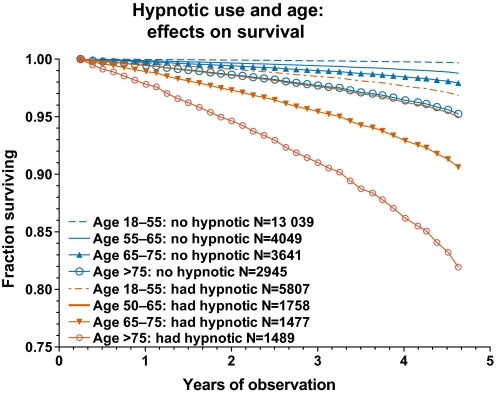
Objectives: An estimated 6%–10% of US adults took a hypnotic drug for poor sleep in 2010. This study extends previous reports associating hypnotics with excess mortality. Setting: A large integrated health system in the USA. Design: Longitudinal electronic medical records were extracted for a one-to-two matched cohort survival analysis. Subjects: Subjects (mean age 54 years) were 10 529 patients who received hypnotic prescriptions and 23 676 matched controls with no hypnotic prescriptions, followed for an average of 2.5 years between January 2002 and January 2007. Main outcome measures: Data were adjusted for age, gender, smoking, body mass index, ethnicity, marital status, alcohol use and prior cancer. Hazard ratios (HRs) for death were computed from Cox proportional hazards models controlled for risk factors and using up to 116 strata, which exactly matched cases and controls by 12 classes of comorbidity. Results: As predicted, patients prescribed any hypnotic had substantially elevated hazards of dying compared to those prescribed no hypnotics. For groups prescribed 0.4–18, 18–132 and >132 doses/year, HRs (95% CIs) were 3.60 (2.92 to 4.44), 4.43 (3.67 to 5.36) and 5.32 (4.50 to 6.30), respectively, demonstrating a dose–response association. HRs were elevated in separate analyses for several common hypnotics, including zolpidem, temazepam, eszopiclone, zaleplon, other benzodiazepines, barbiturates and sedative antihistamines. Hypnotic use in the upper third was associated with a significant elevation of incident cancer; HR=1.35 (95% CI 1.18 to 1.55). Results were robust within groups suffering each comorbidity, indicating that the death and cancer hazards associated with hypnotic drugs were not attributable to pre-existing disease. Conclusions: Receiving hypnotic prescriptions was associated with greater than threefold increased hazards of death even when prescribed <18 pills/year. This association held in separate analyses for several commonly used hypnotics and for newer shorter-acting drugs. Control of selective prescription of hypnotics for patients in poor health did not explain the observed excess mortality.
Overview
The claims and statistics of this paper haven’t been checked yet.
Free: it reads the open-access text and checks the first 5 claims that cite a source we can check. Create a free account to check every claim.
Integrity signals
Registry
Cites
Statistics
Figures
Verification
Claims the paper makes
The claims and statistics of this paper haven’t been checked yet.
Free: it reads the open-access text and checks the first 5 claims that cite a source we can check. Create a free account to check every claim.
Claims other papers make about this one
Each is checked against this paper’s own text: does it say what the citing paper says it does?
The source backs part of the claim, not all of it — or backs it for a different population, condition or comparison.
In the citing paper
“They found that the hazard of death was doubled in patients prescribed BZD compared to control patients [47].”
From Benzodiazepines: Uses, Dangers, and Clinical Considerations (2021) · cites this paper as [47]
Experimental — accuracy not yet measuredThe source backs part of the claim, not all of it — or backs it for a different population, condition or comparison.
In the citing paper
“There was an association between the prescription of anxiolytic drugs and mortality, resulting in 4 excess deaths in the anxiolytic drug group within an average of 7.6 years [47].”
From Benzodiazepines: Uses, Dangers, and Clinical Considerations (2021) · cites this paper as [47]
Experimental — accuracy not yet measuredThe source backs part of the claim, not all of it — or backs it for a different population, condition or comparison.
In the citing paper
“One study further showed that the risk of dying is doubled in patients prescribed BZD compared with controls [47].”
From Benzodiazepines: Uses, Dangers, and Clinical Considerations (2021) · cites this paper as [47]
Experimental — accuracy not yet measuredIn the citing paper
“All of these interventions resulted in higher discontinuation rates than usual care. 37,38”
From Comparative efficacy of two interventions to discontinue long-term benzodiazepine use: cluster randomised controlled trial in primary care (2014) · cites this paper as [38]
Self-check
Percentages, sums and reported differences re-computed from the paper’s own numbers.
The self-check needs the paper’s full text.
Citations
Cites
Risk Factors for Falls among Elderly Persons Living in the Community
Tinetti, M. E., Speechley, M., & Ginter, S. F. (1988) · New England Journal of Medicine · doi:10.1056/nejm198812293192604 · Cited by 6,509
The global health burden of infection‐associated cancers in the year 2002
Parkin, D. M. (2006) · International Journal of Cancer · doi:10.1002/ijc.21731 · Cited by 2,932
Mortality Associated With Sleep Duration and Insomnia
Kripke, D. F., Garfinkel, L., Wingard, D. L., Klauber, M. R., & Marler, M. R. (2002) · Archives of General Psychiatry · doi:10.1001/archpsyc.59.2.131 · Cited by 1,614
Self-citationSedative hypnotics in older people with insomnia: meta-analysis of risks and benefits
Glass, J., Lanctôt, K. L., Herrmann, N., Sproule, B. A., & Busto, U. E. (2005) · BMJ · doi:10.1136/bmj.38623.768588.47 · Cited by 1,161 · cited 2×
“21 30 Zolpidem has been shown to increase gastroesophageal regurgitation.”
BackgroundSmith, G. C. S., & Pell, J. P. (2003) · BMJ · doi:10.1136/bmj.327.7429.1459 · Cited by 1,157
Excess mortality in depression: a meta-analysis of community studies
Cuijpers, P., & Smit, F. (2002) · Journal of Affective Disorders · doi:10.1016/s0165-0327(01)00413-x · Cited by 775
Short and Long Sleep and Sleeping Pills: Is Increased Mortality Associated?
Kripke, D. F. (1979) · Archives of General Psychiatry · doi:10.1001/archpsyc.1979.01780010109014 · Cited by 660
Self-citationSmoking in relation to the death rates of one million men and women.
Ec, H. (1966) · PubMed · Cited by 648
Jacobs, G. D., Pace-Schott, E. F., Stickgold, R., & Otto, M. W. (2004) · Archives of Internal Medicine · doi:10.1001/archinte.164.17.1888 · Cited by 579
Bronstein, A. C., Spyker, D. A., Cantilena, L. R., Green, J. L., Rumack, B. H., & Giffin, S. L. (2009) · Clinical Toxicology · doi:10.3109/15563650903438566 · Cited by 485
Research works printed but not linked: 1
- National Institute for Clinical Excellence Guidance of the use of zaleplon, zolpidem and zopiclone for the short-term management of insomnia. Technol Appraisal 2004; 77: 1– 27
Cited by
Items 201–300 of 418
Fang, H., Lee, T.-Y., Hui, K.-C., Chi, M., & Chung, M. (2019) · Journal of Cancer · doi:10.7150/jca.30680 · Cited by 11
“Although a few population-based studies have investigated the correlation between the use of sedative-hypnotics and corresponding mortality [19-31], no consistent relationships have been established.”
BackgroundJansson, C., Alexanderson, K. A. E., Kecklund, G., & Åkerstedt, T. (2013) · Sleep Disorders · doi:10.1155/2013/209832 · Cited by 14
“Hypnotic drugs are among the most widely used treatments in adult medicine, although the indication may not be sleeprelated since physicians often use another diagnosis if they believe that insomnia is secondary to other conditions [25] and a cross-sectional association between self-reported sleep disorders and regist…”
BackgroundInappropriate treatments for patients with cognitive decline
Bayón, A. R., & Sampedro, F. G. (2014) · Neurología (English Edition) · doi:10.1016/j.nrleng.2012.05.009 · Cited by 14
Pharmacists' perceptions and communication of risk for alertness impairing medications
Jomaa, I., Odisho, M., Cheung, J. M. Y., WONG, K. K. H., Ellis, J. G., Smyth, T., & Saini, B. (2017) · Research in Social and Administrative Pharmacy · doi:10.1016/j.sapharm.2016.12.010 · Cited by 11
“Sedatives such as benzodiazepines have been linked with an increased mortality.(7) Although as yet inconclusive, recent research studies have also investigated the link between benzodiazepines and cancer,(7) dementia development,(8) as well as nosocomial infection (9)in critically patients.”
BackgroundKripke, D. F., & Langer, R. D. (2013) · British Journal of Clinical Pharmacology · doi:10.1111/bcp.12265 · Cited by 11
Self-citationBoudin, C., Eysseric, H., Paysant, F., Revet, M., Stanke‐Labesque, F., Scolan, V., & Willeman, T. (2023) · Journal of Analytical Toxicology · doi:10.1093/jat/bkad032 · Cited by 10
Coteur, K., Nuland, M. V., Vanmeerbeek, M., Henrard, G., Anthierens, S., den Broeck, K. V., Sutter, A. D., Creupelandt, H., Devroey, D., Overmeire, R. V., et al. (2020) · BMJ Open · doi:10.1136/bmjopen-2019-033688 · Cited by 13
Short‐ and long‐term mortality following hypnotic use
Hedström, A. K., Hössjer, O., Lagerros, Y. T., & Åkerstedt, T. (2020) · Journal of Sleep Research · doi:10.1111/jsr.13061 · Cited by 12
Coppola, L., & Montanaro, F. (2013) · Homeopathy · doi:10.1016/j.homp.2013.07.002 · Cited by 14
Campbell, A. J., & Neill, A. M. (2016) · Sleep and Biological Rhythms · doi:10.1007/s41105-016-0063-9 · Cited by 10
“Of further concern is that sedatives use increases the mortality risk [7] so there is a strong clinical need for safe, evidence-based alternative therapy.”
BackgroundPrescription hypnotics in the news: A study of UK audiences
Gabe, J., Williams, S. J., & Coveney, C. M. (2016) · Social Science & Medicine · doi:10.1016/j.socscimed.2016.11.029 · Cited by 14
Zolpidem Overdose: A Dilemma in Mental Health
Jung, M. (2017) · The Health Care Manager · doi:10.1097/hcm.0000000000000199 · Cited by 11
“However, research that tracked 10 000 patients who were prescribed sleep medication and 200 000 people who did not take sleeping pills for 2(1)/2 years showed a different result; the findings in this case showed that the group who took sleeping pills had a meaningfully higher cancer incidence rate and cancer mortality…”
Socias, I. M., Leiva, A., Pombo, H., Bejarano‐Romero, F., Verdú, E. S., Rodríguez-Rincón, R. M., Fiol, F., Mengual, M., Ajenjo-Navarro, A., do Pazo-Oubiña, F., et al. (2021) · International Journal of Environmental Research and Public Health · doi:10.3390/ijerph18157964 · Cited by 13
Hypnotic drug risks of mortality, infection, depression, and cancer: but lack of benefit
Kripke, D. F. (2017) · F1000Research · doi:10.12688/f1000research.8729.2 · Cited by 10
Self-citationBuysse, D. J., & Harvey, A. G. (2016) · Elsevier eBooks · doi:10.1016/b978-0-323-24288-2.00080-5 · Cited by 12
Hypnotics and mortality in an elderly general population: A 12-year prospective study
Jaussent, I., Ancelin, M., Berr, C., Besset, A., Ritchie, K. A., & Dauvilliers, Y. A. (2013) · Sleep Medicine · doi:10.1016/j.sleep.2013.11.369 · Cited by 10
Ku, S.-C., Ho, P., Tseng, Y., Yeh, T., Cheng, S.-L., & Liang, C. (2018) · Psychiatry Investigation · doi:10.30773/pi.2018.05.02.1 · Cited by 10
Hypnotics and mortality—partial confounding by disease, substance abuse and socioeconomic factors?
Kriegbaum, M., Hendriksen, C., Vass, M., Mortensen, E. L., & Osler, M. (2015) · Pharmacoepidemiology and Drug Safety · doi:10.1002/pds.3745 · Cited by 10
Hirohama, K., Imura, T., Hori, T., Deguchi, N., Mitsutake, T., & Tanaka, R. (2024) · PLoS ONE · doi:10.1371/journal.pone.0301616 · Cited by 9
Jansson, C., Alexanderson, K. A. E., Kecklund, G., & Åkerstedt, T. (2013) · Scandinavian Journal of Public Health · doi:10.1177/1403494813498003 · Cited by 10
“thus, we may potentially have over-adjusted when adjusting for hypnotics and sedatives as hypnotic drugs are among the most widely used treatments in adult medicine, although the indication may not be sleep-related since physicians often use another diagnosis if they believe that insomnia is secondary to other conditi…”
BackgroundMisuse of Benzodiazepines in France
Micallef, J., Frauger, É., & Lapeyre‐Mestre, M. (2016) · Elsevier eBooks · doi:10.1016/b978-0-12-800212-4.00102-3 · Cited by 11
Cromhout, P. F., Christensen, A. V., Jørgensen, M. B., Ekholm, O., Juel, K., Svendsen, J. H., Osler, M., Rasmussen, T. B., Borregaard, B., Mols, R. E., et al. (2021) · European Journal of Cardiovascular Nursing · doi:10.1093/eurjcn/zvab111 · Cited by 9
Callede, N., Masciotti, T., Casettari, L., Loosveldt, N., & Goole, J. (2022) · International Journal of Pharmaceutics · doi:10.1016/j.ijpharm.2022.121756 · Cited by 9
Thygesen, L. C., Pottegård, A., Ersbøll, A. K., Friis, S., Stürmer, T., & Hallas, J. (2017) · British Journal of Clinical Pharmacology · doi:10.1111/bcp.13342 · Cited by 9
Femur Fractures in Parkinsonism: Analysis of a National Sample Cohort in South Korea
An, S. J., Lee, S.-H., Lee, S., Kwon, J., Lee, S., & Kim, Y.-J. (2017) · Journal of Clinical Neurology · doi:10.3988/jcn.2017.13.4.380 · Cited by 9
Varma, S. (2016) · Medicine · doi:10.1016/j.mpmed.2016.09.019 · Cited by 9
Jung, S. J., Lee, J., Choi, J.-W., Kim, S., Shin, A., & Lee, Y. J. (2019) · Sleep Medicine · doi:10.1016/j.sleep.2019.03.018 · Cited by 9
Montégut, L., Rousseau, A., Ungolo, C., Derosa, L., Fidelle, M., Alves Costa Silva, C., Routy, B., Zitvogel, L., Besse, B., Pasolli, E., et al. (2025) · OncoImmunology · doi:10.1080/2162402x.2025.2528955 · Cited by 8
Zolpidem Administration and Risk of Hepatocellular Carcinoma: A Case-Control Study in Taiwan
Lai, S., Lin, C., & Liao, K. (2017) · Frontiers in Pharmacology · doi:10.3389/fphar.2017.00767 · Cited by 8
“Only few epidemiologic studies and review articles showed that zolpidem use could be associated with increased cancer risk Frontiers in Pharmacology | www.frontiersin.org 1 October 2017 | Volume 8 | Article 767 (Kripke, 2008, 2016; Kripke et al., 2012; Sivertsen et al., 2015).”
BackgroundResultPhysical Activity, Sleep, and Biobehavioral Synergies for Health
Buman, M. P., & Youngstedt, S. D. (2015) · Elsevier eBooks · doi:10.1016/b978-0-12-417188-6.00015-3 · Cited by 12
Crow, J. M. (2013) · Nature · doi:10.1038/497s16a · Cited by 8
Oh, T. K., Park, H. Y., Han, J., & Song, I. (2021) · International Journal of Clinical Practice · doi:10.1111/ijcp.14517 · Cited by 8
An Observational Study on drug Utilization Pattern and Pharmacovigilance of Antidepressant Drugs
Hussain, D. A. (2018) · Journal of Medical Science And clinical Research · doi:10.18535/jmscr/v6i10.91 · Cited by 10
Conti, F., Consonni, D., Damanti, S., Nobili, A., Pasina, L., Mannucci, P. M., Cesari, M., & Rossi, P. D. (2020) · Journal of the American Medical Directors Association · doi:10.1016/j.jamda.2020.08.004 · Cited by 8
Sublingual Zolpidem (Edluar™; Sublinox™)
Yang, L. P. H., & Deeks, E. D. (2012) · CNS Drugs · doi:10.1007/s40263-012-0009-y · Cited by 10
“Of note, the use of hypnotics (including zolpidem) has been associated with an increased incidence of death or cancer, in a US-based, longitudinal, matched-cohort analysis [38].”
Backgroundvan de Glind, E. M. M., Hooft, L., Tulner, L. R., Tulen, J. H. M., Kuper, I. M. J. A., Hamburger, H., de Rooij, S. E., & Munster, B. C. V. (2014) · Trials · doi:10.1186/1745-6215-15-10 · Cited by 9
Elements of music that work to improve sleep, a narrative review
Pan, E. Y., & Wang, W. (2025) · Frontiers in Sleep · doi:10.3389/frsle.2025.1707162 · Cited by 7
Zopiclone: Is there cause for concern in addiction services and general practice?
Curreen, M., & Lidmila, J. (2014) · International Journal of Risk & Safety in Medicine · doi:10.3233/jrs-140633 · Cited by 8
“A recent study [6], suggested that the prescription of any hypnotic significantly elevates the probability of premature death and that a number of the “Z-drugs” including zolpidem, eszopiclone, zaleplon, as well as temazepam, other benzodiazepines, barbiturates and sedating antihistamines are associated with elevation…”
I petitioned the FDA to restrict hypnotics: here is why
Kripke, D. F. (2015) · Sleep Medicine · doi:10.1016/j.sleep.2015.12.011 · Cited by 7
“To the Editor, After we presented data in 2012 showing that patients taking popular hypnotics suffered a four-fold increase in mortality [1], the U.”
MethodSelf-citationThe Use of Over-the-Counter Sleep Aid Containing Diphenhydramine Hydrochloride Among Saudis
Alhwimani, A. K., Aljohani, R. A., & Tulaihi, B. A. (2021) · Cureus · doi:10.7759/cureus.20622 · Cited by 7
Hwang, S., Son, H., Kim, M., Lee, S. K., & Jung, K. (2022) · Journal of Clinical Neurology · doi:10.3988/jcn.2022.18.1.65 · Cited by 7
“70 J Clin Neurol 2022;18(1):65-70 Zolpidem and Brain Cancer Mortality JCN”
BackgroundInfluentialMayer, G., Stenmanns, C., Doeppner, T. R., Hermann, D. M., & Gronewold, J. (2023) · Zeitschrift für Gerontologie und Geriatrie · doi:10.1007/s00391-023-02237-5 · Cited by 7
“Die pharmakologische Behandlung einer Insomnie mit Hypnotika ist mit einer erhöhten Mortalitätsrate assoziiert [23], und das Risiko, unter Benzodiazepinan-wendung eine Demenz zu entwickeln, ist hoch.”
BackgroundElder, G. J., Santhi, N., Robson, A. R., Alfonso‐Miller, P., Spiegelhalder, K., & Ellis, J. G. (2024) · SLEEP · doi:10.1093/sleep/zsae059 · Cited by 7
Iqbal, U., Chang, T., Nguyen, P.-A., Syed-Abdul, S., Yang, H., Huang, C., Atique, S., Yang, W. V., Moldovan, M. V., Jian, W., et al. (2017) · Journal of Biomedical Informatics · doi:10.1016/j.jbi.2017.08.008 · Cited by 7
Does the Prescription of Anxiolytic and Hypnotic Drugs Increase Mortality in Older Adults?
Pinot, J., Herr, M., Robine, J., Aegerter, P., Arvieu, J., & Ankri, J. (2015) · Journal of the American Geriatrics Society · doi:10.1111/jgs.13466 · Cited by 8
Higher-Dose Uses of Zolpidem Will Increase the Subsequent Risk of Developing Benign Brain Tumors
Harnod, T., Li, Y., Lin, C., Chang, S., Sung, F., & Kao, C. (2014) · Journal of Neuropsychiatry · doi:10.1176/appi.neuropsych.14010006 · Cited by 7
Sedative hypnotic use among veterans with a newly reported mental health disorder
DiNapoli, E. A., Bramoweth, A. D., Cinna, C., & Kasckow, J. (2016) · International Psychogeriatrics · doi:10.1017/s1041610216000521 · Cited by 7
“, 1996), and increased risk of mortality (Kripke et al., 2012) compared to those not receiving sedative hypnotics.”
BackgroundReconsidering Benzodiazepines and Z-Drug Prescriptions: Responsible Prescribing and Deprescribing
McGee, N., Proctor, J., Hart, A. M., & Burman, M. E. (2020) · The Journal for Nurse Practitioners · doi:10.1016/j.nurpra.2020.08.004 · Cited by 8
Venous catheter microbiological monitoring. Necessity or a habit?
Smuszkiewicz, P., Trojanowska, I., & Tomczak, H. (2009) · PubMed · Cited by 8
Mews, M. R., Rombold, F., & Quante, A. (2014) · The Primary Care Companion For CNS Disorders · doi:10.4088/pcc.13m01567 · Cited by 7
Insomnia, Hypnotic Drug Use, and Patient Well-being: First, Do No Harm
Phillips, B. A. (2012) · Mayo Clinic Proceedings · doi:10.1016/j.mayocp.2012.03.002 · Cited by 7
Early Mortality Among People With Schizophrenia
Robinson, D. G. (2016) · American Journal of Psychiatry · doi:10.1176/appi.ajp.2016.16030334 · Cited by 8
Lin, B. M., Hu, F. B., & Curhan, G. C. (2016) · JAMA Otolaryngology–Head & Neck Surgery · doi:10.1001/jamaoto.2016.3174 · Cited by 6
“Approximately 15 million prescriptions for benzodiazepine receptor agonists are written annually in the United States, and approximately 10% of the population has reported having used these medications.(10,11) Benzodiazepine receptor agonists cause muscle relaxation, which may affect muscle tone and airway dynamics an…”
Insomnia Pharmacotherapy: a Review of Current Treatment Options for Insomnia in Menopause
Hachul, H., & Polesel, D. N. (2017) · Current Sleep Medicine Reports · doi:10.1007/s40675-017-0090-3 · Cited by 6
Excess risk estimation for matched cohort survival data
Boschini, C., Andersen, K. K., & Scheike, T. (2018) · Statistical Methods in Medical Research · doi:10.1177/0962280218804269 · Cited by 6
Liu, C., Chen, Z., Li, T., Yang, Z., Zhang, Q., Yin, J., Zhou, P., Fu, W., & Chen, B. (2019) · Medicine · doi:10.1097/md.0000000000014509 · Cited by 6
Effects of oral health-related quality of life on total mortality: a prospective cohort study
Arimoto, N., Nishimura, R., Kobayashi, T., Asaeda, M., Naito, T., Kojima, M., Umemura, O., Yokota, M., Hanada, N., Kawamura, T., et al. (2023) · BMC Oral Health · doi:10.1186/s12903-023-03451-8 · Cited by 6
“In the case of drug use, the drugs used were classified as for medication (hypertension, hypercholesterolemia, or gout or hyperuricemia), diabetes (oral medication or insulin self-injection) [26], and sleeping (at least once a week) [27–29].”
BackgroundAssociation of Hypnotics With Stroke Risk: A Population-Based Case-Control Study
Lee, C., Tsai, K., Hung, Y.-T., Chou, F. H., & Huang, Y.-S. (2014) · The Primary Care Companion For CNS Disorders · doi:10.4088/pcc.13m01583 · Cited by 6
Partinen, M. (2017) · Springer eBooks · doi:10.1007/978-1-4939-6578-6_30 · Cited by 7
Psychiatric Morbidity in Dependent Z-Drugs and Benzodiazepine Users
Lin, Y. Q., Tang, W. K., Liang, H. J., Tang, A., & Ungvari, G. S. (2016) · International Journal of Mental Health and Addiction · doi:10.1007/s11469-016-9679-x · Cited by 6
“In recent years, Z-drugs have gained popularity and are now the most commonly prescribed hypnotic agents worldwide (Huedo-Medina et al. 2011), including in the United States (Kripke et al. 2012; Walsh and Schweitzer 1999) and the United Kingdom (Siriwardena et al. 2008).”
BackgroundTreating Sleep Disorders in Neurology Practice
Raphaelson, M. I., & Inati, S. K. (2012) · Neurologic Clinics · doi:10.1016/j.ncl.2012.08.015 · Cited by 6
Do all hypnotic and sedatives have risk for cancer?
Iqbal, U., Jian, W., Huang, C., Inayat, A., & Li, Y. (2015) · Sleep Medicine · doi:10.1016/j.sleep.2015.07.010 · Cited by 6
El-Solh, A. A., Lawson, Y., & Wilding, G. E. (2023) · International Journal of Chronic Obstructive Pulmonary Disease · doi:10.2147/copd.s430609 · Cited by 5
Effects of Audio Brain Entrainment on Korean People with Mild Insomnia
Ho, C. M. B., Jeong, H., Lim, Y.-H., & Park, S. J. (2022) · Applied Psychophysiology and Biofeedback · doi:10.1007/s10484-022-09570-2 · Cited by 6
El-Solh, A., Lawson, Y., & Wilding, G. E. (2023) · Sleep Health · doi:10.1016/j.sleh.2023.05.006 · Cited by 5
Liu, L., Yin, P., Dong, Y., Fan, Q., Huai, Y., Zhang, S., Lv, S., Wang, X., & Chen, Y. (2023) · Frontiers in Neurology · doi:10.3389/fneur.2023.1278564 · Cited by 5
Benzodiazepineverslaving; een stille verslaving onder ouderen
Voshaar, R. C. O. (2012) · Tijdschrift voor Gerontologie en Geriatrie · doi:10.1007/s12439-012-0020-2 · Cited by 6
Krylova, E. A., Kataev, S. S., Александрович, Х. Ю., & Dvorskaya, O. N. (2015) · Pharmaceutical Chemistry Journal · doi:10.1007/s11094-015-1328-3 · Cited by 5
Zolpidem increased cancer risk in patients with sleep disorder: A 3-year follow-up study
Lee, C., Lin, S., Su, Y., & Huang, Y.-S. (2016) · Journal of Medical Sciences · doi:10.4103/1011-4564.181522 · Cited by 5
ATS Core Curriculum 2020. Adult Sleep Medicine
Jamil, S. M., Owens, R. L., Lipford, M. C., Shafazand, S., Marron, R. M., Sanchez, M. E. V., Lam, M. T. Y., Sunwoo, B. Y., Schmickl, C. N., Orr, J. E., et al. (2020) · ATS Scholar · doi:10.34197/ats-scholar.2020-0017re · Cited by 6
Mehrdad, R., Sadeghniiat‐Haghighi, K., & Esfahani, A. H. N. (2015) · PubMed · Cited by 6
Sleep Disturbances in General Medical Disorders
Chokroverty, S. (2017) · Springer eBooks · doi:10.1007/978-1-4939-6578-6_47 · Cited by 5
Climacteric Symptoms: Importance and Management
Birkhaeuser, M. H. (2018) · ISGE series · doi:10.1007/978-3-319-63540-8_4 · Cited by 5
Trajectories in hypnotic use and approaching death: a register linked case–control study
Kronholm, E., Jousilahti, P., Laatikainen, T. K., Lallukka, T. M., Peltonen, M., Seppänen, J., & Virta, L. J. (2018) · Sleep Medicine · doi:10.1016/j.sleep.2018.02.005 · Cited by 6
Hachul, H., Polesel, D. N., & Tufik, S. (2020) · Current clinical neurology · doi:10.1007/978-3-030-40842-8_21 · Cited by 6
Lin, C., Chiou, H., Chang, Y., Liu, J., Hung, Y., Chuang, M., & Chien, L. (2016) · Pharmacoepidemiology and Drug Safety · doi:10.1002/pds.3963 · Cited by 6
Bianchi, M. T., THOMAS, R. J., & Ellenbogen, J. M. (2012) · Journal of Clinical Sleep Medicine · doi:10.5664/jcsm.2016 · Cited by 5
Zhou, K., Ren, Y., Zang, L., & Zhou, Z. (2025) · Climacteric · doi:10.1080/13697137.2025.2509866 · Cited by 4
“Mansikkamäki et al. found that 6-month aerobic training at 6–10 weeks had the most significant effect, after which the amount of effect decayed [48], and similarly the placebo effect in sleep drug trials declined significantly after 4–6 weeks [49].”
Role of Sleep in Cognition, Immunity, and Disease and Its Interaction with Exercise
Zielinski, M. R., & Gerashchenko, D. (2015) · Wiley eBooks · doi:10.1002/9781118840634.ch20 · Cited by 4
Sawdon, O. L., Elder, G. J., Santhi, N., Alfonso‐Miller, P., & Ellis, J. G. (2021) · Trials · doi:10.1186/s13063-021-05888-0 · Cited by 5
Kyle, S. D., & Espie, C. A. (2014) · Journal of Sleep Research · doi:10.1111/jsr.12145 · Cited by 4
Normalizing sleep quality disturbed by psychiatric polypharmacy: a single patient open trial (SPOT)
Magnuson, V., Wang, Y., & Schork, N. J. (2016) · F1000Research · doi:10.12688/f1000research.7694.2 · Cited by 4
“In fact, both temazepam and another highly used sleep aid, Ambien, were recently found to be associated with increased morbidity and mortality 49 .”
Hachul, H., Bezerra, A. G., & Andersen, M. L. (2016) · Springer eBooks · doi:10.1007/978-3-319-41400-3_10 · Cited by 4
Collard, V. E. J., Moore, C., Nichols, V. P., Ellard, D. R., Patel, S., Sandhu, H. K., Parsons, H. M., Sharma, U., Underwood, M. R., Madan, J. J., et al. (2021) · BMC Family Practice · doi:10.1186/s12875-021-01552-3 · Cited by 5
Use of Sleep Aids in Insomnia: The Role of Time Monitoring Behavior
Dawson, S. C., Krakow, B. J., Haynes, P. L., Rojo‐Wissar, D. M., McIver, N. D., & Ulibarri, V. A. (2023) · The Primary Care Companion For CNS Disorders · doi:10.4088/pcc.22m03344 · Cited by 6
Sleep Duration, Morbidity, and Mortality
Youngstedt, S. D., Kripke, D. F., & James, S. (2017) · Springer eBooks · doi:10.1007/978-1-4939-6578-6_31 · Cited by 5
Self-citationMore trials needed to assess sleeping pills
Moser, M., & Kripke, D. F. (2013) · Nature · doi:10.1038/493305d · Cited by 4
Self-citationDo No Harm: Not Even to Some Degree
Kripke, D. F., Langer, R. D., & Kline, L. E. (2012) · Journal of Clinical Sleep Medicine · doi:10.5664/jcsm.2018 · Cited by 4
Self-citationBenzodiazepinas: riesgos y estrategias para su retirada
de Medicamentos, C. A. D. D. E. I. (2014) · Boletín Terapéutico Andaluz · doi:10.11119/bta2014-29-02 · Cited by 9
Kirk, U., Hovgaard, C. N., Persiani, M. T. L., Romagnoli, M., & Staiano, W. (2026) · Scientific Reports · doi:10.1038/s41598-026-44902-w · Cited by 4
“Currently, pharmacological interventions remain the predominant treatment for insomnia and other sleep disorders, despite concerns regarding side effects, dependency, and increased mortality risk 35–37 .”
Gemeinsam mit dem Patienten klug entscheiden
Fölsch, U. R., & Hasenfuss, G. P. (2016) · Der Internist · doi:10.1007/s00108-016-0069-z · Cited by 3
Estrategias para reducir el uso prolongado de benzodiacepinas
Vicens, C., Verdú, E. S., & Fiol, F. (2015) · FMC - Formación Médica Continuada en Atención Primaria · doi:10.1016/j.fmc.2015.04.004 · Cited by 3
Poisonous substances used to capture and kill the greater cane rat (Thryonomys swinderianus)
Essuman, E. K., & Duah, K. K. (2020) · Veterinary Medicine and Science · doi:10.1002/vms3.259 · Cited by 3
Gabe, J. (2021) · Wiley eBooks · doi:10.1002/9781119633808.ch27 · Cited by 4
Wang, J., Deng, T., Sun, H., Sun, X., You, Y., Wang, Y., Qi, X., & Ma, Y. (2021) · Medicine · doi:10.1097/md.0000000000028437 · Cited by 3
Gozda, K., Leung, J., Baum, L., Singer, A. G., Konrad, G., McMillan, D. E., Falk, J., Kosowan, L., & Leong, C. (2022) · BMC Family Practice · doi:10.1186/s12875-022-01724-9 · Cited by 3
Onset of Prolonged High-Potency Benzodiazepine Use Among ICU Survivors: A Nationwide Cohort Study
Lindström, A.-C., von Oelreich, E., Eriksson, J., Eriksson, M., Mårtensson, J., Larsson, E., & Oldner, A. (2024) · Critical Care Explorations · doi:10.1097/cce.0000000000001124 · Cited by 3
“The relationship between benzodiazepine use and mortality has been documented in several other medical settings (24–27).”
BackgroundDepression and the risk of mortality: In search of calipers
Ziegelstein, R. C. (2015) · Journal of Psychosomatic Research · doi:10.1016/j.jpsychores.2015.02.003 · Cited by 3
Feasibility of a Randomized Controlled Trial of Light Therapy in Cancer Patients with Insomnia
D, R. W. H. (2014) · Journal of Palliative Care & Medicine · doi:10.4172/2165-7386.1000183 · Cited by 3
“A recent study reported that hypnotic use was associated with a greater than threefold increased risk for death even when patients were prescribed less than 18 pills per year [17].”
Perreault, M., Mitchell, E., Touré, E. H., Fleury, M., & Caron, J. (2014) · PubMed · Cited by 3
Metadata
- Authors
- Kripke, D. F., Langer, R. D., & Kline, L. E.
- Affiliations
- Scripps Clinic (US)
- Corresponding author
- Kripke, Daniel F
- Venue
- BMJ Open
- Publisher
- BMJ
- Published
- 2012
- Volume
- 2
- Issue
- 1
- Pages
- e000850
- ISSN
- 2044-6055 (ISSN-L)
- PMC
- PMC3293137
- OpenAlex
- W2163579301
- Cited by
- 408
- References
- 39
- Citations by year
- 2026: 15 · 2025: 12 · 2024: 9 · 2023: 17 · 2022: 23 · 2021: 28 · 2020: 21 · 2019: 18 · 2018: 20 · 2017: 40 · 2016: 43 · 2015: 45 · 2014: 49 · 2013: 36 · 2012: 30
- FWCI
- 68.68
- Type
- journal article
- Language
- en
- Open access
- gold
- doi.org
- Licence
- cc-by-nc
- Locations
- BMJ Open (publishedVersion, cc-by-nc)
- PubMed Central (publishedVersion, cc-by-nc)
- PubMed (publishedVersion)
- DOAJ (DOAJ: Directory of Open Access Journals) (submittedVersion)
- eScholarship (California Digital Library) (submittedVersion)
- Funders
- University of California, San Diego
- Topics
- Social Sciences › Psychology › Experimental and Cognitive Psychology › Sleep and related disorders
- Health Sciences › Medicine › Geriatrics and Gerontology › Pharmaceutical Practices and Patient Outcomes
- Health Sciences › Medicine › Public Health, Environmental and Occupational Health › Opioid Use Disorder Treatment
- Keywords
- hypnotics, sleep aids, excess mortality, cancer incidence, benzodiazepines, barbiturates, zolpidem, temazepam, eszopiclone, zaleplon, dose-response relationship, prescribing patterns, comorbidities
About these checks
Registry, retraction, Cites and statistics results are computed, not judged, with one exception: a printed reference that no index lists is read once by a model before it counts as a citation error. Claims are extracted by a model and kept only when their quote appears verbatim in the text; each cited source is then checked, with a model’s help, for whether it says what the claim relies on. Those verdicts can be wrong — read the claim’s quote and the cited source before relying on one.
Statistics and arithmetic are recomputed, not judged.
Confidence bands are shown only for fields calibrated on our annotated test set. None is calibrated yet, so no band is shown.
What counts as a claim ›How we measure confidence ›How we check this ›
Are you an author, or do you see a problem with this page? Request a review
Data sources
Bibliographic data: Semantic Scholar, OpenAlex, Crossref.
Contains information from the Semantic Scholar Academic Graph Datasets, made available under the ODC Attribution License (ODC-BY 1.0).
Semantic Scholar’s data is described in: Kinney, R., et al. (2023). The Semantic Scholar Open Data Platform. arXiv:2301.10140.
